We Deliver Airguns Directly To Your Door
SKU N/A Category

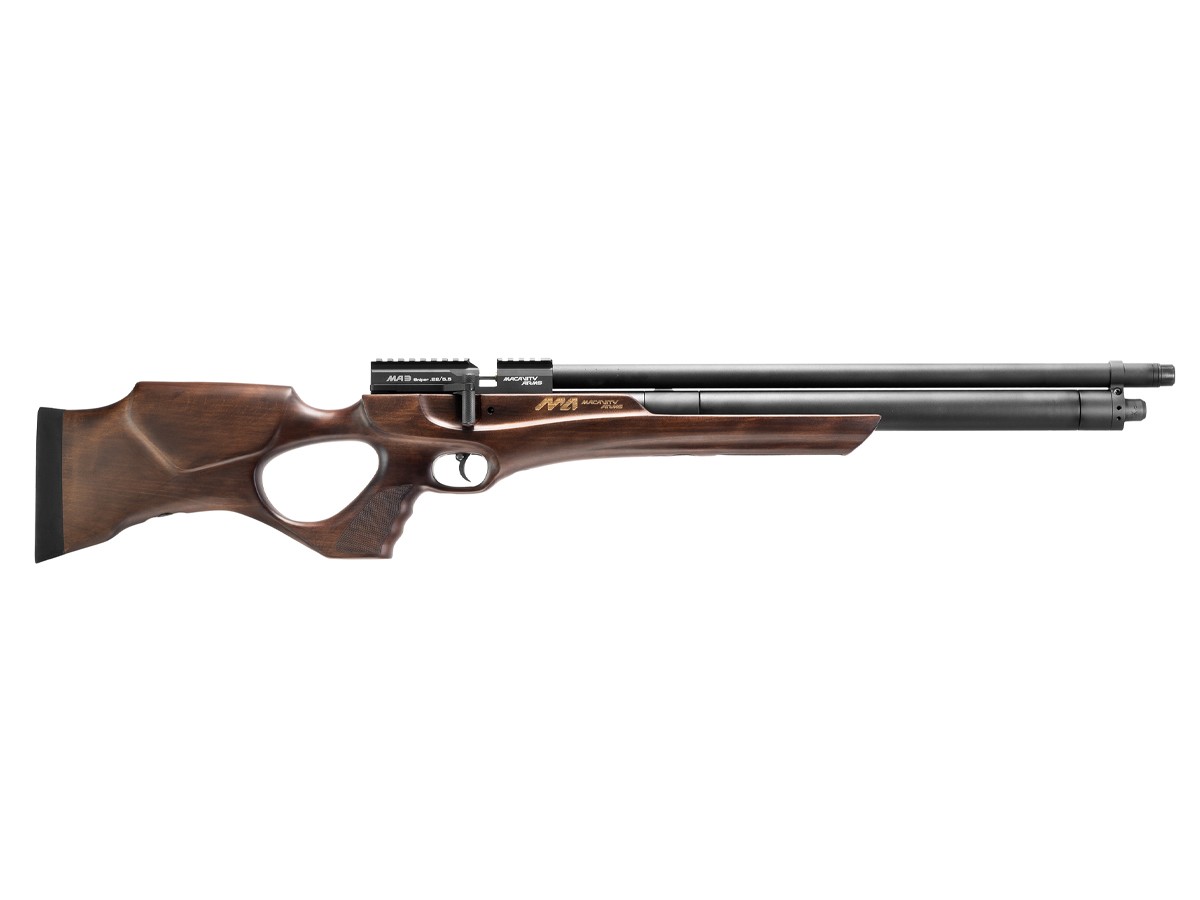
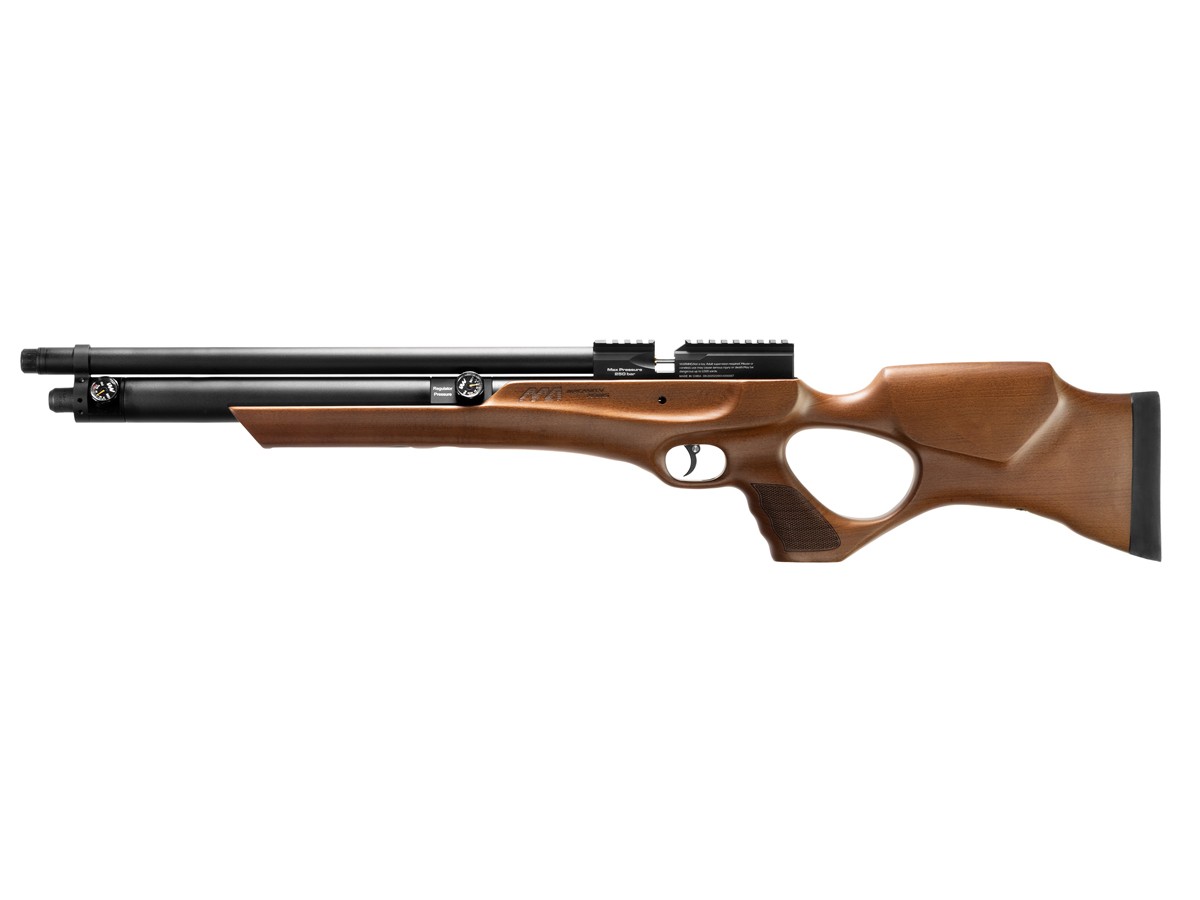
Macavity Arms MA3

$490.00

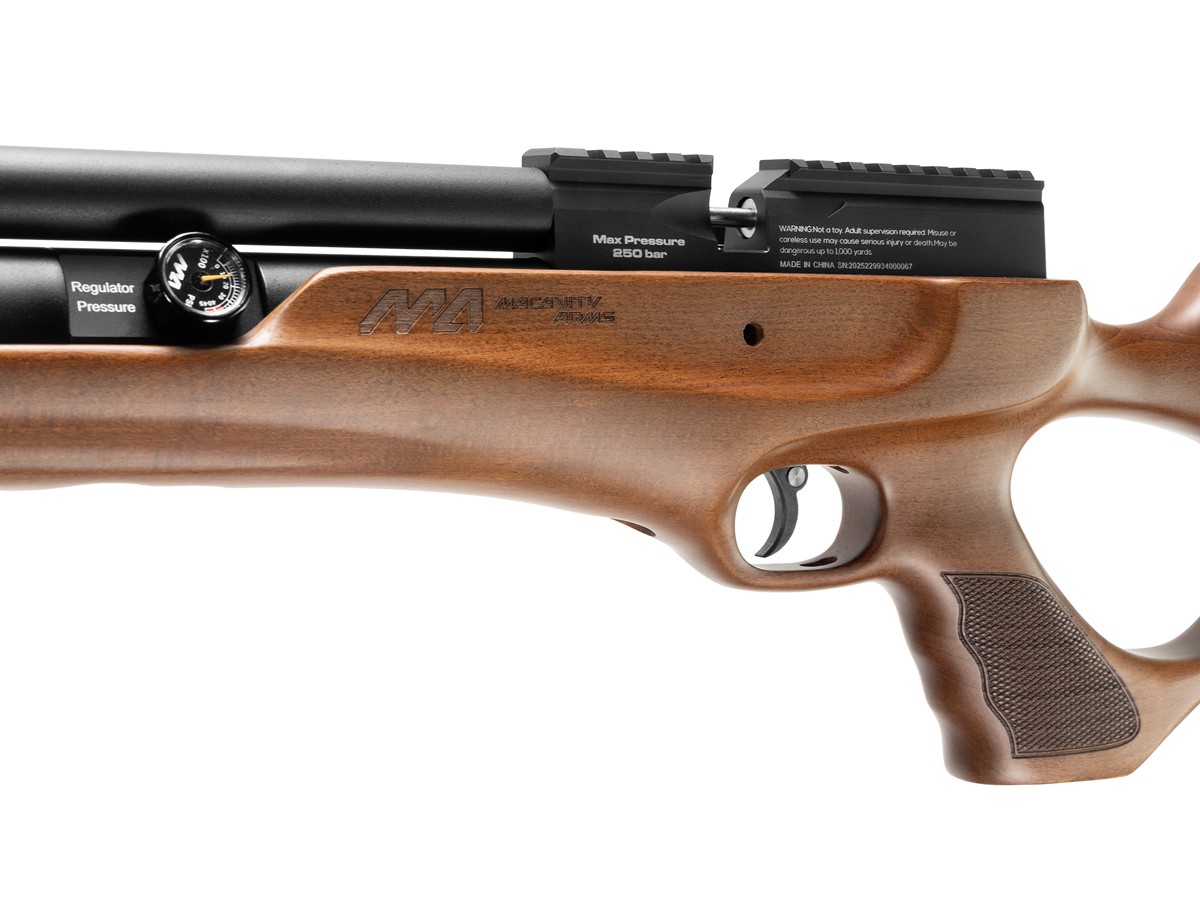
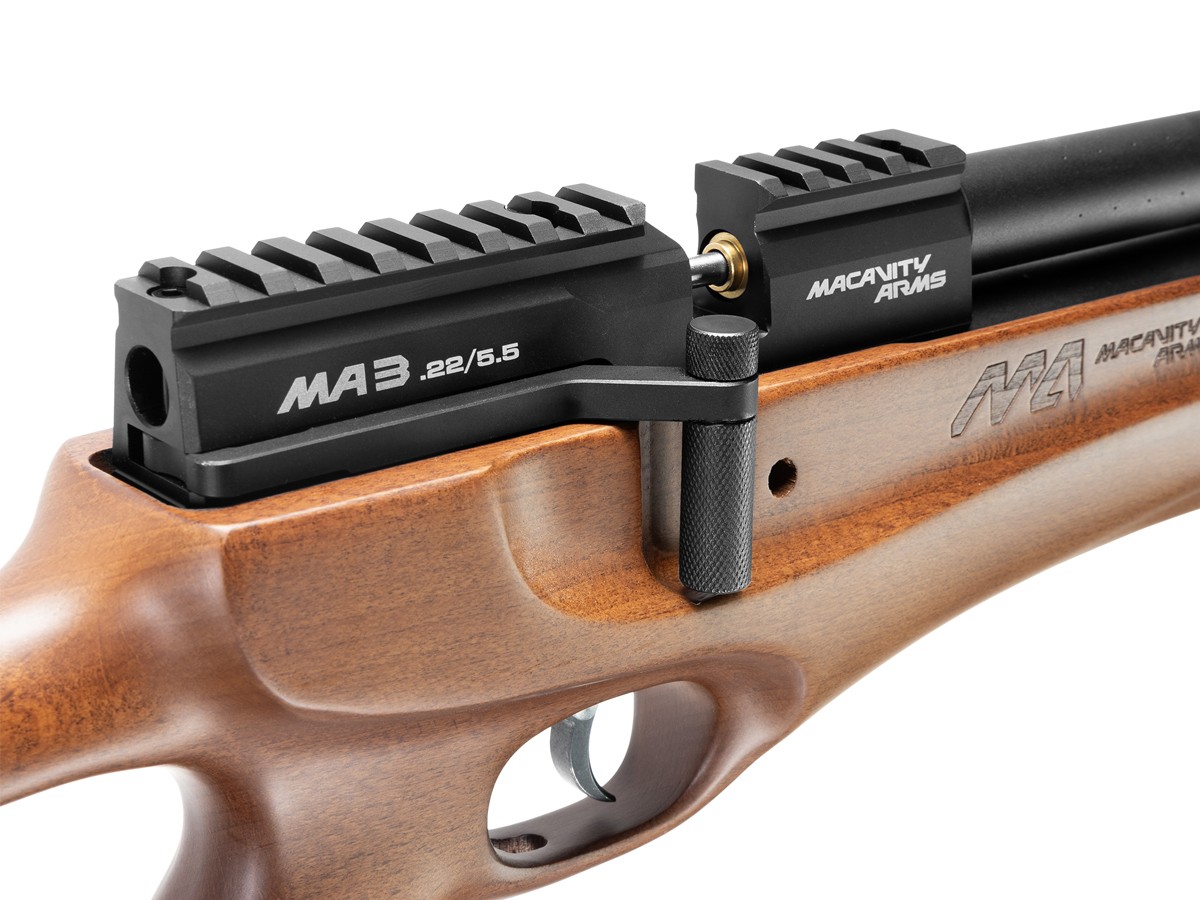
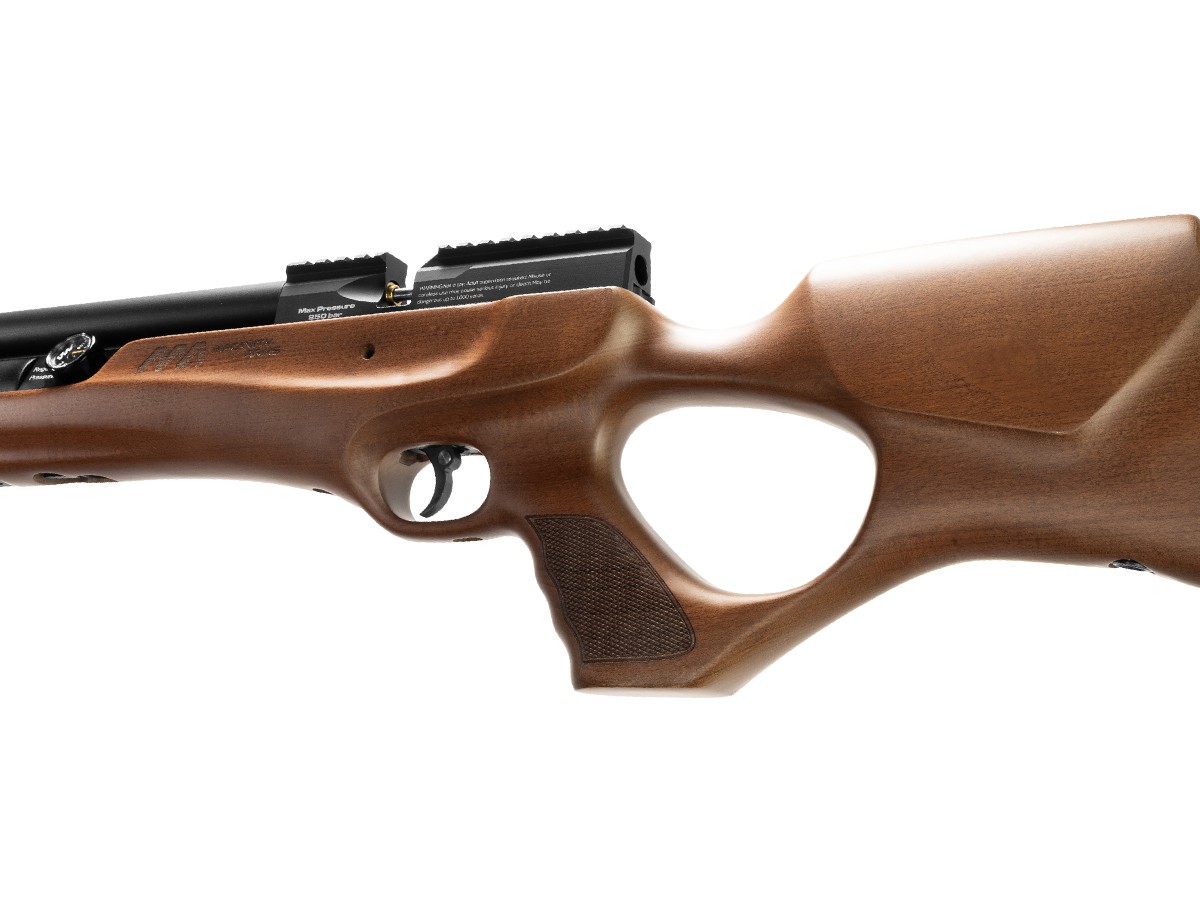
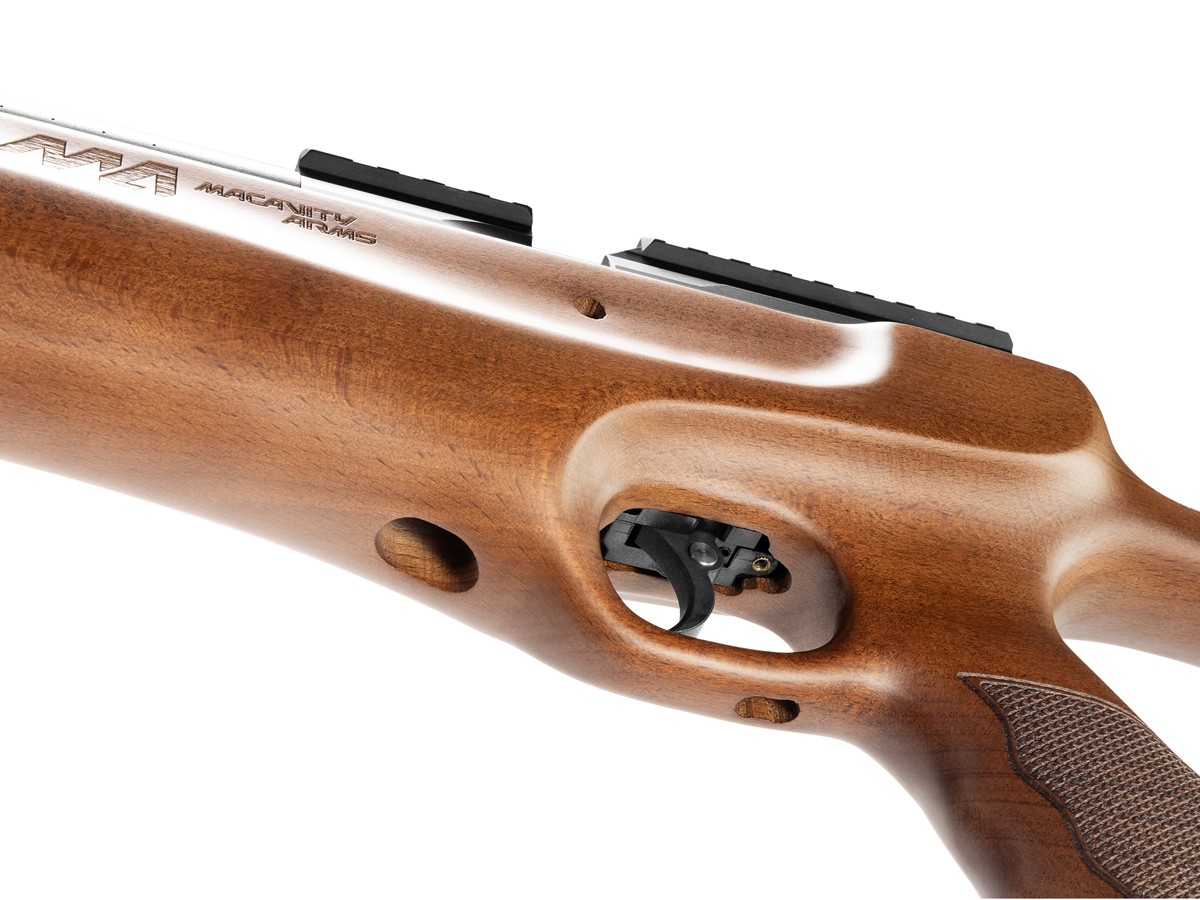
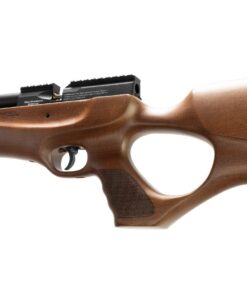
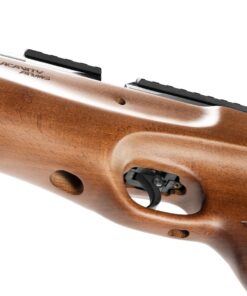
The Macavity Arms MA3 gives you a PCP air rifle with a good looking beech wood stock for a traditional look and feel and comfortable control, plus an externally adjustable regulator with an easy to use adjustment dial for steady performance. You’ll appreciate that you get precise shots thanks to the MSR barrel for the performance you need for pesting, target shooting, and small game hunting.

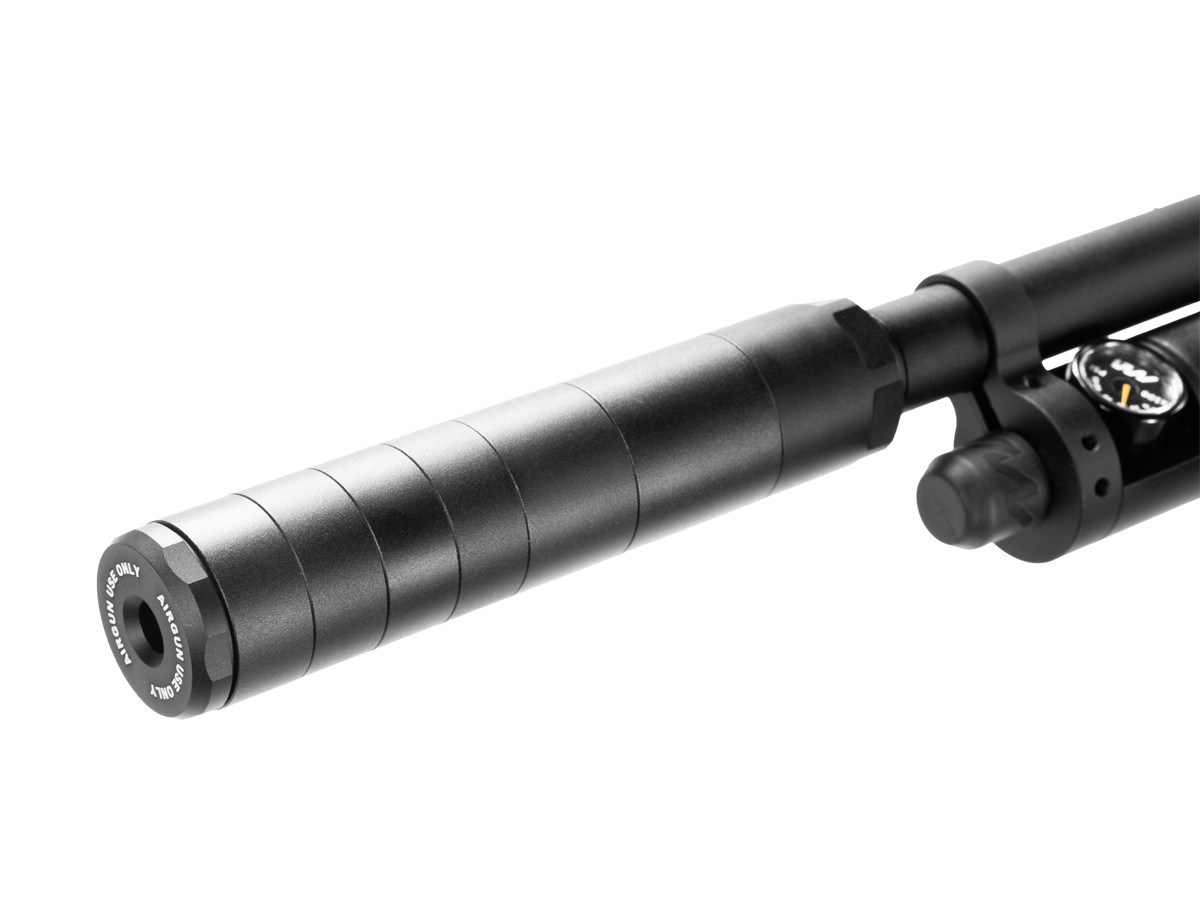
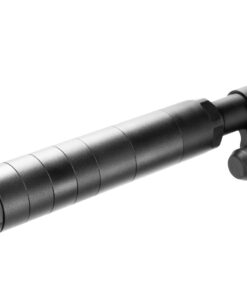
You’ll like how precise your shots are with this rifle thanks to the MSR (Master Select Rifling) barrel that’s tensioned, choked, rifled, and shrouded, with consistent rifling and smooth interior finishing that gives you reliable engagement with your ammo. You’ll also enjoy that you can personalize the balance and noise reduction of your airgun because of the modular baffled moderator that has multiple sections so you can also change the length, and a 1/2-20 UNF threaded muzzle to give you added options.

The Macavity MA3 gives you the ability to tune performance for the best precision with different ammo for specific uses because you get an externally adjustable regulator with an adjustment dial, so you get steady performance you can count on. Plus, you’ll get consistent pressure behind each shot even with fast follow up shots because the regulator chamber has been increased to 55cc.

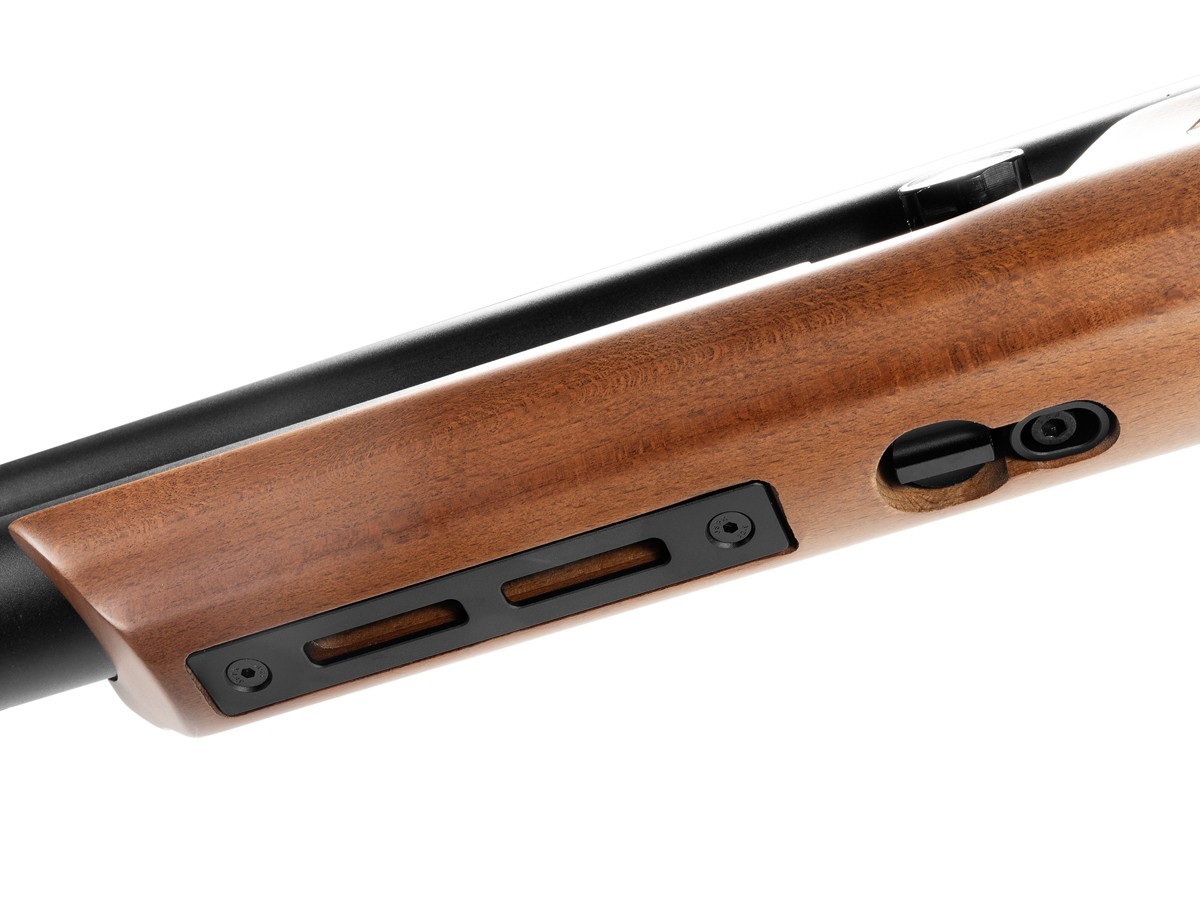
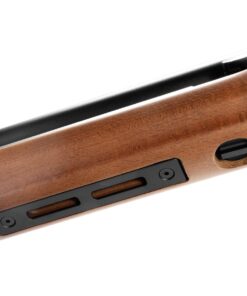
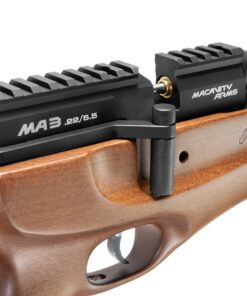
For precision aiming, you get a Picatinny scope rail, and you also get an M-LOK rail under the forearm so you can add items like bipods, sling adapters, and more to enhance your shooting experience. You’ll also get a comfortable and slip free hold because of the checkered grip and rubber buttpad on the beech stock.

If you want an adjustable PCP air rifle with an ideal blend of power and accuracy, get the Macavity Arms MA3 at Airgun Depot now.

Macavity Arms MA3 Features:

  • Sidelever cocking
  • Externally adjustable regulator
  • PCP
  • MSR (Master Select Rifling) barrel is rifled, choked, tensioned, and shrouded
  • 1/2-20 UNF threaded muzzle
  • Includes modular baffled moderator
  • Beech thumbhole stock
  • Upgraded 55cc regulator chamber
  • 188cc air cylinder (Standard), 265cc (Long)
  • 3,625 psi/250 bar max. fill pressure
  • Magazine capacity: 11 rounds (.22), 10 rounds (.25), 8 rounds (.30)
  • 2-stage adjustable trigger
  • Checkered grip
  • Rubber buttpad
  • Picatinny/Weaver scope rail
  • M-LOK bottom rail
  • Dual gauges for regulator and reservoir pressure
  • Manual safety
  • Quick-disconnect sling mount in rear of stock
  • Includes 3 rotary magazines
  • Barrel length: 18″ (Standard), 22″ (Long)
  • Overall length: 36.9″ (Standard), 40.9″ (Long)
  • Weight: 7.2 lbs. (Standard), 7.6 lbs. (Long)
  • 3-year limited warranty
Specs
  • ManufacturerMacavity Arms
  • Caliber .22
  • Velocity 870 fps
  • Condition New
  • Ammo Type Pellets
  • Action Sidelever
  • Barrel Style Rifled
  • Fire Mode Repeater
  • Gun Weight 7.60
  • Loudness 3-Medium
  • Magazine Capacity 11
  • Mechanism Pre-charged pneumatic
  • Rail Weaver/Picatinny
  • Safety Manual
  • Front Sights none
  • Rear Sights none
  • Trigger Adjustability Two-stage adjustable
  • Use Small game hunting/target practice
  • Warranty 3-year limited warranty
  • Upgrades Long

Precision Field Performance Is Delivered by the Macavity Arms MA3

Premium craftsmanship is combined with field-ready versatility in the Macavity Arms MA3, a regulated PCP platform that is engineered for hunters, pest controllers, and target enthusiasts alike. Traditional elegance is blended with modern adjustability so that consistent groups, humane harvests, and quiet backyard sessions can all be supported by one rifle. Consequently, serious stopping power is paired with an externally tunable regulator, and therefore a wide range of pellets and distances can be matched without tools or degassing.

Furthermore, a beech thumbhole stock is fitted so that comfortable cheek weld and balanced carry are provided during long days afield. Moreover, an upgraded 55 ml regulator chamber is incorporated; as a result, shot-to-shot velocity droop is reduced and a flatter power curve is maintained. Likewise, an MSR (Master Select Rifling) barrel that is tensioned, choked, shrouded, and internally finished is employed so that lead buildup is minimized and tighter groups are produced.

Regulator Control and Air Efficiency Are Optimized

Linear Free Adjustable (LFA) regulation is featured so that output pressure can be dialed from approximately 600 to 3,800 psi from the outside. Additionally, the reservoir need not be emptied when pressure is lowered; thus, field tuning remains fast and practical. Meanwhile, dual gauges for cylinder and regulator pressure are mounted so that remaining air and set output can be monitored at a glance. Subsequently, a generous cylinder—188 cc on the Standard or 265 cc on the Long—is paired with efficient internals, and therefore more usable shots per 3,600 psi fill are obtained.

Quiet Accuracy and Modular Suppression Are Built In

A tensioned, choked barrel is housed inside an integrated shroud with a built-in suppressor so that vibration and muzzle report are reduced. In addition, a modular baffled moderator is included and can be lengthened or shortened; consequently, sound attenuation, weight, and overall length can be balanced to the task. Moreover, a ½-20 UNF muzzle thread is provided so that aftermarket cans or brakes can later be fitted. As a result, neighbors and game are less likely to be startled, and follow-up shots remain available.

Highlighted Product Listings and Core Specifications

The following capabilities are offered across Standard and Long configurations and across popular calibers:

  • Calibers available: .177, .22, .25, and .30 so that small-game, pest, and medium-game work can all be addressed.
  • Action and mechanism: Smooth sidelever cocking on a pre-charged pneumatic repeater so that rapid follow-ups are enabled.
  • Magazine capacity: 13 (.177), 11 (.22), 10 (.25), or 8 (.30) rounds; three rotary magazines are supplied.
  • Barrel: MSR rifled, choked, tensioned, and shrouded; 18 in Standard / 22 in Long.
  • Overall length / weight: 36.9 in / 7.2 lb Standard; 40.9 in / 7.6 lb Long.
  • Max fill / energy: 3,600 psi (250 bar); up to approximately 95 ft-lb (130 J) on the Long .30.
  • Regulator range: 600–3,800 psi with enlarged 55 ml chamber.
  • Stock and rails: Beech thumbhole with checkered grip, rubber buttpad, Picatinny optics rail, M-LOK forend rail, and QD sling point.
  • Trigger and safety: Two-stage adjustable trigger plus manual trigger safety.
  • Fill and warranty: Foster male QD fill port; 3-year limited warranty.

Furthermore, an adjustable hammer spring is included so that hammer strike can be matched to regulator setting. Likewise, an ambidextrous grip layout is used so that left- and right-handed shooters are equally accommodated.

Field Uses That Are Supported

Small-to-medium game hunting is supported when regulator pressure and pellet weight are matched; humane, decisive shots can therefore be placed. Pest control around farms and properties is likewise enabled because the shrouded, moderated report remains neighbor-friendly. Target and plinking sessions are enjoyed as well, since the two-stage trigger and consistent regulation produce repeatable groups at 50 and 100 yards when quality pellets are chosen. In addition, the M-LOK rail allows a bipod or light to be attached in seconds, and a sling can be clipped so that long walks remain comfortable.

Why the Macavity Arms MA3 Is Chosen by Enthusiasts

Value well above its price class is delivered because features normally reserved for far costlier rifles—external regulation without degassing, a large plenum, a premium wood thumbhole stock, and a modular moderator—are combined in one package. Consequently, one platform can be tuned for backyard practice one afternoon and for ethical hunting the next. Moreover, twist rates are specified per caliber (for example 1:22 in .22 and .30, 1:24 in .25) so that pellet engagement remains consistent. As a result, fewer flyers are produced and confidence at longer ranges is increased.

Inclusive design choices are evident throughout: the stock geometry welcomes a wide range of body sizes, the sidelever and safety are reachable without strain, and caliber options let every shooter select the trajectory and energy that suit local game and regulations. Therefore, responsible ownership is encouraged, and legal, ethical use remains straightforward when local FAC or power limits are observed.

A complete field-ready package is supplied so that the rifle can be taken from box to range with minimal extra purchase. Three magazines, the modular moderator, and dual gauges are already included; optics and a fill source are the only typical additions. Subsequently, maintenance remains simple because the smooth MSR bore reduces fouling and the regulator can be reset without disassembly.

Conversion-focused performance is the outcome: tighter groups are obtained, more shots per fill are realized, and quieter, more adaptable hunting and target sessions are enjoyed. The Macavity Arms MA3 is therefore positioned as a versatile, regulated PCP that rewards careful pellet selection and thoughtful regulator settings. When premium feel, external tunability, and real-world versatility are required in a single beech-stocked rifle, this platform is ready to be put to work.

Calibres, FAC Considerations, Power Output, and Accessories for the Macavity Arms MA3

Versatile calibre choice is provided by the Macavity Arms MA3 so that small-game work, pest control, and medium-game hunting can all be addressed on one regulated platform. Consequently, four popular pellet calibres are offered, and therefore trajectory, energy, and magazine capacity can be matched to local game, range, and legal limits. Furthermore, Standard and Long barrel-and-cylinder combinations are available; as a result, shot count and muzzle energy can be scaled without a change of action or stock.

Calibre Options That Are Offered

A .177 option is supplied for high-volume target practice and lighter pest work where a flat trajectory is preferred. Meanwhile, the .22 chambering is widely chosen because a balance of pellet availability, magazine capacity, and humane small-game energy is achieved. Additionally, the .25 calibre is selected when extra momentum and wind resistance are required for larger pests. Likewise, the .30 option is reserved for the highest energy settings so that medium-game performance can be obtained on the Long configuration.

Magazine capacity is reduced as calibre increases so that reliable feeding is maintained: thirteen rounds are held in .177, eleven in .22, ten in .25, and eight in .30. Moreover, three rotary magazines are included with each rifle; thus, spare ammunition can be carried without extra purchase. Barrel twist is also specified per calibre—approximately 1:18 in .177, 1:22 in .22 and .30, and 1:24 in .25—so that pellet engagement remains consistent and flyers are reduced.

FAC Status and Legal Power Limits Are Explained

In jurisdictions such as the United Kingdom, a Firearm Certificate (FAC) is required when rifle muzzle energy exceeds 12 ft-lb. Because maximum published energy on the Macavity Arms MA3 reaches well above that threshold in .22, .25, and especially .30, FAC ownership is typically needed if the higher regulator settings are used. Conversely, sub-12 ft-lb operation may still be possible on lower regulator settings in some calibres; however, local proof, labelling, and dealer advice must always be followed, since factory maximum figures are not a substitute for a chronograph check.

Elsewhere in the EU and other markets, power caps, licensing, and transport rules differ. Therefore, purchasers are encouraged to confirm national and regional airgun laws before a calibre or Long-barrel version is selected. Inclusive, responsible use is supported when legal limits are respected and when the external regulator is used to stay within the permitted energy band rather than at the absolute maximum.

Power, Regulator Range, and Shot Performance Are Described

Maximum published muzzle energy is listed at roughly 40 J in .177, 60 J in .22, 80 J in .25, and up to about 125 J (approximately 95 ft-lb) in .30 on the Long rifle. Consequently, the Long 22-inch barrel and 265 cc cylinder are favoured when the highest energy and shot count are required, while the Standard 18-inch barrel and 188 cc cylinder remain lighter and more compact. Fill pressure of 3,600 psi (250 bar) is specified for both versions.

An enlarged 55 ml regulator chamber is fitted so that velocity droop across a shot string is reduced. Furthermore, regulator output can be adjusted externally from about 600 to 3,800 psi without the reservoir being emptied; as a result, pellet weight, distance, and local power limits can be matched in the field. Dual gauges allow reservoir and set regulator pressure to be read at a glance. An adjustable hammer spring is also provided so that hammer strike can be balanced to the chosen regulator setting, and therefore efficiency and consistency are improved.

Highlighted power-related points include:

  • Standard vs Long: shorter, lighter package versus extra cylinder volume and barrel length.
  • Regulator: wide external range with large plenum for a flatter power curve.
  • Typical use bands: lower settings for backyard and sub-limit practice; mid-to-high settings for hunting where legally permitted.
  • Ammunition pairing: JSB-style match pellets are commonly recommended per calibre for grouping tests.

Accessories That Are Included and Those That Can Be Added

A modular baffled moderator is supplied from the factory so that report can be tuned by adding or removing segments. In addition, a ½-20 UNF muzzle thread is cut so that aftermarket silencers or brakes can later be fitted. A Picatinny (Weaver) optics rail is machined on the action; consequently, a wide range of scopes and red dots can be mounted without adapters. An M-LOK section under the forend accepts bipods, lights, and rail sections, while a rear QD sling point allows a sling to be attached for long carries.

Foster male quick-disconnect fill hardware is fitted, and therefore standard PCP fill hoses and probes can be used. Extra metal magazines are offered by the manufacturer for shooters who prefer a more durable feed system. Optics, a quality fill source (hand pump, tank, or compressor), a padded case, and calibre-matched pellets complete a typical field kit. Because the stock already includes checkering, a rubber buttpad, and ambidextrous geometry, additional furniture is seldom required.

Conversion value is increased when the included moderator, three magazines, dual gauges, and rails are recognised as part of the package rather than optional extras. Subsequently, only optics and air are needed before the first range session. Inclusive accessory choices—slings, bipods, and low-power optics—allow younger, smaller-framed, and experienced shooters to set up the same rifle comfortably.

When calibre, FAC or local power rules, regulator setting, and a modest accessory list are aligned, the Macavity Arms MA3 is prepared for ethical hunting, quiet pest control, and consistent target work on a single, tunable PCP platform.

Air Rifles, PCP Systems, Calibers, Target Shooting and Popular Models

The world of air arms, air guns, and precision shooting equipment covers everything from recreational target shooting to sporting applications. For newcomers asking what is an air gun, what is an air rifle, what is air rifle, what is a air rifle, what is a airgun, what is an airgun, or what are airguns, the basic principle is straightforward. An air gun uses compressed gas or air to propel a projectile rather than relying on the combustion system associated with conventional firearms.

Understanding how does an air gun work, how does air gun work, how do air guns work, how does an air rifle work, how does air rifle work, and how do air rifle work can help buyers distinguish between the different operating systems available. Depending on the design, power can be supplied by a spring piston, compressed air cylinder, CO2 cartridge, or another pneumatic mechanism.

PCP Air Rifles and Compressed-Air Systems

One of the most popular categories is the pre-charged pneumatic platform. Searches such as what is a pcp air rifle, what is a pcp airgun, what is pcp air rifle, what is a pcp air gun, what is a pcp rifle, what is pcp rifle, what are pcp air rifles, and what is a pre charged pneumatic air rifle all relate to the same fundamental technology. A PCP rifle stores compressed air inside a reservoir and releases a controlled quantity each time the rifle is fired.

For shoppers researching pcp gun meaning, pcp rifle meaning, or pcp air rifle meaning, PCP simply refers to a pre-charged pneumatic system. Air is normally added using a pcp hand pump, dive cylinder, or pcp air compressor. Consequently, an air compressed gun or air compressor rifle can deliver consistent performance without requiring the shooter to manually compress a spring before every shot.

Some searches also include pcp bb gun, although many PCP platforms are primarily designed around pellets rather than traditional BB ammunition. Understanding the intended ammunition is therefore important before selecting accessories, magazines, or loading equipment.

.177 Caliber, .22 Caliber and Pellet Selection

Caliber choice is one of the most frequently researched subjects among airgun buyers. The .177 caliber remains extremely popular for recreational shooting and precision target applications. Products described as a 177 air rifle, 177 bullet, or even 177 cal darts may appear during searches, although ammunition compatibility always needs to be checked against the manufacturer’s specifications.

Questions including 177 or 22, 177 cal vs 22, 177 caliber vs 22, .177 caliber vs .22, .177 pellet vs .22 pellet, and .22 vs .177 pellet generally focus on differences in projectile size, trajectory, energy, and intended use. A smaller .177 pellet is commonly chosen for paper targets and precision shooting, whereas larger calibers may be selected for applications where additional projectile mass is desired.

Understanding bb gun pellet sizes is equally important because BBs and pellets are not automatically interchangeable. Before purchasing ammunition, shooters should confirm the caliber and projectile type specified for their particular pellet rifle, pellet pistol, or bb gun.

Air Arms Rifles and Popular Models

Among established manufacturers, air arms products remain widely searched by enthusiasts interested in precision PCP and spring-powered platforms. Well-known searches include air arms s510, s510, air arms s410, aa s400, pro sport air arms, prosport air arms, tx 200, and tx200.

Variations such as air arm and airarm are also commonly entered by shoppers searching for the brand. Buyers looking specifically for regulated sporting configurations may encounter the air arms s510 ultimate sporter .177 sub 12, a phrase frequently associated with UK-oriented searches for the S510 platform.

Each Air Arms model has its own action, stock design, power configuration, caliber options, and intended shooting environment. Therefore, specifications should always be checked against the exact version being considered rather than assumed from another model in the same family.

FX Impact M3, FX Maverick and Modern PCP Platforms

Premium PCP research frequently includes the fx maverick and the fx impact m3. Buyers may also search for fx impact mk3, fx m3 airgun, fx m3, impact m3, or fx impact m3 air rifle while comparing generations and configurations.

More specific searches such as fx impact m3 .22cal air rifle. 600mm barrel focus on caliber and barrel-length combinations. Meanwhile, international shoppers may search fx impact m3 precio, fx impact m3 precio en usa, or fx impact m3 price when researching current market pricing.

Because FX platforms can be produced in multiple barrel lengths, calibers, power settings, and regional configurations, buyers should verify the exact specification offered in their country before ordering.

Break-Barrel Air Rifles

Another major category is the break barrel air rifle. Anyone asking what is a break barrel air rifle or what is a break barrel pellet gun is usually referring to a rifle in which the barrel is hinged downward to cock the internal powerplant and expose the breech for loading.

Break-barrel designs remain popular because they can provide a self-contained shooting system without an external compressor or air bottle. Models such as a gamo pellet gun are frequently encountered by buyers exploring this category.

Learning how to load pellet gun equipment properly is particularly important. Pellets should match the manufacturer’s recommended caliber and should be loaded in accordance with the owner’s manual while the rifle is pointed in a safe direction and handled under normal shooting-range safety procedures.

CO2, Pellet Pistols and Other Airgun Types

Not every airgun uses PCP or spring power. A co2 powered pellet rifle, for example, uses replaceable CO2 cartridges as its propellant source. CO2 systems can be found in rifles and handguns intended for recreational shooting, training, and target use.

People researching air pistol uses or general pellet gun uses will encounter equipment intended for target practice, recreational plinking, skills training, competition, and other lawful sporting activities. A pellet pistol can offer a compact platform, while rifles generally provide a longer sight radius and additional stability.

Search terms such as pelet guns are also common misspellings of pellet guns and can still represent useful search intent when website content is designed to answer frequently asked buyer questions naturally.

Target Shooting and Airgun Practice

One of the most established uses of airguns is target shooting with air rifles. Dedicated air guns for target shooting may emphasize accuracy, adjustable stocks, match triggers, regulated air delivery, and compatibility with precision optics.

Likewise, airgun target practice and airgun for target practice are common search topics among people looking for an accessible way to develop shooting fundamentals. Proper backstops, eye protection, safe handling practices, and suitable ranges should always be used.

The practical range of air rifle equipment varies considerably according to caliber, muzzle energy, projectile selection, environmental conditions, and the rifle itself. As a result, buyers should use manufacturer specifications and local range rules rather than assuming that every air rifle performs identically.

Hunting Air Rifles and Appropriate Use

Some shooters research air rifles for hunting, hunting air rifles, best air rifle for hunting, pellet gun for rabbits, or even the informal phrase rats gun when looking for equipment designed for lawful pest-control or hunting applications.

Suitability depends heavily on local law, caliber, projectile energy, quarry species, shot placement requirements, and humane hunting standards. Questions such as can a bb gun kill a fox should therefore not be treated simply as equipment-selection questions. Legal restrictions and animal-welfare requirements should be checked first, and low-powered BB guns are not appropriate substitutes for equipment legally and ethically suitable for a particular species.

Similarly, searches for air rifles for deer hunting and big game hunting with air rifle involve specialized legal and ballistic requirements. Large-bore systems such as a 72 caliber air rifle or products associated with bluegrass big bore illustrate how different big-bore pneumatic platforms can be from conventional small-caliber pellet rifles. Local hunting regulations must determine whether such equipment may legally be used.

Licensing and UK Airgun Regulations

Legal requirements differ considerably by jurisdiction. UK-oriented searches frequently include do you need a licence for air rifle, air rifle certificate uk, and 22 rifle uk license. However, the rules governing air rifles, conventional .22 firearms, certificates, age restrictions, possession, transportation, and power limits are not identical.

Consequently, buyers should confirm current legislation with the relevant licensing authority before purchasing or using any regulated equipment. Particular attention should also be paid to whether a rifle is configured below or above applicable power thresholds.

Sportsman, Gamo and Other Popular Searches

Beyond specialist PCP manufacturers, buyers may encounter products such as the sportsman 900 while comparing recreational air rifles. Searches for a gamo pellet gun are also common because Gamo offers numerous spring-powered and pneumatic models across different price points and configurations.

The broader search for best air guns can include everything from affordable recreational platforms to sophisticated regulated PCP rifles. Rather than treating one design as universally superior, buyers should compare caliber, intended application, weight, stock ergonomics, power source, shot capacity, charging equipment, availability of spare parts, and local legal requirements.

Airgun Safety, Home Use and Responsible Ownership

Searches for air guns for home defense do appear online, but an airgun should not automatically be assumed to be suitable for defensive use. Laws vary significantly, and airguns can cause serious injury. Secure storage, lawful ownership, training, safe handling, and avoidance of unnecessary confrontation remain essential.

Whether someone owns an air rifle, pellet rifle, bb gun, or PCP platform, the equipment should always be treated as capable of causing injury. A secure backstop should be used for recreational shooting, the muzzle should remain pointed in a safe direction, and manufacturer instructions should be followed carefully.

Ultimately, understanding the differences between PCP rifles, break-barrel systems, CO2 equipment, caliber choices, and individual models makes it easier to compare the extensive range of modern airguns. From Air Arms platforms to FX rifles and recreational pellet guns, careful specification checking, responsible handling, lawful use, and suitable ammunition selection remain central to getting the right equipment for the intended purpose.

Practical Use in the Field, on the Range, and Around Property

Everyday shooting tasks are handled more confidently when a regulated sidelever PCP is carried with a quiet shroud, an external regulator, and a stable wood stock. Consequently, small-game outings, farm pest work, and unhurried target sessions can all be completed with the same platform after only a change of pellet, regulator setting, and accessory. Furthermore, inclusive use is supported because cheek weld, trigger reach, and sling points remain comfortable for a wide range of body sizes and experience levels. Moreover, legal energy limits can be respected by lowering regulator output, and therefore both licensed high-power hunting and quieter practice can be scheduled on different days.

Dawn Ridge Walks and Small-Game Stalks Are Completed Quietly

A pre-dawn walk along a hedgerow or ridge is begun after a full fill is confirmed on the reservoir gauge and after regulator pressure is set for the chosen pellet. Subsequently, a sling is clipped to the rear QD point so that both hands remain free while cover is approached. Meanwhile, the thumbhole stock settles into the shoulder, and a consistent cheek weld is found without extra spacers. When a rabbit or similar small quarry is presented, the sidelever is cycled once, the safety is moved, and a single, well-aimed shot is taken.

Because an integrated shroud and modular moderator are already in place, muzzle report is kept modest. As a result, remaining animals in the same field are less likely to bolt, and a second opportunity can sometimes be taken from the same position. Additionally, the two-stage trigger allows a crisp break once the hold is settled, and therefore flyers caused by a heavy pull are reduced. After the shot, the sidelever is worked again, a fresh pellet is indexed from the rotary magazine, and the rifle is made safe until the next presentation.

Highlighted field habits that are followed on these walks include:

  • Regulator pressure that is matched to pellet weight and expected distance before leaving the vehicle.
  • A compact bipod or shooting sticks that can be attached to the forend rail only when a longer wait is planned.
  • A modest light that can be mounted for last-light retrieval, then removed so that weight is kept down during the walk.
  • Ethical range limits that are observed so that a clean, humane result is more likely.

Farm and Property Pest Work Is Handled with Neighbour Consideration

Around barns, orchards, and outbuildings, repeated opportunities often appear at mixed distances. Consequently, a mid-range regulator setting is chosen so that both close pigeons and slightly farther ground pests can be addressed without a full retune between shots. Furthermore, the moderated report helps keep livestock and neighbours calmer than an unshrouded discharge would. Likewise, a magazine with several rounds already loaded means that a second or third pest can be engaged if it remains after the first shot.

A stable rest is formed against a fence post, a bag, or a briefly deployed bipod. Then the optic’s reticle is held for the known zero, and the shot is released. Afterward, the area is checked so that a wounded animal is not left. Inclusive practice is maintained when less experienced helpers are kept behind the firing line and when every shot is called only after a clear backstop is confirmed. In addition, lower regulator settings can be used near dwellings so that legal and courtesy limits are not exceeded.

Wind along building lines can be deceptive. Therefore, a slightly heavier pellet in a larger calibre is often preferred for these sessions, because drift is reduced and momentum on impact is increased. Subsequently, groups are verified on a cardboard box or similar safe target at the same distances before live work begins.

Fifty- and One-Hundred-Yard Target Sessions Are Used to Confirm Zero

A formal range or a safe private lane is used when groups and zero must be confirmed. First, the rifle is bagged or bipoded so that shooter error is isolated from the platform. Next, a known pellet is loaded, and five-shot strings are fired at 50 yards. Because the enlarged regulator chamber smooths pressure, velocity variation across the string remains modest when the fill is still high. As a result, group size can be read as a fair test of barrel, pellet, and hold.

After the 50-yard group is recorded, the same aiming point is used at 100 yards, or a hold-over is applied from a dope card built on earlier sessions. Meanwhile, the two-stage trigger is adjusted if the break feels too heavy or too light for the day’s conditions. Moreover, the hammer spring can be tweaked so that efficiency at the chosen regulator pressure is improved. Consequently, more usable shots are obtained from one fill before velocity begins to fall.

Between strings, the sidelever is worked smoothly rather than slammed, and the magazines are rotated so that a single magazine is not worn unevenly. A cleaning rod is used only as needed, because the smooth rifling profile already reduces lead buildup. After the session, remaining air is noted on the gauge, and a refill is planned before the next hunt rather than mid-stalk.

Regulator Tuning in Changing Wind and Distance Is Practised

Field conditions rarely stay fixed. Therefore, the external regulator dial is treated as a working control rather than a factory-locked setting. When a heavier slug-style projectile is substituted for a lighter diabolo, regulator pressure is raised so that the new projectile is driven to a useful velocity. Conversely, when a light pellet and a short, quiet session are planned, pressure is lowered so that report and pellet splash remain modest.

Importantly, the reservoir need not be emptied when pressure is reduced. Thus, a mid-session change can be made at the tailgate after a few confirmation shots on a safe backstop. Dual gauges are watched so that the set output never exceeds available cylinder pressure. Inclusive coaching is easier in this setup, because a newer shooter can be shown the dial and gauges rather than an internal valve that requires tools.

Highlighted tuning steps that are repeated in the field include:

  • Confirmation that cylinder pressure still sits above the intended regulator setting.
  • Small dial movements followed by a three- or five-shot check group.
  • A written note of pellet, regulator reading, and point of impact at two distances.
  • A return to a known “home” setting after experimental work so that the next outing starts from a familiar baseline.

Carry, Rests, and Accessories Are Arranged for Long Days

A full day afield is made easier when weight is distributed and when supports can be added or removed quickly. The wood stock already supplies a warm, vibration-dampening hold; additionally, the rubber buttpad keeps the rifle from sliding on the shoulder during a sit. A sling is used for walks between stands, then dropped when a shot is imminent. An M-LOK section under the forend accepts a short rail, a light, or a lightweight bipod; consequently, the same rifle can be carried slim in cover and then given a stable rest in open ground.

Optics are kept simple enough that the eye finds the reticle quickly at first light. A moderate-magnification scope with a clean reticle is typically chosen over an overly complex unit, because fog, gloves, and hurried shots do not reward extra turrets. Fill gear stays in the vehicle: a hose, a probe, and either a tank or a portable compressor. The Foster-style port on the rifle accepts standard fittings, so extra adapters are seldom required.

Inclusive setup is considered when a shorter-statured shooter uses the same rifle. Length of pull is already moderate, and the thumbhole plus checkered grip allow a secure hold without a custom stock. A rear bag or a small pack can be used as a rest when a bipod is not wanted. Safety remains shared: the manual safety is applied whenever the rifle is slung or handed across a fence.

Backyard and Family Practice Sessions Are Kept Considerate

Not every outing is a hunt. Quiet, regulated practice near home is equally valid when local rules allow it and when a safe backstop is in place. For these sessions, regulator pressure is kept at the lower end of the useful range so that pellet energy and report stay neighbour-friendly. Paper or reactive targets at 20 to 40 yards are sufficient to keep trigger and hold skills sharp. Children or new adults who are being introduced to the sport can be coached from immediately beside the shooter, because the sidelever and safety are visible and the report is not startling.

Magazines are loaded at a bench rather than in a hurry. Dry practice—with the rifle confirmed empty—can be used to rehearse mount, safety operation, and follow-through. Afterward, the rifle is stored unloaded, with air either left at a moderate pressure or managed according to the owner’s usual routine. Inclusive language and patience during these sessions matter as much as group size: confidence is built when every person on the line understands the sequence and the backstop.

Ethical Follow-Through and End-of-Day Routine Are Observed

A practical outing is not finished at the shot. After any hunting or pest use, the area is searched so that a hit animal is recovered promptly. The rifle is made safe, the magazine is removed or emptied if local practice requires it, and the muzzle is kept in a safe direction during the walk out. At the vehicle, gauges are read, a brief note of settings and conditions is written, and moisture is wiped from the metal and the wood.

Seasonal changes are planned for as well. In cold weather, seals and regulator behaviour can shift slightly; therefore, a short confirmation string is fired before a serious hunt. In heat, fills are watched so that pressure is not left at an extreme overnight in a closed vehicle. Rain is managed with a simple cover on the optic and a dry cloth on the stock; the shroud already helps keep the muzzle crown protected.

Over many such days, the same pattern is repeated: fill, set regulator, confirm zero, hunt or practise, recover, log, and store. Because the platform accepts a sling, a bipod, extra magazines, and a threaded moderator, the kit can grow slowly rather than all at once. Conversion from “range curiosity” to “trusted field rifle” happens when these ordinary scenarios—dawn stalks, barn-edge pest work, 50- and 100-yard groups, and quiet family practice—are completed cleanly and legally, again and again, with settings that can be reproduced the next morning.
Select Option

Long, Standard

Select Caliber

.22, .25, .30

Reviews

There are no reviews yet.

Be the first to review “Macavity Arms MA3”

Related Products

FAQ

  • Spring-Piston (Break-Barrel or Underlever): Cock by compressing a spring. Reliable, no external air source needed, but can have more recoil (“spring twang”) and require technique to shoot accurately.
  • Pre-Charged Pneumatic (PCP): Filled from a scuba tank, compressor, or pump. High power, low recoil, multiple shots per fill. Popular for precision and hunting.
  • CO₂: Powered by disposable cartridges. Good for pistols and semi-auto/repeaters, but performance drops in cold weather.
  • Multi-Pump Pneumatic: Hand-pumped to build pressure. Versatile but requires effort.
  • Gas Ram (Nitro Piston): Uses compressed gas instead of a metal spring. Smoother than traditional springers.

Calibers: Most common are .177 (4.5mm) for speed/flat trajectory and general use, and .22 (5.5mm) for better hunting knockdown power. Larger “big bore” (.25, .30, .357+) exist for hunting bigger game where legal.

Yes, many modern PCP and springers deliver enough energy for small game (rabbits, squirrels, birds) and even larger game in some areas. Muzzle energy (in ft-lbs or joules) matters more than velocity alone. Always match caliber, pellet weight, and energy to the game and check local hunting regs.

Treat every airgun as if it is loaded.

  • Always point the muzzle in a safe direction.
  • Keep your finger off the trigger until ready to shoot.
  • Know your target and what is beyond it (pellets can ricochet or travel far).
  • Wear eye protection.
  • Store unloaded, out of reach of children/untrained users, and ideally locked.
  • Never shoot at hard surfaces or in areas where pellets could escape your property.

Follow these rules strictly—airguns cause real injuries.

Laws differ dramatically by country, state/province, and even city. Always verify current local laws before buying, owning, transporting, or using an airgun. Age restrictions (often 18+) are common.

Examples (summaries only; check official sources):

  • UK: Air rifles ≤12 ft-lbs (16.3 joules) and pistols ≤6 ft-lbs generally do not require a license (FAC needed above that).
  • USA: Varies by state. Some treat powerful airguns as firearms; others do not. Many states now allow big-game hunting with air rifles.
  • Canada: Some airguns classified as firearms if they exceed velocity/energy thresholds.
  • Australia: Often treated as firearms; licensing/registration required in most states.
  • EU/France/Belgium/etc.: Varies; many allow low-power (<20J) guns freely to adults, with higher power needing permits. Germany has strict ~7.5J limits in some contexts.
  • Other countries: Some have no restrictions below certain energies; others ban or heavily regulate them.

Resources: Wikipedia “Air gun laws”, airgun forums, or official government sites. For travel, research transit laws carefully.

Consider:

  • Purpose: Plinking/backyard → lower power springer or CO₂. Hunting/precision → PCP.
  • Budget: Entry-level springers are affordable; PCPs need a fill system (extra cost).
  • .177 vs .22: .177 easier for beginners/targets; .22 better for hunting.
  • Power source: Convenience vs performance.
  • Test pellets in your gun—accuracy varies.

Buy from reputable dealers and consider warranties.

  • Clean barrel periodically (especially if accuracy drops) with patches and appropriate tools/solvents. Avoid over-oiling.
  • Lubricate moving parts and seals with airgun-specific oil (not general gun oil). Springers need piston seal oil occasionally.
  • Check screws, seals for leaks (PCP), and safety mechanisms regularly.
  • Store in a cool, dry place, ideally in a case. Avoid leaving cocked for long periods.

Follow your model’s manual. Basic care extends life significantly.

International shipping may be available for select products. Customers are responsible for understanding and complying with their local import laws and regulations before ordering.

Yes. Customers are required to confirm their order number through WhatsApp or Live Chat before orders are processed and shipped.

If local laws prevent shipment to your area, your order may be canceled and refunded according to our store policy.

Processing typically takes 1–3 business days after payment confirmation. Delivery times vary depending on destination, carrier, and product availability.


  • Wrong pellets for your barrel/caliber.
  • “Death grip” or poor shooting form (especially with springers—let the gun recoil naturally).
  • Loose scopes or mounts.
  • Ignoring safety or local laws.
  • Over-oiling or shooting with obstructions.


Pellets are the most common projectile (lead or lead-free). Match them to your gun, caliber, and purpose—test several brands as accuracy varies by barrel.

  • Domed (Round-Head): Best all-rounder. Excellent accuracy, ballistic coefficient, and energy retention. Ideal for target shooting, field target, and general hunting (e.g., JSB Exact, Air Arms Diabolo Field, H&N Field Target Trophy).
  • Wadcutter (Flat-Head): Clean holes in paper. Best for close-range target/plinking (under 20-25 yards).
  • Hollow Point: Expands on impact for better energy dump. Good for small game hunting (e.g., Predator Polymag, H&N Terminator).
  • Pointed: More penetration, but often less accurate than domed.
  • Slugs: Heavier, more aerodynamic for high-power PCPs at longer ranges (better for big game where legal).

Tips: Heavier pellets in .22/.25 for hunting (better momentum). Lighter in .177 for speed/flat trajectory. Always check head size fit (e.g., 4.51-4.53mm variants).

Muzzle energy (ft-lbs or joules) matters more than velocity. Ethical shots require precise placement (head/heart-lung) within effective range.

Rough Guidelines (adjust for distance, pellet, and local laws):

  • Small game (squirrels, rabbits, birds): 9-20+ FPE, .177/.22.
  • Medium (raccoons, etc.): 25+ FPE, .22/.25 recommended.
  • Larger game: 40-100+ FPE in .30+ calibers (up to big bore for deer/hogs where permitted).

PCPs dominate serious hunting due to power and shot count. Springers/gas rams work well for small game but require skill. Always prioritize clean kills and check seasons/species rules.

  • Barrel Cleaning: Use a pull-through kit or rod with patches. Avoid brushes that could damage rifling. Clean when accuracy drops or after 500-1000 shots.
  • Lubrication: Airgun-specific silicone oil for seals/O-rings (sparingly—excess causes dieseling in springers). Springers may need piston lube periodically.
  • PCP Specific: Check for leaks (soapy water test), monitor regulator/hammer settings, and keep fill systems clean. Don’t exceed rated pressure.
  • General: Tighten stock screws, inspect for wear, store properly. Chronograph shots to track consistency.

Common Issues:

  • Inconsistent velocity → dirty barrel, bad pellets, or seal problems.
  • Spring “twang” → tuning or proper hold.
  • Low power → worn seals or under/over-pumping.

Toggle Content

  • Scopes: Airgun-rated (hold zero under recoil). 3-9x or 4-12x common.
  • Fill Systems: Hand pumps, compressors, or tanks for PCPs.
  • Safety Gear: Eye/ear protection, targets with backstops.
  • Noise: Airguns quieter than firearms, but moderators help further.

Budget Tip: Start with a quality springer (~$150-400) before investing in PCP setup.

Airgunning offers endless depth—from backyard plinking to precision competition and ethical hunting. Prioritize safety, legality, and practice. If you want specifics (e.g., recommendations for a country, budget, hunting small game, or a particular type like PCP vs springer), let me know for more targeted info! Shoot responsibly.

Tuning improves accuracy, reduces noise/recoil, or increases power (within legal limits).

  • Springers: Lighter springs, guides, seals, or custom tuning kits for smoother shot cycle. “V-Mach” or similar professional tunes popular.
  • PCPs: Regulator tuning, hammer spring adjustments, valve work for efficiency and shot count. Some add electronic systems.
  • Accessories: Suppressors (often unregulated on airguns), better triggers, stocks, and scopes.

Caution: Check laws—power increases may reclassify your gun. DIY only if experienced; professional tuners recommended.

You must be at least 18 years old to purchase any airgun or related accessories from our store. By placing an order, you confirm that you meet the legal age requirements in your state or country.

Yes. Orders may require age verification before processing and shipping. In some cases, we may request a valid government-issued ID to confirm eligibility.