Calibers, FAC Considerations, Power Output, and Accessories for the Macavity Arms Agility MA2 Long
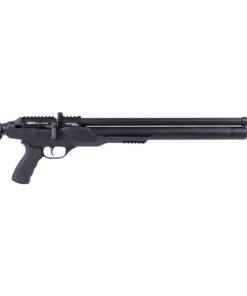
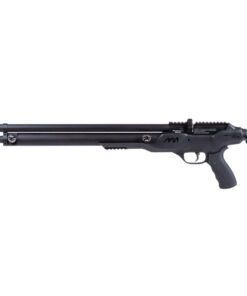
Multiple chamberings are offered by the Macavity Arms Agility MA2 Long so that one platform can be matched to target work, pest control, or small-to-medium game use. Power, shot count, and magazine capacity are scaled with caliber, while the same 22-inch choked, tensioned, shrouded, and rifled barrel architecture is retained. Consequently, pellet stability and reduced muzzle report can be expected across the line. Legal classification, however, is determined by local energy limits; therefore, FAC or equivalent licensing requirements must be confirmed before purchase or use.
Caliber Options and Intended Roles
Four factory chamberings are supplied so that velocity, energy, and magazine capacity can be selected according to the intended task.
- .177 (4.5 mm) is configured for high shot count and modest energy. Up to 890 FPS and 14.75 FPE are quoted with lead pellets. As many as 180 regulated shots per fill and a 13-round rotary magazine are provided. Precision target practice and close-range pest work are therefore supported when lighter projectiles are preferred.
- .22 (5.5 mm) is positioned as a balanced field caliber. Up to 870 FPS and 29.5 FPE are specified. Approximately 100 shots per fill and an 11-round magazine are listed. Small-game hunting and general pest control are commonly associated with this combination of trajectory and knockdown.
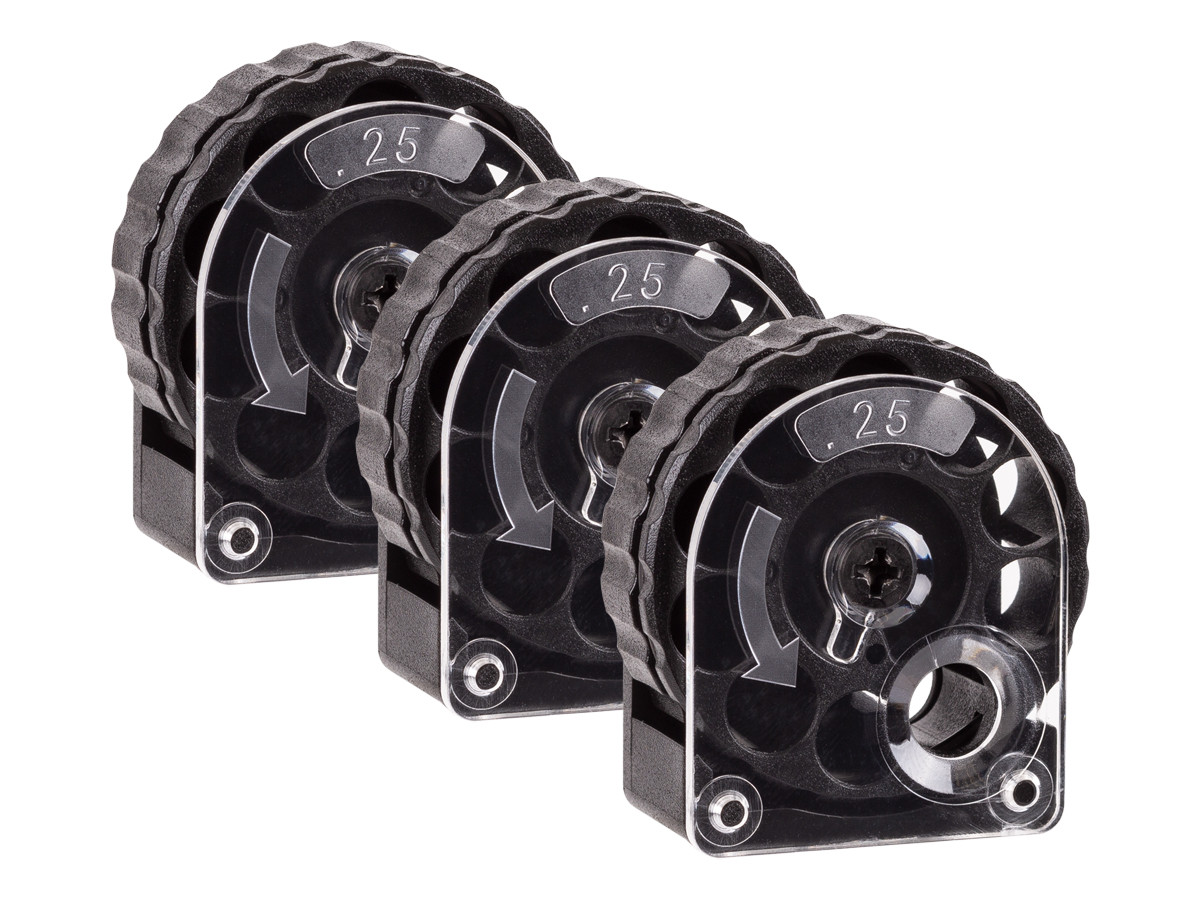
- .25 (6.35 mm) is tuned for greater terminal effect. Up to 890 FPS and 44.25 FPE are stated. Around 60 shots per fill and a 10-round magazine are given. Medium pests and larger small game can be addressed when ethical shot placement and legal energy limits are observed.
- .30 (7.62 mm) is offered when maximum energy from this platform is required. Up to 880 FPS and 81.13 FPE are published. Roughly 24 shots per fill and an 8-round magazine are indicated. Heavier pests within the rifle’s practical range may be considered, provided local regulations and responsible hunting practice are followed.
JSB Exact Jumbo Heavy (.22), JSB Exact King (.25), and JSB Exact Diabolo (.30) are among the factory-recommended pellets so that consistency can be improved. Alternative premium pellets and slugs may be tested once the internally adjustable regulator and hammer spring have been set.
FAC, Legal Power Limits, and Responsible Classification
Energy figures published for the Macavity Arms Agility MA2 Long generally exceed the 12 ft-lb UK air-rifle threshold in every listed caliber. As a result, Firearm Certificate (FAC) status, or the equivalent authorization in other jurisdictions, is typically required where those limits apply. Sub-12 ft-lb “sporting” versions are not described in the standard Long specification; therefore, purchasers in restricted markets should verify whether a factory-limited variant is available before an order is placed.
Elsewhere, classification depends on national or regional energy caps, age restrictions, and transport rules. Inclusive and lawful ownership is supported when local statutes are checked, safe storage is practiced, and the rifle is used only where it is permitted. No statement in this section constitutes legal advice; official guidance from the relevant authority should always be obtained.
Factory regulator pressures are set by caliber—approximately 1,160 PSI (.177), 1,300 PSI (.22), 1,600 PSI (.25), and 2,030 PSI (.30) on the Long model—so that a usable velocity band can be maintained. An internally adjustable regulator and an adjustable hammer spring are included so that output can later be refined within safe mechanical limits. Extreme spreads reported in independent tests of production .25 Long examples have remained tight on the regulator, which further supports predictable point of impact when legal power settings are used.
Power Delivery and Shot-String Behavior
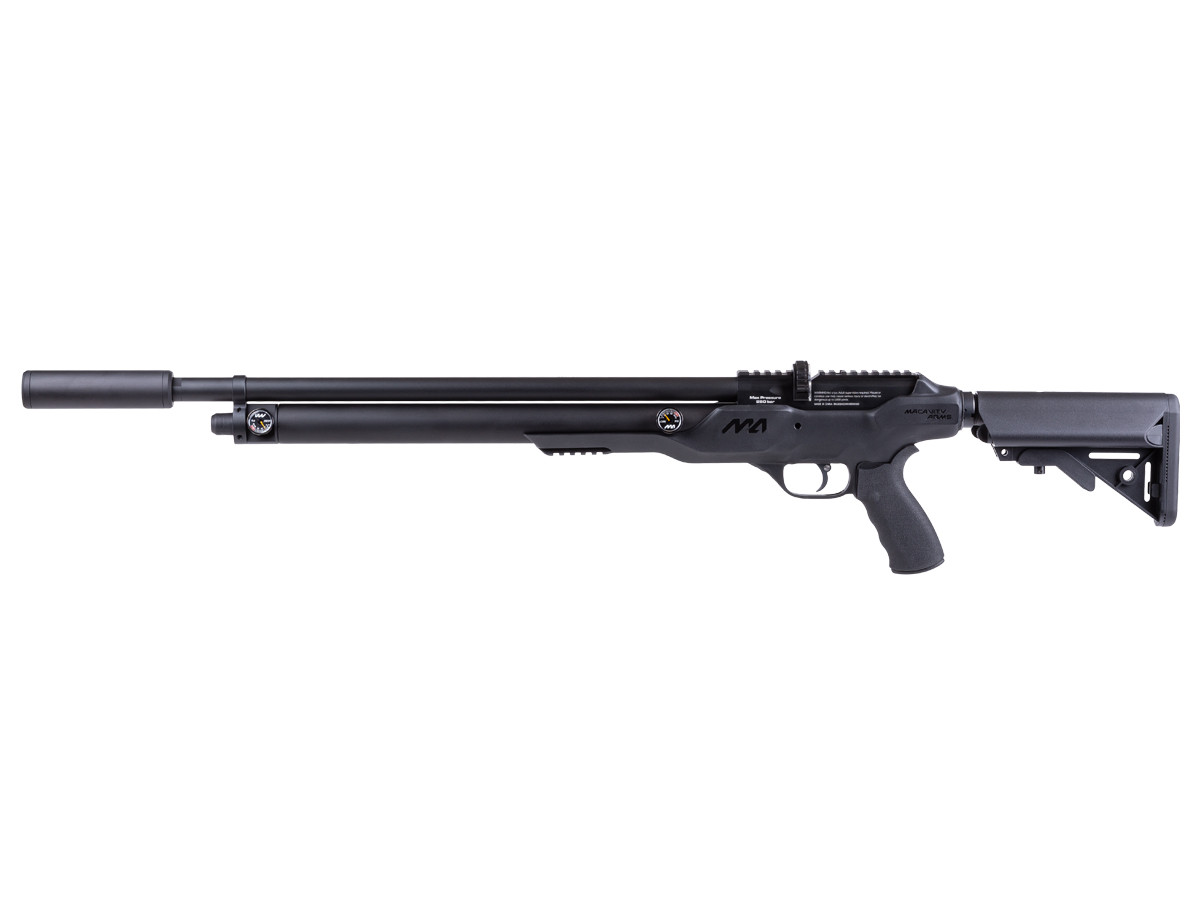
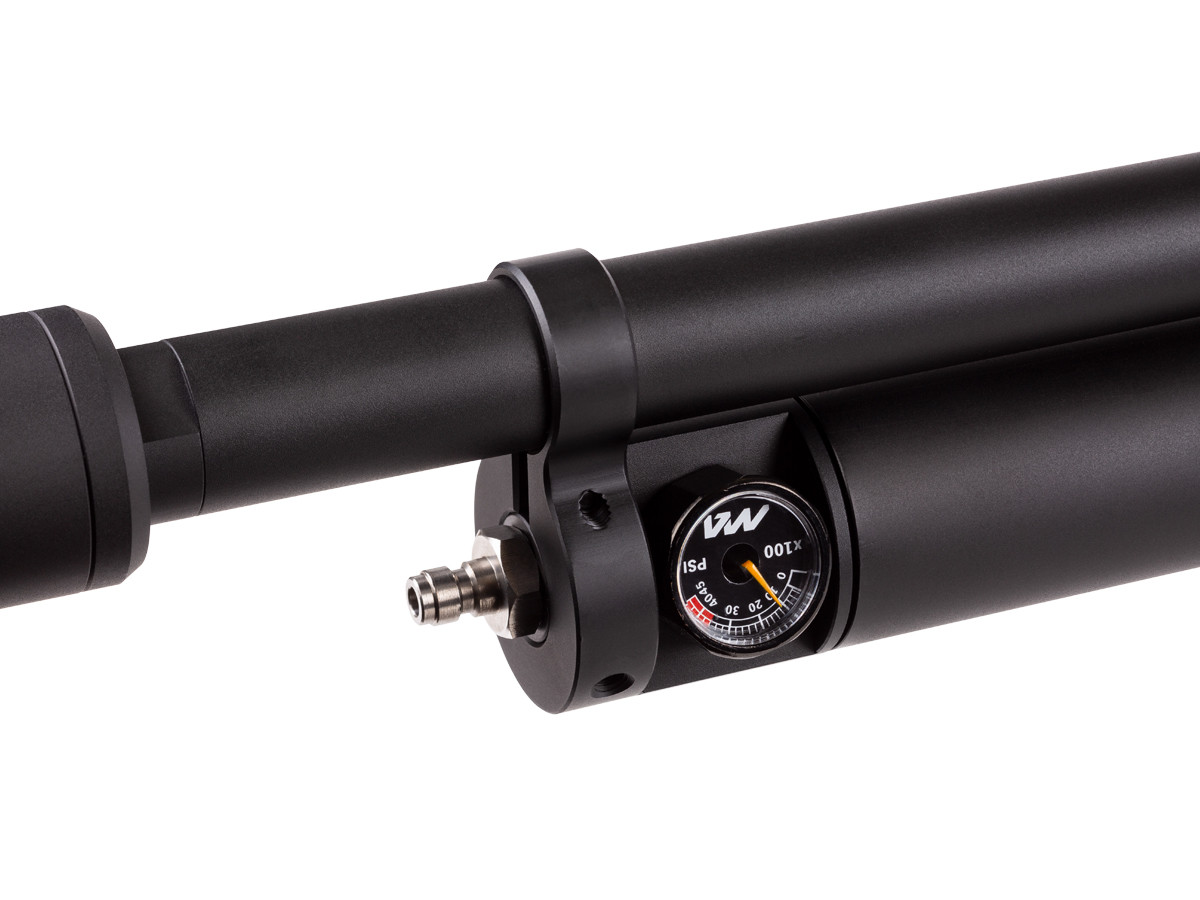
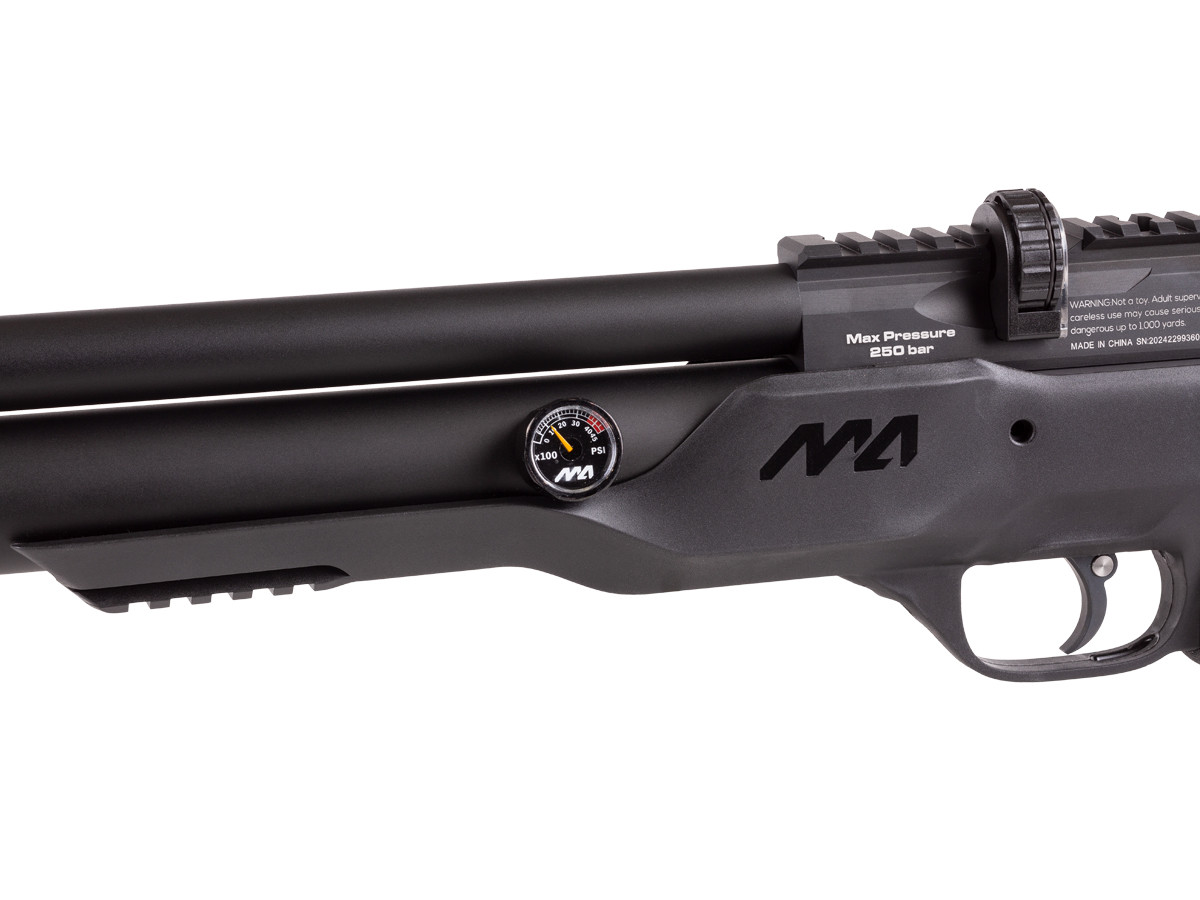
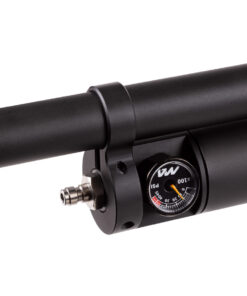
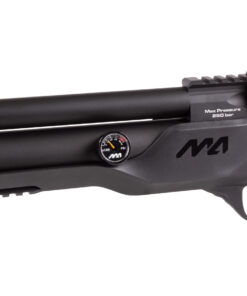
A 267 cc cylinder filled to 3,625 PSI / 250 BAR is employed so that longer strings can be obtained than on the shorter-tube sibling. Shot counts quoted above assume factory regulation and typical lead-pellet weights; actual figures vary with pellet mass, temperature, and any aftermarket tuning. Dual gauges are fitted so that reservoir and regulator pressure can be monitored, and a Foster male quick-disconnect port is provided so that filling can be completed without a separate probe.
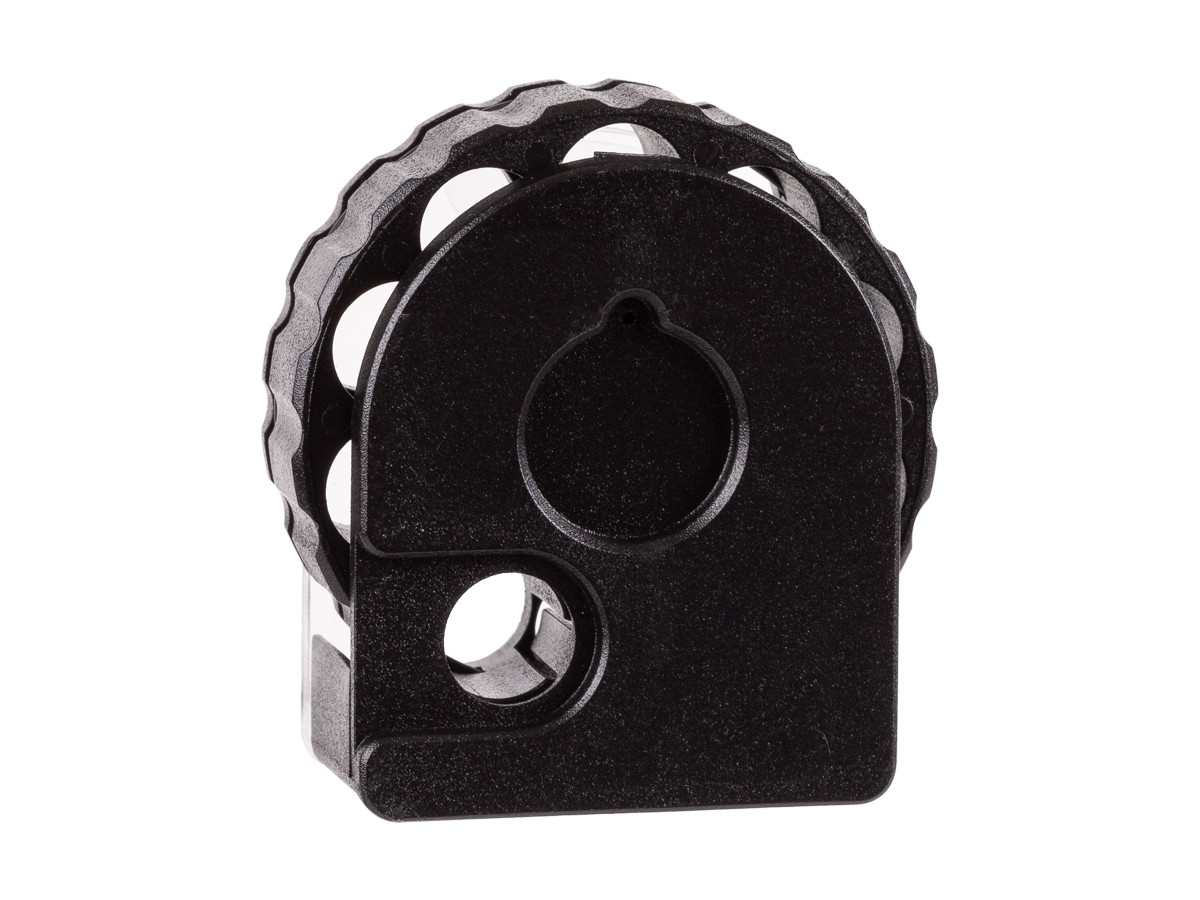
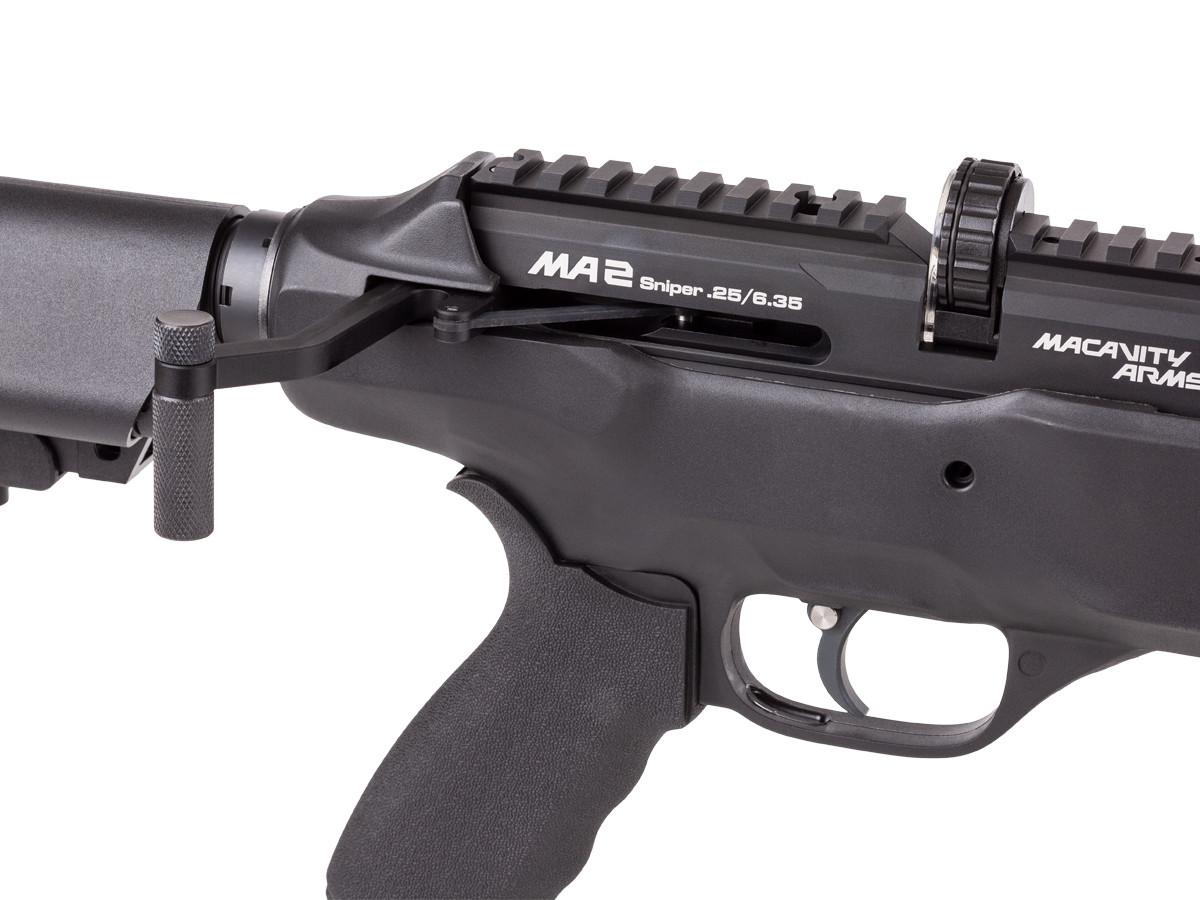
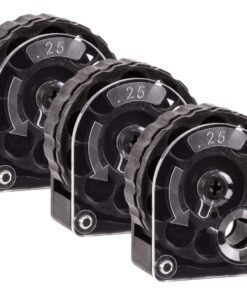
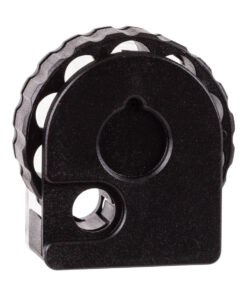
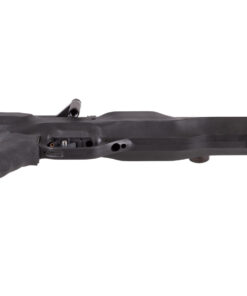
Sidelever cycling is used so that follow-up shots can be taken quickly while the rifle remains on aim. Magazine capacities scale downward as caliber increases, which is consistent with rotary-magazine geometry. Three magazines are supplied in the box so that reloading pauses can be reduced during a session.
Accessories Included and Common Add-Ons
A complete starter package is shipped so that the rifle can be used after a fill and a sight-in.
- Three metal rotary magazines matched to the chosen caliber
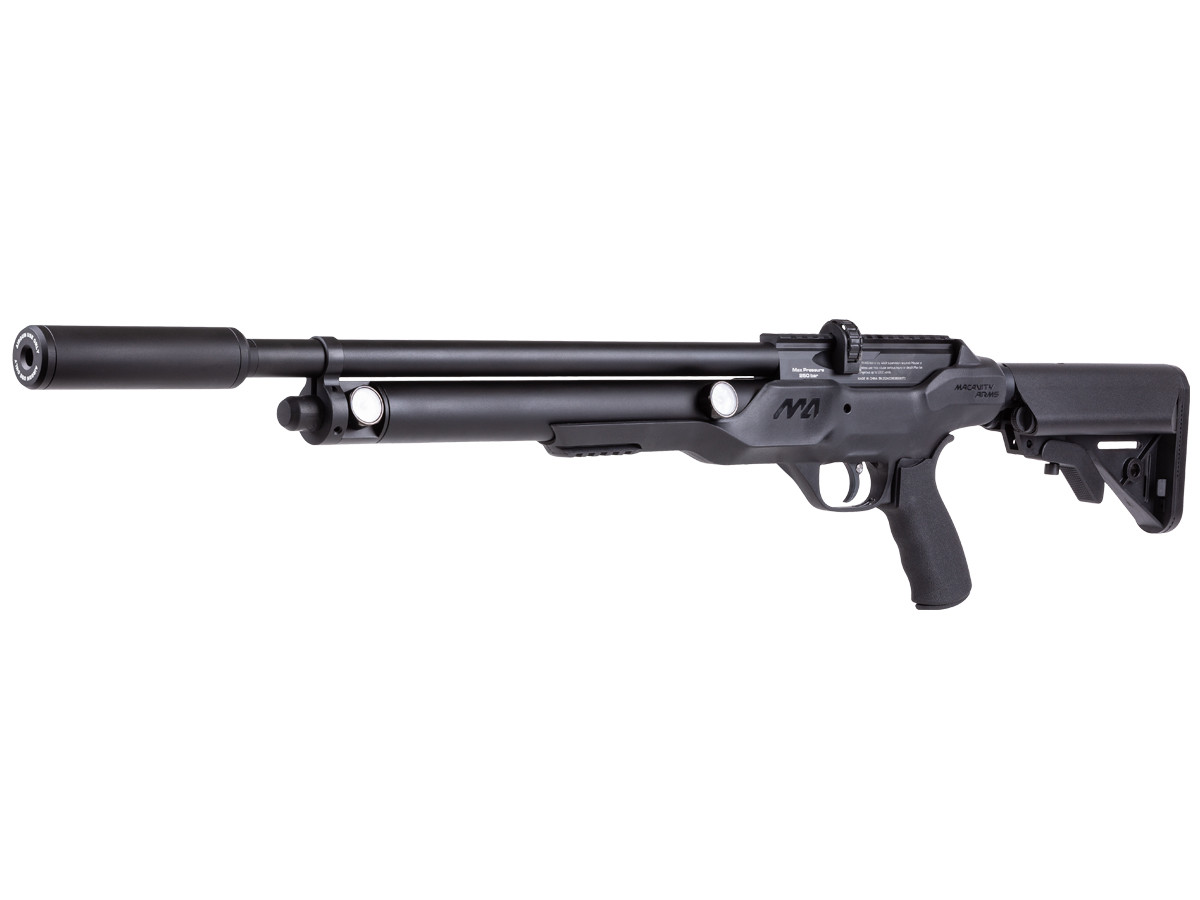
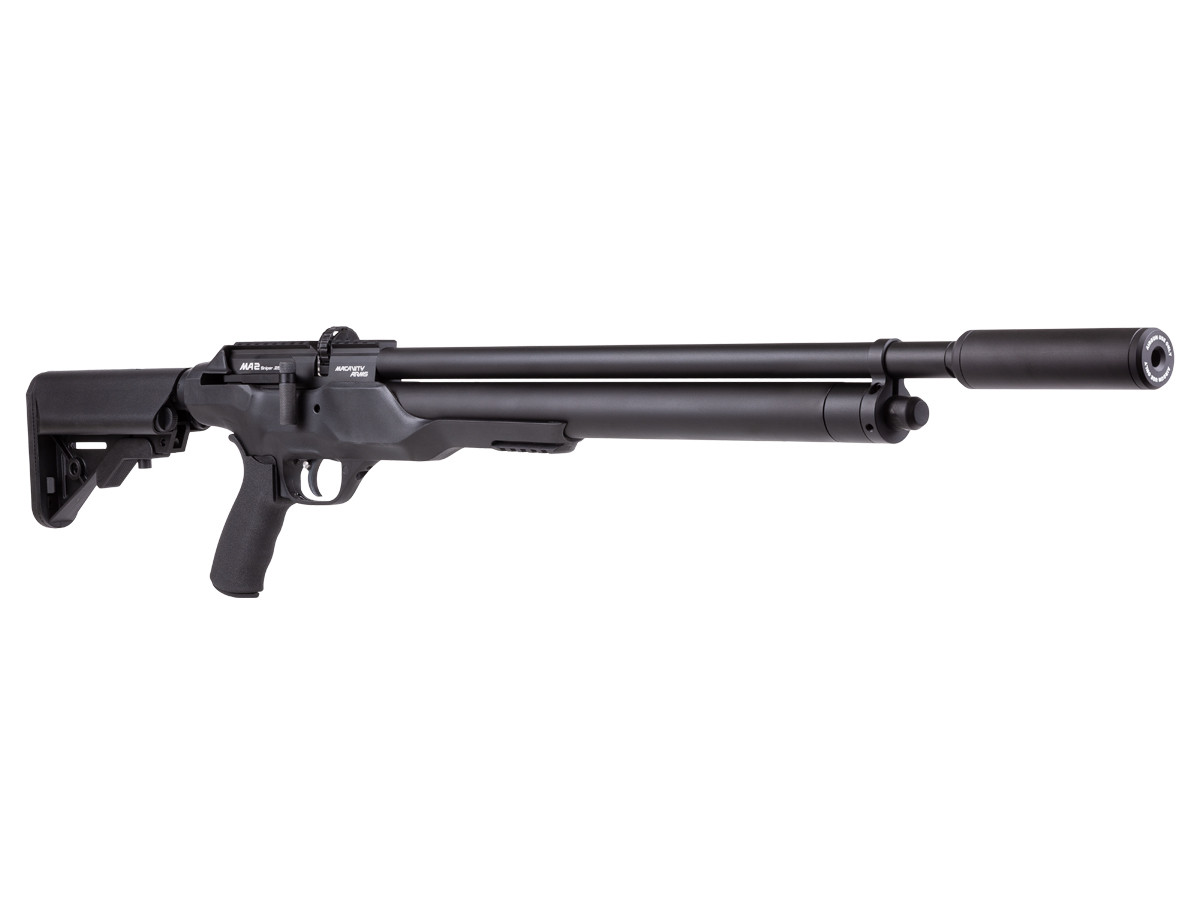
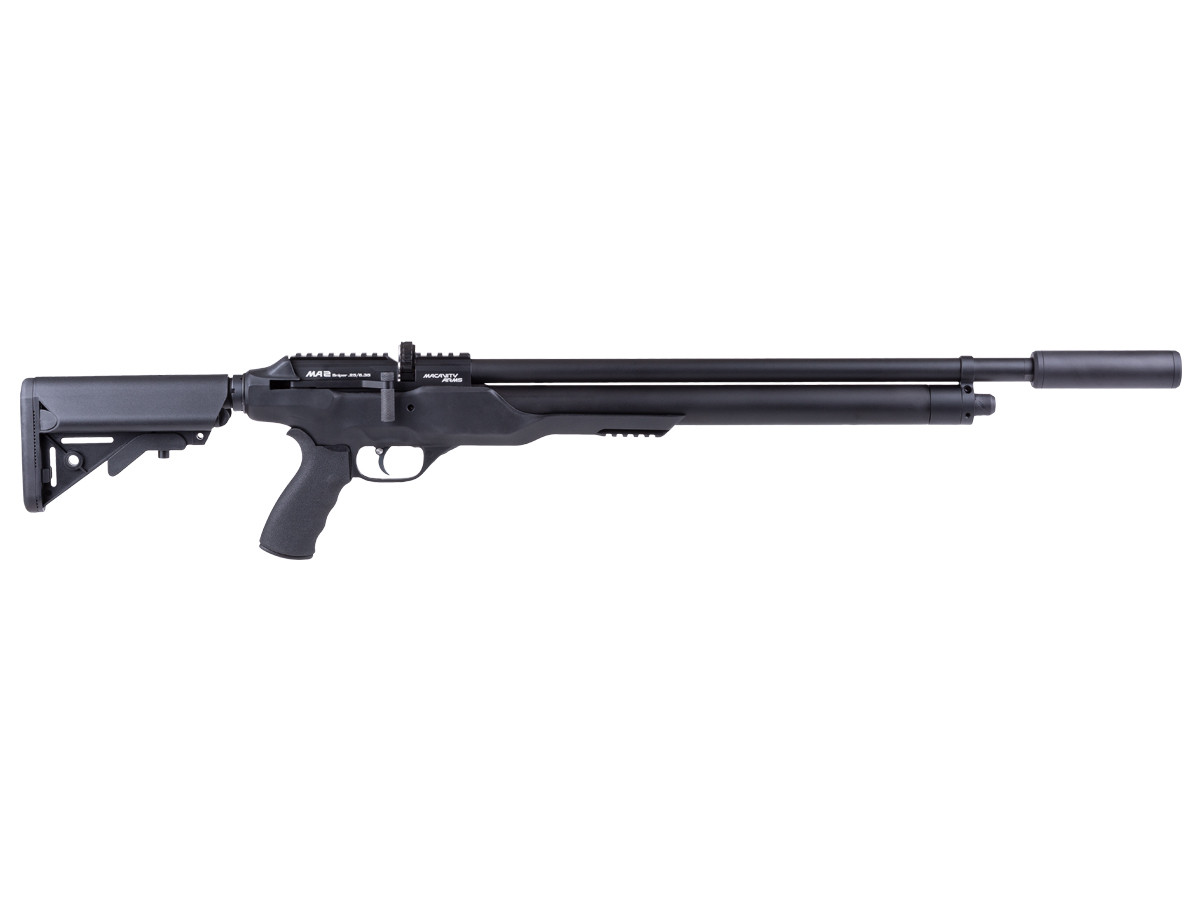
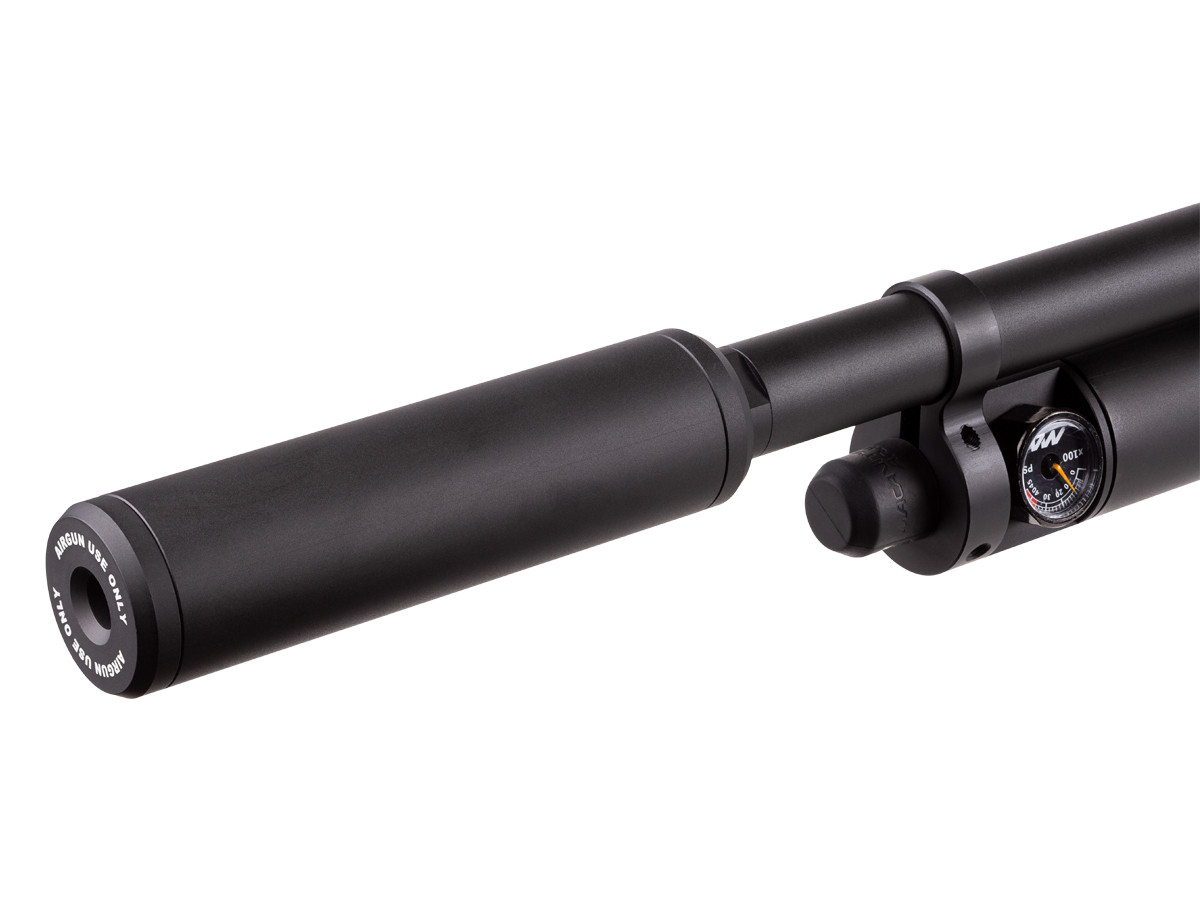
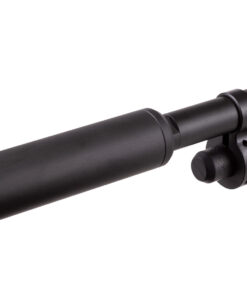
- Hollow-style moderator for additional report reduction
- Spare O-rings and basic adjustment tools
- Owner’s manual and three-year limited warranty documentation
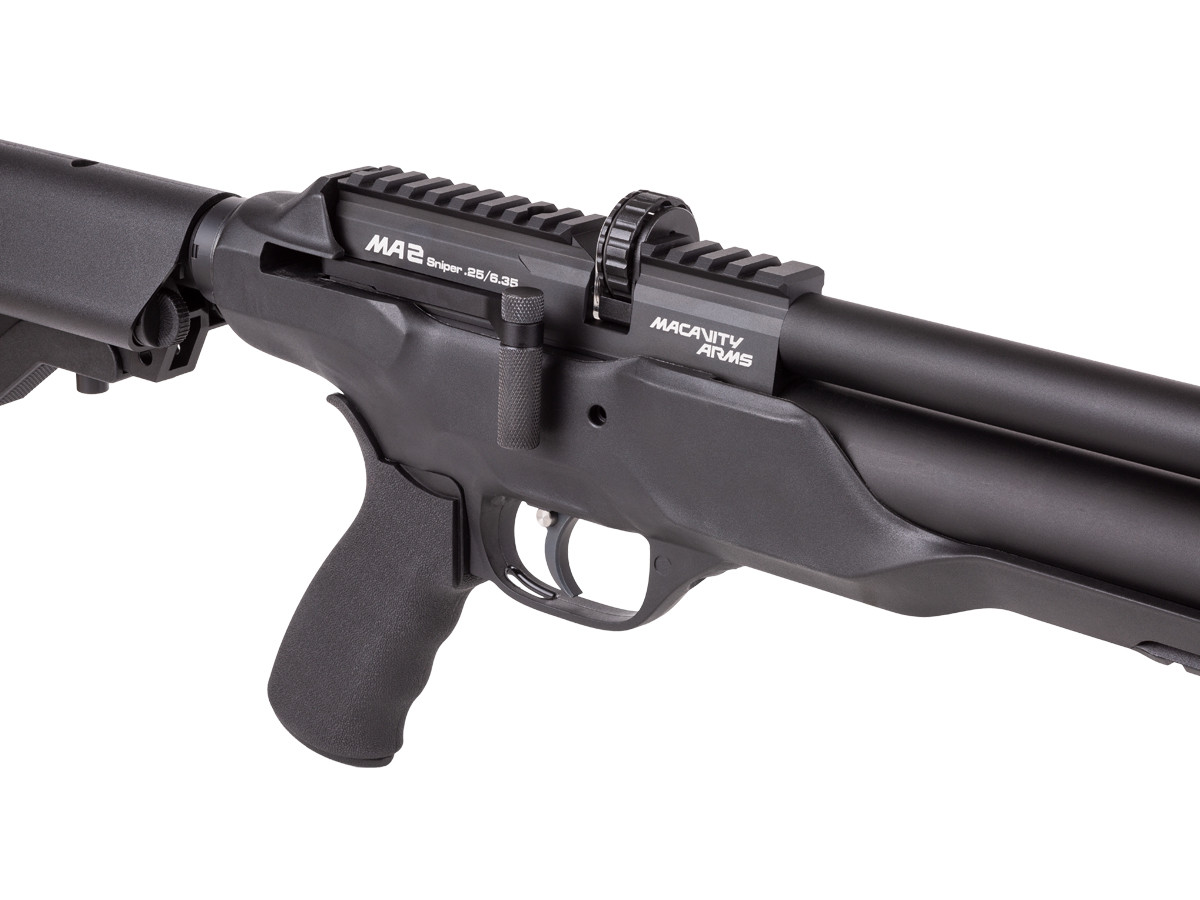
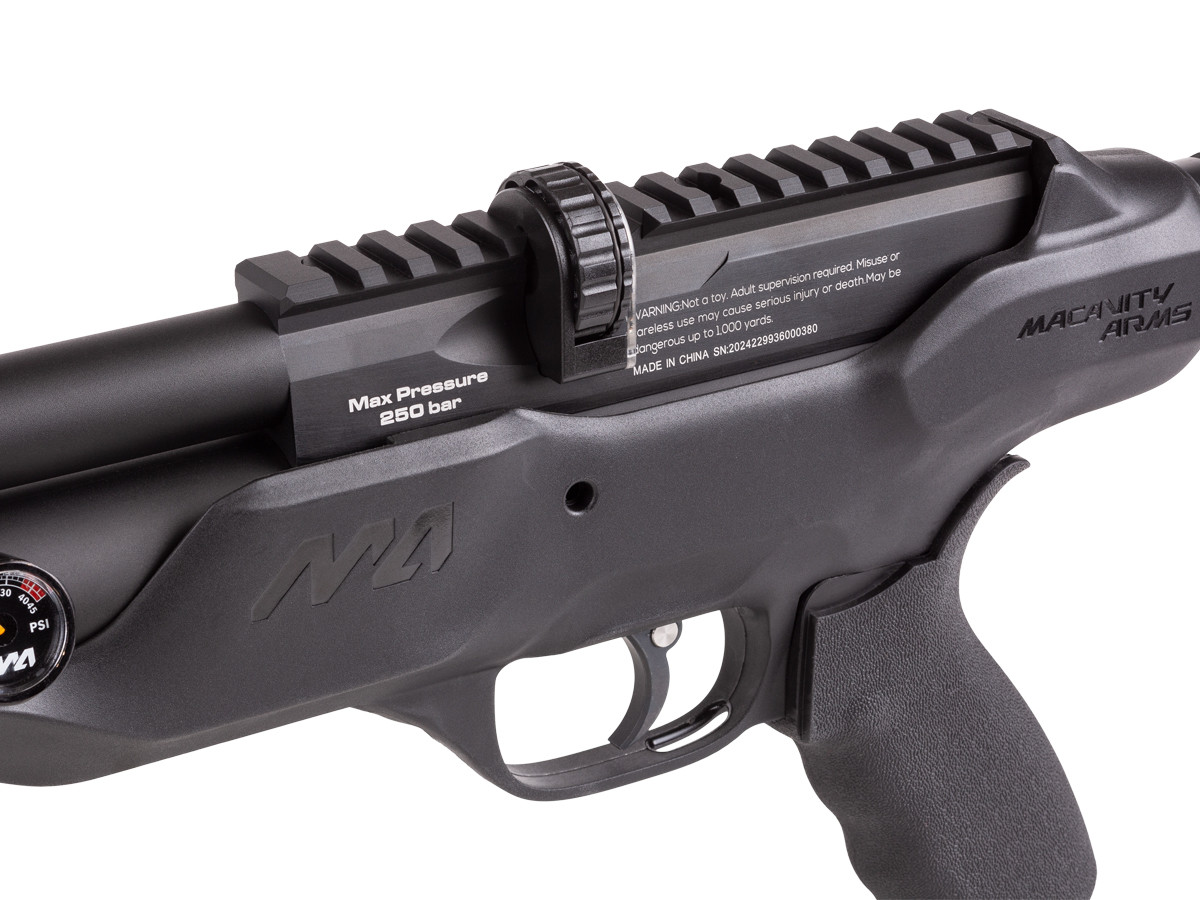
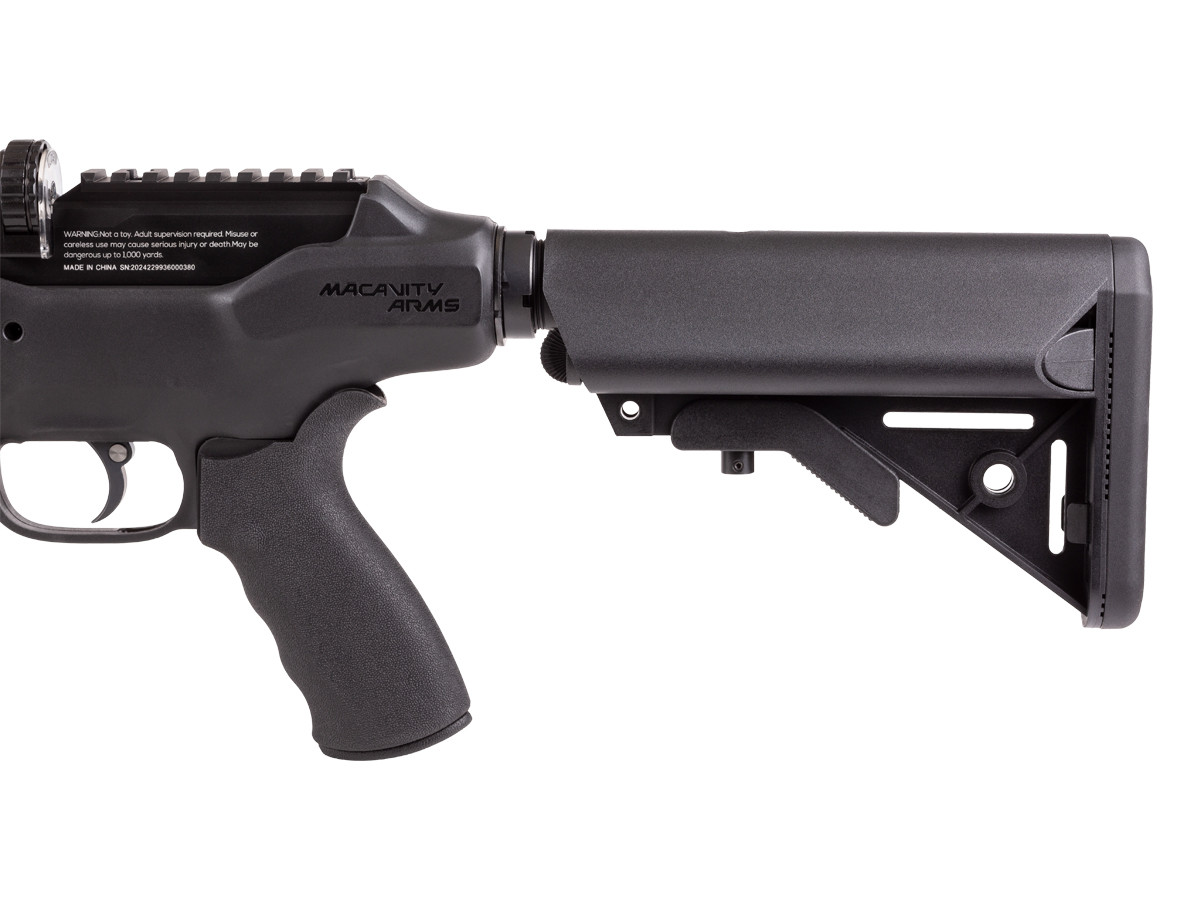
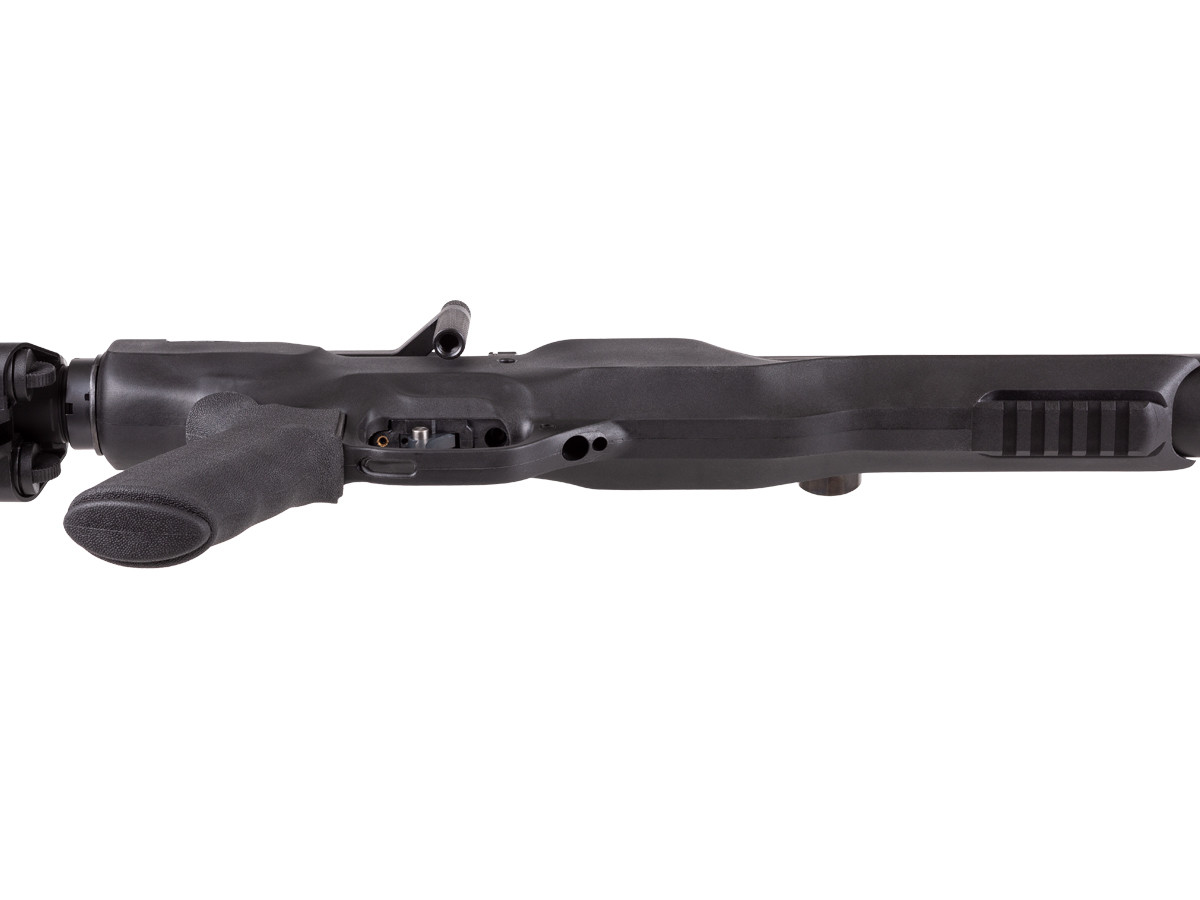
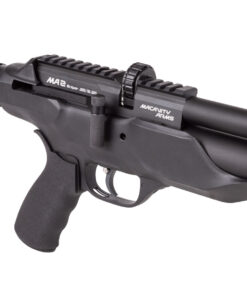
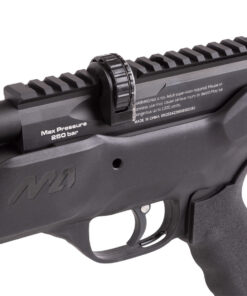
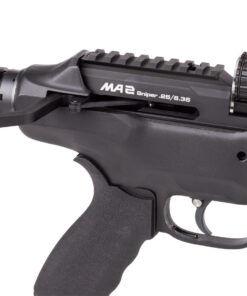
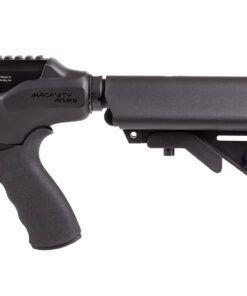
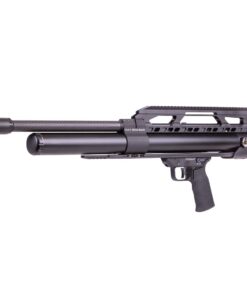
Picatinny rails on the receiver and forend are already present, therefore a scope, red-dot, bipod, light, or sling can be attached without extra bases. AR-15-pattern stock and grip furniture is used, so aftermarket buffer-tube stocks, grips, and cheek pieces can be exchanged when a different length of pull or profile is preferred. Extra magazines, higher-capacity bottles, quality optics, and a dedicated PCP compressor or hand pump are the most frequent additions once the rifle is in regular use.
Because the barrel is already shrouded and a moderator is included, further suppression is often unnecessary for typical field distances; local laws on muzzle devices should still be observed. Inclusive shooting practice is encouraged when accessories are chosen for safety and control rather than appearance alone.
Taken together, caliber choice, FAC or equivalent licensing, regulated power, and the supplied accessory set determine how the Macavity Arms Agility MA2 Long will be employed. Matching chambering to task, confirming legal status, and adding only the optics and support gear that improve accuracy and safety allow the platform’s factory tuning and adjustability to be used fully.
Air Rifles, PCP Systems, Calibers, Target Shooting and Popular Models
The world of air arms, air guns, and precision shooting equipment covers everything from recreational target shooting to sporting applications. For newcomers asking what is an air gun, what is an air rifle, what is air rifle, what is a air rifle, what is a airgun, what is an airgun, or what are airguns, the basic principle is straightforward. An air gun uses compressed gas or air to propel a projectile rather than relying on the combustion system associated with conventional firearms.
Understanding how does an air gun work, how does air gun work, how do air guns work, how does an air rifle work, how does air rifle work, and how do air rifle work can help buyers distinguish between the different operating systems available. Depending on the design, power can be supplied by a spring piston, compressed air cylinder, CO2 cartridge, or another pneumatic mechanism.
PCP Air Rifles and Compressed-Air Systems
One of the most popular categories is the pre-charged pneumatic platform. Searches such as what is a pcp air rifle, what is a pcp airgun, what is pcp air rifle, what is a pcp air gun, what is a pcp rifle, what is pcp rifle, what are pcp air rifles, and what is a pre charged pneumatic air rifle all relate to the same fundamental technology. A PCP rifle stores compressed air inside a reservoir and releases a controlled quantity each time the rifle is fired.
For shoppers researching pcp gun meaning, pcp rifle meaning, or pcp air rifle meaning, PCP simply refers to a pre-charged pneumatic system. Air is normally added using a pcp hand pump, dive cylinder, or pcp air compressor. Consequently, an air compressed gun or air compressor rifle can deliver consistent performance without requiring the shooter to manually compress a spring before every shot.
Some searches also include pcp bb gun, although many PCP platforms are primarily designed around pellets rather than traditional BB ammunition. Understanding the intended ammunition is therefore important before selecting accessories, magazines, or loading equipment.
.177 Caliber, .22 Caliber and Pellet Selection
Caliber choice is one of the most frequently researched subjects among airgun buyers. The .177 caliber remains extremely popular for recreational shooting and precision target applications. Products described as a 177 air rifle, 177 bullet, or even 177 cal darts may appear during searches, although ammunition compatibility always needs to be checked against the manufacturer’s specifications.
Questions including 177 or 22, 177 cal vs 22, 177 caliber vs 22, .177 caliber vs .22, .177 pellet vs .22 pellet, and .22 vs .177 pellet generally focus on differences in projectile size, trajectory, energy, and intended use. A smaller .177 pellet is commonly chosen for paper targets and precision shooting, whereas larger calibers may be selected for applications where additional projectile mass is desired.
Understanding bb gun pellet sizes is equally important because BBs and pellets are not automatically interchangeable. Before purchasing ammunition, shooters should confirm the caliber and projectile type specified for their particular pellet rifle, pellet pistol, or bb gun.
Air Arms Rifles and Popular Models
Among established manufacturers, air arms products remain widely searched by enthusiasts interested in precision PCP and spring-powered platforms. Well-known searches include air arms s510, s510, air arms s410, aa s400, pro sport air arms, prosport air arms, tx 200, and tx200.
Variations such as air arm and airarm are also commonly entered by shoppers searching for the brand. Buyers looking specifically for regulated sporting configurations may encounter the air arms s510 ultimate sporter .177 sub 12, a phrase frequently associated with UK-oriented searches for the S510 platform.
Each Air Arms model has its own action, stock design, power configuration, caliber options, and intended shooting environment. Therefore, specifications should always be checked against the exact version being considered rather than assumed from another model in the same family.
FX Impact M3, FX Maverick and Modern PCP Platforms
Premium PCP research frequently includes the fx maverick and the fx impact m3. Buyers may also search for fx impact mk3, fx m3 airgun, fx m3, impact m3, or fx impact m3 air rifle while comparing generations and configurations.
More specific searches such as fx impact m3 .22cal air rifle. 600mm barrel focus on caliber and barrel-length combinations. Meanwhile, international shoppers may search fx impact m3 precio, fx impact m3 precio en usa, or fx impact m3 price when researching current market pricing.
Because FX platforms can be produced in multiple barrel lengths, calibers, power settings, and regional configurations, buyers should verify the exact specification offered in their country before ordering.
Break-Barrel Air Rifles
Another major category is the break barrel air rifle. Anyone asking what is a break barrel air rifle or what is a break barrel pellet gun is usually referring to a rifle in which the barrel is hinged downward to cock the internal powerplant and expose the breech for loading.
Break-barrel designs remain popular because they can provide a self-contained shooting system without an external compressor or air bottle. Models such as a gamo pellet gun are frequently encountered by buyers exploring this category.
Learning how to load pellet gun equipment properly is particularly important. Pellets should match the manufacturer’s recommended caliber and should be loaded in accordance with the owner’s manual while the rifle is pointed in a safe direction and handled under normal shooting-range safety procedures.
CO2, Pellet Pistols and Other Airgun Types
Not every airgun uses PCP or spring power. A co2 powered pellet rifle, for example, uses replaceable CO2 cartridges as its propellant source. CO2 systems can be found in rifles and handguns intended for recreational shooting, training, and target use.
People researching air pistol uses or general pellet gun uses will encounter equipment intended for target practice, recreational plinking, skills training, competition, and other lawful sporting activities. A pellet pistol can offer a compact platform, while rifles generally provide a longer sight radius and additional stability.
Search terms such as pelet guns are also common misspellings of pellet guns and can still represent useful search intent when website content is designed to answer frequently asked buyer questions naturally.
Target Shooting and Airgun Practice
One of the most established uses of airguns is target shooting with air rifles. Dedicated air guns for target shooting may emphasize accuracy, adjustable stocks, match triggers, regulated air delivery, and compatibility with precision optics.
Likewise, airgun target practice and airgun for target practice are common search topics among people looking for an accessible way to develop shooting fundamentals. Proper backstops, eye protection, safe handling practices, and suitable ranges should always be used.
The practical range of air rifle equipment varies considerably according to caliber, muzzle energy, projectile selection, environmental conditions, and the rifle itself. As a result, buyers should use manufacturer specifications and local range rules rather than assuming that every air rifle performs identically.
Hunting Air Rifles and Appropriate Use
Some shooters research air rifles for hunting, hunting air rifles, best air rifle for hunting, pellet gun for rabbits, or even the informal phrase rats gun when looking for equipment designed for lawful pest-control or hunting applications.
Suitability depends heavily on local law, caliber, projectile energy, quarry species, shot placement requirements, and humane hunting standards. Questions such as can a bb gun kill a fox should therefore not be treated simply as equipment-selection questions. Legal restrictions and animal-welfare requirements should be checked first, and low-powered BB guns are not appropriate substitutes for equipment legally and ethically suitable for a particular species.
Similarly, searches for air rifles for deer hunting and big game hunting with air rifle involve specialized legal and ballistic requirements. Large-bore systems such as a 72 caliber air rifle or products associated with bluegrass big bore illustrate how different big-bore pneumatic platforms can be from conventional small-caliber pellet rifles. Local hunting regulations must determine whether such equipment may legally be used.
Licensing and UK Airgun Regulations
Legal requirements differ considerably by jurisdiction. UK-oriented searches frequently include do you need a licence for air rifle, air rifle certificate uk, and 22 rifle uk license. However, the rules governing air rifles, conventional .22 firearms, certificates, age restrictions, possession, transportation, and power limits are not identical.
Consequently, buyers should confirm current legislation with the relevant licensing authority before purchasing or using any regulated equipment. Particular attention should also be paid to whether a rifle is configured below or above applicable power thresholds.
Sportsman, Gamo and Other Popular Searches
Beyond specialist PCP manufacturers, buyers may encounter products such as the sportsman 900 while comparing recreational air rifles. Searches for a gamo pellet gun are also common because Gamo offers numerous spring-powered and pneumatic models across different price points and configurations.
The broader search for best air guns can include everything from affordable recreational platforms to sophisticated regulated PCP rifles. Rather than treating one design as universally superior, buyers should compare caliber, intended application, weight, stock ergonomics, power source, shot capacity, charging equipment, availability of spare parts, and local legal requirements.
Airgun Safety, Home Use and Responsible Ownership
Searches for air guns for home defense do appear online, but an airgun should not automatically be assumed to be suitable for defensive use. Laws vary significantly, and airguns can cause serious injury. Secure storage, lawful ownership, training, safe handling, and avoidance of unnecessary confrontation remain essential.
Whether someone owns an air rifle, pellet rifle, bb gun, or PCP platform, the equipment should always be treated as capable of causing injury. A secure backstop should be used for recreational shooting, the muzzle should remain pointed in a safe direction, and manufacturer instructions should be followed carefully.
Ultimately, understanding the differences between PCP rifles, break-barrel systems, CO2 equipment, caliber choices, and individual models makes it easier to compare the extensive range of modern airguns. From Air Arms platforms to FX rifles and recreational pellet guns, careful specification checking, responsible handling, lawful use, and suitable ammunition selection remain central to getting the right equipment for the intended purpose.



Reviews
There are no reviews yet.