We Deliver Airguns Directly To Your Door
SKU N/A Category

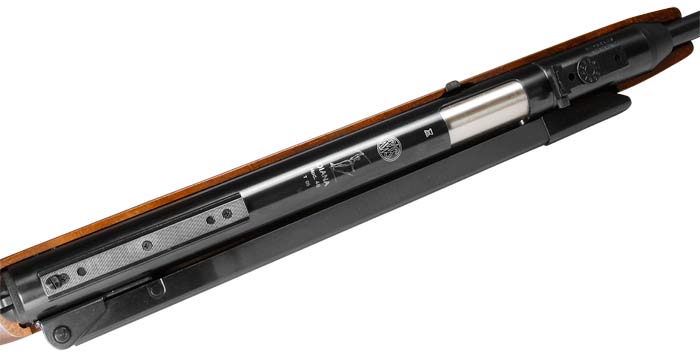
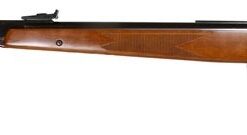
Diana Model 48

Specs
  • Manufacturer Diana
  • Caliber .177
  • Velocity 1100 fps
  • Condition New
  • Ammo Type Pellets
  • Action Sidelever
  • Barrel Style Rifled
  • Fire Mode Single-shot
  • Gun Weight 8.50
  • Overall Length 42.13
  • Barrel Length 17.00
  • Loudness 3-Medium
  • Mechanism Spring-piston
  • Rail 11mm dovetail
  • Safety Automatic
  • Front Sights Blade & Ramp
  • Rear Sights Adjustable for windage & elevation
  • Use Small game hunting/plinking
  • Warranty 2-year limited warranty
  • Cocking Effort 39 lbs

This product is currently out of stock and unavailable.

Diana Model 48 Sidelever Spring-Piston Air Rifle

Timeless German engineering is embodied by the Diana Model 48, a fixed-barrel sidelever spring-piston air rifle that has been trusted by hunters, pest controllers, and precision enthusiasts for decades. Consistent power, durable construction, and practical field manners are delivered without reliance on bottles, pumps, or batteries. Consequently, reliable performance is offered to every shooter who values a classic, self-contained platform.

Why the Diana Model 48 Continues to Be Chosen

A robust spring-piston powerplant is housed within a fixed barrel, so lockup consistency is preserved shot after shot. Moreover, sidelever cocking is employed so that the barrel itself is never broken for loading. As a result, long-term accuracy is protected, and a bipod or rest can be used without interference from a swinging barrel.

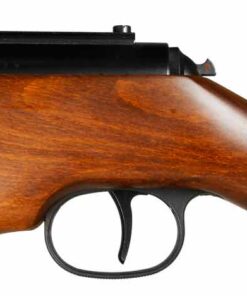
Furthermore, an ambidextrous beechwood stock is fitted so that left- and right-handed shooters are equally accommodated. In addition, a rubber buttplate is installed so that recoil is softened and shoulder comfort is improved during extended sessions. Therefore, inclusive handling is provided for backyard practice, garden pest work, and small-game hunting alike.

Core Features at a Glance

  • Powerplant: Spring-piston, single-shot
  • Action: Sidelever with fixed rifled barrel
  • Calibers offered: .177 (4.5 mm) and .22 (5.5 mm)
  • Advertised velocity: Up to 1,100 fps in .177; up to 900 fps in .22 (pellet- and market-dependent)
  • Stock: Ambidextrous beechwood with rubber buttplate
  • Sights: Blade-and-ramp front; micrometer rear adjustable for windage and elevation
  • Optics rail: 11 mm dovetail
  • Safety: Automatic, with additional cocking ratchet / anti-beartrap engagement
  • Trigger: Two-stage (T05/T06 on later examples), typically around 3.3 lb
  • Overall length: Approximately 42.13 in (1,100 mm)
  • Barrel length: Approximately 17.0–17.3 in (440 mm)
  • Weight: Approximately 8.5 lb (about 3.9–4.2 kg)
  • Cocking effort: Approximately 39 lb
  • Suggested uses: Small-game hunting, pest control, plinking, and informal field-target practice

Design, Build, and Handling

Over-engineered German construction is reflected in the large action of the Diana Model 48. Consequently, the rifle is capable of high power while still being run well within its mechanical limits in many markets. Meanwhile, a sliding breech is opened by the sidelever so that a pellet can be seated directly into the barrel. Afterward, the lever is returned and locked, and the automatic safety is presented at the rear of the receiver.

Additionally, a multi-tooth ratchet system is used during cocking so that the breechblock is held securely. Thus, an extra layer of mechanical security is provided. Nevertheless, the lever should still be controlled throughout the stroke, as with any powerful springer.

Because the barrel remains fixed, harmonic consistency is favored. Likewise, an 11 mm dovetail is machined so that a quality scope can be mounted when open sights are no longer preferred. Open sights, however, remain fully usable: elevation and windage are adjusted at the rear, while the front blade sits on a ramp.

Power, Calibers, and Practical Use

High advertised velocities are published for the Diana Model 48, yet real-world results are always pellet-dependent. Typically, lighter .177 pellets are driven toward the upper velocity band, while heavier .22 pellets are preferred when energy and terminal performance are prioritized for pest and small-game work.

Moreover, the platform is frequently described as being “ticking over” at UK-legal 12 ft-lb levels, which is why long service life is commonly reported when the rifle is properly maintained. Conversely, FAC-capable examples exist in markets where higher energy is permitted. Local laws must therefore be confirmed before purchase and use.

For hunting and pest control, humane shot placement is supported by the combination of a rifled barrel, stable lockup, and a usable two-stage trigger. For plinking and practice, the same attributes reward a consistent hold and follow-through. Because the rifle is a springer, hold sensitivity is present; consequently, best groups are produced when a consistent artillery hold or rest technique is applied.

Suggested Applications

  • Garden and farm pest control at responsible distances
  • Small-game hunting where air rifles are legal
  • Backyard target work and skill development
  • Informal field-target or silhouette practice

Accuracy, Trigger, and Shooting Character

A reputation for grouping well with a variety of quality pellets has been earned by the Diana Model 48. Nonetheless, a break-in period is normally required before the action settles. Afterward, consistent velocities and tighter groups are more readily achieved.

The two-stage trigger is generally regarded as crisp for a spring-piston rifle in this class. First-stage travel can often be tailored on later T05/T06 units. Still, the automatic safety must be disengaged before a shot is fired.

A longer firing cycle and a degree of spring “twang” are characteristic of the large piston stroke. Even so, many owners report that the shot cycle becomes more pleasant after lubrication service or after a quality aftermarket kit is fitted. Recoil remains present, because this model is not the sliding “sled” 54 Airking variant. Therefore, a firm but relaxed hold is recommended.

Care, Safety, and Longevity

The mainspring can be weakened if the rifle is left cocked for long periods. Accordingly, the action should be fired or safely de-cocked according to the manual after a short wait. Dry-firing without a pellet is likewise discouraged, because unnecessary stress can be placed on the mechanism.

Lead pellets are recommended for the rifled barrel. Periodic inspection of seals, spring, and cocking linkage is advised. When routine care is observed, decades of service are frequently reported by owners.

Responsible ownership remains essential. Eye protection should be worn. A safe backstop must be confirmed. Local airgun laws, energy limits, and hunting regulations must be followed. Inclusive, courteous range and field conduct is expected of every shooter.

Who the Diana Model 48 Is For

A self-contained, high-power springer is sought by many shooters who prefer not to depend on PCP filling gear. That preference is well served by the Diana Model 48. Simultaneously, classic styling and proven German manufacture are appreciated by collectors and working airgunners alike.

If a recoilless sled action is required, the related Model 54 Airking should be considered instead. If a checkered or more target-oriented stock is preferred, historic Model 52 furniture may be compared. For most users, however, the straightforward Model 48 package remains the practical choice: fixed barrel, sidelever convenience, ample power, and a stock that can be used from either shoulder.

Ready for the Field

A complete, ready-to-work spring-piston rifle is presented by the Diana Model 48. Open sights are included, a scope rail is provided, and a durable beech stock is fitted from the factory. When a quality pellet is matched to the barrel and a consistent technique is applied, precision and authority are delivered at ranges appropriate to small game and pest control.

Discover the Diana Model 48 and put a legendary German sidelever to work. Responsible, legal use is assumed. Safety first—always.

Calibers, FAC Power Levels, and Accessories for the Diana Model 48

Versatility across legal markets is supported by the Diana Model 48, provided caliber, power level, and accessories are chosen with care. Consequently, informed selection is rewarded with better accuracy, safer handling, and more consistent results in the field or on the range.

Caliber Options for the Diana Model 48

Two primary calibers are offered for the Diana Model 48: .177 (4.5 mm) and .22 (5.5 mm). A single-shot, rifled fixed barrel is used in both cases, so pellet seating is performed at the sliding breech after the sidelever has been drawn.

Higher advertised velocity is associated with the .177 chambering. Therefore, flatter trajectory and easier sight-in at modest distances are often obtained when lighter match or hunting pellets are selected. Garden pest work, paper targets, and informal field-target practice are commonly served by this caliber when legal energy limits allow.

Greater pellet mass and typically higher muzzle energy are associated with the .22 chambering. As a result, improved terminal performance on small game and tougher pests is frequently reported when shot placement is correct. Wind drift can be slightly more noticeable, yet energy delivery at practical hunting ranges is often preferred by field users.

Pellet choice remains decisive in either caliber. Tight groups are produced only when head size, weight, and skirt design are matched to the individual barrel. Accordingly, several premium brands should be tested before a hunting load is committed. Lead pellets are recommended for the rifled bore; steel or alloy ammunition should be avoided unless specifically approved by the manufacturer.

Inclusive use is supported because both calibers can be shot from the same ambidextrous beech stock. Left- and right-handed shooters are therefore able to evaluate trajectory and recoil feel without a change of furniture.

Power Output and FAC Considerations

Power claims for the Diana Model 48 vary by market, pellet, and whether a restrictor has been fitted. In unrestricted form, approximately 26 joules in .177 and up to about 32 joules in .22 have been published in some European specifications. In North American listings, velocities approaching 1,100 fps in .177 and 900 fps in .22 are commonly advertised with light pellets. Real-world chronograph results are pellet-dependent and should be verified after break-in.

In the United Kingdom, air rifles that produce more than 12 ft-lb (approximately 16.3 J) at the muzzle are classified as firearms and an FAC (Firearms Certificate) is required. Many Diana 48 rifles imported for the UK market have historically been supplied with a restricted transfer port so that legal 12 ft-lb performance is maintained. Conversely, FAC-rated examples can be obtained where the certificate and local conditions permit higher power.

Because the large spring-piston action was designed with substantial reserve capacity, a restricted 12 ft-lb rifle is often described as running well within its mechanical limits. Longevity of springs and seals can therefore be favored when the rifle is not constantly driven at maximum stress. FAC owners, however, must ensure that any power increase remains within the terms of the certificate and that a suitable backstop is always used.

Legal compliance cannot be assumed from a catalog velocity figure. Measurement with a chronograph after the chosen pellet is selected is strongly advised. Local licensing, storage, transport, and hunting rules must be observed in every jurisdiction. Inclusive, responsible ownership is expected of every shooter, regardless of caliber or power band.

A note on related models is useful. The Diana 52 generally shares the same action with different stock treatment. The 54 Airking adds a sliding recoil-reducing sled. Power characteristics remain in the same family, yet handling and perceived recoil differ. The standard Model 48 remains the recoiling fixed-barrel sidelever.

Accessories That Complete the Diana Model 48

Practical upgrades are readily accepted by the Diana Model 48 because an 11 mm dovetail is provided and the sidelever layout leaves the underside of the forend relatively clear.

Optics are the most common addition. A compact, springer-rated scope with a strong mount is recommended, because two-way recoil can destroy optics that are intended only for firearms or PCPs. Two-piece or one-piece mounts designed for 11 mm rails should be used, and a modest amount of forward allowance for barrel droop is often required. Open sights can still be retained for backup.

Bipods are frequently fitted. Sidelever cocking allows a bipod to remain attached during loading, which is less convenient on many break-barrels. A sling swivel stud or adapter can also be added so that carry in the field is simplified.

Trigger work is popular on later rifles. Factory two-stage units (T05 or T06 on many examples) can be adjusted within safe limits. Aftermarket trigger upgrades are chosen by some owners who want a lighter, crisper break. Professional fitting is preferred so that safety function is not compromised.

Internal tune kits—including replacement springs, guides, and lubrication sets from specialists—are widely used to reduce twang and smooth the firing cycle. Seal replacement is part of long-term maintenance. The rifle should never be left cocked for long periods, because spring set can occur.

Barrel weights or harmonic dampers appear on certain “Black Pro” or sightless sporting variants and can be added to standard rifles to tame barrel vibration with a chosen pellet. Threaded muzzles for moderators are not universal on every 48; threading should be confirmed before a silencer is ordered, and local laws on sound moderators must be checked.

Support gear completes a working kit:

  • Quality lead pellets in several weights for testing
  • Springer-rated scope and 11 mm mounts
  • Soft or hard case sized for a 42-inch rifle
  • Pellet pouch, cleaning pellets, and a simple bore guide
  • Eye and hearing protection
  • Chronograph for legal power checks
  • Bipod, sling, and shooting sticks for field use

Conversion is supported when the rifle is presented as a complete system rather than a bare action. A well-chosen scope, a proven pellet, and a legal power setting turn the Diana Model 48 into a dependable tool for pest control, small-game hunting, and precision practice. Accessories should be selected for durability under spring-piston recoil, and every addition should preserve safe cocking, loading, and trigger function.

Diana, Bintac, AEA and Hatsan Airguns: Rifles, Pistols, PCPs and Accessories

For shooters comparing trusted platforms, the Diana range remains a major point of interest. Searches such as diana air rifle, diana air rifles, air rifle diana, rws diana air rifle, rws diana, diana rws, and diana r reflect the continued popularity of classic airgun designs. Well-known spring-powered choices include the diana 34, diana model 34, diana rws 34, rws diana 34, diana r34, and diana 34 air rifle. Shooters interested in the updated modular platform may also search for diana 34 ems or diana 34 ems fiber optic sights.

Other established models continue to attract enthusiasts, including the diana 35, diana 48, diana mod 48, rws diana model 48, diana 54, diana 350 magnum, diana 350 magnum air rifle, 350 magnum diana, and diana rws 460 magnum. These rifles appeal to buyers comparing traditional spring-piston construction, power, accuracy, build quality, and different configurations for recreational or sporting use.

Diana PCP Air Rifles, Pistols and Accessories

The Diana catalog also includes PCP, CO2, and pistol-format options suited to different shooting preferences. Popular searches include diana r22, diana 2, diana 250, diana two fifty, diana 250 air rifle, diana stormrider, diana outlaw gen 2, diana airbug, diana bandit black, diana lp8, lp8 diana, diana air pistol, and diana pellet gun.

Owners looking to maintain, repair, or customize certain platforms may also search for diana chaser accessories and diana chaser parts. For target shooting and recreational plinking, a 4.5mm air gun remains a common caliber choice. Meanwhile, hunting diana searches often focus on Diana rifles suited to lawful pest-control or hunting applications where airgun use is permitted.

The term nerf diana can occasionally appear alongside Diana-related search traffic, although it represents a different product category and should not be confused with traditional pellet rifles or air pistols.

Bintac and AEA PCP Airguns

Big-bore and tactical PCP enthusiasts frequently compare Diana products with Bintac and AEA platforms. Popular searches include bintac aea harpoon, aea harpoon air gun, bintac t9 full auto, bintac t9 price, bintac mcar 457, aea terminator, and aea megalodon for sale.

Other related searches include airgun shotgun, automatic air gun, air powered 50 cal rifle, and zeus 72 cal air rifle price. Shooters setting up high-pressure PCP equipment may also research an air tank for pcp airguns or anti air tanks while comparing suitable filling equipment and accessories.

The broader phrase bee bee gun rifle may also be used by new shooters searching for BB rifles, pellet rifles, and other recreational air-powered platforms.

Hatsan Air Rifles and PCP Platforms

Hatsan remains another widely searched manufacturer across spring-piston, PCP, semi-automatic, and big-bore categories. General searches such as hatsan air rifle, hatsan air guns, hatsan pcp, hatsanusa, hatsan usa, air rifle, air rifles, and airguns cover a broad selection of products.

Break-barrel shoppers frequently compare the hatsan model 95, hatsan mod 95, mod 95, hatsan 125, hatsan 135, hatsan 135 vortex air rifle, hatsan 135 carnivore, hatsan zada, and hatsan airtact air rifle. The related search hatsan airtact is also common among buyers researching lightweight and affordable break-barrel rifles.

Customers searching for discounted or previously owned products may also use the phrase hatsan refurbished while comparing factory-refurbished or pre-owned Hatsan models.

Hatsan PCP and Big-Bore Airguns

For PCP enthusiasts, popular searches include hatsan flash, hatsan flashpup qe, hatsan bullboss, hatsan hercules, hatsan hercules bully, hatsan invader, hatsan factor rc, hatsan neutron star, hatsan harpoon, hatsan piledriver, and hatsan big bore carnivore rifle.

These searches cover everything from compact PCP rifles to powerful large-caliber platforms. Buyers can compare factors such as air capacity, operating pressure, caliber, barrel configuration, magazine capacity, stock design, overall weight, and intended use before selecting a suitable platform.

Hatsan Blitz, Sortie and Semi-Automatic Models

Shooters interested in rapid-fire PCP platforms frequently search for hatsan sortie, hatsan sortie tact, hatsan sortie tact semi-auto pcp, and hatsan sortie accessories. The Hatsan Blitz family also generates searches including hatsan blitz, hatsun blitz, hatsan blitz full automatic, and hatsan blitz 30 cal.

Compact PCP pistol and carbine shoppers may also research the hatsan velox and hatsan jet 2, providing additional choices for shooters who prefer smaller platforms.

Airgun Optics, Pellets and Accessories

Accessories, optics, ammunition, and filling equipment are important parts of a complete airgun setup. A basic 4×20 optic may suit certain entry-level rifles, while ammunition such as h&n field target trophy bleifrei can appeal to shooters specifically searching for lead-free pellets.

The search phrase econ ii may also appear alongside airgun-related product research depending on the equipment, accessory, or platform being compared.

Whether the goal involves target shooting, recreational plinking, collecting, pest control, or lawful hunting, the wide selection of Diana, AEA, Bintac, and Hatsan platforms gives shooters numerous choices. Comparing the correct caliber, rifle type, filling system, optics, pellets, accessories, and replacement parts can help buyers identify equipment that best matches their intended application.

Practical Use in the Field, Garden, and on the Range

Everyday work is where a powerful fixed-barrel sidelever springer earns its keep. Accuracy, ethical range, and consistent hold matter more than catalog velocity. Consequently, realistic scenarios are outlined below so that safe, legal, and effective use can be planned by every shooter.

Homestead and Garden Pest Control

Quiet, self-contained pest work around barns, orchards, and vegetable plots is frequently required. Because no air tank or pump is needed, the rifle can be taken from the cabinet and brought into action after a brief safety check. After the sidelever has been drawn, a pellet is seated at the sliding breech, the lever is returned, and the automatic safety is addressed before any shot is considered.

Rats, pigeons, and similar legal pests are typically engaged at short to moderate distances. A rest against a post, window ledge, or sandbag is preferred so that hold-sensitive recoil is managed. When a bipod has been fitted, the sidelever can still be operated without the barrel being swung through a break-barrel arc. Thus, a supported position can be maintained between shots.

Pellet selection for this work is usually biased toward controlled expansion or hollow-point designs that are proven in the individual barrel. Over-penetration through thin shed walls must be avoided. A solid backstop of earth, timber, or purpose-built pellet trap is confirmed before the first shot is fired. Neighbors, livestock, and glass are accounted for in the line of fire.

Dawn and dusk sessions are common. Light is often poor, so open sights may be used for the closest work, while a compact, springer-rated scope is reserved for slightly longer lanes across a yard. Inclusive practice is supported: either shoulder can be used because the stock is ambidextrous. Fatigue is reduced when a sling is employed between stands.

After each session, the action is left uncocked. Moisture is wiped from metal. Pellets that were carried loose are returned to a tin so that skirts are not deformed in a pocket.

Small-Game Hunting in Cover

Legal small-game hunting places different demands on the same platform. Stalking lanes through woodland edges, hedgerows, and field margins are walked slowly. The rifle is carried muzzle-controlled, safety on, with the sidelever closed. When a shot opportunity is presented, a stable position is built first—kneeling against a trunk, sitting with elbows on knees, or prone if vegetation allows.

Because the barrel remains fixed, point of impact is not disturbed by a hinged joint. That consistency is useful when a single well-placed shot is required. Heart-lung placement on small game is the ethical standard. Head shots are taken only when distance, rest, and shooter confidence make a clean result probable. If doubt exists, the shot is not taken.

.22 pellets are often favored in this role when energy and wound channel are prioritized, provided local law allows the rifle’s output. .177 remains viable for smaller quarry at closer range when a heavy, accurate pellet is used. Chronograph data from the same lot of pellets should already be known so that maximum ethical distance is not guessed in the field.

Wind is read on grass and leaves. A springer’s report is sharper than a moderated PCP, so a second chance at the same animal is less likely after a miss. Follow-up shots are prepared only after the area behind the target has been rechecked. Retrieval of quarry is planned before the trigger is pressed.

Carry weight is felt on long walks. An eight-and-a-half-pound rifle plus scope and bipod becomes tiring. Breaks are taken. The sling is used so that hands remain free for glassing or moving brush. Inclusive hunting parties can share the same rifle without a left- or right-hand stock change, which simplifies a day’s rotation among companions.

Informal Field Target and Skill Practice

Competition-style practice can be conducted without a formal club layout. Knockdown targets, spinners, and paper animals are set at known distances from 10 to 40 yards, always with a safe berm. The same hold that will be used in the field is rehearsed: artillery hold on a rest, or a consistent offhand stance.

Groups are recorded after the rifle has been allowed to settle from a cold barrel. First-shot cold-clean point of impact is noted, because many springers throw that opening pellet slightly differently. Subsequent strings are fired at a sustainable pace so that the spring is not heated into a velocity shift.

Trigger control is practiced until first-stage take-up is identical every time. The automatic safety is disengaged as a deliberate last step, never as a habit performed while the muzzle is still sweeping. Dry practice with an empty barrel is avoided; snap caps or manufacturer guidance should be followed if trigger work is rehearsed without live pellets.

New adult shooters can be coached on this platform because the loading cycle is visible and slow. Sidelever travel is demonstrated, the ratchet clicks are explained, and the rule of never covering the muzzle is repeated. Inclusive language and patient demonstration matter more than speed. Eye protection is worn by everyone on the line.

Supported Positions, Offhand Work, and Follow-Through

Hold sensitivity is a defining trait of spring-piston rifles. Bags that are too soft allow the forend to bounce; bags that are too hard can throw shots high. A light, repeatable contact under the forend is usually best. The butt is placed consistently in the shoulder pocket. Cheek weld is kept the same whether open sights or a scope are used.

Offhand shots are reserved for closer, larger targets. Breathing is settled at the bottom of the cycle. The trigger is pressed straight back after the sight picture has been accepted, and follow-through is held until the pellet is gone. Looking up early is a common cause of unexplained flyers.

Kneeling and sitting positions are more useful in the field than standing. A walking stick or shooting sticks can be combined with the bipod. Because cocking does not require the muzzle to be dropped in a break-barrel motion, a low rest can be kept almost continuously. That advantage is used whenever brush or fence lines force a crouched shot.

Recoil is rearward and rotational. Scopes must be rated for springers. Rings are checked after the first box of pellets. A bubble level on the scope can reduce cant error on sloping ground.

Weather, Maintenance in Use, and Endurance

Rain, dust, and cold change how a springer feels. Metal is wiped after wet stalks. The cocking slot and breech are kept free of grit so that the lever does not grind. In freezing weather, lubrication can thicken; a manufacturer-approved grease is used sparingly rather than a flood of light oil that will migrate onto the breech seal.

Long days afield reveal stock fit. The straight, cheekpiece-light beech layout favors iron-sight use and either-shoulder shooting, yet some users add a lace-on pad for scoped work. Length of pull is relatively short on many examples; a slip-on recoil pad can be added if clothing bulk changes in winter.

Ammunition is protected from crushing. A small tin in a shirt pocket beats a rattling pouch when stalks are silent. Damaged skirts are discarded. Mixing pellet lots mid-hunt is avoided once a zero has been confirmed.

Ethics, Law, and After the Shot

Legal power limits are respected in every country and state. Where an FAC or equivalent certificate is required above a stated energy threshold, that document is held before the rifle is used at higher output. Storage, transport, and age rules are followed. Public footpaths, roads, and dwellings are never used as backstops.

An animal that is hit is recovered. Tracking is begun immediately. A second shot is prepared if the quarry is still mobile. Waste is not left in view of paths. Inclusive sportsmanship includes sharing knowledge of local seasons and species with companions who are new to the discipline.

After the last shot, the rifle is unloaded and inspected. The sidelever is confirmed closed. The safety condition is verified. A case is used for vehicle transport. A brief note of pellet, distance, and conditions is kept so that the next outing starts from data rather than memory.

Building a Repeatable Field Routine

A simple routine produces better results than occasional heroic shots. Zero is confirmed at the start of the season. Two or three pellet types are compared, and one hunting load is chosen. Distances around the property are paced and marked mentally. A rest is practiced until the same point of impact is produced from bags, bipod, and a coat over a rail.

Thereafter, each outing follows the same order: safety check, pellet count, backstop scan, first cold shot on a target, then live work. When the light fades, equipment is gathered before fatigue causes a muzzle sweep. Stories can be told later; the gun is made safe first.

Used this way, a classic sidelever springer remains a practical tool rather than a shelf piece. Power is applied only inside ethical range. Accessories stay simple. Inclusive, careful shooting is treated as the standard, not an extra. The result is clean pest control, fair small-game hunting, and skills that transfer from the garden lane to the wood’s edge without drama.

Frequently Asked Questions

Clear answers help a powerful fixed-barrel sidelever springer be chosen, set up, and used with confidence. Local laws still override any general note below. Inclusive, responsible practice is assumed throughout.

Which calibers can be used?

Two chamberings are normally supplied: .177 (4.5 mm) and .22 (5.5 mm). A single-shot rifled barrel is employed in both cases. Higher advertised speed is typically associated with the smaller caliber, while greater pellet mass and often higher energy are associated with .22. Pellet testing in the individual barrel remains essential, because group size is decided by head fit and skirt design more than by catalog figures. Steel ammunition is not recommended for a rifled bore unless the maker explicitly allows it.

How much power is produced, and is a certificate required?

Published energy and velocity vary by market, pellet, and whether a restrictor has been fitted. Unrestricted examples may approach the mid-20-joule range in .177 and higher figures in .22, while some retail listings quote velocities near 1,100 fps and 900 fps respectively with light pellets. Chronograph results after break-in should be treated as the only reliable number.

In the United Kingdom, muzzle energy above 12 ft-lb requires a Firearms Certificate. Restricted transfer ports are often fitted on rifles sold for that market so that the legal limit is observed. Elsewhere, licensing, storage, and hunting rules differ. Compliance is the owner’s duty. A legal check is completed before the first hunting trip is planned.

How difficult is cocking?

Cocking effort is commonly listed near 39 pounds. A long sidelever stroke is used, so the load is spread through the pull rather than concentrated in a short snap. After lubrication and break-in, the stroke is frequently described as smoother than the raw figure suggests. The lever should be controlled for the entire travel. The ratchet that holds the breech during cocking is allowed to engage; the lever is not slammed.

Can a scope be mounted?

An 11 mm dovetail is provided on the receiver. A springer-rated optic and matching mounts are required, because two-way recoil can destroy scopes built only for firearms or precharged rifles. A modest allowance for barrel droop is often needed when rings are chosen. Open sights—blade-and-ramp front and a micrometer rear adjustable for windage and elevation—remain available if optics are not preferred.

Is the stock suitable for left-handed shooters?

An ambidextrous beech stock is fitted. A high rollover comb is not used on the standard furniture, so either shoulder can be employed. Inclusive use on a shared rifle is therefore straightforward. A lace-on cheekpiece can be added later if a large scope requires extra comb height.

How does this rifle differ from the related 52 and 54 patterns?

The same family of sidelever, fixed-barrel actions is shared. Richer or checkered furniture has historically distinguished some 52 examples. A sliding recoil-reducing sled inside the stock is the hallmark of the 54-type “Airking” layout. Perceived recoil and weight differ on the sledded rifle; power potential remains in the same class. Accessory rails, levers, and many internal parts are often interchangeable across the family, yet the standard recoiling action is what is discussed here.

What accuracy can reasonably be expected?

Minute-of-pest and small-game precision at practical distances is widely reported when a matching pellet and a consistent hold are used. Sub-inch groups at 25 yards from a rest are a realistic goal after the action has settled, though results depend on pellet, rest, and technique. Hold sensitivity is inherent to spring-piston designs. An artillery hold or a light, repeatable forend contact is practiced until point of impact stops walking.

What should be checked before a purchase, especially used?

Barrel crown and rifling, cocking smoothness, ratchet engagement, trigger safety function, stock cracks at the receiver, and scope-rail screws are inspected. A legal power test is wise in jurisdictions with a 12 ft-lb limit. Serial and import marks are compared with local rules. A test fire on a private range, where lawful, reveals twang, dieseling, and first-shot consistency better than a shop inspection alone.

How should the rifle be transported and stored?

Unloaded, uncocked, and cased transport is the standard. Ammunition is carried separately where required by law. Home storage follows local secure-storage rules. Humidity and long-term spring compression are avoided. A simple log of pellet, date, and chronograph reading keeps the next season’s zero from being a guess.

These answers are general. Manual instructions and current law take precedence. When those two sources are followed, a classic sidelever springer remains a durable tool for the garden lane, the hedge, and the informal target course.

What accessories complete a working kit?

A springer-rated scope, 11 mm mounts, a bipod, a sling, a chronograph, quality lead pellets, eye protection, and a case sized for a 42-inch rifle form a practical set. Barrel weights appear on some sporting variants and can be added to tame harmonics with a chosen pellet. Cleaning pellets and a simple guide help maintain the bore without damaging the crown.

How long can the rifle last?

Decades of service are frequently reported when the spring is not left compressed, seals are renewed as needed, and the action is not dry-fired. The large powerplant is often described as running well within its limits when a restricted 12 ft-lb setup is used. FAC-level use still rewards correct lubrication and timely spring replacement.

Can young or new adult shooters be introduced on this platform?

Adult beginners can be coached because loading is slow and visible. Cocking effort and weight make the rifle a poor first choice for small-framed or very new shooters until strength and muzzle discipline are established. Inclusive instruction emphasizes eye protection, a backstop, and never covering anyone with the muzzle. Youth use must follow local age and supervision law.


Select Caliber

.177, .22

Reviews

There are no reviews yet.

Be the first to review “Diana Model 48”

Related Products

FAQ

  • Spring-Piston (Break-Barrel or Underlever): Cock by compressing a spring. Reliable, no external air source needed, but can have more recoil (“spring twang”) and require technique to shoot accurately.
  • Pre-Charged Pneumatic (PCP): Filled from a scuba tank, compressor, or pump. High power, low recoil, multiple shots per fill. Popular for precision and hunting.
  • CO₂: Powered by disposable cartridges. Good for pistols and semi-auto/repeaters, but performance drops in cold weather.
  • Multi-Pump Pneumatic: Hand-pumped to build pressure. Versatile but requires effort.
  • Gas Ram (Nitro Piston): Uses compressed gas instead of a metal spring. Smoother than traditional springers.

Calibers: Most common are .177 (4.5mm) for speed/flat trajectory and general use, and .22 (5.5mm) for better hunting knockdown power. Larger “big bore” (.25, .30, .357+) exist for hunting bigger game where legal.

Yes, many modern PCP and springers deliver enough energy for small game (rabbits, squirrels, birds) and even larger game in some areas. Muzzle energy (in ft-lbs or joules) matters more than velocity alone. Always match caliber, pellet weight, and energy to the game and check local hunting regs.

Treat every airgun as if it is loaded.

  • Always point the muzzle in a safe direction.
  • Keep your finger off the trigger until ready to shoot.
  • Know your target and what is beyond it (pellets can ricochet or travel far).
  • Wear eye protection.
  • Store unloaded, out of reach of children/untrained users, and ideally locked.
  • Never shoot at hard surfaces or in areas where pellets could escape your property.

Follow these rules strictly—airguns cause real injuries.

Laws differ dramatically by country, state/province, and even city. Always verify current local laws before buying, owning, transporting, or using an airgun. Age restrictions (often 18+) are common.

Examples (summaries only; check official sources):

  • UK: Air rifles ≤12 ft-lbs (16.3 joules) and pistols ≤6 ft-lbs generally do not require a license (FAC needed above that).
  • USA: Varies by state. Some treat powerful airguns as firearms; others do not. Many states now allow big-game hunting with air rifles.
  • Canada: Some airguns classified as firearms if they exceed velocity/energy thresholds.
  • Australia: Often treated as firearms; licensing/registration required in most states.
  • EU/France/Belgium/etc.: Varies; many allow low-power (<20J) guns freely to adults, with higher power needing permits. Germany has strict ~7.5J limits in some contexts.
  • Other countries: Some have no restrictions below certain energies; others ban or heavily regulate them.

Resources: Wikipedia “Air gun laws”, airgun forums, or official government sites. For travel, research transit laws carefully.

Consider:

  • Purpose: Plinking/backyard → lower power springer or CO₂. Hunting/precision → PCP.
  • Budget: Entry-level springers are affordable; PCPs need a fill system (extra cost).
  • .177 vs .22: .177 easier for beginners/targets; .22 better for hunting.
  • Power source: Convenience vs performance.
  • Test pellets in your gun—accuracy varies.

Buy from reputable dealers and consider warranties.

  • Clean barrel periodically (especially if accuracy drops) with patches and appropriate tools/solvents. Avoid over-oiling.
  • Lubricate moving parts and seals with airgun-specific oil (not general gun oil). Springers need piston seal oil occasionally.
  • Check screws, seals for leaks (PCP), and safety mechanisms regularly.
  • Store in a cool, dry place, ideally in a case. Avoid leaving cocked for long periods.

Follow your model’s manual. Basic care extends life significantly.

International shipping may be available for select products. Customers are responsible for understanding and complying with their local import laws and regulations before ordering.

Yes. Customers are required to confirm their order number through WhatsApp or Live Chat before orders are processed and shipped.

If local laws prevent shipment to your area, your order may be canceled and refunded according to our store policy.

Processing typically takes 1–3 business days after payment confirmation. Delivery times vary depending on destination, carrier, and product availability.


  • Wrong pellets for your barrel/caliber.
  • “Death grip” or poor shooting form (especially with springers—let the gun recoil naturally).
  • Loose scopes or mounts.
  • Ignoring safety or local laws.
  • Over-oiling or shooting with obstructions.


Pellets are the most common projectile (lead or lead-free). Match them to your gun, caliber, and purpose—test several brands as accuracy varies by barrel.

  • Domed (Round-Head): Best all-rounder. Excellent accuracy, ballistic coefficient, and energy retention. Ideal for target shooting, field target, and general hunting (e.g., JSB Exact, Air Arms Diabolo Field, H&N Field Target Trophy).
  • Wadcutter (Flat-Head): Clean holes in paper. Best for close-range target/plinking (under 20-25 yards).
  • Hollow Point: Expands on impact for better energy dump. Good for small game hunting (e.g., Predator Polymag, H&N Terminator).
  • Pointed: More penetration, but often less accurate than domed.
  • Slugs: Heavier, more aerodynamic for high-power PCPs at longer ranges (better for big game where legal).

Tips: Heavier pellets in .22/.25 for hunting (better momentum). Lighter in .177 for speed/flat trajectory. Always check head size fit (e.g., 4.51-4.53mm variants).

Muzzle energy (ft-lbs or joules) matters more than velocity. Ethical shots require precise placement (head/heart-lung) within effective range.

Rough Guidelines (adjust for distance, pellet, and local laws):

  • Small game (squirrels, rabbits, birds): 9-20+ FPE, .177/.22.
  • Medium (raccoons, etc.): 25+ FPE, .22/.25 recommended.
  • Larger game: 40-100+ FPE in .30+ calibers (up to big bore for deer/hogs where permitted).

PCPs dominate serious hunting due to power and shot count. Springers/gas rams work well for small game but require skill. Always prioritize clean kills and check seasons/species rules.

  • Barrel Cleaning: Use a pull-through kit or rod with patches. Avoid brushes that could damage rifling. Clean when accuracy drops or after 500-1000 shots.
  • Lubrication: Airgun-specific silicone oil for seals/O-rings (sparingly—excess causes dieseling in springers). Springers may need piston lube periodically.
  • PCP Specific: Check for leaks (soapy water test), monitor regulator/hammer settings, and keep fill systems clean. Don’t exceed rated pressure.
  • General: Tighten stock screws, inspect for wear, store properly. Chronograph shots to track consistency.

Common Issues:

  • Inconsistent velocity → dirty barrel, bad pellets, or seal problems.
  • Spring “twang” → tuning or proper hold.
  • Low power → worn seals or under/over-pumping.

Toggle Content

  • Scopes: Airgun-rated (hold zero under recoil). 3-9x or 4-12x common.
  • Fill Systems: Hand pumps, compressors, or tanks for PCPs.
  • Safety Gear: Eye/ear protection, targets with backstops.
  • Noise: Airguns quieter than firearms, but moderators help further.

Budget Tip: Start with a quality springer (~$150-400) before investing in PCP setup.

Airgunning offers endless depth—from backyard plinking to precision competition and ethical hunting. Prioritize safety, legality, and practice. If you want specifics (e.g., recommendations for a country, budget, hunting small game, or a particular type like PCP vs springer), let me know for more targeted info! Shoot responsibly.

Tuning improves accuracy, reduces noise/recoil, or increases power (within legal limits).

  • Springers: Lighter springs, guides, seals, or custom tuning kits for smoother shot cycle. “V-Mach” or similar professional tunes popular.
  • PCPs: Regulator tuning, hammer spring adjustments, valve work for efficiency and shot count. Some add electronic systems.
  • Accessories: Suppressors (often unregulated on airguns), better triggers, stocks, and scopes.

Caution: Check laws—power increases may reclassify your gun. DIY only if experienced; professional tuners recommended.

You must be at least 18 years old to purchase any airgun or related accessories from our store. By placing an order, you confirm that you meet the legal age requirements in your state or country.

Yes. Orders may require age verification before processing and shipping. In some cases, we may request a valid government-issued ID to confirm eligibility.