Diana 350 Magnum Air Rifle – Precision Magnum Power for Long-Range Shooters
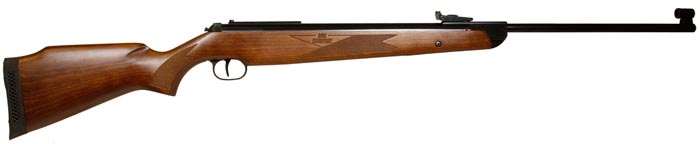
Exceptional long-range capability is delivered by the Diana 350 Magnum, a German-engineered spring-piston break-barrel air rifle built for hunters, pest controllers, and precision enthusiasts. Maximum pellet velocity is generated through a robust spring-piston system, while a classic Monte Carlo hunting stock is combined with the renowned T06 trigger. Consequently, consistent accuracy and ethical small-game performance are provided without tanks, pumps, or extra filling equipment.
Moreover, reliability is maintained shot after shot because a single-shot break-barrel action is employed. Therefore, backyard plinking, field target practice, and hunting applications are supported with equal confidence. In addition, an 11 mm dovetail rail is fitted so that optics can be mounted quickly whenever open sights are no longer preferred.
Why the Diana 350 Magnum Stands Out
Serious power is produced by this magnum-class springer. Official energy figures of approximately 28 joules in .177 and up to 32 joules in .22 are listed by the manufacturer, while advertised velocities of up to 1,070–1,250 fps (depending on pellet weight and market specification) are commonly cited. As a result, sufficient energy for small-game hunting and pest control at extended ranges is achieved.
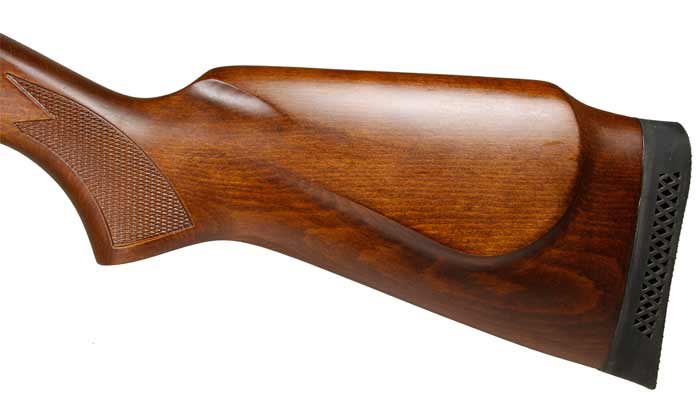
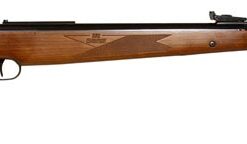
Furthermore, a rifled 495 mm barrel is used so that pellet spin and downrange stability are maximized. Meanwhile, a deeply blued finish is applied to metal surfaces for corrosion resistance and a traditional appearance. Likewise, a ventilated rubber butt plate is installed so that recoil is absorbed more comfortably during longer sessions.
Core Construction and Handling Features
- Spring-piston break-barrel action is utilized for self-contained power with no external air source required.
- Single-shot loading is performed so that each pellet can be seated with care for best accuracy.
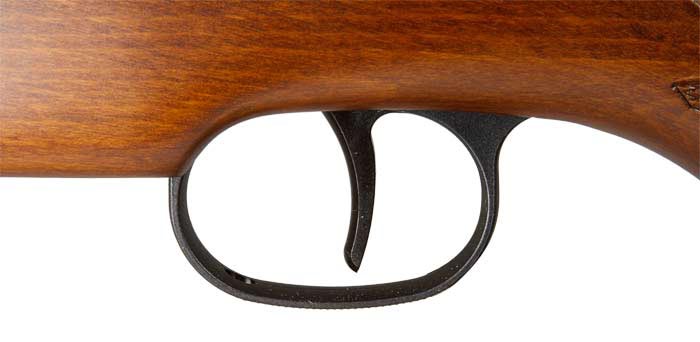
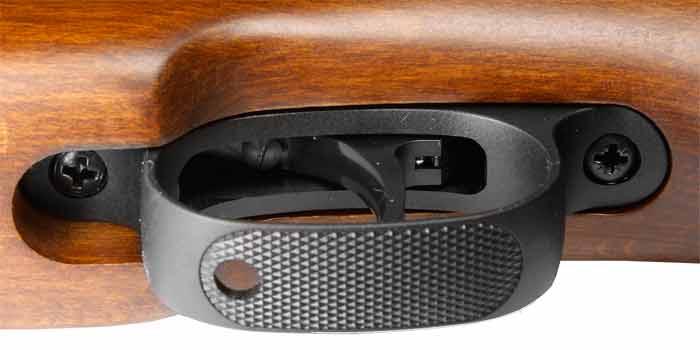
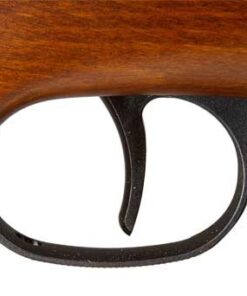
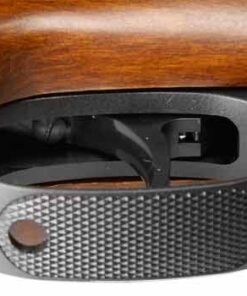
- T06 two-stage adjustable trigger is fitted; pull weight and first-stage travel can therefore be refined to individual preference.
- Automatic safety is engaged upon cocking so that an extra layer of protection is provided until the shot is intended.
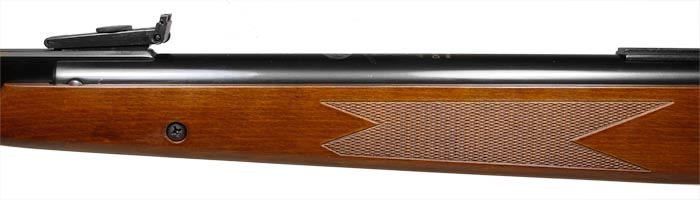
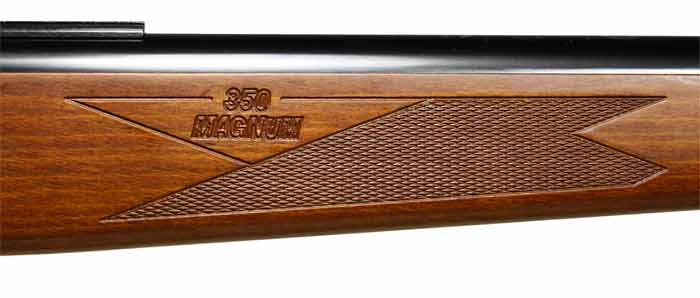
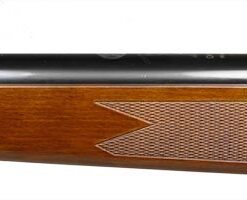
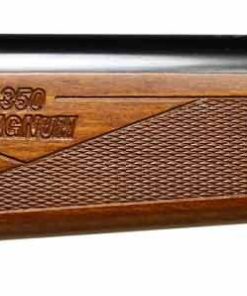
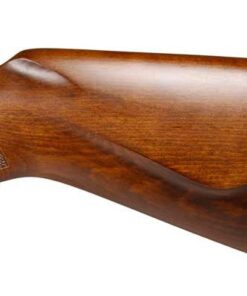
- Monte Carlo beech stock with checkered pistol grip and forearm is supplied for a secure hold in field conditions.
- Ventilated rubber butt pad is included so that felt recoil is reduced.
- 11 mm prism / dovetail rail is attached so that scopes and red dots can be mounted.
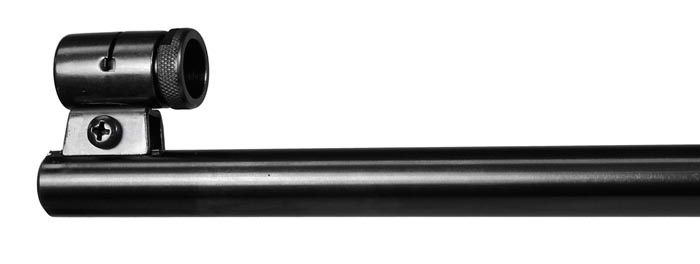
- Adjustable metal rear sight and interchangeable front sight are provided for immediate use without optics.
- Overall length of approximately 1,230 mm (48 in) and weight of about 3.8–3.9 kg (8.2 lb) are specified for a stable shooting platform.
Consequently, a balanced hunting rifle rather than a lightweight plinker is obtained. Nevertheless, the extra mass helps tame the magnum recoil cycle when a proper artillery hold is applied.
Calibers, Power, and Practical Performance
Two primary calibers are offered. In .177 (4.5 mm), higher velocity and a flatter trajectory are typically obtained, which is useful for precision targets and smaller pests. In contrast, .22 (5.5 mm) delivers heavier pellets with greater downrange energy, which is often preferred for rabbits and similar small game.
Additionally, cocking effort of roughly 45 lb is required on standard-length barrels. Therefore, a firm but controlled break-barrel motion is recommended. Subsequently, after a break-in period of several hundred pellets, smoothness usually improves and velocity consistency settles.
Accuracy is enhanced when quality lead pellets such as domed or hollow-point designs are selected and when the artillery hold is used. As a result, tight groups at 25–40 yards are commonly reported once the rifle is properly scoped and the shooter adapts to the dual-direction recoil of a powerful springer.
Suggested Uses
- Small-game hunting and ethical pest control are supported by the available energy levels.
- Target practice and informal field shooting are facilitated by the included open sights or a mounted scope.
- Training for larger hunting platforms is possible because the Diana 350 Magnum rewards consistent form.
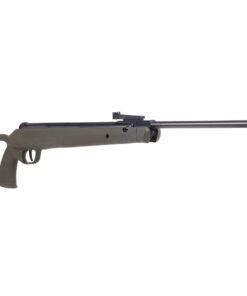
Inclusive shooting is encouraged: both right- and left-handed users can operate the break-barrel action, while ambidextrous Panther variants add bilateral cheekpieces when a synthetic stock is preferred.
Optics, Accessories, and Setup Tips
An 11 mm rail is already present, so a quality airgun-rated scope with adjustable objective is strongly recommended for hunting distances. Moreover, drooper rails or adjustable mounts are often beneficial because spring-piston recoil can affect point of impact. In addition, a sling swivel set can be added for field carry, and a quality gun slip protects the wood stock during transport.
Furthermore, regular maintenance is simple. A drop of suitable springer oil on the pivot and a light wipe of the barrel crown after sessions help preserve performance. Consequently, decades of service can be expected from this German-made platform when basic care is observed.
Legal power limits vary by country. Therefore, local FAC, energy, and age restrictions must always be checked before purchase or use. Responsible storage, muzzle awareness, and appropriate backstops remain essential for every shooter.
Ready for the Field
Long-range spring-piston performance is delivered by the Diana 350 Magnum without the complexity of PCP filling. Classic wood styling is combined with a precision T06 trigger and a proven magnum powerplant. As a result, hunters and enthusiasts seeking a no-fuss, high-energy break-barrel are given a capable and enduring choice.
Add the Diana 350 Magnum to your kit when reliable German engineering, ethical hunting power, and straightforward operation are required. Precision at distance is then placed within reach of dedicated shooters at every experience level.
Diana, Bintac, AEA and Hatsan Airguns: Rifles, Pistols, PCPs and Accessories
For shooters comparing trusted platforms, the Diana range remains a major point of interest. Searches such as diana air rifle, diana air rifles, air rifle diana, rws diana air rifle, rws diana, diana rws, and diana r reflect the continued popularity of classic airgun designs. Well-known spring-powered choices include the diana 34, diana model 34, diana rws 34, rws diana 34, diana r34, and diana 34 air rifle. Shooters interested in the updated modular platform may also search for diana 34 ems or diana 34 ems fiber optic sights.
Other established models continue to attract enthusiasts, including the diana 35, diana 48, diana mod 48, rws diana model 48, diana 54, diana 350 magnum, diana 350 magnum air rifle, 350 magnum diana, and diana rws 460 magnum. These rifles appeal to buyers comparing traditional spring-piston construction, power, accuracy, build quality, and different configurations for recreational or sporting use.
Diana PCP Air Rifles, Pistols and Accessories
The Diana catalog also includes PCP, CO2, and pistol-format options suited to different shooting preferences. Popular searches include diana r22, diana 2, diana 250, diana two fifty, diana 250 air rifle, diana stormrider, diana outlaw gen 2, diana airbug, diana bandit black, diana lp8, lp8 diana, diana air pistol, and diana pellet gun.
Owners looking to maintain, repair, or customize certain platforms may also search for diana chaser accessories and diana chaser parts. For target shooting and recreational plinking, a 4.5mm air gun remains a common caliber choice. Meanwhile, hunting diana searches often focus on Diana rifles suited to lawful pest-control or hunting applications where airgun use is permitted.
The term nerf diana can occasionally appear alongside Diana-related search traffic, although it represents a different product category and should not be confused with traditional pellet rifles or air pistols.
Bintac and AEA PCP Airguns
Big-bore and tactical PCP enthusiasts frequently compare Diana products with Bintac and AEA platforms. Popular searches include bintac aea harpoon, aea harpoon air gun, bintac t9 full auto, bintac t9 price, bintac mcar 457, aea terminator, and aea megalodon for sale.
Other related searches include airgun shotgun, automatic air gun, air powered 50 cal rifle, and zeus 72 cal air rifle price. Shooters setting up high-pressure PCP equipment may also research an air tank for pcp airguns or anti air tanks while comparing suitable filling equipment and accessories.
The broader phrase bee bee gun rifle may also be used by new shooters searching for BB rifles, pellet rifles, and other recreational air-powered platforms.
Hatsan Air Rifles and PCP Platforms
Hatsan remains another widely searched manufacturer across spring-piston, PCP, semi-automatic, and big-bore categories. General searches such as hatsan air rifle, hatsan air guns, hatsan pcp, hatsanusa, hatsan usa, air rifle, air rifles, and airguns cover a broad selection of products.
Break-barrel shoppers frequently compare the hatsan model 95, hatsan mod 95, mod 95, hatsan 125, hatsan 135, hatsan 135 vortex air rifle, hatsan 135 carnivore, hatsan zada, and hatsan airtact air rifle. The related search hatsan airtact is also common among buyers researching lightweight and affordable break-barrel rifles.
Customers searching for discounted or previously owned products may also use the phrase hatsan refurbished while comparing factory-refurbished or pre-owned Hatsan models.
Hatsan PCP and Big-Bore Airguns
For PCP enthusiasts, popular searches include hatsan flash, hatsan flashpup qe, hatsan bullboss, hatsan hercules, hatsan hercules bully, hatsan invader, hatsan factor rc, hatsan neutron star, hatsan harpoon, hatsan piledriver, and hatsan big bore carnivore rifle.
These searches cover everything from compact PCP rifles to powerful large-caliber platforms. Buyers can compare factors such as air capacity, operating pressure, caliber, barrel configuration, magazine capacity, stock design, overall weight, and intended use before selecting a suitable platform.
Hatsan Blitz, Sortie and Semi-Automatic Models
Shooters interested in rapid-fire PCP platforms frequently search for hatsan sortie, hatsan sortie tact, hatsan sortie tact semi-auto pcp, and hatsan sortie accessories. The Hatsan Blitz family also generates searches including hatsan blitz, hatsun blitz, hatsan blitz full automatic, and hatsan blitz 30 cal.
Compact PCP pistol and carbine shoppers may also research the hatsan velox and hatsan jet 2, providing additional choices for shooters who prefer smaller platforms.
Airgun Optics, Pellets and Accessories
Accessories, optics, ammunition, and filling equipment are important parts of a complete airgun setup. A basic 4×20 optic may suit certain entry-level rifles, while ammunition such as h&n field target trophy bleifrei can appeal to shooters specifically searching for lead-free pellets.
The search phrase econ ii may also appear alongside airgun-related product research depending on the equipment, accessory, or platform being compared.
Whether the goal involves target shooting, recreational plinking, collecting, pest control, or lawful hunting, the wide selection of Diana, AEA, Bintac, and Hatsan platforms gives shooters numerous choices. Comparing the correct caliber, rifle type, filling system, optics, pellets, accessories, and replacement parts can help buyers identify equipment that best matches their intended application.
Calibers, FAC, Power, and Accessories for the Diana 350 Magnum
Two factory calibers are offered on the Diana 350 Magnum, so that hunting, pest control, and target work can be matched to pellet mass and trajectory. In .177 (4.5 mm), a flatter path and higher advertised velocity are typically obtained. In contrast, .22 (5.5 mm) is selected when heavier pellets and greater retained energy at hunting distance are required. Consequently, ethical small-game performance can be planned once local rules and pellet choice are confirmed.
Moreover, official Premium specifications list energy of about 28 joules in .177 and up to 32 joules in .22. Meanwhile, some export listings quote velocities of 1,070–1,250 fps with light pellets. Therefore, real-world power depends on pellet weight, break-in condition, and whether a full-power or reduced-power market version has been supplied. Likewise, cocking effort of roughly 45 lb is required on the standard 495 mm rifled barrel, so a controlled two-handed break-barrel motion is recommended.
Furthermore, legal status is not the same in every country. In many EU markets a sub-7.5 J “F” marked version is sold without a firearms certificate. Conversely, full-power FAC or equivalent licensing is required wherever energy exceeds the local airgun limit. In the UK, FAC rules apply once 12 ft-lb is exceeded. As a result, the energy marking on the specific rifle must be checked before purchase. Inclusive ownership is supported when every shooter verifies compliance rather than assuming one worldwide specification.
Caliber Selection and Ballistic Use
A .177 Diana 350 Magnum is often preferred when longer zero distances and a flatter trajectory are needed. Subsequently, lighter pellets can be driven at higher speed, although wind drift must still be managed. Conversely, a .22 Diana 350 Magnum is favored for squirrels, rabbits, and similar quarry, because extra pellet mass helps retain energy at typical field ranges of 25–40 yards.
Additionally, quality lead domed or hollow-point pellets are recommended so that accuracy and humane impact are improved. Alloy or ultra-light pellets may produce high chrono figures yet can be less consistent in a magnum spring-piston action. Accordingly, several pellet types should be tested at the intended distance after a break-in of several hundred shots.
- .177 / 4.5 mm is specified when velocity and a flatter trajectory are prioritized.
- .22 / 5.5 mm is specified when downrange energy and small-game work are prioritized.
- Single-shot loading is used in both calibers so that each pellet can be seated uniformly.
- Rifled 495 mm barrel is fitted so that spin and stability are maintained.
- Energy of approximately 28–32 J is quoted on full-power Premium specifications, subject to market version.
Nevertheless, advertised fps figures should be treated as maxima with light pellets rather than everyday hunting loads. In addition, a quieter report and tighter groups are frequently obtained once heavier match-grade pellets are selected.
FAC Limits, Power Ratings, and Compliance
Full-power Diana 350 Magnum rifles exceed many unlicensed airgun thresholds. Therefore, an FAC, hunting permit, or restricted sale process may be required depending on jurisdiction. Reduced-power versions under 7.5 J are also produced for markets where adult ownership without a certificate is permitted. Consequently, model number and energy stamp must be confirmed at the point of sale.
Moreover, transport, storage, and minimum-age rules apply even where no FAC is needed. Safe backstops, muzzle awareness, and locked storage are expected of every user. Likewise, hunting seasons and species restrictions remain independent of the rifle’s joule rating. Inclusive language is used because safe handling is a shared duty among new and experienced shooters, left- and right-handed users, and all who operate the Diana 350 Magnum.
As a result, the dealer should be asked to state the exact energy rating before checkout. Subsequently, local wildlife and firearms authorities can be consulted if any doubt remains.
Accessories That Complete a Field-Ready Setup
An 11 mm dovetail / prism rail is already attached, so an airgun-rated scope with adjustable objective is the most useful first accessory. Furthermore, spring-piston recoil can shift point of impact, which is why a drooper rail or adjustable two-piece mounts are frequently fitted. Meanwhile, adequate ring height keeps the optic clear of the barrel and Monte Carlo comb.
In addition, adjustable metal open sights with interchangeable front inserts remain available for immediate use. Fiber-optic or TRUGLO-style sights appear on some Classic and Panther variants. Therefore, a scope is optional rather than mandatory for close-range pest work.
A ventilated rubber butt pad is already installed, yet a slip-on recoil pad can still be added if extra comfort is desired. Likewise, sling swivels and a sturdy sling ease carry of the approximately 8.2 lb, 48-inch rifle. A padded slip or hard case protects the beech stock during travel.
Maintenance items complete a practical kit. A small bottle of springer-specific oil for the pivot, a barrel kit used sparingly, and a torque screwdriver for stock and mount screws help preserve consistency. Consequently, fasteners should be checked after the first range sessions because magnum recoil can loosen hardware.
Putting a Session Together
A typical productive evening is assembled in layers. Permission and weather are confirmed first. Zero is verified on a safe target. A route that keeps buildings and paths behind the shooter is walked. Opportunities inside the practiced distance are taken only with a rest and a clear backstop. Recovery and a quiet exit complete the loop.
Furthermore, notes from that evening guide the next visit: which corner held rabbits, which pellet printed tighter, which rest produced the most repeatable hold. As a result, skill is accumulated without extra equipment. The rifle remains a self-contained tool—no tanks, no pumps—ready whenever land access and legal conditions allow.
Finally, restraint is treated as part of marksmanship. Passes are counted as success when a shot would have been uncertain. Humane placement, legal compliance, and respect for land and neighbors are the measures by which a practical outing is judged. When those standards are kept, a powerful spring-piston hunting rifle earns its place as a dependable companion for small-game and pest work across seasons.
- Airgun-rated 3–12x or 4–16x AO scope is recommended for hunting distances.
- Drooper or adjustable mounts are advised so that vertical stringing from recoil is reduced.
- Quality lead pellets in the chosen caliber are required for accuracy testing.
- Sling and swivels are useful for woodland and farm carry.
- Padded slip or hard case is suggested for transport and storage.
- Springer oil and a basic cleaning kit support long-term reliability.
- A rigid bipod is generally avoided unless a very light, flexible model is used, because a stiff rest can worsen hold sensitivity on this break-barrel.
Moreover, sandbags can be used for zeroing, provided the artillery hold is still applied when groups are confirmed from field positions. In contrast, a rigid bench rest without proper hold technique often produces misleading results on a powerful springer.
Matching Power to Ethical Use
Enough energy for humane shots on small game is delivered when appropriate pellets and ranges are chosen. However, larger quarry lies outside the intended role of the Diana 350 Magnum. Therefore, shot placement and distance discipline remain more important than peak fps claims.
Additionally, consistency after break-in is usually more valuable than the highest advertised speed. Subsequently, a chrono session with several pellet types allows the most accurate load to be identified. As a result, hunters and target shooters of every experience level can extract reliable performance from this German spring-piston platform.
Inclusive setup is encouraged: comb height and stock length suit many adult frames, while optics and slings can be adjusted so that left-handed and right-handed users both obtain a usable sight picture. Finally, legal power limits, secure storage, and respectful land access complete the package. When those conditions are met, the Diana 350 Magnum is ready as a durable, self-contained rifle for precision work in the field.
Practical Use in the Field
Everyday work with a full-power spring-piston break-barrel is planned around one careful shot at a time. Because a single pellet is loaded after each cocking stroke, pace is slowed and observation is increased. Consequently, opportunities are chosen rather than rushed. Moreover, the extra mass of a long hunting stock is used to settle the sight picture once a rest, tree, or kneeling position has been taken.
Furthermore, ethical distance is kept inside the rifle’s reliable accuracy window. For most shooters that window sits between twenty and forty yards once a suitable pellet has been selected and a proper hold has been learned. Therefore, closer shots are preferred whenever cover and wind allow. In addition, a clear backstop is confirmed before the barrel is closed, so that a miss cannot travel into livestock, buildings, or public paths.
Inclusive use is intended. Left-handed and right-handed shooters can operate the break-barrel action, while a Monte Carlo comb supports a consistent cheek weld when open sights or a low-mounted scope are employed. Likewise, new and experienced users benefit from the same routine: cock, load, settle, breathe, and release only when the hold is repeatable.
Why This Rifle Earns a Place Ahead of Typical Springers
A stronger case for ownership is made when power, simplicity, and field manners are weighed together. Independent filling gear is not required, yet energy suitable for ethical small-game work is still produced. Consequently, time in the field is spent stalking and shooting rather than pumping, charging, or watching a pressure gauge. Moreover, a single, proven action is relied upon, so fewer seals, regulators, and bottles are left to fail on a cold morning.
Furthermore, a long, stable hunting stock is combined with a precision two-stage trigger, which is uncommon at this level of self-contained power. Therefore, hold and release can be refined instead of being fought. In addition, open sights are supplied from the factory while an 11 mm rail is already fitted, so a first outing can be completed before optics are chosen. Inclusive use is supported because the break-barrel can be operated from either shoulder and because a raised comb helps a wide range of shooters find a repeatable cheek weld.
Self-Contained Power Without Extra Logistics
A spring-piston system stores energy in the rifle itself. As a result, a compressor, dive bottle, or hand pump is never packed. Travel to a permission becomes simpler: pellets, a slip, and the rifle are enough. Meanwhile, shot-to-shot consistency does not fall as a cylinder empties, because no air reservoir is being depleted.
Farm and Smallholding Pest Control
On working land, rats, feral pigeons, and rabbits are often the first tasks assigned to a magnum springer. Early morning and last light are favored because movement is easier to spot and fewer people are present. Subsequently, a quiet approach along hedge lines and outbuildings is used so that quarry is not flushed before a stable position is found.
A kneeling or seated rest against a gatepost is commonly adopted. Meanwhile, the artillery hold is applied so that the rifle is allowed to recoil freely rather than being locked into the shoulder. As a result, vertical stringing is reduced and follow-up shots, when legally and ethically justified, remain possible after a fresh pellet is seated.
- Outbuildings and grain stores are checked at dusk when rodent traffic increases.
- Paddock edges are walked slowly so that rabbits feeding on short grass can be observed.
- Roof lines and loft openings are watched for pigeons when local rules permit control.
- Clear lanes between sheds are used so that a safe backstop of earth or timber is always present.
Nevertheless, power is not a substitute for placement. A chest or head shot on small pests is required for a humane result. Consequently, shots through wire, glass, or thin boarding are avoided because deflection is likely. In addition, carcasses are recovered promptly so that hygiene on the holding is maintained.
Weather is taken into account. After rain, cocking effort can feel heavier and grips can become slick, so gloves with light texture are sometimes worn. Conversely, cold mornings stiffen seals and springs until a few settling shots have been fired into a safe bank. Therefore, a short warm-up on an approved target is completed before live pest work begins.
Woodland and Hedgerow Small-Game Stalks
In mixed woodland, grey squirrels and rabbits are pursued from rides, fallen trunks, and the edges of clearings. A slow still-hunt is preferred because the rifle’s length and weight reward a planted stance more than a snap shot. Moreover, leaf litter is used to mask footfalls while the muzzle is kept pointed in a safe direction during movement.
When a target is located, a rest is sought first. A forked sapling, rucksack, or kneeling pad is employed so that the sight picture can be held without muscle tremor. Subsequently, the safety is only disengaged when the shot is intended. Meanwhile, wind at the target is read from leaves and dust, because a .177 pellet is more easily drifted than a heavier .22.
Shot angles through branches are refused. Deflection from twigs ruins both accuracy and ethics. Likewise, sky-lined animals on ridge lines are left until a lower background of earth or timber is available. As a result, every pellet is accountable.
Seasonal cover changes the approach. In winter, bare branches improve visibility but also expose the shooter, so longer pauses behind trunks are used. In late summer, nettles and bramble force higher shooting positions, which is why a sling is kept fitted for support rather than for rapid slinging across the back.
Permission Land and Boundary Awareness
Access is always confirmed in writing or by a clear verbal agreement with the landowner. Boundaries, livestock fields, footpaths, and neighboring houses are walked in daylight before the first evening session. Consequently, no-shoot zones are memorized rather than guessed in poor light.
Furthermore, high-visibility clothing is sometimes worn when other workers or riders may be present, then removed once a hidden stand is occupied. Inclusive courtesy is shown to farm staff, walkers, and neighboring permissions. Therefore, the rifle is cased or slung muzzle-down while crossing yards and public tracks.
A simple field kit is carried so that the session is not cut short by a loose mount or a forgotten tin of pellets.
- A padded slip is used between stands and vehicles.
- A small pouch of tested pellets is kept separate from untested bulk tins.
- A compact headlamp with a red setting is reserved for recovery and gate work, not for hunting illumination where prohibited.
- Water, gloves, and a tick-aware clothing layer are packed for longer permissions.
- A notebook or phone note records zero confirmation, wind, and any misfed pellets.
Nevertheless, electronics are kept silent. Notifications are disabled so that a stalk is not broken by a sound that quarry will hear first.
Range Practice That Transfers to the Field
Before permissions are used, groups are confirmed on paper at the same distances expected in the field. Twenty-five and thirty-five yards are typical starting zeros for a hunting scope. Moreover, the same pellet, the same hold, and the same clothing layers are used so that point of impact is not changed by a winter coat or a tight sling.
The artillery hold is rehearsed until it becomes automatic. The forend is rested on an open palm, the butt is placed lightly in the shoulder, and the trigger hand remains relaxed. Consequently, the forward-then-back recoil cycle of a magnum springer is allowed to occur the same way each shot. In contrast, a death grip on the forend throws pellets high or low and creates false confidence.
Additionally, open sights are practiced even when a scope will be used in the field. Iron-sight sessions build a faster mount and reveal trigger habits that glass can hide. Subsequently, the T06-style two-stage trigger is adjusted only after several boxes have been fired, so that a light release is not introduced before the hold is stable.
Wind flags or natural indicators are watched. A calm evening group does not guarantee a breezy hedgerow group. Therefore, a few shots into a safe bank at the start of each outing confirm that zero has not shifted after transport.
Evening Routes and Last-Light Discipline
Last light concentrates rabbits on short grass and rats along feed passages. A pre-planned route is walked so that the shooter is not silhouetted on open ground. Meanwhile, the scope’s objective is kept shaded from the remaining sky glow to reduce glare.
Identification is completed before the barrel is broken open for loading. Shape, size, and background are confirmed. Inclusive ethics require that pets, livestock, and protected species are never put at risk by a hurried silhouette shot. As a result, many possible targets are passed so that only certain, legal, and humane opportunities are taken.
After the shot, the area is approached only when the action is open and the rifle is pointed in a safe direction. Recovery is done with a light that does not sweep neighboring windows. Subsequently, the permission is left as it was found: gates closed, litter removed, and the landowner informed if any unusual activity was seen.
Weather, Maintenance Between Sessions, and Longevity
Damp conditions demand extra wipe-downs of the barrel, pivot, and scope turrets. A drop of suitable springer oil on the cocking linkage is applied sparingly so that dirt is not attracted. Moreover, the rifle is never stored cocked. Spring fatigue and a compressed seal are avoided when the action is left at rest.
Transport vibration loosens stock screws on magnum springers. Therefore, a quick check of forend and action screws is completed after a rough farm track. Likewise, scope rings are inspected so that a silent shift in zero is caught before the next hunt.
Heat in direct sun can change point of impact if the rifle is left on a vehicle dash. Shade or a case is used. Conversely, freezing conditions may reduce felt smoothness until the first shots warm the mechanism. A few settling pellets into an approved backstop restore consistency.
Training New Shooters on the Same Platform
When a less experienced shooter is introduced to this class of rifle, cocking is demonstrated as a two-handed, muzzle-safe movement. Assistance is offered without taking control of the muzzle. Inclusive coaching focuses on hold, breathing, and when not to shoot, rather than on maximum distance.
A lighter training pellet and a closer target are used first. Confidence is built at fifteen to twenty yards before field distances are attempted. Meanwhile, hearing and eye protection are worn on the range even though the report is moderate. Consequently, good habits transfer when the same person later stalks a hedgerow.
Supervision remains in place until safe loading, automatic-safety awareness, and backstop selection are automatic. No session is treated as a race. The design of a single-shot break-barrel already enforces patience; that pace is treated as a feature, not a limitation.
Putting a Session Together
A typical productive evening is assembled in layers. Permission and weather are confirmed first. Zero is verified on a safe target. A route that keeps buildings and paths behind the shooter is walked. Opportunities inside the practiced distance are taken only with a rest and a clear backstop. Recovery and a quiet exit complete the loop.
Furthermore, notes from that evening guide the next visit: which corner held rabbits, which pellet printed tighter, which rest produced the most repeatable hold. As a result, skill is accumulated without extra equipment. The rifle remains a self-contained tool—no tanks, no pumps—ready whenever land access and legal conditions allow.
Finally, restraint is treated as part of marksmanship. Passes are counted as success when a shot would have been uncertain. Humane placement, legal compliance, and respect for land and neighbors are the measures by which a practical outing is judged. When those standards are kept, a powerful spring-piston hunting rifle earns its place as a dependable companion for small-game and pest work across seasons.





Reviews
There are no reviews yet.