Diana 34 EMS Legion Special Edition — Limited-Edition Break-Barrel Precision
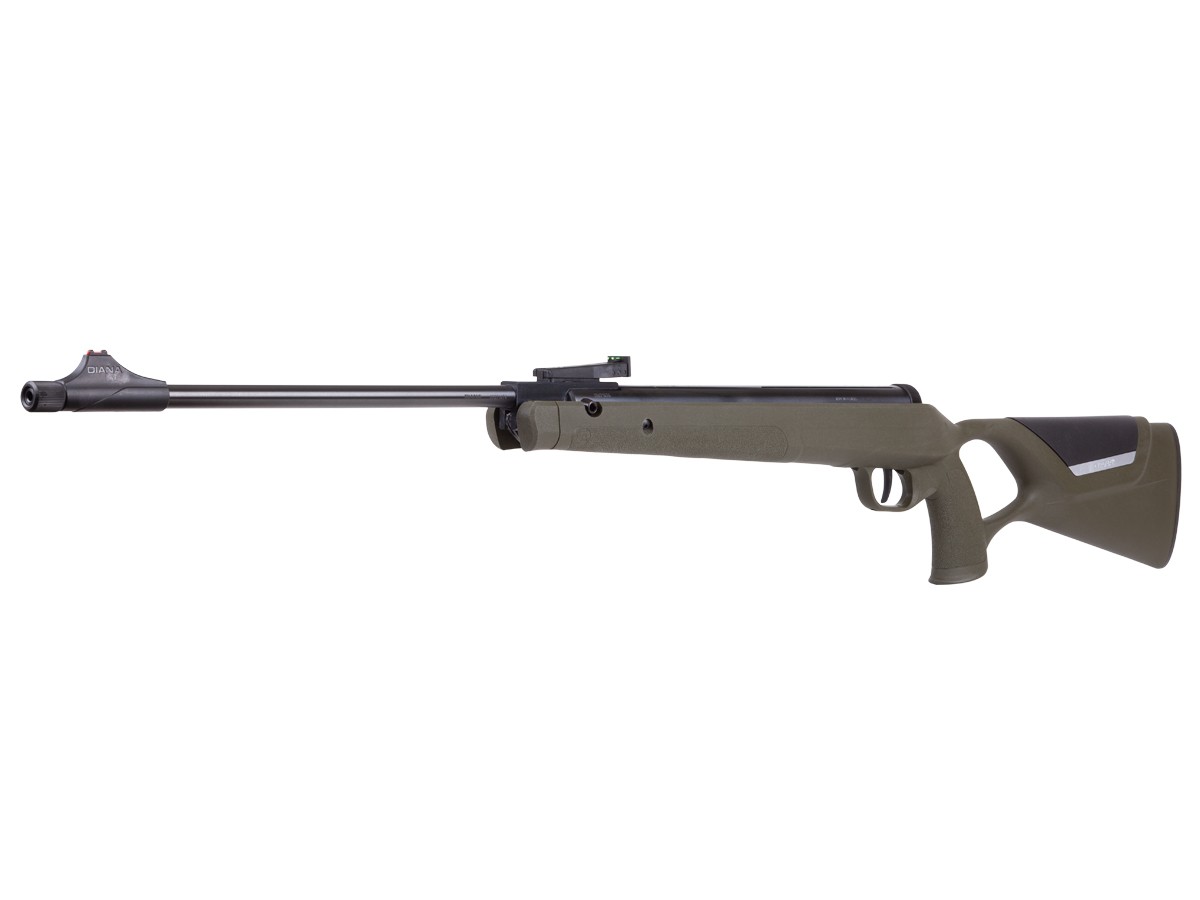
A collectible German-made spring-piston air rifle is presented through the Diana 34 EMS Legion Special Edition. Only 999 units were produced. Consequently, an exclusive OD Green synthetic thumbhole stock is paired with an individually numbered Légion Étrangère badge and grenade emblem. Furthermore, modular EMS architecture is retained so that barrels, sights, and even the powerplant can be adapted. Therefore, a distinctive field and range companion is offered to shooters who value heritage, customization, and consistent performance.
Distinctive Limited-Edition Character
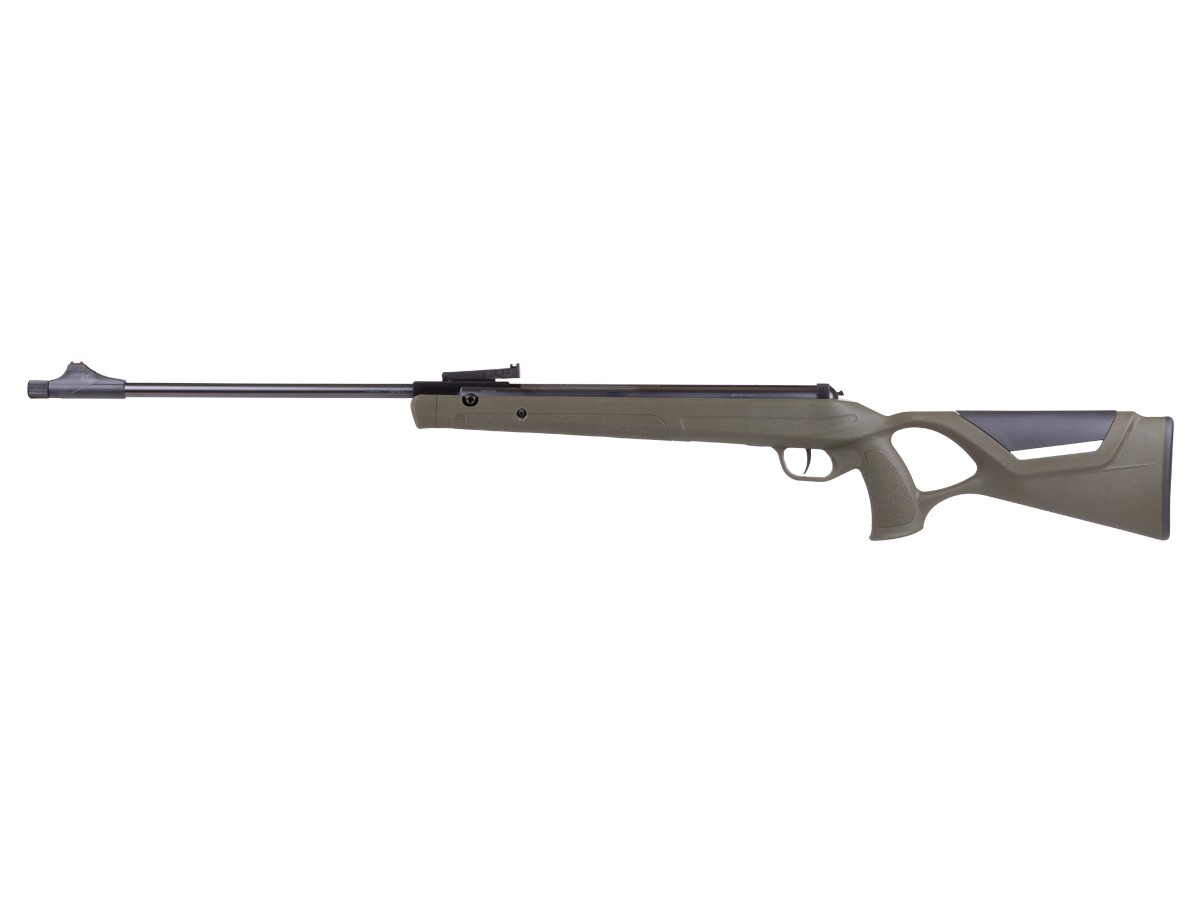
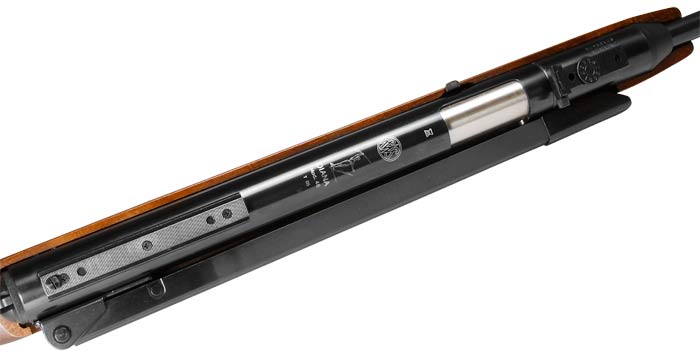
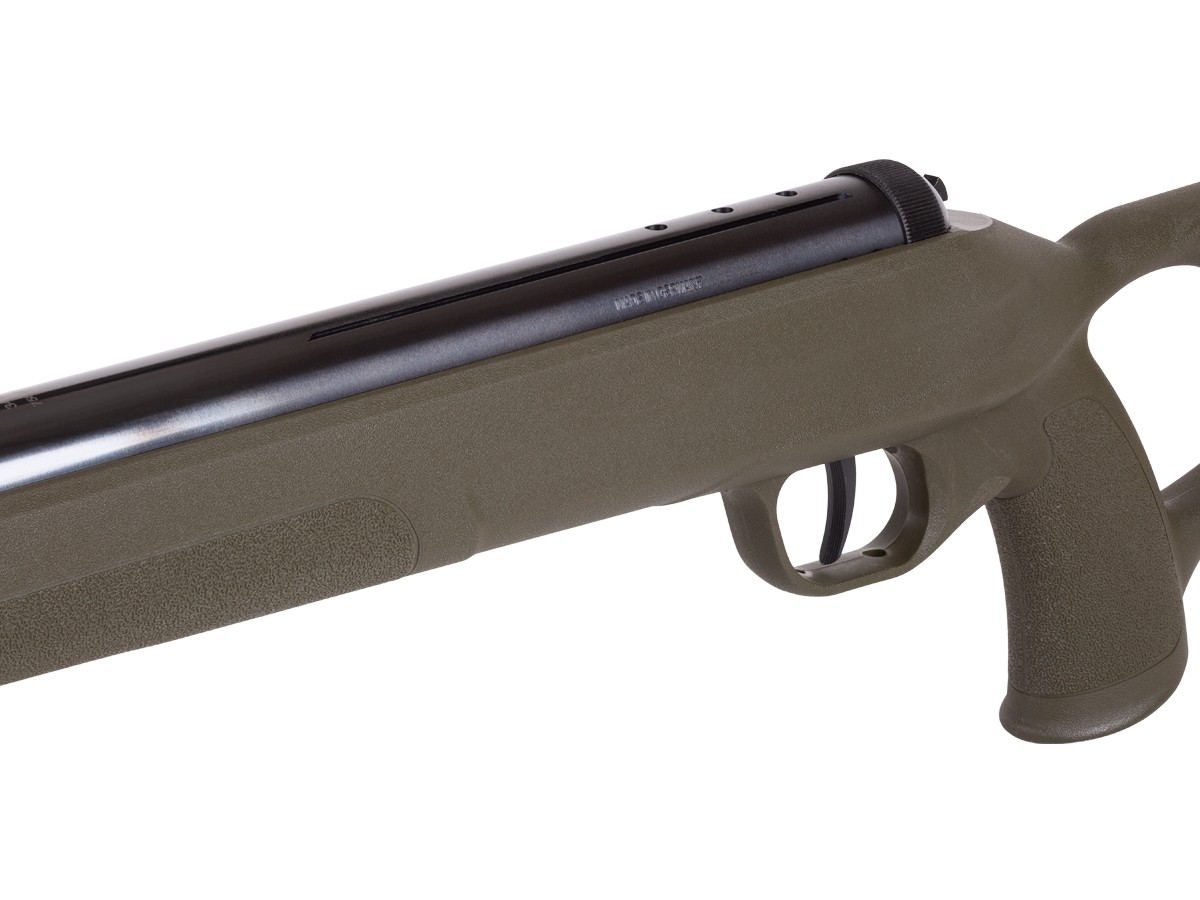
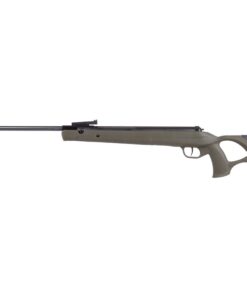
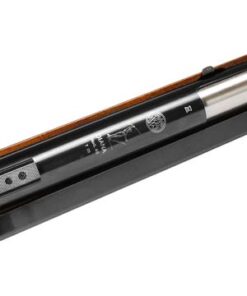
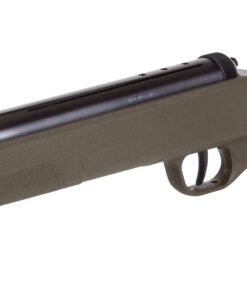
Rarity is emphasized by a one-time production run of 999 rifles. Moreover, each example is marked with its sequence number together with the “Légion Étrangère” inscription and Foreign Legion grenade motif on the compression tube. In addition, an Olive Drab green synthetic thumbhole stock is fitted exclusively to this edition. As a result, a collector-grade appearance is combined with weather-resistant durability. Meanwhile, the ambidextrous thumbhole layout is designed so that a secure, repeatable hold can be achieved by a wide range of shooters.
Because the stock is synthetic, seasonal swelling and checking are avoided. Likewise, a plastic buttplate is fitted so that recoil is managed without added bulk. Altogether, a field-ready profile is maintained at an overall length of 46.3 inches and a weight of approximately 7.85 lb.
Visual and Collectible Details
- Individually numbered production badge (example: 750 of 999)
- Special Légion Étrangère imprint and grenade emblem
- Exclusive OD Green / Olive Drab synthetic thumbhole stock
- Limited worldwide production of 999 units only
Easy Modular System (EMS) Flexibility
The EMS platform is engineered so that components can be exchanged without a complete rebuild. Accordingly, the 19.5-inch rifled barrel is removable and is finished with a 1/2″ UNF muzzle thread. Consequently, a moderator or compensator can be fitted when local regulations allow. In the same way, barrel alignment can be adjusted so that point of impact is refined after a caliber or barrel change.
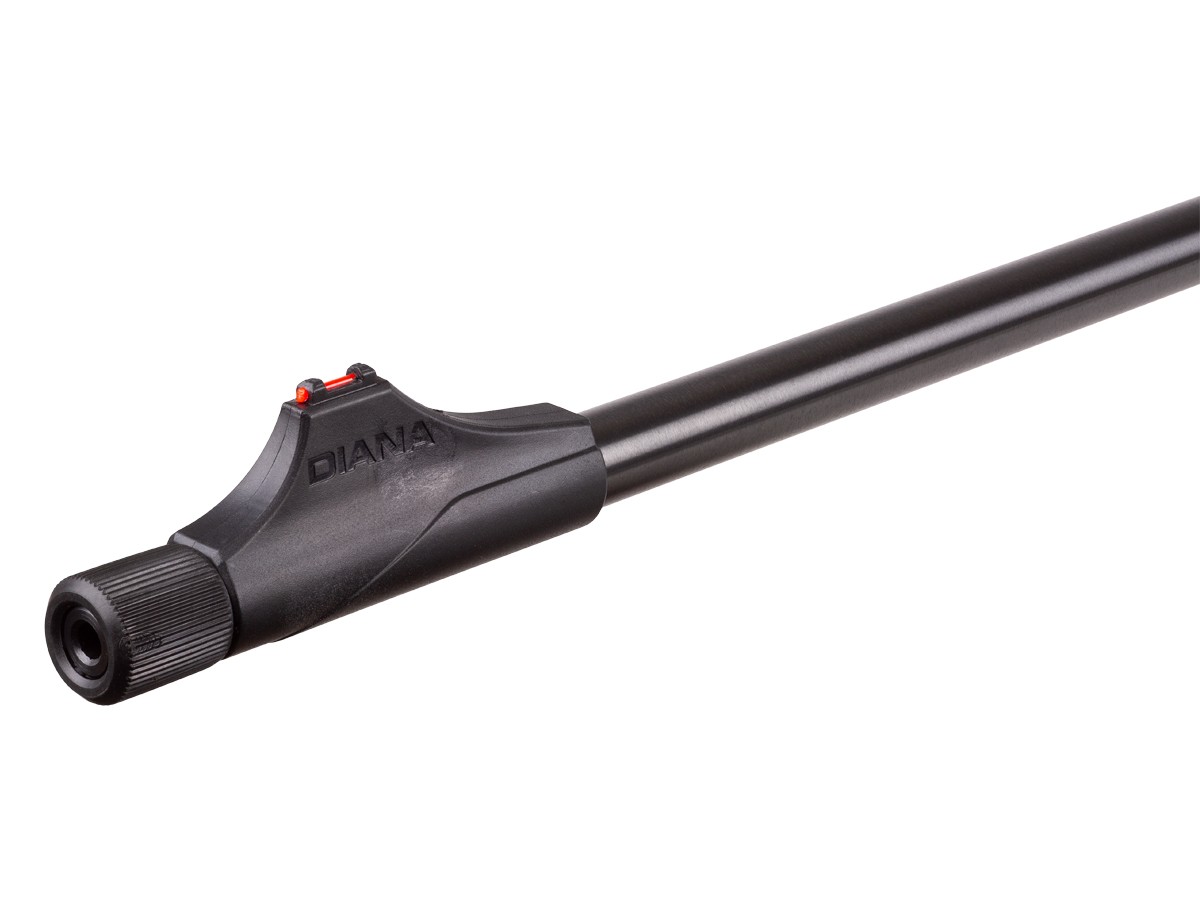
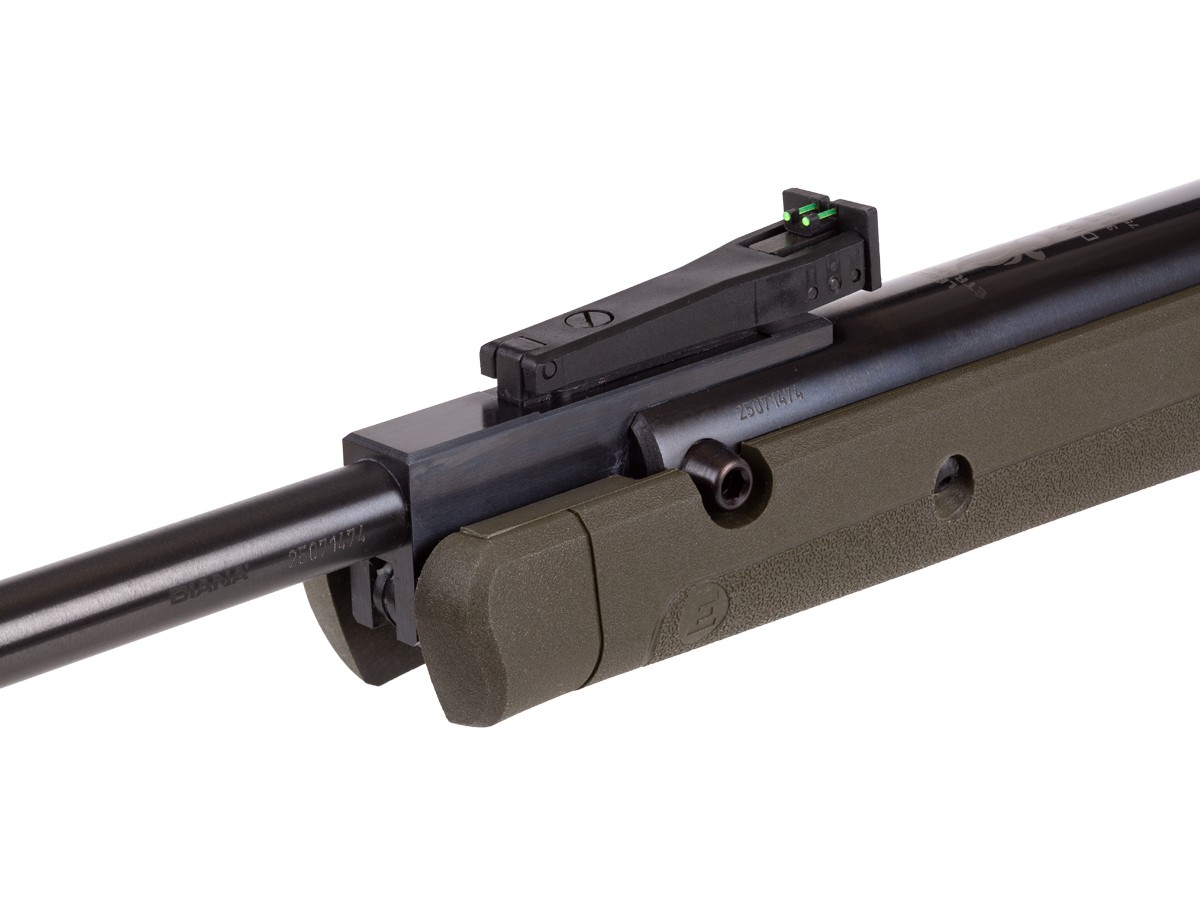
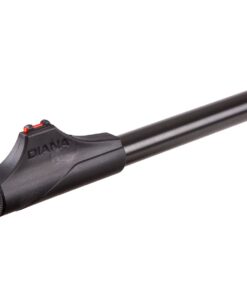
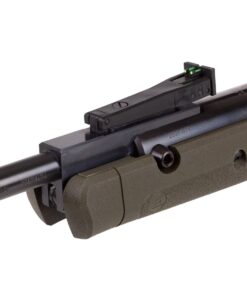
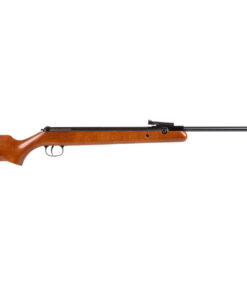
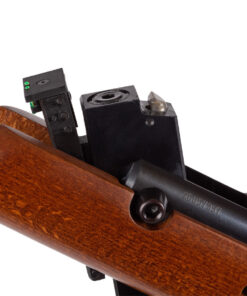
Additionally, front and rear sights are interchangeable. Therefore, the factory fiber-optic front sight and micrometer-adjustable rear sight can be swapped for alternative sighting solutions. An 11 mm dovetail rail is milled so that a scope or red-dot optic can be mounted when greater precision is required.
Furthermore, the spring-piston powerplant can later be converted to Diana’s N-TEC gas piston. Thus, a smoother cocking stroke and more consistent shot cycle can be obtained if that upgrade is desired. Automatic safety engagement is provided so that an unintended discharge is reduced during cocking.
Modular Features at a Glance
- Spring-piston powerplant convertible to N-TEC gas piston
- Removable 1/2″ UNF threaded barrel
- Adjustable barrel alignment
- Changeable fiber-optic front and micrometer rear sights
- 11 mm dovetail optics rail
- Two-piece cocking lever with improved geometry
Power, Calibers, and Trigger Control
Velocities suitable for plinking and small-game work are delivered in both popular calibers. Specifically, alloy pellets can reach up to 1050 fps in .177 and 950 fps in .22. Meanwhile, lead pellets are rated at up to 900 fps in .177 and 800 fps in .22 (figures vary with pellet weight and local legal limits). Energy in the mid-teens of foot-pounds is typically produced, so that small-game hunting and reactive-target shooting remain practical.
A two-stage adjustable T06 trigger is fitted. Consequently, first-stage travel, let-off, and pull weight can be tuned to individual preference. In independent tests of the 34 EMS platform, a crisp break near 1 lb 2 oz has been recorded after proper adjustment. Therefore, consistent shot release is supported once the rifle is bedded in.
Single-shot operation is retained so that each pellet can be seated with care. Likewise, a rifled barrel is employed so that spin-stabilized accuracy is encouraged at typical backyard and hunting distances.
Performance Highlights
- Calibers: .177 (4.5 mm) and .22 (5.5 mm)
- Max velocity (alloy): 1050 fps (.177) / 950 fps (.22)
- Max velocity (lead): 900 fps (.177) / 800 fps (.22)
- Two-stage adjustable T06 trigger
- Automatic safety
- Single-shot break-barrel action
- Loudness typically rated medium
Practical Field and Range Use
Because the thumbhole stock is relatively wide in the forend, a stable hold can be established by shooters with larger hands as well as by those who prefer a more vertical grip. Moreover, fiber-optic sights remain visible in low light, so that dusk pest control or unlit range sessions can still be conducted without an optic. When greater precision is wanted, a scope can be added to the 11 mm rail.
Break-barrel cocking is required; effort is typically in the 30 lb class and usually eases after a break-in period. Therefore, a deliberate, consistent cocking motion is recommended. Dry-firing without a pellet must be avoided so that the piston and cylinder are protected.
Responsible use is expected. Local airgun laws, power limits (including FAC requirements where applicable), and safe backstops must always be observed. Inclusive language is used throughout because this platform is intended for adult shooters of varying experience who value German engineering, limited-edition character, and modular growth.
A two-year manufacturer warranty is commonly supplied with new examples. Consequently, confidence in long-term service is supported when the rifle is maintained according to Diana guidelines.
Why This Edition Stands Apart
Heritage from the long-running Diana 34 line is combined with modern EMS modularity and a never-repeated Legion livery. As a result, a working air rifle that can also be collected is offered. Transition from open sights to optics, from spring to gas piston, or from one caliber to another can be planned rather than improvised. Meanwhile, the numbered badge and distinctive stock color make each rifle immediately recognizable.
Conversion-focused value is delivered through a complete factory package: sights, rail, threaded muzzle, adjustable trigger, and documented upgrade path. Therefore, additional expenditure can be staged rather than required on day one. For shooters seeking a limited-run German break-barrel that remains practical in the field, the Diana 34 EMS Legion Special Edition is positioned as a focused, collectible choice.
Availability is inherently finite. Once the 999-unit allocation is exhausted, this exact configuration will not be repeated. Accordingly, early consideration is advised if the combination of Legion markings, OD Green thumbhole stock, and EMS flexibility matches the intended use.
Practical Use in Everyday Shooting
A limited-run German break-barrel is put to work most often in familiar surroundings rather than on a formal course. Consequently, backyard sessions, quiet field edges, and informal range days are where the platform is most frequently employed. Because a single-shot spring-piston action is used, each pellet is loaded with intention. Therefore, a slower, more deliberate rhythm is encouraged compared with a multi-shot PCP. Meanwhile, an automatic safety is engaged during cocking so that handling remains controlled when the barrel is broken open.
Fiber-optic open sights are relied upon whenever an optic has not yet been fitted. As a result, contrast is maintained in fading light, and small reactive targets can still be addressed at dusk. In addition, an 11 mm dovetail is already present, so a compact scope can later be added without a new receiver. Likewise, a threaded muzzle allows a moderator to be fitted where regulations permit, after which report is reduced for garden or farm use.
Weight near 7.85 lb and an overall length of 46.3 inches mean the rifle is not treated as a walkabout carbine. Instead, a rest, a bag, or a kneeling position is commonly adopted so that hold is repeatable. Furthermore, the thumbhole stock is grasped so that the shooting hand is aligned consistently from shot to shot. Inclusive technique is emphasized: a stable hold can be developed by shooters of different statures once the comb and forend are allowed to settle into the shoulder and support hand.
Backyard Plinking and Skill Building
Informal practice is conducted at 10 to 25 yards more often than at long field distances. Consequently, tin cans, spinning targets, and paper plates are used so that immediate feedback is received. Because velocity with suitable lead pellets remains in a practical mid-power band, over-penetration through thin garden fences is reduced when a proper backstop is placed. Nevertheless, a dense, purpose-built stop is always required; no living area or neighboring property is ever used as an impact zone.
A break-in period of several hundred shots is typically allowed before groups are judged. During that interval, the cocking stroke and firing cycle are expected to smooth. Therefore, early sessions are treated as familiarization rather than as accuracy tests. In the same way, several pellet types are tried so that the barrel’s preference is discovered. Dome-headed mid-weight pellets are often favored once the rifle has settled, while very light alloys are reserved for velocity checks rather than for group work.
Cocking effort in the region of 30 lb is managed by a consistent two-handed motion. The barrel is broken smoothly rather than slapped, and the pellet is seated fully before the action is closed. Subsequently, the automatic safety is observed and then released only when the sight picture is ready. As a result, a safe, repeatable sequence is built into every session.
- Short-range reactive targets are engaged from a supported position
- A solid backstop is placed behind every impact zone
- Multiple pellet weights are tested after the break-in period
- Cocking is performed with a controlled, two-handed stroke
- Open sights are used until an optic is justified by the task
Small-Game and Pest Applications
Where lawful, the power level is applied to small pests and small game at modest distances. Consequently, head or vitals shots are taken only after range has been confirmed and a safe backdrop has been verified. Because energy is typically in the mid-teens of foot-pounds with appropriate lead pellets, ethical dispatch of small quarry is possible inside the distances at which the rifle groups well. Beyond those distances, shots are declined.
Field use favors the weather-resistant synthetic stock. Rain, dew, and farm dust are tolerated better than with an unfinished wood forend. Moreover, the Olive Drab color reduces glare in mixed cover. Meanwhile, the thumbhole layout keeps the firing hand in a similar place whether the shot is taken standing, kneeling, or from a low rest. Inclusive field practice is observed: the same safety rules are applied regardless of the shooter’s experience level.
A moderator, when legally fitted, makes farm-edge work less conspicuous. In addition, fiber-optic sights remain useful at first and last light when a scope’s exit pupil and eye relief would otherwise slow the shot. If a scope is preferred for tighter groups on small targets, a low-magnification optic is mounted on the existing 11 mm rail so that weight and balance are not dramatically altered.
Pellet choice in the field is kept simple. A single, proven dome that groups in the rifle is carried in sufficient quantity. Mixed tins are avoided so that point of impact does not wander mid-session. After each outing, the barrel is cleared, the action is left uncocked, and the rifle is stored separately from pellets.
- Lawful small-game and pest distances only are used
- A verified backstop is confirmed before every field shot
- One trusted pellet type is carried for consistency
- Synthetic stock and muted color are relied upon in wet cover
- Shots beyond the rifle’s reliable group size are withheld
Range Sessions and Zero Work
Formal or club ranges allow the two-stage T06 trigger to be refined. First-stage travel, let-off, and pull weight are adjusted so that a clean break is obtained without a surprise release. Consequently, group size often improves once the trigger is matched to the shooter rather than left at a factory average. Inclusive coaching is possible because the same adjustment screws are accessible to every user who follows the manual.
Zeroing is performed from a rest at 10, 20, and 25 yards before any longer testing is attempted. Barrel alignment shims, where used after a service or barrel change, are verified so that vertical stringing is minimized. Likewise, scope rings are torqued evenly because spring-piston recoil is two-way and will loosen careless mounts. After zero is confirmed, a short string is fired to confirm that point of impact has not walked.
Accuracy work is documented. Distances, pellet lots, and weather are noted so that later sessions can be compared. As a result, the rifle’s real-world capability is separated from optimistic catalog figures. Independent tests of the underlying EMS platform have shown tight groups with well-matched mid-weight pellets once the action has settled; that pattern is used as a benchmark rather than as a guarantee for every example.
Noise on a public range is moderate for a springer of this class. A threaded muzzle still allows a moderator where club rules and law permit. Otherwise, courtesy and hearing protection are observed. After the session, the rifle is uncocked, wiped, and cased so that the next outing starts from a known condition.
Low-Light and Seasonal Conditions
Fiber-optic inserts are exploited at dawn and dusk when a magnified optic would demand more alignment time. Contrast against dark earth or foliage is improved, and the rear micrometer sight can be adjusted so that the hold remains familiar. In winter gloves, the thumbhole still indexes the hand; in summer heat, the synthetic forend does not become as slick as some polished woods.
Seasonal storage is planned. Humidity is controlled so that steel surfaces remain protected. The spring is not left compressed for long idle periods. Before the first shot of a new season, a few fouling pellets are sent into the backstop so that oil and dust are cleared from the bore.
Travel to a permission or club is managed with a full-length case. At 46.3 inches, the rifle occupies a dedicated slot rather than a compact daypack. Consequently, a vehicle rest or a fixed shooting point is often preferred over long walks with the gun slung. When a walk is required, the rifle is carried broken or cased until the shooting position is occupied.
Maintenance That Supports Real Use
Practical reliability is preserved by simple habits. The bore is kept free of debris; the breech seal is inspected; and the cocking linkage is observed for unusual stiffness. Conversion to a gas piston, if later chosen, is treated as a workshop task rather than a field adjustment. Until that conversion is completed, the steel spring is allowed to do the work it was designed for.
Sights are checked after transport. Fiber-optic rods can be replaced if damaged. The 1/2″ UNF thread protector is refitted whenever a moderator is removed so that the crown remains guarded. Trigger settings are recorded so that they can be restored after cleaning.
Inclusive safety language is repeated because every user shares the same obligations. The muzzle is kept pointed in a safe direction. Fingers remain off the trigger until the shot is intended. Bystanders are kept behind the firing line. Local power limits, licensing, and transport rules are followed without exception. Dry-firing without a pellet is avoided so that the piston is not driven against an empty cylinder.
Building a Repeatable Routine
A useful outing follows a short checklist. The rifle is inspected. Pellets of a known lot are selected. The backstop is confirmed. A few sighters are fired. Only then is the session’s purpose—plinking, zero confirmation, or lawful pest work—begun. Afterward, the action is left uncocked, the stock is wiped, and notes are written while memory is fresh.
Because the platform is modular, future changes can be scheduled rather than improvised. A different barrel, a set of alternative sights, or an N-TEC conversion can be planned around a quiet season rather than attempted the night before a hunt. In the meantime, the rifle as issued remains capable of the work most owners actually do: supported groups at modest range, careful pest shots with a safe backdrop, and regular practice that keeps the shooter honest.
Engagement is sustained when results are visible. Tight clusters on paper, clean hits on spinners, and ethical field shots are the measures that matter. Catalog velocity is treated as a ceiling, not a daily expectation. Pellet, hold, and trigger discipline decide what is printed on the target. With those elements in place, the limited-edition break-barrel is used as a working tool rather than as a display piece, and the same respectful routine is available to every shooter who takes the time to learn it.
Calibres, Power Levels, and Legal Context
Two factory calibres are offered so that different tasks can be matched without a change of platform. Consequently, .177 (4.5 mm) is selected when flatter trajectory and higher pellet counts per tin are preferred. Meanwhile, .22 (5.5 mm) is chosen when slightly heavier pellets and a more authoritative impact on small quarry are desired. Because a single-shot break-barrel action is used in both cases, pellet seating remains a deliberate step regardless of calibre.
Published maximum figures with alloy pellets reach approximately 1050 fps in .177 and 950 fps in .22. With lead, the corresponding figures are typically listed near 900 fps in .177 and 800 fps in .22. Energy is commonly stated around 20 joules in .177 and 22 joules in .22 on unrestricted examples. Therefore, real output always depends on pellet weight, seal condition, and the legal limit applied in the country of sale.
In the United Kingdom, many spring-piston rifles are supplied so that muzzle energy remains at or below 12 ft-lbs. Above that threshold, a Firearm Certificate (FAC) is required. Accordingly, purchasers must confirm whether the example on offer is a sub-12 sporting rifle or a higher-power FAC variant. Inclusive compliance is expected: local licensing, transport, and storage rules are followed by every owner, regardless of experience.
Elsewhere in Europe and beyond, national energy caps, registration, and age limits differ. As a result, the same mechanical design may be sold in several power states. Catalog velocity must never be treated as a guarantee of legality. Instead, the marking on the rifle and the invoice description are checked before first use.
How Calibre Choice Affects Use
- .177 is favoured for paper, spinners, and longer sight-in distances
- .22 is favoured for small-game work where pellet mass aids energy transfer
- Both calibres remain single-shot and use the same EMS receiver architecture
- Barrel swaps, where supported by a qualified technician, allow a later change of calibre
- Pellet head size must match the individual bore for best groups
Powerplant and What Can Be Changed Later
A steel spring-piston is fitted from the factory. Cocking effort is typically in the region of 30 lb and usually eases after a proper break-in. Furthermore, conversion to an N-TEC gas piston is documented as a later option. Consequently, a smoother stroke and more consistent cycle can be obtained if that upgrade is commissioned through a competent workshop.
Power is not increased simply by fitting lighter pellets. Light alloys raise velocity on the chronograph but often open groups and can be less suitable for hunting. Mid-weight domes in the calibre chosen are therefore used for everyday accuracy work. Likewise, dry-firing without a pellet is avoided so that the piston is not driven against an empty cylinder.
Automatic safety engagement occurs when the barrel is broken. The safety is then released only when the sight picture is ready. Trigger pull on the two-stage T06 unit can be refined so that release weight and travel match the shooter. Inclusive setup is possible because the same adjustment points are available to every user who follows the manual.
Power and Legal Checklist
- Confirm sub-12 or FAC status before purchase where UK law applies
- Treat published fps figures as maxima, not daily results
- Match pellet weight to the intended task, not only to peak velocity
- Plan any gas-piston conversion as a workshop job, not a field modification
- Observe national energy limits, licensing, and safe storage at all times
Accessories That Extend the Rifle
An 11 mm dovetail is milled on the compression tube so that a scope or red-dot sight can be mounted. Spring-piston recoil is two-way; therefore, quality rings and correct torque are required if zero is to be held. Low- to mid-magnification optics are usually sufficient because most practical work occurs inside 30 yards. A compact scope keeps balance closer to the factory open-sight feel.
Factory fiber-optic front and micrometer-adjustable rear sights can be exchanged for alternative open sights. As a result, tunnel beads, different fibre colours, or a simpler notch can be fitted when conditions demand it. In low light the original fibre inserts remain useful until an optic is justified.
A 1/2″ UNF muzzle thread is provided. A thread protector is fitted from the factory and should be replaced whenever a moderator is removed. Where law and range rules allow, a compact silencer reduces report for garden and farm-edge use. Overall length already sits near 46.3 inches, so a long moderator can make the package unwieldy; a short can is generally preferred.
Pellets remain the most important “accessory.” Several head sizes in the chosen calibre should be tested after break-in. Tins are kept dry and separate from the rifle. A padded full-length case is recommended because the rifle is long and the stock finish, while tough, still benefits from protection in a vehicle.
Optional workshop items include barrel-alignment shims, alternative front-sight bases, and the N-TEC conversion hardware. These are not required for first use. They become relevant only when a calibre change, a droop correction, or a powerplant swap is planned. Inclusive practice is to leave those tasks to a technician who knows the EMS system rather than to improvise with incorrect tools.
Sling swivels are not always fitted as standard. If a sling is added, studs must be installed so that the stock is not cracked and so that the sling does not interfere with the cocking stroke. Bipods are rarely ideal on a break-barrel of this weight and length; a bag or a kneeling roll is usually more stable.
Accessory Priorities
- Quality 11 mm rings and a low-magnification scope when optics are wanted
- Short 1/2″ UNF moderator where legally permitted
- Proven mid-weight pellets in the rifle’s preferred head size
- Full-length padded case for transport
- Thread protector refitted whenever the muzzle is bare
- Workshop conversion parts only when a planned upgrade is booked
Responsible pairing of calibre, legal power state, and a short list of proven accessories keeps the rifle useful rather than cluttered. Velocity charts are consulted for orientation only. Groups on paper, a safe backstop, and compliance with local law decide whether the setup is ready for the field.



Reviews
There are no reviews yet.