Beeman R9 Elite Series Scope Combo – Premium Spring-Piston Air Rifle with Mounted Scope
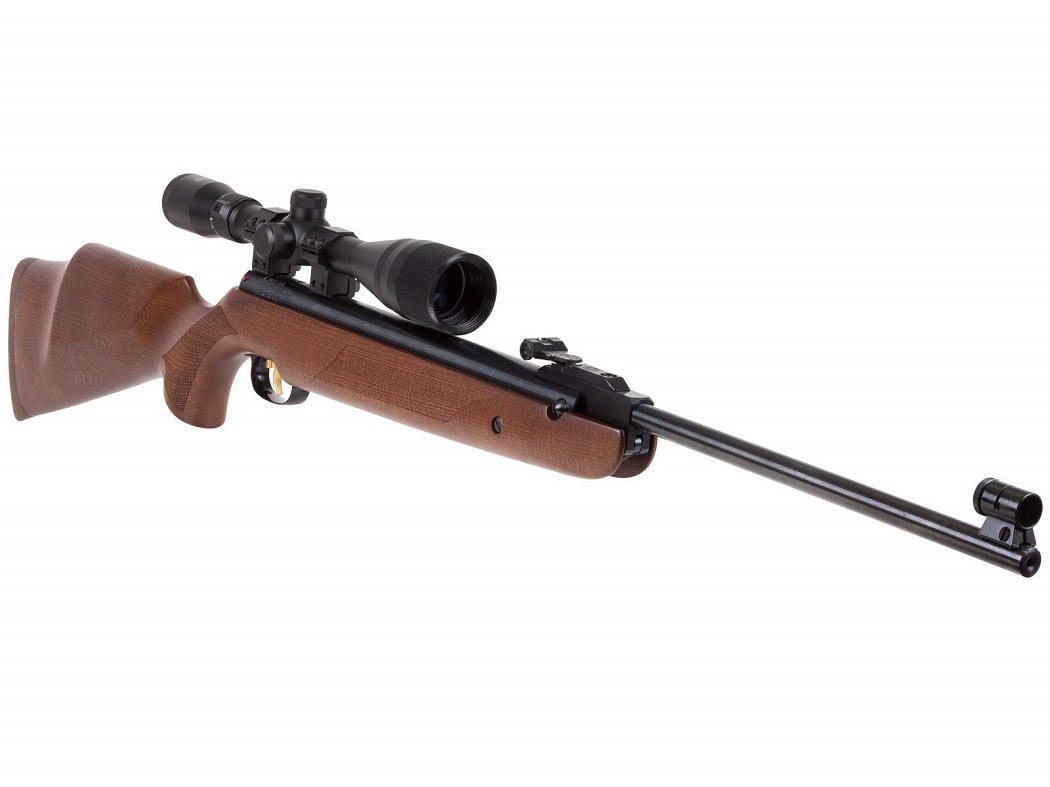
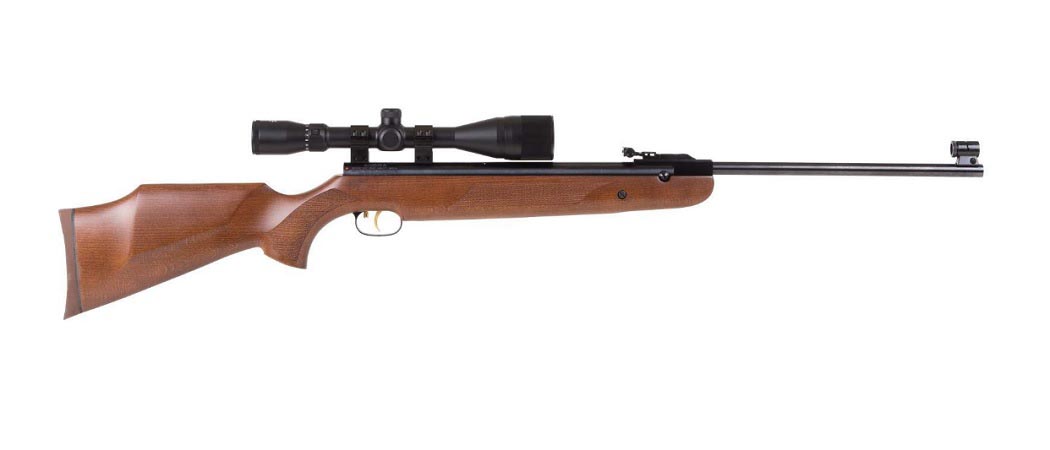
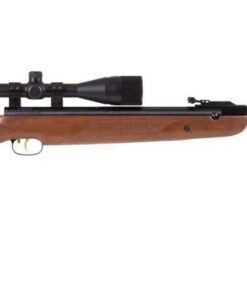
The Beeman R9 Elite Series Scope Combo has been created for shooters who value precision, traditional craftsmanship, consistent performance, and a complete scoped shooting package. Rather than being built around unnecessary complexity, this respected break-barrel platform has been designed around a proven spring-piston powerplant, a refined trigger system, a carefully finished hardwood stock, and quality optics.
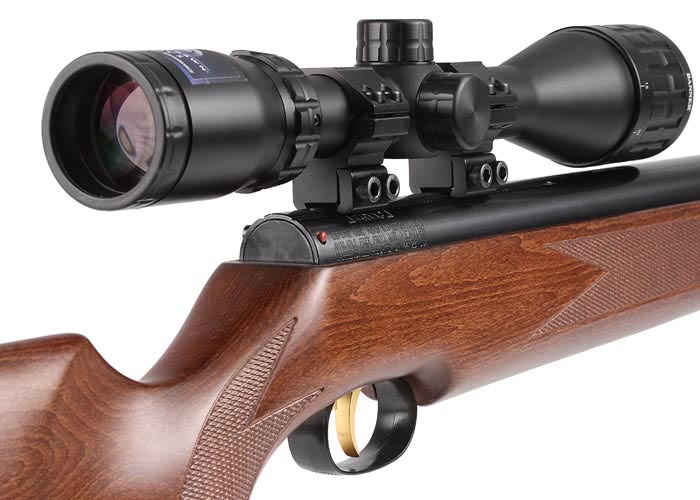
Most importantly, a Mantis 4-12×40 AO rifle scope is supplied mounted with the Elite Series package. Therefore, a versatile optical system is already integrated into the rifle, allowing targets to be viewed more clearly across a broad range of practical shooting distances.
Traditional styling has also been combined with practical functionality. A deeply finished metal action is complemented by an attractive checkered hardwood stock, while an ambidextrous design allows the rifle to be comfortably handled by a wide variety of shooters. Consequently, the Beeman R9 Elite Series Scope Combo can serve equally well as a premium recreational rifle, precision target platform, or appropriately configured small-game air rifle where local laws permit.
Beeman R9 Elite Series Scope Combo Features
A balanced combination of mechanical quality and practical usability has been incorporated into the R9 Elite Series. Instead of relying purely on headline velocity figures, attention has been placed on the characteristics that directly influence the shooting experience.
Product Highlights
- Premium break-barrel spring-piston air rifle
- Available in .177 and .22 caliber configurations
- Mounted Mantis 4-12×40 AO rifle scope
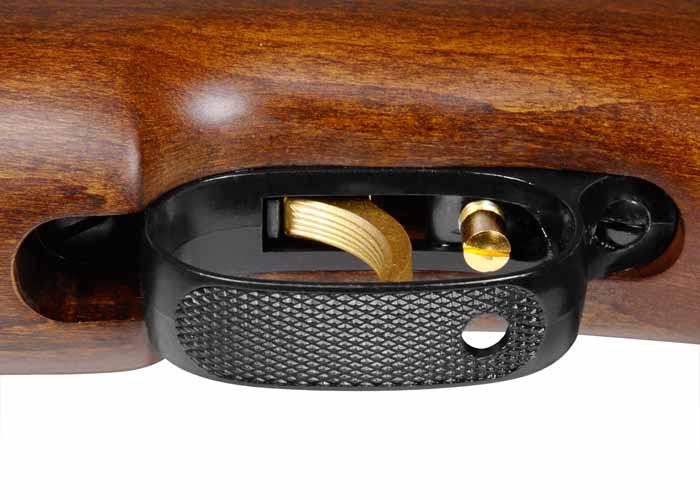
- Legendary two-stage adjustable Rekord trigger
- Precision-rifled barrel
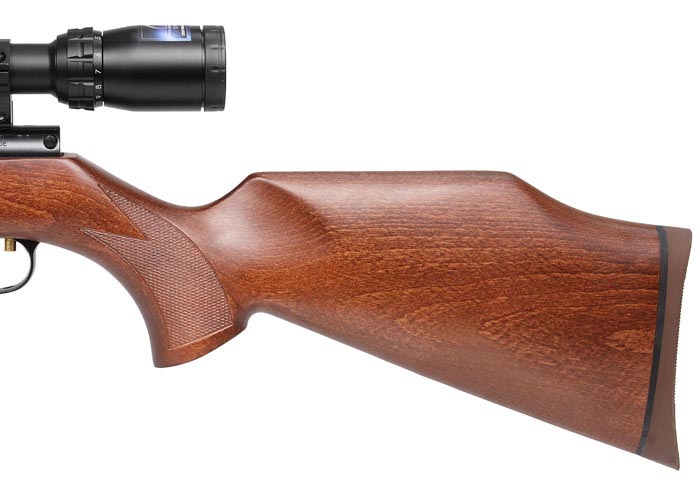
- Checkered hardwood/beech stock
- Ambidextrous grip configuration
- 11mm dovetail scope rail
- Automatic safety system
- Single-shot loading system
- Adjustable open rear sight
- Globe-style front sight with aperture inserts
- Rubber buttpad
- Approximately 42.25-inch overall length
- Approximately 16.5-inch barrel
- Approximately 8.5-pound rifle weight
- Around 40 pounds of cocking effort
- Designed for target shooting and suitable small-game applications
Current listings specify up to approximately 935 fps for the .177 version and approximately 740 fps for the .22 configuration, although actual velocity will naturally be influenced by pellet weight, pellet design, environmental conditions, and the individual rifle.
Refined Spring-Piston Performance
Unlike precharged pneumatic rifles, no external air bottle, compressor, or hand pump is required for normal operation. Instead, the rifle is powered by its self-contained spring-piston mechanism.
Before each shot, the barrel is broken downward to cock the powerplant. A pellet is then loaded directly into the breech, after which the barrel is returned to its firing position. As a result, an independent power source is carried within the rifle itself.
For many enthusiasts, this mechanical simplicity remains one of the strongest attractions of a high-quality spring rifle. Moreover, the deliberate single-shot loading process encourages careful shooting rather than rushed follow-up shots.
Because spring-powered rifles generate a characteristic two-way recoil impulse, proper shooting technique should be learned and maintained. Once a consistent hold has been developed, however, excellent practical accuracy can be achieved.
Famous Rekord Two-Stage Trigger
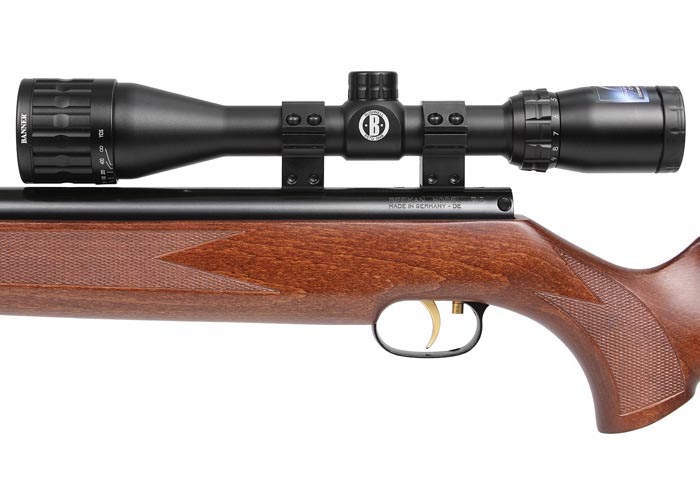
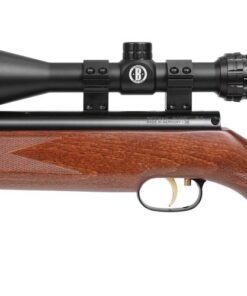
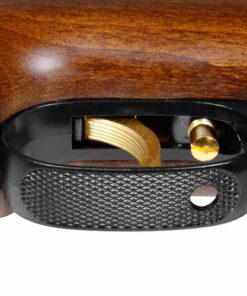
One of the defining characteristics of the Beeman R9 Elite Series Scope Combo is its adjustable two-stage Rekord trigger.
The Rekord system has long been associated with premium German spring-piston rifles. On the R9, a predictable first stage is followed by a clearly defined second-stage release. Therefore, better trigger control can be developed without excessive disturbance of the rifle during the shot cycle.
More importantly, trigger quality plays a substantial role in practical accuracy. A clean, repeatable release allows attention to remain focused on sight alignment, breathing, follow-through, and consistent rifle positioning.
Consequently, the Rekord trigger is not simply an additional specification. Instead, it forms a central part of the R9 shooting experience.
Mantis 4-12×40 AO Scope Included
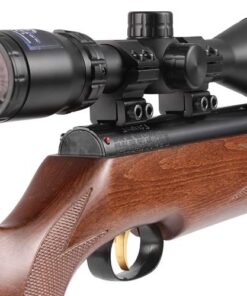
A major advantage of this package is provided by the factory-mounted Mantis 4-12×40 AO rifle scope.
At lower magnification, a wider field of view can be maintained for general shooting. Meanwhile, higher magnification can be selected when smaller targets or more precise aiming points need to be examined.
Additionally, the adjustable-objective design can be used to improve focus and manage parallax at different ranges. This feature is particularly useful on an air rifle because shooting is often performed at distances considerably shorter than those typically associated with conventional centrefire rifles.
Because the optic arrives mounted as part of the combo, the process of selecting compatible rings and installing a separate scope can also be simplified. Nevertheless, final zero should always be checked before serious target shooting begins.
Traditional Hardwood Stock and Premium Finish
Performance has not been prioritized at the expense of appearance.
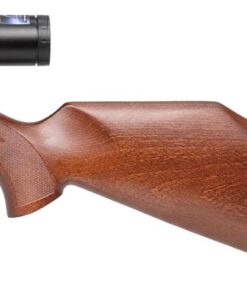
Instead, the R9 is presented with a traditional checkered hardwood stock, which provides both visual character and useful grip texture. The stock is listed as beech in current specifications, while its ambidextrous configuration allows it to accommodate both right- and left-handed handling styles.
Furthermore, a rubber buttpad has been fitted at the rear. As a result, more secure shoulder placement can be maintained during extended shooting sessions.
The combination of wood and blued metal also gives the rifle a classic sporting appearance that differs considerably from polymer-heavy tactical designs. For shooters who appreciate traditional air-rifle engineering, that distinction can be especially important.
Precision-Rifled Barrel and Single-Shot Design
Every pellet is fired through a rifled barrel, while the direct single-shot loading system keeps operation simple.
Because a pellet is manually inserted into the breech for every shot, different pellet types can also be tested easily. Consequently, owners can evaluate several quality domed or match pellets to determine which load produces the best groups from their individual barrel.
Pellet selection matters because two rifles of the same model can still show preferences for different pellet weights or head sizes. Therefore, accuracy should ideally be evaluated with several reputable pellet designs rather than with only one ammunition type.
Open Sights Provide Additional Flexibility
Although the mounted optic will be the preferred aiming system for many buyers, traditional sights have not been completely abandoned.
A globe-style front sight with interchangeable aperture inserts is included, while the rear sight can be adjusted for windage and elevation. Therefore, the scope can be removed when a more traditional open-sight shooting experience is preferred.
This additional flexibility makes the rifle especially appealing to enthusiasts who enjoy both optical and traditional sighting systems.
Built for Deliberate, Precision-Focused Shooting
The Beeman R9 Elite Series Scope Combo is especially well suited to shooters who appreciate a measured shooting rhythm.
Rather than being optimized for rapid firing, the platform rewards deliberate loading, proper positioning, trigger discipline, and consistent follow-through. Consequently, it can be particularly satisfying for recreational paper targets, informal range sessions, precision practice, and suitable pest or small-game applications where lawful and appropriate.
In addition, approximately 40 pounds of cocking effort provides a substantial but manageable mechanical action for many adult shooters. Prospective owners should nevertheless consider their individual strength and intended shooting volume before purchasing.
Why Choose the Beeman R9 Elite Series Scope Combo?
Many air rifles can produce impressive advertised velocities. However, long-term ownership is influenced by much more than speed alone.
With the R9 Elite, a respected spring-piston platform is combined with a premium trigger, traditional stock construction, adjustable sights, scope mounting capability, and an included variable-power optic. Therefore, several important components of a complete precision shooting package are provided together.
Equally important, the rifle does not depend on tanks or charging equipment. Once suitable pellets and a safe shooting environment are available, the self-contained powerplant can continue to be used shot after shot.
For enthusiasts who prefer craftsmanship over unnecessary complexity, the Beeman R9 Elite Series Scope Combo represents a compelling option.
A Complete Premium Air Rifle Package
Ultimately, the Beeman R9 Elite Series Scope Combo has been designed for buyers seeking more than an entry-level break barrel.
Traditional hardwood styling is combined with proven spring-piston engineering. A renowned Rekord trigger is incorporated to support precise shot release, while a rifled barrel provides the foundation for dependable accuracy. Furthermore, the mounted Mantis 4-12×40 AO scope adds useful magnification and adjustable-objective capability directly to the package.
Whether the rifle is selected for precision target practice, recreational shooting, skill development, or lawful small-game use, a refined and rewarding shooting platform is provided.
For shooters who value German-style engineering, mechanical independence, excellent trigger quality, classic styling, and scope-ready precision, the Beeman R9 Elite Series Scope Combo deserves serious consideration as a long-term addition to an airgun collection.
Beeman R9 Elite Series Scope Combo Calibres, FAC, Power and Accessories
The Beeman R9 Elite Series Scope Combo combines proven spring-piston engineering with a choice of practical pellet calibres, useful power output, and a factory-mounted optic. Because the rifle is completely self-contained, no PCP charging equipment, CO₂ capsules, or external air source is required. Instead, each shot is powered by the mechanical spring-piston system after the barrel has been cocked.
Current configurations are offered primarily in .177 calibre (4.5 mm) and .22 calibre (5.5 mm). Each option provides a different balance between trajectory, pellet weight, retained energy, and intended use. Therefore, choosing the correct calibre should depend on whether the rifle will mainly be used for target shooting, recreational practice, or lawful pest and small-game control.
.177 Calibre – Flat Trajectory and Precision Shooting
The .177 calibre Beeman R9 Elite Series Scope Combo is particularly attractive for shooters who prioritize a flatter pellet trajectory and economical ammunition.
Because .177 pellets are generally lighter than .22 pellets, higher velocities can usually be achieved. Current retailer specifications indicate maximum velocities of approximately 935 fps in .177 calibre, although actual velocity depends heavily on pellet weight, design, environmental conditions, and the individual rifle.
This characteristic makes the .177 configuration especially practical for paper targets, informal plinking, precision practice, and other applications where reduced trajectory curvature can simplify range estimation.
Furthermore, the wide selection of available .177 pellets allows the rifle to be tuned through ammunition testing. Different pellet head sizes, shapes, and weights may produce noticeably different accuracy results. Therefore, several quality domed or match-style pellets should ideally be tested before a preferred load is selected.
.22 Calibre – Greater Pellet Weight and Downrange Energy
For shooters who prefer a heavier projectile, the .22 calibre Beeman R9 Elite Series Scope Combo provides another compelling option.
Current specifications list a maximum velocity of approximately 740 fps for the .22 version. While this velocity is lower than the .177 figure, the heavier .22 pellet can carry greater momentum and useful energy.
Consequently, .22 calibre may be preferred for lawful pest control and small-game applications where appropriate terminal performance is important. At the same time, the larger pellet diameter makes handling and loading somewhat easier for many shooters.
However, trajectory becomes more curved as range increases, so accurate distance estimation and correct scope zeroing become more important. The included variable-power optic helps considerably in this respect.
Power and Spring-Piston Performance
The R9 uses a spring-piston break-barrel powerplant. Therefore, there is no pressure reservoir to fill and no CO₂ supply to monitor. Current specifications also list a cocking effort of approximately 40 lb, confirming that this is a full-sized adult-oriented spring rifle rather than a low-powered introductory model.
Power should not be evaluated only through advertised feet-per-second figures. Pellet weight directly affects muzzle energy, while pellet design and barrel characteristics can also influence actual performance.
For example, an extremely light pellet may produce a higher velocity figure, whereas a heavier pellet will usually travel more slowly while potentially retaining energy more effectively. For that reason, shooters interested in precise muzzle-energy figures should chronograph their chosen pellet rather than relying solely on maximum advertised velocity.
FAC and Legal Power Considerations
The regulatory classification of the Beeman R9 Elite Series Scope Combo depends on the country in which it is owned or used.
In jurisdictions such as the United Kingdom, air-rifle power is particularly important because rifles exceeding the applicable non-FAC muzzle-energy threshold normally require a Firearm Certificate (FAC). For rifles, that commonly referenced threshold is 12 ft-lb under UK firearms law.
However, the R9 may be sold in different power configurations depending on the destination market. Consequently, buyers should never assume that every R9 has exactly the same muzzle-energy output.
A UK-market sub-12 ft-lb version may be configured differently from a higher-powered export or FAC specification. Therefore, the exact version should always be confirmed before purchasing, importing, modifying, or using the rifle.
Local legislation must also be checked because calibre restrictions, hunting laws, age requirements, transportation rules, storage requirements, and licensing obligations can differ substantially between countries and regions.
Included Mantis 4-12×40 AO Scope
One of the biggest advantages of the Elite Series package is the included Mantis 4-12×40 AO rifle scope, which is supplied mounted on the rifle.
Magnification can be adjusted between 4x and 12x, providing considerable flexibility for target shooting at different distances. Additionally, the adjustable objective can assist with target focus and parallax management.
Because the R9 generates the distinctive forward-and-rearward recoil impulse associated with spring-piston rifles, any replacement optic should be suitable for spring-powered airgun recoil.
Compatible Accessories
Several accessories can improve the usability and protection of the Beeman R9 Elite Series Scope Combo.
Useful additions include:
- Quality .177 or .22 pellets matched to the selected calibre
- Pellet sampler packs for accuracy testing
- Spring-airgun-rated rifle scopes
- 11 mm dovetail scope mounts and rings
- Scope-stop equipment where required
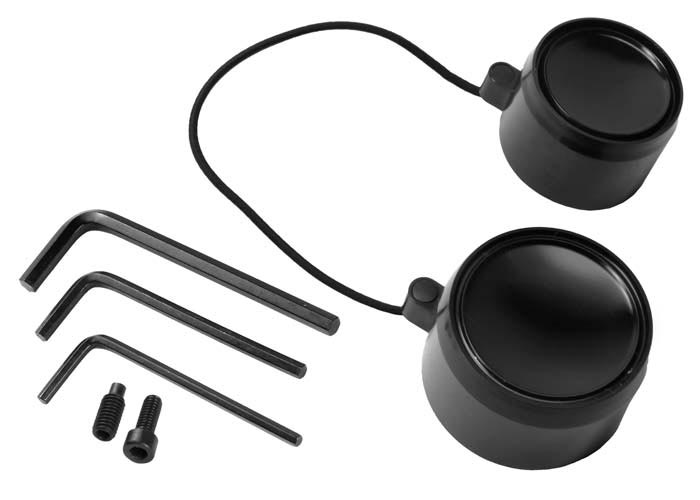
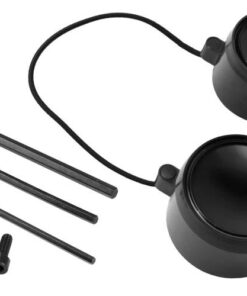
- Protective lens caps
- Rifle sling where compatible
- Padded rifle case
- Cleaning patches and suitable airgun barrel-care products
- Target holders and paper targets
- Chronograph for measuring actual velocity
- Pellet trap appropriate for the rifle’s energy
- Shooting rest or support bag for zeroing
The rifle incorporates an 11 mm dovetail mounting rail, allowing compatible scope-mounting equipment to be installed. Open sights are also included, with an adjustable rear sight and a globe-style front sight using aperture inserts.
Therefore, the rifle can still be used with traditional sights when the scope is removed.
Choosing the Right R9 Configuration
Ultimately, calibre selection should reflect the intended shooting application. The .177 calibre version provides higher velocity and a comparatively flat trajectory, making it an excellent option for precision practice and target shooting. Meanwhile, the .22 calibre version provides a heavier projectile and is often preferred where greater pellet energy and momentum are advantageous.
Combined with the Rekord trigger, spring-piston powerplant, mounted 4-12×40 AO scope, open sights, and 11 mm dovetail rail, the Beeman R9 Elite Series Scope Combo offers a versatile platform that can be adapted for a broad range of responsible shooting applications.
BinTac, AEA, Hatsan and High-Performance Airgun Selection
Explore a broad selection of modern airguns and specialist platforms covering bintac aea harpoon, bintac t9 full auto, bintac mcar 457, aea terminator, anti air tanks, bintac t9 price, bee bee gun rifle, zeus 72 cal air rifle price, air tank for pcp airguns, aea harpoon air gun, airgun shotgun, automatic air gun, air powered 50 cal rifle, and aea megalodon for sale. These search terms reflect growing interest in powerful PCP systems, semi-automatic designs, full-auto platforms, big-bore configurations, compressed-air equipment, and specialized sporting airgun technology.
The Hatsan range is also widely searched by enthusiasts looking for models such as hatsan blitz, hatsan air rifle, hatsan sortie, air rifle, hatsan model 95, hatsanusa, hatsan usa, hatsan harpoon, hatsan hercules, hatsan piledriver, hatsan sortie tact semi-auto pcp, hatsan sortie accessories, hatsan 135, hatsan bullboss, hatsan refurbished, hatsan hercules bully, hatsan airtact air rifle, hatsan flash, hatsan invader, hatsan flashpup qe, hatsan neutron star, hatsan zada, and hatsan 135 carnivore. Buyers comparing air rifles may also encounter searches for hatsun blitz, hatsan mod 95, hatsan sortie tact, airguns, hatsan 125, hatsan blitz full automatic, and hatsan pcp.
Accessories, optics, pellets, and compact platforms are represented through searches such as 4×20, hatsan velox, hatsan jet 2, mod 95, econ ii, h&n field target trophy bleifrei, hatsan blitz 30 cal, hatsan air guns, hatsan airtact, hatsan factor rc, hatsan 135 vortex air rifle, hatsan big bore carnivore rifle, hatzan blitz, bullmaster, range of air rifle, 30 cal air rifle, and .177 caliber. Additional enthusiast searches include hatsan blitz .30 cal, pallet gun, arrow launcher, refurbished air rifles, air rifle range, blitz guns, jet ii, blitz 777, air pellet gun, crow magnum, hatsan jet 2 accessories, invader auto, and semi auto pellet gun.
Customers researching long-range or performance-oriented configurations may also search for sniper long, hatsan aftermarket parts, 1000x.25, hatsan mod 65, co2 pellet rifle, air gun, hatsan blitz bullpup, and h&n field target trophy. Together, these terms cover PCP rifles, spring-powered designs, CO2 platforms, pellet ammunition, replacement components, bullpup layouts, large-caliber systems, compact pistols, semi-automatic actions, and full-automatic airgun configurations.
For BinTac and AEA-specific searches, popular terms include bintac t9, bintac, bintac llc, bin tac, bintacllc, aea airguns, bintac t 50, bintac m50, aea harpoon, bintac mcar, bintac t50, aea megalodon, bintac s45, aea harpoon for sale, aea harpoon price, bintac m50 for sale, and bintac mcar air rifle. These phrases help shoppers compare different BinTac and AEA platforms while researching specifications, availability, pricing, configurations, and compatible airgun equipment.
Practical Use Scenarios
A quality spring-powered air rifle becomes most valuable when it can perform consistently across several realistic shooting situations. Rather than being limited to a single purpose, this type of platform can be used for recreational target work, backyard practice where legally permitted, controlled pest management, skill development, informal competitions, and longer range sessions where repeatable accuracy matters.
Because the rifle uses a self-contained spring-piston system, it is especially practical for shooters who want dependable performance without compressors, refill tanks, CO₂ cartridges, or other external charging equipment. Once suitable pellets are available, the rifle can be cocked, loaded, aimed, and fired independently. That simplicity makes it useful both at home and away from dedicated shooting facilities.
Backyard Target Practice
One of the most common practical uses is controlled backyard target shooting where local laws, property size, and safe backstop conditions allow it.
A typical session might involve paper targets placed at 15, 20, 25, or 30 yards. At these ranges, the shooter can work on trigger control, breathing, follow-through, sight picture, and consistent rifle placement. Since only one pellet is loaded at a time, each shot encourages deliberate preparation rather than rapid firing.
For beginners, that slower rhythm can be useful. It encourages attention to technique and reinforces safe handling habits. For experienced shooters, the same setup can be used to evaluate pellet performance, test different holds, and refine zero.
A substantial pellet trap or suitable backstop should always be used. The area behind the target must also be considered carefully because pellets can travel far beyond the intended distance if a shot misses its target.
Garden Pest Control Where Legal
Another realistic application is lawful pest management around larger properties, farms, barns, or rural gardens.
Small pests may damage feed stores, crops, wiring, insulation, or structures. In such environments, a precise air rifle can sometimes provide a controlled solution when local regulations permit its use.
Accuracy becomes more important than raw velocity in these situations. A responsible shooter should only take shots that can be placed confidently within an appropriate target area. Distance, pellet choice, wind, shooting angle, and the presence of buildings or livestock must also be taken into account.
For example, a landowner dealing with rats around feed storage may establish a known shooting position and a safe impact area behind likely target locations. Once the preferred distance has been measured, the scope can be zeroed accordingly. This removes unnecessary guesswork and helps improve shot placement.
Likewise, small agricultural pests may sometimes be managed around orchards or food-production areas. However, target identification remains essential. Protected wildlife must never be confused with pest species, and local laws should always be checked before any control activity is undertaken.
Small-Game Hunting Applications
Where air-rifle hunting is permitted, the platform can also be considered for appropriate small-game use.
Typical situations may involve rabbits, squirrels, or similar quarry species, depending entirely on local hunting laws and available power levels. In this role, the shooter should focus on accuracy, ethical range limitations, and proper pellet selection.
A practical hunting setup often begins with careful zeroing. Rather than assuming that the pellet will strike exactly where the crosshair is placed at every distance, the shooter should understand the trajectory of the selected ammunition.
For example, a rifle zeroed at 30 yards may strike slightly above or below the point of aim at different ranges. Target practice at 15, 20, 25, 30, 35, and 40 yards can therefore help the shooter understand actual point-of-impact changes.
That information becomes particularly valuable in the field. If a rabbit appears at a measured distance, the shooter can make a more informed aiming decision rather than relying on guesswork.
Weather conditions must also be considered. Wind can move lightweight pellets substantially, particularly as distance increases. For that reason, shorter and more predictable shots are generally preferable when field conditions become difficult.
Farm and Property Use
Owners of rural property may appreciate the convenience of a self-contained shooting platform.
Imagine a farm where small pests occasionally appear around storage sheds, feed areas, or fencing. Carrying a compressed-air cylinder or electrical compressor would add unnecessary complexity. A spring-powered rifle avoids that problem because no charging equipment is needed between shots.
The rifle can instead be stored safely in accordance with local regulations and prepared when needed.
For occasional property use, durability and simplicity matter. Mechanical systems are often preferred by shooters who do not want to monitor air pressure, regulator performance, tank capacity, or filling equipment.
The single-shot action also suits occasional pest-control work because large shot counts are rarely required. Instead, carefully planned shots are more valuable than rapid follow-up capability.
Precision Target Shooting
A precision-oriented shooting session presents another excellent practical scenario.
Targets can be placed at several distances to evaluate consistency. Small circles, bullseyes, knockdown targets, or reactive steel targets specifically rated for air rifles can be used to create progressively more demanding exercises.
At 10 to 15 yards, the shooter can concentrate on trigger release and sight stability. At 20 to 30 yards, pellet trajectory and hold consistency become increasingly important. Beyond that distance, wind and pellet selection may become more noticeable.
A variable-power scope provides flexibility during these sessions. Lower magnification can be useful when a wider field of view is preferred, while higher magnification can help when small aiming points are being used.
However, excessive magnification should not automatically be considered better. Higher magnification can exaggerate visible movement and sometimes make a shooter less relaxed. Therefore, magnification should be adjusted to match the target size and shooting distance.
Pellet Testing and Accuracy Evaluation
One of the most useful practical exercises involves testing different pellets.
Air rifles can show strong preferences for certain pellet weights, shapes, head sizes, or manufacturing tolerances. As a result, two pellets that look almost identical may produce noticeably different group sizes.
A structured test can be performed by shooting five-shot groups with several pellet types at the same distance. The rifle should be rested consistently, while aiming technique should remain unchanged.
After each group, spread size can be measured.
For instance, one pellet may consistently produce a tight group at 25 yards, while another may scatter shots more widely. The better-performing pellet can then be tested again at longer distances.
This process helps identify ammunition that works well with the individual barrel. More importantly, it prevents the shooter from assuming that poor accuracy automatically indicates a problem with the rifle.
Developing Spring-Rifle Shooting Technique
Spring-powered rifles require a slightly different technique from many precharged pneumatic or rimfire platforms.
Because internal movement occurs during the firing cycle, an excessively tight grip can sometimes reduce consistency. Many experienced shooters therefore use a relatively relaxed supporting hold.
A useful training scenario involves shooting groups while experimenting with hand position.
The supporting hand might first be placed near the front of the stock. Another group can then be fired with the hand slightly farther back. By comparing the results, the shooter can determine which position produces the most consistent groups.
Shoulder pressure can also be tested.
If the rifle is pulled aggressively into the shoulder during one group and held more naturally during another, the resulting patterns may demonstrate how sensitive the platform is to technique.
This form of experimentation can make range sessions more educational and rewarding.
Scope Zeroing Practice
Before relying on any scoped rifle for field use, the optic should be properly zeroed.
A useful starting distance may be approximately 20 yards. The shooter can fire a controlled group, adjust windage and elevation, and repeat the process until the group is centered.
The target can then be moved to a more practical final zero distance.
Once zeroed, shots should be taken at several shorter and longer ranges. This creates a practical trajectory map.
For example, targets may be placed at 10-yard intervals. Each group can be marked and compared. Over time, the shooter develops a clearer understanding of where pellets will strike relative to the crosshair.
Adjustable objective control can also be useful during this process. Proper focus at the target distance helps produce a sharper image and can reduce aiming errors caused by parallax.
Informal Shooting Competitions
The rifle can also be used for friendly competitions between responsible shooters.
A simple challenge might involve five small paper targets, with one shot allowed per target. Points can be assigned according to proximity to the center.
Another exercise could involve reactive targets positioned at different distances.
Because cocking and loading must be performed manually after every shot, the emphasis remains on precision rather than firing speed. This makes the format accessible to shooters who prefer accuracy-based competition.
Different stages can also be created.
One stage might be shot from a bench. Another could be shot while standing. A third might require kneeling or supported field positions.
These variations help develop broader practical shooting skills.
Teaching New Shooters
With appropriate supervision, the rifle can also be used as a training platform for adult beginners who are physically capable of handling the cocking effort.
Before pellets are introduced, handling procedures can be demonstrated with the rifle unloaded.
The learner can be shown how the safety works, where the muzzle should remain pointed, how the barrel is cocked, how a pellet is inserted, and how the rifle is returned to the firing position.
Once the basic sequence is understood, initial shots can be taken from a supported position.
Large paper targets positioned at relatively short distances can help build confidence. As accuracy improves, target size can gradually be reduced.
The single-shot design is beneficial in training because every shot involves a complete loading cycle. This reinforces awareness of the rifle’s condition and discourages careless rapid firing.
Longer Recreational Shooting Sessions
Another realistic scenario is an afternoon spent shooting several hundred carefully planned shots at a private range.
Because there is no compressed-air cylinder to refill, interruptions caused by declining reservoir pressure are avoided. The main requirements are pellets, targets, and sufficient physical energy to continue cocking the rifle.
This makes the platform attractive for shooters who enjoy mechanical independence.
During longer sessions, different activities can be rotated. The shooter might begin with paper groups, continue with reactive targets, conduct pellet testing, and finish with unsupported shooting practice.
Such variety helps prevent sessions from becoming repetitive.
Off-Grid and Remote Use
A self-contained spring system can also be advantageous in remote locations.
A shooter visiting rural land does not need electrical power for a compressor or access to a dive shop for tank refills. Provided the rifle, pellets, suitable targets, and safe shooting environment are available, the system remains functional.
That independence can make it particularly practical for farms, remote properties, cabins, or locations where specialized shooting infrastructure is unavailable.
Maintenance requirements also remain relatively straightforward. Basic external cleaning, responsible storage, and proper lubrication practices can help preserve reliability.
Building Consistency Over Time
Perhaps the strongest practical benefit is the way the rifle rewards repeated practice.
A shooter who begins with scattered groups may gradually develop better results as trigger control, holding technique, pellet selection, range estimation, and follow-through improve.
Progress can be documented with dated targets.
For example, a five-shot group fired during the first week of ownership can be saved. After several weeks of structured practice, another group can be compared against it.
Visible improvement can make recreational shooting more satisfying and provide a clear objective for continued training.
Ultimately, the rifle performs best when treated as a precision-oriented mechanical system rather than merely as a high-velocity shooting tool. Whether it is being used for target practice, responsible pest management, lawful small-game hunting, property maintenance, pellet testing, or recreational competition, its greatest advantages are consistency, independence from external power sources, and the ability to reward careful technique.
When safe handling, appropriate ammunition, correct zeroing, and realistic shooting distances are combined, the platform can provide a highly versatile shooting experience across many practical situations.
Frequently Asked Questions
Is this rifle suitable for beginners?
It can be suitable for beginners who are comfortable handling a full-size spring-powered air rifle and who receive proper instruction in safe operation. However, the cocking effort is noticeably higher than that of many lightweight entry-level models, so younger or less physically strong shooters may find repeated use demanding.
For a new adult shooter, the platform can be particularly useful because its single-shot action encourages a deliberate shooting rhythm. Each shot requires the barrel to be cocked, a pellet to be loaded, the rifle to be closed, and the safety procedure to be followed before firing. Consequently, basic shooting discipline can be reinforced naturally.
New shooters should begin at short distances with large paper targets and a secure backstop. Over time, target size can be reduced as accuracy and confidence improve.
What calibres are commonly available?
The rifle is most commonly encountered in .177 calibre and .22 calibre configurations.
The .177 version generally produces a flatter trajectory because lighter pellets can be driven at higher velocities. Therefore, it is widely used for target shooting, recreational practice, and situations where easier trajectory management is desired.
The .22 version uses a larger and heavier pellet. As a result, it is often selected by shooters who prefer greater pellet mass and stronger retained energy for lawful pest-management or small-game applications.
Neither calibre should automatically be considered better. The correct choice depends on intended use, preferred shooting distance, local laws, and the type of ammunition available.
Which calibre is better for target shooting?
For dedicated paper-target work, .177 calibre is often preferred.
Because .177 pellets are lighter, they typically travel faster and follow a comparatively flatter trajectory. This can make precise aiming easier across moderate shooting distances.
In addition, .177 pellets are widely available in match, domed, pointed, and specialty designs. Shooters can therefore test multiple loads to identify which one performs most accurately in their individual barrel.
However, excellent groups can also be produced with .22 calibre. Accuracy depends heavily on pellet compatibility, shooting technique, trigger control, and consistent rifle handling.
Which calibre is better for pest control?
Where pest control is lawful, many shooters prefer .22 calibre because the heavier projectile generally carries more momentum and energy.
Nevertheless, calibre alone does not determine effectiveness. Shot placement remains the most important consideration. The shooter must also understand the rifle’s trajectory, practical accuracy, and effective range.
A smaller calibre used accurately is generally preferable to a larger calibre used inconsistently. Therefore, shooters should practice extensively on paper before considering any live quarry application.
Local wildlife and pest-control regulations must always be followed.
Does it require a PCP pump or air tank?
No. The rifle uses a spring-piston powerplant and does not require compressed-air charging equipment.
Instead, the barrel is broken downward to cock the internal spring system. A pellet is then loaded into the breech before the barrel is returned to its closed position.
This self-contained operating system is one of the major reasons traditional spring rifles remain popular. There is no pressure bottle to refill, no hand pump to carry, and no compressor to maintain.
For people who want a mechanically independent shooting platform, this can be a major practical advantage.


 Click here for California’s Proposition 65 warning.



Reviews
There are no reviews yet.