Precision and Pleasure Are Delivered by the Beeman R7
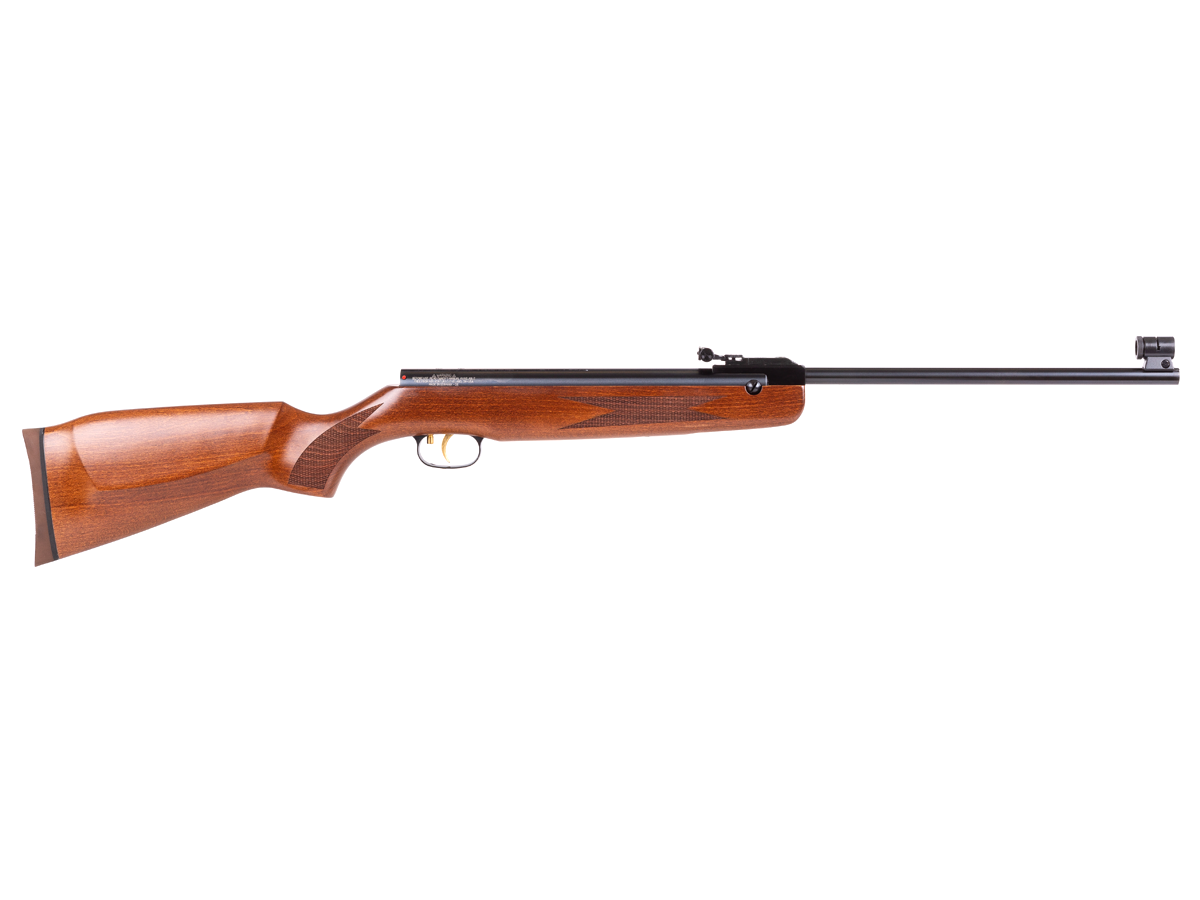
A compact spring-piston classic is offered by the Beeman R7 for shooters who value accuracy, modest power, and easy handling. German engineering is embodied in this break-barrel air rifle, which is widely recognized as a refined counterpart to the Weihrauch HW30S platform. Consequently, decades of reliable performance are expected by owners who choose this model for backyard plinking, informal target work, and introductory shooting sessions.
Moreover, a lightweight profile of approximately 6.1 pounds is provided, while an overall length near 38.5 inches is maintained. As a result, comfortable carry and stable aiming are enjoyed by smaller-framed shooters, younger enthusiasts, and anyone who prefers reduced physical demand. Furthermore, a cocking effort of roughly 18 pounds is required, so repeated shots can be taken without excessive fatigue.
Design and Construction Details of the Beeman R7
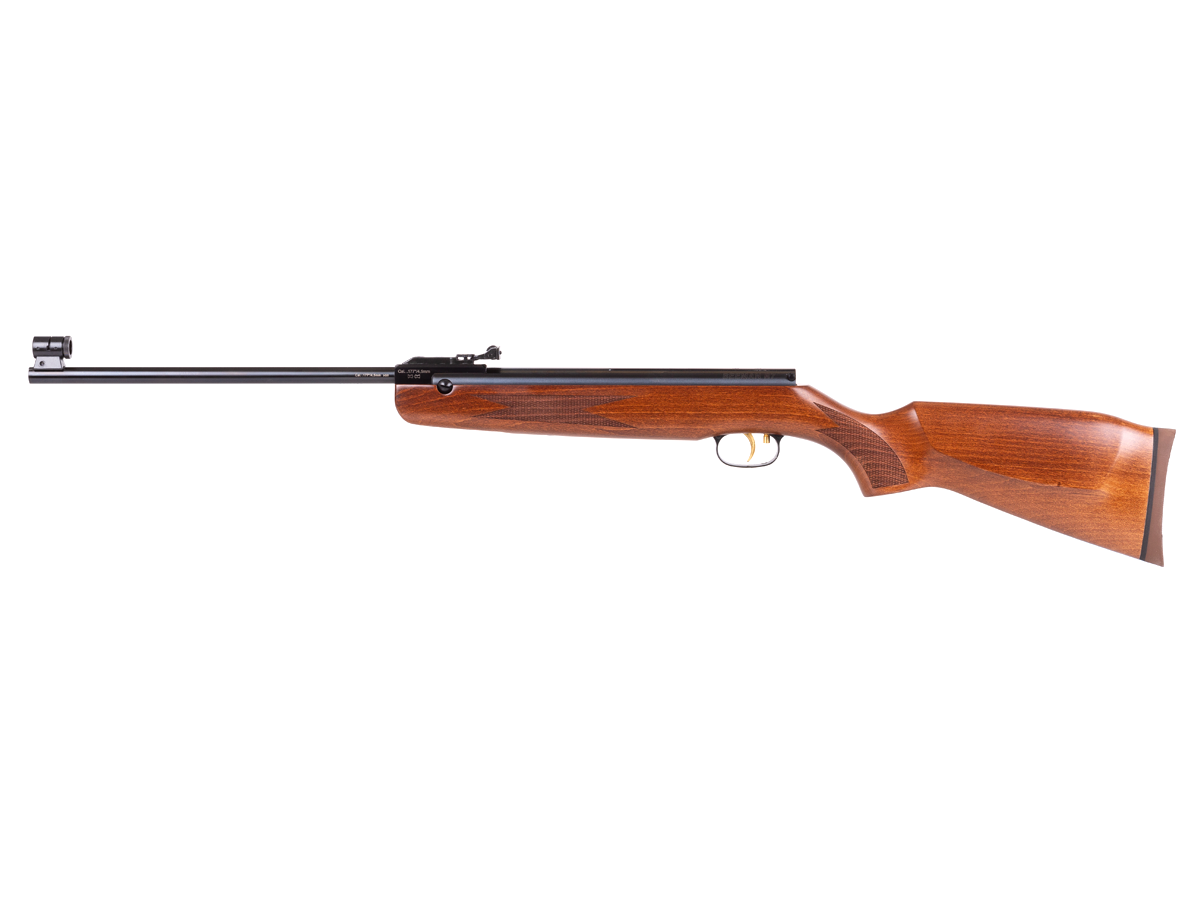
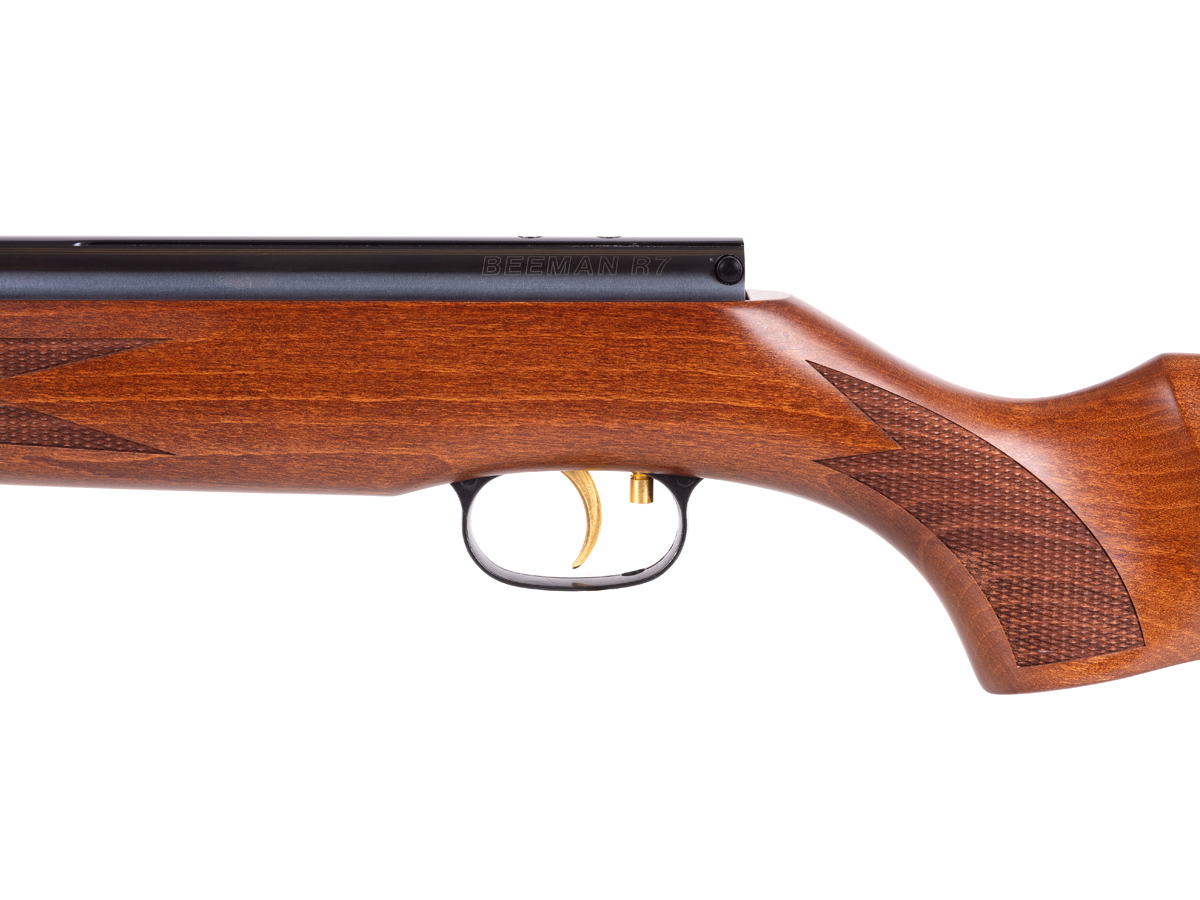
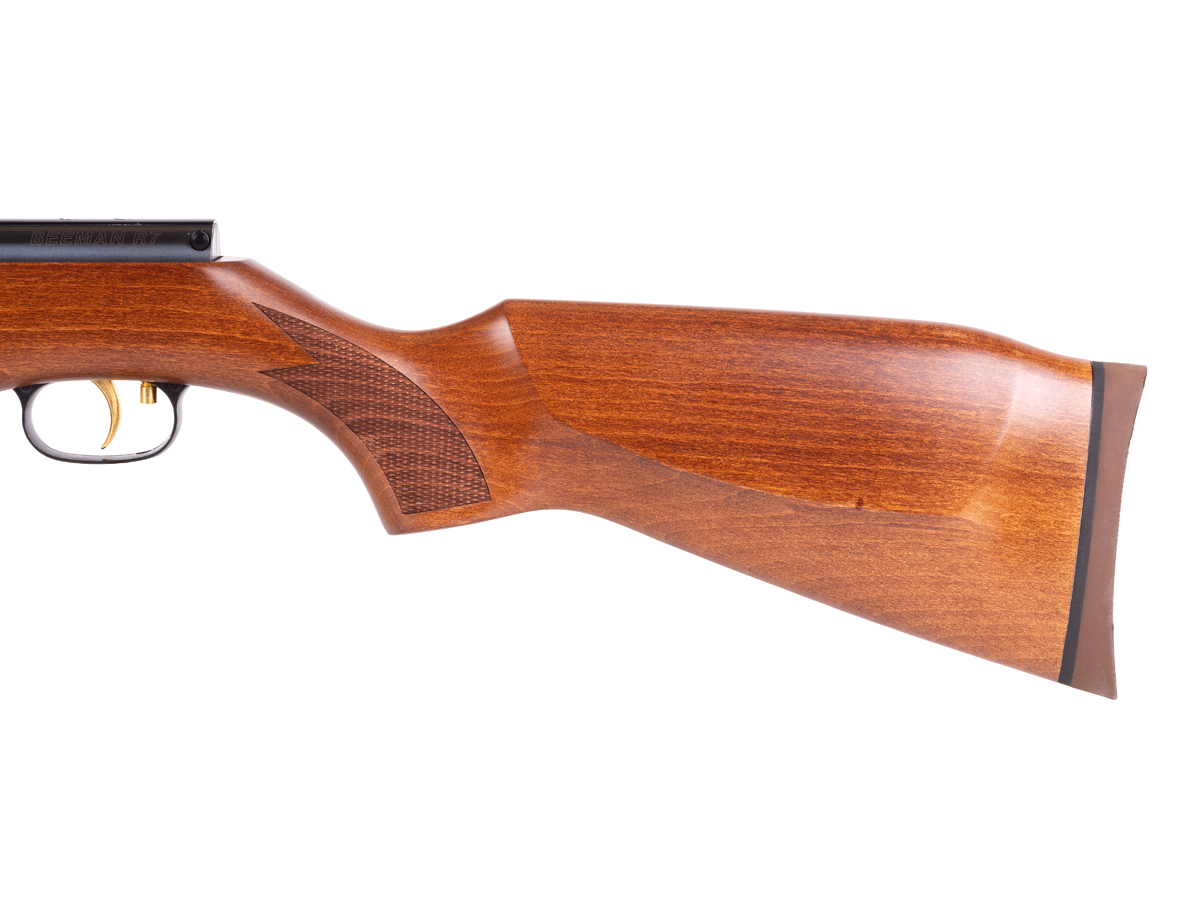
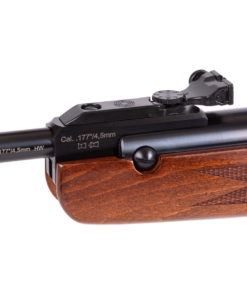
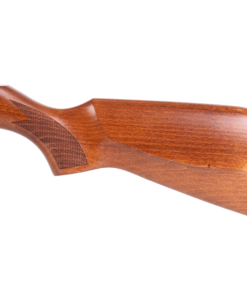
A stained beech stock with satin finish is fitted to the Beeman R7 so that minor handling marks are resisted. Additionally, a checkered pistol grip is incorporated so that a secure hold is achieved. Likewise, a rubber buttpad is installed so that recoil sensation is softened and shoulder placement remains consistent.
Meanwhile, an ambidextrous layout is presented so that both right- and left-handed users are accommodated. In addition, a length of pull near 13.75 inches is offered so that a natural shooting position is found by a wide range of body sizes. Subsequently, the rifle is scoped or used with iron sights according to preference.
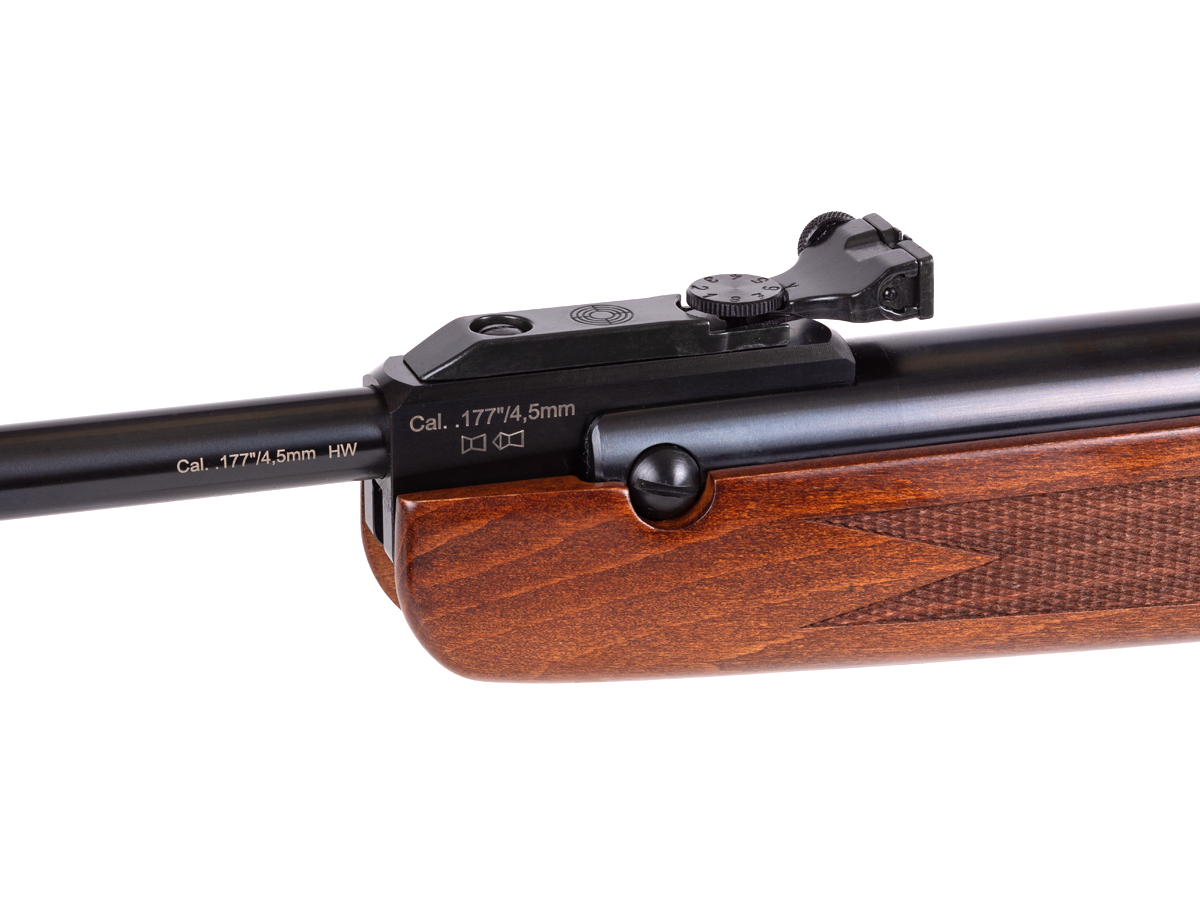
A rifled barrel of about 15.5 inches is employed so that pellet stability is promoted. Therefore, consistent grouping at typical backyard distances is commonly reported. Notably, an 11 mm dovetail rail is machined into the receiver so that a compact scope may be mounted when finer aiming is desired.
Powerplant, Trigger, and Safety Features
Spring-piston power is generated by the Beeman R7. Consequently, advertised velocities approaching 700 fps in .177 caliber are quoted by manufacturers when lighter pellets are used. In practice, real-world speeds in the mid-to-high 500s to mid-600s fps are frequently observed with standard-weight match or field pellets, while muzzle energy near 6 foot-pounds is typically produced.
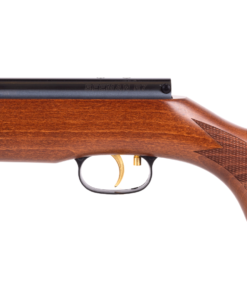
Furthermore, the renowned two-stage Rekord trigger is fitted. As a result, a crisp, adjustable let-off is experienced after a short first-stage take-up. Moreover, trigger pull can be refined so that personal preference is matched. An automatic safety is engaged upon cocking so that an extra layer of control is present until the shot is intended.
Highlighted Features of the Beeman R7
- Spring-piston, single-shot break-barrel action is utilized
- Approximately 18 lb cocking effort is required
- Two-stage adjustable Rekord trigger is included
- Automatic safety is provided
- 11 mm dovetail rail is machined for optics
- Adjustable rear sight and globe-style front sight are fitted
- Checkered beech stock and rubber buttpad are standard
- Compact 38.5-inch overall length and 6.1 lb weight are offered
- Lifetime limited warranty is commonly associated with the platform
Accuracy, Handling, and Practical Use
Excellent accuracy potential is demonstrated by the Beeman R7 when quality pellets are selected. Consequently, one-hole or dime-sized groups at 10–25 yards are regularly described by reviewers who test JSB Exact, RWS Hobby, Crosman Premier, and similar projectiles. In addition, hold sensitivity is relatively low compared with many springers, so consistent results are obtained from a rest or offhand once a comfortable artillery hold is adopted.
Meanwhile, medium report is produced, which suits backyard and club use where neighbors must be considered. Subsequently, the rifle is well matched to paper targets, spinning targets, and light pest work at modest ranges. However, it is not intended as a high-power hunting tool; instead, precision and enjoyment are emphasized.
Furthermore, maintenance remains straightforward. Periodic lubrication of the pivot and spring assembly, together with careful pellet seating, is recommended so that smoothness is preserved. Likewise, storage in a dry environment is advised so that the beech stock and blued surfaces retain their appearance for many years.
Why the Beeman R7 Continues to Attract Enthusiasts
A rare combination of quality, manageability, and heritage is offered by the Beeman R7. Therefore, it is frequently recommended as a first “serious” springer or as a relaxing companion rifle for experienced shooters. Moreover, German manufacturing standards are reflected in metal-to-metal fit, polished surfaces, and a trigger that remains a benchmark in its class.
In addition, families and clubs find the rifle inclusive: reduced cocking effort and modest weight allow more people to participate comfortably. Consequently, skill development is supported without the harsh recoil or heavy lift of magnum spring-piston models. Finally, long-term ownership is encouraged by durable construction and the classic aesthetic of stained wood and blued steel.
Ready enjoyment of precise, low-effort shooting is made available whenever the Beeman R7 is chosen. Explore compatible pellets, compact optics, and targets so that the full potential of this German-engineered classic can be experienced on the range or in the backyard.
Calibers, Power Ratings, FAC Considerations, and Accessories for the Beeman R7
A carefully balanced spring-piston platform is presented by the Beeman R7 so that usable accuracy is delivered without excessive power. Consequently, caliber choice, legal classification, and supporting accessories must be understood before the rifle is added to a collection. Moreover, inclusive shooting is supported when the correct pellet, optic, and legal framework are selected.
Calibers Offered by the Beeman R7
The Beeman R7 is most commonly supplied in .177 caliber. Therefore, the widest selection of match, field, and training pellets is made available. In addition, flatter trajectories at typical backyard and club distances are produced by the lighter .177 projectiles. As a result, paper punching, spinning targets, and introductory marksmanship are well served.
Historically, a .20 caliber option has also been marketed for certain Beeman R7 variants. Meanwhile, slightly heavier pellets and a modest increase in downrange energy are associated with that chambering. Nevertheless, .177 remains the dominant and most practical choice for most owners because ammunition cost is lower and pellet variety is greater.
A single-shot breech is used in every configuration. Subsequently, each pellet is seated individually so that consistent head alignment is achieved. Furthermore, lead and selected lead-free pellets may be tested; however, standard diabolo designs in the 7- to 8.4-grain range are generally preferred in .177 so that the advertised velocity window is approached.
Caliber Snapshot for the Beeman R7
- .177 is offered as the primary and most widely available chambering
- .20 has been listed on selected historic and special-run examples
- Single-shot loading is required in both calibers
- Light-to-medium match and field pellets are recommended for best grouping
- Broader ammunition choice and lower cost are associated with .177
Power Output and Practical Performance
Spring-piston energy is generated by the Beeman R7. Consequently, manufacturer figures near 700 fps in .177 are quoted when very light pellets are used. In everyday testing, however, velocities in the mid-500s to mid-600s fps are more commonly recorded with standard 7- to 8.4-grain pellets. Therefore, muzzle energy typically settles around 6 foot-pounds.
A modest power level is deliberately retained so that recoil remains mild and hold sensitivity stays low. Moreover, cocking effort of approximately 18 pounds is preserved, which allows repeated shots to be taken by a wide range of shooters. Likewise, report stays in the low-to-medium range, making backyard and indoor-range use more neighbor-friendly.
Because energy remains well below magnum springer levels, the Beeman R7 is best matched to target work, plinking, and close-range small-pest applications. Hunting of larger quarry is not the intended role. Instead, precision and shooting enjoyment are emphasized.
FAC Status and Legal Context
In the United Kingdom, an air rifle is generally considered FAC-rated when muzzle energy exceeds 12 foot-pounds. The Beeman R7 is produced well below that threshold. Consequently, a Firearm Certificate is not normally required for standard factory examples. Local airgun laws, age restrictions, and storage rules still apply and must be observed.
Elsewhere, classification varies by country and region. Therefore, purchasers are encouraged to confirm current regulations regarding purchase age, transport, and permitted use before the rifle is ordered. Inclusive ownership is supported when legal requirements are met by every household member who will handle the airgun.
Because power is modest, the Beeman R7 is frequently chosen as a family or club trainer. Subsequently, responsible introduction to spring-piston shooting can be offered without the legal complexity that accompanies higher-powered FAC rifles.
Recommended Accessories for the Beeman R7
An 11 mm dovetail rail is machined into the receiver so that a compact scope may be mounted. Lightweight optics in the 2–7x or 3–9x class with adjustable objective are generally preferred because spring-piston recoil can stress heavier glass. Moreover, quality two-piece or one-piece mounts designed for springers should be selected so that shift is minimized.
Open sights are also supplied. A globe-style front sight with inserts and an adjustable rear sight allow the rifle to be used immediately without optics. Additionally, a compact sling swivel set and a lightweight sling can be fitted if field carry is planned, although the short overall length already favors easy transport.
Pellet selection remains the most important accessory decision. JSB Exact, RWS Hobby, Crosman Premier, and similar 7- to 8.4-grain .177 pellets are frequently praised for grouping. A tin of several types should be tested so that the most accurate lot for a given rifle is identified. Targets, pellet traps, and a simple cleaning kit complete a practical starter package.
Aftermarket tune kits (for example, certain Vortek-style spring and seal packages) are sometimes installed by owners who desire a smoother cocking stroke or a small change in shot cycle. However, factory performance is already well regarded, so modifications remain optional rather than necessary.
Accessory Highlights for the Beeman R7
- Lightweight 11 mm scope and springer-rated mounts are recommended
- Factory globe front and adjustable rear sights remain fully usable
- Match and field pellets in the 7–8.4 gr .177 range are typically preferred
- Compact sling, case, and pellet trap support safe transport and practice
- Optional tune kits may be considered for a customized shot cycle
- Quality pellets and a consistent hold produce the best results
When caliber, legal status, and accessories are chosen with care, the Beeman R7 continues to reward owners with accurate, low-effort shooting. Explore compatible optics, ammunition, and range equipment so that every session remains enjoyable, legal, and inclusive for the whole shooting household.
Barra Air Rifles, BB Guns, PCP Systems, Electric Airguns, and Advanced Shooting Platforms
The modern airgun market offers a wide range of shooting platforms designed for beginners, enthusiasts, and experienced shooters. From traditional BB gun designs to advanced pneumatic systems, today’s technology provides improved accuracy, power, reliability, and versatility. The Barra product range has gained attention among airgun users because of its combination of innovative engineering and practical shooting performance.
Popular models include the Barra 300Z, Barra 350Z, Barra 250Z, Barra 400, Barra 400E Gen 2, Barra 400 E, 400E, 400 e, Bara 400E, Barra 1100Z, Barra 1100Z Gen 2, Barra 1200G, Barra 100, BA-400, Barra 1866, Barra 1866 Rosie Bundle, Barra 270Z, Barra Sportsman 900, and Sportsman 900. These platforms are designed for different shooting preferences, including recreational shooting, target practice, and precision applications.
A BB gun rifle provides a classic shooting experience, while a BB rifle offers a compact and accessible option for users interested in recreational shooting. Many shooters also search for a BB gun rifle with scope because an optic can improve aiming consistency and overall shooting control. Traditional accessories and variations include BB rifle pump, BB gun pump, and BB gun rifle pump systems.
PCP Air Rifle and Compressed Air Technology
Advanced airgun technology has been transformed through precharged pneumatic systems. A PCP rifle uses stored air pressure to deliver consistent performance, making it a popular choice among users who want accuracy and power. A PCP air rifle operates through compressed air stored inside a reservoir, allowing multiple shots before refilling.
Many shooters research air rifle compressed air technology because it provides smooth operation, reduced vibration, and improved shot consistency. A compressed air pellet guns platform uses high-pressure air to propel pellets efficiently, while a high pressure air rifle is designed for users who require increased performance.
Other related systems include air gun compressed, compressed air guns, and compressed air rifle designs. These platforms are commonly paired with equipment such as a PCP pump for air rifle and other filling accessories.
For new users asking PCP air rifle meaning, what is a PCP air rifle, what is PCP air rifle, or whats a PCP gun, the answer refers to a precharged pneumatic system that stores compressed air before shooting. A pre charged pneumatic air rifles setup provides an alternative to spring-powered designs and is widely used for precision shooting.
Barra PCP Models and Caliber Options
The Barra 250Z PCP air rifle is designed for shooters looking for a powerful and compact pneumatic platform. The Barra 250Z for sale market includes different configurations, including the Barra 250Z .25 cal version.
Large-caliber airguns are becoming increasingly popular, with options such as a 25 cal air rifle 1000 fps, 25 caliber pellet rifle, .25 PCP air rifle, PCP 25 caliber air rifle, 25 caliber air rifle, and 25 Z configurations.
These larger-caliber platforms are designed for users who want increased energy and performance compared with smaller calibers. Other popular caliber choices include the 22 cal air rifle, 22 caliber air rifle, 22 caliber pellet gun, and 22 pellet rifle 1200 fps options.
Electric BB Guns and Automatic Airgun Platforms
Electric-powered shooting systems have created another category within recreational shooting. An electric BB gun uses battery-powered technology to provide a unique shooting experience. Related designs include electric pellet gun, electric air gun, air gun electric, electric rifle, battery powered air gun, electric BB guns, electric guns, and airsoft air guns electric.
Users searching for high-speed systems may look for terms such as most powerful fully automatic BB gun, full auto BB gun electric, best full auto BB gun, best full auto BB guns, full auto BB gun 1000 fps, full auto BB gun, and fully automatic BB gun.
These platforms are designed for users who want rapid operation and modern features. Performance-focused searches may also include strong BB guns when comparing powerful recreational shooting options.
Pellet Guns, Break Barrel, and Traditional Air Rifles
Traditional airgun designs remain popular because of their simplicity and reliability. A pellet gun provides a practical option for target shooting, while a pellet rifle offers improved stability and accuracy.
A pellet sniper platform is designed for users interested in precision shooting. Classic spring-powered systems include the break barrel pellet gun 1200 fps, break barrel, and single shot 22 break barrel rifle.
For beginners researching what is a break barrel air rifle, this system works through a hinged barrel mechanism that compresses a spring or gas piston before each shot. These designs remain popular because they require minimal additional equipment.
Additional traditional options include air gun pump action, air rifle pump action, pump pellet gun, and pump BB pistol platforms.
Barra Sportsman and Additional Airgun Platforms
The Sportsman 900 air rifle and Sportsman 900 BB gun provide versatile options for recreational users. These models are part of the wider selection of Barra shooting products designed for different experience levels.
Other available platforms include 250Z, Barra 300Z, and various modern Barra configurations. Accessories such as pellet trap for 1200 fps, camouflage pellet guns, and Mossy Oak 308 products allow shooters to customize their equipment.
Users interested in alternative power systems may also explore a CO2 rifle, lever action air rifle, and lever action PCP air rifle. These designs combine traditional handling with modern airgun technology.
Choosing the Right Airgun System
Selecting the right platform depends on shooting purpose, preferred caliber, power requirements, and experience level. A PCP review can help users compare different pneumatic systems, while PCP shooting provides insight into the performance advantages of regulated air platforms.
Whether choosing a Barra model, a compressed air system, an electric shooting platform, or a traditional spring-powered design, understanding features and applications helps buyers select the correct equipment.what gen is black 2
From the Barra 400E price to advanced PCP technology and modern electric systems, today’s airgun market provides a wide range of choices for recreational shooters, target enthusiasts, and experienced users seeking reliable performance.b a r r a,bb gunning,full auto electric bb gun.barra 400e aeg,bara 250z,barra 250z 25 cal,250 z,ar bb gun
Practical Use Scenarios for Everyday Shooting Sessions
A compact spring-piston rifle of modest power is employed most successfully when distances, targets, and expectations are kept realistic. Consequently, enjoyable sessions are created in the backyard, at the club, and during quiet family practice. Moreover, inclusive participation is encouraged because cocking effort remains low and recoil stays mild. Therefore, a wide range of shooters can take part without strain.
Backyard Plinking and Informal Practice
Short-range plinking is the most natural role for this class of rifle. Paper plates, reactive spinners, and resettable targets placed between ten and twenty-five yards are routinely used. As a result, immediate feedback is received after every shot. Furthermore, a single pellet is loaded for each attempt, so a deliberate rhythm is established rather than a rushed string.
A stable rest or a simple sandbag is often placed on a picnic table or shooting bench. Meanwhile, an artillery hold is adopted so that the rifle is allowed to move slightly under recoil. Subsequently, groups tighten once that hold is repeated. In addition, a pellet trap of adequate thickness is positioned behind every target so that spent projectiles are captured safely.
Light-to-medium pellets in the seven- to eight-grain range are typically selected for backyard work. Consequently, trajectories remain predictable and noise stays neighbor-friendly. Likewise, sessions of fifty to one hundred shots can be completed without fatigue because the cocking stroke requires only modest force. Inclusive family practice is therefore supported: younger shooters and adults of smaller stature can take turns without assistance.
Backyard Session Checklist
- Distances of ten to twenty-five yards are recommended
- A safe backstop and pellet trap are required
- An artillery hold is preferred over a death grip
- Light match or field pellets are tested first
- Short, focused strings are favored over marathon sessions
- Eye and ear protection are worn by every participant
Introduction to Marksmanship for New Shooters
Skill-building is another primary use. Because power is limited and the trigger is adjustable, first shots can be taken with confidence. Moreover, open sights or a low-magnification optic may be chosen according to the shooter’s vision and preference. As a result, fundamentals of sight alignment, breathing, and follow-through are practiced without the distraction of heavy recoil.
A supervised first session is commonly structured around five-shot groups at ten yards. Subsequently, the distance is increased only after consistent hits are observed. In addition, a simple scoring target is used so that progress can be seen rather than guessed. Meanwhile, the automatic safety is engaged after each cocking stroke so that a clear pause exists before the shot is released.
Inclusive language and patient coaching matter here. Every new shooter is given time to find a comfortable stance. Likewise, left- and right-handed users are accommodated by the ambidextrous stock layout. Therefore, confidence is built rather than frustration.
Club and Range Target Work
When the rifle is taken to a formal range, distances of ten, fifteen, and twenty-five yards remain the most productive. Paper targets with one-inch or smaller aiming marks are posted. Consequently, the inherent accuracy of a well-made German spring-piston action can be demonstrated. Furthermore, a lightweight scope of modest magnification may be added so that hold-over and pellet drop are observed more clearly.
A two-piece mount designed for springers is preferred so that the optic does not walk under recoil. Meanwhile, the factory iron sights remain available if the scope is removed. Subsequently, shooters can compare both aiming methods during the same visit. In addition, a shooting diary is sometimes kept so that pellet lots, weather, and group sizes are recorded.
Club nights also provide an opportunity for side-by-side comparison with other low-power springers. As a result, the value of a crisp two-stage trigger and consistent lock-up is appreciated. Likewise, quieter report allows more people to shoot simultaneously without excessive disturbance.
Close-Range Pest and Utility Work
At very short distances, the modest energy produced by this platform can be applied to small garden pests where local law permits. Consequently, shots are taken only when a clear, safe backstop exists and the target is identified beyond doubt. Moreover, distances are kept inside twenty yards so that pellet energy remains adequate for a humane result on the smallest vermin.
A rest or supported kneeling position is used whenever possible. Meanwhile, premium pointed or hollow-point pellets may be tested for expansion, although many owners find that accurate placement with a wadcutter or dome still produces reliable results at these ranges. Subsequently, the rifle is unloaded and stored immediately after the task is finished.
This use remains secondary. The rifle is not a high-power hunting tool. Therefore, expectations are kept honest: precision and control matter more than raw energy.
Seasonal and Weather Considerations
Outdoor sessions continue through mild seasons with little extra preparation. In colder months, however, a brief warm-up string is sometimes fired so that the spring and seals reach operating temperature. Additionally, the stock is wiped after use if moisture is present. Likewise, pellets are kept dry so that consistency is not lost.
Indoor use, where legally permitted and a proper trap is installed, allows year-round practice at ten meters. Consequently, trigger control and sight picture can be refined even when outdoor ranges are closed. Furthermore, the modest report makes indoor sessions more practical than those of louder magnum springers.
Optics Versus Iron Sights in Daily Use
Both aiming systems are fully usable. Open sights encourage fundamental marksmanship and keep the rifle light. A compact scope, by contrast, reveals pellet holes at twenty-five yards and helps aging eyes. Therefore, many owners keep both options available and switch according to the day’s purpose.
When a scope is fitted, a low-profile, springer-rated model is chosen. Moreover, rings are tightened to manufacturer torque so that shift is avoided. Subsequently, a zero is confirmed at the most common practice distance. In addition, the original sights remain installed so that the rifle can still be used if the optic is removed.
Hold, Follow-Through, and Consistency
The artillery hold is repeatedly recommended for this type of spring-piston rifle. The forend is rested on an open palm rather than gripped tightly. Consequently, the barrel is allowed to jump slightly and return to the same place. Meanwhile, the butt is placed firmly but not crushed into the shoulder. As a result, point of impact remains more predictable from shot to shot.
Follow-through is equally important. The sight picture is held for a full second after the shot so that the rifle is not snatched off target. Furthermore, the same pellet brand and weight are used throughout a string once a favorite lot is identified. Subsequently, group size becomes a true measure of shooter and rifle rather than ammunition variation.
Family and Shared Use
Because weight stays near six pounds and cocking effort remains modest, the same rifle can be shared among household members of different sizes. A shooting rest or bag is provided for the smallest participants. Moreover, clear range rules are agreed before the first pellet is loaded. Inclusive participation is therefore achieved without purchasing multiple rifles of different power levels.
Short sessions work best. Twenty to forty focused shots keep attention high and fatigue low. Afterwards, the rifle is cleared, the safety is confirmed, and the gun is returned to secure storage. Consequently, good habits are formed from the first outing.
Travel, Storage, and Session Planning
A compact case or padded sleeve is used when the rifle is transported to a club. Pellets, targets, and a small toolkit travel in a separate pouch. Meanwhile, local transport rules are observed so that the outing remains legal. Upon arrival, a brief inspection of the breech seal and barrel crown is performed before the first shot.
At home, the rifle is stored unloaded in a locked cabinet. Humidity is controlled so that the wooden stock and blued surfaces stay sound. Likewise, a simple maintenance schedule—periodic lubrication of the pivot and an occasional spring check—keeps the action smooth for years of practical use.
Practical Scenario Summary
- Backyard plinking at ten to twenty-five yards is the most frequent use
- New-shooter instruction benefits from mild recoil and an adjustable trigger
- Club target work at ten to twenty-five yards reveals inherent accuracy
- Close-range utility work is possible only where law and safety allow
- Both iron sights and a light scope are practical depending on the session
- An artillery hold and consistent pellets produce the tightest groups
- Shared family use is supported by low weight and easy cocking
- Short, planned sessions with proper backstops keep every outing safe
When distances are kept honest, pellets are chosen with care, and safety is treated as non-negotiable, this modest-power spring-piston rifle delivers years of precise, low-stress shooting. Every session can therefore remain engaging, inclusive, and focused on skill rather than brute force.
Frequently Asked Questions About This Compact Spring-Piston Rifle
Clear answers are provided below so that purchase and use decisions can be made with confidence. Consequently, legal limits, power expectations, and day-to-day handling are explained in plain terms. Moreover, inclusive language is used so that every household member can understand what this class of rifle is—and is not—designed to do.
What Type of Air Rifle Is This?
A single-shot, spring-piston, break-barrel rifle of modest power is described here. Energy is generated when a coiled spring drives a piston forward after the barrel is cocked and a pellet is seated. Therefore, no external air tank or pump is required between shots. Furthermore, German manufacturing standards are typically associated with this platform, which is why fit, trigger quality, and durability are frequently praised.
A compact overall length near thirty-eight and a half inches and a weight of approximately six pounds are offered. As a result, carry and offhand shooting remain comfortable for smaller-framed adults, younger shooters, and anyone who prefers reduced physical demand. Meanwhile, cocking effort of about eighteen pounds is required, which is substantially lighter than many magnum springers.
Which Caliber Should Be Chosen?
The most common chambering is .177. Consequently, the widest range of match and field pellets is available at the lowest cost. In addition, a flatter trajectory at ten to twenty-five yards is produced by lighter .177 projectiles. A .20 option has appeared on some historic or special-run examples; however, ammunition choice is narrower and everyday use still favors .177 for most owners.
A single pellet is loaded for every shot in either caliber. Subsequently, consistent seating depth and head alignment become part of the shooting routine. Light-to-medium pellets in the seven- to eight-point-four-grain range are generally tested first so that grouping and velocity can be compared.
Caliber Quick Answers
- .177 is the primary and most practical choice
- .20 has been offered on selected versions
- Single-shot loading is used in every configuration
- Seven- to eight-point-four-grain pellets are a sensible starting point
- Pellet testing is recommended because individual rifles can be particular
How Much Power Is Produced, and Is a Certificate Required?
Advertised velocity near seven hundred feet per second is quoted when very light pellets are used. In everyday testing, however, mid-five-hundreds to mid-six-hundreds feet per second are more commonly recorded with standard-weight pellets. Therefore, muzzle energy typically settles around six foot-pounds.
In the United Kingdom, an air rifle is generally treated as requiring a Firearm Certificate only when energy exceeds twelve foot-pounds. This platform is produced well below that figure. Consequently, a certificate is not normally required for a standard factory example. Local age, storage, and transport rules still apply and must be confirmed before purchase. Elsewhere, classification varies by country; therefore, current regulations should be checked by every buyer.
Modest power is intentional. Recoil remains mild, hold sensitivity stays relatively low, and backyard use is more neighbor-friendly. Hunting of larger animals is not the intended role.
Who Is This Rifle Best Suited For?
New shooters, smaller-framed adults, and experienced owners who want a relaxing precision rifle are all well served. Because cocking effort and weight are modest, shared family use is practical. Moreover, an ambidextrous stock layout accommodates left- and right-handed users without modification.
Club target shooters also benefit. Ten- to twenty-five-yard paper work reveals the accuracy potential of a quality Rekord-style two-stage trigger and a well-fitted barrel. Meanwhile, the same rifle can be used for quiet backyard plinking when a proper backstop is in place.
It is less suitable for those seeking magnum hunting power or high shot-count semi-automatic fire. Expectations should remain focused on precision, manners, and enjoyment.
How Accurate Is It in Real Use?
Excellent groups at ten to twenty-five yards are routinely reported when quality pellets are matched to the individual barrel. One-hole or dime-sized clusters at ten to fifteen yards are not unusual after a consistent artillery hold is learned. Subsequently, twenty-five-yard groups remain useful for practice even if they open slightly.
Hold technique matters. The forend is rested on an open palm rather than clamped tightly so that the rifle can move and return to the same point of aim. Follow-through is held for a full second after the shot. In addition, the same pellet lot is used throughout a string once a favorite is identified.
A lightweight scope or the factory iron sights may be used. Both systems are fully functional; the choice depends on eyesight and the day’s purpose.
Can a Scope Be Mounted?
An eleven-millimeter dovetail rail is machined into the receiver. Therefore, a compact scope can be fitted. Lightweight optics in the two-to-seven or three-to-nine magnification range with an adjustable objective are preferred because spring-piston recoil can stress heavier glass. Moreover, mounts designed specifically for springers should be selected and tightened to the recommended torque.
Factory open sights remain available. A globe-style front sight with inserts and an adjustable rear sight allow immediate use without optics. Consequently, many owners keep both options and switch as needed.
What Pellets Work Best?
No single pellet is perfect in every example. Testing of several quality brands is therefore recommended. JSB-style exact domes, RWS hobby wadcutters, Crosman premier lights, and similar seven- to eight-point-four-grain .177 pellets are frequently successful. Pointed or hollow-point designs may be tried for close-range utility work where law permits.
Pellets should be seated flush and consistently. Damaged or dirty pellets are discarded. A small notebook of group sizes helps identify the most accurate lot for that particular barrel.
How Loud Is the Shot, and Can It Be Used in a Backyard?
Report is generally described as low-to-medium. Consequently, backyard use is more practical than with many high-power springers, provided a safe backstop exists and local noise and discharge rules are observed. A pellet trap of adequate thickness is placed behind every target. Neighbors and household members should be informed before sessions begin.
Indoor use is possible only where a proper trap is installed and local rules allow. Ten-meter practice can then continue year-round.
What Maintenance Is Required?
Periodic lubrication of the cocking pivot and a light application of appropriate springer oil keep the action smooth. The breech seal is inspected for wear. The barrel crown is protected from dings. After wet weather, the stock and metal are wiped dry.
Tune kits are optional rather than necessary. Factory manners are already well regarded. Any internal work is best left to a competent airgun technician if the owner is not experienced.
The rifle is stored unloaded, with the spring relaxed when practical, in a locked, dry cabinet. Humidity control protects both wood and blueing.
Is It Suitable as a First Rifle for Younger Shooters?
Under direct adult supervision and in accordance with local age laws, yes. Low cocking effort, modest weight, and mild recoil make first shots less intimidating. Clear range rules, eye protection, and a solid backstop are non-negotiable. Sessions are kept short so that attention remains high.
An adjustable trigger allows the pull to be set for control rather than surprise. Inclusive coaching—patience, praise for safe habits, and no pressure for tiny groups on day one—produces better long-term results.
Can It Be Used for Pest Control?
Only at very short range, only on the smallest vermin, and only where local law explicitly permits. Energy is limited; therefore, shot placement and distance must be honest. A clear, safe backstop is required. This remains a secondary use. Target shooting and skill building are the primary strengths.
What Accessories Are Most Useful?
A compact springer-rated scope and quality mounts, a variety of test pellets, a sturdy pellet trap, targets, a simple sling if field carry is planned, and a padded case for transport cover most needs. A basic cleaning kit and a small bottle of appropriate lubricant complete a practical starter package.
Essential Accessory List
- Lightweight scope and springer-specific mounts
- Several tins of quality .177 pellets for testing
- Adequate pellet trap and paper or reactive targets
- Eye protection for every person on the line
- Locked storage and a dry cabinet
- Optional compact sling and padded case
How Should the First Range Session Be Planned?
A safe backstop is confirmed first. Distances begin at ten yards. Five-shot groups are fired with one pellet type. The artillery hold is practiced. After groups stabilize, distance or pellet brand may be changed—one variable at a time. The session ends while concentration is still good. The rifle is then cleared, the safety confirmed, and the gun returned to secure storage.
When these habits are followed, years of precise, low-stress shooting can be enjoyed by the whole household. Legal limits are respected, expectations stay realistic, and every outing remains focused on skill, safety, and shared enjoyment rather than raw power.
Why This Rifle Is the Better Choice
A smarter first or companion springer is chosen when manners, weight, and trigger quality are valued above raw power. Consequently, this compact break-barrel platform is preferred by shooters who want accuracy without harsh recoil or exhausting cocking effort.
Modest energy near six foot-pounds is produced so that hold sensitivity stays low and groups remain repeatable at ten to twenty-five yards. Moreover, an eighteen-pound cocking stroke is required, which allows longer sessions and shared use by smaller-framed adults and supervised younger shooters. Therefore, inclusive family practice is supported without a second, lighter gun.
A two-stage adjustable trigger of recognized quality is fitted. As a result, a crisp, predictable release is felt after a short first stage. Meanwhile, an automatic safety is engaged on every cocking cycle so that a clear pause exists before the shot.
German fit and a durable beech stock are provided so that decades of service can be expected. In addition, factory iron sights and an eleven-millimeter rail allow immediate use or a lightweight scope. Subsequently, both backyard plinking and club paper work are handled by one rifle.
Power is kept honest. Magnum hunting is not promised. Precision, comfort, and long-term enjoyment are delivered instead—reasons this class of rifle is so often kept rather than replaced.


Click here for California’s Proposition 65 warning.

Reviews
There are no reviews yet.