Skout Semi – High-Performance Semi-Automatic PCP Air Rifle
The Skout Semi brings speed, precision, consistency, and modern PCP engineering together in a compact platform designed for shooters who value rapid follow-up performance. Instead of requiring a manual cycling action between every shot, a fast semi-automatic firing system has been incorporated so that attention can remain focused on the target. As a result, a responsive shooting experience can be enjoyed while controlled accuracy is maintained.
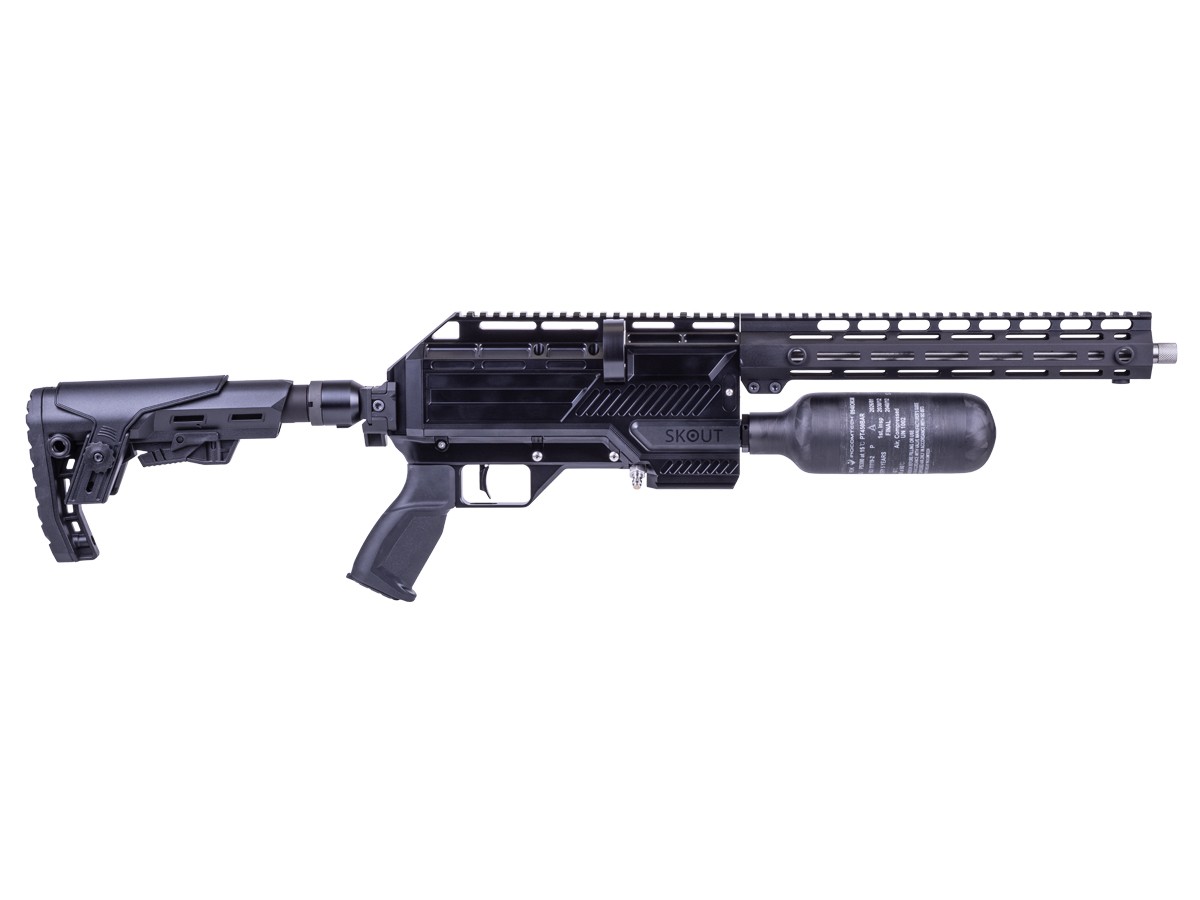
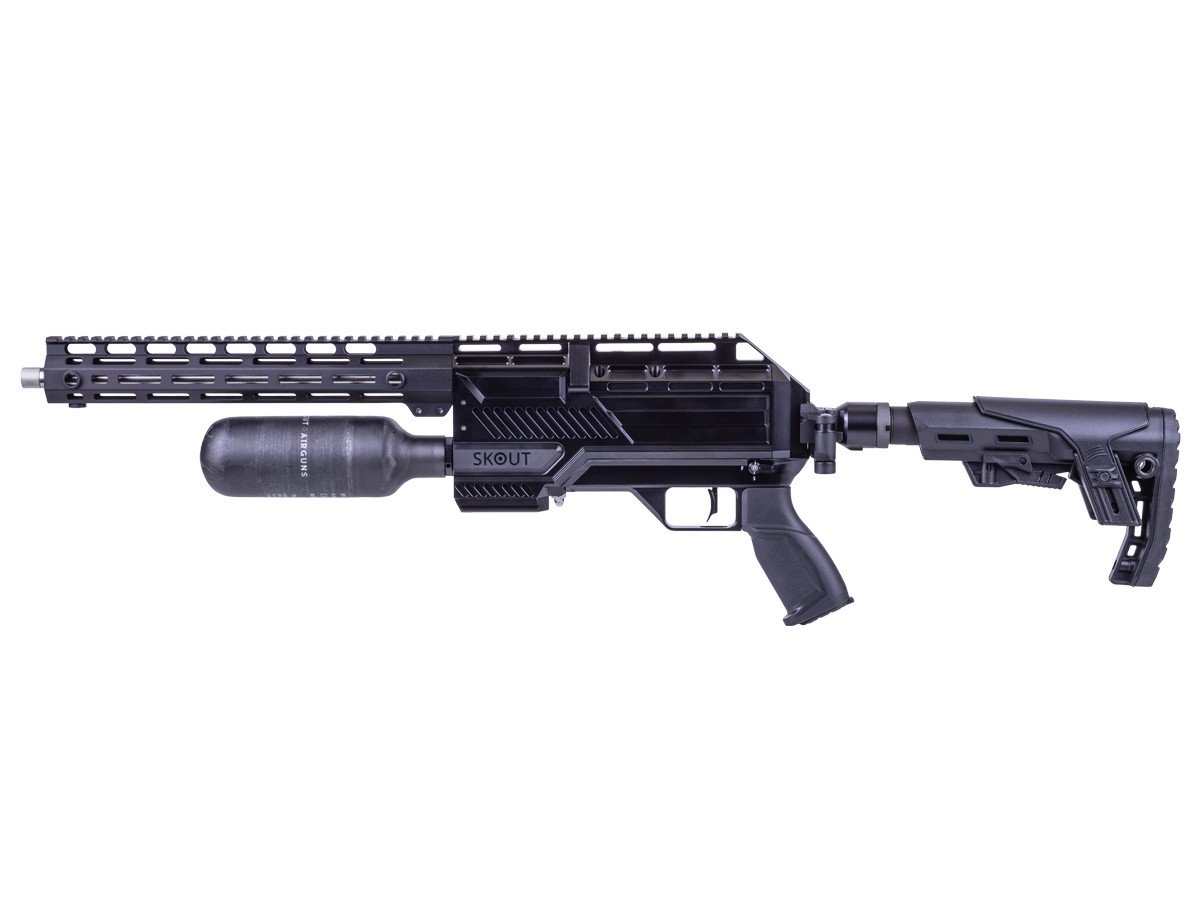
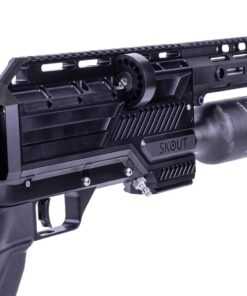
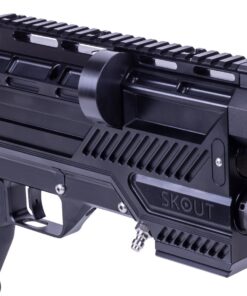
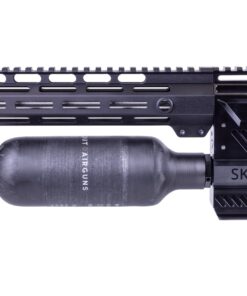
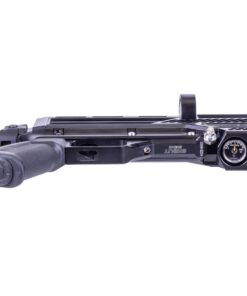
Built in the United States, the Skout Semi has been developed as a performance-oriented air rifle for target shooting, competitive applications, and suitable field use where permitted. A compact overall design has also been adopted, which means the rifle can be handled comfortably without excessive bulk. Furthermore, the combination of regulated air delivery, a generous magazine capacity, adjustable ergonomics, and an optics-ready configuration makes this rifle especially attractive to shooters seeking something beyond a conventional PCP platform.
Skout Semi Performance and Modern PCP Engineering
Performance has been placed at the center of the Skout Semi design. A semi-automatic action allows another shot to be prepared automatically after each firing cycle, thereby reducing unnecessary movement between shots. Consequently, faster target transitions and rapid follow-up shots can be achieved when conditions allow.
Power is supplied through a pre-charged pneumatic system. According to SKOUT’s current specifications, the rifle is offered in .22 caliber, while maximum output is listed at approximately 45 foot-pounds of energy with a 25.39-grain projectile at around 900 FPS. Additionally, approximately 50 shots per fill are listed when an 18.1-grain projectile is used at about 900 FPS. Actual figures can naturally vary according to ammunition, regulator configuration, atmospheric conditions, and individual rifle setup.
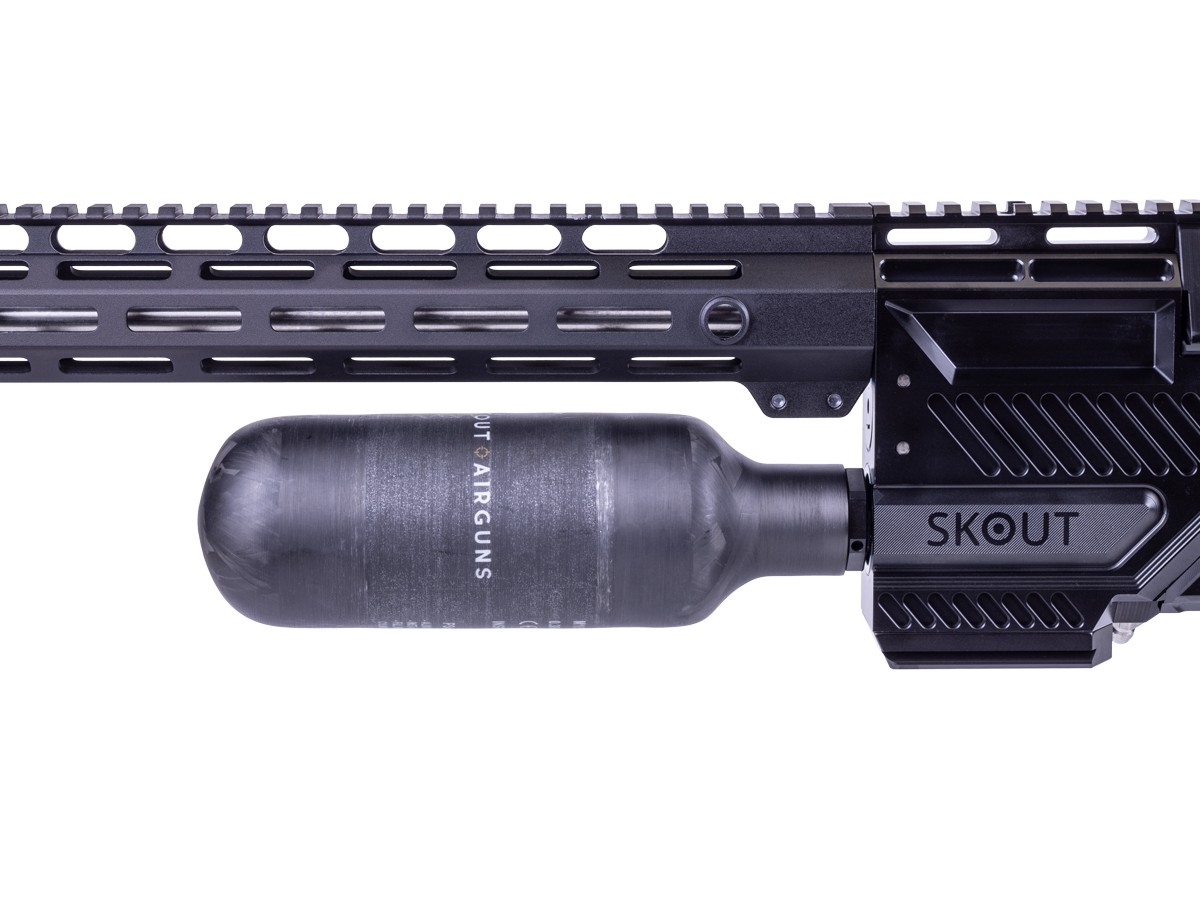
A 300cc air capacity has been incorporated, while the maximum listed fill pressure is 300 BAR. Therefore, useful shot capacity can be delivered without requiring an excessively large rifle.
Fast Semi-Automatic Shooting Experience
One of the strongest attractions of the Skout Semi air rifle is its rapid firing cycle. Because manual bolt or sidelever cycling is removed between normal shots, the shooter’s firing position can be maintained more easily.
That advantage can be particularly noticeable during reactive target sessions. Instead of repeatedly moving the support hand or breaking the shooting position, another carefully aimed shot can be prepared immediately.
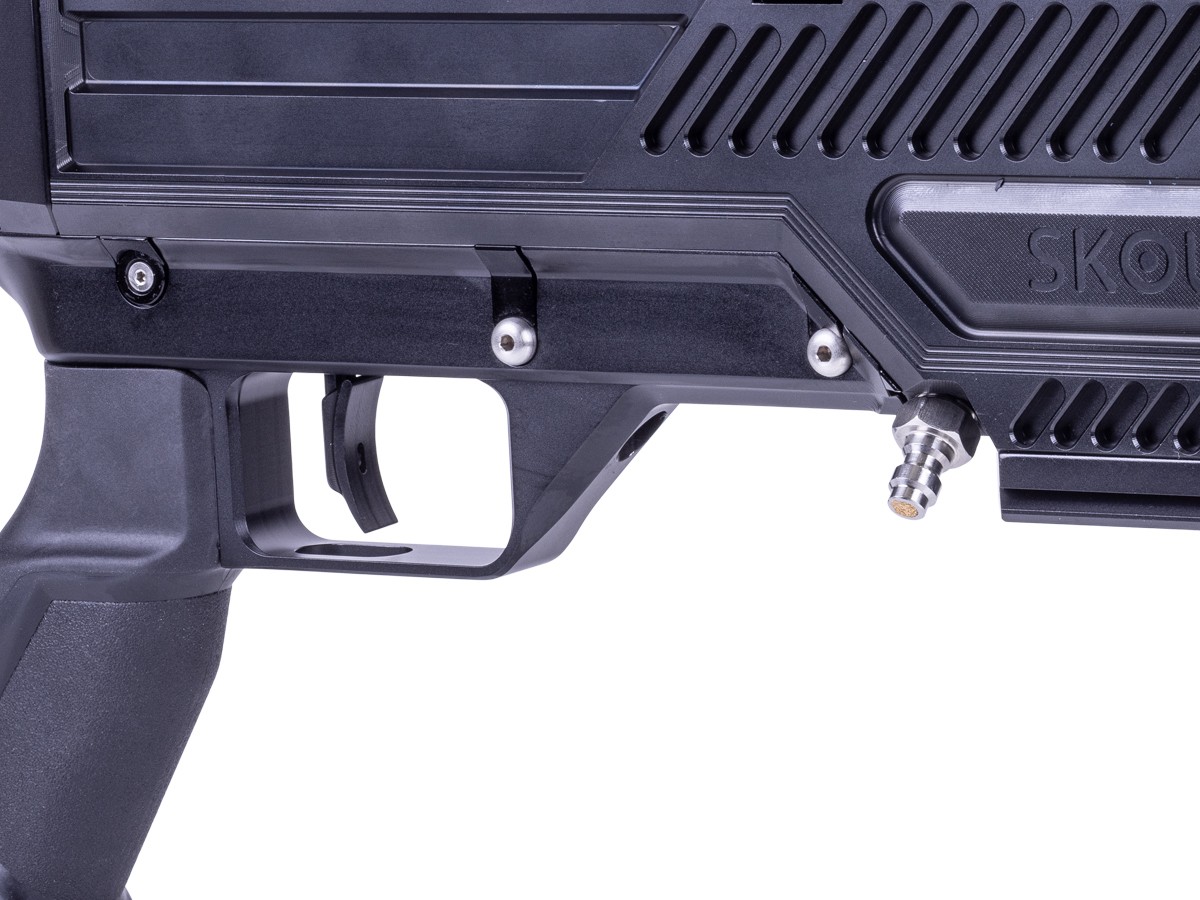
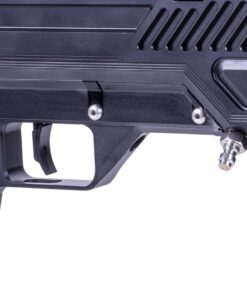
At the same time, responsible trigger control remains essential. SKOUT specifically identifies the rifle as having a very short, lightweight match-grade trigger intended to facilitate fast follow-up shooting. Therefore, safe handling, proper muzzle discipline, and correct use of the safety mechanism should always be maintained.
Compact and Balanced Design
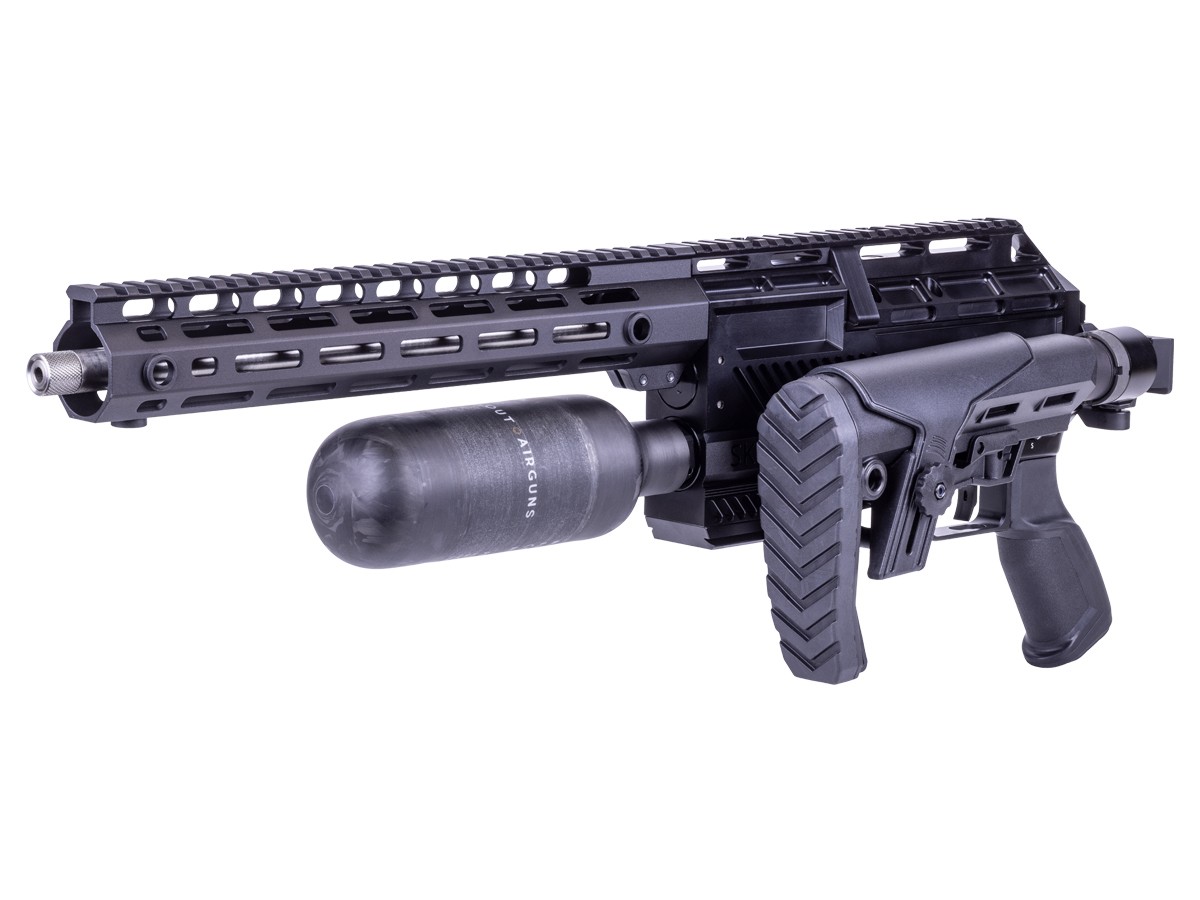
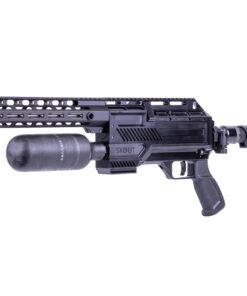
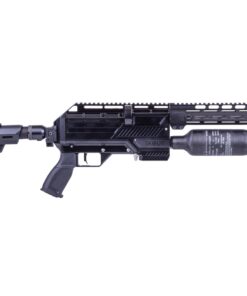
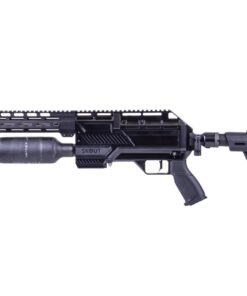
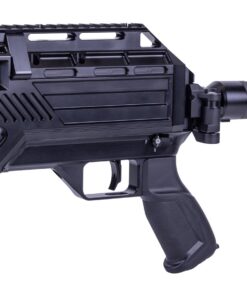
Although serious performance is offered, excessive dimensions have not been introduced. The Skout Semi measures approximately 34 to 36.5 inches overall depending on adjustment, while its listed weight is approximately 7.85 lb.
Consequently, the rifle feels considerably more compact than many full-length precision PCP platforms.
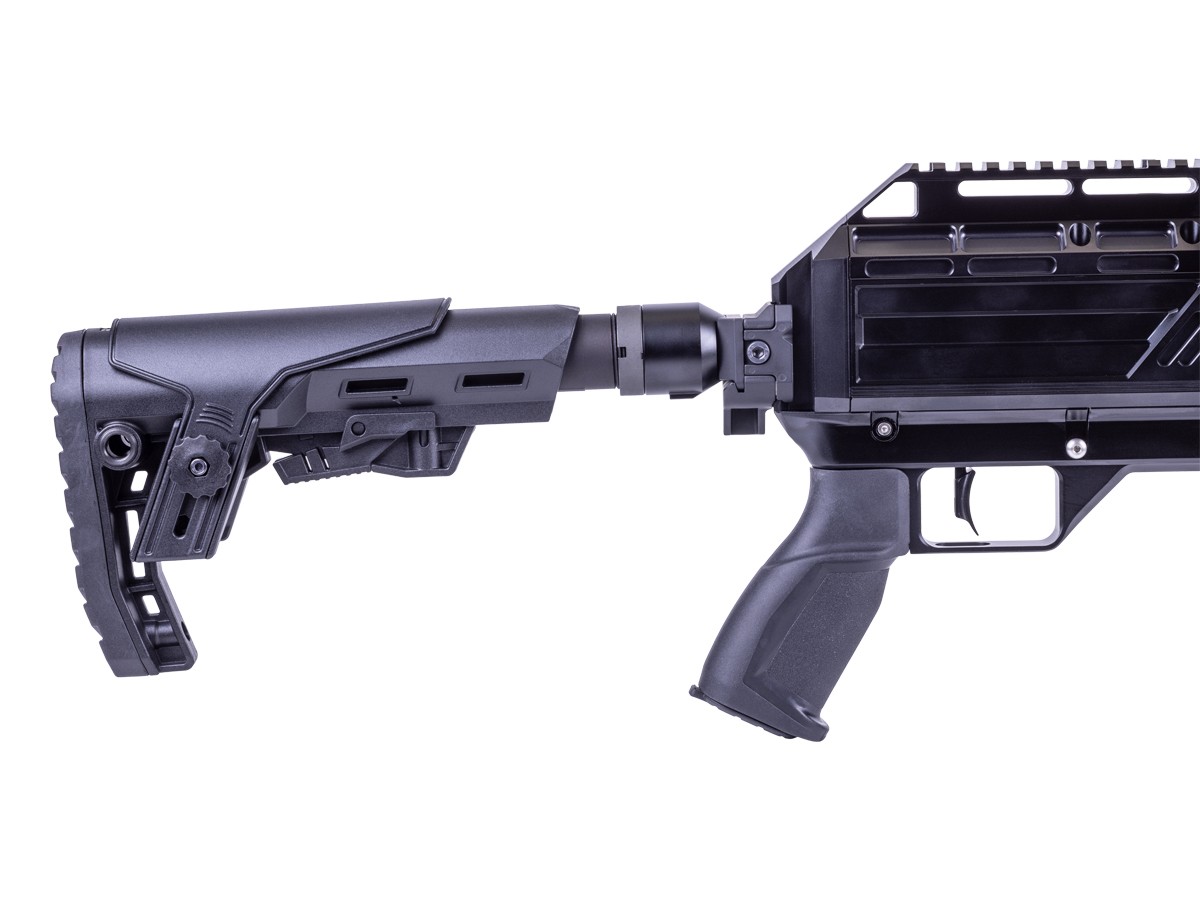
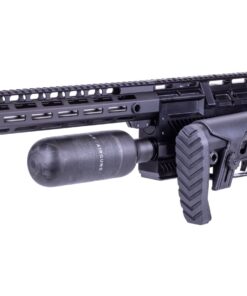
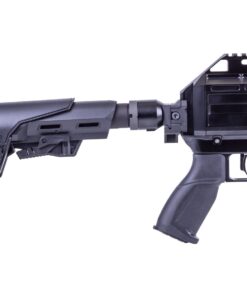
The adjustable overall length also makes the shooting position easier to tailor to different users. Whether the rifle is being fired from a bench, supported position, or appropriate field position, a comfortable shoulder relationship can therefore be established more naturally.
15.5-Inch Barrel Configuration
A 15.5-inch barrel is used, while a 1:15.75 twist rate is specified. This configuration helps preserve the compact character of the rifle without abandoning the performance expected from the platform.
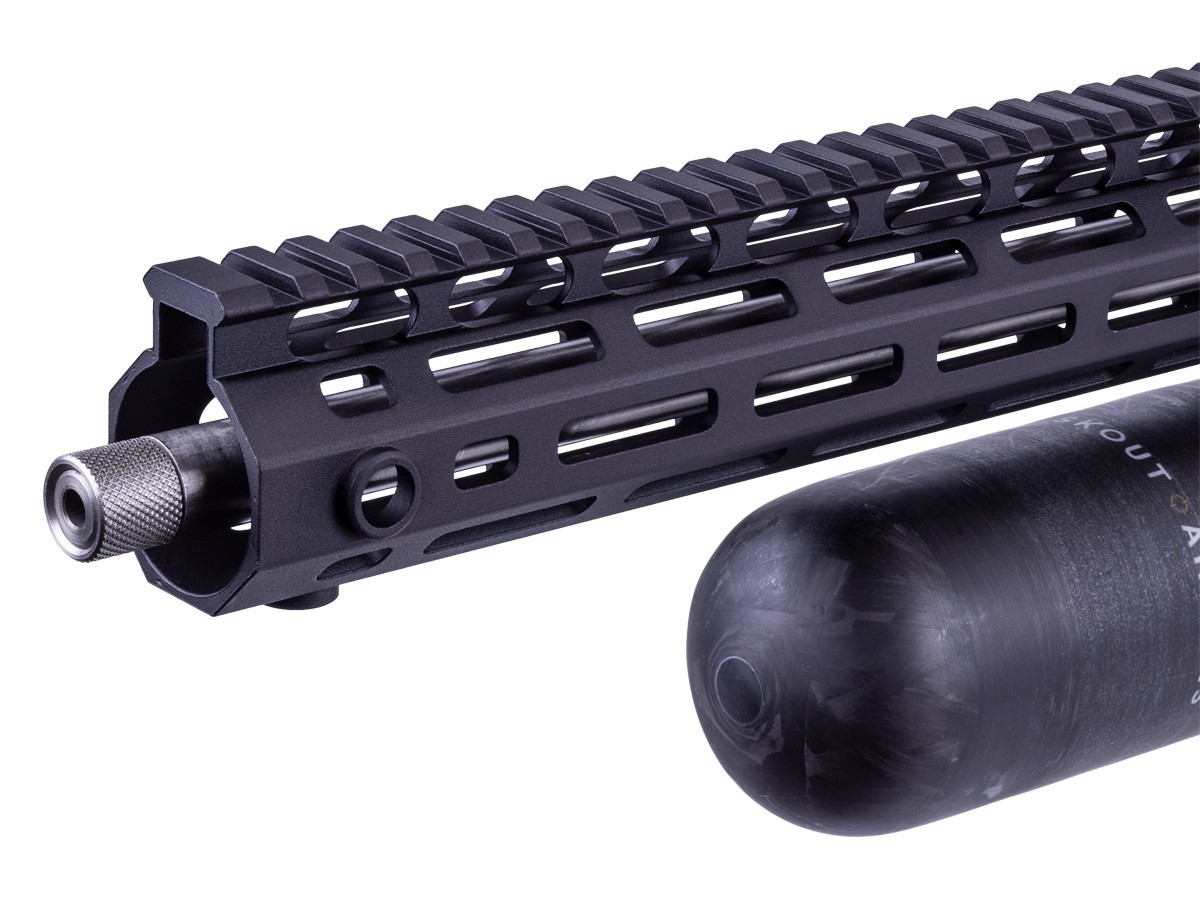
In addition, a 1/2-20 muzzle thread has been provided. Compatible muzzle accessories may therefore be fitted where ownership and use are legally permitted.
For optics installation, a built-in 20 MOA rail has been incorporated on the rifle. This provides a practical foundation for mounting an appropriate riflescope or compatible sighting system.
Adjustable Regulated Air System
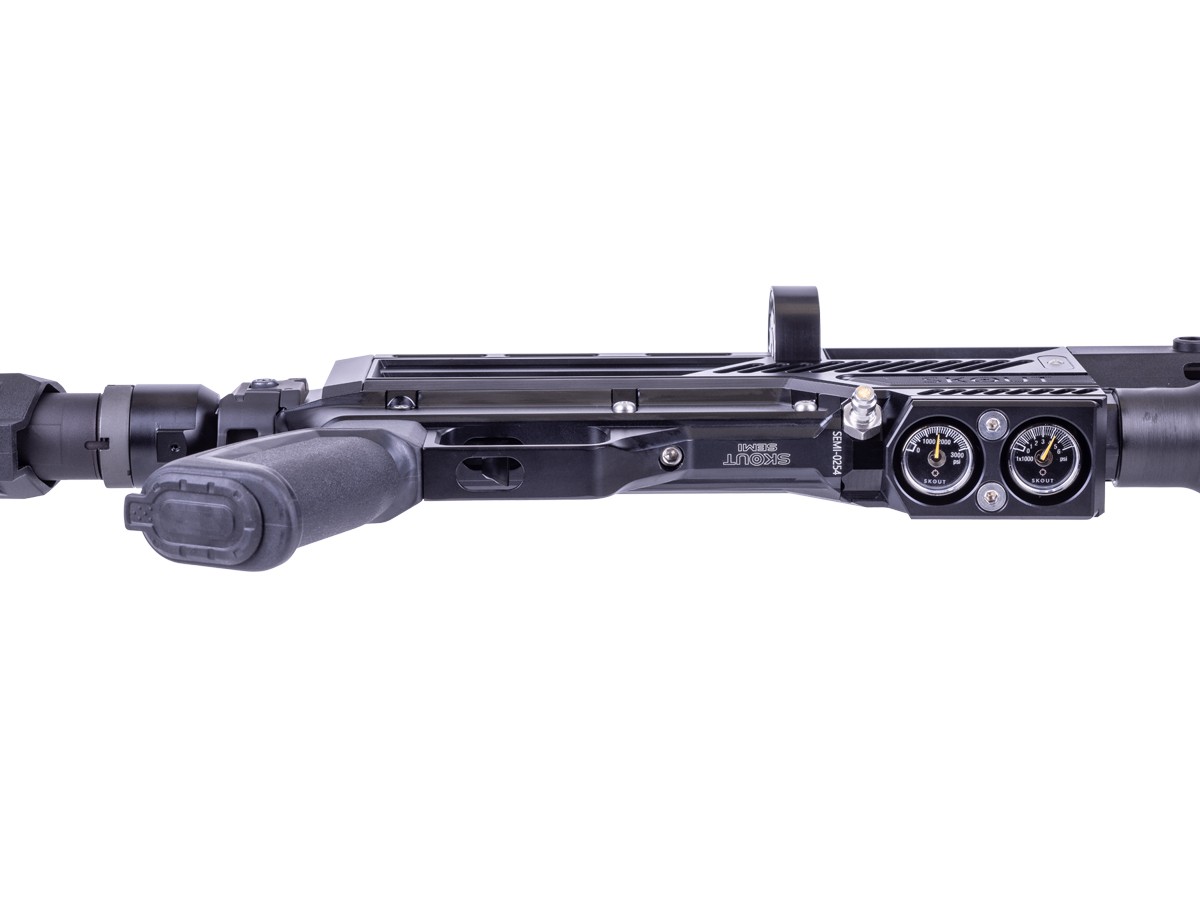
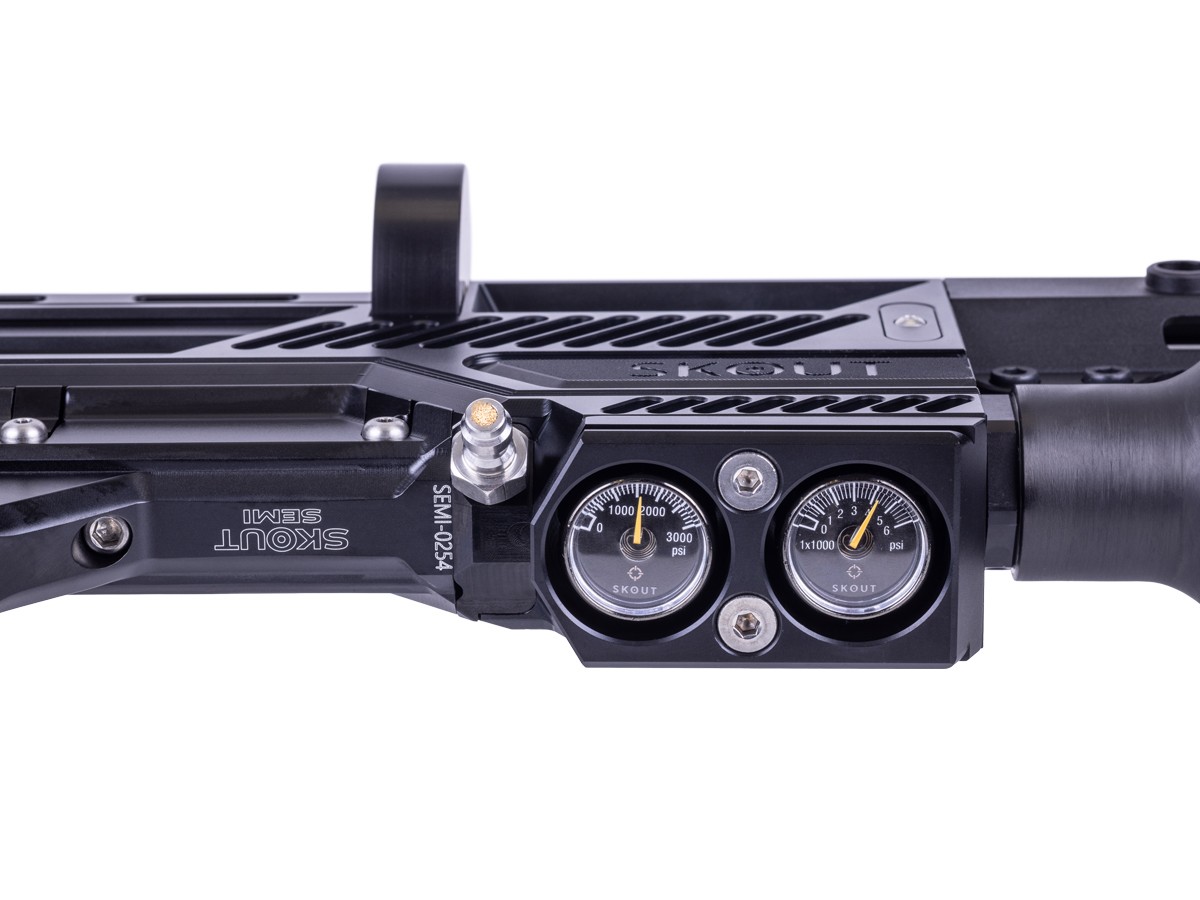
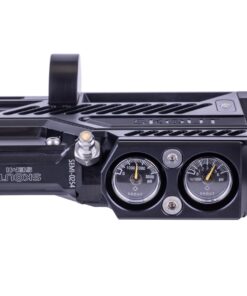
Consistency is especially important in a PCP rifle because predictable pressure delivery contributes directly to repeatable performance. For that reason, an externally adjustable multi-pressure regulator system has been fitted to the Skout Semi.
Consequently, the platform can be configured around suitable ammunition and shooting requirements rather than forcing every shooter into one fixed setup.
Adjustment should always be performed according to the manufacturer’s instructions. Once an appropriate configuration has been established, however, a consistent shot cycle can be maintained across a useful portion of the available air supply.
300cc Air Capacity and 300 BAR Fill Pressure
The integrated air system provides approximately 300cc of capacity and carries a listed maximum fill pressure of 300 BAR.
Under SKOUT’s published test configuration, approximately 50 shots per fill can be obtained using an 18.1-grain projectile at approximately 900 FPS. Nevertheless, shot count should be regarded as configuration-dependent rather than as an absolute figure because projectile weight and operating pressure can influence efficiency.
15-Round Quick Mag System
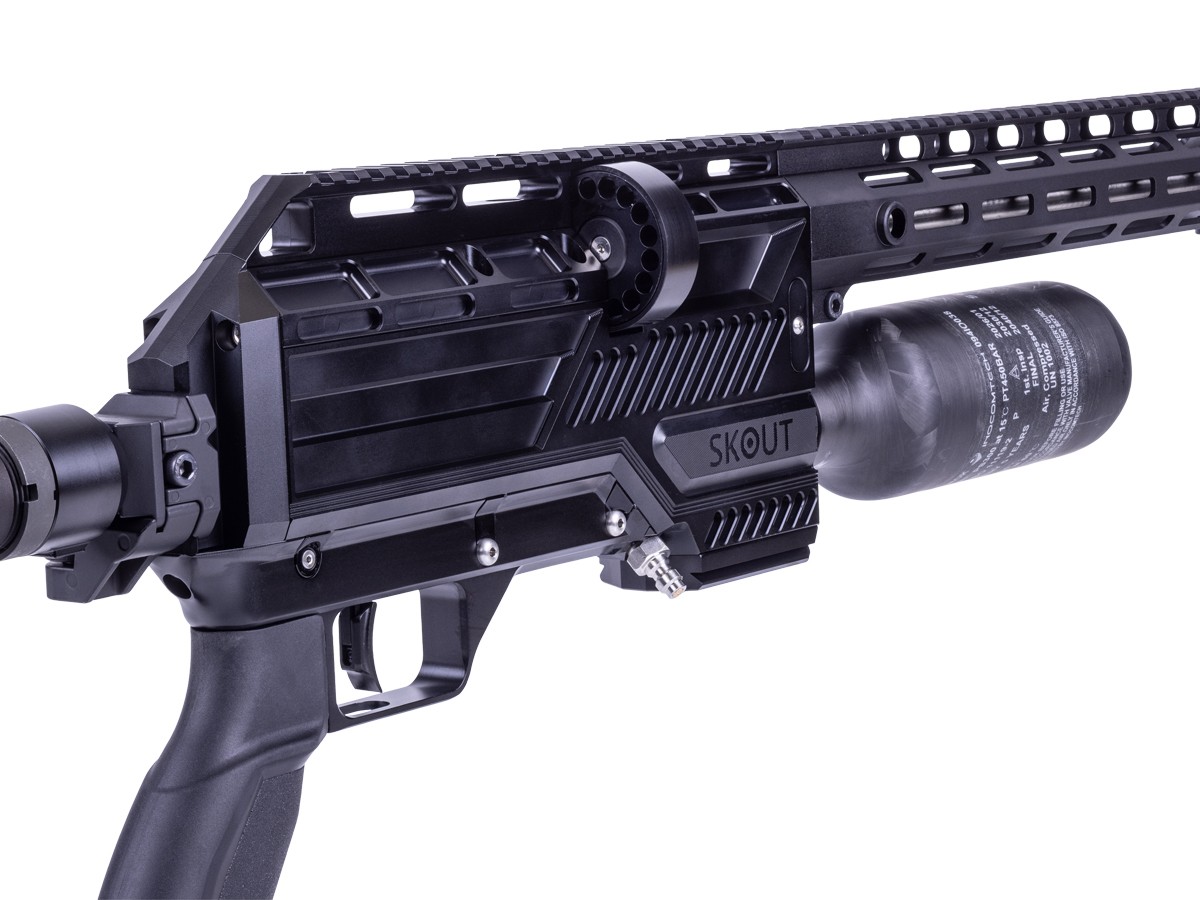
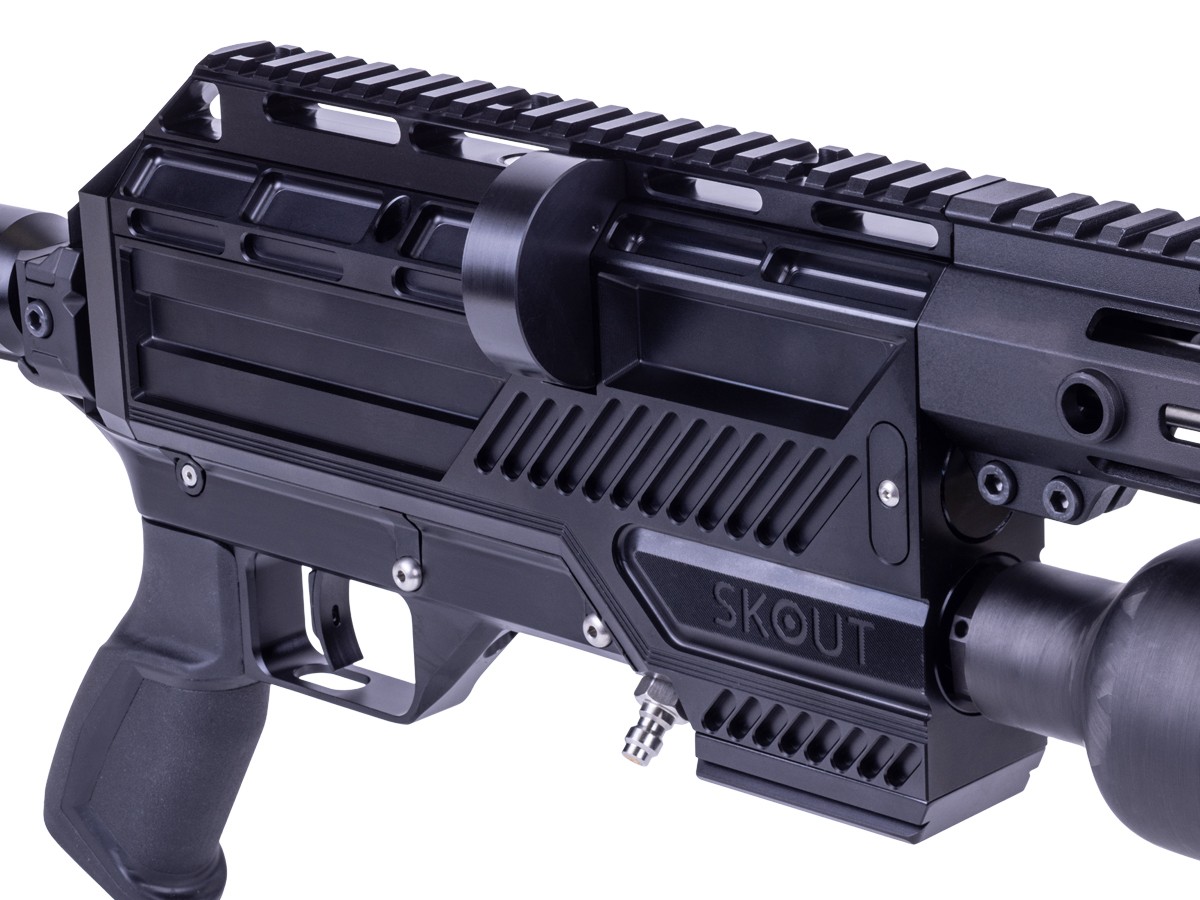
Rapid firing performance becomes significantly more practical when adequate magazine capacity is available. Accordingly, the Skout Semi uses a 15-round magazine.
The manufacturer’s new Quick Mag arrangement has been designed to reduce downtime during shooting sessions. As a result, magazines can be prepared in advance and exchanged efficiently when another string is required.
A single Skout Semi magazine is currently included with the rifle, while additional magazines can be purchased separately.
Skout Semi Key Features
- Semi-automatic PCP action for rapid follow-up shooting
- .22 caliber configuration
- Up to approximately 45 FPE under the manufacturer’s stated configuration
- Approximately 50 shots per fill under published test conditions
- 15-round magazine capacity
- 300cc compressed-air capacity
- 300 BAR maximum fill pressure
- 15.5-inch barrel
- 1:15.75 barrel twist rate
- 1/2-20 muzzle thread
- Approximately 7.85 lb weight
- 34–36.5-inch adjustable overall length
- Built-in 20 MOA optics rail
- Externally adjustable multi-pressure regulator system
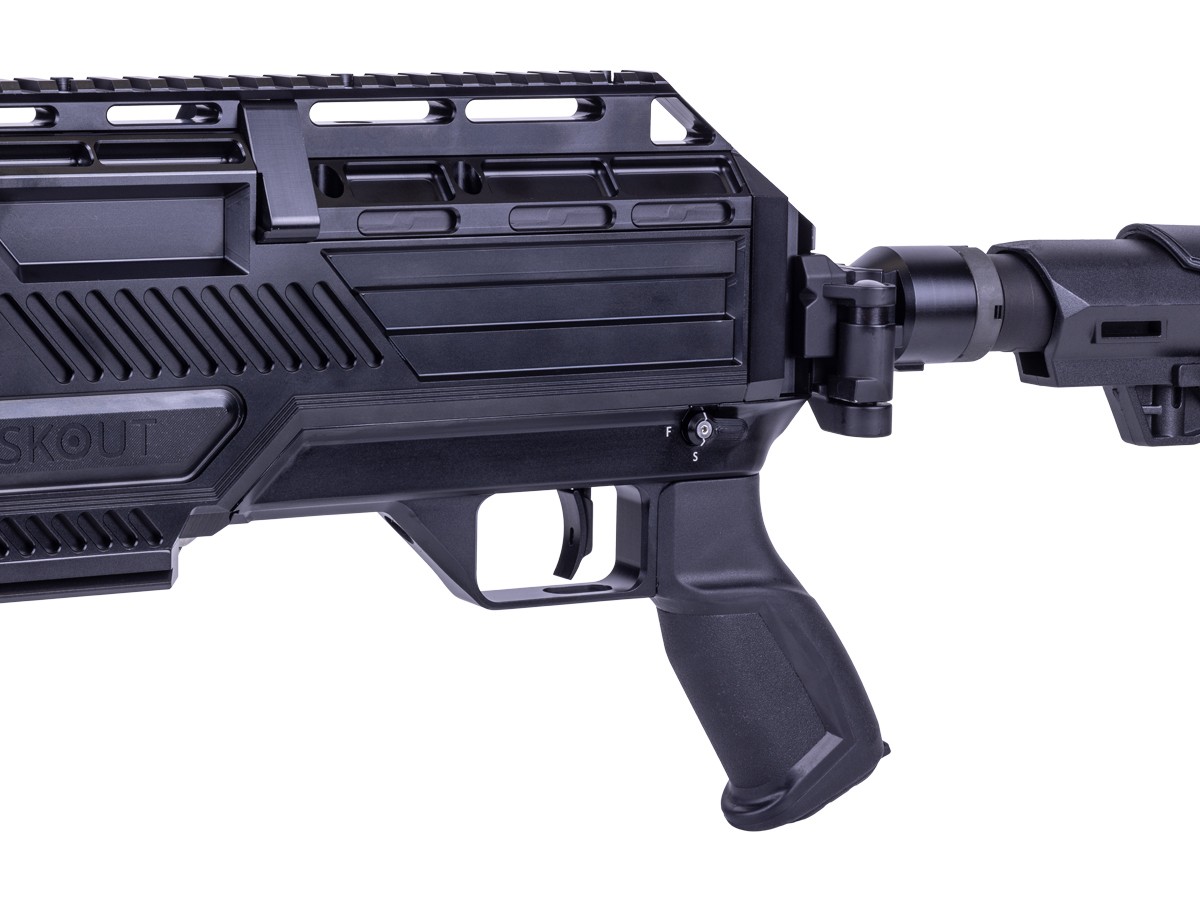
- AR-style safety
- Quick Mag magazine platform
- Made in the United States
Precision, Control and Rapid Follow-Up Capability
Speed alone does not define the Skout Semi. Instead, the platform has been designed so rapid operation can be combined with controlled shot placement.
Because manual cycling movement is reduced, the rifle can remain comparatively stable between shots. Consequently, the shooter’s sight picture may be recovered quickly after firing. This characteristic can be valuable during controlled multi-target practice, timed shooting disciplines, steel target sessions, and other lawful applications where rapid follow-up capability is useful.
Furthermore, the regulated pneumatic system supports consistency throughout the shooting cycle. When suitable ammunition is paired with an appropriately configured rifle, repeatable velocity and predictable trajectory can therefore be pursued.
AR-Style Safety and Familiar Controls
An AR-style safety has been incorporated into the rifle, providing an intuitive control arrangement for shooters already familiar with similar ergonomic layouts.
Nevertheless, the safety should never replace proper handling procedures. Because SKOUT describes the Semi as using an exceptionally short and light trigger pull, the manufacturer instructs users to keep the rifle unloaded and secured appropriately whenever it is not actively being fired.
Ideal for Target and Performance-Oriented Shooting
For shooters who enjoy deliberate precision but also want quicker shot-to-shot operation, the Skout Semi PCP air rifle offers an interesting balance.
On the range, targets can be engaged without operating a manual cocking mechanism after every shot. During reactive shooting, the semi-automatic system can help maintain momentum. Meanwhile, an adjustable regulated air system allows the rifle to be configured more precisely around its intended setup.
Where local regulations permit appropriate field use, the available energy and rapid follow-up capability can also provide versatility. Users must always verify applicable airgun, hunting, transport, power-limit, and moderator legislation before purchasing or operating the rifle.
Why Choose the Skout Semi?
The Skout Semi has been created for shooters who want a modern PCP platform without accepting the slower firing sequence associated with traditional manually cycled rifles.
Its semi-automatic operation provides the headline attraction. However, the rifle’s appeal extends beyond firing speed. A compact chassis, 15-round magazine, regulated pressure management, adjustable overall length, 20 MOA optics rail, generous air system, and approximately 45 FPE maximum published output have all been combined into one integrated platform.
Moreover, the relatively compact 15.5-inch barrel helps keep overall dimensions manageable. Therefore, maneuverability can be retained while meaningful PCP performance is still provided.
Skout Semi – Built for Speed, Accuracy and Control
Ultimately, the Skout Semi offers a distinctive combination of modern engineering and practical shooting performance. Rapid semi-automatic operation is complemented by regulated pneumatic power, while its compact architecture keeps the platform responsive and comfortable.
For target shooters, enthusiasts, and experienced PCP users looking for faster follow-up capability, this rifle provides an alternative to conventional sidelever and bolt-action designs. At the same time, its adjustable air system, 15-round magazine, optics-ready receiver, compact barrel, and carefully engineered ergonomics give the platform substantial versatility.
Choose the Skout Semi when rapid operation, controlled accuracy, modern PCP technology, and configurable performance are priorities. With the correct ammunition, suitable optic, safe handling practices, and an appropriate air source, it can become a highly capable centerpiece of a performance-focused airgun setup.\
Skout Semi Caliber, FAC Power and Accessories
The Skout Semi has been engineered around a focused performance configuration rather than an oversized range of caliber choices. For the current production model, .22 caliber is specified by SKOUT, allowing the rifle to combine manageable projectile weight, practical efficiency, rapid follow-up capability, and substantial energy output in one semi-automatic PCP platform.
Because the rifle can produce considerably more energy than low-powered recreational airguns, local firearms and airgun legislation should always be checked before purchase or use. In jurisdictions where higher-powered air rifles require an FAC, firearms certificate, permit, licence, registration, or similar authorization, the Skout Semi should be treated according to the applicable legal classification rather than assumed to be unrestricted.
Skout Semi .22 Caliber Configuration
The current Skout Semi caliber offering is .22 caliber. This bore size provides a useful balance between projectile mass, velocity, air consumption, trajectory, and retained energy.
Compared with very light small-caliber pellets, a .22 projectile can carry more mass while remaining manageable within a compact PCP platform. Consequently, the caliber works well with the Semi’s emphasis on fast target engagement and controlled follow-up shooting.
SKOUT specifies a 15.5-inch barrel with a 1:15.75 twist rate. This barrel configuration has been paired with the rifle’s .22-caliber operating system, while the relatively short barrel contributes to the rifle’s compact overall dimensions of approximately 34 to 36.5 inches.
For buyers comparing the Semi with other SKOUT rifles, an important distinction should be made. The EVO and other SKOUT platforms may be available in additional calibers, including .177, .25, .30, and .357, but those specifications should not automatically be applied to the Semi. SKOUT currently lists the Semi specifically in .22 caliber.
FAC Power and Energy Output
Power is one of the defining features of the Skout Semi FAC-style configuration. According to SKOUT’s current specifications, the rifle can produce a maximum of approximately 45 foot-pounds of energy using a 25.39-grain projectile at approximately 900 FPS.
That level of output places the rifle well beyond typical low-energy plinking rifles used in jurisdictions with strict non-FAC power limits.
Therefore, customers should never assume that the Skout Semi can automatically be purchased or used under the same rules as a low-powered air rifle. Legal classifications vary substantially between countries and sometimes between states, provinces, or regions.
Where an FAC or equivalent authorization is required above a defined muzzle-energy threshold, the user should confirm the rifle’s legal status before ordering.
Approximately 45 FPE Maximum Power
The manufacturer’s published maximum power figure is:
- Maximum energy: approximately 45 FPE
- Reference projectile: 25.39 grains
- Reference velocity: approximately 900 FPS
- Caliber: .22
- Action: Semi-automatic PCP
- Barrel length: 15.5 inches
- Twist rate: 1:15.75
Actual muzzle energy can vary according to projectile weight, regulator settings, fill pressure, environmental conditions, and individual rifle configuration. For that reason, chronograph testing is recommended whenever exact muzzle velocity or legal energy compliance must be established.
Adjustable Regulator and Power Delivery
An externally adjustable multi-pressure regulator system is built into the Skout Semi. Consequently, air delivery can be managed more precisely than on a basic unregulated PCP platform.
Regulation helps control the pressure supplied to the firing system between shots. As a result, more consistent velocity can be maintained across a shooting string when the rifle is properly configured.
Power adjustments should always remain within the manufacturer’s operating limits and the user’s applicable laws. Increasing regulator pressure simply to chase maximum velocity is not recommended because projectile stability, air efficiency, mechanical stress, and accuracy can all be affected.
Instead, the rifle should be configured around a balanced combination of projectile choice, accuracy, energy, and shot consistency.
300cc Air Capacity and 300 BAR Fill Pressure
The Skout Semi uses a 300cc air reservoir with a maximum published fill pressure of 300 BAR.
SKOUT lists approximately 50 shots per fill when an 18.1-grain projectile is fired at around 900 FPS.
Shot count should nevertheless be treated as an approximate figure rather than a guaranteed number. Heavier projectiles, increased regulator pressure, higher output settings, temperature, and shooting conditions may influence usable shot count.
A suitable high-pressure filling source should therefore be selected. Depending on the user’s equipment and local availability, this may include a compatible PCP compressor or properly rated high-pressure cylinder and filling hardware.
Skout Semi Accessories
The Skout Semi can be configured with several useful accessories for range, competition, and general precision shooting.
One 15-round Skout Semi magazine is supplied with the rifle. Additional Semi Quick Mag magazines are available separately, making multiple preloaded magazines practical for longer shooting sessions.
Recommended Accessories
Useful additions can include:
- Additional 15-round Skout Semi magazines
- Quality riflescope
- Compatible scope rings or mounts
- PCP compressor or high-pressure filling system
- Fill hose and suitable fittings
- Chronograph for velocity verification
- Pellet storage case
- Range bag or protective rifle case
- Cleaning equipment suitable for PCP barrels
- Shooting rest or tripod
- Bipod where compatible
- Hearing and eye protection
- Compatible muzzle device where legally permitted
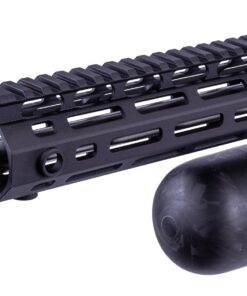
The rifle includes a built-in 20 MOA optics rail, providing a solid foundation for mounting an appropriate optic. SKOUT specifically notes that this rail is built into the rifle rather than the handguard.
Muzzle Accessories and 1/2-20 Thread
A 1/2-20 muzzle thread is specified on the Skout Semi. This allows compatible muzzle accessories to be fitted where permitted by local law.
Importantly, SKOUT states that an optic and Whisper moderator are not included with the standard Semi purchase. Therefore, customers planning a complete shooting setup should budget separately for an optic and any legally permitted muzzle accessory they intend to use.
Building the Complete Skout Semi Setup
For most users, a practical Skout Semi package can be built around the rifle, one or more spare magazines, a suitable optic, a reliable filling system, compatible .22 ammunition, and basic maintenance equipment.
This combination allows the rifle’s semi-automatic capability to be used effectively without overlooking air management, sighting equipment, or ammunition consistency.
Ultimately, the Skout Semi .22 caliber platform combines approximately 45 FPE maximum published output, a regulated 300cc air system, 300 BAR fill pressure, a 15-round magazine, a compact 15.5-inch barrel, and modern accessory compatibility. When paired with suitable equipment and operated within local legal requirements, it provides a versatile foundation for shooters seeking speed, precision, and adjustable PCP performance.
Air Rifles, PCP Systems, Calibers, Target Shooting and Popular Models
The world of air arms, air guns, and precision shooting equipment covers everything from recreational target shooting to sporting applications. For newcomers asking what is an air gun, what is an air rifle, what is air rifle, what is a air rifle, what is a airgun, what is an airgun, or what are airguns, the basic principle is straightforward. An air gun uses compressed gas or air to propel a projectile rather than relying on the combustion system associated with conventional firearms.
Understanding how does an air gun work, how does air gun work, how do air guns work, how does an air rifle work, how does air rifle work, and how do air rifle work can help buyers distinguish between the different operating systems available. Depending on the design, power can be supplied by a spring piston, compressed air cylinder, CO2 cartridge, or another pneumatic mechanism.
PCP Air Rifles and Compressed-Air Systems
One of the most popular categories is the pre-charged pneumatic platform. Searches such as what is a pcp air rifle, what is a pcp airgun, what is pcp air rifle, what is a pcp air gun, what is a pcp rifle, what is pcp rifle, what are pcp air rifles, and what is a pre charged pneumatic air rifle all relate to the same fundamental technology. A PCP rifle stores compressed air inside a reservoir and releases a controlled quantity each time the rifle is fired.
For shoppers researching pcp gun meaning, pcp rifle meaning, or pcp air rifle meaning, PCP simply refers to a pre-charged pneumatic system. Air is normally added using a pcp hand pump, dive cylinder, or pcp air compressor. Consequently, an air compressed gun or air compressor rifle can deliver consistent performance without requiring the shooter to manually compress a spring before every shot.
Some searches also include pcp bb gun, although many PCP platforms are primarily designed around pellets rather than traditional BB ammunition. Understanding the intended ammunition is therefore important before selecting accessories, magazines, or loading equipment.
.177 Caliber, .22 Caliber and Pellet Selection
Caliber choice is one of the most frequently researched subjects among airgun buyers. The .177 caliber remains extremely popular for recreational shooting and precision target applications. Products described as a 177 air rifle, 177 bullet, or even 177 cal darts may appear during searches, although ammunition compatibility always needs to be checked against the manufacturer’s specifications.
Questions including 177 or 22, 177 cal vs 22, 177 caliber vs 22, .177 caliber vs .22, .177 pellet vs .22 pellet, and .22 vs .177 pellet generally focus on differences in projectile size, trajectory, energy, and intended use. A smaller .177 pellet is commonly chosen for paper targets and precision shooting, whereas larger calibers may be selected for applications where additional projectile mass is desired.
Understanding bb gun pellet sizes is equally important because BBs and pellets are not automatically interchangeable. Before purchasing ammunition, shooters should confirm the caliber and projectile type specified for their particular pellet rifle, pellet pistol, or bb gun.
Air Arms Rifles and Popular Models
Among established manufacturers, air arms products remain widely searched by enthusiasts interested in precision PCP and spring-powered platforms. Well-known searches include air arms s510, s510, air arms s410, aa s400, pro sport air arms, prosport air arms, tx 200, and tx200.
Variations such as air arm and airarm are also commonly entered by shoppers searching for the brand. Buyers looking specifically for regulated sporting configurations may encounter the air arms s510 ultimate sporter .177 sub 12, a phrase frequently associated with UK-oriented searches for the S510 platform.
Each Air Arms model has its own action, stock design, power configuration, caliber options, and intended shooting environment. Therefore, specifications should always be checked against the exact version being considered rather than assumed from another model in the same family.
FX Impact M3, FX Maverick and Modern PCP Platforms
Premium PCP research frequently includes the fx maverick and the fx impact m3. Buyers may also search for fx impact mk3, fx m3 airgun, fx m3, impact m3, or fx impact m3 air rifle while comparing generations and configurations.
More specific searches such as fx impact m3 .22cal air rifle. 600mm barrel focus on caliber and barrel-length combinations. Meanwhile, international shoppers may search fx impact m3 precio, fx impact m3 precio en usa, or fx impact m3 price when researching current market pricing.
Because FX platforms can be produced in multiple barrel lengths, calibers, power settings, and regional configurations, buyers should verify the exact specification offered in their country before ordering.
Break-Barrel Air Rifles
Another major category is the break barrel air rifle. Anyone asking what is a break barrel air rifle or what is a break barrel pellet gun is usually referring to a rifle in which the barrel is hinged downward to cock the internal powerplant and expose the breech for loading.
Break-barrel designs remain popular because they can provide a self-contained shooting system without an external compressor or air bottle. Models such as a gamo pellet gun are frequently encountered by buyers exploring this category.
Learning how to load pellet gun equipment properly is particularly important. Pellets should match the manufacturer’s recommended caliber and should be loaded in accordance with the owner’s manual while the rifle is pointed in a safe direction and handled under normal shooting-range safety procedures.
CO2, Pellet Pistols and Other Airgun Types
Not every airgun uses PCP or spring power. A co2 powered pellet rifle, for example, uses replaceable CO2 cartridges as its propellant source. CO2 systems can be found in rifles and handguns intended for recreational shooting, training, and target use.
People researching air pistol uses or general pellet gun uses will encounter equipment intended for target practice, recreational plinking, skills training, competition, and other lawful sporting activities. A pellet pistol can offer a compact platform, while rifles generally provide a longer sight radius and additional stability.
Search terms such as pelet guns are also common misspellings of pellet guns and can still represent useful search intent when website content is designed to answer frequently asked buyer questions naturally.
Target Shooting and Airgun Practice
One of the most established uses of airguns is target shooting with air rifles. Dedicated air guns for target shooting may emphasize accuracy, adjustable stocks, match triggers, regulated air delivery, and compatibility with precision optics.
Likewise, airgun target practice and airgun for target practice are common search topics among people looking for an accessible way to develop shooting fundamentals. Proper backstops, eye protection, safe handling practices, and suitable ranges should always be used.
The practical range of air rifle equipment varies considerably according to caliber, muzzle energy, projectile selection, environmental conditions, and the rifle itself. As a result, buyers should use manufacturer specifications and local range rules rather than assuming that every air rifle performs identically.
Hunting Air Rifles and Appropriate Use
Some shooters research air rifles for hunting, hunting air rifles, best air rifle for hunting, pellet gun for rabbits, or even the informal phrase rats gun when looking for equipment designed for lawful pest-control or hunting applications.
Suitability depends heavily on local law, caliber, projectile energy, quarry species, shot placement requirements, and humane hunting standards. Questions such as can a bb gun kill a fox should therefore not be treated simply as equipment-selection questions. Legal restrictions and animal-welfare requirements should be checked first, and low-powered BB guns are not appropriate substitutes for equipment legally and ethically suitable for a particular species.
Similarly, searches for air rifles for deer hunting and big game hunting with air rifle involve specialized legal and ballistic requirements. Large-bore systems such as a 72 caliber air rifle or products associated with bluegrass big bore illustrate how different big-bore pneumatic platforms can be from conventional small-caliber pellet rifles. Local hunting regulations must determine whether such equipment may legally be used.
Licensing and UK Airgun Regulations
Legal requirements differ considerably by jurisdiction. UK-oriented searches frequently include do you need a licence for air rifle, air rifle certificate uk, and 22 rifle uk license. However, the rules governing air rifles, conventional .22 firearms, certificates, age restrictions, possession, transportation, and power limits are not identical.
Consequently, buyers should confirm current legislation with the relevant licensing authority before purchasing or using any regulated equipment. Particular attention should also be paid to whether a rifle is configured below or above applicable power thresholds.
Sportsman, Gamo and Other Popular Searches
Beyond specialist PCP manufacturers, buyers may encounter products such as the sportsman 900 while comparing recreational air rifles. Searches for a gamo pellet gun are also common because Gamo offers numerous spring-powered and pneumatic models across different price points and configurations.
The broader search for best air guns can include everything from affordable recreational platforms to sophisticated regulated PCP rifles. Rather than treating one design as universally superior, buyers should compare caliber, intended application, weight, stock ergonomics, power source, shot capacity, charging equipment, availability of spare parts, and local legal requirements.
Airgun Safety, Home Use and Responsible Ownership
Searches for air guns for home defense do appear online, but an airgun should not automatically be assumed to be suitable for defensive use. Laws vary significantly, and airguns can cause serious injury. Secure storage, lawful ownership, training, safe handling, and avoidance of unnecessary confrontation remain essential.
Whether someone owns an air rifle, pellet rifle, bb gun, or PCP platform, the equipment should always be treated as capable of causing injury. A secure backstop should be used for recreational shooting, the muzzle should remain pointed in a safe direction, and manufacturer instructions should be followed carefully.
Ultimately, understanding the differences between PCP rifles, break-barrel systems, CO2 equipment, caliber choices, and individual models makes it easier to compare the extensive range of modern airguns. From Air Arms platforms to FX rifles and recreational pellet guns, careful specification checking, responsible handling, lawful use, and suitable ammunition selection remain central to getting the right equipment for the intended purpose.
Practical Use Scenarios for the Skout Semi
The Skout Semi has been designed for shooters who want fast follow-up capability, compact handling, regulated PCP performance, and a modern semi-automatic shooting experience. While technical specifications help explain what the rifle can deliver, real value is often understood more clearly when the rifle is considered in practical situations. From organized range sessions to reactive targets and lawful field applications, the platform can be adapted to several different shooting styles.
Because the rifle operates through a semi-automatic system, the shooting position can usually be maintained between shots more easily than with a conventional manually cycled PCP. This characteristic becomes especially useful whenever multiple targets are being engaged, timed drills are being practiced, or repeated shots are required without unnecessary repositioning.
Target Shooting at the Range
A controlled shooting range provides one of the most natural environments for using the Skout Semi. Once the rifle has been filled, the magazine loaded, and an appropriate optic zeroed, the shooter can concentrate on shot placement rather than repeatedly operating a bolt or sidelever.
For example, a shooter working with paper targets at moderate distances can fire a carefully controlled first shot, observe the impact, correct the aiming point when necessary, and continue the string while maintaining a consistent shoulder position. Because fewer movements are required between shots, disturbances to the rifle and shooting posture can be reduced.
That characteristic is useful during group testing as well. Shooters who are comparing different pellet weights can evaluate several shot groups while keeping the rifle positioned consistently. A chronograph can also be incorporated into the session to record velocity and evaluate consistency across the usable air pressure range.
Benchrest-style practice can therefore become particularly convenient. The rifle can be placed on front and rear supports, the optic can be adjusted carefully, and repeated shots can be taken without significant changes to the rifle’s orientation.
Although semi-automatic operation allows fast firing, accuracy should remain the priority. Controlled trigger presses and deliberate shot spacing generally provide more useful information about ammunition performance than firing as quickly as possible.
Reactive Steel and Multiple-Target Practice
Reactive targets provide a different type of shooting experience. Steel plates, spinning targets, resettable targets, and other suitable airgun-rated systems can make immediate feedback available after every successful hit.
The Skout Semi is especially well suited to this environment because another shot becomes available without manual cycling. As one target is struck, attention can be shifted immediately toward another target.
Imagine a range containing several appropriately rated steel plates positioned at different distances. A shooter can begin with the closest plate, transition toward a smaller target farther away, and then return to another position without removing the firing hand from the controls.
This type of practice can improve target acquisition, trigger discipline, positional consistency, and optic familiarity.
Timed Shooting Drills
Timed drills can also make good use of the platform. For instance, several targets may be arranged within a safe firing lane, with each target requiring one accurate hit before moving to the next.
Because manual cocking has been eliminated between normal shots, the shooter can focus more heavily on sight alignment, breathing, trigger timing, and transitions.
However, speed should never replace control. The objective should be efficient accuracy rather than uncontrolled rapid fire. Proper backstops, eye protection, muzzle awareness, and adherence to range procedures remain essential.
When practiced responsibly, timed target drills can help shooters become more familiar with the rifle’s balance, trigger characteristics, magazine capacity, and sight picture recovery.
Precision Shooting and Pellet Testing
Although the Skout Semi attracts attention because of its rapid firing capability, it can also be used for slower precision testing.
A shooter may want to identify which projectile produces the smallest groups or the most consistent velocity. In that situation, several ammunition types can be evaluated under similar conditions.
One pellet weight may produce excellent accuracy at shorter distances, while another may retain stability more effectively at extended airgun ranges. Environmental factors such as wind can also influence results.
For useful comparisons, targets should be changed or clearly marked between ammunition types. Several measured groups can then be recorded.
Velocity testing can add another layer of information. By firing through a chronograph, the user can evaluate shot-to-shot consistency and determine whether the selected setup is operating predictably.
Zeroing an Optic
An optic is an important part of many practical Skout Semi setups. Once properly mounted, the rifle can be zeroed at a distance appropriate for its intended use.
Initial adjustments are commonly made from a supported position. A small group can first be fired at the center of the target. Windage and elevation corrections can then be applied according to the measured point of impact.
Because the rifle does not need to be manually cycled between ordinary shots, it can remain settled on the support during the process.
After the primary zero has been confirmed, additional targets can be used at different distances. This allows the shooter to understand how the projectile’s point of impact changes as range increases.
Knowing these changes is particularly useful during practical field shooting because the shooter can make more informed holdover or elevation decisions instead of relying on guesswork.
Informal Plinking Sessions
Informal recreational shooting can also be enjoyed with the Skout Semi when a safe and legal location is available.
Approved targets such as commercial airgun spinners, paper targets, reactive plates, or biodegradable target systems can provide an enjoyable shooting session without requiring competition-style equipment.
A typical session might involve several magazines of controlled shooting from a bench or standing position. Different target sizes can be placed at varying distances to increase difficulty gradually.
The 15-round magazine helps reduce interruptions between individual shots, while spare magazines can make longer sessions more convenient.
However, the compressed-air level should be monitored during extended shooting. As the available pressure changes, performance may eventually move outside the preferred operating range. Refilling at the appropriate point helps maintain consistency.
Training for Stable Shooting Positions
The rifle can also be incorporated into structured practice involving different shooting positions.
Bench shooting is usually the easiest starting point because the rifle is strongly supported. Once satisfactory accuracy has been achieved, the user can move into supported standing, kneeling, seated, or other lawful range positions.
Each position introduces different challenges.
During standing practice, balance becomes particularly important. The relatively compact configuration of the Skout Semi can help make the rifle manageable while transitioning between targets.
From a kneeling or supported position, the shooter can focus on controlling movement and maintaining a stable sight picture.
Such practice allows familiarity with the rifle to develop under more realistic conditions than bench shooting alone.
Bipod and Rest-Supported Use
A compatible bipod or front shooting rest can provide additional stability when the shooting environment allows it.
For example, a shooter testing ammunition may use a solid benchrest arrangement to minimize human movement. Meanwhile, someone practicing field positions might use a bipod from a low supported position.
The goal is not simply to make the rifle easier to fire. Stable support also makes it easier to identify whether an inaccurate shot was caused by shooter movement, incorrect optic settings, inconsistent ammunition, or another factor.
A rear bag can also help during precision testing by allowing small elevation adjustments without disturbing the entire rifle.
Lawful Pest-Control and Property Applications
Where local legislation permits the use of appropriate air rifles for pest control, a properly configured Skout Semi may be considered for certain lawful applications.
This type of use requires significantly more preparation than recreational target shooting. Target species, permitted methods, local airgun regulations, landowner authorization, suitable backstops, and safe shooting distances all need to be established beforehand.
Projectile selection should also be based on accuracy and lawful suitability rather than maximum power alone.
The semi-automatic system may provide quick follow-up capability when genuinely required, but careful shot placement remains more important than firing speed.
A stable shooting position should be established whenever possible. The area beyond the target must also be assessed carefully because pellets can travel considerable distances if a safe backstop is absent.
Users should always confirm relevant wildlife, pest-control, firearms, and airgun regulations before undertaking this type of activity.
Appropriate Field Shooting
Field shooting environments introduce challenges that are rarely experienced on a controlled indoor range.
Wind conditions may change. Distances may need to be estimated. Shooting positions may also be less stable.
The Skout Semi’s compact design can be advantageous under these circumstances because the rifle does not have the length associated with some traditional full-size PCP configurations.
A sling or appropriate carrying system may also improve convenience during movement between approved shooting locations.
Before entering the field, the rifle should be checked for adequate air pressure, magazine condition, optic security, and overall function.
Spare magazines can be stored safely, while pellets should be kept clean and protected from deformation.
Shooting From a Vehicle or Confined Space
The rifle’s relatively compact architecture may appear convenient around vehicles or tight storage areas, but safe handling requirements become even more important in those environments.
The rifle should not be handled as ready-to-fire inside a vehicle unless the activity is explicitly lawful and the shooting environment has been established safely.
Transport laws can vary widely between jurisdictions. In some locations, air rifles must be unloaded, secured, covered, separated from ammunition, or transported according to specific legal requirements.
For this reason, the compact size should primarily be viewed as a storage and handling advantage rather than permission to shoot from unsuitable locations.
Competition-Oriented Practice
Shooters interested in organized shooting disciplines can use the Skout Semi for practice sessions that emphasize target transitions, speed, repeatability, and controlled trigger operation.
Multiple-target layouts can be created in accordance with range rules. The shooter can then practice engaging targets in a defined order while attempting to maintain accuracy.
Because every shot does not require a manual cycling movement, the rifle can reward efficient transitions.
Magazine changes may also be incorporated into training. Spare magazines can be prepared before the session and exchanged only when the rifle is handled in accordance with established safety procedures.
Performance can then be evaluated using time, target accuracy, and consistency rather than speed alone.
Long Shooting Sessions
The Skout Semi can also be configured for extended range sessions.
Before beginning, the air reservoir can be filled within the manufacturer’s stated pressure limits, while several magazines can be prepared.
An appropriate filling system can remain available for later use.
During extended shooting, users should occasionally inspect the rifle and accessories. Scope mounts can be checked for movement, magazines can be examined for debris, and the air pressure can be monitored.
If accuracy changes noticeably, the shooter can stop and investigate instead of continuing to fire.
Long sessions are also useful for becoming familiar with the rifle’s air consumption and determining approximately how many practical shots can be expected from the selected setup.
A Versatile Semi-Automatic PCP Experience
The Skout Semi becomes especially valuable when its features are matched to realistic shooting situations rather than viewed only through specifications.
At the range, its semi-automatic action can reduce interruptions between shots. During reactive-target sessions, fast follow-up capability can support efficient transitions. For precision testing, the regulated PCP system can help provide consistent performance. In lawful field environments, the compact layout can make the rifle easier to manage.
Ultimately, the most effective use of the platform comes from combining suitable ammunition, a properly installed optic, reliable compressed-air equipment, careful handling, and responsible shooting practices.
Whether it is being used for paper targets, steel plates, structured drills, pellet testing, recreational plinking, competition-oriented practice, or lawful field applications, the Skout Semi provides a modern shooting platform that emphasizes repeatability, rapid operation, and practical adaptability.
Frequently Asked Questions About the Skout Semi
What caliber is the Skout Semi available in?
The Skout Semi is currently offered in .22 caliber. This caliber provides a practical balance between projectile weight, velocity, efficiency, and energy output. It is well suited to target shooting, recreational range use, and other lawful applications where this level of performance is appropriate.
Is the Skout Semi semi-automatic?
Yes. The rifle uses a semi-automatic PCP action, which means another shot can be fired without manually operating a bolt or sidelever between each trigger pull. This allows faster follow-up shots while helping the shooter maintain a more consistent firing position.
How powerful is the Skout Semi?
The rifle is capable of producing approximately 45 foot-pounds of energy under the manufacturer’s stated configuration. Actual power can vary depending on projectile weight, pressure settings, environmental conditions, and the individual rifle setup.
Does the Skout Semi require an FAC?
This depends entirely on local law. In countries or regions where air rifles above a certain muzzle-energy level require a firearms certificate, licence, permit, or similar authorization, the Skout Semi may fall within that category. Buyers should always confirm local regulations before purchasing or using the rifle.
How many shots does the magazine hold?
The Skout Semi uses a 15-round magazine. This capacity complements the semi-automatic action particularly well because multiple controlled shots can be taken before reloading becomes necessary.
How many shots can I expect from one fill?
Under SKOUT’s published test conditions, approximately 50 shots per fill may be achieved with an 18.1-grain projectile at around 900 FPS. Actual shot count can change depending on power settings, pellet weight, fill pressure, and shooting conditions.
What is the maximum fill pressure?
The rifle uses a 300cc air reservoir with a maximum published fill pressure of 300 BAR. A properly rated PCP compressor, air cylinder, hose, and compatible filling equipment should always be used.
Can I fit a scope to the Skout Semi?
Yes. The rifle features a built-in 20 MOA optics rail, allowing a compatible riflescope or other suitable sighting system to be installed. Scope rings or mounts should be matched correctly to the chosen optic.
Can muzzle accessories be fitted?
The Skout Semi features a 1/2-20 muzzle thread, allowing compatible muzzle accessories to be installed where they are legally permitted. Always check local laws before fitting or using any regulated accessory.
Is the Skout Semi suitable for target shooting?
Yes. Its regulated PCP system, semi-automatic action, compact design, and magazine capacity make it particularly suitable for paper targets, reactive targets, controlled range practice, and competition-oriented drills.
Can different pellets be used?
Yes, although performance will vary between projectile types and weights. Shooters should test several suitable .22-caliber options and compare accuracy, velocity, consistency, and reliability before selecting their preferred ammunition.
Is the Skout Semi good for beginners?
The rifle is better suited to users who already understand basic airgun safety and PCP operation. Its light trigger, semi-automatic action, high fill pressure, and significant power mean careful handling is essential.
What accessories are recommended?
Useful accessories include a suitable scope, additional magazines, a properly rated PCP filling system, chronograph, protective rifle case, pellet storage, shooting rest, eye protection, and compatible maintenance equipment.
How should the Skout Semi be maintained?
Routine maintenance should include keeping the rifle clean, checking seals and fittings, inspecting magazines, monitoring fill equipment, and following the manufacturer’s service guidance. Internal disassembly should only be carried out when appropriate technical knowledge and approved procedures are available.
Shooting From a Vehicle or Confined Space
The rifle’s relatively compact architecture may appear convenient around vehicles or tight storage areas, but safe handling requirements become even more important in those environments.
The rifle should not be handled as ready-to-fire inside a vehicle unless the activity is explicitly lawful and the shooting environment has been established safely.
Transport laws can vary widely between jurisdictions. In some locations, air rifles must be unloaded, secured, covered, separated from ammunition, or transported according to specific legal requirements.
For this reason, the compact size should primarily be viewed as a storage and handling advantage rather than permission to shoot from unsuitable locations.
Competition-Oriented Practice
Shooters interested in organized shooting disciplines can use the Skout Semi for practice sessions that emphasize target transitions, speed, repeatability, and controlled trigger operation.
Multiple-target layouts can be created in accordance with range rules. The shooter can then practice engaging targets in a defined order while attempting to maintain accuracy.
Because every shot does not require a manual cycling movement, the rifle can reward efficient transitions.
Magazine changes may also be incorporated into training. Spare magazines can be prepared before the session and exchanged only when the rifle is handled in accordance with established safety procedures.
Performance can then be evaluated using time, target accuracy, and consistency rather than speed alone.
Long Shooting Sessions
The Skout Semi can also be configured for extended range sessions.
Before beginning, the air reservoir can be filled within the manufacturer’s stated pressure limits, while several magazines can be prepared.
An appropriate filling system can remain available for later use.
During extended shooting, users should occasionally inspect the rifle and accessories. Scope mounts can be checked for movement, magazines can be examined for debris, and the air pressure can be monitored.
If accuracy changes noticeably, the shooter can stop and investigate instead of continuing to fire.
Long sessions are also useful for becoming familiar with the rifle’s air consumption and determining approximately how many practical shots can be expected from the selected setup.
A Versatile Semi-Automatic PCP Experience
The Skout Semi becomes especially valuable when its features are matched to realistic shooting situations rather than viewed only through specifications.

 Click here for California’s Proposition 65 warning.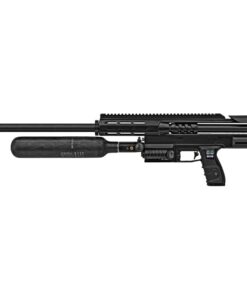

Reviews
There are no reviews yet.