Skout Evo PCP Air Rifle – Precision, Technology and Refined PCP Performance
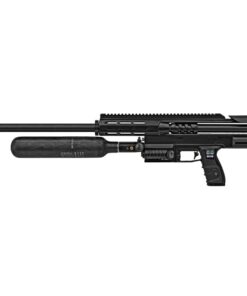
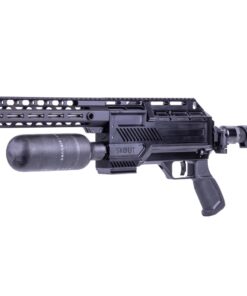
The Skout Evo PCP Air Rifle has been developed for shooters who expect sophisticated engineering, repeatable consistency, and extensive configuration potential from a premium pre-charged pneumatic platform. Rather than relying on a conventional mechanical layout alone, advanced electronic systems, externally adjustable regulation, and a carefully engineered barrel platform have been brought together to create a highly refined shooting experience.
From precision target sessions to competitive shooting environments, the Skout Evo PCP Air Rifle has been designed around control. Consequently, smooth shot delivery can be maintained while the rifle’s extensive adjustment options allow the platform to be configured around different shooting preferences.
Moreover, multiple calibres are supported. Therefore, shooters are given considerable flexibility when selecting a configuration suited to their intended sporting application.
Advanced Engineering Behind the Skout Evo PCP Air Rifle
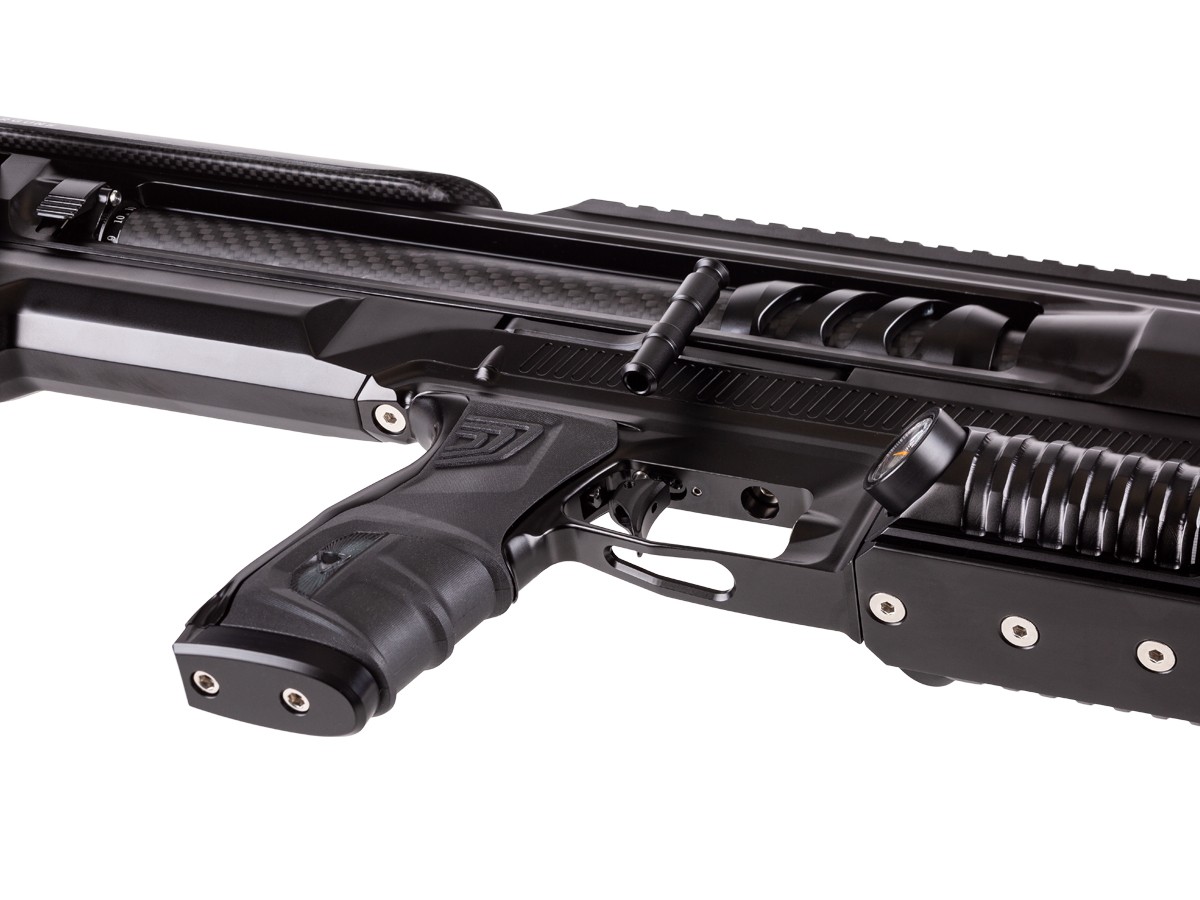
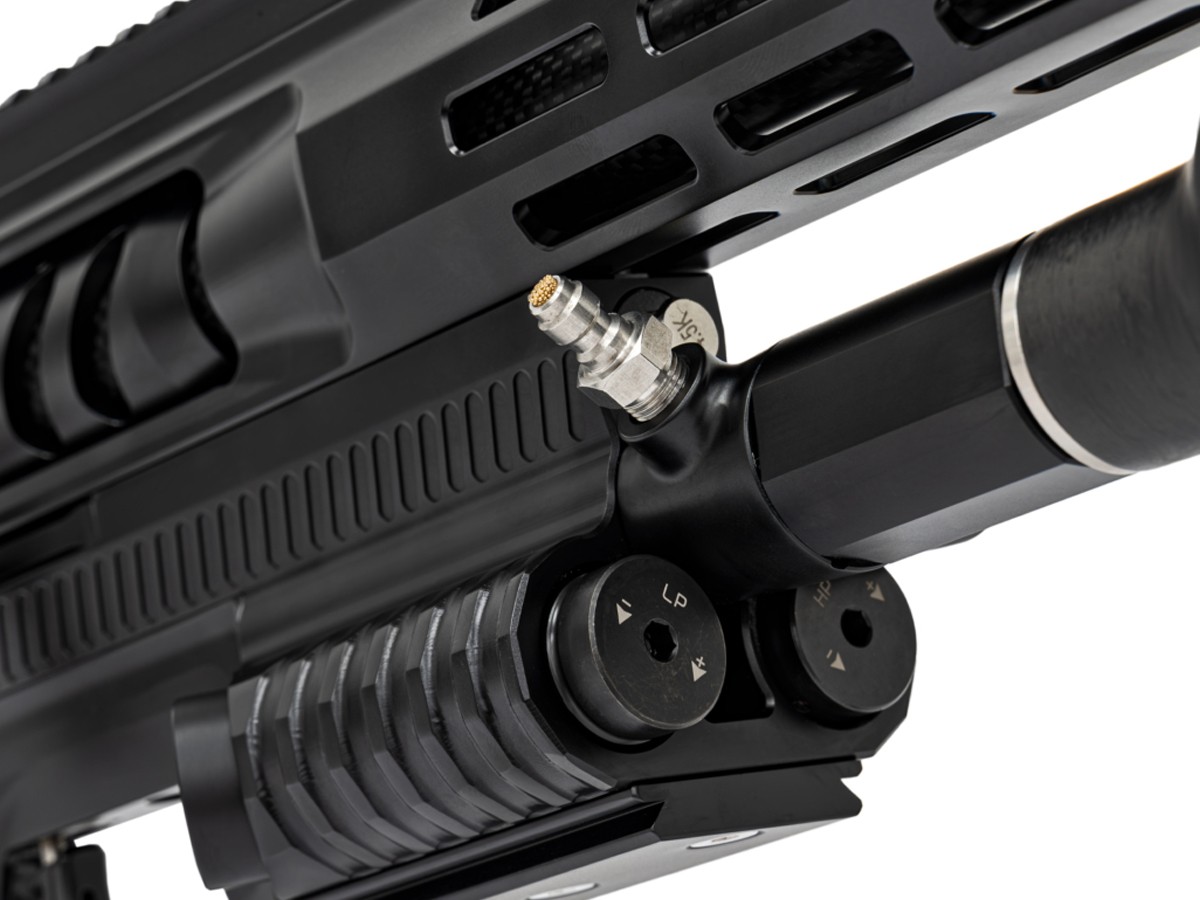
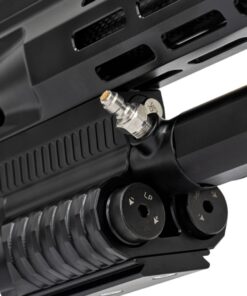
Considerable attention has been given to consistency throughout the Evo platform. A multi-pressure regulator system has been incorporated and can be externally adjusted, allowing the air-delivery system to be configured without unnecessary internal modification.
Additionally, a large 580 cc air capacity is provided. A maximum fill pressure of 4,500 psi is specified by SKOUT, helping provide the substantial compressed-air reserve expected from a high-performance PCP platform.
Meanwhile, the standard rifle is configured with a 28-inch barrel, although barrel specifications and available options can vary according to calibre and configuration.
Because precision remains central to the design, SKOUT states that its barrel configurations are extensively evaluated at its indoor 100-yard testing facility before production configurations are approved.
Electronic Control for a Refined Shooting Cycle
Instead of depending entirely on traditional mechanical operation, electronic control has been integrated into the Evo platform.
As a result, a highly controlled shooting cycle can be delivered. The electronic architecture also contributes to the distinctive character of the rifle and separates it from many conventional PCP designs.
An electronic safety system is included as well. Therefore, the complete rifle should always be operated according to the manufacturer’s instructions and applicable local regulations.
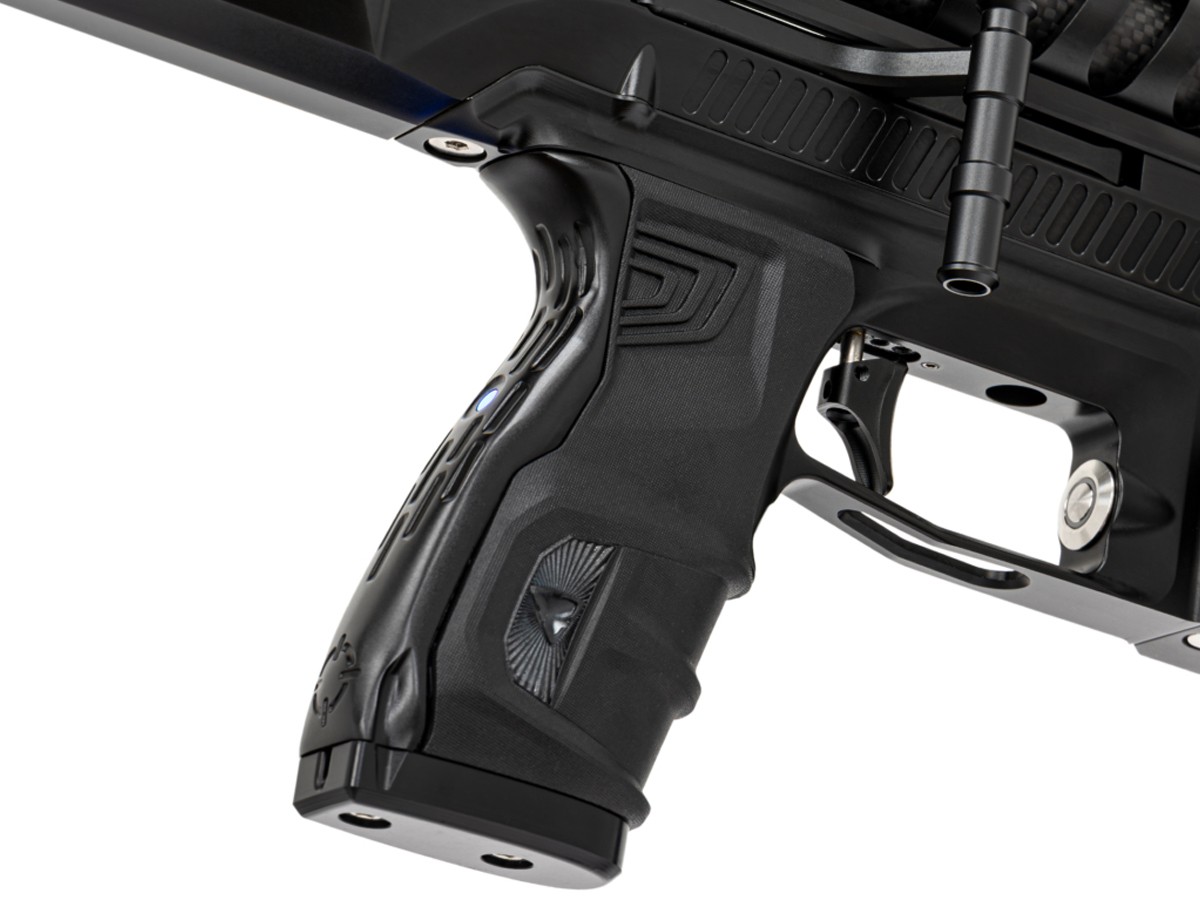
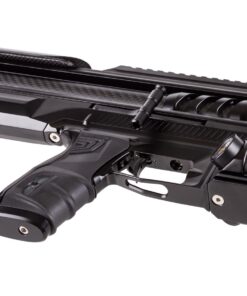
Furthermore, the manufacturer specifically advises careful handling because the Evo uses a sensitive match-grade electronic trigger system.
Skout Evo PCP Air Rifle Key Features
For buyers comparing premium PCP platforms, several important characteristics distinguish the Evo:
- Available calibres: .177, .22, .25, .30 and .357
- Standard barrel length: 28 inches
- Air capacity: 580 cc
- Maximum fill pressure: 4,500 psi
- Magazine capacity: 15 rounds
- Maximum listed power: up to 150 FPE, depending on configuration and calibre
- Shot count reference: approximately 90 shots using the manufacturer’s stated test configuration
- Externally adjustable multi-pressure regulator system
- Electronic safety system
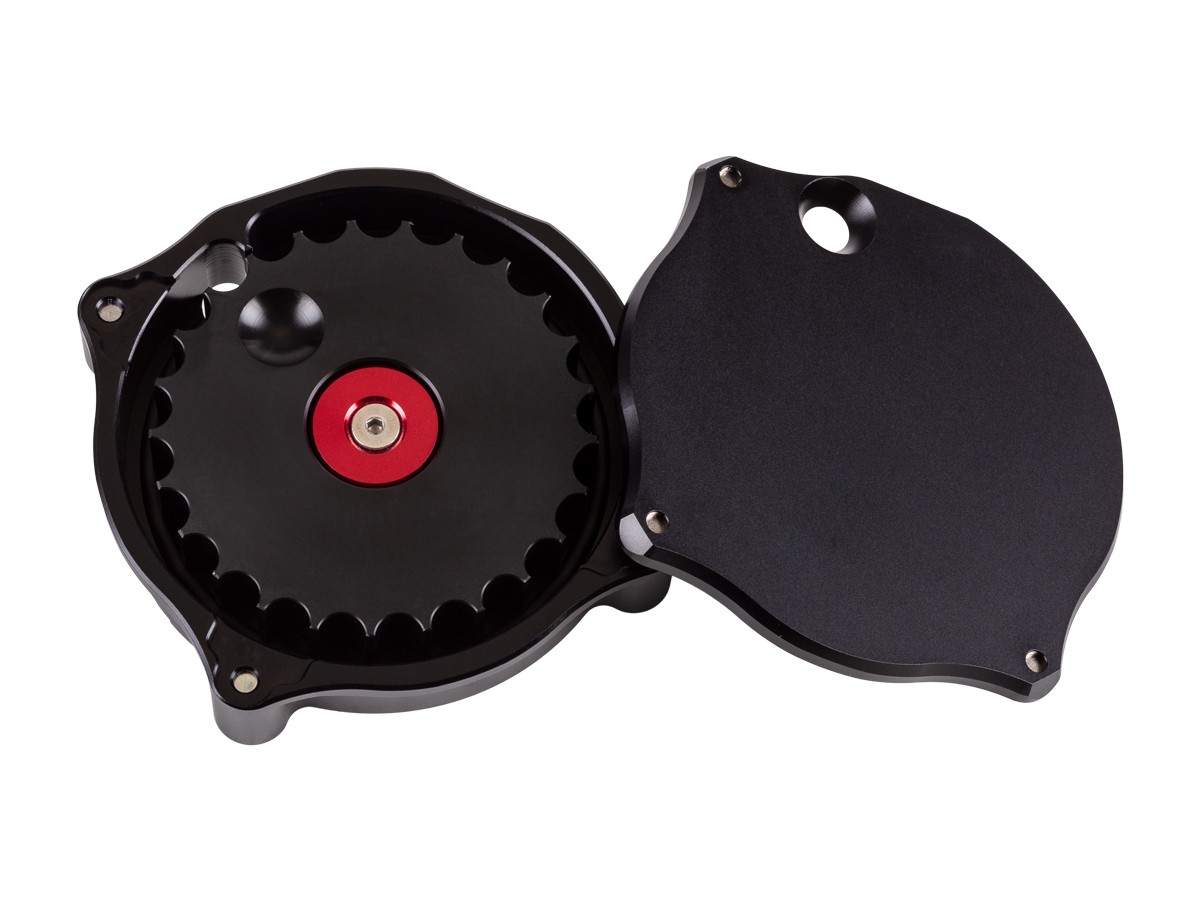
- Integrated 20 MOA optics rail
- Calibre-specific barrel twist rates
- Modular barrel options
- Precision-oriented chassis design
- Adjustable configurations available for different shooting disciplines
Actual velocity, energy and shot count will naturally vary according to calibre, projectile weight, barrel specification, regulator settings, environmental conditions and individual rifle configuration.
Multi-Calibre Flexibility
One major advantage of the Skout Evo PCP Air Rifle is the breadth of calibre options available across the platform.
Configurations are offered in .177, .22, .25, .30 and .357 calibre. Consequently, users can select a setup that better matches their lawful sporting or target-shooting requirements.
Smaller calibres may be preferred where efficient air consumption and precision-focused target shooting are priorities. Alternatively, larger calibres provide different projectile characteristics and energy levels.
However, applicable power restrictions, licensing requirements and permitted uses differ between countries and regions. Local regulations should therefore be checked before a particular configuration is selected or used.
Barrel Technology Designed Around Precision
A carefully developed barrel system is another important component of the Evo.
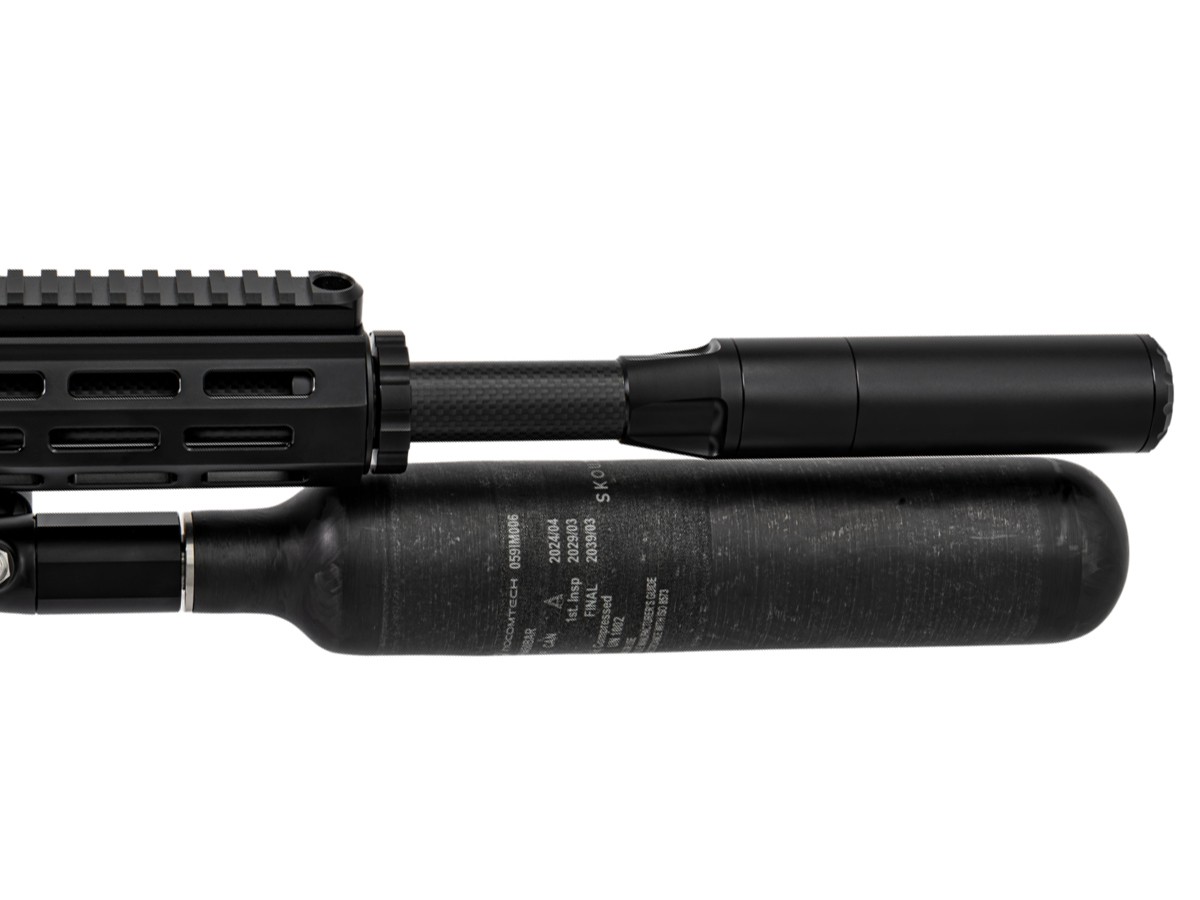
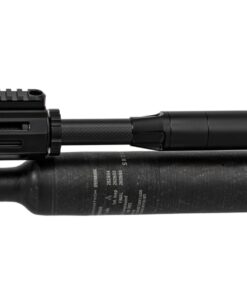
SKOUT uses its Hybrid Bull barrel concept on many configurations. Carbon-composite construction has been used around an alloy liner so that rigidity and vibration control can be maintained while unnecessary mass is reduced.
Additionally, selected Lothar Walther barrel options have been offered for certain calibres and projectile combinations.
Because barrel characteristics influence projectile stability, twist rates are matched to specific calibre configurations. This gives the Evo a more specialised approach than platforms where one general barrel philosophy is applied across every calibre.
Large-Capacity PCP Air System
Reliable air delivery is essential for any high-performance PCP rifle. Accordingly, the Evo has been equipped with a 580 cc air reservoir and a system capable of being filled to 4,500 psi.
That capacity is particularly useful during longer range sessions because repeated refilling can be reduced under suitable configurations.
Furthermore, externally adjustable regulation gives experienced users a greater degree of control over the system.
Any adjustment, filling procedure or servicing should nevertheless be completed strictly according to SKOUT’s instructions. High-pressure pneumatic equipment must always be handled correctly, and the rifle should never be disassembled while pressurised.
Ergonomic and Competition-Oriented Configuration
Performance involves more than velocity or energy. Consequently, ergonomics have also been considered throughout the Skout Evo PCP Air Rifle design.
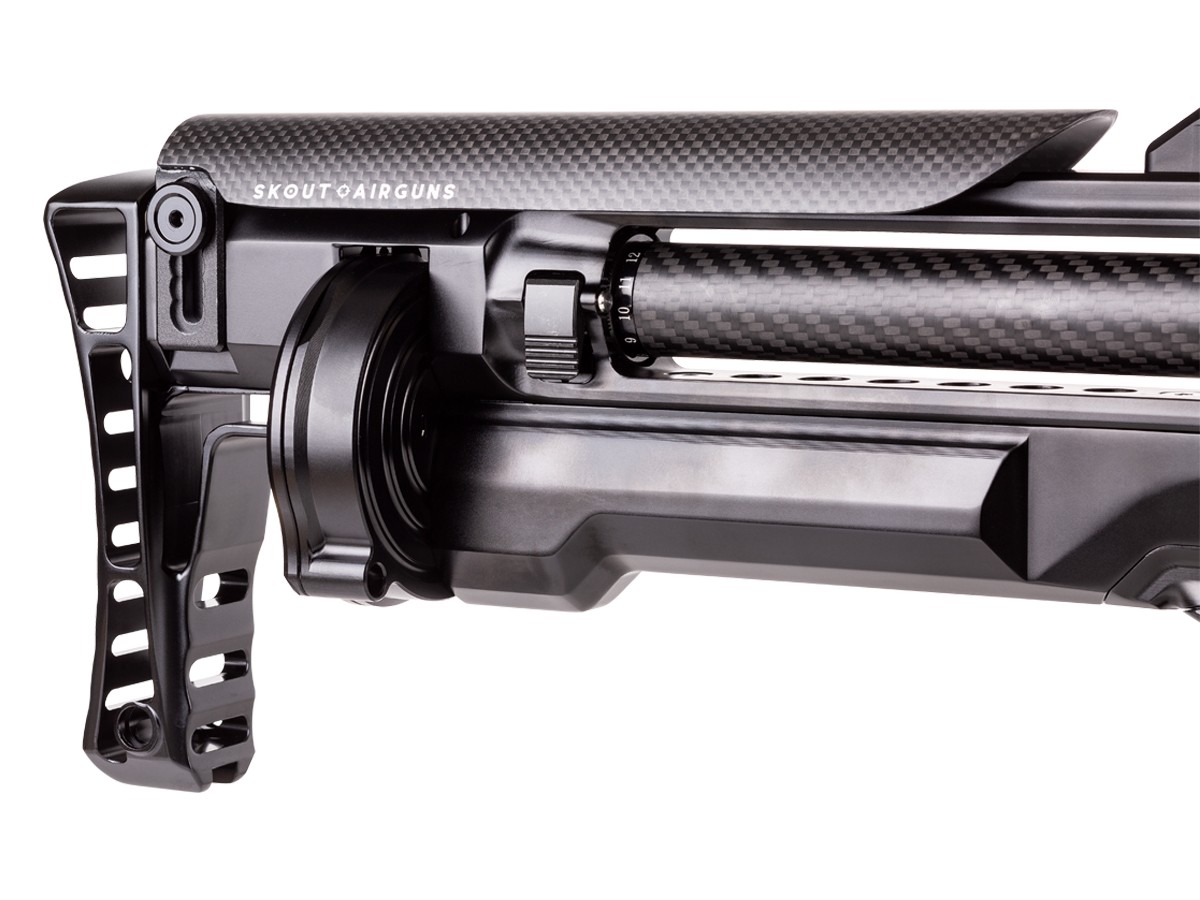
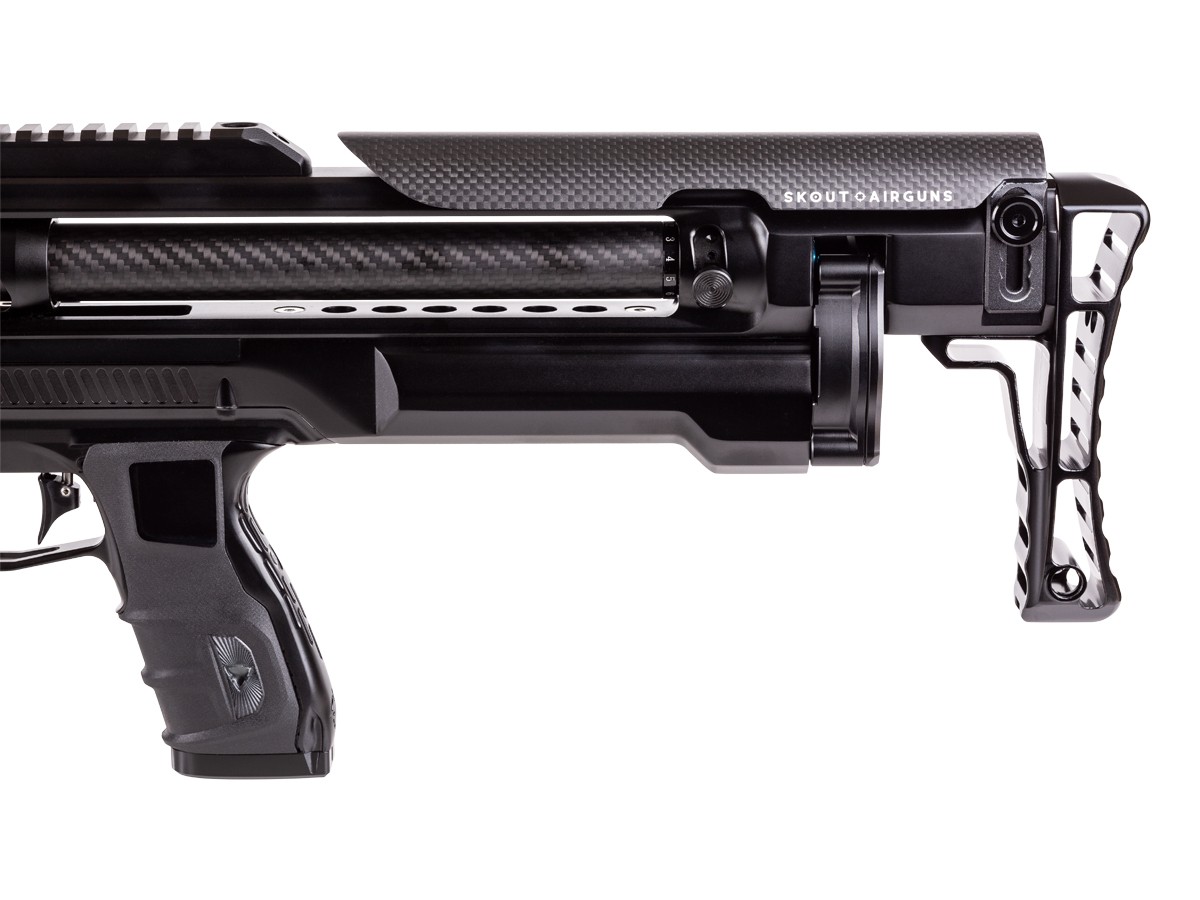
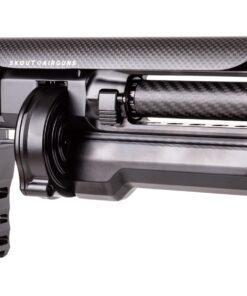
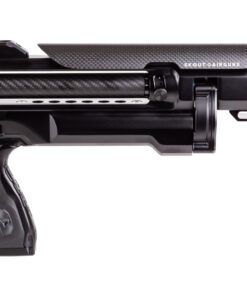
Different stock configurations are available, including skeletonised and adjustable benchrest-style options depending on current manufacturer availability.
An integrated 20 MOA optics rail is also provided on the rifle. This creates a solid mounting platform for compatible sighting equipment while supporting the precision-oriented nature of the system.
Meanwhile, the rifle’s layout has been engineered to provide a balanced shooting position despite the substantial air system and barrel assembly.
Consistency Across Repeated Shots
For precision shooters, repeatability is often more valuable than a single impressive shot.
Therefore, the Evo has been designed around controlled air delivery, regulated pressure management and a consistent electronic firing cycle. These systems work together so that predictable behaviour can be maintained throughout a shooting session when the rifle is properly configured.
The large air supply further supports this objective because adequate pressure can be maintained across numerous shots.
A Premium Platform Built for Experienced Shooters
The Skout Evo PCP Air Rifle occupies the premium end of the PCP market. Its appeal comes from the combination of electronic control, sophisticated pressure regulation, modular barrel technology and extensive configuration possibilities.
Rather than being designed as a basic introductory air rifle, it has been developed for users who appreciate advanced pneumatic engineering and want substantial adjustment potential.
Competitive shooters can benefit from its precision-oriented architecture. Likewise, experienced recreational shooters may appreciate the refined shot cycle, configurable ergonomics and multiple calibre choices.
Most importantly, each configuration can be approached according to its intended lawful shooting discipline rather than treating every calibre and setup as identical.
Why the Skout Evo Stands Apart
Few PCP rifles combine a high-capacity air system, electronic architecture, multi-calibre availability and externally adjustable regulation in the same platform.
Furthermore, the Evo has been developed as a system rather than simply as a fixed rifle. Barrel choices, calibre configurations, stock options and supporting accessories allow different versions to be created around different shooting requirements.
Consequently, long-term versatility is one of the platform’s strongest characteristics.
Skout Evo PCP Air Rifle – Refined Performance in a Modern Platform
Precision, adjustability and advanced engineering have been combined throughout the Skout Evo PCP Air Rifle.
With calibre choices ranging from .177 through .357, a 580 cc reservoir, 4,500 psi maximum fill pressure, a 15-round magazine, electronic operation and an externally adjustable multi-pressure regulator system, the Evo provides a technically sophisticated foundation for serious sporting use.
Equally important, its modular design allows the rifle to be configured around different shooting disciplines while retaining the distinctive engineering principles of the Evo platform.
For shooters researching a premium PCP air rifle with advanced electronic control, substantial air capacity, configurable ergonomics and precision-focused barrel technology, the Skout Evo PCP Air Rifle represents a highly developed modern airgun platform.
Always operate, transport and store the rifle responsibly, follow the manufacturer’s safety instructions, and comply with all applicable licensing, age, power and airgun regulations in your jurisdiction.
Snowpeak Airguns, PCP Rifles, Air Pistols and Umarex Airguns
For shooters researching Snowpeak airguns, Snowpeak Sports, and the wider Snowpeaks product range, there are many PCP rifles, air pistols, and shooting accessories to consider. Popular searches include the Snowpeak AP900, Snowpeak AP900B PCP air rifle, Snowpeak MAX 1, Snowpeak MAX 1 price, Snowpeak PP750, PP750, Snow Peak PP750, and PP750 air pistol. Buyers also regularly compare models such as the Snowpeak P35, P35, P 35, PCP P 35, Snowpeak P35X, P35X, P35X PCP, and Snowpeak P35 vs P35X.
Other Snowpeak models attracting attention include the Snow Peak PP20, Snowpeak PP20, Snowpeak M25, M25 rifle, M-25, M25 weapon, Snowpeak M60, Snowpeak M60B, M 60B, rifle M60, rifle M50, and M50 rifle. Searches such as Snow Peak brand origin are also common among buyers who want to understand the manufacturer before choosing a rifle or pistol.
Snowpeak PCP Models and Related Airgun Searches
The PCP category covers everything from compact pistols to full-size hunting and target rifles. Searches frequently include PR900 Gen 3, CR650, SR 1000X, T Rex 6000, and pistolet PCP Arcea-Snowpeak Onix Sport. People comparing pneumatic platforms may also search what is a PCP airgun, air gun, air rifle, pellet pistol, air gun accessories, 9mm pellet, and pellet 9mm.
Some search phrases overlap with firearm terminology even when shoppers are researching airgun products. These include rifle M60, how much did the M60 weigh, rifle M50, M50 rifle, M25 weapon, and snowfall gun. Therefore, model specifications should always be checked carefully so that a historical firearm search is not confused with a modern sporting airgun product.
Umarex Airguns, Air Rifles, Pistols and PCP Platforms
Alongside Snowpeak products, Umarex USA, UmarexUSA, Umarex airguns, and Umarex air rifles are widely searched by recreational shooters, target shooters, and PCP enthusiasts. The Umarex range includes PCP rifles, CO₂-powered platforms, break-barrel pistols, BB guns, airsoft replicas, and large-caliber airgun systems.
Popular PCP searches include Umarex Notos, Umarex Notos Carbine, Umarex Gauntlet, Umarex Gauntlet 2, Umarex Gauntlet 30, Umarex Zelos, Umarex Origin, Umarex Komplete, and Umarex Komplete NCR .22. Hunters researching larger airgun platforms may also encounter the Umarex Hammer, Umarex Hammer .50 caliber, Umarex Hammer Carbine, Umarex Primal 20, and Umarex AirSaber.
Umarex Pistols, BB Guns and T4E Models
For handgun-style platforms, popular searches include Umarex BB gun, BBgun, BB gun pistol, metal BB gun, Umarex TR50, Umarex HDR 50, Umarex T4E, Umarex T4E Smith, Umarex Smith, and Umarex P2P DR50 how many joules.
Glock-style replicas remain another major category. Search terms include Glock BB gun, Glock 19 BB gun, Umarex Glock 19, Umarex Glock 19X, Umarex Glock 19 Gen3 .177 caliber BB gun air pistol, Umarex Glock 17, Umarex Glock 17 Gen 5, Umarex Glock, airsoft Glock, airsoft Glock 19, Glock 17 airsoft, and Glock airsoft gun.
Other replica and recreational searches include Umarex MP40, Umarex MP5, Umarex Legends, Umarex HK Heckler, Umarex shotgun, and airsoft pistol.Umarex DX17.
Break-Barrel and Sporting Umarex Airguns
Shooters looking for spring or gas-piston platforms frequently research the Umarex Trevox, loading Umarex Trevox break barrel .177, Umarex pistol break barrel, Umarex Fusion 2, Umarex Synergis Elite, and Amazon Umarex Browning 800 Express. These platforms provide alternatives for people who want an airgun without relying on a high-pressure PCP charging system.
Additional searches across the Umarex catalog include Umarex H, while broader terms such as air rifle, pellet pistol, air gun, and air gun accessories help buyers compare platforms, ammunition, optics, filling equipment, targets, cases, and other shooting equipment.
Whether the focus is a Snowpeak M60, Snowpeak M25, Snowpeak P35X, Snowpeak PP750, Snowpeak MAX 1, Umarex Notos, Umarex Gauntlet 2, Umarex Origin, or Umarex Hammer Carbine, buyers should compare caliber, operating system, power level, dimensions, intended use, and local regulations before selecting an airgun.
Frequently Asked Questions About the Skout Evo PCP Air Rifle
What is the Skout Evo PCP Air Rifle?
The Skout Evo PCP Air Rifle is a premium pre-charged pneumatic platform designed around precision shooting, electronic control, adjustable air management, and multi-calibre flexibility. Rather than following a purely traditional mechanical PCP layout, the Evo incorporates electronically managed firing components and an externally adjustable regulation system.
Its overall design is aimed primarily at shooters who want a highly configurable rifle for target shooting, competition, recreational range use, and other lawful sporting applications. The combination of a large-capacity air system, precision-focused barrel technology, adjustable ergonomics, and modern electronics gives the rifle a distinctive position within the premium PCP category.
Because different configurations are available, specifications such as calibre, barrel type, power output, shot count, and stock arrangement can vary.
What calibres are available for the Skout Evo?
The platform is available in several popular PCP calibres, including .177, .22, .25, .30, and .357. This broad calibre range allows shooters to select a configuration suited to their preferred shooting discipline and local legal requirements.
For example, smaller calibres are commonly selected for precision target shooting because of their efficient air consumption and generally flatter trajectories over appropriate ranges. Larger calibres provide heavier projectile options and increased energy where legally permitted.
Before purchasing a particular version, buyers should always confirm the exact calibre configuration, local power restrictions, and any applicable licensing requirements.
Is the Skout Evo suitable for target shooting?
Yes. Precision target shooting is one of the areas where the platform is especially well suited.
Its regulated air system, electronic firing architecture, stable chassis design, and precision barrel options are intended to support repeatable performance. When the rifle is properly configured and paired with suitable ammunition, consistent shot placement can be achieved across extended shooting sessions.
Competitive shooters may also appreciate the adjustable stock configurations and integrated optics rail, which make it easier to tailor the rifle around individual shooting positions.
Does the Skout Evo use an electronic trigger?
Yes. An electronic trigger and firing system form an important part of the rifle’s design.
Electronic control can help deliver a consistent firing cycle because fewer traditional mechanical variables are involved in the release process. This design also contributes to the rifle’s distinctive feel compared with more conventional PCP platforms.
Because the trigger system can be sensitive, users should always follow the manufacturer’s handling instructions. The rifle should be treated as ready to fire whenever it is loaded and should always be pointed in a safe direction.
What is the air capacity of the rifle?
The rifle uses a large 580 cc compressed-air capacity in standard configurations.
This substantial volume helps support longer shooting sessions before refilling becomes necessary. Actual shot count will depend on several variables, including calibre, regulator pressure, projectile weight, power configuration, environmental conditions, and the individual rifle setup.
A smaller calibre operating at moderate power will generally use less air per shot than a larger-calibre high-energy configuration.
What is the maximum fill pressure?
The platform is designed around a maximum fill pressure of approximately 4,500 psi, depending on the exact configuration and manufacturer specifications.
Because this is a high-pressure pneumatic system, only suitable filling equipment should be used. The equipment must be rated for the required pressure, and all filling procedures should follow the manufacturer’s safety guidance.
Users should never attempt to modify, dismantle, or service a pressurised air system without proper knowledge and equipment.
How many shots can I expect from one fill?
Shot count varies considerably according to configuration.
Factors such as calibre, projectile weight, regulator settings, operating pressure, barrel length, and desired muzzle energy all influence air consumption. Under efficient configurations, a substantial number of regulated shots may be achieved from the 580 cc air supply.
However, advertised shot counts should be treated as configuration-specific reference figures rather than guaranteed results for every setup.
Shooters should evaluate consistency across the usable pressure range rather than focusing only on the maximum possible number of shots.
Does the rifle have an adjustable regulator?
Yes. An externally adjustable multi-pressure regulation system is one of the notable features of the platform.
Regulation helps control how compressed air is delivered during each shot. Properly configured regulation can contribute to improved consistency, predictable velocity, and efficient use of the available air supply.
Adjustments should be made carefully and only within the manufacturer’s recommended parameters. Different ammunition and calibre combinations may respond differently to changes in regulator pressure.
What barrel length does the Skout Evo use?
A 28-inch barrel is commonly supplied in standard configurations.
However, barrel options may vary according to calibre, market, or selected package. Different barrel systems may also be offered for particular projectile types and shooting applications.
Longer barrels can provide advantages in some PCP configurations because compressed air has additional time to accelerate the projectile. Nevertheless, overall performance depends on much more than barrel length alone.
What type of barrel does the rifle use?
The platform has been offered with advanced barrel configurations designed around precision and rigidity.
Hybrid barrel technology may combine lightweight structural materials with a precision liner. Certain configurations may also be available with specialist barrels from recognised barrel manufacturers.
The exact barrel specification should always be confirmed for the individual rifle before purchase because options can differ between calibres and production configurations.
Does the Skout Evo come with a magazine?
Yes. Magazine-fed operation is supported, and standard configurations may use a 15-round magazine.
Capacity can vary according to calibre and magazine design, so buyers should confirm the specification for their chosen version.
A removable magazine allows multiple pellets or slugs to be prepared before a shooting session, which can improve convenience during target practice or competition.
Can single-shot loading be used?
Depending on the available accessories and configuration, single-shot loading may be possible.
Some precision shooters prefer loading one projectile at a time because it provides greater control over projectile handling and can simplify certain competition routines.
Buyers who specifically require a single-shot tray should verify compatibility with their calibre and rifle configuration before ordering.
Can scopes be mounted on the rifle?
Yes. The rifle incorporates an optics mounting system suitable for compatible scopes and sighting equipment.
A 20 MOA rail is commonly associated with the platform. This inclined rail can provide additional scope adjustment range for shooters using optics at longer target distances.
The correct rings should always be selected according to the scope tube diameter, objective size, desired mounting height, and rail standard.
Is the stock adjustable?
Adjustability is a significant part of the rifle’s ergonomic design.
Depending on the selected stock configuration, shooters may be able to alter elements such as cheek support, length of pull, shoulder positioning, or rear support geometry.
These adjustments are particularly useful during precision shooting because consistent head placement and shoulder contact can improve repeatability.
Different stock variants may be available, so specifications should be checked before purchase.
Is the rifle suitable for competition use?
The platform has several characteristics that make it attractive for competitive shooting.
Its regulated pneumatic system, electronic firing mechanism, stable construction, adjustable ergonomics, and precision-focused barrel system can support disciplines where shot-to-shot consistency is important.
Competition suitability ultimately depends on the rules of the specific discipline. Power limits, calibre restrictions, rifle weight, overall dimensions, and equipment classifications should therefore be verified before entering an event.
Can different pellets and slugs be used?
Compatible pellets and slugs may be used depending on calibre, barrel configuration, and manufacturer recommendations.
However, not every projectile will perform equally well. Weight, diameter, head size, shape, ballistic coefficient, and barrel twist rate can all influence accuracy.
Shooters often achieve better results by testing several appropriate projectile types and comparing group consistency at the distances they normally use.
Only ammunition specifically designed for the rifle’s calibre should ever be used.
How powerful is the Skout Evo?
Power output depends heavily on calibre and configuration.
Higher-energy versions can produce substantially more muzzle energy than lower-powered target configurations. Some configurations may reach energy levels approaching 150 foot-pounds, while others may be designed around significantly lower output.
Regional laws can impose strict limits on airgun power. Buyers should therefore select only configurations that comply with the laws applicable where the rifle will be possessed and used.
Is the Skout Evo quiet?
PCP rifles generally produce less mechanical noise than many conventional firearm systems, although muzzle report can still be significant, especially at higher power levels.
Perceived sound depends on calibre, projectile, power setting, barrel configuration, surroundings, and any legally permitted sound-moderating equipment.
Shooters should use suitable hearing protection whenever sound levels warrant it and should follow all local regulations regarding accessories.
Is the rifle beginner friendly?
The Evo can be operated safely by a properly trained user, but its advanced adjustment systems make it particularly appealing to experienced PCP shooters.
Beginners may need time to understand regulator settings, fill pressure, electronic controls, ammunition selection, and safe high-pressure air handling.
Anyone new to PCP rifles should begin with the manufacturer’s manual, learn safe filling procedures, and avoid changing factory settings until the basic operating principles are fully understood.
What accessories are useful with the rifle?
Several accessories can improve the ownership experience.
A suitable scope, quality rings, approved high-pressure filling equipment, a secure rifle case, compatible magazines, cleaning equipment, and appropriate ammunition are among the most useful additions.
A stable shooting rest or bipod may also be useful for precision range work where permitted.
Accessories should always be checked for compatibility with the exact calibre and configuration.
What filling equipment is required?
The rifle requires a source of clean, dry, high-pressure air that can safely reach the specified operating pressure.
Suitable options may include an appropriately rated PCP compressor or certified high-pressure cylinder system.
Moisture-contaminated air should be avoided because internal corrosion can potentially damage high-pressure pneumatic components over time.
Every hose, fitting, valve, and gauge should also be rated for the pressures involved.
How should the rifle be stored?
The rifle should be stored unloaded, secured, and inaccessible to unauthorised users.
A locked gun cabinet or secure storage solution is recommended where appropriate. Ammunition should also be stored responsibly.
Extreme humidity, excessive heat, and corrosive environments should be avoided. Exterior metal components can be wiped with an appropriate protective cloth after handling, particularly in humid climates.
Any pressure-related storage recommendations provided by the manufacturer should also be followed.
How often does the rifle require maintenance?
Maintenance frequency depends on how often the rifle is used and the conditions in which it operates.
Routine care generally includes keeping the rifle clean, inspecting seals and fittings, maintaining the barrel appropriately, checking mounting hardware, and ensuring that filling equipment remains clean and serviceable.
Excessive lubrication should be avoided unless specifically recommended. Petroleum-based products should never be introduced into high-pressure air systems unless the manufacturer explicitly approves them.
Complex internal servicing should be performed by qualified technicians.
Can the calibre be changed?
The Evo platform has been designed with modularity in mind, and different calibre configurations are available.
However, converting between calibres may require multiple compatible components rather than simply installing another barrel. Magazine dimensions, barrel systems, electronic settings, pressure configuration, and other components may need to match the intended calibre.
Only approved conversion components and manufacturer procedures should be followed.
What makes the Skout Evo different from traditional PCP rifles?
Its combination of advanced pneumatic regulation and electronic operation creates the main distinction.
Traditional PCP rifles often rely primarily on mechanical trigger and valve systems. In contrast, the Evo integrates electronic control with a highly configurable air-delivery system.
Additionally, its large air capacity, precision barrel options, multi-calibre architecture, adjustable ergonomics, and optics-ready chassis make it a highly specialised platform.
Does weather affect PCP performance?
Temperature can influence compressed-air behaviour and projectile performance.
Changes in temperature may affect pressure, lubricant viscosity, seals, ammunition characteristics, and atmospheric conditions. Wind, humidity, and air density can also influence external ballistics.
For the most consistent target results, shooters should account for environmental conditions and verify point of impact when conditions change significantly.
Can the rifle be used for hunting?
Whether the rifle may legally be used for hunting depends entirely on local regulations, permitted species, calibre requirements, minimum energy requirements, and licensing rules.
Where airgun hunting is lawful, users must select an appropriate configuration and suitable ammunition while following all applicable wildlife and firearm laws.
Ethical shot placement and adequate projectile performance are essential whenever an air rifle is legally used for pest control or hunting.
Is the Skout Evo suitable for long-range target shooting?
The platform can be configured for extended-distance precision work where suitable facilities and legal conditions are available.
The 20 MOA optics rail, regulated air system, high-quality barrel options, and heavier projectile compatibility in selected calibres can all support longer-distance target shooting.
Nevertheless, accuracy at extended range depends greatly on ammunition quality, wind reading, scope setup, shooter technique, and consistent rifle configuration.
Should the rifle be tuned immediately after purchase?
Not necessarily.
Factory settings provide a useful baseline for evaluating the rifle. Shooters should first become familiar with its behaviour and test suitable ammunition before making unnecessary changes.
If adjustments are eventually required, only manufacturer-approved procedures should be used. Methodical changes are preferable because altering multiple variables simultaneously can make it difficult to determine which adjustment affected performance.
Who is the Skout Evo best suited for?
The rifle is especially well suited to enthusiasts seeking a technologically advanced PCP platform with substantial adjustment potential.
Precision shooters, experienced recreational users, competitors, and technically minded airgun owners may particularly appreciate its electronic controls, externally adjustable regulation, modular barrel options, large air supply, and configurable ergonomics.
For anyone looking for a premium PCP air rifle built around repeatability, modern engineering, and multi-calibre flexibility, the Skout Evo offers a sophisticated platform that can be adapted to a wide range of lawful sporting and target-shooting applications.
Skout Evo PCP Air Rifle Calibres, FAC Power and Accessories
The Skout Evo PCP Air Rifle has been designed as a flexible high-performance platform rather than a rifle restricted to one calibre or one shooting discipline. Multiple calibre choices, interchangeable barrel options, a substantial regulated air system, and a wide selection of compatible accessories allow the Evo to be configured around precision target shooting, competition, recreational range use, and other lawful applications.
Because specifications vary between calibre configurations, buyers should always confirm the exact rifle setup being ordered. Local rules concerning airgun power, licensing and FAC classification must also be considered before selecting a higher-powered model.
Available Skout Evo Calibres
Five principal calibre options are currently listed for the platform:
- .177 calibre
- .22 calibre
- .25 calibre
- .30 calibre
- .357 calibre
- 580 cc air capacity
- 4,500 psi maximum fill pressure
- 15-round magazine capacity
- 28-inch standard barrel
- Up to 150 FPE maximum listed power
- Externally adjustable multi-pressure regulation
- Electronic safety
- Integrated 20 MOA optics rail
Each calibre provides different characteristics in terms of projectile weight, air consumption, trajectory and available energy.
.177 Calibre
The .177 version is particularly relevant for precision-oriented shooting where economical air consumption and relatively flat trajectories are valued.
Lightweight pellets can achieve useful velocities without requiring the same air volume demanded by substantially heavier projectiles. Consequently, this calibre can be attractive for target work and disciplines where .177 is commonly permitted.
Actual velocity and energy depend on the individual setup and should never be assumed from calibre alone.
.22 Calibre
For many shooters, .22 calibre provides a versatile balance between projectile weight, efficiency and retained energy.
SKOUT currently lists a premium Lothar Walther .22 barrel option with polygonal rifling. The manufacturer’s current EVO configurator specifies a 25-inch option with a 1:15.75 twist, while its published upgrade-barrel information also references 28-inch configurations depending on availability. Therefore, the exact barrel supplied should be checked when ordering.
This calibre can accommodate both pellets and suitable slugs when used with a compatible barrel.
.25 Calibre
The .25 calibre EVO provides increased projectile mass compared with .177 and .22 versions.
Its additional projectile weight can be useful where greater retained energy is desired while still maintaining manageable air consumption. SKOUT also lists a Lothar Walther polygonal barrel option for .25 calibre, with current specifications varying by barrel configuration.
Correct projectile selection remains important because barrel design, twist rate and projectile dimensions all affect performance.
.30 Calibre
Moving into .30 calibre provides a substantially heavier projectile platform.
SKOUT lists a Lothar Walther polygonal .30 barrel with a 1:24 twist in current EVO options. Manufacturer information identifies this particular upgrade barrel primarily for pellet use.
Because higher-energy configurations consume more compressed air, the EVO’s large reservoir and regulation system become increasingly useful as calibre and projectile weight increase.
.357 Calibre
At the upper end of the standard EVO calibre range sits .357.
This configuration can operate at considerably greater energy levels than the smaller-calibre versions. Consequently, it is particularly important to confirm local legal requirements before purchasing or operating one.
Powerful air rifles may be treated differently from ordinary low-powered airguns depending on the country or jurisdiction.
FAC and High-Power Configuration
The term FAC generally refers to higher-powered air rifles in jurisdictions where power above a prescribed threshold requires a firearm certificate or equivalent authorization.
Therefore, an FAC specification should not be interpreted as one universal power setting. Instead, classification depends on local legislation.
The Evo platform is capable of significant output, and SKOUT currently publishes a maximum power figure of up to 150 FPE for the platform. That figure represents maximum listed capability rather than the guaranteed energy produced by every calibre or setup.
Smaller calibres may be configured at substantially lower energy levels, while larger-calibre configurations may operate much closer to the platform’s upper performance range.
Accordingly, buyers should verify the actual muzzle energy of the specific rifle being purchased.
Adjustable Air Management
Power consistency is supported by an externally adjustable multi-pressure regulator system.
The regulator helps control the quantity and pressure of compressed air delivered during the firing cycle. Consequently, an appropriately configured rifle can maintain improved consistency across a usable pressure range.
Nevertheless, internal components should not be modified casually. SKOUT specifically warns against changing internal components unless directed by its documentation because inappropriate adjustments may affect safety and reliability.
The rifle operates with an air capacity of approximately 580 cc and a maximum fill pressure of 4,500 psi, giving the platform substantial stored-air capacity for demanding configurations.
Barrel and Calibre Accessories
One of the most attractive characteristics of the EVO is its modular barrel architecture.
SKOUT’s Hybrid Bull design combines carbon-fibre construction with an alloy structure to reduce weight and dampen vibration while maintaining barrel rigidity. The manufacturer also offers selected full-steel or Lothar Walther upgrade barrels according to calibre and application.
Calibre kits and compatible barrel systems can therefore make the rifle more adaptable over time.
Where a calibre conversion is planned, owners should use manufacturer-approved components rather than assuming that replacing only the barrel will complete the conversion.
Optics and Mounting Accessories
A built-in 20 MOA optics rail provides a stable mounting interface for compatible scopes.
A quality telescopic sight can complement the EVO’s precision-oriented design, while suitable scope rings should be matched to both the optic and rail system.
Depending on the shooting discipline, compatible accessories may also include:
- Precision rifle scopes
- Scope rings and mounting hardware
- Bipods
- Tripods
- ARCA-compatible accessories
- Shooting bags and rear rests
- Additional magazines
- Approved calibre kits
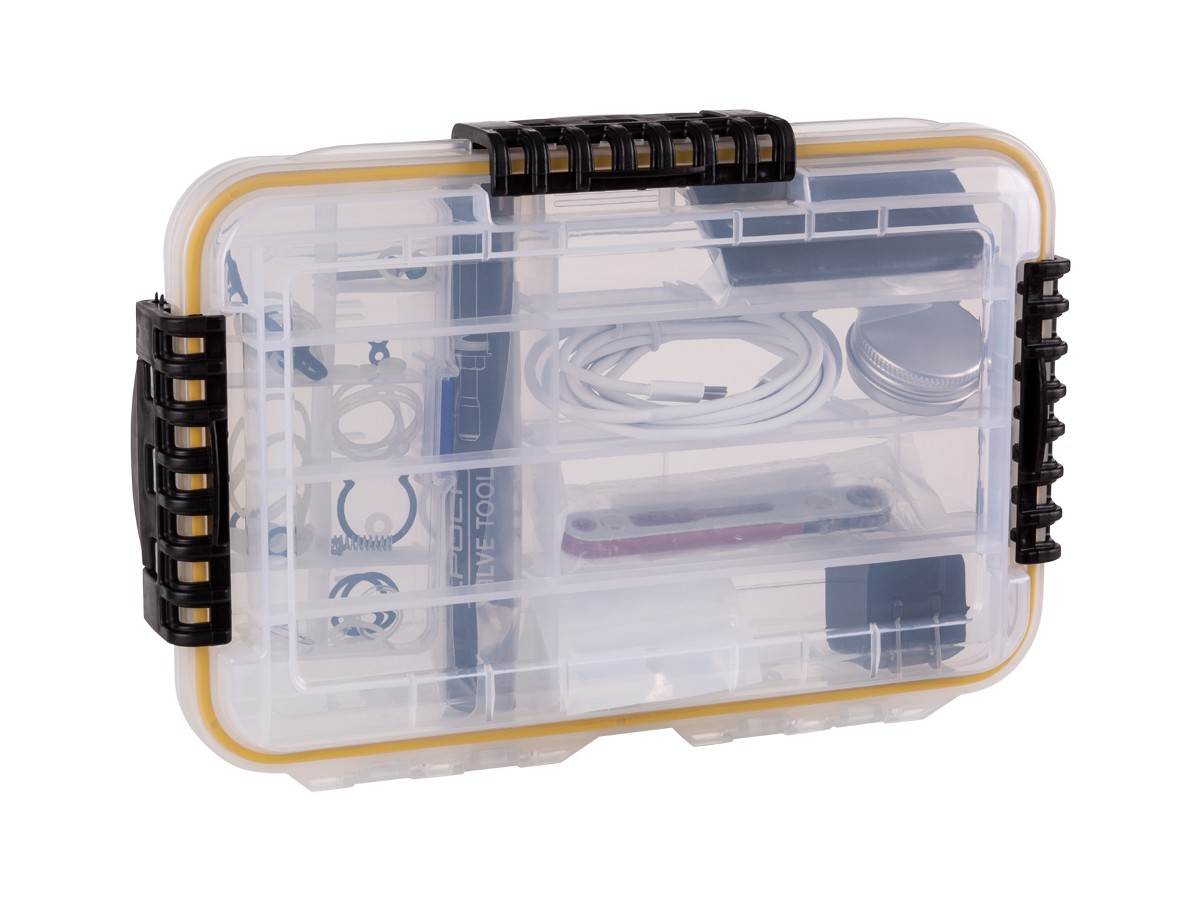
- Protective transport cases
- High-pressure filling equipment
SKOUT currently lists accessories including calibre kits, EVO/EPOCH magazines, tripods, ARCA rails, ARCA weights and rear rests.
Stock and Support Options
Different shoulder-support systems can also be selected.
The EVO is available with SKOUT’s Skeletonized Shoulder Rest, while an adjustable benchrest stock is offered as another configuration through the manufacturer’s current ordering system.
The skeletonised design is manufactured from solid billet aluminium and uses a hard-anodised finish. Such configurations help shooters establish a repeatable shoulder position without introducing unnecessary bulk.
Air-Filling Accessories
Because the rifle works at very high pressure, filling equipment deserves particular attention.
An appropriately rated PCP compressor or high-pressure cylinder system should be used. Hoses, fittings and gauges must also be rated for the required operating pressure.
SKOUT currently offers different air-source sizes, including 500 cc and 580 cc options, depending on selected configuration.
Clean, dry compressed air should always be used, and the rifle should never be disassembled while pressurised.
Building the Right Evo Configuration
Ultimately, the Skout Evo PCP Air Rifle allows considerable flexibility when calibre, power, barrel technology and accessories are selected together.
A .177 setup can emphasise efficient precision shooting, while .22 and .25 configurations provide versatile intermediate choices. Meanwhile, .30 and .357 versions allow considerably heavier projectiles and potentially greater energy where permitted.
Combined with up to 150 FPE, a 580 cc air supply, electronic operation, multi-pressure regulation, interchangeable barrel options, 15-round magazines and an extensive accessory ecosystem, the EVO provides a sophisticated foundation for shooters seeking a configurable premium PCP platform.
Exact power, legal classification and permissible use should always be confirmed for the specific calibre and jurisdiction before purchase or operation.
Frequently Asked Questions
What is the Skout Evo PCP Air Rifle designed for?
The Skout Evo PCP Air Rifle is designed for precision-oriented recreational shooting, competition, target practice, benchrest applications, and other lawful sporting uses. Its combination of electronic control, regulated air delivery, multi-calibre flexibility, and adjustable ergonomics gives shooters a platform that can be configured around different disciplines. Rather than functioning as a basic fixed-output PCP, it has been engineered to provide extensive control over how the rifle is set up and used.
Which calibres are available?
The platform is commonly offered in .177, .22, .25, .30, and .357 calibre configurations. Each calibre has different advantages in terms of projectile weight, trajectory, air consumption, and potential energy output.
Smaller calibres are often chosen for precision target shooting and economical practice, while larger calibres accommodate heavier projectiles and higher energy where permitted by local regulations. Buyers should always confirm the exact configuration available before ordering.
Is the rifle available in FAC configurations?
Yes, higher-powered configurations are available in markets where such rifles can legally be owned and used.
However, the meaning of FAC varies by jurisdiction. In some countries, rifles exceeding a specified muzzle-energy threshold require a firearm certificate or another form of authorization. Therefore, the legal classification of a particular rifle should always be confirmed before purchase.
A rifle should never be assumed to be unrestricted simply because it is sold as an airgun.
How powerful is it?
Power depends on calibre, regulator configuration, projectile weight, barrel setup, and the individual version being used.
Higher-energy configurations can produce substantially more muzzle energy than lower-powered target versions. The platform has been associated with outputs reaching approximately 150 foot-pounds in selected configurations, although this should not be interpreted as the standard output of every rifle.


Reviews
There are no reviews yet.