Calibres, FAC Status, Power Output and Accessories for the Seneca Double Shot Essentials Combo
A single .50 calibre is employed by the Seneca Double Shot Essentials Combo. Consequently, shotshells, slugs, round balls and Air Venturi Air Bolts can all be launched from the same dual-barrel platform. Because no other factory calibre is offered, ammunition selection rather than barrel change is used to match the quarry and the range.
.50 Calibre Versatility That Is Built Into the Platform
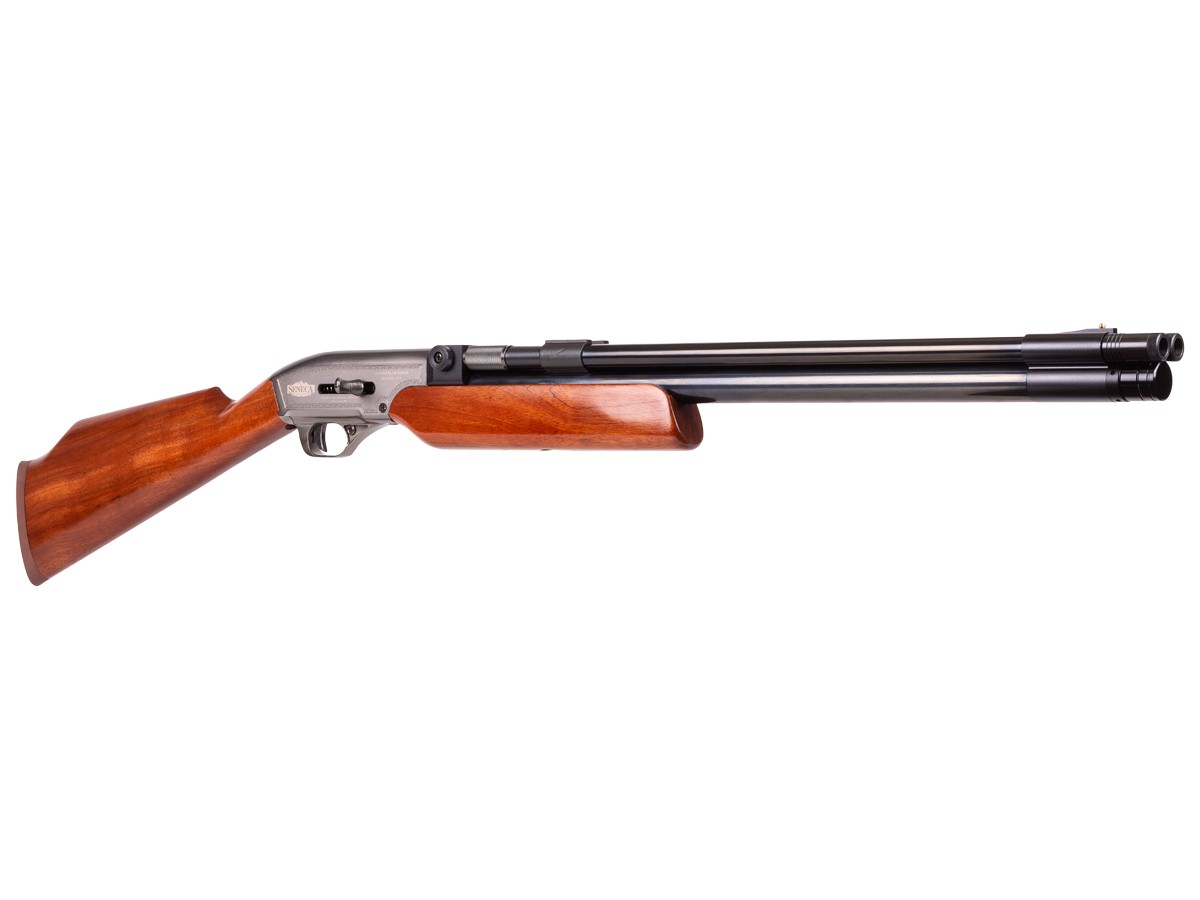
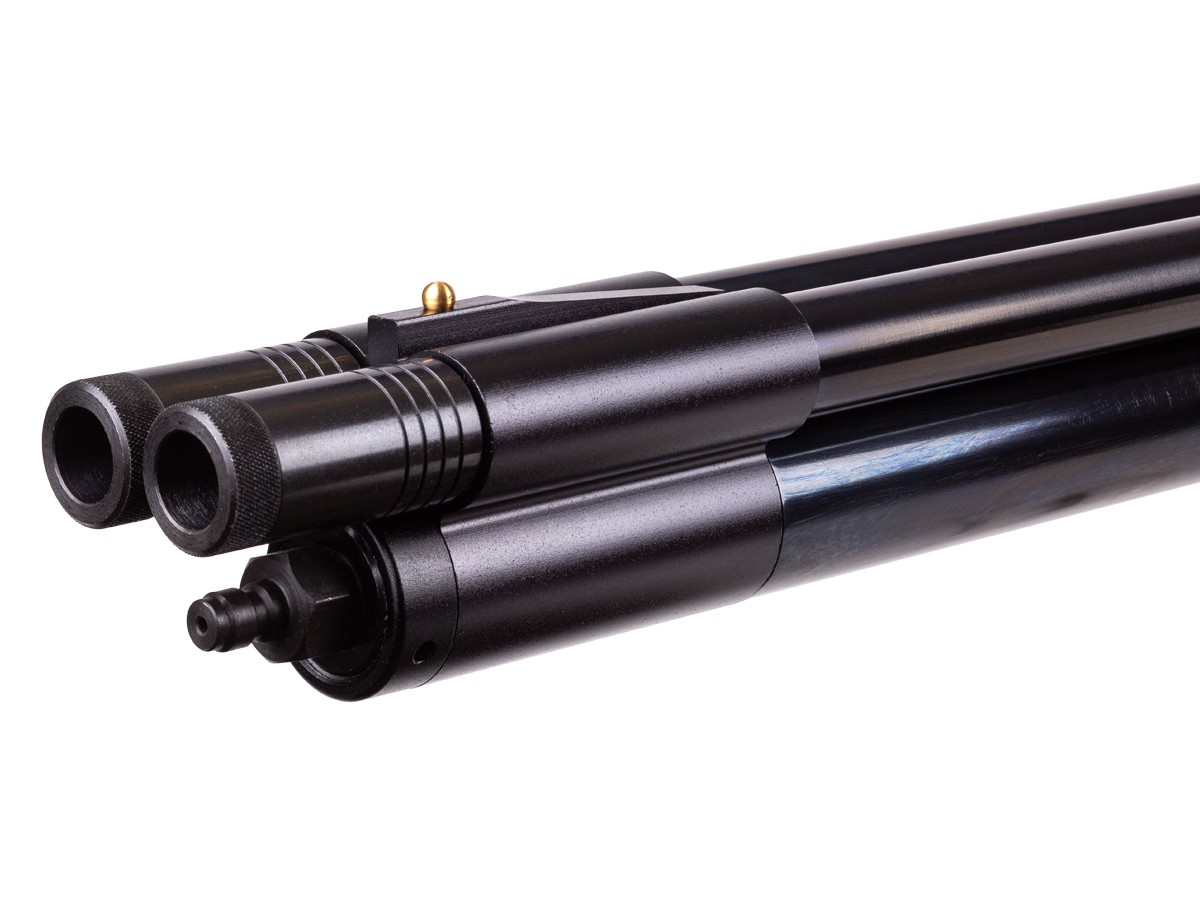
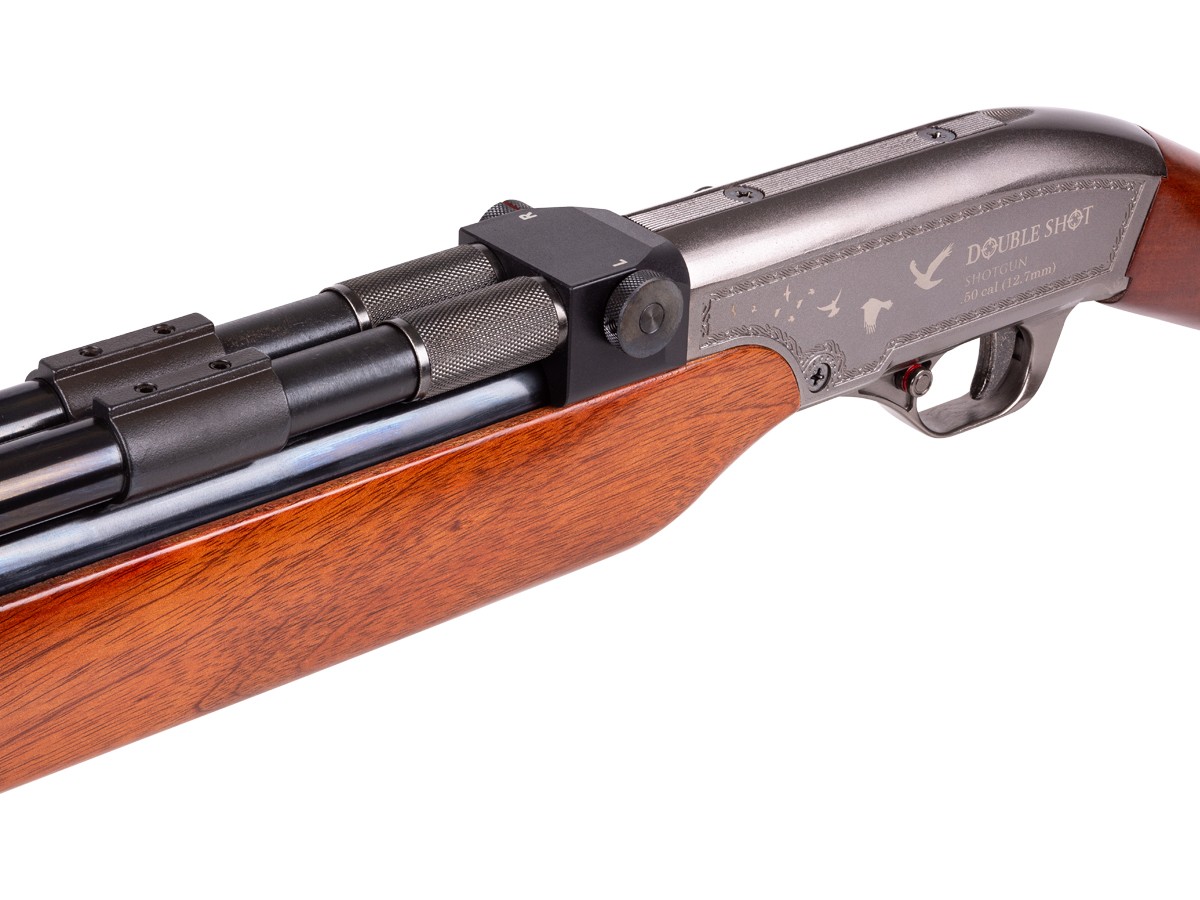
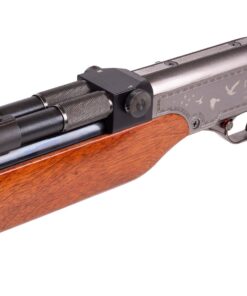
Smooth-bore barrels of 20.9 inches are fitted so that three distinct projectile families can be accommodated. First, Air Venturi long shotshells (commonly #8 or #6 shot) are loaded while the threaded chokes remain in place; a usable pattern at close range is thereby produced. Second, .50 slugs or round balls are substituted after the chokes have been removed; muzzle energy in excess of 140 FPE is then generated at roughly 600 fps. Third, Air Bolts are inserted once the chokes have again been unscrewed; velocities near 425 fps and energies approaching 170 FPE are achieved.
Therefore, pest birds around farm buildings, medium game at modest distances, and air-bow hunting can all be pursued with one rifle. Nevertheless, chokes must never be left installed when slugs or Air Bolts are fired, because barrel damage and unsafe pressures can otherwise result. Likewise, only projectiles that have been specified for the Seneca Double Shot should be used so that consistent performance and safety are maintained.
FAC Considerations and Legal Power Levels
Power far above typical 12 ft-lb limits is produced by the Seneca Double Shot Essentials Combo. As a result, Firearm Certificate (FAC) status is required in the United Kingdom and in many other jurisdictions that impose energy caps on airguns. High-pressure PCP operation at 3000 psi, combined with the large .50 projectile, places the rifle firmly in the FAC or equivalent licensed category wherever such rules apply.
Moreover, local hunting seasons, minimum energy requirements for game, and transport or storage regulations must be observed by every owner. Inclusive language is used here because responsible shooters of every background are expected to verify current law before the rifle is purchased, filled or taken afield. In addition, hearing protection is strongly advised because the report is rated loud (class 5). Consequently, neighbours and livestock are less likely to be disturbed when the rifle is used on private land with permission.
Because the included carbon-fibre tank allows field fills, extra attention should also be paid to cylinder certification and fill-station rules. Thus, both the rifle and the support equipment remain legal and serviceable.
Power Delivery Across Ammunition Types
A 244 cc reservoir that is charged to 3000 psi supplies the energy. Up to five full-power shots are typically obtained from one fill when the barrel selector and bolt are operated correctly. Shotshell velocities approaching 1130 fps are recorded; the resulting pattern is intended for close-range pest work rather than long-range precision. Slug and round-ball velocities near 600 fps deliver more than 140 FPE—sufficient, when placement is correct and local law permits, for medium-game harvest. Air Bolts, by contrast, are driven at approximately 425 fps and produce about 170 FPE, giving arrow-like penetration from an air-powered platform.
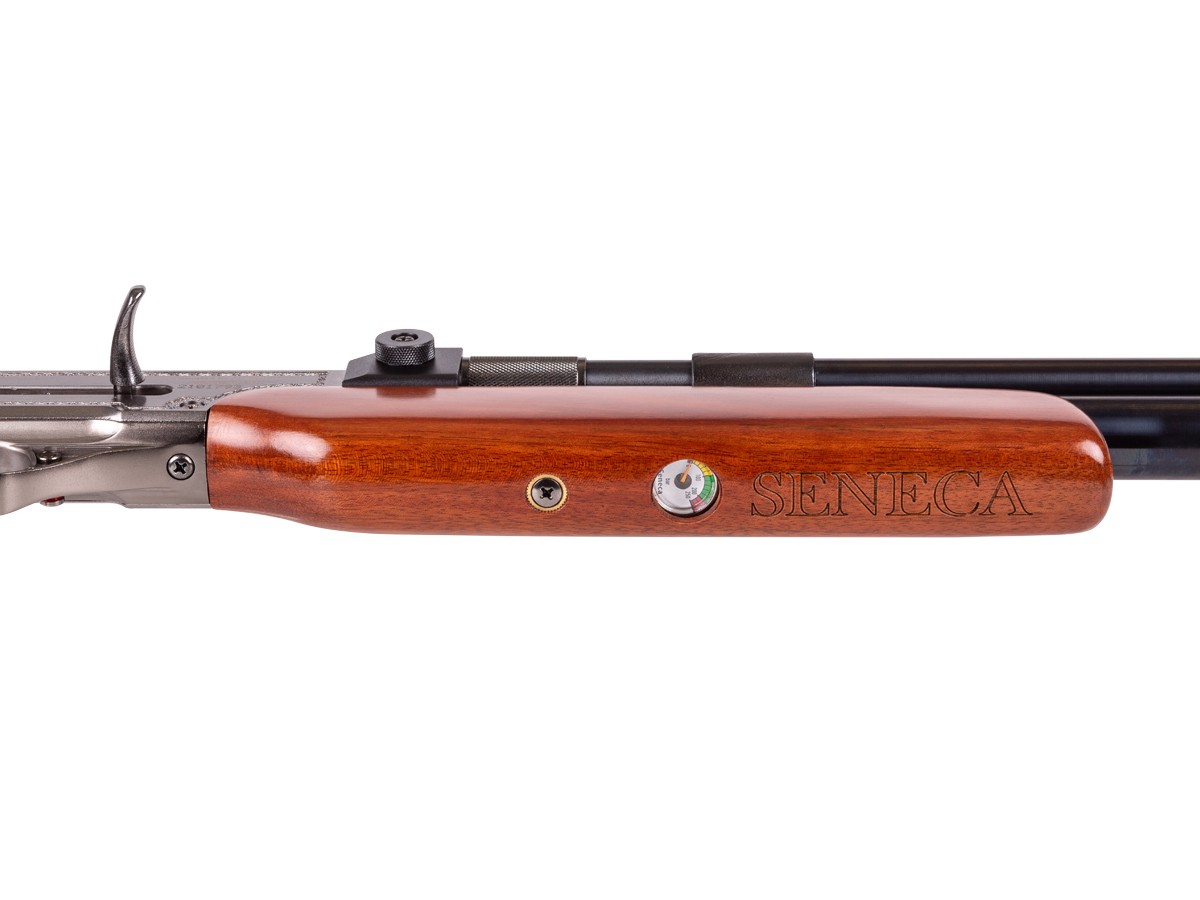
Furthermore, a patent-pending air distributor allows the second barrel to be fired in under two seconds after the selector is moved. Follow-up capability is therefore available without a second rifle being carried. Still, remaining pressure should be monitored on the onboard gauge so that the last shots stay within the useful power band.
Accessories That Complete the Seneca Double Shot Essentials Combo
The factory combo already supplies several essential items so that hunting can begin promptly:
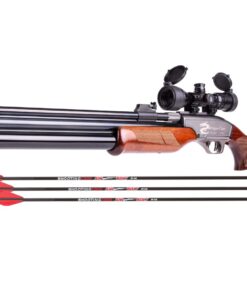
- Air Venturi Air Bolt pack (.50 cal) for air-bow use
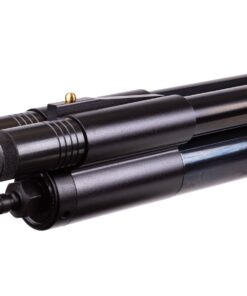
- Carbon-fibre tank (74 cu ft class) for convenient 3000 psi fills
- Long shotshells (often two boxes of #8 shot) in many bundle versions
Additional accessories are commonly added so that performance and convenience can be further improved:
- Extra threaded chokes (tighter 12.2 mm versions are available from some retailers) for tighter shotshell patterns
- Optional 11 mm dovetail rail and matching rings when a scope is preferred over the front bead
- Extra .50 slugs or hollow-points for dedicated slug hunting
- Spare Air Bolts and nocks to avoid “Robin Hood” damage on the target
- Foster-style fill adapters and bleed valves for safe tank-to-rifle charging
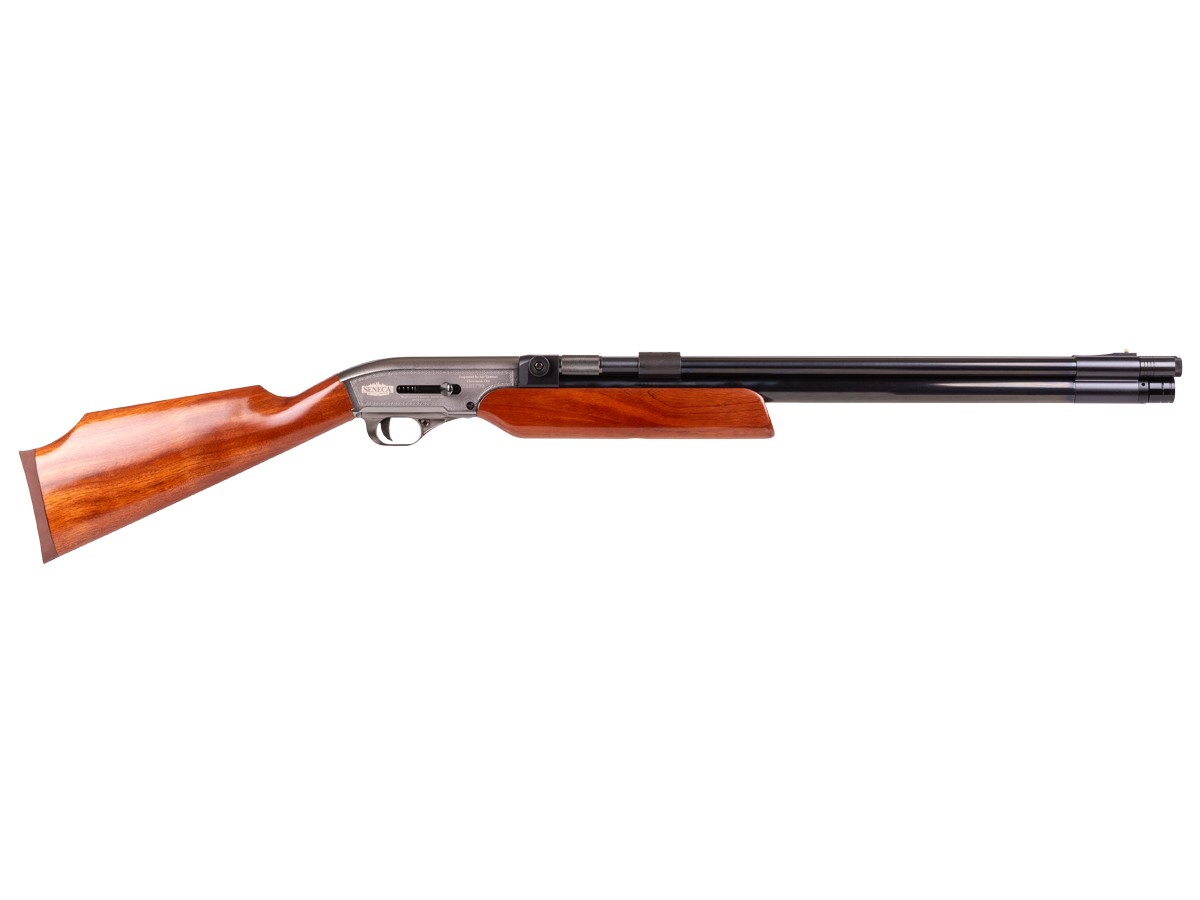
- Hearing protection and a padded case because of the high report and overall length of 43.5 inches
Consequently, the Seneca Double Shot Essentials Combo can be configured for shotshell pest control one day and Air Bolt hunting the next. Inclusive practice is encouraged: every shooter, regardless of experience level, is advised to read the manual, confirm choke status before each ammunition change, and keep fills within the stamped pressure limit.
When these calibre, FAC, power and accessory points are understood, the Seneca Double Shot Essentials Combo can be employed as a flexible, high-energy hunting tool. Responsible ownership, correct choke management and compliance with all local regulations remain the foundation of safe and successful use.
Snowpeak Airguns, PCP Rifles, Air Pistols and Umarex Airguns
For shooters researching Snowpeak airguns, Snowpeak Sports, and the wider Snowpeaks product range, there are many PCP rifles, air pistols, and shooting accessories to consider. Popular searches include the Snowpeak AP900, Snowpeak AP900B PCP air rifle, Snowpeak MAX 1, Snowpeak MAX 1 price, Snowpeak PP750, PP750, Snow Peak PP750, and PP750 air pistol. Buyers also regularly compare models such as the Snowpeak P35, P35, P 35, PCP P 35, Snowpeak P35X, P35X, P35X PCP, and Snowpeak P35 vs P35X.
Other Snowpeak models attracting attention include the Snow Peak PP20, Snowpeak PP20, Snowpeak M25, M25 rifle, M-25, M25 weapon, Snowpeak M60, Snowpeak M60B, M 60B, rifle M60, rifle M50, and M50 rifle. Searches such as Snow Peak brand origin are also common among buyers who want to understand the manufacturer before choosing a rifle or pistol.
Snowpeak PCP Models and Related Airgun Searches
The PCP category covers everything from compact pistols to full-size hunting and target rifles. Searches frequently include PR900 Gen 3, CR650, SR 1000X, T Rex 6000, and pistolet PCP Arcea-Snowpeak Onix Sport. People comparing pneumatic platforms may also search what is a PCP airgun, air gun, air rifle, pellet pistol, air gun accessories, 9mm pellet, and pellet 9mm.
Some search phrases overlap with firearm terminology even when shoppers are researching airgun products. These include rifle M60, how much did the M60 weigh, rifle M50, M50 rifle, M25 weapon, and snowfall gun. Therefore, model specifications should always be checked carefully so that a historical firearm search is not confused with a modern sporting airgun product.
Umarex Airguns, Air Rifles, Pistols and PCP Platforms
Alongside Snowpeak products, Umarex USA, UmarexUSA, Umarex airguns, and Umarex air rifles are widely searched by recreational shooters, target shooters, and PCP enthusiasts. The Umarex range includes PCP rifles, CO₂-powered platforms, break-barrel pistols, BB guns, airsoft replicas, and large-caliber airgun systems.
Popular PCP searches include Umarex Notos, Umarex Notos Carbine, Umarex Gauntlet, Umarex Gauntlet 2, Umarex Gauntlet 30, Umarex Zelos, Umarex Origin, Umarex Komplete, and Umarex Komplete NCR .22. Hunters researching larger airgun platforms may also encounter the Umarex Hammer, Umarex Hammer .50 caliber, Umarex Hammer Carbine, Umarex Primal 20, and Umarex AirSaber.
Umarex Pistols, BB Guns and T4E Models
For handgun-style platforms, popular searches include Umarex BB gun, BBgun, BB gun pistol, metal BB gun, Umarex TR50, Umarex HDR 50, Umarex T4E, Umarex T4E Smith, Umarex Smith, and Umarex P2P DR50 how many joules.
Glock-style replicas remain another major category. Search terms include Glock BB gun, Glock 19 BB gun, Umarex Glock 19, Umarex Glock 19X, Umarex Glock 19 Gen3 .177 caliber BB gun air pistol, Umarex Glock 17, Umarex Glock 17 Gen 5, Umarex Glock, airsoft Glock, airsoft Glock 19, Glock 17 airsoft, and Glock airsoft gun.
Other replica and recreational searches include Umarex MP40, Umarex MP5, Umarex Legends, Umarex HK Heckler, Umarex shotgun, and airsoft pistol.Umarex DX17.
Break-Barrel and Sporting Umarex Airguns
Shooters looking for spring or gas-piston platforms frequently research the Umarex Trevox, loading Umarex Trevox break barrel .177, Umarex pistol break barrel, Umarex Fusion 2, Umarex Synergis Elite, and Amazon Umarex Browning 800 Express. These platforms provide alternatives for people who want an airgun without relying on a high-pressure PCP charging system.
Additional searches across the Umarex catalog include Umarex H, while broader terms such as air rifle, pellet pistol, air gun, and air gun accessories help buyers compare platforms, ammunition, optics, filling equipment, targets, cases, and other shooting equipment.
Whether the focus is a Snowpeak M60, Snowpeak M25, Snowpeak P35X, Snowpeak PP750, Snowpeak MAX 1, Umarex Notos, Umarex Gauntlet 2, Umarex Origin, or Umarex Hammer Carbine, buyers should compare caliber, operating system, power level, dimensions, intended use, and local regulations before selecting an airgun.
Frequently Asked Questions
Which projectiles can be launched from this dual-barrel PCP?
Three families of ammunition are supported by the same pair of smooth-bore barrels. Shotshells are fired while the threaded chokes remain installed so that a usable pattern can be produced at close range. Slugs and round balls are substituted after the chokes have been removed; higher sectional density and energy are then delivered. Air-powered arrows are likewise loaded only after the chokes have been unscrewed. Consequently, pest work, slug hunting and air-bow use can all be performed without a second rifle being carried. Nevertheless, the correct choke status must be confirmed before every ammunition change so that barrel damage is avoided.
Is a Firearm Certificate required?
Energy well above common 12 ft-lb limits is generated. Therefore, licensed status is required in the United Kingdom and in many other jurisdictions that regulate high-power airguns. Local hunting seasons, storage rules and transport requirements must also be observed. Inclusive practice is expected: every owner, regardless of experience, is advised to verify current law before the rifle is purchased, filled or taken afield.
How much power is produced with each ammunition type?
Approximately 1130 fps is recorded with shotshells. Roughly 600 fps and more than 140 FPE are typically obtained with slugs or round balls. Near 425 fps and about 170 FPE are achieved with air-powered arrows. As a result, close-range patterning, medium-game harvest (where legal) and high-penetration arrow work can each be matched to the day’s quarry. Still, ethical range and shot placement remain the responsibility of the shooter.
How many full-power shots are obtained from one fill?
A 244 cc cylinder charged to 3000 psi is employed. Up to five useful shots are commonly reported when the barrel selector and bolt are operated correctly. Remaining pressure should be monitored on the onboard gauge so that the final shots stay inside the effective power band. Furthermore, the included carbon-fibre tank allows the reservoir to be topped off in the field when a certified fill source is available.
Why must the chokes be removed for slugs and air-powered arrows?
The chokes reduce bore diameter so that shotshell patterns can be tightened. When solid projectiles or arrows are fired through a restricted bore, unsafe pressures and possible barrel damage can result. Therefore the chokes are unscrewed before slugs, round balls or air-powered arrows are loaded. Conversely, the chokes are left in place whenever shotshells are used. A quick visual check before each session is recommended.
Can a scope be mounted?
A front bead is supplied as standard. An optional 11 mm dovetail rail can later be fitted if magnified optics are preferred. Matching rings and a suitable scope must then be chosen so that eye relief and recoil are accommodated. Because the platform is relatively short and the report is loud, a compact, robust optic is often selected.
Is the stock suitable for both left- and right-handed shooters?
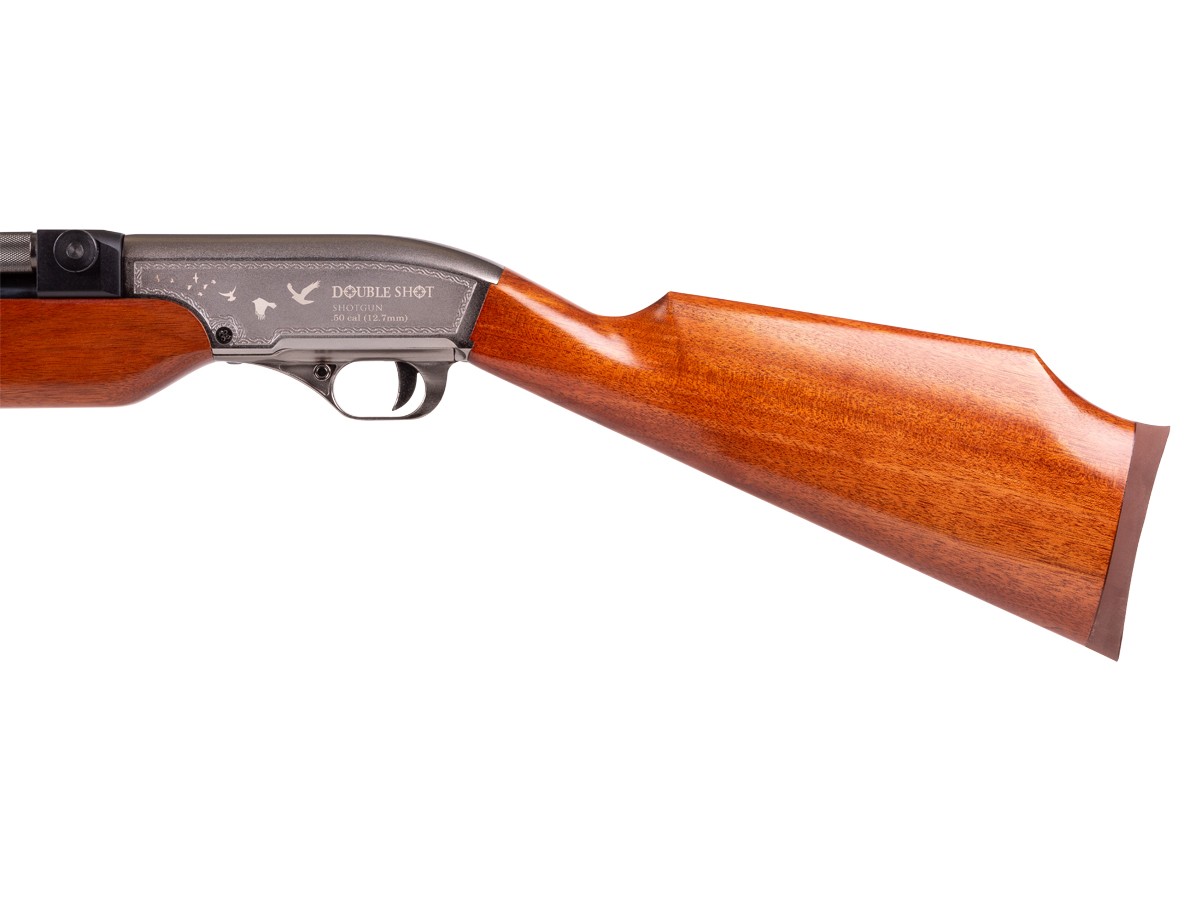
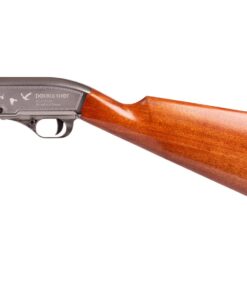
An ambidextrous hardwood stock is fitted. Consequently, either shoulder can be used without a second rifle being required. A rubber buttpad is also provided so that felt recoil is reduced and consistent mounting is encouraged. Inclusive design therefore allows a wider range of shooters to handle the rifle comfortably.
How loud is the report?
The discharge is rated in the highest common airgun loudness class. Hearing protection is therefore strongly advised for the shooter and for anyone nearby. In addition, consideration of neighbours, livestock and local noise rules is recommended before the rifle is used on private land.
What is included in a typical essentials package?
The rifle itself, a pack of air-powered arrows, a carbon-fibre fill tank and, in many bundles, boxes of long shotshells are supplied. Extra chokes, slugs, spare arrows and a scope rail are commonly added later so that the system can be tailored to specific hunting styles. Thus, field use can begin with fewer separate purchases.
How is the follow-up shot achieved so quickly?
A patent-pending air distributor and a barrel-selector switch are employed. After the first barrel has been fired, the selector is moved and the bolt is cycled; the second barrel can then be discharged in less than two seconds. Rapid second-shot capability is therefore available without a second firearm being packed.
What overall size and weight should be expected?
Overall length of 43.5 inches and weight of approximately 8.55 lb are typical. The package remains portable for still-hunting or stand use, yet a padded case is useful for transport because of the length and the hardwood stock. Balance is generally regarded as field-friendly once the shooter becomes accustomed to the dual-barrel layout.
How should the reservoir be filled safely?
A male Foster quick-disconnect nipple is provided. The included carbon-fibre tank, or any certified 3000 psi source, can be connected after the correct adapter and bleed procedure have been followed. Over-filling must be avoided; the stamped pressure limit and the onboard gauge should always be respected. Cylinder certification dates should also be checked so that the tank remains legal and serviceable.
Which game and pest species are commonly pursued?
Close-range pest birds around barns and feedlots are frequently addressed with shotshells. Medium game, where local energy and season rules allow, is typically engaged with slugs. Air-powered arrows are chosen when arrow-like penetration and trajectory are desired. Ethical harvest still depends on correct range, shot placement and full compliance with hunting regulations. Inclusive language is used because responsible hunters of every background are expected to know their quarry and their local law.
Are extra chokes worth adding?
Tighter aftermarket chokes are offered by some retailers. A modest improvement in pattern density is often reported when shotshells are used. The extra chokes remain removable so that slug and arrow work can still be performed. Therefore they are a low-cost upgrade for shooters who expect to spend most of their time with shotshells.
What routine maintenance is recommended?
The exterior is wiped after use and the bore is kept free of debris. Choke threads are inspected so that they remain clean and undamaged. The fill nipple and gauge are checked for leaks. High-pressure seals and the carbon tank should be serviced according to the manufacturer’s schedule. Because the rifle is a high-energy PCP, professional inspection is advisable if any irregularity in velocity or lock-up is noticed.
Can the rifle be used for target practice as well as hunting?
Yes. Patterning with shotshells, grouping with slugs and accuracy work with air-powered arrows can all be practised on appropriate ranges. Hearing protection, a safe backstop and adherence to range rules remain essential. The same choke and ammunition discipline that is required in the field should be observed on the range so that habits stay consistent.
What should be confirmed before the first hunt?
Local licensing, hunting seasons, minimum energy rules and landowner permission must be verified. Choke status must match the ammunition that will be used. Remaining air pressure should be adequate for the planned number of shots. Hearing protection and a means of filling or topping off the cylinder should be carried. When these points have been satisfied, the dual-barrel system can be employed as a flexible, high-energy hunting tool by shooters who value adaptability and responsible use.
Practical Use Scenarios in the Field
A dual-barrel, high-energy PCP is taken afield so that shotshells, slugs and air-powered arrows can be matched to the day’s quarry. Consequently, one platform is relied upon for close-range pest work, modest-range medium-game hunting and air-bow applications. Inclusive practice is assumed throughout: every shooter, regardless of background or experience, is expected to confirm local law, landowner permission and ethical range before a shot is fired.
Early-Morning Pest Control Around Farm Buildings
Shotshells are selected when pigeons, starlings or similar birds have been concentrating on stored grain. Threaded chokes are left installed so that a usable pattern can be produced at typical barn distances. Hearing protection is worn because the report is loud. A safe backstop of earth or masonry is confirmed so that stray pellets are contained.
The first barrel is loaded, the selector is set, and the shot is taken from a doorway or vehicle window after the flock has settled. If a second bird remains, the selector is flipped and the bolt is cycled; the follow-up can then be delivered in under two seconds. Remaining pressure is checked on the onboard gauge after the pair of shots. When the cylinder has dropped near the useful limit, the included carbon-fibre tank is connected through the Foster nipple so that a top-off can be completed without a return to the workshop.
Afterwards, empty hulls are collected and the choke threads are inspected. Thus, a short session of farm pest control can be finished before the working day begins, provided all local rules on airgun use and livestock welfare have been observed.
Still-Hunting Medium Game with Slugs
Chokes are removed before slugs or round balls are loaded. A quiet approach is used along a field edge or woodland ride. The hardwood stock is mounted to either shoulder because the layout is ambidextrous. The front bead is aligned on a vital zone once a legal animal has been identified and the range has been judged to be inside the ethical window for roughly 140-plus FPE.
The first slug is sent. If a follow-up is required, the selector is moved and the second barrel is fired without the rifle being lowered from the shoulder for long. Because only five full-power shots are typically available from a 3000 psi fill, each opportunity is treated as valuable. After the encounter, remaining air is noted and the tank is used if another stand is planned later in the morning.
Inclusive language is used here because hunters of every stature and handedness can employ the same stock and the same two-shot sequence. Still, shot placement and species-specific legal energy requirements remain the shooter’s responsibility.
Air-Bow Work from a Stand or Ground Blind
Air-powered arrows are loaded only after the chokes have again been unscrewed. A compact stand or ground blind is occupied where a known trail or feeding area can be watched. The relatively short overall length of the rifle helps when space is limited. A second arrow is already in the opposite barrel so that a follow-up can be launched if the first pass-through does not produce an immediate recovery.
Trajectory is more arched than a high-velocity slug, so range estimation is practised beforehand. Energy near 170 FPE is available when the cylinder is near full; therefore the first shots of a fill are preferred for this ammunition. After the shot, tracking is begun only when a safe interval has passed. Spare arrows are carried so that a “Robin Hood” split on a previous target or a lost shaft does not end the sit.
Hearing protection is still worn. Neighbours and other trail users are considered because the report remains high. When the sit ends, chokes can be refitted if shotshells will be needed on the walk out.
Mixed-Ammunition Day on Mixed Ground
A morning may begin with shotshells around outbuildings, continue with slugs along a hedge line, and finish with air-powered arrows at a woodland corner. Each change of projectile is preceded by a choke check. The carbon tank stays in the vehicle or in a pack so that the 244 cc reservoir can be replenished between locations. Five useful shots per fill are budgeted; extra shots at reduced power are avoided when ethical harvest is the goal.
Transition between tasks is made easier because a second firearm is not required. However, the loud report means that each location is chosen with regard to property boundaries and livestock. Inclusive field craft is practised: partners of different heights and dominant hands can share the same rifle after a brief familiarisation with the selector and bolt.
Vehicle-Based Permission Work
A landowner’s permission is confirmed in writing or by clear verbal agreement. The rifle is transported unloaded, with the cylinder at a safe pressure and the tank secured separately where regulations require it. At each stop the choke status is verified before ammunition is inserted. Short walks from the vehicle allow pest species to be addressed without a long still-hunt.
The onboard gauge is glanced at before every pair of shots. When pressure has fallen, the Foster connection is used for a brief top-off. Empty shotshells and spent arrows are recovered so that the permission remains welcome for future visits. Thus, a circuit of several small holdings can be completed in one outing when planning and courtesy are applied.
Weather and Seasonal Adjustments
Wet weather is met with extra attention to the fill nipple and gauge so that moisture does not interfere with a later charge. Cold mornings may reduce the number of full-power shots slightly; the first shots of the fill are therefore reserved for the most important opportunity. Summer pest pressure around grain stores often favours shotshells; autumn and winter hunting more often favours slugs or air-powered arrows. In every season, legal shooting hours and species lists are checked before departure.
A padded case is used between stands because the hardwood stock and 43.5-inch length benefit from protection. Hearing protection stays on whenever a shot is possible. Inclusive preparation includes briefing any companion on the selector, the choke rule and the high report so that no one is surprised.
Follow-Up Discipline and Recovery
The two-second second-barrel capability is treated as a tool, not a licence for rushed shooting. The first shot is aimed as if it were the only shot. Only when a clear second opportunity exists is the selector moved. After a hit with slug or arrow, a short wait is observed before tracking begins. Blood, hair and arrow location are noted. If a second shot was taken, both impact sites are considered during the search.
When recovery is complete, the rifle is made safe, remaining pressure is recorded, and the tank is used if more hunting is planned. Ethical recovery is expected of every participant, regardless of role or experience.
Why This Dual-Barrel PCP Is the Stronger Choice
A single high-energy platform is preferred when shotshells, slugs and air-powered arrows must all be available without a second rifle being packed. Consequently, weight, cost and complexity in the field are reduced. Inclusive design is assumed: shooters of either dominant hand and of varied experience can employ the same stock, the same selector and the same fill routine.
Two Barrels That Turn One Opportunity Into Two
A follow-up can be delivered in less than two seconds after the selector is moved and the bolt is cycled. Therefore a second bird, a second angle on medium game, or a second air-powered arrow can be sent before most single-barrel big-bores have been recocked. As a result, recovery rates and ethical second-shot options are improved when the first impact is not immediately decisive.
Moreover, both barrels share the same 244 cc reservoir. Up to five full-power shots are typically obtained from a 3000 psi fill. Remaining pressure is watched on the onboard gauge so that the last pair of shots stays inside the useful energy band. Thus speed and economy of air are combined in one action.
Three Ammunition Families Without Three Rifles
Threaded chokes are left in place for shotshells so that a usable pattern can be thrown at barn and feedlot distances. The same chokes are unscrewed before slugs or round balls are loaded; energy above 140 FPE is then available at roughly 600 fps. Air-powered arrows are likewise loaded only after the chokes have been removed; velocities near 425 fps and energies approaching 170 FPE are achieved.
Consequently, pest control, slug hunting and air-bow work can be scheduled on the same permission in the same day. A second or third firearm is not required. Inclusive field craft is supported because partners can share one rifle after a brief briefing on choke status and the selector.
A Package That Reaches the Field Sooner
A carbon-fibre tank is commonly supplied so that 3000 psi top-offs can be completed away from a workshop compressor. Air-powered arrows and, in many bundles, long shotshells are included as well. Therefore the first outing need not wait on separate accessory orders. Extra chokes, an 11 mm rail and spare slugs can still be added later, yet the core system is already hunt-ready.
Furthermore, a male Foster nipple and an onboard gauge make the fill routine straightforward. Over-pressure is avoided when the stamped limit is respected. Inclusive ownership includes checking tank certification dates so that every user of the permission stays legal and safe.
Power That Matches Real Hunting Distances
Shotshell velocities approaching 1130 fps are recorded for close-range patterning. Slug and round-ball performance above 140 FPE is sufficient, when placement is correct and local law allows, for medium-game harvest at modest ranges. Air-powered arrows delivering about 170 FPE give arrow-like penetration from a PCP. High energy is therefore present; it is not theoretical bench-rest power unused in the field.
Still, ethical range remains the shooter’s duty. The platform is better precisely because that energy can be applied to three different projectile types rather than locked to one.
Handling That Does Not Favour Only One Shoulder
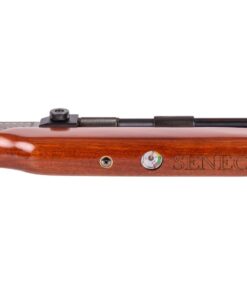
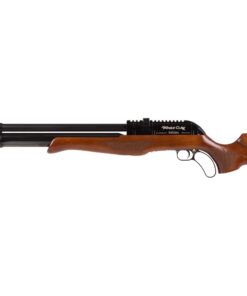
An ambidextrous hardwood stock and rubber buttpad are fitted. Either shoulder can be used without a left-hand variant being purchased. Overall length of 43.5 inches and weight of about 8.55 lb keep the rifle portable for still-hunting and stand work. A front bead is standard; an optional rail can be added if magnified optics are preferred.
Thus the same rifle can be lent across a hunting party without stock-fit arguments. Inclusive language is used because comfort and control should not depend on which hand is dominant.
Follow-Up Discipline That Single-Barrel Guns Cannot Match
The patent-pending air distributor is intended for a measured second shot, not for spray-and-pray. The first barrel is aimed as if it were the only shot. Only when a clear second opportunity exists is the selector moved. That discipline, paired with real two-shot speed, is why the layout is stronger than a single-shot big-bore of similar energy.
In pest work, a second bird can be addressed before the flock fully flushes. In slug or arrow hunting, a quartering animal can be given a second, better angle if the first pass was not ideal. Recovery is then begun only after a safe interval.
Practical Reasons Summarised
The following points are why the platform is repeatedly chosen over narrower alternatives:
- Two barrels and a sub-two-second follow-up from one fill
- Shotshells, slugs and air-powered arrows from one pair of smooth-bore tubes
- Tank, arrows and often shotshells already in the package
- FAC-level energy applied to real hunting distances
- Ambidextrous stock so either shoulder can be used
- Onboard gauge and Foster fill for field top-offs
- Optional rail if a scope is later preferred over the bead
Because these features are combined rather than sold as three separate rifles, cost, weight and legal paperwork are concentrated in one licensed firearm where FAC or equivalent rules apply.
Limitations That Are Acknowledged Honestly
The report is loud; hearing protection and consideration of neighbours are required. Chokes must be managed correctly or barrel damage can result. Only five full-power shots are typical per fill, so air discipline matters. No factory calibre other than .50 is offered. These points are not hidden; they are the trade-off for versatility and power. Shooters who accept them gain a field tool that replaces several narrower guns.
When choke checks, fill limits, local law and ethical placement are observed, the dual-barrel PCP is the stronger choice for hunters who need pest patterns, slug energy and air-bow penetration without a second rifle in the truck. Inclusive, responsible use turns that versatility into cleaner harvests and fewer wasted outings.
Range Confirmation Before the Season
A private range or approved club is used so that patterns, slug groups and arrow impact can be confirmed. Chokes are fitted for shotshell work and removed for the other two ammunition types. Distances that will actually be used in the field are practised. Hearing protection and a solid backstop are mandatory. Notes are kept on which choke, which slug weight and which arrow spine produced the most consistent results. Those notes travel with the rifle so that field decisions are based on recent data rather than memory alone.
End-of-Day Routine That Protects the Permission
Hulls, wads and unused arrows are collected. The bore is checked for debris. Choke threads are wiped. The cylinder is left at a moderate pressure if storage rules allow, or bled according to the manual if a long period of inactivity is expected. The carbon tank’s certification date is glanced at. A brief message of thanks is sent to the landowner. Inclusive courtesy keeps access open for the next visit by the same shooter or by others who may later be invited.
When these practical sequences are followed—choke discipline, fill management, legal compliance, and measured use of the second barrel—the dual-barrel PCP can serve as a flexible hunting and pest-control tool across a working day. Power, speed of follow-up and ammunition choice are placed in the service of responsible, inclusive field craft rather than spectacle.




Reviews
There are no reviews yet.