Seneca Eagle Claw Carbine – Lever-Action PCP Performance in a Compact Platform
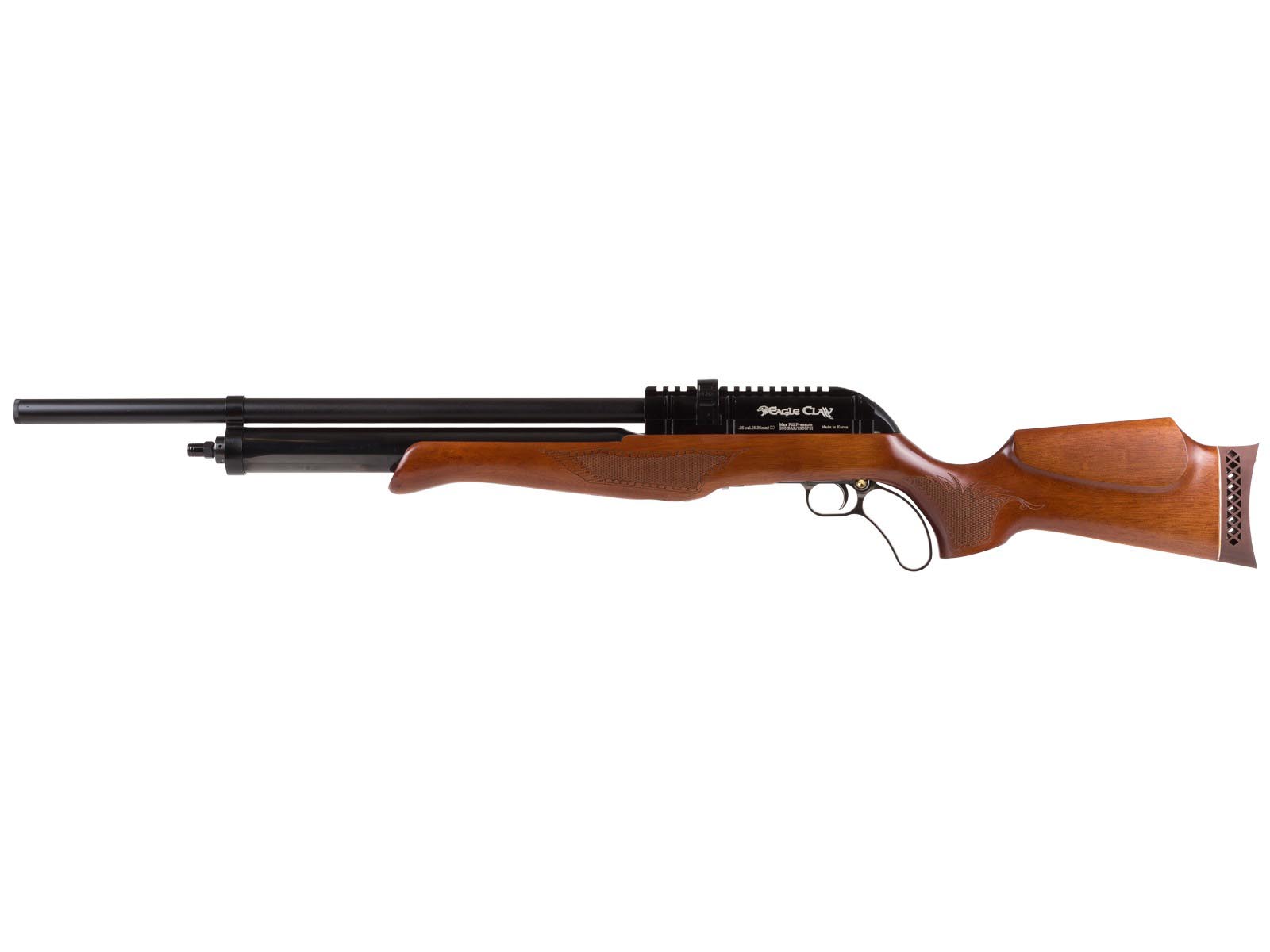
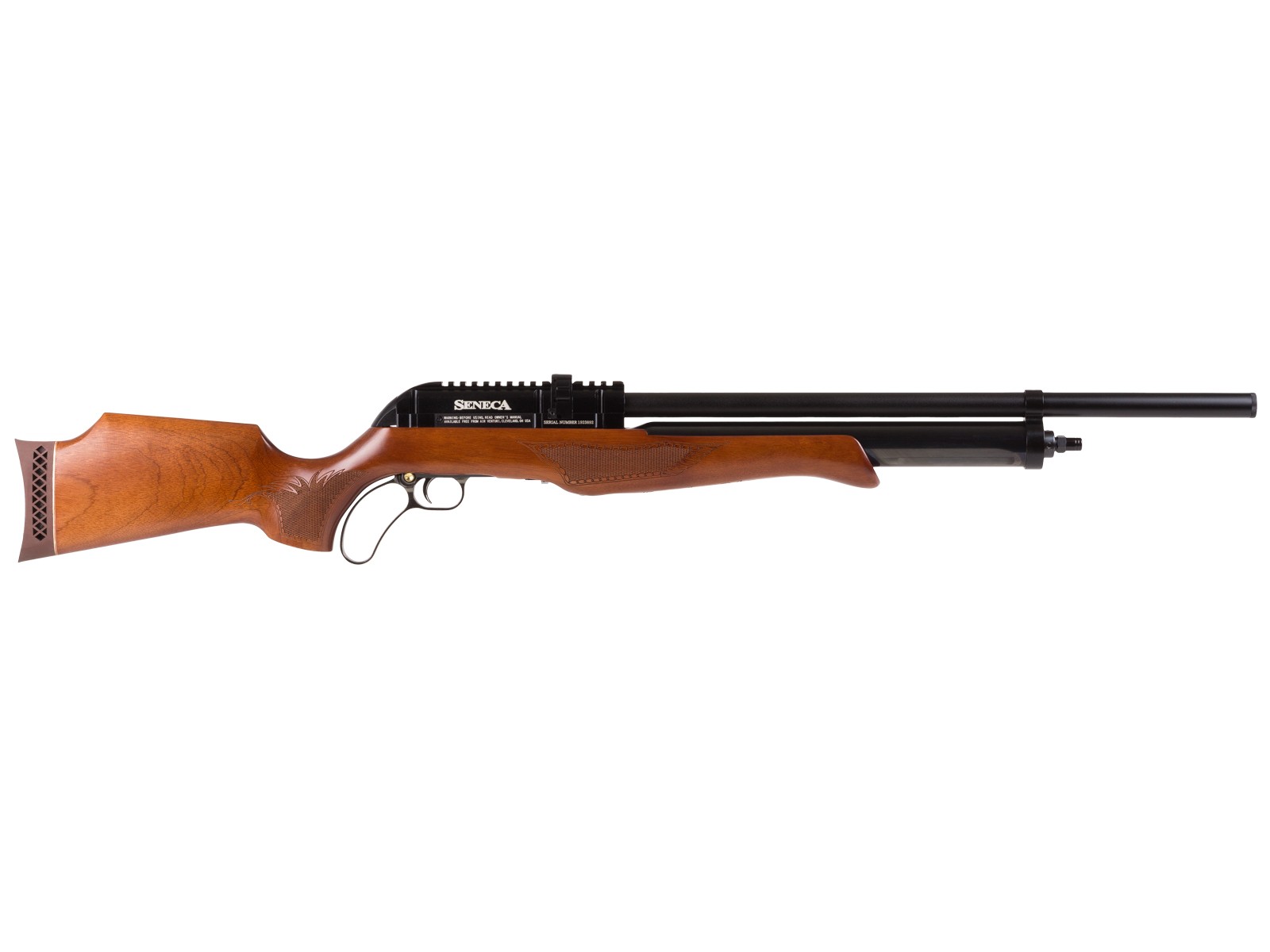
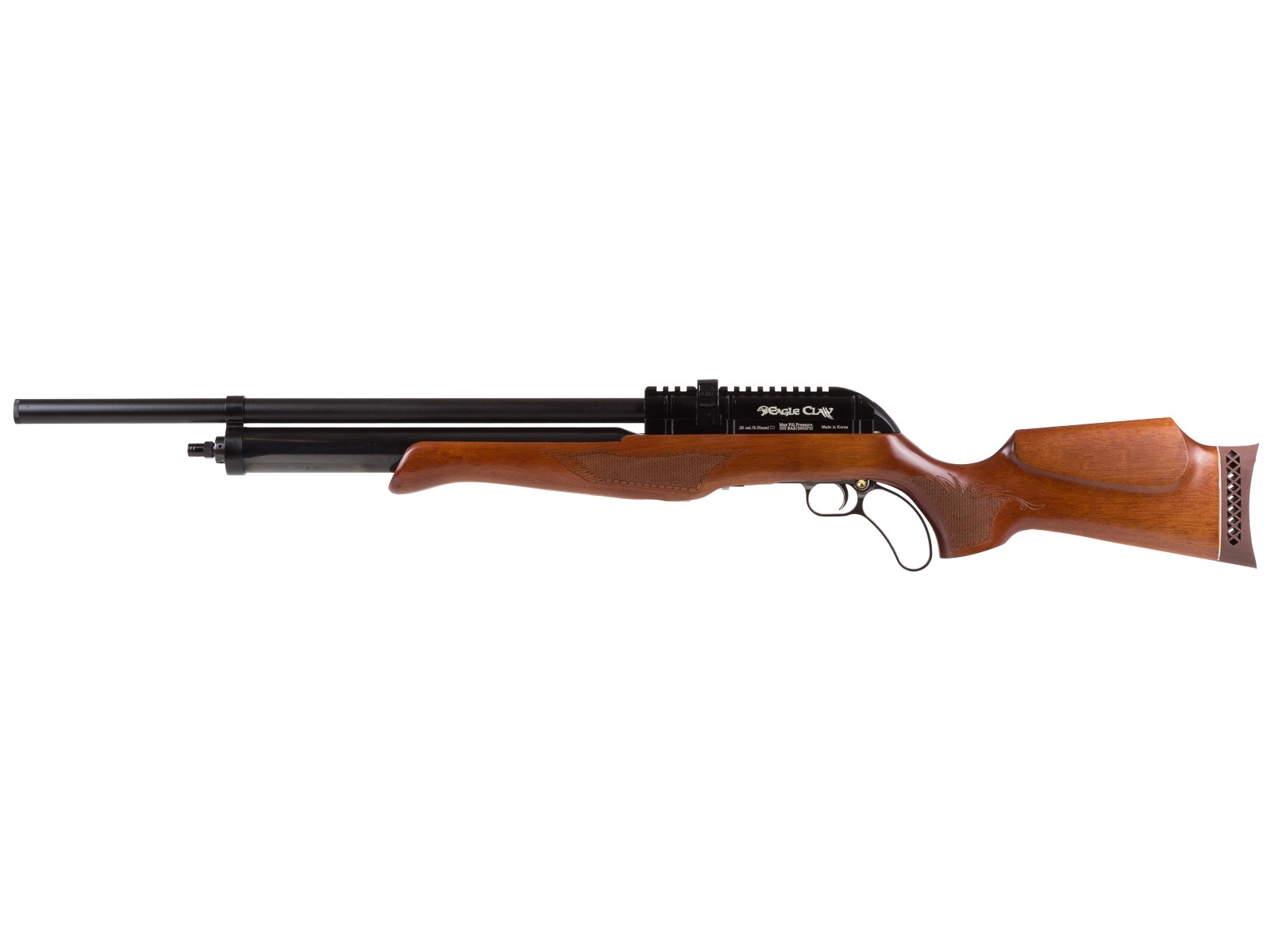
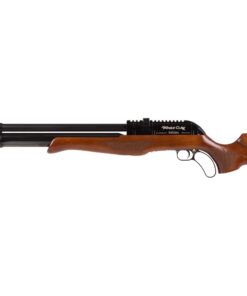
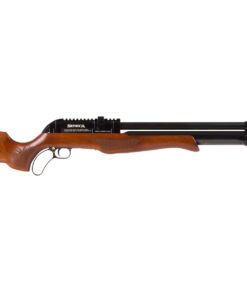
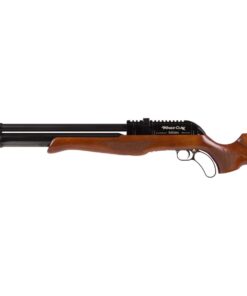
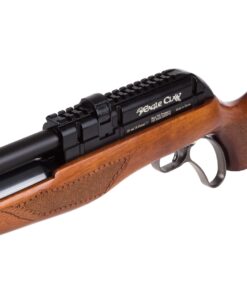
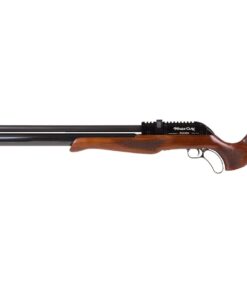
The Seneca Eagle Claw Carbine has been designed for shooters who appreciate traditional lever-action styling while modern pre-charged pneumatic performance is still expected. Classic character is immediately provided by the hardwood stock, while dependable PCP operation, adjustable power, and a multi-shot magazine system are incorporated to create an exceptionally versatile air rifle.
Rather than being built as an ordinary full-length PCP, the Seneca Eagle Claw Carbine has been configured around a more compact 41.5-inch overall length. Consequently, easier handling can be enjoyed in confined shooting positions, around a range, or wherever a shorter platform is preferred. A 17-inch rifled barrel has been fitted, while the total weight is approximately 7.85 lb.
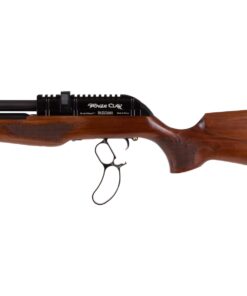
Furthermore, a distinctive lever-action mechanism has been integrated. Follow-up shots can therefore be prepared quickly without abandoning the familiar handling characteristics associated with classic lever-operated rifles.
Seneca Eagle Claw Carbine PCP Air Rifle
Modern PCP technology has been blended with a traditional sporting appearance throughout the Seneca Eagle Claw Carbine. Instead of conventional spring-powered operation, compressed air is stored inside a 380cc cylinder. A maximum operating pressure of approximately 3,000 PSI / 206 BAR is specified by the manufacturer.
Because compressed air is used as the powerplant, a smooth shooting cycle can be maintained. Additionally, the absence of heavy spring movement allows the shooting experience to remain composed.
Power can also be adjusted through multiple settings. Therefore, the rifle can be configured according to the intended shooting activity, pellet choice, permissible energy level, and applicable local regulations.
Classic Lever-Action Operation
One of the most distinctive characteristics of the Seneca Eagle Claw Carbine is undoubtedly its lever-action repeating system.
After each shot has been discharged, the action can be cycled through the lever. Another pellet can subsequently be indexed from the magazine and prepared for the next shot. As a result, repeated manual pellet loading between individual shots is reduced.
Moreover, traditional styling is complemented by this operating method. The familiar appearance of a sporting lever rifle is retained, yet PCP technology is positioned underneath the classic exterior.
For recreational shooters, collectors, and experienced airgun enthusiasts, an engaging shooting experience can therefore be provided without sacrificing modern pneumatic performance.
Key Features of the Seneca Eagle Claw Carbine
Important specifications and design elements have been incorporated throughout the platform:
- Pre-charged pneumatic PCP powerplant
- Smooth lever-action repeating mechanism
- 17-inch rifled barrel
- Shrouded barrel design
- Approximately 41.5-inch overall length
- Approximately 7.85 lb total weight
- 380cc compressed-air cylinder
- Up to 3,000 PSI / 206 BAR operating pressure
- Multiple adjustable power settings
- Two-stage adjustable trigger
- Manual safety
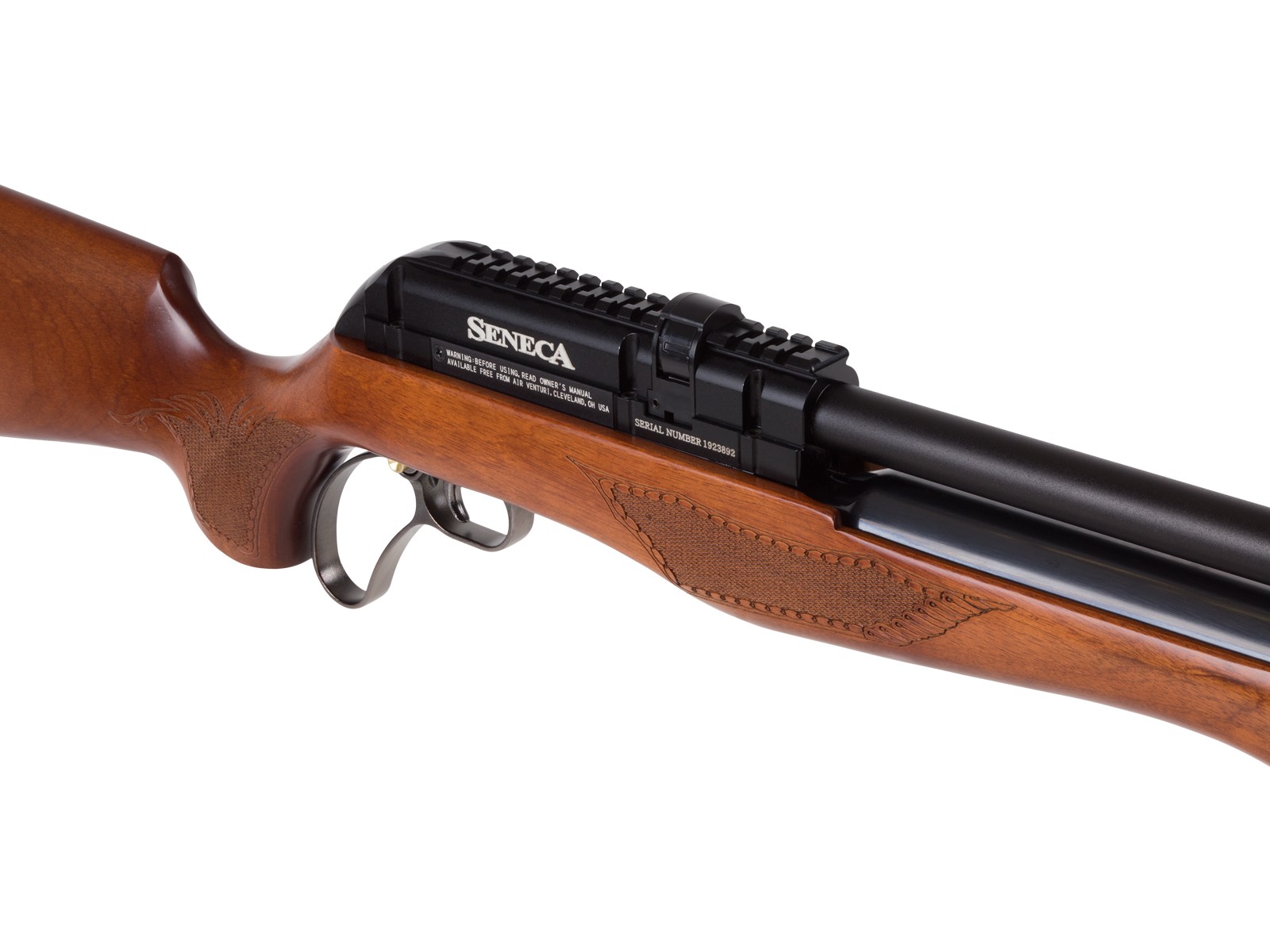
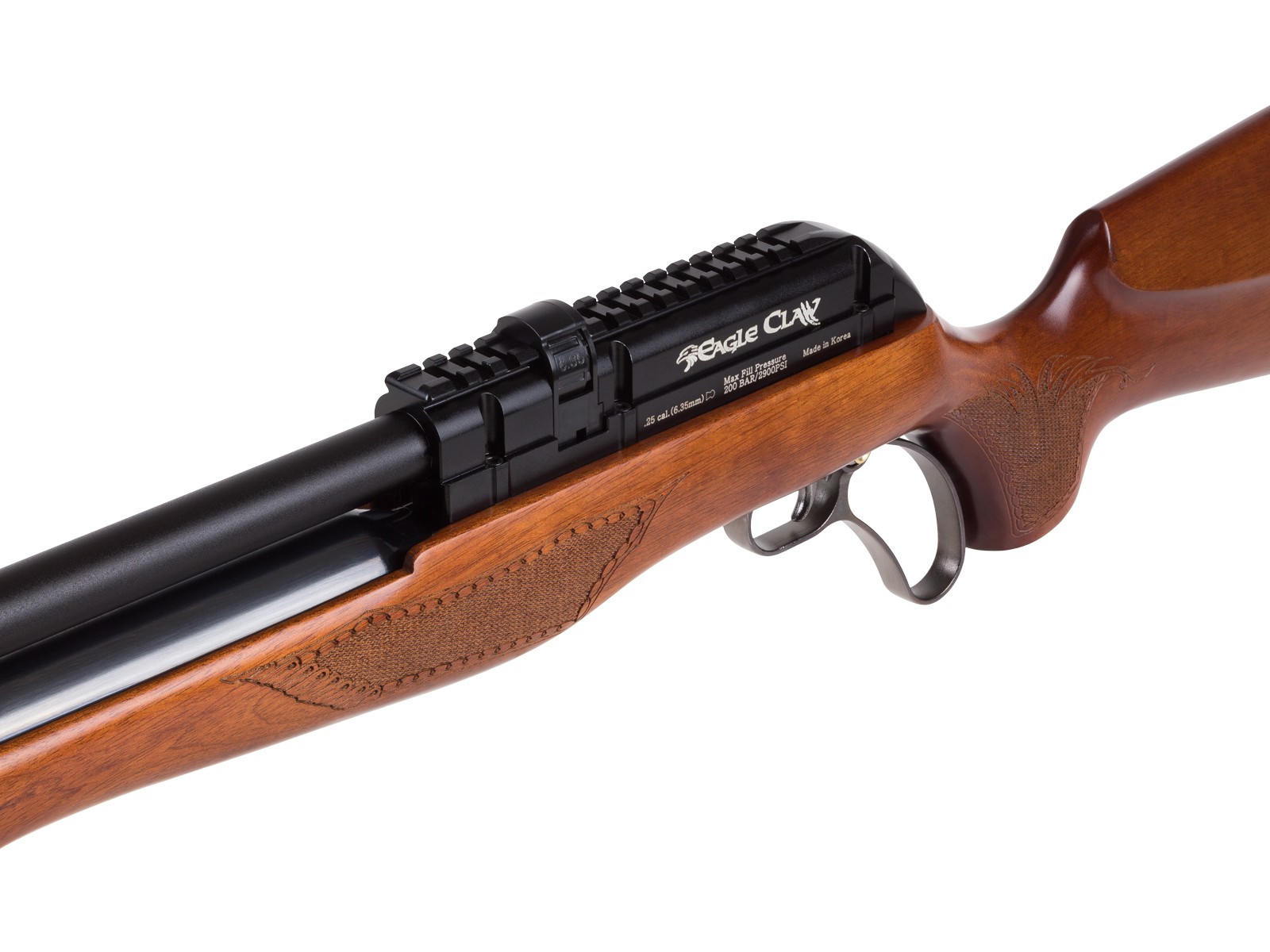
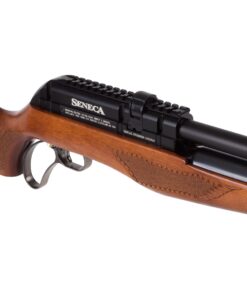
- Weaver/Picatinny-compatible optics rail
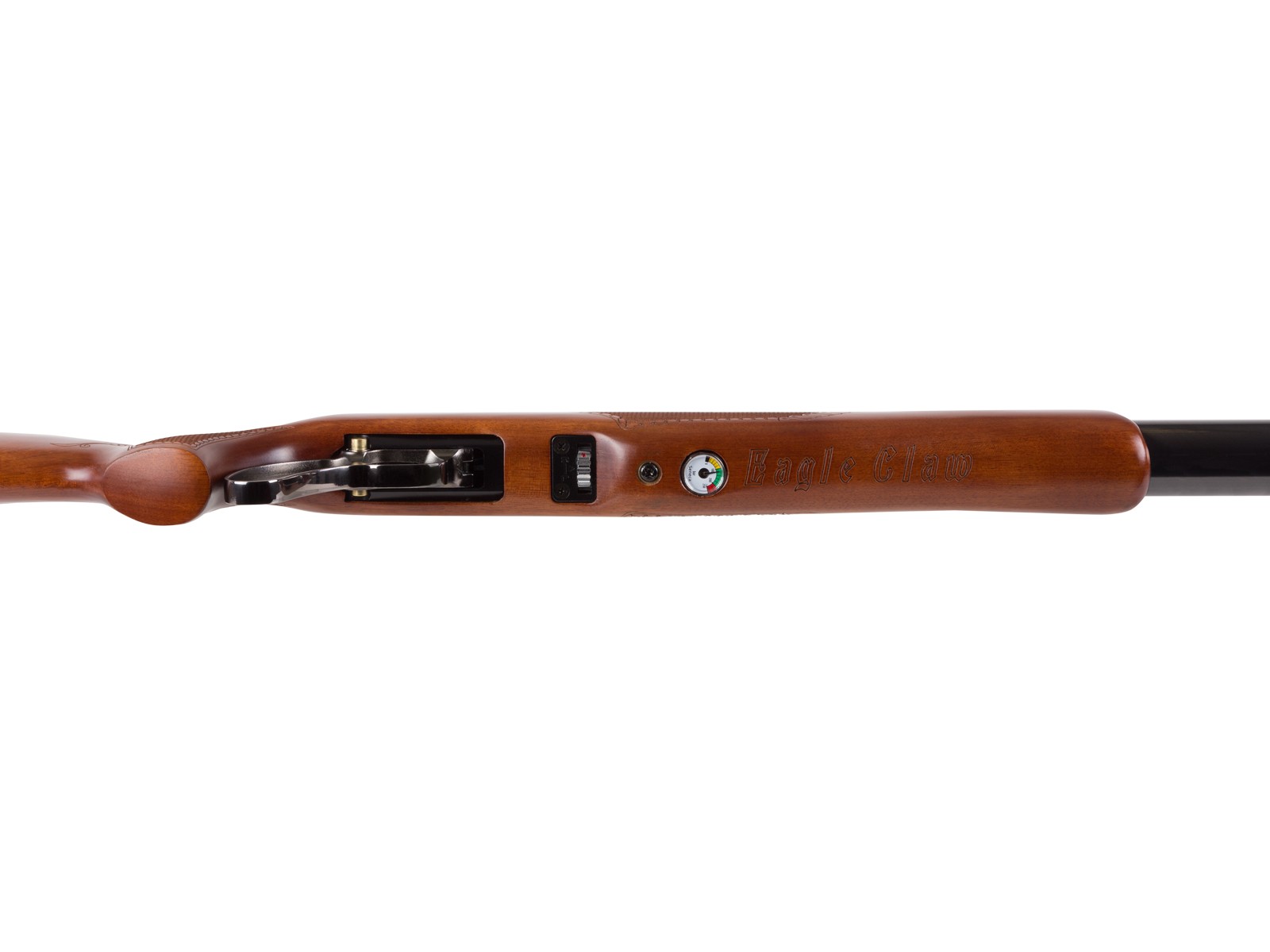
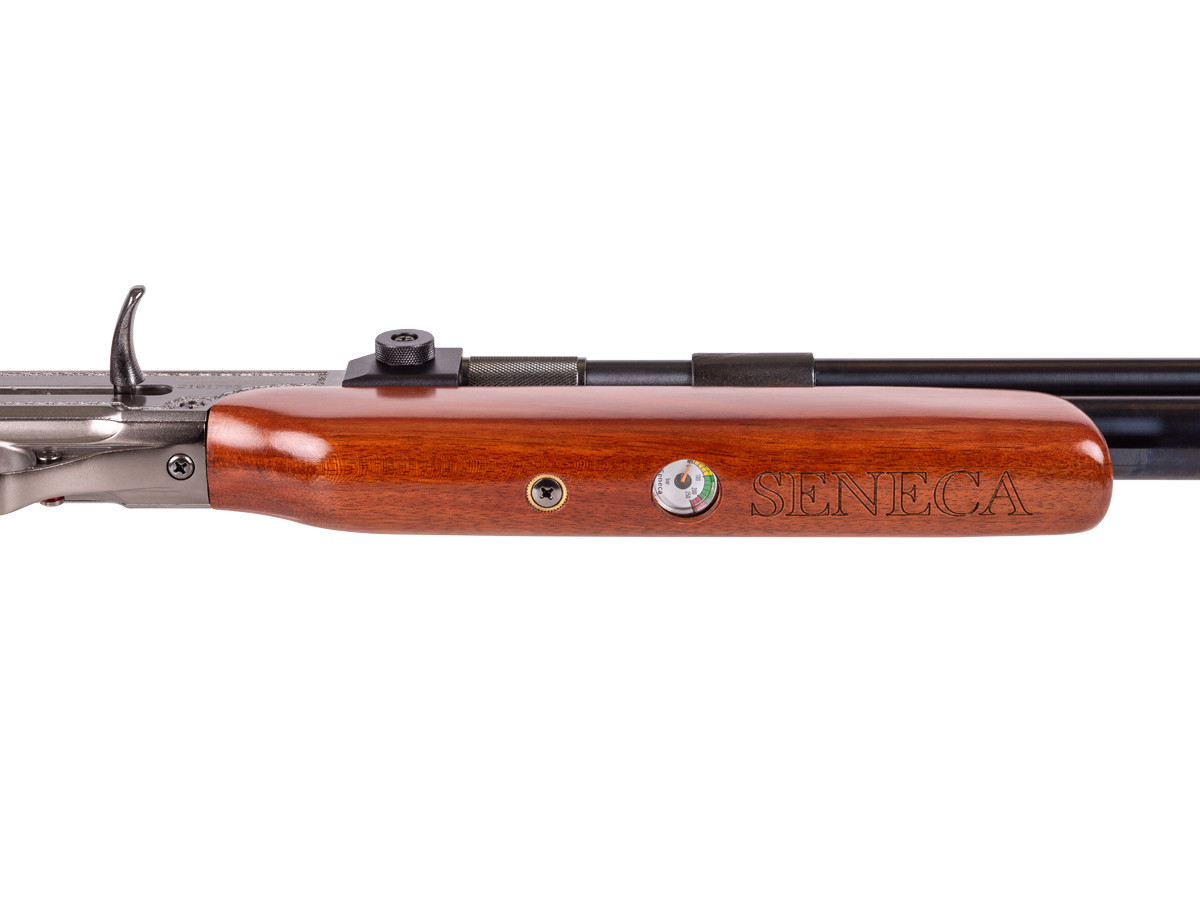
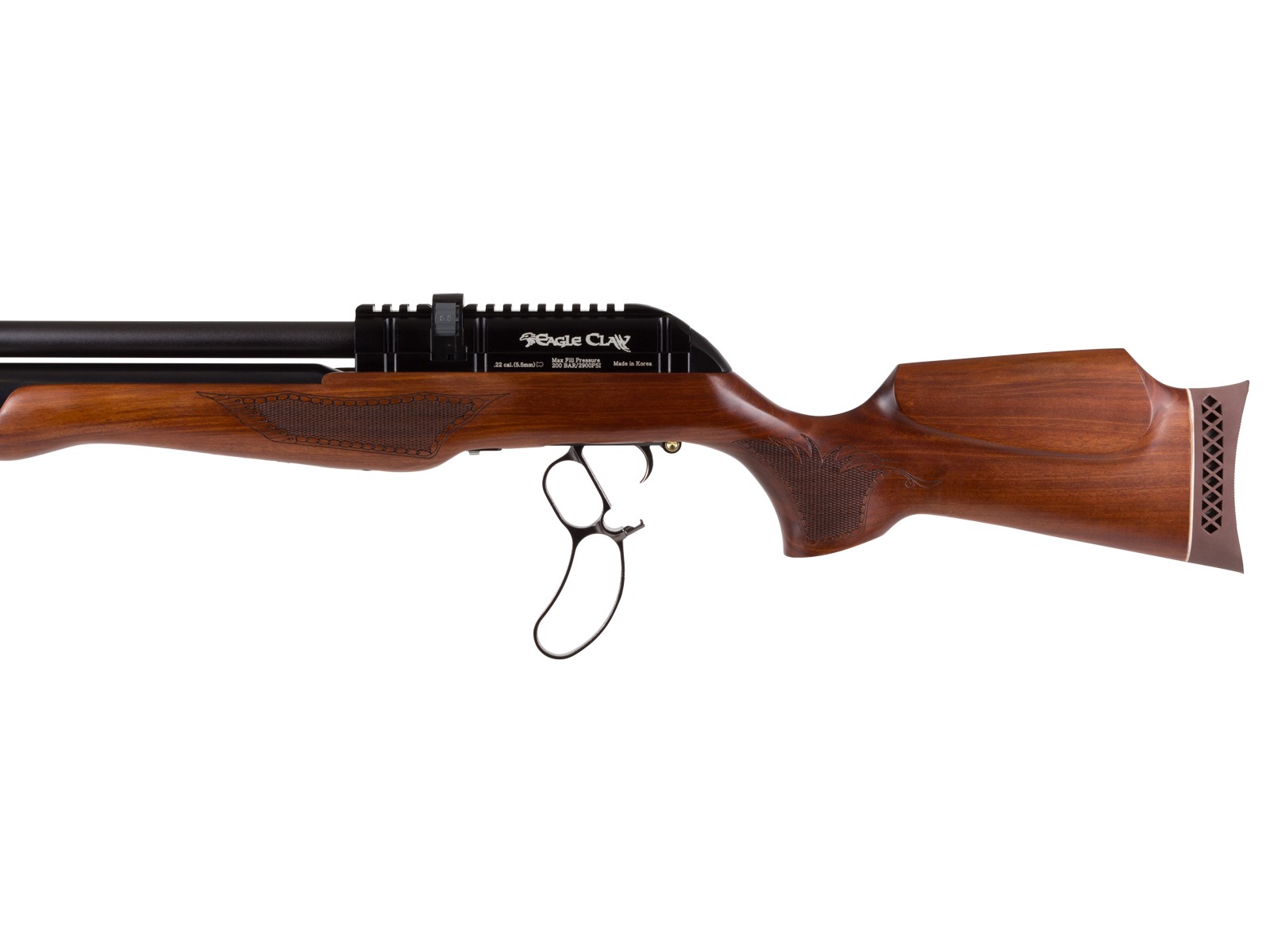
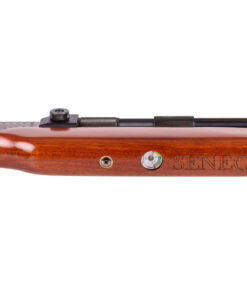
- Hardwood sporting stock
- Checkered grip and forearm areas
- Rubber buttpad
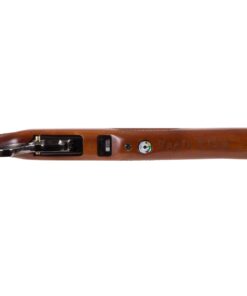
- Foster-style quick-disconnect filling arrangement
- Multi-shot magazine system
- Designed for pellet ammunition
- Built for target shooting and lawful small-game applications where permitted
These specifications combine traditional handling with contemporary PCP functionality.
Compact Carbine Handling
Greater maneuverability is provided by the carbine configuration. Compared with the longer Eagle Claw rifle format, reduced barrel and overall dimensions are used in the carbine version.
Because of this shorter profile, the rifle can be carried and positioned more conveniently. Similarly, movement between shooting positions can be made easier.
A substantial hardwood stock is still retained, however. Therefore, the compact dimensions are not accompanied by a completely tactical appearance. Instead, traditional sporting aesthetics are preserved.
Hardwood Stock and Traditional Styling
Visual character is supplied by the hardwood stock, while practical grip areas are provided through checkering around the pistol grip and fore-end.
Furthermore, a rubber buttpad has been installed at the rear. Comfortable shoulder placement can consequently be supported during longer shooting sessions.
The combination of wood, metal, and traditional lever operation gives the Seneca Eagle Claw Carbine a distinctive appearance when compared with many modern synthetic-stock PCP rifles.
Adjustable Power for Greater Versatility
Another important feature is provided by the adjustable power system.
Different shooting situations do not necessarily require identical output. Consequently, several power settings have been incorporated, allowing performance to be adapted more effectively.
For informal target shooting, a lower setting may be selected when appropriate. Conversely, greater available power can be selected for suitable lawful applications where additional energy is required and legally permitted.
In the currently listed .25-caliber configuration, a maximum velocity of approximately 920 FPS and muzzle energy of approximately 64 ft-lb are specified by Air Venturi, although actual performance can vary according to pellet weight, fill pressure, atmospheric conditions, rifle setup, and individual ammunition.
Therefore, pellets should always be tested carefully rather than performance being judged from velocity figures alone.
Shrouded Rifled Barrel
Accuracy potential is supported by the 17-inch rifled barrel. Meanwhile, a barrel shroud has been incorporated around the system.
Through this configuration, a cleaner and more refined barrel assembly is created. Sound output is also moderated compared with an otherwise unshrouded high-powered PCP system, although actual noise will vary according to power setting and environment.
Importantly, the rifle should always be used in a safe location where airgun discharge is legally permitted.
Optics-Ready Configuration
No traditional front or rear sights are included on the current manufacturer specification. Instead, a Weaver/Picatinny-compatible mounting platform is provided for optics.
Consequently, a suitable scope can be selected according to the intended application. Different optic configurations may therefore be adopted for range use or other lawful sporting applications.
Proper mounting and zeroing should always be completed before serious shooting is undertaken.
Adjustable Two-Stage Trigger
A two-stage adjustable trigger has also been fitted to the Seneca Eagle Claw Carbine.
Because trigger characteristics can influence shooter consistency, an adjustable design allows the interface to be refined within manufacturer-approved limits.
Meanwhile, a manual safety has been incorporated. Safe handling practices must nevertheless always be followed, since mechanical safeties should never be treated as substitutes for responsible firearm or airgun handling.
Multi-Shot PCP Convenience
Repeating capability is another major advantage offered by the platform.
In the currently marketed .25-caliber model, an eight-round magazine capacity is specified. Earlier and selected market listings have also shown a 10-round magazine configuration for .22-caliber versions.
Once the magazine has been prepared, the lever mechanism is used to cycle the action between shots. Consequently, the traditional movement associated with a lever rifle is retained while individual pellets are supplied through a modern repeating system.
Up to approximately 20 shots per fill are currently listed for the .25-caliber carbine specification, although practical shot count will depend strongly on power selection and other operating conditions.
Why Choose the Seneca Eagle Claw Carbine?
A distinctive combination is offered by the Seneca Eagle Claw Carbine.
Traditional hardwood construction is provided. At the same time, PCP performance is incorporated. Furthermore, adjustable power, magazine-fed operation, an optics rail, a shrouded barrel, and a compact carbine format are combined into one platform.
For shooters who prefer conventional styling but do not want to surrender modern pneumatic technology, the design therefore occupies an interesting position.
Equally importantly, the rifle is not limited to appearance alone. Practical features have been incorporated throughout its construction, while approximately 64 ft-lb of maximum listed energy in the current .25-caliber version provides substantially more performance than many lower-powered recreational air rifles.
Built for Enthusiasts Who Want Something Different
While many PCP rifles are designed around highly tactical chassis systems, the Seneca Eagle Claw Carbine takes another approach.
Warm hardwood styling is retained. Classic lever operation is emphasized. Nevertheless, compressed-air power, adjustable output, magazine feeding, scope mounting, and a modern shrouded barrel are provided.
As a result, traditional design and contemporary airgun engineering are brought together in a compact package.
For lawful target shooting and appropriate sporting applications, the Seneca Eagle Claw Carbine offers an engaging combination of character, handling, and PCP performance. Availability, permissible power levels, licensing requirements, hunting regulations, and ownership rules should always be confirmed according to the buyer’s local jurisdiction before purchase or use.
Seneca Eagle Claw Carbine Calibres, FAC, Power and Accessories
The Seneca Eagle Claw Carbine has been developed as a powerful lever-action PCP air rifle for shooters who want compact handling, multi-shot capability, adjustable output, and traditional hardwood styling. Because different markets can impose different airgun energy limits, the available calibre and power configuration should always be checked before purchase.
Manufacturer information currently identifies the Eagle Claw Carbine platform in .22 calibre and .25 calibre, while Air Venturi’s present product specification page lists the .25-calibre version with approximately 920 FPS maximum velocity and up to 64 ft-lb of muzzle energy. Air Venturi also states that the platform is capable of approximately 45 FPE in .22 calibre and 65 FPE in .25 calibre, depending on configuration and ammunition.
Seneca Eagle Claw Carbine .22 Calibre
The .22 calibre Seneca Eagle Claw Carbine offers a useful balance between pellet availability, trajectory, energy, and shot efficiency.
Because .22 pellets are generally lighter than comparable .25-calibre projectiles, relatively high velocity can be achieved while manageable pellet weight is retained. Air Venturi states that the Eagle Claw platform can produce up to approximately 45 ft-lb in .22 calibre.
Consequently, the .22 configuration can suit recreational target shooting, general plinking, and lawful small-game or pest-control applications where local regulations permit.
Pellet selection remains important, however. Different weights, head diameters, and designs can produce noticeably different accuracy and energy figures. Therefore, several quality pellets should ideally be tested before a preferred combination is selected.
Seneca Eagle Claw Carbine .25 Calibre
For shooters wanting greater projectile mass and higher available muzzle energy, the .25 calibre Seneca Eagle Claw Carbine provides the more powerful option.
The current Air Venturi specification lists a maximum velocity of approximately 920 FPS, with muzzle energy rated at approximately 64 ft-lb. The same manufacturer describes the .25 version as capable of around 65 FPE under suitable conditions.
Because heavier .25-calibre pellets retain substantial energy, the calibre can be particularly attractive for lawful sporting applications where increased terminal energy is desired.
Nevertheless, greater power can also increase air consumption. Therefore, maximum shot count may vary considerably according to pellet weight, power setting, reservoir pressure, temperature, and individual rifle characteristics.
FAC Power and High-Energy Configuration
In markets such as the United Kingdom, the term FAC is commonly used for air rifles that exceed the statutory non-FAC power threshold and therefore require the appropriate firearm certification. Buyers should always confirm the exact legal requirements applicable in their jurisdiction before ordering, possessing, transporting, or using a high-powered version.
The Seneca Eagle Claw Carbine is clearly designed as a high-energy PCP platform rather than a low-powered target rifle.
Its adjustable power system allows output to be altered across multiple settings. According to Air Venturi, velocity can be adjusted across a broad range of approximately 550 to 1070 FPS, depending on calibre, projectile, and rifle configuration.
Accordingly, the rifle should not automatically be assumed to comply with any specific non-FAC limit simply because a lower power setting is available. The legal classification of an adjustable air rifle can depend on its maximum capable output rather than the setting selected during normal use.
Adjustable Power Settings
Multiple power settings are built into the Eagle Claw Carbine platform.
This arrangement allows performance to be adapted to different shooting requirements. Lower output can be selected where reduced energy or improved air efficiency is preferred, while higher settings can be used where greater performance is lawful and appropriate.
Because the rifle is unregulated, shot-to-shot characteristics can change gradually as reservoir pressure falls. Air Venturi identifies the Eagle Claw Carbine as an unregulated PCP with a maximum operating pressure of 3,000 PSI / 206 BAR and a 380cc air cylinder.
The manufacturer currently lists up to approximately 20 shots per fill for the .25-calibre configuration, although practical shot count will depend heavily on the selected power setting.
Recommended Accessories for the Seneca Eagle Claw Carbine
The correct accessories can make the Seneca Eagle Claw Carbine easier to fill, transport, maintain, and configure for accurate shooting.
Scope and Optics
Because traditional open sights are not fitted on the current specification, an optic will normally be required.
The rifle is supplied with a Weaver/Picatinny-compatible scope mounting rail, allowing a wide selection of suitable scopes and mounts to be installed.
Useful optic accessories may therefore include:
- Airgun-rated telescopic scope
- Compatible Weaver/Picatinny scope rings
- Scope lens covers
- Bubble level where required
- Quality scope mounting hardware
A suitable magnification range should be selected according to the intended shooting distance and application.
PCP Filling Equipment
Because the Eagle Claw Carbine operates from compressed air, suitable filling equipment is essential.
Common options include:
- High-pressure PCP hand pump
- 300 BAR carbon-fibre air cylinder
- PCP compressor
- Foster quick-disconnect fitting
- Compatible fill hose
- Pressure gauge and bleed-valve assembly
The rifle operates at up to approximately 3,000 PSI / 206 BAR, so all filling equipment should be properly pressure-rated.
Spare Magazines
A spare magazine can also be extremely useful.
The current .25-calibre specification lists an 8-shot magazine capacity.
Keeping additional loaded magazines available can reduce interruptions during range sessions. However, only magazines specifically designed for the correct Eagle Claw calibre and model should be used.
Pellets and Ammunition
High-quality pellets should be selected according to calibre and intended use.
For .22 calibre, medium-to-heavy domed pellets are commonly considered during accuracy testing. For .25 calibre, heavier pellets may better exploit the rifle’s available energy.
Ultimately, the most accurate pellet should be identified through controlled testing rather than chosen solely by weight or advertised velocity.
Additional Useful Accessories
A complete Seneca Eagle Claw Carbine setup may also include:
- Padded rifle case
- Cleaning kit suitable for airgun barrels
- Pellet storage tins
- Chronograph for lawful performance testing
- Shooting rest or bags
- Protective eyewear
- Hearing protection where appropriate
- Spare seals and approved maintenance supplies
With the correct calibre, legal power configuration, optic, filling system, and supporting equipment, the Seneca Eagle Claw Carbine can be configured as a capable and versatile lever-action PCP platform for lawful sporting and recreational use.
Western Airguns, Benjamin PCP Rifles and Big-Bore Airgun Guide
People searching for air guns near me or comparing air gun dealers near me increasingly look beyond conventional pellet rifles toward PCP platforms, compact bullpups, hunting configurations, and American-designed big-bore systems. Whether the search begins with airguns usa, air rifle dealers, air rifle online, or airguns online, understanding the major platforms, calibers, operating systems, and intended applications makes it easier to compare available models responsibly.
Western Airguns and Big-Bore PCP Platforms
Among modern PCP manufacturers, western airguns has attracted considerable attention for compact designs and larger-caliber platforms. Searches such as western air guns, western air gun, western rifles, western firearm, western firearms, and western arms are commonly associated with people researching the Western Airguns product family.
Popular models include the western rattler, western rattler air gun, and western rattler bullpup. Buyers researching larger calibers may also encounter the western rattler 357, 357 rattler, 357 air rifle, .35 cal air rifle, western rattler 45, and western big bore bushbuck 45. These searches generally relate to powerful PCP platforms designed around larger projectiles rather than conventional small-caliber recreational pellet rifles.
The term western rattler bullpup for sale is frequently used by shoppers comparing availability, while western rattler bullpup amazon may appear in searches from users attempting to determine whether the platform is offered through major marketplaces. Availability, shipping rules, age restrictions, and licensing requirements should always be verified for the buyer’s jurisdiction.
Another recognizable Western platform is the western mordax. Related searches include western mordax pcp, western airguns mordax, western mordax venom, mordax venom, mordax airgun, mordax air gun, and mordax air gun price. People using these phrases are generally researching specifications, configurations, pricing, and availability rather than a traditional spring-powered rifle.
The western sidewinder is another platform frequently associated with the brand. Search phrases include western sidewinder compact, sidewinder gun, sidewiner, sidewinder length, and even technical searches such as sidewinder k7a-00008 manual. Product dimensions, magazine systems, air-cylinder capacity, operating pressure, and manufacturer documentation should be checked against the exact version because specifications can vary.
For customers researching very large-caliber Western models, bush buck and bushbuck air rifle price are common search phrases. Big-bore platforms are sometimes described broadly as a big bore pellet gun, big air rifle, big game airgun, or big game air guns. Their intended use, permissible energy level, and legal hunting applications vary significantly between regions.
Bullpup and PCP Air Rifle Technology
A bullpup air rifle places much of the action behind the trigger, allowing a comparatively long barrel to be packaged into a shorter overall platform. This layout has become particularly popular with pcp guns, pcp rifle, and pcp air rifles because compressed-air cylinders and magazines can be incorporated into relatively compact designs.
A compressed air rifle stores high-pressure air and releases a controlled amount during each shot. This system differs substantially from a break barrel pellet gun, where the barrel is typically used to cock a spring or gas-ram mechanism.
People researching an accurate pellet rifle or long range air rifle often compare regulator performance, barrel quality, projectile consistency, trigger characteristics, stock fit, shot count, and optics compatibility. Accuracy depends on the complete system rather than power alone.
Some shoppers also search for a semi automatic pellet gun or full auto air gun. These terms describe different cycling mechanisms and should not be treated as interchangeable. Regulations governing semi-automatic or fully automatic air-powered platforms may also differ from regulations covering manually cycled rifles.
Search phrases such as lethal air guns and steel penetrating full auto airgun sometimes appear online, but airguns should never be treated as toys or casually tested against unsafe targets. High-energy models can cause severe injury and should be used only with suitable backstops, eye protection, safe handling procedures, and full compliance with local law.
People also ask where do bullets land when shot in air. Projectiles fired upward eventually return toward the ground, and their landing point cannot be safely predicted. For that reason, an airgun or firearm should never be discharged vertically or in any direction without a verified safe impact area and backstop.
Other Western-Style and Specialty Airgun Searches
A number of additional terms appear alongside Western Airguns searches, including serpent arms, venom arms, desert scorpion pistol, atlas airguns, and lindstradt air gun. Similar searches may also include edgun west, edgunwest, and ed gun west, which are spelling variations commonly entered by people researching EDgun-related products and U.S. availability.
Search terms such as az air guns can relate to retailers, regional airgun communities, or businesses associated with Arizona. Because similar names can refer to different organizations, buyers should verify the manufacturer, retailer, warranty provider, and exact product before ordering.
A double barrel air gun or shotgun air rifle represents another specialized category that differs considerably from the typical single-barrel PCP rifle. Likewise, searches for a western arms shotgun may refer to products from a different manufacturer than Western Airguns, so model identification remains important.
Benjamin Air Rifles and PCP Platforms
Benjamin has a long history in the airgun market, which is why searches for a benjamin air rifle, benjamin air rifles, benjamin pellet gun, and benjamin pellet remain common among recreational shooters and hunters.
One of the best-known PCP families is the benjamin marauder. Search variations include benjamin marauder pcp and benjamin marauder air rifle. The Marauder platform is often researched by users comparing PCP rifles for target use, recreational shooting, and lawful pest-control applications.
Another widely searched model is the benjamin bulldog, a larger-caliber PCP platform. Queries such as benjamin bulldog 457 20 joules may refer to specific regional configurations, energy-restricted versions, or product information. Because power specifications can differ by market, purchasers should verify the manufacturer’s specifications and applicable regulations.
The benjamin prowler represents another area of interest for users comparing more traditional air-rifle configurations. Meanwhile, benjamin air rifle 22 break barrel is frequently searched by shoppers specifically looking for .22-caliber break-barrel designs.
Older or heavily used rifles may lead owners to search for benjamin air rifle repair. Seal condition, valves, pressure systems, triggers, barrels, stocks, and other components should be inspected or serviced according to manufacturer recommendations, particularly when dealing with high-pressure PCP equipment.
Airbows, Arrow Rifles and Alternative Air-Powered Platforms
Not every compressed-air hunting platform uses pellets. Searches for air bow, airbow, air bow rifle, arrow gun, benjamin airbow, and benjamin bow refer to systems designed to propel arrows using compressed air.
These products differ fundamentally from ordinary air pellet gun systems and should be selected according to their intended purpose and applicable local hunting regulations. Buyers should also confirm compatible arrows, pressure requirements, filling equipment, optics mounting options, and manufacturer-recommended accessories.airrifle
Air Pistols and Hunting-Oriented Searches
An air rifle and air pistol can serve very different roles depending on caliber, energy, operating system, and regional law. Searches such as hunting air pistol, air pistols for hunting, and co2 pellet guns often involve very different products.
CO2-powered models typically use replaceable carbon-dioxide cartridges, whereas PCP pistols rely on pre-charged compressed air. Local regulations determine whether either type can lawfully be used for hunting.
The term m357 can also appear when shoppers research revolver-style air pistols or products carrying similar model designations. Because this phrase can refer to multiple items, checking the manufacturer’s full model number is important before selecting accessories or replacement components.
Additional Airgun Types and Search Categories
The broader airgun market includes everything from a basic bb gun rifle and traditional spring-powered designs to sophisticated regulated PCP systems. Some buyers search for a pellet gun with silencer, although suppressor, moderator, and sound-reduction laws vary significantly between jurisdictions.
Others look for a hunting air rifle, big game air guns, or other high-powered platforms. The appropriate caliber and energy level depend on local law, target species where hunting is legal, shooting distance, projectile selection, and manufacturer recommendations.
A search such as air gun for semi truck may refer to an air-powered accessory, cleaning tool, pneumatic device, or another product entirely rather than an air rifle. Clarifying the intended equipment category is therefore important before purchasing anything based solely on that phrase.
Choosing Between Western, Benjamin and Other Airgun Platforms
Comparing products from western airguns, Benjamin, EDgun-related brands, and other PCP manufacturers requires more than comparing advertised power figures. Consider overall length, weight, caliber availability, magazine capacity, fill pressure, regulator design, shot count, trigger system, stock configuration, warranty coverage, parts availability, and manufacturer support.
A compact western sidewinder, larger western rattler, western mordax pcp, traditional benjamin marauder, big-bore benjamin bulldog, or another pcp air rifles platform may suit very different users and applications.american made air rifles
Responsible selection should therefore begin with the intended lawful use, followed by caliber, dimensions, power level, filling equipment, ammunition availability, service support, and local regulatory requirements. Whether someone begins their search with air guns near me, air gun dealers near me, air rifle dealers, or airguns online, careful comparison helps distinguish between recreational airguns, precision PCP rifles, hunting-oriented systems, specialty bullpups, and big-bore platforms.
Practical Use Scenarios for the Seneca Eagle Claw Carbine
The Seneca Eagle Claw Carbine has been developed around a combination of compact handling, substantial PCP power, lever-action operation, and traditional sporting ergonomics. Because those characteristics are combined in one platform, the rifle can be considered for several lawful recreational and sporting situations rather than being restricted to one narrow shooting role.
Its shorter carbine proportions can make the rifle easier to handle than a full-length air rifle, while the pre-charged pneumatic system provides smooth firing characteristics and repeat-shot capability. Furthermore, adjustable power allows the rifle to be configured appropriately within the limits permitted by the owner’s local laws.
Whether the rifle is being used on an approved range, for controlled pest management where legally permitted, or for recreational shooting on suitable private property, safe backstops, correct pellet selection, and responsible handling remain essential.
Recreational Target Shooting
One of the most straightforward applications for the Seneca Eagle Claw Carbine is recreational target shooting.
Because the rifle is magazine-fed and lever-operated, repeated shooting can be performed without manually loading a single pellet into the breech after every shot. Consequently, informal target sessions can feel more fluid while the shooter still remains actively involved in cycling the action.
Paper targets can be used for accuracy testing, while purpose-designed airgun targets can be selected for general practice. Suitable targets should always be installed in front of a secure backstop capable of safely containing the pellet and the energy produced by the rifle.
The rifle’s adjustable two-stage trigger can also contribute to consistent target work. Once an appropriate setup has been established within the manufacturer’s recommendations, a predictable trigger release can help the shooter concentrate on sight picture, breathing, and follow-through.
Meanwhile, the Weaver/Picatinny-compatible optics rail allows a suitable telescopic sight to be fitted. Therefore, the rifle can be configured around the distances normally used at an approved airgun range.
Benchrest Accuracy Testing
The Seneca Eagle Claw Carbine can also be used from a supported bench when accuracy, pellet compatibility, or optic zero is being evaluated.
A stable shooting rest or sandbag system can be positioned under the rifle without interfering with the action. From there, several pellet types can be tested under controlled conditions.
Instead of changing multiple variables at once, consistent shooting conditions should be maintained. The same distance, support position, fill pressure range, and optic setting can be used while different pellet types are compared.
Such testing is particularly valuable with a PCP rifle because pellet weight and design can influence group size, velocity, and energy. Therefore, bench testing can help determine which ammunition performs most consistently in a particular rifle.
A chronograph may also be incorporated where lawful and appropriate. This allows velocity consistency to be observed without relying solely on advertised figures.
Informal Plinking
For shooters who enjoy relaxed recreational shooting, the carbine format can be especially practical.
Approved reactive airgun targets can provide immediate visual or audible feedback. Nevertheless, improvised hard objects should be avoided because ricochets can be unpredictable.
The lever-action mechanism adds an interactive element to recreational shooting. Each shot is followed by the cycling of the lever, providing a different shooting experience from a conventional bolt-action PCP.
Because the rifle uses a multi-shot magazine, interruptions between shots can also be reduced. However, the action should still be operated deliberately rather than rushed. Safe muzzle direction, trigger discipline, and awareness of the backstop should be maintained throughout the entire session.
Small-Game Hunting Where Lawful
In jurisdictions where air-rifle hunting is legal, an appropriately powered Seneca Eagle Claw Carbine may be considered for permitted small-game species.
The rifle’s available energy means it should be treated as a serious sporting airgun rather than a low-powered backyard pellet rifle. Consequently, users should first verify whether the calibre, muzzle energy, species, season, land permission, and licensing requirements are lawful in their location.
Ethical field use also requires reliable accuracy. Before any hunting application is considered, the rifle and selected pellet combination should be tested extensively on paper targets at the distances likely to be encountered.
Distances should remain within the shooter’s demonstrated ability and within the range at which the rifle can maintain dependable accuracy.
A properly zeroed optic can support precise shot placement, while the compact dimensions may make the rifle easier to carry through suitable field environments.
Farm and Property Pest Management
Where local law permits air rifles to be used for pest control, the Eagle Claw Carbine may also be considered for managed agricultural applications.
Farms, storage areas, and rural properties sometimes experience pest problems that require legally authorized control. Nevertheless, the rifle should only be used where the shooter has permission and where every shot can be safely contained.
Buildings, livestock, vehicles, roads, neighboring property, and hard surfaces must all be considered before shooting begins. A pellet can travel well beyond the immediate target area if an adequate backstop is not present.
Therefore, a clearly defined shooting zone is preferable to opportunistic shooting.
The compact carbine configuration can be convenient when moving between controlled shooting positions, while the scope rail allows an optic appropriate to the environment to be installed.
Woodland and Field Carry
Carbine-length rifles are often selected when reduced overall length is valued.
The shorter profile of the Seneca Eagle Claw Carbine can make it easier to carry through wooded environments compared with some longer PCP rifles. Branches, gates, vehicles, and narrow pathways can all make compact equipment more convenient.
However, the rifle should be unloaded or carried in the legally required condition whenever the shooting situation has ended.
A quality sling may be useful if a compatible mounting arrangement is fitted correctly. Likewise, a protective rifle case can be used during transportation.
Before entering private land, permission should be obtained from the landowner or authorized manager. Local hunting and airgun regulations should also be checked beforehand.
Shooting From a Supported Field Position
Not every practical shooting situation allows a bench to be used.
Accordingly, shooters may practice from kneeling, seated, supported standing, or other stable positions permitted at their range. The aim of such practice is to develop consistent handling without sacrificing safety.
A shooting stick or field rest can provide additional support where appropriate.
The balance of the carbine can be evaluated from each position before live firing begins. Because the rifle carries a compressed-air cylinder and hardwood stock, its weight distribution may feel different from lightweight spring-powered or synthetic-stock rifles.
Regular practice allows the shooter to become familiar with that balance.
Optic Setup and Zeroing
Another practical use session involves setting up and confirming the rifle’s optic.
Because the Eagle Claw Carbine is designed around an optics rail rather than conventional open sights, correct scope installation becomes an important part of the setup process.
Scope rings should match the rail and optic diameter. Once installed, eye relief should be confirmed from a comfortable shooting position.
The rifle can then be zeroed against a suitable target and backstop.
Rather than immediately making large adjustments, several controlled groups can be fired. The point of impact can then be moved gradually until the desired zero is achieved.
After zeroing, confirmation groups should be fired to ensure that the optic remains secure.
Pellet Testing Sessions
Different pellets rarely perform identically in every air rifle.
Therefore, one useful application for the Seneca Eagle Claw Carbine is structured ammunition testing.
Several quality pellet types can be selected within the correct calibre. Each design can then be tested in separate groups while other variables are kept consistent.
Group size, reliability, velocity consistency, and feeding behavior can all be evaluated.
Rather than assuming that the heaviest or fastest pellet must be the best, accuracy should remain the primary consideration.
The magazine should also be checked to ensure that the selected pellet fits correctly and cycles without damage.
Power-Setting Evaluation
The adjustable-power capability of the platform can be explored during controlled range testing.
Different power settings may produce differences in velocity, point of impact, air consumption, and overall shot behavior.
Accordingly, a shooter can test the rifle at a safe range while recording the performance obtained from each approved setting.
The rifle should never be modified beyond manufacturer recommendations or altered to circumvent legal energy limits. Where power restrictions apply, compliance should be confirmed with the appropriate legal and licensing requirements.
PCP Air-Management Practice
A practical shooting session can also be used to understand the rifle’s air consumption.
Before shooting begins, the reservoir pressure can be recorded. After a known number of shots, the remaining pressure can be checked.
Over several sessions, the owner can build a reliable understanding of how the rifle behaves across its usable pressure range.
This information can be particularly useful before traveling to a range or sporting property because sufficient filling equipment can be prepared in advance.
Only properly rated PCP pumps, cylinders, compressors, hoses, and fittings should be used.
Range Training for New PCP Users
For somebody progressing from a lower-powered air rifle to a higher-energy PCP platform, the Eagle Claw Carbine can also be used as part of structured range training.
The shooter can begin by learning the filling procedure, magazine loading process, safety operation, lever cycling, and correct use of the optic.
Once those steps have been understood, live-fire practice can be introduced under safe conditions.
Rather than concentrating immediately on speed, emphasis should remain on muzzle discipline, trigger control, stable shooting positions, and accurate shot placement.
Experienced supervision can be valuable for anyone unfamiliar with high-pressure PCP systems.
Extended Range Sessions
The multi-shot magazine and PCP action can make the rifle comfortable to use during longer range visits.
Several magazines can be prepared while the rifle is unloaded and pointed in a safe direction. Shooting can then continue efficiently once the range is active.
However, reservoir pressure should be monitored periodically.
Because usable shot count varies with power setting, pellet choice, temperature, and fill pressure, the shooter should not assume that every fill will produce an identical number of shots.
Groups can be monitored throughout the session. If the point of impact or consistency begins to change noticeably, reservoir pressure and rifle setup should be checked.
Collection and Recreational Ownership
Beyond pure performance, some buyers may choose the Seneca Eagle Claw Carbine because of its distinctive combination of traditional styling and modern PCP technology.
The hardwood stock, lever-action system, compressed-air powerplant, and magazine-fed operation create a configuration that differs substantially from many tactical-style PCP rifles.
For collectors and recreational shooters who appreciate classic sporting design, the rifle can therefore occupy an interesting position within an airgun collection.
Nevertheless, storage requirements should be taken seriously. The rifle should be secured according to local laws and kept inaccessible to unauthorized users.
Responsible Practical Use
Ultimately, the Seneca Eagle Claw Carbine is best used where its combination of compact dimensions, adjustable PCP performance, multi-shot operation, and lever-action handling can be enjoyed safely and legally.
Approved shooting ranges provide an excellent environment for accuracy testing and recreational use. Private property can also be suitable where shooting is lawful, permission has been obtained, and a dependable backstop is present. Meanwhile, hunting or pest-management applications should only be undertaken where the specific activity, species, calibre, energy level, and location are legally permitted.
Whatever the scenario, responsible preparation remains essential. The rifle should be inspected before use, the correct pellets should be selected, reservoir pressure should remain within manufacturer limits, and the shooting area should be assessed before the first shot is taken.
When those principles are followed, the Seneca Eagle Claw Carbine can serve as a versatile sporting PCP for target practice, structured range sessions, lawful field applications, and recreational shooting while retaining the distinctive feel of a traditional lever-action platform.
Frequently Asked Questions About the Seneca Eagle Claw Carbine
What is the Seneca Eagle Claw Carbine?
The Seneca Eagle Claw Carbine is a pre-charged pneumatic air rifle that combines a traditional lever-action operating system with modern PCP technology. It is designed around a compact carbine format, hardwood stock, multi-shot magazine, adjustable power, rifled barrel, and optics-ready rail. Because of this combination, it appeals to shooters who prefer classic styling but still want the smooth firing cycle and practical performance associated with a modern PCP air rifle.
What calibres are available for the Seneca Eagle Claw Carbine?
The platform has been offered in .22 calibre and .25 calibre, depending on market availability. The .22 version generally provides lighter projectile options and potentially improved air efficiency, while the .25 version is aimed more toward shooters who want greater projectile mass and higher energy.
Availability can vary by country and distributor, so the exact calibre being purchased should always be confirmed before ordering.
How powerful is the Seneca Eagle Claw Carbine?
Power depends on calibre, pellet weight, fill pressure, and rifle configuration. The .25-calibre version is commonly associated with maximum energy around the mid-60 ft-lb range under suitable conditions, while the .22 version produces lower energy.
Actual performance should always be verified using suitable testing equipment rather than relying entirely on advertised figures. Local laws should also be checked because high-powered air rifles may be subject to licensing or ownership restrictions.
Is the Seneca Eagle Claw Carbine an FAC air rifle?
In jurisdictions that use the term FAC, certain versions may fall into an FAC category because of their available muzzle energy. For example, UK air rifles capable of exceeding the statutory non-FAC power limit normally require the appropriate firearm certificate.
However, legal classification depends on local regulations. Therefore, buyers should never assume that a reduced power setting automatically makes a particular rifle exempt from certification requirements.
Is the power adjustable?
Yes. Adjustable power is one of the important features of the platform.
Different output settings can be selected so that the rifle can be configured appropriately for different lawful shooting situations. Lower settings may provide better air economy, while higher settings may deliver increased velocity and energy.
Any adjustment should remain within manufacturer recommendations and applicable legal limits.
How does the lever-action mechanism work?
The rifle uses a lever-operated repeating action. After a shot has been fired, the lever is cycled to prepare the action for the next shot from the magazine.
This arrangement creates a distinctive shooting experience because traditional lever-action movement is combined with compressed-air power. It also removes the need to place an individual pellet directly into the breech before every shot when the magazine is being used.
How many pellets does the magazine hold?
Magazine capacity depends on calibre and model configuration.
The .25-calibre carbine is commonly supplied with an 8-shot magazine, while some .22-calibre versions have been associated with a higher magazine capacity.
Only magazines designed specifically for the correct calibre and Eagle Claw configuration should be used. Spare magazines can also be useful during longer range sessions.
How large is the air cylinder?
The rifle uses a substantial compressed-air reservoir, commonly specified at approximately 380cc.
The reservoir is filled to a maximum pressure of around 3,000 PSI or 206 BAR, depending on the manufacturer’s specification for the exact version.
Only properly rated PCP filling equipment should be connected to the rifle.
How many shots can be obtained from one fill?
Shot count depends heavily on the selected power level, calibre, pellet weight, ambient conditions, and how far the reservoir pressure is allowed to fall.
Higher power generally consumes more air per shot. Consequently, shooters using maximum output should expect fewer useful shots per fill than those shooting at a reduced power setting.
The most reliable method is to test the individual rifle and record its practical shot count.
Can the rifle be filled with a hand pump?
Yes, a suitable high-pressure PCP hand pump can be used, provided it is rated for the required pressure and has the correct connection.
However, filling a large reservoir manually can require considerable effort. For frequent shooting, many users prefer a PCP compressor or high-pressure carbon-fibre cylinder.
A compatible Foster-style quick-disconnect fitting and properly rated hose should always be used.
Does the Seneca Eagle Claw Carbine have open sights?
The carbine is generally configured for optical sights rather than conventional iron sights.
A Weaver/Picatinny-compatible rail is provided so that a suitable scope can be installed.
The scope and rings should be selected carefully to ensure proper fit, eye relief, and secure mounting.
What type of scope works well with this rifle?
An airgun-appropriate scope mounted with compatible Weaver or Picatinny rings can be used.
The ideal magnification depends on the intended shooting distance. Moderate magnification is often suitable for general target shooting, while other configurations may be chosen for specific lawful sporting applications.
The optic should be mounted securely and zeroed using a safe target and reliable backstop.
Is the Seneca Eagle Claw Carbine suitable for beginners?
The rifle can be operated by a responsible shooter who understands PCP systems, but its available power means it should not be treated like a low-powered beginner airgun.
New PCP users should first learn correct filling procedures, safe magazine handling, reservoir pressure limits, trigger discipline, and safe backstop selection.
Supervised range use can provide a useful introduction for anyone unfamiliar with high-pressure pneumatic rifles.
Can it be used for hunting?
Where airgun hunting is legal, an appropriately configured version may be suitable for permitted small-game applications.
Nevertheless, the shooter must verify local hunting regulations, legal species, calibre requirements, energy restrictions, land permission, and licensing conditions before use.
Accuracy should also be confirmed beforehand with the specific pellet and optic setup.
What pellets should be used?
Quality pellets in the correct calibre should be selected.
Different pellet weights and designs can produce different group sizes, velocities, and energy figures. Therefore, several suitable pellets should ideally be tested from a stable rest.
The best choice is generally the pellet that produces reliable feeding and consistent accuracy in the individual rifle.
Is the barrel shrouded?
Yes, the Eagle Claw Carbine uses a shrouded barrel arrangement.
The shroud contributes to the rifle’s overall design and can help moderate the report compared with an otherwise unshrouded high-powered PCP.
Actual sound level will still depend on calibre, power setting, pellet, and shooting environment.
What accessories are useful with the rifle?
Several accessories can make ownership more convenient.
Common additions include a suitable scope, compatible mounting rings, spare magazines, high-pressure filling equipment, protective gun case, approved cleaning equipment, chronograph, shooting rest, eye protection, and spare seals.
Any accessory should be compatible with the exact model and installed according to manufacturer guidance.
Is the Seneca Eagle Claw Carbine good for target shooting?
Yes. Its PCP powerplant, adjustable trigger, rifled barrel, optics rail, and multi-shot action make it well suited to controlled target sessions.
Benchrest shooting can also be useful for pellet testing and zeroing.
Because the rifle can generate substantial energy, a strong purpose-built backstop should always be used.
What makes the Seneca Eagle Claw Carbine different from many PCP rifles?
Its character comes from combining modern compressed-air technology with traditional lever-action styling.
Many contemporary PCP rifles use tactical synthetic stocks or chassis systems. By contrast, the Eagle Claw Carbine retains a hardwood sporting appearance while still offering adjustable power, magazine feeding, scope mounting, and a high-pressure air reservoir.
That combination makes it distinctive among modern PCP air rifles.



Reviews
There are no reviews yet.