Seneca Big Bore Light Hunter II – .45 Caliber PCP Air Rifle Overview
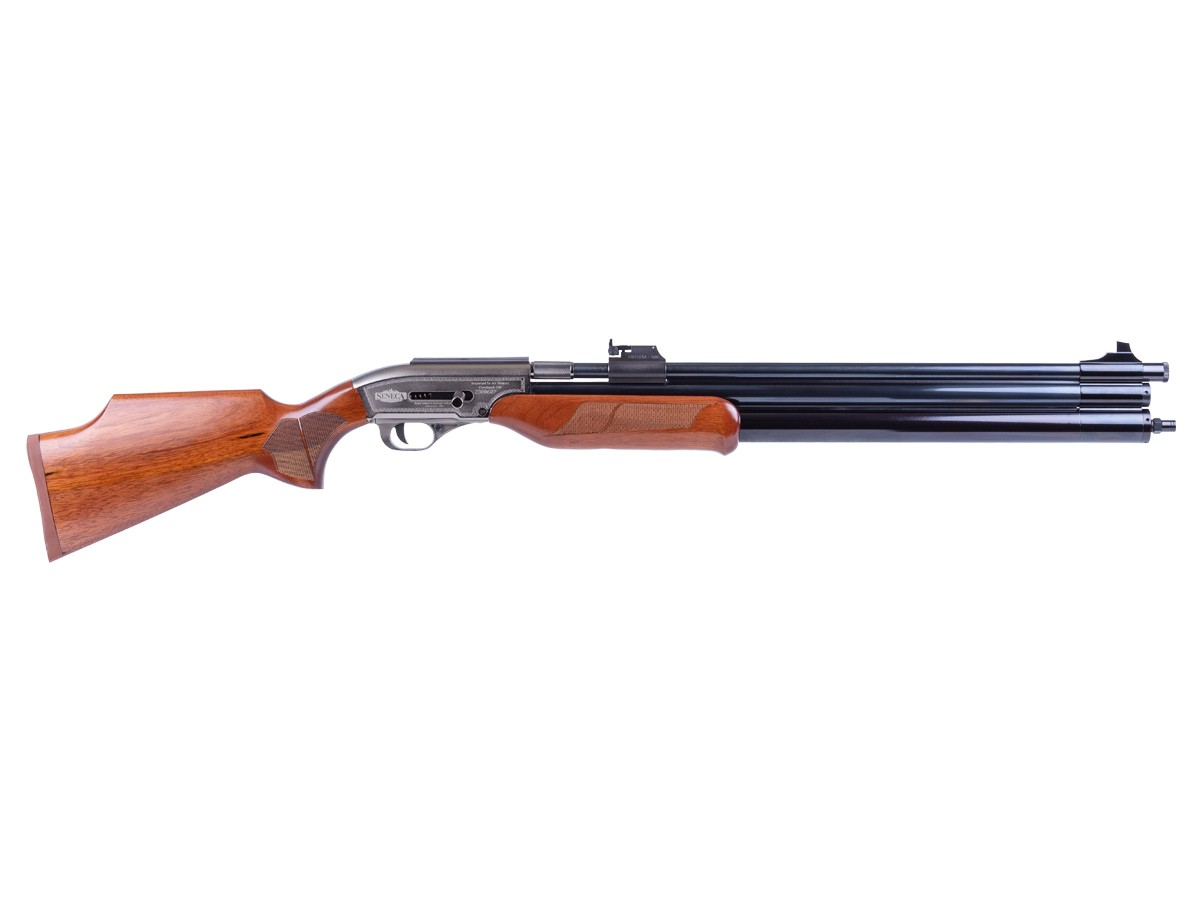
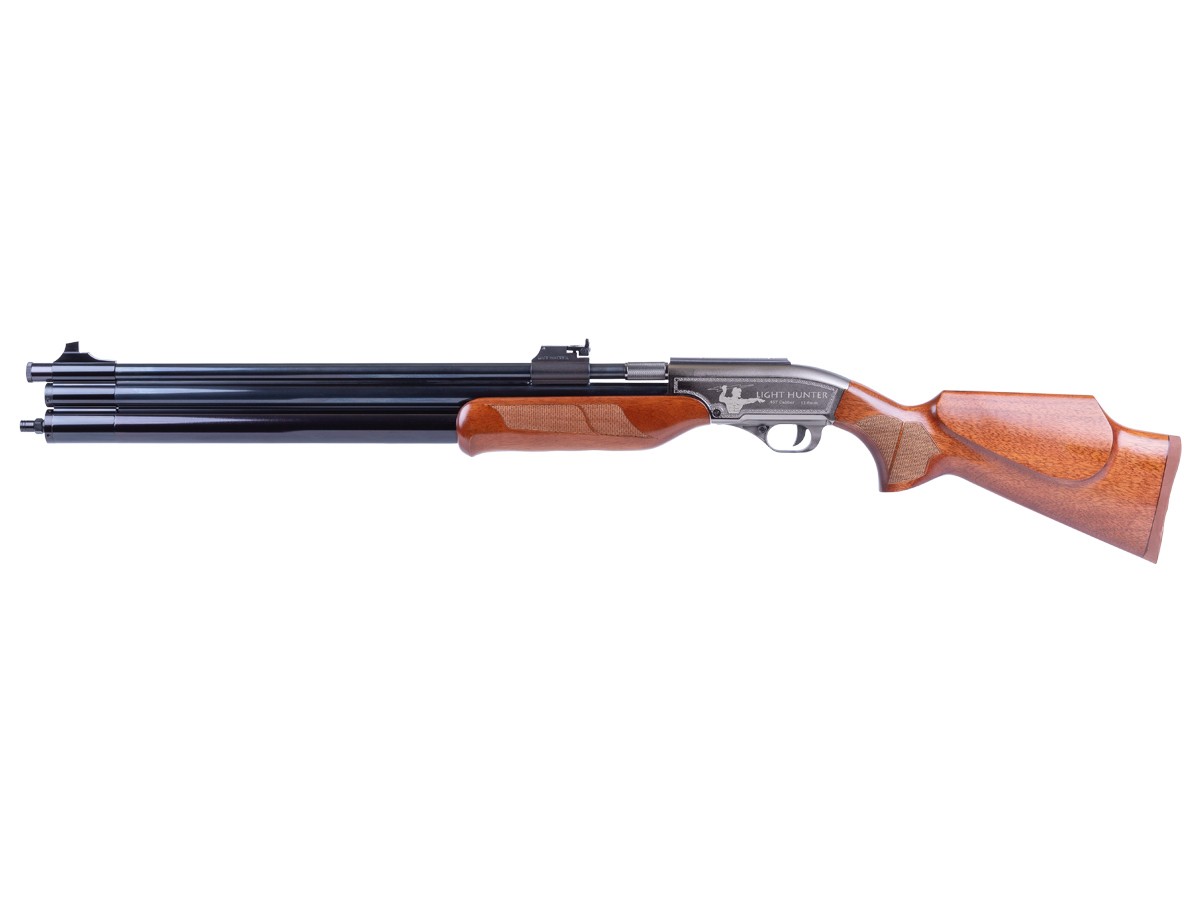
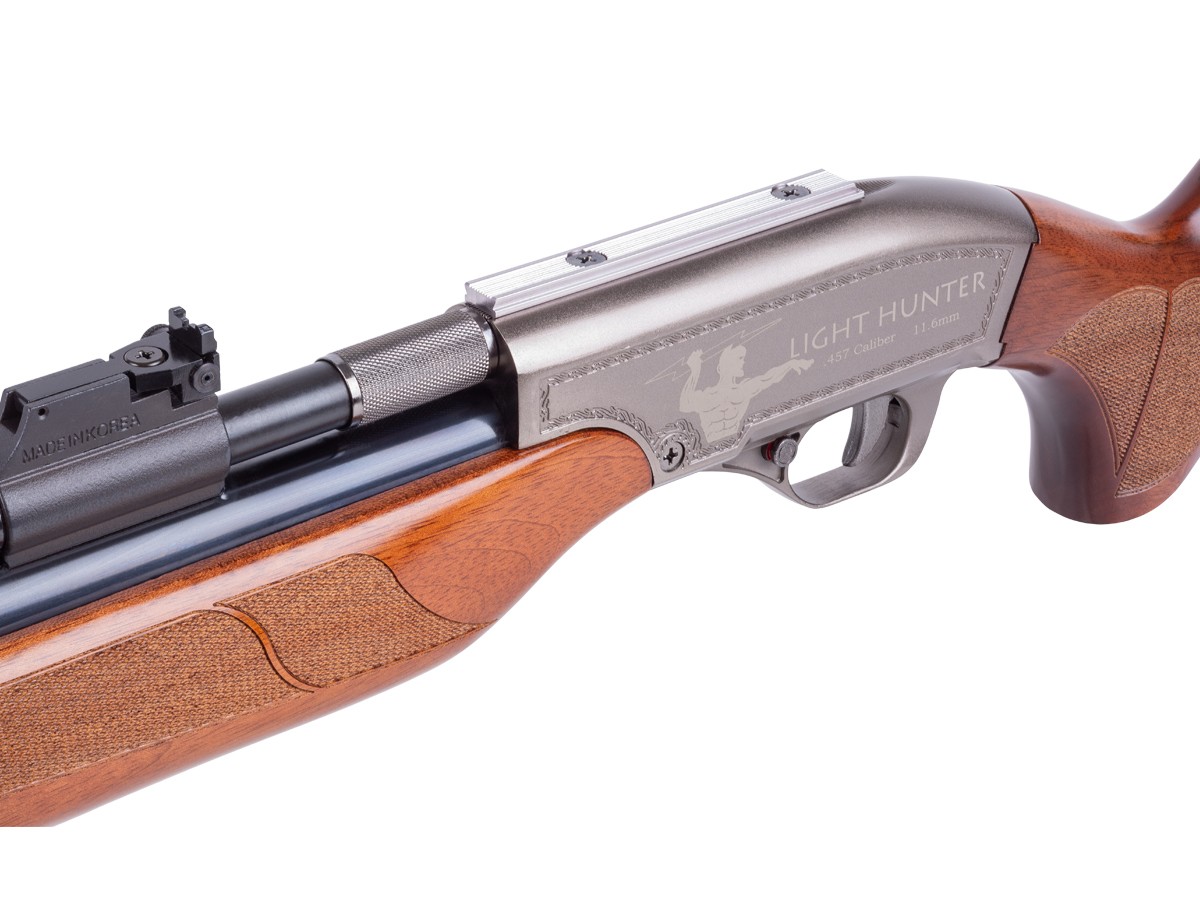
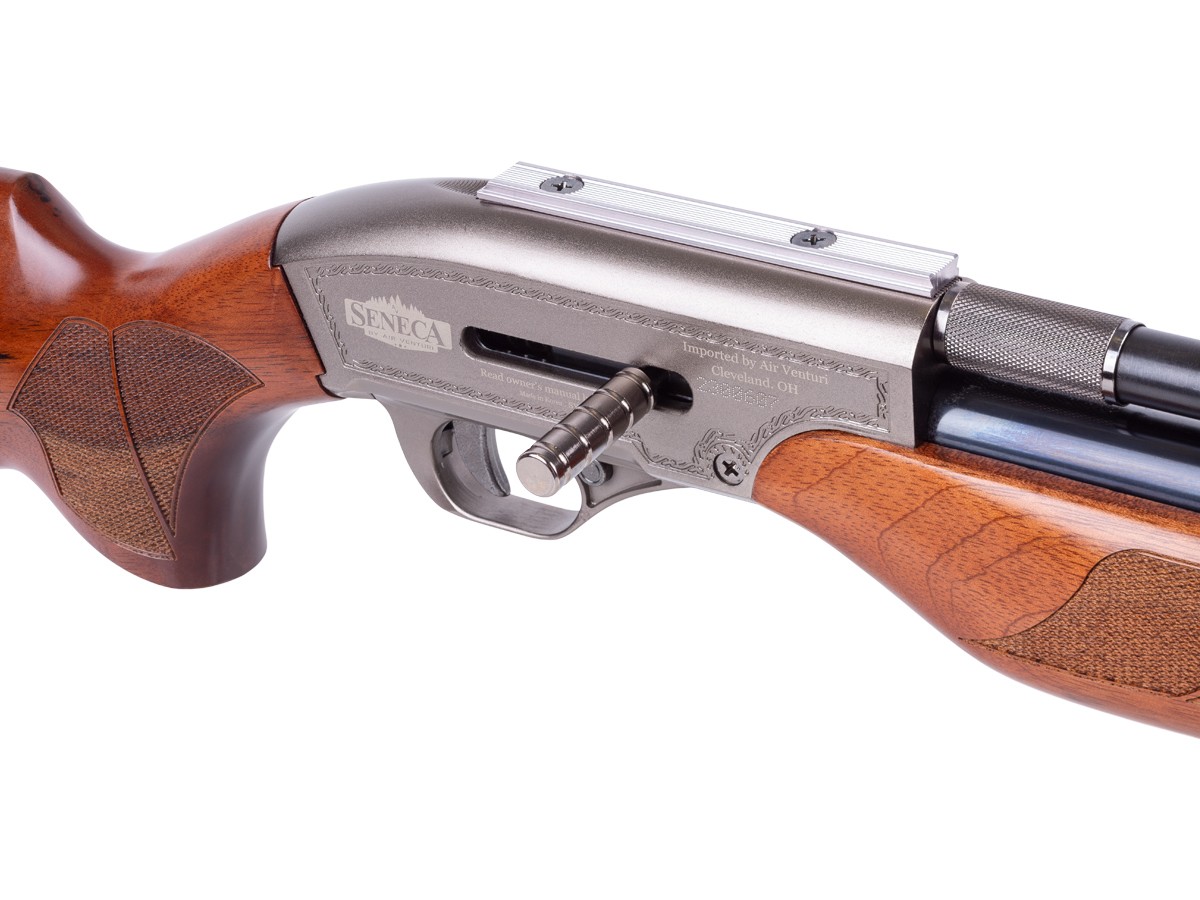
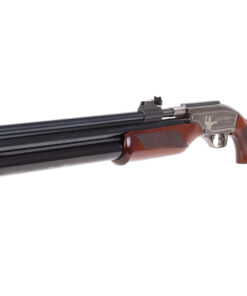
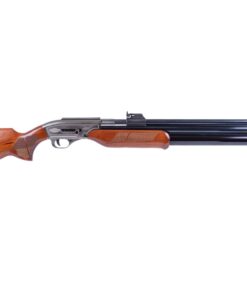
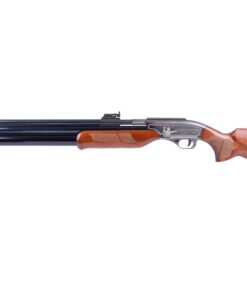
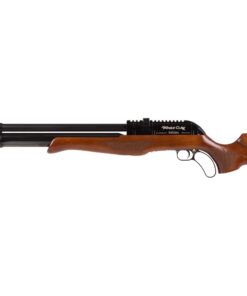
The Seneca Big Bore Light Hunter II is a .45-caliber pre-charged pneumatic air rifle designed around a traditional hardwood hunting-rifle format. While modern PCP technology is incorporated throughout the platform, a classic appearance is retained through the Monte Carlo-style hardwood stock, checkered gripping areas, raised cheekpiece, and conventional open sights.
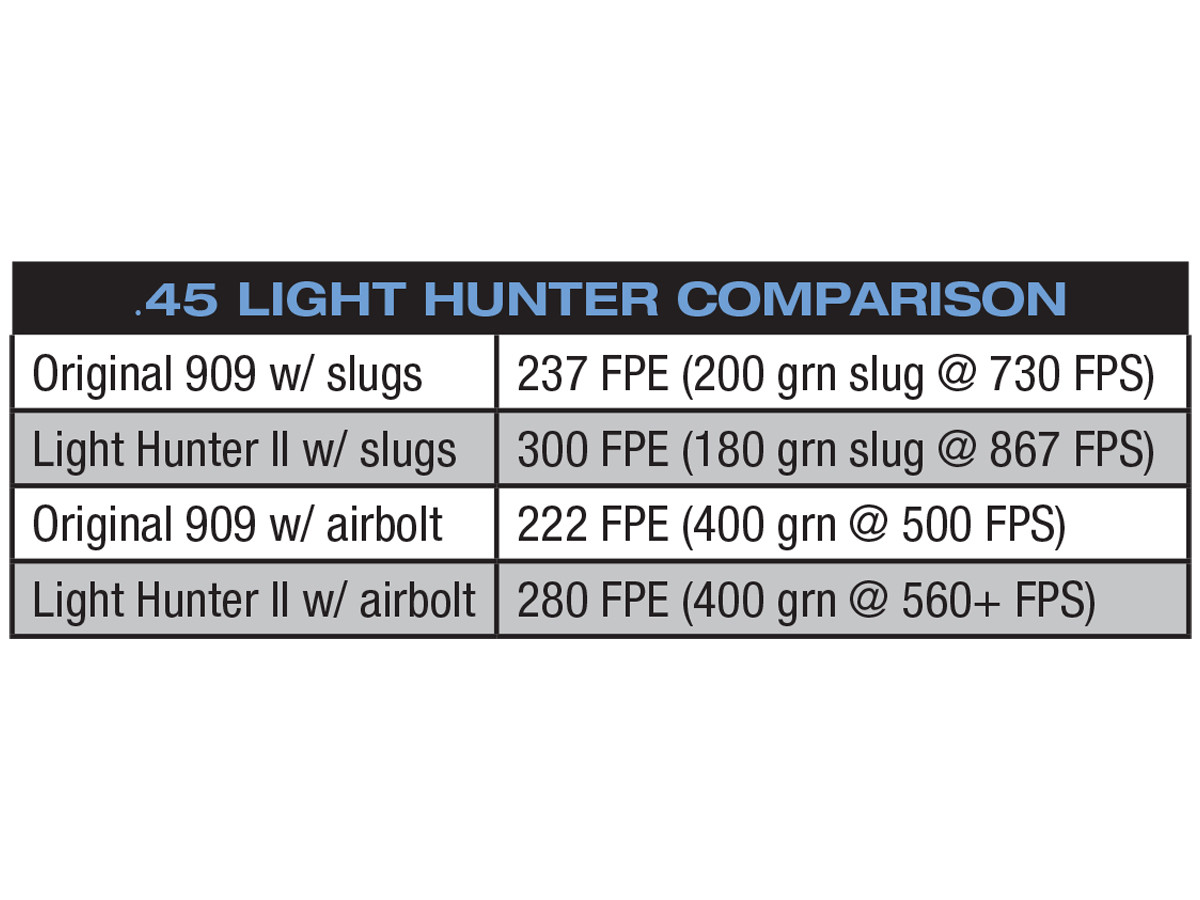
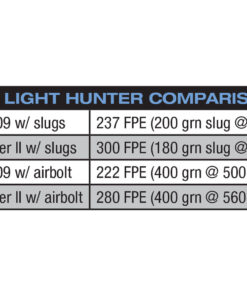
Designed as the updated version of the earlier Seneca Light Hunter platform, the Seneca Big Bore Light Hunter II combines a rifled barrel, substantial onboard air capacity, two selectable power levels, and a straightforward single-shot bolt-action mechanism. As a result, the rifle is positioned primarily for experienced adult airgun users seeking a large-caliber PCP platform where permitted by law. Manufacturer specifications list maximum performance figures of approximately 867 FPS and up to 300 ft-lb of muzzle energy, depending on projectile choice and operating conditions.
Seneca Big Bore Light Hunter II Design
A traditional rifle profile has been preserved despite the substantial pneumatic system incorporated into the platform. Consequently, users who prefer conventional hardwood styling may find the layout familiar.
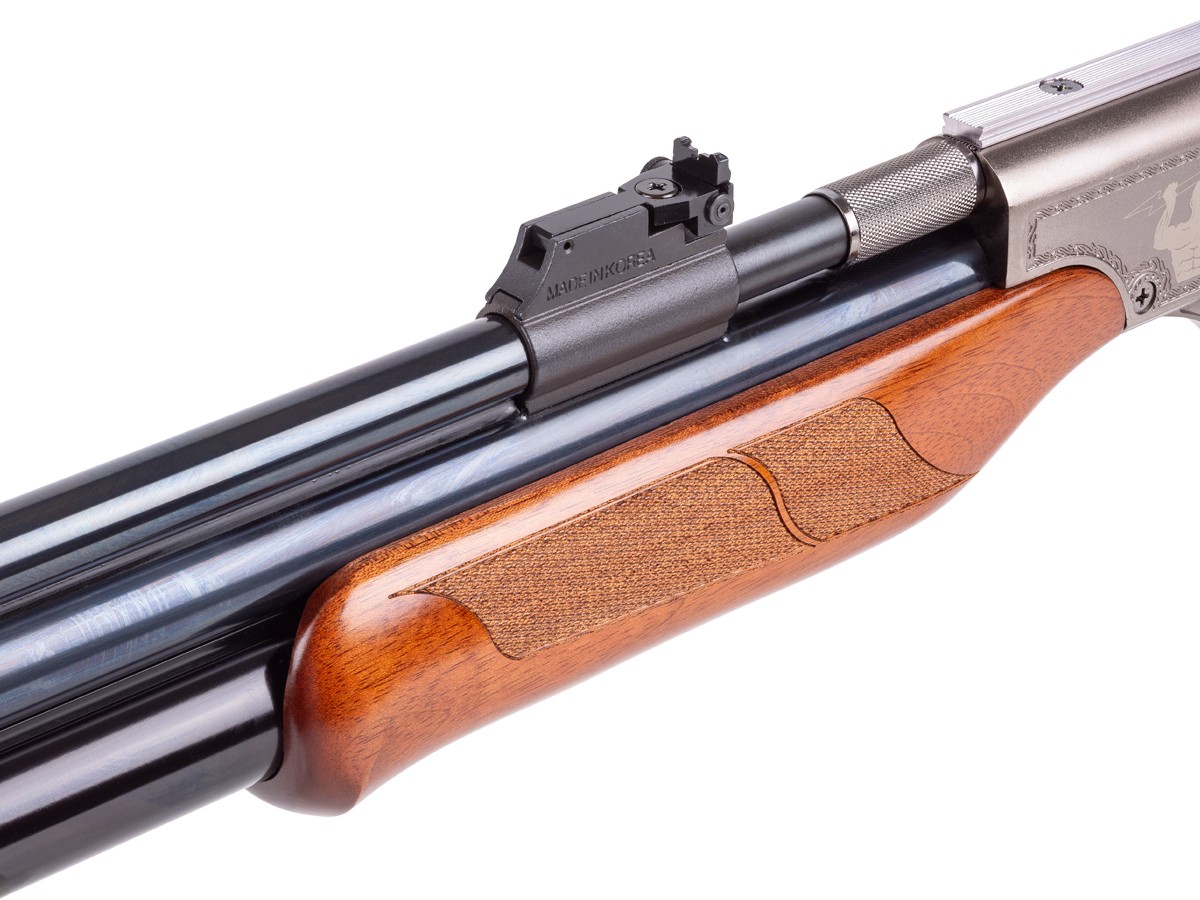
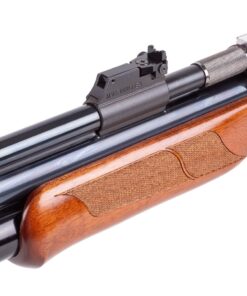
The stock is manufactured from hardwood and formed in a Monte Carlo configuration. Checkering has been incorporated around the grip and forearm areas, while a raised right-hand cheekpiece supports the shooting position. A rubber buttplate has also been fitted. According to published specifications, the rifle weighs approximately 8.5 lb and measures about 42.1 inches overall.
Meanwhile, a 21.65-inch rifled barrel is used. The system is configured as a single-shot bolt action rather than a magazine-fed platform. Therefore, one projectile is loaded for each firing cycle.
Key Product Specifications
- Manufacturer: Seneca
- Model: Big Bore Light Hunter II
- Caliber: .45
- Power system: Pre-charged pneumatic (PCP)
- Action: Bolt action
- Capacity: Single shot
- Maximum published velocity: Approximately 867 FPS
- Maximum published muzzle energy: Up to 300 ft-lb
- Barrel: Rifled
- Barrel length: 21.65 inches
- Overall length: Approximately 42.1 inches
- Weight: Approximately 8.5 lb
- Air capacity: 500 cc
- Maximum fill pressure: 3,000 PSI / 206 BAR
- Power settings: Two
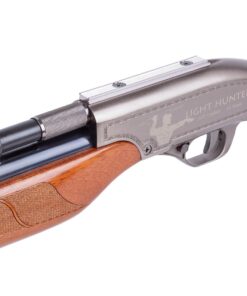
- Scope mounting: 11mm dovetail
- Front sight: Blade and ramp
- Rear sight: Adjustable for windage and elevation
- Safety: Manual
- Stock: Hardwood Monte Carlo configuration
- Buttplate: Rubber
- Regulated: No
Large-Capacity PCP Air System
Rather than relying on a spring or CO₂ cartridge, the Seneca Big Bore Light Hunter II operates through compressed air stored within its onboard reservoirs.
A combined air capacity of approximately 500 cc is provided through dual air chambers. Moreover, the published maximum working pressure is 3,000 PSI, equivalent to approximately 206 BAR. A built-in pressure gauge allows the remaining reservoir pressure to be monitored between filling and shooting sessions.
Because this is an unregulated PCP system, output characteristics can vary as reservoir pressure changes. Projectile weight, atmospheric conditions, remaining cylinder pressure, and individual rifle setup can also affect measured velocity and energy.
Two Available Power Settings
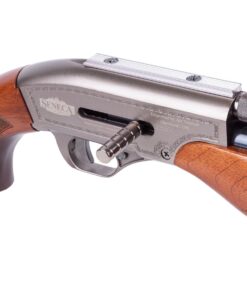
Two power levels are incorporated into the bolt system. The first bolt stop corresponds to the lower setting, whereas the second position provides the higher-power setting.
Consequently, the operator has some flexibility over the rifle’s operating characteristics without relying on an electronic control system.
.45-Caliber Rifled Barrel
The Seneca Big Bore Light Hunter II uses a .45-caliber rifled barrel. Published information lists an approximate bore/projectile compatibility range of 0.4516 to 0.4567 inch.
Rifling is incorporated to stabilize compatible projectiles in flight. However, suitable ammunition should always be selected according to the manufacturer’s recommendations. Projectile dimensions, mass, design, and fit can influence pressure behavior as well as external ballistic performance.
Manufacturer and retailer figures state that the rifle can reach approximately 867–870 FPS with certain 180-grain projectiles under specified conditions. Maximum published muzzle-energy figures reach approximately 300 ft-lb with that configuration. These figures should be treated as maximum specifications rather than guaranteed results for every projectile or fill condition.
Traditional Open Sights and Optic Mounting
Mechanical sights are supplied as part of the standard configuration.
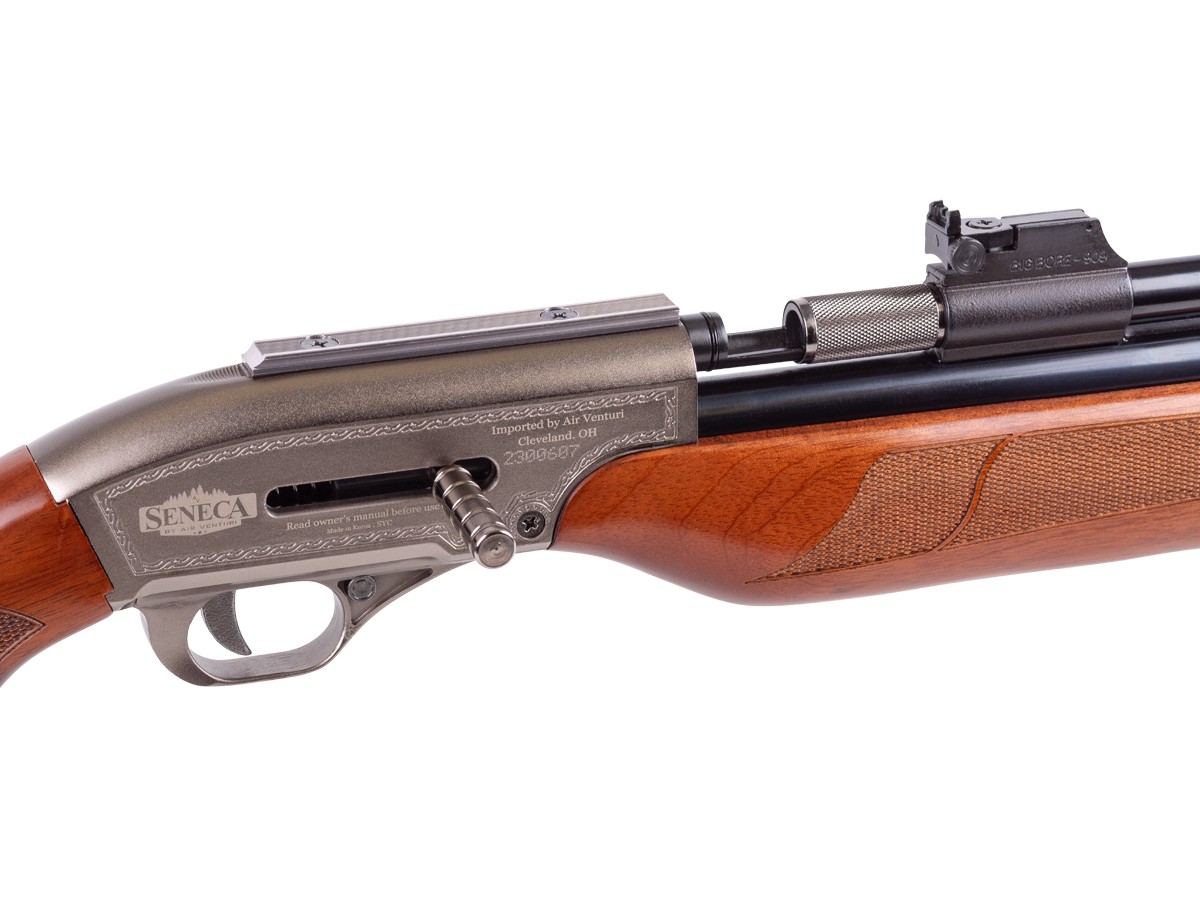
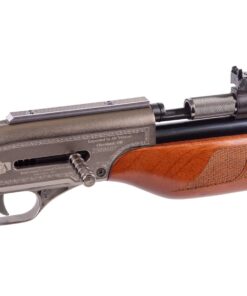
At the front, a fixed blade-and-ramp sight is used. Meanwhile, the rear sight can be adjusted for both windage and elevation. Therefore, the rifle can be configured for conventional open-sight use without requiring an optic.
For compatible optics, an 11mm dovetail rail is incorporated into the receiver. Because mounting dimensions and eye relief vary between optics, compatibility should be checked before installation.
Hardwood Monte Carlo Stock
Traditional styling is one of the most distinctive characteristics of the Seneca Big Bore Light Hunter II.
Instead of synthetic tactical furniture, the standard model uses a brown hardwood Monte Carlo stock. Texturing has been applied around the grip and forearm to improve physical contact, while the raised cheekpiece establishes a conventional shoulder-rifle layout.
A rubber buttpad is fitted at the rear. Combined with the substantial receiver and dual air cylinders, the resulting configuration weighs approximately 8.5 lb.
Single-Shot Bolt-Action Operation
Mechanical simplicity is emphasized through a single-shot bolt-action system.
Because no multi-round magazine is incorporated, each compatible projectile must be loaded individually. This arrangement reduces the number of feeding components while maintaining direct control over the loading cycle.
Additionally, a manual safety is included. Safe handling practices should nevertheless be maintained regardless of whether the mechanical safety is engaged.
Pressure Monitoring and Filling
Compressed-air management is an important part of owning any high-pressure PCP platform.
The Seneca Big Bore Light Hunter II has a manufacturer-specified maximum fill pressure of 3,000 PSI / 206 BAR. A pressure gauge is integrated into the rifle, and a male quick-disconnect Foster-style filling connection is supplied on the platform according to published product information.
Only suitable high-pressure PCP filling equipment should be used, and manufacturer pressure limits should always be observed. Cylinders, hoses, connectors, gauges, and compressors should also be inspected and maintained according to their respective instructions.
Practical Ownership Considerations
Because this is a large-caliber PCP rifle, several considerations differ from those associated with lower-powered recreational airguns.
Firstly, its reported sound level is categorized by the manufacturer as high. Secondly, a compatible high-pressure air source is required. Furthermore, ammunition selection requires additional attention because projectile dimensions and weight can materially affect performance.
Routine inspection should therefore include the stock, fasteners, barrel, seals, pressure system, filling connector, sights, and safety mechanism.
The rifle should always be depressurized, serviced, transported, and stored according to manufacturer instructions and applicable local regulations.
Intended Use and Legal Considerations
The Seneca Big Bore Light Hunter II is marketed by its manufacturer primarily as a hunting-oriented large-bore PCP air rifle.
However, laws governing high-powered air rifles can differ considerably between countries, states, provinces, and municipalities. Classification can depend on caliber, muzzle energy, projectile type, intended activity, and licensing requirements.
Therefore, prospective owners should verify local laws before acquisition, possession, transportation, discharge, or hunting use. Applicable rules concerning permitted species, hunting seasons, minimum caliber requirements, land access, shooting distances, storage, and transportation should also be followed.
Seneca Big Bore Light Hunter II Summary
Overall, the Seneca Big Bore Light Hunter II combines traditional hardwood construction with a modern high-pressure pneumatic powerplant. Its .45-caliber rifled barrel, 500 cc dual-air-cylinder system, single-shot bolt action, two power settings, adjustable rear sight, and 11mm dovetail provide a relatively straightforward mechanical configuration.
Published specifications list a maximum velocity of approximately 867 FPS, maximum muzzle energy of 300 ft-lb, a 21.65-inch barrel, 42.1-inch overall length, 8.5-lb weight, and a 3,000 PSI / 206 BAR maximum fill pressure.
For users evaluating the platform, the most important considerations are suitable lawful use, compatible ammunition, access to appropriate PCP filling equipment, proper storage, and compliance with the manufacturer’s operating and maintenance guidance.
Daystate, Delta Wolf, Alpha Wolf and Premium PCP Air Rifle Accessories
For shooters researching premium PCP platforms, daystate blackwolf, daystate redwolf, delta wolf, huntsman daystate, and daystate alpha wolf frequently appear among the most searched Daystate-related terms. Whether someone searches for wolf delta, day state, daystate delta wolf, blackwolf, deltaw, daysta, or wants to understand the delta wolf meaning, these rifles are commonly associated with modern PCP engineering, electronic control systems, adjustable configurations, and high-end airgun performance.
People asking what is a delta wolf are generally researching the electronic Daystate platform and how it differs from conventional PCP rifles. Related searches often include electronic wolves, firing cycle, lock time, lock timing, short cocking, cocking ball, index pin, and pin magazine. Searches may also focus on configuration-specific components such as an alpha wolf barrel, stock walnut, safari stock, dima stock, stock replacement, rimfire stocks, or a rifle butt pad.
Daystate Red Wolf, Alpha Wolf and Wolverine Searches
The daystate redwolf family remains closely connected with searches for daystate redwolf price, red alpha wolf, alpha red wolf, and the newer daystate blackwolf platform. Some shoppers may also compare these rifles with the daystate wolverine sapphire, wolverine gun, wolveriner, wolf gun, wolfpack armory wolverine, or even search unusual phrases such as can wolverine go on planes while researching transport rules.
Accessories frequently searched alongside these platforms include a rubber butt, rubber butt pad, butt pad rifle, bradley cheek riser, gecko grips, picatinny bag rider, and buddy bottle cover. Cosmetic or clothing-related search phrases such as red bodywarmer and black snood may also appear alongside broader brand searches.
Magazine-related searches include 177 magazine, mag 177, and 25 magazine, while ammunition research can include 177 pellets types, 5.0 mm pellets, and slug pellet. Because pellet suitability depends on the rifle, barrel, legal power level, and intended range use, compatible ammunition should always be selected according to the manufacturer’s specifications.
PCP Air Systems, Moderators and Thread Accessories
Many enthusiasts researching Daystate rifles also search for air rifle compressed air, compressed air rifle, what are pcp air rifles, and what is a pre charged pneumatic air rifle. These searches relate to the fundamental operating principle of PCP systems, in which stored compressed air is used to power each shot.
Common accessory searches include air gun pc, air gun suppressor, air gun suppressors, airgun moderator, air rifle moderator, 0db, 0db moderator, and 0 db moderator. Buyers may also encounter searches for a hogan decimeater silencer, silencer thread adapter, thread protector rifle, and muzzle thread protector when comparing muzzle accessories and compatible threaded components. Local regulations should always be checked before purchasing or fitting sound-moderating equipment.
Maintenance-related searches often include pcp o ring kit, while tuning-oriented users may look for an ats tuner. Search terms such as unfend can also appear in broad airgun keyword datasets, even when the intended product or meaning is unclear.
M-LOK, Picatinny and Rifle Sling Accessories
Accessory compatibility is another major area of interest. Common searches include mlok to picatinny rail adapter, best m-lok to picatinny rail adapter, m-lok to picatinny adapter, and picatinny m lok adapter. These adapters are often researched by users who want to mount compatible optics, rests, bipods, bags, or other permitted accessories on an appropriate rail system.
Sling-related searches include riffle sling, rigle sling, how to put a gun sling on a rifle, how to put a rifle sling on, how to install a rifle sling, how to put sling on rifle, installing a rifle sling, and attaching a sling to a rifle. Because attachment arrangements differ between stocks, rails, swivels, and chassis systems, the correct mounting points should always be confirmed from the manufacturer’s documentation.
Other general mechanical or unrelated search phrases found within broader keyword datasets include how to put extinguisher call back together, weatherby vanguard trigger adjustment, and 3.55kg in lbs. While these terms may appear in search data, they are not necessarily specific to Daystate PCP rifles.
BRK, Brocock and XR Air Rifle Searches
Alongside Daystate products, many buyers compare models produced under the Brocock and BRK families. Popular searches include brocock ltd, brocock sniper xr, brocock commander xr, pathfinder xr, brk ghost, brocock airguns, brocock commander, brk ghost air rifle, and brk sniper xr.
The brocock sniper xr is often researched by shooters comparing compact PCP platforms, while the brocock commander xr and brocock commander searches generally relate to larger tactical-style PCP configurations. Meanwhile, brk ghost and brk ghost air rifle searches reflect growing interest in BRK-branded PCP systems.
Those comparing local purchasing options may also search fx airgun dealer near me, even when their primary interest is Daystate or Brocock. This reflects the way many airgun shoppers compare several premium manufacturers before deciding which PCP platform, stock configuration, calibre, regulator setup, magazine system, and accessory package best matches their intended sporting use.
Additional Daystate and Airgun Search Terms
Broader searches surrounding these rifles may include model alpha gun, griffin gun, and general comparisons involving a wolf gun or other premium PCP platform. Buyers may also investigate different stock materials, rail systems, moderators, magazines, barrel options, butt pads, cheek risers, thread protectors, and compressed-air accessories before completing a build.
Whether someone begins with daystate redwolf, explores the daystate alpha wolf, compares a daystate delta wolf, investigates the daystate blackwolf, or considers a daystate wolverine sapphire, the most useful approach is to verify model compatibility, calibre, pressure specifications, local regulations, and manufacturer-supported accessories before purchasing replacement components or upgrades.
Frequently Asked Questions
What is the Seneca Big Bore Light Hunter II?
The Seneca Big Bore Light Hunter II is a large-caliber pre-charged pneumatic air rifle designed around a traditional hardwood rifle configuration. It uses compressed air stored inside onboard reservoirs to propel compatible projectiles through a rifled .45-caliber barrel. The rifle combines a conventional Monte Carlo-style stock with a bolt-action loading system, open sights, an optic-mounting rail, and two selectable power settings.
Unlike smaller recreational air rifles, this model belongs to the large-bore PCP category. Therefore, ownership normally involves additional considerations such as access to high-pressure filling equipment, suitable ammunition, safe storage, and compliance with local regulations governing high-powered airguns.
What caliber is the rifle?
The rifle is chambered in .45 caliber. This places it within the large-bore airgun category rather than the more common .177, .22, or .25 caliber classes.
Compatible projectile dimensions should always be checked against the manufacturer’s recommendations before use. Even within the same nominal caliber, projectile diameter, weight, construction, and profile can differ. Consequently, ammunition compatibility should not be assumed solely because a product is labeled .45 caliber.
Is the rifle a PCP airgun?
Yes. The rifle operates as a pre-charged pneumatic, or PCP, airgun.
Compressed air is stored inside the rifle before use. When the firing mechanism is activated, a controlled amount of that compressed air is released to propel the projectile. Unlike a spring-powered air rifle, no heavy spring must be compressed between shots.
Because of this design, suitable high-pressure filling equipment is required. Depending on the equipment being used, filling may be performed from a PCP compressor, certified high-pressure cylinder, or another manufacturer-approved source.
What is the maximum fill pressure?
The published maximum fill pressure is approximately 3,000 PSI, equivalent to around 206 BAR.
That figure represents the upper working pressure specified for the rifle’s air system. The maximum should not be exceeded. Moreover, all filling hoses, fittings, gauges, compressors, and cylinders used with the rifle should be rated appropriately for high-pressure PCP applications.
Before filling, connectors should be checked for contamination or visible damage. Filling should also be performed according to the manufacturer’s procedure rather than by relying on general instructions intended for unrelated PCP models.
How much air does the rifle hold?
The rifle uses a dual-cylinder configuration providing approximately 500 cc of combined air capacity.
This relatively substantial air volume supports the requirements of a large-caliber pneumatic system. However, the number of usable shots from a fill can vary depending on reservoir pressure, selected power setting, projectile characteristics, temperature, individual rifle condition, and the pressure range considered acceptable by the operator.
Because the system is unregulated, performance may also change as reservoir pressure decreases.
Is the rifle regulated?
No. The standard rifle is generally described as an unregulated PCP design.
In an unregulated system, the pressure supplied to the firing valve changes as the air reservoir is depleted. As a result, velocity may vary over the course of a fill rather than remaining completely consistent from the first usable shot to the last.
Owners interested in documenting this behavior commonly use a chronograph to observe velocity changes across a complete pressure range while following all applicable safety procedures.
Does the rifle have adjustable power?
Yes. The platform provides two selectable power levels.
This feature allows the operator to choose between two factory-designed output settings. The actual velocity and energy obtained from either setting depend on factors such as projectile weight, fill pressure, temperature, and rifle condition.
Published maximum figures should therefore be regarded as reference specifications rather than guaranteed performance under every circumstance.
What is the maximum velocity?
Published manufacturer information lists maximum velocity at approximately 867 FPS under specified conditions.
Actual velocity can vary substantially depending on projectile weight and configuration. A lighter compatible projectile may produce a different velocity than a heavier projectile, while changes in reservoir pressure can also affect results.
For this reason, muzzle velocity should not be treated as a fixed number applicable to all ammunition.
How much muzzle energy can it produce?
Published specifications list maximum muzzle energy of up to approximately 300 foot-pounds under certain test conditions.
That figure is substantially higher than the output associated with typical low-powered recreational pellet rifles. Therefore, the rifle should be handled, stored, transported, and used with the level of care appropriate to a powerful large-bore pneumatic platform.
Local regulations may also classify airguns differently according to their muzzle energy. Owners should confirm the laws that apply in their jurisdiction.
What type of action does it use?
The rifle uses a single-shot bolt-action system.
Each projectile must be loaded individually rather than being supplied from a detachable multi-shot magazine. The bolt mechanism is used as part of the loading and cocking sequence.
A single-shot configuration reduces reliance on magazine components and provides a straightforward mechanical layout. Nevertheless, loading procedures should always follow the instructions supplied for the specific rifle.
Does it come with a magazine?
No. The standard configuration is single-shot.
Because there is no conventional multi-round magazine, a projectile is loaded for each firing cycle. Anyone purchasing accessories should therefore avoid assuming that magazines advertised for unrelated Seneca models will fit this rifle.
Compatibility should always be confirmed by exact model reference.
What type of barrel is fitted?
The rifle uses a rifled .45-caliber barrel measuring approximately 21.65 inches in length.
Rifling consists of spiral grooves formed inside the barrel. These grooves help impart rotational stability to a compatible projectile as it travels through the bore.
Barrel cleanliness, projectile fit, projectile construction, and the overall mechanical condition of the rifle can all influence consistency.
Can an optic be mounted?
Yes. The receiver provides an 11mm dovetail mounting interface.
Compatible scope rings or mounts designed for the correct rail size are required. Before installing an optic, users should confirm ring height, tube diameter, objective clearance, and eye-relief requirements.
Mounting hardware should be tightened according to the manufacturer’s recommendations. Excessive tightening can damage mounting components, while insufficient tightening may allow movement.
Does it have open sights?
Yes. The rifle includes traditional mechanical sights.
A blade-and-ramp front sight is paired with an adjustable rear sight. The rear sight provides adjustment for windage and elevation.
This arrangement allows the rifle to be used without an optical sight where appropriate. The 11mm dovetail also leaves the option of fitting a compatible optic if desired.
What type of stock does it use?
A hardwood Monte Carlo-style stock is fitted to the standard model.
The design incorporates a raised cheekpiece, checkered gripping areas, and a traditional sporting-rifle profile. A rubber buttpad is also fitted at the rear.
Because hardwood is a natural material, small variations in grain pattern, tone, and finish may occur between individual examples. The stock should be kept reasonably dry and protected from prolonged exposure to moisture.
How much does the rifle weigh?
Published specifications place the weight at approximately 8.5 pounds.
Accessories such as optics, mounts, slings, and other compatible equipment can increase the complete operating weight. Therefore, the assembled weight may differ from the factory specification once accessories have been installed.
Users should also consider balance and overall length rather than weight alone when evaluating handling characteristics.
What is the overall length?
The rifle measures approximately 42.1 inches overall.
Its barrel length is approximately 21.65 inches. These dimensions produce a traditional full-length rifle profile rather than a compact bullpup configuration.
Storage cases, cabinets, and transportation equipment should be selected with the complete dimensions in mind, particularly when an optic is installed.
Does the rifle have a manual safety?
Yes. A manual safety mechanism is incorporated into the rifle.
However, a mechanical safety should never replace safe handling practices. The muzzle should always be directed in a safe direction, and the rifle should be treated as capable of firing whenever it contains compressed air and a projectile may be present.
Users should familiarize themselves with the exact safety location and operation before handling the rifle.
What filling connection does it use?
Published specifications indicate that the rifle uses a Foster-style male quick-disconnect filling connection.
The matching fill equipment must be compatible with the fitting and suitable for the rifle’s pressure range. Owners should inspect O-rings, connectors, and hoses regularly because damaged sealing components can lead to leaks.
Only components rated for high-pressure pneumatic use should be connected to the rifle.
What maintenance does it require?
Routine maintenance typically includes checking the stock, visible fasteners, filling connection, pressure gauge, seals, barrel, sights, and safety mechanism.
The rifle should be kept clean and stored in a dry location. Petroleum-based lubricants or unsuitable oils should not be introduced into high-pressure air systems because inappropriate lubricants can damage seals or create safety hazards.
Only manufacturer-recommended lubricants and service procedures should be used.
How should the rifle be stored?
Storage should comply with local law and the manufacturer’s instructions.
Generally, the rifle should be kept secured against unauthorized access, especially where children or untrained individuals could encounter it. Ammunition should also be stored responsibly.
Moisture exposure should be minimized because prolonged humidity can affect metal surfaces and hardwood components. A suitable gun cabinet, secure case, or other lawful storage solution may be appropriate depending on jurisdiction.
Is it suitable for beginners?
The platform is better understood as a high-powered large-bore PCP rifle rather than an introductory recreational airgun.
Its compressed-air system, .45-caliber configuration, substantial energy output, and specialized filling requirements mean that prior familiarity with airgun handling can be beneficial.
Anyone unfamiliar with PCP systems should first study the manufacturer’s manual, learn correct filling procedures, understand local regulations, and receive appropriate instruction before operating the rifle.
Can any .45-caliber projectile be used?
No. Nominal caliber alone does not guarantee compatibility.
Different projectiles may vary in diameter, weight, length, shape, material, and hardness. A projectile that is unsuitable for the bore or chamber can produce poor performance or create a safety issue.
The safest approach is to use ammunition that matches the manufacturer’s published specifications and recommendations for the rifle.
Why can performance vary between projectiles?
Projectile characteristics have a major effect on pneumatic airgun performance.
Weight influences acceleration and muzzle velocity, while diameter and fit affect the seal between the projectile and the bore. Shape also influences aerodynamic behavior after the projectile leaves the barrel.
Furthermore, reservoir pressure changes as the rifle is used. Because the system is unregulated, those pressure changes can also influence velocity.
How loud is the rifle?
Large-bore PCP air rifles can produce substantial sound levels.
The exact perceived report depends on the ammunition, power setting, surrounding environment, air pressure, and acoustic conditions. Enclosed or partially enclosed spaces can make the report appear significantly louder than it does in an open outdoor environment.
Hearing protection and compliance with local discharge regulations should be considered wherever appropriate.
Can the rifle be used for hunting?
The manufacturer markets the platform as a hunting-oriented large-bore PCP air rifle. However, whether it may legally be used for hunting depends entirely on the jurisdiction.
Regulations can specify permitted species, seasons, minimum caliber, minimum muzzle energy, hunting-license requirements, allowable equipment, land-use rules, and approved shooting areas.
A technically capable air rifle is not automatically lawful for every hunting activity. Local wildlife and firearms regulations should therefore be checked before use.
Is a license required?
Licensing requirements depend on the country, state, province, or municipality where the rifle is owned or used.
Some jurisdictions regulate air rifles according to muzzle energy, velocity, caliber, intended use, or a combination of these factors. Others may require licensing for possession, hunting, importation, transportation, or discharge.
Because regulations can change, owners should verify current requirements with the relevant authority rather than relying solely on general online information.
What should be checked before operating the rifle?
Before use, the rifle should be inspected for obvious damage, loose components, air leaks, obstructed barrel conditions, damaged filling fittings, or unusual pressure readings.
The correct ammunition should also be confirmed. Additionally, the operator should ensure that a safe and lawful shooting location is being used and that an appropriate backstop is present.
If the rifle behaves unusually, loses pressure rapidly, or shows signs of mechanical damage, firing should stop until the condition has been properly assessed.
What makes this model different from smaller PCP rifles?
The main distinction is its large-bore .45-caliber configuration and substantially higher published energy output.
Smaller PCP rifles are commonly designed around .177, .22, or .25 caliber projectiles and may be optimized for target shooting, recreational use, or smaller game where lawful. By comparison, the Light Hunter II uses a larger projectile and a more substantial pneumatic system.
Consequently, filling requirements, ammunition selection, sound levels, storage considerations, and legal classifications may differ significantly.
What should buyers verify before ownership?
Prospective owners should confirm local legality, licensing requirements, ammunition availability, filling-equipment compatibility, storage requirements, and access to qualified servicing.
They should also review the manufacturer’s current manual and specifications for the exact model being considered.
Taking these factors into account provides a more complete understanding of the rifle than focusing on velocity or muzzle-energy figures alone.
Practical Use Scenarios
The Seneca Big Bore Light Hunter II is designed for situations where a full-size, large-bore pre-charged pneumatic platform is appropriate and lawful. Its combination of a hardwood sporting stock, single-shot bolt action, dual air reservoirs, open sights, optic compatibility, and substantial pneumatic output makes it fundamentally different from lightweight recreational air rifles.
Because the rifle is built around a .45-caliber configuration and a high-pressure air system, its practical role should always be considered alongside local regulations, shooting-site requirements, storage practices, and the operator’s familiarity with PCP equipment. The following scenarios illustrate how the rifle may be used responsibly in suitable environments.
Controlled Outdoor Range Use
One of the most straightforward environments for operating the rifle is a properly equipped outdoor shooting range that permits high-powered air rifles.
A controlled range provides defined firing points, established safety procedures, known distances, and a suitable backstop. Those conditions are particularly important for a large-bore pneumatic rifle because its performance characteristics differ substantially from those of low-powered target airguns.
Before beginning a shooting session, the operator can inspect the rifle, verify the pressure level, confirm that the correct ammunition is being used, and check that the sights or optic remain securely mounted. Because the rifle uses a single-shot action, each firing cycle can be handled deliberately.
At a formal range, the operator can also observe how reservoir pressure changes affect point of impact and consistency. Since the rifle uses an unregulated pneumatic system, velocity may not remain identical throughout the entire pressure range.
Therefore, range sessions can be useful for documenting the rifle’s behavior under controlled conditions without relying on assumptions based only on published specifications.
Zeroing an Installed Optic
The rifle includes an 11mm dovetail rail, making it possible to install a compatible optic where lawful and appropriate.
Once the optic has been mounted correctly, a controlled range environment can be used to establish a reliable zero. The process should begin at a distance appropriate to the shooting facility and the operator’s experience.
Care should be taken to confirm that the mounting hardware is secure and that eye relief remains comfortable when the rifle is shouldered. The substantial overall dimensions of the rifle should also be considered when choosing scope position.
Different projectile types may produce different points of impact. Consequently, a zero established with one projectile should not automatically be assumed to remain correct after changing to another weight or design.
When ammunition is changed, confirmation shots should be performed in a safe environment before the rifle is relied upon for any lawful field activity.
Open-Sight Familiarization
An optic is not required for every shooting session because the rifle includes mechanical sights.
The front blade-and-ramp sight can be paired with the adjustable rear sight for conventional open-sight use. This configuration may be useful for operators who prefer a simpler setup or who want to become familiar with the rifle before fitting an optic.
Open-sight practice can also help the operator understand the rifle’s natural balance, stock dimensions, cheek position, trigger reach, and overall handling characteristics.
Because the hardwood Monte Carlo stock has a conventional sporting profile, the shooting position can feel more traditional than that of compact bullpup-style PCP rifles.
Sight adjustments should be made carefully and confirmed on an appropriate target. Rather than making large changes immediately, small corrections can be evaluated over several controlled groups.
Evaluating Projectile Compatibility
Another practical range activity involves determining which manufacturer-compatible projectile performs consistently in a particular rifle.
Not every nominally .45-caliber projectile will necessarily have the same dimensions or behavior. Weight, diameter, material, construction, and profile can all influence how the projectile interacts with the barrel and pneumatic system.
For this reason, compatible ammunition should be evaluated carefully.
During testing, one variable should ideally be changed at a time. If projectile design, pressure level, sight adjustment, and power setting are all changed simultaneously, identifying the source of a performance difference becomes much more difficult.
A structured testing session can therefore provide more meaningful information about consistency.
Any projectile that does not match the manufacturer’s dimensional or material recommendations should be avoided.
Learning the Two Power Settings
The rifle incorporates two available power positions, allowing the operator to select between different output levels.
A controlled range provides an appropriate environment for becoming familiar with those settings. Rather than assuming that the difference between settings will be identical with every projectile, the operator can observe actual performance with compatible ammunition.
The selected setting may affect velocity, air consumption, point of impact, and the number of usable shots obtained from a fill.
For that reason, sight settings established on one power level should be rechecked after changing to the other.
The operator should also monitor reservoir pressure during the session because the interaction between power setting and remaining air pressure can affect overall consistency.
Chronograph Testing
Where suitable equipment is available, chronograph testing can provide useful information about how the rifle performs across a fill.
Velocity data can be collected for several shots using the same projectile and power setting. This can help reveal how an unregulated PCP system behaves as pressure gradually decreases.
Chronograph measurements can also help identify unusually inconsistent behavior that may justify further inspection.
However, chronograph equipment should always be positioned and used according to its manufacturer’s instructions. The shooting area must remain safe regardless of whether measurement equipment is present.
Velocity data should also be interpreted carefully. A single unusually high reading does not necessarily represent normal operating performance, while an isolated low reading may result from several factors.
Air-System Familiarization
Operating a large-bore PCP platform involves more than simply loading a projectile and firing.
The filling system is an important part of everyday ownership. A practical training session can therefore focus on learning how to connect approved filling equipment, monitor pressure, inspect seals, and disconnect the fill line correctly.
The rifle’s specified maximum pressure should never be exceeded.
Before any filling procedure, fittings should be inspected for dirt, damage, or compromised O-rings. High-pressure components should also be kept free from inappropriate oils and contaminants.
Operators unfamiliar with PCP filling equipment should obtain appropriate instruction before attempting to use a compressor, high-pressure cylinder, or similar source.
Developing consistent filling habits is an important part of safe long-term ownership.
Recreational Target Sessions
Where local laws and range rules permit, the rifle can also be used for structured recreational target shooting.
Because it is a large-bore platform, it is generally better suited to robust outdoor target facilities than informal backyard environments.
Targets should be positioned in front of an appropriate backstop capable of safely containing the projectile. The area beyond the target should also be considered before firing.
Recreational sessions can focus on repeatable fundamentals such as stance, sight alignment, trigger control, breathing, and safe loading procedures.
The single-shot action naturally encourages a measured pace because each projectile must be loaded individually.
This can make the shooting session more deliberate than one involving a magazine-fed platform.
Field Carry and Handling Practice
Before using the rifle during any lawful outdoor activity, owners may benefit from practicing unloaded field handling.
The approximate 8.5-pound base weight means the rifle is more substantial than many small-caliber air rifles. Once an optic and other accessories are added, overall weight can increase further..25 caliber brocock sniper xr
Carrying practice allows the operator to evaluate balance, sling position, grip placement, and the practicality of installed accessories.
This is especially useful before entering uneven or heavily vegetated terrain.
During unloaded handling exercises, muzzle awareness should remain constant. The operator can also practice moving between standing, kneeling, seated, and supported positions without introducing a projectile.
These exercises help build familiarity without requiring live firing.



 Click here for California’s Proposition 65 warning.


Reviews
There are no reviews yet.