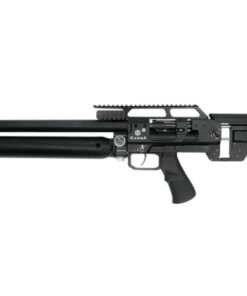
Karma SLS – High-Performance Side-Lever & Semi-Auto PCP Air Rifle
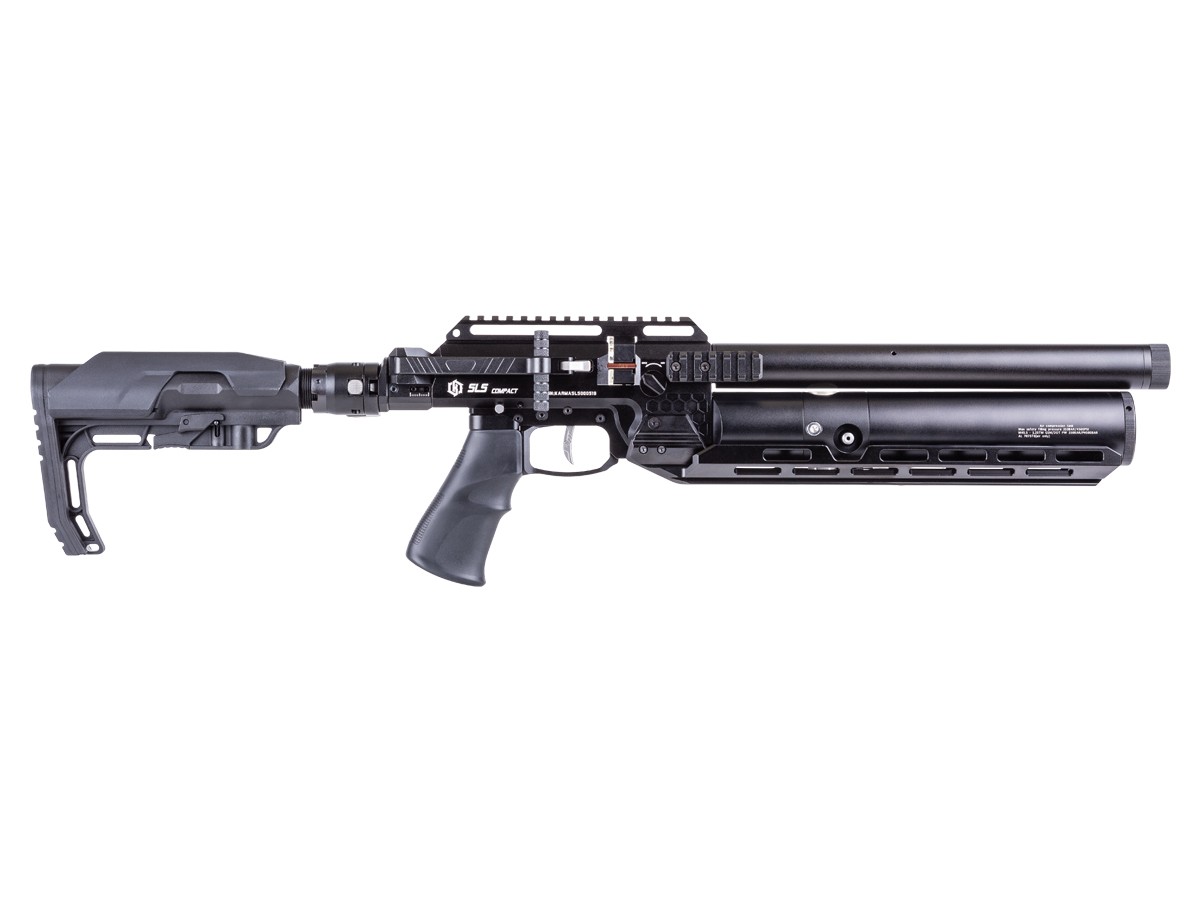
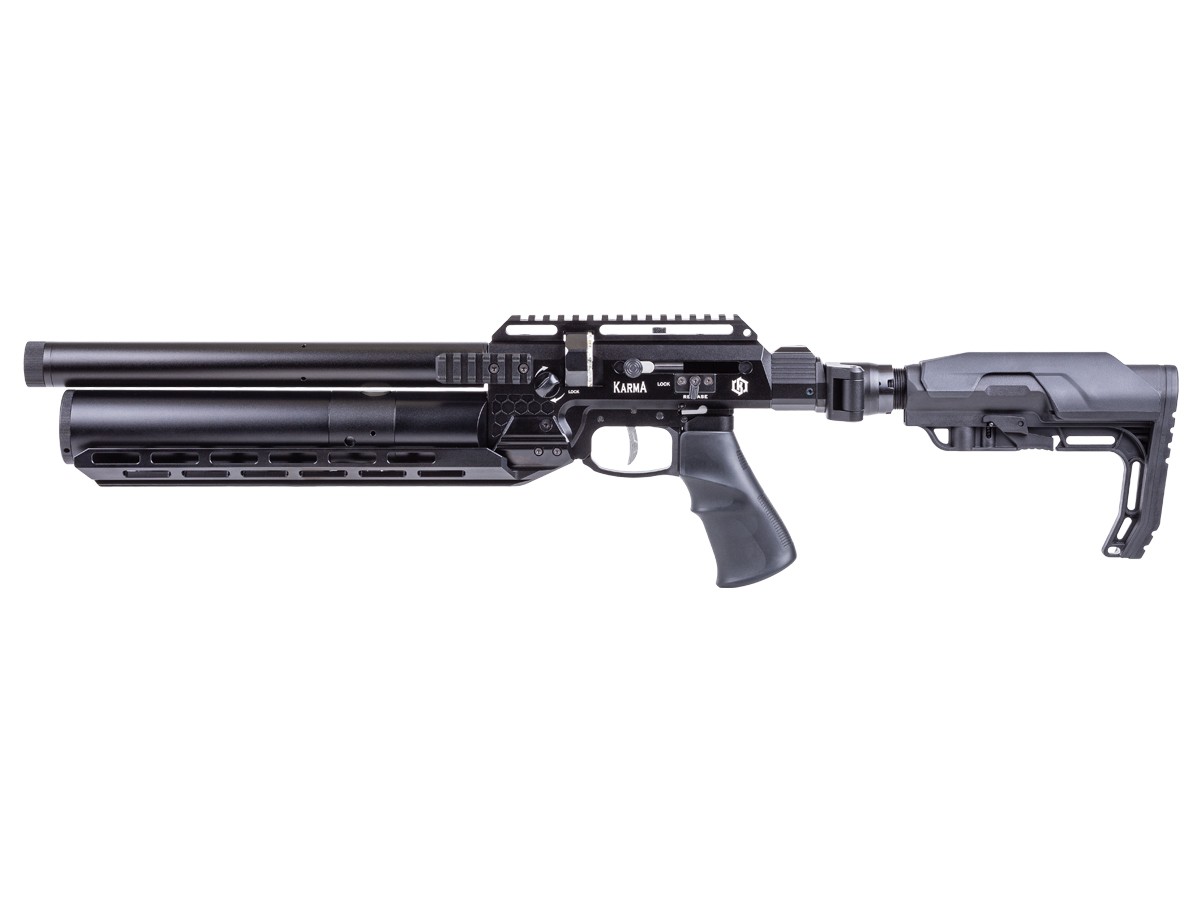
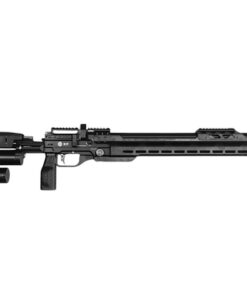
The Karma SLS has been developed for shooters who expect versatility, precision, adjustability, and modern PCP performance from one intelligently designed air rifle. Rather than being limited to one operating style, the platform has been created around a switchable side-lever and semi-automatic action, allowing a different shooting experience to be selected according to preference and application.
Across the platform, dependable pneumatic performance is supported by a high-pressure air system, an externally adjustable regulator, a generous plenum, and a precision-oriented barrel arrangement. Consequently, the Karma SLS can be configured for recreational target shooting, precision range work, pest-management applications where lawful, and general sporting use.
Furthermore, Compact and Standard configurations are available, so a balance between maneuverability, air capacity, barrel length, and shot count can be selected.
Why Choose the Karma SLS?
A combination of compact engineering and practical adjustability has been built into the Karma SLS. Instead of unnecessary complexity being added merely for appearance, useful features have been incorporated throughout the rifle.
The SLS Compact is designed around maximum portability, while the Standard configuration provides additional barrel length and air capacity. Therefore, shooters can select the arrangement that better suits their preferred style rather than being forced into a single specification.
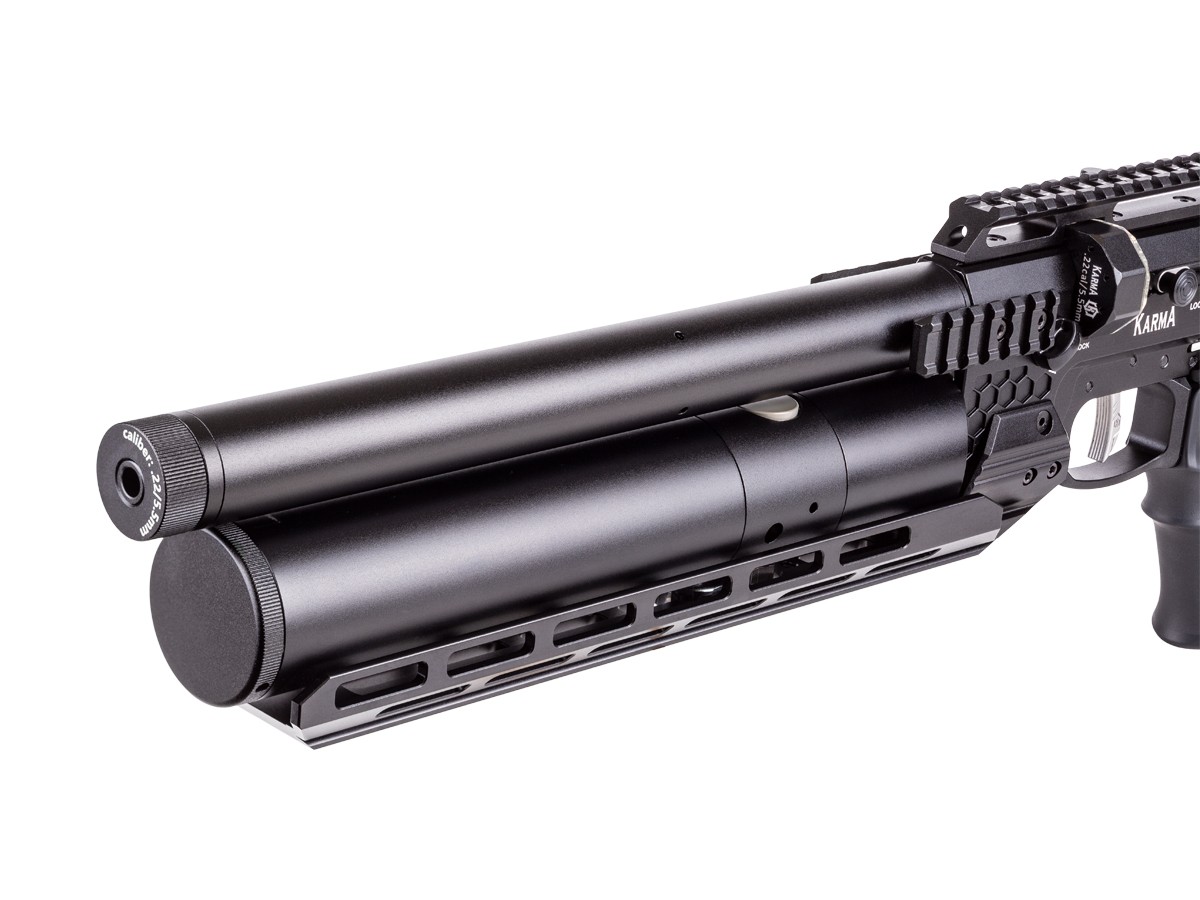
Moreover, a 20 MOA Picatinny optics rail is fitted, which provides a solid mounting platform for compatible scopes and sighting systems. A baffled barrel shroud is also included, and a 1/2 x 20 UNF threaded muzzle interface is provided for compatible accessories where their ownership and use are permitted.
Karma SLS Key Features
- Side-lever and semi-automatic operating capability
- Available in .22 and .25 caliber configurations
- Compact and Standard versions available
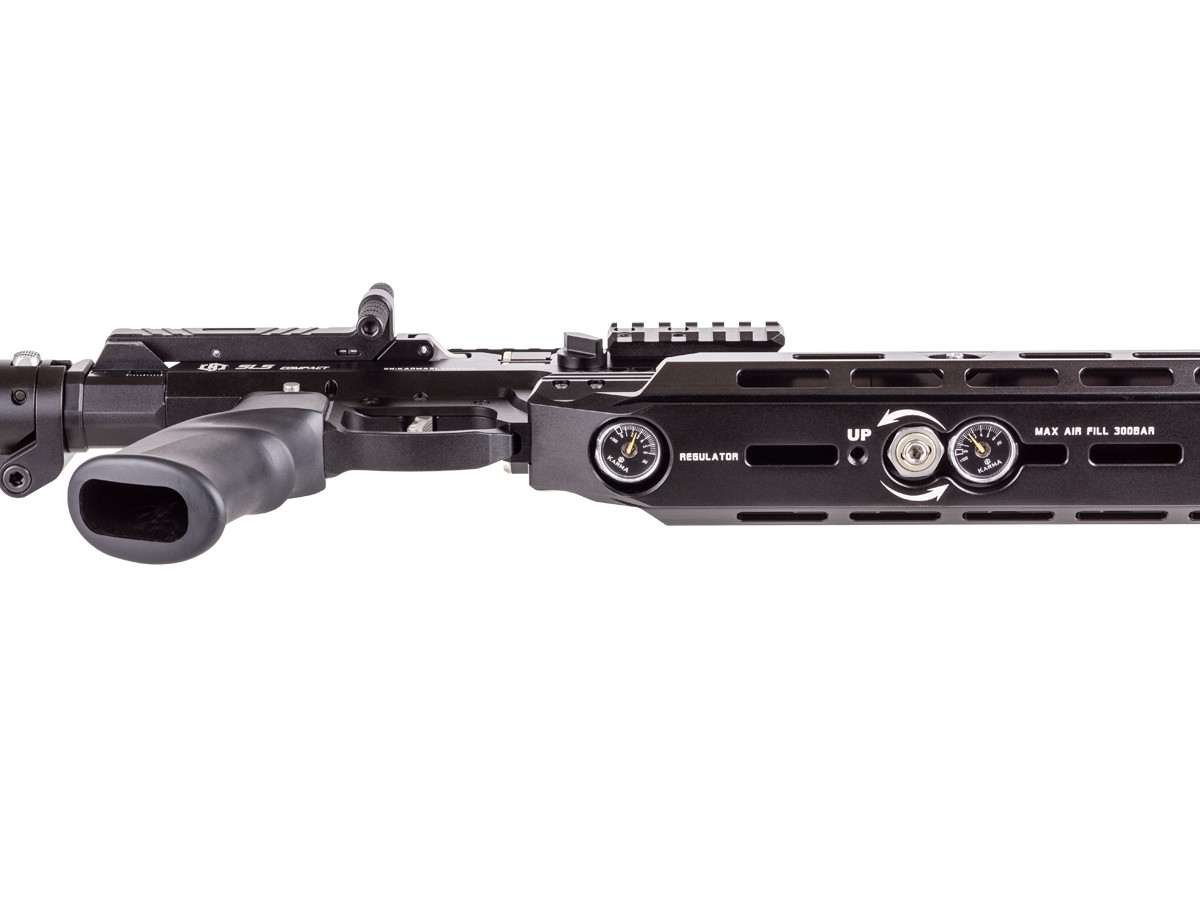
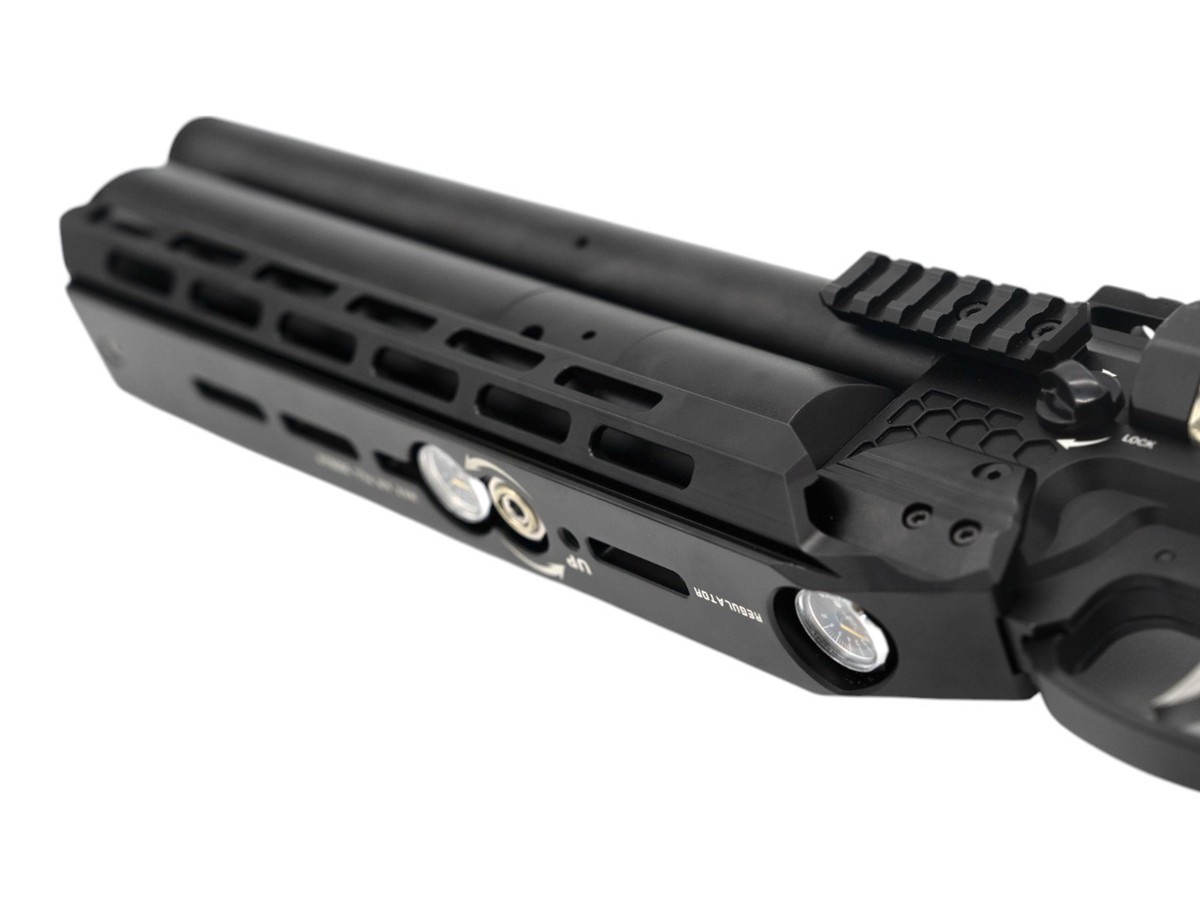
- Externally adjustable regulator
- 70cc plenum
- High-pressure 310 BAR air system
- 20 MOA Picatinny optics rail
- Multi-shot magazine system
- Push-button safety
- Precision-oriented rifled barrel
- Baffled barrel shroud
- 1/2 x 20 UNF threaded muzzle
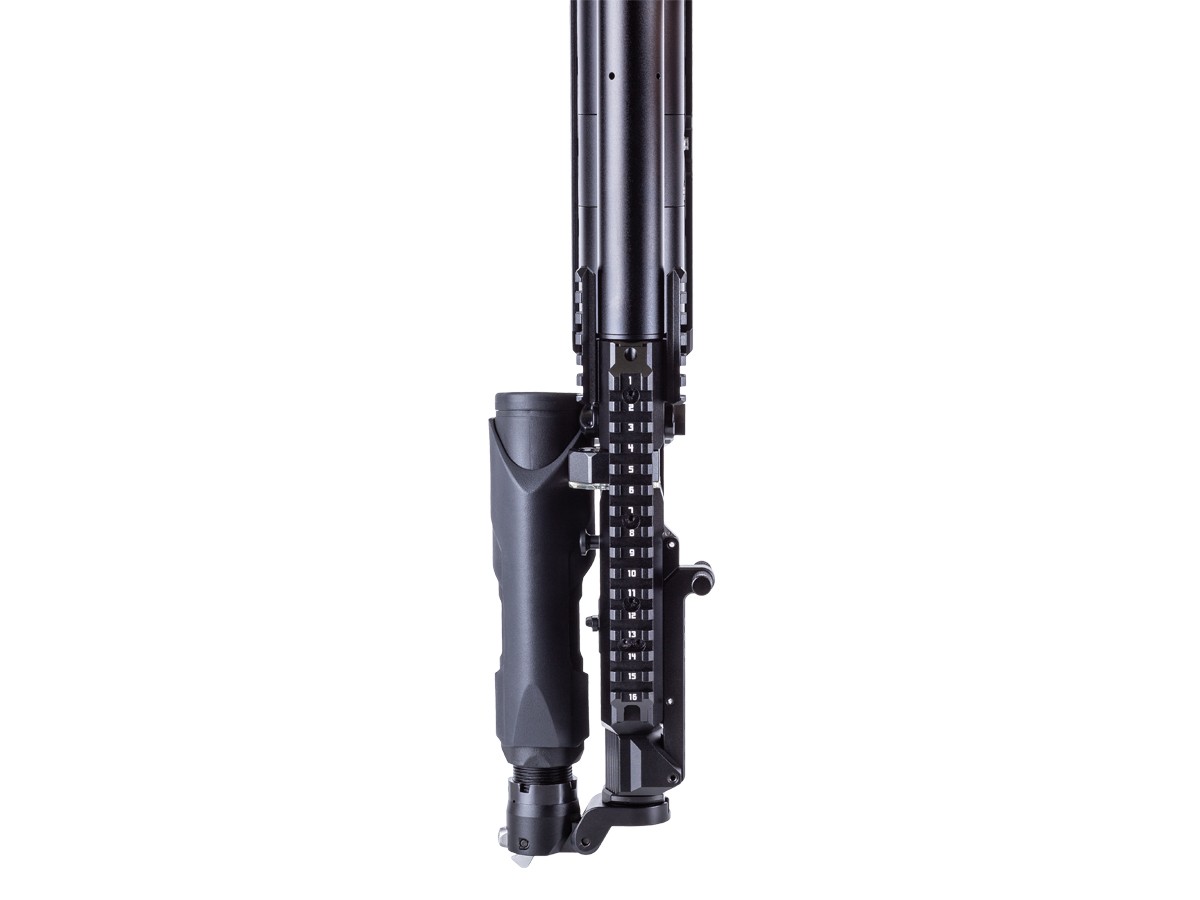
- Adjustable stock configuration on applicable versions
- Designed for pellets and practical sporting applications
- Built around consistent, repeatable PCP performance
Karma SLS Side-Lever and Semi-Auto System
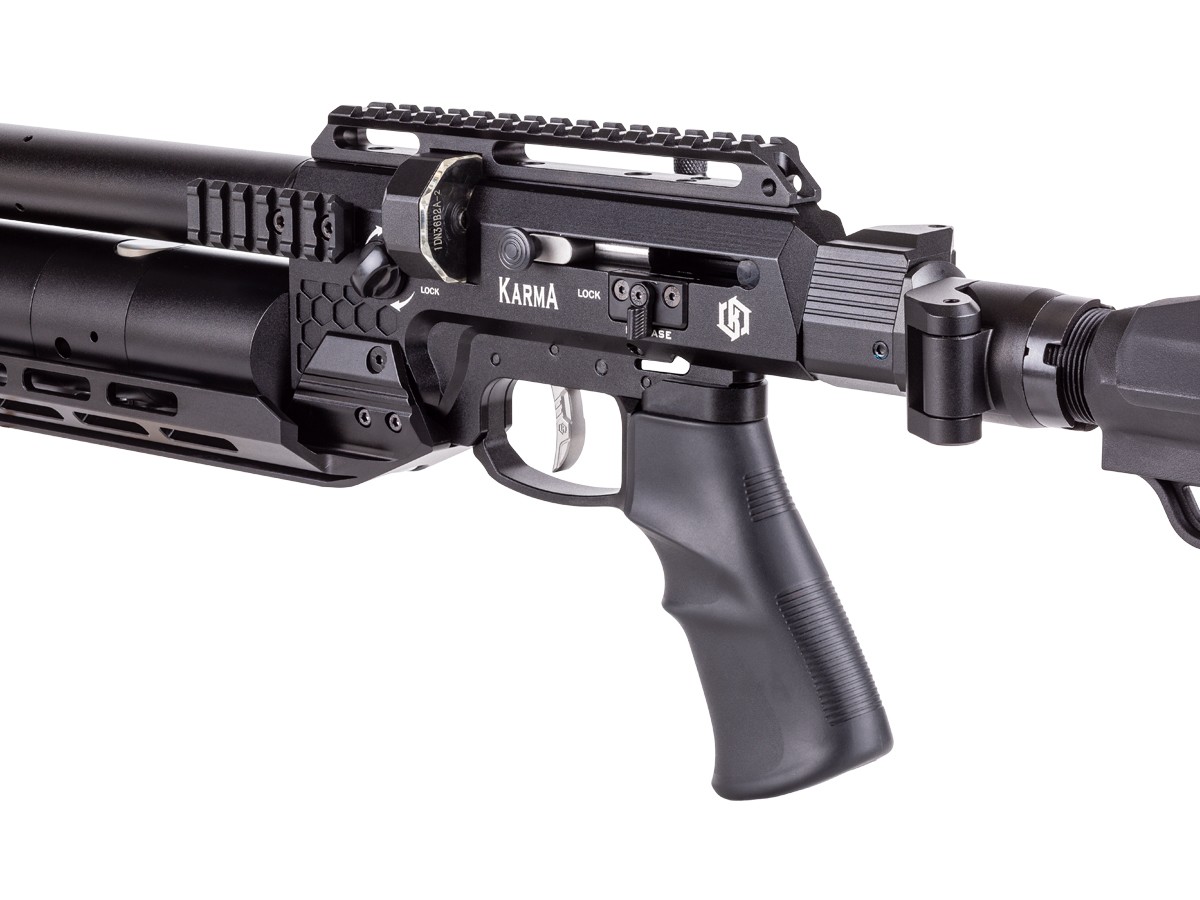
Perhaps the defining characteristic of the Karma SLS is its adaptable action system. Manual side-lever operation can be selected when a deliberate shooting rhythm is preferred. Meanwhile, semi-automatic operation provides rapid follow-up functionality without requiring the side lever to be cycled between each shot.
As a result, significantly different shooting styles can be accommodated by the same platform.
For precision target sessions, controlled manual cycling may be appreciated because each shot can be approached individually. Conversely, the semi-auto system can provide a faster and more fluid experience during suitable sporting or recreational applications.
Regardless of operating mode, responsible handling practices should always be maintained.
Precision Barrel and Consistent PCP Performance
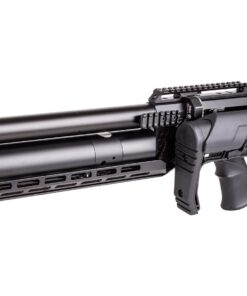
Accuracy potential is supported by a purpose-designed barrel system. Depending on configuration, different barrel lengths are provided so the rifle can be optimized around portability or increased performance.
The Compact model uses a 304.8 mm / 12-inch barrel, while the Standard configuration uses a longer barrel arrangement. A 1:17.7 twist rate is specified for the published .22 and .25 configurations.
More importantly, consistency is supported through regulated air delivery.
An externally adjustable regulator has been incorporated, allowing pressure settings to be tuned appropriately for compatible ammunition and the intended configuration. Because regulated air is delivered consistently to the firing system, velocity variation can be controlled more effectively than with a simple unregulated pneumatic arrangement.
Consequently, predictable point-of-impact behavior can be promoted when the rifle is correctly set up.
High-Capacity Air System
Reliable PCP performance depends heavily on air management. For this reason, the Karma SLS is equipped with a high-pressure air system rated for fills up to 310 BAR.
On the Compact configuration, a 250cc aluminum air cylinder is used. Meanwhile, the Standard configuration is equipped with a larger 350cc air capacity.
In addition, a 70cc plenum is incorporated across the published configurations.
This combination allows a practical balance between rifle dimensions, stored air volume, and power delivery to be achieved. Therefore, the Compact remains comparatively easy to maneuver, while the Standard provides greater capacity for longer shooting sessions.
Actual shot count will naturally depend on caliber, regulator setting, projectile weight, environmental conditions, and individual tune.
Karma SLS Compact Configuration
Portability has been emphasized with the Karma SLS Compact.
An overall length of approximately 800 mm / 31.5 inches has been specified, while weight is approximately 8.15 lb / 3.7 kg. Therefore, the rifle can be transported and handled more conveniently than many long PCP platforms.
In the published .22 base configuration, approximately 31 ft-lb has been listed with an 18.13-grain projectile at around 881 fps, with up to 36 shots per fill under the stated factory configuration.
Meanwhile, the published .25 Compact specification lists approximately 44 ft-lb, using a 25-grain projectile at around 886 fps, with approximately 20 shots per fill.
These figures should be treated as manufacturer reference specifications because actual output can vary according to tune and ammunition.
Karma SLS Standard Configuration
For shooters who place greater emphasis on air capacity and extended performance, the Karma SLS Standard provides an alternative.
Its overall length is approximately 920 mm / 36.2 inches, while weight is around 9 lb / 4.1 kg. A larger 350cc air cylinder is also fitted.
In published factory specifications, the .22 version has been rated at approximately 45 ft-lb using a 25-grain projectile at about 898 fps, with roughly 48 shots per fill.
Likewise, the .25 configuration has been published around the mid-to-upper 40 ft-lb range depending on specification and tune, with approximately 60 shots per fill listed under the manufacturer’s test configuration.
Therefore, the Standard model can be particularly attractive when additional shot capacity is preferred over minimum overall dimensions.
Multi-Shot Magazine System
Efficient operation is further supported by a detachable multi-shot magazine.
The published .22 Karma SLS magazine accommodates 12 rounds, whereas the .25 version provides a 10-round capacity.
Consequently, repeated manual loading of individual pellets can be minimized. This feature becomes particularly useful during longer range sessions because attention can remain focused on position, sight picture, and consistent technique.
At the same time, magazines should always be loaded and handled according to the manufacturer’s instructions.
Optics and Accessory Compatibility
Modern optics integration has been considered throughout the Karma SLS design.
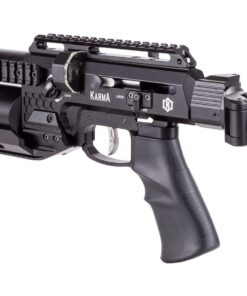
A 20 MOA Picatinny rail is installed above the action. As a result, compatible scopes and optic mounts can be positioned securely while additional elevation capability is provided for appropriate precision setups.
Furthermore, the adjustable stock arrangement available on relevant configurations allows the rifle to be adapted around the shooter rather than requiring the shooter to adapt completely around the rifle.
A comfortable cheek position, appropriate eye relief, and consistent shoulder placement can therefore be established more easily.
Baffled Shroud and Threaded Muzzle
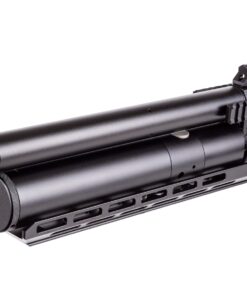
A baffled shroud surrounds the barrel, helping to manage muzzle report within the design of the rifle. Additionally, 1/2 x 20 UNF threads and a thread protector are provided.
Consequently, compatible muzzle accessories may be installed where permitted by local legislation.
Because laws concerning airgun moderators and other accessories differ considerably between countries and regions, applicable regulations should always be checked before purchase or installation.
Who Is the Karma SLS Designed For?
Versatility is one of the strongest characteristics of the platform.
The Karma SLS can be considered by experienced recreational shooters, precision enthusiasts, PCP owners looking for an adjustable platform, and users who value the ability to switch between side-lever and semi-automatic operation.
Meanwhile, the Compact configuration can be selected when maneuverability is prioritized, whereas the Standard version can be chosen when increased air capacity and extended shooting sessions are more important.
Rather than being built around a single narrow purpose, the rifle has been developed as an adaptable PCP platform.
Karma SLS – Precision, Adjustability and Versatility Combined
Ultimately, the Karma SLS combines modern PCP engineering with an unusual level of operating flexibility. A switchable side-lever/semi-auto action, adjustable regulator, 70cc plenum, high-pressure air system, multi-shot magazine, 20 MOA Picatinny rail, baffled shroud, and multiple configuration choices are brought together in one platform.
Furthermore, both Karma SLS Compact and Karma SLS Standard variants allow buyers to choose the balance of size, air capacity, power, and shot count that better fits their needs.
For anyone seeking a modern PCP air rifle with a strong emphasis on flexibility, consistent regulated performance, practical ergonomics, and configurable shooting characteristics, the Karma SLS offers a compelling platform to explore.
Always confirm the legal power limits, licensing requirements, permitted uses, and accessory restrictions that apply in your jurisdiction before purchasing or using any air rifle.
Karma SLS Calibres, FAC Power and Accessories
The Karma SLS has been designed around a flexible high-power PCP platform, with different calibre and configuration options available for shooters who want to balance accuracy, energy, shot count, and overall rifle size. Both Compact and Standard versions are currently offered in .22 and .25 calibre, while power output varies according to calibre, barrel length, regulator setting, projectile weight, and the particular market in which the rifle is supplied.
Because airgun legislation differs between countries, the term FAC is especially important for buyers in regulated markets. In the United Kingdom, for example, an air rifle producing more than the applicable non-FAC energy limit generally requires the appropriate Firearm Certificate. Therefore, buyers should always verify the exact power specification supplied by the retailer and confirm their local licensing requirements before ordering.
Karma SLS .22 Calibre
The .22 calibre Karma SLS provides an effective balance between projectile weight, trajectory, power, air efficiency, and magazine capacity.
On the Compact version, a 12-inch barrel is fitted with a 1:17.7 twist rate. In the manufacturer’s published base configuration, an 18.13-grain projectile is listed at approximately 881 fps, producing around 31 ft-lb of muzzle energy. Up to 36 shots per fill are specified, while the detachable magazine holds 12 rounds.
Consequently, the .22 Compact provides considerable output from a relatively short platform.
The Standard .22 model increases barrel length to approximately 18 inches / 457.2 mm and uses a larger air cylinder. With a 25-grain projectile, published performance is approximately 898 fps and 45 ft-lb, with around 48 shots per fill under the manufacturer’s stated configuration.
For shooters who prefer good shot efficiency while retaining substantial energy, the .22 version therefore provides an attractive option.
Karma SLS .25 Calibre
Additional projectile mass and energy are provided by the .25 calibre Karma SLS.
In Compact form, a 25-grain projectile is listed at approximately 886 fps, generating around 44 ft-lb of muzzle energy. The magazine accommodates 10 rounds, while approximately 20 shots per fill are stated under the factory reference configuration.
Although fewer shots are obtained than with the .22 Compact, noticeably greater projectile energy is delivered.
Meanwhile, the Standard .25 model uses the longer 18-inch barrel and increased air capacity. Published specifications list a 25-grain projectile at approximately 918 fps, producing around 46 ft-lb. Approximately 60 shots per fill are quoted in the manufacturer’s reference setup, while magazine capacity remains 10 rounds.
Accordingly, the .25 version is suited to shooters who prioritize heavier projectiles and greater energy over maximum magazine capacity.
Karma SLS FAC Power
Many versions of the Karma SLS operate well above the power limits commonly associated with unrestricted air rifles in some jurisdictions. For that reason, certain models may be treated as FAC-rated air rifles or their local regulatory equivalent.
Published factory outputs range from approximately:
- .22 Compact – 31 ft-lb
- .25 Compact – 44 ft-lb
- .22 Standard – 45 ft-lb
- .25 Standard – 46 ft-lb
These figures are manufacturer reference values rather than guaranteed universal outputs. Actual muzzle energy can change depending on projectile weight, regulator configuration, atmospheric conditions, tune, and individual rifle setup.
Therefore, customers should never assume that every Karma SLS is supplied at exactly the same power level.
Adjustable Regulator and Power Delivery
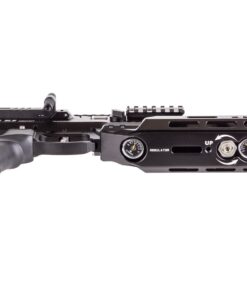
An externally adjustable regulator is built into the Karma SLS, allowing the air-delivery system to be configured within the rifle’s intended operating parameters.
Published regulator settings vary by version. For example, the .22 Compact is listed around 2200 PSI, while the .25 Compact is listed around 2400 PSI. Standard configurations are similarly optimized according to calibre and intended power level.
A substantial 70cc plenum is also incorporated. Consequently, sufficient regulated air can be stored close to the valve before each shot, supporting consistent power delivery.
The rifle is designed around a maximum fill pressure of approximately 310 BAR, while the Compact uses a 250cc aluminum cylinder and the Standard increases capacity to approximately 350cc.
Together, these systems contribute to the SLS platform’s combination of repeatability, power, and useful shot count.
Karma SLS Accessories
A broad range of compatible accessories can be paired with the Karma SLS, depending on the intended shooting setup.
Recommended Karma SLS Accessories
- PCP scope or precision optic
- Picatinny-compatible scope rings
- Spare Karma SLS magazines
- High-pressure PCP compressor
- Carbon-fiber or aluminum air tank
- 310 BAR-capable filling equipment
- Fill hose and compatible fittings
- Pellet storage case
- Range bag or padded rifle case
- Chronograph for checking velocity
- Gun-cleaning and maintenance equipment
- Eye protection
- Shooting rest or bench bag
- Compatible muzzle accessory where legally permitted
The integrated 20 MOA Picatinny rail makes optical setup particularly straightforward. Standard Picatinny-compatible scope mounts can therefore be used with suitable optics.
Furthermore, the rifle’s barrel shroud incorporates 1/2 x 20 UNF muzzle threads, allowing compatible accessories to be fitted where lawful. A thread protector is supplied as part of the published configuration.
Spare Magazines and Shooting Equipment
For extended range sessions, spare magazines can be particularly useful. The .22 version accepts 12 rounds per magazine, whereas the .25 version accommodates 10 rounds.
A suitable chronograph can also be valuable because actual muzzle velocity and energy can be measured rather than estimated. This becomes especially important in locations where specific legal power limits must be observed.
Likewise, dependable filling equipment should be selected because the Karma SLS uses a high-pressure PCP system. Compressors, cylinders, hoses, and fittings must be appropriately rated for the pressures involved.
Ultimately, the combination of .22 and .25 calibre choices, substantial FAC-level power configurations, regulated PCP performance, modular optics compatibility, and practical accessory support makes the Karma SLS a highly adaptable platform. Whether Compact maneuverability or Standard air capacity is preferred, the rifle can be configured around different shooting requirements while retaining the core versatility associated with the Karma SLS.
Air Rifles, PCP Systems, Calibers, Target Shooting and Popular Models
The world of air arms, air guns, and precision shooting equipment covers everything from recreational target shooting to sporting applications. For newcomers asking what is an air gun, what is an air rifle, what is air rifle, what is a air rifle, what is a airgun, what is an airgun, or what are airguns, the basic principle is straightforward. An air gun uses compressed gas or air to propel a projectile rather than relying on the combustion system associated with conventional firearms.
Understanding how does an air gun work, how does air gun work, how do air guns work, how does an air rifle work, how does air rifle work, and how do air rifle work can help buyers distinguish between the different operating systems available. Depending on the design, power can be supplied by a spring piston, compressed air cylinder, CO2 cartridge, or another pneumatic mechanism.
PCP Air Rifles and Compressed-Air Systems
One of the most popular categories is the pre-charged pneumatic platform. Searches such as what is a pcp air rifle, what is a pcp airgun, what is pcp air rifle, what is a pcp air gun, what is a pcp rifle, what is pcp rifle, what are pcp air rifles, and what is a pre charged pneumatic air rifle all relate to the same fundamental technology. A PCP rifle stores compressed air inside a reservoir and releases a controlled quantity each time the rifle is fired.
For shoppers researching pcp gun meaning, pcp rifle meaning, or pcp air rifle meaning, PCP simply refers to a pre-charged pneumatic system. Air is normally added using a pcp hand pump, dive cylinder, or pcp air compressor. Consequently, an air compressed gun or air compressor rifle can deliver consistent performance without requiring the shooter to manually compress a spring before every shot.
Some searches also include pcp bb gun, although many PCP platforms are primarily designed around pellets rather than traditional BB ammunition. Understanding the intended ammunition is therefore important before selecting accessories, magazines, or loading equipment.
.177 Caliber, .22 Caliber and Pellet Selection
Caliber choice is one of the most frequently researched subjects among airgun buyers. The .177 caliber remains extremely popular for recreational shooting and precision target applications. Products described as a 177 air rifle, 177 bullet, or even 177 cal darts may appear during searches, although ammunition compatibility always needs to be checked against the manufacturer’s specifications.
Questions including 177 or 22, 177 cal vs 22, 177 caliber vs 22, .177 caliber vs .22, .177 pellet vs .22 pellet, and .22 vs .177 pellet generally focus on differences in projectile size, trajectory, energy, and intended use. A smaller .177 pellet is commonly chosen for paper targets and precision shooting, whereas larger calibers may be selected for applications where additional projectile mass is desired.
Understanding bb gun pellet sizes is equally important because BBs and pellets are not automatically interchangeable. Before purchasing ammunition, shooters should confirm the caliber and projectile type specified for their particular pellet rifle, pellet pistol, or bb gun.
Air Arms Rifles and Popular Models
Among established manufacturers, air arms products remain widely searched by enthusiasts interested in precision PCP and spring-powered platforms. Well-known searches include air arms s510, s510, air arms s410, aa s400, pro sport air arms, prosport air arms, tx 200, and tx200.
Variations such as air arm and airarm are also commonly entered by shoppers searching for the brand. Buyers looking specifically for regulated sporting configurations may encounter the air arms s510 ultimate sporter .177 sub 12, a phrase frequently associated with UK-oriented searches for the S510 platform.
Each Air Arms model has its own action, stock design, power configuration, caliber options, and intended shooting environment. Therefore, specifications should always be checked against the exact version being considered rather than assumed from another model in the same family.
FX Impact M3, FX Maverick and Modern PCP Platforms
Premium PCP research frequently includes the fx maverick and the fx impact m3. Buyers may also search for fx impact mk3, fx m3 airgun, fx m3, impact m3, or fx impact m3 air rifle while comparing generations and configurations.
More specific searches such as fx impact m3 .22cal air rifle. 600mm barrel focus on caliber and barrel-length combinations. Meanwhile, international shoppers may search fx impact m3 precio, fx impact m3 precio en usa, or fx impact m3 price when researching current market pricing.
Because FX platforms can be produced in multiple barrel lengths, calibers, power settings, and regional configurations, buyers should verify the exact specification offered in their country before ordering.
Break-Barrel Air Rifles
Another major category is the break barrel air rifle. Anyone asking what is a break barrel air rifle or what is a break barrel pellet gun is usually referring to a rifle in which the barrel is hinged downward to cock the internal powerplant and expose the breech for loading.
Break-barrel designs remain popular because they can provide a self-contained shooting system without an external compressor or air bottle. Models such as a gamo pellet gun are frequently encountered by buyers exploring this category.
Learning how to load pellet gun equipment properly is particularly important. Pellets should match the manufacturer’s recommended caliber and should be loaded in accordance with the owner’s manual while the rifle is pointed in a safe direction and handled under normal shooting-range safety procedures.
CO2, Pellet Pistols and Other Airgun Types
Not every airgun uses PCP or spring power. A co2 powered pellet rifle, for example, uses replaceable CO2 cartridges as its propellant source. CO2 systems can be found in rifles and handguns intended for recreational shooting, training, and target use.
People researching air pistol uses or general pellet gun uses will encounter equipment intended for target practice, recreational plinking, skills training, competition, and other lawful sporting activities. A pellet pistol can offer a compact platform, while rifles generally provide a longer sight radius and additional stability.
Search terms such as pelet guns are also common misspellings of pellet guns and can still represent useful search intent when website content is designed to answer frequently asked buyer questions naturally.
Target Shooting and Airgun Practice
One of the most established uses of airguns is target shooting with air rifles. Dedicated air guns for target shooting may emphasize accuracy, adjustable stocks, match triggers, regulated air delivery, and compatibility with precision optics.
Likewise, airgun target practice and airgun for target practice are common search topics among people looking for an accessible way to develop shooting fundamentals. Proper backstops, eye protection, safe handling practices, and suitable ranges should always be used.
The practical range of air rifle equipment varies considerably according to caliber, muzzle energy, projectile selection, environmental conditions, and the rifle itself. As a result, buyers should use manufacturer specifications and local range rules rather than assuming that every air rifle performs identically.
Hunting Air Rifles and Appropriate Use
Some shooters research air rifles for hunting, hunting air rifles, best air rifle for hunting, pellet gun for rabbits, or even the informal phrase rats gun when looking for equipment designed for lawful pest-control or hunting applications.
Suitability depends heavily on local law, caliber, projectile energy, quarry species, shot placement requirements, and humane hunting standards. Questions such as can a bb gun kill a fox should therefore not be treated simply as equipment-selection questions. Legal restrictions and animal-welfare requirements should be checked first, and low-powered BB guns are not appropriate substitutes for equipment legally and ethically suitable for a particular species.
Similarly, searches for air rifles for deer hunting and big game hunting with air rifle involve specialized legal and ballistic requirements. Large-bore systems such as a 72 caliber air rifle or products associated with bluegrass big bore illustrate how different big-bore pneumatic platforms can be from conventional small-caliber pellet rifles. Local hunting regulations must determine whether such equipment may legally be used.
Licensing and UK Airgun Regulations
Legal requirements differ considerably by jurisdiction. UK-oriented searches frequently include do you need a licence for air rifle, air rifle certificate uk, and 22 rifle uk license. However, the rules governing air rifles, conventional .22 firearms, certificates, age restrictions, possession, transportation, and power limits are not identical.
Consequently, buyers should confirm current legislation with the relevant licensing authority before purchasing or using any regulated equipment. Particular attention should also be paid to whether a rifle is configured below or above applicable power thresholds.
Sportsman, Gamo and Other Popular Searches
Beyond specialist PCP manufacturers, buyers may encounter products such as the sportsman 900 while comparing recreational air rifles. Searches for a gamo pellet gun are also common because Gamo offers numerous spring-powered and pneumatic models across different price points and configurations.
The broader search for best air guns can include everything from affordable recreational platforms to sophisticated regulated PCP rifles. Rather than treating one design as universally superior, buyers should compare caliber, intended application, weight, stock ergonomics, power source, shot capacity, charging equipment, availability of spare parts, and local legal requirements.
Airgun Safety, Home Use and Responsible Ownership
Searches for air guns for home defense do appear online, but an airgun should not automatically be assumed to be suitable for defensive use. Laws vary significantly, and airguns can cause serious injury. Secure storage, lawful ownership, training, safe handling, and avoidance of unnecessary confrontation remain essential.
Whether someone owns an air rifle, pellet rifle, bb gun, or PCP platform, the equipment should always be treated as capable of causing injury. A secure backstop should be used for recreational shooting, the muzzle should remain pointed in a safe direction, and manufacturer instructions should be followed carefully.
Ultimately, understanding the differences between PCP rifles, break-barrel systems, CO2 equipment, caliber choices, and individual models makes it easier to compare the extensive range of modern airguns. From Air Arms platforms to FX rifles and recreational pellet guns, careful specification checking, responsible handling, lawful use, and suitable ammunition selection remain central to getting the right equipment for the intended purpose.
Practical Use Scenarios
A versatile PCP platform becomes most valuable when its design advantages can be translated into practical shooting situations. Rather than being defined only by technical specifications, a well-designed air rifle should remain comfortable, predictable, efficient, and manageable across different environments. With selectable operating modes, regulated air delivery, multi-shot capability, adjustable ergonomics, and compact or standard configurations, this platform can be adapted to a broad range of lawful sporting and recreational activities.
Whether the rifle is being used from a bench, carried around a managed property, taken to an organized range, or configured for longer shooting sessions, several characteristics contribute directly to its practical usefulness. The following scenarios illustrate how those features can be applied in real-world settings while maintaining responsible handling and compliance with local regulations.
Precision Target Shooting at the Range
One of the most natural applications is structured target shooting. At a dedicated airgun range, consistency is usually more important than rapid firing. Shooters often work on grouping, trigger control, breathing, stable positioning, and repeatable sight alignment.
For this type of session, side-lever operation can be particularly useful because each shot is deliberately prepared. A shooter can fire, observe the impact, cycle the action, settle back into position, and then repeat the process. This slower sequence encourages concentration and makes it easier to assess ammunition performance.
Regulated air delivery is also valuable during precision work. When pressure is managed consistently, changes in velocity between shots can be minimized. Therefore, vertical dispersion caused by inconsistent air delivery may be reduced when the rifle is properly configured.
A quality optic mounted to the Picatinny rail can further improve the setup. Magnification can be selected according to target distance, while the shooter can establish a repeatable cheek position and eye alignment.
Over longer sessions, spare magazines and a dependable filling system can reduce interruptions. Instead of repeatedly loading individual projectiles, preloaded magazines can be used to keep the session organized.
Benchrest Shooting
Benchrest shooting places a strong emphasis on stability and repeatability. The rifle is normally supported at the front and rear so that unnecessary movement is minimized.
In this environment, overall balance becomes important. The Standard configuration can be especially suitable when maximum compactness is not required. Its additional air capacity can support extended strings of fire, while the longer overall format may feel more settled when placed on a shooting rest.
A front bag, rear bag, or dedicated rest can be used to establish a consistent firing position. Once the rifle has been positioned correctly, the shooter can concentrate on fine aiming adjustments.
Small variations in ammunition can then be evaluated more accurately. Different projectile weights, head sizes, or designs can be tested to determine which option groups most consistently.
Because velocity can be checked with a chronograph, shooters can also compare performance data with actual target results. This combination allows tuning decisions to be based on evidence rather than guesswork.
Recreational Plinking
Not every shooting session needs to be highly technical. Recreational plinking remains one of the most enjoyable ways to use an air rifle when it is carried out in a safe and lawful location with an appropriate backstop.
Reactive targets can provide immediate visual or audible feedback, making the activity engaging for experienced shooters and newcomers alike.
In this situation, multi-shot operation becomes particularly convenient. The rifle does not need to be reloaded manually after every discharge, so the session can remain fluid.
When a faster shooting rhythm is appropriate and legally permitted, semi-automatic operation can provide a different experience from conventional manually cycled PCP rifles. However, controlled trigger discipline and safe muzzle direction remain essential regardless of firing mode.
For informal target practice, moderate magnification is often sufficient. Some shooters may prefer a compact scope or other compatible sighting system because rapid target acquisition can be more useful than high magnification at shorter distances.
Farm and Property-Based Pest Management
On agricultural land, some air rifles are used for legally permitted pest-management activities. The exact species, seasons, permissions, power requirements, and shooting restrictions vary significantly between jurisdictions, so local regulations must always be checked before use.
Where lawful, a compact PCP platform can offer practical advantages in confined working environments. Maneuverability can become particularly useful around farm buildings, storage areas, sheds, barns, or other locations where a longer rifle could be less convenient.
The Compact configuration can therefore be attractive when reduced overall length is prioritized.
Precision remains essential. Pest-control applications require positive target identification, a safe backstop, appropriate projectile selection, and a clear understanding of the rifle’s effective range.
Before any shot is taken, livestock, people, buildings, vehicles, roads, and other hazards should be considered.
A properly zeroed optic is equally important. Regular confirmation of point of impact can help ensure that the rifle performs predictably when required.
Field Target Practice
Outdoor shooting introduces variables that are less noticeable on an indoor range. Wind, changing light, temperature, shooting angle, and uneven terrain can all affect results.
For field target practice, an adjustable and well-balanced rifle can provide meaningful advantages. Shooting positions may change frequently, with some targets approached from seated, kneeling, supported, or standing positions.
A compact arrangement can make transitions between positions easier, while the adjustable stock can help the shooter maintain a consistent shoulder position.
Scope setup becomes particularly important when targets are positioned at varying distances. Proper zeroing, accurate range estimation, and knowledge of projectile trajectory all contribute to better results.
Instead of relying only on theoretical ballistic information, shooters can build their own distance data under controlled conditions. This creates a practical reference for holdover and point-of-impact changes.
Longer Range Precision Sessions
Experienced PCP shooters often explore longer target distances after becoming familiar with the rifle at conventional ranges.
At greater distance, small inconsistencies become more visible. Wind drift increases, minor velocity variation can affect elevation, and imperfect technique can create larger group sizes.
For these sessions, the Standard configuration can provide several advantages. The increased air capacity supports longer shooting strings, while the longer barrel configuration may be preferred by shooters who want a setup oriented toward maximum consistency.
A stable shooting position is strongly recommended. Benchrests, bipods where appropriate, rear bags, and quality optics can all contribute to better repeatability.
Before extending the shooting distance, groups should first be confirmed at shorter ranges. This provides confidence that the rifle, ammunition, optic, and shooter are performing consistently.
Pellet Testing and Ammunition Selection
Different barrels can show clear preferences for particular pellets. Therefore, ammunition testing represents an important practical use scenario for owners who want to maximize accuracy.
Testing should be performed systematically.
Several projectile types can be compared using identical target distances and shooting conditions. Groups should be fired from a stable position, while velocity can be recorded using a chronograph.
Changes should be introduced gradually so that results remain meaningful.
For example, one projectile weight can be tested first before moving to another. If several variables are changed simultaneously, identifying the cause of improved or reduced accuracy becomes difficult.
Magazine function should also be checked. A projectile may produce good accuracy but may not feed as smoothly as another design.
Once a preferred load has been identified, additional testing can confirm consistency over multiple magazines.
Chronograph and Power Verification
A chronograph is an extremely useful accessory for responsible PCP ownership. Rather than relying entirely on advertised figures, actual velocity can be measured using the chosen ammunition.
These readings can then be used to calculate muzzle energy.
This is particularly important where legal power limits apply. A rifle should be tested with suitable ammunition to confirm that its configuration remains compliant with applicable regulations.
Chronograph data can also reveal changes in consistency.
If velocity begins to fluctuate unusually, maintenance, air pressure, regulator behavior, projectile fit, or another factor may need to be investigated.
Recording shot strings creates a useful performance history. Over time, the owner can compare data and identify whether the rifle continues to operate as expected.
Extended Shooting Sessions
Long range days can involve dozens of magazines and several hours of use. In this situation, ergonomics and air capacity become increasingly important.
An uncomfortable rifle can cause fatigue, while poor eye alignment can make accurate shooting more difficult as the session progresses.
Stock adjustment can therefore help establish a more natural shooting position.
Likewise, sufficient air capacity reduces the frequency of refilling. The Standard configuration may be preferred when extended sessions are expected, while the Compact remains attractive when portability takes priority.
A portable air source can also be useful. Depending on the user’s equipment and location, a suitable high-pressure cylinder or correctly rated compressor can be used for refilling.
All filling components should be compatible with the rifle’s operating pressure.
Compact Transport and Storage
Portability is another practical consideration.
A shorter rifle can be easier to place inside a suitable padded case, transport to a shooting facility, or store securely when not in use.
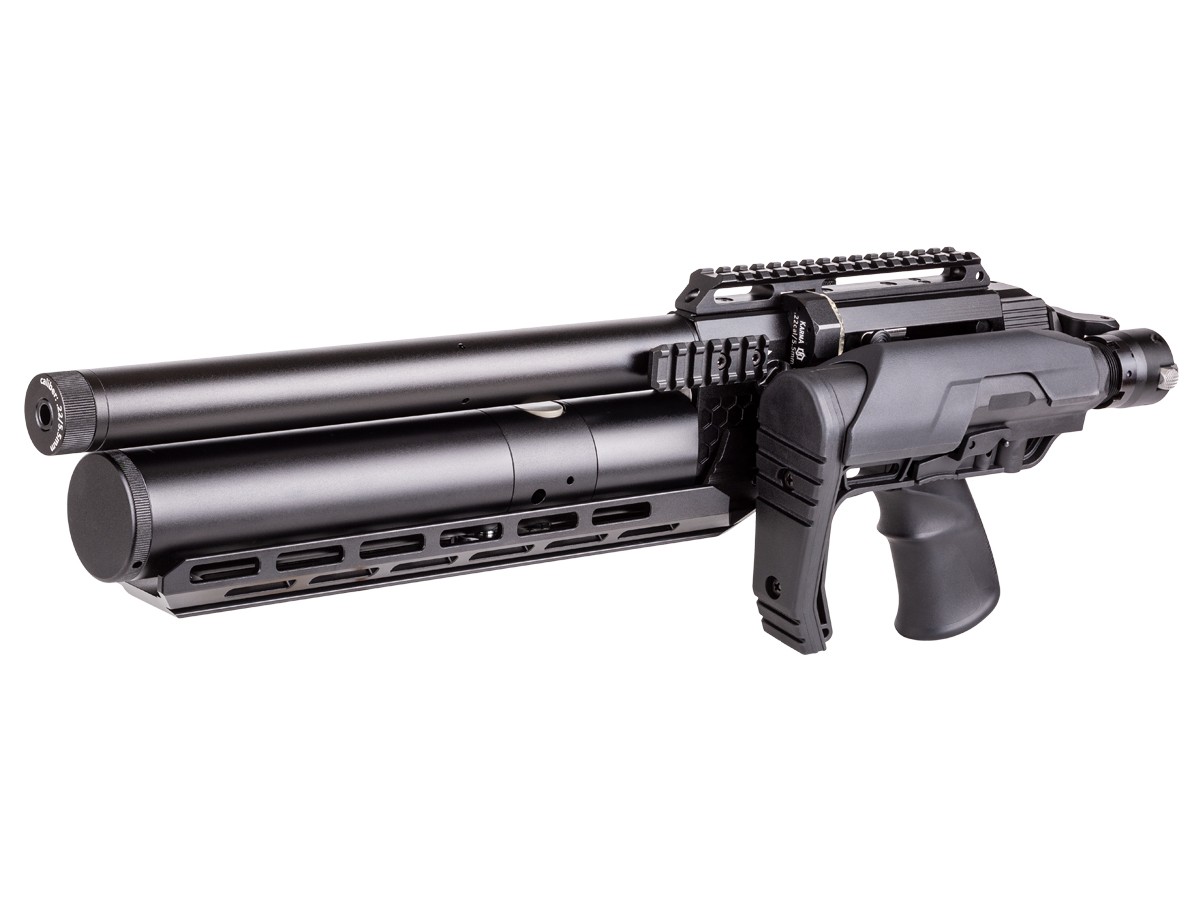
The Compact configuration is especially relevant here because reduced overall length can simplify handling without eliminating the main features of the platform.
Secure storage should always be prioritized. Access should be restricted according to local requirements, especially where children or unauthorized individuals could otherwise reach the rifle.
Magazines and ammunition can also be stored appropriately rather than being left loose inside a transport case.
Training and Skill Development
A configurable PCP rifle can provide a useful platform for building better shooting habits.
Newer shooters can begin with deliberate single-shot-style routines using the side lever, concentrating on safe handling, trigger control, breathing, and sight picture.
As competence develops, magazine changes, unsupported positions, timed drills, and other lawful range exercises can be introduced.
Semi-automatic operation should not replace fundamental technique. Instead, it can be treated as an additional operating mode after safe handling has been established.
Training should always emphasize awareness of what lies behind the target, consistent muzzle control, correct use of the safety, and disciplined trigger placement.
Small Shooting Clubs and Organized Practice
Within an organized club environment, the rifle can be used for group practice, zero confirmation, equipment testing, or informal competition depending on club rules.
Different configurations can suit different disciplines.
A shorter setup may be preferred for compact firing points, whereas a Standard configuration may suit bench-oriented activities.
Because accessory mounting is straightforward, the rifle can also be adapted for different optics or support equipment as club activities change.
Before attending an event, competitors should confirm whether specific power limits, equipment restrictions, magazine rules, or firing-mode requirements apply.
Practical Versatility in One Platform
The most important practical advantage is adaptability.
A shooter may spend one weekend testing pellets from a bench, another practicing supported field positions, and a later session enjoying informal target shooting. Rather than requiring a completely different platform for each activity, the same rifle can be configured around changing requirements.
Compact dimensions can support portability, while larger air capacity can benefit extended sessions. Manual cycling can encourage deliberate precision, whereas semi-automatic operation provides a different experience where its use is allowed.
Ultimately, real-world performance depends on more than power alone. Consistent air delivery, appropriate ammunition, a properly mounted optic, good ergonomics, responsible tuning, regular maintenance, and sound shooting technique all influence the final result.
When those elements are combined, this platform can serve effectively across precision range shooting, recreational practice, equipment testing, field-oriented training, and lawful pest-management applications while remaining adaptable to the individual shooter’s preferred style.


Reviews
There are no reviews yet.