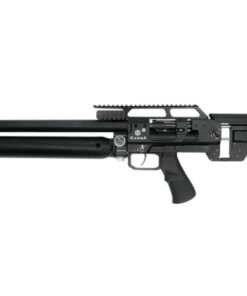
Karma Red Panda Bench PCP Air Rifle – Precision-Focused PCP Platform
The Karma Red Panda Bench PCP Air Rifle has been developed for shooters who value consistency, stability, adjustability, and a refined bench-oriented shooting experience. Rather than being designed as a conventional lightweight sporting rifle, this platform has been shaped around controlled shooting positions where repeatable performance can be prioritized. Consequently, a highly specialized PCP air rifle experience is provided for enthusiasts who appreciate careful setup, precision engineering, and competition-inspired ergonomics.
From the first inspection, a purpose-built appearance is immediately presented. A substantial chassis system is combined with carefully positioned controls, while multiple adjustment points are incorporated to help the rifle be configured around individual preferences. Furthermore, the overall layout has been developed so that stability can be maintained during deliberate shooting sessions.
Because compressed air is used as the power source, recoil characteristics are kept extremely mild compared with many conventional spring-powered systems. As a result, sight pictures can be maintained more easily, while carefully selected optics can be used effectively.
Purpose-Built Design of the Karma Red Panda Bench PCP Air Rifle
Precision-oriented shooting has clearly been considered throughout the design of the Karma Red Panda Bench PCP Air Rifle. Instead of unnecessary styling being emphasized, functional components have been positioned where they can contribute to consistency and shooter comfort.
Moreover, the chassis arrangement has been engineered to provide a stable interface between the rifle and the shooting position. Fine adjustments can therefore be made according to the shooter’s preferred posture, optic configuration, bench setup, and shooting discipline.
Bench-Oriented Ergonomics
During extended sessions, comfort can have a considerable influence on consistency. Therefore, adjustable ergonomic elements have been incorporated so that the rifle can be adapted to different users.
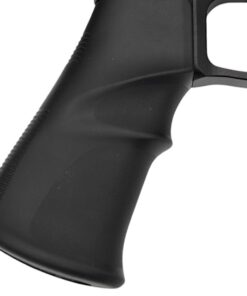
The rear section can be configured to promote repeatable shoulder placement. Similarly, the cheek position can be established around the installed optic. Consequently, unnecessary movement between shots can be reduced.
Because every shooter approaches a bench differently, adaptability is particularly valuable. Rather than forcing one fixed position to be accepted, the platform can be tuned around individual preferences.
Regulated PCP Performance
A regulated compressed-air system is generally valued because greater consistency can be maintained across a useful portion of the air supply. With the Karma Red Panda Bench PCP Air Rifle, controlled air management has been emphasized as an important part of the platform.
Instead of large pressure variations being allowed to influence each shot, air delivery is designed to remain more predictable. Therefore, more consistent projectile velocity can be supported when the rifle is correctly configured and compatible ammunition is used.
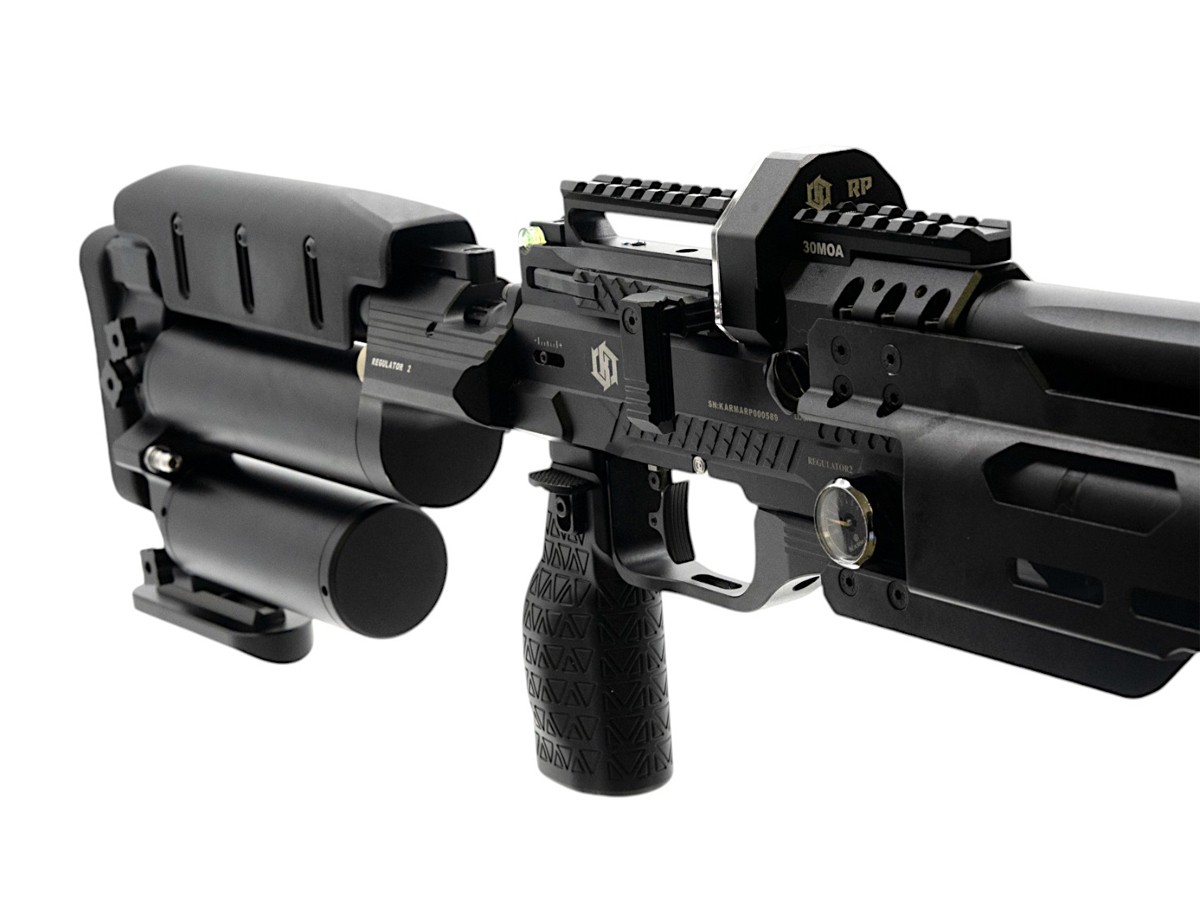
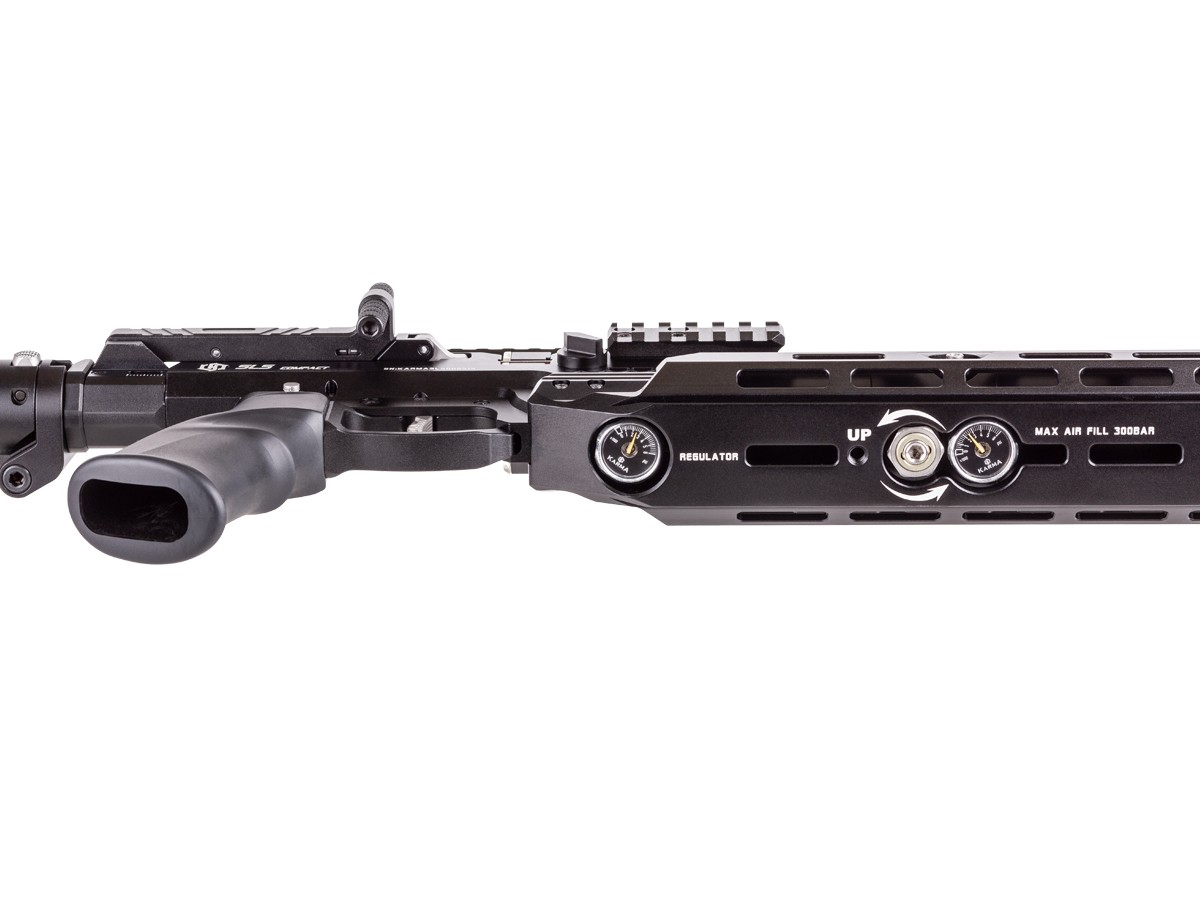
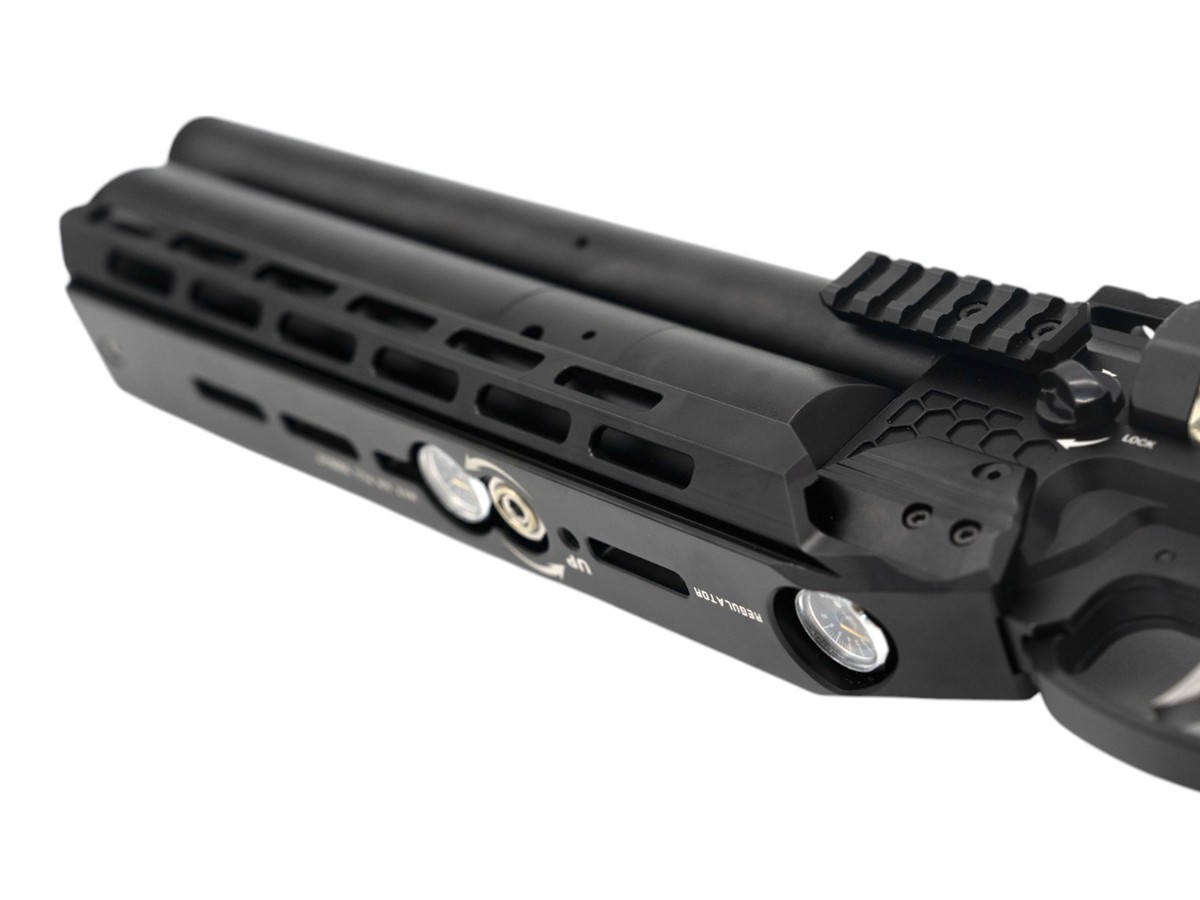
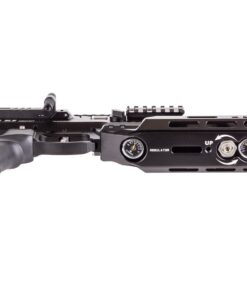
Additionally, pressure information can be monitored so that filling and shooting routines can be managed more effectively.
Consistency for Precision Shooting
For target-oriented shooting, repeatability is particularly important. Small variations in rifle setup, ammunition, air pressure, or shooter technique can influence results. Consequently, the Red Panda platform has been created to give the user extensive control over the rifle’s configuration.
Once an appropriate setup has been established, repeated adjustment may be minimized. Therefore, greater attention can be directed toward technique, environmental conditions, and shot execution.
Heavy-Duty Chassis Construction
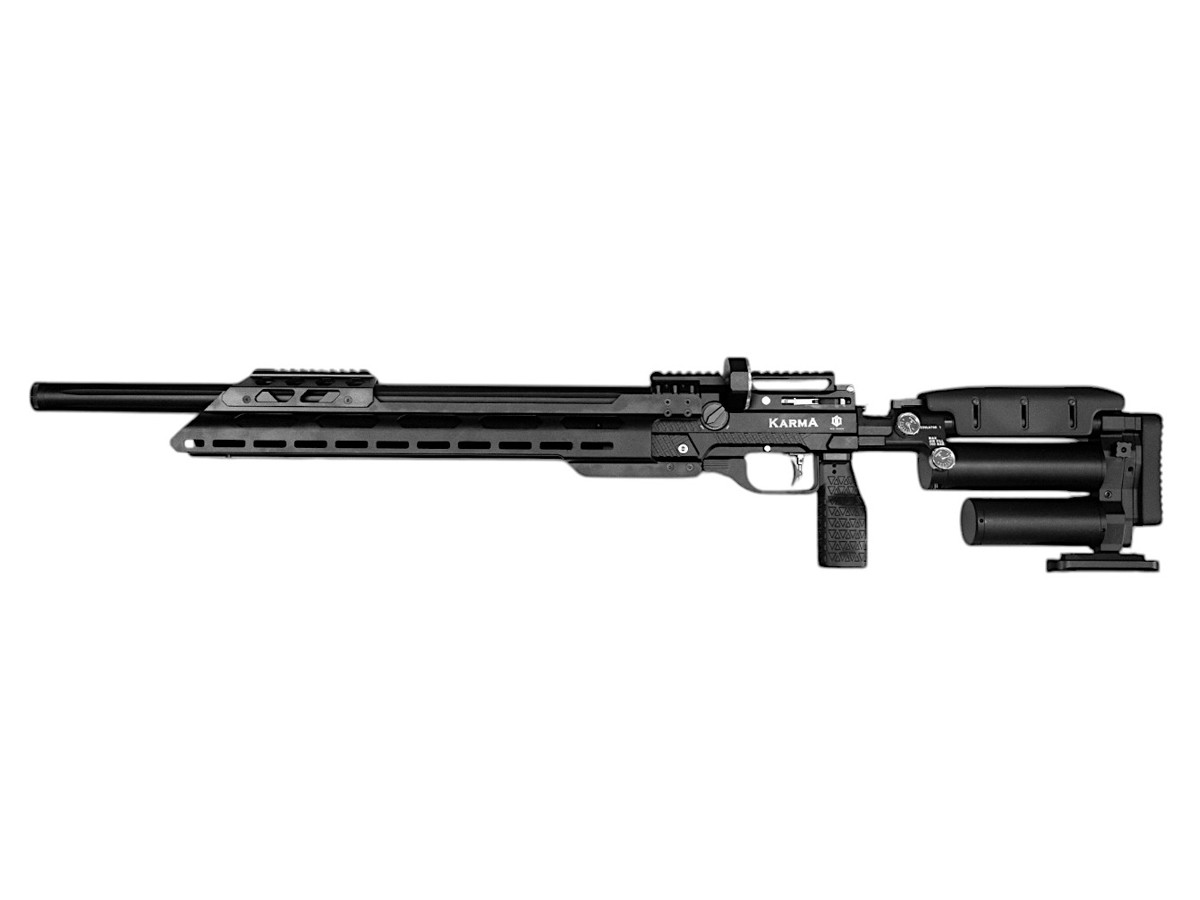
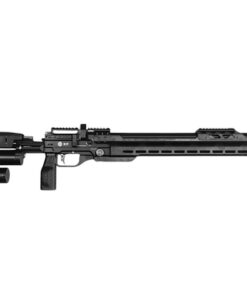
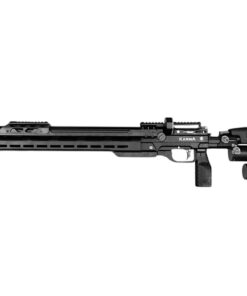
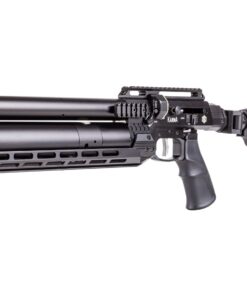
A robust chassis structure is featured on the Karma Red Panda Bench PCP Air Rifle. Through this design, rigidity can be maintained while multiple accessories and adjustment systems can also be supported.
Furthermore, the modern chassis appearance communicates the specialized nature of the rifle. Every major section appears to have been created around function rather than purely decorative styling.
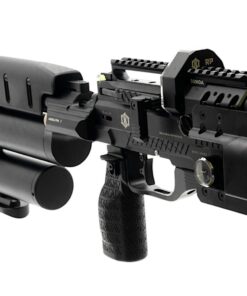
Depending on the specific configuration offered, mounting interfaces may also be provided for compatible shooting accessories.
Designed Around a Stable Shooting Position
When a rifle is being used from a supported position, balance becomes extremely important. For that reason, the architecture has been arranged to create a controlled and predictable feel.
The rifle can be positioned on an appropriate bench support, while the rear section can be aligned according to the shooter’s preferred technique. As a result, a consistent shooting position can be recreated more easily.
Smooth Sidelever Operation
Fast operation is not necessarily the primary objective of a precision bench rifle. Nevertheless, smooth mechanical cycling remains important. Therefore, a sidelever-style action is used to provide convenient operation between shots.
The mechanism can be manipulated without major disruption to the established shooting position. Consequently, the shooter can remain focused on the target while the next shot is prepared.
A quality loading system can also help pellets or slugs be chambered consistently, although ammunition compatibility should always be checked according to the manufacturer’s specifications.
Optics-Ready Configuration
A dedicated precision air rifle is normally paired with an appropriate riflescope. Accordingly, the Karma Red Panda Bench PCP Air Rifle has been configured with optic installation in mind.
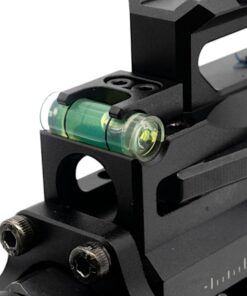
Through the available mounting system, compatible scopes and mounting hardware can be installed according to the intended application. Proper eye relief can then be established by combining optic placement with cheek and stock adjustments.
Furthermore, a stable optic setup can contribute significantly to repeatable target acquisition.
Key Features of the Karma Red Panda Bench PCP Air Rifle
For buyers comparing precision PCP platforms, several characteristics can be highlighted:
- Purpose-built bench-oriented PCP air rifle architecture
- Regulated compressed-air system designed for consistent output
- Highly adjustable chassis configuration
- Stable platform intended for deliberate precision shooting
- Smooth sidelever-style action
- Optics-ready mounting arrangement
- Adjustable ergonomic components for personalized positioning
- Low-recoil PCP operating characteristics
- Robust construction for repeated range use
- Compatibility with carefully selected PCP shooting accessories
- Competition-inspired appearance and functionality
- Designed around repeatability, balance, and controlled shooting
Adjustable Shooting Experience
One configuration will rarely suit every shooter. Therefore, extensive adjustment capability has become one of the most important features of modern precision air rifles.
With the Karma Red Panda Bench PCP Air Rifle, the shooting position can be refined through available ergonomic adjustments. Once configured correctly, cheek placement, shoulder contact, trigger access, and optic alignment can be made more repeatable.
Consequently, fatigue can be reduced during longer sessions while unnecessary positional changes can also be minimized.
Refined Trigger Interface
Trigger control remains a critical component of precision shooting. Accordingly, a refined trigger system is incorporated into the Red Panda platform.
Where manufacturer-approved adjustments are provided, the trigger interface can be configured within the specified operating parameters. However, all adjustments should always be completed according to the manufacturer’s instructions.
By maintaining a predictable trigger feel, shot release can become more consistent.
Built for Dedicated PCP Enthusiasts
The Karma Red Panda Bench PCP Air Rifle is particularly suited to users who enjoy the technical side of precision airgunning. Instead of providing only a basic point-and-shoot platform, considerable scope for configuration is offered.
For example, compatible optics, bench supports, filling equipment, and other PCP accessories can be selected according to the owner’s intended setup. Furthermore, ammunition testing can be undertaken to determine which manufacturer-approved projectile options perform consistently with the individual rifle.
Because PCP systems require compressed-air equipment, the appropriate filling solution should also be selected. Rated cylinders, hand pumps, or suitable PCP compressors may be used where compatible with the manufacturer’s stated filling requirements.
Premium Platform for Bench and Target Shooting
When deliberate target shooting is the priority, a rifle that remains stable and configurable can provide a more satisfying experience. Therefore, the Red Panda has been positioned as a specialized option rather than a general-purpose entry-level air rifle.
Its chassis, regulated PCP system, ergonomic adjustment, and precision-focused layout have all been combined around controlled shooting.
Moreover, the design allows experienced enthusiasts to build a personalized setup around their preferred optic, shooting support, and accessories.
Why Choose the Karma Red Panda Bench PCP Air Rifle?
A distinctive combination of engineering, adjustability, and bench-oriented design is presented by the Karma Red Panda Bench PCP Air Rifle. Instead of compromise being placed at the center of the platform, precision-focused functionality has been prioritized.
For shooters seeking a highly configurable PCP platform for lawful target and competition-style use, considerable appeal can therefore be found here. A stable chassis is provided, controlled compressed-air performance is emphasized, and the ergonomics can be tailored around individual preferences.
Ultimately, the Karma Red Panda Bench PCP Air Rifle has been created for enthusiasts who appreciate careful setup and repeatable performance. With suitable optics, compatible accessories, appropriate ammunition, and responsible use in accordance with local laws, an advanced precision-airgun experience can be enjoyed.
Air Rifles, PCP Systems, Calibers, Target Shooting and Popular Models
The world of air arms, air guns, and precision shooting equipment covers everything from recreational target shooting to sporting applications. For newcomers asking what is an air gun, what is an air rifle, what is air rifle, what is a air rifle, what is a airgun, what is an airgun, or what are airguns, the basic principle is straightforward. An air gun uses compressed gas or air to propel a projectile rather than relying on the combustion system associated with conventional firearms.
Understanding how does an air gun work, how does air gun work, how do air guns work, how does an air rifle work, how does air rifle work, and how do air rifle work can help buyers distinguish between the different operating systems available. Depending on the design, power can be supplied by a spring piston, compressed air cylinder, CO2 cartridge, or another pneumatic mechanism.
PCP Air Rifles and Compressed-Air Systems
One of the most popular categories is the pre-charged pneumatic platform. Searches such as what is a pcp air rifle, what is a pcp airgun, what is pcp air rifle, what is a pcp air gun, what is a pcp rifle, what is pcp rifle, what are pcp air rifles, and what is a pre charged pneumatic air rifle all relate to the same fundamental technology. A PCP rifle stores compressed air inside a reservoir and releases a controlled quantity each time the rifle is fired.
For shoppers researching pcp gun meaning, pcp rifle meaning, or pcp air rifle meaning, PCP simply refers to a pre-charged pneumatic system. Air is normally added using a pcp hand pump, dive cylinder, or pcp air compressor. Consequently, an air compressed gun or air compressor rifle can deliver consistent performance without requiring the shooter to manually compress a spring before every shot.
Some searches also include pcp bb gun, although many PCP platforms are primarily designed around pellets rather than traditional BB ammunition. Understanding the intended ammunition is therefore important before selecting accessories, magazines, or loading equipment.
.177 Caliber, .22 Caliber and Pellet Selection
Caliber choice is one of the most frequently researched subjects among airgun buyers. The .177 caliber remains extremely popular for recreational shooting and precision target applications. Products described as a 177 air rifle, 177 bullet, or even 177 cal darts may appear during searches, although ammunition compatibility always needs to be checked against the manufacturer’s specifications.
Questions including 177 or 22, 177 cal vs 22, 177 caliber vs 22, .177 caliber vs .22, .177 pellet vs .22 pellet, and .22 vs .177 pellet generally focus on differences in projectile size, trajectory, energy, and intended use. A smaller .177 pellet is commonly chosen for paper targets and precision shooting, whereas larger calibers may be selected for applications where additional projectile mass is desired.
Understanding bb gun pellet sizes is equally important because BBs and pellets are not automatically interchangeable. Before purchasing ammunition, shooters should confirm the caliber and projectile type specified for their particular pellet rifle, pellet pistol, or bb gun.
Air Arms Rifles and Popular Models
Among established manufacturers, air arms products remain widely searched by enthusiasts interested in precision PCP and spring-powered platforms. Well-known searches include air arms s510, s510, air arms s410, aa s400, pro sport air arms, prosport air arms, tx 200, and tx200.
Variations such as air arm and airarm are also commonly entered by shoppers searching for the brand. Buyers looking specifically for regulated sporting configurations may encounter the air arms s510 ultimate sporter .177 sub 12, a phrase frequently associated with UK-oriented searches for the S510 platform.
Each Air Arms model has its own action, stock design, power configuration, caliber options, and intended shooting environment. Therefore, specifications should always be checked against the exact version being considered rather than assumed from another model in the same family.
FX Impact M3, FX Maverick and Modern PCP Platforms
Premium PCP research frequently includes the fx maverick and the fx impact m3. Buyers may also search for fx impact mk3, fx m3 airgun, fx m3, impact m3, or fx impact m3 air rifle while comparing generations and configurations.
More specific searches such as fx impact m3 .22cal air rifle. 600mm barrel focus on caliber and barrel-length combinations. Meanwhile, international shoppers may search fx impact m3 precio, fx impact m3 precio en usa, or fx impact m3 price when researching current market pricing.
Because FX platforms can be produced in multiple barrel lengths, calibers, power settings, and regional configurations, buyers should verify the exact specification offered in their country before ordering.
Break-Barrel Air Rifles
Another major category is the break barrel air rifle. Anyone asking what is a break barrel air rifle or what is a break barrel pellet gun is usually referring to a rifle in which the barrel is hinged downward to cock the internal powerplant and expose the breech for loading.
Break-barrel designs remain popular because they can provide a self-contained shooting system without an external compressor or air bottle. Models such as a gamo pellet gun are frequently encountered by buyers exploring this category.
Learning how to load pellet gun equipment properly is particularly important. Pellets should match the manufacturer’s recommended caliber and should be loaded in accordance with the owner’s manual while the rifle is pointed in a safe direction and handled under normal shooting-range safety procedures.
CO2, Pellet Pistols and Other Airgun Types
Not every airgun uses PCP or spring power. A co2 powered pellet rifle, for example, uses replaceable CO2 cartridges as its propellant source. CO2 systems can be found in rifles and handguns intended for recreational shooting, training, and target use.
People researching air pistol uses or general pellet gun uses will encounter equipment intended for target practice, recreational plinking, skills training, competition, and other lawful sporting activities. A pellet pistol can offer a compact platform, while rifles generally provide a longer sight radius and additional stability.
Search terms such as pelet guns are also common misspellings of pellet guns and can still represent useful search intent when website content is designed to answer frequently asked buyer questions naturally.
Target Shooting and Airgun Practice
One of the most established uses of airguns is target shooting with air rifles. Dedicated air guns for target shooting may emphasize accuracy, adjustable stocks, match triggers, regulated air delivery, and compatibility with precision optics.
Likewise, airgun target practice and airgun for target practice are common search topics among people looking for an accessible way to develop shooting fundamentals. Proper backstops, eye protection, safe handling practices, and suitable ranges should always be used.
The practical range of air rifle equipment varies considerably according to caliber, muzzle energy, projectile selection, environmental conditions, and the rifle itself. As a result, buyers should use manufacturer specifications and local range rules rather than assuming that every air rifle performs identically.
Hunting Air Rifles and Appropriate Use
Some shooters research air rifles for hunting, hunting air rifles, best air rifle for hunting, pellet gun for rabbits, or even the informal phrase rats gun when looking for equipment designed for lawful pest-control or hunting applications.
Suitability depends heavily on local law, caliber, projectile energy, quarry species, shot placement requirements, and humane hunting standards. Questions such as can a bb gun kill a fox should therefore not be treated simply as equipment-selection questions. Legal restrictions and animal-welfare requirements should be checked first, and low-powered BB guns are not appropriate substitutes for equipment legally and ethically suitable for a particular species.
Similarly, searches for air rifles for deer hunting and big game hunting with air rifle involve specialized legal and ballistic requirements. Large-bore systems such as a 72 caliber air rifle or products associated with bluegrass big bore illustrate how different big-bore pneumatic platforms can be from conventional small-caliber pellet rifles. Local hunting regulations must determine whether such equipment may legally be used.
Licensing and UK Airgun Regulations
Legal requirements differ considerably by jurisdiction. UK-oriented searches frequently include do you need a licence for air rifle, air rifle certificate uk, and 22 rifle uk license. However, the rules governing air rifles, conventional .22 firearms, certificates, age restrictions, possession, transportation, and power limits are not identical.
Consequently, buyers should confirm current legislation with the relevant licensing authority before purchasing or using any regulated equipment. Particular attention should also be paid to whether a rifle is configured below or above applicable power thresholds.
Sportsman, Gamo and Other Popular Searches
Beyond specialist PCP manufacturers, buyers may encounter products such as the sportsman 900 while comparing recreational air rifles. Searches for a gamo pellet gun are also common because Gamo offers numerous spring-powered and pneumatic models across different price points and configurations.
The broader search for best air guns can include everything from affordable recreational platforms to sophisticated regulated PCP rifles. Rather than treating one design as universally superior, buyers should compare caliber, intended application, weight, stock ergonomics, power source, shot capacity, charging equipment, availability of spare parts, and local legal requirements.
Airgun Safety, Home Use and Responsible Ownership
Searches for air guns for home defense do appear online, but an airgun should not automatically be assumed to be suitable for defensive use. Laws vary significantly, and airguns can cause serious injury. Secure storage, lawful ownership, training, safe handling, and avoidance of unnecessary confrontation remain essential.
Whether someone owns an air rifle, pellet rifle, bb gun, or PCP platform, the equipment should always be treated as capable of causing injury. A secure backstop should be used for recreational shooting, the muzzle should remain pointed in a safe direction, and manufacturer instructions should be followed carefully.
Ultimately, understanding the differences between PCP rifles, break-barrel systems, CO2 equipment, caliber choices, and individual models makes it easier to compare the extensive range of modern airguns. From Air Arms platforms to FX rifles and recreational pellet guns, careful specification checking, responsible handling, lawful use, and suitable ammunition selection remain central to getting the right equipment for the intended purpose.
Frequently Asked Questions
1. What type of air rifle is this model designed to be?
This model has been engineered primarily as a high-performance precision PCP platform. Rather than being designed around casual plinking alone, its architecture has been developed for demanding target disciplines in which consistency, stability, repeatability, and precise shot placement are important.
A regulated pneumatic system, substantial air capacity, specialized barrel construction, and adjustable shooting characteristics are combined within the platform. Consequently, experienced recreational shooters and competitive users can configure the rifle around different shooting styles. The current design has also been optimized for both traditional benchrest and positional-style competition disciplines.
2. Is it suitable for benchrest competition?
Yes. Benchrest competition has been one of the primary applications considered during its development. The rifle has been designed around stability, predictable airflow, rigid barrel support, adjustable power delivery, and consistent ergonomics.
Its competition background is also noteworthy. According to Karma Airguns, prototypes and production-development versions have been used successfully in major airgun competitions, including notable benchrest results. Therefore, the platform has not simply been styled to look like a competition rifle; substantial engineering attention has been directed toward precision-oriented shooting.
However, competitive results will still depend on ammunition selection, environmental conditions, rifle setup, optics, rest configuration, and shooter technique.
3. Which calibers are available?
Current manufacturer specifications list configurations in .22, .25, .30, and .35 caliber. Each caliber is configured differently because projectile weight, required airflow, barrel characteristics, regulator pressure, and intended performance can vary significantly.
For that reason, buyers should select their caliber according to their intended legal shooting application rather than simply choosing the largest option available. Smaller calibers may be preferred for certain target applications, while larger calibers may provide increased projectile energy where lawful and appropriate.
4. Can pellets and slugs both be used?
Yes, configurations are offered around both pellets and slugs. However, the rifle should not be viewed as having interchangeable barrel variants that can simply be swapped between every ammunition configuration.
Karma Airguns specifically states that each rifle is set up and tuned according to the caliber and configuration selected by the customer. Therefore, a rifle ordered in a particular pellet or slug configuration will have internal settings chosen accordingly.
Different projectile brands, diameters, weights, and profiles can perform differently, so careful ammunition testing remains important.
5. What makes the barrel system different?
A precision bull-barrel system is incorporated into the platform. According to the manufacturer, a 360-degree radial transfer-port arrangement is used to distribute airflow while substantial barrel rigidity is maintained.
Additionally, the barrel-to-action connection is secured with multiple high-strength fasteners. This arrangement is intended to create a rigid mechanical interface and predictable barrel behavior.
For precision shooting, that rigidity can be particularly valuable because unwanted movement or inconsistent barrel harmonics can negatively influence repeatability.
6. How large is the air capacity?
A 700cc total air-cylinder capacity is listed across the current caliber configurations. The cylinders are rated for a maximum fill pressure of 310 BAR, approximately 4,500 PSI, according to the manufacturer’s published specifications.
Such capacity is particularly useful during competition or extended range sessions because repeated refilling can be reduced. Nevertheless, shot count varies considerably according to caliber, projectile configuration, regulator setting, hammer setting, and energy level.
Only filling equipment that is appropriately rated for the required pressure should be used.
7. Does it use a regulated PCP system?
Yes. Regulation forms an important part of the rifle’s performance architecture.
The manufacturer publishes separate internal and external regulator information for different configurations. Through controlled air pressure, more predictable energy delivery can be maintained throughout a useful portion of the fill.
However, regulator settings should not be treated casually. Owners should follow manufacturer guidance because major changes can affect velocity, shot count, efficiency, accuracy, and mechanical operation.
8. How many shots can be expected from one fill?
Shot count depends heavily on caliber and tune.
Manufacturer figures show substantial variation between pellet and slug configurations. For example, some configurations provide considerably more shots because less regulated air is consumed per discharge, while higher-energy configurations naturally use more air.
Therefore, buyers should not expect one universal shot-count figure. Projectile weight, regulator pressure, hammer adjustment, fill pressure, atmospheric conditions, and individual rifle setup can all influence practical results.
9. Is the rifle only intended for shooting from a bench?
No. Although benchrest performance has strongly influenced its development, the latest design has also been optimized for positional-style shooting disciplines.
Karma states that changes were made to reduce the rifle’s vertical profile while improving balance and handling. The platform has consequently been positioned for disciplines such as Precision Marksmanship Challenge and NRL22-style competition in addition to conventional benchrest.
This wider versatility allows the rifle to be configured around different competition formats.
10. Can accessories be mounted to the rifle?
Yes. Accessory integration has been built into the chassis.
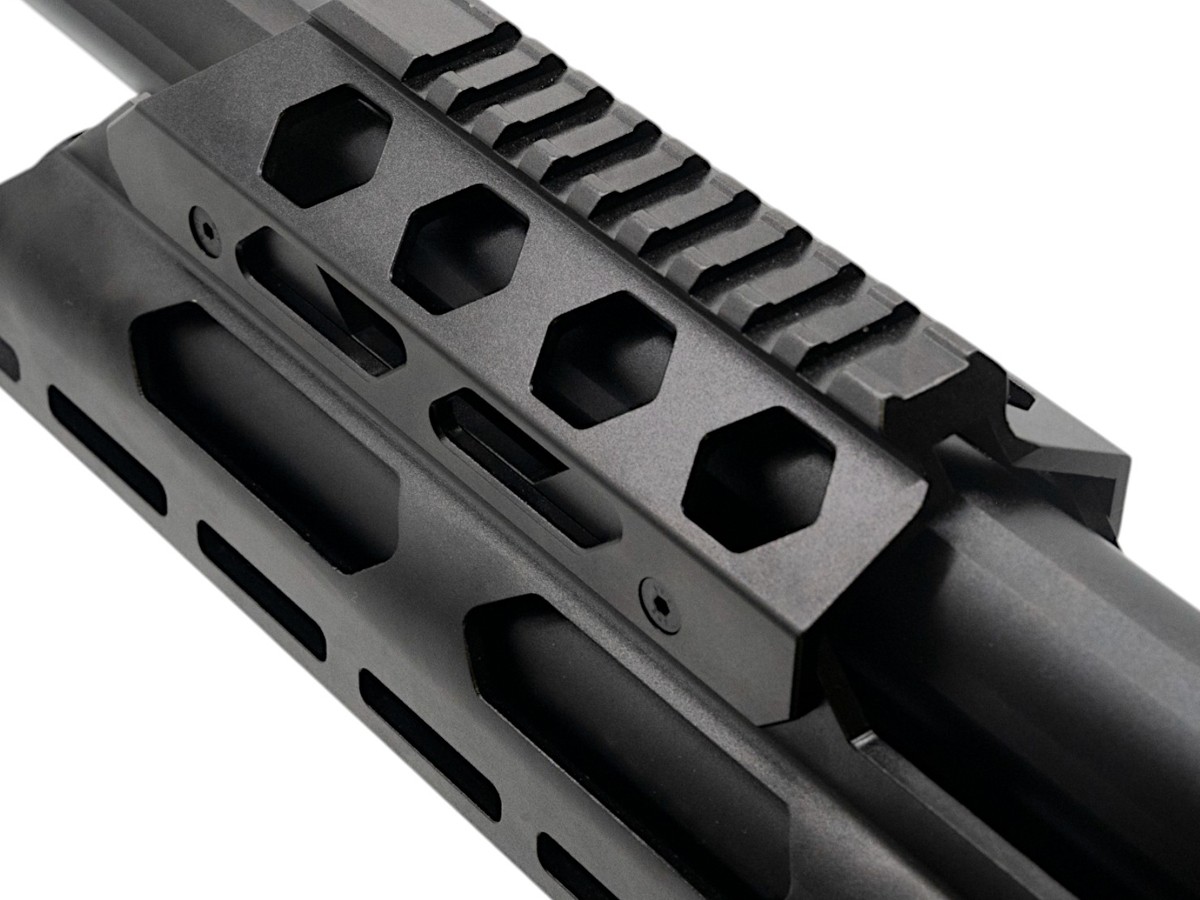
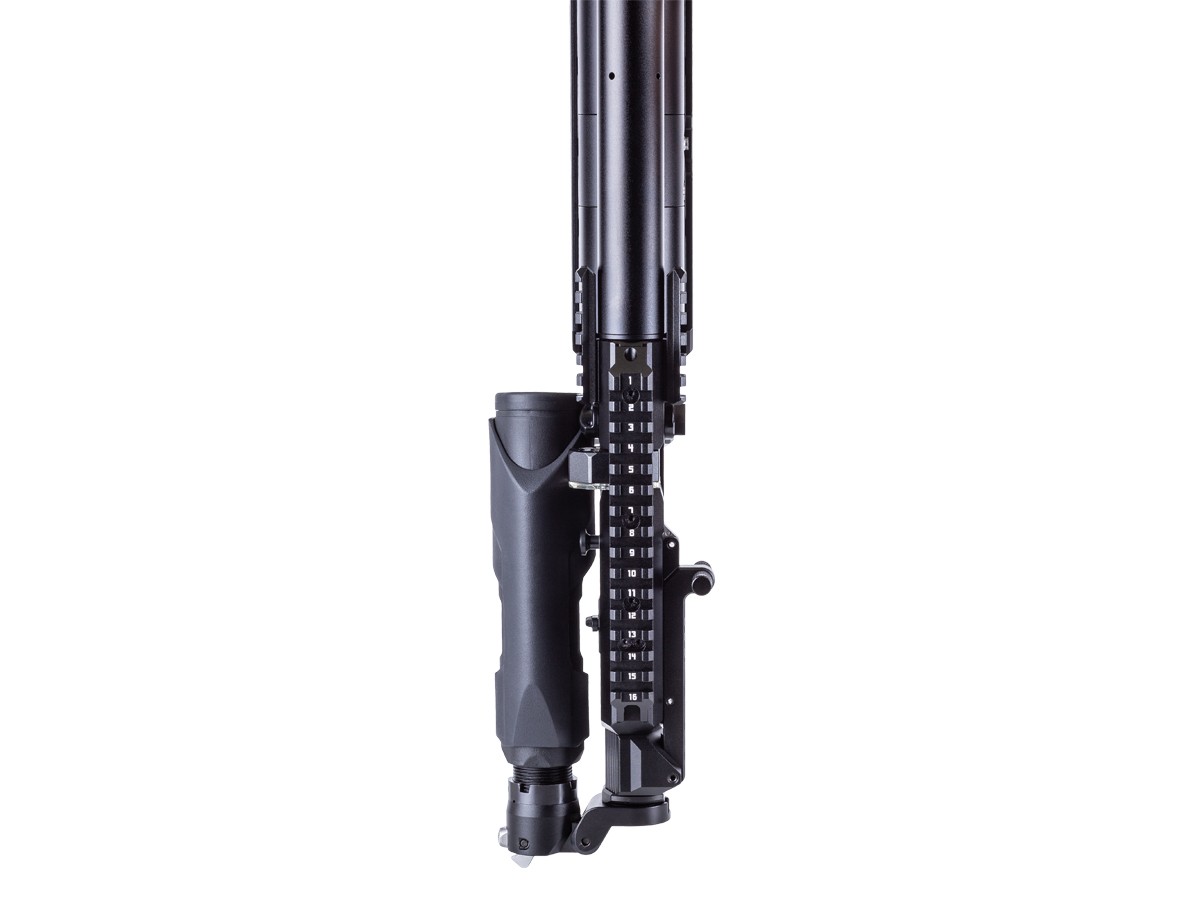
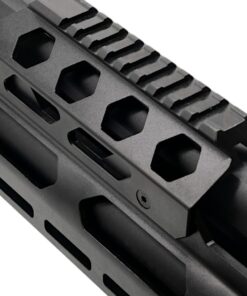
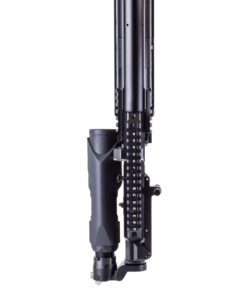
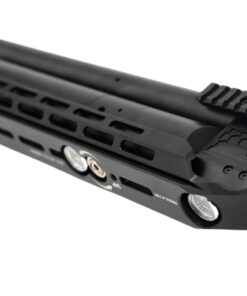
Long M-LOK sections are incorporated into the front system, allowing compatible equipment to be mounted. Depending on the shooting discipline, users may choose accessories such as appropriate bipods, weights, rail adapters, or other supported equipment.
An optic will also normally form an important part of a precision configuration. Scope choice should be based on shooting distance, competition rules, reticle preference, adjustment range, and intended use.
11. What type of shooter will benefit most from this platform?
The rifle is particularly well suited to enthusiasts who enjoy precision tuning, ammunition testing, target shooting, competition preparation, and repeatable supported shooting.
Beginners can certainly appreciate high-quality equipment, but the level of adjustability offered may be especially valuable to experienced PCP users. Because regulator pressure, projectile selection, optics, shooting support, ergonomics, and other variables can affect results, the platform rewards careful setup.
Consequently, it can be an appealing choice for shooters who prefer refining equipment rather than using a completely fixed configuration.
12. How does the large plenum contribute to performance?
The current design incorporates a 200cc regulated plenum, according to Karma Airguns.
A large plenum provides a substantial volume of regulated air immediately available for each discharge. This becomes especially relevant when heavier projectiles or higher-energy configurations are being used.
Furthermore, the plenum and high-pressure air system have been designed so that the air supply is isolated from the barrel. According to the manufacturer, this arrangement is intended to reduce pressure-related effects on barrel harmonics while maintaining a direct airflow path.
13. Is the air system removable or configurable?
Some modularity is provided. Karma states that a rear air cylinder can be removed when a lighter configuration is desired.
That capability can be useful when moving between supported bench shooting and more dynamic positional disciplines. A heavier setup may provide desirable stability from a rest, whereas reduced mass can improve handling when positions must be changed frequently.
Any alteration should still be completed according to manufacturer recommendations.
14. What magazine capacities are available?
Magazine capacity changes according to caliber. Manufacturer specifications currently list capacities of 18 rounds in .22, 16 in .25, 13 in .30, and 11 in .35 caliber.
The difference is primarily associated with increasing projectile diameter. Therefore, users choosing a larger caliber should expect reduced magazine capacity compared with smaller-bore versions.
For formal competitions, shooters should also check individual event regulations because loading requirements can vary between disciplines.
15. What kind of accuracy should a buyer expect?
The platform has been engineered around high-level precision, but an exact group size should never be guaranteed for every rifle, shooter, projectile, distance, and environmental condition.
Accuracy depends on numerous variables, including ammunition consistency, projectile diameter, velocity, regulator setup, scope installation, wind, shooting support, and shooter technique.
The manufacturer’s published competition history demonstrates that the platform has been used successfully at a high level. Nevertheless, those competition results should be viewed as evidence of capability rather than a guarantee that every owner will reproduce identical scores.
16. How should ammunition be selected?
A systematic approach is recommended.
First, ammunition should match the caliber and configuration for which the rifle has been set up. Afterward, several compatible projectile weights and designs can be evaluated at a controlled range.
Groups should be compared under similar conditions, while regulator and other settings should initially be kept consistent. Once a promising projectile has been identified, additional testing can be completed.
Rather than judging performance from only a few shots, several groups should be evaluated. This approach provides a more reliable indication of consistency.
17. What filling equipment is required?
Because the rifle operates at high pressure, suitable PCP filling equipment is required.
Depending on local availability, a correctly rated compressor, high-pressure cylinder, or another manufacturer-approved filling system may be used. All hoses, fittings, gauges, and adapters must also be rated for the pressures involved.
The published maximum fill pressure is approximately 4,500 PSI / 310 BAR, so ordinary low-pressure workshop compressors are not suitable.
Safety procedures supplied by both the rifle manufacturer and filling-equipment manufacturer should always be followed.
18. Is regular maintenance required?
Yes. Like any precision PCP system, periodic inspection and maintenance are recommended.
External surfaces should be kept dry and clean, while exposed mechanical components should be checked for contamination. Seals, fittings, magazines, mounting hardware, and the air system should also be monitored according to manufacturer instructions.
Excessive lubrication should be avoided, particularly around high-pressure pneumatic components. Only suitable products specifically intended for the relevant PCP components should be used.
Furthermore, unauthorized disassembly of regulated high-pressure systems should be avoided because incorrect servicing can damage equipment and create safety risks.
19. Can it be customized for different shooting disciplines?
Yes, and this adaptability is one of the platform’s strongest characteristics.
Weight distribution, accessories, optics, ammunition choice, ergonomic setup, and manufacturer-approved tuning parameters can be selected around the intended discipline. A dedicated benchrest configuration may prioritize stability and high-magnification optics, whereas a positional setup may benefit from reduced mass and more maneuverable support equipment.
Because the newer platform has been engineered for more than one precision discipline, shooters are given considerable freedom to build a configuration that suits their preferred style.
20. What should be considered before purchasing?
Before purchasing, buyers should determine their preferred caliber, pellet or slug configuration, intended shooting discipline, local power restrictions, filling-equipment requirements, optic needs, and available shooting facilities.
Local airgun laws must also be reviewed because power limits, licensing requirements, possession rules, and approved shooting locations differ significantly between countries and regions.
Ultimately, the platform is most rewarding when its advanced features can actually be used. Selecting the appropriate factory configuration from the beginning, pairing it with suitable equipment, and establishing a consistent shooting setup will help owners obtain the greatest practical benefit from its precision-oriented design.
Calibres, FAC Power and Accessories
The rifle is offered as a serious precision PCP platform, and its available configurations reflect that purpose. Different calibres are supported, while pellet and slug configurations are factory-matched to the selected setup. Consequently, buyers can choose a version that better suits their target discipline, preferred projectile type, competition format, and local legal requirements.
Importantly, the manufacturer states that the rifle does not use interchangeable variant barrel systems in the conventional sense. Instead, each rifle is configured around the calibre and projectile configuration selected when it is ordered. Therefore, the .22 pellet configuration, for example, is internally set up differently from the .22 slug configuration.
Available Calibres
.22 Calibre
The .22 version provides the smallest bore currently listed for the platform. It can be particularly attractive for precision shooters who want a combination of relatively high magazine capacity, efficient air consumption, manageable projectile weight, and strong competition-oriented performance.
Karma currently lists an 18-round magazine capacity for the .22 model. Factory-published reference figures show approximately 48 FPE with the listed 25-grain pellet configuration and approximately 83 FPE with the listed 38.6-grain slug configuration. These figures represent specific manufacturer configurations rather than a promise that every projectile will produce identical results.
Because of its balance between efficiency and performance, .22 can be an appealing choice for precision target work and organized competition where the calibre complies with applicable rules.
.25 Calibre
Moving upward, the .25 version provides additional projectile mass while retaining a relatively generous magazine capacity.
The manufacturer specifies a 16-round magazine for this configuration. Published reference performance is approximately 61 FPE with the listed 33.9-grain pellet setup, while the corresponding 49.2-grain slug configuration is listed at approximately 103 FPE.
As a result, the .25 configuration occupies an attractive middle ground between the lighter .22 platform and the larger .30 and .35 versions.
.30 Calibre
For users who prefer heavier projectiles, the .30 version represents a substantial increase in projectile size and energy.
A 13-round magazine capacity is currently published. The manufacturer’s reference specification lists approximately 97 FPE with a 50-grain pellet configuration and approximately 109 FPE with the listed 51-grain slug setup.
Therefore, this version may appeal particularly to experienced PCP users who want a larger-calibre competition platform while maintaining the same precision-oriented chassis architecture.
.35 Calibre
At the upper end of the current range sits the .35 configuration.
The magazine holds 11 rounds, reflecting the greater projectile diameter. Published manufacturer figures show approximately 135 FPE with the specified 81-grain pellet configuration and approximately 159 FPE with the corresponding slug configuration.
Consequently, this represents the highest-energy factory configuration currently shown in Karma’s published Red Panda specifications.
FAC and Higher-Power Configurations
In markets where the term FAC is used, it generally refers to air rifles whose power places them within a regulated or firearm-certificate category under that jurisdiction’s law. The exact definition is country-specific, so buyers should not assume that one universal FAC threshold applies everywhere.
Because the published factory configurations range from approximately 48 FPE to 159 FPE, depending on calibre and projectile configuration, these rifles may fall within regulated high-power categories in many jurisdictions.
Therefore, licensing requirements, permitted energy limits, transportation requirements, approved shooting locations, and ownership conditions should always be checked before purchase.
The rifle should also be ordered in a configuration appropriate for its intended lawful use rather than being selected solely according to maximum available energy.
Power and Air-System Capacity
Considerable air capacity has been incorporated to support the rifle’s performance.
A total cylinder capacity of 700cc is specified across the available calibres, while the maximum published fill pressure is 310 BAR, approximately 4,500 PSI. Additionally, the current architecture incorporates a substantial 200cc regulated plenum.
This combination allows the system to supply the air volume demanded by both conventional pellets and heavier slug configurations.
Shot count naturally varies according to calibre and factory setup. For example, the manufacturer publishes different figures ranging from relatively high counts in more efficient configurations to lower counts in the highest-energy setups. Consequently, users should consult the specification corresponding exactly to the calibre and projectile configuration being purchased.


Reviews
There are no reviews yet.