Gamo Air Rifles, PCP Airguns, Pellet Pistols and Modern Airgun Systems
Choosing the right gamo air rifle depends on how the rifle will be used, the preferred caliber, the powerplant, and the shooter’s experience level. Gamo produces a broad range of recreational, target, and sporting airguns, so buyers searching for a gamo pellet gun, gamo air rifles, or a traditional gamo pellet rifle can compare several operating systems before deciding which configuration best fits their needs.
One of the most familiar designs is the break barrel air rifle. This platform remains popular because it combines straightforward operation with a self-contained powerplant. Shooters comparing high powered air rifles or a high power air rifle should consider much more than headline velocity. Pellet weight, caliber, barrel length, trigger quality, consistency, and shooting conditions all affect practical performance.
Models chambered as a gamo 177 configuration are frequently selected for target shooting and recreational use because .177 pellets generally offer a flatter trajectory than heavier calibers. Likewise, a gamo break barrel rifle provides the simplicity many shooters want without the need for a separate compressed-air charging system.
Break-Barrel Rifles and Pistols
People researching the best air rifles frequently encounter spring-powered and gas-piston break-barrel platforms. Search terms such as brake barrel bb gun are also common, although pellet rifles and BB guns are technically different categories and may use different ammunition and barrel designs.
Compact airguns include the break barrel pellet pistol, break barrel air pistol, and break barrel pistol. Larger-caliber searches may include a 22 caliber break barrel air pistol, while buyers may also look for a break action pellet pistol, the best break barrel pellet pistol, or a 22 pellet pistol for recreational shooting.
Power-oriented shoppers sometimes search for the most powerful break barrel pellet gun. However, raw velocity should never be the only specification considered. Accuracy, appropriate ammunition, safe handling, and local laws are equally important. A phrase such as bee bee gun pistol may be used informally by shoppers, but users should confirm whether a particular handgun actually fires steel BBs, lead pellets, or another compatible projectile.
Gamo Swarm Multi-Shot Air Rifles
Gamo’s magazine-fed break-barrel systems have helped popularize multi-shot operation in a category that historically required a pellet to be loaded manually after every shot.
The gamo swarm magnum 10x gen3i is closely associated with this concept, while searches for the gamo swarm magnum, gamo swarm maxxim gen 3, and swarm magnum gen3i reflect interest in different Swarm generations and configurations. Another commonly researched model is the gamo swarm magnum pro 10x gen3i.
The broader gamo magnum gen3i category appeals to shooters who want high-energy break-barrel performance together with magazine-fed convenience. Gamo’s multi-shot technology is also frequently found through searches for gamo 10x, multi shot pellet gun, gamo swarm, gamo swarm 10x, and pellet gun with magazine.
A magazine system can make repeated target sessions more convenient because pellets can be prepared before shooting begins. Nevertheless, users should always verify magazine compatibility, pellet length, pellet diameter, and model generation before ordering replacements.
Gamo Arrow PCP Air Rifles
Shooters interested in pre-charged pneumatic technology may encounter the gamo arrow range. The gamo arrow pcp combines a PCP powerplant with a lightweight sporting format, while the full term gamo arrow pcp air rifle is commonly used when comparing it with conventional spring or gas-piston rifles.
Related searches include pcp arrow guns, arrow rifle, pcp arrow gun, arrow rifles, and arrow air rifle. These phrases generally reflect interest in compact PCP-style sporting rifles rather than traditional break-barrel platforms.
Caliber-specific buyers may search for a gamo arrow .22, while the gamo arrow classic may appeal to shooters looking for another Arrow-series configuration.
PCP technology uses stored compressed air rather than relying on a spring or piston being compressed for each shot. This can produce a smooth firing cycle, reduced mechanical movement, and consistent shot-to-shot performance when the rifle is properly filled and maintained.
Understanding PCP Airguns
A pcp air rifle uses a reservoir filled with high-pressure air. PCP stands for precharged pneumatic, and the technology is widely used in modern sporting and precision airguns.
Searches for pcp air rifles, pcp rifle, pcp guns, pcp rifles, and pcp air gun generally refer to this same basic operating principle. Some buyers describe the platform as an air rifle compressed air system, while others search for a pcp pellet rifle or use the reversed phrase rifle pcp.
PCP rifles usually require additional filling equipment such as a suitable hand pump, compressor, or certified high-pressure cylinder. Users should follow the manufacturer’s recommended fill pressure because overfilling a reservoir can be unsafe and may also reduce performance.
Gas-Piston and Lever-Operated Airguns
A common beginner question is what is a gas piston air rifle. Instead of using a traditional coiled steel spring, a gas-piston system compresses gas inside a sealed cylinder. When the trigger is released, the piston moves rapidly and compresses air behind the pellet.
Other mechanical airgun designs include under lever air rifles, the singular underlever air rifle, and the alternative spelling under lever air rifle. In these designs, a separate lever positioned beneath the barrel is used to cock the mechanism.
Shooters may also research a side lever air gun or side lever air rifle, where the cocking lever operates from the side of the receiver. These fixed-barrel layouts can provide a different shooting experience compared with conventional break-barrel systems.
Search terms such as lever action pellet gun, air gun thumb lever, and lever action air rifle can refer to several different mechanisms, so buyers should check the specific manufacturer’s action type rather than assuming every lever-operated airgun works identically.
Gamo Shadow and High-Velocity Searches
Long-running Gamo product lines continue to generate searches including gamo shadow 1000, shadow 1000 gamo, and gamo 1000 shadow. Another associated search phrase is 1000/4.5, which is often used by shoppers researching 4.5 mm or .177-class air rifles.
Velocity-focused buyers may also search for a gamo 1800 fps air rifle. Advertised velocity can vary according to pellet composition and weight, so actual shooting performance may differ when standard lead pellets are used.
Likewise, shoppers researching gamo 1800 fps air rifle price should compare the exact model number, caliber, powerplant, bundled optic, warranty, and regional specification rather than relying solely on a velocity figure.
Other unusual search terms such as shotgun pellet gun may describe an airgun with styling inspired by a shotgun rather than a conventional pellet rifle. Searches for pellet guns that can kill should be approached from a safety perspective: airguns are not toys, and even relatively modest-powered models can cause severe or fatal injuries. Every airgun should therefore be handled with the same disciplined muzzle and trigger control expected of potentially dangerous sporting equipment.
Air Pistols, Pellet Pistols and CO2 Systems
The air pistol category includes many different operating systems, and modern air pistols may use springs, gas pistons, CO2 cartridges, or pre-charged pneumatic reservoirs.
For pellet-firing handguns, common searches include pellet pistols, pellet pistol, pistol pellet gun, pellet handgun, pellet gun pistol, pellet gun pistols, pistol air, and air pellet pistol.
CO2-powered handguns form another major category. A co2 pistol typically uses a disposable carbon-dioxide cartridge to propel BBs or pellets. Buyers may also search for pistol co2, co2 pistols, or the commonly mistyped c02 pistol.
Related searches include co2 air pistols, co2 gun, c02 guns, guns co2, and co 2 gen. Regardless of spelling, the key consideration is ammunition compatibility and the correct cartridge type specified by the manufacturer.
CO2 performance can be affected by ambient temperature because pressure changes as the cartridge becomes warmer or colder. For that reason, shooters should expect some variation in velocity during different environmental conditions.
Target Shooting and 10-Meter Airgun Use
Precision shooting requires appropriate targets and a safe backstop. A 10m rifle is generally associated with structured 10-meter air-rifle shooting, where accuracy, repeatability, shooting position, and trigger control are emphasized.
Recreational shooters may use pellet gun targets, while rifle users commonly search for air rifle targets, targets for air rifle, and airgun targets. The term air gun targets is another broad variation covering both rifle and pistol applications.
Dedicated practice setups can include air rifle shooting targets and airgun shooting targets designed to provide clear aiming points and easy scoring. Depending on the shooting discipline, an air rifle target may use small scoring rings intended for precision practice.
Handgun shooters may choose air pistol targets, whereas a pellet rifle target should be paired with a backstop capable of safely containing the pellets used by the particular rifle.
Airgun Cleaning and Maintenance
Regular airgun maintenance helps preserve reliability, accuracy, and safe function. Although airguns generally require less bore cleaning than many powder-burning firearms, seals, external metalwork, fasteners, magazines, and moving components still need periodic inspection.
A pellet rifle cleaning kit can contain cleaning rods, pull-through systems, suitable patches, and other airgun-safe tools. Likewise, a pellet gun cleaning kit can help remove accumulated debris when cleaning is genuinely required.
Proper air gun maintenance also involves checking stock screws, inspecting seals, keeping optics securely mounted, and following the manufacturer’s lubrication guidance. Excessive oil should be avoided because unsuitable lubricants can damage seals or cause unwanted combustion inside some spring-piston airguns.
For PCP equipment, reservoir condition, fill fittings, O-rings, and pressure gauges should also be inspected periodically. Magazine-fed models should be kept clean so pellets feed smoothly without deformation.
Ultimately, the best choice depends on the intended use. A traditional break-barrel rifle offers simplicity, a Gamo Swarm platform adds multi-shot convenience, and a PCP system provides a smoother firing cycle with an external filling requirement. Comparing caliber, powerplant, ergonomics, ammunition, maintenance demands, and safe target equipment makes it much easier to select an airgun that delivers dependable performance for responsible recreational or target shooting.
Frequently Asked Questions (FAQs)
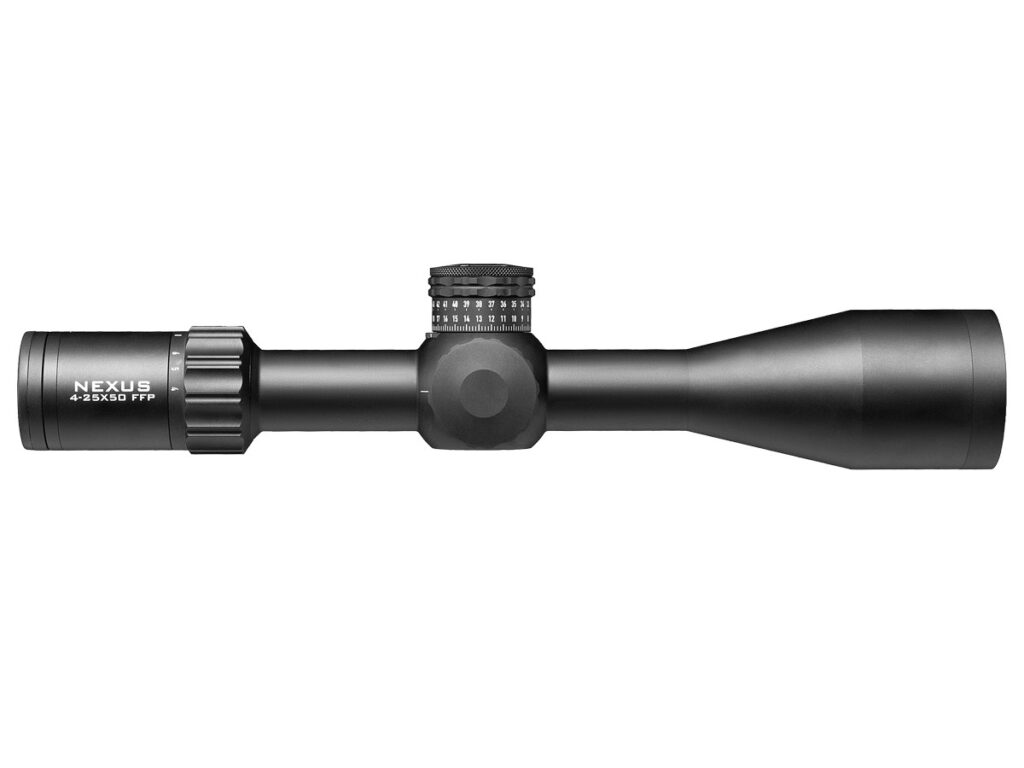
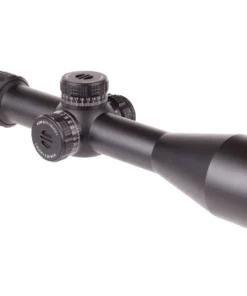
1. What makes this premium riflescope different from conventional optical scopes?
A premium optical experience has been created through the integration of advanced lens technology, durable mechanical construction, and carefully developed adjustment controls. Unlike many conventional optical instruments, greater attention has been given to image clarity, mechanical consistency, and long-term reliability.
Furthermore, a sophisticated magnification system has been incorporated to accommodate different viewing preferences. As a result, both wide-field observation and detailed image examination have been supported.
Additionally, enhanced lens coatings have been applied to minimize unwanted reflections and improve perceived image contrast. Therefore, a clearer and more comfortable viewing experience can be enjoyed under appropriate lighting conditions.
The combination of optical engineering, weather-resistant construction, and user-friendly controls has been designed to satisfy the expectations of demanding sporting optics enthusiasts.
2. How does the first focal plane system work?
A first focal plane configuration has been designed so that the apparent reticle size changes proportionally with magnification. Consequently, the reticle markings maintain the same angular relationship to objects within the viewed image.
In comparison, a second focal plane reticle generally maintains a constant apparent size when magnification is changed.
Moreover, the first focal plane arrangement has been widely adopted in premium optical equipment because of its consistent reticle subtensions.
For users who regularly examine targets or objects at different magnification settings, this optical configuration can be particularly convenient.
However, the reticle may appear comparatively fine at low magnification and more prominent at higher settings. Therefore, individual viewing preferences should be considered when selecting an optical system.
3. Is the image quality suitable for demanding outdoor conditions?
High image quality has been prioritized through the inclusion of premium optical components and advanced lens coatings. Consequently, unwanted internal reflections have been reduced, while contrast and detail reproduction have been supported.
Furthermore, protective lens treatments have been applied to help simplify cleaning and maintenance.
Although effective light transmission has been emphasized, overall image quality can still be influenced by atmospheric conditions, available light, viewing distance, and selected magnification.
For example, optical clarity may be affected by heat shimmer, fog, or excessive moisture in the surrounding environment.
Nevertheless, the instrument has been developed to provide dependable visual performance across a broad range of normal outdoor sporting conditions.
4. What benefits are provided by the variable magnification system?
Variable magnification allows the apparent size of a viewed object to be adjusted without changing optical equipment.
At lower settings, a broader field of view can be obtained, making it easier to observe larger areas. Conversely, at higher settings, smaller visual details can be examined with greater enlargement.
Additionally, different magnification levels can be selected to suit personal viewing preferences.
However, higher magnification does not automatically guarantee sharper images. Atmospheric distortion, lighting conditions, and optical stability can influence the final viewing experience.
Therefore, moderate magnification may sometimes produce a more comfortable image than the highest available setting.
Overall, variable magnification provides additional flexibility for recreational observation and authorized sporting activities.
5. Does the illuminated reticle improve visibility in low-light environments?
An illuminated reticle has been incorporated to improve the visibility of selected reticle elements when the background makes conventional markings difficult to distinguish.
Furthermore, electronic illumination controls have been provided for convenient operation.
During suitable lighting conditions, illuminated markings can be easier to recognize against dark or visually complex backgrounds.
However, illumination does not increase the amount of light collected by the objective lens. Instead, the visibility of the reticle itself is enhanced.
Additionally, excessive illumination may create unwanted visual distraction in certain environments.
For this reason, comfortable illumination settings should be selected according to ambient lighting and individual visual preferences.
6. What is the purpose of fully multi-coated optical lenses?
Fully multi-coated lenses have been developed to reduce reflection losses across multiple glass surfaces.
As light travels through an optical instrument, a portion of that light may otherwise be reflected rather than transmitted.
Consequently, specialized coatings have been applied to help preserve image brightness, contrast, and color reproduction.
Moreover, improved reflection control can reduce the appearance of unwanted glare under suitable conditions.
These treatments contribute to the overall optical experience without requiring additional external equipment.
Nevertheless, the quality of the glass, internal optical design, manufacturing tolerances, and viewing environment also influence image performance.
Therefore, premium coatings should be regarded as an important part of a complete optical system rather than as the sole determinant of image quality.
7. Can the riflescope withstand rain, moisture, and changing weather conditions?
Weather-resistant construction has been incorporated to help protect the internal optical components during ordinary outdoor use.
Furthermore, waterproof sealing and nitrogen purging have been included to reduce the risk of moisture entering the optical assembly.
Internal fogging has also been addressed through the instrument’s sealed design.
However, external lens surfaces may still become covered with condensation, raindrops, or environmental debris.
Accordingly, appropriate cleaning procedures should be followed after exposure to moisture.
Although durable construction has been prioritized, unnecessary immersion, harsh impacts, and improper storage should still be avoided.
For long-term protection, the instrument should be dried and stored in a suitable environment after exposure to demanding weather conditions.
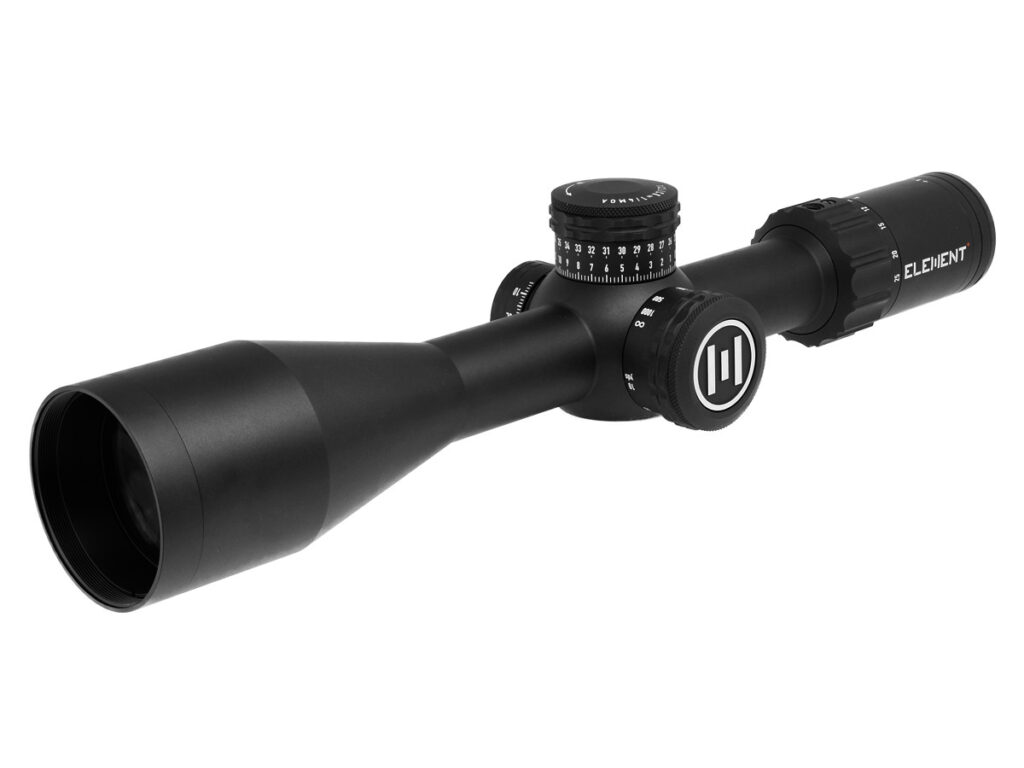
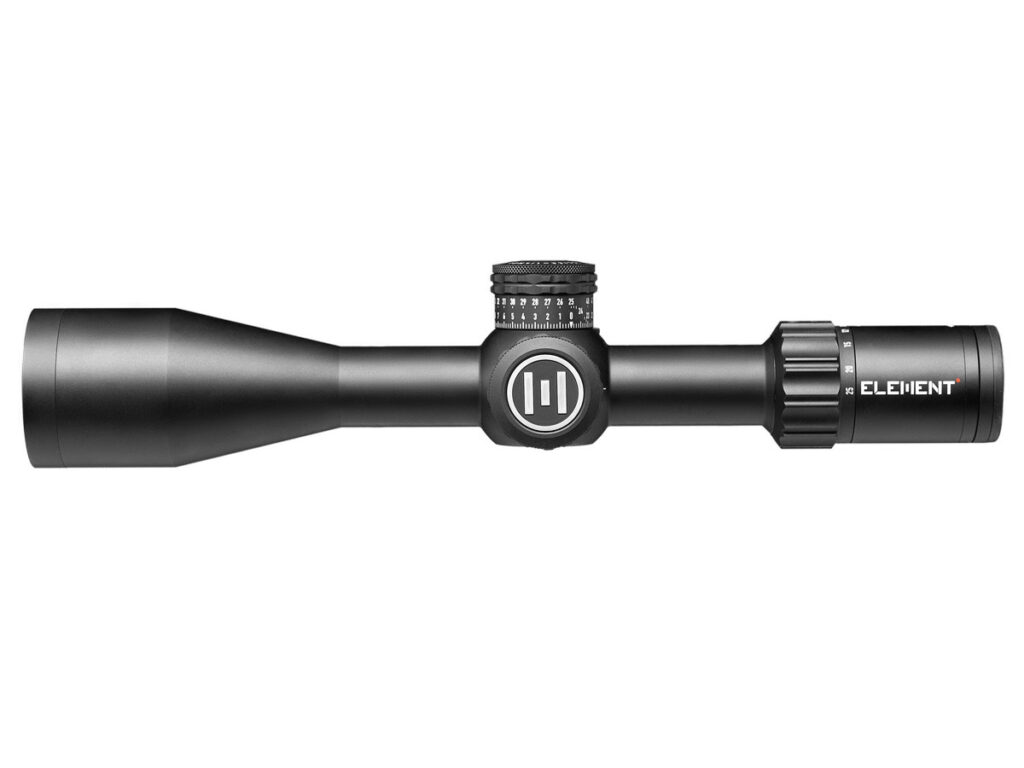
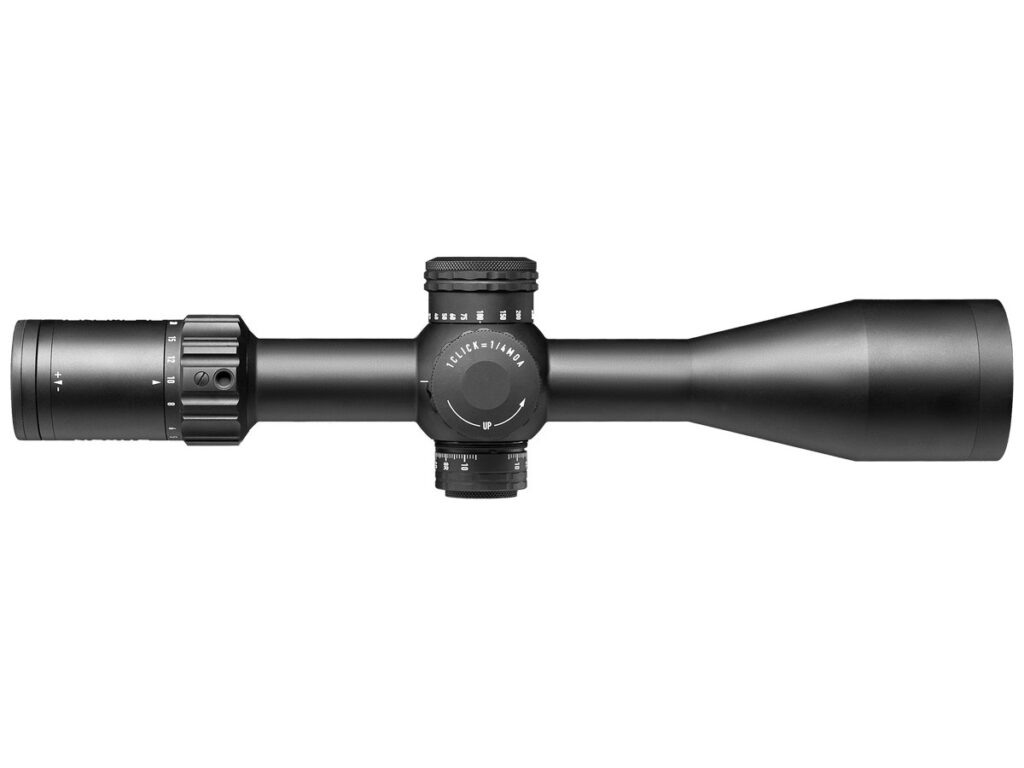
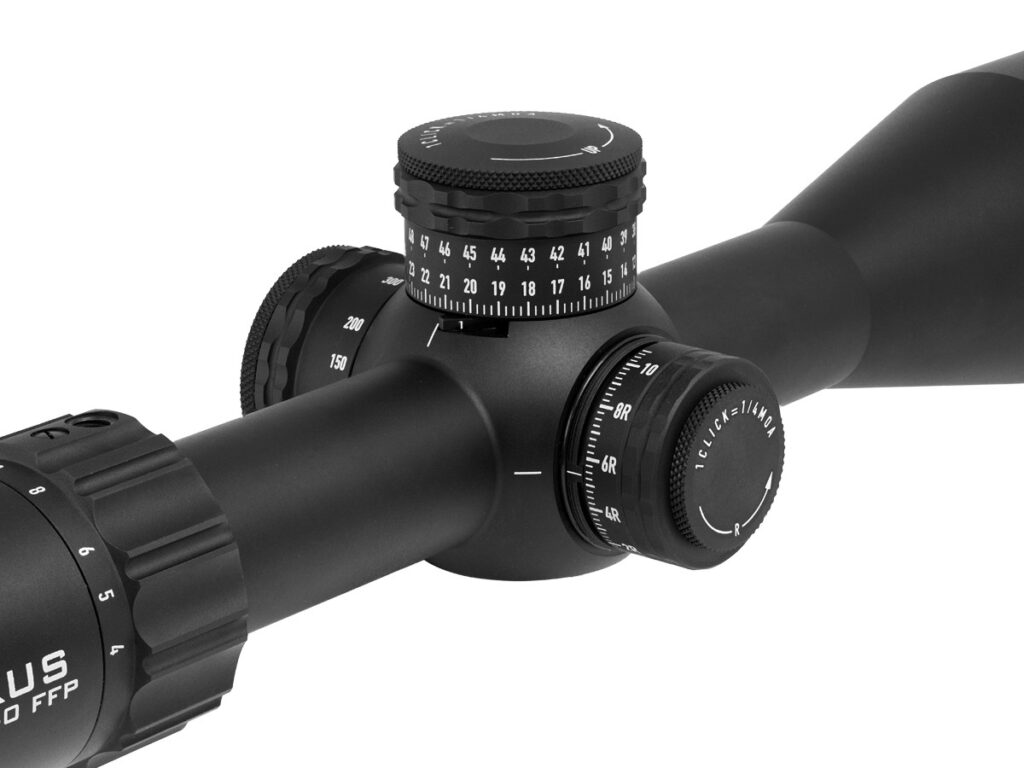
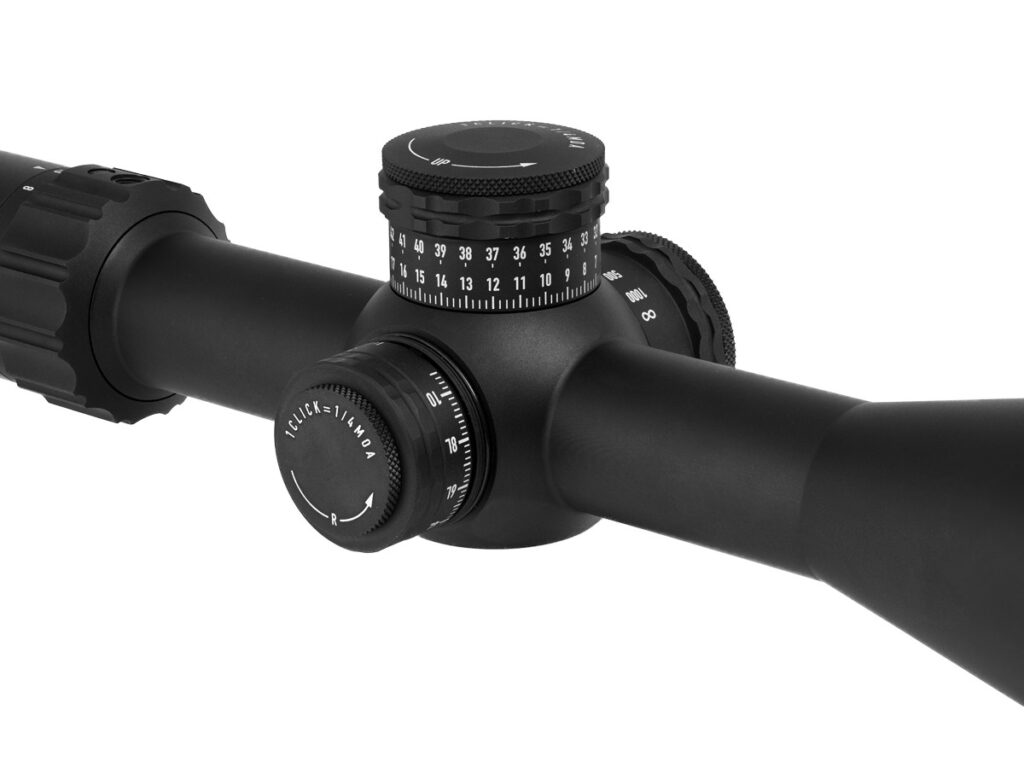
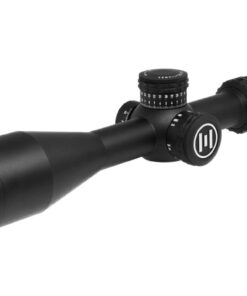
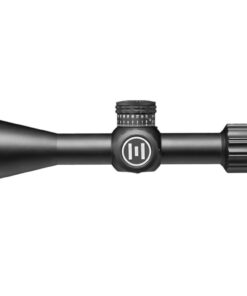
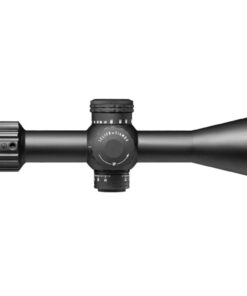
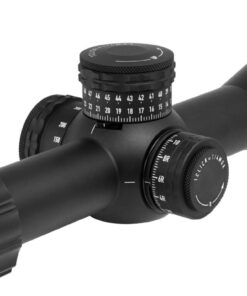
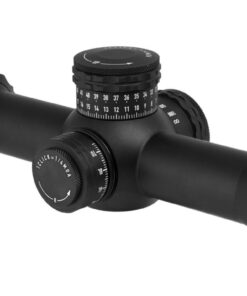
8. What advantages are offered by the premium adjustment turrets?
Premium adjustment turrets have been developed to provide clearly defined controls and a refined mechanical interface.
Additionally, graduated markings have been incorporated to make adjustment positions easier to identify.
A revolution-indication feature has also been included in the design, allowing the position of the adjustment mechanism to be recognized more conveniently.
Furthermore, tool-free reset functionality has been introduced to simplify management of the adjustment references.
Although these features contribute to usability, mechanical systems should always be treated carefully.
Excessive force, unauthorized disassembly, and unnecessary modification may compromise the instrument’s condition.
Consequently, manufacturer-approved procedures should be followed whenever maintenance or inspection is required.
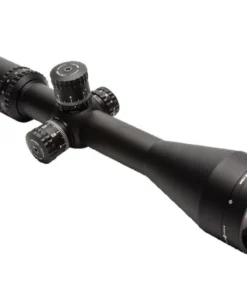
9. How does the side parallax adjustment system enhance optical viewing?
An adjustable parallax system has been incorporated to address apparent differences between the reticle and viewed image at different distances.
Moreover, the side-mounted control has been positioned for convenient access during normal optical observation.
The adjustment range begins at approximately 10 yards and extends toward infinity.
Consequently, optical flexibility has been provided for observing objects at various distances.
However, parallax adjustment should not be confused with magnification or image focus alone. Although these optical functions are related, each addresses a different aspect of the viewing experience.
Furthermore, visual comfort can be influenced by individual eyesight and environmental conditions.
Therefore, the adjustment system should be regarded as an additional optical refinement that contributes to a comfortable and consistent viewing experience.
10. What is the difference between MOA and MRAD configurations?
Two different angular measurement systems have been offered to accommodate individual preferences.
MOA, meaning Minute of Angle, represents an angular measurement commonly used in optical instruments. Meanwhile, MRAD, or milliradian, provides an alternative angular measurement format.
Both systems have been widely adopted within sporting optics.
Additionally, different turret graduation markings and reticle designs are provided according to the selected configuration.
Neither measurement system is inherently more accurate simply because of its unit format. Instead, suitability depends on personal familiarity and the consistency of the instrument’s mechanical components.
Therefore, the preferred configuration should be selected according to individual requirements and understanding of the measurement system.
11. Is the riflescope suitable for users who wear prescription glasses?
A relatively generous eye-relief range has been incorporated into the optical design, supporting comfortable viewing for many users.
The published eye-relief specification is approximately 77–92mm.
Additionally, a diopter adjustment system allows the apparent sharpness of the reticle to be adapted to individual vision.
However, comfort while wearing glasses can depend on frame design, lens thickness, and personal viewing habits.
Furthermore, the available field of view may be influenced by the position of the viewer’s eye relative to the ocular lens.
For customers who regularly wear prescription eyewear, personal evaluation can help determine whether the instrument provides a comfortable viewing experience.
12. What accessories are normally included with the product?
A selection of practical accessories has been provided as part of the manufacturer’s standard package.
Typically, a sunshade, aperture ring, and neoprene protective cover are included.
Additionally, a removable magnification throw lever has been incorporated into the product design.
These accessories have been selected to complement optical protection, handling convenience, and routine care.
The neoprene cover can be used to protect exterior surfaces during suitable storage conditions.
Meanwhile, the sunshade can help reduce unwanted direct light entering the objective lens.
Although these components are listed by the manufacturer, actual package contents should be confirmed with the retailer before an order is completed.
13. How should the optical lenses be cleaned and maintained?
Proper lens maintenance should be performed using materials specifically developed for delicate optical surfaces.
Initially, loose dust and abrasive particles should be removed with a suitable optical blower or soft lens brush.
Subsequently, an approved optical cleaning solution may be applied to a clean microfiber cloth.
The lens surface can then be wiped gently without excessive pressure.
Furthermore, household cleaning chemicals, abrasive materials, and rough fabrics should be avoided because protective coatings may be damaged.
The exterior housing should also be inspected occasionally for accumulated dirt and moisture.
After cleaning, the instrument should be stored in a dry and protected location.
Through regular maintenance, optical clarity and the condition of external components can be preserved more effectively.
14. What warranty protection is provided?
A Platinum Lifetime Warranty has been offered by the manufacturer to provide additional confidence in long-term ownership.
Furthermore, the manufacturer states that paperwork or product registration is not required for its standard warranty process.
However, warranty eligibility, exclusions, and available remedies remain subject to the manufacturer’s applicable terms.
Damage arising from unauthorized modification, misuse, or other excluded circumstances may not qualify for warranty assistance.
Therefore, customers should review the official warranty documentation before making a purchase.
Proof of purchase may also be useful for retailer support or other consumer-protection purposes.
Overall, manufacturer-backed warranty coverage represents an important benefit for customers considering a premium optical investment.
15. Why is this optical instrument considered a premium long-term investment?
A combination of advanced optical technology, durable materials, carefully engineered controls, and comprehensive quality assurance has been brought together in this design.
Moreover, premium lens coatings have been incorporated to support consistent visual quality.
Mechanical refinement has also been emphasized through the inclusion of sophisticated adjustment components.
Additionally, weather-resistant construction and a manufacturer-backed warranty contribute to its long-term ownership appeal.
Although premium optical instruments generally require a greater initial investment than basic alternatives, improved construction quality and comprehensive features may provide meaningful value.
For customers who appreciate refined engineering, durable materials, and versatile optical performance, this model has been positioned as a high-quality option.
Ultimately, the combination of optical sophistication, practical accessories, and dependable manufacturer support makes it a compelling addition to a premium sporting optics collection.

Reviews
There are no reviews yet.