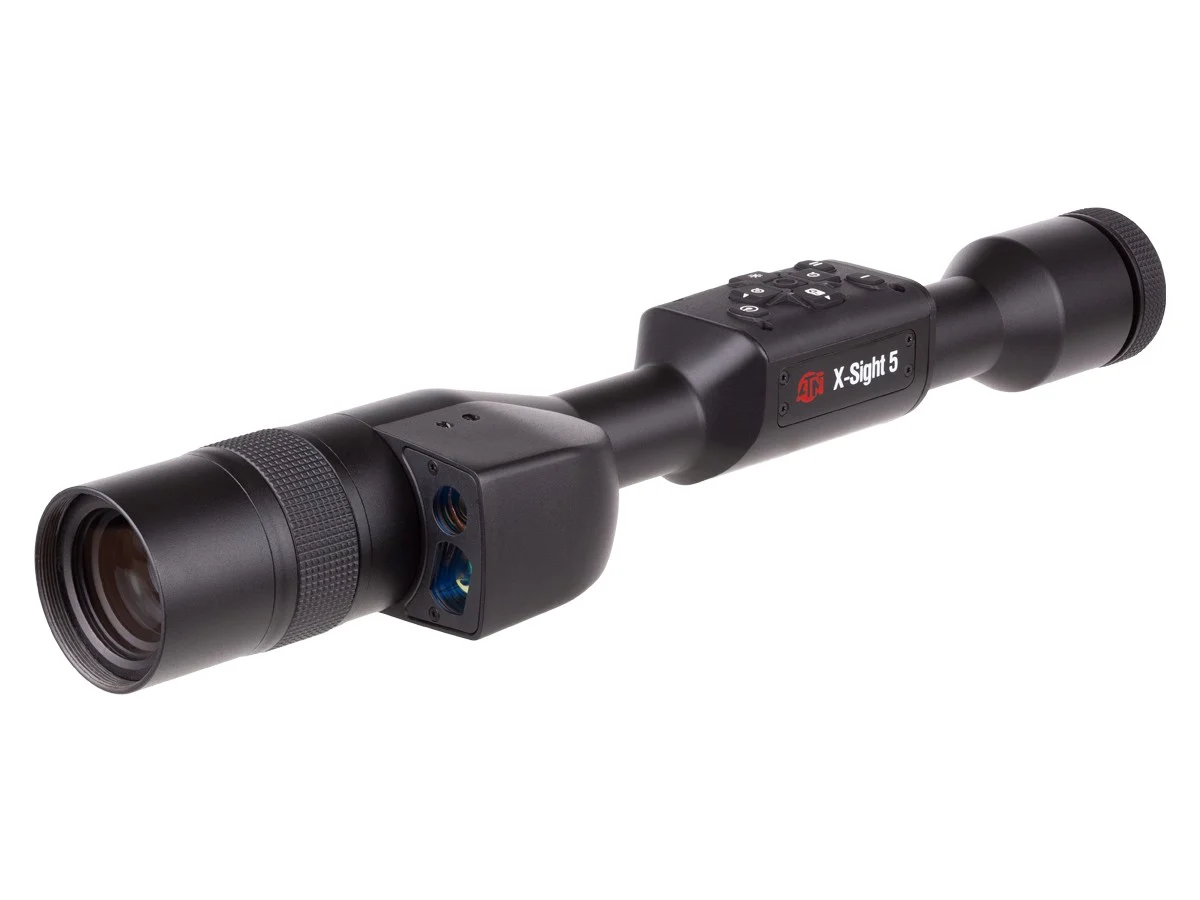
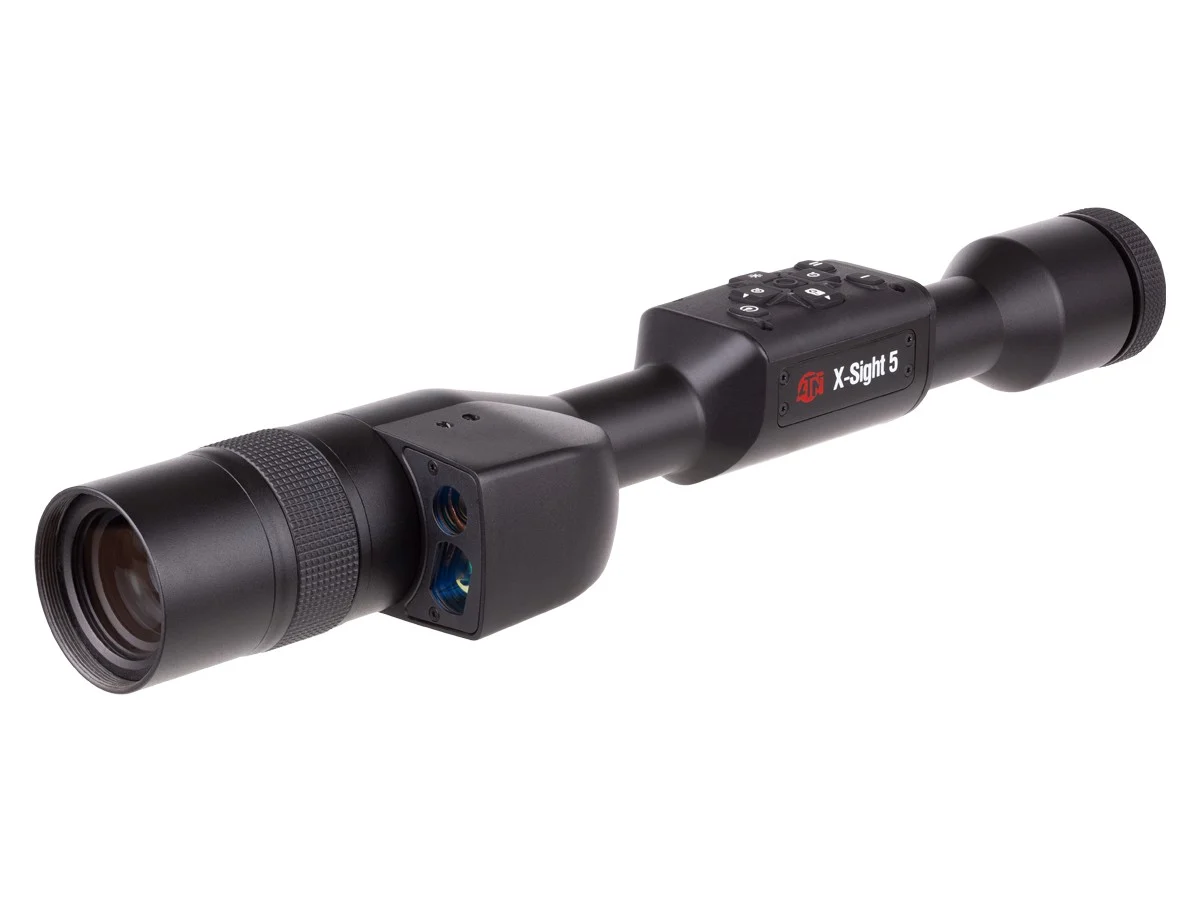
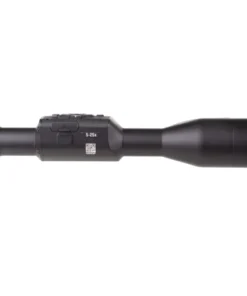
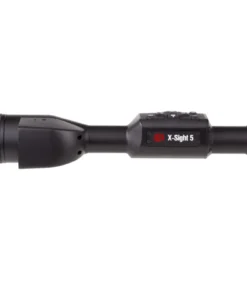
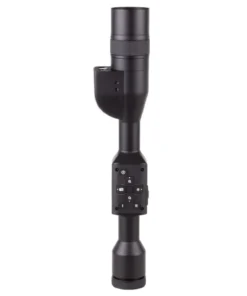
ATN X-Sight 5 LRF Smart Day/Night Hunting Rifle Scope – Ultra HD 4K+ Digital Optics with Integrated Laser Rangefinder
ATN X-Sight 5 LRF Smart Day/Night Hunting Rifle Scope – Advanced Digital Technology for Exceptional Clarity
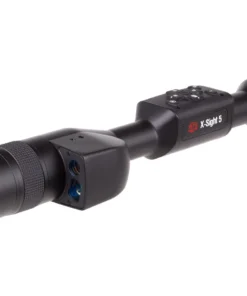
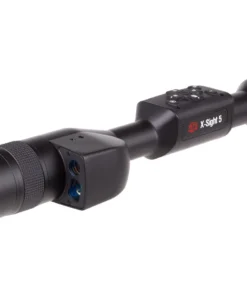
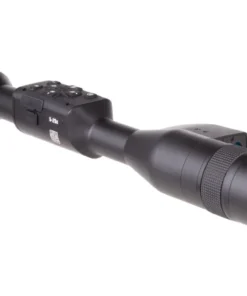
Experience a new generation of intelligent optics with the ATN X-Sight 5 LRF Smart Day/Night Hunting Rifle Scope, an innovative digital riflescope developed for outdoor enthusiasts, hunters, wildlife observers, and recreational shooting enthusiasts who value advanced technology, exceptional image quality, and reliable functionality.
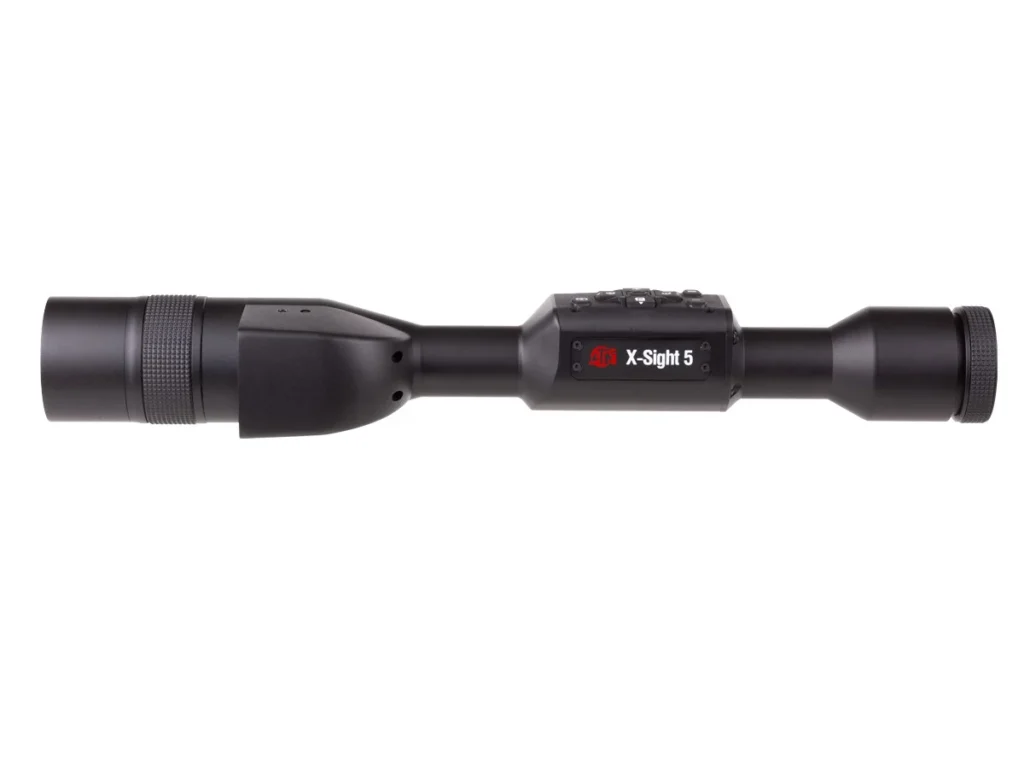
Designed with an impressive Ultra HD 4K+ sensor, integrated laser rangefinder, sophisticated ballistic calculator, and intelligent recording capabilities, this premium digital optic offers a versatile viewing experience throughout changing daylight conditions.
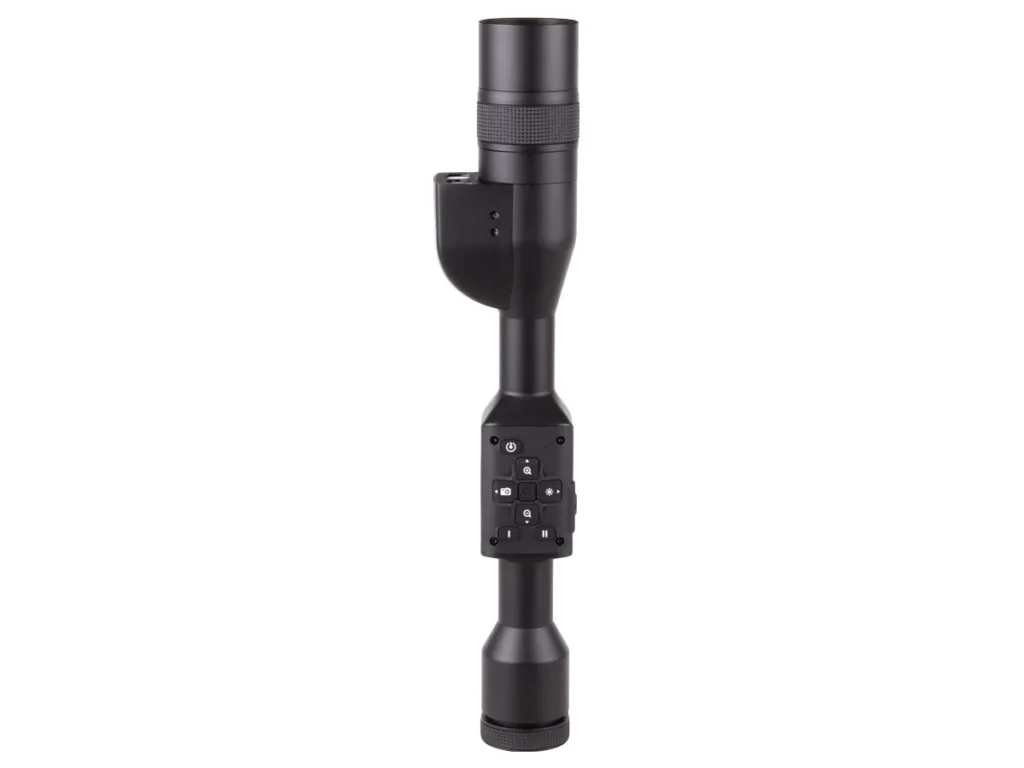
Furthermore, its modern electronic architecture combines powerful image processing with convenient controls, allowing important information to be displayed directly through the digital viewing system.
Whether exploring outdoor environments during daylight, observing wildlife after sunset, or documenting memorable experiences, users can appreciate its combination of visual performance, adaptable settings, and smart technology.
Unlike conventional optical systems, this advanced digital riflescope integrates electronic imaging, multimedia recording, and convenient connectivity into one sophisticated platform.
Consequently, the ATN X-Sight 5 LRF Smart Day/Night Hunting Rifle Scope represents an attractive investment for customers seeking feature-rich digital optics with excellent versatility.
Key Features and Product Highlights
The following features distinguish this advanced digital optic from conventional viewing systems:
- Ultra HD 4K+ Sensor: Delivers high-resolution digital imagery with detailed textures and enhanced visual clarity.
- Integrated Laser Rangefinder: Measures distances electronically without requiring a separate handheld rangefinding device.
- Day and Night Viewing: Supports daytime color imaging and digital night-vision functionality.
- Advanced Ballistic Calculator: Provides integrated ballistic calculation features for compatible shooting applications.
- 4K Video Recording: Captures high-resolution footage of outdoor activities and memorable observations.
- Recoil Activated Video (RAV): Offers automatic recording functionality linked to recoil detection.
- Smart Reticle Customization: Supports multiple reticle patterns, colors, and personalized configurations.
- Smooth Digital Zoom: Allows convenient magnification adjustments through electronic controls.
- Built-In Wi-Fi Connectivity: Enables compatible smartphone connectivity and media management.
- One Shot Zero Feature: Provides electronic zeroing functionality through the device interface.
- Electronic Compass: Displays directional information for additional outdoor awareness.
- 3D Gyroscope and Accelerometer: Support intelligent orientation and motion-related functions.
- Rechargeable Battery: Offers up to 14 hours of operation under specified conditions.
- Weather-Resistant Construction: Supports outdoor use in changing environmental conditions.
- Comfortable Eye Relief: Features approximately 90 mm of eye relief.
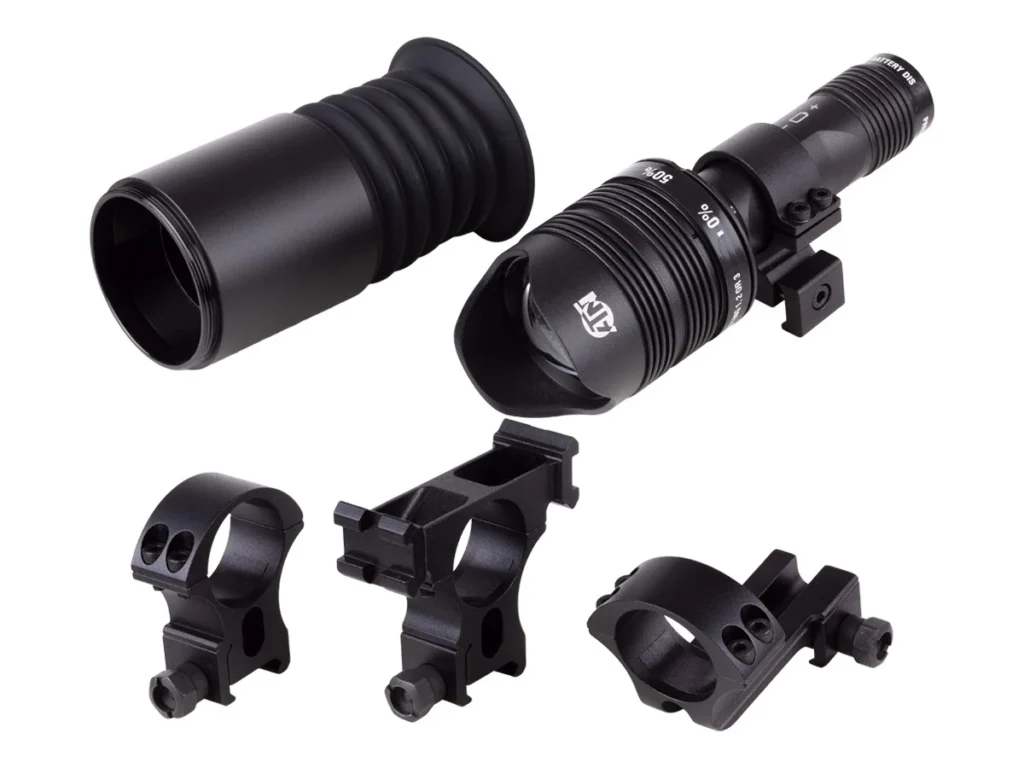
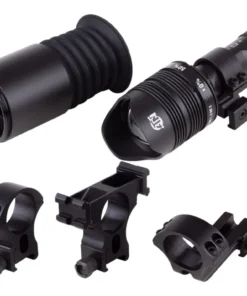
- Included 30 mm Mounting Rings: Provides a convenient mounting solution for compatible equipment.
Advanced Ultra HD 4K+ Sensor for Outstanding Digital Image Quality
Experience Exceptional Detail and Natural Visual Reproduction
At the heart of this advanced viewing system sits ATN’s impressive 4K+ digital image sensor, designed to capture detailed imagery with accurate visual reproduction.
With a sensor resolution of 4056 × 3040 pixels, fine textures and environmental details can be represented with exceptional digital clarity.
Additionally, the powerful Obsidian V quad-core processing architecture supports responsive performance and sophisticated image processing.
As a result, landscapes, vegetation, terrain features, and wildlife subjects can be observed through a detailed electronic display.
Rather than relying exclusively on traditional glass optics, the system converts captured visual information into a high-resolution digital viewing experience.
Moreover, the integrated 1280 × 960 microdisplay presents visual information through a convenient viewing interface.
This combination makes the digital optic particularly appealing to enthusiasts who appreciate modern imaging technology.
Intelligent Day and Night Viewing Capabilities
Versatile Imaging for Changing Lighting Conditions
Outdoor lighting conditions can change considerably between early morning, bright afternoon sunshine, evening twilight, and nighttime environments.
Fortunately, the integrated day/night imaging system allows users to switch between digital viewing modes according to their surroundings.
During daylight hours, color imaging provides recognizable scenery and natural-looking outdoor environments.
Meanwhile, nighttime operation uses digital night-vision processing to display scenes when suitable illumination is available.
For exceptionally dark environments, a compatible infrared illuminator may be required to support visibility.
Furthermore, convenient digital controls allow viewing preferences to be adjusted without changing to an entirely different optical device.
Consequently, users benefit from a flexible viewing platform suitable for numerous legal outdoor observation activities.
Built-In Laser Rangefinder for Convenient Distance Measurement
Integrated Distance Information Without Additional Equipment
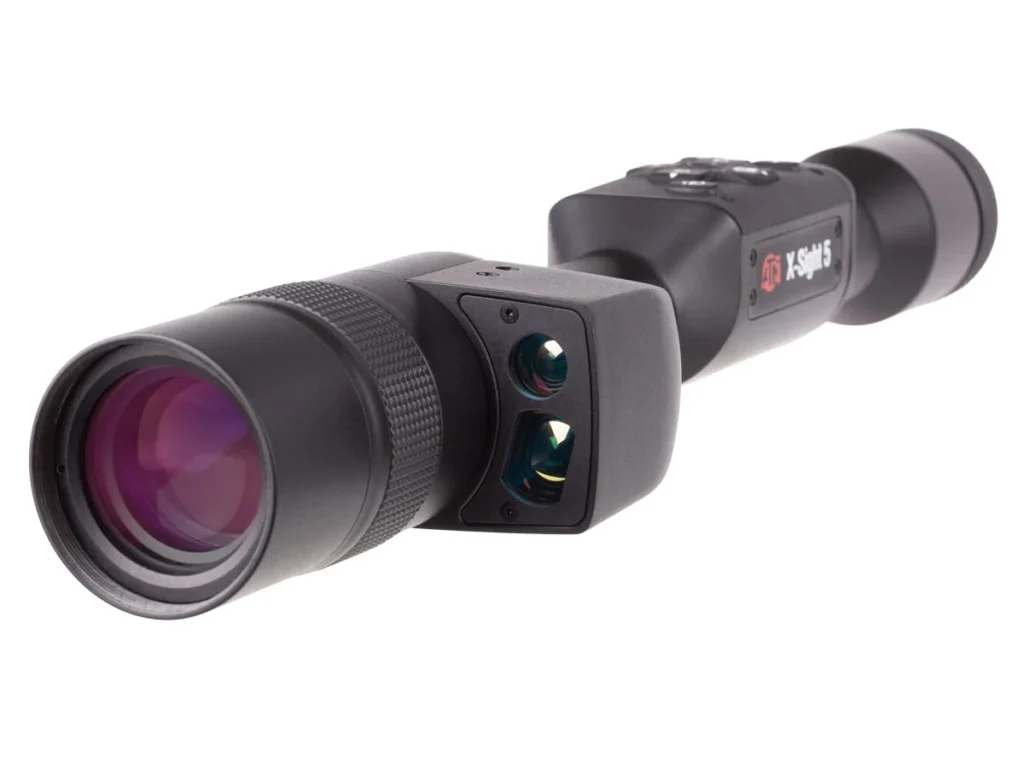
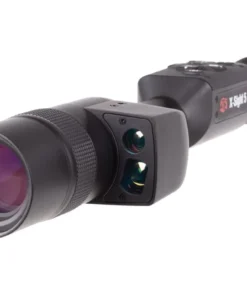
One of the most distinctive features of the LRF edition is its integrated laser rangefinder.
Instead of carrying a separate distance-measuring instrument, users can access electronic range information through the riflescope’s digital interface.
This integration improves convenience while reducing the number of separate optical accessories required for certain activities.
Additionally, electronic distance measurements can support observation, equipment familiarization, and structured recreational range sessions.
Because ranging capability depends on environmental conditions and target characteristics, actual measurement performance may vary.
Nevertheless, having built-in rangefinding functionality creates a more streamlined digital optics experience.
Smart Ballistic Calculator and Customizable Reticle Technology
Advanced Electronic Features in One Digital Platform
Modern digital optics increasingly combine traditional viewing functions with sophisticated electronic tools.
Accordingly, this model incorporates a ballistic calculator designed to work with supported equipment profiles and relevant environmental inputs.
The integrated calculation interface contributes to the product’s intelligent feature set.
Furthermore, customizable reticle options allow users to select from different visual patterns and color configurations.
Through the reticle editing functionality, the display can be personalized according to individual preferences.
Multiple equipment profiles can also be managed using the available profile-management features.
Together, these technologies create a sophisticated electronic environment for users who value customizable viewing systems.
4K Video Recording and Smart Multimedia Capabilities
Capture and Preserve Outdoor Experiences
Beyond its digital viewing capabilities, this innovative optic functions as a high-resolution video-recording platform.
Its integrated recording system supports video capture at resolutions up to 4K UHD, with available frame-rate options depending on configuration.
Consequently, memorable wildlife encounters, outdoor scenery, and recreational experiences can be documented digitally.
Additionally, the Recoil Activated Video feature provides an automated recording option during compatible shooting activities.
Built-in microphone support further enhances multimedia functionality by allowing accompanying audio to be captured.
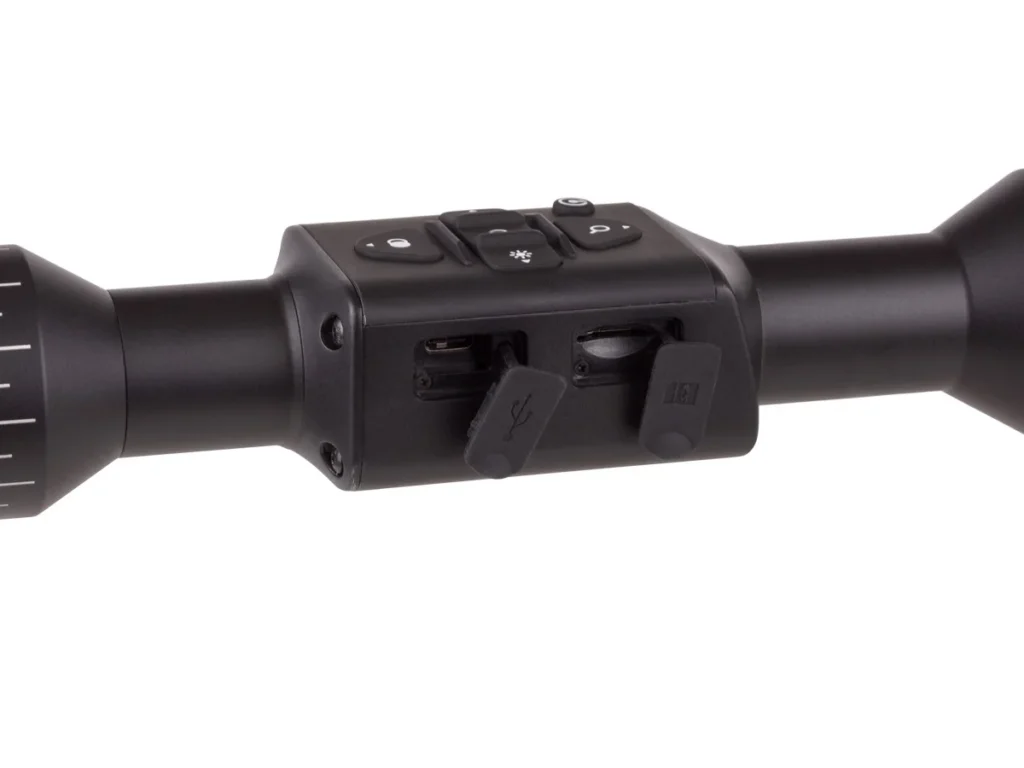
Recorded material can be stored using a compatible microSD card.
Moreover, wireless connectivity offers additional options for reviewing and managing compatible media through supported mobile devices.
Ergonomic Construction, Battery Efficiency, and Outdoor Durability
Designed for Comfortable Extended Use
A digital riflescope should offer more than impressive imaging capabilities. Comfortable handling, accessible controls, and dependable battery performance are equally important.
Therefore, the device combines its sophisticated electronics with a practical riflescope-style housing.
Its approximately 90 mm eye relief contributes to a comfortable viewing experience when properly mounted and used.
Furthermore, the rechargeable lithium-ion battery supports extended operation, with a manufacturer-rated runtime of up to 14 hours.
USB-C connectivity adds convenience for supported charging and connection functions.
Weather-resistant construction provides additional practicality when outdoor conditions become unpredictable.
However, the device should not be considered suitable for complete immersion in water.
Available Magnification Options and Technical Specifications
Choose the Configuration That Matches Your Viewing Preferences
The series includes two LRF magnification configurations:
- 3–15x: Offers a broader field of view for general outdoor observation and flexible magnification.
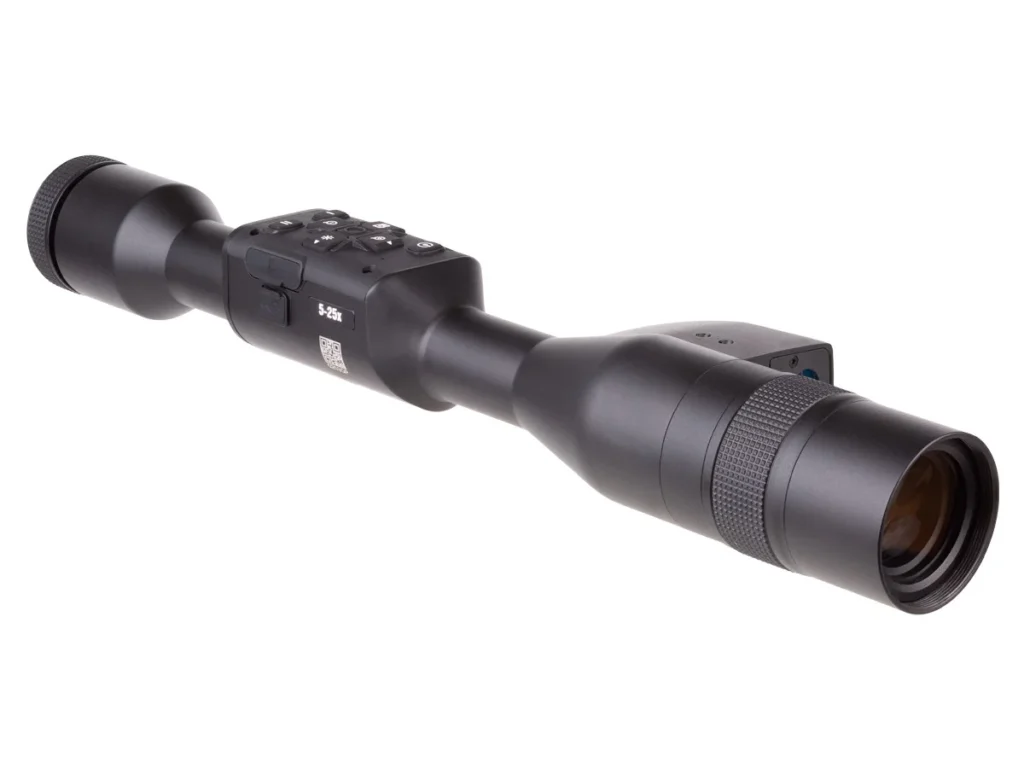
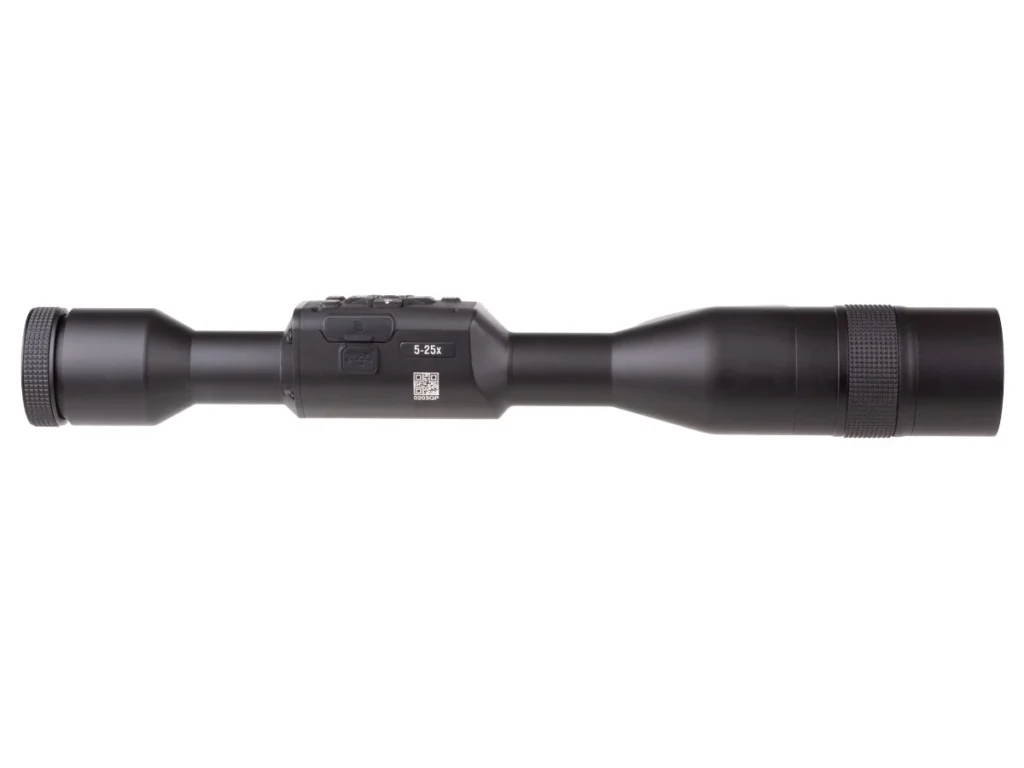
- 5–25x: Provides greater maximum digital magnification for users who prefer an enlarged viewing image.
Both versions incorporate the same principal digital technology, including the integrated rangefinder, 4K+ imaging system, customizable reticles, and connected features.
Technical Specifications
| Feature |
Specification |
| Product series |
ATN X-Sight 5 LRF |
| Sensor |
ATN 4K+ 4056 × 3040 |
| Magnification |
3–15x or 5–25x |
| Processor |
ATN Obsidian V Quad Core |
| Display |
1280 × 960 |
| Laser rangefinder |
Integrated |
| Video recording |
Up to 4K UHD |
| Ballistic calculator |
Included |
| Wi-Fi |
Supported |
| Eye relief |
90 mm |
| Battery life |
Up to 14 hours |
| Mounting rings |
30 mm included |
| Weight |
Approximately 0.95 kg |
| Weather protection |
Weather resistant |
Why Choose the ATN X-Sight 5 LRF Smart Day/Night Hunting Rifle Scope?
A Premium Combination of Imaging, Connectivity, and Intelligent Features
Customers looking for advanced digital optics often prioritize visual clarity, convenience, modern functionality, and long-term usability.
With this model, these characteristics are brought together in one versatile optical system.
First, the high-resolution sensor delivers detailed digital imaging. Additionally, the built-in rangefinder offers convenient distance measurement.
Moreover, adaptable day/night modes expand the range of supported lighting conditions.
Meanwhile, integrated video recording creates opportunities to preserve outdoor experiences without requiring a separate recording camera.
Finally, customizable display options, rechargeable power, and smart connectivity contribute to a personalized user experience.
Choose the ATN X-Sight 5 LRF Smart Day/Night Hunting Rifle Scope for an advanced digital optics experience that combines Ultra HD imaging, integrated rangefinding, intelligent features, and modern outdoor versatility.
Explore the available magnification configurations and discover a sophisticated viewing platform designed for today’s digital optics enthusiasts.
Element Optics Riflescopes: Complete Guide to THEOS, HELIX, TITAN, NEXUS, Prism Optics, Rangefinders and Mounting Accessories
Discover Element Optics: Precision, Clarity and Advanced Optical Technology
When premium riflescope technology is considered, element scopes are frequently explored by shooting enthusiasts seeking optical clarity, reliable adjustment systems and dependable construction. Developed around practical shooting requirements, element theos, element helix, element titan and element nexus scopes represent different approaches to magnification, reticle functionality and optical performance.
As an established optic scope manufacturer, Element Optics provides optical equipment designed for sporting applications. Buyers researching element tactical, element vision, spectrum element, op element, element 3.0 or element ll may also encounter related search terminology while comparing optical products.
A comprehensive scopes website should explain the differences between magnification ranges, objective lenses, focal planes and mounting systems. Consequently, selecting suitable optics becomes easier when technical information is presented clearly.
Element THEOS Scopes: Advanced Long-Range Optical Performance
The element theos series is associated with premium precision optics. In particular, the theos scope attracts interest from enthusiasts seeking detailed reticles, sophisticated adjustment systems and high-magnification capabilities.
The element theos 6-36, also searched as element theos 6 36×56, features a 6–36× magnification configuration with a 56mm objective lens. The 36×56 specification identifies the maximum magnification and objective diameter, making it important when comparing high-powered optical systems.
Meanwhile, searches involving element theos 2-10, element theos 2 10, theos 2-10 and theos 2-10×42 ffp indicate interest in more compact magnification configurations. These terms should be distinguished from confirmed manufacturer model names before purchasing.
Interest in a 10 optic, 2-10 optic, 2-10x scope, element 2-10 or element 2-10 scope commonly reflects a preference for versatile lower magnification.
Similarly, customers searching for an element 2 10 scope or element optics 2-10 should compare verified product specifications rather than assume every search phrase describes an existing THEOS configuration.
Understanding Magnification and Optical Versatility
A 2-12 scope or 2×12 scope provides a broad magnification range for observation at varying distances. Furthermore, a 2-12 scope ffp uses a first focal plane reticle whose subtensions remain consistent throughout magnification changes.
Search expressions such as fffp 2, 12×4/2, 10×40 and .10×40 may appear in optical comparisons, although individual terms should be verified against actual product specifications.
Element HELIX: Reliable Optics and Practical Magnification
The element helix collection offers multiple configurations designed around dependable optical adjustment and functional reticle systems.
For example, the helix scope is frequently researched by customers comparing magnification flexibility and overall value.
The element optics 6-24×50, also described through searches such as element helix 6 24×50, combines 6–24× magnification with a 50mm objective lens. Depending on the specific model, first or second focal plane configurations may be available.
Buyers investigating helix hd 2 16×50 and hdlr should also examine the appropriate HELIX HD or HDLR product specifications. Different optical configurations can affect field of view, reticle behavior and shooting preferences.
Importantly, rifle scope reticles should be evaluated for legibility, subtension consistency and compatibility with the intended sporting discipline.
Comparing HELIX Models
When evaluating HELIX optics, several considerations deserve attention:
- Magnification flexibility and optical clarity.
- First versus second focal plane reticles.
- Turret adjustment repeatability.
- Objective lens diameter and eye relief.
- Weather resistance and mounting compatibility.
- Manufacturer warranty and accessory availability.
By comparing these features carefully, buyers can distinguish between individual configurations without relying exclusively on magnification figures.
Element TITAN: Precision Optics With Versatile Magnification
The element titan family occupies an important position within premium sporting optics. In particular, the titan scope collection includes configurations suited to different magnification preferences.
The element titan 3 18×50, alternatively written as element titan 3-18×50, provides a 3–18× magnification range and 50mm objective lens.
Searches for 3-18 scopes, 3-18, 3×18, 3×18 scope and 3:18 often concern this general category.
Additionally, comparisons involving nightforce 3-18 and best 3-18 scopes may help researchers identify differences in optical quality, reticle systems, adjustment mechanisms and overall dimensions.
The TITAN family also includes a 5–25×56 configuration, which explains searches for 5-25 scope, 25/56, titan 5 and titan25.
For more detailed comparisons, element titan 5 25×56 ffp review is a relevant research phrase associated with first focal plane performance, image quality and adjustment precision.
Neither magnification nor objective diameter alone determines optical quality. Lens coatings, mechanical consistency and viewing conditions must also be considered.
Element NEXUS and NEXUS GEN 2: Premium Precision Optics
The nexus scope family has attracted attention among enthusiasts interested in premium optical construction.
Across the nexus scopes range, optical quality and mechanical precision remain central comparison points.
The element nexus gen 2 is particularly relevant to buyers investigating modern first focal plane designs.
Searches for nexus 4-25×50 refer to a configuration offering a 4–25× magnification range and 50mm objective lens.
Additionally, terms such as nexus tactical often appear in discussions about precision-oriented optics, robust turret systems and specialized reticle designs.
Before selecting any model, specifications should be checked for tube diameter, adjustment range, parallax capability and supported mounting accessories.
Element Prism Optics and Alternative Optical Designs
The element prism category introduces another approach to optical viewing.
Unlike conventional variable riflescopes, a prismatic scope uses a prism-based optical arrangement, often allowing a compact optical design.
Customers asking what is a prismatic scope generally want to understand the difference between prism optics, traditional riflescopes and other sighting technologies.
Search phrases such as prismatic scale of the elements should not be confused with official optical specifications or reticle calibration systems.
The Element Optics element hyper 7 search commonly relates to the HYPR-7 hybrid optic. Likewise, hqp7-rf-2 specifications details should be verified against an actual manufacturer product designation before being treated as a confirmed model.
Other searches, including 14×50, relate to fixed-magnification optical configurations.
Meanwhile, chromatic aberration scope comparisons concern unwanted colored fringes that may appear around high-contrast objects. Optical coatings, lens design and glass quality can influence how effectively this effect is controlled.
Element RF: Rangefinding Technology and Ballistic Information
Accurate distance measurement is an important part of modern optical equipment evaluation.
The phrases element rf and element range are associated with searches for rangefinding solutions and related optical technology.
A ballistic rangefinder combines distance information with ballistic calculation features when supported by the specific device.
Other common search terms include rifle rangefinder, rifle range finder, laser range finder for rifle, rangefinder scope for rifle and rangefinding rifle scope.
Customers may also compare scopes with rangefinders built in against separate rangefinding instruments.
Specialized accessory research frequently includes picatinny mounted rangefinder, picatinny range finder, weapon mounted range finder and wmlrf.
For integrated electronic calculations, searches involving weapon mounted ballistic calculator and arken wmlrf refer to a broader category of rangefinding and ballistic-support equipment.
Importantly, individual devices differ in measurement capability, electronic features and mounting requirements. Product documentation should therefore be consulted before assuming compatibility.
Scope Mounts, Picatinny Rails and Dovetail Accessories
A secure element mount or other compatible mounting system is essential for maintaining consistent optical alignment.
Common accessories include a dovetail scope mount, dovetail rings and dovetail scope mounts, each intended for appropriately matched mounting interfaces.
Alternatively, picatinny scope mounts, picatinny scope rings, 30mm scope mount picatinny and 30mm picatinny scope rings are relevant when selecting accessories for Picatinny rail systems.
For dovetail configurations, 30mm dovetail scope rings should be matched carefully to both the optic’s tube diameter and the available rail dimensions.
Specialized accessory searches also include 34mm diving board mount, 34mm scope mount with diving board, diving board scope mount, 30mm diving board mount and scope diving board.
Such terminology commonly describes mounting arrangements incorporating an additional platform above or near the main optic.
Protective Scope Covers and Optical Maintenance
Protective accessories contribute to equipment longevity by reducing exposure to dust, debris and accidental surface contact.
Products such as tenebraex scope caps and tenebraex scope covers are frequently considered by owners seeking lens protection.
Similarly, an allen neoprene scope cover can offer general protective coverage during storage or transportation.
Before purchasing covers, buyers should verify the precise scope model and external lens-housing dimensions.
Choosing Element Optics With Confidence
Selecting among THEOS, HELIX, TITAN, NEXUS and prism-based optics requires more than comparing magnification alone.
Optical clarity, eye relief, reticle configuration, mechanical reliability, mounting compatibility and product authenticity should all be assessed together.
By researching verified product specifications, reviewing the available accessory options and selecting equipment suited to individual sporting requirements, customers can make more informed decisions.
Ultimately, the Element Optics range provides several distinct optical configurations, allowing enthusiasts to compare premium precision scopes, versatile mid-range designs, compact prism systems and compatible accessories within one broader optical product category.
Frequently Asked Questions (FAQs)
1. What makes this digital optical system different from a traditional riflescope?
The primary difference is found in the advanced electronic imaging technology used to display visual information. Unlike conventional optical systems that rely entirely on glass lenses and available light, this modern device incorporates a high-resolution electronic sensor, digital image processing, and an integrated viewing screen.
Furthermore, several intelligent features are provided within a single housing, including distance measurement, customizable display settings, video recording, and wireless connectivity.
As a result, users can enjoy a technologically advanced viewing experience without relying on several separate electronic accessories. Additionally, its adaptable viewing modes provide considerable flexibility when lighting conditions change.
2. Can the device be used during both daytime and nighttime?
Yes. Versatile day and night viewing capabilities are incorporated into the electronic imaging system, allowing users to observe outdoor environments under different lighting conditions.
During daylight, natural-looking color images can be displayed through the integrated screen. Meanwhile, nighttime operation relies on digital image processing and available illumination.
For environments with extremely limited ambient light, a compatible infrared illuminator may be necessary to improve visibility.
However, viewing quality is influenced by weather, surrounding illumination, environmental conditions, and the selected settings. Consequently, optimal performance cannot be guaranteed under every circumstance.
3. Does the device provide true thermal imaging?
No. Digital night vision and thermal imaging operate through different technologies.
Digital night-vision systems use electronic image sensors to capture visible and near-infrared light. Thermal imaging equipment, by comparison, detects infrared radiation associated with temperature differences.
Therefore, this device does not display heat signatures in the same manner as a dedicated thermal camera.
Instead, its electronic sensor produces visual imagery using available light and compatible infrared illumination. This distinction should be understood before selecting equipment for a particular outdoor observation activity.
4. What is the purpose of the integrated laser rangefinder?
The integrated laser rangefinder is designed to provide electronic distance measurements without requiring a separate handheld measuring instrument.
When operated under suitable conditions, distance information can be displayed through the digital interface.
Additionally, this feature contributes to a more convenient outdoor observation experience by combining multiple functions within one device.
Nevertheless, ranging performance can vary according to target reflectivity, environmental lighting, atmospheric conditions, and the distance involved.
For dependable results, the manufacturer’s recommended operating procedures should always be followed.
5. How clear is the image produced by the high-resolution sensor?
The electronic sensor is designed to capture detailed digital imagery with a resolution of 4056 × 3040 pixels.
Furthermore, advanced processing technology contributes to image reproduction, contrast management, and the overall electronic viewing experience.
Fine environmental details, outdoor landscapes, and recognizable subjects can therefore be displayed with considerable clarity under suitable conditions.
However, actual image quality depends on several factors, including atmospheric visibility, available light, focus adjustment, and electronic magnification.
Consequently, users should expect performance to vary between bright daylight, twilight, and nighttime environments.
6. What magnification options are available?
Two primary configurations are offered within the series: 3–15x and 5–25x.
The first configuration provides a relatively broad viewing perspective at its lowest magnification, making it suitable for users who prefer flexibility when observing larger outdoor scenes.
Conversely, the second configuration offers greater maximum electronic magnification for situations in which a more enlarged image is preferred.
Importantly, digital magnification does not operate identically to optical magnification. Increasing electronic zoom can reduce the amount of original image detail visible on the display.
Therefore, buyers should consider their preferred field of view and typical observation requirements when comparing versions.
7. Can photographs and videos be recorded directly?
Video recording functionality is incorporated into the electronic platform, allowing users to preserve selected outdoor experiences.
High-resolution footage can be captured through the integrated recording system, with available recording settings determined by the installed firmware and supported operating modes.
Additionally, recorded content can be stored on compatible removable memory.
This functionality can be particularly useful for documenting landscapes, wildlife observations, equipment demonstrations, and recreational activities.
Before recording, sufficient storage space and battery capacity should be available. Local privacy and recording regulations must also be respected.
8. How does automatic video recording work?
An intelligent recording feature is included to support automated video capture when recoil is detected.
Rather than requiring every recording sequence to be started manually, the system can automatically preserve footage associated with a detected event when the feature has been enabled and properly configured.
Furthermore, recording behavior is influenced by software settings, memory availability, and device compatibility.
Users should become familiar with the relevant menus before relying on this functionality.
For general outdoor observation, conventional manual recording remains a practical alternative.
9. Does the system include wireless connectivity?
Yes. Wireless connectivity is supported, allowing compatible mobile devices to communicate with the electronic viewing platform.
Through the appropriate manufacturer-supported application, selected functions may include live viewing, media access, and device configuration.
However, the exact available options can depend on the installed firmware, smartphone operating system, and application version.
Furthermore, wireless performance may be influenced by signal interference and the surrounding environment.
For the most reliable experience, compatibility requirements should be checked before installation, and software should be obtained from official sources.
10. How long does the rechargeable battery last?
The manufacturer advertises battery operation of up to approximately 14 hours under specified conditions.
Nevertheless, actual runtime may vary according to recording activity, display settings, wireless connectivity, environmental temperature, and general usage patterns.
For example, extensive video recording and active wireless features may increase power consumption.
Consequently, users planning extended outdoor activities should ensure that the battery is adequately charged beforehand.
Following the recommended charging instructions also helps maintain dependable operation and supports the long-term condition of the battery system.
11. Can the battery be recharged using USB-C?
USB-C connectivity is provided for supported charging and connection functions.
This modern connection standard offers a convenient alternative to older proprietary charging interfaces.
However, only compatible power sources and manufacturer-recommended charging accessories should be used.
Additionally, charging should be carried out in accordance with the supplied safety instructions.
Damaged cables, unsuitable power adapters, and exposure to moisture during charging should be avoided.
For optimal battery care, the charging port should be kept clean and properly protected whenever the equipment is used outdoors.
12. Is the equipment waterproof?
Weather-resistant construction is incorporated to support use in changing outdoor conditions.
Nevertheless, weather resistance should not automatically be interpreted as complete waterproofing or suitability for underwater operation.
Exposure to ordinary environmental moisture may be tolerated within the manufacturer’s specified limits, while prolonged immersion or pressure washing may cause damage.
Furthermore, protective covers should be secured correctly, and the device should be dried after exposure to moisture.
Before use during heavy rainfall or other demanding conditions, the official environmental protection rating should be confirmed.
13. What type of memory card is required?
A compatible microSD memory card is used for storing recorded media.
Because supported storage capacities and card specifications may depend on firmware and hardware requirements, the manufacturer’s current compatibility guidance should be consulted before purchase.
Additionally, reliable cards from established manufacturers are generally preferable for high-resolution recording applications.
Cards should be formatted according to the device instructions when necessary.
For dependable file management, important recordings should be transferred periodically to another suitable storage location.
This practice reduces the risk of losing valuable footage through accidental deletion, card failure, or insufficient available space.
14. Are different reticle designs and colors available?
Yes. Multiple electronic reticle options are supported through the customizable viewing interface.
Different patterns and available color selections can be chosen according to individual display preferences.
Additionally, electronic settings allow the visual presentation to be personalized without physically replacing optical components.
However, actual menu options may vary according to software version and device configuration.
For safe operation, reticle adjustments and equipment setup should only be carried out in suitable, controlled environments while following all applicable safety procedures.
15. What is the function of the integrated ballistic calculator?
The electronic ballistic calculator is included as part of the system’s intelligent feature package.
It is designed to process supported ballistic information and display calculated data through the electronic interface.
Nevertheless, calculation accuracy depends on the quality of the information entered, the accuracy of distance measurements, and the operating conditions involved.
Such electronic features should never be regarded as substitutes for appropriate training, responsible judgment, or established safety procedures.
Furthermore, users should consult the official operating manual to understand supported parameters, technical limitations, and applicable settings.
16. Does the device have an electronic compass?
An electronic compass is included among the intelligent sensor-based features.
Directional information can be displayed through the viewing interface, providing an additional layer of environmental awareness during outdoor activities.
Furthermore, other electronic sensors support orientation-related functionality.
However, electronic direction readings may be affected by calibration requirements, magnetic interference, and nearby metallic objects.
For activities requiring precise navigation, a dedicated navigation instrument should remain available.
17. Is a separate infrared illuminator necessary for nighttime viewing?
The requirement depends primarily on available environmental illumination.
Under some nighttime conditions, existing ambient light may provide sufficient information for the electronic sensor to produce a usable image.
Conversely, environments with extremely limited illumination may require additional infrared light.
A compatible illuminator can provide near-infrared illumination that the digital imaging sensor can detect.
Nevertheless, effective visibility depends on illuminator compatibility, environmental conditions, and the selected viewing settings.
Buyers should confirm whether an illuminator is included in the specific package offered by their retailer.
18. What accessories are typically included in the package?
Package contents can vary according to the selected configuration, manufacturing batch, and retailer bundle.
Commonly advertised accessories include compatible mounting rings, charging-related accessories, and product documentation.
However, optional equipment such as additional illuminators, memory cards, and external accessories may be sold separately.
Consequently, the contents of the individual product listing should always be reviewed before ordering.
Any accessory described as included should be clearly identified in the seller’s package information.
19. Is the device suitable for beginners?
The electronic viewing system can appeal to beginners who are interested in digital optics, provided they are willing to learn its menu structure and operating functions.
Several features are controlled electronically, making familiarity with the user interface particularly important.
Furthermore, advanced settings may require additional reading and practice.
New users should begin by reviewing the official manual, understanding battery management, learning the recording controls, and becoming familiar with basic display adjustments.
Where firearms are involved, appropriate safety instruction and lawful supervised use remain essential.
20. How should the lenses and exterior surfaces be cleaned?
Proper cleaning helps preserve image clarity and maintain the equipment’s external condition.
First, loose dust should be removed carefully using a suitable optical blower or soft lens brush.
Next, approved optical cleaning materials can be used to remove fingerprints and minor surface contamination.
Abrasive fabrics, harsh solvents, and excessive cleaning pressure should be avoided.
Additionally, electronic ports should be protected from moisture during maintenance.
After cleaning, the equipment should be stored in a dry environment with the appropriate protective covers in place.
21. Can the firmware be updated?
Firmware updates may be provided by the manufacturer to improve performance, correct software issues, or introduce supported functionality.
When updates become available, official instructions should be followed carefully.
Furthermore, the device should have adequate battery power before an update is initiated.
Interrupting an installation may result in software problems, so the process should be completed according to the manufacturer’s guidance.
Software files should only be obtained from trusted official sources.
22. What factors should be considered before purchasing?
Several important considerations should be evaluated before selecting a configuration.
Firstly, the preferred magnification range should be identified. Secondly, intended lighting conditions should be considered.
Additionally, buyers should compare package contents, battery requirements, recording capabilities, and compatible accessories.
Warranty coverage, local regulations, retailer support, and product authenticity are also important.
Ultimately, the most appropriate configuration is one that matches the buyer’s lawful intended activities, practical requirements, and expectations regarding electronic image quality.
23. Why is this an appealing choice for modern outdoor enthusiasts?
The strongest advantage lies in the combination of multiple digital technologies within one compact viewing platform.
High-resolution imaging provides detailed visual information, while wireless connectivity offers convenient access to supported electronic features.
Moreover, video recording introduces opportunities to document outdoor experiences.
Integrated distance measurement, rechargeable power, and customizable display settings contribute additional functionality.
Together, these capabilities provide an appealing alternative for enthusiasts who appreciate sophisticated electronic equipment.
For buyers seeking advanced imaging technology, intelligent digital features, adaptable viewing modes, and modern connectivity, this versatile optical system offers a compelling combination of innovation and convenience.

Reviews
There are no reviews yet.