Diana 54 Airking Pro Beech: Recoilless German Spring Precision
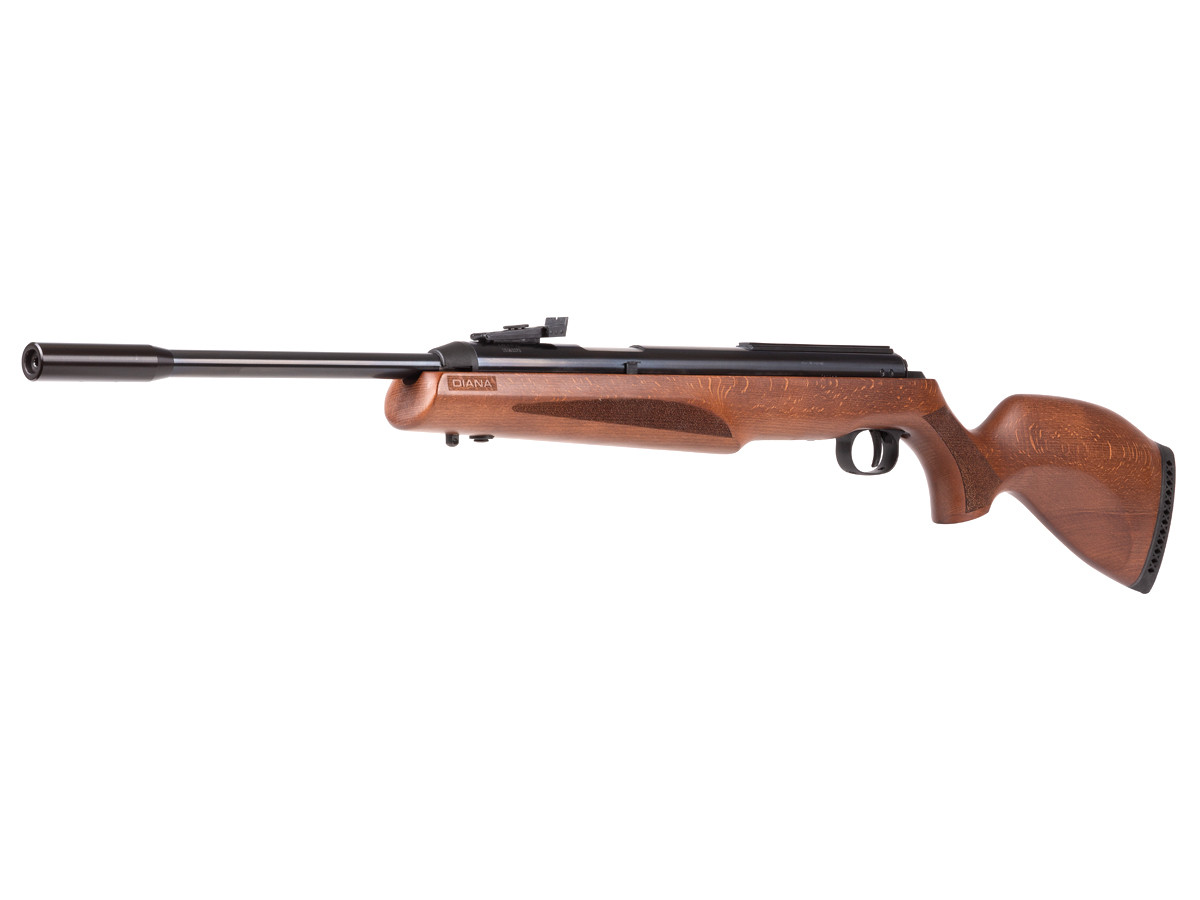
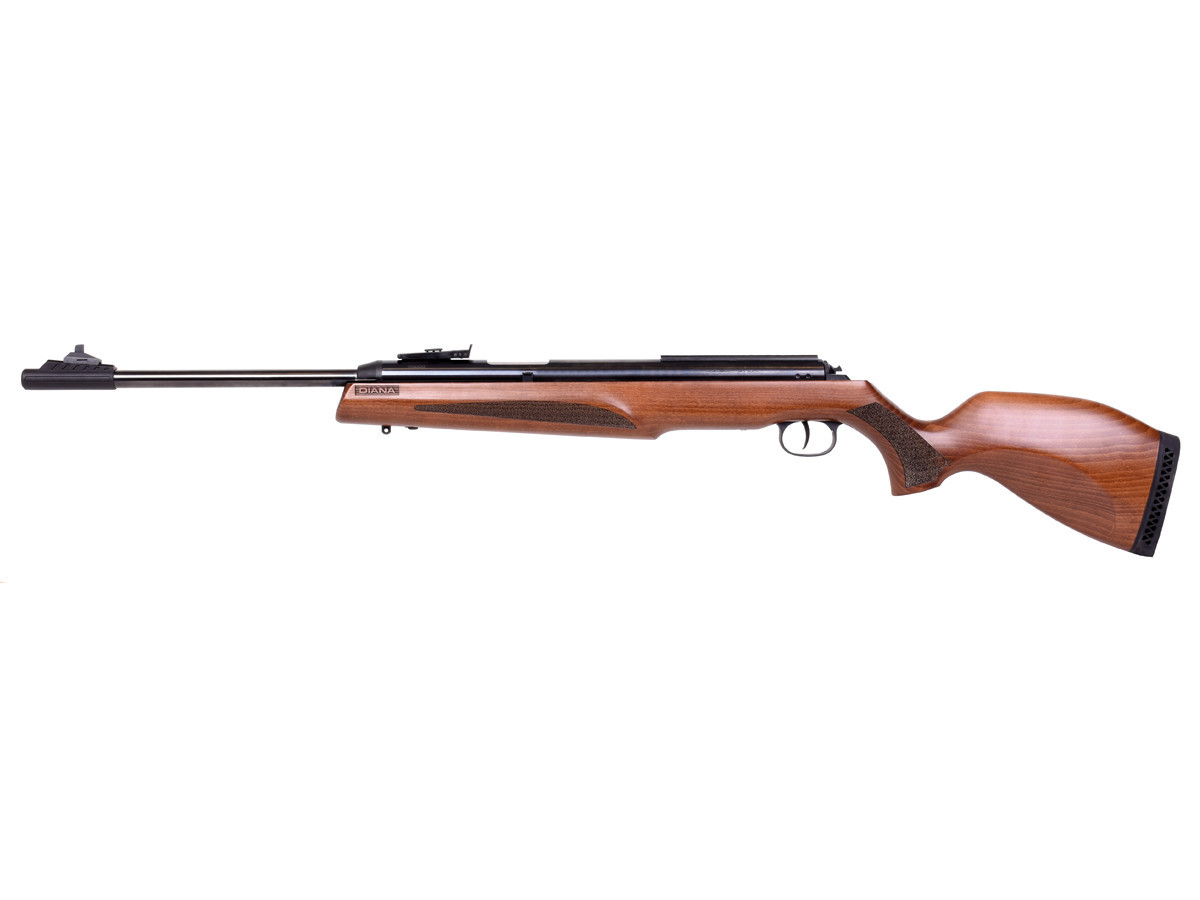
Precision is delivered by the Diana 54 Airking Pro Beech through a German-engineered spring-piston platform that is trusted by hunters, target shooters, and backyard marksmen alike. Classic beech timber is paired with a patented recoilless rail so that felt vibration is reduced while pellet flight remains consistent. Consequently, small-game work and deliberate plinking sessions are supported by a sidelever action that is cocked without barrel break-open movement. Moreover, an inclusive shooting experience is offered because left- and right-handed users can be accommodated by the stock geometry, open sights, and 11 mm dovetail rail.
Recoilless Action and Sidelever Powerplant
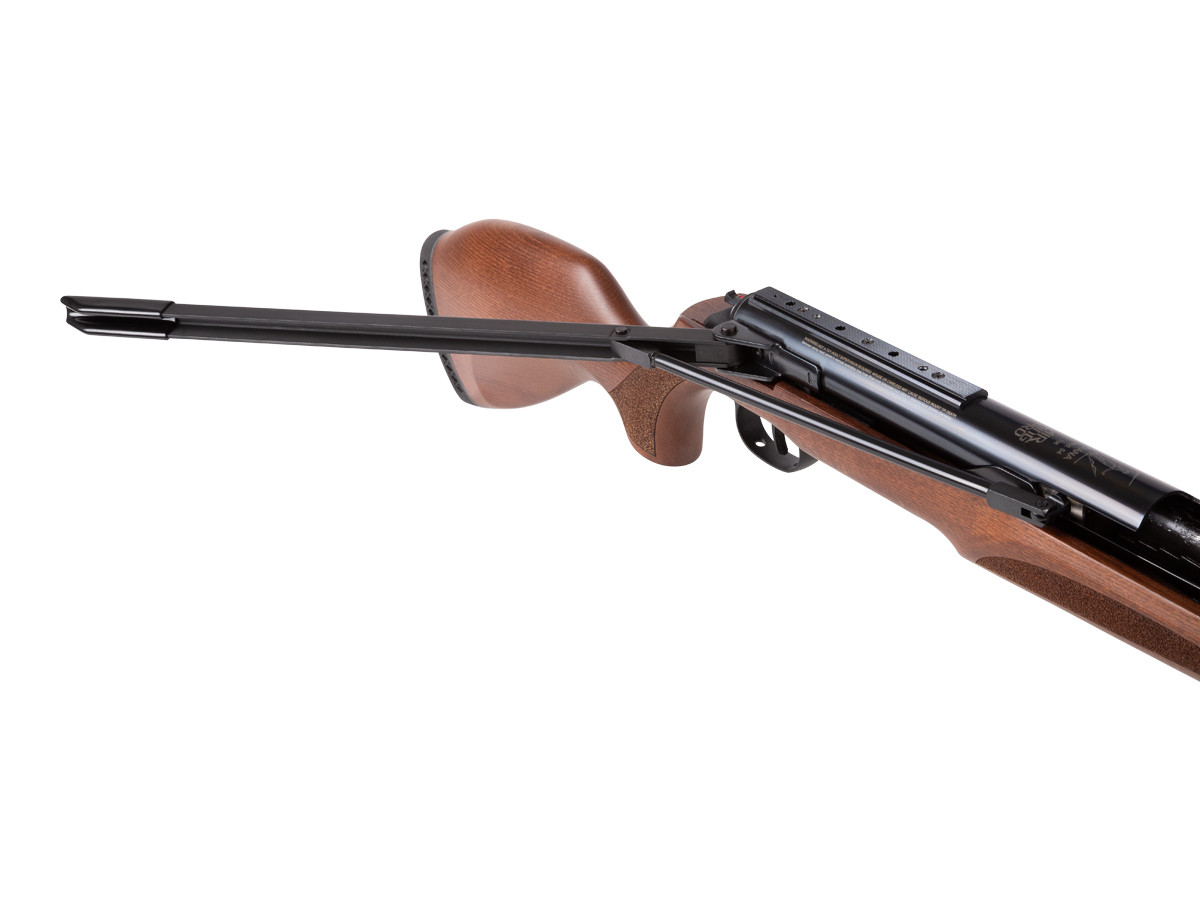
Felt recoil is minimized because the action is allowed to slide rearward on a dedicated rail inside the stock. As a result, spring vibration is absorbed before it can be transferred to the shooter’s shoulder or to the pellet still in the bore. In addition, a fixed rifled barrel of 17.3 inches is employed so that lock-up consistency is preserved from shot to shot. Meanwhile, cocking effort of approximately 40 pounds is applied through a sidelever, after which a single pellet is loaded into the breech. Therefore, follow-up shots can be prepared without the barrel being snapped open.
Furthermore, official manufacturer figures are quoted at up to 975 fps and 17.8 ft-lbs in .177 with lead pellets, and up to 740 fps and 19.2 ft-lbs in .22. Retail listings commonly list peak velocities of 1100 fps (.177) and 900 fps (.22) depending on pellet weight. Accordingly, pest-control distances and 25-yard paper groups are both placed within reach. Likewise, medium report is produced, so backyard use remains practical where local rules allow.
Trigger, Safety, and Sighting Package
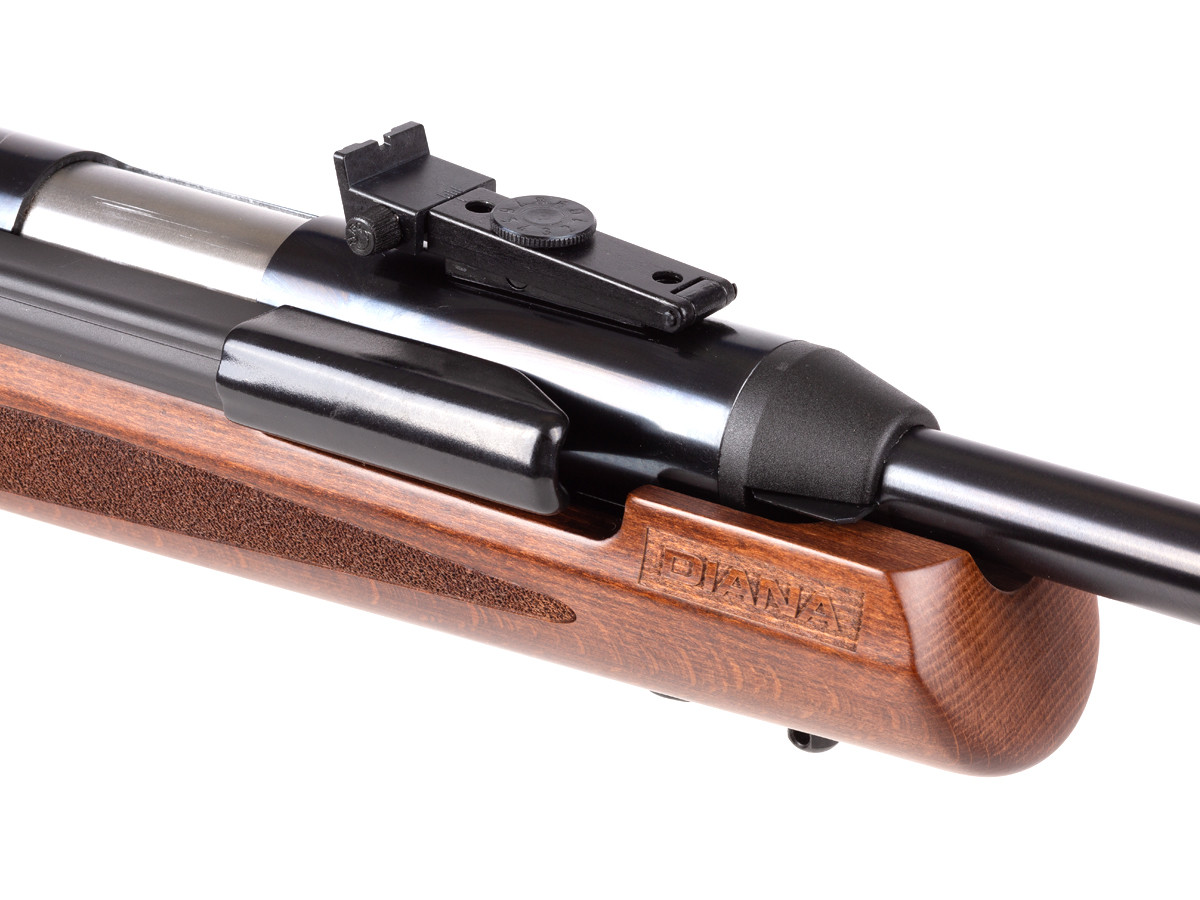
A two-stage T06 trigger is fitted so that first-stage take-up and second-stage break can be tuned to individual preference. Simultaneously, an automatic safety is engaged whenever the sidelever is cycled, after which the safety can be released from the rear of the compression tube. Open sights are supplied as standard: elevation adjustment is provided at the front, while windage and elevation adjustment are provided at the rear. Alternatively, the front sight and barrel weight can be exchanged so that a compact scope can be mounted on the 11 mm dovetail without crowding the loading port.
Beech Stock, Balance, and Field Features
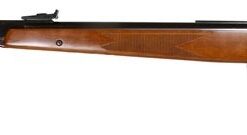
Warm beech wood is selected for the stock so that a traditional European appearance is retained. Checkering is cut into both the pistol grip and the forearm; consequently, a secure hold is maintained in wet or gloved conditions. A rubber buttpad is fitted so that shoulder comfort is improved during longer sessions. Additionally, an overall length of 44 inches and a weight of approximately 9.9 pounds are recorded for the beech version, which means a stable bench or bipod platform is favored. A forearm stud is included so that a bipod can be attached when supported shooting is desired.
Moreover, an adjustable barrel weight is installed from the factory. Balance can therefore be shifted forward or rearward until hold sensitivity is reduced. Because the recoilless system already isolates much of the spring surge, hold technique remains more forgiving than on a conventional magnum break-barrel. Inclusive language is used throughout the design: ambidextrous cheek geometry and a centrally placed safety allow shooters of different laterality to be welcomed on the same rifle.
Highlighted Product Listing
- Platform: Spring-piston, fixed-barrel sidelever, single-shot
- Recoilless system: Patented sliding rail that isolates action movement from the stock
- Stock: Classic beech with checkered grip and forearm plus rubber buttpad
- Calibers offered: .177 and .22 pellets
- Manufacturer energy (lead): Approx. 17.8 ft-lbs (.177) / 19.2 ft-lbs (.22)
- Common listed velocity: Up to 1100 fps (.177) / 900 fps (.22)
- Barrel / overall length: 17.3 in / 44 in
- Weight (beech): Approx. 9.9 lb
- Trigger: Two-stage adjustable T06
- Safety: Automatic, rear-tube location
- Optics rail: 11 mm dovetail
- Sights: Elevation-adjustable front; windage-and-elevation rear
- Extras: Adjustable barrel weight, forearm bipod stud
- Cocking effort: Approx. 40 lb
- Suggested use: Small-game hunting and precision plinking
- Origin: Made in Germany
Practical Use, Accuracy, and Responsible Ownership
Groups under one inch at 25 yards have been reported when suitable mid-weight pellets are selected and a consistent artillery hold is applied. Therefore, paper punching, spinner work, and humane small-game shots can be pursued with the same rifle. Because the action is recoilless relative to typical springers, scope life is protected and sight picture is easier to recover. Nevertheless, a spring-piston-rated optic of modest length is recommended so that the loading port remains clear.
Legal power limits vary by country and region. Consequently, FAC or local energy caps must be verified before purchase, and velocity figures quoted above should be treated as manufacturer or retailer maxima rather than guaranteed field results. Safe backstops, eye protection, and positive target identification are required at all times. In the same way, regular lubrication of the sidelever pivot and occasional inspection of the barrel-weight screws are advised so that reliability is preserved.
Why the Diana 54 Airking Pro Beech Belongs in a Precision Kit
German manufacturing heritage is expressed through tight barrel bedding, a refined T06 trigger, and the sliding recoilless rail. Classic timber is chosen so that the rifle can be displayed as readily as it is shot. Power sufficient for small game is combined with a shooting cycle that is kinder to both shooter and optic than a conventional magnum springer. Inclusive stock details, supplied open sights, and a ready bipod stud mean the platform can be adapted from first-range sessions to supported field work without immediate extra purchases.
When a conversion-ready spring rifle is sought—one in which recoil is managed, wood is traditional, and German sidelever pedigree is retained—the Diana 54 Airking Pro Beech is positioned as a complete, ready-to-zero package. Responsible use, correct pellet selection, and adherence to local airgun law remain the final ingredients that turn this platform into lasting accuracy.
Diana, Bintac, AEA and Hatsan Airguns: Rifles, Pistols, PCPs and Accessories
For shooters comparing trusted platforms, the Diana range remains a major point of interest. Searches such as diana air rifle, diana air rifles, air rifle diana, rws diana air rifle, rws diana, diana rws, and diana r reflect the continued popularity of classic airgun designs. Well-known spring-powered choices include the diana 34, diana model 34, diana rws 34, rws diana 34, diana r34, and diana 34 air rifle. Shooters interested in the updated modular platform may also search for diana 34 ems or diana 34 ems fiber optic sights.
Other established models continue to attract enthusiasts, including the diana 35, diana 48, diana mod 48, rws diana model 48, diana 54, diana 350 magnum, diana 350 magnum air rifle, 350 magnum diana, and diana rws 460 magnum. These rifles appeal to buyers comparing traditional spring-piston construction, power, accuracy, build quality, and different configurations for recreational or sporting use.
Diana PCP Air Rifles, Pistols and Accessories
The Diana catalog also includes PCP, CO2, and pistol-format options suited to different shooting preferences. Popular searches include diana r22, diana 2, diana 250, diana two fifty, diana 250 air rifle, diana stormrider, diana outlaw gen 2, diana airbug, diana bandit black, diana lp8, lp8 diana, diana air pistol, and diana pellet gun.
Owners looking to maintain, repair, or customize certain platforms may also search for diana chaser accessories and diana chaser parts. For target shooting and recreational plinking, a 4.5mm air gun remains a common caliber choice. Meanwhile, hunting diana searches often focus on Diana rifles suited to lawful pest-control or hunting applications where airgun use is permitted.
The term nerf diana can occasionally appear alongside Diana-related search traffic, although it represents a different product category and should not be confused with traditional pellet rifles or air pistols.
Bintac and AEA PCP Airguns
Big-bore and tactical PCP enthusiasts frequently compare Diana products with Bintac and AEA platforms. Popular searches include bintac aea harpoon, aea harpoon air gun, bintac t9 full auto, bintac t9 price, bintac mcar 457, aea terminator, and aea megalodon for sale.
Other related searches include airgun shotgun, automatic air gun, air powered 50 cal rifle, and zeus 72 cal air rifle price. Shooters setting up high-pressure PCP equipment may also research an air tank for pcp airguns or anti air tanks while comparing suitable filling equipment and accessories.
The broader phrase bee bee gun rifle may also be used by new shooters searching for BB rifles, pellet rifles, and other recreational air-powered platforms.
Hatsan Air Rifles and PCP Platforms
Hatsan remains another widely searched manufacturer across spring-piston, PCP, semi-automatic, and big-bore categories. General searches such as hatsan air rifle, hatsan air guns, hatsan pcp, hatsanusa, hatsan usa, air rifle, air rifles, and airguns cover a broad selection of products.
Break-barrel shoppers frequently compare the hatsan model 95, hatsan mod 95, mod 95, hatsan 125, hatsan 135, hatsan 135 vortex air rifle, hatsan 135 carnivore, hatsan zada, and hatsan airtact air rifle. The related search hatsan airtact is also common among buyers researching lightweight and affordable break-barrel rifles.
Customers searching for discounted or previously owned products may also use the phrase hatsan refurbished while comparing factory-refurbished or pre-owned Hatsan models.
Hatsan PCP and Big-Bore Airguns
For PCP enthusiasts, popular searches include hatsan flash, hatsan flashpup qe, hatsan bullboss, hatsan hercules, hatsan hercules bully, hatsan invader, hatsan factor rc, hatsan neutron star, hatsan harpoon, hatsan piledriver, and hatsan big bore carnivore rifle.
These searches cover everything from compact PCP rifles to powerful large-caliber platforms. Buyers can compare factors such as air capacity, operating pressure, caliber, barrel configuration, magazine capacity, stock design, overall weight, and intended use before selecting a suitable platform.
Hatsan Blitz, Sortie and Semi-Automatic Models
Shooters interested in rapid-fire PCP platforms frequently search for hatsan sortie, hatsan sortie tact, hatsan sortie tact semi-auto pcp, and hatsan sortie accessories. The Hatsan Blitz family also generates searches including hatsan blitz, hatsun blitz, hatsan blitz full automatic, and hatsan blitz 30 cal.
Compact PCP pistol and carbine shoppers may also research the hatsan velox and hatsan jet 2, providing additional choices for shooters who prefer smaller platforms.
Airgun Optics, Pellets and Accessories
Accessories, optics, ammunition, and filling equipment are important parts of a complete airgun setup. A basic 4×20 optic may suit certain entry-level rifles, while ammunition such as h&n field target trophy bleifrei can appeal to shooters specifically searching for lead-free pellets.
The search phrase econ ii may also appear alongside airgun-related product research depending on the equipment, accessory, or platform being compared.
Whether the goal involves target shooting, recreational plinking, collecting, pest control, or lawful hunting, the wide selection of Diana, AEA, Bintac, and Hatsan platforms gives shooters numerous choices. Comparing the correct caliber, rifle type, filling system, optics, pellets, accessories, and replacement parts can help buyers identify equipment that best matches their intended application.
Calibres, FAC Considerations, Power Output, and Accessories for the Diana 54 Airking Pro Beech
Two primary pellet calibres are offered for the Diana 54 Airking Pro Beech, so that target work and small-game use can both be supported from the same German sidelever platform. Chambering in .177 (4.5 mm) is selected when flatter trajectory and higher listed velocity are preferred. Chambering in .22 (5.5 mm) is selected when greater pellet mass and on-target energy are required. Because a fixed rifled barrel is employed, calibre is chosen at purchase and is not interchangeable in the field. Inclusive shooting goals are therefore served: paper punching, spinner practice, and humane pest control can each be matched to the correct pellet diameter.
Calibre Choice and Typical Field Behaviour
A lighter .177 pellet is driven at a higher advertised speed, so wind drift remains smaller at modest distances and holdover stays simpler on the 25-yard card. Conversely, a heavier .22 pellet is preferred when residual energy at the target is the priority, especially on small game where ethical penetration is expected. Mid-weight domed pellets in either calibre are commonly favoured because grouping consistency is improved when the recoilless rail is allowed to do its work. Alloy or ultra-light pellets may produce higher chronograph readings; however, accuracy and terminal performance are often better served by quality lead or lead-alternative match and hunting designs. Pellet testing at the intended distance is therefore recommended after the rifle has been zeroed.
FAC Status, Legal Power Limits, and Responsible Ownership
Legal classification of the Diana 54 Airking Pro Beech is determined by local energy limits rather than by brand name. In jurisdictions where a 12 ft-lb (approximately 16.3 J) ceiling is applied to unlicensed air rifles, factory-rated output for this model is commonly treated as FAC or equivalent high-power status. Official manufacturer energy is stated at about 17.8 ft-lbs (24 J) in .177 and about 19.2 ft-lbs (26 J) in .22 when lead pellets are used. Retail velocity claims of up to 1100 fps in .177 and 900 fps in .22 are also published; those figures vary with pellet weight and local legal restrictions. Consequently, a firearms certificate, licence, or other permit may be required before purchase, possession, or use. Local statutes must be verified by every shooter, because limits differ across countries, states, and territories.
Where FAC or high-power rules apply, secure storage, transport conditions, and permitted land use are typically mandated. Inclusive compliance is expected of every owner: age restrictions, backstop standards, and public-place rules must be observed. Power is fixed on this spring-piston design; no regulator or power adjuster is fitted. Therefore, advertised energy should be treated as a manufacturer maximum rather than a guaranteed field reading. A chronograph session with the chosen pellet is the only reliable way to confirm output after the rifle has been run in.
Power Delivery, Recoil Management, and Practical Energy
Spring-piston energy is generated by a sidelever-cocked mainspring and a fixed barrel of 17.3 inches. Cocking effort of approximately 40 pounds is applied, after which a single pellet is seated. Felt recoil is then reduced because the action is permitted to slide on the patented rail inside the beech stock. Vibration that would otherwise disturb the pellet or fatigue the shooter is isolated. As a result, usable accuracy is preserved even though magnum-class energy is produced.
Muzzle energy in the high teens (ft-lbs) is adequate for small-game hunting at responsible distances when shot placement is correct. Plinking and informal target work are equally supported. Medium report is produced, so neighbourhood use remains possible only where local noise and projectile rules allow. Because power is not user-adjustable, pellet mass becomes the main way that point of impact and remaining energy are tuned. Heavier pellets trade some velocity for momentum; lighter pellets raise speed but may open groups if the rifle is not held consistently.
Accessories That Complete the Diana 54 Airking Pro Beech
A practical accessory set is already supplied from the factory, and further items can be added without altering the core action.
Included items
- Elevation-adjustable front sight and windage-and-elevation rear sight
- Adjustable barrel weight for balance tuning
- Forearm stud for bipod attachment
- 11 mm dovetail rail on the compression tube
- Rubber buttpad and checkered beech grip surfaces
Recommended additions
- A compact, spring-piston-rated riflescope of modest objective and tube length, so that the loading port is not blocked
- Quality 11 mm mounts that are specified for recoiling spring airguns
- A lightweight bipod matched to the forearm stud for supported practice and field rests
- A sling swivel set if carried hunting is planned (forearm stud already present; rear swivel hardware may be added where the stock allows)
- A pellet tin of proven mid-weight domes in the chosen calibre, plus a tin of a second weight for comparison
- A padded case long enough for 44 inches overall length
- Threadlocker for the barrel-weight screws if those fasteners are found to loosen after use
Open sights can be retained for iron-sight practice or removed when a scope is fitted. The barrel weight can be left in place or exchanged with the front sight according to balance preference. Because the recoilless system already isolates much of the surge, a well-chosen spring-rated optic typically holds zero more readily than on a conventional magnum break-barrel. Inclusive setup is straightforward: the same rail, trigger, and stock serve shooters who prefer irons, a simple 4–12× scope, or a supported bipod rest.
When calibre, legal status, and accessories are aligned with intended use, the Diana 54 Airking Pro Beech is prepared for accurate, responsible shooting. Local law is confirmed first, a suitable pellet is proven on paper, and optics or a bipod are added only as needed. Precision is then delivered by the German sidelever action, the beech stock, and the recoilless rail working together.
Practical Use in the Field, on the Range, and at Home
Everyday shooting tasks are supported by a recoilless German sidelever spring rifle when the session is planned around safety, legal limits, and a consistent hold. Felt vibration is reduced by the sliding action rail, so sight picture is recovered more quickly than on a conventional magnum break-barrel. Consequently, paper work, spinner practice, pest control, and small-game hunts can each be approached with the same platform. Inclusive use is intended: left- and right-handed shooters, iron-sight traditionalists, and scoped hunters can all be accommodated when accessories and technique are matched to the day.
Zeroing, Hold, and First-Range Sessions
A stable rest is preferred for the first groups because overall weight sits near ten pounds and cocking effort is substantial. The rifle is placed on bags or a bipod so that the recoilless rail can cycle without extra muscle input. A mid-weight domed pellet is selected, after which five-shot groups are fired at ten and then twenty-five yards. Point of impact is recorded, and the two-stage trigger is adjusted until first-stage travel and second-stage break feel repeatable. Meanwhile, the automatic safety is confirmed after every cocking stroke so that a loaded rifle is never left ready without intent.
An artillery-style hold is then introduced. The forearm is allowed to rest rather than be clenched, because spring surge is already isolated by the rail. Groups typically tighten once grip pressure is relaxed and follow-through is held until the pellet strikes. Open sights may be used for this stage so that fundamentals are learned before glass is added. Elevation is corrected at the front blade and windage at the rear notch until the chosen pellet prints to the intended mark. After zero is established, the same hold is repeated from a standing or kneeling position so that field positions are not a surprise later.
Paper, Spinners, and Informal Practice
Quiet weekday practice is well served when a safe backstop and known distance are available. Twenty-five-yard cards are posted, and ten-shot strings are fired so that flyers can be distinguished from true group size. Because report is only medium, neighbourhood ranges that permit spring rifles can often be used where local rules allow. Spinners and knockdown targets are introduced next. Resetting steel is engaged only when a rated backstop sits behind the plate and ricochet angles have been checked. Rhythm is built by cocking, loading a single pellet, mounting, and breaking the shot on the same cadence each time.
Longer strings are broken into short blocks. Fatigue in the cocking arm is respected; rest is taken before groups open. Inclusive sessions are arranged by sharing the bench: a newer shooter can be coached on the same zero while an experienced partner confirms pellet choice. The rubber buttpad and checkered beech surfaces help gloves and bare hands alike. When light rain is present, the wood is wiped after the session so that finish is preserved, yet the checkering still provides purchase during the shoot.
Supported Shooting with Bipod and Bench
A forearm stud is already fitted, so a light bipod can be attached for prairie-dog-style practice or for load development. Legs are set so that the rifle sits level and the sliding action is free to move on firing. Bags under the butt complete the rest. From this position, pellet brands are compared. One tin is used for ten shots, then another, until the tightest combination at the intended distance is identified. Chronograph readings may be taken at the same time so that energy and extreme spread are known, not assumed.
Bench work also reveals whether the barrel weight should stay installed. Balance is shifted forward when the weight is left on, which can calm muzzle hop for some shooters. The weight is removed and the front sight restored when iron-sight hunting is planned. Screws on the weight are checked after a block of shots; a drop of threadlocker is applied if loosening is observed. Inclusive comfort is improved by adjusting bipod height so that neck strain is avoided for shorter and taller shooters using the same rifle.
Small-Game Hunting and Pest Control
Ethical small-game shots are taken only after local seasons, bag limits, and energy rules have been confirmed. A .22 pellet is often chosen when remaining energy on rabbits or similar quarry is the priority; a .177 pellet is chosen when a flatter line to a closer pest is wanted. Distances are kept inside the range at which groups were proven on paper. Broadside shots to the vital zone are preferred. The recoilless cycle helps the sight stay on the animal through the shot, which reduces the chance of a rushed second attempt.
Stalking with a ten-pound springer rewards a sling and planned rests. Fence posts, packs, or kneeling positions are used rather than unsupported offhand at the edge of the rifle’s effective range. A compact spring-rated scope of modest length is favoured so that the loading port remains clear when a follow-up pellet is seated. The automatic safety is left on during the approach and is released only when the shot is committed. After the shot, the area beyond the target is observed until the pellet’s path is accounted for.
Pest work around outbuildings follows the same discipline. Backstops are identified before the first pellet is fired. Livestock, windows, and neighbouring property are treated as no-shoot zones. Sessions are kept short so that cocking fatigue does not degrade placement. Inclusive land access means guests and family members who share the property are informed when shooting will occur, and eye protection is issued to anyone near the firing point.
Iron Sights Versus a Scoped Setup
Open sights that ship with the rifle are fully usable for close practice and for hunters who prefer a traditional picture. Front elevation and rear windage-and-elevation adjustments are made in small clicks, then confirmed with a fresh group. Bright daylight favours this arrangement. When light falls or when smaller targets at twenty-five yards-plus are engaged, a spring-piston-rated optic is mounted on the eleven-millimetre rail. Rings are chosen for recoil duty, and eye relief is set so that the cheek weld on the beech stock remains natural.
The scope is not over-long. A crowded breech makes single-shot loading awkward and can nick a low-mounted bell. After mounting, zero is rebuilt from a rest because the point of impact will differ from irons. Inclusive use is preserved: the same rifle can be returned to open sights in minutes when a teaching session or a wet-day hunt calls for simplicity.
Seasonal Carry, Transport, and Between-Shot Care
A padded case long enough for a forty-four-inch rifle is used for vehicles and club days. The sidelever is left uncocked in transit. On arrival, the barrel, rail, and trigger area are checked for debris. A dry patch is run if condensation is present. After a hunt in damp grass, the beech stock is wiped and stored away from direct heat so that the wood does not dry unevenly.
Between seasons, a light oil film is maintained on metal surfaces and the sidelever pivot is inspected. The recoilless rail is kept free of grit; no heavy grease is packed where the action must slide. Pellets are stored sealed so that oxidation does not spoil the next zero. Inclusive club storage means the rifle is locked in accordance with local rules and is never left where unauthorized hands can reach the cocking lever.
Teaching, Shared Use, and Session Structure
New shooters are introduced on a bench with the bipod fitted and the trigger set on the heavier side of its adjustment range. The cocking stroke is demonstrated slowly because forty pounds of effort can surprise a first-time user. Loading is shown as a single, deliberate pellet seat—not a rush. The safety is pointed out at the rear of the tube after every cycle. Short strings of three to five shots are fired, then rest is taken. Praise is given for follow-through rather than for speed.
Experienced partners can run the same zero for pest evenings or for friendly cards. Because the platform is single-shot, shot counting stays honest and every pellet is accounted for. Inclusive language and pacing keep the line comfortable for mixed ages and strengths: the heavy rifle is supported on bags whenever fatigue appears, and nobody is pressured to cock beyond a safe, controlled stroke.
A Full Day on the Range, Step by Step
The day is opened with a safety brief and a check of the backstop. Eye protection is worn. The rifle is uncased, inspected, and rested. A warm-up group is fired at ten yards to confirm that the last zero still holds. Distance is then moved to twenty-five yards. Two pellet types are compared in ten-shot strings. The tighter load is kept for the remainder of the session. Spinners are engaged only after paper groups are acceptable. A final slow group is fired from kneeling to simulate a field shot. The rifle is cleared, wiped, and cased. Notes on pellet, wind, and group size are written so that the next outing starts informed.
Throughout, transition from rest to field position is practiced without rushing the sidelever. Accuracy is protected by the recoilless rail, by a tuned two-stage trigger, and by a hold that does not fight the spring. Conversion from casual plinking to purposeful hunting is therefore a matter of pellet, rest, and legal awareness—not a change of rifle. When those elements are aligned, practical use stays precise, repeatable, and open to every shooter who is willing to treat the platform with care.
Frequently Asked Questions
Clear answers are provided below so that purchase, setup, and field use can be planned with confidence. Legal limits, pellet choice, and safe handling remain the shooter’s responsibility in every jurisdiction. Inclusive guidance is offered so that new and experienced users, and left- and right-handed shooters, can all be served by the same recoilless sidelever spring platform.
What powerplant and action type are used?
A spring-piston powerplant is employed. Energy is stored when a sidelever is drawn and is released when the trigger is pressed. A single pellet is loaded by hand after each cocking stroke. A fixed rifled barrel is used, so lock-up remains consistent from shot to shot. Felt recoil is reduced because the action is allowed to slide on a dedicated rail inside the stock. Vibration that would otherwise reach the shoulder or disturb the pellet is therefore isolated. Medium report is produced under typical pellet loads.
Which calibres are available, and how should one be chosen?
Two pellet calibres are commonly offered: .177 (4.5 mm) and .22 (5.5 mm). A .177 chambering is selected when a flatter trajectory and higher listed velocity are preferred for paper and closer pests. A .22 chambering is selected when pellet mass and remaining energy on small game are the priority. Calibre is fixed at manufacture and cannot be changed in the field. Mid-weight domed pellets in the chosen diameter are usually tested first, because grouping consistency is often improved once the recoilless rail is allowed to cycle freely. Alloy or very light pellets may raise a chronograph reading; accuracy and terminal performance are frequently better with quality lead or approved lead-alternative designs.
Is a licence or FAC required?
Classification depends on local energy limits, not on a brand label. Manufacturer energy is commonly stated near 17.8 ft-lbs in .177 and near 19.2 ft-lbs in .22 with lead pellets. Retail velocity claims of up to about 1100 fps in .177 and 900 fps in .22 are also published and will vary with pellet weight. Where a 12 ft-lb ceiling applies to unlicensed air rifles, this output is typically treated as FAC or equivalent high-power status. A certificate, permit, or other authority may therefore be required before purchase, possession, or use. Local statutes must be verified by every buyer, because rules differ by country, state, and territory. Secure storage and transport conditions are usually mandated wherever high-power rules apply.
How much cocking effort and weight should be expected?
Cocking effort of approximately forty pounds is applied through the sidelever. Overall weight for the beech-stocked version sits near 9.9 pounds, and overall length is about forty-four inches with a 17.3-inch barrel. A bench, bags, or bipod are therefore recommended for zeroing and for longer strings. Fatigue in the cocking arm is respected; rest is taken before groups open. Inclusive sessions are arranged by sharing a rest so that shooters of different stature and strength can use the same rifle safely.
How does the recoilless system change the shooting experience?
The action is permitted to move rearward relative to the stock on firing. Spring surge is absorbed in that movement instead of being delivered fully into the shoulder or into the pellet still in the bore. Follow-through becomes easier, and a spring-rated optic is generally kinder to keep in zero than on a conventional magnum break-barrel. An artillery-style hold is still advised: the forearm is allowed to rest rather than be clenched. Hold sensitivity is reduced compared with many break-barrel magnums, yet a consistent cheek weld and trigger press remain essential.
What trigger and safety features are fitted?
A two-stage adjustable T06-style trigger is fitted so that take-up and break can be tuned. An automatic safety is engaged when the sidelever is cycled and is released from the rear of the compression tube when the shot is intended. The safety is confirmed after every cocking stroke. Inclusive use is supported because the safety location can be reached without changing the firing-hand grip for most shooters.
Are open sights included, and can a scope be mounted?
Elevation adjustment is provided at the front sight, and windage plus elevation adjustment are provided at the rear. Those irons are fully usable for close practice and for traditional field work. An eleven-millimetre dovetail is machined on the compression tube so that a compact, spring-piston-rated riflescope can be fitted. A short optic is preferred so that the single-shot loading port is not blocked. Spring-rated rings are specified because residual movement still exists even with the sliding rail. Zero is rebuilt from a rest after any sight change. The adjustable barrel weight can be left on for balance or exchanged with the front sight when irons are restored.
Can a bipod or sling be attached?
A forearm stud is supplied so that a light bipod can be mounted for supported practice and load development. Legs are set so that the action remains free to slide on firing. A sling may be added for field carry; rear swivel hardware is fitted only where the stock and local practice allow. Inclusive field use is improved when the rifle is supported on the bipod or on a pack rather than held fully offhand at the edge of its effective range.
Which pellets and distances are realistic?
Twenty-five-yard paper is a practical standard for group testing. Sub-inch groups have been reported by careful shooters when a suitable mid-weight dome is used and follow-through is held. Small-game distances are kept inside the range at which those groups were proven. Broadside shots to the vital zone are preferred. A chronograph session after the rifle is run in is the only reliable way to confirm velocity and energy with a chosen pellet. Extreme spread and point of impact are recorded so that hunting loads are not guessed.







Reviews
There are no reviews yet.