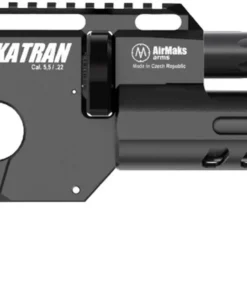
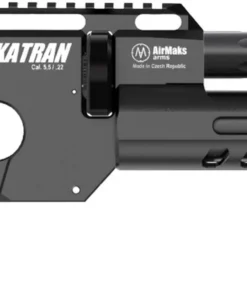
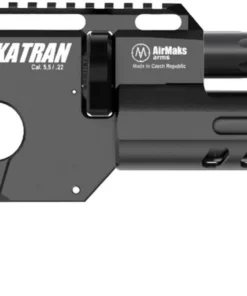
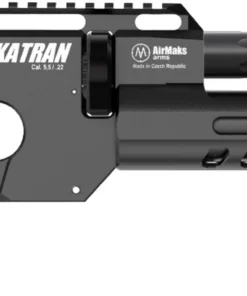
AirMaks Arms Katran Standard
The AirMaks Arms Katran Standard is built for shooters who want a refined combination of precision, adjustability, lightweight handling, and modern PCP engineering. From its compact aluminium chassis to its smooth side-lever action, virtually every component has been designed to make shooting feel controlled, comfortable, and consistent.
Whether targets are being engaged from a bench, a supported position, or a more mobile shooting setup, the rifle can be configured around the individual user. Consequently, the Katran Standard provides the adaptability expected from a modern premium PCP while remaining straightforward to handle.
A precision CZ barrel is fitted to support dependable accuracy, while a regulated pneumatic system helps produce consistent shot-to-shot performance. Meanwhile, the folding and adjustable stock makes storage and transportation easier without sacrificing stability when the rifle is shouldered.
For shooters seeking an air rifle that combines technical sophistication with practical usability, the AirMaks Arms Katran Standard offers an impressively balanced platform.
Precision Engineering Behind the AirMaks Arms Katran Standard
Reliable performance is supported by a carefully engineered pneumatic system. A Huma-Air regulator is incorporated to help maintain controlled air delivery between shots. Because pressure is regulated, velocity consistency can be improved across the usable portion of the air fill.
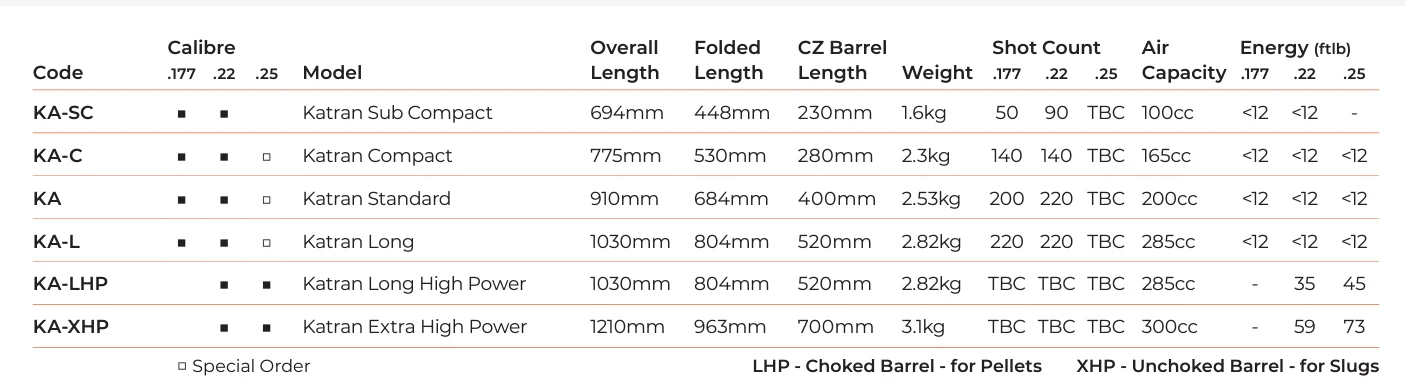
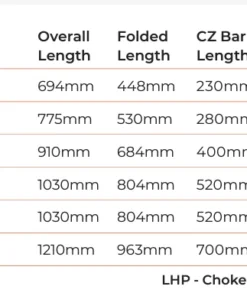
Furthermore, a 400 mm CZ precision barrel is fitted. Its 1:17.7 twist specification has been selected to provide stable pellet performance across the available configurations.
The rifle is supplied with a 200 cc air cylinder, while a maximum filling pressure of up to 300 bar is specified for the Katran platform. Therefore, a practical balance between air capacity and overall rifle weight is maintained.
Instead of turning the rifle into an unnecessarily bulky platform, the compact cylinder helps preserve the Katran’s agile handling characteristics.
Key Engineering Highlights
- 400 mm precision CZ barrel
- 1:17.7 barrel twist specification
- Huma-Air regulated PCP system
- 200 cc air cylinder
- Maximum cylinder pressure up to 300 bar
- External velocity adjustment system
- Anti-double-feed mechanism
- Two-stage adjustable trigger
- Reversible side-lever action
- 20 MOA Picatinny optics rail
Together, these features create a platform that can be adapted for several different shooting styles.
Adjustable Folding Aluminium Stock
Comfort has been treated as an important part of the rifle’s design.
Rather than providing a fixed shooting position, the AirMaks Arms Katran Standard incorporates a folding aluminium stock that can be adjusted to better match the shooter’s dimensions and preferred stance.
Its cheek piece can be height-adjusted, allowing improved alignment between the user’s eye and the mounted optic. Likewise, the butt pad can be adjusted vertically to help establish a more natural shoulder position.
As a result, different shooters can configure the rifle around their own body proportions instead of adapting themselves to a fixed stock.
Additionally, folding the stock reduces the overall footprint considerably. Transportation and storage therefore become more convenient, especially when equipment needs to be carried in a case or transported alongside additional shooting accessories.
Practical Stock Advantages
- Folding aluminium construction
- Adjustable length
- Height-adjustable cheek piece
- Height-adjustable butt pad
- Compact folded configuration
- Rigid shooting platform when deployed
Consequently, portability and shooting stability are combined in one practical stock system.
Smooth Side-Lever Cocking System
A conveniently positioned side lever is used for cycling the action.
Because the lever is positioned close to the trigger area, follow-up loading can be completed with minimal movement. More importantly, the cocking lever can be configured for either right-side or left-side operation.
This feature makes the platform substantially more adaptable.
Shooters who prefer unconventional equipment arrangements can therefore configure the action around their preferred operating style.
The AR-style safety can also be changed from one side to the other, further improving configurability.
Adjustable Two-Stage Trigger
Precise shooting depends heavily on predictable trigger control.
Accordingly, the Katran Standard is fitted with an externally adjustable two-stage trigger system.
The first stage provides controlled take-up, while the second stage gives the shooter a defined release point. Once correctly adjusted, the system can help promote consistent trigger technique and reduce unnecessary rifle movement during the firing cycle.
Because adjustment is available externally, the trigger can be configured more easily according to individual shooting preferences.
Multi-Shot Magazine System
Efficiency is increased through the rifle’s detachable magazine system.
Magazine capacity varies according to calibre:
- .177 / 4.5 mm — 18 shots
- .22 / 5.5 mm — 16 shots
- .25 / 6.35 mm — 14 shots
Therefore, extended shooting sessions can be completed without manually loading an individual pellet before every shot.
An anti-double-feed system is also incorporated. Consequently, the possibility of accidentally indexing another pellet when one has already been loaded is reduced.
A magazine holder is additionally incorporated into the rifle’s configuration, keeping a spare magazine conveniently accessible.
Modern Accessory Mounting Platform
Versatility extends beyond the stock and action.
The aluminium handguard incorporates nine KeyMod slots, allowing compatible accessories to be positioned around the front section of the rifle.
Meanwhile, a Picatinny mounting section provides another practical accessory interface.
Above the action, a 20 MOA Picatinny rail provides the primary platform for mounting optics.
Therefore, a wide range of compatible scopes, mounts, and sighting systems can be installed depending on the user’s intended shooting setup.
Lightweight and Balanced Handling
Despite its extensive adjustability, the rifle remains relatively lightweight.
The standard Katran configuration weighs approximately 2.53 kg, while overall length is approximately 910 mm. When the aluminium stock is folded, overall length is reduced to approximately 684 mm.
This compact format can make the rifle easier to transport and manoeuvre.
More importantly, weight has been distributed around a comparatively slim aluminium chassis rather than an oversized conventional stock. Consequently, the rifle feels modern and responsive when transitioning between positions.
Three Popular Calibre Options
The AirMaks Arms Katran Standard is offered in several established airgun calibres, allowing the rifle to be configured around different shooting requirements.
Available configurations commonly include:
- .177 / 4.5 mm
- .22 / 5.5 mm
- .25 / 6.35 mm
Each calibre provides different ballistic characteristics, magazine capacity, pellet availability, and potential energy configuration.
Therefore, buyers can select the version that best matches their preferred shooting environment and local regulations.
Designed Around the Shooter
One of the strongest qualities of the AirMaks platform is its configurability.
The stock can be adjusted. The cheek piece can be repositioned. The butt pad can be moved. The cocking lever can be switched between sides. Likewise, the safety arrangement can be changed according to user preference.
Even the trigger provides external adjustment.
Consequently, rather than forcing every shooter into an identical setup, the rifle allows several major contact points and controls to be personalised.
For competitive practice, recreational target shooting, precision shooting, or other lawful sporting applications, this flexibility can provide a noticeably more comfortable shooting experience.
Why Choose the AirMaks Arms Katran Standard?
Premium PCP rifles are increasingly expected to offer more than accuracy alone. Ergonomics, consistency, adjustability, accessory compatibility, and portability must also be considered.
The AirMaks Arms Katran Standard brings these qualities together effectively.
Its CZ barrel provides the foundation for precision. Meanwhile, regulated air delivery promotes repeatable performance. A lightweight aluminium chassis keeps handling manageable, while the adjustable folding stock improves both ergonomics and portability.
Additionally, reversible controls make the design more inclusive for different shooting preferences.
Product Highlights
- Precision CZ barrel system
- Regulated PCP operation
- Lightweight aluminium construction
- Folding and adjustable stock
- Adjustable cheek piece
- Adjustable butt pad
- Reversible side-lever action
- Reversible AR-style safety
- Two-stage adjustable trigger
- Multi-shot magazine
- Anti-double-feed system
- KeyMod accessory mounting
- 20 MOA Picatinny optics rail
- Compact 200 cc air cylinder
- Available in .177, .22 and .25 configurations
A Refined Modern PCP Platform
Ultimately, the AirMaks Arms Katran Standard has been developed for shooters who appreciate precision engineering without unnecessary bulk.
Its regulated pneumatic system supports consistency, while its CZ barrel provides a dependable foundation for accuracy. At the same time, extensive ergonomic adjustment allows the rifle to be tailored around the individual shooter.
Because the stock folds, transportation becomes easier. Because the controls can be reversed, different operating preferences are accommodated. Additionally, because accessory mounting points are integrated throughout the chassis, the rifle can evolve alongside the user’s equipment requirements.
For anyone searching for a lightweight, configurable, multi-shot PCP platform with modern styling and proven European engineering, the AirMaks Arms Katran Standard deserves serious consideration.
AirMaks Arms Katran Standard Calibres, FAC, Power, Scope and Accessories
Choosing the correct configuration for the AirMaks Arms Katran Standard can make a significant difference to the overall shooting experience. Calibre, legal power level, optic choice, and accessory setup should all be considered together rather than separately. Because this PCP platform has been designed around adjustability and precision, it can be configured for target shooting, recreational range use, and other lawful sporting applications.
The Katran Standard is commonly available in .177, .22, and .25 calibre, giving shooters several practical options depending on their preferred pellet characteristics, shooting distance, and applicable local regulations.
.177 Calibre – Flat Trajectory and Precision
The .177 / 4.5 mm configuration is particularly well suited to shooters who value a relatively flat trajectory and predictable pellet placement.
Because .177 pellets are generally lighter than larger-calibre alternatives, they can achieve useful velocity without requiring excessive energy. Consequently, holdover and trajectory management can feel more straightforward at typical air-rifle distances.
For target-focused users, this calibre is especially appealing because pellet selection is extensive. Match-grade domed and flat-head pellets are widely available, allowing the rifle to be tuned around different shooting disciplines.
Furthermore, the Katran Standard’s regulated PCP system complements .177 calibre effectively. Consistent air delivery can help maintain stable velocities, which in turn supports repeatable point of impact.
The .177 version also offers the highest magazine capacity among the commonly offered configurations, with up to 18 pellets available depending on magazine specification.
.22 Calibre – A Balanced All-Round Option
For shooters who want a compromise between pellet weight, trajectory, efficiency, and retained energy, the .22 / 5.5 mm version is often the most versatile choice.
Compared with .177, a .22 pellet typically carries greater mass. Therefore, velocity may be lower at equivalent muzzle-energy limits, yet momentum and retained energy characteristics can be different.
This makes .22 popular among shooters looking for an adaptable general-purpose PCP configuration.
Magazine capacity is commonly around 16 shots, providing a practical balance between pellet diameter and multi-shot convenience.
From a handling perspective, nothing fundamental is sacrificed. The same adjustable chassis, folding stock, regulated action, and reversible side lever remain available, while the calibre choice allows the rifle’s ballistic behaviour to be better matched to the individual user’s requirements.
.25 Calibre – Heavier Pellet Performance
The .25 / 6.35 mm configuration is intended for shooters who prefer heavier projectiles and who operate within jurisdictions and licence conditions permitting the relevant power level.
Larger pellets normally trade some trajectory flatness for increased mass. Consequently, careful range estimation and optic setup become more important.
The .25 magazine commonly accommodates approximately 14 pellets.
For higher-powered configurations, the larger calibre can be particularly attractive because it gives the platform access to heavier pellet designs. However, actual permissible output must always be matched to local legislation, certificate conditions, and the specific specification of the rifle being purchased.
FAC and Legal Power Considerations
Power classification is particularly important when purchasing a PCP air rifle.
In England and Wales, an air rifle that is capable of producing more than 12 ft-lb of muzzle energy falls into firearm-certificate territory. A firearm certificate is therefore required for an air rifle exceeding that threshold.
By contrast, an air rifle operating at or below 12 ft-lb does not generally require a firearm certificate in England and Wales, although age restrictions, purchasing rules, possession rules, land permission, and other legal requirements still apply.
The important distinction is that calibre alone does not determine FAC status.
A .177 rifle can be FAC-rated, while a .22 rifle can be configured below the FAC threshold. Likewise, larger calibre does not automatically mean that a rifle is legally classified as FAC simply because the pellet is heavier.
Instead, muzzle energy is the relevant measurement.
Buyers should therefore confirm the precise factory specification of the individual rifle rather than relying only on calibre, advertised velocity, or the appearance of the model.
Sub-12 ft-lb Configuration
For UK buyers who do not hold an FAC, a correctly supplied sub-12 ft-lb configuration may be the relevant option, subject to applicable national and local laws.
This power class remains highly suitable for precision target shooting and general recreational use.
Because the Katran is regulated, consistent air delivery helps the rifle make effective use of the available legal energy.
FAC Configuration
FAC-rated versions are capable of operating above the standard UK non-FAC air-rifle threshold.
Such rifles must only be possessed and used where legally authorised. The precise conditions will depend on the certificate, jurisdiction, approved use, and individual rifle specification.
Higher output should therefore be viewed as a different legal configuration rather than simply as an optional performance adjustment.
Recommended Scope for the AirMaks Arms Katran Standard
A capable optic complements the Katran Standard extremely well.
For general-purpose shooting, a variable-power scope in the 3-12x, 4-16x, or 4-20x range provides an excellent balance between field of view and target definition.
A 3-12×44 or 4-16×44 scope suits users who want a comparatively compact setup. Meanwhile, a 4-16×50 or 4-20×50 optic provides additional magnification for more deliberate precision shooting.
Because the rifle features a 20 MOA Picatinny rail, compatible Picatinny scope mounts should be selected.
Useful scope features can include:
- Adjustable parallax
- Clear mil-dot or MRAD-style reticle
- Positive elevation and windage turrets
- Good low-light optical clarity
- Reliable zero retention
- Picatinny-compatible mounting rings
- Side-focus adjustment on higher-magnification optics
A scope does not need extreme magnification to work effectively on this rifle. In many situations, optical clarity, consistent tracking, and appropriate parallax adjustment are more valuable than maximum magnification.
Recommended Accessories
A carefully selected accessory package can improve convenience without adding unnecessary weight.
A quality gun case is strongly recommended, particularly because the folding stock makes the Katran straightforward to transport in a compact configuration.
A compatible PCP charging system is also essential. Depending on the user’s setup, this could include a suitable high-pressure charging bottle or approved PCP pump rated for the rifle’s filling requirements.
Other useful accessories include:
- Spare factory-compatible magazines
- Appropriate calibre pellets
- Picatinny scope mounts
- Bipod for supported shooting
- Shooting bag or front rest
- PCP fill adaptor
- High-pressure charging equipment
- Pellet storage tin or pouch
- Cleaning pull-through system
- Soft or hard rifle case
- Protective scope covers
- Small maintenance kit
- Compatible sling where desired
A bipod can be especially useful for bench or prone shooting because the Katran’s accessory mounting system provides a suitable foundation for supported configurations.
Likewise, carrying a spare magazine reduces interruptions during longer range sessions.
Ultimately, the best setup depends on how the rifle will be used. By combining the appropriate calibre, lawful power configuration, properly matched optic, and practical accessories, the AirMaks Arms Katran Standard can be configured into a precise, comfortable, and highly adaptable PCP shooting system.
AirMaks, Umarex, PCP Air Rifles and Modern Airgun Options
The modern airgun market offers an increasingly broad selection of platforms for recreational shooting, target practice, sporting applications, and lawful pest-management duties. Buyers researching premium European PCP rifles frequently encounter names such as airmaks krait, airmaks, airmak, air marks, and air max krait. These search terms are commonly associated with compact, regulated PCP designs that emphasize accuracy, adjustability, handling, and efficient use of compressed air.
Airgun enthusiasts researching European terminology may also encounter komprimiran zrak, a phrase connected with compressed-air equipment in several European-language searches. Other related searches include airrams, airma, arm max, max arms, max air gun, gunmax, mav max, uramax, and even less conventional terms such as airmaxsex. Although these phrases may represent different manufacturers, spelling variations, or exploratory searches, they demonstrate the wide range of terminology people use when researching modern air-powered equipment online.
AirMaks KRAiT and Katran PCP Platforms
Among shooters comparing contemporary Czech PCP designs, the airmaks krait family attracts attention because of its compact configuration and adaptable shooting platform. Searches such as airmaks krait .22 official often come from buyers specifically researching the .22-calibre configuration, manufacturer specifications, or authorized product information.
Another search variation, krayt30, may appear when users are researching particular KRAiT configurations or calibre-related information. Because specifications can differ according to market, configuration, and local legislation, individual product details should always be checked against current manufacturer documentation.
AirMaks is also closely associated with the Katran platform. Searches including airmaks katran, airmaks katran .22, katran, katran air rifle, akatran, and katran llc indicate strong interest in this family of PCP rifles. The Katran line is generally researched by shooters interested in lightweight construction, adjustable features, compact handling, and PCP performance.
The popularity of these platforms also highlights the reputation of czech gun manufacturers, particularly within the European precision-airgun sector. Czech engineering has become increasingly visible among enthusiasts looking for well-machined components, regulated actions, ergonomic stocks, and modern PCP configurations.
What Does PCP Air Rifle Mean?
For newcomers asking what does pcp air rifle mean, PCP stands for pre-charged pneumatic. A PCP air rifle stores compressed air in an onboard reservoir. When the trigger is operated, a measured quantity of stored air is released to propel the pellet.
Unlike spring-powered designs, PCP rifles do not require a large spring or gas ram to be compressed before every shot. Consequently, recoil can be relatively low, while repeatability and shooting comfort can be improved. The exact performance depends heavily on the rifle, calibre, regulator, projectile, pressure settings, and applicable legal restrictions.
Manufacturers and air gun makers now offer PCP equipment ranging from compact recreational platforms to sophisticated sporting rifles. Buyers may also come across air arm in searches while comparing manufacturers and product categories.
Air Rifles for Pest and Vermin Management
One important area of airgun research involves pest control with air rifles. Where local law permits it, an appropriately powered and accurately configured air rifle may be used for certain pest-management applications. However, humane dispatch, a safe backstop, correct projectile selection, suitable energy, landowner authorization, and compliance with local hunting or pest-control regulations remain essential.
People searching for an air rifle for pest control often prioritize accuracy and consistency rather than power alone. Similarly, searches for air rifle pest control typically focus on equipment that can deliver predictable shot placement at appropriate distances.
Choosing the best air rifle for pest control therefore depends on the intended quarry, legal power limits, shooting distance, calibre, environment, and shooter competence. The same principle applies when comparing vermin control guns. There is no universally ideal configuration because legal and practical requirements vary significantly between jurisdictions.
A pellet gun for pest control should be selected only when its power and accuracy are suitable for the lawful intended application. Buyers searching for the best pellet gun for pest control should place particular emphasis on reliable precision, appropriate ammunition, and responsible shot selection rather than simply choosing the highest available muzzle energy.
Umarex Airguns and Popular Platforms
Beyond AirMaks, umarex airguns represent one of the most extensively searched categories in recreational and sporting airguns. American buyers frequently search umarex usa or umarexusa when looking for product information, support, specifications, and locally available models.
The broader range of umarex air rifles includes PCP, CO2, spring-powered, and other air-powered platforms. One popular compact PCP search is umarex notos, while umarex notos carbine and the shorter search term notos are regularly used by people comparing compact PCP configurations.
Larger PCP platforms generate searches such as umarex gauntlet, umarex gauntlet 2, and umarex gauntlet 30. Other PCP-related searches include umarex origin, umarex zelos, and the cartridge-based umarex komplete. More specifically, buyers researching its .22 configuration may search umarex komplete ncr .22.
At the higher-energy end of the airgun market, search terms include umarex hammer, umarex hammer .50 caliber, umarex hammer carbine, and the general category 50 cal air rifle. Another specialized search is umarex primal 20, which relates to large-calibre airgun equipment intended for markets where such equipment is legally permitted.
Umarex Pistols, BB Guns, and Replica Platforms
Umarex is equally well known for replica pistols and CO2-powered recreational equipment. General phrases such as umarex bb gun, bb gun, bbgun, bb gun pistol, metal bb gun, pellet pistol, and co2 pellet pistols are frequently used by buyers comparing different recreational shooting formats.
Glock-licensed models produce particularly strong search interest. Examples include umarex glock, umarex glock 17, umarex glock 17 gen 5, umarex glock 19, and the highly specific umarex glock 19 gen3 .177 caliber bb gun air pistol. Related searches include glock 19 bb gun and glock 19x bb gun, while umarex glock 19x is often searched by enthusiasts wanting a replica inspired by the crossover Glock configuration.
Airsoft users employ similar terminology, including airsoft glock, airsoft glock 19, glock 17 airsoft, airsoft glock 17, glock airsoft gun, glock airsoft gas, and the unusual combined search phrase airsoft pistol.umarex dx17. Although BB and airsoft platforms can look similar externally, their ammunition, operating systems, intended uses, and performance characteristics can differ substantially.
T4E and Training-Oriented Airgun Searches
The umarex t4e family represents another significant product category. Searches such as umarex tr50, umarex hdr 50, and umarex t4e smith are frequently associated with training-oriented or recreational marker platforms, depending on local classification and regulations.
Technical searches can become very specific. For example, umarex p2p dr50 how many joules reflects buyers attempting to determine the muzzle-energy rating of a particular platform. Energy specifications should always be confirmed for the exact regional version because manufacturers may offer different configurations for different legal markets.
Another search phrase, umarex smith, may be used by customers researching Smith & Wesson-licensed replicas distributed through Umarex.
Break-Barrel and Sporting Airguns
Traditional break-barrel designs remain popular because they do not require a separate high-pressure filling system. The umarex trevox is one example frequently researched by pistol enthusiasts. Searches for loading umarex trevox break barrel .177 generally come from owners wanting to understand the basic loading process and calibre configuration.
A related category is umarex pistol break barrel, which helps shoppers distinguish manually cocked designs from CO2 and PCP pistols. Another product appearing in searches is amazon umarex browning 800 express, commonly associated with buyers comparing Browning-branded break-barrel air pistols and retailer availability.
The umarex fusion 2 is another airgun searched by recreational shooters, while umarex synergis elite attracts attention among buyers researching repeating pellet-rifle systems.
Specialty Umarex Models and Replica Equipment
Umarex’s catalog extends well beyond conventional pellet rifles. Historical-style replica searches include umarex mp40 and umarex legends, while modern firearm-inspired replicas generate searches such as umarex mp5 and umarex hk heckler.
Other categories include the umarex shotgun, although the exact meaning can differ according to the model and regional catalog. Likewise, searches for umarex h may be incomplete or exploratory searches entered by customers looking for a particular H-series or Hammer-related product.
Specialized arrow-launching platforms are commonly searched under both umarex airsaber and umarex air saber. These are distinct from ordinary pellet rifles and should always be evaluated according to their intended sporting application and applicable regulations.
Understanding Buyer Search Terms
Not every search phrase represents an established product. Terms such as hamster with gun may represent novelty searches, memes, images, or unrelated content rather than a recognized airgun model. Consequently, shoppers should verify product names before assuming every search result refers to genuine equipment.
Likewise, variations in spelling are common throughout the airgun industry. Whether someone searches for AirMaks products, Umarex equipment, PCP systems, replicas, or traditional pellet guns, reliable manufacturer information remains more valuable than relying solely on loosely matched search terms.glock bb gun
Ultimately, choosing the right airgun should involve examining intended use, calibre, ergonomics, accuracy, legal classification, available power level, ammunition compatibility, servicing, and manufacturer support. Whether the search begins with a premium Czech PCP rifle or a recreational Umarex platform, an informed comparison provides a much stronger foundation for selecting equipment that fits the shooter’s lawful needs.co2 pistol replica
Frequently Asked Questions
What type of air rifle is this?
This is a pre-charged pneumatic air rifle designed around a regulated air system, a precision barrel, an adjustable aluminium chassis, and a multi-shot magazine. Instead of relying on a spring-powered firing cycle, compressed air is stored inside the onboard cylinder and released in a controlled amount each time the rifle is fired.
Because the system is regulated, air pressure can be managed more consistently throughout the usable fill range. Consequently, shot-to-shot performance can remain stable, especially when the rifle is properly filled, maintained, and paired with suitable ammunition.
Its lightweight construction, folding stock, adjustable cheek piece, and reversible controls also make it suitable for shooters who prefer a modern and configurable platform.
Which calibres are available?
Common configurations are available in .177, .22, and .25 calibre.
The .177 version is often preferred by shooters who value a flatter trajectory, relatively high pellet velocity, and a broad range of target-oriented ammunition.
Meanwhile, .22 provides a strong middle ground between pellet weight, trajectory, retained energy, and general versatility.
The .25 version uses heavier pellets and is normally selected by users who prefer a larger projectile and who are legally permitted to own and use the corresponding power configuration.
Because specifications can vary by market and distributor, buyers should always confirm the exact calibre and power rating of the rifle being supplied.
Which calibre is best for target shooting?
For traditional target work, .177 is frequently selected because its lighter projectiles can produce a comparatively flat trajectory at typical airgun distances.
This can reduce the amount of vertical correction required as distance changes. In addition, .177 pellets are widely available in many different shapes, weights, and quality grades.
However, calibre preference is still personal. Some shooters prefer the steadier feel of .22, while others value heavier pellet behaviour in .25.
The best choice depends on distance, target size, permitted power, ammunition preference, and the intended shooting discipline.
What is the difference between .177 and .22?
The main differences involve pellet diameter, pellet weight, velocity characteristics, trajectory, and energy retention.
A .177 pellet is smaller and normally lighter. Consequently, it may travel faster at a given muzzle-energy limit and can provide a flatter trajectory over common shooting distances.
A .22 pellet is wider and usually heavier. Although it may travel more slowly at the same energy level, it can retain momentum differently and may be preferred for certain sporting applications where legally permitted.
Neither calibre is universally superior. Instead, each has advantages depending on the shooter’s purpose and local legal requirements.
Is the .25 version more powerful?
Not automatically.
Calibre and muzzle energy are related but should not be treated as the same measurement. A larger projectile does not automatically mean a rifle is producing more legal power.
The actual output depends on the factory configuration, regulator settings, transfer system, barrel, ammunition, and legal specification supplied by the manufacturer or retailer.
A .25 rifle may be offered in a higher-energy configuration in some markets, but buyers should verify the precise muzzle-energy rating rather than assuming that larger calibre always means higher power.
Is this rifle regulated?
Yes, regulated air delivery is one of the important features of the platform.
A regulator helps control the pressure of air supplied to the firing valve. As a result, each shot can be delivered from a more consistent pressure range.
This can improve velocity consistency, reduce unnecessary pressure variation, and help maintain a more predictable point of impact.
A regulator does not remove the need for proper ammunition testing, correct filling, and routine maintenance, but it provides an excellent foundation for repeatable performance.
What does a regulated PCP system do?
A regulated system separates the main high-pressure air supply from the pressure used for each shot.
Instead of allowing the firing valve to operate directly from continually changing cylinder pressure, the regulator controls air entering a lower-pressure firing chamber.
Therefore, the rifle can produce more consistent shot behaviour until cylinder pressure eventually falls below the regulator’s operating range.
For the shooter, this generally means improved consistency, a more predictable usable shot string, and easier performance evaluation.
How is the rifle filled?
The air cylinder is filled using suitable high-pressure PCP charging equipment and the correct filling adaptor.
Depending on the shooter’s setup, a charging bottle or approved high-pressure hand pump may be used.
Only equipment rated for the required pressure should be used, and the filling procedure should always follow the manufacturer’s instructions.
The cylinder should never be overfilled. Likewise, users should check connections, seals, and charging equipment regularly to ensure safe and reliable operation.
What is the maximum fill pressure?
The platform is commonly specified with a maximum filling pressure of up to 300 bar, depending on the exact version and market configuration.
However, the pressure marking on the individual rifle and the manufacturer’s current documentation should always take priority over general product information.
Never exceed the pressure specified for the actual cylinder being used.
Correct filling is essential because excessive pressure may damage seals, valves, gauges, or other components.
Does it have a folding stock?
Yes. A folding aluminium stock is incorporated into the design.
The folding mechanism reduces the overall length of the rifle during transportation and storage. Once extended, the stock creates a stable shoulder position for normal shooting.
Because the platform is relatively lightweight, the folding design is particularly useful for users who frequently carry or transport their equipment.
The stock should always be fully secured in the shooting position before use.
Can the stock be adjusted?
Yes. Several ergonomic adjustments are available.
The stock length can be adapted to better suit the user’s build and preferred stance. In addition, the cheek piece can be adjusted vertically so that the shooter’s eye aligns naturally with the mounted optic.
The butt pad can also be repositioned to improve shoulder contact.
These adjustments are especially valuable when different users share the same rifle or when the optic height has been changed.
Is it suitable for left-handed shooters?
The design offers useful flexibility for left-handed and right-handed users because the side-lever arrangement can be configured according to preference.
This is a significant advantage compared with systems that permanently position the cocking mechanism on one side.
In addition, the overall chassis design is comparatively neutral and adjustable.
Users should still confirm the exact configuration of the individual rifle before purchasing, especially if control placement is an important requirement.
Does it use a magazine?
Yes. The rifle uses a detachable multi-shot magazine.
Magazine capacity varies according to calibre. Smaller-diameter pellets allow more rounds to fit inside a magazine of similar physical size, while larger pellets reduce capacity.
A multi-shot system allows successive shots to be prepared by operating the side lever rather than manually placing an individual pellet into the breech each time.
This can make range sessions more convenient and reduce interruptions between shots.
What is an anti-double-feed system?
An anti-double-feed system is designed to reduce the chance of loading another pellet when one is already positioned in the barrel or breech.
This is useful because operating a magazine-fed PCP incorrectly can otherwise result in two pellets being pushed into the barrel.
Double-loading may cause poor accuracy, reduced velocity, or a blockage.
Although the system adds protection, users should still operate the side lever deliberately and follow the correct loading sequence.
What kind of trigger does it have?
A two-stage adjustable trigger is fitted.
The first stage allows controlled movement before the firing point is reached. The second stage provides the final release.
Because the system can be adjusted, the trigger feel can be tailored within the manufacturer’s recommended limits.
A consistent trigger helps the shooter release the shot without disturbing the rifle unnecessarily.
Any adjustment should be carried out carefully, and settings should never compromise safe operation.
What type of barrel is used?
A precision barrel is used to provide a stable foundation for accuracy.
The standard configuration commonly uses a 400 mm barrel, although exact specifications may vary between versions.
Barrel quality is only one part of accuracy. Pellet selection, regulator consistency, trigger technique, scope setup, wind conditions, rifle support, and shooter skill all influence group size.
Testing several high-quality pellet types is generally the best way to determine which ammunition performs most consistently in an individual barrel.
How accurate is it?
The rifle is designed for precision-oriented shooting, but no responsible accuracy figure can be guaranteed for every user and every ammunition type.
Accuracy depends on several factors, including pellet quality, pellet weight, barrel condition, scope quality, weather, shooting position, distance, and shooter technique.
When correctly set up and paired with suitable ammunition, the regulated PCP system and precision barrel can provide very consistent performance.
For best results, users should test different pellets and record group sizes at realistic shooting distances.
What scope should be fitted?
A variable-power scope is generally the most practical choice.
For everyday shooting, options such as 3-12×44 or 4-16×44 provide a useful combination of magnification, field of view, and manageable overall size.
Shooters who want more magnification for deliberate precision work may prefer a 4-20×50 or similar optic.
Adjustable parallax is particularly useful on an air rifle because targets are often engaged at shorter distances than on many centrefire platforms.
What scope mounts are required?
The rifle uses a Picatinny-style optics rail, so compatible Picatinny mounts should be selected.
Ring diameter must also match the scope tube. Common tube sizes include 1 inch, 30 mm, and 34 mm, depending on the optic.
Mount height should be chosen carefully. Rings that are too low may cause the objective bell to contact the rifle, while excessively high rings can make cheek alignment uncomfortable.
The adjustable cheek piece can help compensate for different optic heights.
Can a bipod be fitted?
Yes, a bipod can be fitted using an appropriate compatible adaptor or mounting interface.
A bipod is useful for bench shooting, supported range work, and other stable shooting positions.
However, adding accessories increases overall weight and may change the rifle’s balance.
For this reason, lightweight accessories often complement the chassis more effectively than oversized equipment.
What accessories are worth buying first?
A practical starter setup normally includes a suitable scope, correct mounts, quality pellets, a charging solution, and a secure rifle case.
Spare magazines can also be useful for longer range sessions.
Other helpful accessories may include a bipod, shooting rest, cleaning pull-through, fill adaptor, scope covers, pellet pouch, sling, and basic maintenance equipment.
Accessories should be selected based on genuine need rather than simply adding every available attachment.
Is routine maintenance difficult?
Routine maintenance is relatively straightforward when performed correctly.
The exterior should be kept clean and dry, while the barrel can be cleaned occasionally using an airgun-appropriate pull-through system.
Seals, O-rings, filling connections, and moving components should be inspected periodically.
Only lubricants recommended for high-pressure air systems should be used in appropriate locations.
Internal regulator or valve servicing should generally be left to a competent technician unless the manufacturer specifically provides user-service instructions.
Can different pellets affect performance?
Yes. Pellet choice can significantly influence accuracy, velocity, consistency, and point of impact.
Even pellets of the same nominal calibre can vary in weight, head size, skirt design, and manufacturing tolerance.
For this reason, one barrel may perform extremely well with one pellet and less consistently with another.
Testing several reputable pellet options under controlled conditions is one of the most effective ways to find the best match for a particular rifle.
Is it suitable for beginners?
It can be suitable for a responsible beginner who understands PCP operation and receives appropriate instruction.
However, it offers more adjustment and technical capability than very basic entry-level air rifles.
New users should learn safe handling, correct charging procedures, magazine operation, scope zeroing, and the applicable laws before regular use.
When these fundamentals are understood, the adjustable design can actually be helpful because the rifle can be configured for a comfortable shooting position.
Is it suitable for experienced shooters?
Yes. More experienced users may appreciate the regulated action, precision barrel, adjustable trigger, configurable controls, lightweight chassis, and extensive ergonomic adjustment.
These features allow the rifle to be tailored more precisely than many simpler platforms.
Experienced shooters can also benefit from experimenting with optics, pellets, shooting supports, and legal power configurations to create a setup that matches their preferred discipline.
What should be checked before buying?
Buyers should confirm calibre, legal power specification, cylinder condition, magazine compatibility, included accessories, barrel length, regulator specification, and warranty coverage.
They should also verify whether the rifle is supplied with a scope, mounts, charging adaptor, case, or spare magazine, as these items are not always included.
Most importantly, the buyer should ensure that ownership, possession, transportation, and use are permitted under the laws that apply in their location.










Reviews
There are no reviews yet.