Stoeger XM1 Ranger PCP Air Rifle: Compact Precision for Every Shooter
A compact, regulated PCP platform is delivered by the Stoeger XM1 Ranger, and a customizable hunting and target experience is provided for shooters of every size and experience level. Consistent velocity, adaptable stock geometry, and field-ready accessories are combined so that pest control, small-game work, and range practice can be approached with confidence. Moreover, a 5-year limited warranty is included, and two rotary magazines are supplied so that value is reinforced from the first fill.
Why the Stoeger XM1 Ranger Is Chosen by Field and Range Shooters
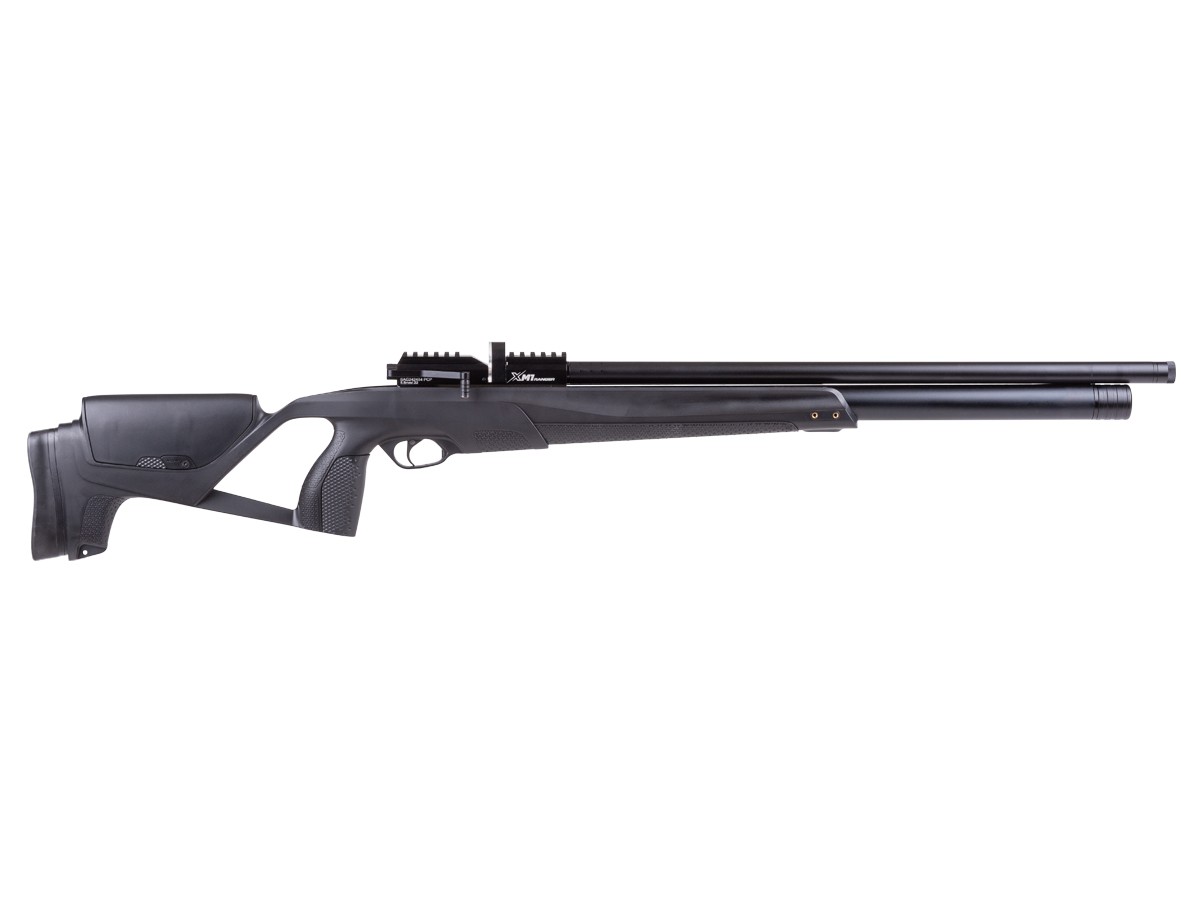
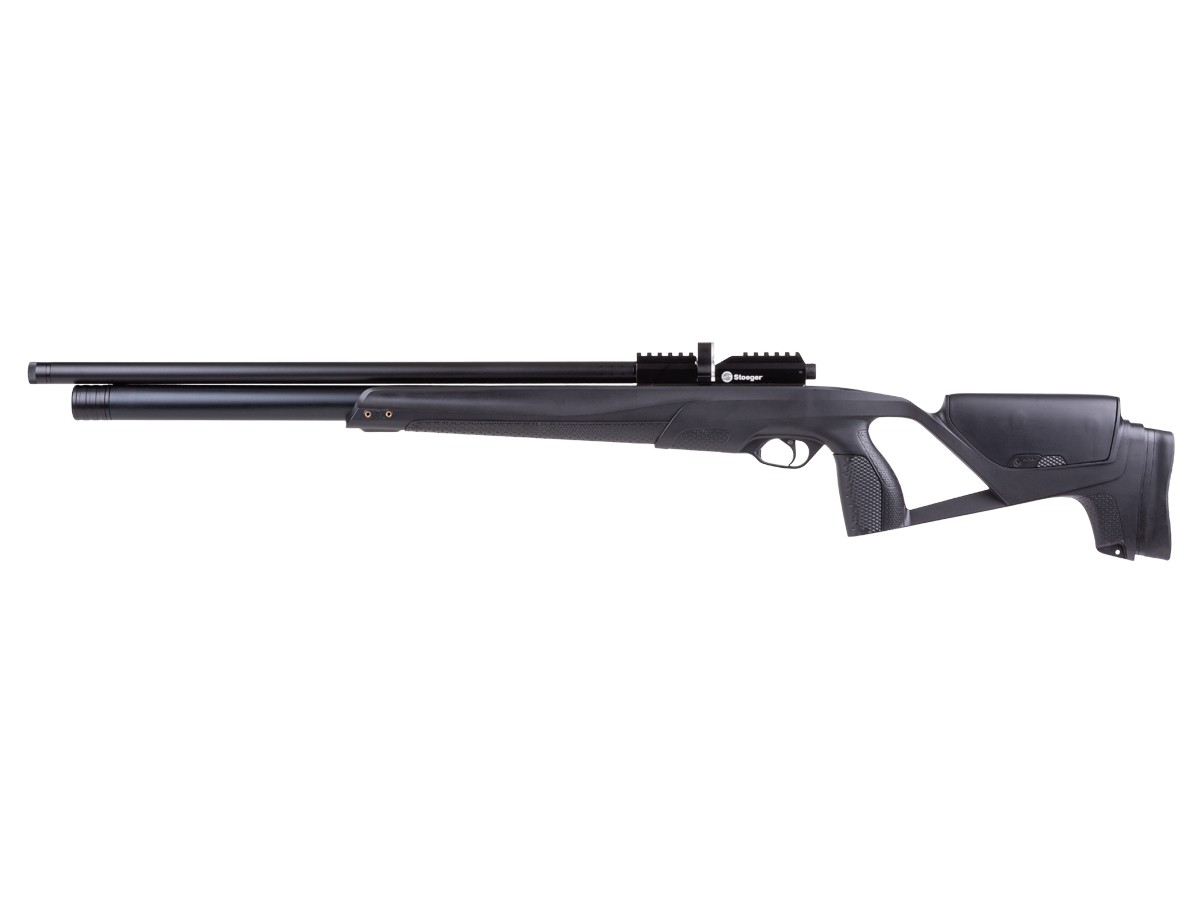
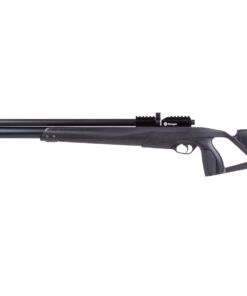
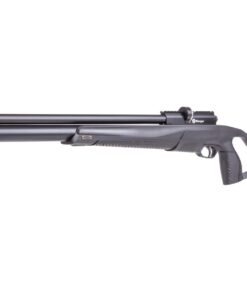
A shorter overall length of 43.2 inches is offered by the Stoeger XM1 Ranger compared with the original full-size XM1, yet usable barrel length and a free-floating, shrouded barrel are retained. Consequently, handling in brush, blinds, and vehicles is improved. Furthermore, a synthetic all-weather stock is fitted so that seasonal clothing changes and varied hand sizes can be accommodated without extra aftermarket parts.
Additionally, an integrated regulator is employed so that shot-to-shot consistency is maintained across a fill. Meanwhile, an adjustable hammer spring is provided so that pellet or slug preference can be tuned. Therefore, predictable trajectories are supported whether backyard practice or ethical small-game hunting is planned.
Core Performance Highlights
- Powerplant: Pre-charged pneumatic action with regulator is used.
- Fill pressure: Up to 250 BAR / 3,625 PSI is accepted.
- Air cylinder: Approximately 245–300 cc capacity is fitted (listings vary by market).
- Action: Sidelever cocking with magazine feed is employed.
- Calibers: .22 (5.5 mm) and .25 (6.35 mm) options are offered.
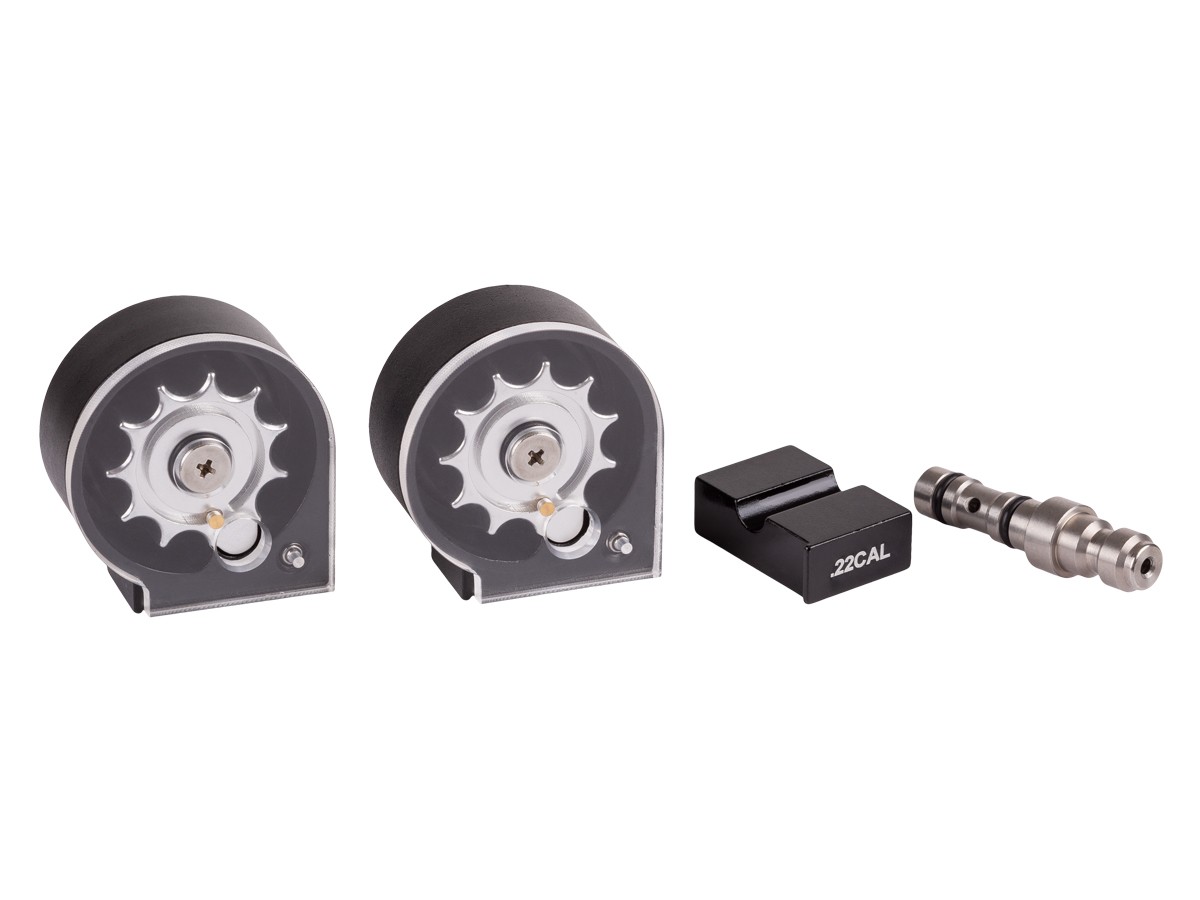
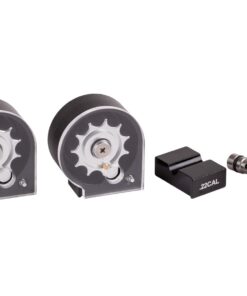
- Magazine capacity: 11 rounds in .22 and 9 rounds in .25 are typically provided; two rotary magazines are included.
- Claimed alloy velocity: Up to about 1,000 fps in .22 and about 900 fps in .25 is advertised.
- Barrel: Rifled, shrouded, free-floating tube of about 24 inches / 600 mm is installed.
- Overall length: 43.2 inches (1097 mm) is measured.
- Weight: About 7.65 lb is listed without optic.
- Trigger: Two-stage adjustable trigger is fitted.
- Safety: Manual safety is included.
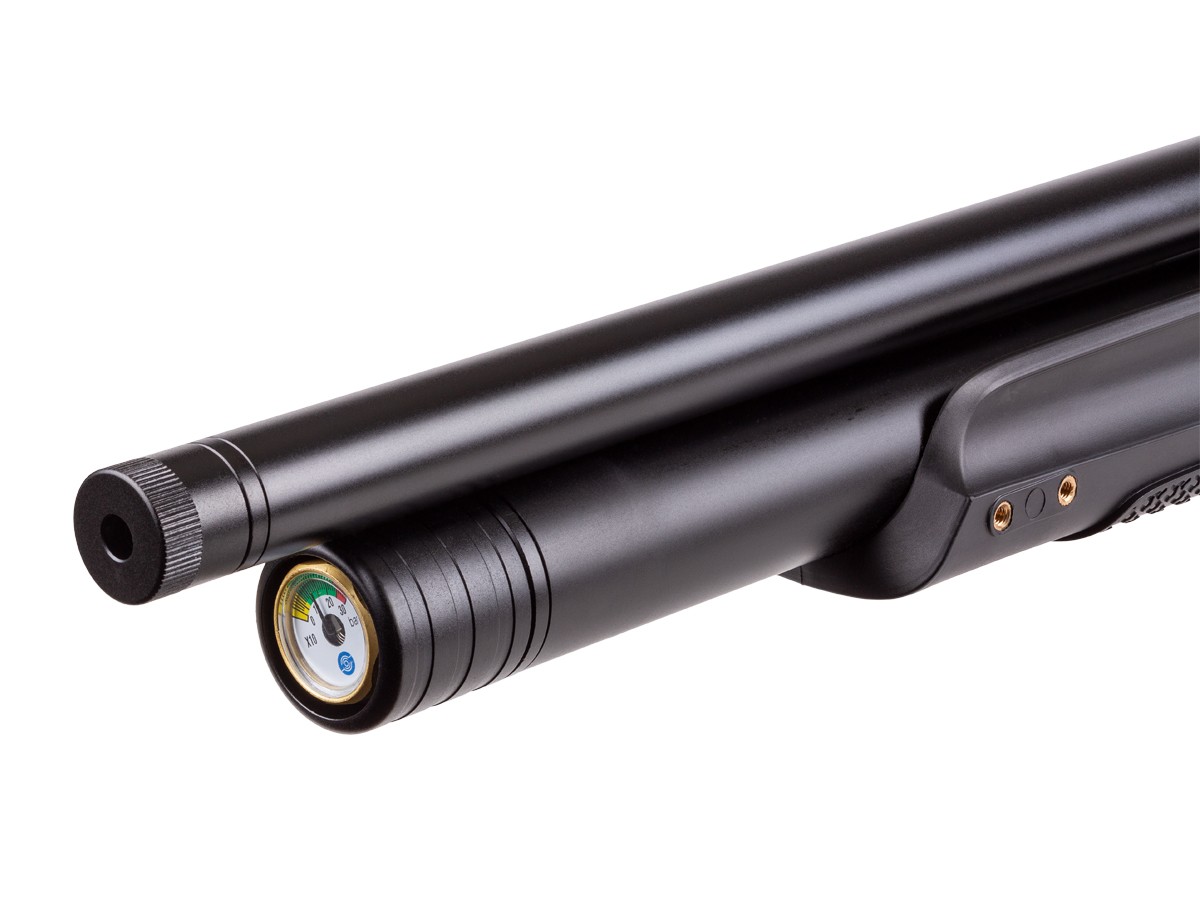
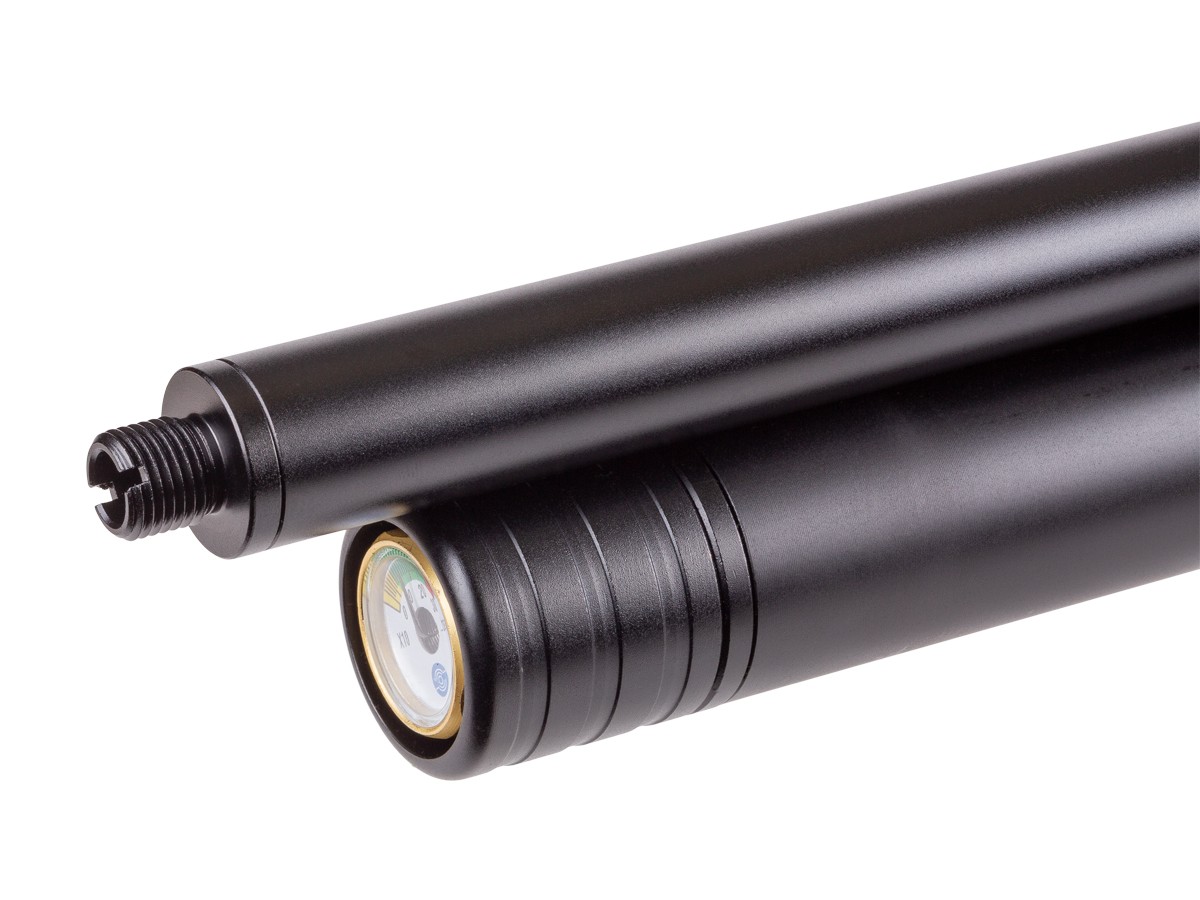
- Muzzle: Threaded muzzle with cap is supplied so that a moderator can be attached where legal.
- Optics interface: Picatinny optics rail is machined into the receiver.
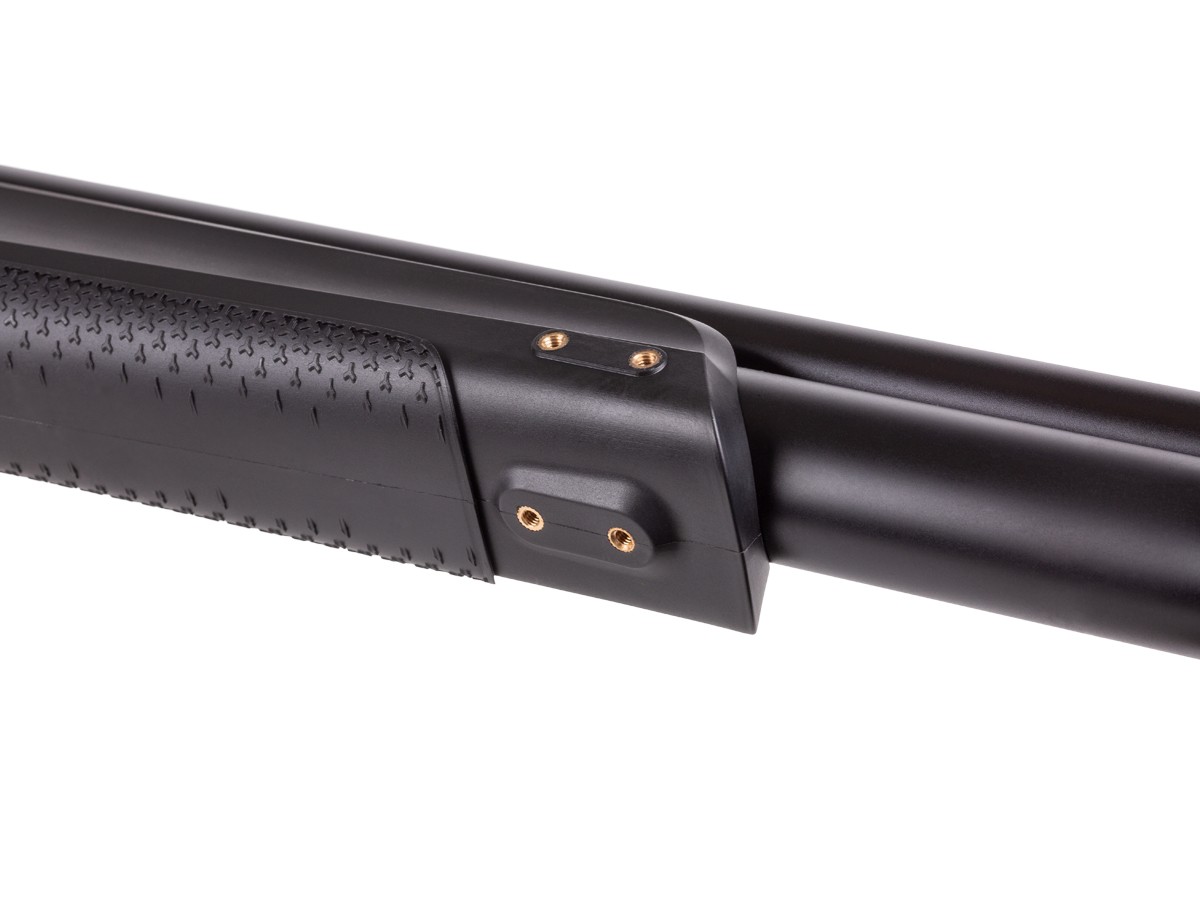
- Accessory rails: Left, right, and bottom forearm Picatinny segments are included.
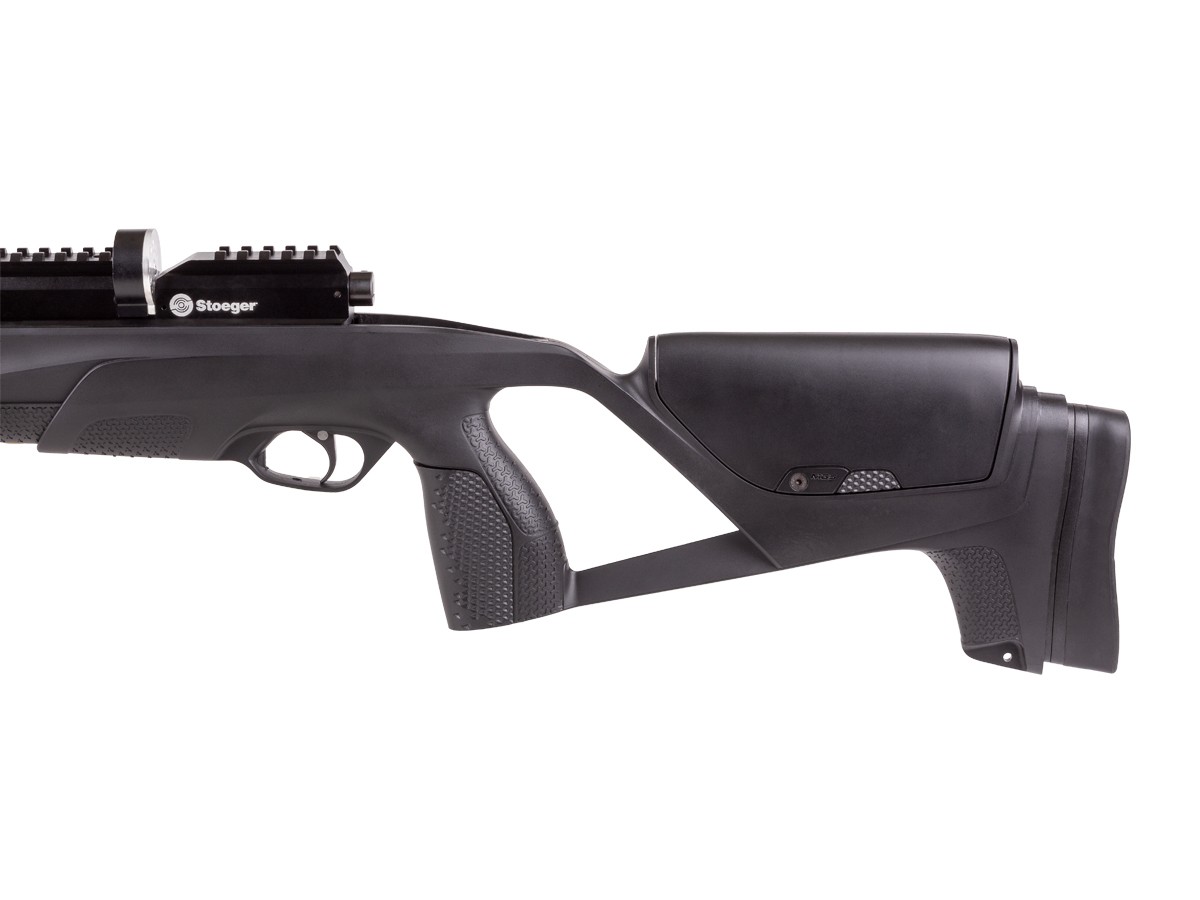
- Stock system: Adjustable cheekpiece, interchangeable grips, and buttpad spacers are provided.
- Warranty: A 5-year limited warranty is offered by the manufacturer.
Calibers, Power, and Accessories for the Stoeger XM1 Ranger
A practical middle ground between compact carry and usable power is targeted by the Stoeger XM1 Ranger. In .22, lighter alloy pellets can be driven toward advertised high-velocity figures, while heavier lead pellets are more commonly chosen so that energy and accuracy are balanced. In independent testing, energies in the mid-30s ft-lbs class have been recorded with heavier .22 pellets, and excellent groups have been reported with several quality brands. Meanwhile, .25 is selected when a larger projectile and extra impact are preferred for pest and small-game use.
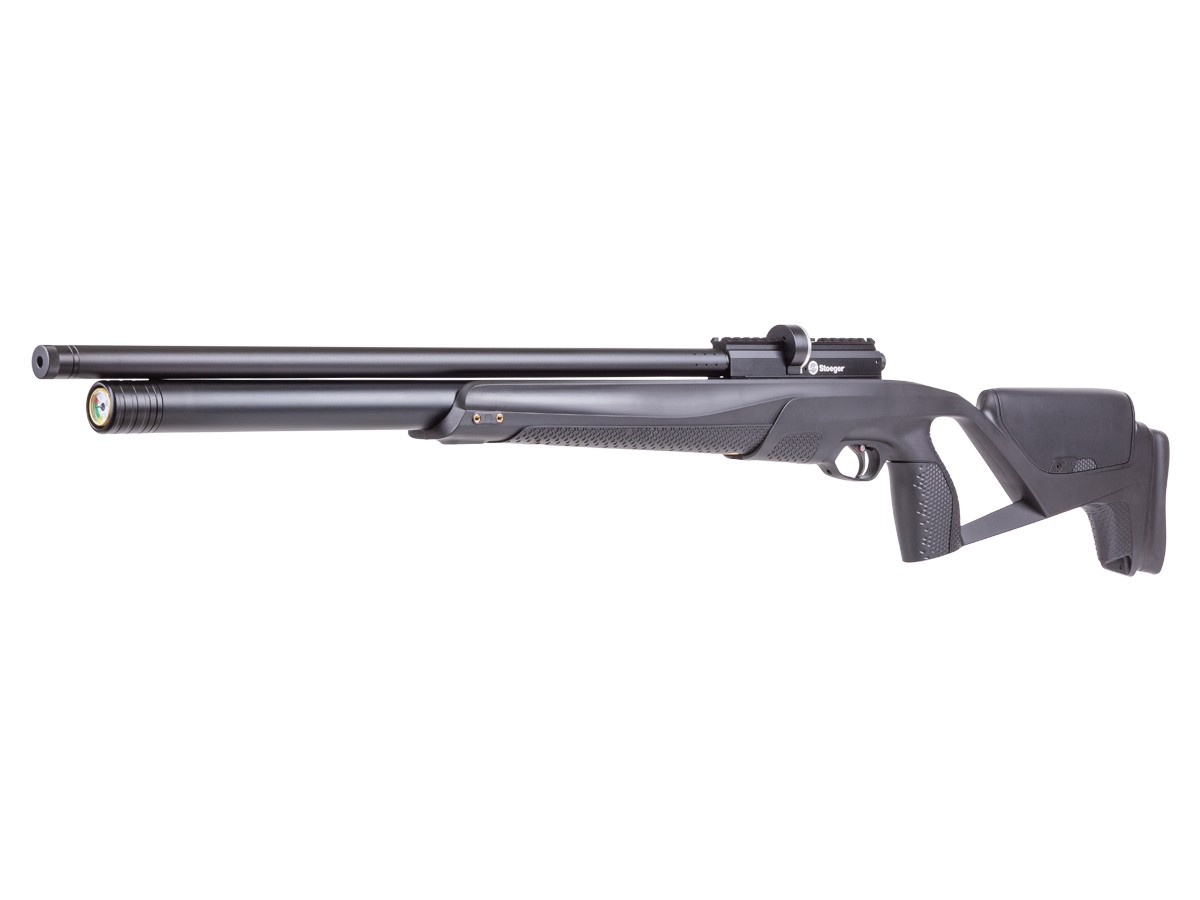
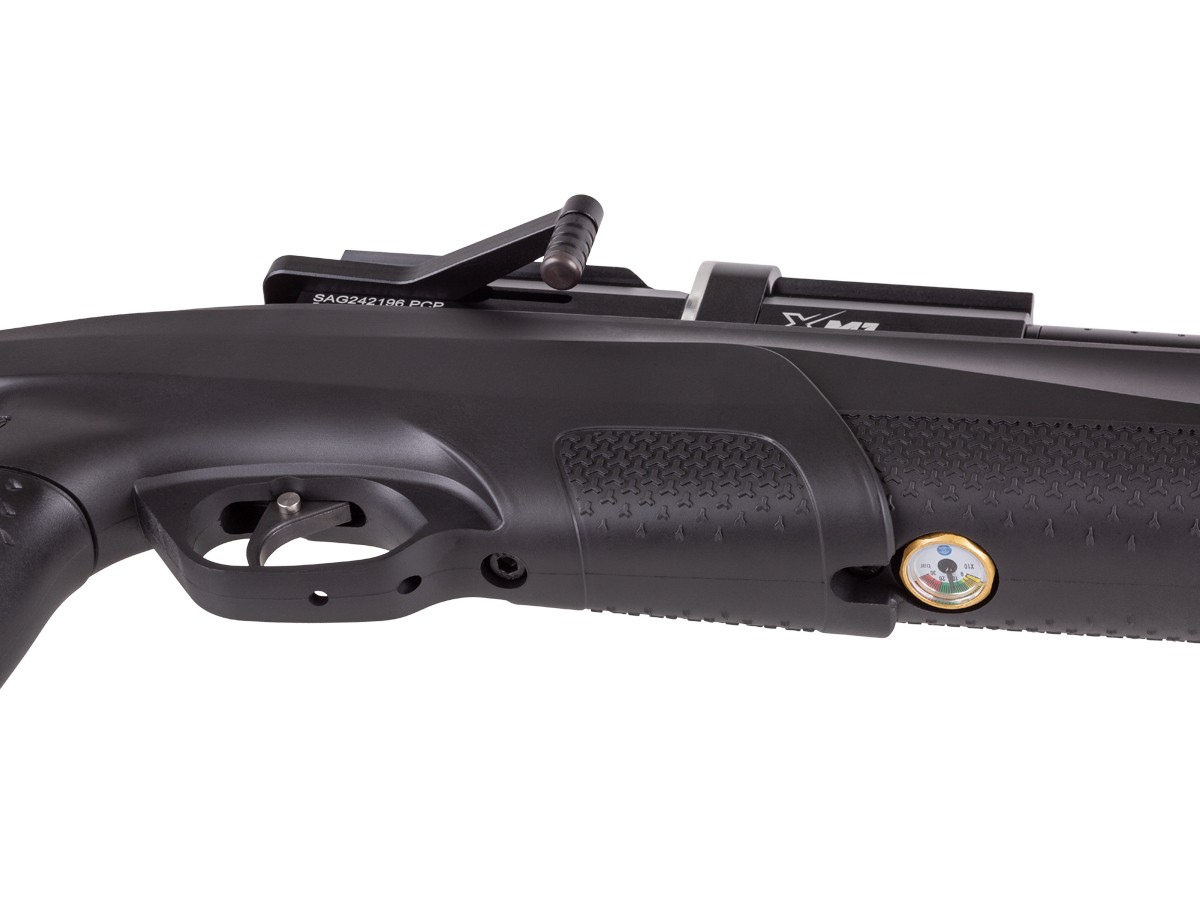
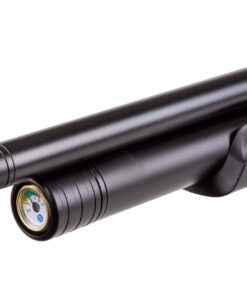
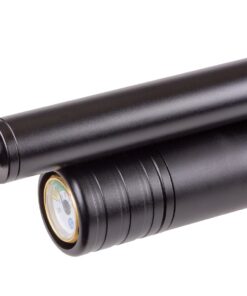
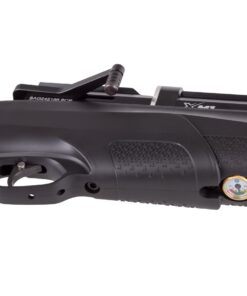
Moreover, an external hammer-spring adjustment is available so that power can be reduced for quieter practice or increased toward hunting loads. However, the regulator itself is generally factory-set rather than user-tuned from the outside, and a small regulator gauge is located on the underside ahead of the trigger. In addition, a cylinder pressure gauge is provided so that fill status can be monitored.
Practical Accessory Setup
A complete field package can be assembled around the Stoeger XM1 Ranger without unusual hardware. First, a quality airgun-rated scope is mounted on the receiver Picatinny rail. Next, a bipod, light, or laser can be attached to the removable forend rails. Afterward, a sling can be fitted using the rear swivel stud and a forend rail adapter. Finally, a moderator can be threaded onto the muzzle where local law allows, so that report is reduced for hunting or neighbor-friendly practice.
Two magazines are already included, yet spare magazines are recommended so that follow-up shots are not delayed. Likewise, a hand pump, carbon tank, or portable compressor is required because this is a PCP. Therefore, a complete kit—rifle, optic, fill source, pellets, and case—is planned before the first outing.
Calibres, FAC Status, Power Output, and Accessories
A complete buying decision for the Stoeger XM1 Ranger is formed when calibre, legal energy class, measured power, and supporting gear are specified together. Moreover, inclusive fit and lawful use are treated as equal priorities so that authorised shooters of different sizes and experience levels can be served. Therefore, the notes below are used as a single planning section rather than as isolated specifications.
Calibre Options and Field Purpose
Two factory chamberings are offered: .22 (5.5 mm) and .25 (6.35 mm). Consequently, trajectory, magazine capacity, and impact can be matched to quarry and local rules.
In .22, a rotary magazine of about 11 rounds is typically fitted, and two magazines are included. Advertised alloy velocity approaches about 1,000 fps, yet mid-to-heavy lead pellets in the 14–21 grain range are more often selected so that grouping and usable energy are balanced. Independent testing of a .22 example has recorded muzzle energies in the mid-30s ft-lbs with heavier pellets, and several premium domes have produced excellent accuracy. Hence, .22 is commonly chosen for pests, rabbits, and general small-game work where pellet variety is valued.
In .25, a 9-round rotary magazine is usually supplied, again with two magazines in the box. Advertised alloy speed is lower—often cited near 800–900 fps—because a larger projectile is being driven. As a result, .25 is preferred when extra strike on larger pests is wanted and when that energy remains legal. Heavy, well-fitted pellets or suitable slugs are then tested so that the regulator’s consistency can be used at hunting distance.
A calibre is therefore selected for law, land, and the shooter’s needs—not for a catalogue peak alone. Households and clubs can share one platform once the correct barrel and magazines are specified.
FAC and Regional Energy Limits
FAC (Firearms Certificate) classification is not a universal factory stamp. Instead, legal status is determined by muzzle energy where the rifle is possessed and used.
In the United Kingdom, unlicensed air rifles are generally capped at 12 ft-lbs. Output recorded and marketed for this hunting-oriented PCP commonly exceeds that figure in standard trim. Accordingly, a UK FAC air rifle certificate is typically required for a full-power example. Other countries apply different joule, fps, or “facsimile firearm” rules. Some markets regulate fill pressure or hunting use rather than energy alone. Local statutes, age limits, transport rules, and seasons must therefore be verified before an order is placed.
A regulator and a hammer-spring screw do not remove that duty. Power can be reduced for practice, yet the action may still be capable of FAC-level energy if the spring is returned to a higher setting. A chronograph is used after every change, and the result is compared with the local limit. Where a sub-12 ft-lbs or equivalent version is required, written confirmation from the seller is obtained. Website velocity claims are not treated as a licence.
Safe storage, eye protection, a verified backstop, and responsible sale to eligible buyers remain mandatory in every jurisdiction.
Power, Regulator, and Tuning Controls
A pre-charged pneumatic action with an integrated regulator is employed. Fill pressure of up to 250 BAR / 3,625 PSI is accepted. Cylinder volume is listed in the mid-200s to 300 cc class depending on market source. A cylinder gauge and a smaller regulator gauge beneath the action, ahead of the trigger, are provided so that fill status and set pressure can be read.
Reviewed examples have been described with a regulator set point around 130–140 BAR. From a full fill, a useful regulated string—often several magazines—can be obtained before that floor is reached. Outstanding shot-to-shot consistency has been measured when the rifle is kept on the regulated portion of the curve. That consistency is more useful in the field than a single alloy fps headline.
An adjustable hammer spring at the rear of the action allows power to be lowered for quieter practice or raised toward hunting loads. The regulator itself is not generally user-tuned from the outside. A two-stage adjustable trigger is fitted so that first-stage travel and break weight can be refined after the power setting is chosen.
A shrouded, free-floating rifled barrel of about 24 inches / 600 mm is installed. Overall length is 43.2 inches. Unscoped weight is listed near 7.65 lb. A threaded muzzle with cap is supplied. Report remains medium-loud without a moderator, so hearing protection is used at the range and a legal silencer is considered for field work.
Accessories That Complete a Lawful, Inclusive Kit
A conversion-ready package is assembled from parts that already interface with the rifle. The following items are specified with the purchase so that fill, aim, carry, and fit are completed together.
- Optics: A Picatinny rail is machined into the receiver. An airgun-rated scope with short-range parallax is mounted; a 3–12x hunting glass is a common match.
- Magazines: Two rotary magazines are included. Spares in the matching calibre are added for follow-up strings.
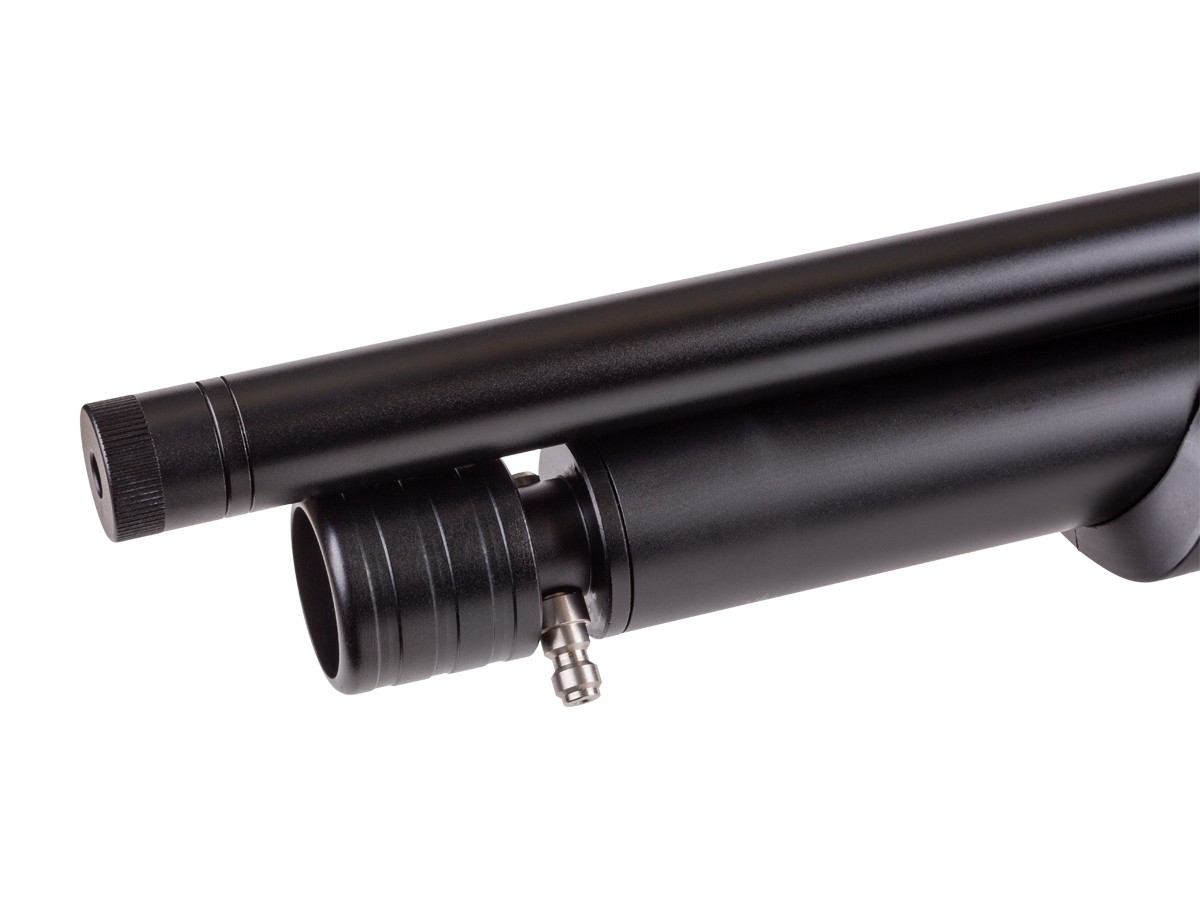
- Fill equipment: A hand pump, carbon tank, or portable compressor rated to at least 250 BAR is required, together with the correct probe and a safe bleed habit.
- Muzzle device: A moderator is attached where law permits after the factory cap is removed.
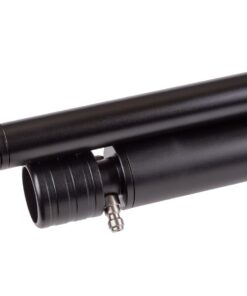
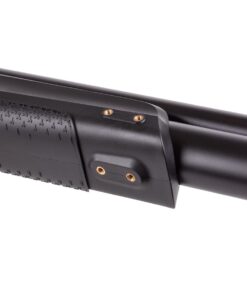
- Support and carry: Left, right, and bottom forend Picatinny segments are supplied. A bipod, lamp, laser, or sling adapter can be fitted. A rear sling swivel stud is already present.
- Stock fit: Interchangeable grips, a multi-level cheekpiece, and buttpad spacers are adjusted so that length of pull and palm swell match different hands and seasonal clothing.
- Ammunition: Several mid-to-heavy domed pellets are tested; the most accurate load is then used for zero and for hunting.
- Safety and care: Eye and ear protection, a pellet trap or earth backstop, a case, and basic cleaning gear are kept with the rifle.
- Documents: FAC or equivalent paperwork, if required, is carried as local law demands.
When calibre, measured energy, certificate status, and these accessories are planned as one kit, the rifle can be used for pest control, small-game hunting, and practice with consistency and courtesy. Inclusive stock adjustments allow more than one authorised shooter to share the same action. Legal power is confirmed with a chronograph rather than assumed from advertising. In that combination, value is delivered not only by velocity claims but by regulated strings, field rails, fit, and responsible setup.
Fit, Ergonomics, and Inclusive Design
A custom fit is emphasized so that a wider range of shooters can be served. Length of pull is altered with interchangeable buttpad spacers. Cheek weld is refined through a multi-level adjustable cheekpiece. Palm swell is changed with interchangeable textured pistol grips. Pro Adaptive checkering is applied to the grip and forend so that a secure hold is maintained in wet or gloved conditions.
Consequently, youth-to-adult frames, layered winter clothing, and different shooting positions can be accommodated. An ambidextrous stock profile is used, although magazine insertion is typically from the left. Inclusive language and setup choices matter here: a comfortable, stable interface is offered so that new shooters, experienced hunters, and competitive plinkers can share the same platform with only spacer and grip changes.
Handling Notes That Affect Real Use
A substantial, slightly muzzle-forward balance is produced by the air cylinder and barrel length, and that balance is often preferred for supported shots. Nevertheless, cocking effort on some examples has been described as firm because mechanical advantage is concentrated in a short lever arc, and the factory lever knob is compact. Therefore, a longer aftermarket handle is sometimes added after purchase. Likewise, the two-stage trigger is adjustable, yet feel can vary; a careful setup session with a trigger gauge and dummy magazine is recommended before hunting use.
The shrouded barrel reduces some muzzle blast, yet the rifle is still rated as medium-loud. Accordingly, hearing protection is used at the range, and a legal moderator is considered for field work.
Practical Use Scenarios
Small-game hunting and pest control are the primary missions for which the Stoeger XM1 Ranger is positioned. At typical airgun hunting distances, a regulated string of consistent shots is more useful than a single peak velocity number. Hence, a fill is topped before the regulator floor is reached so that the flattest portion of the shot curve is used.
Target practice and skill building are equally well served. Because the rifle is not unusually pellet-picky in published tests, several mid-to-heavy domed pellets can be tried until a preferred load is identified. Thereafter, that load is used for both zeroing and field work so that holdovers remain familiar.
Additionally, a compact 43.2-inch package is easier to carry on foot than many full-length PCP sporters. A sling, bipod, and modest-power scope turn the rifle into a ready walk-and-stalk tool. Meanwhile, bench or tripod shooting remains comfortable because the forend swell and accessory rails support stable holds.
Legal and safety obligations remain the shooter’s responsibility. Local airgun power limits, hunting seasons, and suppressor rules must be checked before purchase and use. Safe backstops, eye protection, and responsible storage are required at all times.
What Is Included and How Confidence Is Built
Two rotary magazines, three short Picatinny rail segments, and a threaded muzzle cap are typically supplied with the Stoeger XM1 Ranger. A Picatinny optics rail is already on the receiver. Interchangeable grips and cheek/butt adjustments are part of the stock system. A five-year limited warranty is advertised, which is longer than many budget PCP offerings.
Value is therefore created not only by velocity claims but by adjustability, regulation, accessory readiness, and warranty coverage. For conversion-focused shoppers, that combination means fewer extra parts must be sourced on day one, and a better first-fit experience is more likely for different body sizes and clothing layers.
Ready to Add the Stoeger XM1 Ranger to Your Kit?
A regulated, compact PCP with a truly adjustable stock is offered at an accessible price by the Stoeger XM1 Ranger. Consistent strings, .22 or .25 flexibility, included magazines, and field rails are combined so that hunting, pest control, and practice can be started with a single platform. When a fill source, quality pellets, and an airgun-rated optic are added, a complete, inclusive shooting setup is completed.
Choose the caliber that matches local game and range rules, confirm fill-gear compatibility, and have the stock spacers and grip set fitted before the first hunt. Precision is then available to every shooter who is willing to zero carefully and shoot responsibly.
Practical Use in the Field, on the Range, and Around Property
A compact, regulated pre-charged rifle is most useful when a complete outing is planned around fill pressure, projectile choice, legal limits, and a stock that can be fitted to different bodies and clothing. Consequently, practical use is treated as a system rather than a single shot. Moreover, inclusive setup is applied so that new shooters, experienced hunters, and mixed-ability groups can share the same platform after simple spacer and grip changes. Therefore, the scenarios below describe how the rifle is actually carried, zeroed, filled, and employed from first light to last light.
Preparing the Rifle Before Any Outing
A successful session is begun long before a pellet is chambered. First, local energy limits, hunting seasons, and moderator rules are confirmed so that the chosen power setting remains lawful. Next, a chronograph string is fired after any hammer-spring change, and the resulting energy is recorded. Meanwhile, the regulator gauge and cylinder gauge are checked so that a full, safe fill is verified.
Length of pull is then set with buttpad spacers, cheek height is matched to the optic, and an interchangeable grip is selected for the shooter’s hand size. Additionally, seasonal clothing is considered: winter layers require a longer pull and a slightly higher comb, while a light summer shirt often needs the opposite. Eye and ear protection are fitted as standard. A sling is attached using the rear stud and a forend rail so that the rifle can be carried for hours without a cramped hold.
A quality airgun-rated scope with close-range parallax is mounted on the receiver rail. Afterward, rings are torqued evenly, and a bore-level check is performed so that cant is reduced. Finally, two magazines are loaded with the tested pellet, and a third spare magazine is carried in a pouch. Consequently, follow-up shots are available without a return to a bench.
Small-Game Hunting on Foot
Walk-and-stalk hunting is the role for which this shorter overall length is most often chosen. A 43-inch-class package is easier to move through hedgerows, farm tracks, and woodland edges than a full-length sporter. Furthermore, a slight muzzle-forward balance helps the rifle settle on sticks or a kneeling rest when a pause is required.
A typical morning is structured as follows. A fill is completed at home or at the vehicle so that the regulated portion of the shot curve is used first. Heavy, well-fitted domed pellets are selected because consistent energy and grouping matter more than a peak alloy velocity figure. Distances are kept inside the zeroed envelope—often 20 to 45 yards for ethical small-game shots—unless the shooter has confirmed longer holds on paper.
When a quarry is located, the sling is used as a hasty support or the forend is placed on a fence post, pack, or bipod. The two-stage trigger is taken up deliberately. Because cocking effort can feel firm on a short sidelever, the magazine is kept clean and the lever is operated with a full grip so that a slip and a double-feed are avoided. After the shot, the animal is observed, and a second magazine is ready if a follow-up is required.
Inclusive practice is applied in the field as well. A younger or smaller-framed hunter can use extra spacers removed and a slimmer grip; a taller shooter can add spacers and raise the cheekpiece. Layered gloves in cold weather are accommodated by the textured forend swell. In this way, more than one authorised person in a household can hunt with the same rifle after a two-minute stock change.
Pest Control Around Buildings, Barns, and Allotments
Pest work demands quieter manners, known backstops, and strict shot placement. Although a shrouded barrel is fitted, the report is still medium-loud without a moderator. Where the law allows, a silencer is threaded on after the muzzle cap is removed. Even then, neighbours, livestock, and glass are considered before a shot is taken.
A property circuit is walked with the rifle slung and the safety engaged until a clear, safe lane is identified. Rats, feral pigeons, and similar pests are engaged only when a solid backstop exists. Lighter practice pellets are sometimes used at very short range after power has been reduced with the hammer spring, provided energy still meets an ethical standard. Conversely, heavier pellets are retained when a longer barn shot is required.
Lighting can be added to a forend Picatinny segment for dusk work. A compact light is kept on a low setting so that night vision of the shooter is not destroyed. Lasers are used only where legal and only as an aiming aid, not as a substitute for a proper zero. After each session, unused air is not dumped carelessly indoors; fills are topped later so that compressor wear is reduced.
Range Practice, Zeroing, and Skill Building
Accuracy is built on paper before it is trusted on game. A bench or a stable tripod is used for the first groups. Several mid-to-heavy pellets are tested at 25 yards, then at 40 or 50 yards. The load that produces the tightest, most repeatable group is adopted as the hunting load. After that decision, holdovers are recorded for the chosen scope and magnification.
A regulated string is used as a training tool. Shots are counted from a full fill down toward the regulator floor so that the shooter learns how many magazines remain before velocity begins to fall. Excellent consistency has been observed on well-set examples; that consistency is wasted if the rifle is shot far below the set pressure. Therefore, a top-off habit is developed rather than a “run it empty” habit.
Trigger feel can vary from example to example. A long first stage is taken up the same way every time so that surprise break is reduced. If the blade geometry is uncomfortable during long strings, a glove or a modest aftermarket shoe is considered. Likewise, if the factory lever knob feels small, a longer handle is fitted so that range sessions remain pleasant rather than fatiguing.
Inclusive range days are organised so that more than one body size can shoot. Spacers and grips are swapped between relays. A left-side magazine insertion is explained to new users so that large side-parallax wheels are not chosen if magazine feed must be retained. A single-shot tray, if used, is reserved for careful load development.
Supported Positions: Bipod, Sticks, Vehicle, and Hide
The removable forend rails allow a bipod to be fitted quickly. Prone or bench use then becomes straightforward, and the free-floating barrel is allowed to settle without pressure from a tight sling. Sitting and kneeling shots are taken from shooting sticks; the forend swell gives a wide, stable contact. From a vehicle window or hide shelf, a small bag is used under the cylinder or forend so that the regulator housing is not treated as a hard rest.
Cant is watched because an adjustable buttplate without cant correction is fitted. A bubble level on the scope or a careful natural point of aim is used. After a move to a new rest, a confirming shot on a safe target is fired before game is engaged.
Weather, Clothing, and All-Day Carry
An all-weather synthetic stock is employed so that rain and mud are tolerated better than an unprotected wood finish. Checkering on the grip and forend helps gloved hands. Nevertheless, the action is kept as dry as practical, and the fill port is capped after every charge.
Summer carry favours a shorter pull and a slimmer grip. Winter carry favours extra spacers, a higher cheekpiece, and a sling that sits over a heavy coat. Inclusive language is matched by inclusive hardware: the same rifle can be shared across seasons if the stock is treated as adjustable equipment rather than a fixed shape.
Weight without an optic is in the mid-7-pound class; with a hunting scope the combination often approaches 9 to 10 pounds. That mass is comfortable on a sling for most adults, yet a hip pad or a dual-point sling is useful on long walks. A slightly muzzle-heavy feel can be an advantage for supported shots and a mild disadvantage for unaided offhand work; practice in both styles is scheduled.
Fill Logistics and Shot Management
A 250 BAR fill is the usual ceiling. A hand pump is adequate for occasional use but is physically demanding; a tank or portable compressor is preferred for regular hunting. The probe is inserted fully, the bleed is used correctly, and gauges on both the rifle and the fill device are compared.
Shot count depends on calibre, pellet weight, and hammer-spring setting. Several magazines per fill are commonly reported when the rifle is not driven at the extreme of alloy velocity. A conservative habit is adopted: the cylinder is topped before the regulator gauge indicates that the set point has been reached. Consistency is thereby kept inside the flattest part of the curve.
Dry-firing is generally tolerated on this type of PCP when empty, yet magazines are still removed during storage and transport. Pellets are not left compressed in a magazine for weeks. Lead and alloy are stored separately so that a hunting load is not mixed with a high-velocity practice load by mistake.
Ethical Limits, Backstops, and Community Courtesy
Practical use is incomplete without ethics. Only lawful quarry is engaged, and only when a shot can be placed in a vital area with a known trajectory. A backstop of earth, a dedicated trap, or a verified hillside is required. Ricochet risk from steel plate at close range is respected.
Neighbour courtesy is treated as part of fieldcraft. A moderator is used where legal. Sessions near housing are kept short. Spent pellets and targets are collected. Inclusive clubs and family groups benefit when noise, litter, and unsafe angles are controlled so that access to land is retained.
Transport follows local rules. A case is used in vehicles. Where a certificate is required because energy exceeds an unlicensed limit, that paperwork is carried. Power is not increased “just to see” after a hunt if the new setting would change legal class.
A Complete Day, From First Fill to Last Shot
At dawn, gauges are read and a fill is completed. The stock is set for the day’s clothing. Magazines are loaded with the zeroed pellet. A short confirmation group is fired at a safe target if the optic was removed or bumped. During the walk, the sling carries the weight and the safety remains on until a shot is imminent. Midday, the cylinder is topped rather than emptied. In the afternoon, a hide or a high seat may be used with a bipod on the forend rail. At last light, a legal lamp is employed only with a safe backstop. After return, moisture is wiped, air is left at a sensible storage pressure if recommended, and magazines are emptied.
Through that rhythm, a compact regulated PCP becomes a practical tool rather than a catalogue specification. Fit is adjusted for every authorised shooter. Power is measured rather than assumed. Accessories are limited to what improves a safe shot. In that way, pest control, small-game hunting, and range practice are carried out with consistency, courtesy, and confidence—without depending on a single advertised velocity number.




Reviews
There are no reviews yet.