Seneca Dragon Claw II, Twang N Bang Combo
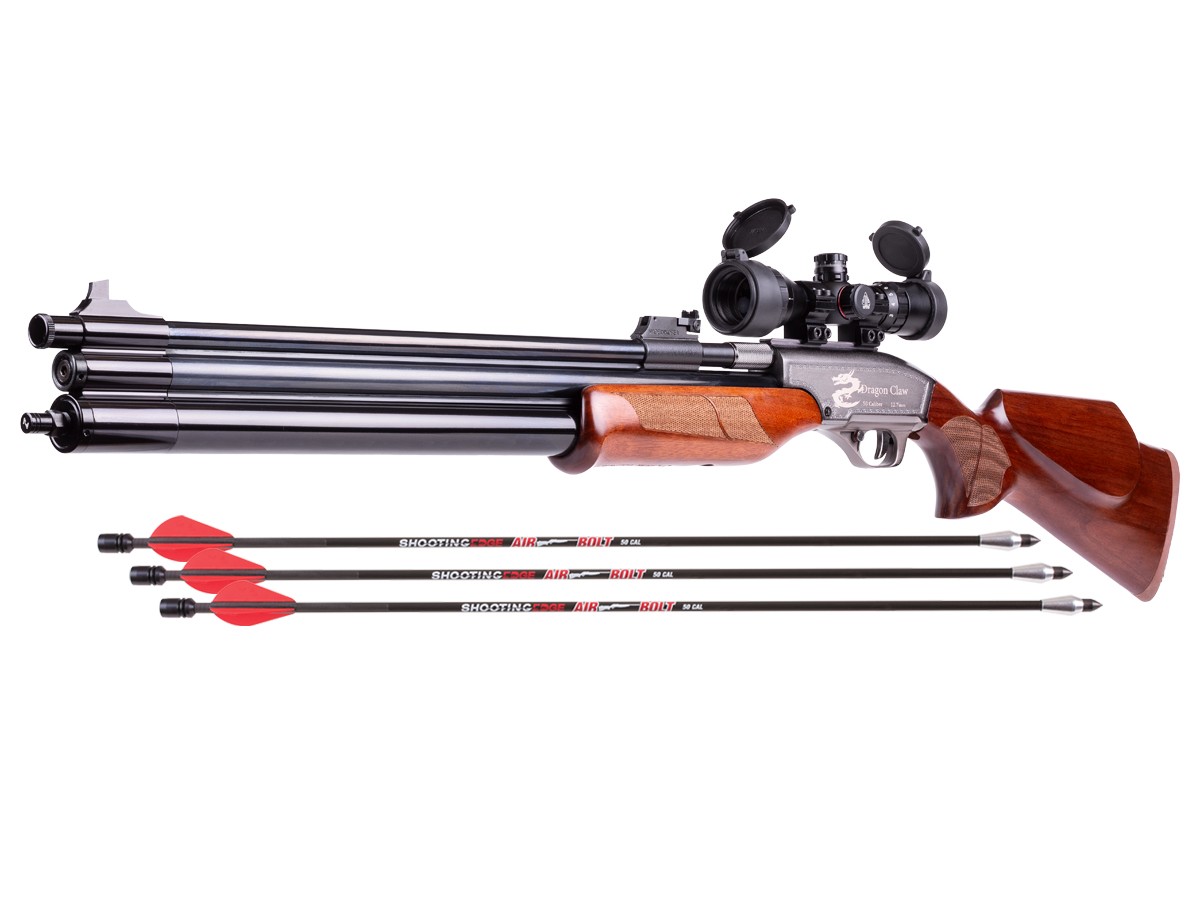
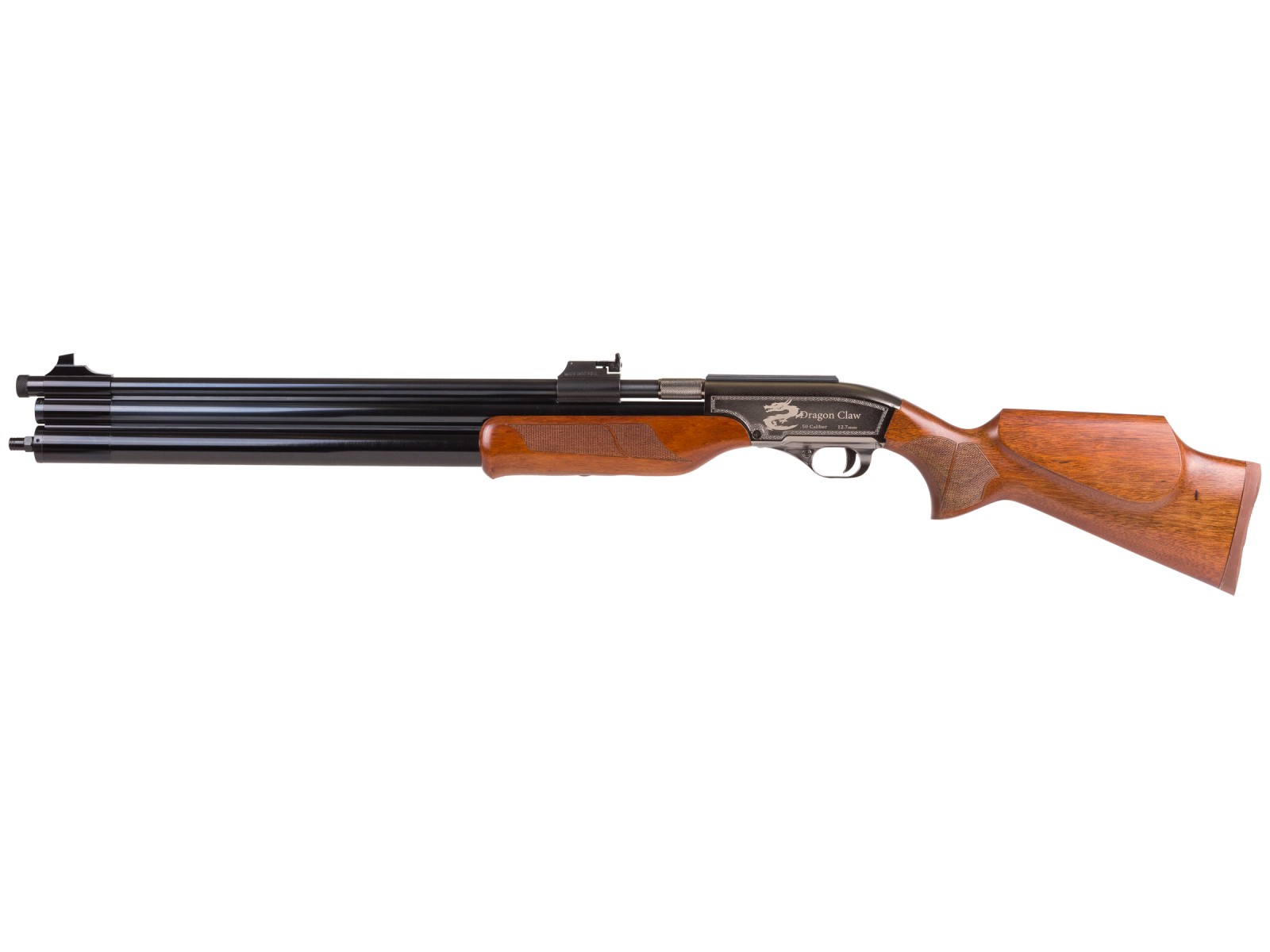
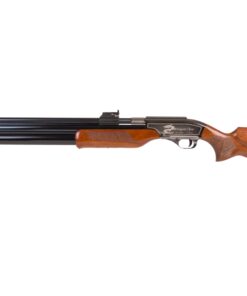
Unmatched big-bore hunting capability is delivered by the Seneca Dragon Claw II, Twang N Bang Combo. Field-ready performance is packaged for hunters who demand power, versatility, and precision in a single outfit. Consequently, medium to large game can be engaged ethically when proper shot placement and local regulations are observed.
Why the Seneca Dragon Claw II, Twang N Bang Combo Is Chosen by Serious Hunters
The exact configuration used and reviewed by Cameron of TWANGnBANG is replicated in this package. Therefore, proven field performance is offered rather than untested speculation. Moreover, air-bolt hunting at typical distances under 50 yards is supported by the included optic and projectiles.
Furthermore, dual-purpose shooting is enabled. Lead slugs or round balls can be loaded through the breech, while Air Bolts are introduced from the muzzle. As a result, one platform serves both traditional big-bore work and high-energy bolt hunting.
Combo Contents Highlighted
The following items are included so that the rifle can be put to work immediately:
- Seneca Dragon Claw II .50 caliber PCP air rifle
- Six-pack of .50 caliber Air Bolts
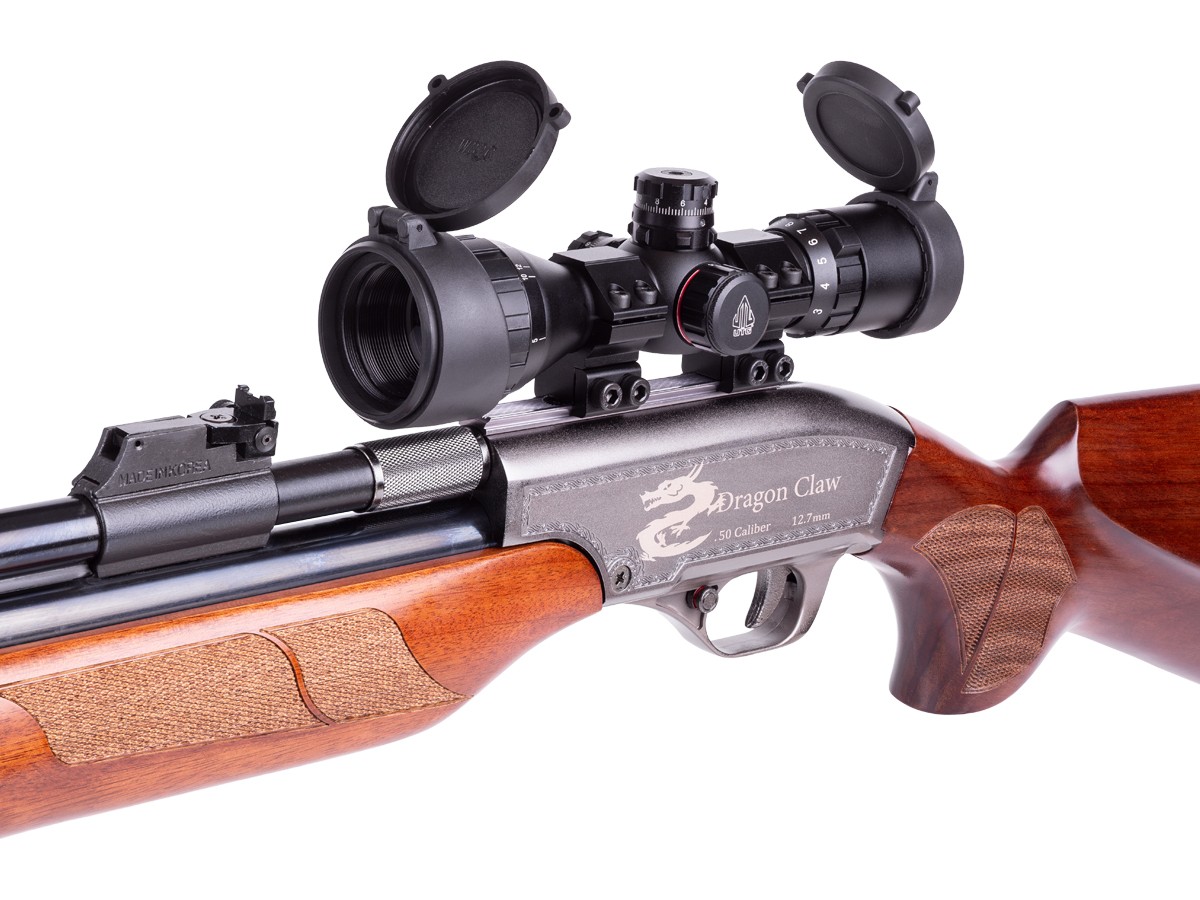
- UTG Bug Buster IR 3-9×32 AO scope with rings
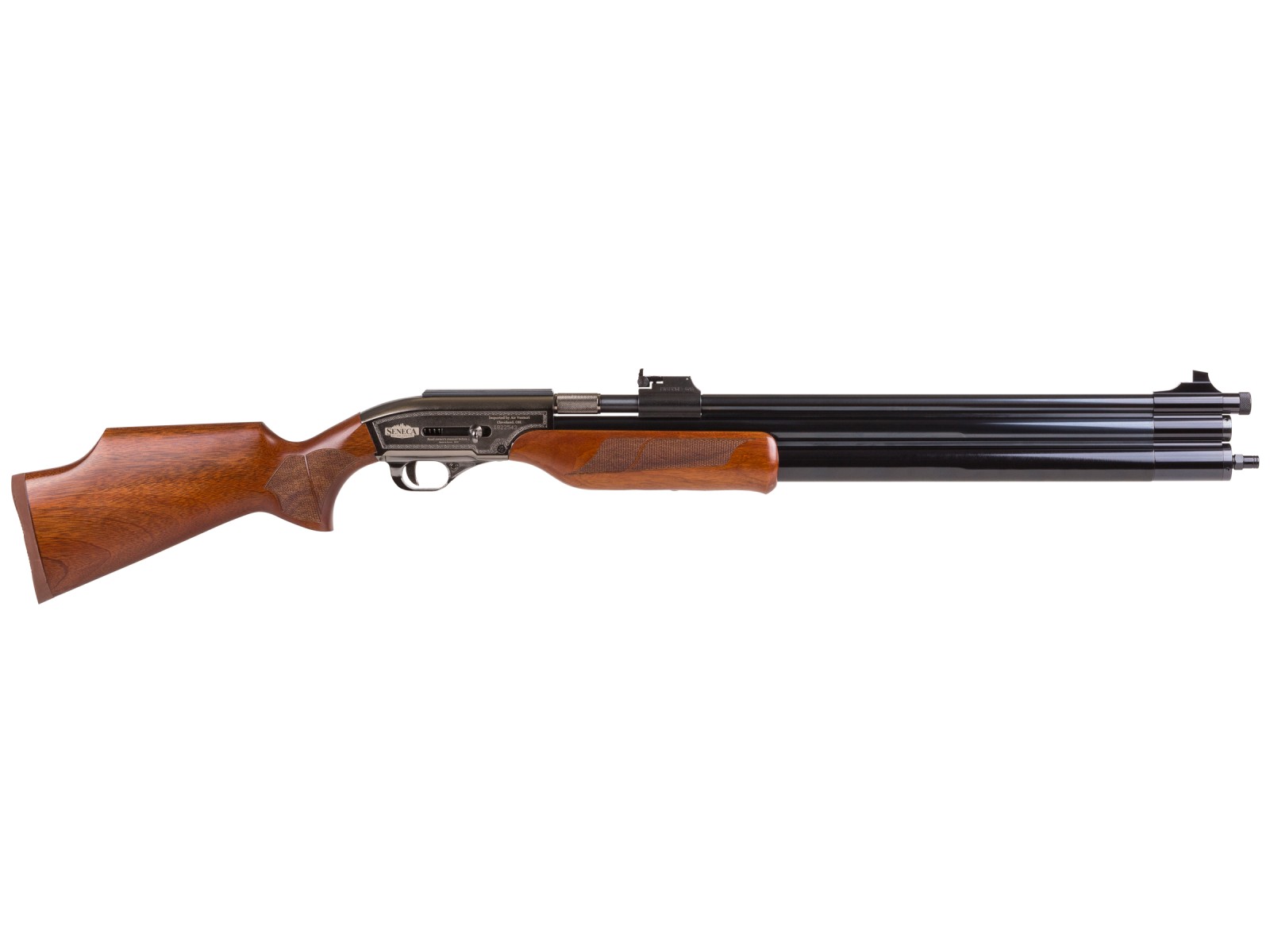
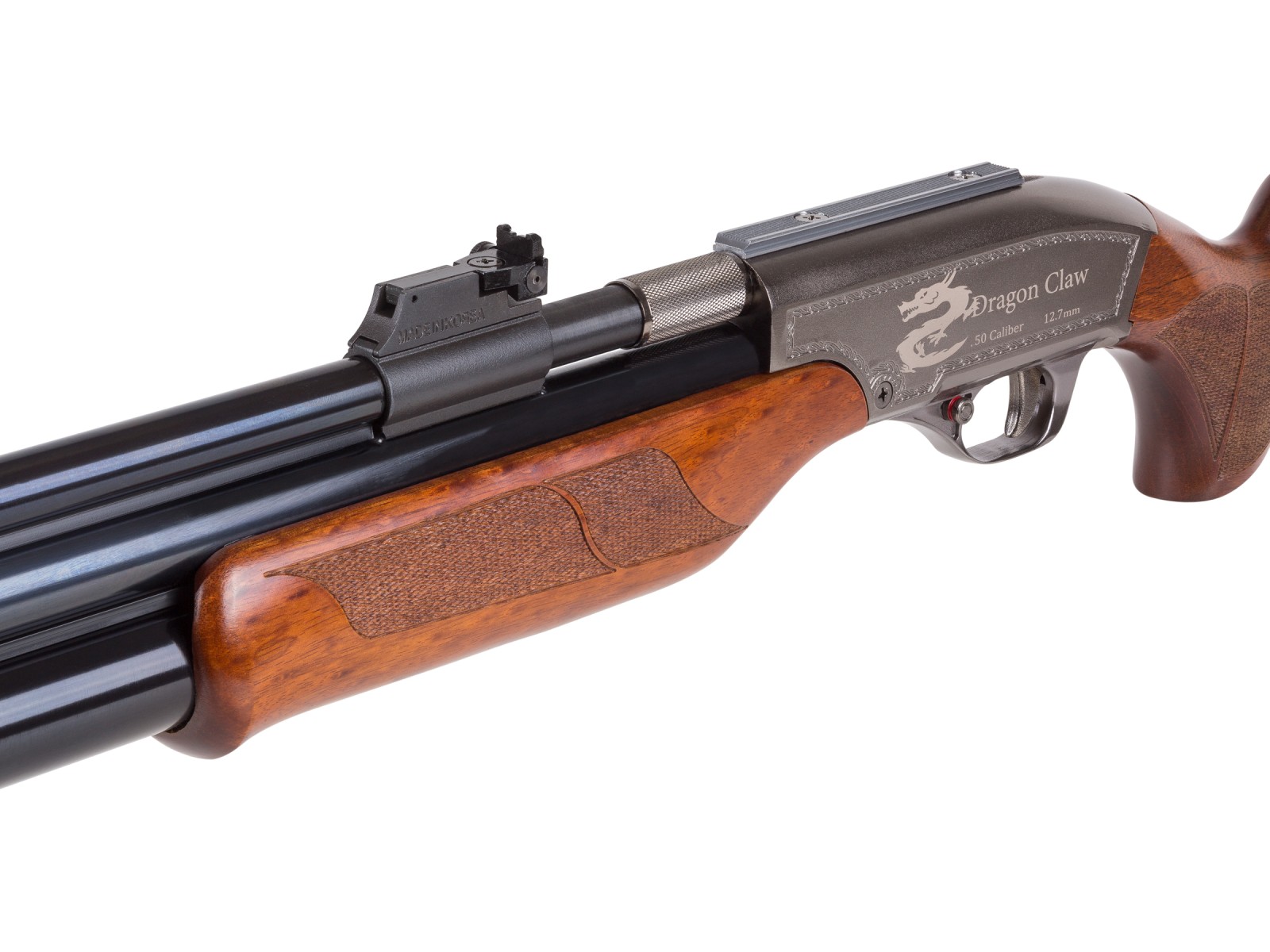
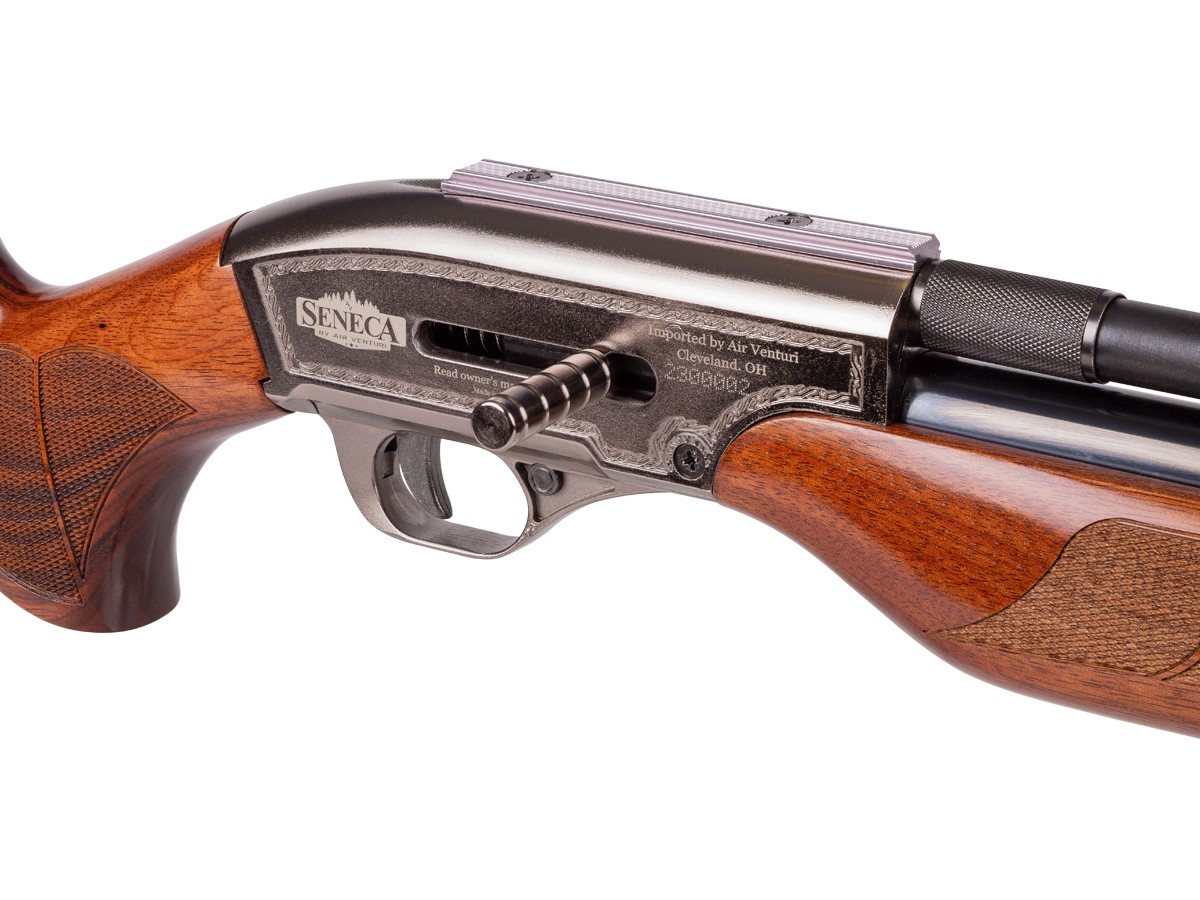
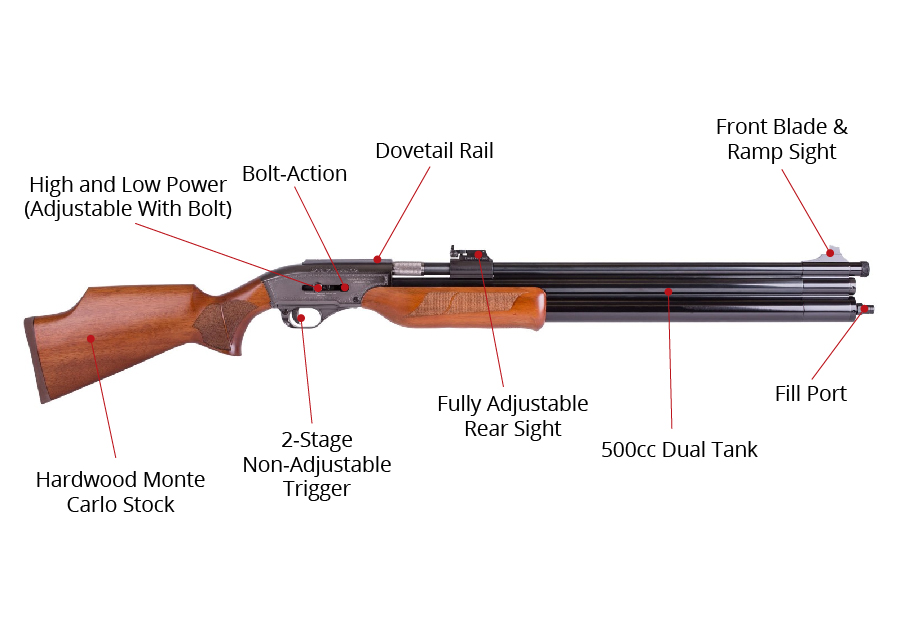
- Hardwood Monte Carlo stock with checkered forearm and grip
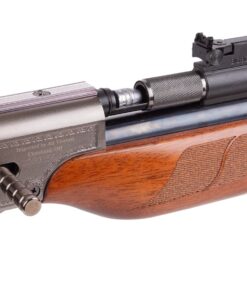
- Built-in manometer and Foster quick-disconnect fill fitting
Additionally, illuminated reticle capability is provided by the compact Bug Buster so that low-light target acquisition is improved. Likewise, the 3-9x magnification range is matched to the distances at which Air Bolts are customarily employed.
Power, Velocity, and Dual-Reservoir Performance
Substantial energy is generated by the updated Dragon Claw II action. Up to 340 foot-pounds is advertised with 336-grain flat-nose slugs; in independent testing, even higher figures have been recorded on the first shots from a 3,000 psi fill. Meanwhile, 177-grain round balls can be driven to approximately 860 fps. Subsequently, Air Bolts of roughly 430 grains are launched at 600 fps or more.
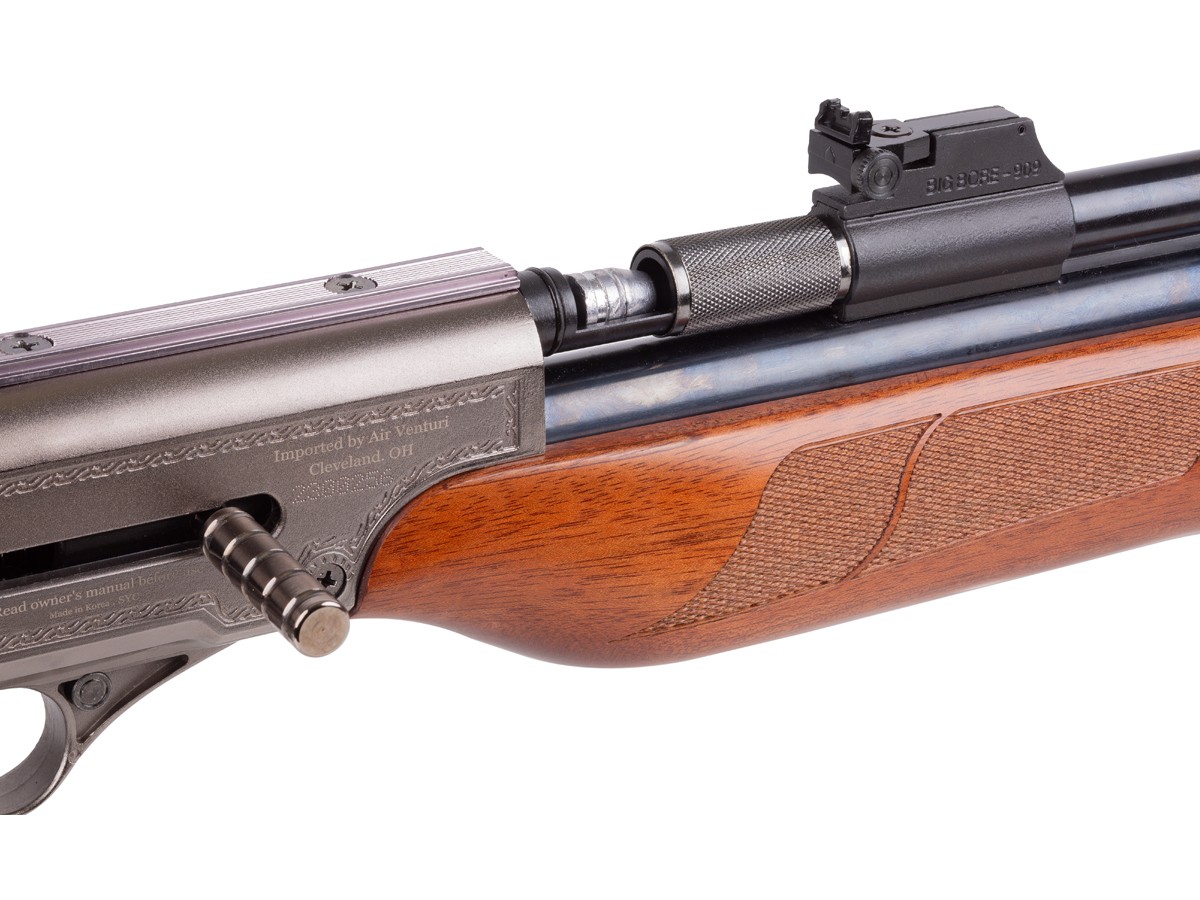
Two power settings are selected by the position of the cocking bolt. The first stop produces the lower-power setting; the second stop produces the higher-power setting. Consequently, shot energy can be tailored to the game and the range.
A combined 500 cc of air is stored in the dual reservoirs beneath the barrel. Therefore, several full-power shots are obtained from a single fill before velocity begins to drop. A built-in pressure gauge is fitted so that remaining air is monitored at a glance. Filling is accomplished through the male Foster quick-disconnect fitting that is supplied on the rifle.
Accuracy Features That Support Ethical Harvests
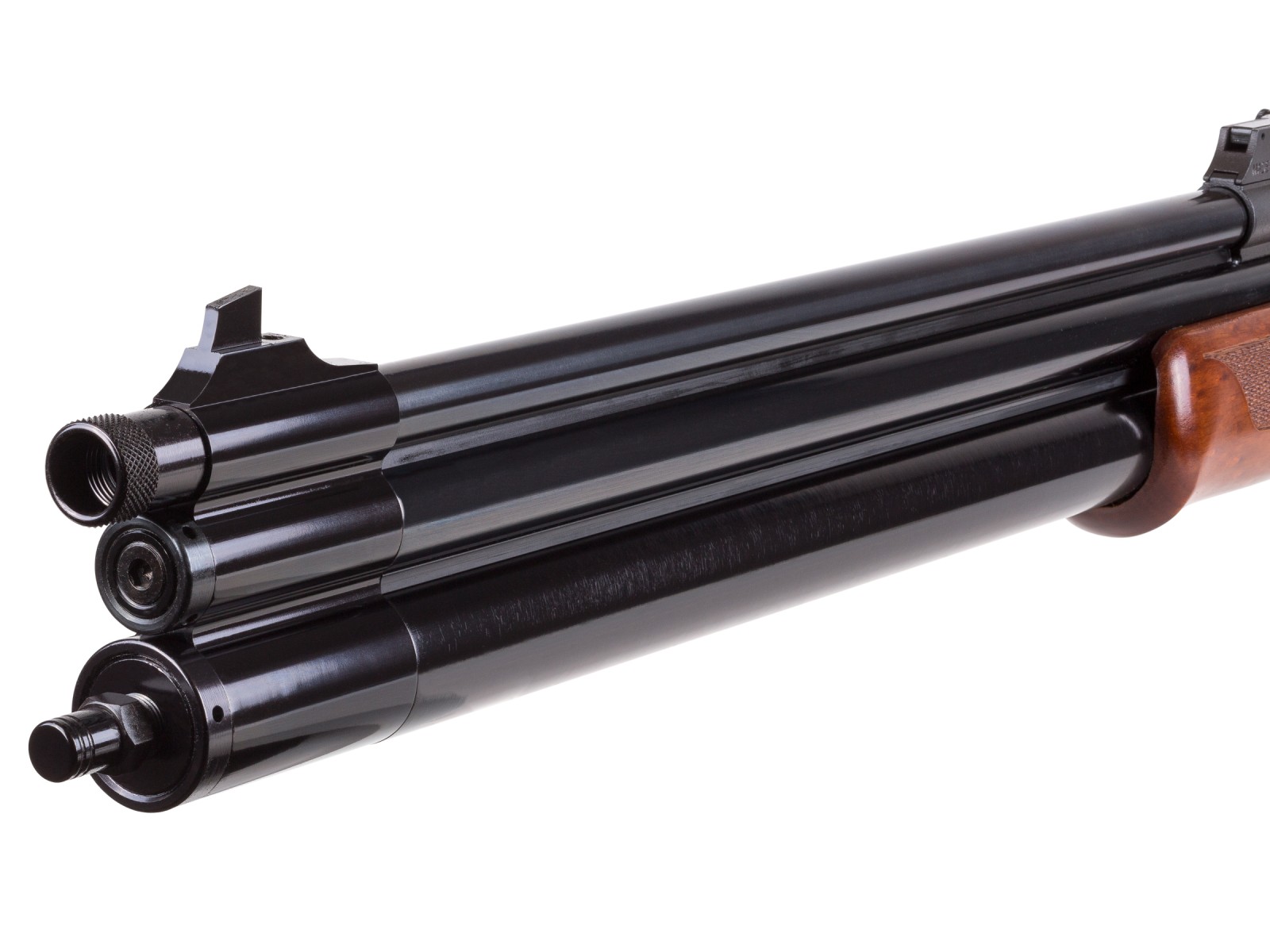
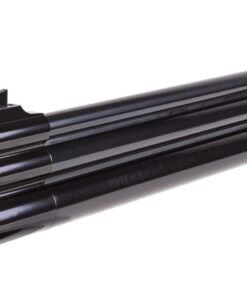
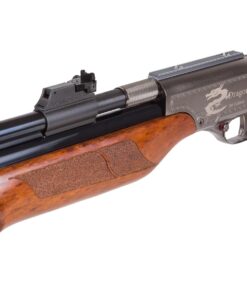
A rifled 21.65-inch steel barrel is employed so that both slugs and Air Bolts are stabilized. An 11 mm dovetail rail is machined on the receiver; compact optics such as the included Bug Buster are recommended. Open sights are also fitted: a blade-and-ramp front sight and a fully adjustable, removable rear sight. When a scope is mounted, the rear sight can be taken off to provide clearance.
A longer cocking handle is used on the Dragon Claw II compared with the original model. As a result, the increased cocking effort that accompanies the power upgrade is reduced. A manual safety that functions when the action is cocked is incorporated into the trigger group.
Handling, Stock, and Field Practicality
An overall length of 42.1 inches and a weight of approximately 8.5 pounds are presented by the wood-stocked configuration. A raised right-hand cheekpiece and checkered panels on the forearm and pistol grip are provided so that a secure hold is maintained in wet or gloved conditions. A rubber buttpad is fitted to help absorb recoil.
Because the rifle is a single-shot bolt-action design, each projectile is loaded individually. This arrangement encourages deliberate shot selection—an advantage when hunting. The muzzle is threaded and protected by a cap; aftermarket devices can be added if desired and legally permitted.
Loudness is rated high (class 5). Hearing protection is therefore strongly advised during practice and hunting. Responsible use, including verification of local airgun hunting laws and FAC or equivalent requirements where they apply, is expected of every owner.
Practical Use Scenarios
Whitetail deer, feral hogs, javelina, coyotes, and similar-sized animals can be taken humanely when the Seneca Dragon Claw II, Twang N Bang Combo is employed within its effective range and with appropriate projectiles. Air Bolts excel at close-to-moderate ranges where trajectory remains relatively flat and energy transfer is massive. Slugs and round balls extend flexibility for different quarry and shooting conditions.
Moreover, the two power levels allow the same rifle to be used for smaller pests at reduced energy or for larger game at full output. In addition, the dual tanks reduce the frequency of refills during a sitting. A portable compressor or scuba tank remains necessary for filling; the included Foster fitting accepts standard adapters.
Transitioning between bolt and slug shooting is accomplished quickly once the loading procedure is practiced. Consequently, hunters who encounter mixed opportunities in the same outing are well served.
Specifications at a Glance
Key technical details are summarized below for easy reference:
- Caliber: .50
- Powerplant: Pre-charged pneumatic
- Action: Single-shot bolt-action
- Max fill pressure: 3,000 psi
- Air capacity: 500 cc (dual reservoirs)
- Advertised energy: up to 340 FPE (336 gr slugs)
- Velocity examples: ~860 fps (177 gr round ball), ~600 fps (Air Bolts)
- Barrel: rifled, 21.65 in
- Overall length: 42.1 in
- Weight: 8.5 lb
- Rail: 11 mm dovetail
- Safety: manual
- Warranty: typically 1-year limited (confirm with seller)
Thus, a complete, field-oriented package is assembled around a proven big-bore platform. The Seneca Dragon Claw II, Twang N Bang Combo is therefore positioned for hunters who want both the classic hardwood aesthetic and the modern power increase of the second-generation action, together with the Air Bolts and compact illuminated scope that make bolt hunting practical from the first outing.
Inclusive, ethical hunting is supported when the rifle is used within legal limits, with adequate practice, and with respect for wildlife and other outdoor users. The combination of dual reservoirs, two power settings, rifled barrel, and ready-to-hunt accessories is offered so that more time can be spent in the field and less time assembling gear.
Calibres, FAC Considerations, Power Levels and Accessories
A single .50-calibre bore is employed by this big-bore platform. Consequently, both conventional lead projectiles and muzzle-loaded air bolts can be launched from the same rifled barrel. Moreover, the diameter is chosen so that heavy slugs and large-diameter bolts deliver the sectional density required for ethical harvests of medium and large game. Inclusive use is supported when every shooter verifies that .50-calibre airguns are lawful in the intended hunting or target area before any outing is planned.
Calibre and Projectile Compatibility
Round balls of approximately 177 grains, flat-nose slugs in the 300- to 336-grain class, and purpose-made .50-calibre air bolts are all accepted. Therefore, terminal performance can be matched to the quarry and the range. Furthermore, the rifling stabilizes both spinning slugs and the vanes or shafts of air bolts. As a result, a hunter who encounters mixed opportunities is not required to carry a second rifle.
Nevertheless, each projectile family produces a different point of impact and a different trajectory. Hence, separate zeros are established and recorded. Likewise, only ammunition that is dimensionally correct for the chamber and bore is introduced; undersize or oversized projectiles are rejected so that accuracy and safety are preserved. Subsequently, a short confirmation group is fired whenever a new lot of slugs or a new pack of bolts is opened.
FAC and Legal Power Thresholds
In jurisdictions such as the United Kingdom, air rifles that generate more than 12 foot-pounds at the muzzle are classified as firearms and an FAC is required. Consequently, this rifle—whose advertised energy far exceeds that threshold—is treated as an FAC air rifle where those rules apply. Moreover, storage, transport, and land-use conditions attached to the certificate must be observed. Inclusive compliance is expected of every certificate holder regardless of experience.
Elsewhere, energy limits, minimum calibres, or outright prohibitions on airgun hunting may exist. Therefore, the local wildlife agency or police firearms department is consulted before the rifle is purchased or carried afield. Additionally, import and export rules for high-power airguns and for broadhead-tipped bolts are reviewed when travel across borders is planned. As a result, unexpected confiscation or legal difficulty is avoided.
A one-year limited warranty is customarily offered by the manufacturer; proof of legal ownership and of correct filling practice may be requested if a claim is submitted. Thus, documentation of the FAC (where applicable) and of routine maintenance is kept with the rifle.
Power Output and Dual Settings
Two distinct power levels are selected by the position of the cocking bolt. The first stop produces the lower-energy setting; the second stop produces the higher-energy setting. Consequently, reduced power can be used for practice, for smaller pests, or when over-penetration near buildings must be limited. Furthermore, full power is reserved for larger-bodied animals that require deep penetration.
Advertised performance includes velocities approaching 860 feet per second with light round balls and approximately 600 feet per second with heavy air bolts. In addition, muzzle energy in the region of 340 foot-pounds is quoted with 336-grain slugs; independent tests have recorded even higher first-shot figures from a 3,000-psi fill. Meanwhile, several useful shots remain available from the dual 500 cc reservoirs before velocity declines noticeably.
Point of impact changes between the two settings. Therefore both zeros are confirmed on paper with the exact ammunition that will be hunted. Likewise, the onboard manometer is monitored so that remaining pressure is known before a hunting shot is taken. Subsequently, a portable compressor or scuba tank is employed to restore the fill when the gauge indicates that energy has fallen below the desired level.
Accessories Supplied and Commonly Added
The Twang N Bang-style package typically includes a compact 3–9×32 illuminated adjustable-objective scope with rings, together with a multi-pack of .50-calibre air bolts. Consequently, the rifle can be sighted and used for bolt hunting without an immediate extra purchase. Moreover, the 11 mm dovetail accepts other compact optics should a different reticle or magnification range be preferred.
Additional items that are frequently fitted or carried are listed below:
- Foster-compatible fill hose and a portable compressor or scuba adapter
- Quiver or bolt holder for ready access to spare air bolts
- Broadhead wrench so that fingers remain protected during assembly
- Bipod or shooting sticks for supported shots in open country
- Extra slugs or round balls for practice and for mixed-game days
- Hearing protection, given the high report
- Soft or hard case that accommodates the mounted scope
A threaded muzzle with a protective cap is provided so that a moderator may be added where legally permitted. Nevertheless, any muzzle device is chosen only after thread pitch and local sound-moderation rules have been verified. Inclusive practice also includes a spare set of rings, a lens cloth, and a small bottle of appropriate airgun oil so that field problems can be solved without ending the day.
Taken together, the .50-calibre bore, the FAC implications in regulated countries, the two selectable power levels, and the accessory suite allow the rifle to be configured for ethical hunting across a useful range of game and terrain. Local law remains the final authority; when it is observed and when zeros and fills are maintained, the platform can be employed confidently by shooters of varied backgrounds who value preparation and responsibility.
Snowpeak Airguns, PCP Rifles, Air Pistols and Umarex Airguns
For shooters researching Snowpeak airguns, Snowpeak Sports, and the wider Snowpeaks product range, there are many PCP rifles, air pistols, and shooting accessories to consider. Popular searches include the Snowpeak AP900, Snowpeak AP900B PCP air rifle, Snowpeak MAX 1, Snowpeak MAX 1 price, Snowpeak PP750, PP750, Snow Peak PP750, and PP750 air pistol. Buyers also regularly compare models such as the Snowpeak P35, P35, P 35, PCP P 35, Snowpeak P35X, P35X, P35X PCP, and Snowpeak P35 vs P35X.
Other Snowpeak models attracting attention include the Snow Peak PP20, Snowpeak PP20, Snowpeak M25, M25 rifle, M-25, M25 weapon, Snowpeak M60, Snowpeak M60B, M 60B, rifle M60, rifle M50, and M50 rifle. Searches such as Snow Peak brand origin are also common among buyers who want to understand the manufacturer before choosing a rifle or pistol.
Snowpeak PCP Models and Related Airgun Searches
The PCP category covers everything from compact pistols to full-size hunting and target rifles. Searches frequently include PR900 Gen 3, CR650, SR 1000X, T Rex 6000, and pistolet PCP Arcea-Snowpeak Onix Sport. People comparing pneumatic platforms may also search what is a PCP airgun, air gun, air rifle, pellet pistol, air gun accessories, 9mm pellet, and pellet 9mm.
Some search phrases overlap with firearm terminology even when shoppers are researching airgun products. These include rifle M60, how much did the M60 weigh, rifle M50, M50 rifle, M25 weapon, and snowfall gun. Therefore, model specifications should always be checked carefully so that a historical firearm search is not confused with a modern sporting airgun product.
Umarex Airguns, Air Rifles, Pistols and PCP Platforms
Alongside Snowpeak products, Umarex USA, UmarexUSA, Umarex airguns, and Umarex air rifles are widely searched by recreational shooters, target shooters, and PCP enthusiasts. The Umarex range includes PCP rifles, CO₂-powered platforms, break-barrel pistols, BB guns, airsoft replicas, and large-caliber airgun systems.
Popular PCP searches include Umarex Notos, Umarex Notos Carbine, Umarex Gauntlet, Umarex Gauntlet 2, Umarex Gauntlet 30, Umarex Zelos, Umarex Origin, Umarex Komplete, and Umarex Komplete NCR .22. Hunters researching larger airgun platforms may also encounter the Umarex Hammer, Umarex Hammer .50 caliber, Umarex Hammer Carbine, Umarex Primal 20, and Umarex AirSaber.
Umarex Pistols, BB Guns and T4E Models
For handgun-style platforms, popular searches include Umarex BB gun, BBgun, BB gun pistol, metal BB gun, Umarex TR50, Umarex HDR 50, Umarex T4E, Umarex T4E Smith, Umarex Smith, and Umarex P2P DR50 how many joules.
Glock-style replicas remain another major category. Search terms include Glock BB gun, Glock 19 BB gun, Umarex Glock 19, Umarex Glock 19X, Umarex Glock 19 Gen3 .177 caliber BB gun air pistol, Umarex Glock 17, Umarex Glock 17 Gen 5, Umarex Glock, airsoft Glock, airsoft Glock 19, Glock 17 airsoft, and Glock airsoft gun.
Other replica and recreational searches include Umarex MP40, Umarex MP5, Umarex Legends, Umarex HK Heckler, Umarex shotgun, and airsoft pistol.Umarex DX17.
Break-Barrel and Sporting Umarex Airguns
Shooters looking for spring or gas-piston platforms frequently research the Umarex Trevox, loading Umarex Trevox break barrel .177, Umarex pistol break barrel, Umarex Fusion 2, Umarex Synergis Elite, and Amazon Umarex Browning 800 Express. These platforms provide alternatives for people who want an airgun without relying on a high-pressure PCP charging system.
Additional searches across the Umarex catalog include Umarex H, while broader terms such as air rifle, pellet pistol, air gun, and air gun accessories help buyers compare platforms, ammunition, optics, filling equipment, targets, cases, and other shooting equipment.
Whether the focus is a Snowpeak M60, Snowpeak M25, Snowpeak P35X, Snowpeak PP750, Snowpeak MAX 1, Umarex Notos, Umarex Gauntlet 2, Umarex Origin, or Umarex Hammer Carbine, buyers should compare caliber, operating system, power level, dimensions, intended use, and local regulations before selecting an airgun.
Practical Use in the Field
Ethical harvests of medium and large game are supported when heavy projectiles are launched with sufficient energy and when shot placement is practiced beforehand. Consequently, a variety of hunting situations can be addressed by matching projectile type, power setting, and range to the animal and the environment. Moreover, inclusive participation is encouraged when every hunter—regardless of experience level—follows local regulations, wears required safety equipment, and treats wildlife with respect.
Close-Range Bolt Work in Thick Cover
Air-bolt hunting is typically conducted inside fifty yards. Therefore, dense timber, creek bottoms, and overgrown field edges become productive settings. A compact illuminated optic is employed so that target acquisition remains possible at dawn and dusk. Furthermore, the relatively flat trajectory of a heavy bolt at those distances reduces holdover calculations. As a result, a standing or slowly moving animal can be engaged from a ground blind or a low stand once a clear lane is confirmed.
Additionally, two power settings are available. The first cocking stop is selected when reduced energy is desired for smaller quarry or when over-penetration must be limited near property lines. The second stop is chosen when maximum penetration is required on larger-bodied animals. Subsequently, the bolt is loaded from the muzzle after the action has been cocked and the safety applied. Meanwhile, a broadhead wrench is used so that fingers remain protected during assembly.
Shot placement on the vital zone is practiced until it becomes automatic. Consequently, the shoulder-heart-lung area is favored for most four-legged game. Likewise, a quartering-away presentation is preferred when possible because additional tissue is presented to the projectile. Nevertheless, a shot is withheld whenever brush or an unclear background exists. Thus, wounding loss is minimized and recovery is simplified.
Open-Country Slug Hunting and Mixed Opportunities
Heavier slugs and round balls are loaded through the breech when longer shots or different terminal performance are needed. Therefore, agricultural fields, power-line cuts, and oak flats can be hunted effectively. In addition, the same platform can be switched from bolts to slugs during a single outing if game behavior changes. As a result, a hunter who encounters both hogs in cover and deer in the open is not forced to carry two rifles.
Velocity and energy remain high for several shots from a full dual-reservoir fill. Consequently, a morning sit can often be completed without a mid-session refill when shot count is kept modest. Furthermore, the built-in pressure gauge is checked after each shot so that remaining air is known before the next opportunity appears. A portable compressor or scuba tank is kept nearby or at camp so that the reservoirs can be topped off between stands.
Wind and light conditions are evaluated continuously. Moreover, a compact scope with an illuminated reticle assists when shadows lengthen. Likewise, open sights remain available if the optic is fogged or damaged. Transitioning between sighting systems is accomplished by removing or reinstalling the rear sight as needed. Therefore, the rifle stays usable even if an unexpected problem occurs in the field.
Power Selection and Shot-String Management
The lower power setting is employed for practice, for smaller pests, or when neighbors live close by. The higher setting is reserved for game that requires deep penetration. Accordingly, a hunter can practice on paper or steel at the reduced setting and then switch to full power only when an animal is present. Subsequently, point of impact is verified at both settings because the two power levels produce different velocities.
A limited number of full-power shots is obtained from a 3,000-psi fill. Therefore, shot discipline is practiced. Each opportunity is evaluated for angle, distance, and background before the trigger is pressed. In addition, a follow-up shot is prepared immediately after the first round is fired; the action is recocked and a second projectile is readied while the animal’s reaction is observed. Meanwhile, the safety is reapplied between shots whenever movement through cover is required.
Terrain-Specific Approaches
Wooded ridges and creek bottoms favor short-range bolt use. Consequently, still-hunting or stand hunting from a low platform is common. Footing is checked before a shot is taken so that balance is maintained. Furthermore, a quiet approach is practiced because the report is loud; hearing protection is worn during practice and is considered during hunting when communication with partners is not required.
Open pastures and cut corn fields favor slug shooting at moderate distances. Therefore, a bipod or a solid rest is used whenever possible. Additionally, range estimation is rehearsed so that holdover remains accurate. Likewise, the animal’s body language is read; a calm, broadside or quartering presentation is waited for rather than a hurried shot at a walking target.
Swamp and river-bottom hunting often involves hogs or similar tough-skinned animals. As a result, maximum power and a heavy projectile are selected. Subsequently, blood-trailing skills are practiced because vegetation can hide a short run. A second hunter or a well-trained dog may be employed where legal and ethical. Thus, recovery rates are improved.
Seasonal and Weather Considerations
Cooler months typically produce denser animal coats and slightly different shot angles as feeding patterns change. Therefore, energy and projectile selection are reviewed before each season. Rain and fog reduce visibility; the illuminated reticle becomes more valuable. Moreover, checkered wood surfaces remain usable when wet gloves are worn. After a wet hunt, the rifle is dried and lightly oiled so that corrosion is prevented.
Hot weather increases the importance of shade and of not leaving a charged rifle in a closed vehicle. Consequently, the reservoirs are filled shortly before the hunt rather than hours earlier when temperatures will rise significantly. Likewise, ammunition is stored so that it is not exposed to extreme heat that could affect lubricants or adhesives on bolts.
Practice Routines That Transfer to the Hunt
Zeroing is performed at the distances expected in the field. Therefore, a 25-yard and a 40-yard zero are commonly established for bolts, while slugs may be zeroed farther. Furthermore, both power settings are confirmed on paper. Subsequently, positional shooting—kneeling, sitting, and offhand—is practiced because a perfect bench rest is rarely available when an animal appears.
Moving targets and angled shots are included in practice once basic groups are consistent. In addition, loading under time pressure is rehearsed so that a second shot can be delivered quickly if needed. Safety rules remain in force during every practice session: the muzzle is controlled, the safety is used, and the target backstop is verified.
Inclusive language and shared knowledge are valued. Experienced hunters are encouraged to mentor newcomers on shot placement, tracking, and legal requirements. Likewise, women, youth (where legal and supervised), and hunters of every background are welcomed when they demonstrate the same commitment to safety and ethics.
Ethical Decision-Making and Legal Awareness
A shot is taken only when a clean kill is reasonably expected. Consequently, distance, angle, animal size, and available energy are all considered. Local hunting seasons, caliber or energy restrictions, and airgun-specific regulations are verified before the hunt. Furthermore, landowner permission and any required licenses or stamps are obtained in advance.
After the shot, the animal is given time if it leaves the area. Blood, hair, and tracks are examined so that the hit can be classified. A systematic grid search is conducted if the trail is lost. Game is field-dressed promptly and cooled according to weather conditions. Meat and hide are treated with respect; nothing usable is wasted.
After-Action Care and Next Outing Preparation
The barrel is inspected for debris after bolt use. Slug residue is cleaned according to the manufacturer’s recommendations. The fill fitting is capped, the pressure is noted, and the rifle is stored unloaded with the action open or the safety engaged. Additionally, bolts and slugs are inventoried so that the next hunt begins with adequate ammunition.
A short written or mental debrief is useful. What range was the shot? Which power setting was used? Did the animal react as expected? Answers to those questions refine future decisions. Therefore, each outing improves the next.
Taken together, close-cover bolt hunting, open-country slug work, disciplined power selection, and careful shot management allow a wide range of practical hunting scenarios to be addressed. Inclusive, lawful, and ethical use remains the foundation of every successful day afield. When preparation, practice, and respect for the animal are combined, the likelihood of a clean harvest is increased and the experience is shared among all who value responsible outdoor recreation.
Frequently Asked Questions
Clear answers to the questions most often raised by hunters and recreational shooters are provided below. Consequently, informed decisions can be made before a purchase or a first outing. Moreover, inclusive language is used so that every reader—new or experienced—can follow the guidance. Local laws, licensing, and ethical standards remain the responsibility of the individual user and are never replaced by general information.
What types of game can reasonably be pursued?
Medium and large four-legged animals are commonly taken when sufficient energy and correct shot placement are combined. Therefore, deer-sized game, feral hogs, javelina, coyotes, and similar species are frequently listed as appropriate. Furthermore, smaller pests can be addressed by selecting the lower power setting and a lighter projectile. As a result, a single platform is able to cover more than one hunting role.
Nevertheless, a clean, ethical harvest is possible only when range, angle, and animal size are judged carefully. Likewise, legal seasons, bag limits, and any energy or caliber restrictions that apply in the hunting area must be confirmed in advance. Subsequently, practice on paper or approved targets is completed so that the hunter knows the trajectory and point of impact before an animal is approached.
How do air bolts differ from slugs or round balls in the field?
Air bolts are loaded from the muzzle and are typically used at shorter distances, often inside fifty yards. Consequently, thick cover, creek bottoms, and wooded edges become productive settings. Moreover, a compact optic with an illuminated reticle is well matched to those ranges and to low-light conditions. In addition, heavy bolts deliver substantial momentum and penetration when a sharp broadhead is fitted.
Slugs and round balls are loaded through the breech. Therefore, they are often chosen when slightly longer shots or a different wound channel is desired. Furthermore, the same rifle can be switched from one projectile type to the other during a single outing. As a result, mixed opportunities—hogs in brush followed by a deer in a field—can be addressed without a second firearm.
Trajectory, energy, and point of impact differ between the two families of ammunition. Hence, separate zeros are established and confirmed at both power settings. Meanwhile, a clear backstop and a known distance remain mandatory for every shot.
How many useful shots are obtained from a full fill?
Several full-power shots are customarily produced by the dual-reservoir system when it is charged to maximum pressure. Consequently, a morning or evening sit can often be completed without an immediate refill if shot count is kept modest. Additionally, velocity and energy decline as pressure drops; therefore, the onboard gauge is checked after each shot so that remaining air is known.
A portable compressor or a scuba tank is kept available so that the reservoirs can be topped off between stands or at camp. Likewise, filling is performed through the industry-standard quick-disconnect fitting that is supplied on the rifle. Subsequently, the fitting is capped after use to keep dirt out of the valve.
Individual results vary with projectile weight, power setting, and ambient temperature. Thus, personal testing with the exact ammunition that will be hunted is recommended.
Why are two power settings provided?
The first cocking stop produces the lower-energy setting; the second stop produces the higher-energy setting. Therefore, reduced power can be selected for practice, for smaller animals, or when over-penetration near property lines must be limited. Moreover, full power is reserved for larger-bodied game that requires deep penetration.
Point of impact usually changes between the two settings. Consequently, both zeros are verified on paper before the rifle is carried afield. In addition, the lower setting can be used for familiarization so that recoil and report are experienced before a hunting shot is taken. As a result, confidence is built gradually and inclusively for shooters of different stature and experience.
What optic and sight options are typically supplied or recommended?
A compact variable-power scope with an illuminated reticle and adjustable objective is commonly paired with this class of rifle. Therefore, target acquisition in dawn, dusk, and shadowed timber is improved. Furthermore, the magnification range is chosen to match the distances at which bolts are customarily used. Rings suitable for an 11 mm dovetail are included so that the optic can be mounted immediately.
Open sights remain available. A blade-and-ramp front sight and a fully adjustable rear sight are fitted from the factory. The rear sight can be removed when a scope is installed so that objective-bell clearance is obtained. Likewise, the open sights can be reinstalled if the optic is damaged or fogged. Thus, the rifle stays functional under a variety of field conditions.
How is the rifle filled and what pressure is used?
A maximum fill pressure of three thousand pounds per square inch is specified. Consequently, a hand pump, a scuba tank with an appropriate adapter, or a portable compressor can be employed. Moreover, a male Foster-style quick-disconnect fitting is provided on the rifle so that standard hoses attach directly.
The onboard manometer is observed during filling so that the limit is not exceeded. Additionally, the rifle is never left in a closed vehicle in extreme heat while fully charged. Subsequently, pressure is allowed to stabilize after filling before the first shot is fired. Inclusive safety practice requires that filling equipment be kept in good condition and that all connections be inspected before each use.
How loud is the report and is hearing protection needed?
The report is classified as high. Therefore, hearing protection is strongly advised during practice and is recommended whenever communication with partners is not required. Furthermore, the sound signature should be considered when stands are placed near dwellings or livestock. As a result, courtesy toward neighbors and other outdoor users is maintained.
Muzzle devices may be added where legally permitted and where the thread pattern matches. Nevertheless, any such accessory is chosen only after local regulations are reviewed. Likewise, the protective cap supplied on the muzzle is replaced whenever a device is not installed.
What maintenance is expected after hunting or practice?
The barrel is inspected for debris after bolt use. Slug or lead residue is cleaned according to accepted airgun practice. Moreover, the exterior wood and metal are wiped dry after rain or high humidity. A light coat of appropriate oil is applied to metal surfaces so that corrosion is discouraged.
The fill fitting is capped, the action is left in a safe condition, and the rifle is stored unloaded. Additionally, bolts, slugs, and seals are inventoried so that the next outing begins with adequate supplies. Subsequently, any change in point of impact or unusual sound is investigated before the rifle is used again.
What accuracy can reasonably be expected?
Minute-of-vital-zone accuracy at typical hunting distances is the practical goal. Therefore, groups are confirmed at twenty-five and forty yards with bolts and at the distances planned for slugs. Furthermore, both power settings are tested because velocity differences affect impact. Weather, rest quality, and shooter position also influence results.
A solid rest or bipod is used whenever possible in the field. Likewise, positional practice—kneeling, sitting, and offhand—is included so that a bench-rest group is not the only reference. Inclusive coaching is encouraged; experienced shooters can help newcomers understand holdover and wind without judgment.
Is the platform suitable for a wide range of shooters?
A classic hardwood stock with a raised cheekpiece and checkered gripping surfaces is provided. Consequently, a secure hold can be obtained by shooters of different hand sizes when gloves are or are not worn. Moreover, the overall weight and length are typical of a full-size hunting rifle; a period of familiarization is therefore recommended.
Youth or smaller-statured adults may find the length of pull and the report more demanding. Hence, supervised instruction and the lower power setting are used until comfort and control are demonstrated. Legal age and licensing requirements are observed in every jurisdiction. Thus, participation remains open while safety is preserved.
What legal and ethical considerations apply?
Airgun hunting regulations vary widely by region. Therefore, seasons, energy limits, required licenses, and permitted species are verified with the local wildlife agency before any hunt. Furthermore, landowner permission is obtained in writing when private land is used. Subsequently, all harvests are tagged and reported according to the rules in force.
A shot is taken only when a clean kill is reasonably expected. Angle, distance, and available energy are judged together. After the shot, sufficient time is allowed before tracking begins. Blood, hair, and tracks are examined so that the hit can be classified. Inclusive ethics require that wounded animals be pursued until recovered or until it is certain that recovery is impossible.
How should the first range session be organized?
The rifle is inspected, the fill pressure is confirmed, and the chosen optic is mounted and leveled. Consequently, a close-range bore-sight or a very short confirmation shot is used to get on paper. Moreover, both power settings are zeroed with the exact ammunition that will be hunted. Hearing and eye protection are worn throughout.
Loading procedures for both bolts and slugs are practiced until they become smooth. Additionally, the safety is applied and removed as part of every repetition. A written or mental note of point of impact at each distance and setting is kept. As a result, the first hunting trip begins with data rather than assumptions.
Can the same outfit be used for practice and for hunting?
Yes. The lower power setting and inexpensive slugs or round balls can be used for volume practice. Therefore, trigger control, loading speed, and positional shooting are developed without consuming hunting ammunition. Furthermore, the higher setting and hunting projectiles are reserved for confirmation groups and for actual hunts.
Transitioning between practice and hunting loads requires a fresh confirmation of zero. Likewise, the same safety rules apply on the range and in the field. Inclusive clubs and mentors can help new shooters build these habits in a supportive environment.
Taken together, the answers above address the practical questions that arise when a powerful, dual-purpose big-bore air rifle is prepared for ethical hunting. Local law, personal skill, and respect for wildlife remain the final authorities. When those elements are combined with the preparation outlined here, the likelihood of a safe, successful, and responsible outing is increased for every participant.
Click here for California’s Proposition 65 warning.

Reviews
There are no reviews yet.