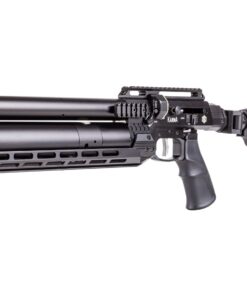
Karma EQ PCP Air Rifle – Precision, Power and Advanced Adjustability
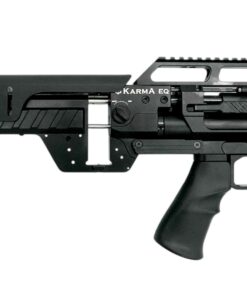
The Karma EQ has been engineered for shooters who expect serious precision, substantial power, and extensive adjustability from a modern PCP air rifle. Rather than being limited to one shooting style, this compact bullpup platform has been designed so that pellets and slugs can both be accommodated effectively. Consequently, target shooters, experienced enthusiasts, pest-control users where legally permitted, and competitive shooters can be provided with a flexible platform that can be configured around different requirements.
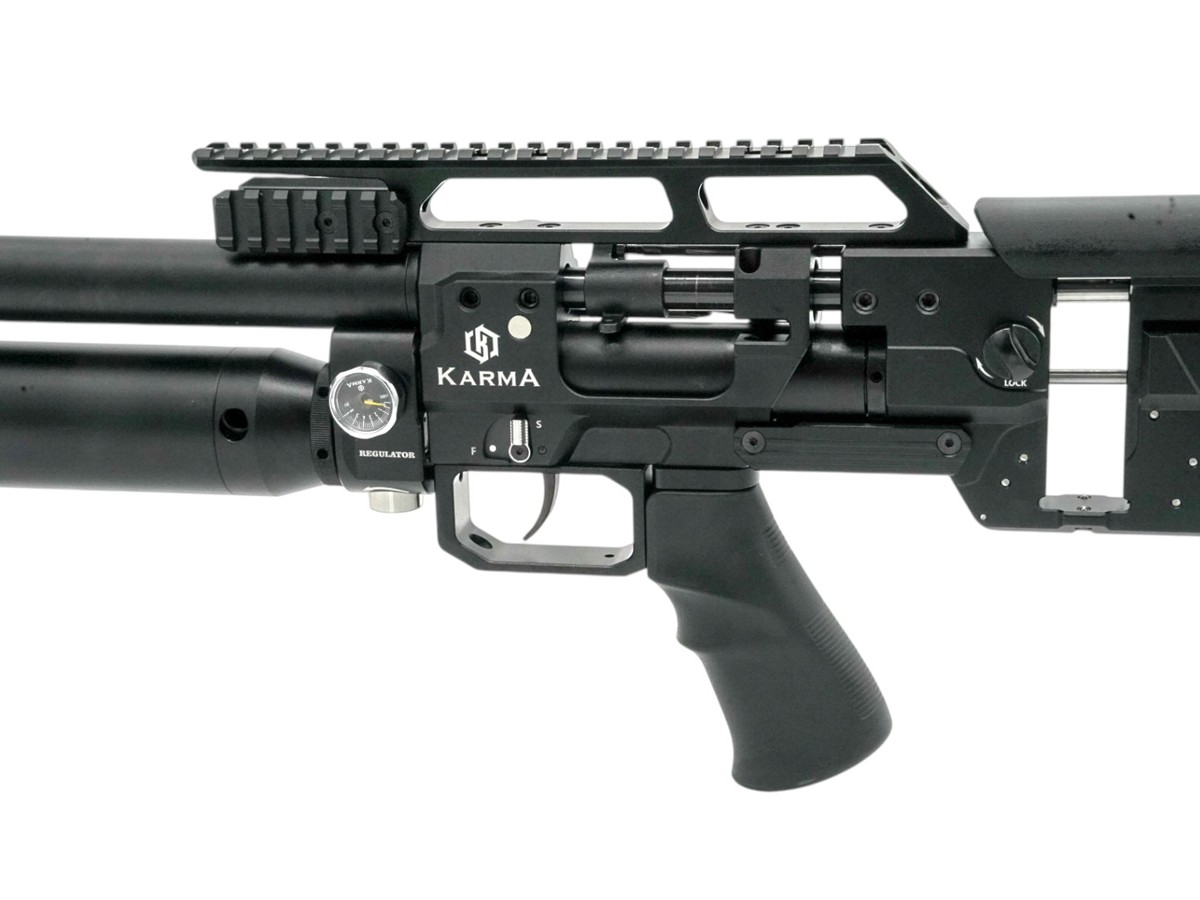
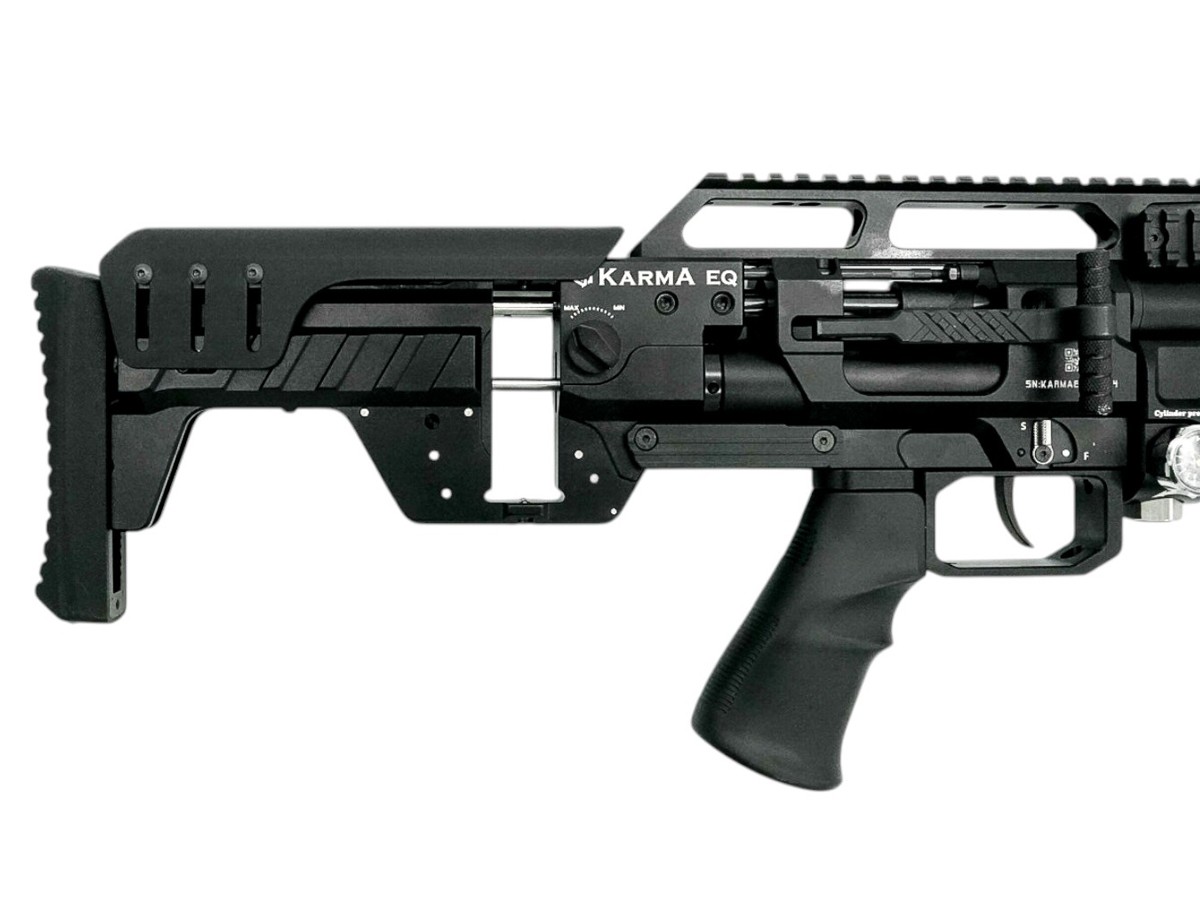
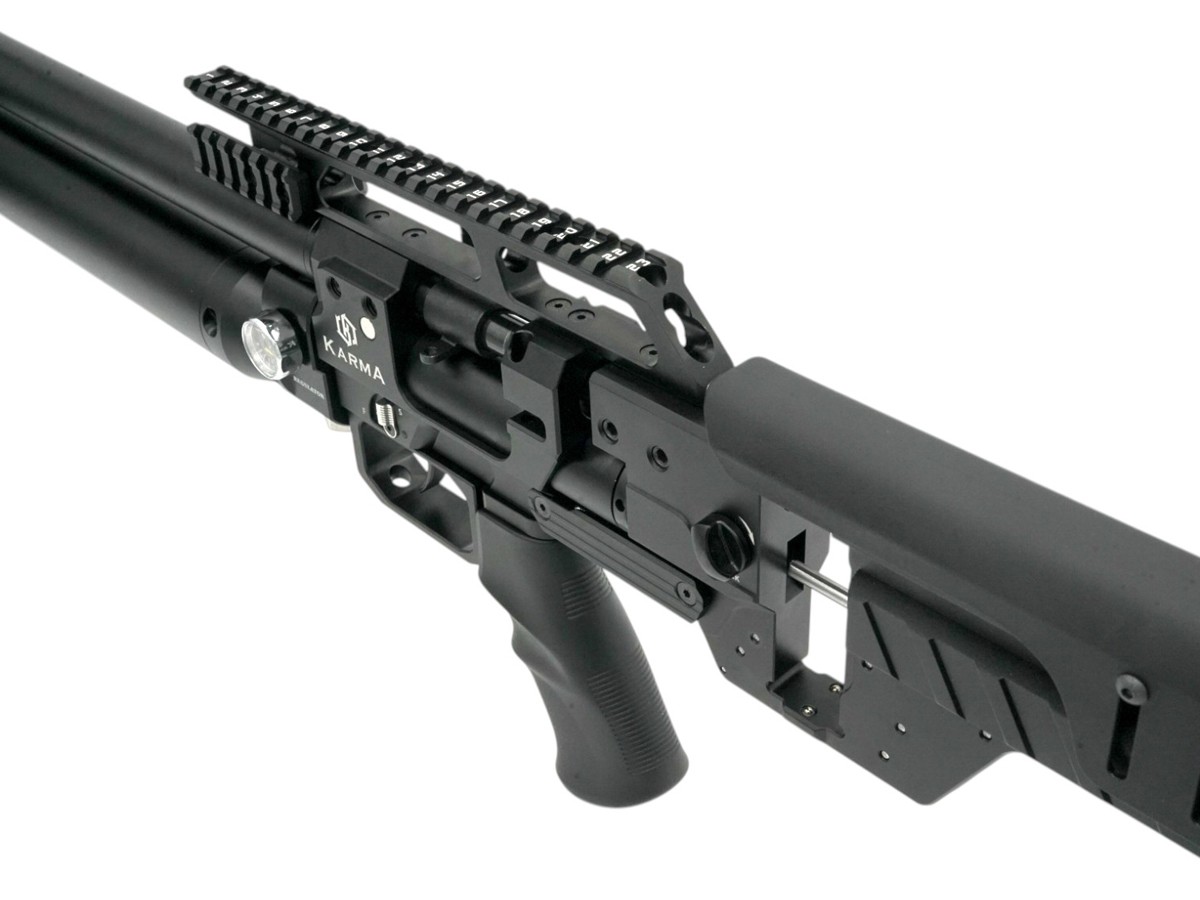
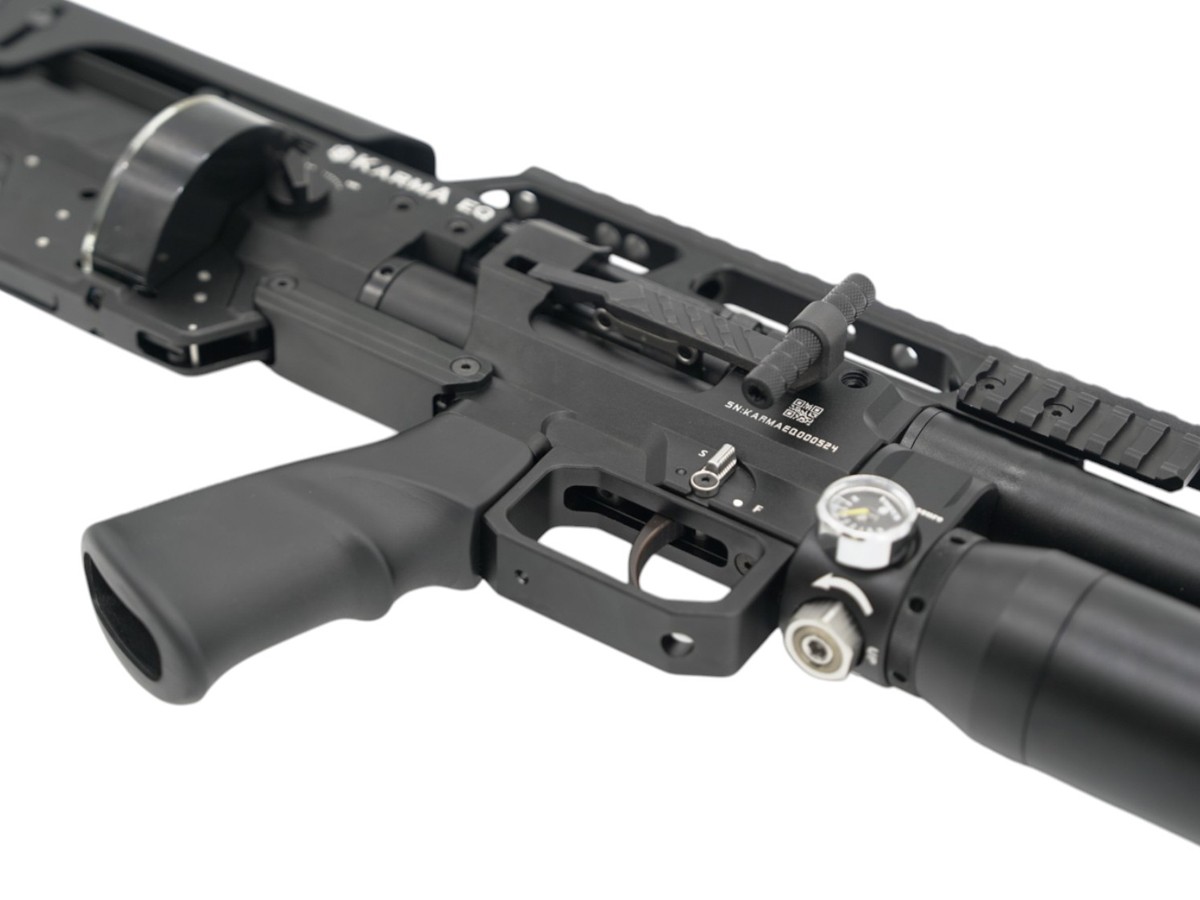
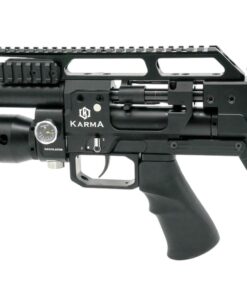
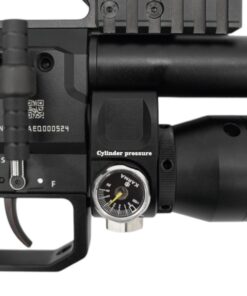
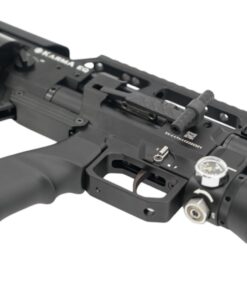
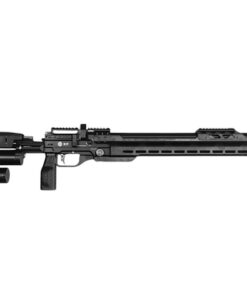
A full-length 24-inch barrel has been incorporated while the overall rifle length has been kept at approximately 33 inches. Therefore, long-barrel performance can be provided without forcing the shooter to handle an unnecessarily long platform. Furthermore, a 500cc air cylinder, 70cc plenum, adjustable regulator, adjustable trigger, high-capacity magazine, and multiple external tuning options have all been integrated into the rifle.
Karma EQ Built for High-Power PCP Performance
High-power performance has been placed at the center of the Karma EQ design. A 70cc plenum has been incorporated so that a substantial volume of regulated air can be delivered behind the projectile. As a result, heavier pellets and appropriately matched slugs can be driven efficiently.
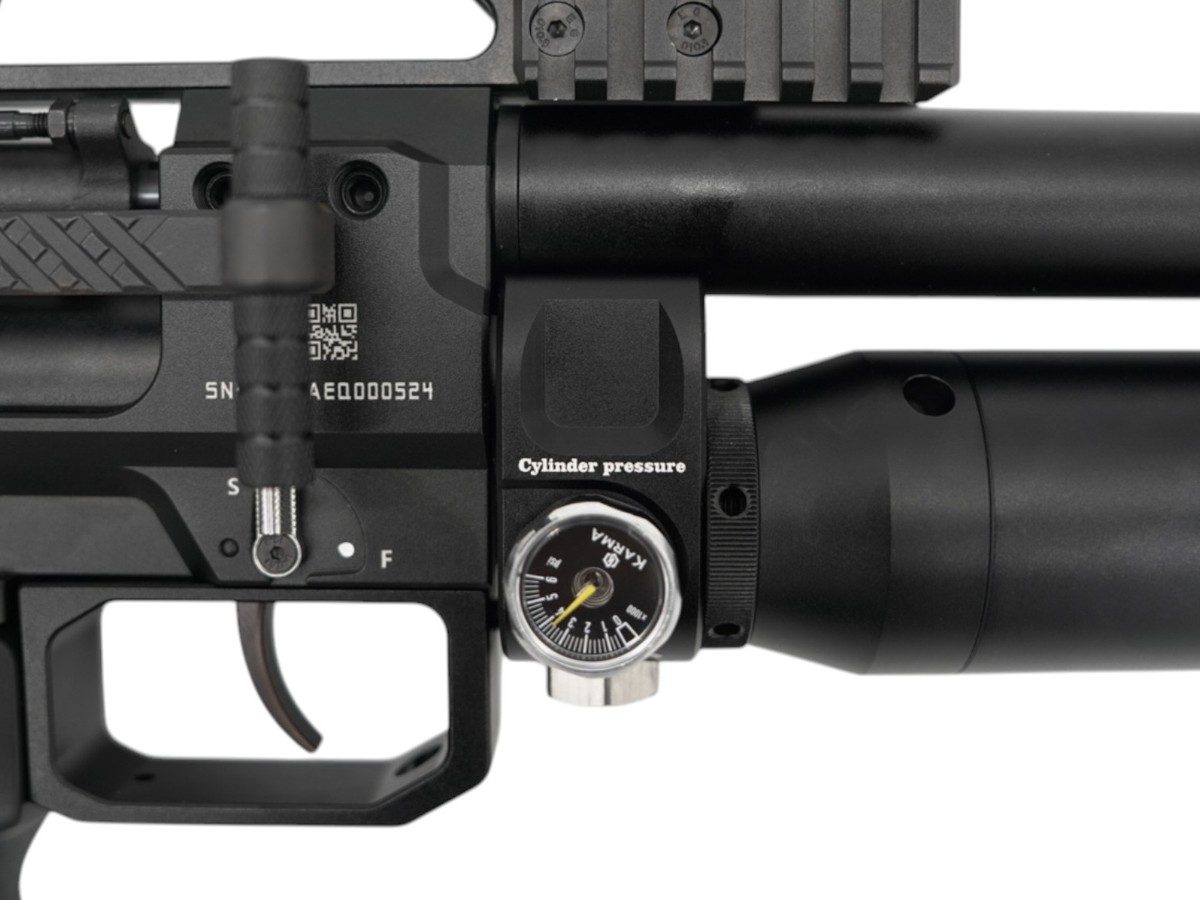
Meanwhile, a maximum fill pressure of 310 BAR has been supported by the 500cc air reservoir. Therefore, useful shot capacity can be maintained while significant power is produced. Because different calibers and tunes consume air differently, actual shot numbers will naturally vary according to regulator pressure, projectile weight, hammer settings, environmental conditions, and individual setup.
Additionally, the 2026 specification is offered in .22, .25, and .30 caliber, allowing the platform to be selected around different performance requirements. Factory base-tune figures published by Karma Airguns list approximately 908 FPS and 45 FPE for .22, 904 FPS and 61 FPE for .25, and 882 FPS and 77 FPE for .30. Maximum-energy figures are listed as high as 75 FPE in .22 with a 38.6-grain slug and up to 102 FPE in .30, depending on configuration and ammunition.
Advanced External Tuning Capability
One of the greatest advantages of the Karma EQ PCP air rifle is found in its adjustability. Instead of being permanently restricted to a single factory configuration, important operating characteristics can be altered so that the rifle can be better matched to a particular projectile or shooting application.
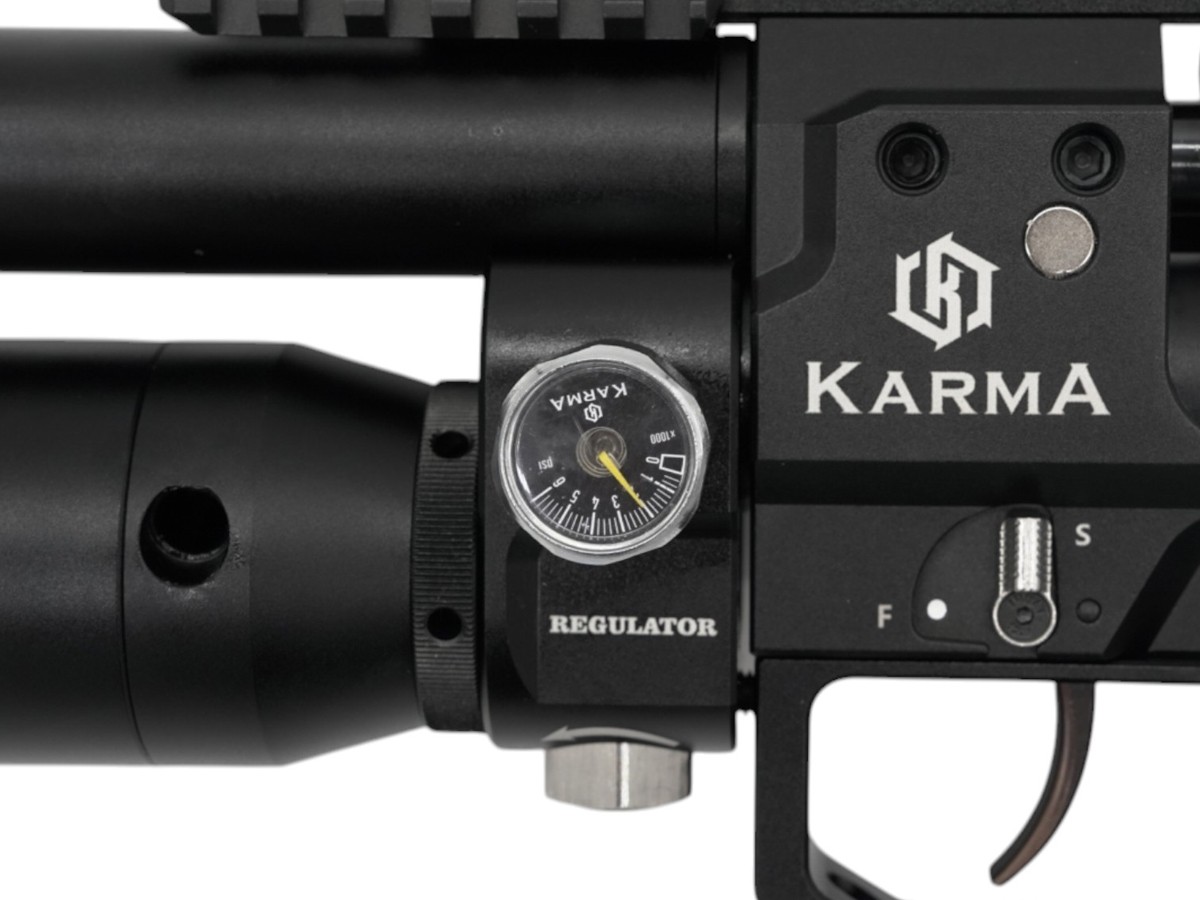
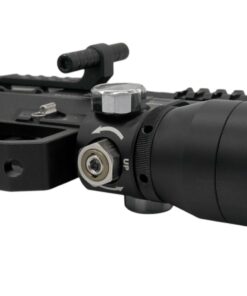
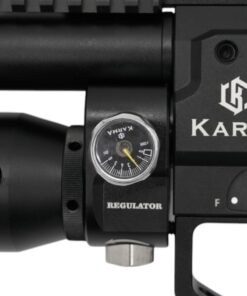
An externally adjustable regulator has been provided. Consequently, regulated pressure can be modified to influence velocity and air delivery. Furthermore, hammer-spring adjustment and transfer-port adjustment are provided, which means a broader tuning window can be explored by knowledgeable users.
Because consistency is extremely important for precision shooting, regulated operation has also been used to help produce predictable velocity between shots. When an appropriate tune, quality ammunition, and consistent filling procedure are combined, vertical dispersion caused by major velocity variations can therefore be reduced.
Key Karma EQ Features
- PCP bullpup configuration for compact overall dimensions
- .22, .25 and .30 caliber options
- 24-inch / 609mm barrel
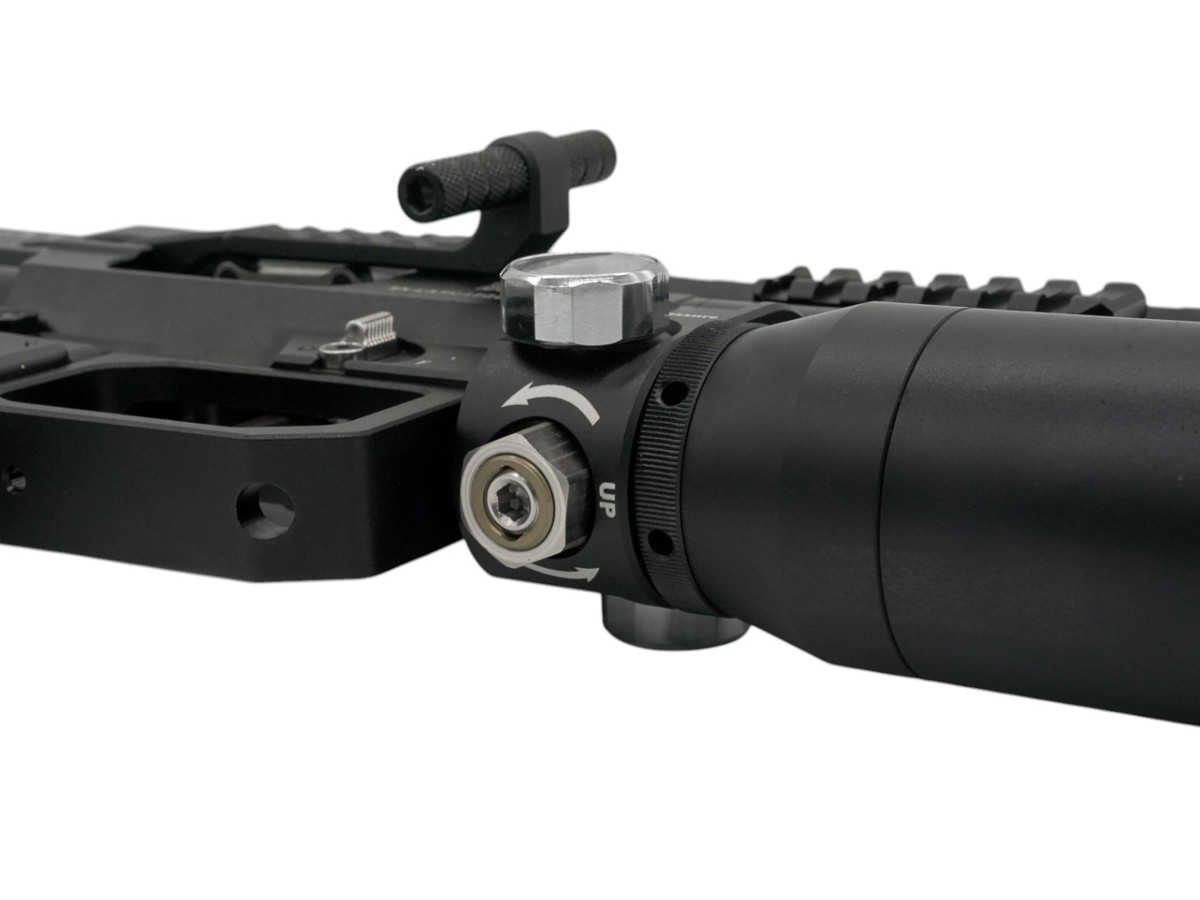
- 500cc air cylinder
- 310 BAR maximum fill pressure
- 70cc plenum for substantial regulated air volume
- Externally adjustable regulator
- Adjustable hammer-spring system
- Adjustable transfer-port system
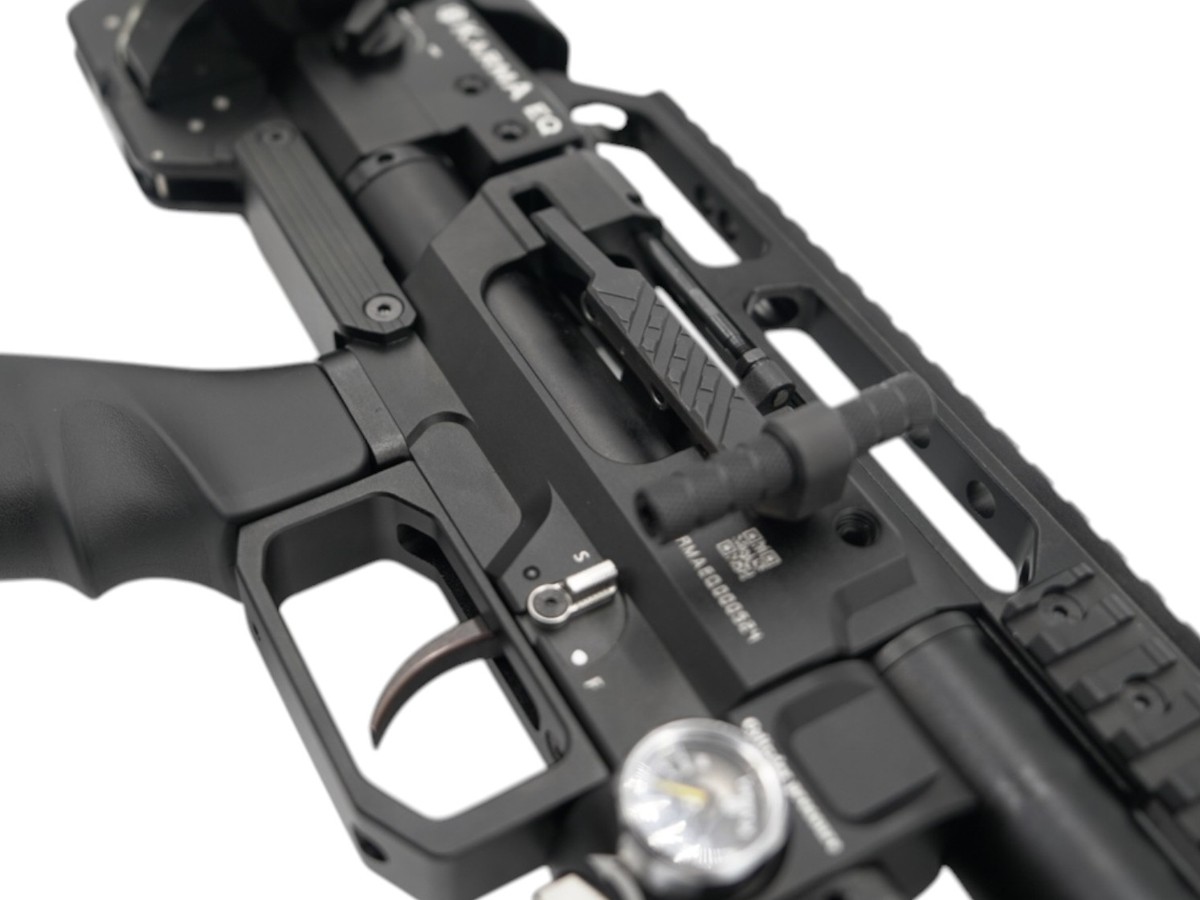
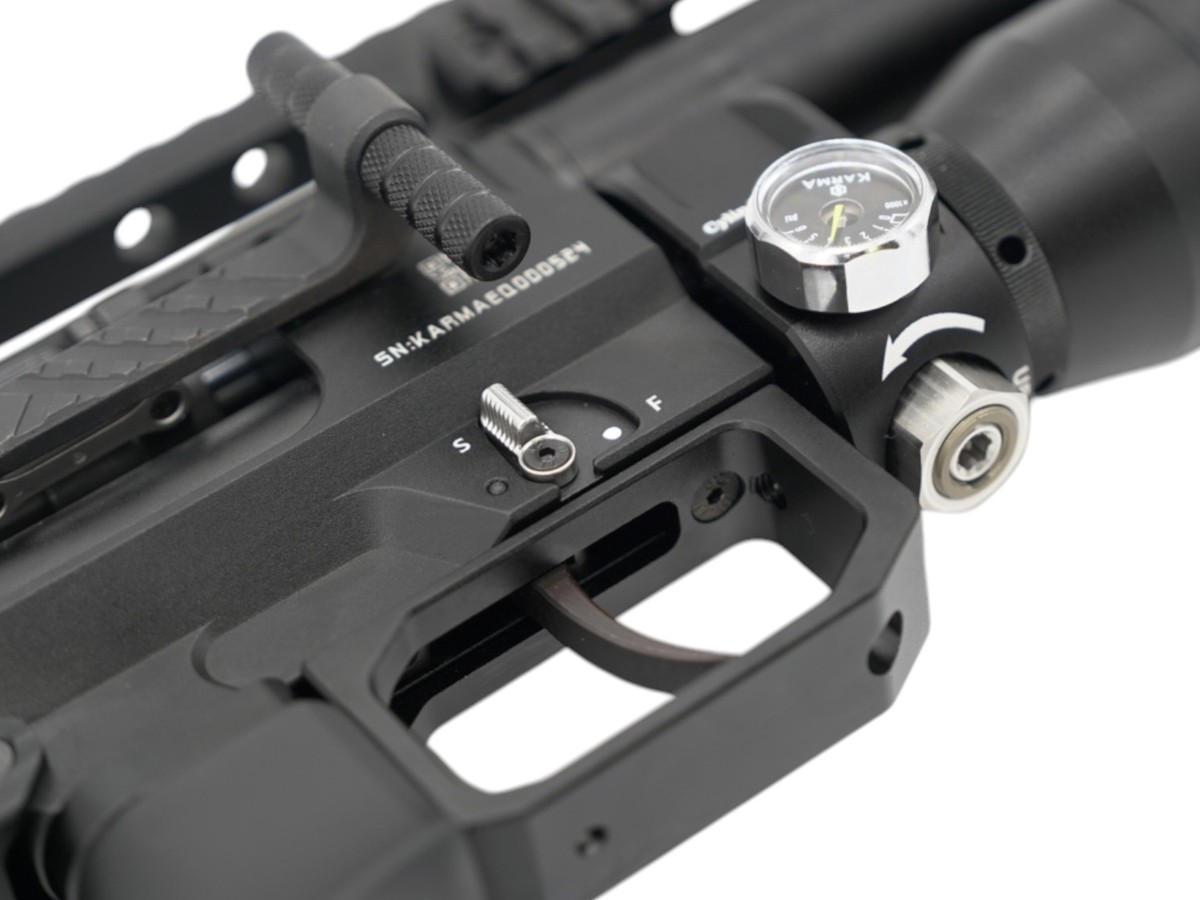
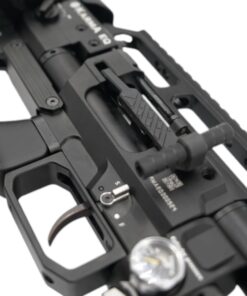
- Adjustable trigger
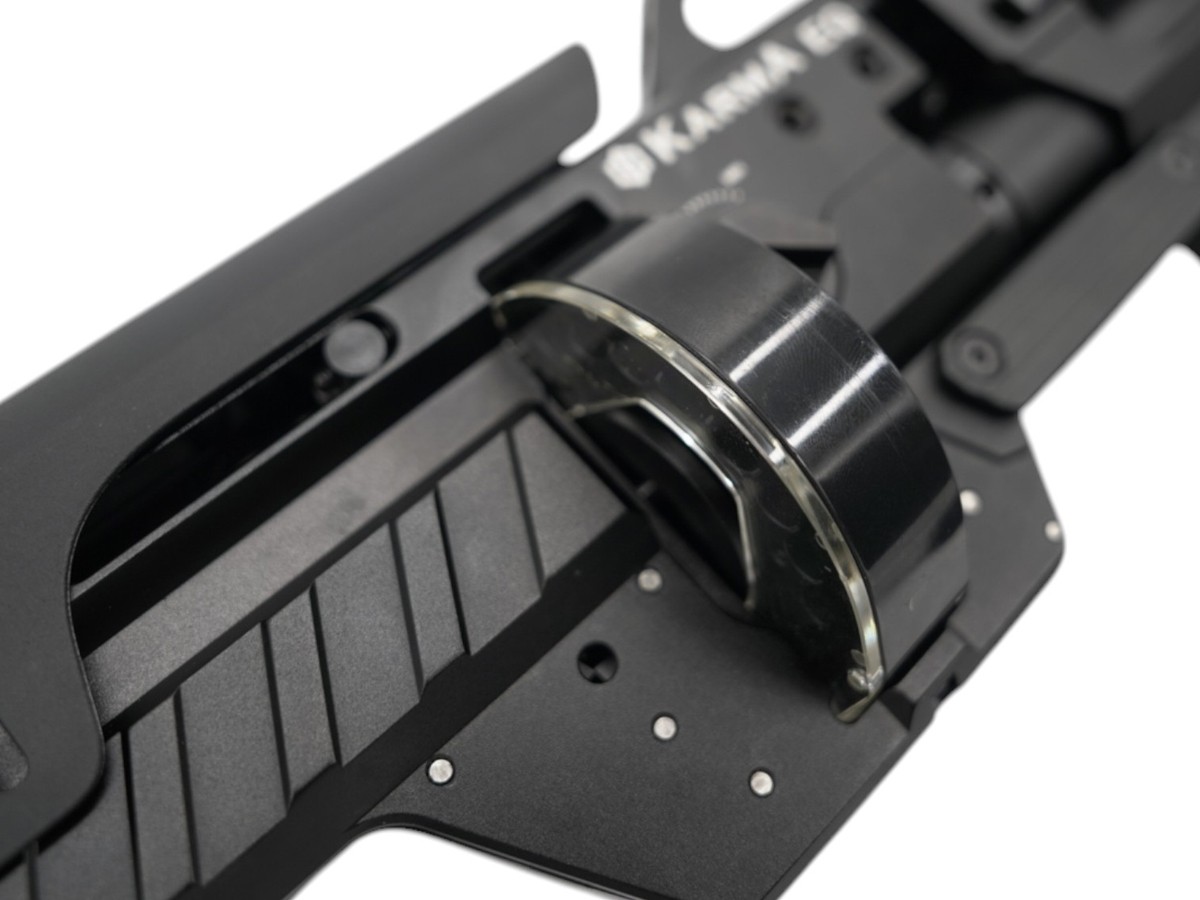
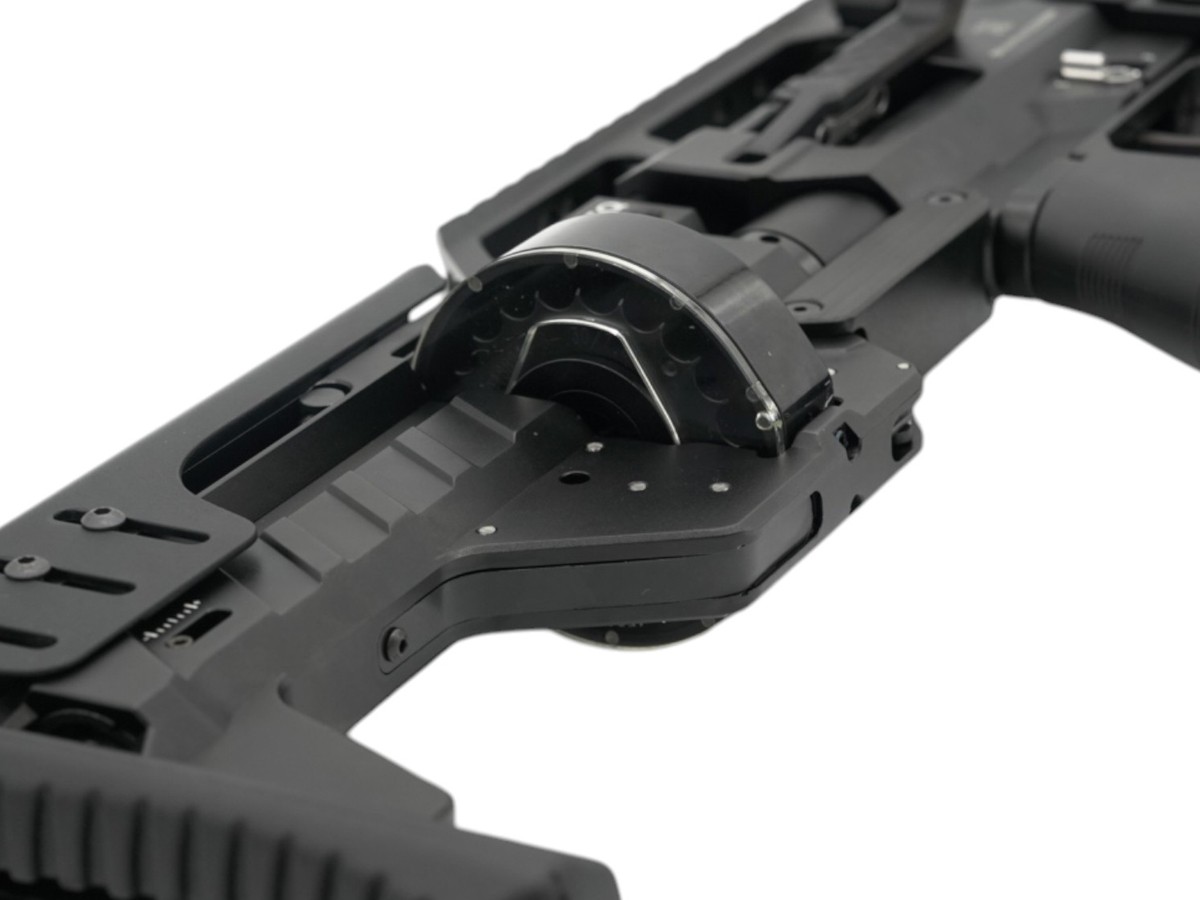
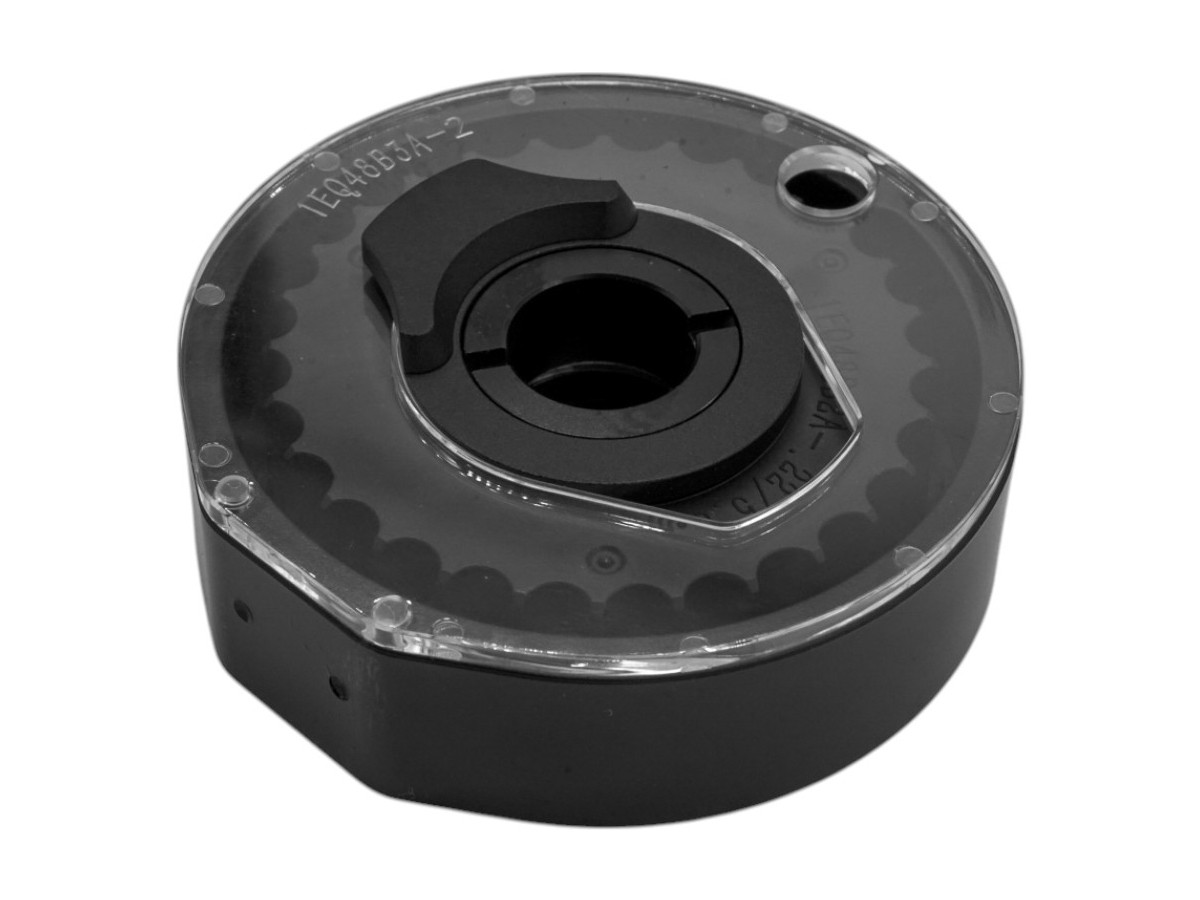
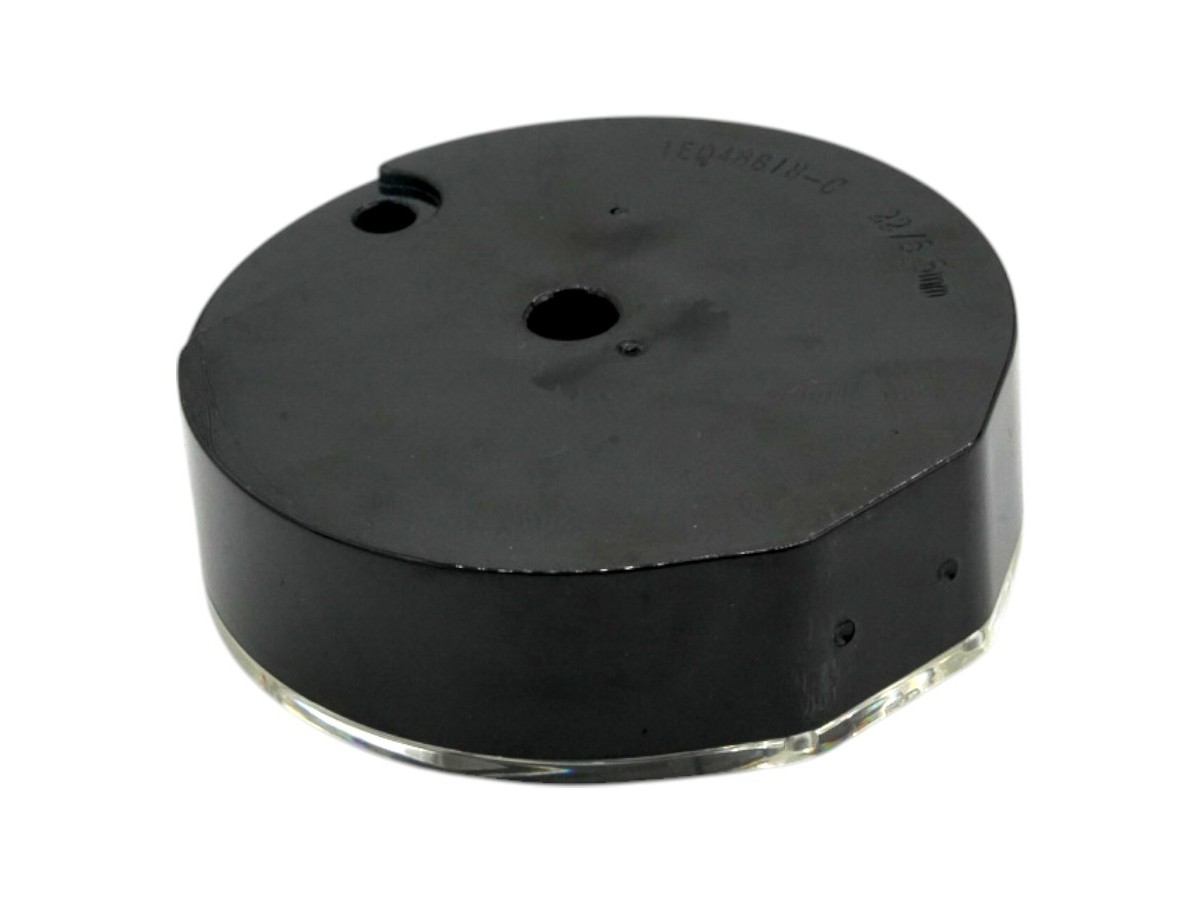
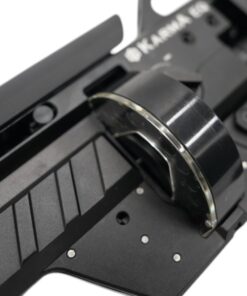
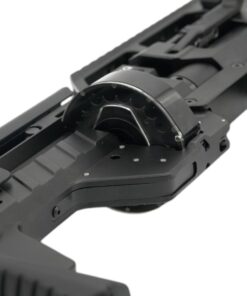
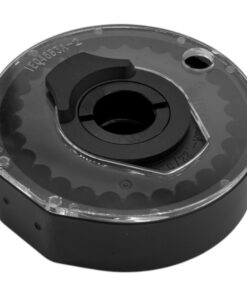
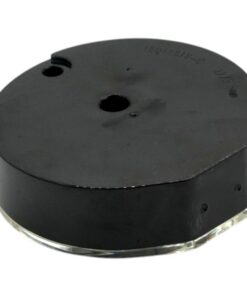
- High-capacity rotary magazine
- 20 MOA Picatinny optics rail
- Ambidextrous safety lever
- 1/2×20 UNF threaded shroud
- Approximately 33-inch overall length
- Approximately 9.3 lb / 4.2 kg weight
These specifications are based on the current Karma EQ 2026 configuration published by the manufacturer.
High-Capacity Magazine for Longer Shooting Sessions
Frequent magazine changes can interrupt concentration. Therefore, generous magazine capacities have been provided across the available Karma EQ calibers.
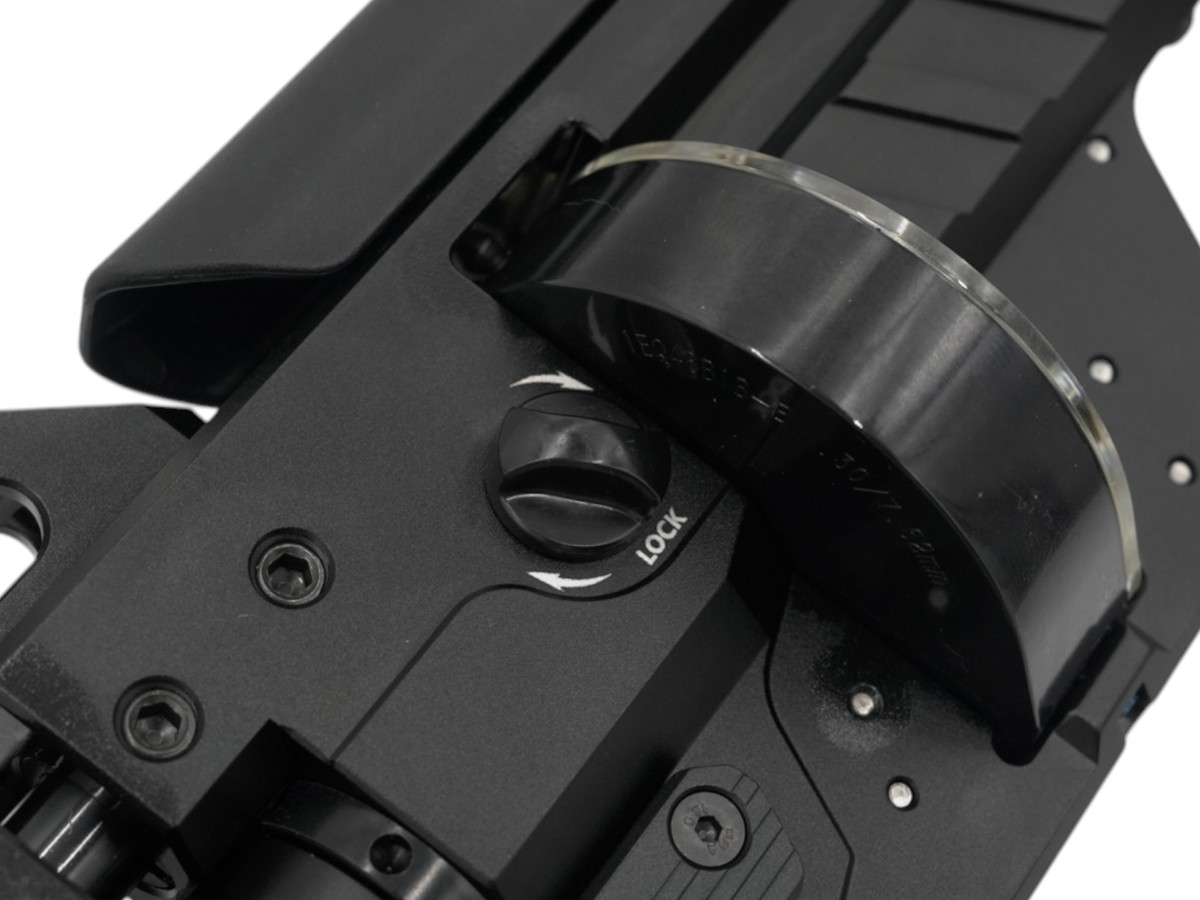
The .22 caliber magazine is specified at 28 rounds, while the .25 caliber version accommodates 26 rounds. Meanwhile, the .30 caliber magazine carries 22 rounds.
Because of those capacities, more time can be spent concentrating on shooting and less time can be spent reloading. This advantage can be especially appreciated during extended range sessions where consistent shooting rhythm is desired.
Solid Barrel System Designed for Repeatable Accuracy
Precision is supported by more than raw power. Accordingly, a rigid barrel arrangement has been incorporated into the Karma EQ.
A solid barrel system is supported by an eight-bolt mounting arrangement, while a 360-degree radial transfer-port system is also used. These engineering features are intended to provide stable barrel support and consistent airflow around the projectile as it is accelerated through the barrel.
Additionally, the 24-inch barrel allows projectile velocity to be developed efficiently while still being packaged inside the relatively short bullpup architecture. Consequently, the advantages of a long barrel and compact rifle can be combined.
20 MOA Picatinny Rail for Optics
Modern precision air rifles are normally paired with capable optics. For that reason, a 20 MOA Picatinny optics rail has been incorporated into the Karma EQ.
Additional elevation capability can therefore be supported when longer-distance shooting is undertaken. Moreover, the standardized Picatinny interface means that a wide selection of compatible scope mounts and optics can be installed.
Accessory mounting provisions are also available around the forward portion of the rifle, allowing compatible equipment to be incorporated according to the shooter’s intended setup.
Adjustable Trigger and Improved 2026 Configuration
Trigger control can have a significant influence on practical precision. Therefore, an adjustable trigger has been installed so that the firing interface can be configured more closely around user preference.
For the 2026 Karma EQ, an improved trigger and a more secure magazine-retention system have also been introduced by the manufacturer. Consequently, refinement has been added in two areas that directly influence everyday handling and shooting convenience.
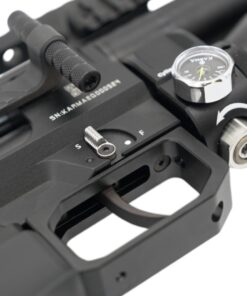
An ambidextrous safety lever has additionally been fitted. Thus, convenient operation can be provided for a wider range of shooters.
Designed for Pellets and Slugs
Versatility has been emphasized throughout the Karma EQ platform. Conventional pellets can be used for suitable shooting applications, while the rifle’s available power and tuning range also allow compatible slugs to be explored.
This versatility means that one rifle does not necessarily have to be confined to one projectile category. Instead, an appropriate tune can be developed around caliber, projectile weight, intended distance, and desired energy.
Nevertheless, projectile compatibility should always be tested carefully. Different barrels can show preferences for specific pellet or slug diameters, weights, and designs. Therefore, accuracy testing should be conducted before a particular ammunition type is selected for serious use.
Compact Bullpup Handling With Full-Length Performance
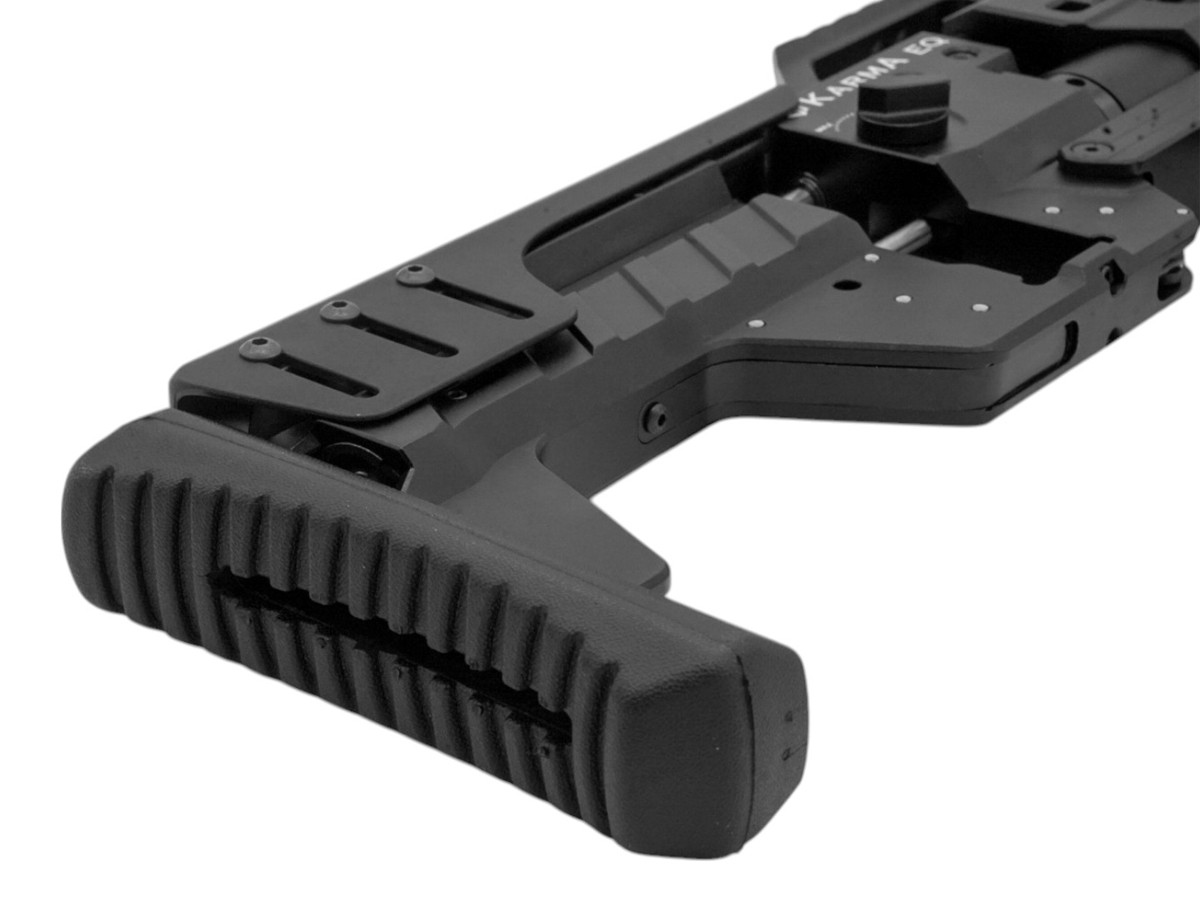
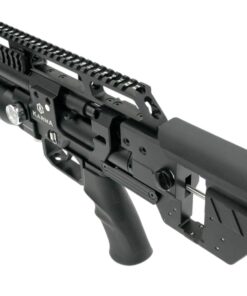
Although a 24-inch barrel is fitted, an overall length of approximately 840mm, or 33 inches, has been achieved through the bullpup configuration.
As a result, maneuverability can be improved without sacrificing the barrel length normally associated with efficient PCP performance. Furthermore, the compact architecture can make transportation, bench setup, and general handling more convenient.
At approximately 4.2kg or 9.3 pounds before optics and accessories are added, the rifle has also been given enough mass to provide a stable shooting platform. Consequently, steadiness can be encouraged during supported precision shooting.
Why Choose the Karma EQ?
The Karma EQ has been created for shooters who want more than a basic PCP air rifle. Extensive tuning capability has been combined with a large air reservoir, substantial plenum volume, high-capacity magazines, a long barrel, modern optics mounting, and multi-caliber availability.
Therefore, instead of being locked into one narrowly defined configuration, the rifle can be adapted around different precision-oriented requirements. Moreover, both pellet and slug performance can be explored, while external controls allow important operating parameters to be adjusted.
For shooters seeking a compact bullpup PCP platform that emphasizes power, precision, capacity, and tunability, the Karma EQ offers an unusually comprehensive specification. Whether it is being configured for disciplined target shooting, competition, recreational range work, or other lawful airgun applications, a capable and highly adjustable foundation is provided by the Karma EQ.
Karma EQ Calibres, FAC Power and Accessories
The Karma EQ has been developed as a highly adaptable PCP air rifle platform, and consequently, several caliber options, substantial power potential, adjustable performance controls, and extensive accessory compatibility have been incorporated into its design. Because different shooters require different combinations of trajectory, projectile weight, energy, air efficiency, and handling, the Karma EQ can be selected and configured around a wide range of lawful shooting applications.
Karma EQ .22 Caliber
The Karma EQ .22 caliber configuration provides an excellent balance between velocity, energy, projectile availability, and efficient air consumption. Because .22 caliber pellets and slugs are widely available, numerous ammunition weights can be tested so that an appropriate match can be found for the barrel and intended shooting distance.
In its standard factory configuration, approximately 45 ft-lb of muzzle energy can be produced with suitable ammunition. However, substantially greater energy can be achieved when heavier slugs and appropriate tuning are used. Depending on the configuration, energy figures approaching approximately 75 ft-lb can be achieved with heavier .22-caliber projectiles.
Therefore, the .22 Karma EQ can be considered especially versatile for shooters who want flatter trajectories, relatively high shot counts, and manageable projectile costs while still retaining considerable power potential.
Furthermore, the .22-caliber magazine provides a capacity of approximately 28 rounds, meaning extended shooting sessions can be completed without constant reloading.
Karma EQ .25 Caliber
For shooters who require increased projectile mass and greater downrange energy, the Karma EQ .25 caliber provides an attractive middle ground.
Approximately 61 ft-lb of energy can be produced in the manufacturer’s base configuration, depending on ammunition. Because heavier projectiles can be used, improved energy retention can be achieved at longer distances compared with lighter projectile configurations.
The .25 caliber version can consequently be suited to shooters who want substantial power without immediately moving into the larger .30-caliber platform.
A magazine capacity of approximately 26 rounds is provided. As a result, plenty of follow-up shots can be available before the magazine needs to be reloaded.
Furthermore, because regulator pressure, hammer tension, and airflow can be adjusted, the .25-caliber setup can be refined for different pellet or slug weights.
Karma EQ .30 Caliber
The Karma EQ .30 caliber configuration represents the highest-power standard caliber offered within the current platform.
A base energy figure of approximately 77 ft-lb can be produced, while properly configured setups can reach approximately 102 ft-lb, depending on projectile weight, pressure settings, and tune.
Because heavier .30-caliber projectiles retain substantial energy, this configuration can be particularly attractive to experienced shooters who prioritize high power and long-range projectile stability.
However, increased projectile mass generally requires more air. Therefore, shot count can be reduced compared with smaller calibers when similar reservoir capacity is used.
Nevertheless, the rifle’s 500cc air cylinder and 70cc plenum provide a substantial air supply. Consequently, the system has been designed to support the increased airflow requirements associated with large-caliber PCP performance.
The .30-caliber magazine accommodates approximately 22 rounds, providing considerably more capacity than many traditional large-caliber PCP magazines.
Karma EQ FAC Power Configuration
In jurisdictions where higher-powered air rifles are legally classified as FAC air rifles, appropriately configured versions of the Karma EQ can fall within that category.
FAC commonly refers to a Firearm Certificate requirement in markets such as the United Kingdom when an air rifle exceeds the legal non-FAC energy threshold. Therefore, buyers should always confirm their local licensing and ownership requirements before purchasing or operating a high-powered Karma EQ.
Because the Karma EQ has been designed with significant power capability, its full-power configurations may substantially exceed lower-energy limits applied in certain countries.
Accordingly, the rifle should always be purchased in a specification that complies with applicable local regulations.
Adjustable Power System
Power delivery within the Karma EQ can be controlled through several adjustable systems.
An externally adjustable regulator has been incorporated so that regulated air pressure can be altered. Additionally, hammer-spring adjustment and transfer-port adjustment are provided.
Consequently, the rifle can be tuned around different projectile weights and performance requirements.
The large 70cc plenum provides the regulated air volume required for powerful shots, while the 500cc air reservoir supports extended shooting sessions.
Because these systems interact with each other, tuning should be approached methodically. Changes to regulator pressure, hammer tension, or airflow can affect velocity, efficiency, consistency, and air consumption.
Accessories for the Karma EQ
A wide range of accessories can be fitted to the Karma EQ PCP air rifle, allowing the platform to be customized around different shooting styles.
Recommended Karma EQ Accessories
- Precision rifle scope for target identification and accurate aiming
- Picatinny-compatible scope mounts
- High-pressure PCP compressor
- Carbon-fiber air tank or charging cylinder
- PCP fill hose and compatible charging fittings
- Spare rotary magazines
- Pellet or slug ammunition matched to the selected caliber
- Bipod for supported shooting
- Rear shooting bag
- Protective rifle case
- Chronograph for velocity measurement
- Cleaning equipment suitable for PCP barrels
- Thread-compatible moderators where legally permitted
- Picatinny-compatible accessory mounts
- Rangefinder for distance measurement
- Scope level for precision shooting
The integrated 20 MOA Picatinny optics rail allows compatible scopes and mounts to be installed securely. Therefore, shooters can choose anything from compact optics to higher-magnification precision scopes depending on their intended use.
Meanwhile, the 1/2×20 UNF threaded shroud provides compatibility with suitable muzzle accessories where ownership and use are legally permitted.
Spare magazines can also be particularly useful because the Karma EQ has relatively high magazine capacities. By preparing multiple magazines before a range session, interruptions can be reduced considerably.
Ultimately, the combination of .22, .25, and .30 caliber options, high FAC-level power potential, external tuning controls, large air capacity, and broad accessory compatibility allows the Karma EQ to be configured around a wide variety of precision shooting requirements. Its flexible platform therefore provides both experienced enthusiasts and serious precision shooters with extensive room for customization.
JTS Airguns, Airacuda, Kral Arms, Reximex and PCP Air Rifle Guide
The modern PCP market covers a broad range of platforms, calibers, accessories, and shooting styles, with JTS airguns becoming increasingly visible among enthusiasts searching for performance-focused pneumatic rifles. Popular searches include JTS Airacuda, JTS Airacuda Max, Airacuda, JTS Aircuda, Airacuda Max, and JTS Aircuda Max, reflecting strong interest in this family of regulated PCP rifles. Shooters researching ammunition also commonly look for JTS pellets, while those comparing compact or alternative platforms may search for the JTS Airstryke, JTS Airstryke Carbine, and other JTS guns.
Caliber-specific searches are equally important. Terms such as JTS Airacuda 25 and JTS Airacuda Max 30 cal are frequently used by buyers comparing configurations and specifications. Other searches connected with the wider brand ecosystem include JTS firearms, JTS Group, JT guns blog, field supply airguns, Trenier Outdoors, TSC air, QTS 11, JPC 100, lindstradt air gun, tom air gun, and even broader or less directly related searches such as JROTC air rifle and jschlatt gun.
JTS Airacuda and Airstryke Searches
The JTS Airacuda platform attracts attention because many shooters compare it with other PCP rifles in similar price and performance categories. Search variations such as JTS Aircuda, JTS Aircuda Max, Airacuda, and Airacuda Max are commonly entered by users who may spell or abbreviate the product name differently. Meanwhile, the JTS Airstryke and JTS Airstryke Carbine expand the range of search intent toward compact PCP configurations.
Ammunition research often accompanies rifle research, which explains searches for JTS pellets alongside rifle model queries. Buyers may compare pellet weights, caliber compatibility, accuracy characteristics, and intended target use before selecting ammunition appropriate for their particular air rifle.
Hatsan PCP and Semi-Auto Searches
Another major group of related search terms concerns Hatsan products. These include Hatsan Sortie Tact semi-auto PCP, Hatsan Sortie, Hatsan Sortie Tact, Hatsan Jet, and Hatsan Jet 3. These searches often appear when enthusiasts compare compact PCP systems, semi-automatic platforms, and portable airgun designs.
Because buyers frequently research several brands during the same shopping session, JTS products may be compared with Hatsan, Kral Arms, Reximex, and other manufacturers before a final model is selected.
Kral Arms and Kral Puncher PCP Air Rifles
Kral Arms has a substantial presence in airgun searches, particularly among users researching PCP rifles. Search variations include KRQL, Kral NP 02, Kral Puncher, Kral Breaker Puncher, Kral Puncher K, Puncher Mega, Shadow Puncher, and Puncher Auto. These terms represent different model families as well as spelling variations entered by customers searching online.
Other Kral-related search phrases include Kral pump, Kral airguns, Krale airguns, Krale wholesale, KR9, KR9 rifle, KR-101, NP500, Bigmax, Raptor S, Dazzle S, EmpireX, TacticalX, Tactical Tundra, Rutundra, ST 500, and ST-500.
Search behavior does not always follow official product naming. As a result, visitors may also enter variants such as kr al, kiral, kroll firearms, kar gun, k gun, kora gun, aram gun, and akr gun while looking for rifles, parts, manufacturers, or related shooting equipment.
International searches can introduce additional terminology. Examples include الكرال, av tüfeği, and tabancalar, which may appear alongside English-language product and category searches.
PCP Air Rifles and Related Search Terms
Broad-category phrases remain important for users who have not yet selected a specific brand. These include PCP air rifles, PCP rifles, PCP air gun, air rifle PCP, rifle PCP, and rifles PCP 5.5. These phrases can lead shoppers toward a wider selection before they narrow their choice to a particular manufacturer or model.
Users comparing platforms may also search for terms such as muskrat gun, kalibre pistol, kahr firearms, and king arms FAL. Because several of these phrases refer to different product categories or manufacturers, specifications and legal classifications should always be checked individually rather than assuming that similarly worded searches describe the same type of equipment.
Reximex Airguns and PCP Models
Reximex airguns represent another important category within PCP search traffic. Common product searches include Reximex RP, Reximex Throne Gen 2, Reximex Mito, Reximex Mitos, Reximex RPA, and Reximex Lieva. These searches often come from shooters comparing configurations, ergonomics, caliber choices, air-cylinder capacity, and other factory specifications.
Reximex products may be compared directly with JTS, Kral, Hatsan, and other PCP manufacturers. Consequently, a shopper researching the JTS Airacuda Max may also investigate a Reximex Throne Gen 2, Kral Puncher, Kral NP 02, or another PCP rifle before deciding which configuration best suits their intended lawful sporting or target use.
Shotgun and Firearm-Related Search Variations
Some search phrases in this wider keyword group refer to firearm platforms rather than PCP airguns. Examples include 223 rifle, 223 guns, 223 arma, 410 shotgun semi auto magazine fed, inertia shotguns, K12 shotgun, KP12, A12 shotgun, XM shotgun, shotgun XM, Krieg shotgun, and SBS12.
Accessory-oriented searches include JTS X12PT shotgun accessories and JTS shotgun accessories. Users entering these terms may be looking for product compatibility information, replacement components, or manufacturer-specific accessories.
Other broader firearm-related search phrases include rifle cal 22 semiautomatico and Kahr firearms. Because legal definitions, licensing requirements, permitted calibers, magazine rules, and ownership regulations differ by jurisdiction, users should verify the rules applicable in their location before purchasing or possessing regulated equipment.
Additional Model and Brand Searches
The wider search ecosystem includes terms such as Ekinoks, King Arms FAL, Raptor S, EmpireX, Bigmax, and TacticalX. Although some searches overlap semantically, each unique term can represent a distinct user query and should therefore be handled with product-specific information where appropriate.
For customers specifically researching PCP equipment, the strongest relevance remains around JTS Airguns, JTS Airacuda, JTS Airacuda Max, JTS Airstryke, Kral Arms, Kral Puncher, Kral Breaker Puncher, Kral NP 02, Reximex Airguns, Reximex Throne Gen 2, Reximex Mito, and related PCP air rifles. Clear specifications, accurate model identification, compatible ammunition information, and transparent product descriptions help visitors distinguish among these different platforms without confusing unrelated product categories.
Practical Use Scenarios
A high-performance PCP platform becomes most valuable when its engineering translates into practical advantages in real shooting situations. Rather than being defined only by specifications, reservoir volume, regulator design, or magazine capacity, its true usefulness is demonstrated through consistency, adaptability, comfort, and control across different environments. For this reason, the rifle can be considered suitable for a broad spectrum of lawful shooting activities, ranging from recreational target sessions to more demanding precision applications.
Precision Target Shooting at the Range
One of the most natural uses for this platform is precision shooting from a bench or supported firing position. The combination of a full-length barrel, regulated air delivery, adjustable trigger, and stable bullpup architecture creates a strong foundation for repeatable shot placement.
When shooting from a bench, the rifle can be rested on a front bag, bipod, or suitable support. Because the overall length remains relatively compact, positioning the rifle on a shooting table can be easier than with a conventional long rifle of similar barrel length. At the same time, the substantial overall weight helps the rifle remain settled during the firing cycle.
For shooters who enjoy testing ammunition, this environment is particularly useful. Different pellet weights, head sizes, and compatible slugs can be evaluated at known distances. Groups can then be compared carefully, allowing the shooter to identify which ammunition produces the most consistent results.
A chronograph can also be used during these sessions. By measuring velocity across a string of shots, consistency can be assessed more accurately. If adjustments are legally and safely permitted, regulator pressure, hammer tension, and airflow can then be refined methodically.
Consequently, the rifle can serve as an excellent platform for shooters who enjoy both precision shooting and technical tuning.
Long-Range Recreational Shooting
Longer-distance shooting introduces challenges that are less noticeable at short range. Wind drift, projectile stability, velocity consistency, optical adjustment, and range estimation become much more important as distance increases.
The integrated 20 MOA optics rail provides an advantage in this environment because additional elevation adjustment can be supported when suitable optics are installed. A properly matched scope can therefore provide the magnification and reticle information required for more deliberate long-range shooting.
Meanwhile, heavier projectiles can be selected when improved downrange energy retention and reduced wind sensitivity are desired. Because multiple calibers are available, a shooter can choose a configuration that better suits the intended distance and projectile type.
For example, lighter projectiles may provide flatter trajectories at certain distances, whereas heavier projectiles may retain momentum more effectively farther downrange. Therefore, the ideal setup will depend on the chosen caliber, projectile, environmental conditions, and individual tuning.
Range estimation also becomes increasingly important. A laser rangefinder can be paired with the rifle so that distances can be measured rather than guessed. Once reliable ballistic data has been gathered, scope holdovers or turret adjustments can be used more consistently.
As a result, structured long-range practice can become both more technical and more rewarding.
Informal Backyard or Private-Range Target Practice
Where local laws and safe backstop conditions permit, the rifle can also be used for private-range target practice.
The compact bullpup layout can be helpful in smaller shooting spaces because less overall length must be managed. However, the rifle’s power potential means that a proper backstop remains essential. High-energy projectiles can penetrate materials that may stop lower-powered airgun ammunition, so safe range construction should always be treated seriously.
Paper targets, reactive steel targets rated for appropriate airgun energy, and purpose-built pellet traps may be used depending on range design and local rules.
For recreational shooters, shorter-distance practice can be especially useful for developing trigger control, breathing technique, sight alignment, and follow-through. Because ammunition costs can be lower than many centerfire alternatives, more repetitions can often be completed within a single session.
Additionally, the high-capacity magazine reduces the need for constant reloading. This makes extended practice more convenient and allows shooters to concentrate on technique.
Shooting From a Supported Field Position
Although bench shooting provides maximum stability, real-world shooting often requires less controlled positions.
The rifle can therefore be practiced from kneeling, seated, prone, or supported standing positions. Its compact architecture can make it easier to maneuver around natural supports, shooting sticks, or confined firing areas.
In the prone position, a bipod can provide excellent stability. Because the rifle carries much of its action and air system closer to the shooter, the center of mass can feel different from that of a traditional long rifle. Some shooters may find this balance helpful when maintaining a steady sight picture.
From a seated position, shooting sticks or a tripod support can be used to improve stability. This can be useful for field-style target shooting where conventional bench rests are unavailable.
Standing shots require greater control, particularly because the rifle is not exceptionally light. However, the compact length can still help reduce the amount of movement produced by a long barrel extending far in front of the shooter.
Practicing multiple positions allows the user to understand how the rifle behaves outside the controlled range environment.
Pellet Testing and Ammunition Development
A major advantage of a highly adjustable PCP rifle is the ability to evaluate a wide selection of ammunition.
Different projectile designs interact with the barrel differently. Therefore, two pellets of the same caliber may produce noticeably different group sizes, velocities, or trajectories.
Testing can begin at a moderate distance where environmental influence is limited. Several five-shot or ten-shot groups can be fired with each ammunition type. Group size, velocity spread, point of impact, and feeding reliability can then be recorded.
After the most promising projectiles have been identified, testing can be repeated at longer distances.
Heavier slugs may also be evaluated where appropriate. Because slug performance is influenced by barrel dimensions, projectile diameter, twist characteristics, velocity, and power level, careful testing is especially important.
A structured ammunition-testing process allows the rifle to be configured around measurable results rather than assumptions.
Competitive and Field-Target Style Practice
For shooters involved in precision competitions or structured target events, consistency is especially important.
A regulated PCP platform can provide the repeatable velocity required for predictable trajectories. Furthermore, the adjustable trigger can help the shooter establish a consistent trigger-release technique.
In field-target style practice, targets are often placed at varying distances. Therefore, range estimation and trajectory knowledge become essential.
The shooter may choose to adjust scope elevation between targets or use reticle holdover points. Either method requires reliable ballistic data.
Because the rifle can support a powerful configuration, it may not comply with every competition’s energy restrictions. Consequently, competition rules should always be checked before use. If lower-energy settings are required and legally appropriate, the rifle may need to be configured accordingly by a competent user or technician.
Pest-Control Applications Where Legally Permitted
In jurisdictions where air rifles may lawfully be used for pest control, the platform’s available power and caliber options can provide practical flexibility.
Different pest species require different levels of energy, projectile selection, accuracy, and safe shooting distances. Therefore, a suitable configuration should always be chosen based on local law, humane-use requirements, and the shooter’s competence.
The compact design can be helpful around barns, farm buildings, storage areas, or other locations where maneuverability matters. However, high power also increases the importance of considering what lies beyond the target.
A safe backstop must always be present, and shots should only be taken when the projectile’s entire path is known.
The adjustable power system can also be useful because the rifle does not necessarily need to be operated at maximum output for every lawful application. In many situations, consistency and precise shot placement are more valuable than raw power.
Farm and Property Use
For rural property owners, a versatile PCP rifle can be useful for controlled target practice and certain lawful pest-management duties.
A high-capacity air reservoir can reduce the need for frequent refilling during extended sessions. This can be particularly convenient when the shooter is working some distance from a compressor or larger charging cylinder.
Spare magazines can also be carried so that reloading interruptions are reduced.
Because the rifle is relatively compact, it can be transported in a suitable padded case without requiring the same case length as many conventional full-size rifles.
After use, the rifle should be stored securely, depressurization procedures should follow the manufacturer’s guidance, and ammunition should be stored separately where required by law.
Tuning for Different Shooting Distances
One of the strongest practical advantages of the platform is the ability to tailor performance to a specific application.
A shooter who spends most of the time at moderate distances may prioritize efficient air consumption and a high shot count. Conversely, someone focusing on longer-distance shooting may prefer a higher-energy tune using heavier projectiles.
Because regulator pressure, hammer-spring tension, and airflow interact with each other, adjustments should be made gradually.
A chronograph should be used whenever performance is changed. This allows velocity to be measured rather than estimated. Accuracy testing should then follow because a higher velocity does not automatically produce better precision.
Sometimes a projectile performs best at a moderate speed rather than the highest achievable velocity.
Therefore, practical tuning should always focus on consistency, accuracy, and efficiency rather than maximum power alone.
Extended Range Sessions
The large air reservoir and generous magazine capacities make the rifle particularly well suited to extended sessions.
Instead of stopping after only a small number of shots, the shooter can complete longer strings before refilling or reloading.
This becomes useful when testing several types of ammunition or practicing repeated groups at multiple distances.
A portable charging solution can be added for longer days at the range. A carbon-fiber air cylinder or compatible compressor can provide additional filling capability, while a chronograph and rangefinder can complete a practical precision-shooting setup.
Careful pressure monitoring remains important. The rifle should never be filled above the manufacturer’s maximum pressure, and compatible charging equipment should always be used.
Use With Optical and Support Accessories
The rifle’s accessory compatibility allows it to be adapted to different shooting environments.
A high-magnification optic can be installed for benchrest and longer-range use, whereas a lighter optic may be preferred for a more compact field setup.
A bipod can provide front support, while a rear bag can improve stability from the bench.
For field shooting, a tripod or shooting sticks may be more convenient.
A scope level can also be fitted to help reduce cant during precision shooting. Even a small amount of rifle cant can affect point of impact at longer distances, so this accessory can become increasingly useful as range increases.
Practical Ownership and Maintenance
Regular care is important for maintaining consistent performance.
The barrel should be cleaned only when required and with appropriate equipment. Excessive or aggressive cleaning can sometimes reduce accuracy rather than improve it.
Seals, fill fittings, magazines, and exposed mechanical components should also be inspected periodically.
High-pressure air systems should be treated carefully, and only equipment rated for the correct pressure should be used.
Before long-term storage, the rifle should be kept in accordance with the manufacturer’s recommendations and local legal requirements.
Ultimately, the platform performs best when its considerable power, adjustability, and capacity are combined with careful ammunition selection, responsible tuning, safe handling, and consistent maintenance. Across recreational practice, precision shooting, range development, competitive preparation, and other lawful applications, its practical value comes from the ability to adapt the rifle to the specific task rather than forcing every shooter into a single configuration.
Frequently Asked Questions
What type of air rifle is this?
This is a pre-charged pneumatic bullpup air rifle designed for shooters who want substantial power, compact dimensions, extensive tuning potential, and compatibility with both pellets and suitable slugs. Because the action is positioned farther back in the stock, a full-length barrel can be used without making the overall rifle excessively long. As a result, the platform combines relatively compact handling with the performance benefits associated with a longer barrel.
What calibers are available?
The platform is currently offered in .22, .25, and .30 caliber configurations. Each caliber provides a different balance of velocity, energy, projectile weight, air consumption, and intended use.
The .22 version generally provides efficient air use and a broad ammunition selection. Meanwhile, the .25 version offers increased projectile mass and greater retained energy. The .30 caliber configuration provides the highest standard power potential and is better suited to shooters who specifically want heavier projectiles and substantial energy.
Is this rifle suitable for pellets and slugs?
Yes. The system has been designed so that both conventional pellets and compatible airgun slugs can be used. However, not every projectile will perform equally well.
Accuracy can vary according to projectile diameter, weight, shape, velocity, and barrel preference. Therefore, shooters should test several suitable ammunition types rather than assuming that the heaviest or fastest option will automatically deliver the best groups.
How much power can it produce?
Power varies according to caliber, projectile weight, regulator setting, hammer adjustment, transfer-port setting, and overall configuration.
In standard configurations, significant energy can already be produced. Higher-output setups may produce substantially more energy when appropriately tuned. However, maximum power should not automatically be considered the ideal setting. In many cases, accuracy, consistency, shot count, and projectile stability are improved when the rifle is tuned to a balanced operating point.
Local power restrictions and licensing requirements should always be checked before use.
Is it considered an FAC air rifle?
In countries where higher-powered air rifles are regulated under firearm licensing systems, certain configurations may fall within an FAC category.
For example, in the United Kingdom, air rifles producing more than the legal non-FAC muzzle-energy limit generally require the appropriate firearm certificate. Because this platform can produce energy well above low-power limits, prospective owners should verify local laws before purchasing, tuning, transporting, or using the rifle.
Legal classification can vary significantly between jurisdictions.
Can the power be adjusted?
Yes. Several tuning controls are provided so that performance can be refined.
An externally adjustable regulator is used to manage regulated air pressure. Hammer-spring tension can also be changed, while airflow can be influenced through the transfer-port system.
Because all three systems interact, adjustments should be made carefully. Increasing one setting does not always improve performance. A chronograph should be used so that velocity changes can be measured accurately.
What is the purpose of the regulator?
The regulator controls the pressure of the air supplied from the main reservoir to the firing system.
Without regulated operation, air pressure would gradually decrease as the reservoir empties, potentially causing more noticeable velocity variation. By providing a controlled pressure level, the regulator helps produce more consistent shot-to-shot performance.
That consistency can improve trajectory predictability and reduce vertical dispersion, particularly at longer distances.
What is the plenum used for?
The plenum stores a measured volume of regulated air that can be released during each shot.
A relatively large plenum allows more air to be made available behind heavier projectiles. This can be particularly useful in larger calibers or when higher-energy configurations are required.
However, increased air delivery can also reduce shot count. Therefore, efficient tuning remains important.
How large is the air cylinder?
The rifle uses a large-capacity air reservoir intended to support extended shooting sessions.
A larger reservoir allows more compressed air to be stored, which can reduce the frequency of refilling. Actual shot count will still depend heavily on caliber, power level, projectile weight, regulator pressure, and hammer settings.
A high-powered .30 caliber tune, for example, will generally consume more air per shot than a moderate .22 caliber configuration.
What is the maximum fill pressure?
The system supports a high maximum fill pressure. Only properly rated PCP filling equipment should be used, and the manufacturer’s stated pressure limit should never be exceeded.
A suitable compressor, carbon-fiber charging cylinder, fill station, and pressure-rated hose can be used depending on the shooter’s preferred charging method.
High-pressure air should always be handled carefully.
How many shots can I expect per fill?
There is no single universal shot-count figure because efficiency changes with the setup.
Lower-power configurations generally provide more shots per fill, while higher-power configurations consume more air. Caliber also makes a significant difference.
A properly tuned rifle may provide an excellent usable shot string, but the most accurate way to determine actual shot count is to chronograph the rifle from a full fill until velocity begins to fall outside the desired consistency range.
What magazine capacity does it have?
Magazine capacity varies by caliber.
The smaller caliber version provides the highest capacity, while the larger calibers hold slightly fewer rounds because each projectile requires more magazine space.
The high-capacity design is particularly useful for extended range sessions because fewer interruptions are required for reloading.
Can single loading be used?
Single loading may be preferred by some precision shooters, particularly during ammunition testing or benchrest work.
Whether a dedicated single-shot tray or loader is available should be confirmed for the specific configuration and current accessory range. Where compatible, single loading can make it easier to handle delicate projectiles carefully and can simplify controlled testing.
Is it suitable for long-range shooting?
The rifle has several characteristics that make it well suited to longer-range precision work.
A long barrel, regulated air delivery, adjustable power system, stable bullpup configuration, substantial projectile capability, and 20 MOA optics rail all contribute to its suitability for extended-distance shooting.
However, long-range success still depends heavily on ammunition selection, wind reading, range estimation, optical quality, and consistent shooter technique.
What does the 20 MOA rail do?
A 20 MOA rail is slightly angled relative to the bore.
This inclination gives the scope more usable elevation adjustment for longer-distance shooting. Instead of using a completely level mounting rail, the optic begins with additional mechanical elevation available in the adjustment range.
This can be helpful when large amounts of elevation correction are required.
What type of scope should be used?
The ideal scope depends on the intended application.
For general target shooting, a variable-power optic with clear glass and reliable adjustments may be sufficient. For longer-range precision work, higher magnification, parallax adjustment, exposed turrets, and a detailed reticle may be preferred.
Scope weight should also be considered because heavy optics can noticeably increase the overall weight of the setup.
Can a bipod be fitted?
Yes, suitable mounting provisions can support a compatible bipod.
A bipod can significantly improve stability during prone shooting, benchrest work, and certain field positions. Shooters should ensure that the selected mounting hardware is compatible with the rifle’s accessory interface.
A rear bag can also be added for greater bench stability.
Can a moderator be fitted?
The shrouded barrel system uses a threaded muzzle arrangement that can accept compatible accessories where legal.
However, moderator ownership and use are regulated differently around the world. Shooters should therefore verify local laws before purchasing, installing, or using any sound-moderating device.
Thread compatibility should also be confirmed before installation.
Is the trigger adjustable?
Yes. The trigger can be adjusted to suit individual preference.
A well-adjusted trigger can help reduce unwanted movement during the shot and may improve practical accuracy. However, adjustments should remain within safe operating limits.
Extremely light trigger settings are not always appropriate, especially when the rifle is being used outside a controlled competition environment.
How often should the barrel be cleaned?
The barrel should generally be cleaned only when accuracy indicates that cleaning is required or when contamination is present.
Frequent aggressive cleaning can sometimes disturb a barrel that is already shooting well.
When cleaning becomes necessary, proper airgun-safe equipment should be used, and care should be taken around seals, the crown, and internal barrel surfaces.
How should the rifle be stored?
The rifle should be stored securely, dry, protected from corrosion, and inaccessible to unauthorized users.
Local storage laws should always be followed. Ammunition may also need to be stored separately depending on jurisdiction.
High-pressure components should be inspected periodically, and the manufacturer’s storage guidance should be followed regarding reservoir pressure.
Is this a good choice for experienced PCP shooters?
Its broad tuning range, significant power capability, large air system, multi-caliber availability, and extensive accessory support make it particularly attractive to shooters who want a platform they can refine over time.
At the same time, new PCP users can also use the rifle successfully if they learn proper filling, pressure management, ammunition selection, safe handling, and basic maintenance.
Ultimately, its strongest advantage is adaptability. Rather than being restricted to one narrow shooting role, the platform can be configured around precision target work, recreational range shooting, longer-distance practice, technical ammunition testing, competition preparation, and other lawful applications.
How should the rifle be filled?
Only clean, dry, high-pressure air should be used.
Filling can be performed through a suitable PCP compressor or pressure-rated charging cylinder. The connection must be compatible with the rifle’s fill system, and pressure should be monitored carefully during charging.
Oxygen, industrial gases, and inappropriate compressors should never be used.


Reviews
There are no reviews yet.