Diana RWS 460 Magnum
Underlever Spring-Piston Air Rifle
Precision, power, and classic German craftsmanship are brought together in the Diana RWS 460 Magnum, a fixed-barrel underlever spring-piston rifle that is trusted by hunters, pest controllers, and target shooters who value consistency over gimmicks. Magnum-class performance is delivered without tanks, pumps, or batteries. Instead, a time-tested spring-piston power plant is paired with a locked steel barrel so that shot-to-shot stability can be maintained from the backyard range to the field.
Why the Diana RWS 460 Magnum Is Chosen by Serious Shooters
A true underlever action is used so that the barrel remains fixed. As a result, point of impact is protected from the alignment shifts that can appear on break-barrel designs. Moreover, cocking leverage is improved by the underlever geometry; consequently, a 36-pound cocking effort is managed more comfortably than on many comparable magnum springers. Furthermore, a top-side loading port is provided so that pellets can be seated even when a long optic is mounted.
In addition, the Diana RWS 460 Magnum is offered in .177 and .22 so that velocity or energy can be prioritized according to the task. Light-game and pest work is supported by the extra punch of .22, while flatter trajectories for paper and longer plinking sessions are favored in .177. Either way, lead pellets are recommended for the rifled steel barrel so that both accuracy and barrel life can be preserved.
Core Features Highlighted
- Power plant: A spring-piston system is employed so that no CO2, PCP fill, or batteries are required.
- Action: An underlever, single-shot mechanism is used so that the barrel stays locked and consistent.
- Trigger: A two-stage adjustable T06 trigger is fitted so that take-up and break can be tuned.
- Safety: An automatic safety is engaged on cocking so that an extra layer of protection is always present.
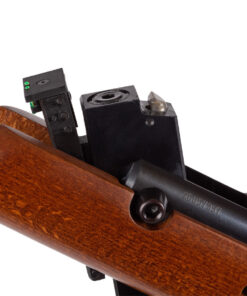
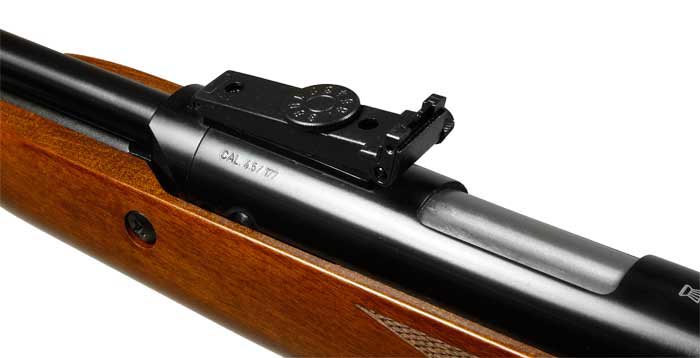
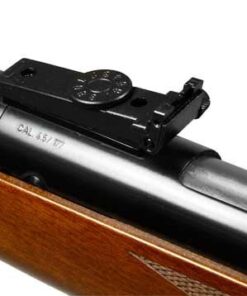
- Sights: A blade-and-ramp front sight and a micrometer-adjustable rear sight are installed so that iron-sight work remains practical.
- Optics rail: An 11 mm dovetail is machined so that a scope can be mounted when groups need to be tightened.
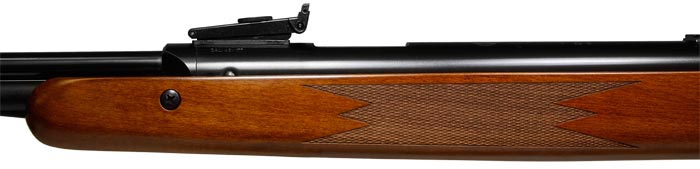
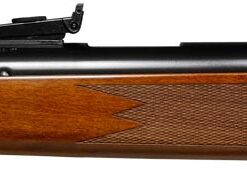
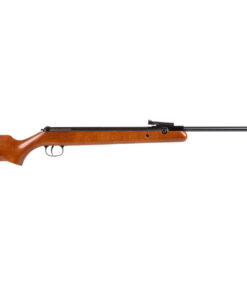
- Stock: A Monte Carlo hardwood stock with raised right-hand cheekpiece, checkered grip and forearm, and a ventilated rubber buttplate is fitted so that recoil is managed and a solid cheek weld can be established.
- Finish: Deep bluing and carefully executed woodwork are applied so that the rifle looks as durable as it shoots.
Design, Balance, and Handling of the Diana RWS 460 Magnum
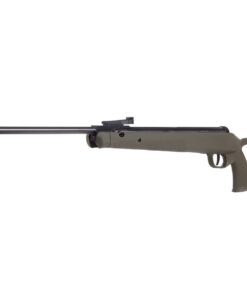
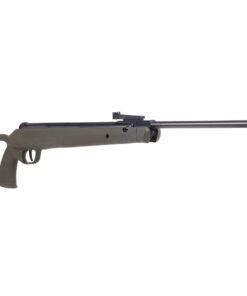
A full-size adult platform is presented: overall length is specified at approximately 45 inches (1150 mm), barrel length at about 18.44 inches (460 mm), and unscoped weight near 8.3 lb (3.75 kg). Consequently, a stable hold is encouraged on the bench and in the field. Meanwhile, the Monte Carlo comb and checkering are placed so that control can be maintained during the follow-through that spring-piston rifles demand.
Moreover, vibration is kept relatively modest for a magnum springer when a suitable pellet is chosen. Therefore, hold-sensitive shooting techniques that are familiar to spring-piston users are rewarded rather than punished. Likewise, the ventilated rubber buttplate is included so that felt recoil can be softened during longer sessions.
Because the barrel never hinges, grouping potential is widely regarded as a strength of the Diana RWS 460 Magnum. Dime- to nickel-size clusters at 25–30 yards are commonly reported when quality domed or hollow-point pellets are used and a proper artillery hold is applied. At the same time, pest and small-game work at longer ranges remains realistic when a scope is added and the rifle is sighted with a consistent pellet.
Power, Calibers, and Real-World Performance
Advertised velocities of up to about 1100–1200 fps in .177 and 900–1000 fps in .22 are listed by retailers; however, those figures are typically associated with very light pellets. In practice, heavier, more accurate lead pellets are preferred so that usable energy and tighter groups can be obtained. Accordingly, mid-weight .22 pellets in the 14–18 grain range are frequently selected for hunting and pest control, while well-sorted .177 pellets are chosen when flatter flight is wanted.
Furthermore, shot-to-shot consistency is often praised. Extreme spreads of only a few feet per second have been recorded with certain pellet lots—performance that is unusual for an unregulated spring-piston rifle and that helps the Diana RWS 460 Magnum stay predictable in the field.
Practical Uses: Hunting, Pest Control, and Range Time
Small-game hunting and pest control are the roles for which this rifle is most often recommended. Sufficient energy for rabbits, squirrels, and similar quarry is produced when an appropriate .22 pellet is selected and ranges are kept ethical. Meanwhile, backyard plinking and informal target work remain enjoyable because no fill station is needed and the action can be cycled as soon as a pellet is seated.
Additionally, iron sights can be used out to moderate distances, so a first outing does not require an optic. Subsequently, an 11 mm rail allows a springer-rated scope to be added when tighter groups or lower-light work are required. A droop-compensating or solid two-piece mount is commonly advised so that the unique recoil pulse of a spring-piston rifle can be absorbed without scope shift.
Inclusive shooting is supported by the straightforward manual of arms: the underlever is drawn down, a pellet is placed in the loading port, the safety is managed, and the shot is taken. New adult shooters and experienced springer fans alike can therefore share the same platform, provided local laws, safe backstops, and eye protection are observed.
Care, Longevity, and Responsible Ownership
A robust mechanical layout with relatively few wear-prone parts is used, and Diana’s long record with spring-piston rifles is widely cited. Even so, the mainspring should never be left compressed for long periods. After use, the rifle is stored uncocked so that spring life can be protected. Lead pellets only are recommended in the rifled barrel. Periodic cleaning with felt pellets and a light application of appropriate lubricant keep the action smooth.
Legal power limits vary by country and region. Some markets receive reduced-power “F” versions so that local energy caps can be met. Buyers are therefore encouraged to confirm FAC, license, or energy rules before purchase. Safe handling, a verified backstop, and responsible storage remain essential regardless of caliber.
Specifications Snapshot
- Manufacturer: Diana (Performance line, Germany)
- Model: Diana RWS 460 Magnum
- Power plant: Spring-piston
- Action: Underlever, single-shot
- Calibers: .177 (4.5 mm) and .22 (5.5 mm)
- Advertised velocity: Up to ~1100–1200 fps (.177) / ~900–1000 fps (.22)
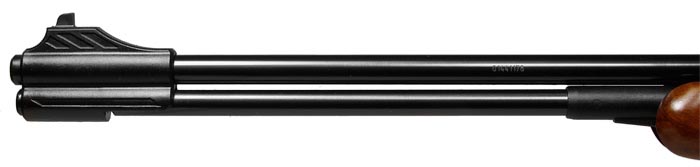
- Barrel: Rifled steel, approx. 18.44 in / 460 mm
- Overall length: Approx. 45 in / 1150 mm
- Weight: Approx. 8.3 lb / 3.75 kg
- Trigger: Two-stage adjustable T06, ~3.3 lb pull
- Safety: Automatic
- Sights: Blade & ramp front; micrometer-adjustable rear
- Rail: 11 mm dovetail
- Cocking effort: Approx. 36 lb
- Stock: Hardwood Monte Carlo, checkered grip and forearm, raised RH cheekpiece, ventilated rubber buttplate
- Loudness: Medium
- Typical use: Small-game hunting, pest control, plinking
Ready for the Field
Classic lines, a fixed barrel, and magnum-class spring power are combined in the Diana RWS 460 Magnum so that shooters who still prefer a self-contained rifle are not asked to compromise on quality. When a well-matched pellet is chosen, a consistent hold is used, and local regulations are respected, this underlever continues to earn its reputation as a durable, accurate German springer for everyday precision work.
Diana, Bintac, AEA and Hatsan Airguns: Rifles, Pistols, PCPs and Accessories
For shooters comparing trusted platforms, the Diana range remains a major point of interest. Searches such as diana air rifle, diana air rifles, air rifle diana, rws diana air rifle, rws diana, diana rws, and diana r reflect the continued popularity of classic airgun designs. Well-known spring-powered choices include the diana 34, diana model 34, diana rws 34, rws diana 34, diana r34, and diana 34 air rifle. Shooters interested in the updated modular platform may also search for diana 34 ems or diana 34 ems fiber optic sights.
Other established models continue to attract enthusiasts, including the diana 35, diana 48, diana mod 48, rws diana model 48, diana 54, diana 350 magnum, diana 350 magnum air rifle, 350 magnum diana, and diana rws 460 magnum. These rifles appeal to buyers comparing traditional spring-piston construction, power, accuracy, build quality, and different configurations for recreational or sporting use.
Diana PCP Air Rifles, Pistols and Accessories
The Diana catalog also includes PCP, CO2, and pistol-format options suited to different shooting preferences. Popular searches include diana r22, diana 2, diana 250, diana two fifty, diana 250 air rifle, diana stormrider, diana outlaw gen 2, diana airbug, diana bandit black, diana lp8, lp8 diana, diana air pistol, and diana pellet gun.
Owners looking to maintain, repair, or customize certain platforms may also search for diana chaser accessories and diana chaser parts. For target shooting and recreational plinking, a 4.5mm air gun remains a common caliber choice. Meanwhile, hunting diana searches often focus on Diana rifles suited to lawful pest-control or hunting applications where airgun use is permitted.
The term nerf diana can occasionally appear alongside Diana-related search traffic, although it represents a different product category and should not be confused with traditional pellet rifles or air pistols.
Bintac and AEA PCP Airguns
Big-bore and tactical PCP enthusiasts frequently compare Diana products with Bintac and AEA platforms. Popular searches include bintac aea harpoon, aea harpoon air gun, bintac t9 full auto, bintac t9 price, bintac mcar 457, aea terminator, and aea megalodon for sale.
Other related searches include airgun shotgun, automatic air gun, air powered 50 cal rifle, and zeus 72 cal air rifle price. Shooters setting up high-pressure PCP equipment may also research an air tank for pcp airguns or anti air tanks while comparing suitable filling equipment and accessories.
The broader phrase bee bee gun rifle may also be used by new shooters searching for BB rifles, pellet rifles, and other recreational air-powered platforms.
Hatsan Air Rifles and PCP Platforms
Hatsan remains another widely searched manufacturer across spring-piston, PCP, semi-automatic, and big-bore categories. General searches such as hatsan air rifle, hatsan air guns, hatsan pcp, hatsanusa, hatsan usa, air rifle, air rifles, and airguns cover a broad selection of products.
Break-barrel shoppers frequently compare the hatsan model 95, hatsan mod 95, mod 95, hatsan 125, hatsan 135, hatsan 135 vortex air rifle, hatsan 135 carnivore, hatsan zada, and hatsan airtact air rifle. The related search hatsan airtact is also common among buyers researching lightweight and affordable break-barrel rifles.
Customers searching for discounted or previously owned products may also use the phrase hatsan refurbished while comparing factory-refurbished or pre-owned Hatsan models.
Hatsan PCP and Big-Bore Airguns
For PCP enthusiasts, popular searches include hatsan flash, hatsan flashpup qe, hatsan bullboss, hatsan hercules, hatsan hercules bully, hatsan invader, hatsan factor rc, hatsan neutron star, hatsan harpoon, hatsan piledriver, and hatsan big bore carnivore rifle.
These searches cover everything from compact PCP rifles to powerful large-caliber platforms. Buyers can compare factors such as air capacity, operating pressure, caliber, barrel configuration, magazine capacity, stock design, overall weight, and intended use before selecting a suitable platform.
Hatsan Blitz, Sortie and Semi-Automatic Models
Shooters interested in rapid-fire PCP platforms frequently search for hatsan sortie, hatsan sortie tact, hatsan sortie tact semi-auto pcp, and hatsan sortie accessories. The Hatsan Blitz family also generates searches including hatsan blitz, hatsun blitz, hatsan blitz full automatic, and hatsan blitz 30 cal.
Compact PCP pistol and carbine shoppers may also research the hatsan velox and hatsan jet 2, providing additional choices for shooters who prefer smaller platforms.
Airgun Optics, Pellets and Accessories
Accessories, optics, ammunition, and filling equipment are important parts of a complete airgun setup. A basic 4×20 optic may suit certain entry-level rifles, while ammunition such as h&n field target trophy bleifrei can appeal to shooters specifically searching for lead-free pellets.
The search phrase econ ii may also appear alongside airgun-related product research depending on the equipment, accessory, or platform being compared.
Whether the goal involves target shooting, recreational plinking, collecting, pest control, or lawful hunting, the wide selection of Diana, AEA, Bintac, and Hatsan platforms gives shooters numerous choices. Comparing the correct caliber, rifle type, filling system, optics, pellets, accessories, and replacement parts can help buyers identify equipment that best matches their intended application.
Calibers, FAC, Power, and Accessories for the Diana RWS 460 Magnum
A clear picture of available calibers, legal power classes, real-world energy, and supporting accessories is needed before the Diana RWS 460 Magnum is chosen. Consequently, this section is written so that hunters, pest controllers, and target shooters can match the rifle to local law, intended quarry, and preferred optics without guesswork.
Calibers Offered on the Diana RWS 460 Magnum
Two primary pellet calibers are produced for the Diana RWS 460 Magnum: .177 (4.5 mm) and .22 (5.5 mm). A single-shot, rifled steel barrel is used in both versions, and only lead pellets are recommended so that the lands can be protected and grouping potential can be preserved.
In .177, a flatter trajectory is generally obtained. Therefore, informal target work, longer plinking sessions, and situations in which holdover must be minimized are often favored in this caliber. Advertised velocities approaching 1100–1200 fps are listed with very light pellets; however, mid-weight match and hunting pellets are typically preferred so that usable accuracy can be retained.
By contrast, greater sectional density and impact energy are delivered in .22. As a result, small-game hunting and pest control are more commonly assigned to this chambering. Advertised figures near 900–1000 fps are published with light pellets, while practical hunting loads in the 14–18 grain class are selected so that ethical energy on rabbits, squirrels, and similar quarry can be maintained at realistic field distances.
Moreover, pellet choice matters as much as caliber. Lightweight alloy or ultra-light lead is sometimes used for advertised speed tests, yet consistency and grouping are usually improved when well-sorted domed, hollow-point, or pointed hunting pellets are substituted. Accordingly, a short pellet ladder is advised after purchase so that the individual barrel can reveal its preferred weight and head size.
How Caliber Selection Is Typically Decided
- .177 is chosen when a flatter path and paper or plinking work are prioritized.
- .22 is chosen when knockdown energy for small game and pests is prioritized.
- Lead pellets only are specified for the rifled barrel so that wear and leading can be controlled.
- A single-shot loading port is used in both calibers so that a long scope does not block charging.
Inclusive use is supported because either caliber can be handled with the same underlever cycle, automatic safety, and T06 trigger. Therefore, households or clubs that share one platform can still assign tasks by pellet rather than by buying a second action.
FAC, Legal Power, and Regional Energy Limits
Power output of the Diana RWS 460 Magnum is not identical in every market. Full-power “Magnum” examples are distributed where higher muzzle energy is lawful. Reduced-energy “F” or country-specific versions are also produced so that 7.5 J or similar caps can be met without a firearms certificate.
In the United Kingdom, an air rifle that exceeds 12 ft-lb (approximately 16.3 J) is treated as a firearm and is therefore subject to FAC requirements. Full-power examples of this model can sit near or above that threshold depending on pellet and individual rifle, so legal status must be confirmed before purchase or import. In much of continental Europe, 7.5 J versions are offered so that license-free ownership can remain possible where that limit applies. Elsewhere, unrestricted or higher-energy variants are sold when local codes allow.
Furthermore, advertised fps figures should not be treated as a legal measurement. Energy in joules or foot-pounds is calculated from pellet mass and true muzzle velocity. Chronograph results with the exact pellet that will be used are therefore the only reliable way to know whether a given rifle stays under a local cap.
Responsible ownership is expected in every jurisdiction. Eye protection, a safe backstop, and storage that prevents unauthorized access are required regardless of whether the rifle is FAC or sub-limit. Moreover, the automatic safety is provided as an aid, not as a substitute for muzzle discipline.
Power and Performance in Practical Terms
Spring-piston energy is generated by a compressed mainspring and piston rather than by a precharged reservoir. Consequently, output is essentially the same from the first shot to the last, provided the spring is healthy and the rifle is not left cocked.
Real-world energy in full-power .22 examples is commonly reported in the high teens to mid-20s of foot-pounds with hunting-weight pellets—enough for ethical small-game work at modest ranges when shot placement is correct. In .177, similar rifles often produce slightly less energy but a flatter line. Reduced-power versions trade velocity for legality; they remain useful for training and close pest work where energy caps apply.
Cocking effort of approximately 36 lb is specified for typical Magnum examples. That figure can feel substantial during long sessions, yet the underlever geometry is designed so that leverage is improved compared with many break-barrel magnums of similar power.
Accessories That Complete the Diana RWS 460 Magnum
A capable rifle is only part of a working system. Optics, mounts, pellets, and maintenance items are therefore selected so that the fixed barrel and T06 trigger can be used to their potential.
An 11 mm dovetail is machined on the cylinder so that a springer-rated scope can be fitted. Because spring-piston recoil is bidirectional, a solid two-piece mount or a droop-compensating adapter is strongly preferred. Cheap one-piece mounts that lack a recoil stop are frequently the cause of wandering zero. A 3–9× or 4–12× airgun scope with an adjustable objective is a common pairing for 25–50 yard pest and small-game work.
Iron sights are already installed: a blade-and-ramp front and a micrometer-adjustable rear. Those sights can be used immediately, so a first range session does not depend on an optic. Fiber-optic or TRUGLO-style fronts appear on some production runs; either way, elevation and windage are adjusted at the rear.
Pellets remain the most important “accessory.” A small selection of quality .177 or .22 lead—JSB-style domes, RWS hunting points, and similar mid-weights—should be tested so that the individual barrel’s preference can be found. Felt cleaning pellets and a proper spring-piston lubricant are kept on hand so that the transfer port and piston seal can be maintained without over-oiling.
Additional items that are often added include a quality sling stud set if carrying in the field is planned, a padded case that protects the underlever and stock, and a springer-safe bipod only if the shooter accepts that hold-sensitive springers can change point of impact when rigidly supported. A chronograph is useful whenever FAC status or pellet energy must be documented.
Accessory Checklist
- Springer-rated scope on a recoil-stopping 11 mm mount
- Quality lead pellets in the caliber of the rifle, several weights for testing
- Felt cleaning pellets and appropriate spring-piston oil
- Padded case that does not stress the underlever
- Chronograph when legal energy or pellet comparison must be verified
- Sling hardware only if field carry is required
When caliber, legal power class, and accessories are matched with care, the Diana RWS 460 Magnum is placed in the role for which it was built: a self-contained, fixed-barrel German springer that can be used for precise small-game, pest, and range work wherever local law allows.
Practical Use Scenarios
Everyday field work, quiet pest control, and unhurried range sessions are all supported by a fixed-barrel underlever spring-piston rifle of this class. Because no tank, pump, or battery is required, the rifle can be carried, cocked, and fired as soon as a safe backstop has been confirmed. Consequently, practical use is defined less by equipment logistics and more by hold, pellet choice, range discipline, and local law.
Small-Game Hunting in Woodlots and Field Edges
Ethical small-game hunting is one of the roles for which a magnum-class underlever is most often taken afield. Rabbits along hedge lines, squirrels in mature timber, and similar quarry can be engaged when shot placement is limited to the head or high shoulder and distances are kept inside the rifle’s consistent grouping range. A mid-weight lead pellet in .22 is commonly selected so that energy and wound channel remain adequate; alternatively, a well-tested .177 hunting pellet may be used when a flatter line is needed and the quarry is modest in size.
A stalking approach is favored over long static waits. The rifle is carried slung or in hand with the action uncocked until a shot is imminent, because a compressed mainspring should not be left under load. When a target is identified, the underlever is drawn through its full stroke, a pellet is seated in the loading port, and the automatic safety is managed only after the muzzle has been pointed in a safe direction. An artillery hold—light, consistent support at the same point on the forearm—is then applied so that the unique recoil pulse of a spring-piston action does not throw the pellet.
Moreover, morning and late-afternoon light are typically used because small game is more active and because iron sights or a modest-power scope remain readable. A 3–9× or similar airgun-rated optic is often mounted for these hours; however, the factory rear sight can still be employed at closer ranges if an optic has not yet been zeroed. Wind at the edge of a woodlot is read on grass and leaves, and hold-off is applied rather than hoped away. After the shot, the quarry is approached only when movement has stopped, and a second pellet is kept ready in case a follow-up is required.
Inclusive hunting parties can share the same rifle because the manual of arms is simple. New adult hunters are coached on cocking effort, safety location, and the need for a solid backstop beyond the animal. Experienced hunters, meanwhile, use the same platform for precise, one-shot opportunities rather than volume fire.
Field Habits That Improve Success
- The rifle is kept uncocked during the walk so that spring life and safety are both protected.
- A single, well-chosen pellet type is used for an entire hunt so that point of impact stays familiar.
- Distances are estimated against known objects before the lever is drawn.
- A follow-up shot is prepared immediately, yet is taken only when it remains ethical.
Pest Control Around Outbuildings, Gardens, and Barns
Pest work is often conducted closer than hunting and with less time to set up a bench. Rats, pigeons, starlings, and similar animals around feed stores, sheds, and gardens can be addressed when local regulations allow and when a safe backstop—earth bank, thick timber, or a purpose-built trap—is present. Because the rifle is self-contained, it can be stored nearby and brought into use without a compressor or gas bottle.
Lighting around buildings is frequently poor. Therefore, a scope with an adjustable objective and decent low-light glass is preferred over iron sights alone. Zero is confirmed at the distances that actually occur around the property—often 15 to 30 yards—rather than at a formal 50-yard target. Hollow-point or polymer-tipped pest pellets are tested so that expansion on small bodies can be obtained without sacrificing the group size needed for head shots.
Furthermore, noise must be considered. Spring-piston reports are medium rather than suppressed, so sessions are planned for hours when neighbors will not be startled and when livestock will not be driven into panic. Ricochet risk from tin, concrete, and machinery is treated as a primary hazard; shots that cannot be stopped by soil or timber are declined.
The underlever is an advantage in tight spaces because the barrel never breaks open. A long optic can remain mounted while a pellet is still seated through the top port. Cocking effort, however, remains substantial. Short strings of shots are therefore preferred over marathon sessions so that fatigue does not degrade hold.
Shared pest duty on a farm or community garden is made easier by a written rule set: who may use the rifle, where it is stored, which pellet is approved, and which backstops are accepted. Inclusive language and clear training reduce accidents more effectively than assuming every adult already understands a magnum springer.
Range Practice, Zeroing, and Skill Building
Formal and informal range use is where consistency is built. Paper or cardboard targets at 10, 25, and 35 yards are used first so that the artillery hold can be grooved and so that pellet preference can be mapped. Five-shot groups are recorded rather than single lucky holes. When a pellet produces a tight, repeatable cluster, that lot is reserved for field work; other weights are kept only for comparison.
Zeroing with a scope is performed from the same rest or hold that will be used in the field. A rigid vise can produce a different point of impact than a soft bag or offhand hold, so the zero that is chased is the zero that will be hunted with. Elevation and windage are adjusted in small increments. After each change, the rifle is allowed to settle; spring-piston actions can walk a mount if cheap rings were fitted, so screws are checked before blame is assigned to the barrel.
Additionally, dry familiarization is useful for new shooters. The lever stroke, loading port, safety slide, and trigger stages can be rehearsed with an empty barrel pointed at a safe backstop. Live fire then begins at short range. Inclusive coaching emphasizes that cocking effort is real and that smaller-framed adults may prefer to cock with the butt on the hip or thigh rather than fighting the lever at arm’s length.
Trigger work on the two-stage unit is practiced until first-stage travel and the break are known by feel. A surprise break is preferred over a punched shot. Follow-through is held until the pellet has struck, because the rifle is still moving while the pellet is in the bore.
Weather at the range is used as training, not as an excuse. Light rain does not harm a properly finished springer if the action is dried afterward; strong wind is used to learn hold-off. Extreme cold can stiffen lubrication, so a few settling shots are fired before groups are counted.
Seasonal and Environmental Scenarios
Summer pest work around grain and fruit often means heat, insects, and hard ground. A sling or carry strap keeps hands free, yet the rifle is never leaned loaded against a hot vehicle. Pellets are kept out of direct sun so that lubricants in some designs do not change. Sweat on the stock is wiped so that checkering still provides grip.
Autumn hunting in fallen leaves rewards slow movement and short shots through lanes. The raised comb of a Monte Carlo stock helps a consistent cheek weld when jackets add bulk. Leaves can deflect a pellet; therefore, lanes are chosen rather than hoped-for gaps.
Winter use demands extra attention to the mainspring and seals. The rifle is brought to ambient temperature before a hunt so that condensation inside a cold action is reduced. Gloves that still allow the trigger blade to be felt are worn. Snow behind the target is treated as a backstop only when it sits against earth, not when it hides ice or stone.
Spring woods introduce rain and mud. The loading port and muzzle are kept clear of debris. After a wet outing, the exterior is wiped and the bore is protected with a dry felt pellet rather than with heavy oil that can migrate into the transfer port.
Urban-edge use, where it is lawful, is the most constrained scenario. Distances are short, backstops are scarce, and noise complaints arrive quickly. Only shots with a verified stop are taken. Many owners reserve this rifle for rural ground and keep a lower-powered trainer for close, quiet work.
Holds, Fatigue, and Session Length
Spring-piston accuracy is hold-sensitive. A death grip on the forearm is avoided; instead, the rifle is allowed to recoil through a relaxed but repeatable support. The same spot on the checkered forestock is used every time. Shoulder pressure on the ventilated buttpad is kept consistent. If groups open after twenty shots, fatigue rather than the barrel is usually the cause. Sessions are then shortened, or a rest is introduced for zero confirmation only.
Cocking is performed with the muzzle pointed in a safe direction and with the support hand clear of the lever’s travel. The lever is returned fully so that it latches; a half-returned lever is a hazard. Because effort is in the mid-thirty-pound range, younger or smaller shooters are not pushed into long strings. Inclusive practice means offering a rest, a shorter session, or a different rifle rather than insisting that everyone match the same volume of fire.
Ethics, Law, and After-the-Shot Conduct
Every practical scenario is bounded by law and by ethics. Local energy limits, licensing, and permitted quarry lists are checked before the first hunt. A chronograph is used when it is unclear whether a particular pellet and rifle combination remains under a legal cap. Night shooting, where restricted, is not improvised.
After a hit, the animal is recovered promptly. A miss is treated as a reason to stop and reassess distance, wind, and hold—not as a reason to send a second rushed pellet. Wounded game is followed. Unused pellets and empty tins are packed out.
Storage after use is part of the scenario. The rifle is left uncocked, the safety is not relied upon as a lock, and the action is placed where unauthorized hands cannot reach it. A case that does not bend the underlever is used for transport.
Building a Personal Routine
A practical routine is assembled from the scenarios above rather than from a single ideal day. One owner may zero on Saturday morning, walk a hedge for rabbits at last light, and clear a barn loft the following week. Another may only shoot paper and occasional garden pests. In both cases, the same principles apply: a tested pellet, a repeatable hold, a verified backstop, an uncocked spring between strings, and accessories that match the recoil of a spring-piston action.
When those habits are kept, the rifle becomes a dependable tool rather than a finicky toy. Field craft, not advertised velocity, decides whether a sitting rabbit is taken cleanly or left for another evening. Range notes, not catalog claims, decide which pellet rides in the pouch. Inclusive, patient practice decides whether new shooters leave the session confident or sore and discouraged.
Used that way—cocked only when a shot is ready, aimed only when a stop exists, and maintained so the spring is never stored compressed—the underlever earns its place in woodlots, outbuildings, and on the bench as a self-contained precision instrument for adults who accept the discipline that magnum springers have always required.



Click here for California’s Proposition 65 warning.

Reviews
There are no reviews yet.