Diana, Bintac, AEA and Hatsan Airguns: Rifles, Pistols, PCPs and Accessories
For shooters comparing trusted platforms, the Diana range remains a major point of interest. Searches such as diana air rifle, diana air rifles, air rifle diana, rws diana air rifle, rws diana, diana rws, and diana r reflect the continued popularity of classic airgun designs. Well-known spring-powered choices include the diana 34, diana model 34, diana rws 34, rws diana 34, diana r34, and diana 34 air rifle. Shooters interested in the updated modular platform may also search for diana 34 ems or diana 34 ems fiber optic sights.
Other established models continue to attract enthusiasts, including the diana 35, diana 48, diana mod 48, rws diana model 48, diana 54, diana 350 magnum, diana 350 magnum air rifle, 350 magnum diana, and diana rws 460 magnum. These rifles appeal to buyers comparing traditional spring-piston construction, power, accuracy, build quality, and different configurations for recreational or sporting use.
Diana PCP Air Rifles, Pistols and Accessories
The Diana catalog also includes PCP, CO2, and pistol-format options suited to different shooting preferences. Popular searches include diana r22, diana 2, diana 250, diana two fifty, diana 250 air rifle, diana stormrider, diana outlaw gen 2, diana airbug, diana bandit black, diana lp8, lp8 diana, diana air pistol, and diana pellet gun.
Owners looking to maintain, repair, or customize certain platforms may also search for diana chaser accessories and diana chaser parts. For target shooting and recreational plinking, a 4.5mm air gun remains a common caliber choice. Meanwhile, hunting diana searches often focus on Diana rifles suited to lawful pest-control or hunting applications where airgun use is permitted.
The term nerf diana can occasionally appear alongside Diana-related search traffic, although it represents a different product category and should not be confused with traditional pellet rifles or air pistols.
Bintac and AEA PCP Airguns
Big-bore and tactical PCP enthusiasts frequently compare Diana products with Bintac and AEA platforms. Popular searches include bintac aea harpoon, aea harpoon air gun, bintac t9 full auto, bintac t9 price, bintac mcar 457, aea terminator, and aea megalodon for sale.
Other related searches include airgun shotgun, automatic air gun, air powered 50 cal rifle, and zeus 72 cal air rifle price. Shooters setting up high-pressure PCP equipment may also research an air tank for pcp airguns or anti air tanks while comparing suitable filling equipment and accessories.
The broader phrase bee bee gun rifle may also be used by new shooters searching for BB rifles, pellet rifles, and other recreational air-powered platforms.
Hatsan Air Rifles and PCP Platforms
Hatsan remains another widely searched manufacturer across spring-piston, PCP, semi-automatic, and big-bore categories. General searches such as hatsan air rifle, hatsan air guns, hatsan pcp, hatsanusa, hatsan usa, air rifle, air rifles, and airguns cover a broad selection of products.
Break-barrel shoppers frequently compare the hatsan model 95, hatsan mod 95, mod 95, hatsan 125, hatsan 135, hatsan 135 vortex air rifle, hatsan 135 carnivore, hatsan zada, and hatsan airtact air rifle. The related search hatsan airtact is also common among buyers researching lightweight and affordable break-barrel rifles.
Customers searching for discounted or previously owned products may also use the phrase hatsan refurbished while comparing factory-refurbished or pre-owned Hatsan models.
Hatsan PCP and Big-Bore Airguns
For PCP enthusiasts, popular searches include hatsan flash, hatsan flashpup qe, hatsan bullboss, hatsan hercules, hatsan hercules bully, hatsan invader, hatsan factor rc, hatsan neutron star, hatsan harpoon, hatsan piledriver, and hatsan big bore carnivore rifle.
These searches cover everything from compact PCP rifles to powerful large-caliber platforms. Buyers can compare factors such as air capacity, operating pressure, caliber, barrel configuration, magazine capacity, stock design, overall weight, and intended use before selecting a suitable platform.
Hatsan Blitz, Sortie and Semi-Automatic Models
Shooters interested in rapid-fire PCP platforms frequently search for hatsan sortie, hatsan sortie tact, hatsan sortie tact semi-auto pcp, and hatsan sortie accessories. The Hatsan Blitz family also generates searches including hatsan blitz, hatsun blitz, hatsan blitz full automatic, and hatsan blitz 30 cal.
Compact PCP pistol and carbine shoppers may also research the hatsan velox and hatsan jet 2, providing additional choices for shooters who prefer smaller platforms.
Airgun Optics, Pellets and Accessories
Accessories, optics, ammunition, and filling equipment are important parts of a complete airgun setup. A basic 4×20 optic may suit certain entry-level rifles, while ammunition such as h&n field target trophy bleifrei can appeal to shooters specifically searching for lead-free pellets.
The search phrase econ ii may also appear alongside airgun-related product research depending on the equipment, accessory, or platform being compared.
Whether the goal involves target shooting, recreational plinking, collecting, pest control, or lawful hunting, the wide selection of Diana, AEA, Bintac, and Hatsan platforms gives shooters numerous choices. Comparing the correct caliber, rifle type, filling system, optics, pellets, accessories, and replacement parts can help buyers identify equipment that best matches their intended application.
Calibres, FAC Considerations, Power Output and Accessories
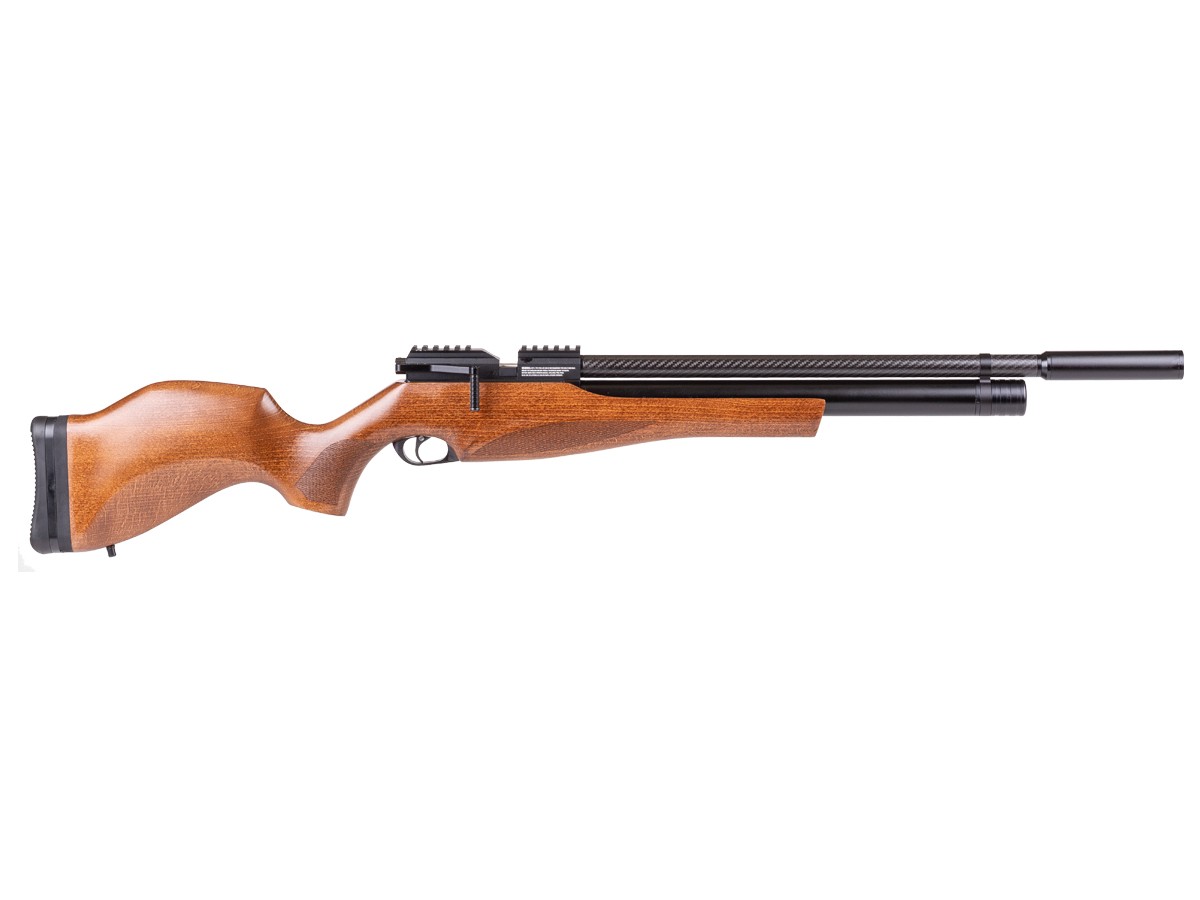
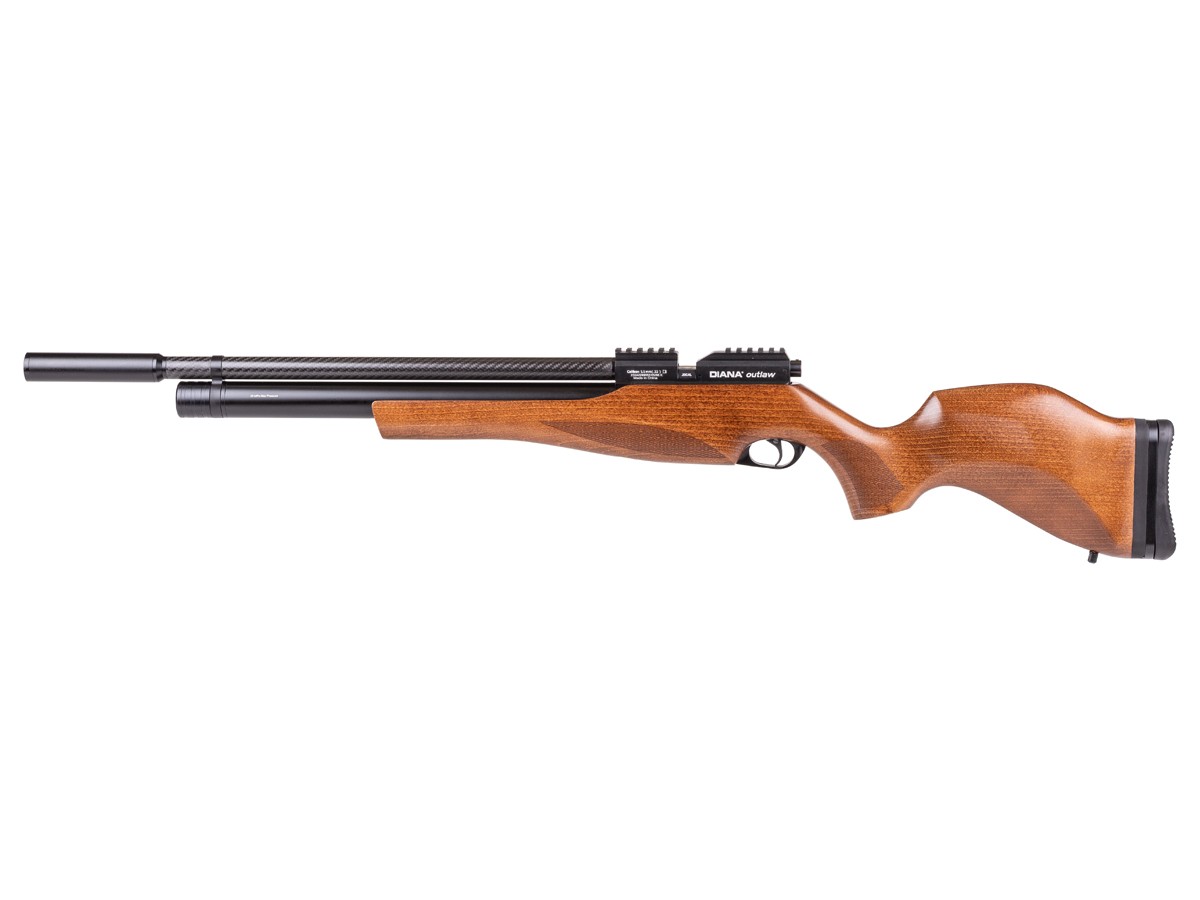
A choice of popular pellet calibres is offered by the Diana Outlaw Gen 2 so that different shooting goals can be matched. Consequently, versatility is provided for backyard practice, pest control and small-game work wherever local rules allow. Moreover, power delivery is managed by an internal regulator, and a wide range of optics and field accessories can be fitted thanks to modern mounting interfaces.
Available Calibres and Typical Applications
Two primary chamberings are commonly listed for the Diana Outlaw Gen 2: .177 and .22. In some markets a .25 option is also referenced. Therefore, pellet selection can be aligned with intended use.
- .177 is frequently chosen when flatter trajectory and higher pellet counts per fill are desired. Consequently, paper targets, plinking and lighter pest work are supported when legal energy limits are observed.
- .22 is widely preferred when greater downrange energy and impact are wanted. As a result, small-game hunting and more demanding pest control are often associated with this calibre.
- .25, where offered, is associated with still higher published energy figures. Thus, heavier projectiles can be used when extra authority is required and regulations permit.
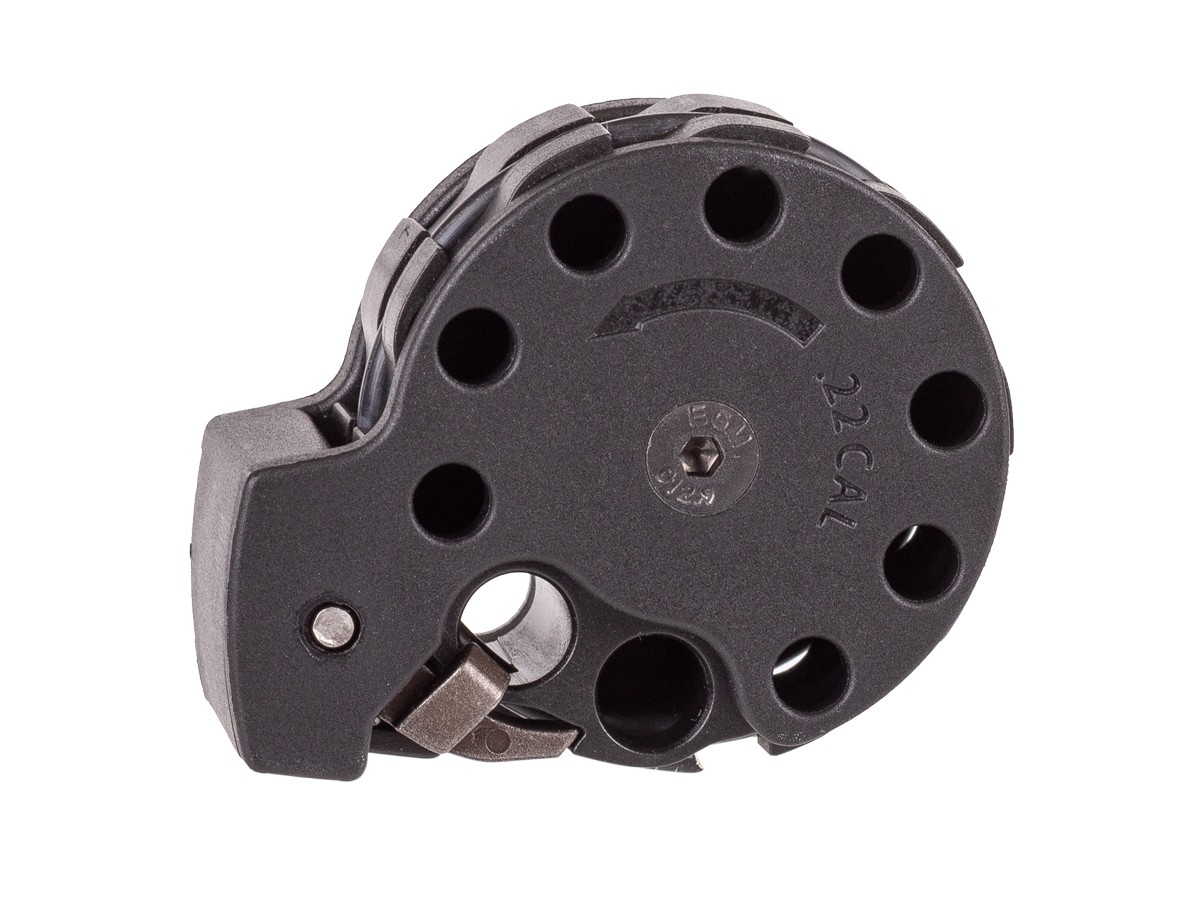
Magazine capacity varies with calibre. Typically, around 12 pellets are held in .177 and approximately 10–11 pellets are held in .22. Two magazines are usually included, and a single-shot tray is often supplied as well. Hence, both rapid follow-up strings and careful single-shot accuracy work can be practised.
Inclusive language is important: every shooter should confirm that the chosen calibre and power level are lawful in their jurisdiction before purchase or use.
Power Levels and FAC Status
Published factory figures for the Diana Outlaw Gen 2 place muzzle energy well above many entry-level PCP platforms. Typical quoted values include approximately 22 ft-lbs in .177, about 32–35 ft-lbs in .22, and around 45 ft-lbs in .25 where that chambering is listed. Velocities of up to 1,050 fps in .177 and 985 fps in .22 are commonly advertised, although actual results depend on pellet weight, fill pressure and regulator setting.
Because these energy levels exceed 12 ft-lbs, the rifle is treated as an FAC (Firearms Certificate) air rifle in the United Kingdom. Therefore, possession, purchase and use in England, Scotland, Wales and Northern Ireland are subject to the relevant firearms licensing rules. In other countries, power limits, licensing, storage and transport requirements differ. Consequently, local legislation must always be checked by the buyer. No assumption should be made that a listing on a website automatically authorises ownership.
A 210 cc reservoir filled to a maximum of 3,625 PSI (250 bar) is used. A regulator then meters air so that a useful string of consistent shots is produced before velocity begins to fall. As a result, holdover remains more predictable across a magazine or two, provided a suitable pellet is selected and the rifle is filled correctly.
Hammer-spring and regulator adjustments exist on the platform, yet they are not intended as everyday external tuners. Stock removal and, in some cases, degassing are required. Therefore, factory settings should be respected unless competent servicing is arranged. Safety valves, correct fill probes and rated hoses must always be used so that over-pressurisation is avoided.
Recommended Accessories and Setup Options
A Picatinny rail is fitted on the breech of the Diana Outlaw Gen 2. Thus, a wide range of scopes, red-dot sights and mounts can be attached without adapters. Quality glass matched to the intended range—typically 4–16x or similar for small-game and target work—is commonly added so that the rifle’s consistency can be fully used.
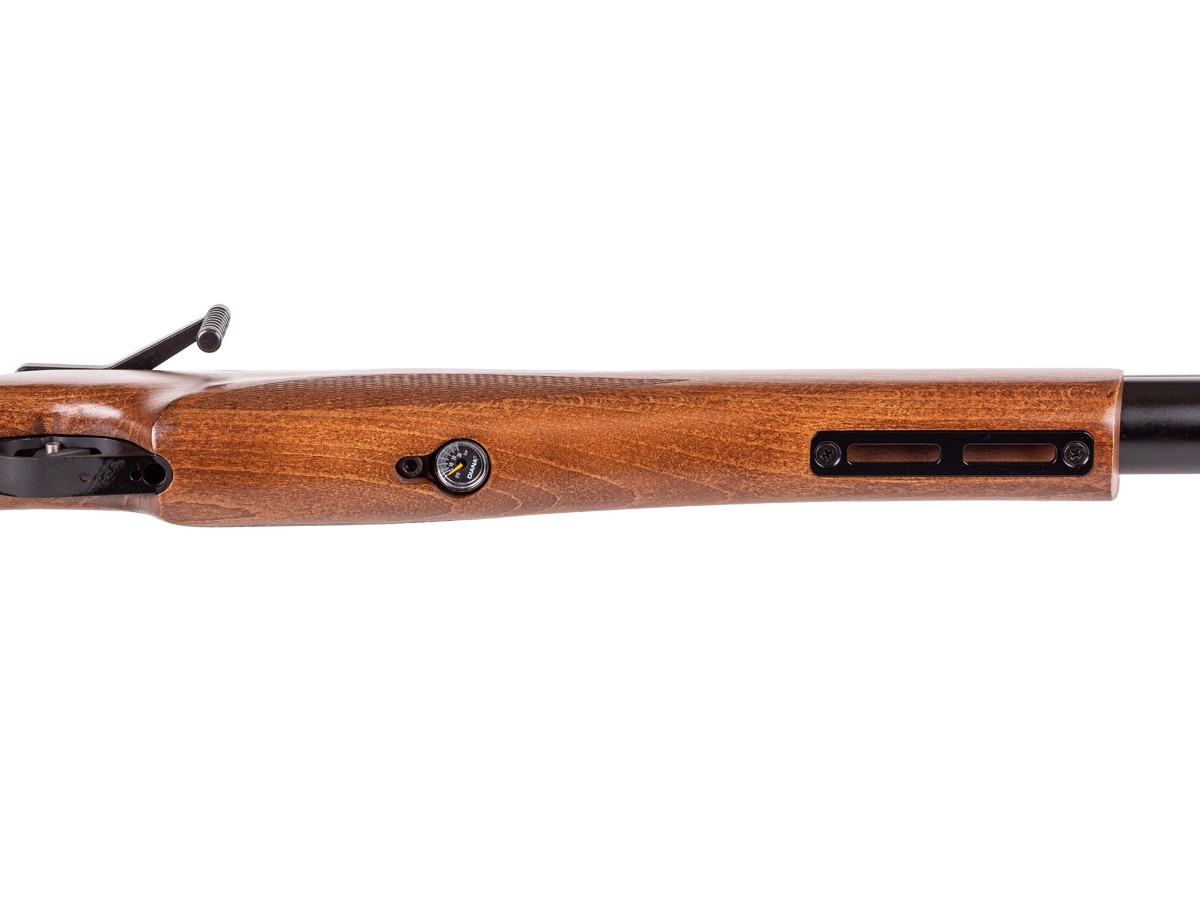
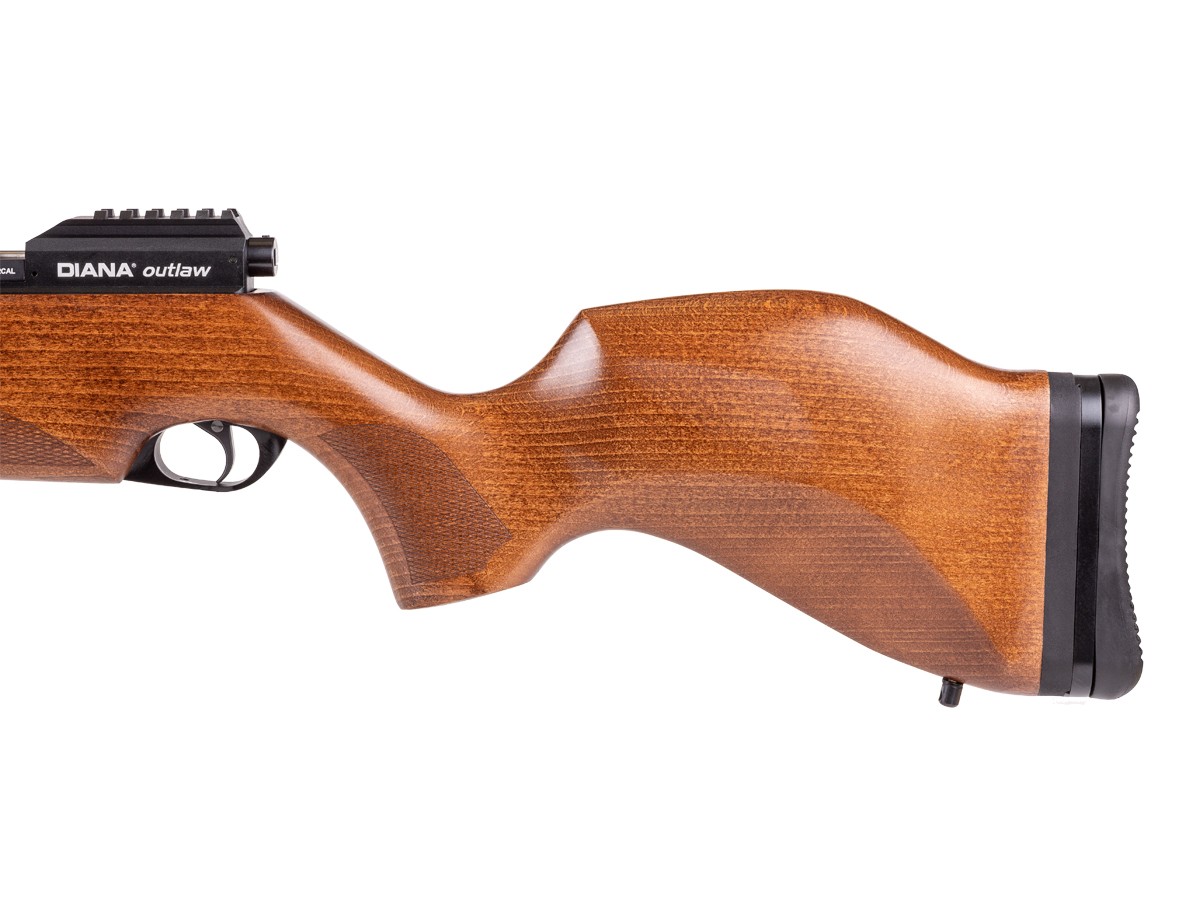
M-LOK slots under the forend allow bipods, foregrips or extra sling points to be fitted. A rear sling stud is already present. Consequently, both walking hunts and bench or prone sessions can be supported. An adjustable rubber buttpad is included so that length of pull can be refined for different body sizes and clothing layers.
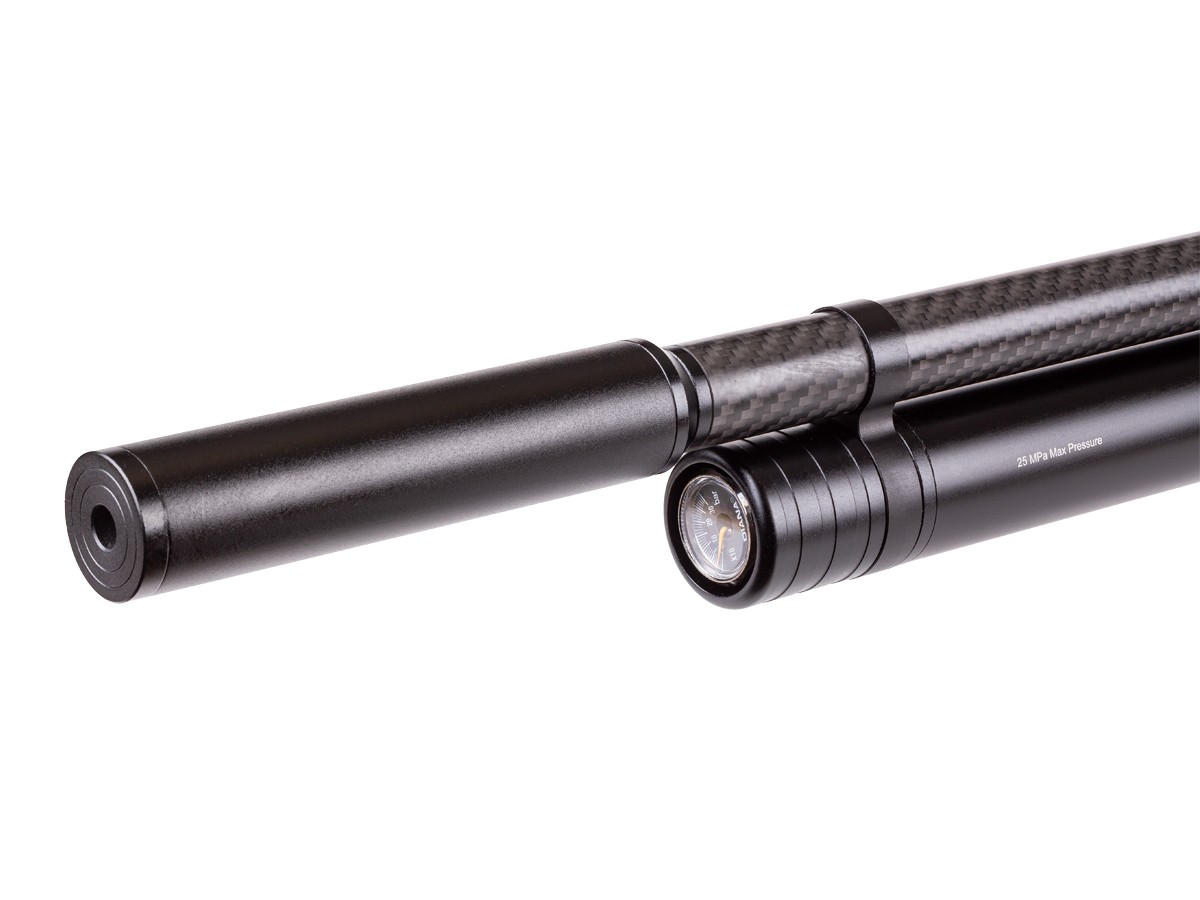
The barrel is already shrouded and moderated. Additional 1/2″ UNF muzzle devices may be compatible on some examples; thread and local suppressor laws should be verified first. Extra magazines, a single-shot tray, a probe-style fill adapter and basic tools are frequently packed with the rifle. Spare o-rings and a quality PCP pump or compressor rated for 250 bar are strongly recommended so that fills remain convenient and safe.
Pellet choice matters as much as hardware. High-quality domed or hollow-point pellets of appropriate weight for the chosen calibre should be tested at the ranges that will actually be used. Chronograph checks and grouping sessions help confirm that the regulator and chosen ammo are working together. Soft cases or hard cases that protect a mounted optic, plus eye and ear protection, complete a responsible kit.
Inclusive, conversion-focused advice remains simple: a well-matched optic, a stable fill source, extra magazines and a sling or bipod turn the Diana Outlaw Gen 2 from a capable rifle into a complete field or range system. Legal compliance, safe storage and regular inspection of seals and gauges should always come first so that every outing stays enjoyable and responsible.
Frequently Asked Questions
What type of air rifle is this platform?
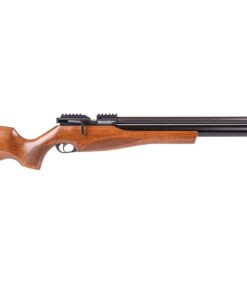
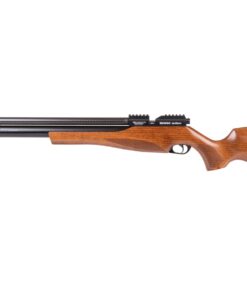
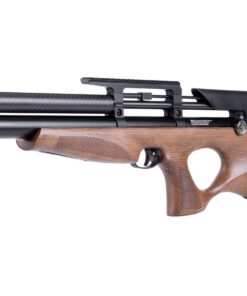
A regulated pre-charged pneumatic repeating rifle is represented by this model. Consequently, high-pressure air is stored in an onboard cylinder and is then metered by an internal regulator so that more consistent shots can be produced. A sidelever action is used for cocking and magazine cycling. Therefore, follow-up shots can be prepared without a traditional bolt lift. A hardwood stock, shrouded barrel and magazine feed are also included, so a complete field-ready package is presented to a wide range of shooters.
Which calibres can be selected?
.177 and .22 chamberings are most commonly offered. In certain markets a .25 option is additionally listed. As a result, trajectory, pellet weight and impact energy can be matched to the intended task. Flatter flight and higher pellet counts per fill are typically associated with .177. Greater downrange energy for small game and pest work is often associated with .22. Where .25 is available, still higher published energy figures are quoted. Local power limits and licensing rules must always be confirmed before a calibre is chosen.
How much power is produced?
Published factory figures place muzzle energy at approximately 22 ft-lbs in .177, roughly 32–35 ft-lbs in .22, and around 45 ft-lbs in .25 where that chambering is sold. Velocities of up to about 1,050 fps in .177 and 985 fps in .22 are commonly advertised. Actual results depend on pellet weight, fill pressure, regulator setpoint and barrel condition. Because these energies exceed 12 ft-lbs, Firearms Certificate status applies in the United Kingdom. In other countries different licensing, storage and transport rules apply. Therefore, jurisdiction-specific law must be checked by every buyer.
Is a regulator fitted?
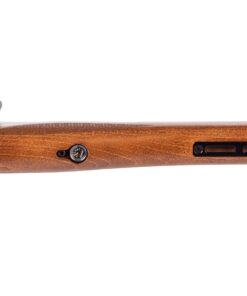
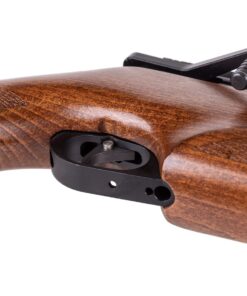
Yes. An internal regulator is employed so that air is delivered at a more stable working pressure across a useful shot string. A regulator gauge is located on the underside of the stock on the current generation, while a separate fill-pressure gauge is provided on the reservoir. Consequently, both remaining air and regulator behaviour can be monitored. Factory settings are intended for everyday use. Internal regulator or hammer-spring changes generally require stock removal and, in some cases, degassing, so those adjustments should be left to competent service unless the owner is fully equipped and trained.
How many shots can be expected from one fill?
A 210 cc cylinder filled to a maximum of 3,625 PSI (250 bar) is used. Independent tests of similar examples have shown several dozen relatively consistent shots before the regulator setpoint is passed and velocity begins to decline. Shot count varies with calibre, pellet weight, ambient temperature and exact regulator setting. Therefore, a chronograph session with the chosen pellet is recommended so that a personal working string can be established. Over-filling above the marked limit must never be attempted.
What magazines and loading options are supplied?
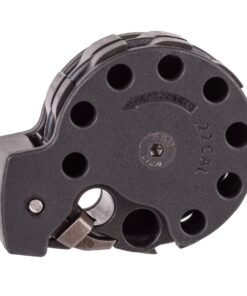
Two rotary magazines are typically included. Capacities of about 12 rounds in .177 and 10–11 rounds in .22 are commonly quoted. A ratchet mechanism is built into the current magazine so that the rotor can be indexed more easily during loading. A single-shot tray is often packed as well. Hence, both rapid magazine work and careful single-pellet accuracy testing can be practised. Extra magazines can be added later if longer sessions are planned.
How is the rifle filled?
A probe-style fill adapter is normally supplied. A hand pump, carbon-fibre tank or electric compressor rated for at least 250 bar can be used. A dry, clean air supply is essential. Moisture and debris shorten seal life and can damage the regulator. After filling, the probe should be withdrawn carefully and the fill port protected. Degassing, when required, should follow the manufacturer’s sequence. Inclusive advice applies here: anyone new to PCP systems should obtain instruction on safe filling before the first charge is attempted.
How loud is the report?
A shrouded 18-inch barrel with an integrated moderator is fitted. Medium loudness is typically assigned in retail specifications. Neighbour-friendly backyard use may be possible where local rules allow, yet the rifle is not silent. Additional muzzle devices may be compatible via thread on some examples; suppressor and moderator laws differ widely and must be verified first. Hearing protection is still recommended during extended practice.
What trigger and safety features are included?
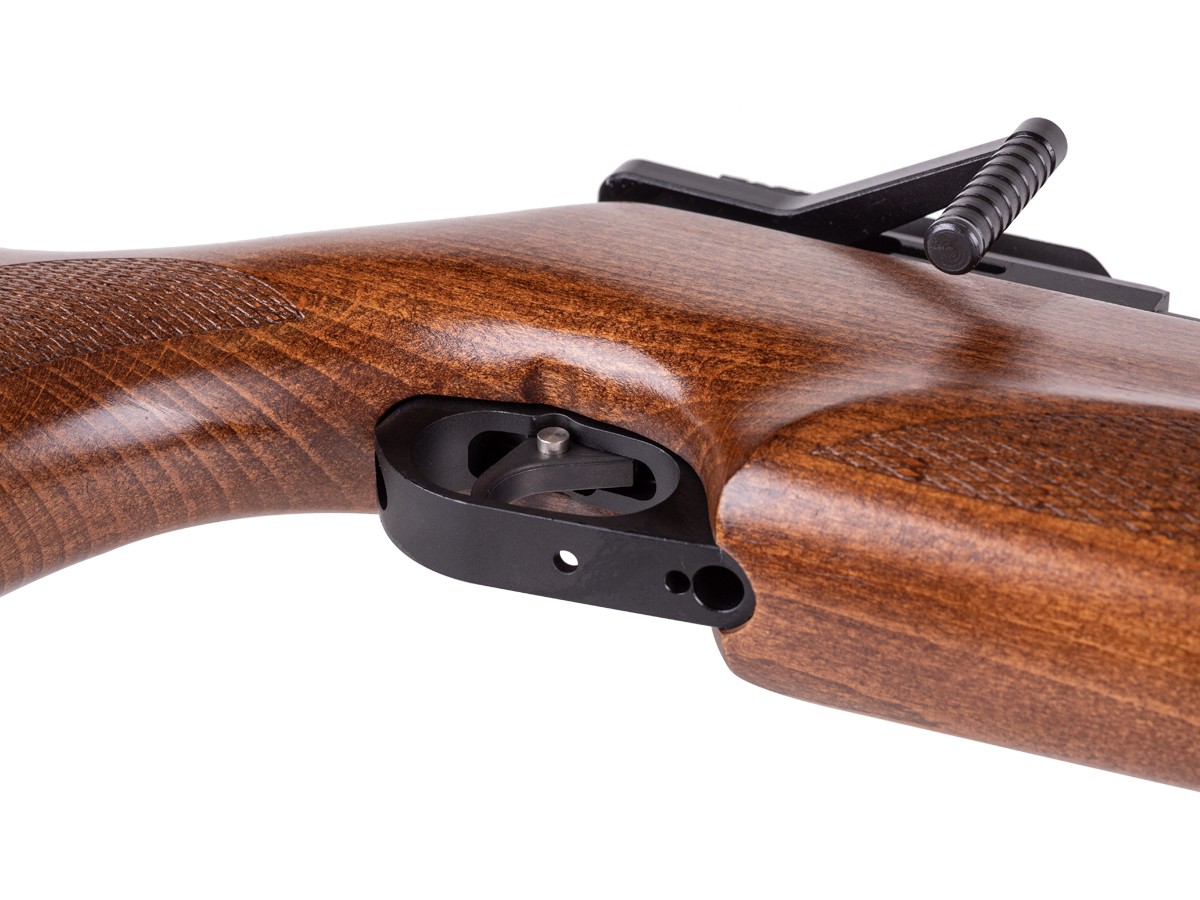
A two-stage adjustable trigger, often described as the Diana Improved Trigger, is fitted. Pull weight and sear engagement can be refined within safe limits. A manual safety is positioned for right-side operation on standard layouts. The safety should be applied whenever the rifle is loaded and not immediately about to be fired. Inclusive handling practice means the muzzle is kept pointed in a safe direction at all times and the action is treated as loaded until proven otherwise.
Can optics and accessories be mounted easily?
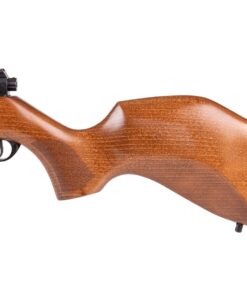
A Picatinny rail is machined into the breech, replacing older dovetail-only arrangements. Therefore, a wide range of scopes, red dots and night-vision or thermal units can be attached with standard rings. M-LOK slots under the forend accept bipods, slings or lights. A rear sling stud is already present. An adjustable buttpad allows length of pull to be altered for different body sizes and clothing. As a result, the same rifle can be set up for bench rest, walking hunts or supported field positions.
How heavy and long is the rifle?
Overall length is listed at approximately 42 inches. Weight is typically quoted between 6.6 and 6.9 lb depending on source and calibre. The combination remains light enough for carry yet stable enough for precise shooting. Balance is aided by the wood stock and the position of the air cylinder. Smaller-framed shooters often benefit from the adjustable pad so that a comfortable mount can be achieved.
What maintenance is required?
Minimal routine care is expected when clean, dry air and quality pellets are used. A drop of suitable lubricant on the sidelever at long intervals is commonly suggested. The rifled barrel can be cleaned according to the maker’s guidance; some related Diana PCP designs allow barrel access after a specific disassembly sequence. O-rings at the fill probe and magazine should be inspected periodically and replaced if flattened or cracked. The rifle should be stored partially pressurised only if the manufacturer recommends that practice; otherwise a safe residual pressure or full degas policy should be followed. Inclusive ownership includes keeping the rifle away from children and unauthorised users.
Which pellets work best?
No single pellet is ideal for every barrel. High-quality domed pellets in mid to heavy weights for the chosen calibre are a sensible starting point. Grouping tests at the distances that will actually be used, together with chronograph readings, reveal which lot produces the tightest clusters and the most stable velocity. Hollow-points or hunting designs can be evaluated once a consistent baseline is established. Damaged, dirty or mixed pellets should never be loaded.
Is this model suitable for hunting and pest control?
Where local law allows and the shooter is licensed as required, small-game hunting and pest control are listed among intended uses. Ethical shots demand adequate energy, correct pellet placement and a clear backstop. The regulated action helps keep velocity predictable across a magazine, which supports consistent holdover. Inclusive language is important: hunting privileges are not automatic with purchase. Training, landowner permission and species-specific rules must all be respected.
How does the current generation differ from the earlier version?
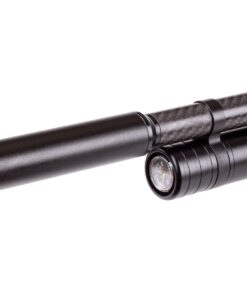
A more sculpted hardwood stock, an adjustable buttpad, M-LOK forend slots, a Picatinny rail, a carbon-fibre barrel sleeve, a regulator pressure gauge and a ratchet-style magazine are among the updates. The regulated action, sidelever, shrouded barrel and general power band remain in the same family as the earlier rifle. Consequently, familiar handling is retained while modern accessory compatibility is added.
What warranty and support can be expected?
A limited warranty of about one year is commonly stated by retailers. Proof of purchase should be retained. Modifications, incorrect fills or neglected seals can affect coverage. Spare magazines, probes and seals are typically available through specialist dealers. Inclusive after-sales practice means questions about leaks, regulator behaviour or trigger adjustment are directed to qualified technicians rather than improvised workshop experiments.
Who is this rifle intended for?
Target shooters, pest controllers and small-game hunters who want a regulated wood-stock PCP of moderate weight are the primary audience. Beginners who are prepared to learn safe PCP filling and FAC or equivalent licensing can also be well served, provided instruction is obtained. Experienced owners often appreciate the accessory rails and the quieter shrouded barrel. Every user, regardless of experience, is expected to treat power, law and safety with equal seriousness.
What should be considered before purchase?
Legal status in the buyer’s country, a suitable fill source, a quality optic, extra magazines and a secure storage solution should all be planned. Pellet supply in the chosen calibre should be confirmed. Inclusive decision-making also includes checking whether an FAC, hunting licence or club membership is required. When those elements are in place, a consistent, well-equipped shooting system can be enjoyed for range sessions and lawful field use alike.
Practical Use Scenarios
A regulated wood-stock PCP can be put to work in many lawful settings when local rules, licensing and safe backstops are respected. Consequently, range sessions, pest control, small-game hunting and quiet practice can all be supported by the same platform. Moreover, inclusive setup choices—an adjustable pad, moderate weight and simple accessory rails—allow shooters of different sizes and experience levels to participate. The following scenarios describe how the rifle is typically employed from first fill to last shot of the day.
Zeroing and Familiarisation on the Range
A controlled range is usually chosen for the first outing. Therefore, a full fill to the marked maximum is completed with a rated pump or tank, and the probe is withdrawn only after pressure has equalised. Two magazines are loaded with a single high-quality pellet type so that variables are reduced. A scope is then mounted on the Picatinny rail and a rough bore-sight is taken at a short distance.
Paper targets at 20, 30 and 40 yards are engaged next. Groups are recorded after each magazine so that holdover and wind drift can be noted. Because air is metered by the regulator, velocity remains relatively stable across a useful string; as a result, point of impact is easier to interpret than on an unregulated rifle. Chronograph readings may be taken between strings so that a personal working shot count is established before the regulator setpoint is reached.
Inclusive practice is observed throughout. Eye and ear protection are worn. The muzzle is kept pointed at the backstop. The manual safety is applied between strings. New shooters are coached on sidelever stroke and magazine insertion so that fumbles are avoided. When groups tighten and the zero is confirmed, the same pellet lot is reserved for field use.
Quiet Practice Where Neighbours Must Be Considered
A shrouded and moderated barrel is fitted, so medium report is produced rather than a sharp crack. Consequently, short practice sessions in a private garden or club bay may be tolerated where local by-laws allow. Still, courtesy is required. Sessions are kept brief, shooting hours are respected, and a safe backstop is confirmed before the first pellet is sent.
Plinking at reactive targets—spinners, knockdowns or small steel—can be enjoyed once zero is known. Magazines are kept only half-filled at first so that follow-up shots remain deliberate. A bipod can be attached to the M-LOK forend for seated work, or a sling can be used for offhand drills. Inclusive language applies: children and unauthorised persons are kept away from the firing point, and the rifle is never left loaded when attention is elsewhere.
Pest Control Around Buildings and Outbuildings
Where licences and landowner permission exist, rodent and similar pest work is a common practical role. Dawn and dusk are often chosen because animal movement increases and wind may be lighter. A .22 chambering is frequently selected for this task because extra energy and a larger wound channel are provided. Hollow-point or hunting pellets that have already grouped well on paper are loaded.
A walking setup is prepared: sling attached, magazines charged, safety on, optic capped until the shooting position is reached. Distances are kept inside the zeroed envelope. Shots are taken only when a clear backstop of earth or masonry is present and no domestic animals or people are in line. Because the action is regulated, the first and last legal shots of a magazine remain closer in velocity, which helps ethical placement.
After each successful shot, the area is approached only when it is safe to do so. Unfired pellets are accounted for. The rifle is made safe before any carcass is handled. Inclusive and responsible practice means every pest shot is treated with the same care as a hunting shot: legal species only, clean dispatch as the goal, and no firing toward roads, windows or livestock.
Small-Game Hunting in Woodland and Hedgerow
A compact overall length of about 42 inches and a weight under seven pounds allow the rifle to be carried for several hours. Therefore, still-hunting along field edges and woodland rides can be undertaken without excessive fatigue. An adjustable buttpad is set so that winter clothing or a lighter shirt still produces a consistent mount. A low-power variable scope is often preferred so that both close quarry and slightly longer lanes can be addressed.
Movement is slow. The sidelever is cycled only when a shot is likely, so mechanical noise is minimised. The magazine ratchet helps silent loading in cover. When quarry is presented, the safety is moved only at the last moment. Shots are restricted to ranges at which groups have already been proven on paper. .22 is again the usual choice for rabbits and similar-sized game where the law allows.
Weather is considered. Light rain is managed with a simple scope cover; heavy rain is often a reason to stand down so that seals and wood are protected. Wind is read from grass and leaves because even a regulated rifle cannot cancel drift. After the hunt, the bore is checked, remaining air is noted on both gauges, and the rifle is stored securely. Inclusive hunting culture includes permission, tagging or bag limits where required, and respect for other countryside users.
Supported Field Positions and Club Competitions
Not every outing is a walk. Bench, prone and kneeling positions are used at clubs and informal field-target style sessions. A bipod is attached to the M-LOK slots for prone work. A rear bag or the off hand supports the butt. The two-stage trigger is set to a weight that can be broken cleanly without disturbing the sight picture.
Course-style targets at unknown distances reward the consistent velocity of a regulated action. Holdover marks that were written during the zeroing session are applied. Wind flags, if present, are read before each shot. Magazine changes are practised so that they do not cost time or break position. Inclusive clubs welcome shooters who need extra time for a comfortable mount; the adjustable pad and moderate weight help that process.
Travel, Transport and Multi-Stand Days
A full day may include a morning range session and an afternoon permission. The rifle is transported unloaded, magazines empty, in a locked case that protects a mounted optic. Fill bottles or a pump travel separately according to vehicle and airline rules. On arrival, a top-up fill is completed only if the gauge shows that the working string would otherwise be short.
Between stands the sling is used so that hands remain free for gates and dogs. The carbon-fibre sleeve and moderator keep the profile relatively snag-free in brush. Inclusive planning means a companion is briefed on where the rifle will be pointed during climbs and vehicle loading. At the end of the day both pressure gauges are read so that overnight storage pressure follows the maker’s guidance.
Evening and Low-Light Use
A sturdy Picatinny rail accepts illuminated reticles or compact low-light optics. Consequently, last-light pest work can be extended where lawful. Batteries are checked before departure. The sidelever can still be operated with gloves. Shots remain limited to identified targets and proven distances; darkness is never used as an excuse for uncertain identification.
Between-Session Care That Keeps the Next Outing Ready
After each use the exterior is wiped, the fill port is capped, and magazines are emptied. A visual check of o-rings is made. If many shots have been fired, a light barrel clean is scheduled according to the manufacturer’s method. The wood stock is kept away from prolonged damp. Inclusive ownership includes labelling fill adapters and keeping spare seals so that a weekend is not lost to a forgotten probe.
When these habits are followed, the same rifle can move from paper to permission without drama. Power, law and safety remain the framework around every scenario. With a confirmed zero, a known pellet, a legal fill and a clear backstop, practical use stays both effective and responsible for every shooter who takes the field.




Reviews
There are no reviews yet.