Discover Precision and Performance with the Weihrauch HW44 Air Pistol PCP
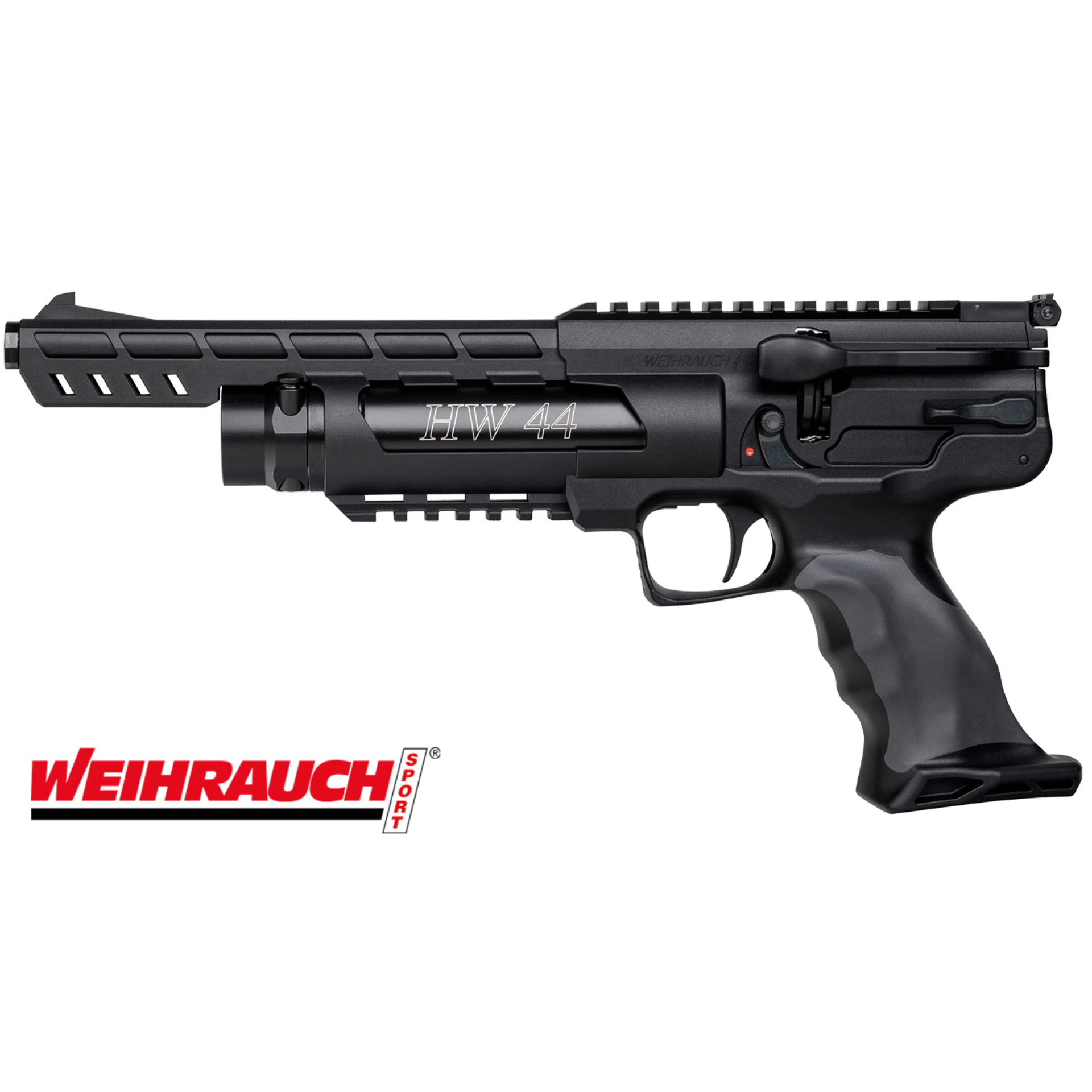
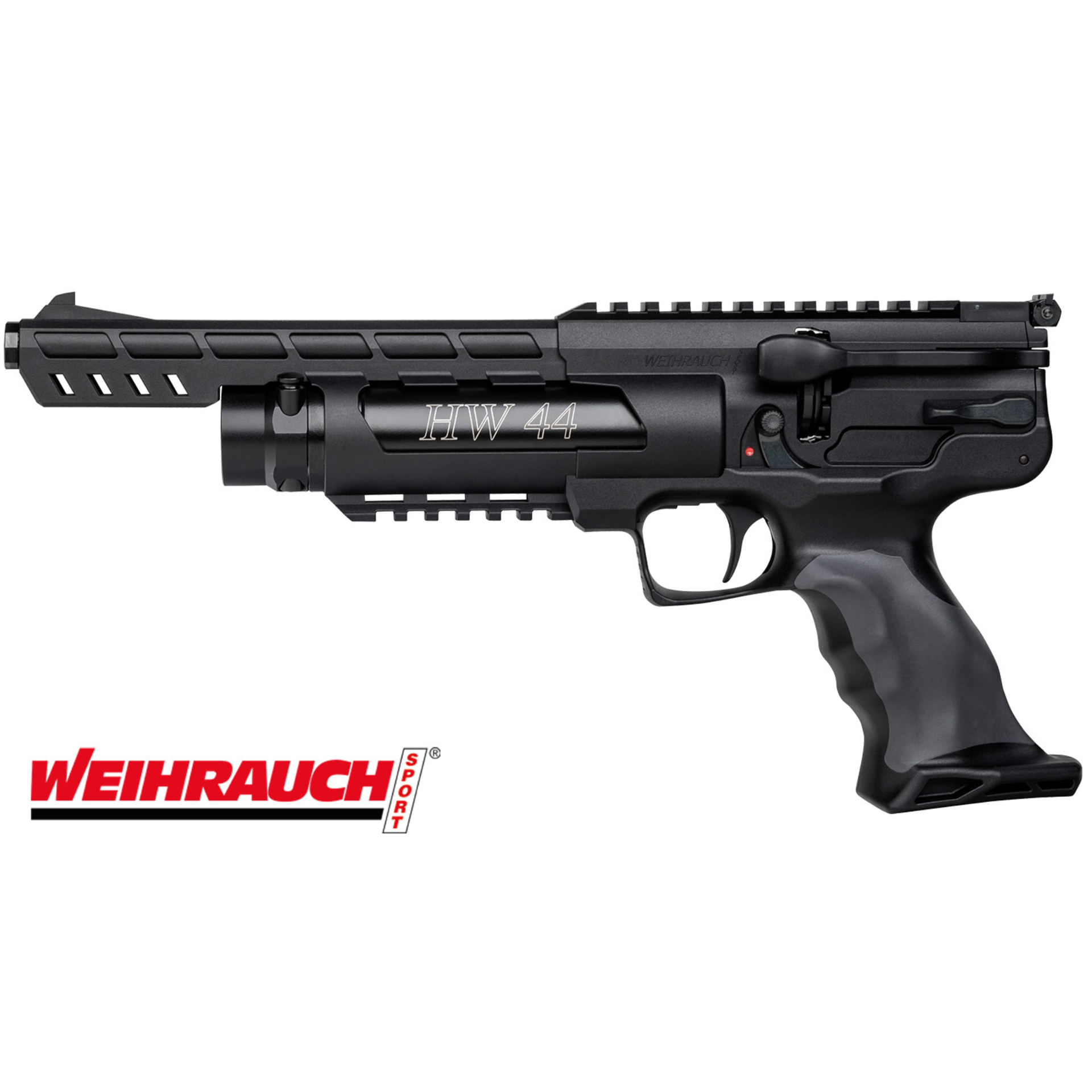
Exceptional accuracy and refined engineering are delivered by the Weihrauch HW44 Air Pistol PCP, a pre-charged pneumatic masterpiece crafted for shooters who value consistency, balance, and lasting quality. Designed by the renowned German manufacturer Weihrauch, this multi-shot air pistol draws inspiration from the proven HW110 platform while being compact enough for comfortable handgun use. Whether target practice, skill development, or recreational plinking is pursued, the Weihrauch HW44 Air Pistol PCP stands ready to elevate every session.
Why the Weihrauch HW44 Air Pistol PCP Stands Apart
A vibration-free shot release is achieved through thoughtful engineering, while rapid repeating is made possible by the efficient side-lever action and 10-shot rotary magazine. Two magazines are typically supplied, so continuous shooting sessions can be maintained with minimal interruption. Furthermore, an integrated air reservoir is filled to a maximum of 200 bar via a convenient quick-fill system, and pressure levels are monitored at a glance thanks to the built-in gauge.
Consistency is enhanced by the regulated valve system, which helps deliver predictable velocity across a high shot count—approximately 105 shots in .177 calibre and around 125 shots in .22 calibre from a full charge (figures may vary slightly depending on pellet choice and conditions). In addition, the two-stage adjustable match trigger provides a crisp, clean break that can be fine-tuned to individual preference, supporting improved accuracy for both newcomers and experienced marksmen.
Key Features of the Weihrauch HW44 Air Pistol PCP
The following highlights showcase the thoughtful design elements that make this pistol a standout choice:
- Pre-charged pneumatic system with built-in 200-bar air cartridge
- Integral pressure gauge and quick-fill probe for straightforward recharging
- 10-shot rotary magazine (two magazines included) for fast follow-up shots
- Side-lever cocking action that is smooth and reliable
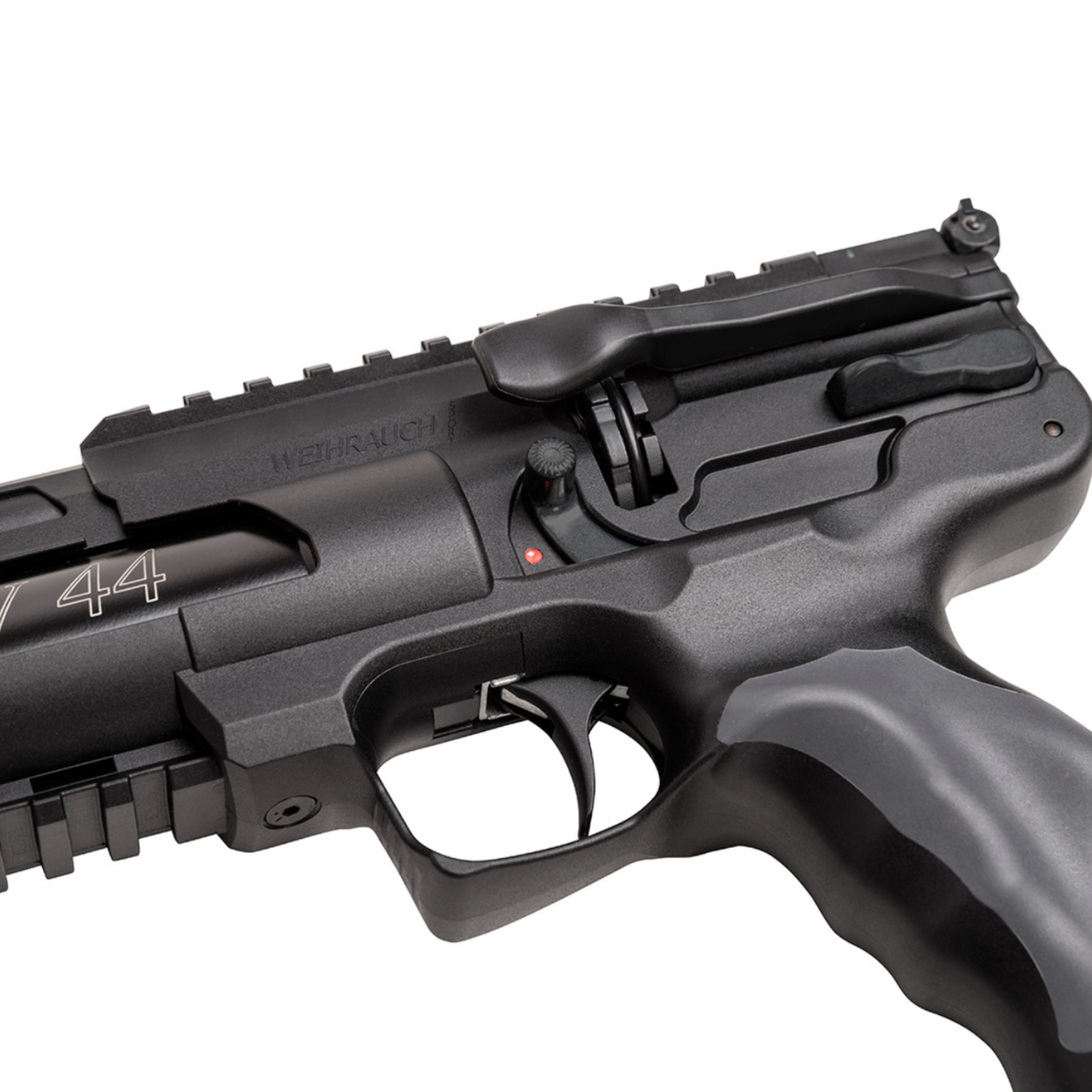
- Two-stage adjustable match trigger for precise shot control
- Ambidextrous manual safety levers positioned for convenient access
- Slip-resistant, semi-anatomical grips designed to fit both left- and right-handed shooters
- Dual Picatinny rails allowing easy mounting of optics, red-dot sights, or lasers
- Adjustable open sights (rear fully adjustable) plus compatibility with a dedicated moderator
- Well-balanced ballistic polymer frame for comfortable handling
- Available in popular calibres including .177 and .22
Moreover, the overall length measures approximately 337–360 mm with a barrel length near 247–250 mm, while the weight remains manageable at roughly 0.78–1.3 kg depending on configuration. Consequently, the Weihrauch HW44 Air Pistol PCP feels steady in the hand without becoming fatiguing during extended range time.
Superior Accuracy and Handling for Every Shooter
Match-grade barrel quality is combined with the regulated power delivery to produce tight groups that impress even seasoned airgun enthusiasts. Sub-20 mm groups at 25 metres have been reported under controlled conditions, and practical accuracy at typical pistol distances remains highly rewarding. Additionally, the absence of significant recoil allows focus to stay on technique rather than managing movement.
Inclusive design is evident throughout. The ambidextrous grip and dual-sided safety ensure that left-handed and right-handed users alike can operate the pistol confidently. Training sessions, competitive practice, or casual backyard shooting can therefore be enjoyed by a wide range of individuals. Furthermore, the option to add a moderator (available separately in many markets) helps reduce report for more neighbour-friendly sessions, while the Picatinny rails open possibilities for customised sighting systems that suit different preferences and lighting conditions.
Practical Performance and Everyday Usability
Filling the reservoir is straightforward: the protective plug is removed, the probe is inserted, and the system is charged to the recommended 200 bar using divers’-quality air. Once filled, the pressure gauge provides clear visual feedback so remaining capacity can be monitored. In addition, the magazine loading process is simple—pellets are seated into the rotary wheel, and the magazine is inserted from the left side until retained by the catch. Double-loading is prevented by the thoughtful mechanism, adding an extra layer of safety and reliability.
Power output is typically regulated for controlled performance suitable for target work and skill building (UK-legal versions often deliver around 5–6 ft/lbs, while higher-output FAC versions are available in certain markets). Therefore, the Weihrauch HW44 Air Pistol PCP serves effectively for precision training while remaining versatile enough for informal pest control at appropriate ranges where local regulations allow.
Built for Longevity and Enjoyment
German manufacturing standards are upheld in every component, from the robust polymer chassis to the refined internal valve system. As a result, the Weihrauch HW44 Air Pistol PCP is engineered to provide years of dependable service when properly maintained. High-quality diabolo pellets are recommended for optimal results, and routine care of the barrel and seals helps preserve peak performance.
Shooters of varying experience levels will find the pistol approachable yet capable of rewarding advanced technique. Beginners can develop fundamentals with the predictable trigger and stable platform, while more advanced users can explore the full accuracy potential through careful stance, grip, and sight picture. Moreover, the balanced design and ergonomic grips reduce fatigue, encouraging longer, more productive practice sessions.
Elevate Your Shooting Experience Today
The Weihrauch HW44 Air Pistol PCP represents a refined blend of modern PCP convenience and classic Weihrauch craftsmanship. Excellent accuracy is paired with vibration-free operation, a high shot count, and user-friendly features that accommodate diverse needs. Transitioning from spring-powered or single-shot pistols becomes seamless thanks to the multi-shot capability and consistent power delivery.
Whether the goal is tightening groups on paper, honing competitive skills, or simply enjoying precise plinking, this air pistol delivers satisfying results. Furthermore, the ability to customise with optics or a moderator allows the platform to grow alongside the shooter’s evolving preferences.
Ready to experience the difference that premium engineering makes? Explore the Weihrauch HW44 Air Pistol PCP and discover how German precision, thoughtful ergonomics, and reliable PCP performance can transform range time. With its inclusive design, outstanding consistency, and conversion-ready features, this pistol invites shooters of all backgrounds to aim higher and shoot with greater confidence
Weihrauch HW100X Karbine, Thumbhole PCP Air Rifle, HW35, HW45, HW97K, HW70, HW40, HW30, HW80, HW95, HW98, HW77, HW50S, HW44 and HW90, while explaining differences between PCP, spring piston, underlever, break-barrel, compressed-air rifles and air pistols. It can also incorporate comparison phrases such as Weihrauch HW77 vs HW97, HW77 vs break barrel air rifle, HW77 Green Laminate vs HW97 comparison, and informational searches including what are air rifles, what are air pistols, what is a PCP air rifle, and precision shooting airgun.
For the HW77 specifically, the content can discuss the Weihrauch HW77 air rifle, HW77 Green Laminate rifle, Weihrauch underlever air rifle, HW77 spring piston air rifle, German precision air rifle, Weihrauch HW77 accuracy review, Weihrauch HW77 Green Laminate price and specs, is Weihrauch HW77 good for beginners, air rifle with low recoil, durable air rifle for outdoor use, reliable air rifle for long term use, top rated underlever air rifle, best Weihrauch air rifles, and most accurate air rifle for target shooting.
Broader terminology can also be integrated naturally, including german air rifle, accurate air rifles, compressed air rifles, air rifle makes, spring piston, air pistols, rifles de aire, high quality German airguns, affordable premium air rifle, hw100 airgun, Weihrauch HW100, Weihrauch HW95, Weihrauch HW50S, Weihrauch HW44, Weihrauch HW98, Weihrauch HW70, Weihrauch HW30, HW30S, HW50, HW50 S, HW40, HW44, HW70, HW98, HW100, HW97K, HW97K, HW35 air rifle, HW77 air rifle, Weihrauch English, Weihrauch Englisch, H45, SK X rifles, and air shot gun.
Commercial search expressions such as Weihrauch HW35E for sale, Weihrauch HW77 for sale, buy Weihrauch HW77 Green Laminate online, best price Weihrauch HW77, where to buy Weihrauch HW77, and Weihrauch HW77 in stock can be discussed as examples of common buyer search terminology without directing readers toward acquiring a weapon.
.
Frequently Asked Questions
What power system is used in this model? A pre-charged pneumatic design is employed, featuring a built-in air reservoir that is filled to a maximum pressure of 200 bar. Divers’-quality dry air is recommended for charging so that internal components remain protected from moisture and contaminants. Once filled, the system delivers a high number of consistent shots thanks to the regulated valve arrangement. The integral pressure gauge is positioned for easy viewing, allowing remaining capacity to be checked at a glance before each session begins. Quick-fill equipment is included, making the recharging process straightforward and efficient whether a hand pump or a scuba tank adapter is preferred.
Is this suitable for beginners as well as experienced shooters? The platform is approachable for those new to pre-charged pistols while still offering the refinement that experienced shooters demand. The predictable trigger, low recoil, and high shot count allow newcomers to concentrate on stance, grip, and sight picture without fighting the hardware. At the same time, the inherent accuracy and adjustable trigger give advanced users the tools needed to refine technique and explore longer-range pistol shooting. Inclusive ergonomics further ensure that a wide range of hand sizes and handedness can be accommodated.
How is the air reservoir filled safely? The protective friction-fit plug is first removed from the fill port located near the front of the cylinder. The tapered quick-fill probe is then inserted fully, and the reservoir is charged to a maximum of 200 bar using clean, dry air. Over-filling beyond the stated limit must be avoided. Once the desired pressure is reached, the probe is withdrawn and the plug is replaced to keep debris out of the valve. The integral gauge should always be consulted before and after filling so that remaining capacity is known at all times.
What maintenance is recommended? Routine care is straightforward. After each session the exterior can be wiped with a soft cloth to remove fingerprints and moisture. The barrel benefits from occasional cleaning with appropriate airgun cleaning pellets or a soft pull-through, especially when changing pellet brands. Seals and the fill probe should be kept free of grit. Only manufacturer-recommended lubricants should be used on moving parts, and the air system should never be left completely empty for long periods. Stored correctly in a dry environment, the pistol retains its performance for many years.
Are there differences between standard and higher-power versions? In markets where power limits apply, a regulated lower-energy version is offered that typically produces around 5–6 ft/lbs. In other regions a higher-output version is available that delivers substantially more energy while retaining the same magazine system, trigger, and overall architecture. Both share the same high build quality and shot-to-shot consistency; the primary distinction lies in muzzle energy and, consequently, the practical shot count from a full charge. Local regulations should always be checked before purchase.
What accessories are commonly paired with this pistol? Popular additions include a dedicated moderator, a compact pistol scope or red-dot sight, a bipod for rested shooting, and extra magazines for uninterrupted practice. A quality hand pump or a portable air bottle with the correct probe adapter makes field filling convenient. Many owners also keep a selection of premium pellets on hand so that the most accurate load for their particular barrel can be identified and stocked.
How does the side-lever action contribute to the shooting experience? The side-lever is smooth and positive, requiring only a short, low-effort stroke to cock the hammer and index the next pellet. Because the action is based on a proven multi-shot rifle platform, reliability is high and the lever remains consistent even after thousands of cycles. The design also prevents accidental double-loading, adding an extra layer of operational safety. Rapid follow-up shots are therefore easy to achieve without breaking concentration or grip.
Is the safety system easy to use under range conditions? Manual safety levers are positioned on both sides of the action just above the trigger guard. Moving either lever upward places the pistol in the fire position; pushing it downward engages the safe position. The ambidextrous layout means the safety can be operated without shifting the shooting hand, which is particularly useful during timed practice or when shooting from awkward positions. The mechanism is positive and provides clear tactile feedback.
What kind of shooting positions work well? The balanced weight and ergonomic grip make the pistol comfortable for classic two-handed isosceles or Weaver stances. Supported positions—resting the hands on a bench bag or using a bipod—allow the full accuracy potential to be explored at longer distances. Freehand standing practice develops fundamental skills, while seated or prone positions with support open up precision work beyond typical pistol ranges. The relatively short overall length also makes the pistol easy to handle in confined club ranges or home practice setups.
How important is pellet selection? Pellet choice has a noticeable effect on group size. Most barrels show a preference for one or two specific brands and weights. Systematic testing at a fixed distance quickly reveals the most accurate combination. Once identified, that pellet can be used for the majority of practice so that results remain consistent and meaningful. High-quality diabolo pellets are strongly recommended; steel or other non-standard projectiles should be avoided.
What should be considered when choosing between the two main calibres? Trajectory, wind resistance, and energy delivery differ between .177 and .22. The smaller calibre generally offers a flatter trajectory and higher shot count, making it popular for formal target practice. The larger calibre delivers more momentum on impact and is often preferred for informal reactive targets or short-range pest control where regulations permit. Both calibres share identical handling characteristics, so the decision can be based purely on the type of shooting that will be done most frequently.
Does the design help reduce fatigue during longer sessions? Yes. The well-balanced frame, slip-resistant grips, and modest weight combine to keep the pistol feeling stable without placing excessive strain on the wrists or forearms. Because there is virtually no felt recoil, muscle tension remains lower than with spring-powered alternatives. Many shooters report that they can complete longer practice sessions with less physical tiredness, which in turn supports better concentration and more productive training.
What storage and transport considerations apply? A rigid case that supports the pistol securely and protects the open sights or mounted optics is ideal. The air reservoir should not be left at full pressure for extended periods of non-use; a partial charge is often preferred for long-term storage. The pistol should be kept in a dry environment away from extreme temperatures. When travelling to a range, local transport regulations for airguns must always be observed.
How does the regulated valve system benefit everyday shooting? By smoothing out the pressure curve, the regulated valve keeps velocity variation low across a large portion of the air charge. This consistency means point of impact remains more predictable from the first shot to the later ones, reducing the need for constant hold-over adjustments. Chronograph testing typically shows only modest velocity spreads over long strings, confirming the practical advantage of the system for both target and recreational use.
Can the pistol be used effectively for skill development? Absolutely. The combination of a crisp adjustable trigger, high shot count, low recoil, and inherent accuracy creates an excellent training platform. New shooters can focus on fundamental techniques without fighting the hardware, while more experienced users can refine advanced skills such as precise trigger control and longer-range hold. The multi-shot capability also allows realistic practice of follow-up shots and rapid target transitions.
What makes the overall package appealing for regular range use? Reliable multi-shot operation, consistent power delivery, comfortable ergonomics, and the ability to add optics or a moderator all contribute to a versatile and enjoyable experience. The design supports both formal practice and relaxed recreational shooting. Inclusive features ensure that a wide range of users can operate the pistol effectively, while the high build quality supports years of dependable service when basic maintenance is observed.
Calibres, Power Options and Accessories
Available Calibres Two primary calibres are offered for this pre-charged pneumatic pistol, giving shooters the flexibility to match the platform to their preferred style of use. The .177 option is widely chosen for precision target work and formal practice. Its flatter trajectory and higher shot count from a full 200-bar charge make it especially well suited to paper targets, spinners and skill-development sessions. Groups remain tight when quality pellets are selected, and the lighter projectile weight contributes to a lively yet controllable feel.
The .22 calibre delivers greater momentum on impact while still retaining the same refined trigger, magazine system and overall balance. Many users find this option particularly satisfying for informal reactive targets and short-range applications where regulations permit. Shot counts remain generous—typically around 125 from a full fill—and the slightly heavier pellets help maintain consistency in varying conditions. Both calibres share identical handling characteristics, ambidextrous grips and Picatinny rail layout, so the choice between them rests purely on personal preference and intended use rather than any compromise in ergonomics or reliability.
Power Levels and FAC Versions Power delivery is carefully regulated to ensure consistent performance across the majority of the air charge. In markets where legal limits apply, the standard version produces approximately 5–6 ft/lbs (roughly 7–8 joules). This output is ideal for club ranges, backyard practice and structured training, offering excellent accuracy without excessive energy. The regulated valve system keeps velocity variation low, so point of impact remains predictable from the first shot to the later ones in the charge.
In regions where higher power is permitted, full-power FAC versions are available. These configurations unlock significantly greater muzzle energy—commonly reaching the mid-teens of foot-pounds in .177 and higher still in .22—while retaining the same 10-shot rotary magazine, two-stage adjustable trigger and overall architecture. The increased energy opens up longer-range possibilities and more authoritative performance on reactive targets, yet the pistol’s balance and low felt recoil continue to support precise shot placement. Chronograph testing of FAC examples has shown impressive consistency, confirming that the regulated design continues to deliver reliable results even at elevated power levels. Local licensing and legal requirements must always be observed when selecting or using a higher-power variant.
Shot Consistency and Practical Performance Regardless of the power level chosen, the built-in regulator (or regulated valve arrangement) plays a central role in everyday usability. Velocity spreads remain modest over long strings, allowing shooters to focus on technique rather than compensating for power curve changes. In the standard configuration, more than 100 usable shots are typically available in .177 and around 120–125 in .22 from a single 200-bar fill. FAC versions trade some of that shot count for higher energy, yet still provide a practical number of consistent shots for most range sessions. The integral pressure gauge keeps remaining capacity clearly visible, so decisions about when to refill can be made with confidence.
Recommended Accessories A range of well-matched accessories further enhances versatility and personalisation. An optional dedicated moderator threads directly onto the muzzle and significantly reduces report, making the pistol more neighbour-friendly for home or club use. Because the front sight blade is raised, open sights remain fully usable after the moderator is fitted. Many shooters also appreciate the slight additional weight and length the moderator contributes to overall balance.
Optical options are equally straightforward. The upper Picatinny rail accepts compact pistol scopes, red-dot sights or holographic units, while the lower rail can accommodate lasers or other tactical accessories. A quality 2× or low-magnification pistol scope transforms longer-range accuracy potential, allowing the inherent precision of the match-grade barrel to be fully exploited. Extra 10-shot rotary magazines are a practical addition for uninterrupted practice, and a tapered quick-fill probe (often supplied) pairs easily with hand pumps or larger air bottles for convenient recharging.
Additional useful items include a sturdy bipod for rested shooting, a rigid protective case that safeguards both the pistol and any mounted optics, and a selection of premium pellets so that the most accurate load for each individual barrel can be identified. High-quality diabolo pellets in the appropriate weight for the chosen calibre consistently produce the best results; systematic testing at a fixed distance quickly reveals the preferred combination.
Putting It All Together Whether the standard regulated power level or a higher-output FAC version is selected, the platform remains true to its core strengths: consistent delivery, refined trigger control and inclusive ergonomics. The choice of .177 or .22 simply tailors the trajectory and energy characteristics to the shooter’s priorities. Adding a moderator, optic or extra magazines further customises the pistol for specific environments and goals. Together these options create a highly adaptable package that supports everything from foundational skill building to more demanding precision work, all while remaining comfortable and approachable for a wide range of users.

Reviews
There are no reviews yet.