Discover the Snowpeak T-Rex Wood Air Rifle: Classic Craftsmanship Meets Modern PCP Precision
The Snowpeak T-Rex Wood Air Rifle stands ready for shooters who value both timeless design and reliable performance. This regulated PCP air rifle pairs a beautifully finished wooden stock with consistent power delivery, quiet operation, and versatile features. Whether you enjoy backyard plinking, target practice, or small-game pursuits (where local laws allow), the Snowpeak T-Rex Wood Air Rifle delivers accuracy and comfort in a package that feels refined yet accessible.
Why Choose the Snowpeak T-Rex Wood Air Rifle?
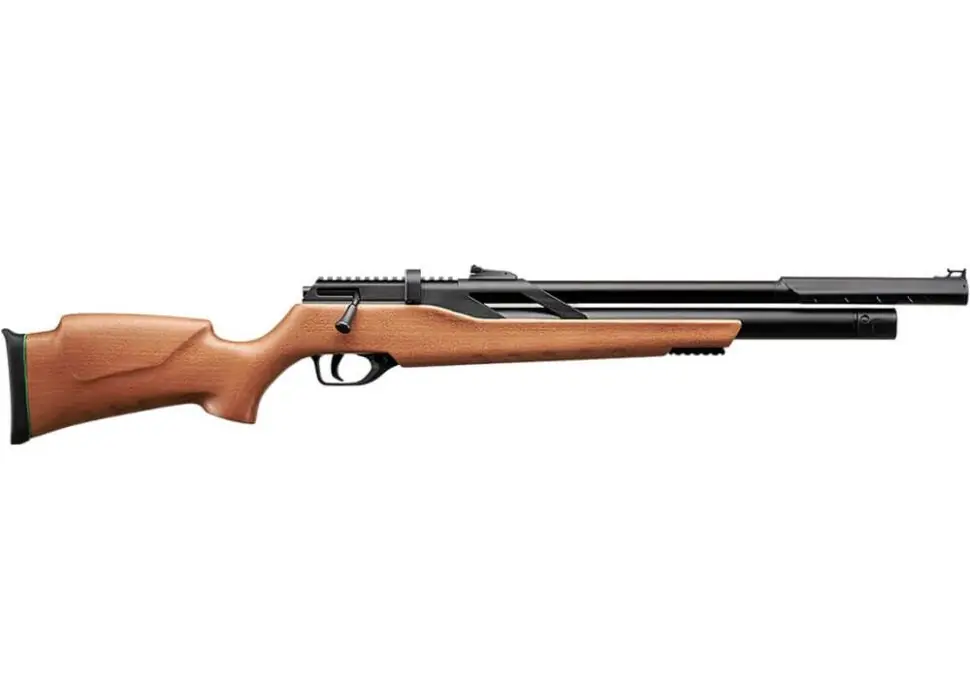
Many air rifles force a choice between traditional looks and modern technology. The Snowpeak T-Rex Wood Air Rifle eliminates that compromise. Its classic wooden stock offers natural warmth and balance, while the regulated PCP system ensures shot-to-shot consistency that spring guns simply cannot match. Furthermore, thoughtful details like an adjustable cheek pad, ambidextrous controls, and an integrated moderator make every session more enjoyable.
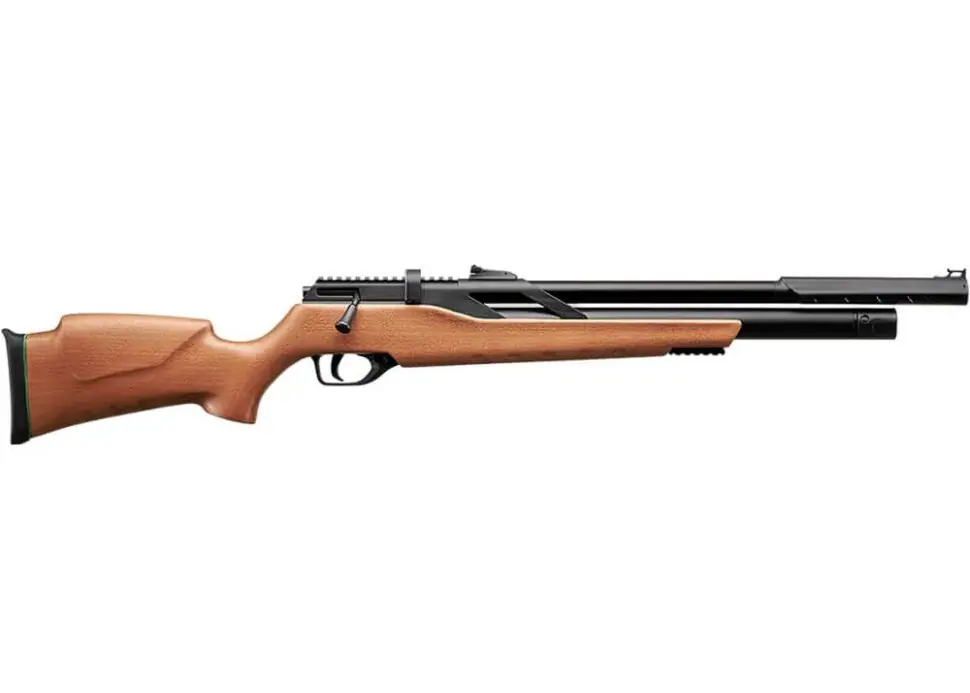
In addition, the rifle welcomes shooters of all experience levels and handedness. The bolt lever can be switched to either side, the trigger adjusts to personal preference, and the ergonomic stock helps both newer and seasoned marksmen find a natural point of aim. Inclusive design means more people can pick up the Snowpeak T-Rex Wood Air Rifle and feel immediately at home.
Key Features That Set the Snowpeak T-Rex Wood Air Rifle Apart
The Snowpeak T-Rex Wood Air Rifle packs impressive capability into a well-balanced platform. Here are the standout elements that shooters appreciate most:
- Regulated PCP powerplant – A built-in regulator maintains consistent velocity and energy across a full fill, reducing the need for constant chronograph checks and improving accuracy.
- Classic wooden stock – Warm, durable wood with a vertically adjustable cheek pad and soft rubber recoil pad for comfortable shouldering during longer sessions.
- Multi-shot rotary magazines – Capacity of 12 rounds in .177 (4.5 mm), 10 rounds in .22 (5.5 mm), and 9 rounds in .25 (6.35 mm) for quick follow-up shots.
- Ambidextrous side-lever action – Bolt lever mounts on the left or right side to suit every shooter.
- Adjustable trigger – Pull weight tunes from approximately 2 to 5 lbf so you can dial in the break that feels best.
- Shrouded barrel with integrated moderator – Noticeably quieter report that keeps the peace on the range or in the field.
- Full accessory readiness – Weaver/Picatinny rails on the receiver and forend accept optics, bipods, and other accessories. Adjustable open sights come standard for immediate use.
- Manual safety – Straightforward and reliable for confident handling.
- Practical dimensions – Approximate overall length around 790–1050 mm and weight near 2.3–3.2 kg (depending on exact configuration), making the rifle easy to carry and steady to hold.
Moreover, the air cylinder fills to a working pressure of 250 bar and provides a useful number of consistent shots per fill—typically 40 or more depending on caliber, pellet, and power setting. A fill probe is included so you can top up with a hand pump or scuba tank.
Performance and Versatility Across Calibers
The Snowpeak T-Rex Wood Air Rifle is available in three popular calibers, each tuned for different preferences. In .177, velocities can reach the higher end of the scale for flatter trajectories ideal for precision target work. The .22 version balances energy and pellet weight for excellent all-around use, while the .25 option delivers stronger impact for those who need it. Reported muzzle energies typically fall in the 23–43 joule range depending on market configuration and local power limits, with corresponding velocities such as approximately 950/850/750 fps across the three calibers.
Because the system is regulated, velocity remains stable for a greater portion of the fill. This consistency translates into tighter groups and less frustration when dialing in a new optic or testing different pellets. The rifled, shrouded barrel contributes to both accuracy and reduced muzzle report, so you can focus on the shot rather than the noise.
Transitioning between single-shot tray and magazine is straightforward. Many shooters start with the single-shot option for maximum precision work, then switch to the rotary magazine when speed becomes more important. Either way, the Snowpeak T-Rex Wood Air Rifle supports the style of shooting you prefer.
Comfort and Handling Designed for Real Shooters
A great air rifle should feel good in the hands from the first shoulder. The wooden stock on the Snowpeak T-Rex Wood Air Rifle features an ergonomic shape that promotes a stable hold. The adjustable cheek pad lets you raise or lower the comb for perfect eye alignment with open sights or a scope. Meanwhile, the rubber butt pad softens felt recoil and improves grip against the shoulder.
Because the side lever can be configured for either hand, left-handed and right-handed shooters enjoy equal access to smooth cycling. The adjustable trigger further personalizes the experience—lighter pulls for precision work or slightly heavier ones for deliberate field shots. These refinements mean fewer compromises and more enjoyable range time for everyone who picks up the rifle.
Ready for Optics and Accessories
Out of the box, the Snowpeak T-Rex Wood Air Rifle comes with adjustable open sights that include elevation and windage adjustments on the rear sight. Fiber-optic elements on some versions improve visibility in lower light. When you are ready to step up accuracy at longer distances, the full-length Weaver/Picatinny rail on the action accepts a wide range of scopes and red-dot sights. An additional rail under the forend provides a solid mounting point for a bipod or other support, expanding the rifle’s usefulness for both bench and field positions.
Who Will Appreciate the Snowpeak T-Rex Wood Air Rifle?
This rifle suits a broad range of enthusiasts. Newer shooters gain an approachable introduction to regulated PCP performance without an intimidating price or overly complex controls. Experienced marksmen value the consistency, quiet operation, and solid foundation for optics and accessories. Families or clubs that share equipment benefit from the ambidextrous design and adjustable features that accommodate different users.
In short, the Snowpeak T-Rex Wood Air Rifle rewards careful shooting while remaining forgiving enough for practice sessions. Its combination of classic wood aesthetics and modern regulated power makes it equally at home on a formal target range or a casual backyard setup (always following local regulations and safe practices).
Take the Next Step with Confidence
The Snowpeak T-Rex Wood Air Rifle delivers regulated consistency, quiet shooting, multi-shot convenience, and genuine wooden elegance in one capable package. From the adjustable cheek pad and ambidextrous controls to the integrated moderator and ready-to-mount rails, every detail supports accurate, comfortable, and enjoyable shooting.
Explore the available calibers, pair it with your preferred optic, and experience how a well-designed PCP air rifle can elevate your sessions. The Snowpeak T-Rex Wood Air Rifle is ready when you are—precision, comfort, and classic style in every shot.
Premium Rangefinding Binoculars, Precision Riflescopes and Advanced Hunting Optics
Modern optical technology gives hunters, sport shooters, wildlife observers, and outdoor enthusiasts more ways to identify distant targets, measure range, and achieve a clearer field of view. Premium Leica rangefinder binoculars remain highly regarded for combining observation and ranging technology in one compact optical platform. Popular searches include Leica Geovid 10×42 rangefinder binoculars, Leica Geovid binoculars, Leica binoculars with rangefinder, Leica Geovid Pro 10×42, and Geovid Pro 10×42. Whether someone is researching a Leica Geovid rangefinder, Leica Geovid Pro rangefinder binoculars, Leica Geovid rangefinder binoculars, or the classic Leica Geovid 10×42, the Geovid family is commonly associated with high-quality glass, strong optical clarity, and practical long-distance observation.
Beyond rangefinding models, the wider Leica binoculars collection appeals to users searching for Leica small binoculars, binoculars Leica, Leica Geovid binos, Leica bino, Leica binoculars for sale, Leica bino rangefinder, Leica camera binoculars, Leica binos, or simply a Leica binocular for travel, field observation, wildlife viewing, and outdoor use. Different magnification formats, including 10×40, can suit users who want a balance between detail, portability, and field of view.
Alternative electronic binocular technologies are also becoming increasingly popular. Searches for SIG Sauer binoculars, SIG self stabilizing binoculars, SIG Sauer binos, SIG binoculars, SIG image stabilizing binoculars, SIG binocular, and SIG auto stabilizing binoculars reflect growing interest in electronically assisted viewing. Likewise, SIG Sauer self stabilized binoculars and SIG Sauer image stabilized binoculars can appeal to users who want reduced visual movement during handheld observation. Some buyers may also encounter broader search variations such as Sigma binoculars or specification terms like 11.5ee while comparing different optical products.
Precision aiming optics occupy another major part of the premium optics market. A Zeiss red dot offers a different sighting concept from traditional magnified optics, while the Nightforce ATACR line is frequently researched by users interested in premium long-range scopes. Common variants include Nightforce ATACR 5-25×56 F2, Nightforce ATACR 4-20×50, Nightforce ATACR 5-25×56 F1, and Nightforce ATACR 4-16×50. Related searches such as Night Force ATACR, ATACR scope, Nightforce attacker, ATACR 4-20, and Nightforce ATACR 4 20×50 F1 often appear when buyers are comparing magnification ranges, focal-plane configurations, turret systems, and optical performance.
At the higher end of precision optics, Tangent Theta products are frequently associated with specialist applications requiring refined mechanical adjustment and premium optical performance. Users may search for Tangent Theta scopes, Tangent scope, Tangent scopes, Theta optics, Tangent Theta scope, and Tangent optics while researching high-performance long-range systems.
The market also includes companies such as Fierce Firearms, Fierce Arms, and Fierce Optics, which may appear in searches involving hunting equipment and optical accessories. Within the Athlon category, meanwhile, one of the more detailed product searches is Midas TAC Gen2 HD 6-24×50 APLR15 FFP MOA reticle riflescope. The broader Athlon Midas TAC family, including Athlon Midas TAC 6-24×50, is often considered by users who want substantial magnification and adjustable target-focused features.
For shooters comparing larger objective and magnification configurations, terms such as 34 56, 34×56, Athlon Argos BTR Gen2 8-34×56, Athlon BTR Gen 2, Athlon Argos BTR Gen2, Athlon Argos BTR, and Athlon Argos BTR Gen 2 commonly appear during product research. Search variations such as Athalon scopes and Athens scope may also lead shoppers toward Athlon products when researching a new gun scope, Icarus scope, longest range scope, or general hunting optic.
Anyone learning how to buy a rifle scope should compare magnification range, objective diameter, reticle design, adjustment system, eye relief, optical quality, focal-plane configuration, overall weight, and intended sporting application. Terms such as AO scope can refer to adjustable-objective configurations, while models in the Athlon Ares BTR family provide additional options for users exploring precision-oriented optics.
Mid-range magnification searches frequently include 2.5×15, Avalon Aries, 2.5/15, Athlon BTR Gen 2, Athlon scopes review, Athlon reticles, 2.5-15 scope, and repeated comparisons involving Athlon Argos BTR Gen2 8-34×56 or 34×56 configurations. These searches demonstrate how buyers often compare reticles, magnification ratios, objective sizes, and scope families rather than selecting an optic solely by maximum magnification.
Low-power variable optics are another major category. Searches such as 1 10 scope, Ares ETR 1 10, 1 10 LPVO, 1-10 LPVO, 1-10 FFP LPVO, 1×10 scope, Athlon ETR, LPVO 1-8, LPVO 1-10, and 1-10 rifle scope reflect demand for versatile magnification systems. An LPVO allows users to move between low magnification for a broad field of view and higher magnification for improved observation at extended distances, making the format useful across several sporting disciplines.
For greater magnification, the Ares ETR Gen2 UHD 4.5-30×56 APRS12 FFP IR MIL reticle represents another precision-focused configuration within the Athlon range. Related product searches include Athlon 4.5-30×56, 4.5 30, Athlon ETR, and 4.5/30. The large 56 mm objective and broad magnification range make this type of optic particularly relevant to users comparing long-distance target and field optics.
Other searches such as 14×44, 2s14, Athlon BTR 2-12, 1/2×42, Athlon BTR Gen 2, 12×4.2, 2-12x, and Athlon 2 demonstrate continued demand for more compact variable-magnification formats. A 2-12x configuration, for example, can provide a useful compromise between field of view and magnified observation without requiring the size or weight of a very high-magnification optic.
Ultimately, premium optics cover far more than a single product category. Leica rangefinder binoculars and Leica Geovid binoculars combine observation with distance measurement, while stabilized SIG Sauer binoculars emphasize steady handheld viewing. Meanwhile, Nightforce ATACR, Tangent Theta scopes, and Athlon families such as the Midas TAC, Argos BTR, Ares BTR, and Ares ETR provide a wide range of magnification, reticle, and focal-plane options. By comparing optical clarity, magnification range, objective diameter, reticle format, adjustment system, physical dimensions, and intended sporting use, buyers can narrow a broad optics market into products that better match their individual requirements.
Frequently Asked Questions
What type of air rifle is this model? This is a pre-charged pneumatic (PCP) air rifle that uses a refillable air cylinder rather than a spring or gas piston. Compressed air is stored in the cylinder and released in measured amounts with each shot. A built-in regulator helps maintain consistent velocity and energy from the first shot to the last usable shot on a fill. This design produces smoother operation, lower vibration, and more predictable accuracy compared with many traditional spring-powered rifles. The system is well suited for shooters who value shot-to-shot consistency and quieter performance.
Which calibers are available? The rifle is offered in three common calibers: 4.5 mm (.177), 5.5 mm (.22), and 6.35 mm (.25). Each caliber serves different preferences. The smaller option typically delivers higher velocity and a flatter trajectory, making it popular for precision target work and longer-range practice. The mid-size caliber balances speed and energy, offering versatile performance for both target shooting and small-game applications where permitted. The largest caliber provides greater impact energy for those who prioritize knockdown power at moderate distances. Magazine capacity adjusts with caliber—generally 12 rounds in the smallest, 10 in the middle size, and 9 in the largest—so follow-up shots remain convenient across all versions.
What is the stock made of and how does it feel? The stock is crafted from wood and finished for a classic appearance. It includes a vertically adjustable cheek pad that allows shooters to raise or lower the comb for proper eye alignment with either open sights or a mounted optic. A soft rubber recoil pad at the butt helps absorb residual energy and improves comfort during extended sessions. The overall shape is ergonomic, promoting a stable and natural hold. Many users find the combination of wood warmth and modern adjustability more satisfying than fully synthetic alternatives, especially for longer practice sessions or when sharing the rifle among different shooters.
Is the rifle suitable for both left-handed and right-handed shooters? Yes. The side-lever cocking mechanism can be installed on either the left or right side of the action. This ambidextrous design removes the usual disadvantage left-handed shooters face with many bolt- or lever-action air rifles. Combined with the adjustable cheek pad and balanced stock, the rifle accommodates a wide range of users without requiring permanent modifications. Families, clubs, or ranges that share equipment often appreciate this flexibility.
How quiet is the rifle when fired? The barrel is shrouded and fitted with an integrated moderator. This combination significantly reduces the sharp crack that many unmoderated air rifles produce. While no air rifle is completely silent, the report is muted enough for use in noise-sensitive environments such as backyard ranges, club facilities with sound restrictions, or field settings where minimizing disturbance matters. The quieter signature also makes follow-up shots less startling and helps shooters stay focused on form and accuracy.
What kind of trigger does it have? The trigger is adjustable within a practical range, typically between approximately 2 and 5 pounds of pull weight. This allows individual shooters to fine-tune the break for their preferred feel—lighter for deliberate precision work or slightly heavier for deliberate field use. The trigger is designed for clean, predictable operation once adjusted, contributing to better shot placement. A manual safety is positioned for convenient use and provides an additional layer of control during handling and transport.
Can optics be mounted easily? Yes. The action features a Weaver/Picatinny-style rail that accepts a wide variety of scopes, red-dot sights, and other optical devices. An additional rail under the forend provides a mounting point for bipods or other accessories. Adjustable open sights come standard, so the rifle is ready to shoot immediately out of the box. When a scope is added, the adjustable cheek pad helps maintain proper eye relief and alignment, making the transition from iron sights to optics straightforward.
How many shots can be expected from a full fill? The number of usable shots depends on caliber, pellet weight, power setting, and how the regulator is configured. In typical use, shooters can expect several dozen consistent shots before velocity begins to drop noticeably. A full fill to the recommended maximum pressure (commonly 250 bar) provides a practical session length for most target or recreational shooting. A pressure gauge allows monitoring of remaining air, and a fill probe is normally included for convenient recharging with a hand pump or high-pressure tank.
Is this a good choice for beginners? Many newer shooters find the rifle approachable. The regulated system delivers consistent power without the heavier cocking effort of some spring rifles. The adjustable features—cheek pad, trigger, and ambidextrous lever—help users of different sizes and experience levels find a comfortable setup. At the same time, the performance level is high enough that more experienced shooters continue to enjoy and develop with the rifle rather than quickly outgrowing it. Proper instruction on safe handling, filling procedures, and local regulations remains essential for all users.
What accessories or items are typically included? Standard packaging usually contains the rifle, at least one rotary magazine, a single-shot tray for precision work, a fill probe, spare O-rings, and basic tools such as Allen keys. Exact contents can vary by retailer and region, so it is always wise to confirm with the seller. Most buyers will also want pellets matched to the chosen caliber, a suitable scope if desired, and a method for filling the air cylinder (hand pump or scuba tank with appropriate fittings).
How does the rifle perform for accuracy? When paired with quality pellets and a stable shooting position, the rifle is capable of producing tight groups at typical air-rifle distances. The regulated air system, quality barrel, and solid mounting platform for optics all contribute to repeatable results. As with any precision tool, results improve with practice, proper pellet selection, and attention to fundamentals such as consistent hold and trigger control. Many owners report satisfying accuracy both with the factory open sights and after mounting a scope.
Is the rifle suitable for hunting or pest control? Where local laws and regulations permit the use of air rifles for such purposes, the available power levels and caliber options make the rifle a viable choice for small game or pest management at appropriate ranges. Ethical hunting requires sufficient energy for clean harvests, proper shot placement, and strict adherence to all legal requirements. Always verify regulations in your area before considering any field use beyond target practice.
What maintenance is required? Routine care is relatively straightforward. Keep the exterior clean and free of debris. Apply a light coat of suitable oil to the wooden stock as needed to protect the finish. Avoid over-lubricating the air system; follow manufacturer recommendations for any internal maintenance. Check O-rings periodically and replace them if they show signs of wear. Store the rifle with some air pressure remaining in the cylinder rather than completely empty, and always follow safe storage practices that keep the rifle secure and inaccessible to unauthorized users.
How does the wooden version compare with synthetic-stock models? The wooden stock offers a traditional appearance and a different tactile feel that many shooters prefer. Weight and balance can vary slightly between versions, but core performance features—regulated PCP system, magazine capacity, ambidextrous lever, adjustable trigger, and moderator—remain consistent. Choice often comes down to personal preference for aesthetics, temperature feel in different weather, and long-term care of the material.
Can the rifle be used for competitive or formal target shooting? While it is not purpose-built as a dedicated competition rifle, its consistency, adjustability, and optics compatibility make it suitable for informal matches, club events, and serious practice. Shooters who focus on improving fundamentals often find the platform rewarding. For formal disciplines with strict equipment rules, always confirm compliance with the governing organization.
What should new owners do first after receiving the rifle? Begin by reading the owner’s manual thoroughly. Familiarize yourself with the safety, filling procedure, magazine loading, and cocking process. Confirm that the side lever is positioned for your preferred hand. Adjust the cheek pad and trigger to suit your needs. Start with the open sights or a basic optic at short range to confirm function and zero before moving to longer distances. Always use appropriate eye and ear protection and follow all local laws regarding air-rifle ownership and use.
These answers cover the most common questions owners and prospective buyers raise. Performance, features, and legal considerations can vary by exact configuration and location, so consulting the manufacturer’s documentation and local regulations provides the most accurate guidance for any individual situation.
A Full Day with a Versatile PCP Air Rifle: Practical Scenarios from Setup to Pack-Down
Early morning light filters through the trees as the range opens. A shooter arrives with a well-organized case, ready for a mixed session of precision work and informal practice. The rifle inside features a classic wooden stock that already feels familiar in the hands. After a quick visual check, the first task is preparing the air system.
A high-pressure tank or hand pump connects via the included fill probe. The cylinder takes air smoothly up to the recommended working pressure. A glance at the gauge confirms a full charge. Because the system is regulated, the shooter knows the first several dozen shots will deliver consistent power rather than the declining velocity common with unregulated designs. This reliability matters when the goal is measurable improvement rather than simply making noise.
Next comes magazine loading. Pellets of the preferred caliber drop cleanly into the rotary magazine. For the opening strings the shooter chooses the multi-shot option, valuing the ability to stay on target for follow-up shots without breaking position. A single-shot tray stays in the bag for later, when maximum precision becomes the priority. The side-lever cocks with a smooth, moderate effort. The lever currently sits on the right side, but the shooter knows it can be swapped if a left-handed friend joins later in the day. That flexibility has already proven useful during shared range sessions.
The wooden stock settles into the shoulder. The adjustable cheek pad is raised slightly so the eye aligns naturally with the scope mounted on the Picatinny rail. A soft rubber pad cushions the shoulder. Even after an hour of continuous shooting, the combination of wood and padding keeps fatigue low. The open sights remain available as a backup; their adjustable rear unit allows quick confirmation of zero if the optic is ever removed.
At the 25-meter line the first groups form. Five-shot strings land in tight clusters. The regulated air delivery shows its value—velocity remains steady, so point of impact does not wander as the cylinder pressure drops. A light breeze moves the grass flags, yet the trajectory stays predictable. When the magazine empties, a second one slides in quickly. The quiet report from the shrouded barrel and integrated moderator draws appreciative comments from neighboring shooters. The muted sound keeps the environment pleasant and allows clearer communication on the line.
Mid-morning brings a change of pace. The shooter moves to an informal field-target style course set among the trees. Positions vary: sitting, kneeling, and a few offhand shots at closer targets. The rifle’s balance helps here. Weight is manageable for extended holds, and the forend rail accepts a small bipod for the more deliberate shots. Adjusting the cheek pad once more aligns the eye perfectly for the different head positions required by each stance. The trigger, previously tuned to a comfortable middle weight, breaks cleanly without disturbing the sight picture.
A left-handed companion arrives and asks to try a few strings. Within a couple of minutes the side lever is moved to the opposite side. No tools beyond a basic Allen key are needed. The visitor settles in, raises the cheek pad a fraction, and begins shooting. The same consistent performance appears on their target. Shared equipment that truly works for both hands removes friction and keeps the focus on enjoyment and improvement.
Lunch provides a natural break. The rifle is cleared, magazine removed, and safety engaged. A light wipe-down removes dust from the wooden stock. A small amount of appropriate oil keeps the wood protected against changing humidity. The air cylinder still holds useful pressure, so there is no need for an immediate refill. This practical endurance means fewer interruptions during a long day.
Afternoon shifts to deliberate accuracy work. The single-shot tray replaces the magazine. Each pellet is loaded carefully. Groups at 40 and 50 meters tighten further. The shooter experiments with different pellet weights, noting how the regulated system responds. Because power remains stable, differences in group size can be attributed more confidently to pellet choice and technique rather than to changing velocity. Notes go into a small logbook for future reference.
Later, a short pest-control scenario is discussed with a fellow shooter who manages a rural property. Where regulations permit, the available energy levels and caliber options make the rifle suitable for close-range work on small pests. The quiet report reduces the chance of disturbing livestock or neighbors. Ethical considerations remain central: only legal targets, only at appropriate distances, and only with sufficient energy for a clean outcome. The conversation underscores responsible ownership rather than casual use.
As the sun lowers, the session winds down with a few informal plinking strings at reactive targets. The multi-shot magazine returns. Follow-up shots come quickly, and the soft report keeps the activity relaxed. Even after several hours the wooden stock still feels comfortable. The adjustable features have allowed small changes throughout the day as fatigue or position shifted, preventing the gradual discomfort that can creep in with fixed stocks.
Packing up is straightforward. Residual air pressure is left in the cylinder as recommended. Magazines are emptied and stored separately. The scope remains mounted because the zero has proven stable. A final check confirms the safety is on and the action is clear. The rifle returns to its case, ready for the next outing.
Throughout the day several practical strengths stand out. Consistency from the regulated system removes one variable from the accuracy equation. The wooden stock with its adjustable cheek pad and soft pad supports long sessions without hot spots or awkward head positions. Ambidextrous controls make the rifle genuinely shareable. Quiet operation improves the experience for everyone on the range and expands the places where the rifle can be used thoughtfully. Optics mounting is simple and secure, yet the open sights remain serviceable for quick sessions or backup use.
Maintenance stays light. After returning home a more thorough wipe-down and a check of the O-rings take only a few minutes. The fill probe and spare seals stay in the case so the next range day begins without hunting for small parts. Storage follows standard safe practices: secure, dry, and inaccessible to unauthorized users.
The same rifle adapts to different moods and goals. One outing may focus purely on group size and pellet testing. Another may emphasize positional shooting and field-target style challenges. A third might involve introducing a new shooter to the fundamentals. In each case the combination of reliable power, thoughtful ergonomics, and quiet performance supports the activity rather than limiting it.
Weather changes little about the routine. On cooler mornings the wooden stock feels less cold than some synthetics. In warmer conditions the cheek pad and grip areas still provide secure purchase. Rain requires the usual care—keeping the action protected and drying the wood thoroughly afterward—but does not render the rifle unusable.
Over repeated sessions small personal refinements accumulate. Trigger weight settles at a preferred setting. Cheek-pad height becomes second nature. Preferred pellets are identified for each distance. The rifle itself remains a stable platform while the shooter continues to improve. That partnership between consistent equipment and developing skill is one of the quieter satisfactions of regular practice.
Safety habits reinforce every stage. Eye and ear protection stay on. Muzzle awareness never lapses. Filling occurs only with the proper equipment and attention to pressure limits. Magazines are loaded only when ready to shoot. These disciplines turn a capable tool into a safe and rewarding companion for years of use.
By the end of a full day the practical value is clear. The rifle supports focused precision work, relaxed plinking, shared sessions, and responsible field applications where allowed. Adjustments take moments rather than requiring permanent modifications. Power stays predictable. Noise stays modest. Comfort lasts. The result is more time spent shooting well and less time fighting the equipment.
Future outings will follow similar patterns with small variations. Sometimes a bipod will stay attached for supported precision. Sometimes the open sights will be used exclusively for a skills-building session. Sometimes a new optic will be tested. In every case the underlying platform remains ready: regulated, adaptable, and comfortable enough to encourage longer and more productive practice.
This is how the rifle earns its place in a regular shooting routine—not through dramatic claims, but through steady, practical performance across the situations that everyday shooters actually encounter.


Reviews
There are no reviews yet.