
$250.00
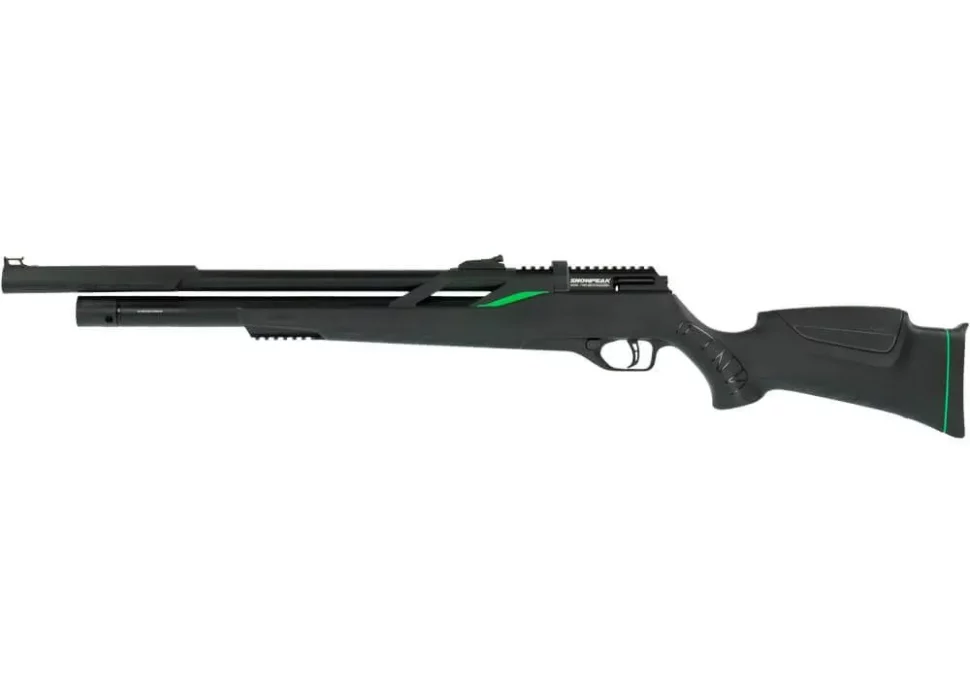
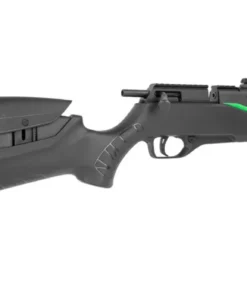
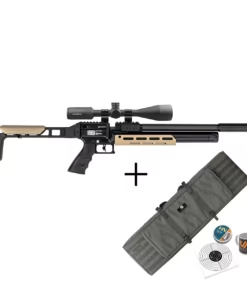
The Snowpeak T-Rex is a regulated PCP air rifle with a stock made of low-maintenance synthetic material. This stock comes with a vertically adjustable cheek pad and a rubber recoil pad that makes shouldering more comfortable and partially absorbs recoil. The air cylinder with a working pressure of 250 bar offers 230 cc’s of pressurised air.
Snowpeak fitted the T-Rex with open sights, of which the rear sight can be adjusted vertically and horizontally. They also added Weaver/Picatinny rails to the action and forend, which can be used to mount optics and accessories such as a bipod. The shrouded barrel features a moderator that suppresses the muzzle sound of a shot.
The bolt lever can be mounted on the left and right side to suit both left and right-handed shooters. Besides this, the trigger pressure can be adjusted from 2 to 5 lbf (900 to 2300 grams).
For this item we have to carry out an age check.
You can upload a copy/scan/photo of a legal identification document such as a passport, European ID or driver’s license in the order. Parts of the document may be made illegible or designated as a copy. However, your name, document number and place of issue must be legible. Your copy ID will only be used for verification purposes and will not be retained. If you are not able to upload it right now, we will contact you per email before shipping
| Brand | Snowpeak |
|---|---|
| Model | .177 / 4,5, .22 / 5,5, .25 / 6,35, .30 / 7,62, .35 / 9,0 |
| Energy (Joule / ft.lbs) | 26/19, 46/34, 62/46 |
| Cocking system | Bolt action |
| Magazine capacity | 10 (.22), 12 (.177), 9 (.25) |
| Weight (gram) | 3150 |
| Barrel length (mm) | 480 |
| Length (mm) | 1048 |
| Mounting base | Weaver / Picatinny |
| Rifle Stock Type | Ambidextrous |
| Stock material | Synthetic |
| Extra accessories included | Fill probe, Magazine, O-ring kit, Tools |
The Snowpeak T-Rex Airrifle delivers regulated PCP performance, consistent accuracy, and thoughtful ergonomics in an accessible package designed for target shooters, plinkers, and enthusiasts who value reliability without unnecessary complexity. This pre-charged pneumatic air rifle combines a synthetic polymer stock, integrated sound moderation, and ambidextrous controls to create a balanced platform that suits a wide range of users. Whether you are refining your skills at the range or enjoying extended sessions outdoors, the Snowpeak T-Rex Airrifle stands out as a practical choice that prioritizes shot consistency and user comfort.
Many air rifles force compromises between power, weight, and features. In contrast, the Snowpeak T-Rex Airrifle balances these elements effectively. It uses a regulated PCP system with a substantial air cylinder (typically around 230 cc) that supports multiple consistent shots per fill. The internal regulator helps maintain stable pressure, which translates into more predictable velocities and tighter groups over a string of shots.
Furthermore, the rifle incorporates a shrouded barrel finished with an integrated moderator. This design reduces report while protecting the rifled barrel, making range sessions more pleasant for the shooter and those nearby. The overall weight stays manageable at approximately 3.15 kg, so the Snowpeak T-Rex Airrifle remains easy to handle during longer practice periods.
Shooters quickly notice the practical details that make this air rifle user-friendly:
In addition to these elements, the rifle often includes useful accessories such as a fill probe, spare O-rings, and tools, so owners can begin shooting and performing basic maintenance sooner.
The Snowpeak T-Rex Airrifle is commonly offered in popular calibers including .177 (4.5 mm), .22 (5.5 mm), and .25 (6.35 mm). Each option serves different priorities. The smaller calibers generally favor flatter trajectories and higher velocity for precision target work, while the larger options deliver greater energy for those seeking more impact at moderate distances.
Because the system is regulated, velocity remains relatively stable across a useful number of shots. Many users report solid consistency that supports accurate shooting at typical air-rifle distances. The 480 mm barrel length contributes to pellet stabilization, and the moderated shroud helps keep the report lower than unsuppressed designs. As a result, the Snowpeak T-Rex Airrifle works well for backyard plinking where permitted, formal range practice, or recreational field use within local regulations.
Comfort matters during extended sessions. The synthetic stock features a vertically adjustable cheek piece that helps shooters of varying builds achieve proper eye alignment with either the open sights or a mounted optic. The rubber recoil pad cushions the shoulder and improves purchase.
Moreover, the ambidextrous design removes barriers for left-handed users. Simply repositioning the bolt lever allows comfortable operation without forcing an unnatural stance. The balanced weight distribution and moderate overall length further support steady aiming. These thoughtful touches make the Snowpeak T-Rex Airrifle approachable for newer shooters while remaining satisfying for experienced ones who appreciate refined control.
A full-length Weaver/Picatinny rail on the action accepts a wide variety of scopes and red-dot sights. An additional accessory rail under the forend provides a mounting point for bipods or lights when desired. Because the open sights remain usable, owners can start shooting immediately and add glass later.
The modular nature of the platform also simplifies basic servicing. Owners can perform routine tasks with the included tools, which helps maintain performance over time. Transitioning between single-shot tray use and magazine feeding further increases flexibility depending on the shooting scenario.
This air rifle appeals to a broad audience. Beginners appreciate the manageable weight, adjustable fit, and forgiving nature of a regulated PCP system. Intermediate and advanced shooters value the consistency, rail space, and ability to fine-tune the trigger and cheek height. Left- and right-handed users both find the platform accommodating.
Those seeking an affordable entry into regulated PCP shooting often choose the Snowpeak T-Rex Airrifle because it delivers meaningful features without requiring a premium budget. It serves equally well for focused accuracy practice, casual plinking, or as a reliable platform for learning advanced airgun techniques.
Quality air rifles should feel solid in the hands and perform reliably session after session. The Snowpeak T-Rex Airrifle meets that expectation through its combination of regulated air delivery, practical ergonomics, and quiet operation. The polymer stock resists weather better than many traditional wood options while remaining lightweight. Metal components in critical areas support durability under regular use.
Additionally, the multi-shot magazine system reduces the need for constant reloading, which keeps focus on marksmanship rather than administration. The pressure gauge (where equipped) and fill-probe system make monitoring and replenishing air straightforward when paired with a suitable hand pump or compressor.
Choosing the right air rifle involves balancing power, handling, features, and cost. The Snowpeak T-Rex Airrifle addresses these factors with a regulated PCP design, inclusive ambidextrous controls, adjustable stock elements, integrated moderation, and ample mounting options. It invites shooters to enjoy consistent performance and comfortable sessions whether they are just starting out or refining established skills.
Explore available calibers and configurations to match your preferred style of shooting. Once you experience the smooth operation, stable velocities, and thoughtful details of the Snowpeak T-Rex Airrifle, you will understand why it has earned attention among value-conscious airgun enthusiasts. Add one to your collection and discover how accessible, enjoyable, and capable modern PCP shooting can be.
The modern air rifle market covers everything from recreational target shooting and pest-control platforms to sophisticated pre-charged pneumatic systems built around regulated air delivery, precision barrels, adjustable triggers, and high-capacity air cylinders. Search terms such as benjamin air rifle, bb gun rifle, benjamin marauder, pcp rifle, air bow, break barrel pellet gun, benjamin bulldog, airbow, air rifle and air pistol, and benjamin air rifles reflect how broad this category has become. Shooters researching different powerplants may encounter spring-piston rifles, CO2 systems, multi-pump pneumatics, and modern pcp air rifles, each offering a different combination of consistency, recoil, maintenance requirements, shot count, and intended use.
Among established names, the benjamin marauder remains closely associated with the PCP category. Searches such as benjamin marauder pcp, benjamin marauder air rifle, benjamin marauder .25, benjamin marauder pistol, benjamin pellet gun, benjamin pellet, and benjamin air rifle 22 break barrel often appear alongside broader phrases such as air pellet gun, airrifle, air gun rifle, pellet gun, 22 pellet gun, .177 pellet guns, 177 pelle…, pneumatic gun, high powered pellet gun, and high power pellet gun. These terms generally describe air-powered platforms in different calibers and configurations rather than one single type of shooting system.
Benjamin also appears frequently in specialized pneumatic-hunting searches. The benjamin bulldog and benjamin bulldog 457 are examples of larger-bore pneumatic designs, while the phrase benjamin bulldog 457 20 joules may appear when users are comparing market-specific energy limits or regional configurations. Likewise, benjamin airbow, benjamin air bow, benjamin bow, air bow rifle, and arrow gun refer to pneumatic systems designed to propel arrows rather than conventional pellets. Because specifications, classification, and permitted energy levels vary by jurisdiction, owners should always verify applicable local regulations before possessing, transporting, modifying, or using these platforms.
For traditional pellet shooting, phrases such as benjamin prowler, co2 pellet guns, break barrel pellet gun, hunting air rifle, and air rifle and air pistol represent several different operating systems. Break-barrel rifles rely on a spring or gas-ram mechanism, while CO2 models use disposable or refillable carbon-dioxide cartridges. PCP systems instead store compressed air inside a reservoir. That difference explains why pcp rifle, pcp rifles, air rifle pcp, and pcp air rifles are often searched separately from conventional break-barrel designs.
Maintenance is another important part of long-term ownership. Searches for benjamin air rifle repair commonly relate to seals, valves, O-rings, regulators, filling systems, trigger assemblies, gauges, and general service procedures. Air rifles operate under considerable internal pressure, so repairs involving pressure-bearing components should be handled carefully and, where appropriate, by a qualified technician. Routine maintenance normally focuses on correct lubrication, clean filling equipment, proper storage, inspection of seals, and adherence to manufacturer service guidance.
Users comparing pneumatic performance also rely on energy-conversion tools. Terms including fps to joules calculator, fps to ft lbs, airgun calculator, and airgun joules calculator describe tools used to estimate projectile energy from velocity and projectile mass. These calculations are especially relevant where airgun laws or competition rules refer to muzzle energy instead of velocity alone. A velocity number by itself does not fully describe energy because pellet mass must also be considered.
European PCP manufacturers have expanded the range of regulated and compact pneumatic platforms available to enthusiasts. Search phrases including reximex airguns, reximex rp, reximex throne gen 2, reximex throne gen2, reximex mito, reximex rpa, reximex mitos, reximex lieva, and reximex accura pcp air rifle are commonly associated with Reximex products and related research. These platforms are generally discussed in connection with PCP operating systems, adjustable ergonomics, regulated air delivery, magazine-fed configurations, and modern stock designs.
The repeated appearance of reximex airguns, reximex rpa, reximex rp, and reximex throne gen 2 illustrates how users often search both exact model names and abbreviated versions. Some queries may also contain unrelated or ambiguous terms such as sbs12, gunseek, or regional-language expressions like yivli av tüfeği. When comparing products, exact model numbers, caliber specifications, regulator settings, cylinder capacity, barrel length, energy output, and manufacturer documentation are more dependable than relying on a shortened search phrase alone.
Kral is another name frequently encountered in discussions of pneumatic rifles and sporting platforms. Airgun-focused searches include kral arms, krql, kral np 02, kral puncher, kral breaker puncher, shadow puncher, puncher mega, kral puncher k, kral pump, puncher auto, bigmax, dazzle s, raptor s, tactical tundra, empirex, np500, and air rifle pcp. Within an airgun context, these terms can refer to different PCP layouts, stock designs, barrel lengths, action types, reservoir capacities, and intended shooting applications.
International searches can produce additional spelling variants such as الكرال, kr al, kar gun, k gun, and other abbreviated terms. Model-related searches may include kr9, kp12, k12 shotgun, xm shotgun, shotgun xm, a12 shotgun, st 500, tacticalx, kora gun, akr gun, king arms fal, and kalibre pistol. Some of these phrases refer to products or categories outside ordinary airgun classifications, so they should not automatically be treated as interchangeable with PCP rifles. The same applies to conventional-firearm search phrases such as 223 rifle, 223 guns, 223 arma, 410 shotgun semi auto magazine fed, inertia shotguns, rifle cal 22 semiautomatico, av tüfeği, tabancalar, and kroll firearms. These terms describe legally distinct product categories in many jurisdictions and should be researched separately from air-powered rifles.
Similarly, phrases such as krale wholesale may appear in commercial searches, while can i buy air rifles online reflects a common legal and logistical question. The answer depends heavily on the buyer’s country, state, province, age, licensing status, power level of the airgun, delivery method, and local classification rules. Air rifles that are unrestricted in one jurisdiction may require registration, licensing, age verification, dealer involvement, or other compliance steps elsewhere. For that reason, online availability should never be assumed to mean lawful possession or lawful delivery.
When choosing between a benjamin air rifle, reximex airguns, or kral arms PCP platform, the most meaningful comparison usually involves caliber, muzzle energy, intended range, regulator consistency, air capacity, fill pressure, shot count, trigger quality, stock ergonomics, noise level, magazine design, serviceability, and availability of manufacturer-supported replacement components. A benjamin marauder, benjamin bulldog, reximex throne gen 2, reximex accura pcp air rifle, kral puncher, or kral breaker puncher may appeal to different users because each platform is engineered around a different balance of power, size, handling, and intended use.
Ultimately, the expanding world of pcp rifle, pcp rifles, pcp air rifles, air rifle pcp, air pellet gun, and pneumatic gun technology gives shooters a wide range of options for lawful sporting, recreational, competition, and pest-management applications. Understanding how systems differ is more useful than choosing on brand recognition alone. Whether researching a benjamin marauder pcp, benjamin prowler, benjamin airbow, reximex mito, reximex rpa, reximex lieva, puncher mega, shadow puncher, bigmax, or another pneumatic platform, users should compare verified specifications, follow safe handling practices, observe pressure-system maintenance requirements, and comply with all applicable local laws.
Practical Use Scenarios for Precision Air Rifle Enthusiasts
A well-designed pre-charged pneumatic platform opens the door to a wide range of practical applications that go far beyond casual plinking. When the system is regulated for consistent output, fitted with an adjustable cheek piece, equipped with an ambidextrous charging lever, and finished with a shrouded barrel and integrated moderator, everyday shooting sessions become more predictable, quieter, and more comfortable for users of different builds and dominant hands. The following scenarios illustrate how such a rifle can be put to work in real-world settings while remaining accessible, inclusive, and focused on skill development or practical outcomes.
Many shooters begin their week by packing a compact, lightweight rifle that weighs just over three kilograms and features a stable polymer stock. The adjustable cheek rest is raised or lowered until the eye sits naturally behind the optic or open sights. Because the charging lever can be mounted on either side, both left-handed and right-handed participants settle into a comfortable stance without awkward reaching or compromise. A ten- or twelve-round rotary magazine is loaded with quality pellets matched to the caliber in use, and the rifle is filled to the recommended working pressure.
Once on the firing line, the regulated air system delivers remarkably uniform velocity from the first shot to the last usable round. Groups tighten as the shooter concentrates on trigger control rather than compensating for power variation. The integrated sound moderator keeps the report modest, allowing multiple lanes to operate simultaneously without excessive noise. Between strings, a quick glance at the onboard pressure gauge confirms remaining capacity, and a short refill restores the system for another series. Over the course of an afternoon, several hundred carefully aimed shots can be fired with minimal fatigue, thanks to the balanced weight distribution and soft rubber butt pad.
This environment is ideal for refining fundamentals: natural point of aim, consistent cheek weld, and smooth trigger release. Newer shooters benefit from the forgiving ergonomics, while experienced marksmen use the platform to practice wind reading and hold-off techniques at distances of twenty-five to fifty meters. Inclusive design ensures that participants of varying physical stature and handedness can share the same rifle without needing extensive reconfiguration.
For those who prefer the convenience of home practice, the same rifle becomes a discreet training tool. The shrouded barrel and moderator reduce the sound signature to a soft report that is far less likely to disturb neighbors. A simple target stand or spinning reactive targets can be set up at safe distances within a backyard or private property, provided local regulations are observed. The adjustable cheek piece and ambidextrous controls allow each family member or friend to customize the fit quickly, encouraging shared use and friendly competition.
Because the air supply is regulated, velocity remains stable across a useful number of shots, making it easier to diagnose errors in technique rather than blaming inconsistent power. Shooters can focus on breathing, follow-through, and sight alignment. When a scope is mounted on the Weaver or Picatinny rail, finer aiming points become available, turning short-range practice into deliberate work on precision. Open sights remain available for quick sessions when optics are not required. The lightweight construction means the rifle can be carried from storage to the firing position without strain, and the polymer stock resists weather and casual handling.
These informal sessions are particularly valuable for maintaining muscle memory between formal range visits. Inclusive ergonomics invite partners, friends, or younger adult shooters (where legally permitted) to participate, fostering a supportive atmosphere rather than a single-user activity.
Where local laws permit and proper permissions are in place, a regulated pneumatic rifle with consistent energy delivery serves as a practical tool for managing small pest species that damage gardens, feed stores, or outbuildings. The platform’s ability to maintain relatively flat trajectories in appropriate calibers, combined with reliable shot-to-shot performance, supports ethical, precise placement when conditions are suitable. The moderated report helps keep the activity discreet, reducing the chance of alerting additional animals or neighboring properties.
Before any field use, the rifle is zeroed at realistic distances, the magazine is loaded with pellets known for accurate flight and appropriate terminal performance, and the safety is confirmed. The adjustable stock components allow a solid, repeatable position whether the shooter is standing, kneeling, or using a simple rest. Because the charging system can be configured for either hand, users with different dominant sides can operate the rifle efficiently without switching equipment. Pressure monitoring ensures that power remains within the useful range throughout a short outing.
Responsible application emphasizes positive identification, safe backstops, and adherence to all regulations. The combination of quiet operation, consistent energy, and comfortable handling reduces the physical and mental effort required, allowing greater focus on the task itself. After the session, a quick wipe-down of the polymer surfaces and a check of seals prepare the rifle for the next opportunity.
Instructors and coaches often favor platforms that accommodate a broad range of students without constant equipment changes. An ambidextrous, adjustable-stock rifle meets this need effectively. Students of different heights and arm lengths can fine-tune the cheek rest for proper eye alignment, while left- and right-handed learners simply reposition the charging lever. The moderated report keeps the training environment more pleasant during extended group sessions, and the regulated system provides predictable feedback that helps students understand the relationship between technique and results.
During formal instruction, the rifle can be used to demonstrate safe handling, proper loading of the rotary magazine, and the importance of monitoring air pressure. Group exercises at fixed distances highlight the value of consistent velocity for building confidence in holdovers and wind calls. Because the trigger is adjustable within a practical range, coaches can set a release that matches the student’s experience level—lighter for advanced work, slightly heavier for beginners learning control. The presence of both open sights and a full-length rail system allows progression from iron-sight fundamentals to magnified aiming without changing the underlying platform.
Inclusive design also supports adaptive programs. Shooters with limited mobility or different physical requirements can often find a workable position thanks to the adjustable components and balanced weight. The result is a more welcoming learning environment that encourages participation rather than exclusion.
Local clubs frequently organize informal matches that reward accuracy and consistency rather than pure power. A regulated pneumatic rifle with a stable stock and reliable multi-shot capability fits these events well. Competitors appreciate the ability to fire a full magazine without significant velocity drop, allowing them to focus on score rather than equipment management. The quiet operation is welcomed by range officers and fellow participants, and the quick-change magazine system keeps stages moving efficiently.
Before a match, the cheek rest is set, the optic is confirmed zeroed, and a few confirmation shots are fired to verify point of impact. During the course of fire, the soft butt pad and balanced design help maintain composure under the mild pressure of competition. Afterward, the polymer surfaces clean easily, and the modular nature of many components simplifies routine maintenance between events. Because the platform welcomes both left- and right-handed competitors equally, more club members can participate with the same equipment pool, reducing the need for multiple specialized rifles.
On longer outings—whether a full day at a private range or a carefully planned field exercise—the combination of light weight, consistent performance, and quiet operation becomes especially valuable. The rifle can be carried for hours without excessive fatigue. When a rest or bipod is attached to the accessory rail, supported positions become more stable for deliberate work at longer distances. The regulated air supply stretches the number of high-quality shots available from a single fill, reducing the frequency of interruptions.
Shooters use these sessions to practice positional shooting, range estimation, and environmental reading. The adjustable stock helps maintain a solid cheek weld across different positions, while the ambidextrous controls ensure that technique remains natural regardless of dominant hand. After the day’s work, a simple inspection of seals, a wipe of the exterior, and a note of remaining pressure prepare the platform for the next opportunity.
Across all these scenarios, the underlying strengths of a regulated, ergonomically flexible, multi-shot pneumatic system compound over time. Consistency builds confidence. Comfortable fit reduces physical distraction. Quiet operation expands the places and times when practice is practical. Inclusive controls invite more people into the activity. Whether the goal is personal improvement, shared recreation, responsible pest management where permitted, or friendly competition, the platform supports steady progress without demanding constant technical intervention.
Users quickly learn to match pellet selection to their primary distances, to monitor pressure as a routine habit, and to treat the adjustable features as tools for optimization rather than afterthoughts. Over months and years, the same rifle can serve as a training partner, a practical tool, and a reliable companion for a wide circle of shooters. The result is not merely more shots fired, but more meaningful, controlled, and enjoyable shooting experiences that respect both the participant and the environment in which the activity takes place.
By focusing on technique, safety, and appropriate application, any shooter can extract substantial practical value from a thoughtfully engineered pneumatic platform. The scenarios outlined here demonstrate how consistent power delivery, adaptable ergonomics, moderated sound, and multi-shot convenience translate into tangible benefits across everyday and specialized uses. With responsible handling and attention to local rules, the activity remains rewarding, accessible, and sustainable for the long term.
Frequently Asked Questions About Regulated Pneumatic Precision Platforms
What makes a regulated pre-charged pneumatic system more consistent than other power sources for precision shooting? A regulated system maintains a more stable working pressure behind each shot, which reduces velocity variation across a useful string of pellets. This consistency allows shooters to focus on technique rather than compensating for power changes. When the air supply is managed through an internal regulator and monitored with an onboard gauge, groups tend to remain tighter at typical practice distances. The result is more predictable point of impact, which is especially helpful during extended sessions or when refining holdovers. Because the platform is designed for multi-shot operation, the regulated delivery also supports efficient use of a rotary magazine without rapid drops in performance. Shooters of different experience levels benefit equally, as the system rewards careful aiming rather than requiring constant equipment adjustments.
How does an adjustable cheek rest improve comfort and accuracy for different users? Proper eye alignment with the sights or optic is essential for consistent results. An adjustable cheek rest lets each shooter raise or lower the contact point until a natural, repeatable head position is achieved. This reduces the need to crane the neck or strain the shoulders, which in turn lowers fatigue during longer practice periods. Because the adjustment is simple and tool-free in most cases, multiple users can share the same platform and quickly adapt it to their own physical proportions. Inclusive design of this kind means both taller and shorter individuals, as well as those with different neck lengths or preferred shooting postures, can find a solid cheek weld. Over time, the improved comfort translates into better concentration and more repeatable shot placement.
Why is ambidextrous operation valuable in a precision air platform? Not every shooter is right-handed, and forcing a left-handed user to adapt to a right-side-only control can create unnecessary awkwardness and slower operation. When the charging or bolt lever can be mounted on either side, the platform becomes genuinely inclusive. Left-handed shooters gain the same smooth, natural cycling motion that right-handed users enjoy, without having to reach across the action or change their stance. This feature also benefits households or clubs where the same equipment is shared among people of different dominant hands. The ability to reconfigure the lever in minutes removes a common barrier and allows more people to experience the full potential of the system without compromise.
What role does an integrated sound moderator play in practical use? A shrouded barrel finished with an effective moderator reduces the audible report of each shot. In backyard or private-property settings this can make practice sessions more neighbor-friendly. At club ranges the quieter signature helps keep the overall noise level manageable when multiple lanes are active. The reduction in sound also lessens the startle response for some shooters, contributing to calmer follow-through. While no moderator eliminates all noise, the combination of a properly designed shroud and internal baffling produces a softer report that expands the places and times when shooting remains practical and considerate.
How many consistent shots can typically be expected from a single fill? The exact number depends on caliber, pellet weight, fill pressure, and the regulator setting, but a well-designed cylinder of approximately 230 cubic centimeters, filled to the recommended working pressure, commonly supports a useful string of shots before velocity begins to decline noticeably. Many users find that a full magazine or two can be fired with excellent consistency, after which a brief top-up restores performance. Monitoring the pressure gauge between strings helps plan the session so that the best shots are used for the most important groups. This predictability is one of the practical advantages of a regulated system over unregulated platforms that show steeper power curves.
Is the platform suitable for both open sights and optical sights? Yes. Adjustable open sights are typically included so that shooting can begin immediately without additional equipment. At the same time, a continuous Weaver or Picatinny rail on the action provides a secure mounting surface for a wide range of scopes or red-dot optics. Shooters can therefore progress from iron-sight fundamentals to magnified aiming without changing the underlying rifle. The adjustable cheek rest remains valuable in both configurations, ensuring that eye relief and head position stay comfortable whether the user is looking over open sights or through a scope.
What maintenance routines help preserve long-term performance? Routine care is straightforward. After each session the exterior polymer surfaces can be wiped clean of dust or residue. Periodically checking the condition of O-rings and applying a light, appropriate lubricant to moving parts keeps the action smooth. The air cylinder should be stored with a modest residual pressure rather than completely empty, and the fill probe and seals should be kept clean and free of debris. Because many components are modular, basic seal replacement can often be performed by the user with the tools commonly supplied. Following these simple habits helps maintain the consistency and reliability that the regulated system is designed to deliver.
Can the same platform be shared effectively among multiple users? The combination of an adjustable cheek rest, ambidextrous charging lever, and balanced weight distribution makes shared use practical. Each person can quickly set the cheek piece to their preferred height and, if needed, move the lever to the side that matches their dominant hand. The relatively modest overall weight reduces fatigue when the rifle is passed between shooters during a group session. Inclusive features of this kind encourage participation by a wider circle of friends, family members, or club mates rather than limiting the equipment to a single user profile.
How does trigger adjustability contribute to better shooting? A trigger that can be set within a practical range—commonly between roughly two and five pounds—allows the release to be matched to the shooter’s experience and preference. Newer shooters often benefit from a slightly heavier, more deliberate pull that builds control, while more experienced marksmen may prefer a lighter, crisper break for refined work. Because the adjustment is accessible, the same platform can serve different skill levels without requiring a permanent modification. Combined with consistent air delivery, a properly set trigger helps the shooter focus on the fundamentals of sight picture and follow-through.
What distances are realistic for accurate practice with quality pellets? With a stable regulated system, a quality barrel, and appropriate ammunition, most shooters find that distances of twenty-five to fifty meters are highly productive for group shooting and skill development. At these ranges the combination of consistent velocity and a solid shooting position produces meaningful feedback. Longer distances are possible once the shooter has mastered wind reading and holdovers, especially when a suitable optic is mounted. The platform’s design supports both short-range technical work and more extended precision practice, depending on the user’s goals and available facilities.
How does the polymer stock contribute to practical ownership? A modern polymer stock offers several everyday advantages. It is generally lighter than traditional wood, resists moisture and temperature changes more readily, and requires less specialized care. The material also allows for ergonomic shaping that includes textured grip surfaces and an integral accessory rail on the forend. When paired with a soft rubber butt pad, the stock helps absorb the mild impulse of each shot and improves comfort during longer strings. These characteristics make the platform easier to maintain and more durable under regular field or range use.
Is the system practical for both formal range work and informal home practice? Yes. At a formal range the multi-shot magazine, consistent power, and quiet operation support efficient use of limited time and shared facilities. For home or backyard practice (where local rules allow), the moderated report and relatively light weight make short sessions convenient and less likely to disturb others. The same adjustable features that help at the club also allow each household member to set the rifle for their own comfort. This versatility means the platform can serve as both a serious training tool and a convenient recreational companion.
What safety practices should always accompany use of a precision pneumatic platform? Safe handling remains the foundation of every session. The muzzle must be kept pointed in a safe direction at all times, and the safety should be engaged whenever the rifle is not actively being fired. Positive identification of the target and a verified backstop are essential. When the magazine is being loaded or removed, the action should be confirmed clear. Pressure should never be allowed to exceed the manufacturer’s recommended maximum, and the gauge should be checked regularly. Inclusive design does not change these fundamental rules; it simply makes the platform more accessible to a broader group of responsible users who follow them.
How can beginners build confidence with a multi-shot regulated system? Starting with shorter distances, quality pellets, and a stable rest allows new shooters to see consistent results quickly. The regulated delivery removes one variable, so improvements in technique become more obvious. Adjusting the cheek rest for a natural head position and setting the trigger to a comfortable weight further reduces early frustration. As confidence grows, the magazine capacity encourages longer strings without constant reloading, and the quiet operation keeps the experience pleasant. Over time, the same platform that supported the first careful groups can continue to challenge the shooter at greater distances and under more varied conditions.
What long-term benefits come from choosing a thoughtfully designed pneumatic platform? Consistency builds skill. Comfortable, inclusive ergonomics encourage more frequent practice. Quiet operation expands the opportunities for that practice. Reliable multi-shot performance keeps sessions efficient. Together these characteristics support steady improvement whether the goal is personal marksmanship, shared recreation, or practical applications where regulations permit. Because the platform adapts to different users rather than forcing users to adapt to it, it remains useful across changing circumstances and skill levels. With routine care and responsible handling, it can serve as a dependable partner for many seasons of precise, enjoyable shooting.
| Caliber | .177, .22, .25 |
|---|
Snowpeak
Snowpeak
Calibers: Most common are .177 (4.5mm) for speed/flat trajectory and general use, and .22 (5.5mm) for better hunting knockdown power. Larger “big bore” (.25, .30, .357+) exist for hunting bigger game where legal.
Yes, many modern PCP and springers deliver enough energy for small game (rabbits, squirrels, birds) and even larger game in some areas. Muzzle energy (in ft-lbs or joules) matters more than velocity alone. Always match caliber, pellet weight, and energy to the game and check local hunting regs.
Treat every airgun as if it is loaded.
Follow these rules strictly—airguns cause real injuries.
Laws differ dramatically by country, state/province, and even city. Always verify current local laws before buying, owning, transporting, or using an airgun. Age restrictions (often 18+) are common.
Examples (summaries only; check official sources):
Resources: Wikipedia “Air gun laws”, airgun forums, or official government sites. For travel, research transit laws carefully.
Consider:
Buy from reputable dealers and consider warranties.
Follow your model’s manual. Basic care extends life significantly.
International shipping may be available for select products. Customers are responsible for understanding and complying with their local import laws and regulations before ordering.
Yes. Customers are required to confirm their order number through WhatsApp or Live Chat before orders are processed and shipped.
If local laws prevent shipment to your area, your order may be canceled and refunded according to our store policy.
Processing typically takes 1–3 business days after payment confirmation. Delivery times vary depending on destination, carrier, and product availability.
Pellets are the most common projectile (lead or lead-free). Match them to your gun, caliber, and purpose—test several brands as accuracy varies by barrel.
Tips: Heavier pellets in .22/.25 for hunting (better momentum). Lighter in .177 for speed/flat trajectory. Always check head size fit (e.g., 4.51-4.53mm variants).
Muzzle energy (ft-lbs or joules) matters more than velocity. Ethical shots require precise placement (head/heart-lung) within effective range.
Rough Guidelines (adjust for distance, pellet, and local laws):
PCPs dominate serious hunting due to power and shot count. Springers/gas rams work well for small game but require skill. Always prioritize clean kills and check seasons/species rules.
Common Issues:
Toggle Content
Budget Tip: Start with a quality springer (~$150-400) before investing in PCP setup.
Airgunning offers endless depth—from backyard plinking to precision competition and ethical hunting. Prioritize safety, legality, and practice. If you want specifics (e.g., recommendations for a country, budget, hunting small game, or a particular type like PCP vs springer), let me know for more targeted info! Shoot responsibly.
Tuning improves accuracy, reduces noise/recoil, or increases power (within legal limits).
Caution: Check laws—power increases may reclassify your gun. DIY only if experienced; professional tuners recommended.
You must be at least 18 years old to purchase any airgun or related accessories from our store. By placing an order, you confirm that you meet the legal age requirements in your state or country.
Yes. Orders may require age verification before processing and shipping. In some cases, we may request a valid government-issued ID to confirm eligibility.
WhatsApp us




Reviews
There are no reviews yet.