Snowpeak PP700SA PCP Air Pistol
The Snowpeak PP700SA PCP Air Pistol has been designed for shooters who appreciate compact dimensions, straightforward operation, and the smooth performance associated with pre-charged pneumatic technology. A practical combination of portability, accuracy-focused construction, and user-friendly handling has been incorporated into this compact platform. Consequently, the pistol can be considered by recreational shooters, target enthusiasts, and experienced airgun users looking for a convenient PCP option.
Rather than relying on a spring-powered mechanism, compressed air is stored within the integrated air cylinder. As a result, recoil is significantly reduced and a smoother firing cycle can be experienced. Furthermore, the absence of heavy spring movement allows the shooter’s attention to be concentrated more effectively on sight alignment, trigger control, and consistent shooting technique.
Although compactness is one of its strongest characteristics, useful performance has not been overlooked. The Snowpeak PP700SA PCP Air Pistol has been developed to offer an appealing balance between manageable dimensions and dependable shooting performance.
Snowpeak PP700SA PCP Air Pistol Performance and Design
A functional PCP system has been incorporated into the PP700SA so that consistent compressed-air power can be delivered without the pronounced movement normally associated with traditional spring-powered air pistols. Because the firing cycle is kept relatively smooth, greater stability can be maintained when the pistol is being used for controlled target shooting.
Moreover, an uncomplicated mechanical layout has been used. Therefore, the pistol can be operated without unnecessary complexity. This approach is particularly useful for shooters who prefer practical equipment rather than excessively complicated electronic or mechanical systems.
Handling has also been kept manageable. Due to the compact configuration, the pistol can be held comfortably during extended practice sessions. Meanwhile, its overall format makes storage and transportation more convenient than with a full-length PCP air rifle.
Compact PCP Configuration
A considerable advantage is provided by the pre-charged pneumatic operating system. Once the reservoir has been appropriately charged using compatible filling equipment, multiple shots can be taken without the barrel-breaking action required by conventional spring pistols.
Therefore, shooting rhythm can be maintained more easily.
Additionally, movement between shots can be minimized. Since the shooting position does not have to be substantially disturbed for cocking and loading, improved consistency may be achieved through practice.
The compact platform can also be appreciated where a lighter and more maneuverable airgun is preferred.
Key Features of the Snowpeak PP700SA PCP Air Pistol
Several practical features have been combined within the design to create an accessible PCP shooting platform.
Product highlights include:
- Pre-charged pneumatic operation for a smoother firing cycle
- Compact pistol configuration for convenient handling and storage
- Low-recoil shooting characteristics that support controlled target practice
- Integrated compressed-air cylinder for repeated shooting between fills
- Single-shot configuration designed around deliberate loading and shooting
- Adjustable sighting capability, depending on the model configuration
- Ergonomic grip design for comfortable handling
- Manual cocking system for straightforward operation
- Durable metal components incorporated throughout key working areas
- Accessory compatibility that allows suitable optics or shooting equipment to be considered where supported
- Efficient PCP operation without the vibration associated with a conventional mainspring
- Suitable platform for recreational and precision-oriented target shooting
Together, these characteristics allow the Snowpeak PP700SA PCP Air Pistol to provide a simple yet capable introduction to compact PCP shooting.
Smooth Shooting Characteristics
Because compressed air is used as the primary energy source, harsh spring vibration is avoided. Consequently, a calmer firing cycle can be experienced.
This characteristic can be particularly useful during precision-oriented practice because unwanted movement may affect pellet placement. With the PP700SA, shooting technique can therefore be developed around consistent grip pressure, trigger movement, breathing, and sight alignment.
Furthermore, follow-through can be practiced more effectively when excessive recoil is absent.
A well-supported shooting position can be adopted, the sights can be aligned carefully, and the trigger can then be operated without having the shot cycle dominated by heavy mechanical movement.
Accuracy-Focused Platform
Accuracy is influenced by numerous factors, including pellet selection, shooting distance, environmental conditions, air pressure, sight setup, and shooter technique. Nevertheless, a stable PCP platform can provide an excellent foundation on which repeatable shooting can be developed.
The Snowpeak PP700SA PCP Air Pistol has therefore been configured to support controlled target use rather than unnecessary complexity.
For the best results, suitable pellets should be tested because different barrels can show preferences for particular pellet weights and profiles. Once an appropriate pellet has been identified, greater consistency can often be achieved.
Comfortable and Practical Handling
Comfort has been considered throughout the compact design. The pistol format allows the PP700SA to be carried, stored, and positioned conveniently.
Additionally, the grip has been shaped to provide useful control during deliberate shooting. Proper grip technique can therefore be maintained without excessive bulk being introduced.
For shooters accustomed to larger PCP rifles, the compact dimensions can provide a noticeably different shooting experience. Conversely, users progressing from conventional air pistols can be introduced to PCP technology without immediately moving to a large rifle platform.
Therefore, considerable versatility is provided.
Efficient Pre-Charged Pneumatic Operation
The integrated air reservoir is filled before shooting, after which stored compressed air is used to propel each pellet. Because the required energy is already stored in the cylinder, heavy spring compression between shots is unnecessary.
Consequently, effort during a shooting session can be reduced.
A suitable PCP hand pump, diving cylinder, or compatible compressor can be used for filling when manufacturer-approved fittings and pressure limits are followed. However, the specified maximum fill pressure should always be observed, and compatible filling equipment should always be used.
Air pressure should also be monitored regularly to maintain reliable performance.
Easy Shooting Routine
A straightforward shooting sequence has been retained.
Once the pistol has been correctly charged, the action can be prepared, a suitable pellet can be loaded, and the pistol can be fired at an appropriate target within a safe shooting environment.
Because a deliberate single-shot process is used, ammunition consumption can be controlled more easily. Each shot can therefore be approached individually.
For target shooters, this slower process can be beneficial because concentration is encouraged rather than rapid firing.
Ideal for Recreational Target Shooting
The PP700SA can be particularly enjoyable when it is used for informal target practice. Paper targets, approved pellet traps, and suitable reactive targets can be incorporated into a properly controlled shooting area.
Because recoil is kept low, repeated practice can be performed without the mechanical disturbance produced by stronger spring-powered systems.
Furthermore, the manageable dimensions make the pistol suitable for shooters seeking an airgun that does not require the space associated with a full-size rifle.
However, all applicable local regulations should be checked before ownership, transportation, modification, or use. Safe backstops, eye protection, responsible storage, and correct handling procedures should always be prioritized.
Why Choose the Snowpeak PP700SA PCP Air Pistol?
A compelling balance of simplicity and PCP performance is provided by this model.
Instead of unnecessary complexity being added, the essential characteristics expected from a practical compressed-air pistol have been emphasized. Smooth operation is delivered, compact dimensions are maintained, and useful shooting performance is made accessible.
For this reason, the Snowpeak PP700SA PCP Air Pistol can appeal to several types of airgun enthusiasts.
It may be selected as a first compact PCP platform. Alternatively, it may be added to an existing collection as a lightweight target pistol. Likewise, experienced shooters may appreciate its uncomplicated mechanical approach.
Built for Practical Everyday Enjoyment
A successful recreational air pistol does not have to be excessively complicated. Instead, dependable operation, comfortable handling, and predictable shooting characteristics are often valued most.
Those qualities have been brought together within the PP700SA.
As shooting experience develops, different pellets, approved sighting arrangements, and compatible accessories can be explored. Therefore, the platform can be adapted gradually according to individual preferences and applicable regulations.
Maintenance and Long-Term Care
Reliable performance can be supported through routine care.
The exterior should be kept clean and dry, while exposed metal surfaces should be protected from moisture. Additionally, manufacturer-approved lubricants should be used only where recommended.
The compressed-air system should also be treated carefully. Seals, filling connections, and pressure-related components should be inspected periodically for signs of damage or leakage.
More importantly, unauthorized modification of high-pressure components should be avoided.
When the pistol is not being used, secure storage should be provided in accordance with local requirements and sensible airgun safety practices.
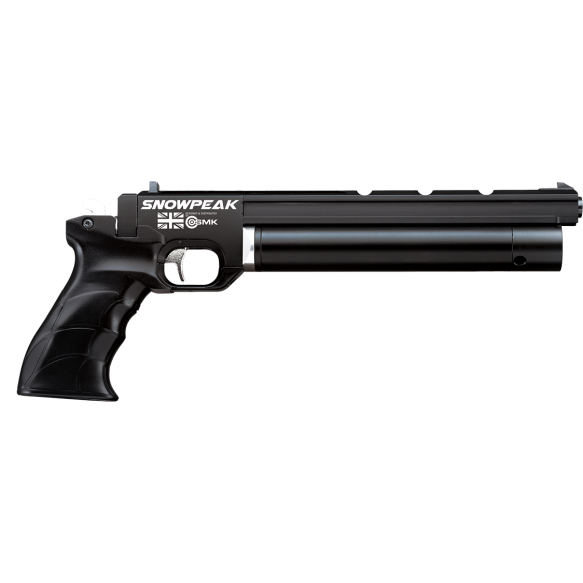
Snowpeak PP700SA PCP Air Pistol – A Compact PCP Choice
For shooters seeking an accessible combination of compact handling and pre-charged pneumatic performance, the Snowpeak PP700SA PCP Air Pistol offers a practical solution.
A smooth firing cycle is provided, unnecessary recoil is reduced, and a straightforward single-shot shooting experience is maintained. At the same time, convenient dimensions allow the pistol to remain manageable during transportation, storage, and recreational target sessions.
Whether it is being considered as an introduction to PCP technology or as a compact addition to an established airgun collection, the PP700SA offers useful versatility.
With appropriate pellets, responsible maintenance, suitable filling equipment, and careful shooting technique, enjoyable performance can be obtained from this compact platform.
Ultimately, the Snowpeak PP700SA PCP Air Pistol brings together simplicity, portability, controlled PCP operation, and accuracy-oriented characteristics in a package designed for shooters who value practical performance.
Snowpeak Airguns, PCP Rifles, Air Pistols and Umarex Airguns
For shooters researching Snowpeak airguns, Snowpeak Sports, and the wider Snowpeaks product range, there are many PCP rifles, air pistols, and shooting accessories to consider. Popular searches include the Snowpeak AP900, Snowpeak AP900B PCP air rifle, Snowpeak MAX 1, Snowpeak MAX 1 price, Snowpeak PP750, PP750, Snow Peak PP750, and PP750 air pistol. Buyers also regularly compare models such as the Snowpeak P35, P35, P 35, PCP P 35, Snowpeak P35X, P35X, P35X PCP, and Snowpeak P35 vs P35X.
Other Snowpeak models attracting attention include the Snow Peak PP20, Snowpeak PP20, Snowpeak M25, M25 rifle, M-25, M25 weapon, Snowpeak M60, Snowpeak M60B, M 60B, rifle M60, rifle M50, and M50 rifle. Searches such as Snow Peak brand origin are also common among buyers who want to understand the manufacturer before choosing a rifle or pistol.
Snowpeak PCP Models and Related Airgun Searches
The PCP category covers everything from compact pistols to full-size hunting and target rifles. Searches frequently include PR900 Gen 3, CR650, SR 1000X, T Rex 6000, and pistolet PCP Arcea-Snowpeak Onix Sport. People comparing pneumatic platforms may also search what is a PCP airgun, air gun, air rifle, pellet pistol, air gun accessories, 9mm pellet, and pellet 9mm.
Some search phrases overlap with firearm terminology even when shoppers are researching airgun products. These include rifle M60, how much did the M60 weigh, rifle M50, M50 rifle, M25 weapon, and snowfall gun. Therefore, model specifications should always be checked carefully so that a historical firearm search is not confused with a modern sporting airgun product.
Umarex Airguns, Air Rifles, Pistols and PCP Platforms
Alongside Snowpeak products, Umarex USA, UmarexUSA, Umarex airguns, and Umarex air rifles are widely searched by recreational shooters, target shooters, and PCP enthusiasts. The Umarex range includes PCP rifles, CO₂-powered platforms, break-barrel pistols, BB guns, airsoft replicas, and large-caliber airgun systems.
Popular PCP searches include Umarex Notos, Umarex Notos Carbine, Umarex Gauntlet, Umarex Gauntlet 2, Umarex Gauntlet 30, Umarex Zelos, Umarex Origin, Umarex Komplete, and Umarex Komplete NCR .22. Hunters researching larger airgun platforms may also encounter the Umarex Hammer, Umarex Hammer .50 caliber, Umarex Hammer Carbine, Umarex Primal 20, and Umarex AirSaber.
Umarex Pistols, BB Guns and T4E Models
For handgun-style platforms, popular searches include Umarex BB gun, BBgun, BB gun pistol, metal BB gun, Umarex TR50, Umarex HDR 50, Umarex T4E, Umarex T4E Smith, Umarex Smith, and Umarex P2P DR50 how many joules.
Glock-style replicas remain another major category. Search terms include Glock BB gun, Glock 19 BB gun, Umarex Glock 19, Umarex Glock 19X, Umarex Glock 19 Gen3 .177 caliber BB gun air pistol, Umarex Glock 17, Umarex Glock 17 Gen 5, Umarex Glock, airsoft Glock, airsoft Glock 19, Glock 17 airsoft, and Glock airsoft gun.
Other replica and recreational searches include Umarex MP40, Umarex MP5, Umarex Legends, Umarex HK Heckler, Umarex shotgun, and airsoft pistol.Umarex DX17.
Break-Barrel and Sporting Umarex Airguns
Shooters looking for spring or gas-piston platforms frequently research the Umarex Trevox, loading Umarex Trevox break barrel .177, Umarex pistol break barrel, Umarex Fusion 2, Umarex Synergis Elite, and Amazon Umarex Browning 800 Express. These platforms provide alternatives for people who want an airgun without relying on a high-pressure PCP charging system.
Additional searches across the Umarex catalog include Umarex H, while broader terms such as air rifle, pellet pistol, air gun, and air gun accessories help buyers compare platforms, ammunition, optics, filling equipment, targets, cases, and other shooting equipment.
Whether the focus is a Snowpeak M60, Snowpeak M25, Snowpeak P35X, Snowpeak PP750, Snowpeak MAX 1, Umarex Notos, Umarex Gauntlet 2, Umarex Origin, or Umarex Hammer Carbine, buyers should compare caliber, operating system, power level, dimensions, intended use, and local regulations before selecting an airgun.
Practical Use Scenarios
The Snowpeak PP700SA PCP Air Pistol can be used effectively in several controlled recreational shooting situations where compact dimensions, low recoil, and a simple operating system are valued. Its relatively lightweight configuration makes it suitable for target practice, technique development, casual shooting sessions, and other lawful airgun activities carried out in an appropriate environment.
Rather than being limited to one narrow purpose, this type of compact PCP platform can be incorporated into different training and recreational routines. Because the firing cycle remains comparatively smooth, the shooter can concentrate more easily on consistency, trigger control, sight alignment, breathing, and overall handling technique.
For this reason, the pistol can be particularly useful for people who want to build disciplined shooting habits while using a compact and manageable platform.
Recreational Target Practice
One of the most practical applications is recreational target shooting.
Paper targets can be positioned in front of a suitable pellet trap or approved backstop, allowing the shooter to practise in a controlled setting. Because the pistol uses compressed air rather than a conventional spring-powered system, strong mechanical vibration is reduced during firing.
As a result, attention can remain focused on the fundamentals of accurate shooting.
A consistent stance can be developed first. After that, grip pressure can be refined, while sight alignment and trigger movement can be practised repeatedly. Over time, these small improvements can contribute to more predictable shot placement.
Different target sizes can also be introduced gradually.
Larger targets may be used during early practice sessions. Later, smaller aiming points may be selected as confidence and consistency improve. Consequently, the shooter can create a progressive practice routine without immediately making each session unnecessarily difficult.
Because single-shot loading encourages deliberate shooting, each pellet can also be treated as an individual attempt rather than being fired rapidly.
Developing Trigger Control
Good trigger control is essential for consistent target shooting.
During practical sessions, the shooter can use the pistol to practise applying gradual pressure to the trigger while keeping the sights aligned. Sudden or excessive trigger movement can cause the muzzle to shift immediately before the shot is released.
Therefore, smooth trigger operation should be encouraged.
A useful practice method involves aiming at the centre of a target, maintaining steady alignment, and pressing the trigger without disturbing the position of the pistol.
This process can then be repeated over multiple shots.
Because the firing cycle is comparatively calm, mistakes in technique may become easier to identify. For example, movement caused by pulling the trigger too aggressively can sometimes be noticed more clearly when heavy recoil is absent.
Consequently, improvements can be made systematically.
Calibres, FAC Power and Accessories
The Snowpeak PP700SA PCP Air Pistol is offered in two widely used pellet calibres, allowing shooters to select a configuration that better matches their preferred style of recreational or target shooting. Factory specifications list the pistol in 4.5 mm (.177) and 5.5 mm (.22) versions, while published muzzle velocities are approximately 800 fps for the .177 version and 700 fps for the .22 version, depending on configuration, pellet weight, atmospheric conditions, and local-market restrictions.
Because power and legal classification can differ significantly between countries, buyers should always confirm the exact specification of the individual pistol before purchase. Local regulations may impose different energy, licensing, ownership, transport, or age requirements.
.177 Calibre – 4.5 mm
The .177 calibre version is a natural choice for shooters primarily interested in target work, paper-target practice, and recreational accuracy shooting.
A smaller and generally lighter pellet is used in this configuration. Consequently, higher muzzle velocity can normally be achieved than with the larger .22 pellet when comparing similar platforms.
Snowpeak lists the .177 PP700S-A at up to approximately 800 fps in its standard published specification. Actual figures should not be assumed to be identical for every individual pistol because pellet weight and regional configuration can affect velocity considerably.
For target shooters, .177 can be particularly appealing because its relatively flat trajectory can simplify aiming across common short recreational distances.
Additionally, a wide selection of .177 pellets is available from major ammunition manufacturers. Shooters can therefore experiment with different weights and designs to identify the pellet that provides the most consistent grouping from their particular barrel.
Rather than choosing only by advertised velocity, pellet compatibility should be evaluated through controlled target testing.
.22 Calibre – 5.5 mm
For shooters who prefer a heavier projectile, the 5.5 mm (.22) version provides an alternative configuration.
Snowpeak publishes a velocity figure of approximately 700 fps for this calibre in the standard PP700S-A specification. Again, real-world velocity depends on pellet mass, pressure, individual setup, and the compliant configuration supplied within a specific market.
Because .22 pellets are generally heavier than comparable .177 pellets, they can retain momentum differently while travelling downrange.
However, trajectory characteristics also change.
Therefore, users should not assume that one calibre is universally better than the other.
For precision-oriented paper-target use and economical recreational practice, .177 may be preferred. Meanwhile, shooters who simply favour a heavier pellet may find .22 more appealing.
Ultimately, the appropriate calibre should be selected according to lawful use, shooting distance, target type, ammunition availability, and individual preference.
FAC and Power Considerations
The term FAC is most commonly encountered in the United Kingdom, where certain airguns can fall under firearms certification rules depending on muzzle energy and firearm type.
Importantly, air-pistol legislation is not identical to air-rifle legislation, and legal thresholds or restrictions should never be assumed solely from the product name or an advertised power figure.
For that reason, customers should confirm the exact local classification of the PP700SA before ordering or using it.
Retail listings in some European markets describe versions producing approximately 11 to 15 joules, while Snowpeak itself publishes velocity rather than a universal muzzle-energy figure. Those values should be treated as configuration-specific rather than guaranteed output for every market.
Muzzle energy is influenced by both pellet weight and velocity.
Therefore, two pistols producing similar velocity with different pellet weights may produce different energy figures.
Likewise, two identical-looking PP700SA pistols may be supplied in different compliant configurations depending on the destination market.
The safest product-page wording is therefore to describe performance as market dependent.
Customers requiring a specific power level should check the supplied version and applicable regulations before purchase.
PCP Air System and Fill Pressure
The PP700SA uses a compact pre-charged pneumatic system supported by a 72 cc air cylinder.
According to Snowpeak, maximum fill pressure is 25 MPa, equivalent to approximately 250 bar.
Only compatible high-pressure filling equipment should be used.
The manufacturer’s pressure limits should also be followed at all times.
A PCP hand pump can provide a relatively simple filling solution, while a compatible compressor or certified air cylinder may provide greater convenience for users who operate several PCP airguns.
Clean, dry breathing-quality air should be preferred, particularly because moisture introduced into a high-pressure system can contribute to corrosion and seal deterioration.
Sight and Optics Accessories
Standard front and rear sights are included on the PP700S-A specification.
Therefore, the pistol can be used without an additional optic.
However, Snowpeak also specifies a 12 mm dovetail rail, giving users the option of fitting compatible sighting accessories where legally permitted.
Potential accessories may include:
- Compact red-dot sights for convenient recreational aiming
- Dovetail-compatible optic mounts
- Appropriate scope rings or adapters
- Target sights, depending on compatibility
- Protective lens covers
- Small optic storage cases
Before purchasing any optic, mounting dimensions should be checked carefully.
Standard Weaver or Picatinny accessories should not automatically be assumed to fit a dovetail rail without a suitable adapter.
Filling and Maintenance Accessories
A useful PCP setup extends beyond the pistol itself.
Several supporting accessories can make routine ownership easier.
A compatible filling probe or adapter is essential for charging the air reservoir. Suitable high-pressure pumps, compressors, or certified air cylinders may then be used to supply the required air.
Maintenance equipment can also help protect long-term condition.
Useful supporting items can include:
- PCP hand pump or compatible compressor
- Manufacturer-compatible fill adapter
- Replacement O-rings and seals
- Airgun-safe lubricant where specified
- Soft cleaning cloth
- Suitable barrel-cleaning equipment
- Protective pistol case or bag
- Pellet storage tins
- Paper targets and rated pellet traps
- Eye protection
Aggressive petroleum-based products should not be applied indiscriminately to high-pressure air systems.
Instead, maintenance products suitable for PCP equipment should be selected and manufacturer guidance should be followed.
Pellets and Shooting Accessories
Choosing quality pellets can have a noticeable effect on consistency.
Different head sizes, weights, and profiles may perform differently in the same barrel.
Consequently, testing several reputable pellet types can be more useful than relying exclusively on advertised specifications.
For structured practice, a selection of paper targets and a correctly rated pellet trap can also be added to the setup.
A padded pistol case is equally useful because it helps protect the sights, finish, and exposed components during lawful storage and transport.
A Flexible PCP Setup
Overall, the Snowpeak PP700SA provides a relatively adaptable compact PCP platform.
The availability of .177 and .22 calibres, combined with its 72 cc air reservoir, adjustable trigger, standard sights, integrated sound moderation, and dovetail rail, gives buyers several ways to tailor the pistol around recreational target shooting and personal preferences.
Nevertheless, calibre, power, and legal status should always be considered together.
Regional versions may differ, while actual velocity and muzzle energy can vary according to pellet choice and factory configuration.
By combining the correct calibre with suitable pellets, compliant filling equipment, compatible optics, and responsible maintenance accessories, the PP700SA can be configured as a practical and convenient PCP target-shooting package.
Sight Alignment Practice
Another common use involves practising sight alignment.
Whether the standard sights are being used or a compatible sighting accessory has been fitted where permitted, correct visual alignment remains important.
The front and rear sights should be positioned consistently before each shot. Meanwhile, the target should be viewed with the same aiming reference whenever possible.
Through repetition, a more consistent sight picture can be developed.
This type of practice is particularly useful for recreational shooters who want to improve accuracy without relying entirely on mechanical adjustments.
Instead, technique can be refined first.
Once the shooter has established a stable routine, minor sight adjustments can then be considered if necessary.
Short-Distance Precision Sessions
Compact PCP pistols are often well suited to controlled short-distance target practice.
At closer ranges, the shooter can focus more heavily on technique without environmental factors dominating the result.
Wind, distance, and pellet drop may have less influence than they would at extended ranges. Therefore, differences between individual shots can often be linked more directly to grip, sight alignment, or trigger technique.
This makes short-distance practice useful for analysing consistency.
Groups of several shots can be fired at the same aiming point, after which the target can be reviewed.
A tight grouping may indicate consistent technique, while scattered pellet placement may suggest that additional practice is required.
Rather than concentrating only on hitting the centre immediately, shooters can therefore study how closely shots are grouped together.
Indoor Practice in a Suitable Environment
Where local laws and property rules allow it, controlled indoor target shooting may sometimes be possible when a properly designed pellet trap, reliable backstop, sufficient space, and appropriate safety precautions are available.
A suitable shooting area should be established carefully.
Every pellet must be contained safely, and the surrounding area must remain protected from unintended shots or ricochets.
Because the pistol is compact, it can be easier to handle in confined practice spaces than a full-length air rifle.
However, compactness should never be confused with reduced responsibility.
The same fundamental safety rules must be followed regardless of the size or power of the airgun.
Eye protection should be considered, access to the shooting lane should be controlled, and the pistol should always be pointed in a safe direction.
Outdoor Backyard Target Shooting
Where lawful and safe, backyard target practice can provide another practical recreational use.
Before any shooting begins, the area should be assessed carefully.
A substantial backstop must be placed behind the target so that pellets cannot leave the controlled shooting zone. Nearby buildings, roads, people, animals, and neighbouring property should also be considered.
Once a safe layout has been established, different target formats can be introduced.
Paper targets remain one of the simplest options.
Approved reactive targets can also be used when they have been specifically designed for airgun use and positioned in front of an adequate backstop.
Because outdoor conditions can change, the shooter may also begin learning how light wind influences pellet placement.
Shooting Technique Development
The pistol can also serve as a practical training platform for developing general shooting discipline.
Instead of focusing only on the final target score, users can concentrate on the sequence that occurs before every shot.
A typical routine may include establishing stance, positioning the hands, controlling breathing, aligning the sights, applying trigger pressure, and maintaining follow-through.
When that sequence is repeated consistently, performance often becomes easier to evaluate.
Furthermore, poor habits can be identified more effectively.
For example, changing grip pressure from one shot to another may influence pellet placement.
Likewise, moving the pistol immediately after pressing the trigger can affect follow-through.
By practising each stage separately, the shooter can gradually establish a more repeatable process.
Practising Consistent Grip
Grip consistency can have a significant effect on pistol shooting.
During practical use, the shooter should aim to hold the grip in the same general way for each shot.
Excessive tension should usually be avoided because unnecessary muscle strain can increase movement.
At the same time, the pistol must remain secure.
Through repeated target sessions, a comfortable balance can be found between firmness and relaxation.
This becomes particularly important during longer practice sessions.
As fatigue develops, grip pressure can change without the shooter noticing.
Taking short breaks may therefore help maintain consistency.
Seated Target Shooting
Not every practice session has to be completed from a fully standing position.
Seated target shooting can be useful when the shooter wants to isolate certain aspects of technique.
By reducing body movement, greater attention can be directed toward sight alignment and trigger control.
A stable seated position may also be useful for testing different pellets.
When the objective is to compare ammunition performance, eliminating unnecessary shooter movement can make differences easier to observe.
Several pellet types can be tested under similar conditions, and grouping patterns can then be compared.
This does not guarantee that one pellet will perform best in every pistol, which is why practical testing can be valuable.
Supported Shooting for Accuracy Testing
A supported shooting position may also be used when evaluating mechanical consistency.
The pistol can be rested carefully on an appropriate support without obstructing moving parts or creating unsafe handling conditions.
The purpose of this setup is not to replace normal shooting technique.
Instead, it can help distinguish between shooter-related variation and equipment-related variation.
If groups become significantly tighter when additional support is used, technique may be contributing to earlier inconsistencies.
On the other hand, if irregular shot placement continues, pellet selection, sight setup, air pressure, or maintenance may need to be reviewed.
Pellet Comparison Sessions
Different pellets can behave differently even when they have the same nominal calibre.
Variations in weight, head size, skirt design, manufacturing quality, and overall shape can influence performance.
Therefore, organised pellet testing can form part of a practical shooting routine.
Several pellet types can be tested at the same distance under similar conditions.
For each type, a number of shots can be fired at a dedicated target.
Afterwards, group size and general consistency can be compared.
The objective should be repeatability rather than simply choosing the pellet that produces one unusually good shot.
Over multiple groups, a more reliable preference may become clear.
Air Pressure Monitoring Practice
PCP shooting also requires an understanding of air management.
During practical use, reservoir pressure should be monitored according to the manufacturer’s instructions.
As shots are fired, pressure gradually decreases.
By observing the relationship between pressure and performance, the shooter can learn when refilling is appropriate.
This can help prevent sessions from continuing beyond the useful operating range.
A consistent filling routine can also be established.
Using clean, dry compressed air and compatible filling equipment can help protect the system and support reliable operation.
High-pressure components should always be treated cautiously.
Casual Plinking
In addition to structured target practice, casual plinking can provide an enjoyable recreational activity when safe, approved targets are used.
Purpose-made airgun targets are generally preferable because they have been designed to contain or withstand pellet impacts appropriately.
Uncontrolled objects should not be used where ricochets or fragmentation could occur.
A controlled plinking session can still be organised around accuracy.
Targets of different sizes may be positioned at varying lawful distances, creating a more relaxed but still skill-based activity.
Consequently, the shooter can practise transitioning between aiming points while maintaining safe handling and controlled firing.
Introducing New Shooters to PCP Operation
The compact and straightforward format can also make the pistol useful when explaining basic PCP operation to an adult beginner in a supervised and lawful environment.
Before any shooting begins, the fundamental safety rules should be explained.
The new shooter should understand muzzle discipline, trigger discipline, target awareness, and the importance of a safe backstop.
The loading and cocking process can then be demonstrated carefully.
Because the system is mechanically straightforward, the basic sequence may be easier to understand than more complicated multi-shot platforms.
However, supervision should remain close until safe handling becomes consistent.
Practising Follow-Through
Follow-through is sometimes overlooked during recreational shooting.
After the trigger has been pressed, the shooter should continue holding the sights on the target briefly rather than immediately lowering or moving the pistol.
This habit encourages stability throughout the entire firing sequence.
The low-recoil nature of a PCP system can make follow-through practice particularly useful because excessive movement is not required to manage a strong mechanical firing cycle.
Over time, better follow-through can contribute to more repeatable shooting.
Building a Repeatable Shooting Routine
Perhaps the most important practical use of the pistol is the development of repeatability.
Successful target shooting generally depends less on occasional excellent shots and more on being able to reproduce the same process consistently.
A structured routine can therefore be adopted.
Before each shot, stance can be checked.
Next, grip can be confirmed.
Sight alignment can then be established, breathing can be controlled, and trigger pressure can be applied steadily.
Finally, follow-through can be maintained.
When the same process is repeated carefully, patterns become easier to identify.
This allows both strengths and weaknesses to be evaluated more effectively.
Practical Use During Longer Practice Sessions
The relatively compact design can also be advantageous during extended recreational sessions.
A large or heavy platform can become tiring over time.
By comparison, a smaller pistol format may be easier to manage between strings of shots.
Nevertheless, regular breaks should still be taken.
Fatigue can affect concentration, grip consistency, and safe handling.
Shorter, focused practice periods are often more productive than continuing after concentration has declined.
Targets can be checked between sessions, air pressure can be monitored, and equipment condition can be reviewed before shooting resumes.
Storage and Transport Between Sessions
Practical use also includes what happens before and after shooting.
The pistol should be transported and stored according to applicable local laws.
During transport, an appropriate protective case can help prevent accidental damage.
After a shooting session, the exterior can be inspected for moisture, dust, or other contamination.
A clean, dry storage environment should then be used.
Pellets, filling equipment, tools, and accessories can also be kept organised so that future sessions can be prepared more efficiently.
Proper storage contributes not only to equipment protection but also to responsible ownership.
A Versatile Recreational Shooting Platform
Across these different scenarios, the pistol can serve as a compact platform for recreational practice, accuracy development, pellet testing, PCP familiarisation, and disciplined shooting exercises.
Its greatest practical value comes from allowing the shooter to focus on repeatable technique without unnecessary mechanical complexity.
Target practice can therefore be approached progressively.
Beginners can begin with larger targets and shorter distances, while more experienced users can concentrate on tighter grouping and greater consistency.
At the same time, pellet selection, air management, and sight setup can be explored in a structured manner.
Ultimately, the most productive use comes from combining proper equipment with responsible handling, a safe shooting environment, appropriate targets, and consistent practice. When those elements are brought together, the pistol can provide an enjoyable and useful platform for developing practical recreational shooting skills.

Reviews
There are no reviews yet.