Discover the Exceptional Performance of the Snowpeak M60B Airrifle
Precision, power, and compact design are brought together in the Snowpeak M60B Airrifle. This pre-charged pneumatic (PCP) bullpup model is engineered for shooters who value accuracy, consistency, and versatility. Whether recreational target practice, pest control, or small-game pursuits are pursued, the Snowpeak M60B Airrifle is configured to deliver reliable results across a wide range of conditions.
Unmatched Design and Ergonomics of the Snowpeak M60B Airrifle
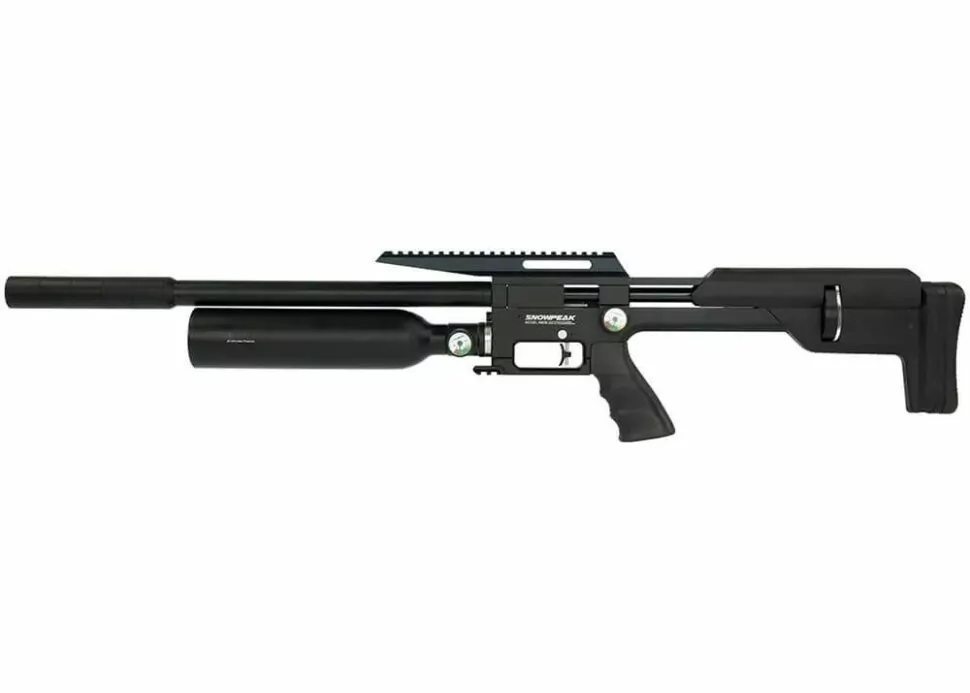
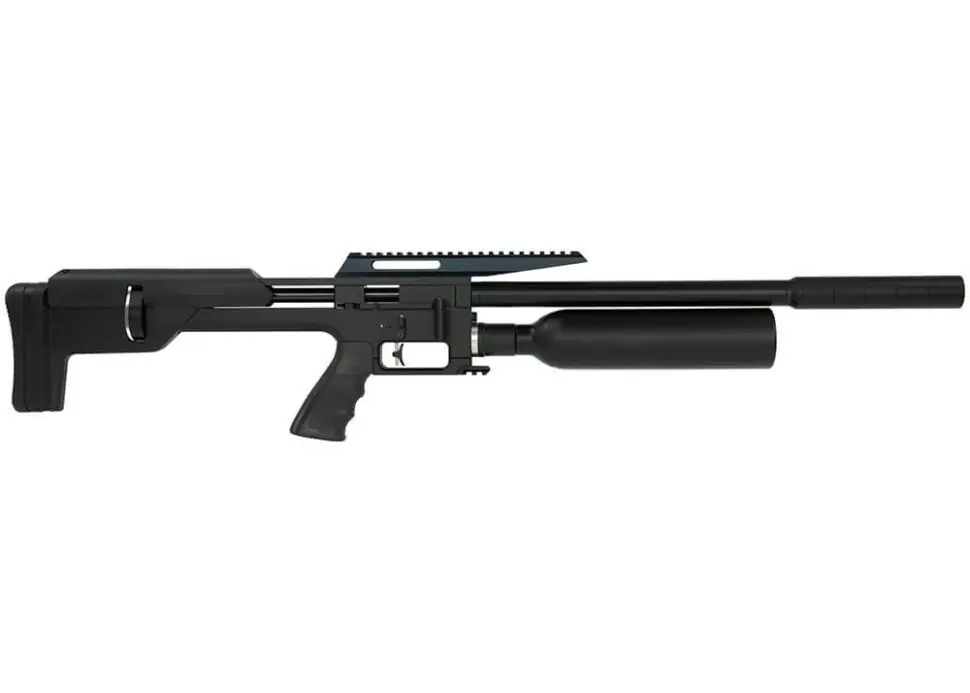
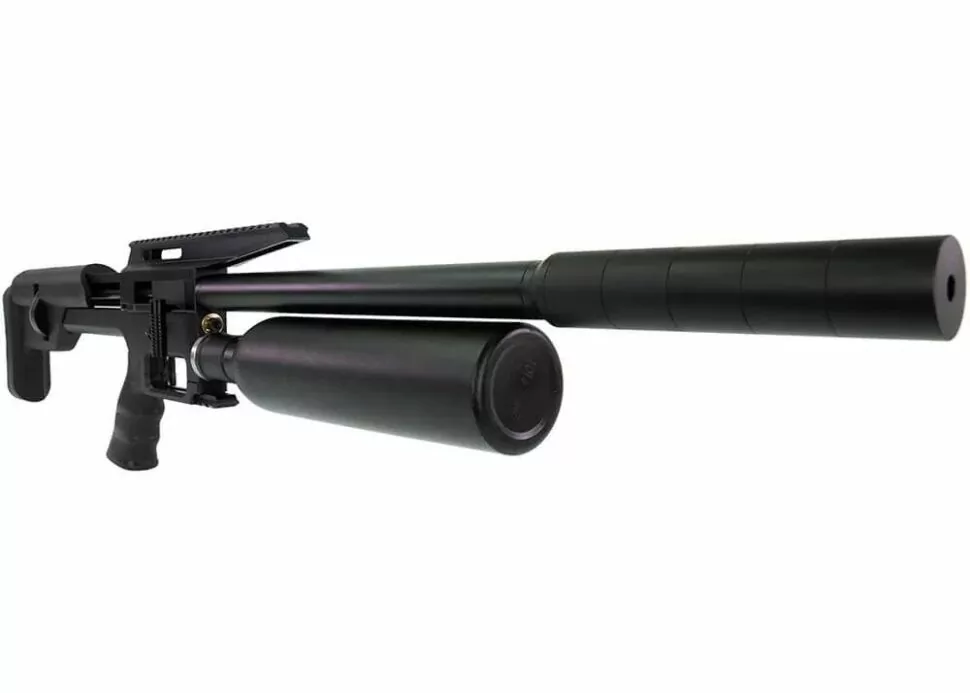
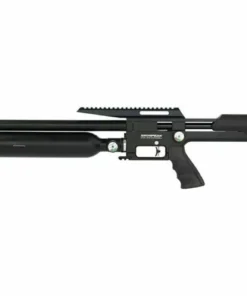
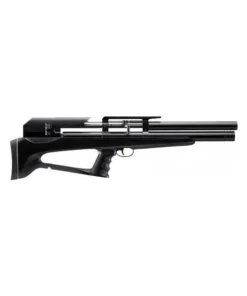
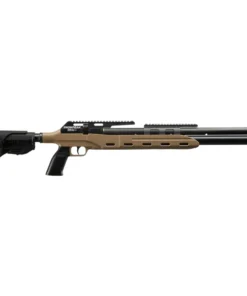
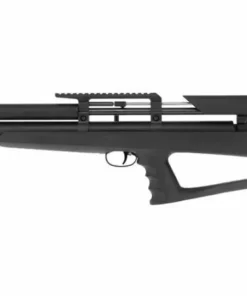
A bullpup layout is utilized in the Snowpeak M60B Airrifle so that a full-length 610 mm barrel is retained within a compact overall length of approximately 925 mm. As a result, balance and maneuverability are improved without power or accuracy being sacrificed. Furthermore, the synthetic stock is fitted with an elevated cheek piece and an adjustable recoil pad. Consequently, proper eye alignment and shoulder fit can be achieved by a broad range of shooters.
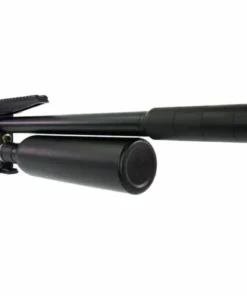
In addition, an AR-style grip is incorporated for a familiar and secure hold. Meanwhile, Picatinny and Weaver rails are provided so that optics, bipods, and other accessories can be mounted with ease. Moreover, a removable sound moderator is included on many configurations, allowing noise to be reduced for a more pleasant shooting experience. Therefore, the Snowpeak M60B Airrifle is well suited for both backyard practice and field use.
Powerful and Consistent Air System
High-pressure air is stored in a removable tank—commonly 205 cc or 350 cc depending on the version—rated to a maximum fill pressure of 250 bar (approximately 3600 psi or 25 MPa). Subsequently, an externally adjustable pressure regulator is fitted so that output pressure can be fine-tuned. As a result, shot-to-shot consistency is maintained and power can be matched to the chosen caliber and intended use.
Furthermore, the tank can be detached while still pressurized on many examples. Consequently, spare bottles can be swapped in the field, extending time between fills. In addition, silencing features are integrated so that the report remains controlled. Therefore, the Snowpeak M60B Airrifle supports extended sessions with stable performance.
Versatile Caliber Options and Magazine Capacity
Multiple calibers are offered so that the Snowpeak M60B Airrifle can be matched to different needs:
- 4.5 mm (.177) – higher velocity options around 1000–1050 fps
- 5.5 mm (.22) – balanced performance near 900–1000 fps
- 6.35 mm (.25) – increased energy near 800–900 fps
- 7.62 mm (.30) – heavier projectiles with velocities around 850 fps
- 9 mm (.35) – maximum energy options near 650 fps
Magazine capacity is correspondingly adjusted: approximately 24 rounds in .177, 20 in .22, 18 in .25, 14 in .30, and 12 in .35. A rotary magazine is retained by magnets on many versions and is advanced by a smooth side-lever action similar to biathlon rifles. Moreover, single pellets or certain slugs can be loaded individually when preferred. As a result, both rapid follow-up shots and precise single-shot work are supported.
Adjustable Trigger and Safety Features
A two-stage adjustable trigger is provided with a pull-weight range commonly spanning 1–6 lbs (roughly 450–2700 g, or 900–1500 g on some tested examples). Consequently, the break can be customized to personal preference for improved control and accuracy. In addition, a manual safety is fitted so that the rifle can be secured when not in use. Therefore, both safety and shootability are enhanced for users of varying experience levels.
Proven Accuracy and Real-World Performance
Independent testing has shown that the Snowpeak M60B Airrifle is capable of approximately ½-inch groups at 50 meters (around 1 MOA) under favorable conditions once the barrel is warmed. Furthermore, usable accuracy is maintained at longer distances when quality optics and appropriate projectiles are employed. Energy output typically ranges from under 50 joules in lower-power settings up to more than 100 joules in higher-caliber, higher-pressure configurations, depending on regulator settings, pellet weight, and local regulations.
Moreover, shot counts of 40–50 or more per fill are commonly reported in .22 and similar calibers at moderate power levels. As a result, productive range sessions or pest-control outings can be completed without frequent recharging. In addition, the combination of a regulated air system, quality barrel, and solid construction contributes to the consistent point of impact that many shooters value.
Key Product Features Highlighted
- Externally adjustable pressure regulator for tunable performance
- Removable high-pressure air tank (205 cc or 350 cc options)
- Side-lever cocking with rotary magazine system
- Adjustable two-stage trigger and manual safety
- Synthetic stock with adjustable butt pad and elevated cheek piece
- Full-length Picatinny/Weaver rails for optics and accessories
- Integrated or removable silencing capability
- Multiple caliber choices from .177 to .35
- Compact bullpup design with 610 mm barrel
- Approximate weight of 3.1 kg for balanced handling
Why the Snowpeak M60B Airrifle Is Chosen by Many Shooters
Value is delivered through a feature set that often approaches more expensive bullpup platforms. Compact dimensions, solid accuracy potential, adjustable regulation, and multi-caliber availability are combined in one package. Furthermore, the design accommodates both left- and right-handed users through its ambidextrous layout and side-lever operation. Inclusive ergonomics—adjustable length of pull and cheek height—allow a wider range of body types and shooting styles to achieve a comfortable fit.
In addition, the Snowpeak M60B Airrifle is suitable for plinking, precision practice, and ethical small-game or pest management within legal and ethical limits. Moreover, the regulated system helps maintain velocity consistency, which is essential for predictable trajectories. Consequently, confidence is built with every shot once the rifle is zeroed and the preferred pellet is selected.
Practical Considerations for Owners
Filling is accomplished via a probe or compatible adapter connected to a hand pump, compressor, or scuba tank, always observing safe pressure limits. Subsequently, the regulator can be adjusted to balance power against shot count. Magazine loading is straightforward: pellets are oriented correctly and the rotary mechanism is rotated until full. Regular inspection of O-rings and proper lubrication of moving parts help preserve reliability.
Furthermore, local laws regarding power limits, licensing, and transportation must always be followed. Therefore, responsible ownership remains central to the enjoyment of the Snowpeak M60B Airrifle.
Experience the Difference with the Snowpeak M60B Airrifle
Reliable power, refined ergonomics, and impressive accuracy potential are offered by the Snowpeak M60B Airrifle in a compact, modern package. Whether the goal is consistent target groups, quiet backyard practice, or field utility, this PCP platform is designed to meet the needs of dedicated airgun enthusiasts. Explore the available calibers and configurations today and discover how the Snowpeak M60B Airrifle can elevate your shooting experience through precision engineering and thoughtful features.
Calibres, Power Options, FAC Considerations and Accessories for the Snowpeak M60B Airrifle
A wide selection of calibres is offered so that the Snowpeak M60B Airrifle can be matched precisely to the intended application. Furthermore, power output is highly configurable through the externally adjustable regulator, while full-power and FAC-rated setups remain available in markets where higher energies are permitted. In addition, a comprehensive range of compatible accessories allows the platform to be tailored for comfort, accuracy and extended field use.
Available Calibres and Their Strengths
Multiple bore sizes are supported by the Snowpeak M60B Airrifle, giving shooters genuine flexibility:
- 4.5 mm (.177) – Higher velocities (typically around 1000–1050 fps) are achieved, making this option ideal for precision target work and longer-range plinking where flat trajectories are valued.
- 5.5 mm (.22) – A versatile all-rounder is provided, with velocities commonly near 900–1000 fps. Excellent pellet selection and solid downrange energy make it popular for both recreational shooting and pest control.
- 6.35 mm (.25) – Increased kinetic energy is delivered (often 40–60+ joules depending on settings), favouring heavier pellets and shorter-to-medium range hunting or pest work.
- 7.62 mm (.30) – Substantial power is produced, with velocities around 850 fps and energies that can exceed 80–100 joules in unrestricted configurations.
- 9 mm (.35) – Maximum energy potential is realised (frequently 100–110+ joules), suited to larger projectiles and ethical close-to-medium range applications where heavy impact is required.
Magazine capacity scales accordingly: approximately 24 rounds in .177, 20 in .22, 18 in .25, 14 in .30 and 12 in .35. Moreover, both traditional diabolo pellets and certain cylindrical slugs can be used, although longer slugs may need to be single-loaded. As a result, the Snowpeak M60B Airrifle adapts readily to different ammunition preferences and local regulations.
Power Output and Adjustability
Power is regulated rather than free-floating, which promotes consistency from shot to shot. The externally accessible regulator allows output pressure to be raised or lowered, thereby balancing velocity against shot count. Typical factory or restricted outputs in many European markets sit around 19.9–24 joules for licence-free ownership. However, full-power valves and optimised hammer-spring settings enable significantly higher figures.
In unrestricted form, energy commonly ranges from under 50 joules in smaller calibres up to more than 110 joules in .30 and .35 configurations when heavier projectiles and elevated regulator settings are employed. Velocity figures correspondingly span roughly 650 fps in the largest calibre to over 1000 fps in .177 and .22. Consequently, the same rifle platform can serve as a quiet backyard plinker or a capable field gun simply by adjusting regulator pressure and selecting appropriate ammunition.
Shot counts of 40–50 or more per fill are routinely reported in .22 at moderate power levels from a 350 cc bottle filled to 250 bar. Larger bottles or carbon-fibre options further extend autonomy. Therefore, productive sessions remain practical without constant recharging.
FAC and Legal Power Considerations
In jurisdictions such as the United Kingdom, air rifles exceeding 12 ft-lbs (approximately 16.3 joules) require a Firearms Certificate (FAC). The Snowpeak M60B Airrifle is well suited to FAC ownership because its adjustable regulator and robust valve system support safe, legal higher-power tuning. Full-power valves are available that raise output to around 40 joules in .22 and 48 joules in .25 in certain markets, moving the rifle into higher legal categories where declaration and licensing are mandatory.
Larger calibres (.30 and .35) naturally lend themselves to FAC-level energies of 80–110+ joules when properly configured. It is essential that any power increase is performed by a competent gunsmith and that the finished rifle is certified and registered according to local law. Responsible owners always verify current regulations, as limits and licensing requirements differ by country and region. Inclusive of both certificate holders and those restricted to lower-power variants, the platform remains accessible across a broad spectrum of legal frameworks.
Recommended Accessories and Upgrades
The Snowpeak M60B Airrifle is supplied with a solid foundation of features, yet a thoughtful selection of accessories further enhances its capability:
- Optics – Picatinny/Weaver rails accept a wide range of scopes, from compact hunting models to high-magnification target optics. Side-focus or adjustable-parallax scopes are particularly useful for maximising the rifle’s inherent accuracy potential.
- Moderators and adapters – A removable moderator is often included; aftermarket ½-UNF adapters allow larger or more efficient silencers to be fitted for reduced report.
- Spare air bottles – Additional 350 cc aluminium or larger carbon-fibre bottles enable rapid swaps in the field, dramatically increasing total shot capacity.
- Magazines and single-shot trays – Extra rotary magazines in matching calibres, plus single-shot trays for slug use, improve convenience during extended sessions.
- Bipods and rails – The underside accessory rail accepts bipods; aftermarket rail extensions can be added for greater mounting flexibility.
- Fill probes, O-ring kits and gauges – Spare seals, digital pressure gauges and compatible fill adapters simplify maintenance and ensure accurate filling.
- Trigger and grip upgrades – Adjustable triggers can be fine-tuned further, while aftermarket trigger guards or cheek risers refine ergonomics for individual shooters.
Furthermore, quality pellets matched to the chosen calibre—such as JSB, Air Arms or Snowpeak-branded ammunition—unlock the best grouping performance. Carbon-fibre bottle upgrades also reduce overall weight while increasing capacity, benefiting those who carry the rifle for longer periods.
Choosing the Right Combination
Calibre selection is best guided by primary use: .177 or .22 for precision and plinking, .25 for balanced hunting energy, and .30/.35 for maximum impact where permitted. Power settings should then be dialled via the regulator to stay within legal limits or to achieve the desired balance of velocity and shot count. Finally, optics, moderators and spare magazines complete a practical, ready-to-use package.
In summary, the Snowpeak M60B Airrifle offers genuine multi-calibre versatility, tunable power from licence-free levels to full FAC capability, and broad accessory support. Whether a restricted recreational rifle or a high-energy field tool is required, the platform can be configured accordingly while retaining the compact bullpup handling and regulated consistency that define the model. Explore the available calibres, power options and supporting accessories to create a setup that matches your exact requirements and local regulations.
Benjamin, Reximex, Kral Arms and PCP Air Rifle Guide
The modern air rifle market covers everything from recreational target shooting and pest-control platforms to sophisticated pre-charged pneumatic systems built around regulated air delivery, precision barrels, adjustable triggers, and high-capacity air cylinders. Search terms such as benjamin air rifle, bb gun rifle, benjamin marauder, pcp rifle, air bow, break barrel pellet gun, benjamin bulldog, airbow, air rifle and air pistol, and benjamin air rifles reflect how broad this category has become. Shooters researching different powerplants may encounter spring-piston rifles, CO2 systems, multi-pump pneumatics, and modern pcp air rifles, each offering a different combination of consistency, recoil, maintenance requirements, shot count, and intended use.
Among established names, the benjamin marauder remains closely associated with the PCP category. Searches such as benjamin marauder pcp, benjamin marauder air rifle, benjamin marauder .25, benjamin marauder pistol, benjamin pellet gun, benjamin pellet, and benjamin air rifle 22 break barrel often appear alongside broader phrases such as air pellet gun, airrifle, air gun rifle, pellet gun, 22 pellet gun, .177 pellet guns, 177 pelle…, pneumatic gun, high powered pellet gun, and high power pellet gun. These terms generally describe air-powered platforms in different calibers and configurations rather than one single type of shooting system.
Benjamin also appears frequently in specialized pneumatic-hunting searches. The benjamin bulldog and benjamin bulldog 457 are examples of larger-bore pneumatic designs, while the phrase benjamin bulldog 457 20 joules may appear when users are comparing market-specific energy limits or regional configurations. Likewise, benjamin airbow, benjamin air bow, benjamin bow, air bow rifle, and arrow gun refer to pneumatic systems designed to propel arrows rather than conventional pellets. Because specifications, classification, and permitted energy levels vary by jurisdiction, owners should always verify applicable local regulations before possessing, transporting, modifying, or using these platforms.
For traditional pellet shooting, phrases such as benjamin prowler, co2 pellet guns, break barrel pellet gun, hunting air rifle, and air rifle and air pistol represent several different operating systems. Break-barrel rifles rely on a spring or gas-ram mechanism, while CO2 models use disposable or refillable carbon-dioxide cartridges. PCP systems instead store compressed air inside a reservoir. That difference explains why pcp rifle, pcp rifles, air rifle pcp, and pcp air rifles are often searched separately from conventional break-barrel designs.
Maintenance is another important part of long-term ownership. Searches for benjamin air rifle repair commonly relate to seals, valves, O-rings, regulators, filling systems, trigger assemblies, gauges, and general service procedures. Air rifles operate under considerable internal pressure, so repairs involving pressure-bearing components should be handled carefully and, where appropriate, by a qualified technician. Routine maintenance normally focuses on correct lubrication, clean filling equipment, proper storage, inspection of seals, and adherence to manufacturer service guidance.
Users comparing pneumatic performance also rely on energy-conversion tools. Terms including fps to joules calculator, fps to ft lbs, airgun calculator, and airgun joules calculator describe tools used to estimate projectile energy from velocity and projectile mass. These calculations are especially relevant where airgun laws or competition rules refer to muzzle energy instead of velocity alone. A velocity number by itself does not fully describe energy because pellet mass must also be considered.
European PCP manufacturers have expanded the range of regulated and compact pneumatic platforms available to enthusiasts. Search phrases including reximex airguns, reximex rp, reximex throne gen 2, reximex throne gen2, reximex mito, reximex rpa, reximex mitos, reximex lieva, and reximex accura pcp air rifle are commonly associated with Reximex products and related research. These platforms are generally discussed in connection with PCP operating systems, adjustable ergonomics, regulated air delivery, magazine-fed configurations, and modern stock designs.
The repeated appearance of reximex airguns, reximex rpa, reximex rp, and reximex throne gen 2 illustrates how users often search both exact model names and abbreviated versions. Some queries may also contain unrelated or ambiguous terms such as sbs12, gunseek, or regional-language expressions like yivli av tüfeği. When comparing products, exact model numbers, caliber specifications, regulator settings, cylinder capacity, barrel length, energy output, and manufacturer documentation are more dependable than relying on a shortened search phrase alone.
Kral is another name frequently encountered in discussions of pneumatic rifles and sporting platforms. Airgun-focused searches include kral arms, krql, kral np 02, kral puncher, kral breaker puncher, shadow puncher, puncher mega, kral puncher k, kral pump, puncher auto, bigmax, dazzle s, raptor s, tactical tundra, empirex, np500, and air rifle pcp. Within an airgun context, these terms can refer to different PCP layouts, stock designs, barrel lengths, action types, reservoir capacities, and intended shooting applications.
International searches can produce additional spelling variants such as الكرال, kr al, kar gun, k gun, and other abbreviated terms. Model-related searches may include kr9, kp12, k12 shotgun, xm shotgun, shotgun xm, a12 shotgun, st 500, tacticalx, kora gun, akr gun, king arms fal, and kalibre pistol. Some of these phrases refer to products or categories outside ordinary airgun classifications, so they should not automatically be treated as interchangeable with PCP rifles. The same applies to conventional-firearm search phrases such as 223 rifle, 223 guns, 223 arma, 410 shotgun semi auto magazine fed, inertia shotguns, rifle cal 22 semiautomatico, av tüfeği, tabancalar, and kroll firearms. These terms describe legally distinct product categories in many jurisdictions and should be researched separately from air-powered rifles.
Similarly, phrases such as krale wholesale may appear in commercial searches, while can i buy air rifles online reflects a common legal and logistical question. The answer depends heavily on the buyer’s country, state, province, age, licensing status, power level of the airgun, delivery method, and local classification rules. Air rifles that are unrestricted in one jurisdiction may require registration, licensing, age verification, dealer involvement, or other compliance steps elsewhere. For that reason, online availability should never be assumed to mean lawful possession or lawful delivery.
When choosing between a benjamin air rifle, reximex airguns, or kral arms PCP platform, the most meaningful comparison usually involves caliber, muzzle energy, intended range, regulator consistency, air capacity, fill pressure, shot count, trigger quality, stock ergonomics, noise level, magazine design, serviceability, and availability of manufacturer-supported replacement components. A benjamin marauder, benjamin bulldog, reximex throne gen 2, reximex accura pcp air rifle, kral puncher, or kral breaker puncher may appeal to different users because each platform is engineered around a different balance of power, size, handling, and intended use.
Ultimately, the expanding world of pcp rifle, pcp rifles, pcp air rifles, air rifle pcp, air pellet gun, and pneumatic gun technology gives shooters a wide range of options for lawful sporting, recreational, competition, and pest-management applications. Understanding how systems differ is more useful than choosing on brand recognition alone. Whether researching a benjamin marauder pcp, benjamin prowler, benjamin airbow, reximex mito, reximex rpa, reximex lieva, puncher mega, shadow puncher, bigmax, or another pneumatic platform, users should compare verified specifications, follow safe handling practices, observe pressure-system maintenance requirements, and comply with all applicable local laws.
Frequently Asked Questions about the Snowpeak M60B Airrifle
What type of air rifle is this model and how is it designed? This is a pre-charged pneumatic bullpup air rifle that stores high-pressure air in a removable bottle. The bullpup configuration places the action and magazine behind the trigger, allowing a full-length 610 mm barrel to be retained within a compact overall length of approximately 925 mm. As a result, excellent balance and manoeuvrability are achieved without sacrificing power or accuracy potential. A synthetic stock with an elevated cheek piece, adjustable recoil pad and AR-style grip is fitted so that a comfortable and stable shooting position can be obtained by a wide range of users. Furthermore, Picatinny and Weaver rails are provided on the top and underside for mounting optics and accessories.
Which calibres are available and how do they differ in performance? Several calibre options are offered so that the rifle can be matched to different shooting needs. The 4.5 mm (.177) version typically produces higher velocities around 1000–1050 fps and is well suited to precision target work and flatter trajectories. The 5.5 mm (.22) calibre delivers a balanced combination of velocity (commonly 900–1000 fps) and energy, making it a popular choice for both recreational shooting and pest control. In 6.35 mm (.25) the emphasis shifts toward greater kinetic energy, often in the 40–60+ joule range depending on settings. Larger options of 7.62 mm (.30) and 9 mm (.35) provide substantial power, with energies that can exceed 80–110 joules in unrestricted configurations and velocities around 650–850 fps. Magazine capacity scales with calibre: approximately 24 rounds in .177, 20 in .22, 18 in .25, 14 in .30 and 12 in .35. Both traditional diabolo pellets and certain cylindrical slugs can be used, although longer slugs may require single loading.
How much power does the rifle produce and can the output be adjusted? Power output is controlled by an externally adjustable pressure regulator. In many markets the rifle is supplied in a restricted form delivering around 19.9–24 joules so that it remains licence-free where applicable. Full-power configurations and valve upgrades allow significantly higher energies—commonly from under 50 joules in smaller calibres up to more than 110 joules in the larger bores when heavier projectiles and elevated regulator settings are employed. Velocity correspondingly ranges from roughly 650 fps in .35 up to over 1000 fps in .177 and .22. Because the regulator can be fine-tuned, shot-to-shot consistency is maintained while the balance between power and shot count can be optimised for the intended use. Always verify local legal limits before any adjustment is made.
Does this model require a Firearms Certificate or similar licensing? Legal requirements vary by country and region. In the United Kingdom, air rifles producing more than 12 ft-lbs (approximately 16.3 joules) require a Firearms Certificate. The adjustable regulator and robust valve system make the platform well suited to FAC ownership, where higher energies of 40 joules and above in .22 or .25, or 80–110+ joules in larger calibres, can be achieved safely and legally when properly configured and certified. In other jurisdictions the rifle may be sold in restricted form for licence-free ownership or in full-power versions subject to local registration rules. It is essential that owners confirm the applicable regulations, ensure any power increase is carried out by a competent gunsmith where required, and complete all necessary certification. Responsible compliance protects both the user and the continued enjoyment of the sport.
How accurate is the rifle in practical use? Independent testing has demonstrated that sub-MOA performance is attainable under favourable conditions. Groups of approximately half an inch at 50 metres (around 1 MOA) have been recorded once the barrel is warmed and suitable pellets are selected. Usable accuracy is maintained at longer distances when quality optics and consistent ammunition are employed. Accuracy improves after the first few shots as the barrel reaches operating temperature. The combination of a regulated air system, 610 mm barrel and solid construction contributes to the consistent point of impact that many shooters value for both target work and ethical field use.
How many shots can be expected from a full fill? Shot count depends on calibre, power setting, pellet weight and regulator pressure. From a typical 350 cc bottle filled to 250 bar, 40–50 or more consistent shots are commonly reported in .22 at moderate power levels. Lower power settings or smaller calibres can extend this figure substantially, while higher-power configurations or larger calibres reduce the number of usable shots. Carbon-fibre bottles of greater capacity further increase autonomy. The removable bottle design allows spare tanks to be swapped quickly in the field, effectively multiplying total shot capacity without the need to return to a filling station.
What is the air system and how is the rifle filled? A removable aluminium or optional carbon-fibre bottle (commonly 205 cc or 350 cc) stores air at a maximum working pressure of 250 bar (approximately 3600 psi or 25 MPa). Filling is performed by removing the bottle or using an on-gun probe, then connecting a compatible fill adapter to a hand pump, compressor or scuba tank. Filling should be carried out slowly to avoid heat build-up and pressure inaccuracies. Dual gauges—one on the bottle and one associated with the regulator—allow remaining pressure and set output to be monitored. Spare O-rings and seals are recommended for routine maintenance of the high-pressure system.
What trigger and safety features are fitted? A two-stage adjustable trigger is provided with a pull-weight range typically spanning 1–6 lbs (approximately 450–2700 g). The break can therefore be customised to individual preference, improving control and consistency. A manual safety is located for easy access so that the rifle can be secured when not in use. The side-lever cocking action is smooth and reminiscent of biathlon-style systems, advancing the rotary magazine reliably with each cycle.
What accessories and upgrades are commonly added? The rifle is supplied with a solid foundation that includes rails, a removable moderator on many versions, and a rotary magazine. Popular additions include quality optics (particularly adjustable-parallax or side-focus scopes), aftermarket moderators via ½-UNF adapters, spare magazines, single-shot trays for slug use, bipods mounted on the underside rail, extra air bottles, digital pressure gauges, fill probes and O-ring kits. Carbon-fibre bottle upgrades reduce weight while increasing capacity. Trigger and cheek-piece refinements further personalise the fit. These accessories allow the platform to be optimised for precision target shooting, quiet pest control or extended field sessions.
What are the overall dimensions and weight? Overall length is approximately 925 mm with a barrel length of 610 mm. Weight is typically around 3.1–3.6 kg depending on bottle type and accessories fitted. The compact bullpup layout keeps the centre of gravity favourable for both standing and supported shooting positions. The adjustable butt pad and elevated cheek piece help achieve a consistent eye alignment and shoulder fit across different body types and clothing layers.
Is the rifle suitable for both left- and right-handed shooters? The side-lever action, ambidextrous stock layout and central magazine well make the rifle usable by both left- and right-handed shooters. Adjustable components further support individual preferences. Inclusive design features ensure that a comfortable and safe shooting position can be achieved by a broad range of users.
What maintenance is recommended? Regular inspection of O-rings and seals is advised, particularly after bottle changes or extended storage. Moving parts should be kept lightly lubricated with appropriate airgun oil. The barrel benefits from occasional cleaning with a soft pull-through or airgun-specific cleaning kit. Pressure gauges should be checked for accuracy, and the regulator setting verified periodically. When the rifle is stored, residual pressure is often left in the system according to manufacturer guidance, and the safety should be engaged. Proper care preserves consistency and extends service life.
What uses is the rifle best suited for? The platform performs well for recreational target shooting, precision practice, backyard plinking and ethical pest control or small-game hunting within legal and ethical limits. Lower-power restricted versions excel in quiet range sessions, while higher-power or FAC-rated configurations support more demanding field applications. The combination of regulated consistency, compact handling and multi-calibre availability makes it adaptable to a variety of environments and experience levels.
What is typically included in the package? Standard contents usually comprise the rifle, one rotary magazine, a fill probe or adapter, a set of spare O-rings, and basic tools or documentation. A sound moderator is fitted or supplied on many versions. Optics, additional magazines, bipods and spare bottles are generally optional and selected according to individual needs.
How does the regulator contribute to performance? The externally adjustable regulator maintains a consistent output pressure across a useful portion of the fill, resulting in more uniform velocities and tighter groups. By dialling the set pressure, the shooter can prioritise either higher power or greater shot count. This feature is particularly valuable when different pellet weights or legal power limits must be observed, and it contributes significantly to the rifle’s reputation for reliable day-to-day performance.
Are there any notable considerations for new owners? New owners are encouraged to start with moderate regulator settings and quality ammunition matched to the calibre while familiarising themselves with the side-lever and magazine system. A suitable scope and mounts should be chosen to take advantage of the inherent accuracy potential. Filling equipment capable of reaching 250 bar is required, and local legal requirements regarding power, licensing and transportation must always be observed. With proper setup and responsible use, the rifle provides an engaging and capable platform for a wide spectrum of airgun activities.
These answers address the most common practical questions raised by prospective and current owners. The combination of adjustable power, multi-calibre flexibility, compact ergonomics and accessory support allows the rifle to be configured for everything from quiet recreational sessions to higher-energy field use, always within the framework of applicable regulations and safe handling practices.
Reviews
There are no reviews yet.