Precision Is Delivered by the RTI Arms P-3 Performance
Exceptional long-range capability is offered by the RTI Arms P-3 Performance. Consequently, serious target work, pest control, and hunting applications are supported by this Slovenian-built PCP platform. Moreover, pellets and slugs are both accommodated by proprietary Lothar Walther / RPB barrels. Therefore, a single rifle can be adapted to multiple disciplines without compromise.
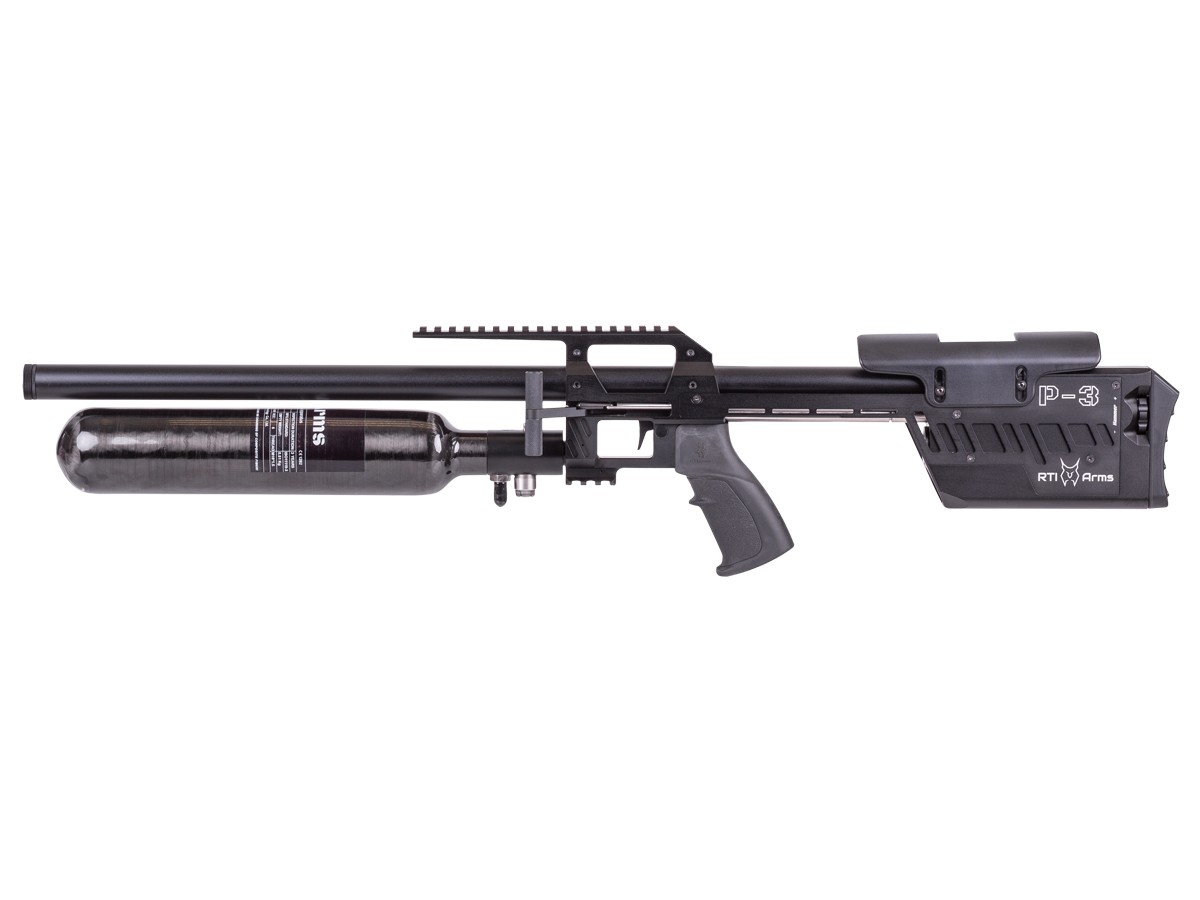
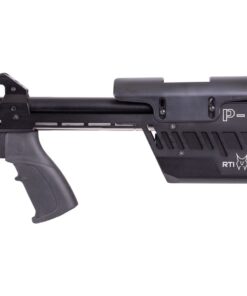
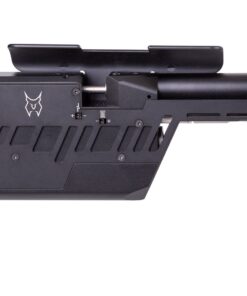
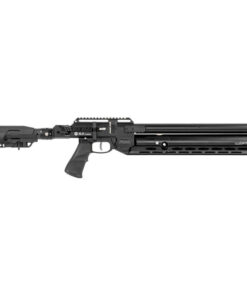
Furthermore, a compact bullpup-style chassis is combined with a side-lever action. As a result, a 31-inch overall length (standard configuration) is achieved at approximately 7.3 lb. Meanwhile, an AR-15-style grip (without beaver tail) is accepted, so familiar handling is provided for a wide range of shooters. In addition, an adjustable ambidextrous cheekpiece and rubber buttpad are fitted, whereby comfort is customized for left- or right-handed use.
Power, Regulation, and Shot Count Are Tuned Externally
Consistent energy is produced by a pressure-assisted valve that opens in roughly 1 ms and closes rapidly. Accordingly, high output is obtained even at comparatively low regulator settings. Subsequently, the externally adjustable regulator (Performance specification) is set between 80 and 180 bar (1,150–2,600 PSI). Hence, velocity can be refined without the bottle being emptied first; a release valve is included so that the cylinder can be removed while residual regulator pressure is present.
Additionally, a 70 cc plenum is integrated. Combined with a 500 cc carbon-fiber bottle (standard Performance) filled to a maximum of 300 bar (4,350 PSI), extended strings are delivered:
- .177 — up to 180 shots / approximately 37 FPE
- .22 — up to 170 shots / approximately 65 FPE
- .25 — up to 160 shots / approximately 77 FPE
- .30 — up to 150 shots / approximately 100 FPE
Compact 320 cc configurations are also available, whereby maneuverability is increased when hides, vehicles, or confined spaces are used. Meanwhile, Foster-style filling is employed, so standard PCP charging equipment is compatible.
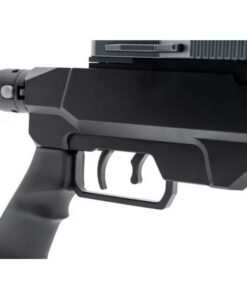
Micro-adjustable hammer tension is provided at the rear of the action. Consequently, power can be fine-tuned without tools. In parallel, a two-stage trigger is adjustable down to approximately 200 g, and a manual trigger safety is fitted. Thus, a crisp, predictable break is obtained for precision work.
Calibers, Barrels, and Modular Kits Are Interchangeable
Four primary calibers are offered: 4.5 mm (.177), 5.5 mm (.22), 6.35 mm (.25), and 7.62 mm (.30). Moreover, an optional arrow barrel (X7 2212) can be added. Therefore, the same chassis can be reconfigured when a different projectile is required.
Barrel options include:
- 20-inch Lothar Walther (compact / .177 typical)
- 24-inch RPB with proprietary rifling and light choke (.22 / .25)
- 24-inch Lothar Walther choked barrels
Magazine capacities are 14, 11, 10, and 7–8 rounds respectively. Pellet length up to 15 mm is accepted in the magazine; 16 mm can be loaded single-shot. Ambidextrous magazines are supplied, so orientation can be reversed quickly.
Caliber-change kits are sold separately. As a result, barrels and magazines can be swapped in the field once the procedure has been learned. Responsible ownership and local FAC / energy-limit compliance must always be observed; legal-limit (e.g., 7 J / 16 J / 20 J / 24 J) versions can be specified where required.
Optics, Ergonomics, and Field Readiness Are Built In
An adjustable Picatinny / Weaver rail spanning 20–150 MOA is mounted (approximately 190 mm / 18 slots). Consequently, long-range elevation can be dialed without excessive turret travel. A forward accessory rail is also present, so a bipod or Arca-style support can be attached.
The muzzle is threaded ½-inch UNF under a protector cap. Therefore, an RTI Hušh suppressor (aluminum tactical or carbon) or other compatible moderator can be fitted when noise reduction is needed. A bottle-mounted pressure gauge is provided so remaining air can be monitored at a glance.
A hard case, one ambidextrous magazine, and an instruction manual are included. Hence, the rifle can be transported and stored securely from the first day.
Practical Use Scenarios Are Supported Across Disciplines
Extended range sessions are enabled by the high shot count of the 500 cc bottle. Simultaneously, the compact 27-inch / 320 cc variant remains practical when space is limited. Long-range slug shooting is favored by the RPB rifling and 150 MOA rail. Pest and small-game work benefit from the available energy in .25 and .30 when local regulations permit. Target and HFT-style practice are served by the light, adjustable trigger and consistent regulator.
Maintenance remains straightforward: external regulator and hammer adjustments reduce the need for frequent disassembly. Regular inspection of seals, correct fill pressure, and approved projectiles are recommended so reliability is preserved.
Inclusive design choices—ambidextrous magazine and cheekpiece, AR-compatible grip, and modular barrels—allow the platform to be shared among shooters of different statures and dominant hands. Safety practices, eye and ear protection, and legal compliance remain the responsibility of every user.
Why the RTI Arms P-3 Performance Is Chosen
Accuracy, tunability, and shot-to-shot consistency are combined in a relatively compact package. The pressure-assisted valve, externally adjustable regulator with release valve, proprietary barrels, and 20–150 MOA rail distinguish the Performance specification from simpler PCP rifles. When a high-shot-count, multi-caliber, suppressor-ready platform is required for precision work, the RTI Arms P-3 Performance is specified by many experienced shooters.
Local laws governing airguns, energy limits, and hunting must be confirmed before purchase and use. Professional instruction is advised for new PCP owners so safe filling, handling, and storage procedures are followed.
Air Rifles, PCP Systems, Calibers, Target Shooting and Popular Models
The world of air arms, air guns, and precision shooting equipment covers everything from recreational target shooting to sporting applications. For newcomers asking what is an air gun, what is an air rifle, what is air rifle, what is a air rifle, what is a airgun, what is an airgun, or what are airguns, the basic principle is straightforward. An air gun uses compressed gas or air to propel a projectile rather than relying on the combustion system associated with conventional firearms.
Understanding how does an air gun work, how does air gun work, how do air guns work, how does an air rifle work, how does air rifle work, and how do air rifle work can help buyers distinguish between the different operating systems available. Depending on the design, power can be supplied by a spring piston, compressed air cylinder, CO2 cartridge, or another pneumatic mechanism.
PCP Air Rifles and Compressed-Air Systems
One of the most popular categories is the pre-charged pneumatic platform. Searches such as what is a pcp air rifle, what is a pcp airgun, what is pcp air rifle, what is a pcp air gun, what is a pcp rifle, what is pcp rifle, what are pcp air rifles, and what is a pre charged pneumatic air rifle all relate to the same fundamental technology. A PCP rifle stores compressed air inside a reservoir and releases a controlled quantity each time the rifle is fired.
For shoppers researching pcp gun meaning, pcp rifle meaning, or pcp air rifle meaning, PCP simply refers to a pre-charged pneumatic system. Air is normally added using a pcp hand pump, dive cylinder, or pcp air compressor. Consequently, an air compressed gun or air compressor rifle can deliver consistent performance without requiring the shooter to manually compress a spring before every shot.
Some searches also include pcp bb gun, although many PCP platforms are primarily designed around pellets rather than traditional BB ammunition. Understanding the intended ammunition is therefore important before selecting accessories, magazines, or loading equipment.
.177 Caliber, .22 Caliber and Pellet Selection
Caliber choice is one of the most frequently researched subjects among airgun buyers. The .177 caliber remains extremely popular for recreational shooting and precision target applications. Products described as a 177 air rifle, 177 bullet, or even 177 cal darts may appear during searches, although ammunition compatibility always needs to be checked against the manufacturer’s specifications.
Questions including 177 or 22, 177 cal vs 22, 177 caliber vs 22, .177 caliber vs .22, .177 pellet vs .22 pellet, and .22 vs .177 pellet generally focus on differences in projectile size, trajectory, energy, and intended use. A smaller .177 pellet is commonly chosen for paper targets and precision shooting, whereas larger calibers may be selected for applications where additional projectile mass is desired.
Understanding bb gun pellet sizes is equally important because BBs and pellets are not automatically interchangeable. Before purchasing ammunition, shooters should confirm the caliber and projectile type specified for their particular pellet rifle, pellet pistol, or bb gun.
Air Arms Rifles and Popular Models
Among established manufacturers, air arms products remain widely searched by enthusiasts interested in precision PCP and spring-powered platforms. Well-known searches include air arms s510, s510, air arms s410, aa s400, pro sport air arms, prosport air arms, tx 200, and tx200.
Variations such as air arm and airarm are also commonly entered by shoppers searching for the brand. Buyers looking specifically for regulated sporting configurations may encounter the air arms s510 ultimate sporter .177 sub 12, a phrase frequently associated with UK-oriented searches for the S510 platform.
Each Air Arms model has its own action, stock design, power configuration, caliber options, and intended shooting environment. Therefore, specifications should always be checked against the exact version being considered rather than assumed from another model in the same family.
FX Impact M3, FX Maverick and Modern PCP Platforms
Premium PCP research frequently includes the fx maverick and the fx impact m3. Buyers may also search for fx impact mk3, fx m3 airgun, fx m3, impact m3, or fx impact m3 air rifle while comparing generations and configurations.
More specific searches such as fx impact m3 .22cal air rifle. 600mm barrel focus on caliber and barrel-length combinations. Meanwhile, international shoppers may search fx impact m3 precio, fx impact m3 precio en usa, or fx impact m3 price when researching current market pricing.
Because FX platforms can be produced in multiple barrel lengths, calibers, power settings, and regional configurations, buyers should verify the exact specification offered in their country before ordering.
Break-Barrel Air Rifles
Another major category is the break barrel air rifle. Anyone asking what is a break barrel air rifle or what is a break barrel pellet gun is usually referring to a rifle in which the barrel is hinged downward to cock the internal powerplant and expose the breech for loading.
Break-barrel designs remain popular because they can provide a self-contained shooting system without an external compressor or air bottle. Models such as a gamo pellet gun are frequently encountered by buyers exploring this category.
Learning how to load pellet gun equipment properly is particularly important. Pellets should match the manufacturer’s recommended caliber and should be loaded in accordance with the owner’s manual while the rifle is pointed in a safe direction and handled under normal shooting-range safety procedures.
CO2, Pellet Pistols and Other Airgun Types
Not every airgun uses PCP or spring power. A co2 powered pellet rifle, for example, uses replaceable CO2 cartridges as its propellant source. CO2 systems can be found in rifles and handguns intended for recreational shooting, training, and target use.
People researching air pistol uses or general pellet gun uses will encounter equipment intended for target practice, recreational plinking, skills training, competition, and other lawful sporting activities. A pellet pistol can offer a compact platform, while rifles generally provide a longer sight radius and additional stability.
Search terms such as pelet guns are also common misspellings of pellet guns and can still represent useful search intent when website content is designed to answer frequently asked buyer questions naturally.
Target Shooting and Airgun Practice
One of the most established uses of airguns is target shooting with air rifles. Dedicated air guns for target shooting may emphasize accuracy, adjustable stocks, match triggers, regulated air delivery, and compatibility with precision optics.
Likewise, airgun target practice and airgun for target practice are common search topics among people looking for an accessible way to develop shooting fundamentals. Proper backstops, eye protection, safe handling practices, and suitable ranges should always be used.
The practical range of air rifle equipment varies considerably according to caliber, muzzle energy, projectile selection, environmental conditions, and the rifle itself. As a result, buyers should use manufacturer specifications and local range rules rather than assuming that every air rifle performs identically.
Hunting Air Rifles and Appropriate Use
Some shooters research air rifles for hunting, hunting air rifles, best air rifle for hunting, pellet gun for rabbits, or even the informal phrase rats gun when looking for equipment designed for lawful pest-control or hunting applications.
Suitability depends heavily on local law, caliber, projectile energy, quarry species, shot placement requirements, and humane hunting standards. Questions such as can a bb gun kill a fox should therefore not be treated simply as equipment-selection questions. Legal restrictions and animal-welfare requirements should be checked first, and low-powered BB guns are not appropriate substitutes for equipment legally and ethically suitable for a particular species.
Similarly, searches for air rifles for deer hunting and big game hunting with air rifle involve specialized legal and ballistic requirements. Large-bore systems such as a 72 caliber air rifle or products associated with bluegrass big bore illustrate how different big-bore pneumatic platforms can be from conventional small-caliber pellet rifles. Local hunting regulations must determine whether such equipment may legally be used.
Licensing and UK Airgun Regulations
Legal requirements differ considerably by jurisdiction. UK-oriented searches frequently include do you need a licence for air rifle, air rifle certificate uk, and 22 rifle uk license. However, the rules governing air rifles, conventional .22 firearms, certificates, age restrictions, possession, transportation, and power limits are not identical.
Consequently, buyers should confirm current legislation with the relevant licensing authority before purchasing or using any regulated equipment. Particular attention should also be paid to whether a rifle is configured below or above applicable power thresholds.
Sportsman, Gamo and Other Popular Searches
Beyond specialist PCP manufacturers, buyers may encounter products such as the sportsman 900 while comparing recreational air rifles. Searches for a gamo pellet gun are also common because Gamo offers numerous spring-powered and pneumatic models across different price points and configurations.
The broader search for best air guns can include everything from affordable recreational platforms to sophisticated regulated PCP rifles. Rather than treating one design as universally superior, buyers should compare caliber, intended application, weight, stock ergonomics, power source, shot capacity, charging equipment, availability of spare parts, and local legal requirements.
Airgun Safety, Home Use and Responsible Ownership
Searches for air guns for home defense do appear online, but an airgun should not automatically be assumed to be suitable for defensive use. Laws vary significantly, and airguns can cause serious injury. Secure storage, lawful ownership, training, safe handling, and avoidance of unnecessary confrontation remain essential.
Whether someone owns an air rifle, pellet rifle, bb gun, or PCP platform, the equipment should always be treated as capable of causing injury. A secure backstop should be used for recreational shooting, the muzzle should remain pointed in a safe direction, and manufacturer instructions should be followed carefully.
Ultimately, understanding the differences between PCP rifles, break-barrel systems, CO2 equipment, caliber choices, and individual models makes it easier to compare the extensive range of modern airguns. From Air Arms platforms to FX rifles and recreational pellet guns, careful specification checking, responsible handling, lawful use, and suitable ammunition selection remain central to getting the right equipment for the intended purpose.
Practical Use Scenarios Across Range and Field
Consistent, regulated performance is required whenever pellets or slugs are sent downrange. Consequently, a side-lever PCP with an externally adjustable regulator, a generous plenum, and a free-floating precision barrel is employed so that groups remain tight after the first shot and after the hundredth. Moreover, an ambidextrous magazine and reversible cheekpiece are fitted, whereby left- and right-handed shooters, as well as users of different statures, can share the same rifle without a second stock being purchased. Therefore, the scenarios below are written so that club members, family users, and professional pest controllers can all see how the platform is applied in daily practice.
Precision Practice on the Club Range
Zeroing and group testing are completed on a known-distance range before any field use is attempted. First, a stable rest or bipod is attached to the forward rail. Next, the adjustable Picatinny rail is set between 20 and 150 MOA so that the chosen optic sits with sufficient elevation for the farthest target. Subsequently, the two-stage trigger is lightened toward 200 g only after a safe, confirmed zero has been established. Meanwhile, the regulator is set to a moderate pressure so that a long string can be fired without the bottle being exhausted mid-session.
Pellets of consistent weight and head size are selected. As a result, flyers caused by mixed lots are reduced. After each ten-shot string, the bottle gauge is checked and the point of impact is compared with the previous group. If a shift is observed, hammer tension is adjusted in small increments rather than the regulator being moved first. Consequently, a stable velocity window is preserved. Inclusive range etiquette is observed: the muzzle is kept pointed downrange, the safety is applied between strings, and other shooters are given space on the firing line.
Extended practice sessions are supported by the larger cylinder option. Therefore, several hundred rounds can be fired before a refill is required, which is useful when a club visit is limited to a single filling opportunity. When a compact cylinder is preferred, more frequent topping-up is planned so that velocity does not sag at the end of the afternoon.
Hunter Field Target and Field Target Courses
Woodland courses demand a short overall length and a fast, quiet follow-up. Accordingly, the compact barrel and smaller bottle are often chosen when lanes are tight and kneeling or standing shots are required. The side lever is cycled without the rifle being taken far off the shoulder. Thus, a second pellet can be chambered while the target is still in view.
Kill-zone sizes of 15–40 mm at unknown distances are engaged. Therefore, a mild, legal-limit energy setting is used where the course rules require it, and a slightly higher FAC setting is reserved for practice on private land where that is lawful. The light trigger break reduces disturbance of the hold. Simultaneously, the adjustable cheekpiece is raised or lowered so that the same sight picture is obtained from prone, kneeling, and standing positions. Inclusive clubs welcome juniors and older shooters; the reversible magazine and cheekpiece allow the same rifle to be passed along the line without tools.
Wind reading remains the shooter’s responsibility. However, a consistent muzzle velocity makes the hold-over chart more reliable from lane to lane. After the course, seals and the Foster fitting are inspected so that the next match is not lost to a slow leak.
Pest and Vermin Control Around Buildings and Farms
Quiet, accurate shots at 20–60 metres are typical when rats, feral pigeons, or rabbits are managed around outbuildings. Consequently, a moderator is fitted to the ½-inch UNF thread whenever local rules permit. The report is reduced, so livestock and neighbours are less disturbed. A compact overall length is favoured when doorways, loft hatches, and vehicle interiors must be negotiated.
A moderate regulator setting is chosen so that a high shot count is retained for a long evening patrol. Magazines are pre-loaded with a proven pellet that groups well from that particular barrel. Single-shot loading is reserved for extra-long slugs that will not fit the magazine. Safety is paramount: backstops are confirmed, the line of fire is cleared, and the rifle is never left charged and unattended.
Inclusive teams may include both experienced controllers and trainees. The AR-style grip and adjustable comb allow the same rifle to be used by different body sizes after a brief cheek and length-of-pull check. After the session, the bottle is bled to a safe storage pressure if the rifle will not be used again for several days, and the moderator is removed and dried if condensation has formed.
Lawful Hunting Applications
Where a valid certificate and season are in force, the higher-energy configurations in .25 and .30 are employed for humane dispatch of permitted quarry. A 24-inch barrel and the larger cylinder are typically selected so that velocity and energy are maintained at longer ranges. Slugs are often chosen when wind and distance increase; the proprietary rifling and light choke are intended to stabilise those projectiles.
Stalking through cover is aided by the relatively short bullpup-style layout even in the standard-length version. The side lever can be operated quietly. A bipod or shooting sticks are attached only when a static wait is planned; otherwise the rifle is carried slung with the safety applied. Shot placement is practised on paper at the same distances expected in the field so that ethical standards are met.
After a successful stalk, the rifle is made safe, the magazine is removed, and the action is checked before the animal is approached. Inclusive hunting parties assign roles so that less experienced members can observe safe handling before they take a shot themselves. Local bag limits, permitted species, and landowner permissions are confirmed in advance; no scenario described here overrides the law.
Compact Versus Standard Length in Daily Use
Two physical packages are commonly specified. The shorter barrel and smaller cylinder reduce overall length and weight, which is advantageous inside vehicles, high seats, and dense woodland. The longer barrel and larger cylinder increase shot count and can improve efficiency with heavier slugs. Therefore, the compact layout is chosen for hides and urban-edge pest work, while the standard layout is preferred for open-range practice and FAC hunting.
Balance is assessed before purchase when possible. A longer rifle often sits more naturally on a bench; a shorter rifle is easier to swing in a barn. Inclusive fitting sessions allow several users to shoulder both lengths so that the family or club can decide which chassis will be shared most often. Spare magazines and a second bottle (where regulations allow) make either configuration more practical on a full day afield.
Pellet and Slug Choice During Live Fire
Diabolo pellets remain the default for legal-limit target and pest work because they are inexpensive and widely available. Slugs are introduced when extra sectional density is needed at distance. Magazine length limits (typically 15 mm) and single-shot length limits (typically 16 mm) are respected so that feeding problems are avoided. After a new lot is opened, a short confirmation group is fired at a known distance before the lot is trusted for hunting.
Wind drift is greater with light pellets; hold-over is greater with heavy slugs. The externally adjustable regulator and hammer wheel allow velocity to be matched to the projectile without the rifle being stripped. Chronograph readings are taken at the start of a new season or after any seal replacement. Inclusive practice days include a brief briefing so that every user understands which ammunition is loaded in which magazine.
Vehicle, Hide, and Confined-Space Work
Doors, windows, and loft hatches restrict muzzle swing. Consequently, the compact package is carried muzzle-down or in a short slip until the firing position is reached. The Foster fill can be completed from a portable bottle in the vehicle before the patrol begins. A moderator is fitted only after the rifle is clear of the cab so that the thread is not damaged.
Inside a hide, the adjustable rail is used to keep the scope clear of the window ledge. The rubber buttpad reduces noise if the stock contacts wood. Magazines are swapped quietly; the side lever is cycled in a controlled arc. After the sit, condensation is wiped from the barrel and moderator before the rifle is returned to the case.
Shared Use, Training, and Inclusive Handling
Clubs and families often keep one high-quality PCP for several users. The reversible cheekpiece, ambidextrous magazine, and standard grip interface make that practical. A simple checklist is posted: safety on, magazine out, barrel clear, before the rifle is passed. Juniors are supervised until the side-lever stroke and trigger break are familiar. Older shooters may prefer a higher comb and a lighter trigger weight; both can be set without permanent modification.
Training scenarios include dry-cycling the lever, loading a dummy magazine, and calling a safe backstop. Live fire begins at short range with a large target. Inclusive language and unhurried coaching reduce anxiety for new shooters. Eye and ear protection are worn by everyone on the line.
Filling, Session Planning, and After-Action Care
A 300-bar fill is completed with a compatible pump, bottle, or compressor using a Foster coupling. The bottle gauge is read before leaving home so that a short session is not cut short. Spare charged bottles are carried only where transport rules allow. After shooting, remaining pressure is noted; if the rifle will be stored for weeks, pressure is reduced to a level recommended by the manufacturer so that seals are not left at maximum stress.
The hard case is used for vehicle transport. The moderator is stored separately if it holds moisture. O-rings at the bottle and fill port are inspected monthly. Inclusive club nights often end with a shared wipe-down so that the next user receives a clean, dry rifle.
When these practices are followed, the same regulated side-lever PCP serves range days, woodland courses, farm patrols, and lawful hunting without a second dedicated gun being required. Legal limits, landowner permission, and humane shot placement remain the responsibility of every person who shoulders the rifle.
Frequently Asked Questions About This Regulated Side-Lever PCP
Clear answers are provided below so that new owners, club members, and experienced FAC holders can plan purchase, setup, and daily use. Consequently, legal limits, filling practice, ammunition choice, and shared handling are addressed in one place. Moreover, inclusive language is used throughout so that left- and right-handed shooters, juniors under supervision, and users of different statures are all considered. Therefore, each reply is written in a practical, conversion-focused tone without marketing slogans.
Which projectile diameters can be used?
Four common airgun diameters are supported by interchangeable barrels and magazines. Accordingly, 4.5 mm, 5.5 mm, 6.35 mm, and 7.62 mm can be specified from the factory or added later with a calibre kit. An optional arrow barrel is also listed for specialised X7-style shafts. Magazine capacities are typically reduced as diameter increases, so more rounds are carried in the smallest calibre and fewer in the largest. Pellet or slug length is limited by the magazine (commonly 15 mm) and by single-shot loading (commonly 16 mm). As a result, extra-long projectiles must be fed one at a time.
A confirmation group should be fired whenever a new barrel or a new lot of ammunition is introduced. Wind drift and hold-over change with weight and shape; therefore a chronograph check is recommended after any regulator or hammer adjustment.
How is legal-limit power distinguished from FAC power?
Energy output is set by regulator pressure, hammer tension, barrel length, and projectile mass. Restricted versions (often quoted around 7 J, 16 J, 20 J, or 24 J) can be supplied where a certificate is not held. Higher outputs are reserved for holders of a valid certificate and a lawful purpose. Local legislation always takes precedence; a setting that is legal in one country may be prohibited in another.
An externally adjustable regulator (on the higher specification) allows pressure to be changed between roughly 80 and 180 bar without the cylinder being emptied first. A release valve is included so that the bottle can be removed while residual regulator pressure remains. Micro-adjustable hammer tension is provided at the rear of the action. Consequently, velocity can be refined in small steps. After any change, muzzle energy should be verified with a chronograph so that certified limits are not exceeded. Inclusive clubs often keep a written log of the current setting so that every user knows whether the rifle is in legal-limit or FAC configuration that day.







 Click here for California’s Proposition 65 warning.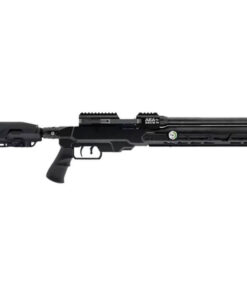

Reviews
There are no reviews yet.