Reximex RPA PCP Pistol Carbine
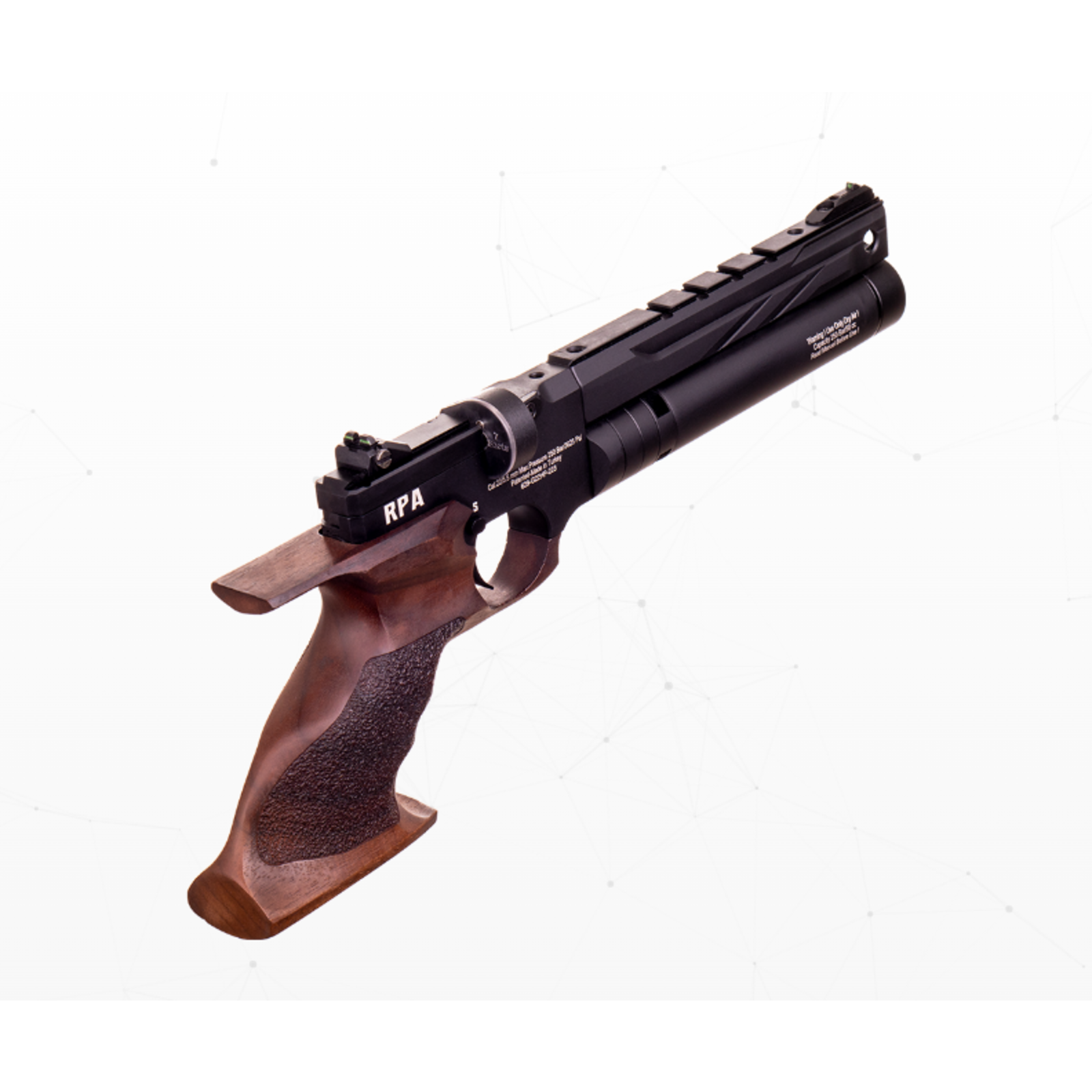
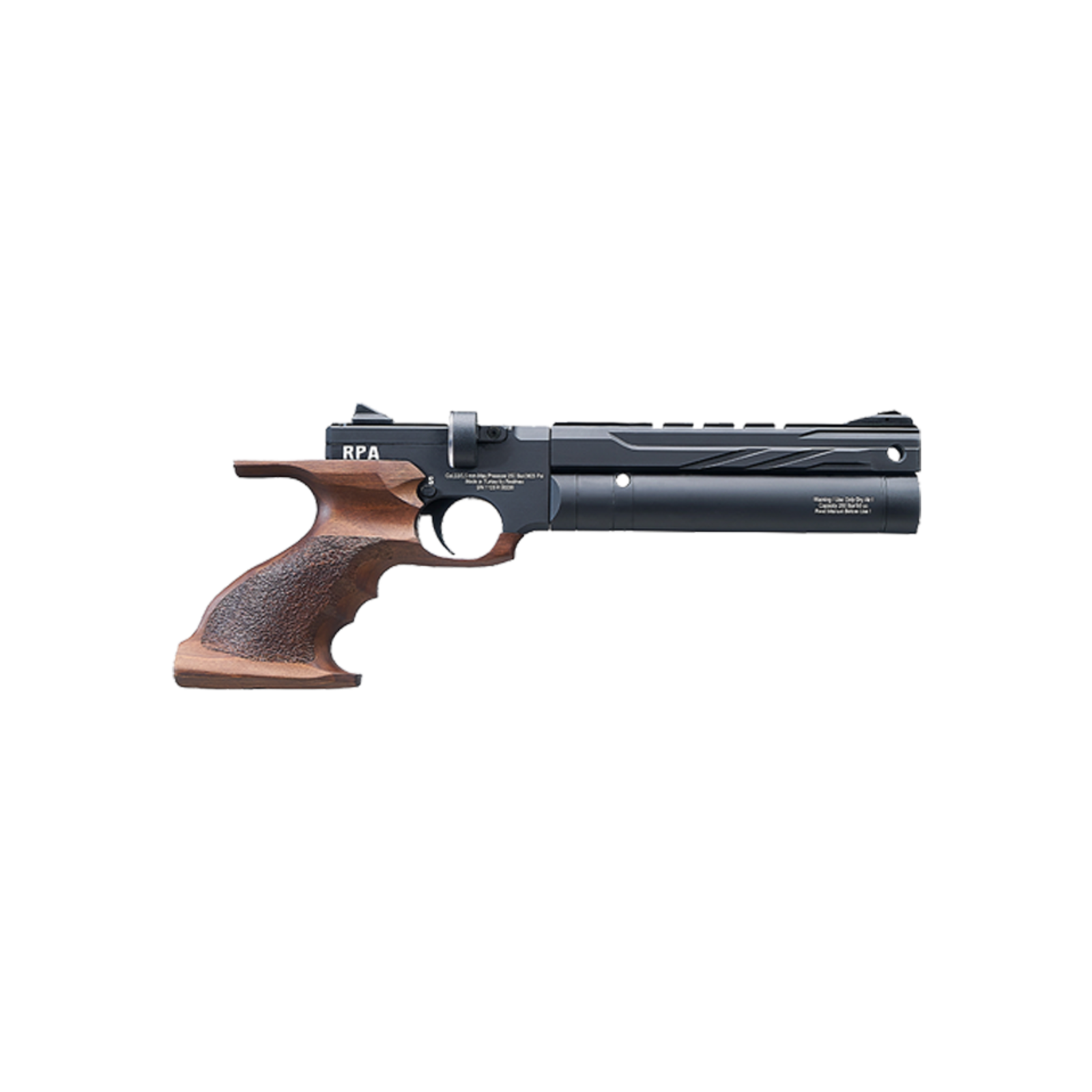
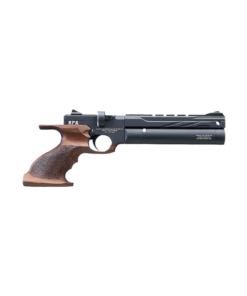
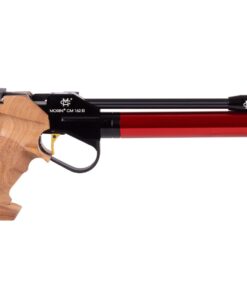
Precision, versatility, and compact power are delivered by the Reximex RPA PCP Pistol Carbine. A dual-role platform is offered so that a compact pistol and a stable carbine can both be enjoyed from a single regulated pre-charged pneumatic system. Consistent velocity, lightweight handling, and conversion-ready design are combined so that target practice, plinking, and close-range field work can be approached with confidence by shooters of every experience level.
Why the Reximex RPA PCP Pistol Carbine Stands Out
A regulated PCP action is used so that shot-to-shot consistency is maintained across a useful fill. Moreover, a removable 50 cc aluminum cylinder is fitted and can be charged to 250 bar / 3,625 PSI. Consequently, a flat velocity band is produced while refill frequency is kept practical. In addition, sidelever cocking is employed so that cycling remains smooth and repeatable.
Furthermore, conversion between pistol and carbine configurations is enabled by a detachable shoulder stock on the convertible platform. As a result, a 13-inch pistol package can be transformed into an approximately 23.6-inch carbine without tools. Therefore, backyard sessions, range training, and compact carry can all be supported by the same Reximex RPA PCP Pistol Carbine.
Core Performance Highlights
- A regulated PCP powerplant is used for consistent velocity
- A removable 50 cc aluminum cylinder is filled to 250 bar / 3,625 PSI
- Sidelever cocking is provided for smooth, repeatable cycling
- A 7.9-inch rifled barrel is fitted for pellet stability
- An 11 mm dovetail rail is included for optics
- Fiber-optic front and rear sights are adjustable for elevation and windage
- A 1/2″ UNF threaded muzzle adapter is supplied for a moderator
- Dual magazines plus a single-shot tray are included
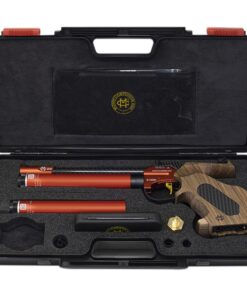
- A soft case with foam cutout liner is provided for transport and storage
Calibers, Power, and Shot Count
Two popular calibers are offered so that different shooting goals can be matched. In .177, velocities up to approximately 610 fps and energies around 7 FPE are typically recorded with standard match pellets. Meanwhile, in .22, velocities near 515 fps and energies around 10.7 FPE are commonly achieved. Accordingly, tin-can plinking, 10-meter practice, and modest pest work at short range can be supported when local laws and safe practices are observed.
Moreover, magazine capacity is scaled to caliber. Nine-round pistol magazines are used in .177, while seven-round magazines are used in .22. Additionally, a larger rifle-style magazine (14 rounds in .177 / 12 rounds in .22) is often included on carbine-oriented kits. As a result, more time can be spent on target and less time spent reloading. Furthermore, a single-shot tray is supplied so that longer or specialty pellets can be tested one at a time.
Shot count on the regulated portion of the fill is commonly cited near 55 shots in .177 and about 40 shots in .22 between 250 bar and roughly 100 bar. Therefore, a full afternoon of measured practice can often be completed from a single fill when a sensible shooting cadence is maintained. In addition, a pressure gauge is located at the end of the cylinder so that remaining air can be monitored at a glance.
Regulator Advantage
A built-in regulator is employed so that muzzle velocity remains stable across a useful pressure window. Consequently, point of impact is kept more predictable than on unregulated pistols of similar size. Likewise, pellet choice and hold-over become easier to learn because the first shots of a fill are not dramatically hotter than later shots. Thus, groups can be tightened and confidence can be built more quickly.
Ergonomics, Sights, and Optics Readiness
An ergonomic pistol grip is used so that a secure hold can be maintained during extended sessions. Turkish walnut as well as orange and blue laminated grip options are available on many RPA configurations, while textured synthetic furniture is used on related convertible models. Additionally, a ridged rubber buttpad is fitted when the carbine stock is attached, so recoil impulse and cheek weld are improved.
Open sights are retained so that the pistol can be used immediately. A fiber-optic blade front sight is adjustable for elevation, and a fiber-optic rear sight is adjustable for windage. However, an 11 mm dovetail rail is also provided so that a compact red dot or pistol scope can be mounted when greater precision is desired. Note that the rifle magazine sits taller and can interfere with iron sights; therefore, an optic is often preferred when the larger magazine is used.
A manual safety is included so that the action can be made safe during handling, loading, and storage. Meanwhile, a two-stage adjustable trigger is typically fitted so that pull weight and travel can be refined to individual preference. As a result, first-shot discipline and follow-through can be improved by a wide range of shooters.
Practical Use Scenarios
Close-range target work is well suited to the pistol configuration. Because overall weight stays near 1.98 lb in pistol form, fatigue is reduced during offhand strings. Subsequently, the carbine stock can be attached when a more stable hold is needed for 25–50 yard practice. In this way, skill development can progress from compact handling to supported shooting without a second firearm being purchased.
Plinking and informal competition can also be enjoyed. Consistent regulated velocity helps groups stay together on paper and on reactive targets. Moreover, the threaded muzzle adapter allows a moderator to be added where legally permitted, so report can be reduced for backyard or club use. Inclusive range days are supported because left- and right-handed shooters can both operate the sidelever and safety with modest adaptation.
Field carry remains practical due to the short barrel and modest overall length. When local regulations allow small-game or pest use at appropriate distances, the .22 configuration is often selected for extra pellet mass. Responsible ownership, positive target identification, and legal compliance must always be observed. The Reximex RPA PCP Pistol Carbine is intended for lawful sport shooting and should never be treated as a defensive firearm.
Accessories and Ownership Experience
A complete starter kit is typically shipped. Two pistol magazines, one rifle magazine on many packages, a single-shot tray, male and female fill probes, and a foam-lined soft case are commonly included. Consequently, the first range trip can be completed without an immediate extra purchase of basic filling and loading tools.
Maintenance remains straightforward. The removable cylinder can be swapped or serviced more easily than a permanently fixed tube. O-rings and fill fittings should be inspected on a regular schedule, and only dry, clean air should be used. When these habits are followed, long service life can reasonably be expected from the regulated action.
Who This Platform Is For
New PCP owners are served because the package arrives ready to fill, load, and shoot. Experienced pistol shooters are served because regulation, an adjustable trigger, and optic readiness are already present. Club members and backyard enthusiasts are served because conversion between pistol and carbine lets one platform cover more roles. Inclusive language and accessible ergonomics mean the design can be shared among family or club members of different statures once safe handling has been taught.
Value is emphasized without luxury-brand pricing being required. Turkish manufacturing, a useful accessory bundle, and dual-role geometry combine so that more of the budget can be spent on pellets, a moderator, or a compact optic rather than on a second complete gun.
Ready for the Next Session
A compact, regulated, convertible PCP is offered by the Reximex RPA PCP Pistol Carbine. Consistent power, light weight, fiber-optic sights, an 11 mm rail, and a practical shot count are brought together so that practice can stay engaging from the first fill to the last regulated shot. When a versatile pistol-carbine is needed for target work and informal field use, this platform can be selected with confidence—provided local airgun laws, age limits, and safe storage rules are followed at every step.
Weihrauch Air Rifles, PCP Platforms, Spring-Piston Systems, and Related Airgun Terminology
Enthusiasts researching premium German airgun engineering frequently encounter models and search terms such as Weihrauch HW100X Karbine, Thumbhole PCP Air Rifle, hw35, h 45, german air rifle, accurate air rifles, hw97k, hw 70, hw35e for sale, hw40, weihrauch hw30, weihrauch hw80, weihrauch hw 95, hw100, hw 97k, hw35 air rifle, hw50 s, weihrauch hw45, weihrauch english, weihrauch hw98, weihrauch englisch, hw77 air rifle, weihrauch hw50s, compressed air rifles, air rifle makes, spring piston, what are air rifles, weihrauch hw44, air shot gun, sk x rifles, weihrauch hw50, hw30s, hw 30, what are air pistols, hw50, and rifles de aire.
Within the Weihrauch lineup, the Weihrauch HW77 air rifle is widely recognized as a traditional fixed-barrel underlever platform. Related terminology includes HW77 Green Laminate rifle, Weihrauch underlever air rifle, HW77 spring piston air rifle, Weihrauch HW77 for sale, and German precision air rifle. Researchers comparing versions may also encounter phrases such as buy Weihrauch HW77 Green Laminate online, Weihrauch HW77 Green Laminate price and specs, Weihrauch HW77 accuracy review, HW77 Green Laminate vs HW97 comparison, is Weihrauch HW77 good for beginners, precision shooting airgun, high quality German airguns, best price Weihrauch HW77, where to buy Weihrauch HW77, Weihrauch HW77 in stock, affordable premium air rifle, and top rated underlever air rifle.
Technical comparison searches commonly include Weihrauch HW77 vs HW97, HW77 vs break barrel air rifle, best Weihrauch air rifles, most accurate air rifle for target shooting, air rifle with low recoil, durable air rifle for outdoor use, and reliable air rifle for long term use. These phrases generally reflect interest in operating systems, mechanical durability, handling characteristics, consistency, and the differences between fixed-barrel underlever designs, break-barrel rifles, and PCP platforms.
Other Weihrauch-related terminology includes air pistols, hw100 airgun, weihrauch hw95, weihrauch hw 30, weihrauch hw90, hw 44, hw 40, hw 98, and weihrauch hw100. The HW100 family represents the PCP side of Weihrauch’s catalog, while models such as the HW30, HW50, HW80, HW90, HW95, HW97, and HW98 are associated with spring-powered or gas-ram-style sporting airgun platforms depending on the specific model and configuration. By contrast, the HW44 is commonly discussed as a PCP air pistol.
The broader airgun market also includes search terminology connected with alternative PCP manufacturers and modern platforms. Examples include 25 karma, pcp bb gun, karma eq air rifle, karma red panda, panda guns, full auto pcp, karma sls compact, air karma, red panda hat, eq air, karma sls, eq magazine, air pcp, and karma airguns. These terms may refer to specific products, product families, accessories, community terminology, or unrelated search phrases that appear alongside airgun research.
Reximex is another name frequently encountered in PCP discussions. Related search phrases include reximex airguns, reximex rp, reximex throne gen 2, reximex mito, reximex rpa, sbs12, reximex mitos, reximex lieva, reximex accura pcp air rifle, and reximex throne gen2. Model naming can vary slightly between retailers, regions, and search listings, which explains variations such as “Throne Gen 2” and “Throne Gen2” or “Mito” and “Mitos.”
Airgun research also involves understanding velocity and energy. Searches such as fps to joules calculator, fps to ft lbs, and airgun calculator relate to converting projectile velocity and mass into kinetic-energy measurements. These calculations are commonly used for technical comparison, range evaluation, regulatory research, and understanding how different compressed-air or spring-powered platforms perform within their intended specifications.
More general discovery terms can include gunseek and yivli av tüfeği, alongside broader international phrases such as rifles de aire. Because airgun terminology varies considerably between English, German, Spanish, and Turkish-speaking markets, researchers may encounter several different naming conventions for comparable sporting, target, and recreational airgun platforms.
Taken together, terms ranging from Weihrauch HW100X Karbine and Thumbhole PCP Air Rifle to HW77 Green Laminate rifle, spring piston, compressed air rifles, karma airguns, and reximex airguns illustrate the diversity of modern airgun technology. Weihrauch remains particularly associated with German engineering, fixed-barrel underlever rifles, traditional spring-powered designs, precision PCP systems, and air pistols, while Karma and Reximex represent additional names encountered when comparing contemporary PCP platforms and associated airgun technology.
Frequently Asked Questions
What shooting roles can be covered by this compact regulated platform?
A dual-purpose layout is provided so that a short pistol hold and a supported carbine hold can both be used from one air system. Consequently, informal plinking, ten-meter practice, and short-range field work can be approached without a second complete firearm being purchased. Moreover, overall length remains modest in pistol form, while added stability is gained once the detachable stock is fitted. Therefore, backyard sessions and club training can be planned around a single fill and a single case. Inclusive use is supported because the grip and controls can be shared among shooters of different statures after safe handling has been taught.
How is consistent velocity maintained from fill to fill?
A built-in regulator is employed so that working pressure behind each pellet remains more uniform across a useful portion of the cylinder. As a result, the first shots of a fill are not dramatically hotter than later shots on the regulated band. Furthermore, point of impact stays easier to predict, and hold-over can be learned more quickly. In addition, pellet testing becomes more meaningful because extreme swings in muzzle speed are reduced. Thus, groups on paper and on reactive targets can be tightened when quality ammunition and a stable hold are used.
Which calibers are typically offered, and how do they differ in practice?
Two common pellet diameters are supplied so that different goals can be matched. A lighter projectile is usually selected when flatter trajectory and higher pellet count are preferred. Meanwhile, a heavier projectile is often chosen when extra downrange energy at modest distance is desired. Accordingly, tin-can work and formal practice can both be served, provided local energy limits and lawful uses are observed. Shot count on the regulated portion of the fill is generally higher with the smaller pellet and somewhat lower with the larger pellet. Therefore, session length should be planned around the chosen caliber and a conservative refill point.
How many shots can reasonably be expected from one fill?
A removable 50 cc aluminum cylinder is charged to a maximum of 250 bar. Subsequently, a useful regulated window is produced before velocity begins to fall. Typical published figures place roughly fifty-five consistent shots in the smaller caliber and about forty shots in the larger caliber between maximum fill and the lower end of the regulated band. However, actual count varies with pellet weight, ambient temperature, and regulator setting. Consequently, the onboard gauge should be watched so that the last weak shots are not taken on an important string. A spare cylinder can also be kept ready if long days at the range are planned.
How is the cylinder filled, and what fittings are required?
A stick-style fill probe is included with most kits so that a standard high-pressure source can be connected. Male and female probes are often supplied together so that different hose ends can be accommodated. Dry, clean air only should be used; oil or moisture must never be introduced into the system. Moreover, fill rate should be kept moderate so that heat buildup is limited. After the target pressure is reached, the probe is removed and the port is capped. Regular inspection of O-rings is recommended so that leaks are caught early.
Can the platform be converted between pistol and carbine without tools?
A detachable shoulder stock is designed so that conversion can be completed quickly. When the stock is removed, a compact pistol package of about thirteen inches overall is obtained. When the stock is attached, overall length grows to roughly twenty-three and a half inches, and a more stable cheek weld becomes available. Weight remains low in both modes—near two pounds as a pistol and only slightly more as a carbine. Therefore, the same barrel, regulator, and trigger can be used for offhand practice and for supported strings. Inclusive sharing is easier because one shooter can use the short form while another prefers the stocked form on the same outing.
What magazines and loading options are included?
Two rotary pistol magazines are normally packed, with capacity of nine pellets in the smaller caliber and seven in the larger caliber. Additionally, a taller rifle-style magazine is frequently included, holding fourteen and twelve pellets respectively. A single-shot tray is also provided so that longer or specialty pellets can be tested one at a time. The taller magazine can obstruct iron sights; therefore, an optic is often preferred when that magazine is used. Spare magazines can be pre-loaded so that range time is spent shooting rather than filling rotors.
Are open sights fitted, and can optics be mounted?
Fiber-optic open sights are installed from the factory. Elevation adjustment is available on the front blade, and windage adjustment is available on the rear unit. An 11 mm dovetail rail is also machined so that a compact red-dot or a dedicated pistol scope can be fitted. Because two rail segments sit at a slight height difference on some examples, adjustable rings are recommended if both segments must be used. Inclusive sighting options mean that shooters who prefer irons and shooters who prefer glass can both be accommodated without a permanent modification.
Is the muzzle prepared for a moderator?
A 1/2″ UNF threaded adapter is supplied so that a legally permitted moderator can be fitted. Report can thereby be reduced for backyard or club use where local rules allow sound-reduction devices. The adapter should be tightened securely and checked after the first strings. When a moderator is not wanted, the adapter can remain in place as a thread protector or can be removed according to the owner’s preference.
How is the trigger characterized, and can it be adjusted?
A two-stage metal trigger is typically fitted. Pull weight and travel can usually be refined within a modest range so that first-stage take-up and second-stage break suit individual preference. A crisp, predictable release supports better follow-through. Adjustment should be performed with the action unloaded and pointed in a safe direction. After any change, function should be verified with a few dry cycles before live fire.
Where is the safety located, and how is it used?
A manual safety is provided so that the action can be made safe during loading, carrying, and storage. Engagement and disengagement should become a habitual part of every handling sequence. The sidelever can also be used to decock when the muzzle is pointed in a safe direction and the safety protocol of the owner’s club is followed. Inclusive training is encouraged: every person who handles the platform should demonstrate the same safety sequence before live pellets are loaded.
What barrel length and overall dimensions should be expected?
A rifled barrel of 7.9 inches is used. Overall length in pistol configuration is approximately thirteen inches. With the carbine stock extended, overall length is approximately 23.6 inches. These compact dimensions make storage in a soft case straightforward and make transport to the range less cumbersome than with a full-length rifle. Despite the short barrel, adequate pellet spin is produced for useful accuracy at typical pistol and short-carbine distances.
How loud is the report, and can it be reduced?
Unmoderated report is generally rated in the medium to medium-high range. Ambient conditions, pellet choice, and whether a moderator is fitted all influence perceived sound. Where regulations allow, the supplied thread adapter makes the addition of a moderator simple. Even without a moderator, the compact package remains suitable for many outdoor ranges. Indoor use should only be undertaken where facility rules and ventilation permit.
What accuracy can realistically be expected?
With quality match pellets, a stable hold, and the regulator on the flat portion of the curve, tight groups at ten to twenty-five meters are commonly reported. Supported carbine use with an optic typically extends practical precision farther than an unsupported pistol hold. Pellet brand and head size should be tested, because short barrels can be particular. A single-shot tray is useful during that testing so that each pellet can be seated consistently.
Is the design suitable for left-handed shooters?
The sidelever is located on the left side, which favors right-handed cycling for most users. However, the grip geometry is generally ambidextrous, and the safety can be operated by either hand with practice. Left-handed shooters can therefore use the platform after a short familiarization period. Inclusive clubs often keep a brief orientation card so that new members of either dominant hand can be brought up to speed quickly.
What accessories arrive in the box?
A foam-lined soft case, two pistol magazines, a rifle magazine on many packages, a single-shot tray, and fill probes are commonly included. Reserve O-rings and a basic manual are often packed as well. Consequently, the first fill and the first range trip can be completed without an immediate extra purchase of basic tools. Additional cylinders, a dedicated moderator, and a compact optic remain optional upgrades.
How should routine maintenance be planned?
The removable cylinder simplifies inspection and replacement of seals. Fill-probe O-rings should be checked before every charging session. The barrel should be cleaned only as needed; over-cleaning of a PCP barrel is unnecessary and can harm accuracy. A drop of appropriate chamber oil on the probe tip—never into the air path—helps probe insertion. Storage should be in a dry place, preferably at a mid-range pressure rather than completely empty or at maximum for long idle periods, following the manufacturer’s guidance.
Can the platform be used for pest control or small game?
Where local law permits airguns for those purposes, the larger caliber at typical published energy is sometimes selected for short-range work. Ethical range, shot placement, and positive target identification remain the shooter’s responsibility. This class of compact PCP is not intended as a defensive tool and should never be presented as such. Inclusive outdoor ethics mean that every user agrees to the same legal and humane standards before field use is considered.
Are power levels the same in every country?
Factory energy is often set to meet regional limits. Some markets receive a lower-output specification so that license-free ownership remains possible. Published velocity figures of approximately 610 fps in the smaller caliber and 515 fps in the larger caliber reflect common unrestricted test conditions with standard match pellets. Owners should confirm the exact specification of the unit in hand and must comply with local classification, age, and storage rules.
How should the first range session be organized?
The cylinder should be filled to the marked maximum, magazines loaded with a known pellet, and the safety verified. Initial groups should be fired from a rest so that zero of the iron sights or optic can be established. After zero is confirmed, offhand and stocked positions can be practiced. Inclusive coaching is recommended: a second person can call impacts while the shooter focuses on trigger and follow-through. A written note of pellet brand, fill pressure, and group size helps later sessions start faster.
What should be known about the rail height and magazine clearance?
The forward dovetail section on the shroud can sit slightly higher than the rear breech section. Two-piece mounts that span both segments may therefore require adjustable rings. The taller rifle magazine can block the iron sight picture; an optic or the lower pistol magazines avoid that conflict. Planning the optic and magazine combination before the first match or hunt prevents frustration on the line.
Is a spare air cylinder worth adding?
Because the tube is removable, a second cylinder can be pre-filled and swapped in minutes. Long club days or travel to a remote range become easier when a spare is carried. Both cylinders should be treated with the same seal care and should be labeled with fill date. Inclusive sharing of a spare among family members is possible if everyone follows the same fill and inspection routine.
How durable is the construction for regular club use?
An alloy receiver, rifled steel barrel, and regulated valve are used so that repeated cycling can be tolerated when maintenance is not neglected. The sidelever stroke is short and is generally described as smooth when the action is kept clean. Drop protection is still required; the compact size invites casual handling that should be avoided. A quality case and a habit of checking screws after the first hundred shots will preserve zero and function.
What pellet weights work best?
Manufacturer test data commonly cite 8.44 grain pellets in the smaller caliber and 18.13 grain pellets in the larger caliber. Heavier pellets can still be accurate but will reduce velocity and sometimes shot count. A brief ladder test at ten and twenty-five meters is the most reliable way to select a lot. Once a winning pellet is found, that same lot should be used for record strings so that the regulator’s consistency can be fully used.
How should storage and travel be handled?
The foam-cut case is designed so that the pistol or carbine, magazines, and probes can be carried together. During air travel or border crossing, all applicable airgun and compressed-air rules must be checked in advance. At home, a locked cabinet and a recorded fill pressure are prudent. Inclusive household rules should make clear that only trained adults may access the key and the fill gear.
Can juniors or new shooters begin on this platform?
After a safety briefing, supervised use is possible because weight is low and recoil is mild. The two-stage trigger and manual safety give instructors clear teaching points. Magazine capacity should be limited during first lessons so that each shot is called and observed. Inclusive instruction means that every new shooter, regardless of age or background, receives the same muzzle, trigger, and storage rules before the first live pellet is loaded.
What limits should be respected?
This class of compact regulated PCP is intended for sport, practice, and lawful field use at modest distance. It is not a substitute for a full-power hunting rifle and is not a defensive weapon. Maximum fill pressure must not be exceeded. Only pellets of the correct diameter should be loaded. When those limits are respected, the platform can deliver many enjoyable, consistent sessions for a wide community of shooters.
Practical Use Scenarios
A compact regulated PCP is most useful when a session is planned around real distances, real holds, and real refill habits. Consequently, the following scenarios are written so that a complete outing can be visualized from case opening to last regulated shot. Inclusive language is used throughout so that new shooters, experienced pistol users, and mixed groups can all see themselves in the same sequence. Local laws, club rules, and safe storage requirements must always be observed before any of these scenes is attempted.
Scenario One: First Official Range Session After Unboxing
The foam-lined case is opened on a bench so that every included item can be accounted for. Two pistol magazines, a taller rifle magazine where supplied, a single-shot tray, and the fill probes are laid out in order. Subsequently, the removable cylinder is charged to the marked maximum with dry air only. A moderate fill rate is used so that heat is limited and seals are not shocked. After the probe is withdrawn, the gauge is read and the port is capped.
A known match pellet is then seated in the single-shot tray so that the first groups are not influenced by magazine variation. The action is pointed downrange, the safety is verified, and a rested hold is taken at ten meters. Because a regulator is fitted, the first string is expected to sit close to later shots on the same fill. Impacts are called, and elevation and windage on the fiber-optic sights are corrected in small increments. After a tight cluster is obtained from the rest, the same pellet is loaded into a pistol magazine so that cycling speed can be learned.
Transition to an offhand pistol hold is made only after zero is confirmed. Elbows are kept in, the textured grip is settled high in the hand, and the two-stage trigger is pressed through without disturbing the sight picture. Ten-shot strings are fired, then a short pause is taken so that the gauge can be checked. Inclusive coaching is easy at this stage: a second person can spot while the shooter concentrates on follow-through. When the regulated band is still healthy, the detachable stock is fitted so that the same zero can be compared from a supported carbine hold. Thus, one fill teaches both configurations before the case is closed.
Scenario Two: Club Night With Mixed Experience Levels
A weekday club evening is organized so that several shooters can share one platform without confusion. Magazines are pre-loaded at a side bench and labeled by caliber and pellet lot. A brief safety talk is given so that muzzle direction, safety operation, and decocking with the sidelever are demonstrated once for everyone. Afterwards, a rotation is established: five minutes as a pistol, five minutes as a carbine, then a magazine change.


Reviews
There are no reviews yet.