Frequently Asked Questions (FAQs)
1. What makes this PCP air rifle different from traditional air rifles?
One of the main differences is its pre-charged pneumatic operating system. Unlike traditional spring-piston air rifles, this design relies on compressed air stored in an integrated reservoir. Consequently, the internal operating mechanism differs significantly from that of a conventional break-barrel model.
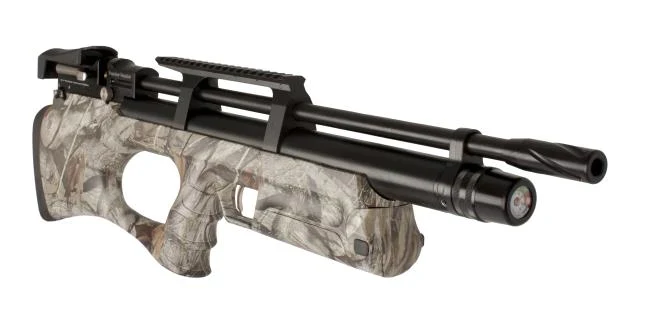
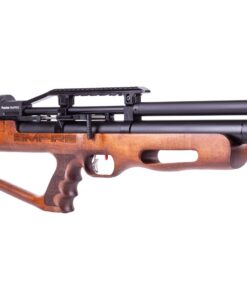
Additionally, the compact bullpup configuration distinguishes its external appearance. The action is positioned farther toward the rear of the stock, allowing a relatively long barrel to be incorporated into a shorter overall structure.
Furthermore, a detachable magazine, side-lever mechanism, and adjustable ergonomic components are included in the manufacturer’s design.
These characteristics create a distinctive combination of modern engineering and traditional sporting-airgun features.
2. Is this model suitable for beginners?
Suitability depends on the individual’s experience, training, and understanding of compressed-air equipment.
Although the rifle includes several familiar sporting-airgun features, its PCP operating system introduces additional responsibilities involving high-pressure air storage, equipment inspection, and manufacturer-approved maintenance.
Therefore, beginners should receive appropriate instruction from a qualified professional before handling or operating the rifle.
Additionally, the manufacturer’s manual should be reviewed carefully, particularly regarding safety mechanisms, handling requirements, and pressurized components.
An experienced instructor can also explain the differences between spring-powered and pneumatic airgun systems.
Ultimately, responsible ownership depends on training, legal compliance, and consistent attention to safety rather than the external design alone.
3. What materials are used in the stock?
The stock is manufactured primarily from synthetic materials rather than natural timber.
This construction provides a molded exterior with integrated contours and a distinctive patterned finish.
Additionally, synthetic stocks generally require different cosmetic maintenance from traditional wooden alternatives. For example, they do not rely on protective treatments intended specifically for exposed wood grain.
However, synthetic materials are not completely resistant to scratches, chemical damage, or prolonged environmental exposure.
Therefore, cleaning products should be selected according to the manufacturer’s recommendations.
Furthermore, the molded construction allows several ergonomic design features to be incorporated into the exterior.
The result is a modern stock configuration that differs visibly from the manufacturer’s walnut-stock variants.
4. Does the rifle come with an adjustable cheekpiece?
Certain configurations are manufactured with an adjustable cheekpiece.
This component forms part of the stock’s ergonomic arrangement and provides an additional point of factory-designed customization.
However, exact adjustment features may differ according to production version and regional specifications.
Consequently, customers should examine the official product documentation or confirm the configuration with an authorized retailer.
Furthermore, unauthorized alterations to stock components should be avoided when they could interfere with the rifle’s safe operation.
Regular inspection is also recommended to identify loose components, visible damage, or unusual wear.
The manufacturer’s instructions remain the primary reference for the correct care of adjustable stock assemblies.
5. How does the bullpup design affect the overall dimensions?
A bullpup design positions the main action farther toward the rear of the stock than is typical of conventional rifle layouts.
Consequently, the overall length can be reduced without requiring an equivalent reduction in barrel length.
For this series, a manufacturer’s specification of approximately 730 mm overall length is commonly listed alongside a barrel length of approximately 535 mm.
Nevertheless, measurements should be confirmed for the exact product variant.
Additionally, the arrangement creates a distinctive external profile, with much of the operating assembly integrated toward the rear.
The design represents an engineering layout rather than a guarantee of superior accuracy or performance.
6. What type of air reservoir is included?
An integrated compressed-air reservoir is used as part of the pre-charged pneumatic system.
The relevant manufacturer’s documentation lists an aluminum reservoir with a capacity of approximately 280 cc.
Additionally, a nominal filling pressure of 200 bar is specified for the corresponding configuration.
Because this reservoir is a pressure-bearing component, strict attention must be given to inspection, handling, and approved servicing procedures.
Furthermore, compressed-air cylinders should never be modified, heated, or exposed to conditions outside the manufacturer’s stated limitations.
Any suspected damage should be assessed by qualified personnel before further use.
The correct reservoir specifications should always be confirmed against the supplied manual and product identification.
7. Is the camouflage finish permanent?
The patterned exterior is applied as part of the factory stock finish. However, its long-term appearance depends on the materials, manufacturing process, handling conditions, and maintenance.
Although synthetic stocks are generally practical for routine exterior cleaning, no decorative finish should be considered completely resistant to wear.
Scratches, abrasive contact, unsuitable cleaning agents, and prolonged exposure to harsh environmental conditions may affect the surface.
Therefore, gentle cleaning and appropriate storage are recommended.
Additionally, protective storage equipment can help reduce accidental cosmetic damage during transportation.
The exterior should also be inspected periodically for cracking, discoloration, or other visible deterioration.
8. How much does the rifle weigh?
A weight of approximately 3.3 kg is commonly associated with relevant synthetic-stock configurations in the manufacturer’s documentation.
Nevertheless, the exact weight can vary according to production version, installed factory components, and model specification.
Furthermore, published measurements may describe the standard rifle without optional equipment or packaging.
Consequently, customers comparing different configurations should confirm whether the stated figure refers to the complete factory product.
Weight is particularly relevant when evaluating storage arrangements, transportation requirements, and the suitability of supporting equipment.
For accurate purchasing information, the seller should provide the manufacturer’s specifications for the exact configuration being supplied.
9. Does the rifle include a detachable magazine?
Yes. A detachable magazine system is incorporated into the design.
However, magazine capacity is dependent on the selected calibre and specific product variant.
Manufacturer information for the Breaker family lists capacities of approximately 14, 12, and 10 pellets across different calibre configurations.
Consequently, replacement magazines should not be assumed to be interchangeable between versions.
Additionally, magazines should be inspected for visible damage, unusual wear, and contamination.
Only compatible components specified by the manufacturer should be used.
Furthermore, any handling or maintenance should take place only after the equipment has been made safe according to the operating instructions.
Premium Rifle Scopes, Rangefinder Binoculars, Hunting Optics, and Precision Optical Equipment
Discover Advanced Optics for Precision, Clarity, and Long-Range Performance
Choosing premium optical equipment requires careful consideration of image clarity, magnification, durability, reticle design, and overall performance. Whether exploring a gun scope, comparing a professional hunting optic, or researching the longest range scope, buyers benefit from understanding how different optical systems support observation, target identification, and recreational shooting activities.
Modern optical technology offers impressive versatility. From leica rangefinder binoculars to precision riflescopes, specialized equipment combines advanced lenses, durable construction, and ergonomic designs. Furthermore, understanding how to buy a rifle scope helps buyers identify suitable magnification ranges, optical coatings, adjustment systems, and configurations.
Different environments demand different optical solutions. Consequently, equipment selection should reflect intended applications, environmental conditions, and individual preferences rather than magnification alone.
Leica Rangefinder Binoculars and Premium Optical Technology
Exploring the Leica Geovid Collection
The leica geovid binoculars collection attracts attention among outdoor enthusiasts who value premium optical engineering and integrated distance-measurement technology. In particular, leica geovid 10×42 rangefinder binoculars combine a 10-power magnification format with 42mm objective lenses, providing a practical combination of viewing capability and portability.
Buyers researching leica binoculars with rangefinder technology frequently compare optical clarity, ranging functionality, handling characteristics, and available connectivity features. The leica geovid pro 10×42 represents a sophisticated option within the manufacturer’s premium range.
Similarly, searches for geovid pro 10×42 often focus on advanced distance measurement, optical refinement, and suitability for extended outdoor observation.
The leica geovid rangefinder concept integrates observation and distance measurement into one optical system. Therefore, leica geovid pro rangefinder binoculars may appeal to users who prefer fewer separate devices during outdoor activities.
Additional product searches include leica geovid rangefinder binoculars, leica geovid 10×42, and leica geovid binos. Although these expressions overlap in meaning, they reflect different ways buyers research the Geovid family.
Compact Leica Binoculars and Everyday Observation
Beyond rangefinding models, traditional leica binoculars offer optical configurations suited to wildlife observation, travel, and nature appreciation.
Portable leica small binoculars can be particularly attractive when lightweight equipment is preferred. Meanwhile, buyers searching binoculars leica, leica bino, or leica binos may be comparing available formats, objective diameters, and carrying convenience.
The phrases leica binocular, leica bino rangefinder, and leica camera binoculars also appear in optical equipment searches, although Leica’s camera and binocular categories should be evaluated separately.
When browsing leica binoculars for sale, consumers should examine warranty coverage, product authenticity, optical condition, and included accessories.
SIG Sauer Binoculars and Image Stabilization
Modern Stabilized Observation Systems
The market for sig sauer binoculars includes optical equipment designed for outdoor observation and demanding field conditions.
Enthusiasts researching sig sauer binos, sig binoculars, and sig binocular configurations may encounter models with different magnification systems and specialized features.
Interest in sig self stabilizing binoculars reflects the growing popularity of technologies designed to reduce perceived image movement. Similarly, sig image stabilizing binoculars and sig auto stabilizing binoculars are common search expressions among people seeking more comfortable handheld viewing.
Buyers also use phrases such as sig sauer self stabilized binoculars and sig sauer image stabilized binoculars when researching stabilized optical equipment.
However, stabilization capabilities vary by model, making manufacturer specifications essential before purchasing.
The term sigma binoculars sometimes appears alongside SIG-related searches, although Sigma and SIG Sauer should not automatically be treated as the same manufacturer.
Nightforce ATACR Precision Riflescopes
Exploring Advanced Magnification Options
The nightforce atacr family is associated with premium riflescope design, precise adjustments, and robust mechanical engineering.
Several configurations attract particular interest, including the nightforce atacr 5-25×56 f2, nightforce atacr 4-20×50, nightforce atacr 5-25×56 f1, and nightforce atacr 4-16×50.
Each specification represents a different combination of magnification and objective size. Additionally, first focal plane and second focal plane reticle designs provide distinct viewing characteristics.
Searches for night force atacr, atacr scope, and nightforce attacker frequently lead buyers toward information about the manufacturer’s premium optics, although the latter is not an official ATACR model designation.
The shorter phrases atacr 4-20 and nightforce atacr 4 20×50 f1 may also be used when comparing configurations. Exact focal-plane specifications should always be verified against the model number.
Complementary optical searches sometimes include zeiss red dot, reflecting interest in different aiming systems rather than directly equivalent riflescopes.
Tangent Theta Scopes and Premium Optical Engineering
Optical Precision and Adjustment Quality
Products associated with tangent theta attract enthusiasts interested in premium optical construction and repeatable mechanical adjustments.
When comparing tangent theta scopes, shoppers often prioritize lens quality, reticle visibility, adjustment feel, and long-term durability.
The expressions tangent scope, tangent scopes, and tangent theta scope may appear throughout product research, although accurate manufacturer identification remains important.
Similarly, tangent optics is used in searches concerning specialized optical equipment.
The separate phrase theta optics may refer to other optical products or brands and should not automatically be confused with Tangent Theta.
A meaningful comparison should consider actual product specifications, available accessories, and manufacturer support rather than brand recognition alone.
Athlon Optics: Midas TAC, Argos BTR, Ares BTR, and Ares ETR
Midas TAC Optical Systems
The athlon midas tac collection offers configurations that appeal to enthusiasts researching precision-oriented optical equipment.
One notable product description is midas tac gen2 hd 6-24×50 aplr15 ffp moa reticle riflescope, which identifies a specific combination of magnification, optical design, and reticle characteristics.
Another frequently researched expression is athlon midas tac 6-24×50. Before choosing a configuration, buyers should verify the generation, reticle, turret units, and other model-specific details.
Argos BTR Magnification and Versatility
The athlon argos btr family also receives considerable attention from optical equipment buyers.
Search terms such as athlon argos btr gen2, athlon argos btr gen 2, and athlon btr gen 2 commonly describe interest in newer generations of the product family.
For higher magnification, athlon argos btr gen2 8-34×56 attracts attention because of its broad zoom range.
Related technical expressions include 34 56 and 34×56, although numerical combinations alone do not identify a particular optical product.
Buyers researching athlon scopes review, athlon reticles, and athalon scopes can benefit from comparing independent assessments and official technical documentation.
The phrase athens scope may also arise through spelling variations, making exact product identification especially important.
Ares BTR and ETR Premium Configurations
The athlon ares btr family provides another category for comparing advanced riflescope designs.
Meanwhile, athlon etr searches often focus on higher-end optical features, mechanical precision, and available reticle configurations.
A detailed example is the ares etr gen2 uhd 4.5-30×56 aprs12 ffp ir mil reticle, a specification that helps distinguish magnification, reticle type, and focal-plane design.
Related expressions include athlon 4.5-30×56, 4.5 30, and 4.5/30. These search variations should be interpreted using complete manufacturer specifications.
LPVO Scopes and Flexible Magnification Systems
Comparing 1-10x and 1-8x Optics
Low-power variable optics offer flexible magnification for recreational range activities.
Buyers frequently research 1 10 scope, 1×10 scope, and 1-10 rifle scope when evaluating variable-magnification equipment.
The broader 1 10 lpvo and 1-10 lpvo categories include products from different manufacturers with varying optical and mechanical designs.
Furthermore, 1-10 ffp lpvo identifies interest in first focal plane configurations, while lpvo 1-10 and lpvo 1-8 represent different zoom ranges.
Searches for ares etr 1 10 should be checked against current model catalogs to establish the exact product configuration.
Other Optical Specifications and Buying Considerations
Understanding Magnification Terminology
Optical searches frequently include formats such as 10×40, 14×44, 2.5×15, 2.5/15, and 2.5-15 scope.
Other expressions include 1/2×42, 12×4.2, 2-12x, and athlon btr 2-12. Their intended meaning should be confirmed before being interpreted as complete specifications.
Additional search terminology such as 11.5ee, 2s14, and athlon 2 may represent incomplete model references or unrelated product identifiers.
Likewise, ao scope commonly indicates interest in adjustable-objective systems, while icarus scope and avalon aries require product-specific clarification.
Fierce Optics and Related Outdoor Equipment
The names fierce firearms, fierce arms, and fierce optics also appear in sporting-equipment research.
Although these searches may involve related outdoor products, buyers should distinguish between manufacturers, product categories, and verified specifications.
Ultimately, choosing optical equipment involves more than identifying an attractive magnification range.
Lens coatings, eye relief, field of view, weight, reticle visibility, warranty terms, and manufacturer reputation all contribute to the overall ownership experience.
For that reason, comparing authentic product information and understanding the intended application remain essential when selecting binoculars, rangefinders, and premium optical systems.
10. Is a manual safety mechanism included?
A manual safety mechanism is incorporated into the factory design.
However, mechanical safety devices should never be treated as substitutes for proper handling practices.
Any air rifle must be regarded as potentially capable of discharging until its condition has been checked in accordance with the manufacturer’s instructions.
Additionally, the safety mechanism should be inspected during routine professional servicing.
If a component becomes damaged, unusually stiff, loose, or unreliable, the rifle should not be operated until it has been examined by a qualified technician.
Furthermore, secure storage and restricted access remain essential responsibilities for every owner.
The manufacturer’s manual provides the appropriate safety information for the specific model.
11. Is regular maintenance required?
Yes. Regular maintenance is necessary for the preservation of mechanical condition and the safe management of pressurized components.
Exterior surfaces should be checked for dirt, wear, and visible damage.
Additionally, seals, pressure fittings, and internal components may require periodic assessment by qualified service personnel.
Because the system incorporates stored compressed air, maintenance practices differ from those associated with conventional spring-piston air rifles.
Therefore, unapproved disassembly should be avoided.
Cleaning products and lubricants must also be compatible with the manufacturer’s requirements.
Furthermore, service intervals should be established according to the official documentation rather than arbitrary schedules.
Appropriate maintenance supports long-term equipment reliability and responsible ownership.
12. Can the rifle be stored for extended periods?
Extended storage is possible when the manufacturer’s recommendations are followed.
However, the required storage condition depends on the design of the compressed-air system and the manufacturer’s instructions.
Consequently, owners should avoid making assumptions about reservoir pressure during prolonged inactivity.
Additionally, the equipment should be kept in a secure, dry location with access restricted to authorized individuals.
A suitable locked storage arrangement can help prevent unauthorized handling and reduce exposure to environmental contaminants.
Furthermore, the rifle should be inspected before returning it to service after extended storage.
Any uncertainty about seals, reservoir condition, or mechanical integrity should be addressed by qualified personnel.
13. What environmental conditions should be avoided?
Extreme temperatures, excessive moisture, corrosive chemicals, and prolonged exposure to direct sunlight should be avoided unless specifically permitted by the manufacturer.
These conditions can affect exterior finishes, synthetic materials, seals, and certain metal components.
Additionally, high-pressure reservoirs require particular care because their safe operating limits are determined by their engineering specifications.
Therefore, storage near heating equipment or inside excessively hot enclosed spaces may introduce unnecessary risks.
Furthermore, saltwater exposure and corrosive environments can accelerate deterioration of unprotected metal surfaces.
After exposure to challenging conditions, an inspection should be performed according to the manufacturer’s maintenance guidance.
14. Are replacement components available?
Replacement-component availability depends on the region, distributor network, production version, and current manufacturer support.
Certain external components may be obtainable through authorized retailers, while internal mechanical or pressure-bearing parts may require professional servicing.
Consequently, customers should confirm the rifle’s exact model identification before requesting replacements.
Furthermore, components from visually similar products should not automatically be considered compatible.
Even minor manufacturing differences can affect fit, reliability, and safety.
For that reason, original manufacturer-approved components are preferable when repairs are necessary.
Authorized service centers can also provide guidance concerning parts identification, warranty conditions, and professional installation.
15. Is the rifle legal to own in every country?
No. Airgun ownership laws differ significantly between countries and, in some cases, between states, provinces, or local jurisdictions.
Restrictions may concern minimum ownership age, permitted energy levels, licensing, registration, transportation, storage, and approved places of use.
Additionally, certain higher-energy configurations may be classified differently from lower-powered models.
Therefore, the exact factory specification must be assessed against the laws applicable to the buyer’s location.
International purchasing may also involve import permits, customs declarations, and authorized dealer requirements.
Furthermore, regulations can change over time.
Prospective owners should consult current official regulatory guidance or an appropriately licensed dealer before purchasing or importing the equipment.
16. Does the product require a firearm certificate?
Certification requirements depend on the applicable jurisdiction and the specific power classification.
In the United Kingdom, for example, certain air rifles may require a firearm certificate when their muzzle energy exceeds the relevant statutory threshold.
However, rules are not identical across England, Wales, Scotland, and Northern Ireland.
Other countries may use entirely different classifications or licensing arrangements.
Consequently, no universal certification requirement can be applied to every version.
Additionally, factory specifications should be verified before legal classification is determined.
Customers should obtain guidance from the appropriate authority or a licensed dealer rather than relying solely on a product listing.
17. Can the rifle be transported internationally?
International transportation may be possible, but it is subject to national laws, customs requirements, carrier restrictions, and any applicable import or export authorization.
Moreover, air rifles are not necessarily treated as ordinary consumer goods by transport companies.
Some carriers prohibit them entirely, while others accept specific categories only through approved arrangements.
Additionally, compressed-air reservoirs may be subject to separate transportation requirements.
Therefore, shipping eligibility should be confirmed directly with the carrier and relevant authorities.
Customers should also verify destination-country requirements before making international purchasing arrangements.
Failure to obtain necessary authorization can result in delays, seizure, financial penalties, or other legal consequences.
18. What should be checked before purchasing?
Several product details should be independently verified before an order is placed.
These include the exact model designation, manufacturer specifications, calibre, power classification, warranty arrangements, and included components.
Additionally, the seller should provide accurate information about stock condition and whether the product is new, refurbished, or previously owned.
For imported models, regional compatibility and legal requirements should also be reviewed.
Furthermore, buyers should confirm the availability of authorized servicing and replacement components.
Clear warranty documentation is particularly important because repair responsibilities may differ between manufacturers, distributors, and retailers.
A complete product listing should distinguish verified specifications from optional features and accessories.


Reviews
There are no reviews yet.