Hi-Lux PR5 5-25X56 Rifle Scope, FFP, Zero Stop, 0.1 Mil – Premium Precision Optics for Long-Range Shooting
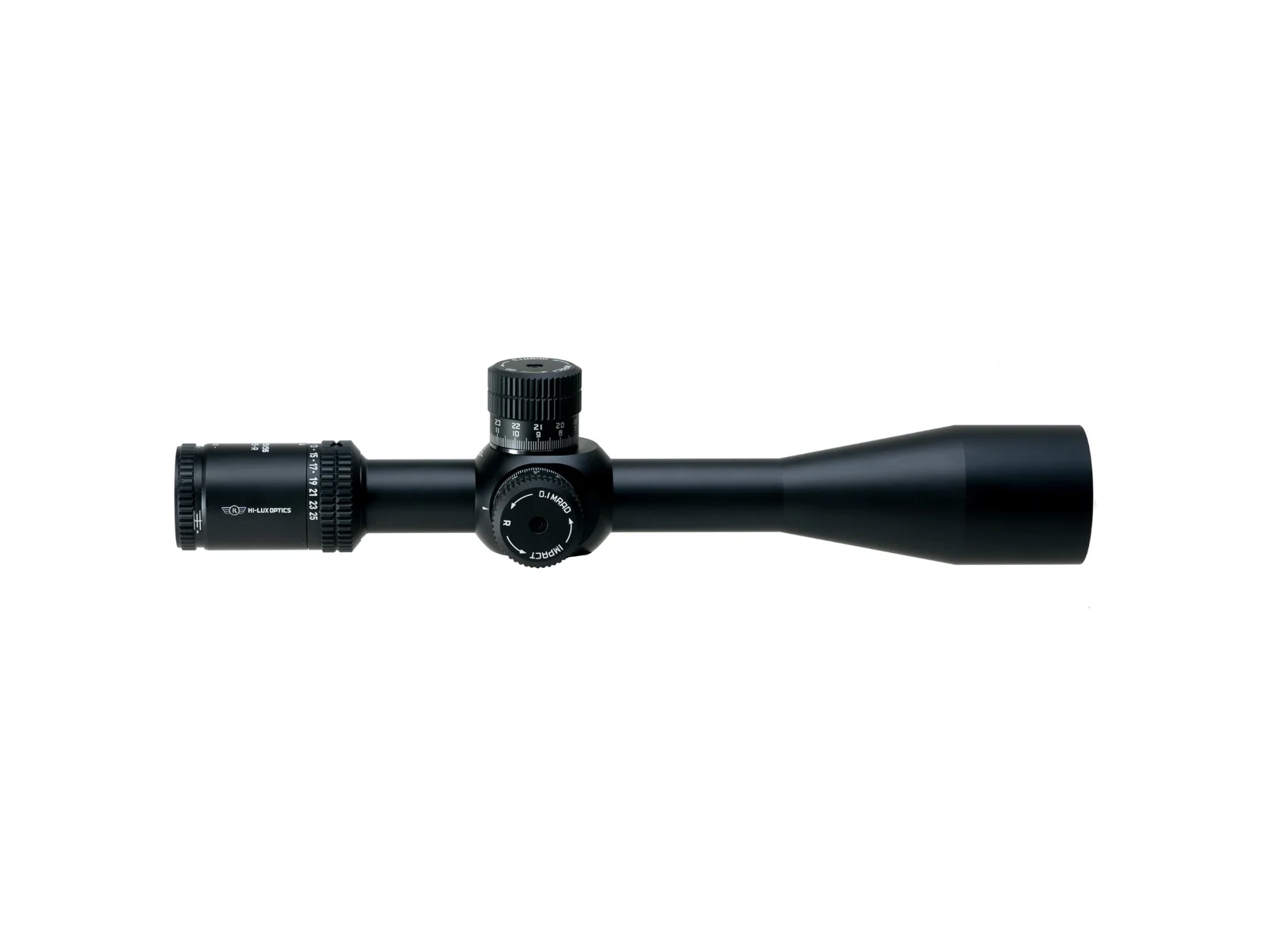
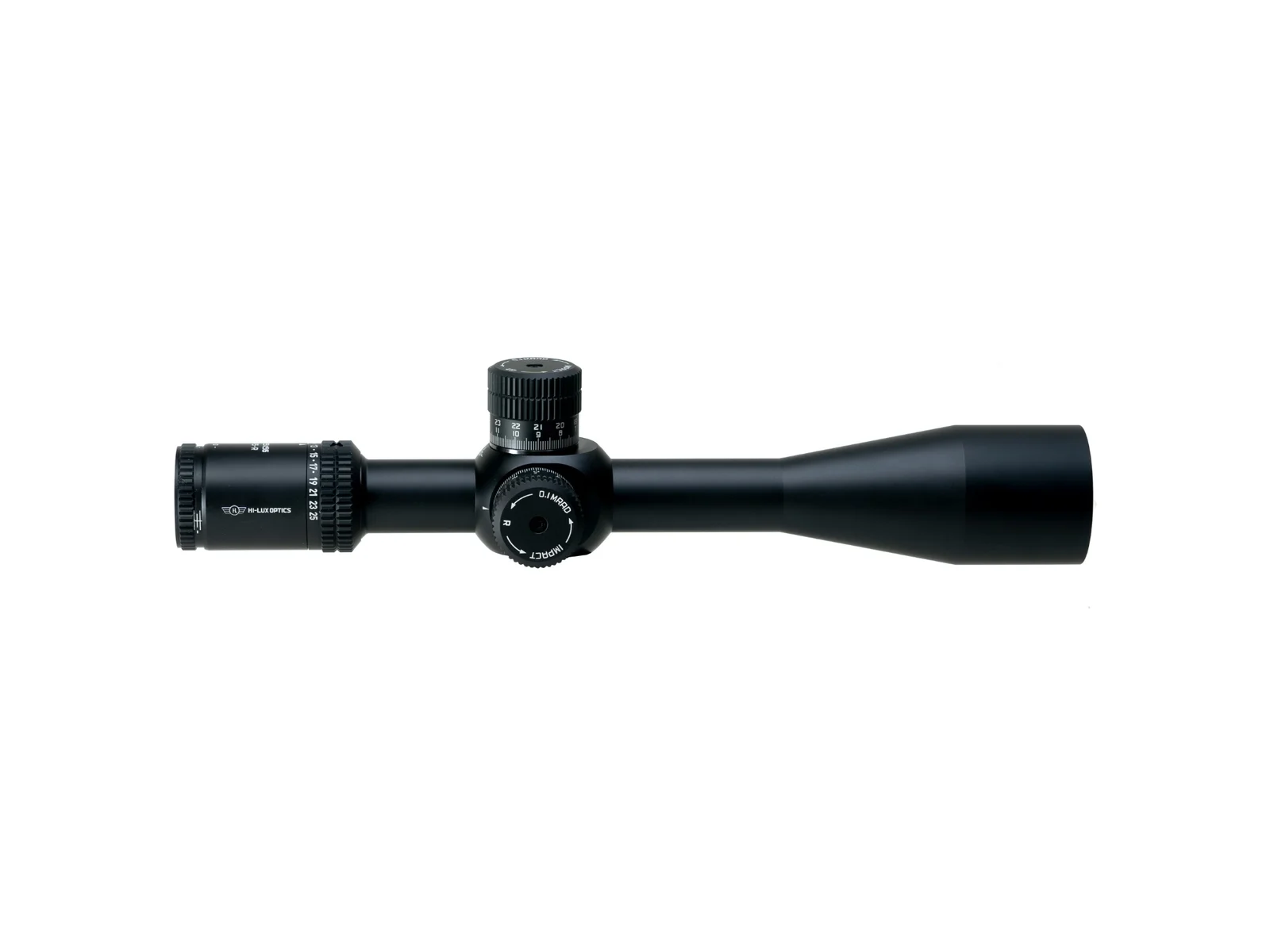
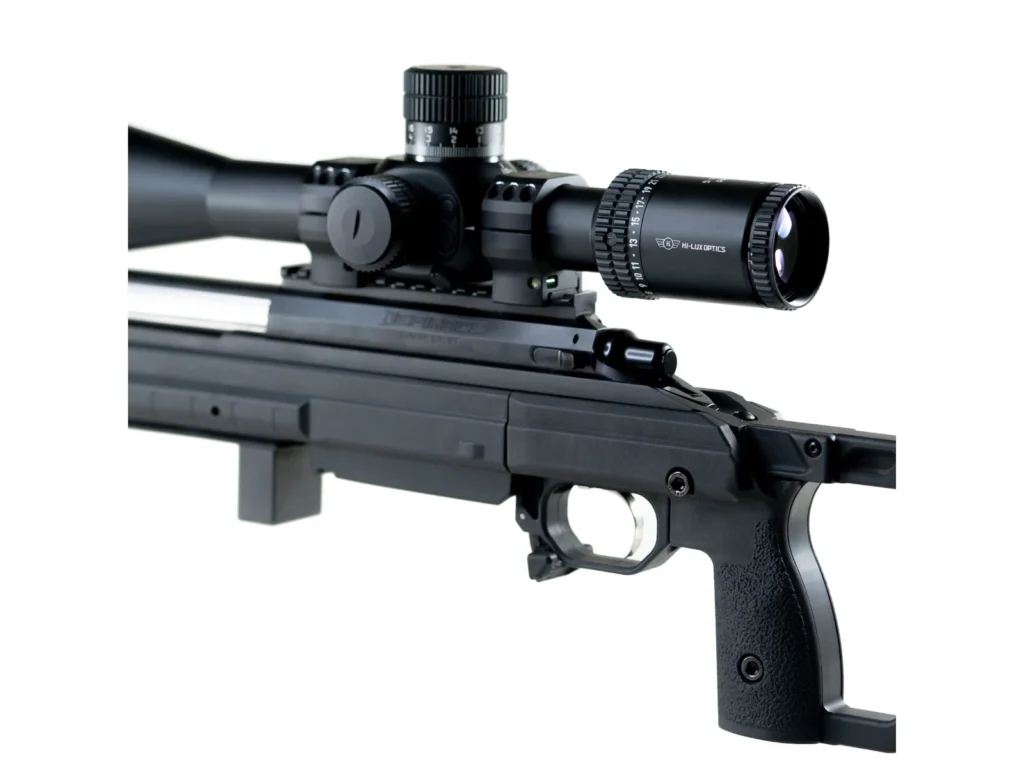
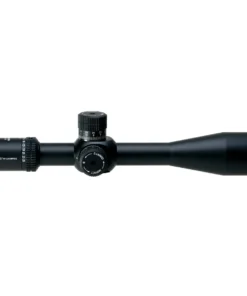
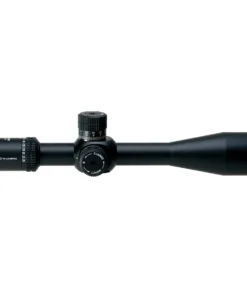
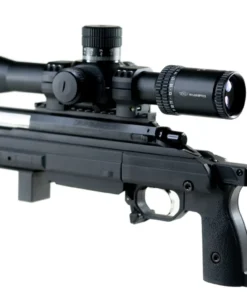
The Hi-Lux PR5 5-25X56 Rifle Scope, FFP, Zero Stop, 0.1 Mil delivers impressive optical clarity, reliable adjustment controls, and rugged construction for demanding precision shooting applications. Designed for long-range enthusiasts, competitive marksmen, and experienced hunters, this advanced riflescope combines modern optical engineering with practical features that support accuracy, consistency, and user confidence.
Furthermore, its powerful 5-25X magnification range allows distant targets to be examined with exceptional detail. The generous 56mm objective lens supports excellent light gathering, while the first focal plane reticle provides consistent measurement references throughout the magnification range.
Whether you’re preparing for precision rifle competitions, developing your marksmanship skills, or upgrading an existing optics setup, this premium riflescope offers a versatile combination of durability, optical performance, and adjustment precision.
Advanced Optical Performance and Exceptional Image Clarity
Premium 56mm Objective Lens for Outstanding Visibility
Exceptional optical performance starts with a carefully engineered lens system. Therefore, the Hi-Lux PR5 5-25X56 Rifle Scope incorporates a substantial 56mm objective lens designed to support image brightness, contrast, and detailed observation.
Additionally, extra-low dispersion (ED) glass helps reduce unwanted color fringing around contrasting objects. As a result, images appear more natural, with improved definition and reduced chromatic aberration.
The advanced apochromatic (APO) objective design further supports color correction. Combined with fully multicoated optical elements, this construction improves light transmission while minimizing unwanted reflections.
Key optical advantages include:
- 56mm objective lens: Supports generous light collection and clear target observation.
- Extra-low dispersion glass: Reduces chromatic aberration and improves color accuracy.
- APO optical design: Enhances image correction and visual definition.
- Fully multicoated lenses: Improve light transmission and minimize internal reflections.
- 5-25X magnification: Provides flexible viewing options across different shooting distances.
- Detailed image reproduction: Supports target identification and precise visual assessment.
Consequently, users benefit from an optical system developed for demanding long-range environments.
Versatile 5-25X Magnification for Precision Applications
Flexibility remains essential when choosing a premium riflescope. With its 5-25X variable magnification, this optic accommodates several precision shooting disciplines.
At 5X magnification, users enjoy a wider field of view, making target acquisition and general observation more convenient. Meanwhile, higher magnification settings reveal additional detail when inspecting smaller or more distant targets.
Moreover, the adjustable magnification system allows the viewing experience to be adapted to changing range conditions.
Rather than relying on a fixed magnification level, shooters can select the appropriate setting for their specific application.
First Focal Plane Reticle for Consistent Measurements
Advanced TRACR Reticle Design
The Hi-Lux PR5 5-25X56 FFP Rifle Scope features a sophisticated TRACR reticle positioned within the first focal plane.
Unlike second focal plane configurations, an FFP reticle changes apparent size as magnification increases or decreases. Consequently, its angular measurements remain consistent throughout the entire zoom range.
This design provides a practical advantage for precision-oriented users who regularly work with measurement references.
Additionally, the TRACR reticle incorporates an organized grid with clearly defined reference points.
Its carefully engineered layout provides a balance between detailed measurement capability and convenient visual interpretation.
First focal plane reticle benefits include:
- Consistent reticle subtensions across the magnification range.
- Detailed milliradian reference markings.
- Convenient measurement interpretation.
- An illuminated reticle for adaptable visibility.
- Fine central aiming references.
- A structured grid suitable for precision target work.
Furthermore, the illuminated design helps improve reticle visibility against darker backgrounds and in changing ambient light.
Illuminated Reticle for Changing Lighting Conditions
Lighting conditions can significantly influence optical visibility. Accordingly, this premium riflescope includes adjustable reticle illumination.
Different brightness settings allow the display to be adapted to the surrounding environment. Lower illumination levels are especially useful when excessive brightness could distract from the sight picture.
Meanwhile, increased illumination makes the reticle easier to distinguish against certain backgrounds.
The illumination system also includes night-vision-compatible low-brightness settings, expanding its range of compatible viewing conditions.
As a result, the optic offers additional flexibility without compromising its fundamental optical design.
Precision Turret Adjustments and Zero Stop Technology
Accurate 0.1 Mil Adjustment System
Reliable adjustment controls are essential components of any precision riflescope.
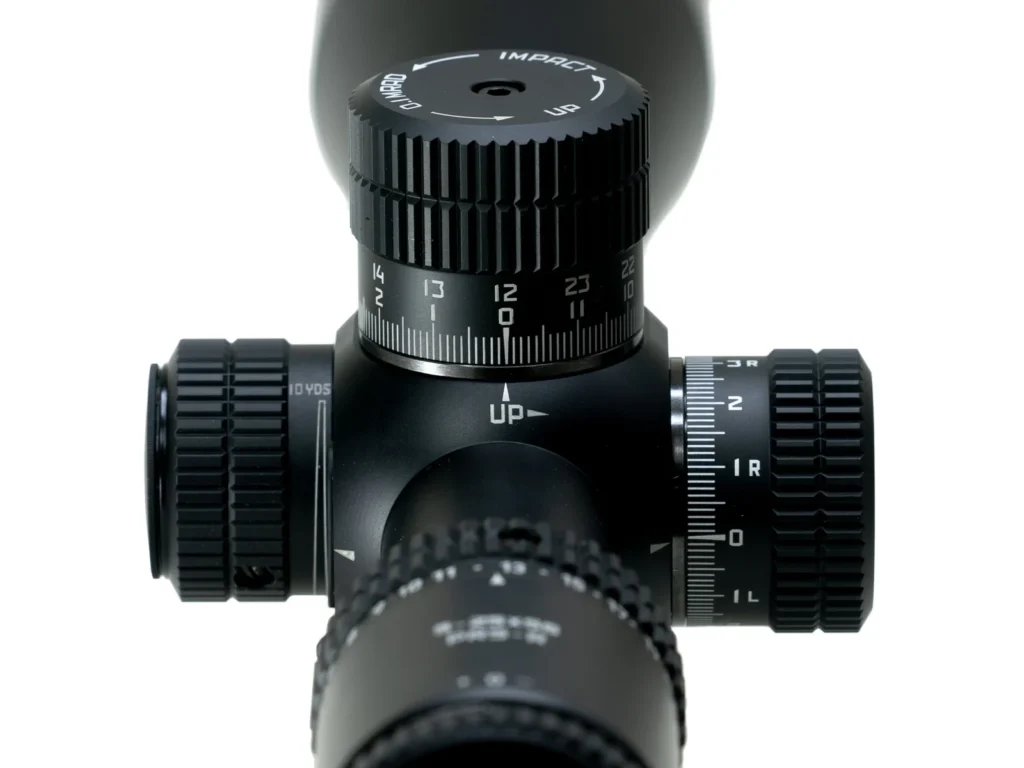
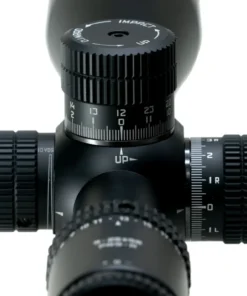
For this reason, the Hi-Lux PR5 incorporates tactical-style turrets with 0.1 MRAD adjustment increments.
Each adjustment click represents a consistent angular measurement, supporting controlled and repeatable changes during range setup.
Furthermore, the turret mechanism incorporates stainless steel internal components intended to withstand repeated adjustment cycles.
Clearly defined controls also improve usability, especially when operating the scope in demanding outdoor environments.
The precision adjustment system provides:
- 0.1 MRAD click values for fine adjustment increments.
- Tactile turret feedback.
- Clearly organized adjustment markings.
- Re-indexable elevation and windage turrets.
- Durable internal mechanical components.
- Approximately 32 MRAD of total internal elevation adjustment.
Together, these features support a refined and consistent user experience.
Integrated Zero Stop for Convenient Reference
One of the defining features of this riflescope is its integrated zero-stop mechanism.
After the system has been configured appropriately, the zero stop provides a mechanical reference for the established elevation setting.
Consequently, users can return to their original reference point with greater convenience.
This functionality is especially valuable in precision shooting disciplines that involve frequent adjustments.
Additionally, the straightforward turret layout makes the scope appealing to users who value mechanical consistency and intuitive controls.
Rugged 34mm Tube and Premium Aluminum Construction
Durable 7075-T6 Aluminum Housing
Long-lasting performance depends on more than optical quality alone.
Therefore, the Hi-Lux PR5 5-25X56 Rifle Scope features a robust one-piece 34mm main tube manufactured from 7075-T6 aluminum.
This high-strength aluminum alloy provides excellent structural rigidity while supporting demanding outdoor applications.
Moreover, the larger tube design accommodates the scope’s substantial internal adjustment range.
The precision-machined housing further contributes to structural alignment and mechanical stability.
Whether used during scheduled range sessions or transported through challenging terrain, the scope has been engineered with durability in mind.
Built for Demanding Shooting Environments
Outdoor equipment regularly encounters changing temperatures, handling stresses, dust, and unpredictable weather conditions.
Accordingly, dependable construction remains a priority throughout the PR5 design.
Its reinforced body supports recoil resistance, while the substantial turret assemblies provide accessible adjustment controls.
However, its robust construction also introduces additional weight. At approximately 40 ounces, this scope is particularly well suited to precision rifle setups where optical capability and stability take priority over minimum equipment weight.
Hi-Lux PR5 5-25X56 Rifle Scope – Key Features and Specifications
Technical Specifications
- Brand: Hi-Lux Optics
- Model: PR5 5-25X56 FFP
- Product Type: Precision rifle scope
- Magnification: 5-25X
- Objective Lens Diameter: 56mm
- Reticle: TRACR illuminated mil-grid reticle
- Focal Plane: First focal plane (FFP)
- Adjustment Increment: 0.1 MRAD
- Zero Stop: Yes
- Main Tube Diameter: 34mm
- Body Material: 7075-T6 aluminum
- Optical Glass: Extra-low dispersion (ED)
- Objective Design: Apochromatic (APO)
- Parallax Adjustment: 10 yards to infinity
- Eye Relief: Approximately 3.5 inches
- Field of View: 24–4.8 feet at 100 yards
- Elevation Adjustment Range: Approximately 32 MRAD
- Overall Length: Approximately 16 inches
- Weight: Approximately 40 ounces
- Lens Coatings: Fully multicoated
- Illumination: Adjustable reticle illumination
Included Accessories
A selection of practical accessories is supplied to complement the riflescope.
Package contents include:
- Hi-Lux PR5 5-25X56 FFP rifle scope
- Objective sunshade
- Magnification throw lever
- Flip-up lens covers
The included sunshade helps manage unwanted glare, while the flip-up covers protect the optical surfaces during storage and transportation.
Additionally, the throw lever makes magnification adjustments more convenient.
Why Choose the Hi-Lux PR5 5-25X56 FFP Rifle Scope?
A Balanced Combination of Clarity, Precision, and Durability
Premium optical equipment should deliver more than impressive specifications.
Equally important are usability, construction quality, dependable controls, and consistent image reproduction.
The Hi-Lux PR5 addresses these priorities through its carefully selected optical components, substantial mechanical design, and modern reticle configuration.
Furthermore, its FFP architecture provides an excellent foundation for precision-oriented applications.
The illuminated TRACR reticle, ED glass system, zero-stop turret, and 34mm aluminum housing work together to create a capable long-range optic.
Ideal for Precision Shooting Enthusiasts
This riflescope is particularly suitable for:
- Long-range target shooting enthusiasts.
- Precision rifle competition participants.
- Benchrest and recreational range users.
- Experienced hunters seeking high-magnification optics.
- Shooters upgrading from basic second focal plane scopes.
- Optics enthusiasts who appreciate detailed reticle systems.
- Users prioritizing dependable mechanical adjustment features.
Its relatively substantial dimensions make it especially attractive for dedicated precision platforms rather than lightweight, minimalist configurations.
Upgrade Your Precision Shooting Experience
The Hi-Lux PR5 5-25X56 Rifle Scope, FFP, Zero Stop, 0.1 Mil combines advanced optics, carefully engineered adjustment mechanisms, and durable construction in one comprehensive package.
From its premium ED glass to its versatile magnification range, every major feature contributes to a sophisticated viewing experience.
Additionally, the illuminated first focal plane reticle and integrated zero-stop mechanism provide valuable functionality for demanding range applications.
Choose the Hi-Lux PR5 5-25X56 FFP Rifle Scope for exceptional optical versatility, reliable adjustment controls, and the confidence of premium precision engineering.
Hatsan Air Rifles, Bintac Airguns, AEA Harpoon and PCP Airgun Technology: Complete Guide to Models, Features and Performance
Exploring Hatsan Air Rifles, Bintac Airguns and Modern PCP Technology
The modern air rifle industry has developed into a diverse market featuring precision engineering, innovative pneumatic systems, advanced ergonomics and increasingly specialized sporting equipment. Consequently, enthusiasts researching air rifles, airguns and different types of air gun technology can explore numerous platforms designed for recreational target shooting, controlled range activities and technical collecting.
Among frequently researched manufacturers, hatsan air guns, aea airguns and bintac platforms attract attention for their different operating systems, configurations and design philosophies. Furthermore, searches involving air pellet gun, pallet gun and bee bee gun rifle terminology often reflect interest in understanding the distinctions between pellet-firing rifles, BB airguns and other pneumatic platforms.
Understanding these differences is important because operating mechanisms, ammunition compatibility, maintenance requirements and applicable regulations vary considerably between products.
Hatsan USA: Brand Recognition and Airgun Engineering
The hatsan usa brand is associated with an extensive selection of sporting airguns. Likewise, searches for hatsanusa commonly lead enthusiasts toward information about Hatsan product families, manufacturer documentation and regional specifications.
Throughout its product lineup, hatsan air rifle designs include spring-piston, gas-piston and pre-charged pneumatic systems. Each technology offers distinct characteristics relating to recoil behavior, charging requirements, operating consistency and maintenance.
Additionally, hatsan pcp platforms use compressed air stored in pressure-rated reservoirs. Unlike conventional spring-powered designs, these systems require compatible filling equipment and careful monitoring of operating pressures.
For collectors researching older generations or alternative configurations, hatsan refurbished products and refurbished air rifles are additional topics of interest. However, their condition, service history, pressure-system integrity and manufacturer support should always be established through qualified inspection.
Hatsan Blitz, Semi-Automatic Platforms and Bullpup Designs
Hatsan Blitz and Automatic Airgun Systems
Among recognizable models, the hatsan blitz receives attention for its distinctive pneumatic operating system. Searches for hatsan blitz full automatic, hatsan blitz 30 cal and hatsan blitz .30 cal frequently involve discussions of model configurations, manufacturer specifications and legal classifications.
Alternative searches, including hatsun blitz, hatzan blitz, blitz guns and blitz 777, sometimes appear in online research. Nevertheless, these expressions should not automatically be treated as separate, verified models.
Similarly, hatsan blitz bullpup describes a commonly searched configuration topic. Bullpup airguns position major operating components farther rearward, producing a distinctive overall layout.
Because an automatic air gun may be subject to additional restrictions depending on its operating mechanism and jurisdiction, accurate classification is essential.
Hatsan Sortie, Velox and Other Repeating Platforms
The hatsan sortie is another frequently discussed name within Hatsan’s airgun catalog. Searches for hatsan sortie tact, hatsan sortie tact semi-auto pcp and hatsan sortie accessories reflect interest in model identification, compatibility and manufacturer-supported configurations.
Alongside these products, hatsan velox appears in discussions about compact pneumatic sporting platforms.
Research concerning a semi auto pellet gun often emphasizes how a semiautomatic operating mechanism differs from manually cycled airguns. However, product-specific operating characteristics must be verified rather than assumed.
Other relevant search expressions include invader auto, bullmaster and hatsan invader. Although these names may appear together in comparisons, their mechanisms, dimensions and specifications should be considered individually.
Hatsan Spring-Powered Air Rifles and Traditional Sporting Models
Hatsan Model 95 and Break-Barrel Engineering
The hatsan model 95 is a recognized name among conventional sporting airguns. Additionally, the variations hatsan mod 95 and mod 95 are frequently used in product discussions.
For enthusiasts exploring traditional break-barrel technology, these searches provide an opportunity to learn about spring-piston designs, gas-piston alternatives, stock configurations and safe handling procedures.
Meanwhile, hatsan airtact, hatsan airtact air rifle and hatsan zada are associated with accessible sporting airgun discussions.
Other commonly researched models include hatsan 125, hatsan 135, hatsan 135 vortex air rifle and hatsan 135 carnivore. Their individual configurations should be confirmed using the relevant model and production-year documentation.
Furthermore, hatsan mod 65 is another model-specific search term found in conversations about traditional sporting airguns.
Understanding Model Families and Design Differences
Although multiple models may share a manufacturer’s name, their internal systems and intended applications can differ substantially.
For example, comparing a manually cocked design with a compressed-air platform involves understanding distinct operating procedures, maintenance schedules and storage precautions.
Similarly, generic online expressions such as sniper long, 1000x.25 and 4×20 can appear in equipment descriptions. However, these terms are not sufficient to establish a particular rifle’s specifications.
Consequently, reliable product identification should be based on the exact model designation, manufacturer markings and documented configuration.
Hatsan PCP Airguns, Flash Models and Specialized Platforms
Hatsan Flash, FlashPup and BullBoss
Within the pneumatic category, hatsan flash is a frequently researched model name. Its relevance is often linked to discussions of compressed-air operation, sporting ergonomics and model variations.
Similarly, hatsan flashpup qe is associated with a compact bullpup-style configuration. The hatsan bullboss is another recognizable name in Hatsan’s PCP family.
These designs illustrate how stock geometry and mechanical layout can influence portability, balance and user ergonomics.
Other relevant searches include hatsan hercules, hatsan hercules bully and hatsan factor rc, which belong to discussions surrounding different pneumatic product categories.
Hatsan Jet 2 and Compact PCP Designs
Interest in hatsan jet 2, alternatively searched as jet ii, highlights the growing visibility of compact PCP platforms.
Moreover, hatsan jet 2 accessories is a common research phrase associated with manufacturer-approved components, storage solutions and equipment compatibility.
Additional models appearing in enthusiast research include hatsan neutron star, hatsan piledriver and hatsan big bore carnivore rifle.
Although these products may share brand recognition, their dimensions, pressure requirements, controls and legal classifications should never be assumed to be interchangeable.
Bintac Airguns, AEA Harpoon and Alternative Pneumatic Platforms
Understanding the Bintac Product Family
The terms bintac, bin tac, bintac llc and bintacllc frequently appear in online searches concerning specialty airgun platforms.
Within this category, model-related searches include bintac t9, bintac t9 full auto, bintac t 50, bintac t50, bintac m50 and bintac s45.
Additional terminology includes bintac mcar, bintac mcar 457 and bintac mcar air rifle. These expressions highlight the importance of confirming exact product names, operating mechanisms and model specifications before comparing equipment.
When researching bintac t9 price or bintac m50 for sale, readers should distinguish general market information from verified manufacturer specifications and applicable legal requirements.
Furthermore, the existence of similar model identifiers does not establish identical mechanical designs or compatible components.
AEA Harpoon, Megalodon and Terminator
Among other specialist airgun discussions, aea harpoon is a recognizable product-related search.
The terms aea harpoon air gun, bintac aea harpoon and aea harpoon for sale frequently appear in related online research. Likewise, aea harpoon price represents general interest in the product’s market positioning.
Separately, aea megalodon, aea megalodon for sale and aea terminator are model-related terms appearing in discussions of specialized pneumatic products.
Because manufacturers can offer different generations and configurations, every product should be evaluated according to its actual designation and official specifications.
Large-Caliber Airguns, Pneumatic Tanks and Specialized Equipment
Big-Bore Airgun Categories
The modern industry also includes specialized products described through search phrases such as 30 cal air rifle, air powered 50 cal rifle and zeus 72 cal air rifle price.
These expressions refer to substantially different categories from conventional small-caliber sporting airguns.
Similarly, airgun shotgun, arrow launcher and hatsan harpoon may arise in discussions about specialized pneumatic projectiles and launcher configurations.
Importantly, such systems should not be treated as interchangeable with standard pellet rifles.
The phrase anti air tanks also appears in broader searches, although military anti-aircraft equipment is unrelated to ordinary recreational PCP charging cylinders.
Compressed-Air Systems and Equipment Maintenance
An air tank for pcp airguns is a central component of many pneumatic systems. Nevertheless, compatibility depends on pressure ratings, connector standards and manufacturer requirements.
Regular inspection of cylinders, seals and fittings is important for safe operation.
For this reason, third-party modifications and unverified pressure components should be avoided.
Searches for hatsan aftermarket parts may include replacement seals, external fittings and other model-dependent components. Installation and compatibility should be determined using manufacturer instructions or qualified technicians.
Pellets, Calibers and Air Rifle Range Considerations
Understanding Ammunition Terminology
The term .177 caliber commonly appears in sporting-airgun discussions because it identifies a widely recognized pellet diameter.
Other frequently encountered terms include h&n field target trophy, h&n field target trophy bleifrei and crow magnum.
These names are associated with pellet product lines or ammunition-related discussions, but suitability depends on a particular airgun’s specifications.
Likewise, co2 pellet rifle describes a separate pneumatic technology using carbon dioxide rather than the high-pressure air system associated with typical PCP equipment.
Terms such as econ ii can also appear in equipment searches, although the product identity and manufacturer should be verified before any technical comparison.
Air Rifle Range and Recreational Shooting
The range of air rifle equipment cannot be accurately summarized by one universal distance.
Instead, projectile characteristics, operating configuration, environmental conditions and shooting-range safety rules all influence practical use.
Similarly, air rifle range can refer either to performance discussions or to a designated shooting facility.
For responsible recreational use, a properly supervised facility, suitable pellet trap, secure backstop and appropriate protective equipment are essential.
Conclusion: Understanding Hatsan, Bintac and AEA Airgun Technology
From traditional break-barrel designs to specialist pneumatic platforms, the airgun industry includes an extensive variety of mechanisms, configurations and technical approaches.
Models associated with Hatsan, Bintac and AEA illustrate the diversity of contemporary airgun engineering, while terminology surrounding calibers, accessories and compressed-air systems reflects the importance of accurate product identification.
Ultimately, informed research should prioritize manufacturer documentation, verified specifications, suitable training, qualified servicing and compliance with local laws. Such an approach supports responsible participation in recreational shooting while helping readers distinguish genuine product information from ambiguous online terminology.
Element Optics Riflescopes: Complete Guide to THEOS, HELIX, TITAN, NEXUS, Prism Optics, Rangefinders and Mounting Accessories
Discover Element Optics: Precision, Clarity and Advanced Optical Technology
When premium riflescope technology is considered, element scopes are frequently explored by shooting enthusiasts seeking optical clarity, reliable adjustment systems and dependable construction. Developed around practical shooting requirements, element theos, element helix, element titan and element nexus scopes represent different approaches to magnification, reticle functionality and optical performance.
As an established optic scope manufacturer, Element Optics provides optical equipment designed for sporting applications. Buyers researching element tactical, element vision, spectrum element, op element, element 3.0 or element ll may also encounter related search terminology while comparing optical products.
A comprehensive scopes website should explain the differences between magnification ranges, objective lenses, focal planes and mounting systems. Consequently, selecting suitable optics becomes easier when technical information is presented clearly.
Element THEOS Scopes: Advanced Long-Range Optical Performance
The element theos series is associated with premium precision optics. In particular, the theos scope attracts interest from enthusiasts seeking detailed reticles, sophisticated adjustment systems and high-magnification capabilities.
The element theos 6-36, also searched as element theos 6 36×56, features a 6–36× magnification configuration with a 56mm objective lens. The 36×56 specification identifies the maximum magnification and objective diameter, making it important when comparing high-powered optical systems.
Meanwhile, searches involving element theos 2-10, element theos 2 10, theos 2-10 and theos 2-10×42 ffp indicate interest in more compact magnification configurations. These terms should be distinguished from confirmed manufacturer model names before purchasing.
Interest in a 10 optic, 2-10 optic, 2-10x scope, element 2-10 or element 2-10 scope commonly reflects a preference for versatile lower magnification.
Similarly, customers searching for an element 2 10 scope or element optics 2-10 should compare verified product specifications rather than assume every search phrase describes an existing THEOS configuration.
Understanding Magnification and Optical Versatility
A 2-12 scope or 2×12 scope provides a broad magnification range for observation at varying distances. Furthermore, a 2-12 scope ffp uses a first focal plane reticle whose subtensions remain consistent throughout magnification changes.
Search expressions such as fffp 2, 12×4/2, 10×40 and .10×40 may appear in optical comparisons, although individual terms should be verified against actual product specifications.
Element HELIX: Reliable Optics and Practical Magnification
The element helix collection offers multiple configurations designed around dependable optical adjustment and functional reticle systems.
For example, the helix scope is frequently researched by customers comparing magnification flexibility and overall value.
The element optics 6-24×50, also described through searches such as element helix 6 24×50, combines 6–24× magnification with a 50mm objective lens. Depending on the specific model, first or second focal plane configurations may be available.
Buyers investigating helix hd 2 16×50 and hdlr should also examine the appropriate HELIX HD or HDLR product specifications. Different optical configurations can affect field of view, reticle behavior and shooting preferences.
Importantly, rifle scope reticles should be evaluated for legibility, subtension consistency and compatibility with the intended sporting discipline.
Comparing HELIX Models
When evaluating HELIX optics, several considerations deserve attention:
- Magnification flexibility and optical clarity.
- First versus second focal plane reticles.
- Turret adjustment repeatability.
- Objective lens diameter and eye relief.
- Weather resistance and mounting compatibility.
- Manufacturer warranty and accessory availability.
By comparing these features carefully, buyers can distinguish between individual configurations without relying exclusively on magnification figures.
Element TITAN: Precision Optics With Versatile Magnification
The element titan family occupies an important position within premium sporting optics. In particular, the titan scope collection includes configurations suited to different magnification preferences.
The element titan 3 18×50, alternatively written as element titan 3-18×50, provides a 3–18× magnification range and 50mm objective lens.
Searches for 3-18 scopes, 3-18, 3×18, 3×18 scope and 3:18 often concern this general category.
Additionally, comparisons involving nightforce 3-18 and best 3-18 scopes may help researchers identify differences in optical quality, reticle systems, adjustment mechanisms and overall dimensions.
The TITAN family also includes a 5–25×56 configuration, which explains searches for 5-25 scope, 25/56, titan 5 and titan25.
For more detailed comparisons, element titan 5 25×56 ffp review is a relevant research phrase associated with first focal plane performance, image quality and adjustment precision.
Neither magnification nor objective diameter alone determines optical quality. Lens coatings, mechanical consistency and viewing conditions must also be considered.
Element NEXUS and NEXUS GEN 2: Premium Precision Optics
The nexus scope family has attracted attention among enthusiasts interested in premium optical construction.
Across the nexus scopes range, optical quality and mechanical precision remain central comparison points.
The element nexus gen 2 is particularly relevant to buyers investigating modern first focal plane designs.
Searches for nexus 4-25×50 refer to a configuration offering a 4–25× magnification range and 50mm objective lens.
Additionally, terms such as nexus tactical often appear in discussions about precision-oriented optics, robust turret systems and specialized reticle designs.
Before selecting any model, specifications should be checked for tube diameter, adjustment range, parallax capability and supported mounting accessories.
Element Prism Optics and Alternative Optical Designs
The element prism category introduces another approach to optical viewing.
Unlike conventional variable riflescopes, a prismatic scope uses a prism-based optical arrangement, often allowing a compact optical design.
Customers asking what is a prismatic scope generally want to understand the difference between prism optics, traditional riflescopes and other sighting technologies.
Search phrases such as prismatic scale of the elements should not be confused with official optical specifications or reticle calibration systems.
The Element Optics element hyper 7 search commonly relates to the HYPR-7 hybrid optic. Likewise, hqp7-rf-2 specifications details should be verified against an actual manufacturer product designation before being treated as a confirmed model.
Other searches, including 14×50, relate to fixed-magnification optical configurations.
Meanwhile, chromatic aberration scope comparisons concern unwanted colored fringes that may appear around high-contrast objects. Optical coatings, lens design and glass quality can influence how effectively this effect is controlled.
Element RF: Rangefinding Technology and Ballistic Information
Accurate distance measurement is an important part of modern optical equipment evaluation.
The phrases element rf and element range are associated with searches for rangefinding solutions and related optical technology.
A ballistic rangefinder combines distance information with ballistic calculation features when supported by the specific device.
Other common search terms include rifle rangefinder, rifle range finder, laser range finder for rifle, rangefinder scope for rifle and rangefinding rifle scope.
Customers may also compare scopes with rangefinders built in against separate rangefinding instruments.
Specialized accessory research frequently includes picatinny mounted rangefinder, picatinny range finder, weapon mounted range finder and wmlrf.
For integrated electronic calculations, searches involving weapon mounted ballistic calculator and arken wmlrf refer to a broader category of rangefinding and ballistic-support equipment.
Importantly, individual devices differ in measurement capability, electronic features and mounting requirements. Product documentation should therefore be consulted before assuming compatibility.
Scope Mounts, Picatinny Rails and Dovetail Accessories
A secure element mount or other compatible mounting system is essential for maintaining consistent optical alignment.
Common accessories include a dovetail scope mount, dovetail rings and dovetail scope mounts, each intended for appropriately matched mounting interfaces.
Alternatively, picatinny scope mounts, picatinny scope rings, 30mm scope mount picatinny and 30mm picatinny scope rings are relevant when selecting accessories for Picatinny rail systems.
For dovetail configurations, 30mm dovetail scope rings should be matched carefully to both the optic’s tube diameter and the available rail dimensions.
Specialized accessory searches also include 34mm diving board mount, 34mm scope mount with diving board, diving board scope mount, 30mm diving board mount and scope diving board.
Such terminology commonly describes mounting arrangements incorporating an additional platform above or near the main optic.
Protective Scope Covers and Optical Maintenance
Protective accessories contribute to equipment longevity by reducing exposure to dust, debris and accidental surface contact.
Products such as tenebraex scope caps and tenebraex scope covers are frequently considered by owners seeking lens protection.
Similarly, an allen neoprene scope cover can offer general protective coverage during storage or transportation.
Before purchasing covers, buyers should verify the precise scope model and external lens-housing dimensions.
Choosing Element Optics With Confidence
Selecting among THEOS, HELIX, TITAN, NEXUS and prism-based optics requires more than comparing magnification alone.
Optical clarity, eye relief, reticle configuration, mechanical reliability, mounting compatibility and product authenticity should all be assessed together.
By researching verified product specifications, reviewing the available accessory options and selecting equipment suited to individual sporting requirements, customers can make more informed decisions.
Ultimately, the Element Optics range provides several distinct optical configurations, allowing enthusiasts to compare premium precision scopes, versatile mid-range designs, compact prism systems and compatible accessories within one broader optical product category.

Reviews
There are no reviews yet.