Discover the Unmatched Power of the HATSAN Piledriver Big Bore PCP Air Rifle
When serious hunters and dedicated airgun enthusiasts seek extreme performance without compromise, the HATSAN Piledriver stands ready to deliver. This remarkable pre-charged pneumatic rifle combines massive muzzle energy with a surprisingly compact bullpup platform, making it one of the most capable production big-bore air rifles available today. Whether you pursue large game or demand precision at extended ranges, the HATSAN Piledriver transforms every outing into an opportunity for confident, ethical harvests.
Why the HATSAN Piledriver Redefines Big Bore Hunting
Traditional air rifles often fall short when facing tougher game. In contrast, the HATSAN Piledriver generates impressive kinetic energy that rivals many conventional firearms at practical hunting distances. Available in popular big-bore calibers of .45, .50, and .62, this rifle produces 700+ foot-pounds of energy in both .45 and .62 calibers while exceeding 800 foot-pounds in the potent .50 caliber configuration. Consequently, hunters gain the authority needed for decisive, humane shots on a wide range of North American game.
Moreover, the patented gas-piston hammer system replaces traditional coil springs. As a result, cocking feels smoother and more consistent, while shot-to-shot reliability improves noticeably. Furthermore, the long side-lever action positions the cocking handle for easy reach, allowing rapid follow-up shots when opportunities arise. In addition, the large loading port accepts projectiles up to 34 mm in length, giving shooters flexibility to choose heavy slugs or specialized ammunition suited to specific hunting scenarios.
Compact Bullpup Design for Superior Handling
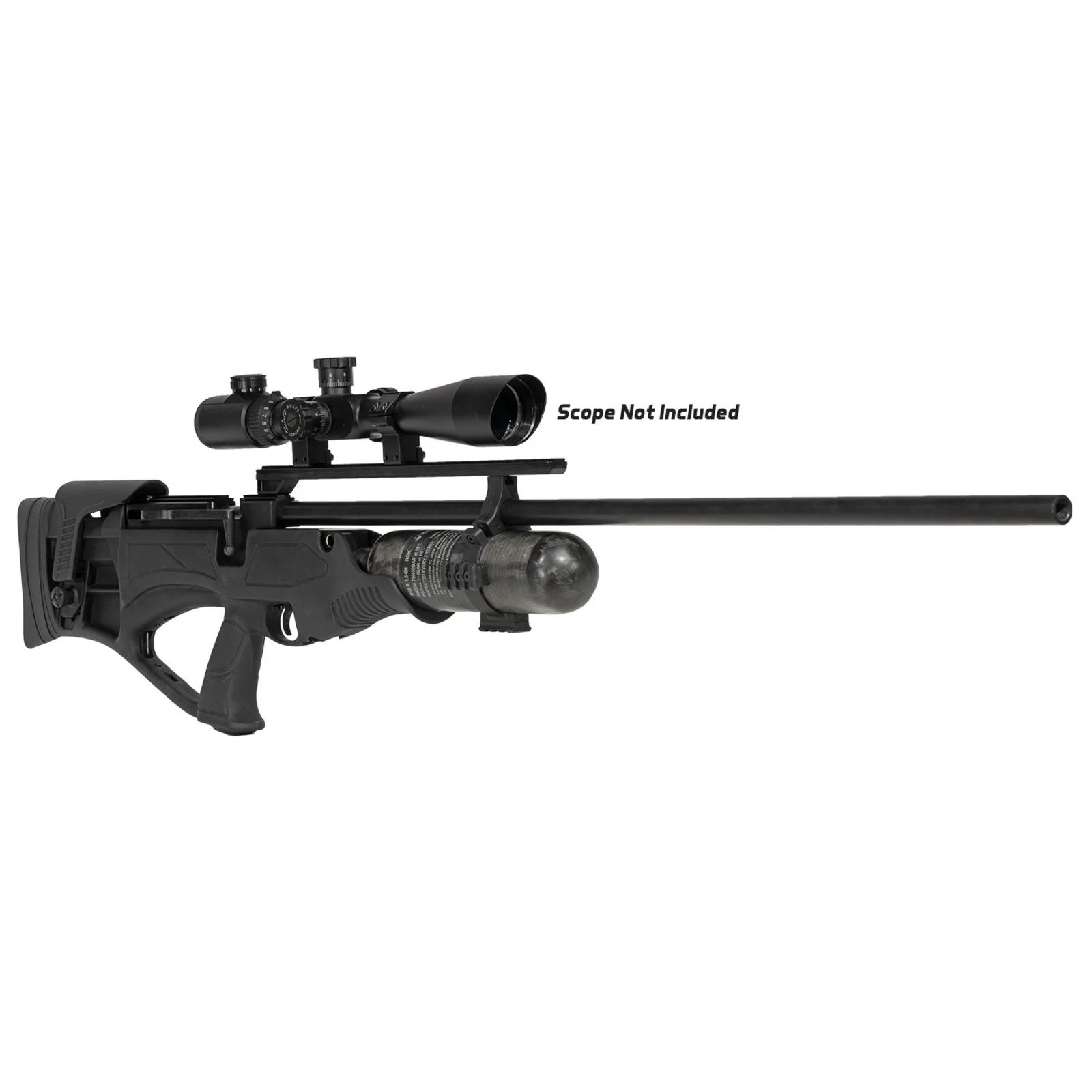
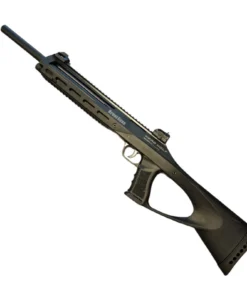
Despite its 33-inch precision-rifled steel barrel, the HATSAN Piledriver maintains an overall length of approximately 46.5 to 47 inches thanks to its genuine bullpup layout. Therefore, the rifle remains maneuverable in blinds, stands, or dense cover where longer conventional rifles prove cumbersome. Weight sits around 10 pounds, yet the balanced center of mass—achieved by placing the action rearward—helps the rifle feel stable and controllable during extended periods of aiming.
The advanced synthetic stock features a comfortable thumbhole design with a textured pistol grip. Additionally, the elevation-adjustable locking cheek rest and the soft rubber butt pad (adjustable for both height and angle) let every shooter customize the fit quickly. Consequently, consistent cheek weld and shoulder contact become second nature, supporting accurate shot placement under field conditions.
Key Features That Set the HATSAN Piledriver Apart
Hunters and precision shooters appreciate the thoughtful engineering packed into every HATSAN Piledriver. Consider these standout attributes:
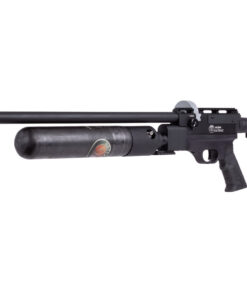
- 480 cc carbon-fiber air cylinder filled to 300 BAR (4,350 PSI) for multiple high-powered shots per fill
- Precision-rifled steel barrel optimized for long-range accuracy with heavy projectiles
- Quattro two-stage adjustable trigger delivering a crisp, predictable break
- Combo optics rail accepting both 11 mm dovetail and Picatinny/Weaver mounts
- Three additional Picatinny accessory rails mounted around the air cylinder for lights, bipods, or other gear
- Manual safety and included quick-fill nozzle for convenient field use
- Single-shot, manual-loading design that prioritizes reliability and maximum power delivery
These elements work together seamlessly. In particular, the carbon-fiber bottle reduces overall weight while maintaining the high fill pressure essential for consistent velocity across the usable shot string. Depending on caliber, shooters typically enjoy three to six optimal-velocity shots before a refill becomes necessary—more than enough for most ethical hunting situations.
Performance Across Calibers
Choosing the right caliber depends on your preferred game and local regulations. The .45 caliber HATSAN Piledriver delivers roughly 700+ FPE and up to approximately 900 fps with suitable projectiles, offering an excellent balance of power and shot count. Meanwhile, the .50 caliber version pushes past 800 FPE, providing maximum impact for larger animals. Finally, the .62 caliber option maintains 700+ FPE while launching exceptionally heavy projectiles that expand the range of hunting possibilities.
Velocity and energy figures can vary with projectile weight, temperature, and elevation; nevertheless, the HATSAN Piledriver consistently ranks among the most powerful production PCP rifles on the market. Because the system operates on clean, dry compressed air only, maintenance stays straightforward and long-term durability remains high when proper filling practices are followed.
Built for Real-World Hunting Success
Beyond raw power, the HATSAN Piledriver emphasizes practical field advantages. The bullpup configuration shortens overall length without sacrificing barrel performance, which translates into easier transport and quicker target acquisition in tight spaces. Additionally, the absence of powder residue and reduced noise signature (relative to many firearms) can help minimize disturbance to nearby game. Shooters also benefit from lighter ammunition loads compared with traditional centerfire cartridges, reducing pack weight on longer treks.
Inclusive design considerations appear throughout the platform. Adjustable cheek rest and butt pad accommodate a wide range of body sizes and shooting styles, ensuring that hunters of varying experience levels can achieve a solid, repeatable hold. Clear controls and a generous loading port further support confident operation whether you are a seasoned big-bore enthusiast or expanding into high-powered airgun hunting for the first time.
Ready to Experience the Difference?
The HATSAN Piledriver represents more than another air rifle—it offers a dedicated high-powered hunting tool engineered for serious results. From the carbon-fiber air system and patented gas-piston hammer to the fully adjustable synthetic stock and accessory-ready rails, every detail supports accuracy, power, and field practicality.
If you are ready to step up to one of the most capable big-bore PCP platforms available, explore the HATSAN Piledriver today. Select the caliber that matches your hunting goals, pair it with quality optics and appropriate projectiles, and discover how this remarkable rifle elevates every outing. The power, balance, and reliability of the HATSAN Piledriver await—claim yours and experience big-bore performance engineered for success.
Explore the Hatsan Air Rifle Range: PCP, Spring-Piston, Bullpup, and Semi-Auto Airguns
For shooters comparing a hatsan air rifle, the Hatsan lineup covers everything from traditional spring-powered platforms to modern hatsan pcp designs, compact bullpups, semi-automatic systems, and specialized large-bore models. Whether someone is researching an entry-level air rifle, premium PCP equipment, target-oriented air rifles, or replacement components, the broader range of air rifle options associated with hatsanusa and hatsan usa provides many configurations to compare.
Hatsan Blitz and Semi-Automatic PCP Platforms
The hatsan blitz remains one of the most recognizable names among Hatsan PCP platforms. Searches for hatsan blitz full automatic, hatsan blitz bullpup, hatsan blitz 30 cal, and hatsan blitz .30 cal commonly come from enthusiasts comparing high-capacity PCP designs and different caliber configurations. Alternative searches such as hatsun blitz and hatzan blitz may also appear when shoppers are looking for the same product family.
The term blitz guns is sometimes used more broadly when discussing this platform, while phrases such as blitz 777 may appear in related product searches. Buyers comparing a 30 cal air rifle with smaller-caliber platforms should always review the model specifications, local regulations, intended sporting application, and compatible ammunition before choosing an air gun.
Another notable semi-auto platform is the hatsan sortie. The hatsan sortie tact semi-auto pcp configuration combines compact handling with PCP operation, while hatsan sortie tact searches are frequently associated with tactical-style variants. Owners may additionally look for hatsan sortie accessories when configuring optics, magazines, maintenance components, or other compatible equipment. Likewise, buyers searching for a semi auto pellet gun may compare the Sortie with the invader auto and other semi-automatic PCP designs.
Hatsan Bullpup and PCP Air Rifles
Hatsan produces several PCP configurations for shooters who prefer compact ergonomics without giving up barrel length. The hatsan bullboss is one example, while the bullmaster represents another recognizable bullpup-style platform. The hatsan hercules family is associated with higher-capacity PCP configurations, and the hatsan hercules bully provides a compact bullpup alternative within that broader design category.
The hatsan flash is another widely recognized PCP platform. Because hatsan flash configurations can vary, buyers should compare caliber, stock style, barrel arrangement, pressure system, and included equipment before purchase. The hatsan flashpup qe offers a bullpup-inspired format and is often considered by customers wanting a shorter overall rifle.
Other PCP-related searches include the hatsan invader, hatsan factor rc, and hatsan neutron star. Each platform serves a somewhat different purpose, which means specifications rather than appearance alone should determine which airguns are most appropriate for a particular type of sporting or recreational shooting.
Hatsan Jet 2 and Compact PCP Options
The hatsan jet 2 has attracted attention among customers looking for compact PCP versatility. Because the hatsan jet 2 may be configured differently depending on market and package, shoppers should verify the exact specifications supplied by the retailer. Searches for jet ii generally refer to the same Jet-series concept, while hatsan jet 2 accessories may include compatible magazines, optics solutions, carrying equipment, seals, and manufacturer-approved replacement components.
The hatsan velox is another compact platform that may appeal to customers researching modern PCP systems. However, compatible equipment should always be verified against the precise model designation rather than assuming accessories interchange across different Hatsan products.
Classic Hatsan Spring and Gas-Ram Air Rifles
Not every Hatsan buyer wants PCP equipment. Traditional spring-piston and gas-ram designs remain an important part of the catalog. The hatsan model 95 is among the best-known examples, while searches for hatsan mod 95 and simply mod 95 usually refer to the same established platform.
The hatsan 125 is another familiar full-size option. Meanwhile, the hatsan 135 is commonly researched by shooters interested in larger, more substantial break-barrel platforms. The hatsan 135 vortex air rifle incorporates Hatsan’s Vortex gas-piston concept, while the hatsan 135 carnivore is associated with larger-caliber configurations. Searches for a hatsan big bore carnivore rifle are similarly connected with users comparing large-bore air-powered platforms.
Additional traditional models include the hatsan mod 65, which appears in searches from buyers interested in full-size sporting configurations. The hatsan airtact air rifle, commonly shortened to hatsan airtact, represents another accessible platform. The hatsan zada also broadens the selection for customers comparing break-barrel designs.
Big-Bore Hatsan Models and Specialty Platforms
For customers researching large-bore PCP technology, the hatsan piledriver is one of Hatsan’s best-known specialized platforms. Large-bore air rifles occupy a different category from a conventional .177 caliber air pellet gun, so caliber, projectile compatibility, operating pressure, legal restrictions, and intended sporting use should all be carefully reviewed.
The hatsan harpoon is another specialized product name associated with Hatsan’s air-powered lineup. Because it functions differently from a conventional pellet rifle, buyers may encounter the phrase arrow launcher while researching this category.
These specialized products should not automatically be compared with a traditional pallet gun or standard pellet rifle because their operating systems, projectiles, dimensions, and intended uses can be substantially different.
Refurbished Hatsan Air Rifles and Replacement Parts
Budget-conscious customers sometimes search for hatsan refurbished equipment or refurbished air rifles. A refurbished product can offer good value when its condition, inspection history, seals, pressure system, warranty coverage, and included accessories are clearly disclosed.
Existing owners may instead require hatsan aftermarket parts. When replacing magazines, seals, fill probes, stocks, mounts, or other components, compatibility should always be matched to the precise rifle generation and caliber. Similar-looking parts should never automatically be assumed to fit every Hatsan platform.
Product names such as 1000x.25 may also appear when shoppers compare model or caliber-specific configurations, so confirming the manufacturer’s exact designation is particularly important.
Scopes, Pellets, and Air Rifle Accessories
Optics are another major consideration when configuring an air rifle. A basic 4×20 optic may be encountered in entry-level packages, and the term 4×20 is therefore frequently seen alongside airgun searches. However, optic selection should ultimately reflect the rifle’s mounting system, recoil characteristics, shooting distance, and intended use.
Pellet selection also matters. Products such as h&n field target trophy are widely recognized among airgun enthusiasts, while h&n field target trophy bleifrei refers to a lead-free option within that product family. Individual rifles may prefer different pellet weights and shapes, so consistency and accuracy should be evaluated with the manufacturer’s recommendations in mind.
The term crow magnum may also appear when users research heavier hunting-oriented pellet designs or related airgun ammunition. Ammunition compatibility must always be checked against the specific caliber and manufacturer’s specifications.
Choosing Between PCP, CO2, and Spring-Powered Airguns
A modern air pellet gun can use several different power systems. A PCP system stores compressed air inside a reservoir, while a spring-piston rifle relies on mechanical energy generated during cocking. A co2 pellet rifle, by contrast, uses carbon dioxide cartridges or a compatible CO2 supply.
Each system offers different advantages. PCP rifles may provide low recoil and repeatable operation, while spring-powered rifles avoid the need for external filling equipment. CO2 systems can offer convenient operation in compatible platforms, although performance may vary with temperature.
Customers researching the air rifle range should therefore consider much more than velocity figures. Ergonomics, caliber, overall length, weight, filling equipment, magazine design, maintenance requirements, noise level, available service support, and local regulations can all affect long-term ownership.
Hatsan Models for Different Airgun Preferences
With platforms such as the hatsan blitz, hatsan sortie, hatsan hercules, hatsan bullboss, hatsan flash, hatsan invader, hatsan piledriver, hatsan jet 2, hatsan velox, hatsan factor rc, hatsan airtact, and hatsan model 95, Hatsan covers a broad spectrum of airgun categories.
Some customers may prioritize a traditional sporting rifle, whereas others may prefer a compact PCP or bullpup. Shooters interested in sniper long style configurations may focus more strongly on stock ergonomics, optics mounting, stability, and longer-range target capability rather than simply choosing the most powerful model.
Meanwhile, terms such as econ ii may appear in accessory or product-related searches depending on the equipment being compared. Compatibility should always be established using the exact manufacturer and model specification.
Ultimately, selecting among hatsan air guns should begin with the intended application. A lightweight .177 caliber rifle may suit recreational target shooting, while a larger PCP platform can serve a very different sporting role. Models such as the hatsan blitz .30 cal, hatsan blitz 30 cal, or other 30 cal air rifle configurations should therefore be evaluated according to their specifications, local law, appropriate shooting environment, and intended lawful use.
From the compact jet ii and hatsan jet 2 to the established hatsan mod 95, powerful hatsan 135, specialized hatsan harpoon, and modern semi-auto PCP platforms, the Hatsan catalog gives airgun enthusiasts an extensive selection. Comparing specifications carefully helps buyers identify the right air rifle while ensuring that pellets, optics, filling equipment, magazines, and accessories remain correctly matched to the chosen platform.
Frequently Asked Questions
What makes this big-bore PCP rifle suitable for serious hunting applications?
This platform was specifically engineered for high-powered hunting rather than casual target shooting or plinking. Its combination of substantial muzzle energy, a long precision-rifled barrel, and a compact bullpup layout allows hunters to deliver decisive, ethical shots on a wide range of game while remaining manoeuvrable in blinds, stands, or dense cover. The single-shot design prioritises maximum power delivery and reliability over rapid fire, which aligns with the deliberate approach most ethical hunters prefer when pursuing larger animals.
Which calibres are available and how do they differ in performance?
The rifle is offered in three primary big-bore options that dominate the hunting market: .45, .50, and .62. The .45 calibre provides an excellent balance of energy and shot count, typically generating over 700 foot-pounds while allowing a slightly higher number of optimal shots per fill. The .50 calibre steps up the energy further, often exceeding 800 foot-pounds, making it the preferred choice for hunters who prioritise maximum terminal performance. The .62 calibre launches the heaviest projectiles and maintains energy levels above 700 foot-pounds, giving it strong momentum transfer characteristics. Each calibre uses the same high-capacity carbon-fibre air cylinder and side-lever action, so the differences mainly appear in projectile weight capacity, energy output, and the number of high-powered shots available from a full fill.
How much energy can this rifle produce under full-power conditions?
Under unrestricted or FAC conditions the platform ranks among the most powerful production PCP air rifles available. Approximate maximum outputs reach 700+ foot-pounds in both .45 and .62 calibres and climb past 800 foot-pounds in the .50 calibre configuration. These figures are achieved with suitable heavy projectiles and a full 300 BAR fill. Real-world results can vary with ammunition weight, temperature, altitude, and exact pressure remaining in the cylinder, yet the rifle consistently delivers the kind of kinetic energy required for confident hunting of larger game at practical distances.
How many high-powered shots can I expect from a single fill?
Shot count depends primarily on calibre and the chosen projectile. In .45 calibre most users obtain four to six optimal-velocity shots before energy begins to drop noticeably. In both .50 and .62 calibres the typical range is three to five high-powered shots. After these shots the remaining pressure still produces usable velocity for practice or secondary opportunities, but hunters focused on ethical harvesting generally plan to refill once the primary shot string is complete. The 480 cc carbon-fibre cylinder filled to 300 BAR supplies the air volume needed for this performance.
What is the overall length and weight, and how does the bullpup design help?
Despite a 33-inch precision-rifled barrel in the most common configurations, overall length stays close to 46.5–47 inches. Weight is approximately 10 pounds. The bullpup layout places the action and cylinder further rearward, keeping the centre of balance closer to the shooter’s hands. This design shortens the package for easier handling in confined spaces while still providing the barrel length necessary for efficient energy transfer and long-range accuracy.
How adjustable is the stock for different shooters?
The synthetic thumbhole stock includes a locking elevation-adjustable cheek rest and a soft rubber butt pad that can be adjusted for both height and angle. These features allow a wide range of body sizes and shooting styles to achieve a consistent cheek weld and comfortable shoulder contact. Textured grip surfaces further improve control in wet or cold conditions. As a result, the rifle can be tailored quickly in the field so that each shooter maintains proper alignment with the optics and a stable hold.
What type of trigger does the rifle use?
It is equipped with a Quattro two-stage adjustable trigger. The system allows shooters to fine-tune the first-stage take-up and the final break weight according to personal preference. A crisp, predictable trigger contributes significantly to accuracy, especially when firing heavy projectiles at extended ranges where even small disturbances can affect point of impact.
How is the rifle filled and what accessories are required?
The fixed 480 cc carbon-fibre cylinder fills to a maximum of 300 BAR (4,350 PSI). Every rifle includes a quick-fill nozzle or probe that connects via a standard 1/8-inch BSPP thread. Users typically fill from a high-pressure scuba tank, a dedicated carbon-fibre bottle, or an electric compressor rated for the required pressure. A reliable filling system is essential for field use, and many hunters carry a portable bottle so they can top up between sessions without returning to a vehicle or base.
What optics and accessory mounting options are provided?
A lengthy combination rail accepts both 11 mm dovetail and Picatinny/Weaver mounts, giving shooters freedom to fit a wide variety of scopes. Three additional Picatinny rails are mounted around the air cylinder, providing convenient attachment points for bipods, lights, lasers, or other supporting equipment. This modular approach lets each hunter configure the rifle according to personal hunting style and environmental conditions.
Is the rifle suitable for large-game hunting?
Yes. The energy levels, projectile options, and accuracy potential make it appropriate for a broad range of medium and large game where airgun hunting is legal. Hunters routinely report successful, ethical harvests when they match the calibre and ammunition to the animal, maintain proper shot placement, and respect local regulations and distance limitations. The relatively low noise signature compared with many firearms can also help reduce disturbance to nearby animals.
What kind of ammunition does it accept?
The large single-shot loading port accommodates projectiles up to approximately 34 mm in length. This capacity supports a wide selection of heavy cast or swaged slugs designed specifically for big-bore air rifles. Shooters can experiment with different weights and designs to optimise trajectory, energy retention, and terminal performance for their chosen calibre and typical engagement distances.
How does the patented hammer system improve the shooting experience?
Traditional coil-spring hammers can create a more abrupt cocking effort and slight inconsistencies in lock time. The gas-piston design used here replaces the coil spring with a smoother, more progressive mechanism. Cocking feels lighter and more consistent, and the system contributes to more uniform power delivery across the usable pressure range. Many users notice improved shot-to-shot predictability as a direct result.
What safety features are included?
A manual safety is positioned for convenient operation. As with any high-powered air rifle, safe handling practices remain the primary responsibility of the shooter. The rifle should always be treated with the same respect given to conventional firearms: keep the muzzle pointed in a safe direction, keep the finger off the trigger until ready to fire, and ensure a clear backstop. Regular inspection of the air cylinder, seals, and fill equipment further supports safe long-term use.
How should the rifle be maintained for reliable performance?
Keep the exterior clean and free of debris. Periodically check the fill probe O-rings and replace them when they show wear. Use only clean, dry compressed air—never oxygen or other gases. After extended storage or a large number of shots, a light application of airgun-specific lubricant on appropriate metal surfaces helps protect against corrosion. Avoid over-filling beyond the 300 BAR maximum, and store the rifle with a moderate residual pressure rather than completely empty when possible. Following these simple practices preserves both power consistency and component longevity.
Can the rifle be used effectively in different weather and terrain conditions?
The synthetic stock resists moisture and temperature extremes better than traditional wood, while the carbon-fibre cylinder adds durability without excessive weight. The balanced bullpup layout remains manageable when moving through brush or climbing into elevated stands. In colder weather the adjustable cheek rest and butt pad help maintain a solid hold even when wearing additional clothing layers. Hunters who practise in the conditions they expect to encounter develop confidence that the platform will perform when it matters most.
What should new users focus on when first learning the platform?
Begin by confirming zero with the chosen ammunition at realistic hunting distances. Chronograph a full shot string so you understand how velocity changes as pressure declines. Practise loading and cocking smoothly until the sequence becomes second nature. Spend time adjusting the cheek rest and butt pad until the natural point of aim feels consistent. Finally, develop a personal refill routine so you always know how many high-powered shots remain before performance drops. These habits build both accuracy and confidence in the field.
How does the overall design support ethical hunting practices?
By concentrating substantial energy into a controllable package, the rifle encourages deliberate shot selection rather than rapid or poorly placed fire. The limited number of optimal shots per fill naturally reinforces the importance of careful stalking and precise aiming. Combined with the ability to use heavy, expanding projectiles, the platform supports clean, humane harvests when the hunter applies sound judgement regarding distance, animal size, and shot angle.
Is additional training or familiarity recommended before hunting with this rifle?
Yes. Although the controls are straightforward, the high energy levels and single-shot nature reward time spent on the range. Practising under field-like conditions—different positions, varying light, and realistic target distances—helps translate the rifle’s capabilities into consistent real-world results. Many experienced users also recommend learning the ballistic behaviour of their preferred ammunition so that hold-over or turret adjustments become instinctive.
What supporting equipment is most commonly added by experienced users?
Beyond a quality scope and reliable high-pressure air source, many hunters add a sturdy bipod or shooting sticks, a soft or hard transport case, a chronograph for ongoing velocity checks, and a selection of well-tested heavy projectiles. Some also carry a spare fill probe and a small kit of O-rings for field maintenance. These items integrate cleanly with the existing rail system and enhance both convenience and preparedness.
How long can the rifle remain ready for use between outings?
When stored with moderate residual pressure and protected from extreme temperature swings or moisture, the platform holds its readiness well. Before any hunting trip it is good practice to top the cylinder to the full 300 BAR, verify zero, and confirm that the trigger and safety function correctly. Regular inspection of seals and the fill connection prevents surprises in the field and keeps the rifle performing at its designed level.
These answers cover the most common questions raised by hunters and airgun enthusiasts considering or already using the platform. Understanding the calibres, power characteristics, handling features, and supporting accessories allows each shooter to configure the system for their specific needs and to use it safely and effectively in the field.
Practical Use Scenarios
Early Morning Stand Hunting in Mixed Woodland
Imagine settling into a comfortable elevated stand just before first light. The air is cool and still, and the forest floor below is carpeted with soft leaf litter that muffles every footstep of approaching game. In this setting the compact overall length of the platform becomes immediately valuable. Where a longer conventional rifle would require careful angling to clear the stand rails or surrounding branches, the shorter profile allows natural shouldering and smooth swings through the shooting lanes.
The balanced weight distribution keeps fatigue low even during a multi-hour sit. Adjusting the cheek rest and butt pad the evening before ensures that the eye meets the scope reticle in the same place every time the rifle is raised. When a mature animal steps into the clearing at forty-five yards, the two-stage trigger breaks cleanly and the heavy projectile leaves the long rifled barrel with the authority needed for a decisive result. After the shot the side-lever is already within easy reach, ready for a second round if the situation requires it. The limited number of high-energy shots remaining is known in advance, so the hunter remains disciplined and waits for the ideal opportunity rather than taking a marginal angle.
Still-Hunting Through Dense Cover
Moving slowly through thick undergrowth demands a different set of advantages. The reduced length helps the muzzle stay clear of vines and low branches while the shooter advances in short, deliberate steps. The synthetic stock shrugs off moisture from dew-covered foliage, and the textured grip surfaces remain secure even when hands are damp. Because the centre of balance sits close to the body, the rifle can be carried at the ready for long periods without the muzzle dipping or the support arm tiring excessively.
When a target appears suddenly at thirty yards in a small opening, the large loading port has already been prepared with a carefully selected heavy projectile. The cocking stroke feels progressive rather than abrupt, allowing the shooter to stay quiet and focused. The combination of substantial energy and controlled handling means the first shot can be placed with confidence even when the animal is only partially visible. Afterward the hunter can slip away to a new location without the bulk of a longer firearm drawing attention or catching on vegetation.
Open-Country Glassing and Longer Shots
On rolling hills or agricultural edges the distances stretch farther. Here the long barrel and consistent power delivery come into their own. After spotting game with binoculars, the hunter moves into a stable prone or seated position and deploys a bipod attached to one of the accessory rails. The adjustable butt pad is fine-tuned so that the cheek weld remains identical to the zeroing session on the range.
A carefully developed trajectory table for the chosen heavy projectile allows precise hold or turret adjustment for the measured distance. The substantial kinetic energy retained at eighty or one hundred yards increases the margin for a clean, ethical outcome. Because the shot string is limited, the hunter glassed thoroughly beforehand and waited for the animal to present a broadside angle. After the shot the residual pressure still permits a follow-up if needed, yet the primary goal remains a single, well-placed projectile.
Blind Hunting Near Water or Food Sources
Inside a ground blind the restricted space tests every dimension of the equipment. The shortened overall length allows the muzzle to clear the shooting window without the buttstock striking the rear wall or the shooter having to contort awkwardly. The elevation-adjustable cheek rest can be raised or lowered quickly if the shooting angle changes as animals approach from different directions.
Temperature swings inside a blind can be noticeable, yet the synthetic materials remain stable and the high-pressure cylinder continues to deliver predictable performance. The quiet nature of the shot relative to many conventional firearms reduces the chance of startling other animals still approaching the area. After a successful harvest the hunter can remain in position longer, knowing that the remaining high-energy shots are available if another opportunity develops.
Seasonal Adaptation – Cold Weather
In late autumn or winter the additional clothing layers change the length of pull and the height of the shooter’s face relative to the stock. The ability to raise the cheek rest and adjust the butt pad angle compensates quickly, restoring a solid, repeatable cheek weld without removing gloves or exposing skin to the cold for long. The textured grip surfaces continue to provide purchase even when hands are covered.
The carbon-fibre cylinder maintains its integrity across a wide temperature range, and the gas-piston hammer system continues to offer a consistent cocking effort when metal parts would otherwise feel stiffer. Hunters who zeroed the rifle with winter clothing and the same ammunition they will use in the field find that point of impact remains reliable. The limited shot count encourages careful stalking and patient waiting rather than hurried shots taken while still recovering from the cold.
Seasonal Adaptation – Warm and Humid Conditions
In warmer months moisture and heat present different challenges. The synthetic stock resists swelling or warping that can affect wooden furniture, and the exterior surfaces wipe clean of sweat or light rain. Accessory rails accept a lightweight bipod or shooting sticks that keep the rifle elevated above damp ground during longer sits.
The high fill pressure and generous air volume still deliver the same energy levels, provided the cylinder is topped up before the outing. Hunters learn to protect the fill connection from dirt and to check O-rings more frequently in dusty or humid environments. The overall package remains manageable during longer walks into remote areas because the ammunition itself is lighter than equivalent centrefire cartridges and the rifle’s weight is concentrated close to the body.
Elevated Stand to Ground Transition
Some hunts begin in a stand and finish on the ground after a successful shot. The compact dimensions simplify climbing down while keeping the muzzle pointed in a safe direction. Once on the ground the same rifle can be carried comfortably during the recovery process or while moving to a new location. The adjustable stock settings remain correct whether the shooter is seated high above the forest floor or kneeling beside a trail.
This versatility reduces the need to carry multiple firearms or to re-zero different platforms during a single outing. The accessory rails allow a light to be attached quickly if recovery continues into low-light conditions, further extending the practical usefulness of the system.
Group or Mentored Hunts
When introducing less experienced hunters to high-powered airgun hunting the adjustable features prove especially helpful. The cheek rest and butt pad can be altered in moments so that a younger or smaller-framed shooter achieves a comfortable and safe hold. The two-stage trigger can be set to a weight that encourages deliberate rather than hurried firing.
Clear communication about the remaining high-energy shots builds good habits from the start. The mentor can demonstrate proper loading, cocking, and follow-through while the compact length keeps the demonstration manageable in limited space. After the session the same rifle returns to the primary user’s preferred settings without tools or permanent changes.
Travel and Remote Access
Reaching distant hunting areas often involves vehicles, boats, or long walks. The reduced overall length fits more easily into cases, behind seats, or into limited storage compartments. Once at the destination the carbon-fibre cylinder can be topped up from a portable high-pressure bottle carried in a pack. The modular rail system accepts whatever support equipment the specific terrain demands—bipods for open country, lights for early or late sessions, or additional carrying points for longer approaches.
Because the energy remains high across the usable shot string, the hunter can focus on positioning and patience rather than worrying that the platform lacks authority at the moment of truth. The combination of portability, power, and adjustability makes the system practical for both short evening sits near home and multi-day trips into more remote country.
End-of-Day Reflection and Preparation for the Next Outing
After returning to camp or vehicle the rifle is wiped down, residual pressure checked, and the fill connection inspected. The cheek rest and butt pad are left in the preferred settings so that the next session begins with the same consistent fit. A quick review of the shot string through a chronograph, when available, confirms that velocity remains within the expected window.
Any accessories that were added for the day’s conditions are removed or adjusted for transport. The limited number of high-energy shots encourages careful note-taking about distances, angles, and animal reactions, building a personal knowledge base that improves future performance. Over successive outings the platform becomes an extension of the hunter’s own decision-making rather than a piece of equipment that requires constant compensation.
Across all of these scenarios the same core characteristics—compact length, substantial and consistent energy, adjustable fit, modular accessory options, and a manageable shot count—work together to support ethical, successful, and enjoyable field use. Whether the hunt unfolds from a high stand at dawn, through thick cover at midday, or across open ground in changing weather, the platform adapts to the conditions and to the individual behind it. The result is greater confidence, better shot opportunities, and a deeper connection to the practical realities of modern high-powered airgun hunting.




Reviews
There are no reviews yet.