FX Airguns, PCP Air Rifles, Hatsan Models and Modern Airgun Platforms
Modern airguns cover a wide range of platforms, from a basic pellet gun or BB gun to sophisticated regulated PCP airguns designed for target shooting, sporting applications, and long-range precision. Buyers researching an air rifle and air pistol collection will often encounter manufacturers such as FX and Hatsan because both companies offer extensive selections of air rifles, accessories, configurations, and caliber choices.
FX Airguns Sweden and the FX PCP Rifle Range
FX Airguns has become strongly associated with Swedish airgun engineering. Searches for fx airguns sweden, fx airguns sverige, fxairguns, and fx usa commonly lead enthusiasts toward the manufacturer’s extensive PCP lineup. In the American market, fx airguns usa is another widely searched phrase when people are researching available models, specifications, support, and accessories.
Among fx air rifles, the Impact family remains particularly recognizable. Searches frequently include fx impact, f x impact, fx impact m4, fx m4, impact m4 air rifle, and impact m4 500mm when comparing current configurations. The modular design philosophy associated with the Impact platform has helped make the fx air rifle range popular among shooters who appreciate adjustability and configurable PCP systems.
Earlier generations remain widely researched as well. The fx impact m3, impact m3, fx impact mk3, fx m3, and fx m3 airgun continue to attract attention from owners comparing generations or researching replacement components.
Caliber-specific searches include fx impact m3 .22cal air rifle, fx impact m3 .22cal air rifle. 600mm barrel, and the more general fx impact m3 air rifle. People comparing international pricing may also search fx impact m3 precio, fx impact m3 precio en usa, or fx impact m3 price before checking local regulations, specifications, and availability.
Beyond the Impact series, the FX catalog includes several distinctive designs. The fx leopard and fx leopard airgun are frequently researched alongside fx leopard .22 pcp specs by users interested in specifications and configuration details.
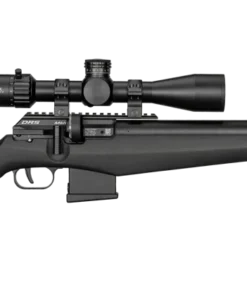
Other notable searches include fx drs, fx drs tactical, fx drs classic, and fx drs pro. These terms reflect interest in the different DRS configurations and their intended shooting styles.
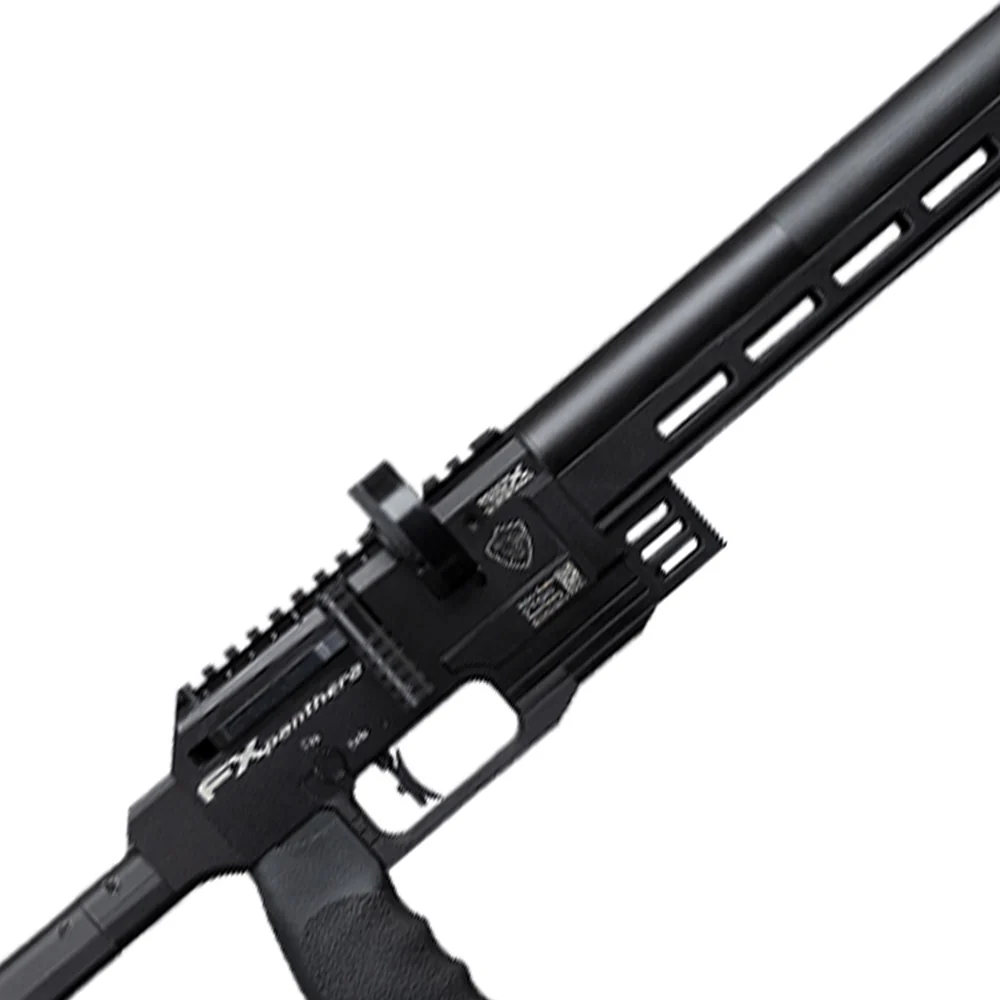
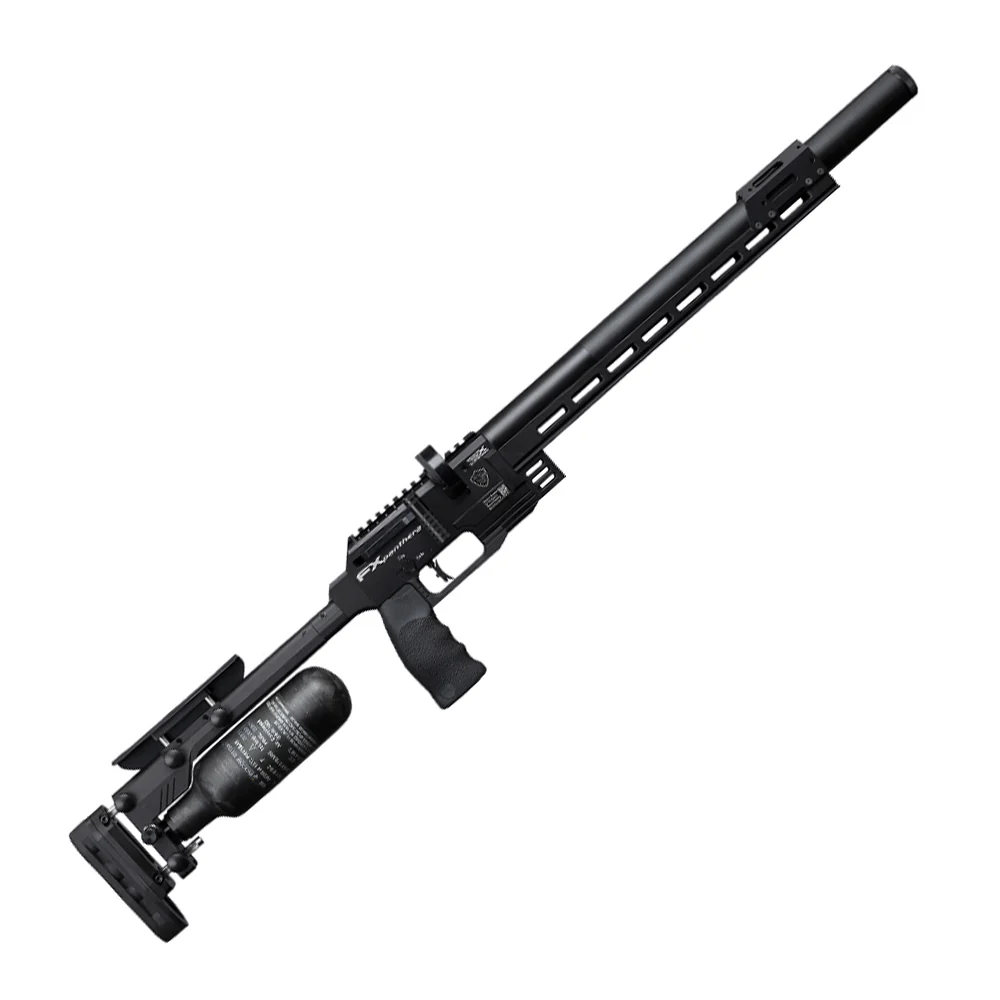
The wider FX family also includes models such as the fx king, fx wildcat, fx panthera, and fx dreamline. Collectively, these platforms demonstrate the variety available to anyone researching a premium pcp air rifle, pellet rifle, or configurable precision air gun.
Some enthusiasts also search fx outdoors when researching outdoor shooting equipment and related products, while marketplaces and information sources such as guns.com may appear during broader online research.
Understanding Pellet Guns and PCP Air Rifles
A traditional pellet gun uses shaped pellets rather than conventional firearm ammunition. The broader term pellet guns can describe spring-powered, CO₂-powered, pneumatic, and PCP platforms.
A PCP air rifle stores compressed air inside a reservoir. This system can provide consistent pressure across multiple shots depending on the rifle’s regulator, reservoir capacity, caliber, and power configuration.
For shooters comparing ammunition sizes, .177 caliber remains one of the most common options. Larger configurations are also available, including the increasingly searched 30 cal air rifle category.
Some users accidentally search pallet gun when looking for pellet-powered equipment. Regardless of terminology, specifications such as energy output, caliber, barrel length, intended range, and local legal requirements should always be reviewed before use.
The practical range of air rifle platforms varies significantly. Pellet weight, velocity, environmental conditions, barrel design, optics, and shooter technique can all affect useful range and accuracy.
Hatsan Air Rifle and PCP Platforms
The hatsan air rifle lineup covers traditional spring-powered designs as well as modern PCP systems. Searches such as hatsanusa, hatsan usa, hatsan air guns, and hatsan pcp are commonly used by enthusiasts researching the company’s models.
One of the most recognizable platforms is the hatsan blitz. Search variations include hatsun blitz, hatzan blitz, hatsan blitz full automatic, hatsan blitz 30 cal, and hatsan blitz .30 cal. Specifications and legal classifications can vary by market, so owners should verify the rules applicable in their jurisdiction.
Another frequently researched model is the hatsan model 95, also searched as hatsan mod 95 and mod 95. This traditional air rifle platform remains familiar to shooters interested in conventional stock designs.
The hatsan 125 is another established model, while the hatsan 135 family attracts shooters researching powerful spring-piston platforms. Related searches include hatsan 135 vortex air rifle, hatsan 135 carnivore, and hatsan big bore carnivore rifle.
Hatsan Sortie, BullBoss and Bullpup Designs
Compact and semi-automatic PCP designs form another part of Hatsan’s catalog. The hatsan sortie is commonly researched alongside hatsan sortie tact, hatsan sortie tact semi-auto pcp, and hatsan sortie accessories.
Bullpup enthusiasts may encounter the hatsan bullboss, bullmaster, and hatsan hercules bully. Their compact layouts are designed to reduce overall length while maintaining useful barrel dimensions.
Other PCP models include the hatsan flash, hatsan flashpup qe, and hatsan invader. These rifles provide additional choices for people comparing conventional and bullpup PCP configurations.
Hatsan Hercules, Piledriver and Large-Caliber Platforms
For people researching larger airgun platforms, hatsan hercules and hatsan piledriver often appear in search results. Large-bore air rifles differ considerably from standard .177 and .22 pellet rifles in projectile size, power output, air consumption, and intended application.
The hatsan harpoon is associated with specialized projectile launching, while an arrow launcher represents another distinct air-powered category. Such equipment can be subject to different legal rules depending on location, so local regulations should be checked before ownership or use.
Additional Hatsan Models
The Hatsan catalog extends well beyond its best-known rifles. The hatsan airtact and hatsan airtact air rifle provide another entry point into the brand’s conventional rifle selection.
Other searches include hatsan zada, hatsan neutron star, hatsan factor rc, hatsan velox, and hatsan jet 2. Each platform serves a somewhat different role, making specifications such as caliber, reservoir capacity, operating system, barrel configuration, and overall dimensions important comparison points.
Shoppers researching discounted equipment may also encounter hatsan refurbished listings or broader searches for refurbished air rifles. Condition, warranty coverage, seals, regulators, reservoirs, and service history should be checked carefully when evaluating previously used or factory-refurbished equipment.
Airgun Optics, Pellets and Accessories
Accessories can significantly affect how an air rifle is configured. A compact 4×20 optic may suit basic shooting applications, while more advanced PCP rifles are frequently paired with adjustable optics.
Pellet choice also matters. Products such as h&n field target trophy bleifrei provide an option for shooters specifically researching lead-free projectile designs. Pellet diameter, weight, head size, and barrel compatibility should all be considered when evaluating accuracy.
Terms such as econ ii may also appear when researching airgun-related equipment and accessories. Compatibility should always be verified against the exact manufacturer, model, and specification rather than relying solely on a product name.
Comparing FX and Hatsan Air Guns
FX and Hatsan approach the modern air rifle market from different directions. FX is particularly well known for highly configurable PCP platforms such as the Impact, Panthera, Wildcat, Dreamline, Leopard, DRS, and King. Hatsan, meanwhile, maintains an exceptionally broad range spanning spring-powered rifles, PCP systems, bullpups, semi-automatic platforms, and larger-caliber airguns.
Whether researching an FX Impact M3, FX Impact M4, FX DRS, Hatsan Blitz, Hatsan Sortie, Hatsan Hercules, or another platform, specifications should be compared carefully. Caliber, operating pressure, reservoir capacity, barrel length, projectile compatibility, optics mounting, overall dimensions, energy output, and regional legal requirements can all influence which configuration is appropriate for a particular lawful sporting or target-shooting application.
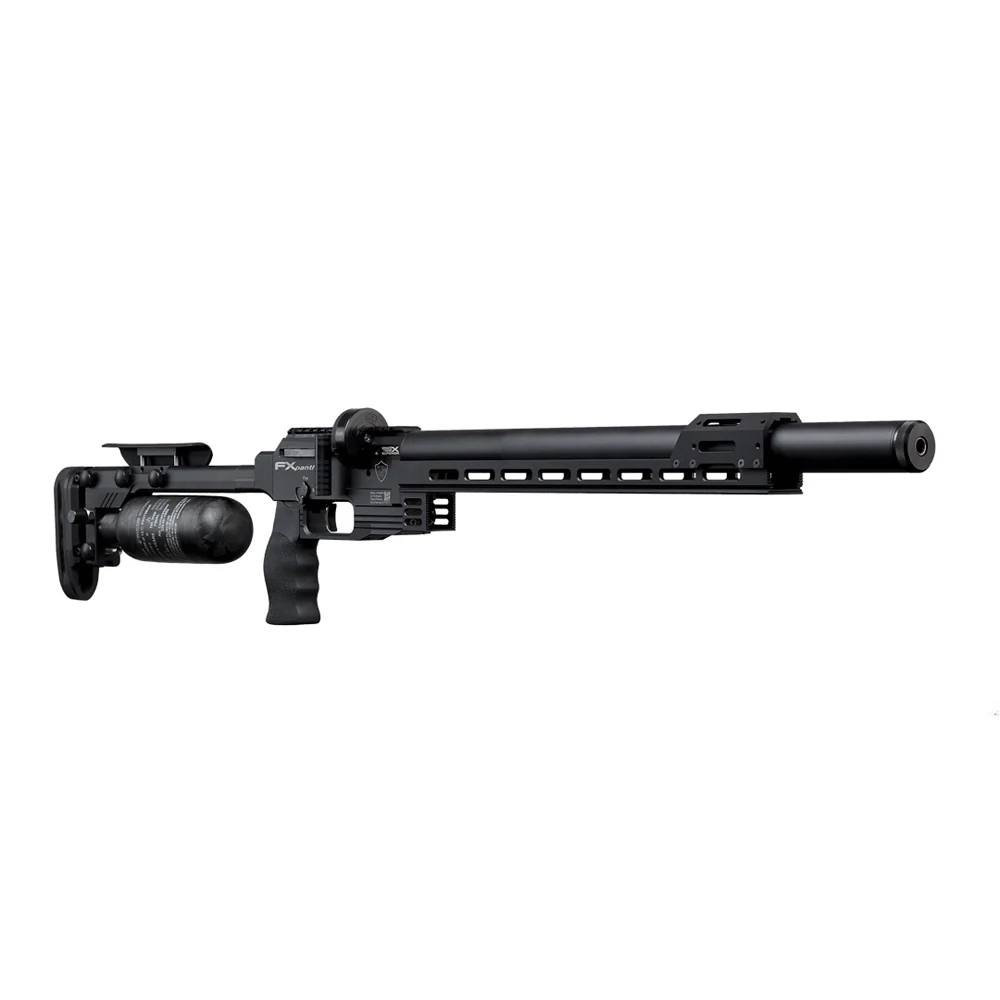
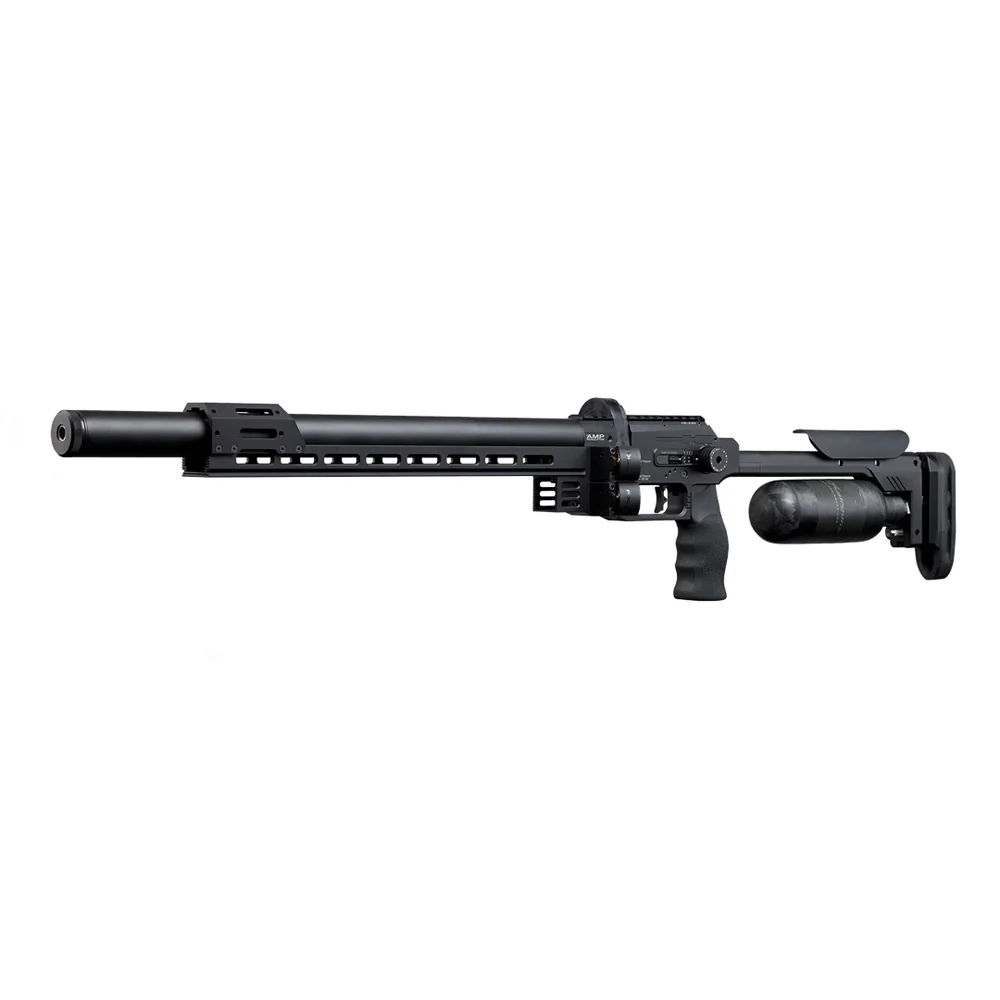
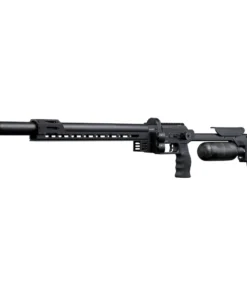
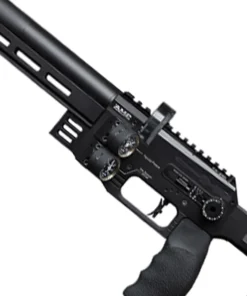
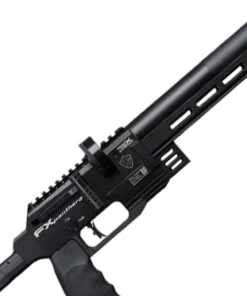
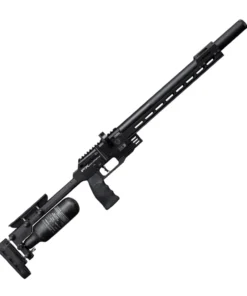
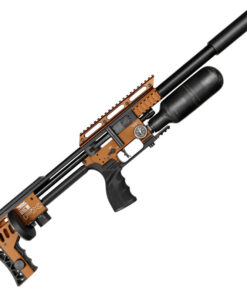
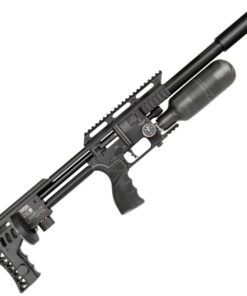
Calibres, FAC Power, and Accessories of the FX Panthera Black 600mm FAC
A deliberate slug-first architecture is expressed through the calibre, FAC energy, and accessory options of the FX Panthera Black 600mm FAC. Consequently, projectile diameter, regulated pressure, plenum volume, and mounting hardware are treated as a single system rather than isolated extras. Moreover, each choice can be matched to hunting, long-range practice, or precision-rifle style shooting without a complete platform change.
Available Calibres and What Each Is Intended For
Four chamberings are offered across the Panthera family: 4.5 mm (.177), 5.5 mm (.22), 6.35 mm (.25), and 7.62 mm (.30). On the 600 mm FAC configuration, however, the three larger bores are the ones most frequently specified, because the Superior Heavy STX liner and Magnum XL plenum were developed around longer, heavier slugs rather than light target pellets alone.
In .22, a balance of trajectory, shot count, and mid-weight slugs is typically obtained. Hybrid projectiles in the low-20-grain class can be driven at published factory velocities near 900 fps on a regulated string, while heavier 34-grain slugs can be used when maximum FAC energy is required. Meanwhile, .25 is widely selected when a step up in frontal area and retained energy is wanted without moving fully into big-bore air consumption. Slugs around 26–43.5 grains are commonly paired with this tube. Finally, .30 is reserved for users who need the highest published energy and the heaviest available projectiles; magazine capacity is reduced, yet impact and wind resistance are increased.
.177 remains catalogued on the platform, yet it is less often the primary FAC 600 mm choice because slug mass and ballistic coefficient are limited compared with the larger bores. Inclusive shooting needs are still served: left- and right-handed users, different shoulder lengths, and varied optic heights can all be accommodated once calibre is fixed, because stock, lever, and rail geometry stay the same.
FAC Classification, Energy Figures, and Shot Strings
FAC status means legal energy is not capped at the 12 ft-lb UK sub-12 threshold. Instead, published factory maxima for the 600 mm barrel—quoted with a tungsten hammer where noted—reach approximately 111 J / 82 ft-lbs in .22 (34 gr class at about 1,040 fps), 123 J / 91 ft-lbs in .25 (43.5 gr slug near 970 fps), and 176 J / 130 ft-lbs in .30 (64 gr slug near 1,020 fps). Higher figures toward 150 ft-lbs in .30 have also been listed with still-heavier slugs. These values are maxima, not everyday hunting tunes; regulator set-point and hammer tension are expected to be lowered for efficiency and barrel life.
Regulated shot counts on the 300 cc carbon bottle plus Magnum XL plenum are published as roughly 80 shots in .22 with a 22 gr hybrid slug at 900 fps, 60 shots in .25 with a 26 gr hybrid at 900 fps, and 35 shots in .30 with a 44.5 gr hybrid at 900 fps. Therefore, a full day of supported practice can often be completed on a single 250 BAR fill when power is kept to a working tune rather than the absolute ceiling.
Consistency is maintained by the AMP MkII regulator and the over-barrel Dynamic Plenum. Air that has already been reduced to a stable working pressure is stored around the liner, so each valve cycle draws from a large, uniform volume. As a result, extreme spreads of only a few feet per second on ten-shot strings have been reported when ammunition and tune are matched.
Legal ownership remains the shooter’s duty. Certificates, storage, transport, and permitted quarry differ by country and region. Inclusive language does not change that obligation: every user, regardless of experience level, is expected to confirm local FAC or equivalent rules before the rifle is filled or fired.
Accessories That Complete the 600 mm FAC Setup
A conversion-ready interface is built into the chassis rather than added later. A Picatinny / Weaver rail with 20–30 MOA of built-in cant is provided so that long-range elevation is retained inside the optic. Simultaneously, a 14.75-inch Arca-Swiss forend with M-LOK sections and a barricade block accepts bipods, tripods, bags, and weights without adapters that can shift zero.
Balance can be refined after calibre is chosen. External M-LOK compatible weights or internal FX barrel weights that attach under the shroud allow the centre of gravity to be moved forward or rearward. Likewise, a matching shroud is specified whenever plenum volume is changed, because the Dynamic Plenum and barrel housing share the same envelope.
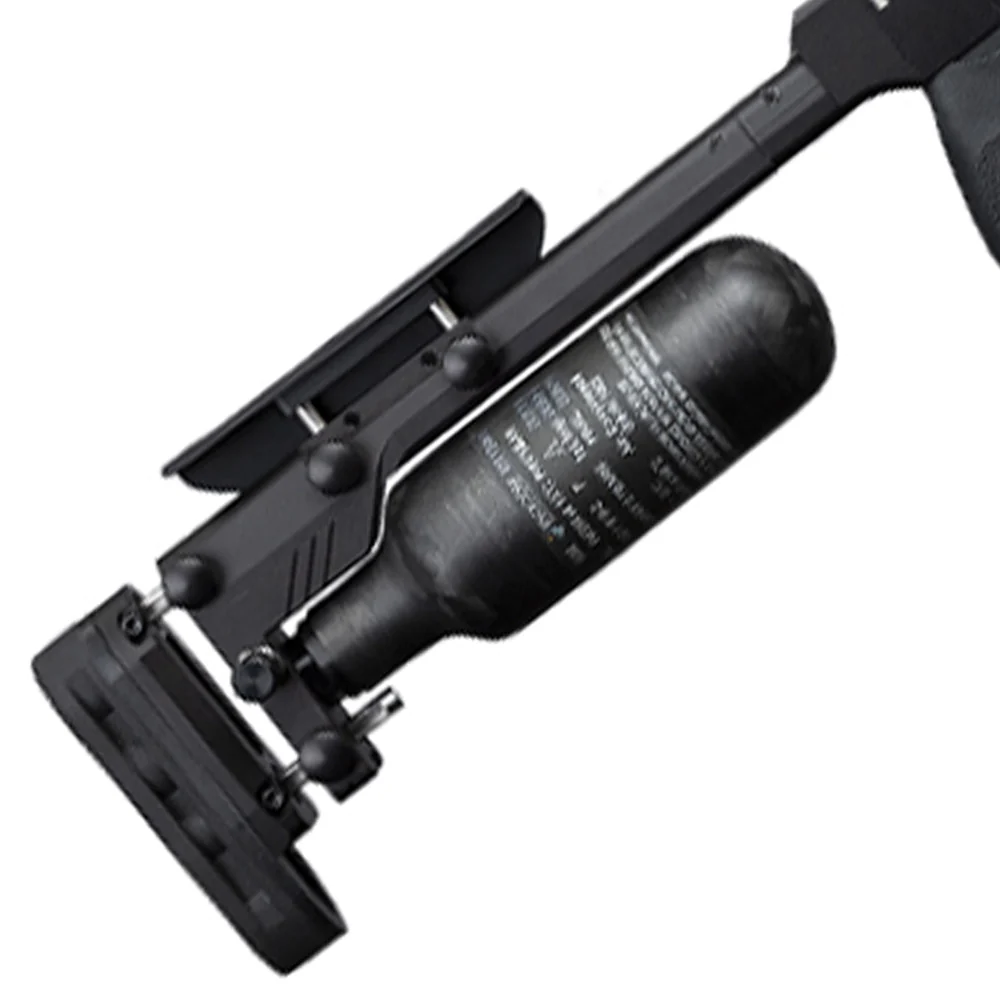
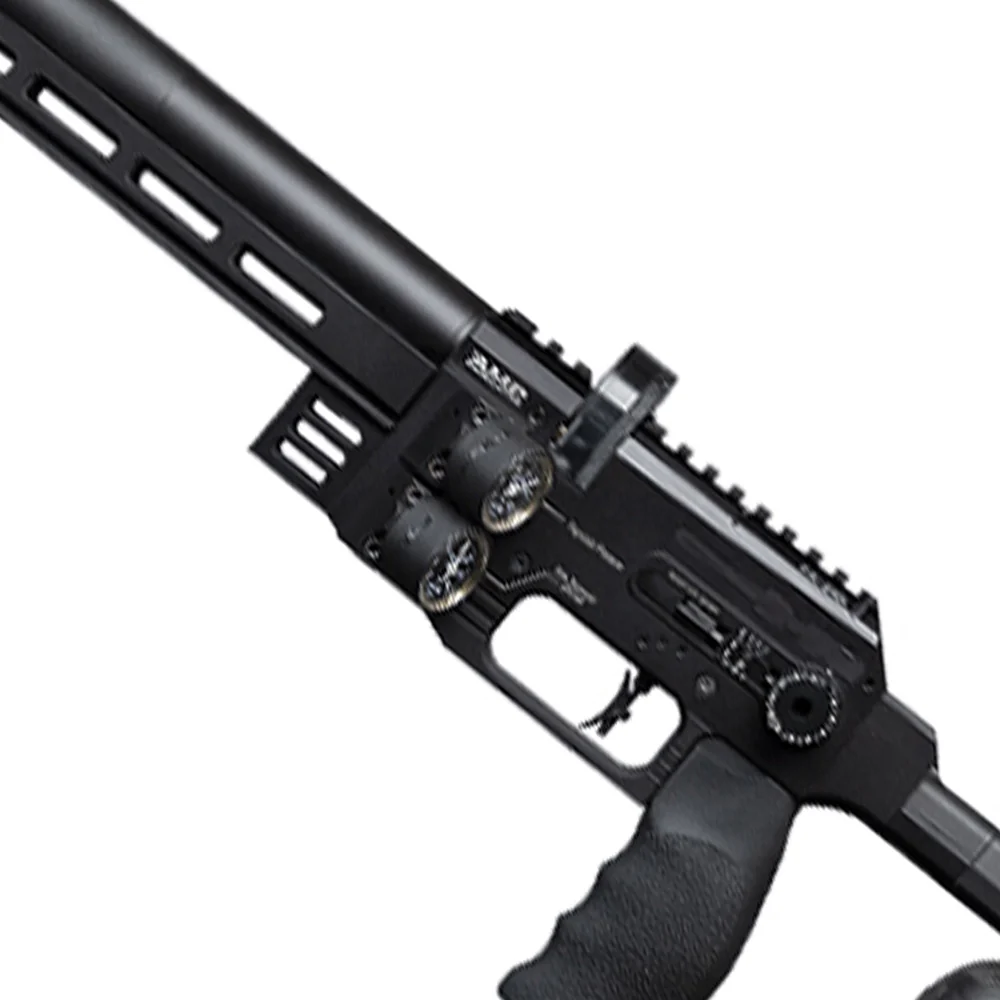
Feeding and filling hardware is included in the core package. The standard Side-Shot magazine is fitted with a deeper 13 mm (0.51″) lid so slugs up to that length can be seated. Capacities are typically 18 rounds in .22, 16 in .25, and 13 in .30 (figures near 22 rounds are listed for .177). A rear Foster quick-disconnect with dust cap is used for charging to 250 BAR. Dual angled manometers display bottle pressure and regulated plenum pressure from the shooting position.
Trigger and ergonomic accessories further personalise the rifle. An adjustable match trigger—reach, height, and blade angle on many examples—can be set for hunting, bench, or PRS-style use. The cheekpiece is height-adjustable and ambidextrous; the buttpad is adjustable; the sidelever is reversible; the grip is a zero-angle AR pattern. Consequently, a wide range of body types and dominant sides can obtain a repeatable weld without a custom stock.
Optional items commonly paired with this model include FX magazines and lids, fill probes and spare O-rings, barrel weights, additional plenums and shrouds (Micro / Macro / Magnum / Magnum XL families), 1/2 UNF moderators where threading is present, tungsten hammers for maximum FAC output, and hard cases cut for the 600 mm layout. Optics from precision airgun-friendly brands are mounted on the canted rail; thermal or high-magnification glass can be used provided eye relief and height are set with the adjustable comb.
When calibre, FAC tune, and accessories are specified together, the FX Panthera Black 600mm FAC is no longer a generic PCP. It becomes a matched slug system: liner stiffness, plenum volume, regulator pressure, magazine depth, and rail geometry are aligned so that energy is delivered where the projectile is aimed. Responsible setup and legal compliance remain the final accessories no catalogue can supply.
Practical Use Scenarios in the Field and on the Range
Everyday performance is revealed only after the rifle is taken beyond the bench. Consequently, supported hunting, pest management, precision practice, and formal competition each place different demands on balance, follow-through, air management, and projectile choice. Moreover, inclusive setup—adjustable comb, reversible cocking side, and a stock that can be lengthened or shortened—allows a wide range of body types and dominant hands to apply the same fundamentals. Therefore, the scenarios below describe how a high-power, slug-oriented 600 mm PCP is typically employed once legal requirements have already been met.
Supported Hunting from Sticks, Bags, and Natural Rests
A hunting day is most often spent in a kneeling, sitting, or prone-supported position rather than standing offhand. For that reason, a full-length Arca interface and M-LOK sections are used to clamp a bipod or to index a bag against a barricade block. Subsequently, the rifle is settled until the reticle stops floating, and the first-stage take-up is completed before the animal’s vital zone is confirmed. Because recoil is directed nearly straight back on a well-regulated platform, the target remains visible through the optic after the shot, so a follow-up can be assessed without the muzzle leaping off the rest.
Terrain changes the rest more than the rifle. On open ground, a low bipod and rear bag are preferred so that the barrel stays clear of vegetation. In woodland edges, a taller rest or a pack is substituted so that the line of sight clears brush. Meanwhile, wind is read at the target rather than at the muzzle; heavy slugs retain velocity better than light pellets, yet they still drift, and a missed first shot educates the second. Inclusive practice means both left- and right-shouldered hunters can reverse the sidelever and raise or lower the cheekpiece until a full weld is obtained without rolling the head.
Shot placement remains ethical only when energy and range match the quarry and the law. Accordingly, closer shots on smaller game may be taken on a milder regulator setting to preserve meat and to stretch the fill. Larger, legally permitted animals at longer distance require a confirmed zero with the exact slug that will be carried, not a pellet zero from another session. After the shot, the fill gauge is glanced at only when time allows; dual manometers already show whether regulated pressure is still in the working band.
Pest and Small-Game Work Around Buildings and Boundaries
Pest control often occurs at shorter distances than hunting, yet the same discipline is required. Barn corners, hedgerows, and fencelines offer improvised rests: a gatepost, a feed-bag, or a low wall. The barricade block is pressed into those surfaces so that the forend does not cant. Simultaneously, a moderator—where legally fitted—reduces report so that livestock and neighbours are less disturbed. Because magazine capacity in the larger bores is modest, magazines are pre-loaded with the same slug weight used for zero, and a spare magazine is kept in a pocket rather than loose slugs that can be damaged.
Lighting and backstops change hour by hour. Dawn and dusk demand that the optic’s brightness and the shooter’s eye relief have already been set on the adjustable comb. A bright reticle that blooms in low light is turned down before the first opportunity appears. Furthermore, every firing lane is checked for a safe backstop; high-energy slugs travel far, and a miss that clears a ridge is not an acceptable outcome. Inclusive teams rotate roles: one person spots, another shoots, and both confirm the same legal and safety brief.
Air management on pest days is conservative. A full 250-bar fill is not emptied for a handful of shots. Instead, regulator pressure is left at a hunting tune that still produces adequate energy at 30–80 metres, so that many small engagements can be completed before a top-up is needed. When the bottle gauge drops toward the point where regulation would fall off, the session is ended or the bottle is exchanged—never “just one more” beyond a known safe curve.
Long-Range Precision Practice and Data Collection
Range work is where the platform’s stiffness and plenum volume are most obvious. A chronograph is placed so that muzzle blast does not strike the sensors, and ten-shot strings are recorded at a single hammer and regulator setting. Subsequently, extreme spread and standard deviation are written into a notebook beside temperature, humidity, and slug lot number. Groups are fired from the same bags that will be used in the field, not from a vice that hides shooter error.
Distance is increased only after a confirmed 50- or 100-metre zero. Come-ups for 150, 200, and beyond are applied using the canted rail so that the erector is not already at the edge of travel. Wind calls are spoken aloud even when shooting alone, because a spoken process is easier to repeat under pressure. Inclusive coaching works the same way: a partner watches body position and trigger break rather than only the target, so that left- and right-handed students receive the same feedback.
Barrel time and heat are managed. Long strings heat the shroud and can walk groups if the rifle is left sitting in sun on a dark forend. Shade, a brief pause between magazines, and a consistent hold on the Arca rail keep the point of impact from drifting. When a new slug weight is introduced, the Quick Tune hammer scale and the external regulator are moved in small, recorded steps; the previous setting is written down so it can be recovered.
Competition-Style Stages: Barricades, Props, and Time Pressure
Precision-rifle style stages ask for the same zero under awkward positions. A barricade block is driven into wood or steel so that the rifle does not roll. Kneeling on a tank trap or shooting from a rooftop prop uses the adjustable buttpad to keep the comb in the shoulder pocket. Time starts when the shooter is already in position; therefore, magazine insertion, lever throw, and safety operation are rehearsed until they can be performed without looking.
Movement between positions is planned so that the muzzle stays pointed in a safe direction and the bottle is not used as a handle. A sling, if attached to M-LOK or rear hardware, is adjusted before the match, not during it. Inclusive squads assign spotters and scorers without assuming handedness; the reversible lever means a left-handed competitor does not need a different rifle to run the same stage.
Power is usually reduced from absolute FAC maximum for match use. A milder tune yields more shots per fill, less muzzle rise, and less fatigue over a long day. The match trigger is set for a clean second stage that will not discharge if a glove snags the blade on a prop. After each stage, gauges are checked, the magazine is topped, and the same slug that was zeroed is the only one loaded.
Training New Shooters and Shared-Use Sessions
A high-power PCP is not a first lesson rifle, yet it can be used for advanced training once fundamentals exist. Dry-fire or very low-power settings—where the design allows—are used to teach trigger press and follow-through before live slugs are introduced. Eye dominance is checked, and the cheekpiece is raised or lowered until the full field of view appears without neck strain. Inclusive instruction avoids assuming strength or height: bags and a rear support are offered to anyone who needs them, and the sidelever is swapped if that reduces wrist twist.
Safety briefings are repeated, not assumed. Muzzle direction, finger off the trigger until the sight picture is accepted, and a called “clear” after each string are required of every participant. Hearing and eye protection are worn even when a moderator is fitted. When several people share one rifle, each person verifies regulator pressure and magazine contents before firing; a previous user’s hot tune must not be inherited by surprise.
Weather, Clothing, and Seasonal Adjustments
Cold air reduces pressure and can change point of impact. Gloves thicken the trigger feel, so blade reach is checked with the same gloves that will be worn in the field. Rain demands that the Foster fill cap stay on until the hose is ready, and that the action is wiped before it is cased. Heat expands air and can raise velocity on the first shots after a rifle sits in a vehicle; a fouling shot or a chronograph check prevents a surprise high flyer.
Clothing layers change length of pull. A winter coat may require the buttpad to be shortened so that the trigger finger still reaches the blade without a hunched shoulder. Conversely, a thin summer shirt may need a slightly longer pull. Inclusive fitting means these adjustments are offered to every user, not only to the person who owns the rifle.
Ammunition Pairing and Zero Discipline in Real Use
A hunting zero and a range zero are not interchangeable if slug weight changes. Therefore, one lot of slugs is reserved for a given zero, and that lot is carried in labelled tins. Damaged skirts or bent bases are discarded before they enter the magazine. Depth of the magazine lid is used as designed: slugs longer than the lid allows are not forced, because a deformed meplat will not group.
Zero confirmation is performed from the position that will be used, not only from a bench. A bipod zero that prints 20 mm high from kneeling is corrected before the first live quarry is approached. After travel, a three-shot confirmation at a known distance is fired if time and a safe backstop exist. Inclusive parties share that confirmation so that every shooter on the same rifle sees the same point of impact.
End of Day: Inspection, Storage, and the Next Outing
After the last shot, the rifle is made safe, the magazine is removed, and residual pressure practices recommended by the maker are followed. The bottle gauge is read so that the next fill is planned rather than guessed. Rails, M-LOK slots, and the Arca clamp are checked for debris that could shift a bipod. Inclusive clubs log who last used the rifle and at what regulator setting, so the next person is not surprised by a FAC-level tune.
Practical use is therefore a loop: rest, wind, slug, pressure, position, and law are checked every time the rifle leaves the case. When those habits are in place, energy and accuracy that were measured on a chronograph become reliable results on game, pests, paper, and steel—without the platform’s marketing name ever needing to be spoken on the firing line.

Reviews
There are no reviews yet.