We Deliver Airguns Directly To Your Door
SKU N/A Category

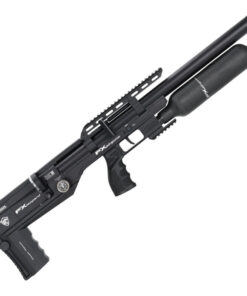
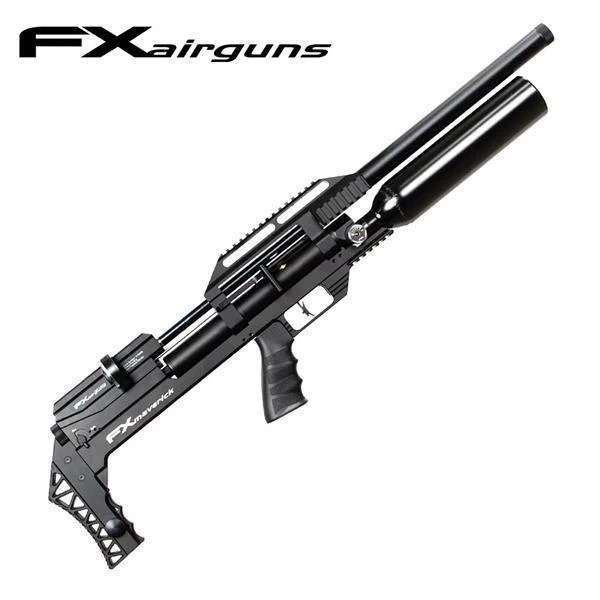
FX Maverick Black VP FAC

$1,200.00

FX Maverick Black VP FAC

The worlds first dual regulated airgun. Harder hitting, more consistent and more shots per fill.

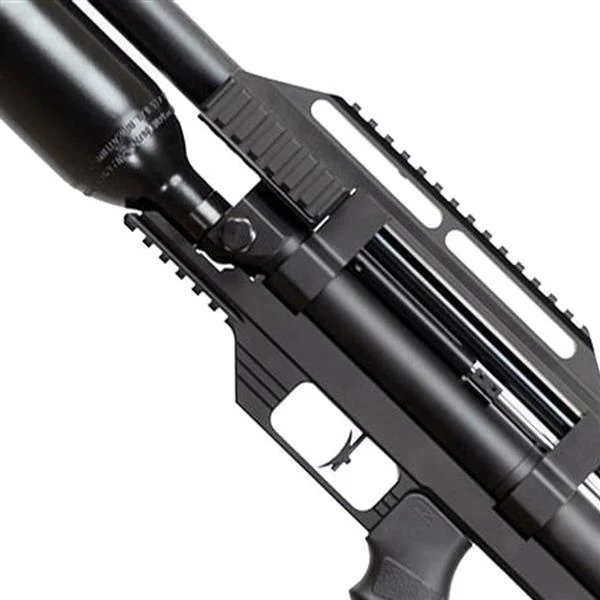
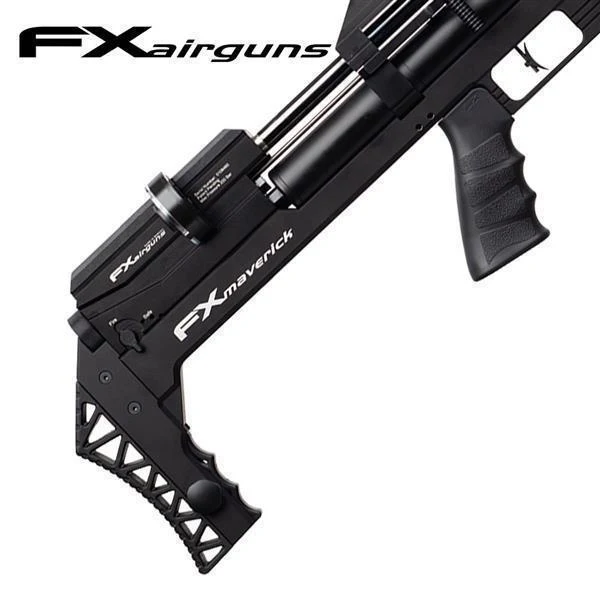
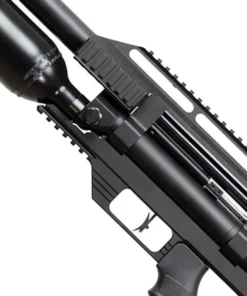
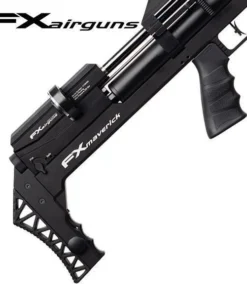
The FX Maverick is a brand-new platform for FX Airguns. A rifle purpose built form the ground up with heavier pellet and slug shooting in mind. The Marverick features the largest power plenum yet on an FX rifle with the latest FX innovation, dual regulators!

FX Power Plenum with Dual Regulators

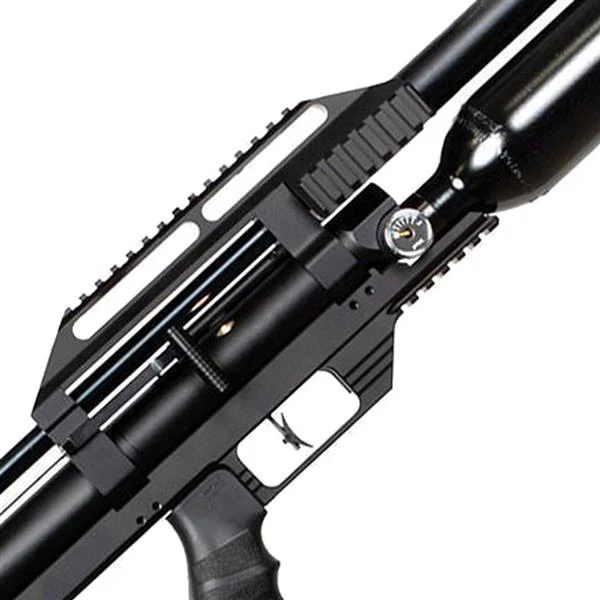
Dual AMP (Adjustable Match Precision) Regulators are employed to provide lower standard deviations in velocity and preserve the health of the regulators. The first regulator reduces the pressure in preparation for the second regulator. These work in tandem with the large 89cc Power plenum (and its accompanying porting and valving) to give a more consistent working pressure as well as proper airflow for heavier slugs.

FX Side-Shot Magazine

High Capacity magazines that are incredibly easy to load by removing the entire face plate.

Features

  • Rear Power Adjuster – External rear hammer spring tension adjustment knob.
  • Slug Power Kit (Optional) – Optional extra for producing more power when using slugs. Heavier hammer and slug pin.
  • Changeable Calibres – Change calibres within minutes.
  • Dual A.M.P. Regulators
  • Swap Barrel Liners – Changeable barrel liners to help optimise your rifle for different ammunition.
  • Threaded Barrel – 1/2 UNF Barrel threaded ready for the moderator of your choice.

Efficiency FAC Sniper Edn (580cc bottle)

.22 270 Shots / .25 170 Shots / .30 90 Shots

Efficiency FAC Compact (300cc bottle)

.177 180 Shots / .22 110 Shots / .25 70 Shots / .30 35 Shots

Efficiency FAC VP (400cc bottle)

.22 160 Shots / .25 100 Shots / .30 55 Shots

Efficiency 12FT/LB (480cc bottle fitted)

.177 600 Shots / .22 600 Shots

Efficiency 12FT/LB Compact (300cc bottle fitted)

.177 Shots / .22 Shots 480

Efficiency 12FT/LB VP (300cc bottle fitted)

.177 Shots / .22 Shots 435


FX Maverick Black VP FAC – PCP Air Rifle Overview, Features, Specifications and Performance

The FX Maverick Black VP FAC is a pre-charged pneumatic (PCP) air rifle designed around regulated air delivery, a modular construction, and adjustable operating characteristics. Developed by FX Airguns, this bullpup platform combines a compact external profile with a full-length barrel arrangement, making it a distinctive option within the company’s range of precision air rifles.

Unlike traditional spring-powered systems, the rifle uses compressed air stored in an onboard reservoir to propel suitable projectiles. Moreover, its dual-regulator architecture helps manage air pressure before each shot, contributing to consistency when the system operates within its intended specifications.

The VP designation refers to the Value Priced configuration, while FAC identifies a higher-power version intended for markets where the appropriate legal authorization is available. Consequently, prospective owners should distinguish between the rifle’s mechanical capabilities, its factory configuration, and the legal power limits applicable in their jurisdiction.

FX Maverick Black VP FAC – Design and Engineering Features

Modern Bullpup Construction and Black Synthetic Finish

The FX Maverick Black VP FAC follows a bullpup layout, positioning its action farther toward the rear of the stock than a conventional sporting rifle. This configuration reduces overall length without requiring an equivalently short barrel.

Its black synthetic exterior gives the platform a contemporary appearance. Additionally, synthetic furniture offers practical resistance to routine environmental exposure and generally requires less surface maintenance than traditional wooden stocks.

The rifle’s design incorporates several recognizable characteristics:

  • Bullpup configuration: A compact arrangement that places the action toward the rear.

  • Black synthetic stock: A practical exterior with a modern, understated appearance.

  • PCP operating system: An onboard compressed-air reservoir supplies the energy required for firing.

  • Dual-regulator architecture: Two stages manage air pressure within the pneumatic system.

  • Adjustable operating characteristics: The platform incorporates manufacturer-defined adjustment provisions.

  • Modular construction: Several components follow FX Airguns’ adaptable design philosophy.

  • Optics mounting provision: A mounting interface accommodates compatible sighting equipment.

  • Removable magazine system: Magazine specifications depend on calibre and configuration.

  • Integrated safety mechanism: A mechanical safety forms part of the rifle’s handling system.

Together, these design characteristics distinguish the Maverick from simpler, fixed-configuration PCP platforms.

Dual Regulators and Air Pressure Management

One of the most recognizable technical features of the FX Maverick family is its dual-regulator system. Rather than relying exclusively on the changing pressure inside the main reservoir, the rifle incorporates two pressure-regulation stages.

The first regulator reduces reservoir pressure to an intermediate level. Subsequently, the second regulator governs the pressure supplied to the firing system.

This arrangement helps separate reservoir pressure variations from the pressure available during firing. As a result, the system can support consistent operation when properly maintained and used according to manufacturer instructions.

However, regulator performance depends on component condition, pressure settings, ammunition characteristics, and the overall mechanical configuration. Therefore, consistency should never be interpreted as a fixed guarantee independent of operating conditions.

Owners should refer to the official manual for pressure limits, inspection requirements, and authorized servicing procedures.

FX Maverick Black VP FAC – Barrel and Accuracy Characteristics

FX Barrel Technology

The FX Maverick platform incorporates FX barrel technology developed for precision-oriented airgun applications. Depending on the production version, its barrel assembly may use the company’s Smooth Twist X system.

This system differs from conventional rifling arrangements and forms part of FX Airguns’ broader approach to barrel design.

Nevertheless, barrel specification should be confirmed against the exact rifle being supplied, since production revisions and individual configurations can differ.

Several factors influence practical accuracy, including ammunition consistency, barrel condition, environmental conditions, and the suitability of the sighting equipment.

Furthermore, the condition of seals and other pneumatic components contributes to repeatable mechanical operation.

A properly maintained barrel should be inspected and serviced in accordance with the manufacturer’s recommendations. Improper cleaning equipment or aggressive maintenance methods can damage precision components.

Calibre Availability and Ammunition Compatibility

The FX Maverick range has been offered in several calibres, including .177, .22, .25, and .30, although availability depends on the specific model and market.

Each calibre has different projectile dimensions, ammunition characteristics, and regulatory considerations.

Calibre Nominal metric size General characteristics
.177 4.5 mm Smaller-diameter airgun projectiles
.22 5.5 mm Common sporting airgun calibre
.25 6.35 mm Larger-diameter projectile option
.30 7.62 mm Larger-calibre configuration with different ammunition requirements

Not every calibre listed necessarily applies to every Black VP FAC version. Consequently, owners should verify the barrel marking, manufacturer’s product documentation, and correct magazine specification before selecting ammunition.

Only ammunition approved for the particular barrel and configuration should be used.

FX Maverick Black VP FAC – Technical Specifications

Verified VP Configuration Details

The following specifications describe the FX Maverick VP configuration documented by FX Airguns’ Australian distributor. Regional versions and production revisions may differ.

Australia
Specification Details
Manufacturer FX Airguns
Model Maverick VP
Operating system Pre-charged pneumatic
Barrel length 600 mm
Air reservoir 400 cc aluminium bottle
Maximum fill pressure 230 bar
Regulators Dual FX AMP
Power plenum 89 cc
Overall length Approximately 800 mm
Weight Approximately 3.4 kg
Cocking mechanism Forward-positioned sidelever
Optics interface Picatinny rail with 20 MOA inclination
Trigger Adjustable match-style trigger
Safety Switch-style safety
Charging connection Foster quick-disconnect

Importantly, these figures describe the VP edition rather than every Maverick variant.

FAC Classification and Legal Considerations

FAC generally refers to configurations associated with firearm-certificate requirements in certain jurisdictions, particularly the United Kingdom.

However, an FAC designation does not establish a universal legal classification. Local authorities may apply different licensing, ownership, transportation, storage, and use requirements.

Higher-powered pneumatic rifles can cause serious injury and property damage. Therefore, all handling should follow the manufacturer’s safety instructions, and owners should confirm applicable regulations before possession or use.

FX Maverick Black VP FAC – Maintenance and Long-Term Care

Routine Inspection and Storage

Preventive maintenance plays an important role in preserving the mechanical condition of a regulated PCP air rifle.

Before and after authorized use, owners should examine the rifle’s exterior for visible damage, loose components, and signs of abnormal wear.

Additionally, the reservoir and pressure gauges should be checked for obvious defects without dismantling pressurized components.

Recommended maintenance considerations include:

  • Keep the rifle clean and dry during storage.

  • Protect exposed metal surfaces from excessive moisture.

  • Inspect the exterior of the reservoir for damage.

  • Use only manufacturer-approved charging equipment.

  • Follow the manufacturer’s published inspection intervals.

  • Arrange professional servicing when pressure loss or mechanical abnormalities occur.

  • Store the rifle securely, unloaded, and inaccessible to unauthorized individuals.

Regulators, valves, and pressure-bearing assemblies require particular care. Consequently, internal repairs should be left to appropriately qualified technicians.

Documentation and Component Identification

Because the Maverick family includes several configurations, accurate component identification is essential.

Owners should retain the product manual, purchase documentation, serial-number information, and relevant service records.

Furthermore, replacement parts should be matched against the applicable production revision rather than selected solely by the Maverick model name.

Official technical documentation is available through the FX Airguns support centre.

FX Airguns

Understanding the FX Maverick Black VP FAC Platform

The FX Maverick Black VP FAC combines a compact bullpup layout, dual-pressure regulation, an interchangeable barrel-liner architecture, and a high-capacity compressed-air system.

Its VP configuration features an aluminium reservoir and identifiable physical specifications, while its broader modular construction reflects the engineering approach used throughout the Maverick family.

Ultimately, understanding this rifle requires attention to its exact factory configuration, maintenance requirements, and legal classification. Accurate specifications and responsible ownership practices provide a reliable foundation for evaluating its technical characteristics.

FX Maverick Black VP FAC – Calibres, FAC Power, Scope Compatibility and Accessories

The FX Maverick Black VP FAC is a pre-charged pneumatic air rifle featuring dual pressure regulators, a black synthetic bullpup design, and a modular engineering platform. Understanding its calibre options, FAC classification, operating pressure, optical compatibility, and accessory requirements is essential for responsible ownership and maintenance.

Moreover, each configuration has specific technical characteristics that affect ammunition compatibility, overall weight, equipment selection, and applicable legal requirements.

FX Maverick Black VP FAC Calibre Options

.177 Calibre (4.5 mm)

The .177 calibre uses projectiles with a nominal diameter of 4.5 mm. This smaller calibre is commonly associated with recreational target shooting and sporting airgun applications.

However, availability in the Maverick VP FAC configuration varies by country and production version. Therefore, the manufacturer’s model documentation should be consulted before assuming a particular rifle is offered in .177.

Important considerations include projectile compatibility, magazine dimensions, barrel identification, and the legal classification of the specific configuration.

.22 Calibre (5.5 mm)

The .22 calibre is one of the widely recognized airgun calibres and uses nominally 5.5 mm projectiles.

Within the FX Maverick family, .22 configurations are associated with the manufacturer’s regulated PCP platform. Nevertheless, ammunition characteristics and power specifications can differ considerably between versions.

Additionally, a magazine designed for .22 ammunition should not be assumed compatible with other calibres. The correct magazine and barrel configuration must be verified through official technical documentation.

.25 Calibre (6.35 mm)

The .25 calibre uses larger-diameter projectiles measuring approximately 6.35 mm.

Compared with smaller calibres, the larger projectile diameter introduces different ammunition dimensions and corresponding component requirements.

Furthermore, magazine capacity, barrel specification, and projectile weight may vary. Owners should identify the exact factory configuration before obtaining replacement components.

.30 Calibre (7.62 mm)

The .30 calibre represents a larger-projectile option within the broader FX Maverick product family.

Its nominal diameter is approximately 7.62 mm, and ammunition compatibility depends on the installed barrel and corresponding magazine.

Because the .30 configuration may be subject to additional legal restrictions, local firearm and airgun regulations require careful attention.

Not every FX Maverick Black VP FAC variant is offered in every calibre listed above.

FAC Classification and Power Characteristics

Understanding FAC Air Rifles

FAC commonly stands for Firearm Certificate, a designation particularly relevant to air rifles subject to certification requirements in the United Kingdom.

In England and Wales, air rifles exceeding 12 foot-pounds of muzzle energy generally require a firearm certificate. Different legal arrangements apply in Scotland and Northern Ireland.

Importantly, the designation does not automatically establish the rifle’s legal status in another country.

Power Output and Muzzle Energy

The FX Maverick Black VP FAC uses compressed air to generate the pressure needed for projectile propulsion.

Its mechanical performance depends on the exact factory configuration, calibre, ammunition, and condition of the pneumatic system.

Muzzle energy is expressed in joules or foot-pounds and describes the kinetic energy carried by a projectile as it exits the barrel.

Although the Maverick family includes several power configurations, no single muzzle-energy figure accurately describes every Black VP FAC variant.

Consequently, manufacturer-published specifications for the exact model and serial-number range should take precedence over generalized online estimates.

Air Reservoir and Pressure Regulation

A documented Maverick VP configuration uses a 400 cc aluminium air reservoir with a maximum filling pressure of 230 bar.

The platform also includes two FX AMP regulators, which manage pressure across separate stages of the pneumatic system.

This arrangement contributes to controlled air delivery. However, regulator adjustment or internal pneumatic servicing should be undertaken only by qualified professionals following manufacturer specifications.

Scope Compatibility and Optical Equipment

Understanding the Picatinny Mounting System

The FX Maverick VP incorporates a Picatinny optics rail with a 20 MOA inclination. This standardized mounting interface accommodates compatible optical equipment and mounting hardware.

Australia

When assessing scope compatibility, owners should consider the mounting standard, physical dimensions, eye relief, and overall equipment weight.

General optical categories include:

  • Variable-magnification scopes: Provide multiple viewing magnifications within a single optical assembly.

  • Fixed-magnification scopes: Offer a consistent magnification setting with fewer external adjustment controls.

  • Illuminated-reticle optics: Incorporate an illuminated aiming reference for visibility under suitable conditions.

  • Parallax-adjustable optics: Allow correction of apparent reticle displacement at different viewing distances.

  • Weather-resistant optics: Feature protective construction intended to reduce moisture and dust intrusion.

Rather than assuming that every Picatinny-compatible optic will fit, owners should confirm physical clearance and manufacturer-approved mounting requirements.

Optics Care and Inspection

Optical equipment requires appropriate storage and maintenance to preserve lens clarity and mechanical condition.

Dust should be removed using suitable lens-cleaning materials, while protective covers can reduce accidental contact with exposed glass.

Additionally, mounting hardware should be inspected periodically for visible damage. Any installation or alignment concerns should be addressed by a qualified technician.

Accessories and Maintenance Equipment

Compatible Equipment Categories

The modular FX Maverick platform includes accessory rails and manufacturer-supported replacement components. However, accessory compatibility must be confirmed against the exact VP configuration.

Useful ownership and maintenance categories include:

  • Protective rifle case: Helps shield the unloaded rifle from external damage during lawful transportation.

  • Approved eye protection: Provides an additional layer of personal safety during authorized shooting activities.

  • Manufacturer-approved magazines: Must match the installed calibre and model revision.

  • Compatible pressure-filling equipment: Must satisfy the manufacturer’s pressure and connection requirements.

  • Optical lens-cleaning kit: Helps maintain lenses without abrasive contact.

  • Secure storage equipment: Supports responsible access control.

  • Manufacturer-approved replacement seals: Intended for servicing by appropriately qualified personnel.

  • Maintenance documentation: Provides inspection intervals and component identification information.

Compressed-Air Filling Equipment

The Maverick VP uses a Foster quick-disconnect charging connection and a 400 cc aluminium reservoir rated for a maximum fill pressure of 230 bar in the documented configuration.

Australia

Filling equipment must be approved for the operating pressure and use clean, dry, breathable-quality compressed air where required by the manufacturer.

Furthermore, owners should never substitute incompatible fittings or exceed the published pressure limit. Pressure-bearing equipment should undergo appropriate inspections, and damaged components must not be used.

Final Technical Considerations

The FX Maverick Black VP FAC brings together a regulated PCP mechanism, multiple calibre configurations, a compact bullpup chassis, and standardized optics interfaces.

Its exact capabilities depend on the factory specification and applicable regional restrictions. Therefore, documentation for the specific rifle is essential when confirming calibre, power classification, accessory compatibility, and maintenance requirements.

By maintaining accurate records, using approved equipment, and following manufacturer guidance, owners can better understand and preserve the technical condition of this specialized pneumatic platform.

Air Rifles, PCP Systems, Calibers, Target Shooting and Popular Models

The world of air arms, air guns, and precision shooting equipment covers everything from recreational target shooting to sporting applications. For newcomers asking what is an air gun, what is an air rifle, what is air rifle, what is a air rifle, what is a airgun, what is an airgun, or what are airguns, the basic principle is straightforward. An air gun uses compressed gas or air to propel a projectile rather than relying on the combustion system associated with conventional firearms.

Understanding how does an air gun work, how does air gun work, how do air guns work, how does an air rifle work, how does air rifle work, and how do air rifle work can help buyers distinguish between the different operating systems available. Depending on the design, power can be supplied by a spring piston, compressed air cylinder, CO2 cartridge, or another pneumatic mechanism.

PCP Air Rifles and Compressed-Air Systems

One of the most popular categories is the pre-charged pneumatic platform. Searches such as what is a pcp air rifle, what is a pcp airgun, what is pcp air rifle, what is a pcp air gun, what is a pcp rifle, what is pcp rifle, what are pcp air rifles, and what is a pre charged pneumatic air rifle all relate to the same fundamental technology. A PCP rifle stores compressed air inside a reservoir and releases a controlled quantity each time the rifle is fired.

For shoppers researching pcp gun meaning, pcp rifle meaning, or pcp air rifle meaning, PCP simply refers to a pre-charged pneumatic system. Air is normally added using a pcp hand pump, dive cylinder, or pcp air compressor. Consequently, an air compressed gun or air compressor rifle can deliver consistent performance without requiring the shooter to manually compress a spring before every shot.

Some searches also include pcp bb gun, although many PCP platforms are primarily designed around pellets rather than traditional BB ammunition. Understanding the intended ammunition is therefore important before selecting accessories, magazines, or loading equipment.

.177 Caliber, .22 Caliber and Pellet Selection

Caliber choice is one of the most frequently researched subjects among airgun buyers. The .177 caliber remains extremely popular for recreational shooting and precision target applications. Products described as a 177 air rifle, 177 bullet, or even 177 cal darts may appear during searches, although ammunition compatibility always needs to be checked against the manufacturer’s specifications.

Questions including 177 or 22, 177 cal vs 22, 177 caliber vs 22, .177 caliber vs .22, .177 pellet vs .22 pellet, and .22 vs .177 pellet generally focus on differences in projectile size, trajectory, energy, and intended use. A smaller .177 pellet is commonly chosen for paper targets and precision shooting, whereas larger calibers may be selected for applications where additional projectile mass is desired.

Understanding bb gun pellet sizes is equally important because BBs and pellets are not automatically interchangeable. Before purchasing ammunition, shooters should confirm the caliber and projectile type specified for their particular pellet rifle, pellet pistol, or bb gun.

Air Arms Rifles and Popular Models

Among established manufacturers, air arms products remain widely searched by enthusiasts interested in precision PCP and spring-powered platforms. Well-known searches include air arms s510, s510, air arms s410, aa s400, pro sport air arms, prosport air arms, tx 200, and tx200.

Variations such as air arm and airarm are also commonly entered by shoppers searching for the brand. Buyers looking specifically for regulated sporting configurations may encounter the air arms s510 ultimate sporter .177 sub 12, a phrase frequently associated with UK-oriented searches for the S510 platform.

Each Air Arms model has its own action, stock design, power configuration, caliber options, and intended shooting environment. Therefore, specifications should always be checked against the exact version being considered rather than assumed from another model in the same family.

FX Impact M3, FX Maverick and Modern PCP Platforms

Premium PCP research frequently includes the fx maverick and the fx impact m3. Buyers may also search for fx impact mk3, fx m3 airgun, fx m3, impact m3, or fx impact m3 air rifle while comparing generations and configurations.

More specific searches such as fx impact m3 .22cal air rifle. 600mm barrel focus on caliber and barrel-length combinations. Meanwhile, international shoppers may search fx impact m3 precio, fx impact m3 precio en usa, or fx impact m3 price when researching current market pricing.

Because FX platforms can be produced in multiple barrel lengths, calibers, power settings, and regional configurations, buyers should verify the exact specification offered in their country before ordering.

Break-Barrel Air Rifles

Another major category is the break barrel air rifle. Anyone asking what is a break barrel air rifle or what is a break barrel pellet gun is usually referring to a rifle in which the barrel is hinged downward to cock the internal powerplant and expose the breech for loading.

Break-barrel designs remain popular because they can provide a self-contained shooting system without an external compressor or air bottle. Models such as a gamo pellet gun are frequently encountered by buyers exploring this category.

Learning how to load pellet gun equipment properly is particularly important. Pellets should match the manufacturer’s recommended caliber and should be loaded in accordance with the owner’s manual while the rifle is pointed in a safe direction and handled under normal shooting-range safety procedures.

CO2, Pellet Pistols and Other Airgun Types

Not every airgun uses PCP or spring power. A co2 powered pellet rifle, for example, uses replaceable CO2 cartridges as its propellant source. CO2 systems can be found in rifles and handguns intended for recreational shooting, training, and target use.

People researching air pistol uses or general pellet gun uses will encounter equipment intended for target practice, recreational plinking, skills training, competition, and other lawful sporting activities. A pellet pistol can offer a compact platform, while rifles generally provide a longer sight radius and additional stability.

Search terms such as pelet guns are also common misspellings of pellet guns and can still represent useful search intent when website content is designed to answer frequently asked buyer questions naturally.

Target Shooting and Airgun Practice

One of the most established uses of airguns is target shooting with air rifles. Dedicated air guns for target shooting may emphasize accuracy, adjustable stocks, match triggers, regulated air delivery, and compatibility with precision optics.

Likewise, airgun target practice and airgun for target practice are common search topics among people looking for an accessible way to develop shooting fundamentals. Proper backstops, eye protection, safe handling practices, and suitable ranges should always be used.

The practical range of air rifle equipment varies considerably according to caliber, muzzle energy, projectile selection, environmental conditions, and the rifle itself. As a result, buyers should use manufacturer specifications and local range rules rather than assuming that every air rifle performs identically.

Hunting Air Rifles and Appropriate Use

Some shooters research air rifles for hunting, hunting air rifles, best air rifle for hunting, pellet gun for rabbits, or even the informal phrase rats gun when looking for equipment designed for lawful pest-control or hunting applications.

Suitability depends heavily on local law, caliber, projectile energy, quarry species, shot placement requirements, and humane hunting standards. Questions such as can a bb gun kill a fox should therefore not be treated simply as equipment-selection questions. Legal restrictions and animal-welfare requirements should be checked first, and low-powered BB guns are not appropriate substitutes for equipment legally and ethically suitable for a particular species.

Similarly, searches for air rifles for deer hunting and big game hunting with air rifle involve specialized legal and ballistic requirements. Large-bore systems such as a 72 caliber air rifle or products associated with bluegrass big bore illustrate how different big-bore pneumatic platforms can be from conventional small-caliber pellet rifles. Local hunting regulations must determine whether such equipment may legally be used.

Licensing and UK Airgun Regulations

Legal requirements differ considerably by jurisdiction. UK-oriented searches frequently include do you need a licence for air rifle, air rifle certificate uk, and 22 rifle uk license. However, the rules governing air rifles, conventional .22 firearms, certificates, age restrictions, possession, transportation, and power limits are not identical.

Consequently, buyers should confirm current legislation with the relevant licensing authority before purchasing or using any regulated equipment. Particular attention should also be paid to whether a rifle is configured below or above applicable power thresholds.

Sportsman, Gamo and Other Popular Searches

Beyond specialist PCP manufacturers, buyers may encounter products such as the sportsman 900 while comparing recreational air rifles. Searches for a gamo pellet gun are also common because Gamo offers numerous spring-powered and pneumatic models across different price points and configurations.

The broader search for best air guns can include everything from affordable recreational platforms to sophisticated regulated PCP rifles. Rather than treating one design as universally superior, buyers should compare caliber, intended application, weight, stock ergonomics, power source, shot capacity, charging equipment, availability of spare parts, and local legal requirements.

Airgun Safety, Home Use and Responsible Ownership

Searches for air guns for home defense do appear online, but an airgun should not automatically be assumed to be suitable for defensive use. Laws vary significantly, and airguns can cause serious injury. Secure storage, lawful ownership, training, safe handling, and avoidance of unnecessary confrontation remain essential.

Whether someone owns an air rifle, pellet rifle, bb gun, or PCP platform, the equipment should always be treated as capable of causing injury. A secure backstop should be used for recreational shooting, the muzzle should remain pointed in a safe direction, and manufacturer instructions should be followed carefully.

Ultimately, understanding the differences between PCP rifles, break-barrel systems, CO2 equipment, caliber choices, and individual models makes it easier to compare the extensive range of modern airguns. From Air Arms platforms to FX rifles and recreational pellet guns, careful specification checking, responsible handling, lawful use, and suitable ammunition selection remain central to getting the right equipment for the intended purpose.

Frequently Asked Questions (FAQs)

General Information and Design

1. What makes this PCP air rifle different from conventional air rifles?

This pre-charged pneumatic air rifle incorporates modern engineering features that distinguish it from conventional spring-powered and gas-piston designs. Instead of relying on a mechanical spring to generate propulsion, it uses compressed air stored inside a dedicated reservoir. Consequently, its operating characteristics depend on regulated air delivery, internal pressure management, and the condition of its pneumatic components.

Additionally, the bullpup construction positions the action toward the rear of the stock, allowing a relatively compact overall arrangement. Its modular construction, adjustable components, and synthetic exterior further distinguish the platform from traditional fixed-configuration rifles.

2. What does the VP designation mean?

VP stands for Value Priced, identifying a particular configuration within the manufacturer’s product family. This designation generally describes a model equipped with selected components intended to provide the platform’s main engineering features in a comparatively straightforward configuration.

For example, the VP version uses an aluminium air reservoir rather than the carbon-fibre bottle supplied with certain other versions. However, component specifications can change between production periods and regional markets.

Therefore, buyers and owners should consult official product documentation to distinguish the VP version from other models in the same family.

3. What is a bullpup air rifle?

A bullpup air rifle positions much of its operating mechanism behind the trigger rather than directly above or ahead of it. This design allows the barrel and action to occupy a different arrangement within the stock.

Consequently, the overall rifle can remain relatively compact without requiring a correspondingly short barrel.

Bullpup designs also feature distinctive weight distribution and handling characteristics. Nevertheless, comfort depends on individual preferences, body proportions, and the specific stock configuration.

4. Is the black synthetic stock durable?

Synthetic stocks generally provide practical resistance to moisture, ordinary surface wear, and changing environmental conditions. Unlike untreated wooden furniture, synthetic materials do not require the same routine treatment to preserve their exterior finish.

However, durability does not mean immunity from damage. Excessive heat, aggressive chemicals, strong impacts, and prolonged inappropriate storage can still affect the stock and surrounding components.

Regular inspection and cleaning with manufacturer-approved products help maintain its physical condition and appearance.

Calibres and Ammunition

5. Which calibres are associated with this air rifle platform?

The wider product family has been associated with .177, .22, .25, and .30 calibre configurations, although individual variants may not be available in every calibre.

Each calibre uses projectiles with different nominal diameters and requires compatible barrel and magazine components.

Furthermore, calibre availability may depend on national regulations, authorized distributors, and production revisions. The barrel marking and manufacturer documentation provide the most reliable starting points for identifying the correct configuration.

6. Can different calibres use the same magazine?

No. Magazines are generally designed around particular projectile dimensions and feeding requirements.

For example, a magazine intended for .22 calibre ammunition should not be assumed compatible with .25 calibre projectiles.

Using an incompatible magazine may create feeding problems or damage associated components. Consequently, the calibre, magazine model, and production revision must match the manufacturer’s published compatibility information.

Any uncertainty should be resolved through an authorized service provider before use.

7. Can pellets and slugs both be used?

Some configurations within this manufacturer’s air rifle range accommodate different projectile designs, including conventional pellets and certain purpose-designed airgun slugs.

Nevertheless, compatibility is not universal. Barrel specifications, projectile dimensions, manufacturer recommendations, and the rifle’s factory configuration determine which ammunition types are appropriate.

Owners should avoid assuming compatibility simply because projectiles share the same nominal calibre.

Additionally, unsuitable ammunition can affect mechanical operation, feeding reliability, and barrel condition.

8. Does ammunition quality affect consistency?

Yes. Manufacturing tolerances, projectile dimensions, material consistency, and storage conditions can influence how ammunition behaves in an airgun.

Even projectiles carrying the same nominal calibre designation may differ slightly in their physical dimensions.

Therefore, ammunition should remain in its original packaging, protected from moisture, contamination, and unnecessary deformation.

Importantly, consistency also depends on the rifle’s mechanical condition, meaning ammunition quality alone cannot guarantee any particular result.

FAC Classification and Power

9. What does FAC mean?

FAC commonly stands for Firearm Certificate, particularly in the context of United Kingdom firearm legislation.

The term frequently appears alongside higher-powered air rifles that fall within certificate requirements.

However, the exact legal classification depends on the country and, in some circumstances, the specific region.

For example, England, Wales, Scotland, and Northern Ireland operate under legal frameworks that differ in important respects.

Accordingly, owners should confirm the rules applicable to their location rather than relying solely on a product designation.

10. Does every FAC air rifle have the same power?

No. FAC is a regulatory designation in certain contexts rather than a standardized muzzle-energy rating.

Different rifle configurations may have different factory-rated outputs depending on their calibre, mechanical specifications, and regional requirements.

Moreover, manufacturers sometimes release several versions of the same platform with distinct technical characteristics.

The correct way to establish the specifications of a particular example is to consult its official documentation and identifying markings.

11. What is muzzle energy?

Muzzle energy describes the kinetic energy carried by a projectile as it leaves the barrel.

Manufacturers commonly express this quantity in joules or foot-pounds.

It is a technical measurement rather than a complete description of a rifle’s performance or operating characteristics.

Furthermore, published figures may apply only to particular factory configurations and specified test conditions.

For accurate identification, owners should distinguish between documented manufacturer ratings and informal figures found in online discussions.

12. Are higher-powered air rifles subject to licensing?

In many jurisdictions, higher-powered air rifles are subject to additional controls.

These may include licensing, registration, age restrictions, transportation requirements, and limitations on permitted use.

For instance, air rifles exceeding 12 foot-pounds of muzzle energy generally require firearm certification in England and Wales. Scotland has additional air-weapon licensing provisions, while Northern Ireland maintains separate firearm licensing requirements.

Because legislation can change, owners should consult current official guidance before obtaining or operating regulated equipment.

Air Reservoir and Pressure Regulation

13. What is the purpose of the dual-regulator system?

A dual-regulator system uses two pressure-management stages within the pneumatic mechanism.

The first regulator reduces pressure from the main compressed-air reservoir to an intermediate level. The second regulator then controls pressure farther along the system.

This arrangement helps manage variations in reservoir pressure during normal operation.

Nevertheless, correct functioning depends on the condition of seals, regulators, and related components.

Internal inspection and adjustment should follow manufacturer procedures and should be conducted by qualified personnel.

14. What is the air reservoir capacity?

A documented VP configuration uses a 400 cc aluminium air reservoir.

The reservoir stores compressed air for the rifle’s pneumatic operating system.

However, specifications may differ between model versions, production periods, and regional packages.

Therefore, owners should verify the exact reservoir capacity and pressure rating using the markings on their equipment and the applicable official manual.

15. What is the maximum filling pressure?

The documented VP configuration has a maximum filling pressure of 230 bar.

This figure must not automatically be applied to every variation or replacement reservoir.

Pressure ratings should always be confirmed directly from the manufacturer’s instructions and the markings on the installed equipment.

Exceeding the approved pressure limit can create a serious safety hazard.

16. Can ordinary workshop compressors be used for filling?

Ordinary workshop compressors should not be assumed suitable for filling high-pressure PCP reservoirs.

Airgun charging equipment must meet the relevant pressure requirements and provide air of the quality specified by the manufacturer.

Furthermore, incompatible connectors, inadequate filtration, contaminated compressed air, or poorly maintained pressure equipment can present significant risks.

Only appropriately rated and manufacturer-approved equipment should be used.

Barrel and Mechanical Construction

17. What barrel technology does the platform use?

The manufacturer’s product family incorporates proprietary barrel technology, including configurations associated with its Smooth Twist X system.

This barrel architecture differs from conventional rifling approaches and forms part of the manufacturer’s modular design philosophy.

However, the exact assembly should be confirmed against the relevant production version.

Barrel components should not be interchanged or modified without appropriate manufacturer authorization and qualified technical assistance.

18. Does the barrel require regular cleaning?

Barrel maintenance requirements depend on the manufacturer’s instructions, ammunition characteristics, environmental exposure, and the condition of the individual rifle.

Unnecessary or aggressive cleaning can damage precision surfaces.

Consequently, owners should use only approved maintenance products and avoid abrasive tools or inappropriate solvents.

Where substantial fouling, corrosion, or mechanical damage is suspected, professional inspection is preferable to improvised servicing.

19. What is the purpose of the sidelever mechanism?

The sidelever forms part of the rifle’s manually operated loading and cocking mechanism.

Its forward positioning is characteristic of this platform’s external design.

Like other moving mechanical assemblies, it requires appropriate care, inspection, and correct operation according to the official user manual.

Excessive force should never be applied when resistance or abnormal movement occurs.

Instead, the rifle should be made safe and inspected by a qualified technician.

20. Does the rifle have a safety mechanism?

Yes. The platform incorporates a mechanical safety mechanism.

However, no mechanical safety should be treated as a substitute for responsible handling.

The muzzle must always remain directed toward a safe area, and the rifle should be treated as loaded until its condition has been positively verified.

Additionally, secure storage is essential for preventing unauthorized access.

Optics and Accessories

21. Does the rifle have an optics mounting rail?

Yes. The VP configuration features a Picatinny optics rail with a specified 20 MOA inclination.

The Picatinny standard provides a mounting interface used by various optical and accessory manufacturers.

Nevertheless, physical fit depends on the dimensions, mounting hardware, and design of the particular optic.

Compatibility should be confirmed before installation.

22. Are fixed and variable magnification scopes compatible?

Both fixed-magnification and variable-magnification optical systems may use mounting hardware compatible with Picatinny interfaces.

However, rail compatibility alone does not establish that a particular optic will fit correctly.

Mounting dimensions, available clearance, eye relief, and manufacturer’s recommendations must also be considered.

A qualified technician can assess installation requirements without making unauthorized alterations to the rifle.

23. What accessories are associated with routine ownership?

Common equipment categories include secure storage cases, protective covers, approved eye protection, compatible magazines, and manufacturer-recommended maintenance supplies.

High-pressure filling equipment is another important ownership consideration, although it requires careful attention to pressure ratings and connection compatibility.

Accessories should be selected using the exact model specifications rather than assumptions based on product-family similarity.
Caliber

.177, .22, .25, .30

Reviews

There are no reviews yet.

Be the first to review “FX Maverick Black VP FAC”

Related Products

FAQ

  • Spring-Piston (Break-Barrel or Underlever): Cock by compressing a spring. Reliable, no external air source needed, but can have more recoil (“spring twang”) and require technique to shoot accurately.
  • Pre-Charged Pneumatic (PCP): Filled from a scuba tank, compressor, or pump. High power, low recoil, multiple shots per fill. Popular for precision and hunting.
  • CO₂: Powered by disposable cartridges. Good for pistols and semi-auto/repeaters, but performance drops in cold weather.
  • Multi-Pump Pneumatic: Hand-pumped to build pressure. Versatile but requires effort.
  • Gas Ram (Nitro Piston): Uses compressed gas instead of a metal spring. Smoother than traditional springers.

Calibers: Most common are .177 (4.5mm) for speed/flat trajectory and general use, and .22 (5.5mm) for better hunting knockdown power. Larger “big bore” (.25, .30, .357+) exist for hunting bigger game where legal.

Yes, many modern PCP and springers deliver enough energy for small game (rabbits, squirrels, birds) and even larger game in some areas. Muzzle energy (in ft-lbs or joules) matters more than velocity alone. Always match caliber, pellet weight, and energy to the game and check local hunting regs.

Treat every airgun as if it is loaded.

  • Always point the muzzle in a safe direction.
  • Keep your finger off the trigger until ready to shoot.
  • Know your target and what is beyond it (pellets can ricochet or travel far).
  • Wear eye protection.
  • Store unloaded, out of reach of children/untrained users, and ideally locked.
  • Never shoot at hard surfaces or in areas where pellets could escape your property.

Follow these rules strictly—airguns cause real injuries.

Laws differ dramatically by country, state/province, and even city. Always verify current local laws before buying, owning, transporting, or using an airgun. Age restrictions (often 18+) are common.

Examples (summaries only; check official sources):

  • UK: Air rifles ≤12 ft-lbs (16.3 joules) and pistols ≤6 ft-lbs generally do not require a license (FAC needed above that).
  • USA: Varies by state. Some treat powerful airguns as firearms; others do not. Many states now allow big-game hunting with air rifles.
  • Canada: Some airguns classified as firearms if they exceed velocity/energy thresholds.
  • Australia: Often treated as firearms; licensing/registration required in most states.
  • EU/France/Belgium/etc.: Varies; many allow low-power (<20J) guns freely to adults, with higher power needing permits. Germany has strict ~7.5J limits in some contexts.
  • Other countries: Some have no restrictions below certain energies; others ban or heavily regulate them.

Resources: Wikipedia “Air gun laws”, airgun forums, or official government sites. For travel, research transit laws carefully.

Consider:

  • Purpose: Plinking/backyard → lower power springer or CO₂. Hunting/precision → PCP.
  • Budget: Entry-level springers are affordable; PCPs need a fill system (extra cost).
  • .177 vs .22: .177 easier for beginners/targets; .22 better for hunting.
  • Power source: Convenience vs performance.
  • Test pellets in your gun—accuracy varies.

Buy from reputable dealers and consider warranties.

  • Clean barrel periodically (especially if accuracy drops) with patches and appropriate tools/solvents. Avoid over-oiling.
  • Lubricate moving parts and seals with airgun-specific oil (not general gun oil). Springers need piston seal oil occasionally.
  • Check screws, seals for leaks (PCP), and safety mechanisms regularly.
  • Store in a cool, dry place, ideally in a case. Avoid leaving cocked for long periods.

Follow your model’s manual. Basic care extends life significantly.

International shipping may be available for select products. Customers are responsible for understanding and complying with their local import laws and regulations before ordering.

Yes. Customers are required to confirm their order number through WhatsApp or Live Chat before orders are processed and shipped.

If local laws prevent shipment to your area, your order may be canceled and refunded according to our store policy.

Processing typically takes 1–3 business days after payment confirmation. Delivery times vary depending on destination, carrier, and product availability.


  • Wrong pellets for your barrel/caliber.
  • “Death grip” or poor shooting form (especially with springers—let the gun recoil naturally).
  • Loose scopes or mounts.
  • Ignoring safety or local laws.
  • Over-oiling or shooting with obstructions.


Pellets are the most common projectile (lead or lead-free). Match them to your gun, caliber, and purpose—test several brands as accuracy varies by barrel.

  • Domed (Round-Head): Best all-rounder. Excellent accuracy, ballistic coefficient, and energy retention. Ideal for target shooting, field target, and general hunting (e.g., JSB Exact, Air Arms Diabolo Field, H&N Field Target Trophy).
  • Wadcutter (Flat-Head): Clean holes in paper. Best for close-range target/plinking (under 20-25 yards).
  • Hollow Point: Expands on impact for better energy dump. Good for small game hunting (e.g., Predator Polymag, H&N Terminator).
  • Pointed: More penetration, but often less accurate than domed.
  • Slugs: Heavier, more aerodynamic for high-power PCPs at longer ranges (better for big game where legal).

Tips: Heavier pellets in .22/.25 for hunting (better momentum). Lighter in .177 for speed/flat trajectory. Always check head size fit (e.g., 4.51-4.53mm variants).

Muzzle energy (ft-lbs or joules) matters more than velocity. Ethical shots require precise placement (head/heart-lung) within effective range.

Rough Guidelines (adjust for distance, pellet, and local laws):

  • Small game (squirrels, rabbits, birds): 9-20+ FPE, .177/.22.
  • Medium (raccoons, etc.): 25+ FPE, .22/.25 recommended.
  • Larger game: 40-100+ FPE in .30+ calibers (up to big bore for deer/hogs where permitted).

PCPs dominate serious hunting due to power and shot count. Springers/gas rams work well for small game but require skill. Always prioritize clean kills and check seasons/species rules.

  • Barrel Cleaning: Use a pull-through kit or rod with patches. Avoid brushes that could damage rifling. Clean when accuracy drops or after 500-1000 shots.
  • Lubrication: Airgun-specific silicone oil for seals/O-rings (sparingly—excess causes dieseling in springers). Springers may need piston lube periodically.
  • PCP Specific: Check for leaks (soapy water test), monitor regulator/hammer settings, and keep fill systems clean. Don’t exceed rated pressure.
  • General: Tighten stock screws, inspect for wear, store properly. Chronograph shots to track consistency.

Common Issues:

  • Inconsistent velocity → dirty barrel, bad pellets, or seal problems.
  • Spring “twang” → tuning or proper hold.
  • Low power → worn seals or under/over-pumping.

Toggle Content

  • Scopes: Airgun-rated (hold zero under recoil). 3-9x or 4-12x common.
  • Fill Systems: Hand pumps, compressors, or tanks for PCPs.
  • Safety Gear: Eye/ear protection, targets with backstops.
  • Noise: Airguns quieter than firearms, but moderators help further.

Budget Tip: Start with a quality springer (~$150-400) before investing in PCP setup.

Airgunning offers endless depth—from backyard plinking to precision competition and ethical hunting. Prioritize safety, legality, and practice. If you want specifics (e.g., recommendations for a country, budget, hunting small game, or a particular type like PCP vs springer), let me know for more targeted info! Shoot responsibly.

Tuning improves accuracy, reduces noise/recoil, or increases power (within legal limits).

  • Springers: Lighter springs, guides, seals, or custom tuning kits for smoother shot cycle. “V-Mach” or similar professional tunes popular.
  • PCPs: Regulator tuning, hammer spring adjustments, valve work for efficiency and shot count. Some add electronic systems.
  • Accessories: Suppressors (often unregulated on airguns), better triggers, stocks, and scopes.

Caution: Check laws—power increases may reclassify your gun. DIY only if experienced; professional tuners recommended.

You must be at least 18 years old to purchase any airgun or related accessories from our store. By placing an order, you confirm that you meet the legal age requirements in your state or country.

Yes. Orders may require age verification before processing and shipping. In some cases, we may request a valid government-issued ID to confirm eligibility.