FX Airguns, PCP Air Rifles, Hatsan Models and Modern Airgun Platforms
Modern airguns cover a wide range of platforms, from a basic pellet gun or BB gun to sophisticated regulated PCP airguns designed for target shooting, sporting applications, and long-range precision. Buyers researching an air rifle and air pistol collection will often encounter manufacturers such as FX and Hatsan because both companies offer extensive selections of air rifles, accessories, configurations, and caliber choices.
FX Airguns Sweden and the FX PCP Rifle Range
FX Airguns has become strongly associated with Swedish airgun engineering. Searches for fx airguns sweden, fx airguns sverige, fxairguns, and fx usa commonly lead enthusiasts toward the manufacturer’s extensive PCP lineup. In the American market, fx airguns usa is another widely searched phrase when people are researching available models, specifications, support, and accessories.
Among fx air rifles, the Impact family remains particularly recognizable. Searches frequently include fx impact, f x impact, fx impact m4, fx m4, impact m4 air rifle, and impact m4 500mm when comparing current configurations. The modular design philosophy associated with the Impact platform has helped make the fx air rifle range popular among shooters who appreciate adjustability and configurable PCP systems.
Earlier generations remain widely researched as well. The fx impact m3, impact m3, fx impact mk3, fx m3, and fx m3 airgun continue to attract attention from owners comparing generations or researching replacement components.
Caliber-specific searches include fx impact m3 .22cal air rifle, fx impact m3 .22cal air rifle. 600mm barrel, and the more general fx impact m3 air rifle. People comparing international pricing may also search fx impact m3 precio, fx impact m3 precio en usa, or fx impact m3 price before checking local regulations, specifications, and availability.
Beyond the Impact series, the FX catalog includes several distinctive designs. The fx leopard and fx leopard airgun are frequently researched alongside fx leopard .22 pcp specs by users interested in specifications and configuration details.
Other notable searches include fx drs, fx drs tactical, fx drs classic, and fx drs pro. These terms reflect interest in the different DRS configurations and their intended shooting styles.
The wider FX family also includes models such as the fx king, fx wildcat, fx panthera, and fx dreamline. Collectively, these platforms demonstrate the variety available to anyone researching a premium pcp air rifle, pellet rifle, or configurable precision air gun.
Some enthusiasts also search fx outdoors when researching outdoor shooting equipment and related products, while marketplaces and information sources such as guns.com may appear during broader online research.
Understanding Pellet Guns and PCP Air Rifles
A traditional pellet gun uses shaped pellets rather than conventional firearm ammunition. The broader term pellet guns can describe spring-powered, CO₂-powered, pneumatic, and PCP platforms.
A PCP air rifle stores compressed air inside a reservoir. This system can provide consistent pressure across multiple shots depending on the rifle’s regulator, reservoir capacity, caliber, and power configuration.
For shooters comparing ammunition sizes, .177 caliber remains one of the most common options. Larger configurations are also available, including the increasingly searched 30 cal air rifle category.
Some users accidentally search pallet gun when looking for pellet-powered equipment. Regardless of terminology, specifications such as energy output, caliber, barrel length, intended range, and local legal requirements should always be reviewed before use.
The practical range of air rifle platforms varies significantly. Pellet weight, velocity, environmental conditions, barrel design, optics, and shooter technique can all affect useful range and accuracy.
Hatsan Air Rifle and PCP Platforms
The hatsan air rifle lineup covers traditional spring-powered designs as well as modern PCP systems. Searches such as hatsanusa, hatsan usa, hatsan air guns, and hatsan pcp are commonly used by enthusiasts researching the company’s models.
One of the most recognizable platforms is the hatsan blitz. Search variations include hatsun blitz, hatzan blitz, hatsan blitz full automatic, hatsan blitz 30 cal, and hatsan blitz .30 cal. Specifications and legal classifications can vary by market, so owners should verify the rules applicable in their jurisdiction.
Another frequently researched model is the hatsan model 95, also searched as hatsan mod 95 and mod 95. This traditional air rifle platform remains familiar to shooters interested in conventional stock designs.
The hatsan 125 is another established model, while the hatsan 135 family attracts shooters researching powerful spring-piston platforms. Related searches include hatsan 135 vortex air rifle, hatsan 135 carnivore, and hatsan big bore carnivore rifle.
Hatsan Sortie, BullBoss and Bullpup Designs
Compact and semi-automatic PCP designs form another part of Hatsan’s catalog. The hatsan sortie is commonly researched alongside hatsan sortie tact, hatsan sortie tact semi-auto pcp, and hatsan sortie accessories.
Bullpup enthusiasts may encounter the hatsan bullboss, bullmaster, and hatsan hercules bully. Their compact layouts are designed to reduce overall length while maintaining useful barrel dimensions.
Other PCP models include the hatsan flash, hatsan flashpup qe, and hatsan invader. These rifles provide additional choices for people comparing conventional and bullpup PCP configurations.
Hatsan Hercules, Piledriver and Large-Caliber Platforms
For people researching larger airgun platforms, hatsan hercules and hatsan piledriver often appear in search results. Large-bore air rifles differ considerably from standard .177 and .22 pellet rifles in projectile size, power output, air consumption, and intended application.
The hatsan harpoon is associated with specialized projectile launching, while an arrow launcher represents another distinct air-powered category. Such equipment can be subject to different legal rules depending on location, so local regulations should be checked before ownership or use.
Additional Hatsan Models
The Hatsan catalog extends well beyond its best-known rifles. The hatsan airtact and hatsan airtact air rifle provide another entry point into the brand’s conventional rifle selection.
Other searches include hatsan zada, hatsan neutron star, hatsan factor rc, hatsan velox, and hatsan jet 2. Each platform serves a somewhat different role, making specifications such as caliber, reservoir capacity, operating system, barrel configuration, and overall dimensions important comparison points.
Shoppers researching discounted equipment may also encounter hatsan refurbished listings or broader searches for refurbished air rifles. Condition, warranty coverage, seals, regulators, reservoirs, and service history should be checked carefully when evaluating previously used or factory-refurbished equipment.
Airgun Optics, Pellets and Accessories
Accessories can significantly affect how an air rifle is configured. A compact 4×20 optic may suit basic shooting applications, while more advanced PCP rifles are frequently paired with adjustable optics.
Pellet choice also matters. Products such as h&n field target trophy bleifrei provide an option for shooters specifically researching lead-free projectile designs. Pellet diameter, weight, head size, and barrel compatibility should all be considered when evaluating accuracy.
Terms such as econ ii may also appear when researching airgun-related equipment and accessories. Compatibility should always be verified against the exact manufacturer, model, and specification rather than relying solely on a product name.
Comparing FX and Hatsan Air Guns
FX and Hatsan approach the modern air rifle market from different directions. FX is particularly well known for highly configurable PCP platforms such as the Impact, Panthera, Wildcat, Dreamline, Leopard, DRS, and King. Hatsan, meanwhile, maintains an exceptionally broad range spanning spring-powered rifles, PCP systems, bullpups, semi-automatic platforms, and larger-caliber airguns.
Whether researching an FX Impact M3, FX Impact M4, FX DRS, Hatsan Blitz, Hatsan Sortie, Hatsan Hercules, or another platform, specifications should be compared carefully. Caliber, operating pressure, reservoir capacity, barrel length, projectile compatibility, optics mounting, overall dimensions, energy output, and regional legal requirements can all influence which configuration is appropriate for a particular lawful sporting or target-shooting application.

Practical Use in the Field and on the Range
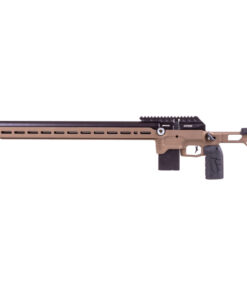
A long, regulated PCP with an 800 mm heavy liner and a 580 cc cylinder is intended for more than a single afternoon at the club. Consequently, everyday handling, rest selection, ammunition choice, and weather discipline all shape the results that are produced. Moreover, inclusive use is supported when left- and right-handed shooters share the same reversible sidelever and ambidextrous grip. Therefore, the scenarios below are written so any responsible adult can apply them after local law and energy limits have been confirmed.
How a Typical Hunting Day Is Structured
Pre-Dawn Preparation Is Completed at Home
Zero is verified on paper at the distances that will be used. Subsequently, a chronograph string is recorded so regulator drift is noticed before the first live quarry is approached. Meanwhile, magazines are loaded with projectiles of proven length and weight, and a spare drum is packed so a second string can be started without returning to the vehicle. In addition, the Foster fitting is wiped, the bottle pressure is checked against the planned tune, and the safety is confirmed to move freely.
Clothing layers are chosen so the rifle can be shouldered without snagging the sidelever. Furthermore, a moderator is fitted only where noise devices are permitted, because report management is often required near livestock or dwellings. Eye and ear protection are packed as standard, and a written note of the legal energy ceiling is kept with the licence documents.
Approach and Rest Are Chosen with Care
The overall length of approximately 1120 mm is felt immediately in cover. Consequently, gates, hedges, and vehicle doors are negotiated with the muzzle controlled and the action uncocked until a shot is intended. A bipod is preferably attached to a dedicated rail rather than to the carbon cylinder, because high-pressure valves should not be used as load-bearing members. Alternatively, a rear bag and a front rest are employed from a prone or seated position so the extra barrel mass can settle.
Wind is read at the target and at mid-range flags when they are available. Additionally, the 30 MOA rail is used to preserve elevation travel when first-focal-plane or high-magnification optics are mounted. Thermal or night-vision clip-ons are positioned using the sliding Picatinny section so eye relief remains correct for short-relief devices.
The Shot Sequence Is Kept Deliberate
The safety is moved only when the animal is identified, the backdrop is safe, and the distance is known. Next, the first stage of the Quick Set trigger is taken up, breathing is paused, and the second stage is broken without extra movement of the support hand. After the shot, the sidelever is cycled smoothly so the magazine rotor advances; a last-round stop prevents the probe from closing on an empty chamber.
Follow-up shots are available from the high-capacity drum, yet ethical hunting still requires that the first projectile be placed correctly. Therefore, heavy slugs in .30 or .35 are reserved for quarry and ranges that match the verified energy and expansion of that load. Conversely, .22 and .25 pellet or light-slug setups are kept for smaller pests when a flatter trajectory and a longer shot string are preferred.
How Pest Control Around Buildings Is Conducted
Close-in work around barns and yards demands a different rhythm. Accordingly, a milder regulator setting is often selected so over-penetration through timber or thin sheet is reduced. A moderator, where legal, keeps disturbance low for neighbours and livestock. Meanwhile, the ambidextrous grip allows awkward angles from a loft hatch or a truck bed to be managed by either hand.
Lighting is uneven at dusk. Consequently, a compact optic with generous eye box is favoured over an oversized night-vision unit that shifts the balance of the already long barrel. Magazines are loaded with shorter, consistent pellets rather than maximum-length slugs, because feeding reliability in dusty yards matters more than peak energy.
Safe backstops are confirmed before every shot. In addition, ricochet risk from concrete, stone, and farm machinery is treated as a reason to withhold fire. After the session, the action is left uncocked, the magazine is removed, and the rifle is cased before it is placed in a vehicle that may be shared with non-shooters.
How Long-Range Slug Practice Is Organised
A Known-Distance Session Is Built in Stages
Zero is first confirmed at a short, measured distance. Subsequently, groups are fired at 50, 75, and 100 metres, then at the longer distances that the 800 mm liner and 30 MOA rail are intended to support. Each change of hammer preload or regulator pressure is followed by a fresh chronograph string, because small Quick Tune clicks can move velocity enough to shift point of impact.
Heavy slugs benefit from the Superior Heavy twist, yet they also demand a clean crown and a consistent seating depth. Therefore, damaged skirts and oversized bodies are discarded before they enter the magazine. A single-shot tray is useful while a new slug is evaluated, after which the high-capacity drum is returned for string shooting.
Environmental Effects Are Logged
Temperature swings change regulator behaviour and air density. Consequently, morning and afternoon strings are recorded separately when a match or a hunt is planned for a different part of the day. Humidity and altitude are noted in the same book as the tune settings, so a visit to a higher range does not produce an unexpected energy increase.
Wind doping is practised with the same hold or turret method that will be used in the field. Additionally, a spotting partner—or a camera on a tripod—is employed so group centres can be called without walking the firing point after every shot. Inclusive coaching is encouraged: a less experienced shooter can be talked through the same rest and trigger process without the rifle being treated as a one-person tool.
How Club and Competition Days Are Managed
Match days compress time. Therefore, the hard case is packed the night before with spare magazines, a fill adapter, seals, and a small toolkit. At the ground, the bottle is topped to the working pressure that matches the booked energy class. Where a sub-12 or other restricted limit applies, the tune that was certified for that class is left untouched.
The long profile is less convenient in crowded firing points. Accordingly, muzzle discipline is emphasised when the rifle is lifted from the case, and the sidelever is kept clear of neighbouring mats. The adjustable recoil pad is set so length of pull matches the clothing that will actually be worn, not the shirt used at the previous zero session.
Between details, the action is uncocked and the magazine is removed if range rules require it. Meanwhile, the sliding rail allows a compact spotting scope or a different optic to be tried without a full re-zero if the same rings and a known stop position are used.
How Weather and Travel Change the Routine
Rain is shed reasonably well by a hard-anodized chassis, yet water in the Foster port or under the shroud is still avoided. After a wet stalk, the exterior is dried, the muzzle thread is checked, and the rifle is stored with the action open only if the manufacturer procedure allows it. Dust and agricultural grit are brushed from the magazine face before the next load, because the redesigned drum still relies on a clean rotor path.
Vehicle travel with a 44-inch package requires a case that accepts the moderator. Furthermore, the rifle is never left visible in an unattended car. When flights or commercial carriers are involved, all firearms and air-rifle rules of the airline and destination are followed; the carbon cylinder may need to be emptied according to transport regulations.
Shared household storage is planned so children and unauthorised adults cannot access the rifle or the filled bottle. A locked cabinet, separate ammunition storage, and a recorded bottle pressure form a basic standard of care.
How Maintenance Is Performed Between Outings
Field-strip depth is kept modest unless a qualified technician is involved. Probe O-rings are inspected after dusty days. Fill-probe seals are replaced at the first sign of a leak. Approved lubricant is applied sparingly where the maker specifies it; excess oil is kept away from the regulator and the transfer port.
Barrel-liner swaps and calibre conversions are treated as workshop jobs. After any liner change, a fresh zero and a new velocity book are started. The Quick Set trigger is not used as a daily fidget toy; once a hunting or match weight is found, the adjustment screws are left alone until a documented reason appears.
A simple post-session list is followed:
- Magazine removed and emptied
- Safety applied and action confirmed uncocked
- Bottle pressure noted
- Exterior wiped and thread cap fitted
- Case latched and stored separately from projectiles
- Chronograph notes transferred to the tune log
How Safety and Courtesy Are Practised with Others
Every scenario above assumes a safe backstop, a known target, and a legal energy level. Inclusive language on the firing point matters: instructions are given to the person behind the rifle, not to a stereotype of who “should” be shooting a long PCP. New shooters are shown the last-round stop, the regulator gauge location, and the correct way to fill from a tank before live fire begins.
Neighbours, landowners, and range officers are treated as partners. Consequently, permission is obtained before pest work, and range commands are obeyed without debate. When a shot is not taken because the backdrop is poor or the animal is unclear, that decision is regarded as successful use of the platform.
A long, powerful, modular air rifle rewards patience more than haste. When rest, ammunition, weather, and law are aligned, consistent groups and ethical outcomes are produced. When they are not, the same rifle is left in the case until conditions improve. That discipline—not any single feature—is what practical use actually requires.
Frequently Asked Questions
Clear answers are sought by first-time buyers and experienced shooters alike. Consequently, the topics below are written in plain language so decisions about calibre, energy, accessories, and daily handling can be made with confidence. Moreover, inclusive use is assumed throughout: left- and right-handed adults are equally able to operate a reversible sidelever and an ambidextrous grip. Local licensing and energy rules still differ by country. Therefore, official guidance from a qualified retailer and the relevant authority should be treated as final.
Setup, Calibre, and Power
Which chamberings are normally chosen for the long barrel?
The 800 mm heavy liner is most often paired with .22, .25, .30, and .35. Meanwhile, .177 is more common on shorter factory tubes and is less frequently specified with the Extended-length housing. A flatter trajectory and a longer shot string are typically produced by .22. A middle path between energy and capacity is offered by .25. Greater momentum for heavier slugs is delivered by .30 and .35 when a legal FAC tune and a matching power kit are used.
A conversion is possible later if a compatible liner, probe, and magazine are fitted. Additionally, maximum projectile length is limited by the drum—often around 12 mm depending on nose profile—so oversized slugs should be checked before they are loaded.
How is FAC energy described in published figures?
Maximum FAC numbers that are widely listed assume slug ammunition, the long heavy liner, and a slug power kit. Approximate ceilings that are commonly quoted include about 117 J in .22, 135 J in .25, 169 J in .30, and 211 J in .35. Medium factory defaults are sometimes listed at lower joule values. Real output, however, is set by regulator pressure, hammer preload, valve flow, projectile mass, and the law of the destination country.
A brass-piston AMP regulator can be adjusted externally, with working pressures often discussed up to about 170 bar. Subsequently, a 75 cc plenum holds a larger volume of regulated air behind the valve. Consequently, consistency can be maintained even when energy is raised—provided every change is verified with a chronograph.
How many shots can be expected from a 580 cc bottle?
Fill pressure is normally 250 bar. Shot potential then depends on tune. Typical FAC estimates that are circulated for this class of rifle include up to roughly 330 shots in .22, 160 in .25, 105 in .30, and 45 in .35. Those strings shrink quickly when regulator pressure and hammer spring are increased for heavy slugs. Conversely, milder pellet tunes extend the string and reduce stress on seals and the regulator piston.
Temperature, altitude, and leak-down also affect the count. Therefore, a personal log of starting pressure and last usable shot is more reliable than a brochure figure.
Can a restricted or sub-12 tune still be used?
Yes, where the market requires it. Dual-regulator or low-power applications are mentioned by the maker for some configurations. A certified restricted setting should not be raised without legal authority. After any workshop change, a new chronograph record and, where required, a new certificate should be obtained.
Handling, Ergonomics, and Optics
Is left-handed use supported?
The sidelever can be moved to the opposite side, and the UG1 grip uses an AR-15 interface with an ambidextrous palm swell. Length of pull can be refined through the vertically adjustable recoil pad. Inclusive coaching is straightforward because the same chassis can be shared by shooters of either dominant hand after a short lever swap.
Why is a 30 MOA rail used?
Long-range elevation travel is preserved when a built-in incline is combined with a sliding Picatinny section on a thickened dovetail plate. Short-eye-relief optics, thermal clip-ons, and conventional scopes can therefore be positioned for correct relief without running out of turret. An 11 mm dovetail remains available if the Picatinny segment is removed.
How should a bipod or bag be attached?
The carbon cylinder should not be treated as a structural rest. A dedicated rail extension or bag rider is preferred so fill valves and bottle threads are not loaded. The extra length and mass of the 800 mm assembly settle well on a stable front rest and a rear bag once that support is correctly placed.
What trigger adjustments are available?
The Quick Set unit can be configured from a longer hunting pull toward a lighter match break. First stage, second stage, blade height, rotation, and reach can be altered. Once a safe, repeatable weight is found, the screws are best left alone until a documented reason for change appears.
Accessories, Filling, and Conversion
What is commonly supplied in the case?
A fitted hard case is typically included so the 1120 mm package can travel with a moderator still attached where that device is legal. A high-capacity magazine and a Foster fill probe are standard. A 1/2×20 UNF moderator is often packed in markets that allow sound reduction.
Typical magazine capacities for the updated POM drums are:
- 28 rounds in .22
- 25 rounds in .25
- 23 rounds in .30
- 18 rounds in .35
A last-round stop helps prevent the probe from closing on an empty chamber. Spare drums are still recommended for hunting days.
Which extras are most useful after purchase?
A chronograph, spare magazines, a quality fill hose with a bleed valve, and a 250 bar compressor or tank that matches Foster fittings cover most owners. A slug power kit and matching heavy liner are added only when maximum legal energy is required. Calibre kits allow a second chambering without a second rifle. Rail extensions, alternative AR-15 grips, and extra case foam for optics complete a practical kit.
How is the rifle filled safely?
The bottle is charged through the Foster connector to the labelled maximum—commonly 250 bar. Water and grit are kept out of the port. After filling, the probe is disconnected only when pressure is isolated according to hose instructions. Overfills above the stamped limit are never attempted. Empty-cylinder procedures published by the maker should be followed if the rifle has been stored discharged.
Can the barrel or calibre be changed at home?
The shrouded housing and interchangeable liner are designed for conversion, and the pellet probe is easier to replace than on earlier generations. Even so, crown damage and incorrect probe length ruin accuracy. A workshop or an experienced technician is advised for the first swap. A new zero and a new velocity book are started afterwards.
Field Use, Care, and Law
Is the long profile practical for stalking?
Gates, vehicles, and thick cover require extra muzzle awareness because overall length is about 44 inches and unscoped weight is about 3.35 kg. The rifle is carried uncocked until a shot is intended. In hides and from sticks, the extra barrel mass can aid stability once a legal rest is used.
How should wet or dusty conditions be handled?
The hard-anodized chassis sheds rain reasonably well, yet the fill port, magazine face, and muzzle thread are dried after exposure. Agricultural grit is brushed from the drum before the next load. After a wet day, the exterior is wiped and the rifle is stored according to the maker’s moisture guidance—not left in a sealed damp case.
What routine inspection is recommended?
Probe O-rings and fill-probe seals are checked after dusty sessions. Approved lubricant is applied only where specified. Excess oil is kept away from the regulator and transfer port. Magazine rotors are inspected for debris. Any unexplained pressure loss, velocity swing, or trigger change is treated as a reason to stop shooting until the cause is found.
Which safety habits apply to every session?
A safe backstop, a known target, and a legal energy level are required before the safety is moved. Eye and ear protection are worn. The muzzle is controlled during case-to-rest transfers. Children and unauthorised adults are denied access through locked storage, with projectiles kept separately. Neighbours and landowners are informed before pest work begins.
Must hunting and transport laws be checked separately from the rifle’s features?
Yes. FAC status, minimum energy for quarry, permitted projectiles, moderator rules, and vehicle or airline carriage of pressurised cylinders are all set by jurisdiction. A feature list does not grant permission to hunt or to travel. Documents, empty-cylinder rules, and destination regulations should be confirmed in writing before a trip.
How is the platform shared with a new shooter?
Instruction is given to the person behind the rifle. The last-round stop, regulator gauge, fill sequence, and uncocked carry are demonstrated before live fire. Inclusive language is used so confidence is built without implying that a long PCP belongs to only one type of shooter. A milder tune and a shorter first session are often kinder than a maximum-energy slug load.
Buying and Ownership Decisions
What should be confirmed before an order is placed?
Calibre, barrel length, finish, included moderator, and the exact energy class for the destination country should be stated on the invoice. Magazine count, case fit with optic fitted, and warranty terms should be read in the same document. Where a certificate is required, transfer timing should be agreed in advance.
How is value judged after the first months?
Consistency on the chronograph, reliable magazine feed with the chosen projectile, and a trigger that remains where it was set matter more than a single high-energy screenshot. Spare seals and a second magazine prevent cancelled hunts. A written tune log turns the modular system into a repeatable tool rather than a collection of forgotten screw positions.
Responsible ownership remains the constant behind every answer above. When law, ammunition, rest, and maintenance are aligned, predictable groups and ethical outcomes can be produced. When they are not, the rifle is left in the case until conditions and paperwork are correct.



Reviews
There are no reviews yet.