
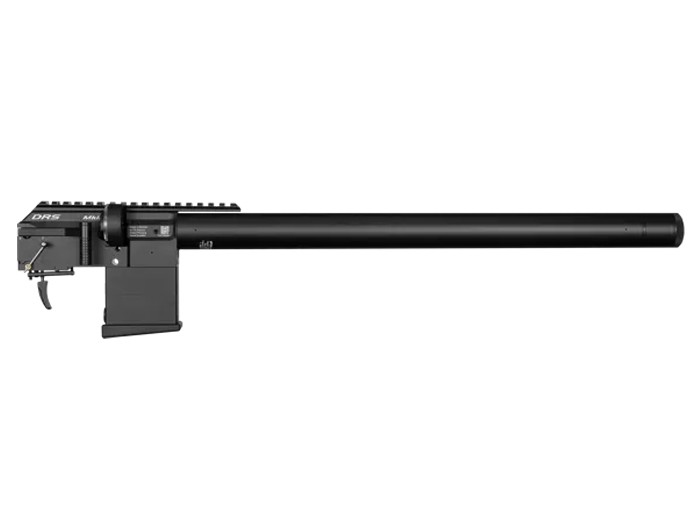
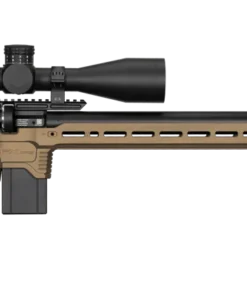
Crafted by FX Airguns in Sweden, the FX DRS MKII System elevates pre-charged pneumatic (PCP) air rifle performance through refined engineering that prioritizes consistency, power, and user-friendly innovation. Designed for hunters, target shooters, competitors, and recreational enthusiasts of every skill level, this platform delivers a sleek over-the-barrel air reservoir that creates exceptional balance while maintaining a slim, traditional rifle profile.
The FX DRS MKII System is engineered so that enhanced airflow, an improved power plenum, and the Dynamic Block barrel inlet work together seamlessly. As a result, shot-to-shot consistency is maximized and higher power potential is unlocked across multiple configurations. Whether field use, range sessions, or precision competition is preferred, the FX DRS MKII System is positioned to meet diverse needs with inclusive adaptability.
At the heart of the FX DRS MKII System lies the revolutionary APB (Air Pressure Barrel) system. In this design, the air cylinder surrounds the barrel to form an extremely rigid structure without adding bulk. Furthermore, the interchangeable FX STX Superior liner system is retained, yet a critical improvement is introduced: liners can now be swapped without first degassing the rifle. Consequently, maintenance becomes faster, calibre changes grow simpler, and experimentation with pellets or heavy slugs is encouraged for every shooter.
Additionally, the power plenum has been enlarged and optimized (typically 25–35 cc or higher in tactical variants, with some models reaching 53 cc). Combined with the Dynamic Block barrel inlet, this delivers smoother regulated airflow and improved efficiency. The AMP MKII regulator is externally adjustable, allowing fine-tuning of pressure to match specific loads. Maximum fill pressure remains 230 bar, while air capacities range from compact integrated cylinders (approximately 155–310 cc) to high-capacity dual-reservoir tactical setups that can reach up to 740–760 cc when paired with carbon or alloy bottles.
A 30 MOA Picatinny rail is fitted as standard across the platform. Therefore long-range optics retain greater elevation adjustment, and extended-distance shooting is supported more effectively. Side-lever cocking remains smooth and rapid, while a fully adjustable two-stage trigger provides a crisp, customizable break. Silencer-ready ½-inch UNF threading is included, and low-profile magazines (or higher-capacity mega options on select models) ensure reliable feeding for pellets and slugs.
The FX DRS MKII System is offered in several thoughtfully developed variants so that personal preferences and shooting styles can be matched precisely:
Calibre options span .177, .20, .22, .25, and .30 (the latter primarily for FAC or higher-power markets). Sub-12 ft/lb versions remain widely available for regulated markets, while higher-energy configurations unlock greater down-range capability. Magazine capacities typically range from 16 rounds in .177 to 10 rounds in .30, depending on the exact setup.
Because the air reservoir is integrated around the barrel, overall length and weight stay manageable (many Classic models weigh around 2.2–2.5 kg unscoped). Balance is naturally improved, fatigue is reduced during extended sessions, and the rifle settles consistently into the shoulder. Moreover, the rigid APB structure minimises barrel harmonics, supporting the exceptional accuracy for which FX platforms are known.
In practical testing and user reports, shot-to-shot velocity variation is kept impressively low, often within single-digit feet-per-second spreads over multi-shot strings when the regulator is properly set. Power potential scales with barrel length and calibre: shorter Micro and Compact barrels excel in confined spaces or for pest control, while Sniper-length tubes maximise velocity and energy for longer ranges or heavier projectiles.
Transitioning between pellets and slugs is straightforward thanks to the swappable liners and adjustable hammer spring preload found on many models. In addition, the system’s modularity encourages future upgrades—whether carbon fibre air tubes, alternative liners, or accessory rails—so the FX DRS MKII System can evolve alongside the shooter’s developing skills and interests.
Inclusivity is built into the design philosophy. Beginners benefit from the forgiving balance and smooth operation, while experienced marksmen appreciate the external adjustability and competition-ready chassis options. Hunters value the quiet, efficient delivery and traditional lines that feel natural in the field. Target and PRS-style competitors gain from the rigid platforms, 30 MOA rails, and refined triggers that promote consistent results under pressure.
Furthermore, the platform’s Swedish engineering heritage ensures high-quality materials and attention to detail at price points that remain accessible relative to performance (Classic Synthetic models often start in the mid-to-high hundreds of pounds/dollars depending on market and specification). Reliability is supported by proven FX components such as the AMP MKII regulator and STX liner technology.
Ultimately, the FX DRS MKII System removes traditional airgun compromises. A tank-like appearance is avoided, bulk is minimised, and a true rifle-like experience is delivered without sacrificing power, shot count, or precision.
The FX DRS MKII System is more than an incremental update—it represents a thoughtfully refined platform that combines innovative APB barrel technology, expanded configurability, and user-centric improvements into one cohesive package. Whether a compact synthetic Classic for everyday fieldwork, a high-capacity Tactical bottle model for extended sessions, or a Pro chassis setup for serious competition is selected, outstanding performance is consistently provided.
Explore the available barrel lengths, calibres, and stock options today. Configure the FX DRS MKII System that best matches individual goals, then step onto the range or into the field with renewed confidence. Superior consistency, effortless handling, and genuine enjoyment await every shooter who chooses this advanced PCP platform.
Calibres, FAC Options, Power Output and Accessories for the FX DRS MKII System
The FX DRS MKII System is engineered with exceptional flexibility so that shooters of every background can select the ideal calibre, power level and supporting accessories. This thoughtful range of choices ensures the platform performs reliably whether it is used for informal target practice, pest control, hunting or competitive precision shooting. In the following sections the available calibres, FAC and non-FAC configurations, realistic power outputs and recommended accessories are examined in detail.
Five primary calibres are offered on the FX DRS MKII System, giving shooters genuine freedom to match projectile type and intended use.
Because the APB barrel system and interchangeable STX liners are standard, switching between pellet-optimised and heavy-slug liners can be completed quickly. Consequently, the same rifle can be adapted for different projectile weights and twist rates without the need to depressurise the air cylinder. Magazine capacities adjust accordingly: typically 16 rounds in .177, 14 in .22, 12 in .25 and 10 in .30, although higher-capacity mega magazines are available on selected Tactical and Pro models.
In the United Kingdom and certain other regulated markets the FX DRS MKII System is supplied in two distinct power classes. Non-FAC (sub-12 ft/lb) versions are limited to a maximum muzzle energy of approximately 11.5–11.8 ft/lbs so that they remain legal without a Firearms Certificate. These models are ideal for club shooting, pest control and everyday recreational use.
FAC-rated versions, by contrast, are released without the same energy restriction. Higher-power FAC models unlock significantly greater muzzle energies and are therefore better suited to longer-range hunting or competition where additional velocity and terminal performance are required. The same core architecture—AMP MKII regulator, improved power plenum and Dynamic Block inlet—is retained across both categories, so consistency and reliability are preserved regardless of the chosen power band. External regulator and hammer-spring adjustments allow fine tuning within each legal limit, ensuring that every shooter can optimise efficiency and shot-to-shot stability.
Power output on the FX DRS MKII System scales with calibre, barrel length and air capacity. In sub-12 ft/lb trim the rifle is carefully regulated to remain inside legal limits while still delivering excellent accuracy and a high shot count. Typical figures for regulated models fall between 10.8 and 11.8 ft/lbs across the smaller calibres.
When FAC permission is held, energy rises substantially. Approximate maximum figures observed across the platform include:
Longer Sniper-length barrels (700 mm) and larger plenums favour higher energy and improved efficiency with heavy slugs, while Compact and Micro barrels prioritise handling and velocity with lighter pellets. Shot counts vary according to configuration: a Classic Compact in .22 may deliver 60–90 regulated shots, whereas a high-capacity Tactical bottle model with dual reservoirs can exceed 150–200 shots in smaller calibres under favourable conditions. The externally adjustable AMP MKII regulator and power-adjuster wheel (on many Tactical variants) allow the shooter to balance velocity against shot count with precision.
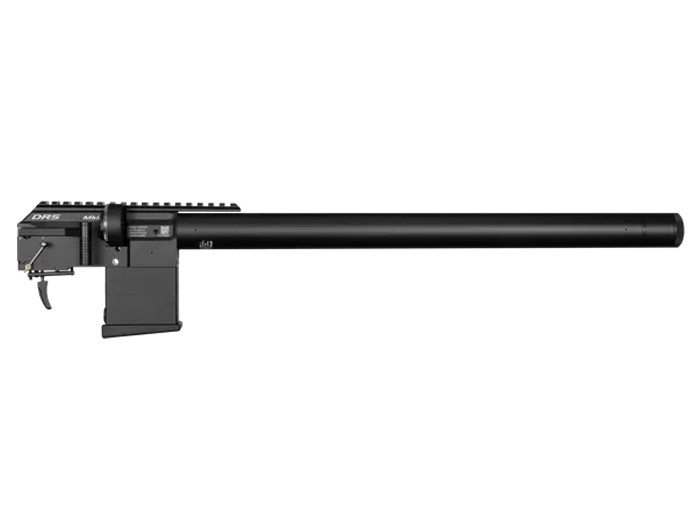
A comprehensive ecosystem of accessories has been developed to complement the FX DRS MKII System and to expand its capabilities further.
Essential items include additional magazines (both mini and mega formats) and the standard fill probe that mates with Foster-style quick-connect fittings. Because the muzzle is threaded ½ UNF, a wide range of moderators and silencers can be fitted to reduce report and improve neighbour-friendly operation.
Optics are supported by the full-length 30 MOA Picatinny rail that is fitted as standard; this inclined rail maximises elevation adjustment for long-range work. ARCA-Swiss rails and extensive M-LOK slots on Tactical and Pro models accept bipods, tripods, lights, lasers and other modular accessories without the need for additional adapters.
Further upgrades include carbon-fibre air-tube conversions that raise fill pressure and capacity on certain Classic models, alternative STX liners optimised for heavy slugs, and external pressure gauges for more precise monitoring of reservoir and regulated pressures. Hard cases are frequently supplied with laminate-stock variants and provide secure transport. Adjustable cheek pieces, butt pads and AR-style stocks already present on many configurations can be further refined with aftermarket furniture to achieve a perfect fit for shooters of different physical builds.
Collectively these accessories allow the FX DRS MKII System to be personalised for hunting, target competition or pure recreational enjoyment. Every component is designed to integrate cleanly with the core platform so that balance, reliability and ease of use are never compromised.
By carefully selecting the appropriate calibre, power rating and supporting accessories, any shooter can configure the FX DRS MKII System to deliver outstanding performance tailored exactly to their requirements. The result is a highly adaptable, future-proof PCP platform that continues to reward its owner for many years of accurate and enjoyable shooting.
FX Airguns is widely recognized for producing advanced pre-charged pneumatic rifles designed around accuracy, adjustability, modular construction, and consistent ballistic performance. Founded in Sweden, FX Airguns Sweden has developed an international reputation among target shooters, competitive marksmen, pest-control professionals, and experienced airgun enthusiasts. Customers searching for FX Airguns Sverige, fxairguns, FX USA, or FX Airguns USA are generally looking for premium rifles supported by sophisticated regulator systems, adjustable power controls, interchangeable barrel technology, and precision manufacturing.
The modern FX air rifle is considerably more advanced than a conventional spring-powered pellet gun. Instead of relying on a mechanical spring, an FX PCP uses compressed air stored inside a cylinder or carbon-fibre bottle. This system allows a PCP air rifle to deliver smoother firing cycles, reduced recoil, and more consistent pellet velocities. These qualities make PCP airguns popular with every serious air gun shooter who values repeatable accuracy.
Although terms such as air gun, air gun rifle, pellet guns, PCP guns, rifle PCP, and precision air rifle are sometimes used interchangeably, they can refer to different platforms and power systems. Buyers should also distinguish between an air rifle and air pistol, especially when comparing local ownership requirements, permitted power limits, shooting applications, and storage regulations. Search terms such as luftgevær, 4.5mm air gun, FX FAC, and airuns may also reflect regional terminology, calibre preferences, or legal classifications.
The FX Impact M4 is one of the flagship models in the current FX product family. It builds upon the established architecture of the FX Impact, FX Impact M3, and earlier FX impacts, while introducing refinements intended to improve durability, ergonomics, tuning stability, and shooting consistency. The rifle’s bullpup configuration keeps its overall length manageable without sacrificing barrel length.
Shooters comparing an impact M4 air rifle, FX M4, impact M4, FX M4 Impact, FX Impact M4 for sale, or f x impact will commonly focus on barrel configuration, calibre, bottle capacity, regulator settings, stock design, rail space, and intended shooting distance. The impact M4 500mm configuration offers a compact balance between manoeuvrability and performance, while longer barrel options may provide additional efficiency when matched with the correct projectile and tune.
A technical discussion of the Impact M4 ballistic coefficient must account for the selected projectile rather than the rifle alone. Ballistic coefficient varies according to pellet or slug shape, calibre, weight, velocity, stability, and atmospheric conditions. Therefore, an advertised ballistic coefficient should not be interpreted as a permanent characteristic of the rifle. The barrel, liner, tune, and selected FX pellets all influence the resulting trajectory and retained energy.
The FX Impact air rifle provides extensive adjustment potential, but tuning should be approached methodically. Randomly changing regulator pressure, hammer settings, valve controls, and projectile weight can reduce efficiency or produce unstable velocities. A reliable FX chronograph or FX chrono can help measure shot-to-shot consistency, average velocity, extreme spread, and standard deviation. These readings allow the shooter to evaluate performance without relying entirely on sound, recoil sensation, or visual impact.
The FX Impact M3 remains an important platform for shooters who want a proven, highly adjustable PCP rifle. Searches for FX Impact M3 air rifle, FX M3, FX M3 airgun, impact FX, or FX Impact M3 .22cal air rifle usually relate to calibre selection, tuning capability, barrel length, accessories, and upgrade compatibility.
An FX Impact M3 .22cal air rifle. 600mm barrel configuration can be suitable for target shooting and regulated pest-control applications where local laws permit. The longer barrel can support efficient use of compressed air and may accommodate a broader range of projectile weights. However, accuracy still depends on proper ammunition selection, consistent fill pressure, a stable tune, and correct shooting technique.
The FX Impact M3 .22cal air rifle should not automatically be operated at its highest possible power. The best setting is the one that delivers stable velocity, reliable accuracy, suitable energy, and good air efficiency for the intended projectile. This principle applies to the FX M3, FX Impact, and FX Impact M4 alike.
The FX DRS series takes a different approach from the bottle-forward bullpup design of the Impact. It uses a more traditional rifle profile while integrating the air reservoir into the barrel-shroud area. This produces a clean appearance and familiar handling characteristics.
The FX DRS Tactical is intended for shooters who prefer extensive rail space, adjustable furniture, and a modern tactical layout. Searches for DRS Tactical, FX tactical, or FX DRS air rifle commonly come from buyers who want flexibility when installing a scope, bipod, rear support, sling, or other compatible accessories.
The FX DRS Classic offers more traditional styling, making it attractive to shooters who appreciate the handling and visual character of a conventional sporting rifle. The FX DRS Pro and DRS Pro are oriented toward precision shooting, where stock adjustability, stability, repeatable positioning, and optic mounting are especially important. Buyers comparing FX DRS, FX DRS Tactical, FX DRS Classic, and FX DRS Pro should consider the shooting environment rather than selecting solely by appearance.
The FX Leopard is designed as a high-performance PCP platform with a distinctive reservoir arrangement and an emphasis on efficient air storage. Interest in the FX Leopard airgun, FX Leopard air rifle, leopard gun, and leopard tube reflects growing demand for rifles that combine high capacity, modern ergonomics, and flexible barrel technology.
Customers researching FX Leopard .22 PCP specs should verify the precise configuration offered by the seller. Specifications may vary by market, calibre, barrel length, power classification, stock arrangement, and supplied accessories. The term FX Leopard should therefore be supported by a complete product specification rather than a generic description.
An FX Leopard air rifle may appeal to shooters who want a technically advanced platform for target work, competition, or lawful field use. However, the correct projectile, fill equipment, optic, and tune remain essential to obtaining reliable results.
The FX Panthera, sometimes searched as FXPanthera, is strongly associated with precision-oriented slug shooting and long-range airgun competition. Its chassis-based layout supports a stable shooting position, extensive accessory mounting, and refined balance. The rifle is particularly relevant to shooters who prioritize external ballistics, projectile stability, and consistent long-range performance.
The FX Dynamic, FX Dynamics, and similar search variations relate to another performance-focused FX platform built around modern chassis ergonomics and high-capacity air storage. Both the FX Panthera and FX Dynamic are more specialized than a basic recreational pellet gun. They are designed for experienced users who understand projectile selection, regulator management, chronograph testing, and optic setup.
The phrase FX air is sometimes used broadly to describe these pneumatic platforms, while air FX may appear in less formal searches. Regardless of terminology, compressed-air quality, moisture control, correct fill pressure, and manufacturer-approved maintenance procedures remain important.
The FX King combines premium sporting-rifle styling with modern FX airgun technology. It is suitable for shooters who want an elegant stock design without abandoning regulated PCP performance, barrel adaptability, and precise control.
The FX Crown remains another respected sporting platform. Search variations include crown FX, FX Crown MK2, FX Crown MKII, and the frequently mistyped FX Crown MKll. The Crown family is known for blending traditional rifle ergonomics with the adjustability associated with premium FX air rifles.
When comparing the FX Crown MKII with newer FX models, buyers should consider balance, stock material, air capacity, tuning controls, barrel compatibility, and personal shooting style. The newest model is not always the best choice for every user. A properly configured Crown may be more appropriate than a tactical chassis rifle for shooters who prefer a conventional shoulder position.
The FX Wildcat is known for its compact bullpup layout. The FX Wildcat MK3 develops this platform further with regulated performance and practical handling. Its compact form can be useful where manoeuvrability matters, although the shooter must still observe all safe-direction and backstop requirements.
The FX Maverick is recognized for high air capacity, dual-regulator architecture, and extensive adjustment. It is commonly selected by shooters who want a balance between power potential, shot count, and modularity.
The FX Dreamline is one of the most versatile lines in the FX catalogue. The FX Dreamline Classic offers traditional rifle ergonomics, while other Dreamline configurations can provide different stocks, bottles, tubes, or chassis arrangements. This modularity has helped the Dreamline become a practical introduction to premium FX airguns.
Alongside FX products, Taipan rifles attract attention from shooters who value compact designs, robust construction, and consistent regulated performance. The Taipan Slash is a modern bullpup-style PCP platform available in configurations designed for accuracy, manoeuvrability, and practical handling.
Searches for Taipan Slash airgun, Taipan Slash Tactical, and repeated variations of Taipan Slash commonly relate to stock configuration, barrel length, calibre, magazine capacity, regulator performance, and accessory rails. The Taipan Slash Tactical is particularly relevant to users who prefer a modern stock system and adaptable mounting options.
The Taipan Veteran established a strong reputation for mechanical reliability and accuracy. The Taipan Veteran 2 builds upon that foundation with updated ergonomics and design refinements. Shooters may also encounter the term Taipan Black, which can refer to a finish, model variation, or retailer-specific product description. The exact specification should always be confirmed before purchase.
A high-quality optic is essential when the rifle is intended for precision target shooting. Buyers searching for Athlon scopes for sale often compare magnification range, reticle design, focal-plane configuration, turret adjustment, parallax range, weight, and optical clarity.
The Athlon Argos BTR Gen2 is frequently considered for PCP rifles because it offers practical adjustment features and configurations suitable for precision shooting. The correct model should be matched to the shooter’s range, target size, projectile trajectory, and mounting system.
A Athlon Talos spotting scope review can also help buyers understand how a separate spotting scope supports target observation. A spotting scope allows the shooter to inspect groups and impacts without repeatedly walking to the target. However, optical quality, tripod stability, magnification, and atmospheric conditions all affect visibility.
The Athlon Midas Beam red dot provides a different aiming solution. A red-dot sight is generally better suited to rapid target acquisition and shorter-range shooting than detailed long-range group evaluation. Choosing between a magnified optic and red dot depends on the rifle’s intended purpose.
Websites such as guns.com and Classic Firearms may appear in general firearm and airgun-related searches, but inventory, regulations, delivery restrictions, and product categories vary significantly by region. A listing on a major platform does not automatically mean a particular air rifle can legally be purchased, imported, owned, or used in every location.
The phrase FX Outdoors may also appear in searches connected to outdoor equipment, FX products, dealers, or general shooting activities. Buyers should confirm that they are dealing with an authorized or reputable seller and that the exact product description matches the item being supplied.
A buyer comparing the FX Impact M4, FX Impact M3, FX DRS, FX Leopard, FX Panthera, FX Dynamic, FX Wildcat, FX Maverick, FX Dreamline, FX King, FX Crown, Taipan Slash, and Taipan Veteran 2 should begin by identifying the intended application.
For compact handling, a bullpup such as the FX Wildcat MK3, Impact, or Taipan platform may be appropriate. For a traditional shooting position, the FX DRS Classic, FX Dreamline Classic, Crown, or King may be more comfortable. For competition-oriented slug shooting, the Panthera, Dynamic, or DRS Pro may provide the required chassis stability and accessory support.
Calibre is equally important. A 4.5mm air gun may provide efficient air use and a relatively flat trajectory at suitable distances, while larger calibres may offer increased projectile mass. The correct choice depends on local law, target type, shooting distance, permitted energy, and safe backstop construction.
Whether the search begins with FX Airguns Sverige, FX Airguns Sweden, FX Airguns USA, FX air rifles, FX air rifle, FX Impact M4 for sale, FX Leopard airgun, or Taipan Slash, buyers should verify the rifle’s complete technical specification and legal classification. Safe handling, secure storage, responsible transport, suitable eye protection, and shooting only in authorized locations are essential requirements for every airgun owner.
Frequently Asked Questions about the FX DRS MKII System
What makes this platform different from earlier models? The latest generation introduces a completely redesigned air-pressure barrel arrangement that surrounds the liner with the main air reservoir. This creates outstanding rigidity while preserving the slim, traditional profile that many shooters prefer. In addition, the liner can now be removed and replaced without first emptying the air cylinder, which greatly simplifies maintenance and calibre changes. Larger plenums, improved airflow paths and a standard 30 MOA Picatinny rail further enhance consistency and long-range capability. As a result, both accuracy and usability have been elevated across every configuration.
Which calibres are available? Five primary options are offered so that shooters can match the rifle precisely to their intended use. The smallest calibre provides high velocity and a flat trajectory that suits formal target work and lighter pest species. A mid-size option popular in regulated markets balances speed with usable energy. The classic all-round choice remains excellent for general hunting and field shooting. Larger diameters deliver increased terminal performance, while the biggest option is reserved mainly for higher-power versions and longer-range applications. Because the barrel liner is interchangeable, the same rifle can be adapted for different projectile weights and styles with minimal effort.
What is the difference between standard and higher-power versions? In markets with strict energy limits the rifle is supplied in a regulated configuration that stays comfortably inside the legal maximum. These versions are ideal for club use, pest control and recreational shooting where a certificate is not required. Higher-power versions are released without the same restriction and unlock substantially greater muzzle energies. The core mechanical design remains identical in both cases, so the smooth side-lever action, adjustable trigger and external regulator controls function in exactly the same way. Shooters simply select the version that matches local regulations and their preferred level of performance.
How much power can be expected from each configuration? Regulated models are carefully set to deliver consistent energy within legal limits while still producing excellent accuracy and a healthy shot count. When higher-power permission is held, energy scales with calibre and barrel length. Smaller calibres reach moderate but highly usable figures, while larger ones can produce significant terminal performance suitable for extended ranges or tougher quarry. Longer barrels and larger air reservoirs favour higher energy and improved efficiency with heavier projectiles. External adjustments allow each rifle to be fine-tuned so that velocity and shot count can be balanced according to individual preference.
What barrel lengths are offered and how do they affect handling? Four distinct lengths are available. The shortest option prioritises compact dimensions and quick handling in confined spaces. The next size strikes an excellent balance between manoeuvrability and velocity. The standard length provides a versatile all-round package, while the longest version maximises dwell time and energy for long-range or heavy-projectile work. Because the air reservoir is wrapped around the barrel, overall balance remains favourable regardless of length. Shooters can therefore choose the configuration that best matches their typical shooting environment without sacrificing the slim profile that characterises the platform.
How many shots can be expected from a full fill? Shot count depends on calibre, barrel length, air capacity and the chosen power setting. Compact models with smaller integrated reservoirs typically deliver several dozen consistent shots in the most common calibres. Standard and longer barrels increase capacity and therefore raise the number of usable shots. High-capacity tactical versions that combine the barrel reservoir with a rear-mounted bottle can produce well over one hundred regulated shots in smaller calibres under favourable conditions. The externally adjustable regulator makes it straightforward to trade a little velocity for a higher shot count when extended sessions are planned.
Can the rifle shoot both pellets and slugs? Yes. The interchangeable liner system is designed to accommodate both conventional pellets and heavier modern slugs. Standard liners are optimised for lighter projectiles, while alternative heavy-slug liners feature different twist rates and choke profiles. Changing from one to the other is now a quick process that does not require the air cylinder to be emptied first. This flexibility allows the same rifle to be used for precision target work one day and for higher-energy field applications the next.
What accessories are recommended to get the most from the platform? A quality moderator is one of the first additions many shooters make, as the muzzle is already threaded for standard fittings. Extra magazines, both the compact style and higher-capacity versions, prove invaluable for longer sessions. A sturdy bipod or ARCA-compatible support attaches easily to the extensive rail systems found on tactical and competition models. Optics benefit from the inclined Picatinny rail that preserves elevation adjustment at distance. Additional useful items include spare fill probes, external pressure gauges, alternative liners and protective hard cases. All of these accessories integrate cleanly without upsetting the rifle’s natural balance.
Is the trigger adjustable and how does the cocking system feel? A fully adjustable two-stage trigger is fitted as standard. Both the first and second stages can be set to individual preference, and on many models the blade position itself can be altered for reach and angle. The side-lever cocking action is deliberately smooth and requires only moderate effort, allowing rapid follow-up shots without breaking the shooting position. Together these features create a refined shooting experience that remains comfortable even during extended practice or competition.
How is the rifle filled and what pressure is recommended? Filling is performed via a probe that connects to standard high-pressure air sources using a quick-connect fitting. Maximum recommended fill pressure is 230 bar on standard aluminium reservoirs. Some upgraded carbon-fibre tubes can accept a higher pressure, but the factory setting should always be observed unless the specific upgrade is fitted. A clear pressure gauge is positioned for easy viewing so that the remaining air supply can be monitored at a glance. Regular inspection of the fill probe and O-rings helps maintain reliable sealing over time.
Who is this platform best suited for? The design is deliberately inclusive. Newcomers appreciate the balanced handling, smooth operation and forgiving accuracy. Experienced hunters value the quiet delivery, traditional lines and configurable power. Target shooters and competitors benefit from the rigid chassis options, precise trigger and long-range optics capability. Because multiple stock styles, barrel lengths and power levels are available, almost any shooting discipline can be accommodated. The platform grows with the shooter rather than limiting future development.
How easy is routine maintenance? Day-to-day care is straightforward. The exterior can be wiped clean after use and the bore protected with a light oil when the rifle will be stored for extended periods. The most significant improvement is the ability to remove and inspect or replace the barrel liner without first emptying the air reservoir. This change alone reduces downtime and encourages more frequent cleaning or experimentation with different liners. Periodic checks of the regulator settings, trigger adjustment and fill-probe seals keep the rifle performing at its best for many seasons.
Are there differences between the classic, tactical and competition-oriented versions? Yes. The classic variants emphasise traditional aesthetics and familiar handling with synthetic, walnut or laminate stocks. Tactical models add extensive mounting rails, modular stocks and higher air capacity through optional rear bottles. Competition-focused versions incorporate a precision chassis developed in collaboration with a leading chassis manufacturer, delivering maximum rigidity and positional stability. All three families share the same core barrel system, regulator and trigger technology, so the fundamental shooting experience remains consistent while the surrounding furniture adapts to different priorities.
What should be considered when choosing a configuration? Begin by confirming the legal power limit that applies in the intended shooting area. Next, consider typical shooting distances and preferred projectile types so that calibre and barrel length can be matched accordingly. Stock style should reflect whether traditional handling, modular accessory mounting or competition ergonomics is most important. Finally, think about how often the rifle will be transported or used in confined spaces, as this influences the value of shorter barrel options. Taking these factors into account ensures the selected configuration delivers maximum enjoyment and effectiveness from the first outing.
Is the platform future-proof? The modular design and wide range of official and aftermarket upgrades mean the rifle can evolve alongside changing needs. Alternative liners, higher-capacity air tubes, additional rail sections and refined stocks are readily available. Because the fundamental mechanical layout is shared across the entire range, skills and accessories developed on one model transfer easily to another. This long-term adaptability makes the platform a sound investment for shooters who expect their equipment to remain relevant for many years.
These answers address the most common questions that arise when considering the platform. Careful selection of calibre, power level, barrel length and accessories allows every shooter to create a highly personalised and effective air rifle that continues to perform reliably season after season.
Practical Use Scenarios
The true measure of any air rifle is how it performs when taken beyond the workshop and into real-world conditions. Across open farmland, dense woodland edges, formal competition ranges and quiet back-garden setups, the platform consistently demonstrates why its combination of balance, adjustability and modular design matters. The following scenarios illustrate how different configurations, power settings and accessories come together to deliver reliable results for shooters of varying experience levels and interests.
A soft dawn light filters across a patchwork of cereal fields and hedgerows. The shooter moves quietly along a field margin, the rifle held comfortably in the crook of the arm. Because the air reservoir is wrapped tightly around the barrel, the overall profile remains slim and the point of balance sits naturally forward of the trigger hand. This allows the rifle to be carried for extended periods without the fatigue that bulkier designs often produce.
When a rabbit appears at sixty metres along the base of a bank, the side-lever is cycled smoothly and the low-profile magazine presents the next pellet without fuss. A compact moderator fitted to the threaded muzzle keeps the report discreet, preserving both the shooter’s hearing and the surrounding quiet. The adjustable two-stage trigger breaks cleanly, and the pellet strikes true. After the shot the pressure gauge is checked at a glance; the regulator has maintained consistent velocity, so the next opportunity can be taken with confidence.
Throughout the morning several more rabbits and a pair of pigeons are accounted for. The regulated energy setting keeps every shot well within legal limits for the area, while the generous shot count from the integrated reservoir means there is no need to return to the vehicle for a refill. When a heavier projectile is preferred for a longer shot across open ground, the liner can be exchanged in a few minutes without emptying the air supply. This flexibility turns a single rifle into a versatile tool capable of handling both close-range work and the occasional more distant opportunity.
Inside a well-lit indoor range the same platform takes on a different character. The shooter settles into a supported position on the bench, the adjustable stock and cheek piece dialled in for perfect eye alignment with the optic. The 30 MOA rail has already allowed the scope to be zeroed with plenty of elevation remaining for the longer distances that will be used later in the session.
A string of ten shots is fired at fifty metres. The side-lever cycles with minimal disturbance to the shooting position, and the shot-to-shot velocity remains tightly grouped thanks to the refined regulator and enlarged plenum. After the group is examined, a small external adjustment is made to the hammer spring so that the next series can be run at a slightly different power level. The ability to fine-tune without tools or disassembly keeps the session flowing smoothly.
Later the same rifle is moved to an outdoor club range where positional stages are required. Here a tactical variant fitted with an AR-style stock and ARCA rail comes into its own. A bipod locks securely into place, and the rigid chassis-style construction helps the rifle settle quickly into awkward kneeling and sitting positions. The modular rail system accepts a rear bag or monopod without additional adapters, allowing rapid transitions between stages. Shooters of different heights and builds find the adjustable furniture accommodates them equally well, reinforcing the inclusive nature of the design.
A weekend field-target course winds through mixed woodland and open clearings. Targets are placed at distances ranging from fifteen to fifty-five metres, some partially obscured by branches or set against difficult backgrounds. The shooter carries a classic synthetic version with a mid-length barrel. The soft-touch stock remains comfortable even after several hours, and the overall weight never becomes a burden during the walk between lanes.
At each lane the rifle is rested on a small bean bag or the natural contours of a fallen log. The slim profile allows the barrel to clear surrounding vegetation more easily than bulkier designs. When a particularly tricky long-distance target appears, the optic’s elevation turret is adjusted using the generous range afforded by the inclined rail. The consistent regulator performance means that once the correct hold-over is established, subsequent shots land predictably.
Midway through the course the shooter decides to experiment with a heavier projectile for the longer lanes. The liner is swapped on the spot in under five minutes, the air cylinder remaining fully charged throughout. This practical advantage keeps the momentum of the competition intact and demonstrates how the platform supports both serious scoring and on-the-fly experimentation. By the end of the day the shot count has remained comfortably high, and the rifle still has air in reserve for a few extra practice shots on the zeroing range.
On a private estate where higher energy levels are authorised, the platform is configured with a longer barrel and a larger rear-mounted bottle. The combined air capacity supports an extended session of precision work at distances approaching one hundred metres and beyond. A heavy-slug liner is fitted, and the regulator is set to deliver the higher power the heavier projectiles require.m4 gun
The shooter settles behind a low mound, the bipod legs adjusted for a solid rest and the rear of the stock supported by a small bag. The match-grade trigger characteristics of the competition-oriented chassis version allow extremely fine control over the break. Each shot is deliberate; the rigid structure minimises any residual movement, and the balanced centre of gravity helps the rifle settle quickly after recoil.
Throughout the morning the pressure gauges are monitored, yet the large total air volume means interruptions for refilling remain rare. When the wind picks up, the ability to make rapid external adjustments to the power curve helps maintain point of impact. Accessories such as a quality moderator, a high-magnification optic and a reliable bipod work together seamlessly, turning the rifle into a stable and highly controllable long-range tool. Shooters who prefer a more traditional stock can achieve similar results with a classic laminate version fitted with after-market rails, showing that the core performance is not limited to any single furniture style.
Not every outing needs to be a formal hunt or competition. Many owners simply enjoy the quiet satisfaction of accurate shooting in a safe back-garden or local permission. Here the platform shines through its approachable nature. A compact synthetic model with a shorter barrel is light enough for younger or less experienced shooters to handle confidently, while the adjustable trigger and smooth cocking action encourage good habits from the outset.
A simple steel spinner or paper target at twenty-five metres becomes the focus of an hour’s practice. The consistent velocity means that once the zero is established, the shooter can concentrate on breathing, trigger control and follow-through rather than compensating for erratic performance. Extra magazines keep the session flowing, and a compact moderator keeps the noise neighbour-friendly. When curiosity prompts a change of projectile, the liner can be exchanged without the inconvenience of a full depressurisation cycle.
Over successive evenings the same rifle supports progressive skill development. Groups tighten, distances increase, and confidence grows. Because the platform can later be upgraded with a different stock, a longer barrel or a higher-capacity air system, the investment continues to reward the owner as abilities and ambitions expand.
Seasonal changes bring different practical demands. In winter the soft-touch synthetic stock remains comfortable even with gloved hands, while the reliable regulator continues to deliver consistent performance in colder temperatures. Spring and summer sessions often involve longer walks and more varied terrain; the slim profile and balanced weight distribution reduce fatigue during these extended outings. Autumn hunting days may require a quick change from lighter pellets to heavier projectiles as quarry and distances shift; the tool-free liner exchange makes this transition straightforward in the field.
Accessories further refine the experience for each season. A bipod that folds flat against the forend is ideal when the rifle must be carried through dense cover. A larger rear bottle extends shot count for all-day summer pest control. An adjustable cheek piece ensures consistent eye alignment when heavier winter clothing alters the shooter’s head position. In every case the modular design absorbs these changes without requiring a completely different rifle.
Across these varied situations the same fundamental strengths appear repeatedly. The slim over-barrel reservoir keeps the rifle pointable and comfortable to carry. The refined regulator and enlarged plenum maintain velocity consistency so that the shooter can trust each shot. External adjustability allows rapid adaptation to different distances, projectiles and conditions. Modular mounting systems accept the accessories that turn a good rifle into a highly personalised tool.
Whether the day involves early-morning fieldwork, a formal competition card, a relaxed practice session or a long-range precision challenge, the platform responds with the same combination of refinement and practicality. Shooters of different physical builds, experience levels and shooting preferences find configurations that suit them. The result is not merely a collection of technical features, but a rifle that remains a pleasure to use and a reliable partner across the full spectrum of real-world airgun activities.
| Select Option | 500mm, 600mm, 700mm |
|---|---|
| Select Caliber | .177, .22, .25, .30 |
Reviews
There are no reviews yet.