FX Dreamline Standard Bullpup Air Rifle – Precision Engineering, Compact Design, and Advanced PCP Performance
FX Dreamline Standard Bullpup Air Rifle – A Modern Approach to Compact Airgun Engineering
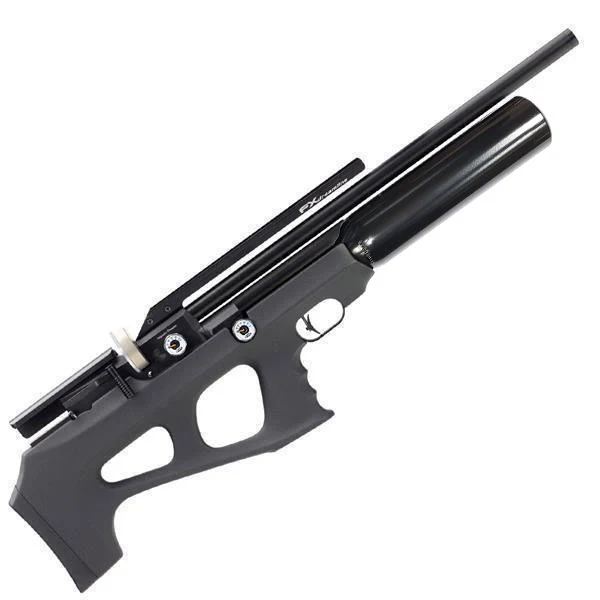
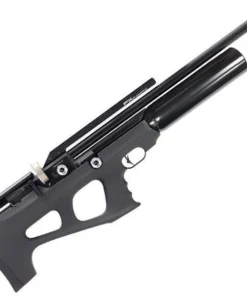
The FX Dreamline Standard Bullpup Air Rifle combines Swedish airgun engineering, modular construction, and a distinctive bullpup configuration in a compact pre-charged pneumatic (PCP) platform. Developed by FX Airguns, this model belongs to the versatile Dreamline family, which is recognized for its interchangeable barrel system, regulated air delivery, and adaptable design.
Unlike conventional sporting rifles, the bullpup configuration positions the action farther toward the rear of the stock. Consequently, a shorter overall profile is achieved without requiring the same reduction in barrel length. This arrangement creates a distinctive balance between compact dimensions and the engineering features associated with the larger Dreamline platform.
Furthermore, the rifle incorporates the FX Smooth Twist X barrel system, an adjustable match-grade trigger, and an AMP pressure regulator. Together, these components illustrate the emphasis placed on consistency, mechanical refinement, and adaptability throughout the Dreamline series.
Compact Bullpup Configuration and Ergonomic Design
A streamlined profile is created through the carefully arranged bullpup architecture. Because the action is positioned behind the trigger area, the overall length is reduced while the barrel remains integrated into a relatively compact chassis.
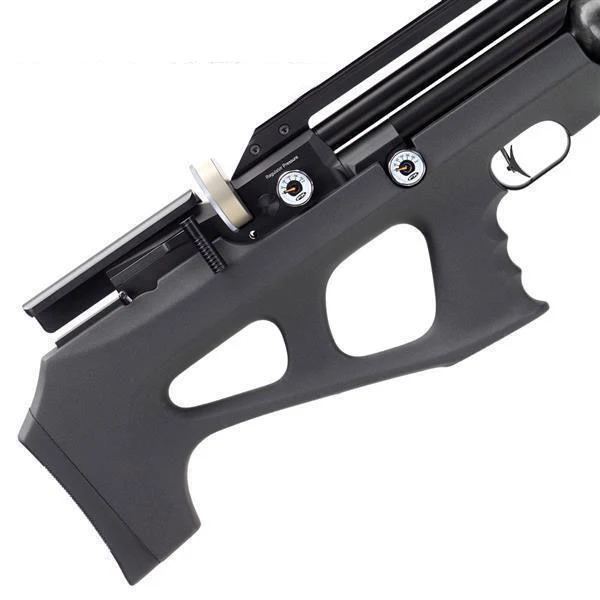
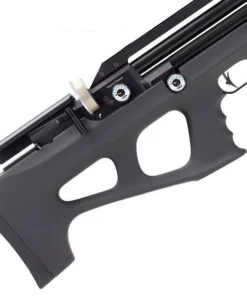
Additionally, a synthetic stock is used to provide a practical combination of durability, weather resistance, and manageable weight. Its soft-touch surface contributes to a distinctive exterior finish, while the sculpted configuration accommodates the rifle’s rearward action placement.
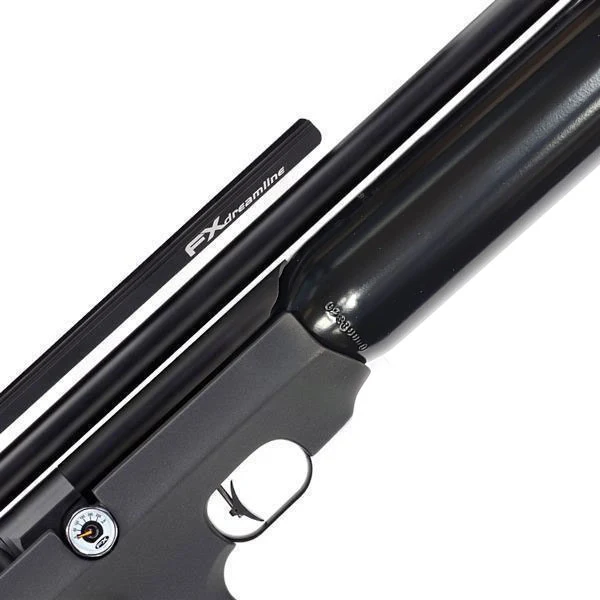
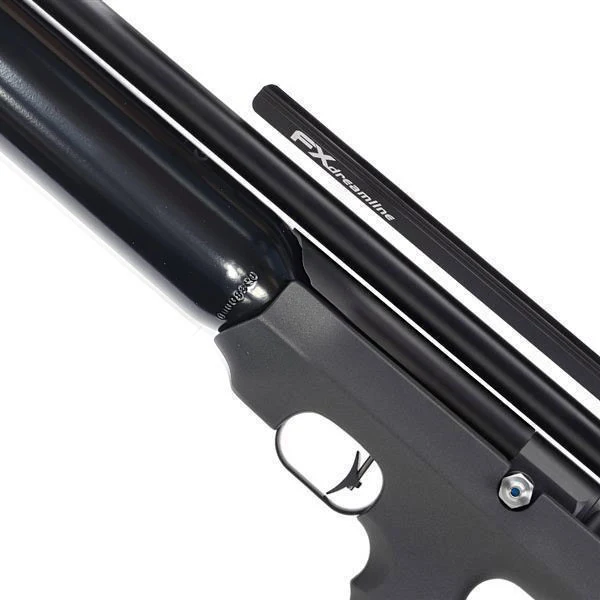
The standard model is differentiated from the bottle-equipped variants through its conventional cylindrical air reservoir. As a result, the original silhouette of the Dreamline bullpup is maintained.
Several characteristics define the exterior design:
- Bullpup configuration: A shortened overall layout with the action positioned toward the rear.
- Synthetic stock: A durable construction with a soft-touch finish.
- Integrated air reservoir: A conventional air cylinder rather than a bottle-style arrangement.
- Sidelever action: A mechanically operated system associated with the Dreamline platform.
- Compact proportions: A distinctive configuration compared with traditional sporting air rifles.
- Modular construction: Shared Dreamline engineering that supports compatible factory-approved components.
FX Smooth Twist X Barrel Technology
An important element of the FX Dreamline Standard Bullpup Air Rifle is its FX Smooth Twist X (STX) barrel system.
Rather than relying exclusively on a permanently fixed barrel arrangement, the STX architecture incorporates a replaceable internal liner. This system forms part of FX Airguns’ broader modular engineering approach.
Moreover, the barrel is designed as a match-grade, free-floating component. This configuration reflects the manufacturer’s attention to mechanical consistency and barrel construction.
Different barrel lengths have been offered across the original standard bullpup range, depending on calibre. Accordingly, the dimensions of a particular rifle should be checked against its factory specification.
The interchangeable liner system also distinguishes the Dreamline family from many conventional PCP air rifles. Nevertheless, any component replacement or technical servicing should follow manufacturer guidance and be performed by a qualified professional.
Advanced PCP Technology and Internal Engineering
AMP Regulator and Consistent Air Delivery
A regulated compressed-air system forms the foundation of the Dreamline’s pneumatic operation.
The FX Adjustable Match Precision (AMP) regulator is incorporated to manage the delivery of compressed air within the operating system. Consequently, the rifle’s engineering is centered on regulated pressure rather than relying solely on the changing pressure inside its main reservoir.
Furthermore, the standard air-cylinder arrangement maintains the compact visual profile associated with this model.
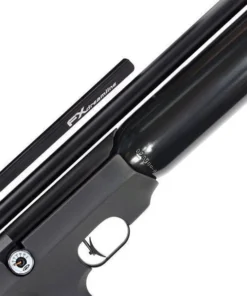
Separate pressure gauges are incorporated into the original design, allowing reservoir and regulator pressure information to be identified.
Although the regulator is externally adjustable by design, pressure-system changes require appropriate technical knowledge. Factory specifications, legal energy limits, and manufacturer procedures must therefore be respected.
Refined Sidelever Action and Magazine System
A sidelever cocking mechanism is incorporated into the Dreamline bullpup platform.
Through this mechanical arrangement, the rifle’s removable rotary magazine system is operated. The design follows the same general engineering philosophy found elsewhere in the FX Dreamline family.
Additionally, magazine capacity varies according to calibre. The original manufacturer specifications identify capacities of 22 rounds for .177, 18 for .22, 16 for .25, and 13 for .30 versions.
These figures describe the original configurations and should be verified against the exact production variant.
Adjustable Match-Grade Trigger
The trigger assembly is another defining component of the platform.
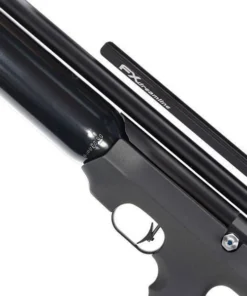
An adjustable match-grade trigger is supplied as part of the Dreamline architecture. Its construction reflects the manufacturer’s focus on mechanical refinement and consistent trigger characteristics.
Furthermore, the trigger mechanism is integrated into the bullpup configuration, where the action is positioned behind the conventional trigger location.
Because the arrangement differs from a traditional rifle layout, appropriate familiarity with the manufacturer’s operating instructions is important.
FX Dreamline Standard Bullpup Air Rifle – Highlighted Product Features
The following features summarize the original design and engineering characteristics of this model:
- Manufacturer: FX Airguns, Sweden
- Platform: FX Dreamline
- Model: Standard Bullpup
- Power system: Pre-charged pneumatic (PCP)
- Configuration: Compact bullpup layout
- Stock material: Synthetic with soft-touch finish
- Barrel technology: FX Smooth Twist X
- Barrel construction: Match-grade, free-floating design
- Regulation: FX AMP pressure regulator
- Cocking mechanism: Sidelever
- Magazine: Removable rotary magazine
- Trigger: Adjustable match-grade assembly
- Safety: Manual safety mechanism
- Pressure monitoring: Separate reservoir and regulator gauges
- Air filling: Quick-charge system
- Modular platform: Compatible with designated Dreamline components
Specifications may vary by calibre, production year, destination market, and particular variant.
Modular Construction and Long-Term Engineering Versatility
A Platform Designed Around Interchangeable Components
Modularity represents one of the central engineering concepts behind the FX Dreamline family.
Instead of treating every rifle configuration as a completely separate mechanical platform, shared internal architecture is used across several Dreamline models. This approach contributes to the product family’s distinctive identity.
For example, the Dreamline series includes traditional sporter configurations alongside bullpup and other chassis arrangements. Although their outward appearances differ considerably, common design principles are retained.
Furthermore, the interchangeable barrel-liner architecture illustrates how the platform was conceived around replaceable components rather than an entirely fixed construction.
Compatibility is not universal, however. Each component must be verified for the specific model and production generation before professional servicing or replacement.
Construction Quality and Component Integration
The rifle’s synthetic exterior, regulated pneumatic mechanism, and precision-machined internal components are brought together within a compact assembly.
As a result, the original standard bullpup presents a distinctive combination of modern materials and established mechanical principles.
Attention is also directed toward the relationship between the action, air reservoir, barrel assembly, and stock. Each component contributes to the model’s recognizable layout.
In addition, the relatively compact external dimensions provide an important distinction from longer conventional sporting designs.
Rather than changing the fundamental operation of the PCP system, the bullpup construction reorganizes the placement of its principal components.
Maintenance, Handling, and Responsible Ownership
Preserving Mechanical Condition
Routine inspection and appropriate storage are important considerations for any pre-charged pneumatic air rifle.
The external surfaces should be kept clean and dry, while the air reservoir and pressure-system components should be examined according to the manufacturer’s maintenance schedule.
Additionally, only manufacturer-approved servicing procedures should be followed. Unauthorized alterations to pressure-bearing components may compromise safety and regulatory compliance.
A clean, secure storage environment can help protect the synthetic finish and exposed metal surfaces from unnecessary deterioration.
Safe Storage and Regulatory Considerations
The FX Dreamline Standard Bullpup Air Rifle is subject to airgun regulations that vary between countries and jurisdictions.
Consequently, applicable rules concerning ownership, licensing, transport, permitted energy levels, and authorized use should always be checked.
Secure storage, appropriate training, and responsible handling remain essential.
Where inspection or maintenance is required, assistance from a qualified airgun technician is recommended.
Conclusion – Compact Swedish Engineering Within the Dreamline Family
The FX Dreamline Standard Bullpup Air Rifle represents a distinctive interpretation of the modern PCP air rifle. Through its compact bullpup architecture, FX Smooth Twist X barrel system, regulated pneumatic mechanism, and modular Dreamline construction, several established FX engineering technologies are combined within a single platform.
Furthermore, its synthetic stock, removable rotary magazine, adjustable match-grade trigger, and integrated pressure monitoring contribute to the model’s technical identity.
For anyone researching the Dreamline product family, the Standard Bullpup illustrates how compact external dimensions can be combined with sophisticated pneumatic engineering without abandoning the core design principles of the original FX Dreamline series.
FX Dreamline Standard Bullpup Air Rifle – Calibres, FAC Power, Recommended Scopes, and Essential Accessories
The FX Dreamline Standard Bullpup Air Rifle is offered within a versatile range of calibre and power configurations, with its Swedish-engineered PCP system designed around regulated air delivery and modular construction. Furthermore, the combination of an FX Smooth Twist X barrel, adjustable match-grade trigger, and compact synthetic stock distinguishes this model from conventional sporting air rifles.
Understanding its available calibres, factory power ratings, optical compatibility, and essential accessories allows prospective owners to evaluate the rifle’s technical characteristics before purchasing.
Available Calibres and Their Characteristics
The original standard bullpup range was manufactured in four principal calibres: .177, .22, .25, and .30. However, availability depends on production year, market regulations, and individual factory configurations.
.177 Calibre (4.5mm)
The .177 version represents the smallest projectile diameter within the range. Traditionally, this calibre is associated with recreational target shooting and established airgun sporting disciplines.
In the original standard configuration, a 500mm barrel is specified, while the removable rotary magazine accommodates 22 pellets.
Furthermore, its relatively small pellet diameter distinguishes it from the larger calibres available in the Dreamline family.
.22 Calibre (5.5mm)
A widely recognized airgun calibre, .22 is represented throughout numerous PCP product ranges.
The original FX specification lists a 500mm barrel and an 18-shot rotary magazine for this configuration.
Additionally, compatible ammunition and accessories are commonly available through specialist airgun retailers. Nevertheless, individual pellet compatibility should always be confirmed against the manufacturer’s guidance.
.25 Calibre (6.35mm)
The .25 configuration introduces a larger projectile diameter and different factory specifications.
A 600mm Smooth Twist X barrel is listed for the original standard bullpup, accompanied by a 16-shot removable magazine.
Because the barrel dimensions differ from those of the smaller-calibre configurations, product listings should clearly identify the corresponding variant.
.30 Calibre (7.62mm)
The .30 version completes the original calibre range and features the largest projectile diameter among the four listed options.
A 600mm barrel and 13-shot magazine are specified in original product documentation.
However, factory energy figures for this version were not consistently published in the original specifications. Therefore, precise details should be confirmed for the individual rifle.
FAC Versions and Legal Power Classifications
FAC stands for Firearm Certificate, a term commonly encountered in UK airgun regulations.
In England and Wales, air rifles producing muzzle energy above 12 foot-pounds generally require appropriate firearm certification. Consequently, the distinction between sub-12 ft-lb and FAC-rated configurations is particularly important.
Scotland operates a separate air-weapon certification system, while other countries maintain their own legal classifications.
Importantly, FAC is a legal classification rather than a specific mechanical feature.
The same product family may therefore be offered with different factory energy ratings depending on its intended market.
Sub-12 ft-lb Versions
Lower-energy configurations have been offered for markets where particular air rifles may be owned without a Firearm Certificate, subject to applicable legal requirements.
These versions retain the recognizable Dreamline design while complying with their designated factory energy limits.
Nevertheless, buyers should verify the exact certified specification rather than assuming every rifle advertised as sub-12 ft-lb falls within the relevant legal threshold.
FAC and Full-Power Versions
Higher-energy factory configurations have also been produced within the Dreamline series.
Published specifications for the original standard bullpup include the following approximate maximum ratings:
- .177: 24 joules, approximately 18 ft-lb
- .22: 41 joules, approximately 30 ft-lb
- .25: 60 joules, approximately 44–45 ft-lb
- .30: Factory energy rating dependent on the particular version
These figures describe published maximum specifications, not guaranteed output for every individual rifle.
Furthermore, market-specific factory restrictions may result in substantially lower ratings.
PCP Air Pressure and Regulated Performance
An FX AMP regulator is incorporated into the Dreamline’s pneumatic system.
Through this mechanism, regulated compressed-air delivery is provided as part of the rifle’s original design.
The standard version incorporates a conventional air cylinder rather than the larger bottle arrangement found on certain alternative Dreamline models.
In addition, the original manufacturer specifies a maximum filling pressure of 230 bar, approximately 3,300 psi.
Separate pressure gauges allow reservoir and regulator pressure to be monitored.
Because high-pressure pneumatic systems require specialized maintenance, internal adjustments and repairs should be entrusted to qualified professionals.
Recommended Scope Specifications and Optical Compatibility
Understanding the Scope Mounting System
The original FX Dreamline Standard Bullpup Air Rifle incorporates an 11mm dovetail scope mounting interface.
Accordingly, any optical accessory intended for this model must be matched to the correct mounting standard.
A riflescope equipped with an incompatible mounting system should not be assumed to fit without suitable manufacturer-approved mounting hardware.
Moreover, the bullpup configuration places the shooter’s eye position differently from that of many traditional sporter designs. Therefore, eye relief, mounting clearance, and ergonomic compatibility deserve particular attention.
Important Optical Features to Consider
When evaluating compatible optical equipment, several general characteristics are worth considering.
- Optical clarity: Well-manufactured lenses provide a clear viewing image.
- Eye relief: Suitable spacing between the eye and eyepiece contributes to comfortable viewing.
- Mounting compatibility: The mounting interface must match the rifle’s dovetail system.
- Parallax adjustment: Certain optics provide adjustable parallax for different viewing distances.
- Weather resistance: Sealed construction helps protect optical components from moisture.
- Weight and dimensions: Compact optical equipment can complement the bullpup’s proportions.
- Manufacturer warranty: Reliable after-sales support can improve long-term ownership confidence.
Before purchasing an optical accessory, buyers should confirm compatibility with the precise rifle configuration and consult the manufacturer’s documentation.
Essential Accessories and Ownership Equipment
Approved PCP Filling Equipment
A compatible high-pressure filling system is necessary for normal PCP ownership.
The Dreamline’s quick-charge arrangement should be used only with manufacturer-approved fittings and appropriately rated equipment.
Furthermore, filling equipment must meet the pressure requirements specified for the rifle and comply with relevant safety standards.
Protective Rifle Case
A padded, lockable storage case provides a practical way to protect the rifle during authorized transportation.
Ideally, the case should accommodate the bullpup’s dimensions without placing pressure on delicate external components.
Cleaning and Maintenance Supplies
Manufacturer-approved maintenance supplies help preserve the exterior finish and mechanical condition.
Suitable products may include microfiber cloths, approved cleaning materials, and protective storage accessories.
However, barrel cleaning and pneumatic-system maintenance must follow FX Airguns’ recommendations.
Magazine and Documentation Accessories
Genuine, calibre-specific replacement magazines may be considered when maintaining the original equipment configuration.
Additionally, the owner’s manual, proof of purchase, warranty information, and relevant licensing documents should be retained.
Choosing the Appropriate Factory Configuration
The FX Dreamline Standard Bullpup Air Rifle combines multiple calibre options with a compact layout and established PCP technology.
While the original product family includes several power classifications, buyers should prioritize lawful ownership, factory specifications, appropriate training, and equipment compatibility.
Ultimately, the correct configuration is determined by the applicable regulations, the intended authorized sporting activity, and the individual’s preference for the rifle’s physical dimensions and original features.
With its regulated pneumatic system, Smooth Twist X barrel architecture, synthetic construction, and modular Dreamline heritage, the standard bullpup remains a distinctive example of FX Airguns’ precision-oriented engineering.
Air Rifles, PCP Systems, Calibers, Target Shooting and Popular Models
The world of air arms, air guns, and precision shooting equipment covers everything from recreational target shooting to sporting applications. For newcomers asking what is an air gun, what is an air rifle, what is air rifle, what is a air rifle, what is a airgun, what is an airgun, or what are airguns, the basic principle is straightforward. An air gun uses compressed gas or air to propel a projectile rather than relying on the combustion system associated with conventional firearms.
Understanding how does an air gun work, how does air gun work, how do air guns work, how does an air rifle work, how does air rifle work, and how do air rifle work can help buyers distinguish between the different operating systems available. Depending on the design, power can be supplied by a spring piston, compressed air cylinder, CO2 cartridge, or another pneumatic mechanism.
PCP Air Rifles and Compressed-Air Systems
One of the most popular categories is the pre-charged pneumatic platform. Searches such as what is a pcp air rifle, what is a pcp airgun, what is pcp air rifle, what is a pcp air gun, what is a pcp rifle, what is pcp rifle, what are pcp air rifles, and what is a pre charged pneumatic air rifle all relate to the same fundamental technology. A PCP rifle stores compressed air inside a reservoir and releases a controlled quantity each time the rifle is fired.
For shoppers researching pcp gun meaning, pcp rifle meaning, or pcp air rifle meaning, PCP simply refers to a pre-charged pneumatic system. Air is normally added using a pcp hand pump, dive cylinder, or pcp air compressor. Consequently, an air compressed gun or air compressor rifle can deliver consistent performance without requiring the shooter to manually compress a spring before every shot.
Some searches also include pcp bb gun, although many PCP platforms are primarily designed around pellets rather than traditional BB ammunition. Understanding the intended ammunition is therefore important before selecting accessories, magazines, or loading equipment.
.177 Caliber, .22 Caliber and Pellet Selection
Caliber choice is one of the most frequently researched subjects among airgun buyers. The .177 caliber remains extremely popular for recreational shooting and precision target applications. Products described as a 177 air rifle, 177 bullet, or even 177 cal darts may appear during searches, although ammunition compatibility always needs to be checked against the manufacturer’s specifications.
Questions including 177 or 22, 177 cal vs 22, 177 caliber vs 22, .177 caliber vs .22, .177 pellet vs .22 pellet, and .22 vs .177 pellet generally focus on differences in projectile size, trajectory, energy, and intended use. A smaller .177 pellet is commonly chosen for paper targets and precision shooting, whereas larger calibers may be selected for applications where additional projectile mass is desired.
Understanding bb gun pellet sizes is equally important because BBs and pellets are not automatically interchangeable. Before purchasing ammunition, shooters should confirm the caliber and projectile type specified for their particular pellet rifle, pellet pistol, or bb gun.
Air Arms Rifles and Popular Models
Among established manufacturers, air arms products remain widely searched by enthusiasts interested in precision PCP and spring-powered platforms. Well-known searches include air arms s510, s510, air arms s410, aa s400, pro sport air arms, prosport air arms, tx 200, and tx200.
Variations such as air arm and airarm are also commonly entered by shoppers searching for the brand. Buyers looking specifically for regulated sporting configurations may encounter the air arms s510 ultimate sporter .177 sub 12, a phrase frequently associated with UK-oriented searches for the S510 platform.
Each Air Arms model has its own action, stock design, power configuration, caliber options, and intended shooting environment. Therefore, specifications should always be checked against the exact version being considered rather than assumed from another model in the same family.
FX Impact M3, FX Maverick and Modern PCP Platforms
Premium PCP research frequently includes the fx maverick and the fx impact m3. Buyers may also search for fx impact mk3, fx m3 airgun, fx m3, impact m3, or fx impact m3 air rifle while comparing generations and configurations.
More specific searches such as fx impact m3 .22cal air rifle. 600mm barrel focus on caliber and barrel-length combinations. Meanwhile, international shoppers may search fx impact m3 precio, fx impact m3 precio en usa, or fx impact m3 price when researching current market pricing.
Because FX platforms can be produced in multiple barrel lengths, calibers, power settings, and regional configurations, buyers should verify the exact specification offered in their country before ordering.
Break-Barrel Air Rifles
Another major category is the break barrel air rifle. Anyone asking what is a break barrel air rifle or what is a break barrel pellet gun is usually referring to a rifle in which the barrel is hinged downward to cock the internal powerplant and expose the breech for loading.
Break-barrel designs remain popular because they can provide a self-contained shooting system without an external compressor or air bottle. Models such as a gamo pellet gun are frequently encountered by buyers exploring this category.
Learning how to load pellet gun equipment properly is particularly important. Pellets should match the manufacturer’s recommended caliber and should be loaded in accordance with the owner’s manual while the rifle is pointed in a safe direction and handled under normal shooting-range safety procedures.
CO2, Pellet Pistols and Other Airgun Types
Not every airgun uses PCP or spring power. A co2 powered pellet rifle, for example, uses replaceable CO2 cartridges as its propellant source. CO2 systems can be found in rifles and handguns intended for recreational shooting, training, and target use.
People researching air pistol uses or general pellet gun uses will encounter equipment intended for target practice, recreational plinking, skills training, competition, and other lawful sporting activities. A pellet pistol can offer a compact platform, while rifles generally provide a longer sight radius and additional stability.
Search terms such as pelet guns are also common misspellings of pellet guns and can still represent useful search intent when website content is designed to answer frequently asked buyer questions naturally.
Target Shooting and Airgun Practice
One of the most established uses of airguns is target shooting with air rifles. Dedicated air guns for target shooting may emphasize accuracy, adjustable stocks, match triggers, regulated air delivery, and compatibility with precision optics.
Likewise, airgun target practice and airgun for target practice are common search topics among people looking for an accessible way to develop shooting fundamentals. Proper backstops, eye protection, safe handling practices, and suitable ranges should always be used.
The practical range of air rifle equipment varies considerably according to caliber, muzzle energy, projectile selection, environmental conditions, and the rifle itself. As a result, buyers should use manufacturer specifications and local range rules rather than assuming that every air rifle performs identically.
Hunting Air Rifles and Appropriate Use
Some shooters research air rifles for hunting, hunting air rifles, best air rifle for hunting, pellet gun for rabbits, or even the informal phrase rats gun when looking for equipment designed for lawful pest-control or hunting applications.
Suitability depends heavily on local law, caliber, projectile energy, quarry species, shot placement requirements, and humane hunting standards. Questions such as can a bb gun kill a fox should therefore not be treated simply as equipment-selection questions. Legal restrictions and animal-welfare requirements should be checked first, and low-powered BB guns are not appropriate substitutes for equipment legally and ethically suitable for a particular species.
Similarly, searches for air rifles for deer hunting and big game hunting with air rifle involve specialized legal and ballistic requirements. Large-bore systems such as a 72 caliber air rifle or products associated with bluegrass big bore illustrate how different big-bore pneumatic platforms can be from conventional small-caliber pellet rifles. Local hunting regulations must determine whether such equipment may legally be used.
Licensing and UK Airgun Regulations
Legal requirements differ considerably by jurisdiction. UK-oriented searches frequently include do you need a licence for air rifle, air rifle certificate uk, and 22 rifle uk license. However, the rules governing air rifles, conventional .22 firearms, certificates, age restrictions, possession, transportation, and power limits are not identical.
Consequently, buyers should confirm current legislation with the relevant licensing authority before purchasing or using any regulated equipment. Particular attention should also be paid to whether a rifle is configured below or above applicable power thresholds.
Sportsman, Gamo and Other Popular Searches
Beyond specialist PCP manufacturers, buyers may encounter products such as the sportsman 900 while comparing recreational air rifles. Searches for a gamo pellet gun are also common because Gamo offers numerous spring-powered and pneumatic models across different price points and configurations.
The broader search for best air guns can include everything from affordable recreational platforms to sophisticated regulated PCP rifles. Rather than treating one design as universally superior, buyers should compare caliber, intended application, weight, stock ergonomics, power source, shot capacity, charging equipment, availability of spare parts, and local legal requirements.
Airgun Safety, Home Use and Responsible Ownership
Searches for air guns for home defense do appear online, but an airgun should not automatically be assumed to be suitable for defensive use. Laws vary significantly, and airguns can cause serious injury. Secure storage, lawful ownership, training, safe handling, and avoidance of unnecessary confrontation remain essential.
Whether someone owns an air rifle, pellet rifle, bb gun, or PCP platform, the equipment should always be treated as capable of causing injury. A secure backstop should be used for recreational shooting, the muzzle should remain pointed in a safe direction, and manufacturer instructions should be followed carefully.
Ultimately, understanding the differences between PCP rifles, break-barrel systems, CO2 equipment, caliber choices, and individual models makes it easier to compare the extensive range of modern airguns. From Air Arms platforms to FX rifles and recreational pellet guns, careful specification checking, responsible handling, lawful use, and suitable ammunition selection remain central to getting the right equipment for the intended purpose.
Frequently Asked Questions (FAQs)
1. What makes this PCP airgun different from traditional air rifles?
The most noticeable difference is its compact bullpup configuration, which positions the action farther toward the rear of the stock. Consequently, the overall length is reduced without requiring the same reduction in barrel length. This arrangement creates a distinctive appearance compared with traditional sporting designs.
Furthermore, advanced pneumatic engineering is incorporated through a regulated compressed-air system. A modular barrel assembly, adjustable match-grade trigger, and synthetic stock contribute to its technical identity.
Unlike conventional spring-powered designs, the mechanism relies on compressed air stored within a dedicated reservoir. As a result, its internal construction differs significantly from traditional break-barrel and underlever systems.
2. Is the rifle suitable for beginners?
Although the design includes modern features and a relatively compact exterior, appropriate training remains essential for inexperienced owners. Knowledge of compressed-air systems, safe handling procedures, and applicable regulations should be developed before ownership.
Additionally, the bullpup arrangement may feel unfamiliar to individuals accustomed to conventional sporting stocks. Therefore, supervised familiarization through an authorized shooting club or qualified instructor is recommended.
Beginners should also understand the importance of pressure monitoring, secure storage, and manufacturer-approved maintenance.
Ultimately, suitability depends on the individual’s experience, physical comfort, training, and local legal requirements rather than appearance alone.
3. What calibres are available?
Several factory calibre configurations have been manufactured, including .177 (4.5mm), .22 (5.5mm), .25 (6.35mm), and .30 (7.62mm).
Each version incorporates calibre-specific components, including its barrel liner and magazine.
Furthermore, barrel dimensions and magazine capacities may vary between configurations.
For example, the original smaller-calibre versions were listed with 500mm barrels, while larger-calibre alternatives were offered with 600mm barrels.
However, availability differs by production year and regional market. Accordingly, the precise specification should be checked against the manufacturer’s documentation before purchasing.
4. What is the difference between a regulated and an unregulated PCP system?
In a regulated PCP system, compressed air is managed through a dedicated pressure regulator before being supplied to the firing mechanism.
By contrast, an unregulated system operates without the same intermediate pressure-control arrangement.
Consequently, regulated designs are engineered to support more consistent air delivery within their intended operating parameters.
However, actual performance is influenced by factory configuration, mechanical condition, ammunition characteristics, and maintenance.
The presence of a regulator does not eliminate the need for pressure monitoring or regular inspection.
Additionally, regulator servicing should be entrusted to qualified professionals because the components operate under substantial pressure.
5. What does FAC mean in relation to air rifles?
FAC stands for Firearm Certificate, a term primarily associated with firearm licensing in the United Kingdom.
In England and Wales, air rifles exceeding 12 foot-pounds of muzzle energy generally fall within licensing requirements.
Consequently, certain higher-energy factory configurations require authorization before lawful possession.
However, legislation differs between jurisdictions. Scotland, Northern Ireland, and countries outside the United Kingdom operate separate regulatory arrangements.
The term should not be interpreted as a universal international classification.
Before acquiring any configuration, prospective owners must verify applicable licensing, registration, transportation, and storage requirements with the relevant authorities.
6. How much pressure can the air reservoir hold?
The original standard-cylinder configuration was specified with a maximum filling pressure of 230 bar, equivalent to approximately 3,300 psi.
Nevertheless, the permitted pressure must always be confirmed from the markings and documentation supplied with the individual rifle.
Exceeding the approved filling pressure can create serious safety hazards.
Furthermore, only appropriately rated filling equipment and manufacturer-approved connectors should be used.
Pressure-bearing components should never be modified, repaired, or dismantled without the necessary professional qualifications.
Regular inspections and adherence to the manufacturer’s maintenance requirements are important for maintaining the integrity of the compressed-air system.
7. Does the rifle include a pressure regulator?
Yes. The original design incorporates an Adjustable Match Precision regulator, commonly referred to as an AMP regulator.
Its function is to manage the pressure supplied from the air reservoir to the operating mechanism.
Additionally, separate pressure gauges are incorporated to display reservoir and regulated pressure information.
This arrangement reflects the manufacturer’s emphasis on pneumatic consistency and monitoring.
Although the regulator is designed with adjustable functionality, unauthorized adjustments should be avoided.
Manufacturer guidance should be followed whenever inspection or servicing is required. Furthermore, qualified technicians can verify whether the regulator is operating within its original specifications.
8. What type of barrel is installed?
A Smooth Twist X barrel system is incorporated into the original platform.
Unlike conventional fixed-liner arrangements, this engineering design features a replaceable internal barrel liner.
Furthermore, a free-floating barrel configuration forms part of the manufacturer’s original design.
The system reflects the modular philosophy associated with the wider product family.
Nevertheless, replacement liners and other components must be confirmed as compatible with the exact model and generation.
Professional servicing is recommended whenever the barrel assembly requires attention.
Unauthorized modifications may affect safety, manufacturer warranties, and regulatory compliance.
9. Is the synthetic stock durable?
The synthetic stock is designed to provide a practical alternative to traditional wooden furniture.
Its construction offers resistance to many environmental conditions encountered during ordinary ownership and storage.
Furthermore, the soft-touch exterior contributes to the model’s recognizable appearance.
Compared with natural wood, synthetic materials generally require less specialized surface care.
However, durability should not be confused with complete immunity to scratches, chemical exposure, or physical damage.
Regular cleaning with appropriate materials is recommended.
Additionally, prolonged exposure to excessive heat, harsh solvents, and unsuitable storage conditions should be avoided.

Reviews
There are no reviews yet.