Falcon X60i Ultra 10-60x56i ED SFP Riflescope 1/8 MOA 34mm Tube – Premium Precision Competition Optics
Discover Exceptional Optical Clarity With the Falcon X60i Ultra 10-60x56i ED SFP Riflescope
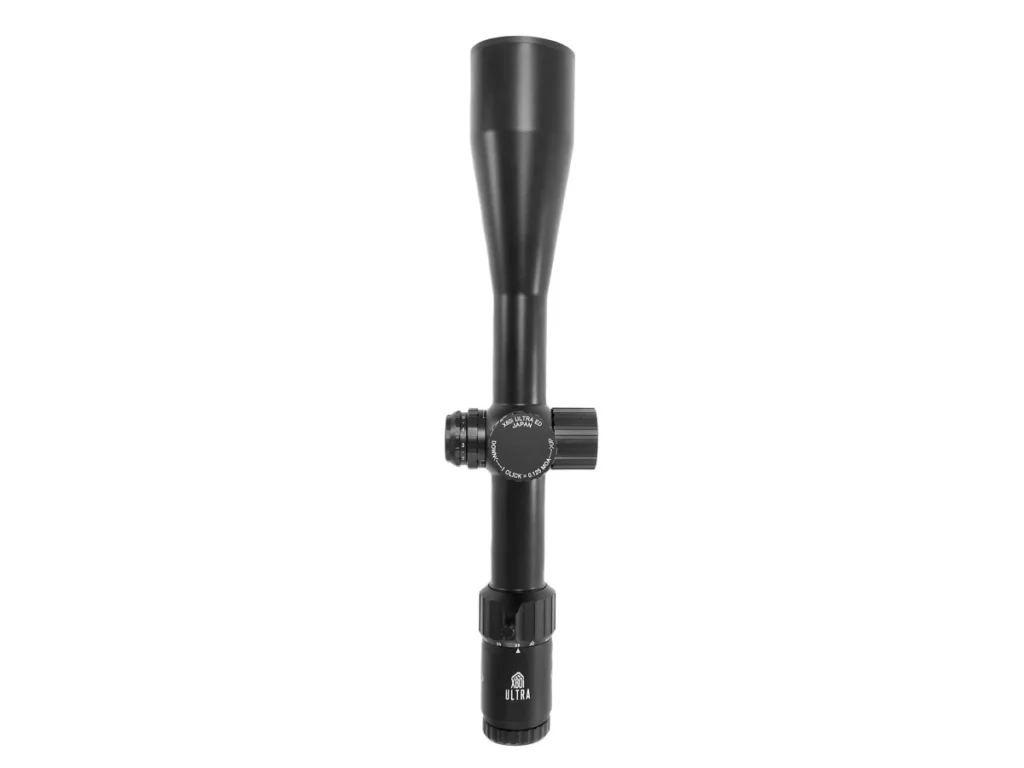
Exceptional optical performance, precise adjustment capabilities, and dependable construction have been combined in the Falcon X60i Ultra 10-60x56i ED SFP Riflescope 1/8 MOA 34mm Tube. Designed specifically for competitive target shooting, this premium riflescope has been engineered to deliver impressive image definition, reliable tracking, and exceptional versatility across demanding shooting environments.
Furthermore, advanced optical technology has been incorporated to provide enhanced clarity throughout its substantial 10-60x magnification range. Consequently, small targets can be observed with greater detail, while precision-focused shooters are supported by a highly refined optical system.
Manufactured in Japan and quality-tested in the United Kingdom, this fourth-generation competition optic has been developed with particular attention to mechanical consistency, optical reliability, and long-term durability.
Additionally, the combination of a 56mm objective lens, extra-low dispersion glass, and an illuminated competition reticle has been carefully selected to support demanding benchrest, field target, and long-range target applications.
Key Features and Technical Specifications
The following premium features have been incorporated into the Falcon X60i Ultra 10-60x56i ED SFP Riflescope to provide exceptional functionality and lasting value.
-
Magnification Range: 10-60x variable magnification
-
Objective Lens Diameter: 56mm
-
Main Tube Diameter: 34mm, single-piece construction
-
Optical Glass: Fully multicoated, extra-low dispersion ED glass
-
Reticle: E-CDi Enhanced Competition Dot
-
Focal Plane: Second Focal Plane (SFP)
-
Reticle Illumination: Red, with 11 brightness levels
-
Adjustment Value: 1/8 MOA (0.125 MOA) per click
-
Elevation Adjustment: Approximately 70 MOA total travel
-
Windage Adjustment: Approximately 40 MOA total travel
-
Elevation Adjustment Per Revolution: 10 MOA
-
Parallax Adjustment: 8 metres to infinity
-
-
Field of View at 100m: 3.47–0.64 metres
-
-
Weight: Approximately 1,020g
-
Construction: Nitrogen-purged, waterproof and fogproof
-
Additional Features: Zero-stop system, capped windage turret and fast-focus eyepiece
-
Included Accessories: Sunshade, removable throw lever and flip-up lens covers
-
Warranty: Manufacturer’s no-charge, no-time-limit warranty, subject to terms
Technical specifications have been cross-checked against Falcon Optical Systems and the published product manual.
Falcon Optical Systems
+1
Advanced ED Glass Technology for Superior Optical Performance
Enhanced Image Resolution and Color Accuracy
Premium Dense Fluor-Crown extra-low dispersion glass has been incorporated into the optical system to reduce chromatic aberration and improve visual definition.
As a result, distracting color fringing can be minimized around high-contrast objects, while improved image sharpness can be experienced during detailed target observation.
Moreover, the fully multicoated lens system has been designed to support efficient light transmission. Therefore, a clear and balanced sight picture can be maintained across a broad range of suitable lighting conditions.
Unlike conventional lower-grade optical systems, enhanced color fidelity and contrast have been prioritized throughout the construction of this premium competition riflescope.
Powerful 10-60x Magnification Range
A versatile six-times zoom system has been incorporated to provide greater flexibility during target observation and competitive shooting.
At 10x magnification, a comparatively wider field of view can be enjoyed. Meanwhile, at higher magnification settings, small target details can be examined with greater precision.
Furthermore, smooth magnification adjustment has been supported by a conveniently positioned control ring.
An additional throw lever has also been supplied, allowing the magnification setting to be changed more comfortably.
However, maximum magnification will generally require stable support and suitable atmospheric conditions for optimal image quality.
Precision E-CDi Illuminated Second Focal Plane Reticle
Enhanced Competition Dot for Accurate Target Reference
A finely detailed E-CDi Enhanced Competition Dot reticle has been integrated into the Falcon X60i Ultra riflescope.
Specifically, a small floating center dot has been positioned to provide an unobstructed reference for precision target observation.
Furthermore, the glass-etched reticle has been designed to retain its apparent dimensions as magnification is changed.
Consequently, a consistent reticle appearance can be maintained throughout the zoom range.
Because a second focal plane configuration has been selected, the subtension values are dependent on magnification. Reticle calibrations have been provided for 15x, 30x, and 60x settings.
Eleven Adjustable Red Illumination Levels
Visibility has been further enhanced through an integrated red illumination system featuring eleven brightness settings.
Additionally, intermediate off positions have been included between illumination levels for convenient operation.
Therefore, the illuminated aiming reference can be adjusted according to ambient conditions without unnecessary cycling through every brightness level.
The illumination system is powered by a CR2032 battery, although battery inclusion may depend on shipping arrangements.
1/8 MOA Turret Adjustment for Competition Precision
Fine Adjustment and Reliable Mechanical Tracking
Precise mechanical control has been prioritized through the incorporation of 1/8 MOA adjustment increments.
With each click representing 0.125 MOA, fine adjustments can be made during range preparation and target-shooting activities.
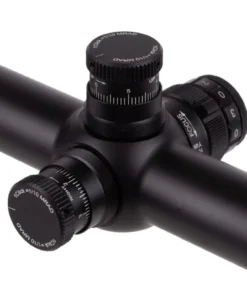
Moreover, an oversized elevation turret has been equipped with clearly marked graduations and a revolution indexing system.
Approximately 70 MOA of total elevation adjustment has been provided, while 10 MOA can be adjusted per turret revolution.
Meanwhile, an unrestricted zero-stop system has been incorporated to support a convenient return to a previously established zero setting.
The windage turret has also been supplied with a protective cap, allowing a streamlined configuration to be maintained when frequent windage adjustments are unnecessary.
Durable 34mm Single-Piece Tube Construction
Engineered for Reliability and Stability
Long-term structural integrity has been supported through a robust 34mm main tube constructed as a single-piece assembly.
Furthermore, the scope has been nitrogen-purged and tested for resistance to water penetration, internal fogging, and mechanical shock.
Accordingly, optical performance can be better protected against challenging outdoor conditions.
Recoil testing has also been conducted by the manufacturer with powerful rifle calibres, including .338 Lapua Magnum and .50 BMG.
Compatibility with suitable spring-piston air rifles has additionally been indicated, provided that appropriate mounting equipment and manufacturer-recommended torque values are observed.
Falcon Optical Systems
+1
Comfortable Eye Relief and Practical Design
An eye relief range of approximately 87–100mm has been provided to accommodate comfortable viewing when the riflescope has been mounted correctly.
In addition, the fast-focus eyepiece has been incorporated to allow the reticle to be brought into clear focus for the individual user.
The supplied flip-up lens covers can also be used to protect the optical surfaces during storage and transportation.
Advanced Side Parallax Adjustment and Snap Focus Technology
A highly responsive side-focus system has been integrated to provide parallax correction from approximately 8 metres to infinity.
Particular attention has been given to the snap-focus cam design, through which consistent focus adjustment and competition ranging have been supported.
Moreover, temperature-related variation has been considered in the design to improve consistency under changing environmental conditions.
As a result, the riflescope has been particularly well suited to field target applications where fine optical focus and precise distance assessment are important.
Ideal Applications for the Falcon X60i Ultra Riflescope
The versatility of this premium optical system can be appreciated across several competitive shooting disciplines.
Field Target Shooting
For field target competitions, high magnification, responsive parallax adjustment, and detailed image resolution have been combined to support careful target observation.
Benchrest Competition
In benchrest shooting, the fine illuminated center dot and precise turret increments can be appreciated by competitors who prioritize consistent mechanical adjustment and refined target references.
Long-Range Precision Target Shooting
During long-range target practice, increased magnification and substantial elevation adjustment can be utilized to support detailed observation and accurately documented sight settings.
Precision Air Rifle Competitions
For compatible air rifles, advanced optical performance and close-range parallax correction have been provided to accommodate demanding precision disciplines.
Why Choose the Falcon X60i Ultra 10-60x56i ED SFP Riflescope?
A compelling combination of premium Japanese manufacturing, advanced optical materials, precision adjustment technology, and practical competition features has been delivered through this fourth-generation optic.
Furthermore, the 34mm single-piece tube, large 56mm objective, illuminated competition reticle, and responsive side-focus system have been carefully integrated into one high-performance design.
Importantly, a manufacturer-backed repair-or-replace warranty has also been offered to provide additional long-term ownership confidence.
Whether a dedicated benchrest setup is being assembled or an existing field target platform is being upgraded, a technically advanced optical solution can be found in this premium riflescope.
What’s Included in the Box?
The following accessories are supplied with the standard manufacturer package:
-
Falcon X60i Ultra 10-60x56i ED SFP Riflescope
-
Protective flip-up lens covers
-
Removable magnification throw lever
-
Threaded objective sunshade
-
-
-
Package contents should be confirmed for the specific retailer and production batch.
Experience Premium Competition Optics With Confidence
With the Falcon X60i Ultra 10-60x56i ED SFP Riflescope 1/8 MOA 34mm Tube, exceptional optical clarity, refined mechanical adjustment, and competition-focused engineering have been brought together in one sophisticated platform.
Ultimately, a highly capable riflescope has been created for precision enthusiasts who value dependable construction, fine target visibility, and consistent optical performance.
Explore the Falcon X60i Ultra today and discover the advantages of a premium riflescope developed specifically for demanding target-shooting disciplines.
Falcon Scope, Falcon Optics, Element Titan 3-18×50 and Precision Rifle Optics: Complete Buying Guide
Discover Falcon Scope Technology and Modern Precision Optics
Choosing the right falcon scope can transform the viewing experience for target shooters, outdoor enthusiasts, and precision optics users. Modern optical technology combines high-quality glass, adjustable magnification, durable construction, and advanced reticle systems to support clear observation across different distances.
Whether researching falcon optics, falcon optical, falcon vision, or falcon tactical equipment, understanding individual product specifications remains essential. Different optic companies manufacture equipment for competitive target shooting, hunting, observation, thermal imaging, and specialist applications.
The Falcon Optical Systems product range includes competition-oriented riflescopes, while other manufacturers offer digital and thermal solutions. Consequently, buyers should distinguish traditional optical scopes from electronic observation equipment before comparing features.
Falcon Optics and Popular Optical Configurations
Falcon Optical Systems produces riflescopes designed for demanding precision applications. Its competition-oriented products include high-magnification options featuring specialized turret adjustments and optical systems.
Popular search terms include:
- falcon 10×50 and 10 x50 configurations for fixed-magnification optical research.
- falcon xl and falcon sp for model identification and compatibility searches.
- falcon 40 and 30 falcon when researching unidentified Falcon-related equipment.
- falcon claw and falconclaw for accessories or products requiring brand verification.
- tactical falcon and falcon arm when comparing tactical accessories and related equipment.
- falcon receiver when identifying device-specific components.
- falcon scanner and falcon thermal for electronic observation equipment.
Because similarly named products may belong to unrelated manufacturers, confirming the exact model is always recommended.
Understanding Rifle Scope Magnification and Objective Lens Sizes
Comparing 3-18×50, 4.5-18 and High-Magnification Scopes
Optical magnification determines how large a distant subject appears through a scope. For example, 3-18 magnification provides an adjustable viewing range suitable for diverse observation and sporting applications.
Searches for 3×18, 3×18 scope, 3-18 scopes, and 3:18 often relate to variable-magnification optics. Meanwhile, 4.5 x 18, 4.5 18, 4x-18, and 18 scope reflect interest in alternative magnification ranges.
Consumers comparing nightforce 3-18 equipment with the best 3-18 scopes should examine optical clarity, adjustment consistency, weight, eye relief, and warranty coverage.
Similarly, numerical searches such as 18x-4, 60x 3 50x 5, 3/5/25, and 3 5 25 should be checked against manufacturer specifications rather than interpreted automatically as verified optical configurations.
Understanding 50mm and 60mm Objective Lenses
An objective lens collects incoming light and contributes to image brightness and resolution. Common measurements include 50mm and 60mm, although overall image quality depends on glass composition, coatings, magnification, and environmental conditions.
Buyers sometimes search for how big is 50 x 60 or what size is 50 x 60. These measurements require context because 50 x 60 could describe physical dimensions rather than magnification.
Other numerical search variations include 25 x .50, 500 x 50, 500×60, 510 50, 50×0, 36x 50, 1/4×40, .25×50, 800 x 50, 60 x50, .50 x 10, 50x.05, 7.5 x 50, 50x 05, .25 x 50, 50 600, and 1050 x 5.
Furthermore, searches such as 10:50, scope50, and xoi50.com may represent alternative notation, incomplete model references, or unrelated websites. Therefore, these strings should never substitute for documented optical specifications.
Element Titan 3-18×50: Premium Optical Performance
Why the Element Titan 3-18×50 Deserves Attention
The element titan 3-18×50 is a versatile first-focal-plane riflescope designed around a broad magnification range and precision adjustment system.
Also searched as element titan 3 18×50, this model combines a 34mm main tube, 50mm objective lens, illuminated reticle, and adjustable parallax.
Its notable features include:
- 3-18x magnification: Supports flexible viewing across different distances.
- 50mm objective: Provides substantial light-gathering area.
- 34mm main tube: Accommodates a wide internal adjustment range.
- First-focal-plane reticle: Maintains consistent angular subtensions throughout magnification changes.
- Precision turrets: Support repeatable elevation and windage adjustments.
- HD glass: Helps minimize optical distortion and improve image definition.
- Weather-resistant construction: Supports operation in challenging outdoor conditions.
The manufacturer’s published specifications include 150 MOA of elevation adjustment, a mechanical zero-stop, and parallax adjustment beginning at 10 yards.
Consequently, this optic is worth considering when comparing premium variable-magnification scopes. Element Optics official specifications.
Chromatic Aberration and Optical Image Quality
Understanding chromatic aberration scope performance helps buyers evaluate image sharpness. Chromatic aberration appears as unwanted colored fringes around contrasting objects.
High-quality glass and effective lens coatings can reduce these imperfections, improving visual definition.
Likewise, users researching element ll should verify whether the search refers to a specific product generation, model designation, or accessory.
Falcon Thermal Imaging, Red Dot Optics and Electronic Sensors
Advanced Falcon Vision and Thermal Observation
Modern thermal equipment detects infrared radiation rather than depending entirely on visible light.
For users exploring falcon thermal, this distinction is important because thermal imaging and conventional optical magnification serve different purposes.
Some searches also mention elbit falcon and elbit falcon red dot. However, the precise manufacturer and model must be established before making compatibility or performance claims.
Additionally, falcon sensor manual searches generally indicate a need for operating instructions, sensor calibration information, maintenance guidance, or technical support.
Related search terms such as falke optics and optical camp may point toward alternative optic brands or specialist optical applications.
Even accessories marketed under unrelated product categories, including the falconeye patriot convertible bluetooth headset, require independent compatibility checks.
How Far Can a Falcon See?
The question how far can a falcon see can refer either to the bird’s remarkable natural eyesight or the observation distance of an optical device.
For riflescopes, useful viewing distance depends on magnification, atmospheric clarity, objective lens performance, and the size of the observed subject. No universal distance rating applies to every Falcon-branded device.
Rifle Rangefinders and Advanced Distance-Measuring Technology
Choosing a Rifle Rangefinder and Integrated Optics
A rifle rangefinder measures distance using optical or electronic technology. Modern laser devices can provide fast measurements and improve distance awareness in sporting and observation environments.
Common product searches include rifle range finder, laser range finder for rifle, rangefinder scope for rifle, and rangefinding rifle scope.
Additionally, scopes with rangefinders built in combine observation and distance measurement within a single optical platform.
A picatinny mounted rangefinder, sometimes described as a picatinny range finder, uses a compatible rail interface for attachment.
Other configurations include a weapon mounted range finder, while the abbreviation wmlrf commonly refers to a weapon-mounted laser rangefinder.
Electronic Ballistic Calculators and Distance Systems
A weapon mounted ballistic calculator can combine measured distance with programmed ballistic information, depending on its design.
Products associated with arken wmlrf searches include Arken’s weapon-mounted ranging equipment. Its TargetLock TL3000 incorporates laser-ranging and ballistic calculation capabilities. Arken Optics official product information.
Meanwhile, element rf searches may relate to Element Optics rangefinding products. Buyers should confirm the exact model, intended purpose, and accessories before purchasing.
Rifle Scope Mounts, Rings and Precision Accessories
Understanding Picatinny and Dovetail Scope Mounts
Choosing the correct mounting system is essential for secure installation and optical alignment.
A dovetail scope mount connects compatible optics to a dovetail-style rail, while dovetail rings provide alternative mounting arrangements.
Similarly, dovetail scope mounts and 30mm dovetail scope rings must match both the optic tube diameter and rail dimensions.
For Picatinny systems, popular options include picatinny scope mounts, picatinny scope rings, 30mm scope mount picatinny, and 30mm picatinny scope rings.
Buyers should confirm tube size, ring height, rail compatibility, and appropriate installation specifications.
Diving Board Mounts and Scope Accessories
Specialist mounting configurations include a 34mm diving board mount, 34mm scope mount with diving board, diving board scope mount, and 30mm diving board mount.
A scope diving board generally describes an elevated accessory mounting platform integrated with or attached to a compatible optical mounting system.
An element mount may provide a manufacturer-specific mounting solution, while a turret wheel can assist with handling or adjustment on compatible scopes.
Protective Covers for Optical Equipment
Protecting lenses helps preserve optical performance during transportation and storage.
Popular protective accessories include:
- tenebraex scope caps for compatible objective and ocular lenses.
- tenebraex scope covers for additional lens protection.
- allen neoprene scope cover for cushioning and shielding an optic during storage or transport.
Choosing the Right Falcon Scope and Optical Accessories
Selecting an effective optical system requires more than comparing magnification numbers. Glass quality, mechanical reliability, reticle design, mounting compatibility, environmental resistance, and manufacturer support all influence long-term satisfaction.
Whether researching Falcon optics, Element Titan models, advanced rangefinding technology, or protective accessories, prioritize verified product specifications over ambiguous search terminology.
For the best purchasing experience, compare authentic manufacturer documentation, confirm compatibility, and choose equipment suited to your intended sporting or observation application.
Frequently Asked Questions (FAQs)
General Information and Optical Performance
1. What makes this premium competition optic different from standard scopes?
A sophisticated optical system has been developed to provide exceptional image quality, mechanical precision, and dependable performance during competitive target shooting. Unlike conventional entry-level optics, premium extra-low dispersion glass has been incorporated to minimize chromatic aberration and improve image definition.
Furthermore, finely calibrated adjustment mechanisms have been included to support greater accuracy during precision shooting disciplines. A robust single-piece body has also been provided to enhance structural reliability.
As a result, users are offered an advanced optical solution that combines superior viewing capabilities with competition-focused functionality.
2. Is this optical system suitable for professional target shooting?
Yes. The optical system has been designed with competitive target shooting requirements in mind. High magnification, fine adjustment increments, and a precision-focused aiming reference have been integrated to support demanding shooting disciplines.
Additionally, advanced focusing capabilities have been incorporated to assist with detailed target observation.
Consequently, the equipment can be considered suitable for experienced competitors, dedicated enthusiasts, and individuals participating in organized target-shooting activities. However, practical results will also be influenced by equipment compatibility, shooting technique, and environmental conditions.
3. How does extra-low dispersion glass improve image quality?
Extra-low dispersion glass has been specifically engineered to reduce chromatic aberration, which can otherwise produce unwanted color fringing around high-contrast objects.
Through this advanced optical material, improved color accuracy and greater image definition can be achieved. Moreover, fine details can be presented more clearly under suitable lighting conditions.
Additional benefits may be experienced when examining small targets or observing distant objects at higher magnification.
However, overall image quality will also be influenced by lens coatings, atmospheric conditions, optical alignment, and the selected magnification setting.
4. Can clear images be obtained at maximum magnification?
Yes, detailed images can be obtained at the highest magnification setting when suitable viewing conditions have been established.
However, image brightness and apparent stability may be reduced as magnification is increased. Additionally, atmospheric distortion, heat shimmer, and vibration may become more noticeable.
For optimal results, stable equipment support and appropriate lighting are recommended.
Furthermore, the magnification level should be selected according to the observation distance and prevailing conditions rather than automatically being set to its maximum.
5. What benefits are provided by a large objective lens?
A large objective lens has been incorporated to support effective light collection and detailed optical viewing.
Consequently, a bright sight picture can be maintained under suitable conditions, particularly when moderate magnification settings are selected.
Additionally, the larger optical system has been paired with premium lens materials to support image clarity and contrast.
Nevertheless, perceived brightness will be influenced by exit pupil size, transmission efficiency, ambient lighting, and individual eyesight. Therefore, excellent low-light performance should not be assumed solely from objective lens diameter.
Reticle Design and Illumination
6. What is a second focal plane reticle?
A second focal plane reticle is positioned behind the magnification system, allowing its apparent size to remain constant when magnification is adjusted.
This configuration has been widely adopted in precision target optics because a consistently fine aiming reference can be maintained.
However, the apparent size of a target changes as magnification is increased or decreased. As a result, the angular values represented by reticle markings also change.
Therefore, published subtension measurements should be consulted whenever angular measurements are required.
7. Does the illuminated aiming point improve visibility?
Yes. An illuminated aiming reference has been provided to improve reticle visibility under selected lighting and background conditions.
For example, a red aiming point may be easier to distinguish against certain dark or visually complex backgrounds.
Furthermore, adjustable brightness settings have been incorporated to accommodate different viewing environments.
Nevertheless, illumination should be adjusted conservatively because excessive brightness may cause blooming or reduce the perceived definition of the aiming point.
The illumination feature is intended to improve reticle visibility rather than brighten the target image itself.
8. Can the reticle be used without illumination?
Yes. The etched reticle can be viewed without activating the illumination system.
As a result, normal optical operation can be maintained even when the illumination battery has been depleted or removed.
Furthermore, battery power can be conserved during daylight shooting when additional reticle brightness is unnecessary.
This independent reticle visibility has been provided as a practical advantage for competition sessions and extended range activities.
9. What type of battery is required for illumination?
A CR2032 lithium coin-cell battery is used to power the illumination system.
This commonly available battery format has been selected for its compact dimensions and practical service life.
Battery replacement should be completed according to the manufacturer’s instructions. In addition, correct polarity should be observed, and the battery compartment should be securely closed after installation.
For extended storage, battery removal may be recommended to reduce the possibility of leakage-related damage.
10. How many illumination brightness settings are available?
Eleven red illumination brightness levels have been incorporated into the optical system.
These settings allow the aiming reference to be adjusted according to changing ambient light conditions and user preferences.
Additionally, intermediate off positions have been provided between active brightness levels.
Consequently, a previously preferred setting can be reselected conveniently without repeatedly cycling through the entire adjustment range.
Magnification, Focus, and Adjustment
11. Can magnification be adjusted for different target distances?
Yes. A variable magnification system has been incorporated to accommodate different observation distances and target sizes.
At lower settings, a wider field of view can be obtained, allowing targets to be located and observed more comfortably.
Meanwhile, higher settings can be selected when greater visual detail is required.
Moreover, a removable throw lever has been supplied to provide convenient magnification control.
The preferred setting should always be determined by target visibility, stability, and environmental conditions.
12. What is the purpose of the side parallax adjustment?
The side parallax adjustment has been designed to reduce apparent movement between the reticle and target image when the observer’s eye position changes.
Additionally, the focusing mechanism allows target images to be brought into sharper visual focus at different distances.
A minimum focusing distance of approximately eight metres has been specified by the manufacturer.
Therefore, the system can accommodate relatively close target observation as well as distant viewing.
However, parallax correction and image focusing should be understood as related but distinct optical functions.
13. What does 1/8 MOA adjustment mean?
One-eighth Minute of Angle adjustment represents a fine angular change produced by each mechanical turret click.
Specifically, one click corresponds to 0.125 MOA.
At a distance of 100 yards, approximately 0.131 inches of angular displacement is represented by this measurement.
Consequently, smaller adjustment increments can be obtained than those provided by conventional quarter-MOA turrets.
Nevertheless, actual point-of-impact changes will depend on correct mounting, mechanical performance, and shooting conditions.
14. Is a zero-stop mechanism included?
Yes. A zero-stop mechanism has been incorporated into the elevation adjustment system.
Through this feature, a repeatable reference position can be established after the equipment has been correctly zeroed.
Furthermore, the mechanism has been designed to support convenient adjustment management during competition activities.
Correct installation and configuration should be completed according to the official product instructions.
As with other precision mechanical components, the system should be inspected periodically for secure operation and consistent performance.
15. How much elevation adjustment is available?
Approximately 70 MOA of total elevation adjustment has been specified for the optical system.
Furthermore, ten MOA of adjustment can be completed during one full elevation turret revolution.
This arrangement has been developed to provide a combination of substantial adjustment travel and conveniently readable turret markings.
However, the amount of usable adjustment available after installation will depend on the mounting arrangement and established zero position.
Construction, Durability, and Compatibility
16. Is the optical equipment waterproof and fog-resistant?
Yes. Waterproof testing and nitrogen purging have been included in the manufacturer’s production and quality-control process.
Consequently, internal condensation has been addressed through the sealed optical construction.
Additionally, resistance to normal outdoor moisture exposure has been considered during product development.
Nevertheless, the equipment should not automatically be regarded as suitable for prolonged underwater immersion.
After exposure to rain or dirt, external surfaces should be cleaned and dried using appropriate maintenance procedures.
17. Can the equipment withstand recoil?
Recoil resistance has been evaluated by the manufacturer, including testing with powerful rifle calibres.
Additionally, compatibility with suitable spring-piston airgun platforms has been indicated when correct mounting equipment and torque specifications are followed.
However, compatibility should always be assessed in relation to the individual firearm or airgun configuration.
Appropriate rings, mounts, and installation procedures are essential for maintaining reliability.
Incorrect installation may compromise both optical alignment and mechanical performance.
18. Which mounting rings are required?
Mounting rings designed for a 34mm main tube are required.
However, ring height must also be selected according to the equipment platform, objective lens clearance, and the intended mounting arrangement.
Furthermore, properly manufactured mounting components should be used to maintain secure installation without applying excessive pressure to the optical body.
Manufacturer-recommended tightening specifications must be observed.
Professional installation may be considered whenever compatibility or mounting requirements remain uncertain.
19. Is the optical system heavy?
An approximate weight of 1,020 grams has been specified.
This weight reflects the substantial optical assembly, large objective lens, robust housing, and advanced adjustment mechanisms.
Consequently, the equipment may be better suited to supported competition platforms than lightweight configurations intended for extended carrying.
However, the overall balance will depend on the host equipment and mounting arrangement.
Before installation, the complete system weight should be considered to ensure comfortable and practical handling.
20. What maintenance is recommended?
Regular but gentle maintenance is recommended to preserve optical clarity and mechanical reliability.
Dust and loose particles should first be removed using a suitable optical blower or soft lens brush.
Afterward, approved lens-cleaning materials may be used to remove fingerprints and surface contamination.
Additionally, adjustment controls should be protected from unnecessary force.
The equipment should be stored in a dry environment, while prolonged exposure to excessive heat and harsh chemicals should be avoided.
Accessories, Warranty, and Ownership
21. Which accessories are supplied with the package?
A selection of practical accessories has been included in the manufacturer’s standard package.
Protective flip-up lens covers, a removable magnification throw lever, and an objective sunshade are specified.
Furthermore, the included components have been selected to support routine protection and convenient operation.
However, exact package contents should be checked with the retailer before purchase because accessories may vary between production batches or regional distribution arrangements.
22. Can additional optical accessories be installed?
Certain accessories may be installed when their mechanical dimensions and compatibility requirements are satisfied.
For example, suitable objective accessories and mounting components may be considered where manufacturer approval has been provided.
However, compatibility should not be assumed solely from similar appearance or nominal size.
Additional components may affect clearance, handling, overall weight, or optical performance.
Therefore, product documentation should be consulted before modifications or accessory installation.
23. Is a manufacturer warranty provided?
Yes. A no-charge, no-time-limit warranty has been advertised by the manufacturer.
This warranty has been presented as an important element of long-term ownership support.
Nevertheless, individual claims will be assessed according to the manufacturer’s applicable warranty conditions.
Consequently, proof of purchase and relevant product details should be retained.
Before purchasing, warranty eligibility, exclusions, and the procedure for obtaining service should be confirmed with an authorized supplier.
Falcon Optical Systems 500x 50

Reviews
There are no reviews yet.