Precision Competition Fit Is Unlocked by the Daystate Red Wolf GP Stock
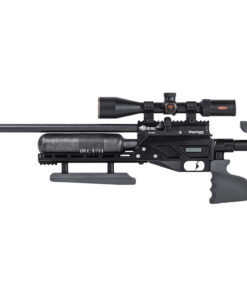
Match-winning consistency is delivered when the Daystate Red Wolf GP Stock is fitted to a proven electronic PCP platform. Consequently, field-target, benchrest, and precision shooters of every background are given a chassis that can be dialed to individual body shape rather than forcing a compromise. Moreover, the same aluminum architecture that is used on factory Grand Prix rifles can be installed on existing Red Wolf actions, so a sporting rifle is readily converted into a dedicated target tool. Therefore, one action can serve dual roles without a second purchase of a complete rifle.
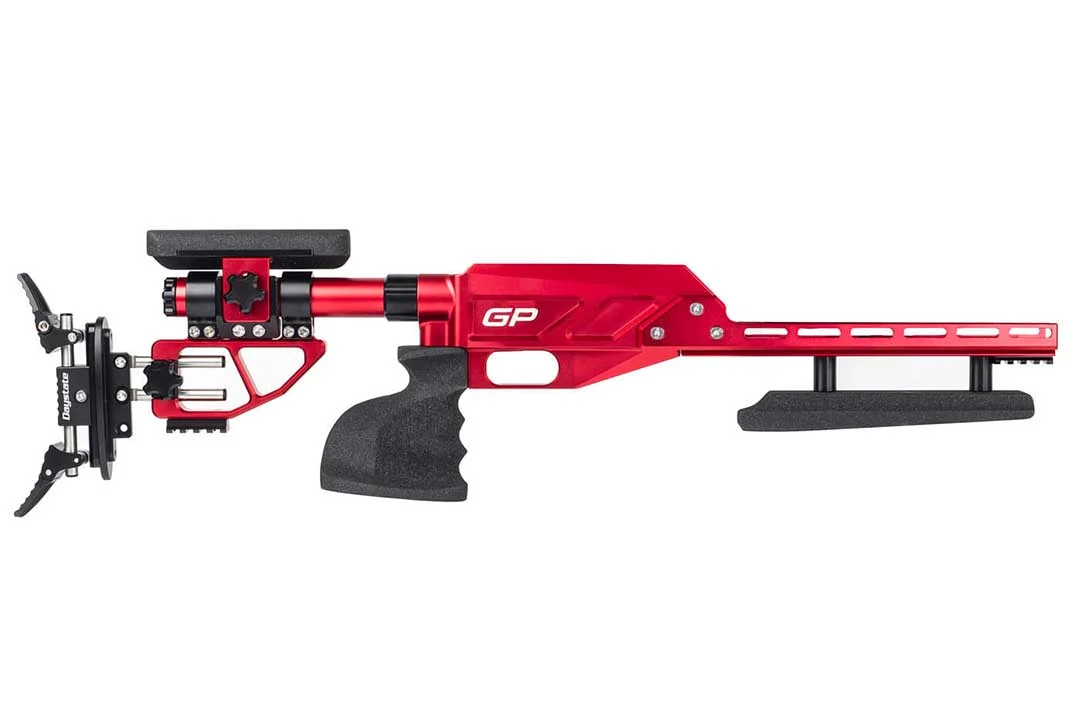
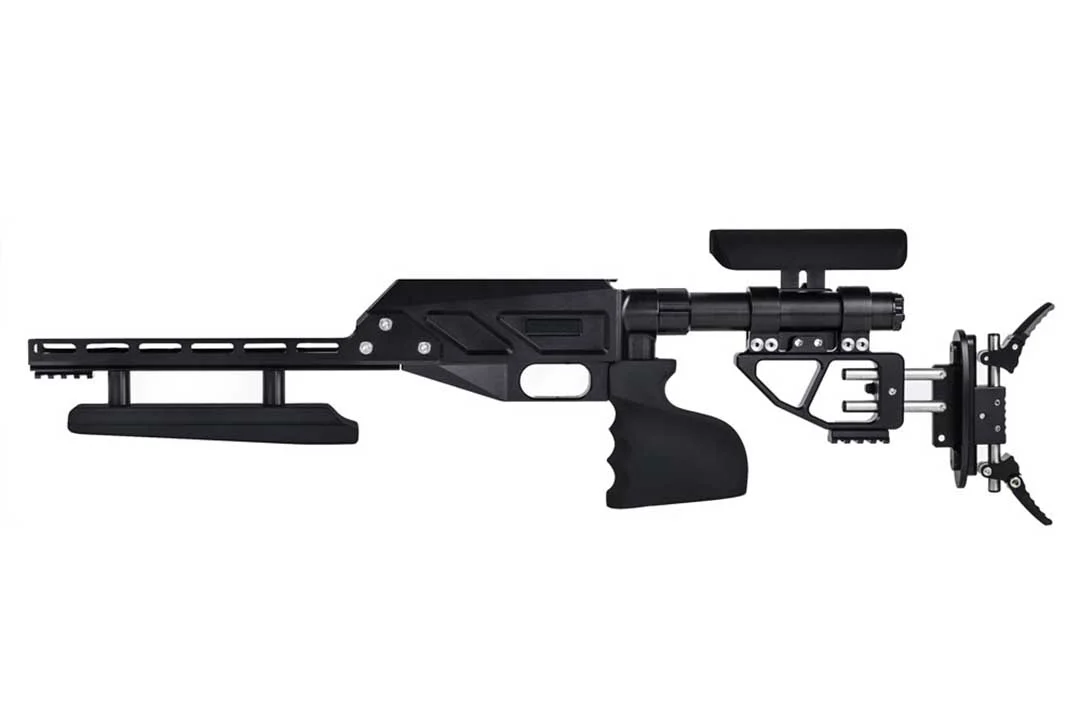
Furthermore, the Daystate Red Wolf GP Stock is manufactured exclusively for Daystate by Precision Rifle Systems. In addition, the chassis is CNC-machined from aluminum and then hard-anodized in a choice of red or black. As a result, rigidity is maintained while weather resistance and a distinctive competition appearance are provided. Meanwhile, anatomical wood furniture—grip, cheekpiece, and wide forend “hamster”—is textured for a secure, non-slip hold in any shooting position.
Multi-Axis Adjustability That Serves Every Discipline
Length of pull, pitch, cant, and hook angle are all independently set because a GEN4 butt hook is mounted on a sliding carriage. Consequently, a longer-than-average pull preferred by many benchrest competitors can be obtained just as easily as a compact field-target stance. Likewise, the entire butt can be angled so the rifle is anchored firmly into the shoulder pocket. At the same time, the cheekpiece is moved in three dimensions—height, angle, and fore-aft—so perfect scope alignment is achieved without neck strain.
In the same way, the forestock is raised, lowered, and slid along an ARCA-Swiss-style rail. Therefore a stable rest is created for kneeling, sitting, or prone shots. Additionally, a movable Picatinny insert and UIT slot allow bipods, bags, or custom hamsters to be attached exactly where they are needed. Ultimately, every adjustment is performed with standard hex tools, so range-side changes remain simple and repeatable.
Compatibility and Conversion Advantages
Any current Daystate Red Wolf action—whether originally supplied in walnut, laminate, or Safari furniture—is accepted by the Daystate Red Wolf GP Stock. Consequently, the battery is first disconnected and a single forestock bolt is removed; afterward the new chassis is bolted in place. No gunsmithing is required. Moreover, a left-hand grip can be ordered separately so southpaw competitors are equally well served. As a result, an existing investment in a Red Wolf is protected while competition capability is added.
Core Features Highlighted for Quick Comparison
- Hard-anodized aluminum chassis available in red or black finish
- GEN4 multi-adjustable butt hook with sliding length-of-pull carriage
- Three-axis cheekpiece for height, cant, and longitudinal position
- Wide textured-wood forend on ARCA rail with Picatinny and UIT accessory points
- Anatomical wood pistol grip (right-hand standard; left-hand optional)
- Direct bolt-on fit to every Red Wolf electronic action
- Designed for field target, extreme benchrest, and precision standing or kneeling positions
How the Stock Complements the Electronic Red Wolf Action
Mapped Compensated Technology inside the Red Wolf action is already known for shot-to-shot consistency measured in single-digit feet-per-second. When that digitally regulated valve is paired with the Daystate Red Wolf GP Stock, the shooter’s hold becomes equally consistent. Therefore groups that were previously limited by stock fit can now be limited only by pellet and conditions. In addition, the reversible short-throw sidelever remains easy to cycle from either shoulder, and the electronic two-stage trigger continues to be adjustable for weight, stage length, and blade position.
A 480 cc buddy bottle is typically retained, so several hundred regulated shots at 12 ft-lbs (or high-power FAC strings) remain available from a 210–250 bar fill. Meanwhile the LCD continues to display power level, remaining pressure, shot count, and battery status. Consequently, competitors can monitor the rifle without breaking position.
Practical Use Across Competition Formats
Field-target courses that demand standing, kneeling, and sitting shots are handled because the forend height and butt hook can be reset between lanes in seconds. Similarly, extreme benchrest strings benefit from the extra length of pull and rock-solid ARCA interface. Even recreational precision practice is improved because the same rifle can be returned to a more compact sporting configuration simply by swapping stocks. Inclusive design choices—ambidextrous chassis geometry plus optional left-hand grip—ensure that shooters of any stature or laterality can obtain a custom fit.
Responsible ownership remains essential. Local airgun laws, FAC requirements where power exceeds national limits, and safe storage practices must always be observed. When those obligations are met, the Daystate Red Wolf GP Stock turns an already celebrated electronic rifle into a purpose-built competition instrument.
Why the Daystate Red Wolf GP Stock Belongs on a Precision Shortlist
Durability is provided by the anodized aluminum structure. Repeatable accuracy is supported by the multi-axis furniture. Conversion flexibility is offered so existing Red Wolf owners are not forced to buy an entire second rifle. In short, every adjustment that serious target shooters have come to expect is present, yet the electronic heart that made the Red Wolf famous is left unchanged. Therefore the Daystate Red Wolf GP Stock represents a logical next step for anyone who already trusts the platform and now needs a chassis that can be tailored, session after session, to the exact demands of the course or the bench.
Calibres, FAC Power Options and Accessories for the Daystate Red Wolf GP Stock
A complete competition system is created when the Daystate Red Wolf GP Stock is paired with the correct calibre, power configuration and supporting accessories. Consequently, target, field-target and benchrest shooters of every experience level can specify a setup that matches both local regulations and the demands of the course. Moreover, the same electronic action that already delivers Mapped Compensated Technology can be ordered or later converted across several bore sizes, so one chassis investment continues to serve as needs change.
Available Calibres and Magazine Capacity
Four principal calibres are offered on the platform that accepts the Daystate Red Wolf GP Stock. Specifically, .177 (4.5 mm) is selected when maximum shot count and flat trajectory are required for field-target or 10-metre-style precision. Meanwhile, .22 (5.5 mm) is favoured when a balance of energy and pellet availability is preferred. In addition, .25 (6.35 mm) is chosen for higher-energy FAC work, and .30 / .303 (7.62 mm) is reserved for High Power models where maximum muzzle energy is authorised.
Rotary magazines are supplied to match each bore. Therefore a 13-shot magazine is used in .177, an 11-shot magazine in .22, a 10-shot magazine in .25 and an 8-shot magazine in .30. Likewise, a single-shot loading tray can be inserted whenever benchrest rules or personal preference demand individual pellet placement. As a result, both rapid strings and deliberate single-shot discipline are supported without changing the action.
Power Levels, FAC Status and Shot Counts
Sub-12 ft-lbs output is factory-set on standard UK-legal rifles, so no Firearms Certificate is required in jurisdictions that follow that limit. Consequently several hundred regulated shots are obtained from the typical 480 cc bottle: more than 400 shots in .177 and approximately 480–500 shots in .22 are commonly recorded at 210–250 bar. Furthermore, three user-selectable power bands (low, mid and high) remain available even on the legal-limit tune, allowing practice at reduced energy without a second rifle.
High Power / FAC configurations are supplied where local law permits. In those cases muzzle energy is raised to roughly 20–30 ft-lbs in .177, up to 65 ft-lbs in .22 and .25, and as high as 80 ft-lbs in .30, depending on barrel length and factory mapping. A 23-inch Lothar Walther barrel is normally fitted to High Power rifles, while the standard 17-inch tube is retained on 12 ft-lbs models. Shot counts naturally fall as energy rises—approximately 70 shots at 30 ft-lbs in .177 or 30 shots at 80 ft-lbs in .30—yet consistency is still maintained by the electronic regulator. Nevertheless, exact legal limits differ by country (for example lower joule caps in parts of Europe), so confirmation with the relevant authority is always required before an FAC-rated rifle is purchased or imported.
Factory mapping can also be set slightly below the advertised maximum so that the chosen pellet produces its tightest groups. Therefore the advertised figures should be treated as upper limits rather than guaranteed day-to-day output.
Accessory Ecosystem Built Around the Chassis
A wide range of official and compatible accessories is accepted by the Daystate Red Wolf GP Stock because ARCA, Picatinny and UIT interfaces are already machined into the forend. Consequently bipods, bag riders, extra hamsters and data-card holders can be positioned exactly where they are needed. In addition, a full-length Picatinny rail on the action accepts any modern riflescope or night-vision unit.
Highlighted accessory options include:
- Spare rotary magazines and single-shot trays matched to calibre
- 0 dB or conventional ½-UNF moderators threaded to the shrouded Lothar Walther barrel
- Official charging probes, Foster connectors and high-pressure filling kits
- FORM laminated grip, cheekpiece and forend sets in red or blue, offered in right- or left-hand configuration
- Protective hard case and muzzle-thread protectors
- Rechargeable Li-Po battery and charging lead (the battery must be removed before the stock is swapped)
- Optional left-hand anatomical grip when the standard right-hand furniture is insufficient
Moreover, Rangemaster Sovereign, Sovereign Hunter, Kaiser, King and Emperor pellets are the ammunition around which the electronic maps were written, so those weights are recommended for the tightest consistency. Similarly, a quality compressor or dive bottle rated to at least 250 bar is required to refill the 480 cc reservoir to the pressure printed on each individual action block.
Inclusive design continues through the accessory list: left-handed grips and reversible sidelevers ensure that every competitor can obtain a comfortable, repeatable hold. Ultimately the Daystate Red Wolf GP Stock is not merely a chassis; it is the central interface that lets calibre, power setting and supporting equipment be combined into a single, adjustable competition system. Responsible owners therefore verify local FAC or energy limits, select the matching magazine and moderator, and then fine-tune the furniture so that the rifle, the pellet and the shooter work as one.
Calibres, FAC Power Options and Accessories for the Daystate Red Wolf GP Stock
A complete competition system is created when the Daystate Red Wolf GP Stock is paired with the correct calibre, power configuration and supporting accessories. Consequently, target, field-target and benchrest shooters of every experience level can specify a setup that matches both local regulations and the demands of the course. Moreover, the same electronic action that already delivers Mapped Compensated Technology can be ordered or later converted across several bore sizes, so one chassis investment continues to serve as needs change.
Available Calibres and Magazine Capacity
Four principal calibres are offered on the platform that accepts the Daystate Red Wolf GP Stock. Specifically, .177 (4.5 mm) is selected when maximum shot count and flat trajectory are required for field-target or 10-metre-style precision. Meanwhile, .22 (5.5 mm) is favoured when a balance of energy and pellet availability is preferred. In addition, .25 (6.35 mm) is chosen for higher-energy FAC work, and .30 / .303 (7.62 mm) is reserved for High Power models where maximum muzzle energy is authorised.
Rotary magazines are supplied to match each bore. Therefore a 13-shot magazine is used in .177, an 11-shot magazine in .22, a 10-shot magazine in .25 and an 8-shot magazine in .30. Likewise, a single-shot loading tray can be inserted whenever benchrest rules or personal preference demand individual pellet placement. As a result, both rapid strings and deliberate single-shot discipline are supported without changing the action.
Power Levels, FAC Status and Shot Counts
Sub-12 ft-lbs output is factory-set on standard UK-legal rifles, so no Firearms Certificate is required in jurisdictions that follow that limit. Consequently several hundred regulated shots are obtained from the typical 480 cc bottle: more than 400 shots in .177 and approximately 480–500 shots in .22 are commonly recorded at 210–250 bar. Furthermore, three user-selectable power bands (low, mid and high) remain available even on the legal-limit tune, allowing practice at reduced energy without a second rifle.
High Power / FAC configurations are supplied where local law permits. In those cases muzzle energy is raised to roughly 20–30 ft-lbs in .177, up to 65 ft-lbs in .22 and .25, and as high as 80 ft-lbs in .30, depending on barrel length and factory mapping. A 23-inch Lothar Walther barrel is normally fitted to High Power rifles, while the standard 17-inch tube is retained on 12 ft-lbs models. Shot counts naturally fall as energy rises—approximately 70 shots at 30 ft-lbs in .177 or 30 shots at 80 ft-lbs in .30—yet consistency is still maintained by the electronic regulator. Nevertheless, exact legal limits differ by country (for example lower joule caps in parts of Europe), so confirmation with the relevant authority is always required before an FAC-rated rifle is purchased or imported.
Factory mapping can also be set slightly below the advertised maximum so that the chosen pellet produces its tightest groups. Therefore the advertised figures should be treated as upper limits rather than guaranteed day-to-day output.
Accessory Ecosystem Built Around the Chassis
A wide range of official and compatible accessories is accepted by the Daystate Red Wolf GP Stock because ARCA, Picatinny and UIT interfaces are already machined into the forend. Consequently bipods, bag riders, extra hamsters and data-card holders can be positioned exactly where they are needed. In addition, a full-length Picatinny rail on the action accepts any modern riflescope or night-vision unit.
Highlighted accessory options include:
- Spare rotary magazines and single-shot trays matched to calibre
- 0 dB or conventional ½-UNF moderators threaded to the shrouded Lothar Walther barrel
- Official charging probes, Foster connectors and high-pressure filling kits
- FORM laminated grip, cheekpiece and forend sets in red or blue, offered in right- or left-hand configuration
- Protective hard case and muzzle-thread protectors
- Rechargeable Li-Po battery and charging lead (the battery must be removed before the stock is swapped)
- Optional left-hand anatomical grip when the standard right-hand furniture is insufficient
Moreover, Rangemaster Sovereign, Sovereign Hunter, Kaiser, King and Emperor pellets are the ammunition around which the electronic maps were written, so those weights are recommended for the tightest consistency. Similarly, a quality compressor or dive bottle rated to at least 250 bar is required to refill the 480 cc reservoir to the pressure printed on each individual action block.
Inclusive design continues through the accessory list: left-handed grips and reversible sidelevers ensure that every competitor can obtain a comfortable, repeatable hold. Ultimately the Daystate Red Wolf GP Stock is not merely a chassis; it is the central interface that lets calibre, power setting and supporting equipment be combined into a single, adjustable competition system. Responsible owners therefore verify local FAC or energy limits, select the matching magazine and moderator, and then fine-tune the furniture so that the rifle, the pellet and the shooter work as one.
Daystate, FX Airguns, PCP Rifles, Accessories and Precision Airgun Equipment
For enthusiasts researching premium PCP platforms, accessories, replacement components, and precision shooting equipment, the modern airgun market offers an extensive range of options from brands such as Daystate and FX. Searches for daystate blackwolf, daystate redwolf, delta wolf, huntsman daystate, daystate alpha wolf, wolf delta, day state, and daystate delta wolf frequently come from shooters comparing electronic PCP technology, ergonomic designs, premium construction, and sophisticated firing systems. Traditional styling also remains important, which is why terms such as stock walnut, safari stock, dima stock, rimfire stocks, and stock replacement continue to attract buyers who value both appearance and practical fit.
Among electronically controlled PCP rifles, the daystate alpha wolf, daystate blackwolf, daystate redwolf, and daystate delta wolf are commonly associated with advanced regulation, refined shot management, and a highly consistent firing cycle. Searches such as what is a delta wolf, what is a delta wolf, delta wolf meaning, deltaw, blackwolf, red alpha wolf, alpha red wolf, model alpha gun, model alpha gun, and electronic wolves often reflect buyers trying to understand how Daystate’s electronically managed rifles differ from conventional mechanical PCP systems. Other searches, including daysta, wolf gun, wolverine gun, wolveriner, daystate wolverine sapphire, daystate wolverine sapphire, and wolfpack armory wolverine, demonstrate the broad interest surrounding Wolf-branded and Wolverine-related sporting platforms.
Small ergonomic components can make a substantial difference to comfort and handling. A rifle butt pad, rubber butt, rubber butt pad, and butt pad rifle accessory can improve shoulder contact, while a bradley cheek riser can help support a more consistent head position. Likewise, enthusiasts may research gecko grips, a cocking ball, short cocking, an index pin, pin magazine, lock timing, and lock time when learning about rifle ergonomics, cycling characteristics, and replacement components. Searches for buddy bottle cover and buddy bottle cover also remain relevant for shooters who want to protect external air cylinders from cosmetic wear during transport or field use.
Magazine compatibility is another frequent consideration. Users may search for a 177 magazine, mag 177, 25 magazine, 5.0 mm pellets, 177 pellets types, slug pellet, or a general pellet rifle when comparing ammunition formats and magazine configurations. Pellet selection should always match the manufacturer’s recommended caliber and specifications for the rifle being used. A well-matched magazine and suitable ammunition can support reliable feeding and consistent performance without unnecessary mechanical stress.
PCP equipment relies on compressed air, so searches such as air rifle compressed air, air gun pc, air gun, and air guns are commonly connected with understanding pre-charged pneumatic systems. Owners also frequently search for a pcp o ring kit because seals form an important part of maintaining an air-tight pneumatic system. Maintenance should follow manufacturer-approved procedures, especially for high-pressure components, regulators, cylinders, and valves.
Sound-moderation accessories form another major category. Common search terms include air gun suppressor, air gun suppressors, airgun moderator, air rifle moderator, 0db, 0db moderator, 0 db moderator, 0 db moderator, 0 db moderator, 0 db moderator, and hogan decimeater silencer. Thread-related searches include silencer thread adapter, thread protector rifle, and muzzle thread protector. Compatibility depends on barrel threading, caliber, applicable law, and manufacturer specifications, so owners should verify all requirements before purchasing or fitting any muzzle accessory.
Mounting systems have also become increasingly important as modular fore-ends and accessory rails become more common. Searches for an mlok to picatinny rail adapter, best m-lok to picatinny rail adapter, m-lok to picatinny adapter, picatinny m lok adapter, and picatinny bag rider usually come from shooters wanting greater flexibility when mounting supported accessories. The best adapter is generally one that matches the rifle’s rail specification, uses quality hardware, fits securely, and avoids unnecessary bulk.
Sling-related searches are equally common. Buyers frequently look up how to put a gun sling on a rifle, how to put a rifle sling on, how to install a rifle sling, riffle sling, rigle sling, how to put sling on rifle, installing a rifle sling, and attaching a sling to a rifle. A compatible sling can improve carrying comfort and transportation, but attachment points should always be checked against the rifle manufacturer’s recommendations to avoid damage to the stock or mounting hardware.
The alpha wolf barrel and accessories such as an ats tuner may also interest precision-focused users researching how different rifle configurations are designed. Similarly, terms such as weatherby vanguard trigger adjustment appear in broader shooting-related searches, although trigger systems differ significantly between platforms and should be serviced or adjusted only according to the applicable manufacturer’s safety instructions. Another unusual search phrase, how to put extinguisher call back together, is unrelated to PCP rifle servicing and should be treated according to the specific extinguisher manufacturer’s maintenance guidance rather than general airgun information.
For buyers comparing premium European PCP equipment, daystate redwolf price and daystate redwolf price are common commercial-intent searches. Pricing can vary depending on caliber, stock type, configuration, region, dealer, and included accessories. People may also search fx airgun dealer near me when looking for authorized retailers, parts support, servicing, or warranty assistance.
FX Airguns remains another major name in the PCP market. Popular searches include fx impact m3 .22cal air rifle. 600mm barrel, fx impact m3, fx impact mk3, fx m3 airgun, fx m3, impact m3, and fx impact m3 air rifle. Price-focused searches such as fx impact m3 precio, fx impact m3 precio en usa, and fx impact m3 price indicate strong buyer interest in comparing regional pricing and available configurations. The modular design philosophy associated with the FX Impact family makes it especially attractive to experienced PCP users who prioritize adjustability, ergonomics, accessory compatibility, and high-quality construction.
Potential buyers also encounter less common search phrases such as griffin gun, unfend, black snood, red bodywarmer, and can wolverine go on planes. Airline transport rules for sporting equipment and compressed-air components can differ substantially between carriers and countries, so travelers should always check current airline, airport, customs, and destination regulations before making travel arrangements. Likewise, terms such as 3.55kg in lbs may appear when buyers compare rifle weight specifications across metric and imperial listings.
Whether someone is researching the daystate alpha wolf, daystate blackwolf, daystate redwolf, huntsman daystate, wolf delta, an fx impact m3, or another premium pellet rifle, the most important purchasing factors remain intended use, caliber compatibility, overall weight, stock ergonomics, magazine design, air-cylinder capacity, manufacturer support, and accessory compatibility. Premium PCP ownership is best supported by appropriate maintenance, manufacturer-approved components, secure storage, responsible handling, and compliance with all local laws and transport requirements.
Practical Use Scenarios Across Competition and Training
A fully adjustable aluminium chassis is brought into play whenever a match or practice session demands a hold that can be repeated from lane to lane. Consequently, sitting, kneeling, standing and prone positions are all accommodated without a second rifle being packed. Moreover, the same electronic action that already regulates every shot can be left in place while only furniture and accessory placement are changed. Therefore a single platform is used from club evenings through national field-target events and extreme benchrest strings.
Field-Target Courses and Mixed-Position Lanes
A typical field-target layout is approached after the forend rest is first set to the height required for the opening kneeling lane. Subsequently the GEN4 hook is angled so the butt is locked into the shoulder pocket and length of pull is lengthened or shortened to suit the shooter’s stance. As a result, the first target is addressed with a hold that can be reproduced three or four lanes later. Meanwhile the cheekpiece is raised or lowered so the same sight picture is obtained whether a high sitting shot or a low standing shot is presented.
Wind flags and rangefinders are consulted between stages, yet the chassis itself is not rebuilt from scratch. Instead only small hex-key movements are made. In addition, the ARCA rail accepts a bag or bipod that can be slid forward for a long sitting shot and then drawn back for a compact standing shot. Consequently time that would otherwise be spent fighting an ill-fitting stock is spent reading the course. Likewise, a moderator can be left fitted because the shrouded barrel already reduces muzzle blast, so neighbouring competitors are not disturbed.
When a steep uphill or downhill target appears, cant and pitch of the butt pad are altered so the rifle remains square to the shooter’s torso. Therefore muscle fatigue is reduced across a fifty-target card. Inclusive fit remains possible because left-handed grips can be specified and the sidelever can be reversed, so every member of a club squad can share the same action if needed.
Extreme Benchrest and Supported Precision Strings
A rest is first clamped or bagged onto the ARCA interface before an extreme-benchrest string is begun. Subsequently length of pull is increased beyond sporting dimensions because many bench shooters prefer a longer reach. At the same time the wide wooden hamster is positioned so the leading hand has a broad, textured platform that does not shift under recoil or pulse. As a result, the electronic trigger can be released with minimal disturbance to the sight picture.
Shot-to-shot consistency is already supplied by the digital valve; the chassis simply prevents the shooter from introducing extra movement. Moreover, magazine capacity allows a full string to be fired without the action being opened between shots when rules permit. When single-shot trays are required, the same breech is used and only the loading method is changed. Consequently equipment remains familiar from practice to match.
High-power FAC configurations, where legally authorised, are handled in the same supported position. Barrel length is greater on those models, yet the adjustable forend still finds a stable contact point. Therefore energy that would otherwise be wasted in muzzle jump is directed downrange. Nevertheless local licensing and range rules must always be observed before a high-energy tune is used in public.
Standing, Kneeling and Offhand Practice
Club nights often include unsupported standing groups. In that setting the forend can be lowered and the hamster removed so a conventional leading-hand hold is adopted. Meanwhile the hook still anchors the rifle so the standing position does not collapse after a few shots. Consequently newcomers and experienced competitors alike can practise the same discipline without fighting a chassis that was designed only for a bench.
Kneeling stages benefit from the same rapid height change. After the rest is raised, the shooter’s elbow finds a consistent pocket against the ribcage. In addition, the textured wood prevents the rifle from sliding when gloves are wet or cold. As a result, winter league matches remain shootable even when conditions are far from ideal.
Conversion Between Sporting and Target Roles
A rifle that began life with sporting furniture can be converted at the range or at home. First the battery is disconnected, then the single forestock bolt is withdrawn and the aluminium chassis is fitted. Subsequently all previous zero and power maps remain valid because only the interface with the shooter has changed. Therefore a hunter or plinker can attend a weekend field-target open without owning two complete actions.
After the match the original furniture can be refitted in minutes if a compact sporting profile is again required. Likewise, FORM laminate grip sets in contrasting colours can be swapped when a visual refresh or a left-hand conversion is wanted. Inclusive language is reflected in practice: every shooter, regardless of laterality or stature, can obtain a hold that does not punish the neck or shoulder.
Travel, Setup and Between-String Routine
Match travel is simplified because the chassis accepts the same hard case used for other precision rifles. Upon arrival the forend rail is checked, the hook carriage is confirmed, and a few hex adjustments restore the notes written after the last event. Meanwhile the LCD still displays pressure, power band and battery state, so a low cell is spotted before the first sighters are fired.
Between strings a brief visual inspection of the ARCA clamp and Picatinny insert is performed. If a bipod was used on one lane and a bag on the next, the accessory is simply slid rather than removed and re-mounted from scratch. Consequently changeover time stays short even when the course designer has mixed every position on a single card.
Fill pressure is kept at the figure printed on the action block. A 480 cc bottle typically supplies several hundred regulated shots at legal-limit energy, so a single fill often lasts an entire club evening or a two-day open. When high-power FAC strings are shot, fewer shots are available, yet the same filling ritual is followed. Responsible owners therefore plan compressor or bottle logistics before leaving home.
Training Progressions for New and Experienced Shooters
Beginners are first introduced to the rifle on a bench so the electronic trigger and sidelever can be learned without positional stress. After groups tighten, the chassis is raised into a kneeling configuration and the same pellets are used. Subsequently standing practice is added. Because furniture changes are incremental, confidence is built rather than overwhelmed.
Experienced competitors use the same progression in reverse: a match-day standing position is first confirmed, then the rifle is dropped onto bags for a final confirmation group. Wind doping and pellet choice remain the variables; the hold itself is treated as a constant. Moreover, three power bands allow reduced-energy practice on indoor ranges where full legal-limit output is unnecessary.
Pellet recommendations mapped by the factory—typically mid-weight round-nose designs in each calibre—are retained so the electronic compensation tables stay valid. When a new lot is introduced, a short chronograph string is fired and the display is checked for pressure drop. As a result, surprises on match day are minimised.
Weather, Clothing and Long Sessions
Cold mornings often bring extra clothing. Length of pull and cheek height are therefore increased slightly so a winter jacket does not push the head off the comb. Conversely, a hot afternoon may see layers removed and the opposite adjustment made. The chassis accepts both changes in seconds. Meanwhile the anodised surface sheds rain and the textured wood remains grippy when hands are damp.
Long summer opens test endurance. Because the rifle can be balanced by moving the forend weight and hook position, muscle groups are not overloaded on one side. Consequently later cards do not show the collapse that appears when a poorly fitted stock is used for six hours. Inclusive design again matters: shorter or taller shooters simply move the carriage rather than adopting an awkward lean.
Safety, Legal Compliance and Shared Club Use
Every practical scenario begins with confirmation that the chosen power level is legal for the venue and the owner’s licence status. Sub-12 ft-lbs configurations require no certificate in many jurisdictions; higher outputs do. Therefore the rifle is never assumed to be legal-limit simply because a competition stock is fitted. Safety catches, muzzle discipline and safe filling practices remain unchanged from any other pre-charged rifle.
Shared club rifles benefit from the quick-swap furniture. After one member finishes a card, the hook and cheekpiece can be reset for the next person in under a minute. Left- and right-hand users can even share an action if a second grip is kept in the case. Ultimately the chassis is treated as a tool that adapts to people rather than forcing people to adapt to a fixed shape.
A complete competition day is therefore built from small, repeatable adjustments rather than from fighting the rifle. Positions change, weather changes and shooters change; the electronic regulation and the multi-axis furniture stay constant. When those two elements are combined, practical use becomes a matter of reading the course and trusting the hold that has already been dialled in.
Frequently Asked Questions
Common questions from target, field-target and benchrest shooters are answered below so that a competition chassis can be specified, fitted and used with confidence. Consequently, legal status, physical fit and accessory choices can be confirmed before a match is entered. Moreover, inclusive language is used throughout because left- and right-handed competitors, newcomers and experienced squad members all ask similar things.
How is a perfect hold obtained on the aluminium target chassis?
Length of pull, hook angle, cant and pitch are all altered independently after the relevant hex bolts are loosened. Subsequently the GEN4 hook carriage is slid until the butt sits firmly in the shoulder pocket. At the same time the cheekpiece is moved in height, angle and fore-aft position so the eye aligns with the scope without neck strain. As a result, sitting, kneeling, standing and prone positions can each be given their own recorded settings. Furthermore, the wide textured forend is raised or lowered on the ARCA rail so a bag, bipod or hamster finds a stable contact point. Therefore the same action can be used across an entire mixed-position course without the shooter fighting the furniture.
Can an existing sporting-stocked electronic rifle be converted?
Yes. The battery is first disconnected, after which the single forestock bolt is withdrawn and the aluminium chassis is offered up to the action. Consequently no gunsmithing is required and previous zero and power maps remain valid. In addition, the original wooden furniture can later be refitted if a compact sporting profile is wanted again. Likewise, a second set of grips can be kept in the case so a club rifle is shared among shooters of different laterality. Ultimately one electronic action is made to serve both hunting-style outings and dedicated competition weekends.
Which calibres and power levels are typically specified?
Four bore sizes are commonly ordered: .177 when maximum shot count and a flat trajectory are required, .22 when a balance of energy and pellet choice is preferred, .25 when higher FAC energy is authorised, and .30 when the greatest muzzle energy is legally permitted. Meanwhile standard UK-legal rifles are mapped to remain under 12 ft-lbs so that no certificate is needed in jurisdictions that follow that limit. High-power configurations, where local law allows, raise output to approximately 20–30 ft-lbs in .177, up to 65 ft-lbs in .22 and .25, and around 80 ft-lbs in .30. Shot counts naturally fall as energy rises, yet several hundred regulated shots are still obtained at legal-limit settings from a 480 cc bottle. Nevertheless exact legal caps differ by country, so confirmation with the relevant authority is always required before a high-energy tune is purchased or imported.
How many shots are expected from a full fill?
More than four hundred electronically regulated shots in .177 and approximately 480–500 shots in .22 are commonly recorded at 12 ft-lbs from a 210–250 bar fill. Consequently a single charge often lasts a full club evening or a two-day open. When FAC energy is used, fewer shots are available—roughly seventy at 30 ft-lbs in .177 or thirty at 80 ft-lbs in .30—yet consistency is still maintained by the digital valve. Therefore fill-planning is based on the printed optimum pressure on each action block rather than on a generic chart.
Is a left-hand configuration available?
An anatomical left-hand grip can be ordered separately or as part of a FORM laminate furniture set. Moreover the sidelever itself is reversible, so cocking can be performed from either side. In addition the chassis geometry is ambidextrous, and the cheekpiece can be flipped or adjusted for either-eye use. As a result, southpaw competitors are not forced to adapt to right-hand furniture. Inclusive design therefore extends to every member of a family or club squad.





Reviews
There are no reviews yet.