Barra 400E Gen 2 BB Rifle, Tan – Modern Electric BB Rifle for Recreational Shooting
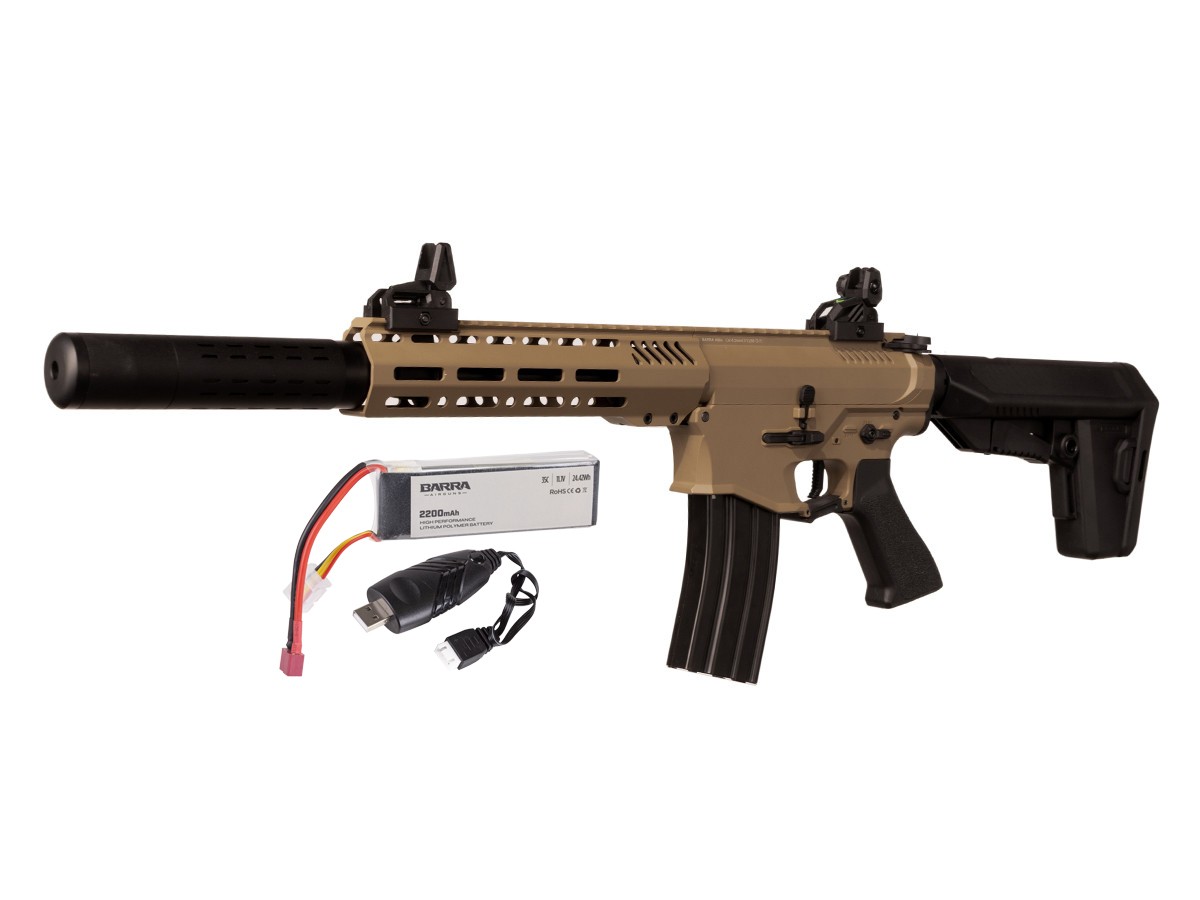
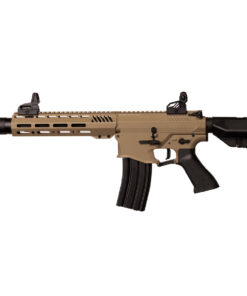
A modern combination of tactical styling, electric-powered operation, and recreational shooting performance is delivered by the Barra 400E Gen 2 BB Rifle, Tan. Designed for shooters who appreciate contemporary airgun technology, this updated platform has been created to provide an engaging shooting experience while maintaining straightforward operation and distinctive aesthetics.
Unlike many conventional BB rifles, electric power is utilized by the Barra 400E platform. Consequently, traditional pumping or repeated manual cocking is reduced, allowing attention to be placed on handling, sight alignment, and controlled target shooting. Furthermore, the tan exterior gives the rifle a recognizable tactical appearance that stands apart from standard black airgun designs.
Whether recreational targets are being used in a properly prepared backyard range or organized target sessions are being enjoyed at an approved location, versatility has been incorporated throughout the design.
Why Choose the Barra 400E Gen 2 BB Rifle, Tan?
Several improvements are represented by the second-generation platform. Most importantly, the rifle has been developed around convenient electric operation. Therefore, an accessible shooting experience can be enjoyed without the repetitive charging procedures associated with some traditional pneumatic systems.
Additionally, a modern rifle-inspired layout has been incorporated. As a result, controls, handling surfaces, and accessory areas can be approached in a familiar and practical manner.
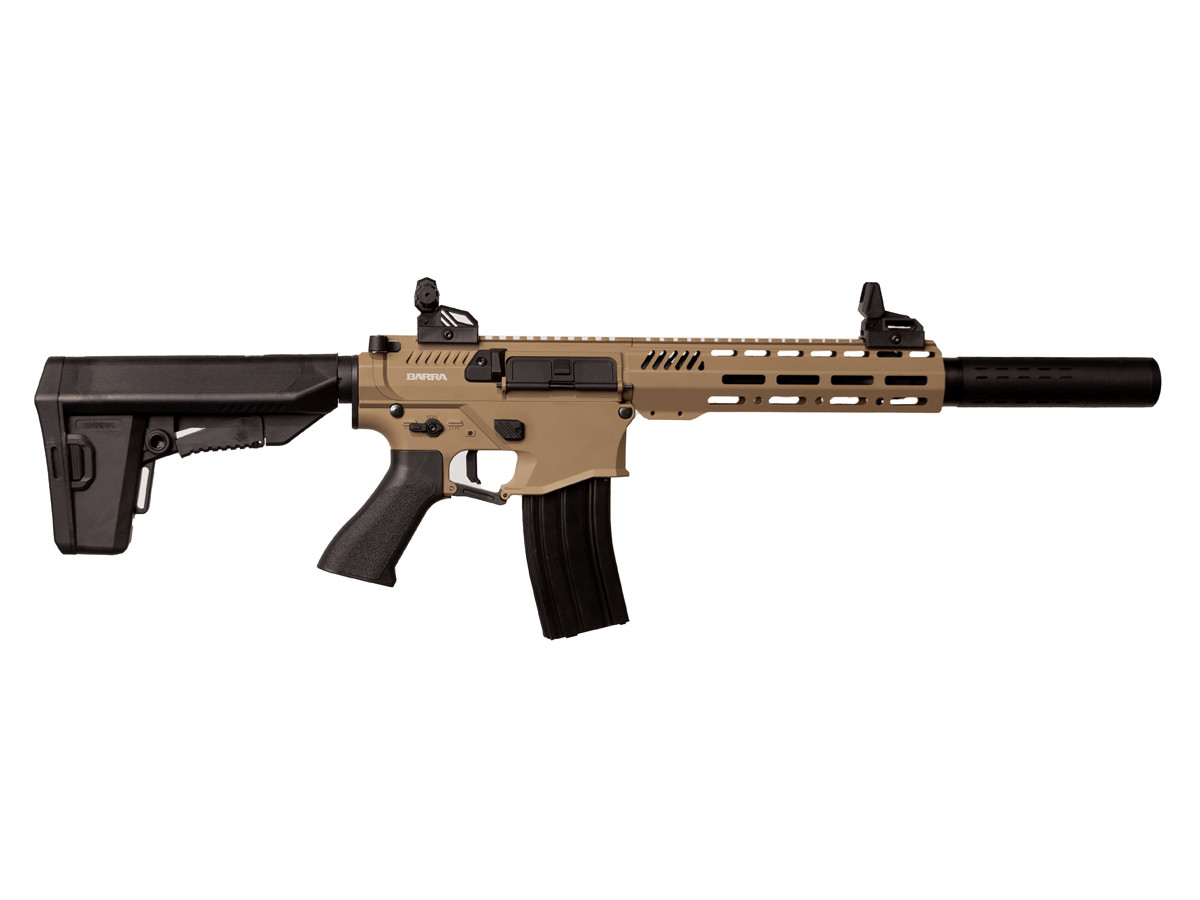
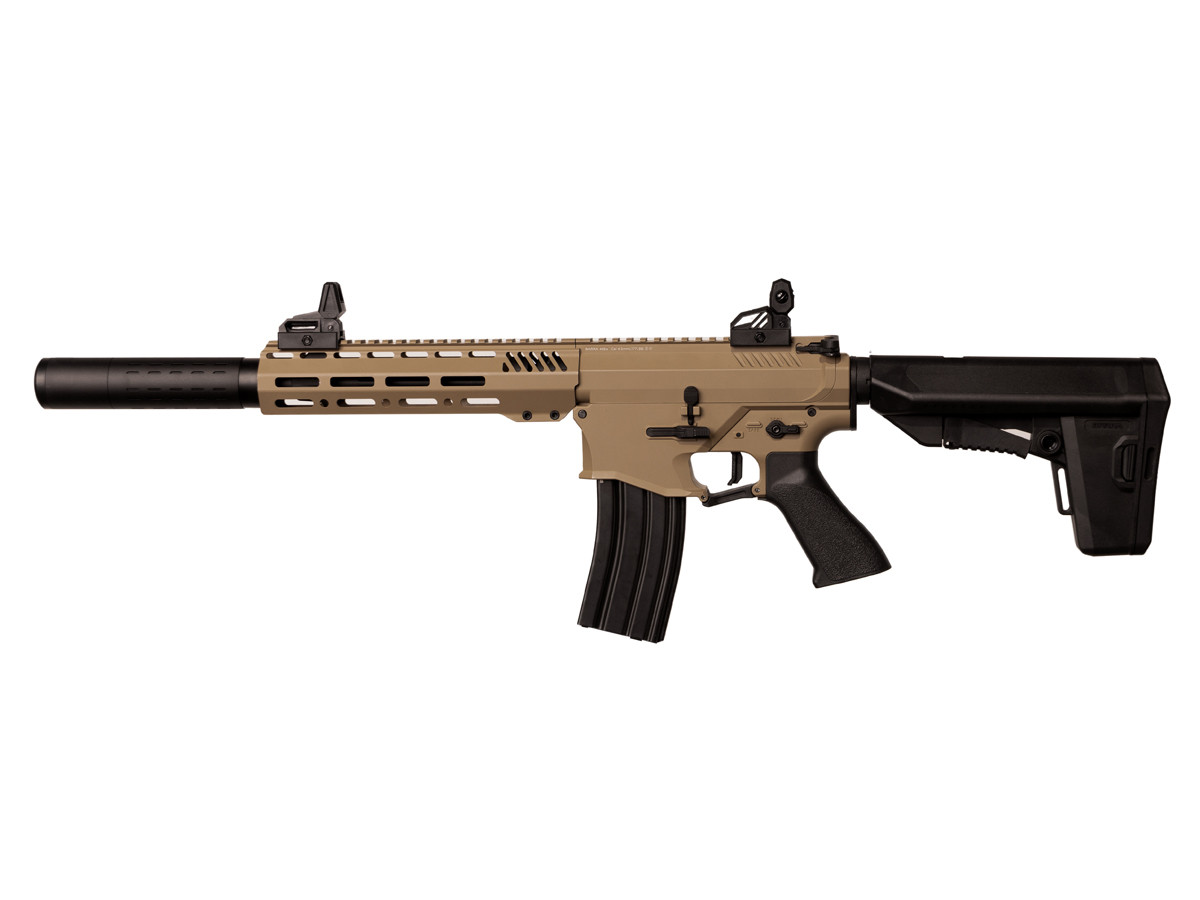
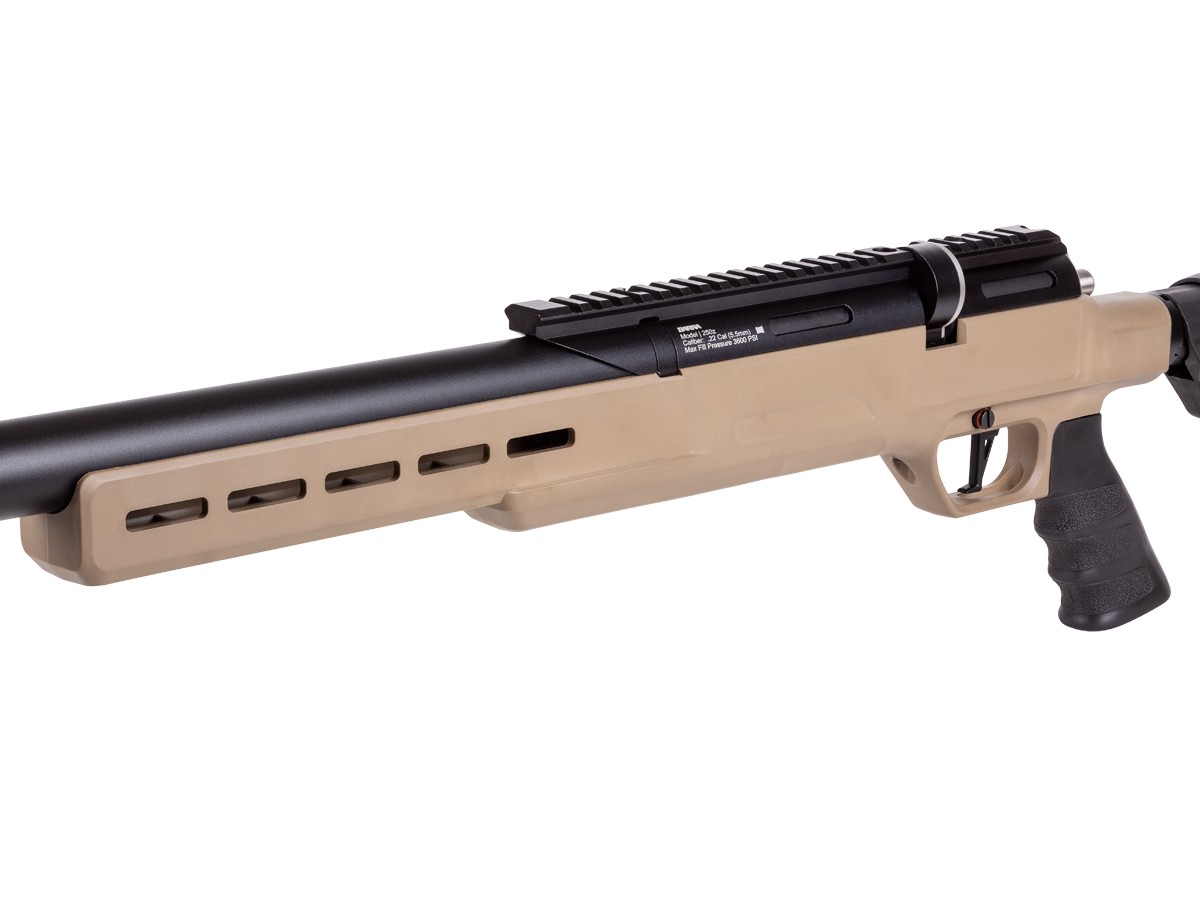
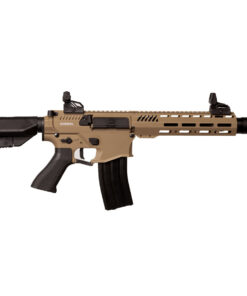
Visual appeal has also been given considerable attention. Rather than being finished in a conventional dark color, the Barra 400E Gen 2 BB Rifle, Tan features an attractive tan configuration that provides a distinctive contemporary appearance.
Product Highlights
- Second-generation Barra 400E platform
- Electric-powered BB rifle design
- Distinctive tan exterior finish
- Designed primarily for recreational and target shooting
- Modern tactical-inspired styling
- Convenient operating system
- Ergonomic handling characteristics
- Accessory-friendly configuration
- Suitable for controlled shooting practice
- Designed for reusable recreational shooting enjoyment
Electric-Powered Shooting Experience
Convenience is one of the defining characteristics of the Barra 400E Gen 2 BB Rifle, Tan. Instead of requiring a traditional spring-powered cocking cycle between individual shots, electrical operation is incorporated into the firing system.
Because of this approach, shooting sessions can feel smoother and more continuous. Additionally, less physical effort may be required between shots compared with manually cocked platforms.
For recreational shooters, this operating principle can make target sessions especially enjoyable. More attention can therefore be directed toward stance, trigger control, sight picture, and safe range discipline.
Moreover, electric operation gives the rifle a distinctly modern identity. While traditional air rifles continue to appeal to many enthusiasts, electronically operated BB platforms provide an alternative experience for anyone interested in contemporary airgun technology.
Tactical-Inspired Tan Design
A strong visual identity is immediately provided by the tan finish. Accordingly, the rifle can appeal to users who prefer equipment that looks different from conventional black recreational BB guns.
However, appearance has not been considered alone. Practical handling features are integrated throughout the platform so the rifle can remain comfortable during regular target sessions.
The body configuration has been designed around a modern sporting-rifle profile. Therefore, a balanced and familiar handling experience can be achieved while the rifle is being used responsibly.
Meanwhile, the contrasting mechanical components and tan bodywork create an attractive overall presentation. For collectors of recreational airguns, this distinctive finish can also provide additional visual variety.
Designed for Recreational Target Practice
Controlled recreational shooting is where the Barra 400E Gen 2 BB Rifle, Tan can be particularly enjoyable. Paper targets, approved reactive targets, and appropriate airgun-rated target systems can all be incorporated into carefully prepared shooting sessions.
Because consistent practice is important, repeatable handling characteristics have been prioritized. Consequently, users can spend more time developing fundamental shooting skills rather than repeatedly managing complex operating procedures.
Additionally, an appropriate backstop should always be installed before shooting begins. Protective eyewear should also be worn by everyone in the shooting area. Furthermore, local regulations concerning BB guns and air rifles should always be checked before the product is transported or used.
Practical Benefits for Target Shooters
Ease of operation can be especially valuable during extended recreational sessions. Since the rifle is electrically powered, repeated manual cocking movements are minimized.
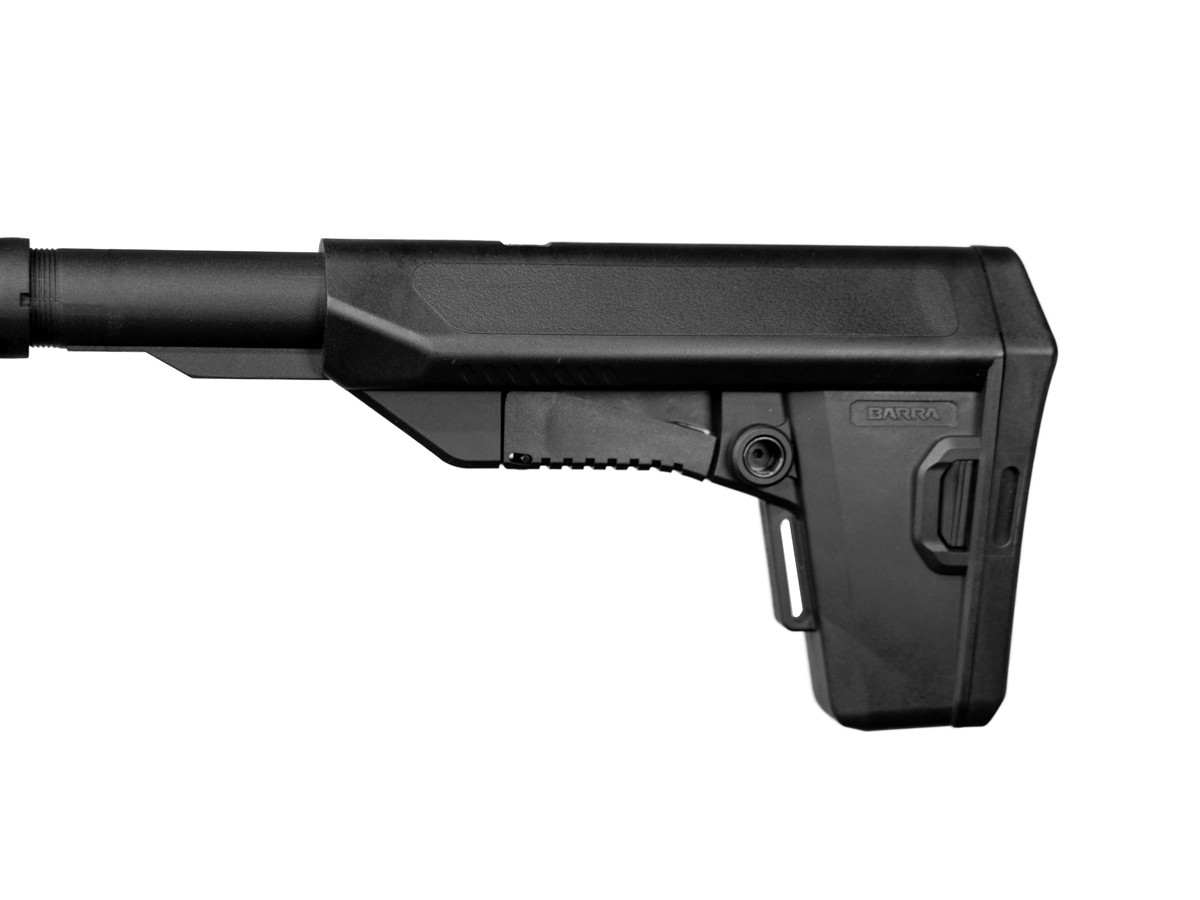
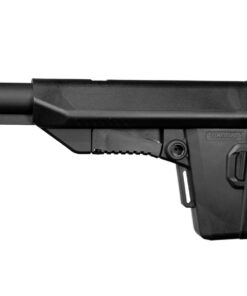
A modern stock and grip arrangement can also contribute to comfortable positioning. Meanwhile, the rifle-inspired layout can encourage consistent shoulder placement and controlled aiming.
Because safe shooting habits should always be reinforced, the platform should only be operated in an appropriate environment with a reliable backstop and clearly controlled shooting direction.
Modern Ergonomics and Handling
Handling characteristics play an important role in any recreational rifle platform. For that reason, the Barra 400E Gen 2 BB Rifle, Tan has been configured with usability in mind.
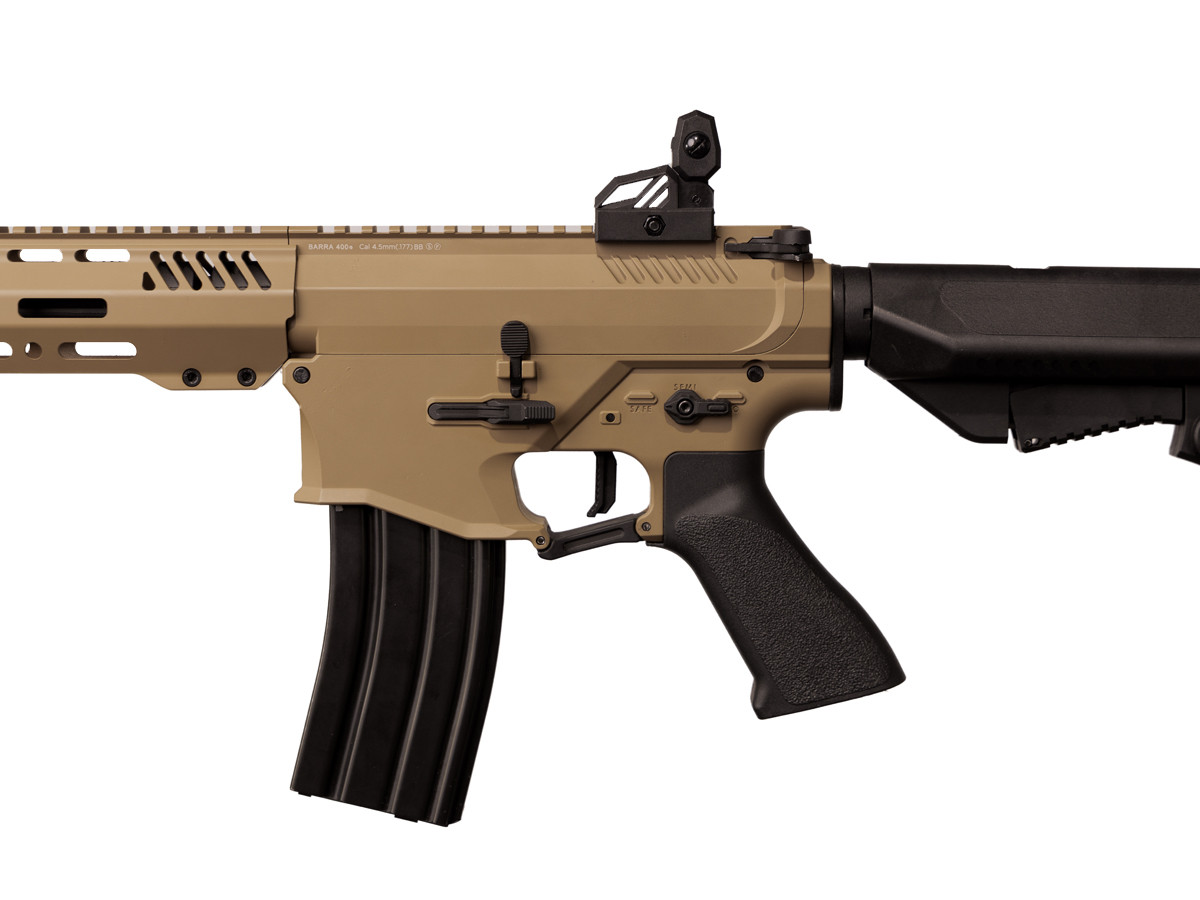
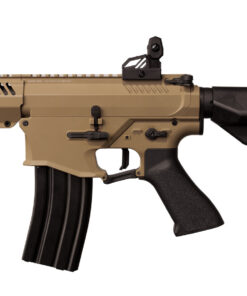
A comfortable interface is provided between the shooter and the rifle through its modern grip and stock arrangement. Additionally, the controls have been positioned to support practical operation.
During target sessions, stability can therefore be maintained more easily. Likewise, transitions between aiming, firing, and preparing for the next shot can feel natural once the user has become familiar with the rifle.
The tactical-inspired profile also provides opportunities for compatible accessories where supported by the rifle’s configuration. Nevertheless, every accessory should be installed according to manufacturer recommendations.
An Updated Generation of the Barra 400E
Generation updates are typically introduced so that an established platform can be refined. Accordingly, the Barra 400E Gen 2 BB Rifle, Tan represents the continued development of Barra’s electrically powered BB rifle concept.
The updated configuration has been designed for shooters seeking something different from traditional pump, break-barrel, or CO₂-powered recreational rifles. Therefore, it occupies an interesting position within the modern BB gun category.
Furthermore, the combination of electrical operation and contemporary styling gives this model a recognizable character of its own.
For new recreational shooters, convenient operation may be appreciated. At the same time, experienced airgun enthusiasts may find the electronically powered system an interesting addition to an existing collection.
Easy Integration Into Recreational Shooting Sessions
Preparation for a target session can be kept straightforward. Once the rifle has been prepared according to the manufacturer’s instructions, an appropriate shooting location can be selected and a secure target system can be established.
Next, eye protection should be worn and the surrounding area should be confirmed as safe. Only after those precautions have been completed should recreational shooting begin.
Because convenience has been built into the platform, repeated target practice can be conducted without unnecessary interruptions. As a result, structured sessions involving accuracy drills, target transitions, or general plinking can be enjoyed responsibly.
Who Is the Barra 400E Gen 2 BB Rifle, Tan For?
The Barra 400E Gen 2 BB Rifle, Tan can be considered by recreational shooters who value modern styling and electronically powered operation.
Likewise, airgun enthusiasts interested in unusual operating systems may appreciate how this platform differs from conventional spring-powered designs.
Collectors may also be attracted by the tan finish, particularly when visual variety is desired within an existing airgun collection.
Most importantly, responsible ownership should always be practiced. BB rifles are not toys, and safe handling procedures should therefore be followed at all times.
Ideal Uses Include
- Recreational target practice
- Controlled backyard shooting where legally permitted
- Airgun collecting
- Familiarization with basic shooting fundamentals
- Organized BB shooting activities
- Informal plinking with approved targets and a secure backstop
A Distinctive Choice for Modern BB Rifle Enthusiasts
Contemporary appearance, electric operation, and recreational functionality have been brought together in the Barra 400E Gen 2 BB Rifle, Tan. Instead of following the traditional formula used by many BB rifles, a more technologically focused shooting experience is provided.
Moreover, the tan finish creates a distinctive appearance, while the ergonomic rifle-inspired configuration supports comfortable handling.
For shooters seeking a recreational platform that combines modern engineering with straightforward operation, this model provides an interesting alternative. Additionally, its second-generation design demonstrates how electric BB rifle technology continues to evolve.
Ultimately, the Barra 400E Gen 2 BB Rifle, Tan is designed to deliver an engaging target-shooting experience while maintaining the convenience expected from a modern electric BB platform. When operated responsibly, maintained according to manufacturer guidance, and used with suitable eye protection and a secure backstop, it can become an enjoyable addition to a recreational airgun collection.
Practical Use Scenario
A modern electric BB rifle becomes most useful when it is placed in a controlled recreational setting where convenience, repeatability, and structured target practice are prioritized. Rather than being treated as a casual toy, it should be approached as a sporting platform that rewards careful handling, safe preparation, and consistent shooting habits. In practical use, the strongest benefits are experienced when the rifle is prepared correctly, the shooting area is organized properly, and each session is planned around accuracy, control, and responsible enjoyment.
Setting Up a Safe Backyard Target Session
A typical practical scenario begins with a legally permitted backyard or private shooting area. Before the rifle is handled, an appropriate backstop should be positioned behind the target. Ideally, the backstop should be capable of safely capturing BBs without creating dangerous ricochets. Hard metal surfaces, exposed concrete, glass, and other unsuitable materials should be avoided because rebounds may occur.
Once the shooting lane has been established, targets can be positioned at a suitable recreational distance. Paper targets are often preferred because groups can be measured easily and accuracy improvements can be tracked over time. Approved reactive targets can also be used where appropriate, although they should always be designed specifically for BB or airgun use.
Protective eyewear should then be worn by the shooter and anyone else present in the area. Additionally, access to the shooting lane should be restricted so no person or animal can unexpectedly enter the line of fire.
With the range prepared, the rifle can be checked according to the manufacturer’s operating instructions. Power condition, ammunition supply, sights, and general function should all be confirmed before the first shot is taken.
Recreational Accuracy Practice
Once everything has been safely arranged, the rifle can be used for controlled accuracy practice. A stable shooting position can first be adopted so the shooter can focus on fundamentals rather than speed.
The stock should be placed comfortably against the shoulder, while the support hand should be positioned naturally. At the same time, the dominant hand should maintain a secure but relaxed grip. Excessive tension should generally be avoided because unnecessary movement can affect consistency.
Next, the sights should be aligned with the center of the target. Instead of rushing the shot, the trigger should be pressed smoothly while the sight picture is maintained.
The first few shots can be treated as a warm-up group. These initial shots allow the shooter to become familiar with trigger feel, handling characteristics, and sight alignment. Afterward, a second group can be fired under more deliberate conditions.
Because electric operation reduces the need for repeated manual cocking, the shooter can maintain a more consistent position between shots. This can be useful when practicing group shooting because fewer unnecessary movements are introduced into the sequence.
Developing Consistent Shooting Fundamentals
A practical training session can be structured around small groups of shots rather than continuous firing. For example, five-shot groups can be used to evaluate consistency.
After each group, the rifle should be made safe before the target is approached. The location of each impact can then be examined. If the group is scattered, the shooter can evaluate whether grip pressure, breathing, trigger control, or sight alignment may have changed.
This type of structured practice is especially useful for beginners because improvements can be identified gradually. Rather than focusing entirely on hitting the exact center of the target, attention can first be given to creating a tight group.
A tight group positioned slightly away from the center is often more useful for training than a widely scattered group with one lucky central hit. Once repeatable groups are being produced, sight adjustments can be considered according to the manufacturer’s instructions.
Furthermore, the electronically powered system allows the shooter to concentrate on technique without interrupting every shot with a substantial manual cocking movement. Consequently, body position can remain more consistent from one shot to the next.
Informal Plinking in a Controlled Environment
Another practical scenario involves informal recreational plinking. Instead of conventional paper targets, approved airgun targets can be arranged at different positions within a secure shooting lane.
Small reactive targets may be placed at varying distances, allowing the shooter to practice controlled transitions between them. However, safe angles and proper backstops should always be maintained.
For example, three approved targets could be placed across the shooting area. The shooter can begin with the left target, move to the center, and then engage the right target. The objective should not initially be maximum speed. Instead, smooth movement and positive target identification should be emphasized.
As consistency improves, the shooter can gradually reduce the amount of time spent between targets while maintaining safe control.
This type of exercise can make recreational sessions more engaging because several shooting skills are practiced simultaneously. Sight acquisition, body positioning, trigger discipline, and target transitions can all be developed within one controlled activity.
Practicing From Different Supported Positions
Variety can also be added by practicing from different shooting positions. A bench-supported position is particularly useful when evaluating accuracy because much of the shooter’s movement can be reduced.
From a stable bench, the rifle can be supported properly while the shooter focuses on trigger control and sight alignment. This makes it easier to determine whether inconsistent results are being caused by shooting technique or other factors.
After bench practice has been completed, a standing position can be introduced. Standing requires greater balance and stability because the rifle is supported entirely by the shooter.
Rather than attempting rapid shots, the shooter can practice holding the sights steadily on the target. Small movements are normal, so the objective should be controlled alignment rather than complete motionlessness.
A seated or kneeling position may also be used where appropriate. These positions can provide increased stability while still requiring more technique than bench-supported shooting.
By rotating between positions, recreational sessions can remain interesting while useful shooting fundamentals are developed.
Introducing a New Recreational Shooter
The rifle can also be used during supervised introductory shooting sessions. When a new shooter is being introduced, safety procedures should be explained before ammunition is loaded.
The muzzle should always be pointed in a safe direction. Additionally, the trigger should remain untouched until the shooter is properly positioned and ready to fire.
The new shooter can first be shown how the rifle should be held and how the sights are aligned. Once those fundamentals have been understood, the first shot can be taken from a supported position.
A large paper target is usually helpful during the introductory stage because successful hits are easier to achieve. Positive reinforcement should be focused on safe handling and consistent technique rather than speed.
Because repeated manual cocking is minimized by the electric system, the instructor can spend more time observing the shooter’s stance, grip, and trigger control.
Furthermore, the straightforward operating experience can allow new recreational shooters to become comfortable with the basic shooting process without being distracted by complicated mechanical procedures.
Structured Target Challenges
Recreational target challenges can be created to make practice more interesting. For instance, several numbered circles can be printed on a target sheet. The shooter can then attempt to engage the circles in a specific sequence.
Another exercise can involve progressively smaller target zones. The largest target can be engaged first, followed by medium and small sections.
Accuracy rather than speed should remain the primary objective.
A score-based format can also be introduced. Each ring or target area can be assigned a point value, and several controlled shooting rounds can be completed.
Because the shooting experience is easily repeatable, sessions can be recorded over time. Scores, group sizes, and distances can all be noted in a simple shooting log.
This approach allows practical improvement to be measured rather than guessed. Over several weeks, a shooter may notice tighter groups, improved sight alignment, or better stability from standing positions.
Longer Recreational Sessions
Extended range sessions can also benefit from the convenient operating system. With traditional manually cocked platforms, repeated physical cycling can eventually interrupt shooting rhythm.
An electric system allows a more continuous session to be maintained. Nevertheless, responsible pacing should still be practiced.
Short breaks can be taken between groups so equipment can be inspected and concentration can be maintained. During these pauses, the shooter can check whether screws, sights, or accessories remain secure.
Ammunition levels can also be reviewed before the next shooting sequence begins.
If accuracy suddenly changes, the session should not simply be continued without investigation. The target, sights, ammunition supply, and shooting technique should instead be evaluated.
This methodical approach helps ensure that recreational shooting remains controlled and productive.
Using Optics or Compatible Sighting Equipment
Where compatible, suitable sighting accessories may be installed according to manufacturer instructions. A simple optic can make target acquisition easier, particularly when smaller paper targets are being used.
Before recreational practice begins, the sight should be securely mounted and properly aligned.
Initial sight confirmation can be performed from a stable bench-supported position. Several deliberate shots should be fired at the center of the target.
If the group remains consistently offset, small sight adjustments may be made. Adjustments should generally be introduced gradually rather than dramatically.
After each adjustment, another controlled group should be fired.
Once the sight has been properly confirmed, standing and unsupported practice can resume.
This process can make recreational target shooting more rewarding because the shooter develops an understanding of both equipment setup and personal technique.
Indoor Airgun Range Use
Where permitted by facility rules, the rifle may also be suitable for dedicated indoor airgun ranges.
Indoor ranges provide several practical advantages. Lighting is usually controlled, target systems are properly designed, and shooting distances can often be adjusted consistently.
Additionally, environmental factors such as wind are removed. This makes indoor practice especially useful for evaluating shooting fundamentals.
A shooter can use the indoor range to test different stances, compare group sizes, and confirm sight settings under predictable conditions.
Range rules should always be followed precisely. Some facilities may restrict certain types of airguns, ammunition, or firing modes. Therefore, compatibility should be confirmed before arriving.
Air Venturi, Seneca and Modern Pneumatic Airgun Platforms
Modern pneumatic shooting equipment now covers everything from compact target platforms to large-calibre sporting systems. One of the most recognizable models in this category is the air venturi avenger, which combines adjustable PCP technology with practical ergonomics and a versatile configuration. Shooters researching more modular designs may instead consider the air venturi avenge-x, while searches for avenger x, avenge x, avenge-x, and avenge x tactical often reflect interest in newer configurations built around adaptability.
Calibre is another major consideration. Someone researching a rifle pcp avenger 6.35 may be interested in a larger pellet option, while the less common search variation avenge xx can lead buyers toward the same general product family. Regardless of terminology, choosing the correct rifle should depend on shooting discipline, preferred calibre, physical dimensions, available filling equipment, and local regulations.
Exploring the Dragon Claw Big-Bore Family
The dragon claw air rifle represents a substantially different category from conventional small-bore pneumatic equipment. Searches for a dragon claw 50 caliber air gun generally come from users exploring large-calibre compressed-air platforms designed for specialized sporting applications.
Alternative search terminology such as dragonclaw gun, dragon claw airgun 50 cal, and dragon claw air gun can also appear when buyers are comparing models, ammunition options, accessories, and availability. Shoppers researching dragon claw 50 caliber air rifle price should pay attention not only to purchase cost but also to filling equipment, appropriate projectiles, maintenance requirements, and applicable laws.
The phrase dragon claw 50 cal is commonly associated with this powerful pneumatic category. Within the manufacturer’s lineup, the seneca dragon claw is particularly well known, while the seneca dragon claw 50 caliber designation helps distinguish its calibre from smaller pneumatic rifles. A more specialized configuration may be found through searches for the seneca dragon claw 2 tactical.
Understanding the Wider Airgun Market
The spelling air ventura occasionally appears during online product searches even though buyers are often looking for Air Venturi equipment. The broad term air gun encompasses several operating systems, including PCP, CO2, spring-piston, gas-ram, and multi-pump pneumatic designs.
Other variations such as air rifle com, aventuri, and airrifle regularly appear in search data. Regardless of spelling, shoppers should distinguish between different powerplants before comparing specifications.
Modern pcp air rifles store compressed air in an onboard reservoir. By comparison, pneumatic air rifles is a broader description that may also include multi-pump and other compressed-air systems. Unusual search wording such as airbun air may appear alongside more conventional product terminology.
An air hunting rifle should always be selected according to the lawful quarry, calibre requirements, accuracy, projectile performance, and permitted energy level in the shooter’s jurisdiction.
Seneca Airgun Platforms
The broader seneca air rifles catalogue contains several types of pneumatic equipment rather than one single operating system. Someone looking for a seneca dragonfly mk2 is researching a considerably different platform from a large-bore Dragon Claw.
A general search for seneca air rifle may produce PCP, multi-pump, and specialized sporting models. Likewise, seneca air is sometimes used as shorthand when users are trying to locate the brand or its product range.
The seneca dragonfly emphasizes a self-contained pneumatic design, making it particularly appealing to shooters who do not want to depend entirely on an external high-pressure filling source. Buyers searching seneca dragonfly mk2 for sale should verify calibre, condition, warranty, and exact generation before ordering.
The simplified term dragonfly mk2 is another common product query. Meanwhile, the seneca dragon claw ii refers users back toward the company’s big-bore category, and searches for seneca guns can cover its wider pneumatic catalogue.
Air Venturi Alpha Series
The air venturi alpha provides another option for users exploring PCP technology. Its design is aimed at shooters who want practical pneumatic performance without immediately moving into highly specialized big-bore equipment.
A more maneuverable alternative can be found in the air venturi alpha compact. Compact dimensions may be attractive for shooters who value reduced overall length, although specifications should still be compared carefully.
Search terms such as alphagun airx, alphapure, alpha airx, alpha pri, and alpha air can sometimes appear in related search results. Because these terms can refer to different products or even unrelated categories, confirming the exact manufacturer’s model name is important before purchasing accessories or replacement parts.
Someone searching air venturi alpha for sale should examine included equipment, calibre, fill requirements, product condition, warranty, and regional specification. The air venturi alpha air rifle can then be evaluated based on intended recreational or sporting use rather than advertised specifications alone.
Air Venturi MicroStrike
Compact PCP development continues with the air venturi microstrike, a platform designed around reduced dimensions and pneumatic operation. Some users may search for it as the air venturi micro strike, particularly when comparing listings across different online marketplaces.
The phrase microstrike pcp emphasizes its operating system, while microstrike air venturi combines the product and manufacturer names in reverse order. A general search for micro rifle may also lead buyers toward compact pneumatic equipment from several manufacturers.
Compactness should never be mistaken for a lack of capability. Pressure ratings, calibre, energy, ammunition compatibility, and safe handling requirements remain important regardless of overall dimensions.
High-Powered Pneumatic Rifles and Maintenance
People researching the best high powered air rifles for hunting should compare far more than muzzle velocity. Accuracy, retained projectile energy, calibre, shot consistency, rifle balance, ethical shooting distance, and local hunting legislation all influence whether a platform is appropriate.
Owners occasionally search airventure avenger disassembly instructions when maintenance becomes necessary. Because high-pressure reservoirs can contain substantial stored energy, internal servicing should follow official manufacturer documentation and appropriate depressurization procedures.
Specialized projectile systems also appear within the pneumatic market. An air bolt gun uses compressed-air technology with a projectile system different from an ordinary pellet rifle. Searches for airbolt gun, air bolt, airbolt, and airbolt rifle illustrate the variety of wording customers use when researching this category.
The phrase pax bolt may also appear among specialized projectile-related searches. Exact compatibility should always be confirmed directly against the intended launcher or rifle before accessories are purchased.
Pneumatic Shotgun Systems
Another specialized category is the air shotgun for hunting, which uses compressed air rather than conventional firearm propellant. These platforms are niche products that should be evaluated according to local hunting regulations and manufacturer-approved ammunition.
The wingshot is associated with pneumatic shotgun technology, while the alternative spacing wing shot is frequently used during online searches. Such designs demonstrate how compressed-air technology can extend beyond traditional pellet rifles.
Understanding 12-Gram CO2 Cartridges
CO2-powered airguns use a different energy source from high-pressure PCP systems. Small pistols and recreational platforms frequently depend on 12g co2 actuation cartridges for their operating gas.
A standard 12g co2 cartridge is a small disposable cylinder containing compressed carbon dioxide. Buyers may also search for a 12 gram co2 cartridge, 12gram co2 cartridge, or simply co2 12g when purchasing replacements.
The search term 12grams is sometimes entered without reference to CO2, while co2 cartridges 12g clearly identifies the intended accessory. Other variations include 12-gram co2 cartridge, co2 12 gram, and 12 g co2 cartridges.
Although these terms describe the same general cartridge format, users should check the equipment manufacturer’s specifications before installation because seals, dimensions, piercing mechanisms, and compatibility can vary.
PCP Air Rifle Technology Explained
A pcp air rifle is powered using compressed air stored inside an onboard cylinder or bottle. The misspelling air rifel can sometimes appear in customer searches but generally refers to the same broader equipment category.
People asking what is a pcp air rifle are essentially asking how pre-charged pneumatic technology differs from spring-powered or CO2-based systems. In PCP equipment, the reservoir is filled beforehand and subsequently meters compressed air during firing.
An ar15 air rifle normally describes a pneumatic platform that uses modern sporting-rifle-inspired styling or ergonomics. Its appearance does not mean that its internal operating mechanism is the same as a firearm.
Similarly, marketing descriptions such as high powered air gun and high velocity air rifle should be evaluated alongside energy, calibre, accuracy, intended role, and legal restrictions rather than being used as the sole basis for a purchase.
Large-calibre equipment may be found through the unusual combined search phrase big bore pcp air riflespcp shotgun, which overlaps two specialized pneumatic categories.
Seneca Double Shot and Wingshot Systems
The seneca double shot .50 cal double barrel shotgun is a distinctive pneumatic platform that differs considerably from conventional pellet rifles. Its double-barrel arrangement makes it one of the more unusual products within the compressed-air sporting market.
A shorter search for seneca double shot generally leads toward the same family. The designation seneca double shot .50 cal highlights its large-calibre format and helps distinguish it from smaller recreational equipment.
Another search for wingshot products may lead users toward pneumatic shotgun-style equipment capable of using manufacturer-approved projectiles or shot loads, depending on the specific model.
A double barrel air gun differs operationally from ordinary repeating pellet rifles. Likewise, the phrase shotgun air rifle is commonly used by shoppers attempting to describe hybrid pneumatic designs.
The simpler term double shot gun may produce broader results, so confirming the exact product before ordering parts or accessories remains important.
Avenger Components and Modular PCP Configurations
One component researched by existing owners is the air venturi avenger rear barrel support. Parts compatibility can depend on production generation, stock configuration, barrel arrangement, and other dimensional considerations.
The term avenge x pcp is commonly used by users specifically interested in the pre-charged pneumatic version of the modular platform. Understanding reservoir volume, regulator settings, fill pressure, stock design, and calibre availability is more useful than relying exclusively on headline velocity figures.
Air Venturi V10 and Precision Air Pistols
The air venturi v10 belongs to a different shooting category from larger pneumatic rifles. It is associated with precision pistol shooting and is therefore more relevant to shooters interested in balance, trigger feel, grip ergonomics, and controlled target performance.
Someone searching for a strong bb pistol may have different requirements because BB pistols are commonly designed for recreational shooting rather than formal precision disciplines.
A 10m air pistol is normally optimized for target competition at a standardized distance. Such equipment emphasizes repeatability and shooter control rather than maximum projectile velocity.
For beginners asking what is an air pistol, the term describes a handgun-format device powered by compressed air, CO2, spring mechanisms, or related airgun technologies.
An air metal gun usually refers informally to an air-powered pistol or replica featuring significant metal construction. A .50 cal air pistol, by contrast, belongs to a much more specialized large-calibre pneumatic category.
Searches for a 1000 fps pellet pistol frequently focus heavily on advertised velocity, although actual performance depends on pellet weight, test conditions, barrel design, and the specific platform.
The discipline of shooting air pistol can range from informal recreational practice to organized competition. A conventional air pellet pistol fires shaped pellets rather than spherical BB ammunition.
Competitive users interested in target shooting air pistol equipment should prioritize consistent sights, suitable grips, predictable triggers, and repeatable shot behavior.
The alternative question what is a air pistol means essentially the same thing as the grammatically standard wording but appears frequently in search queries. Meanwhile, a 22 air pistol refers to a platform chambered for .22-calibre airgun projectiles.
Choosing the Right Pneumatic Platform
Modern pneumatic equipment provides buyers with an exceptionally broad selection. Some platforms emphasize affordability and straightforward recreational use, while others focus on modularity, compact dimensions, precision competition, specialized projectiles, or large-calibre sporting performance.
The most suitable option should therefore be selected according to practical requirements. Buyers should consider calibre, reservoir capacity, pressure requirements, intended shooting discipline, rifle dimensions, ammunition availability, filling equipment, accessory compatibility, maintenance support, warranty coverage, and applicable legislation.
A carefully selected pneumatic platform can provide excellent consistency and a smooth shooting cycle when operated according to manufacturer specifications. More importantly, appropriate eye protection, secure storage, a reliable backstop, proper handling, and compliance with local laws should remain part of responsible ownership regardless of power level or platform style.
Maintaining Safe Handling Between Shooting Sequences
Practical use does not end when the trigger is released. Safe handling must continue throughout the entire session.
Whenever shooting is paused, the rifle should be placed into a safe condition according to the manufacturer’s instructions.
The muzzle should continue to remain pointed in an appropriate direction, even when the rifle is believed to be unloaded.
Before anyone enters the target area, the shooting sequence should be fully stopped and the equipment should be confirmed safe.
When the session has been completed, remaining ammunition should be handled properly and the rifle should be inspected.
Post-Session Care and Storage
After recreational use, basic care helps preserve reliable operation and appearance.
Exterior surfaces can be gently wiped to remove dust, fingerprints, and light debris. Aggressive cleaning chemicals should not be applied unless specifically approved by the manufacturer.
The barrel and internal components should only be maintained according to the recommended service procedure.
Electronic components should also be treated carefully. If a rechargeable power source is used, storage and charging instructions should be followed exactly.
The rifle should then be stored securely in a dry location away from unauthorized users.
For households with children, secure storage becomes especially important. Locked storage and controlled access should be treated as essential parts of responsible ownership.
A Practical Platform for Regular Recreational Use
Across these scenarios, the greatest advantage is provided by the combination of modern operation, familiar rifle-style handling, and repeatable recreational performance.
A beginner can use the platform to develop fundamental shooting habits. Meanwhile, a more experienced recreational shooter can create structured accuracy drills, target challenges, and position-based practice sessions.
Because manual cycling between every shot is reduced, greater attention can be given to sight picture, trigger control, stability, and target placement.
At the same time, responsible preparation remains essential. Proper eye protection, secure backstops, controlled shooting directions, suitable targets, and compliance with local rules should always be prioritized.
When these principles are followed, the rifle can be incorporated into a wide variety of recreational activities. From casual paper-target sessions to organized scoring challenges, a flexible shooting experience can be created around individual skill levels and preferences.
Ultimately, practical value is found not merely in firing BBs at a target, but in building repeatable habits around accuracy, consistency, equipment care, and safe operation. Through deliberate practice and responsible use, each session can become more controlled, more enjoyable, and more rewarding.

Reviews
There are no reviews yet.