We Deliver Airguns Directly To Your Door
SKU N/A Category

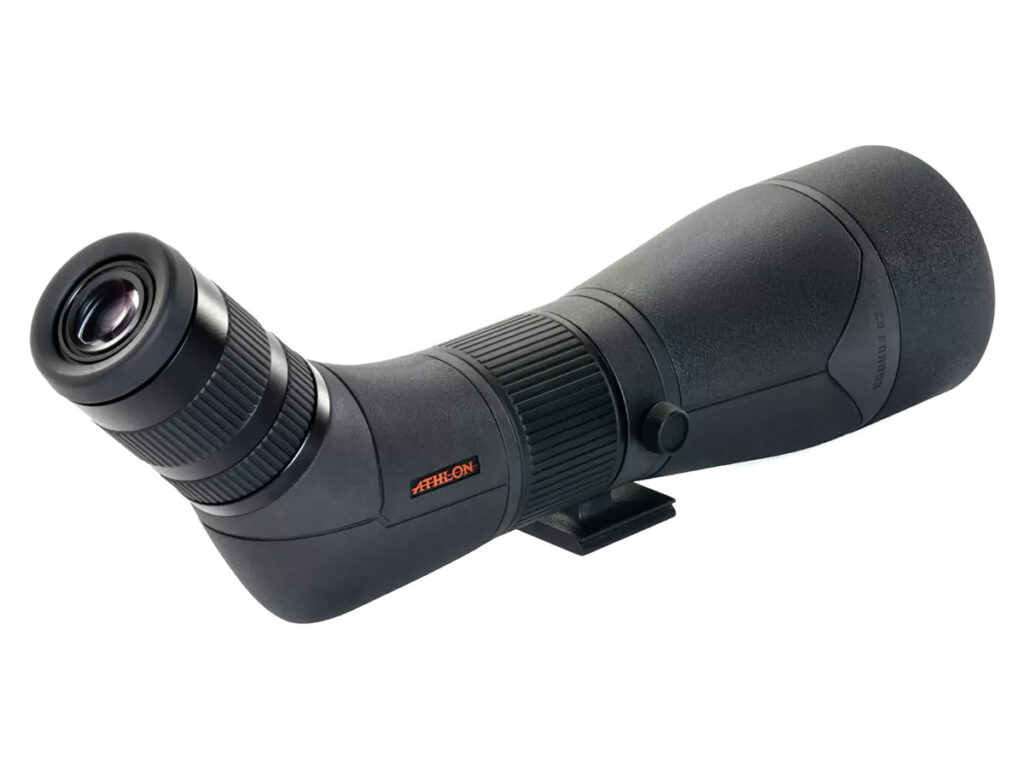
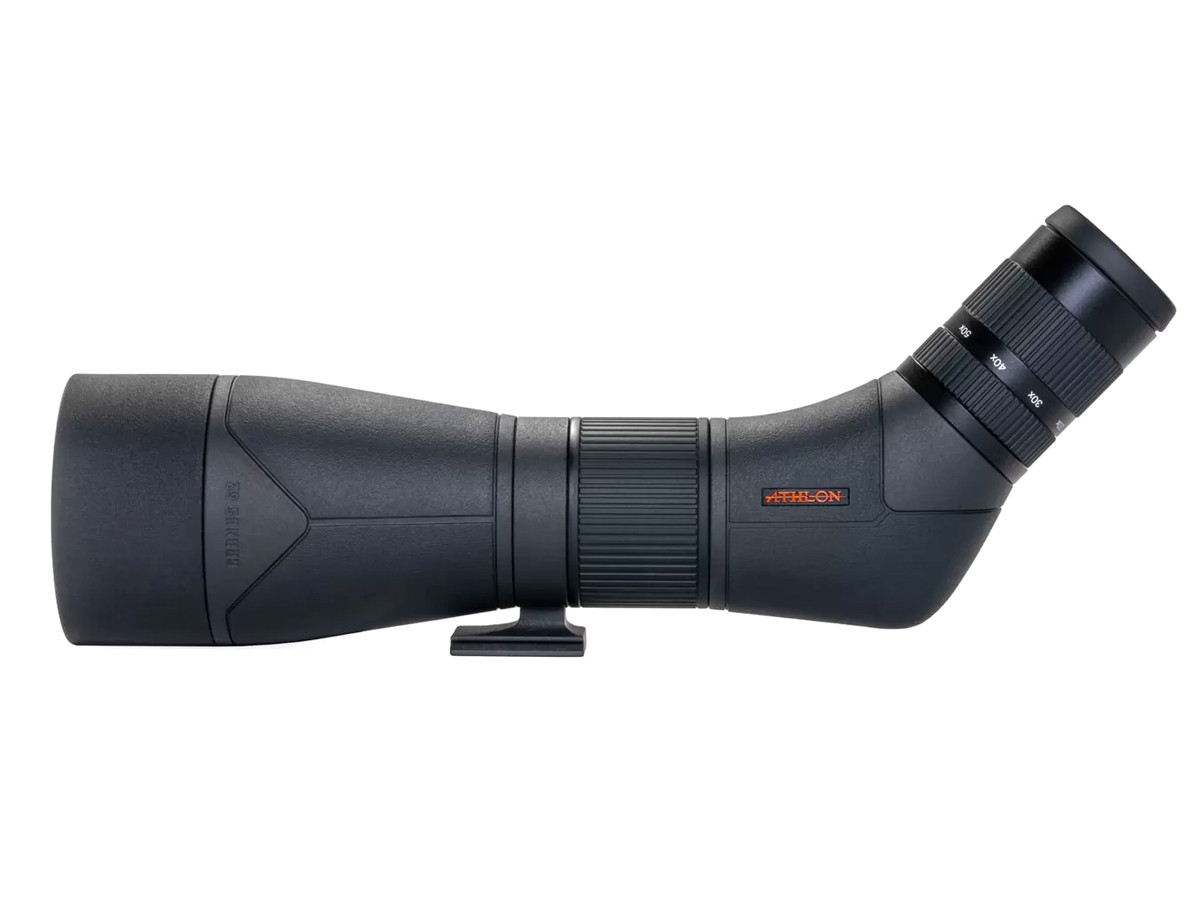
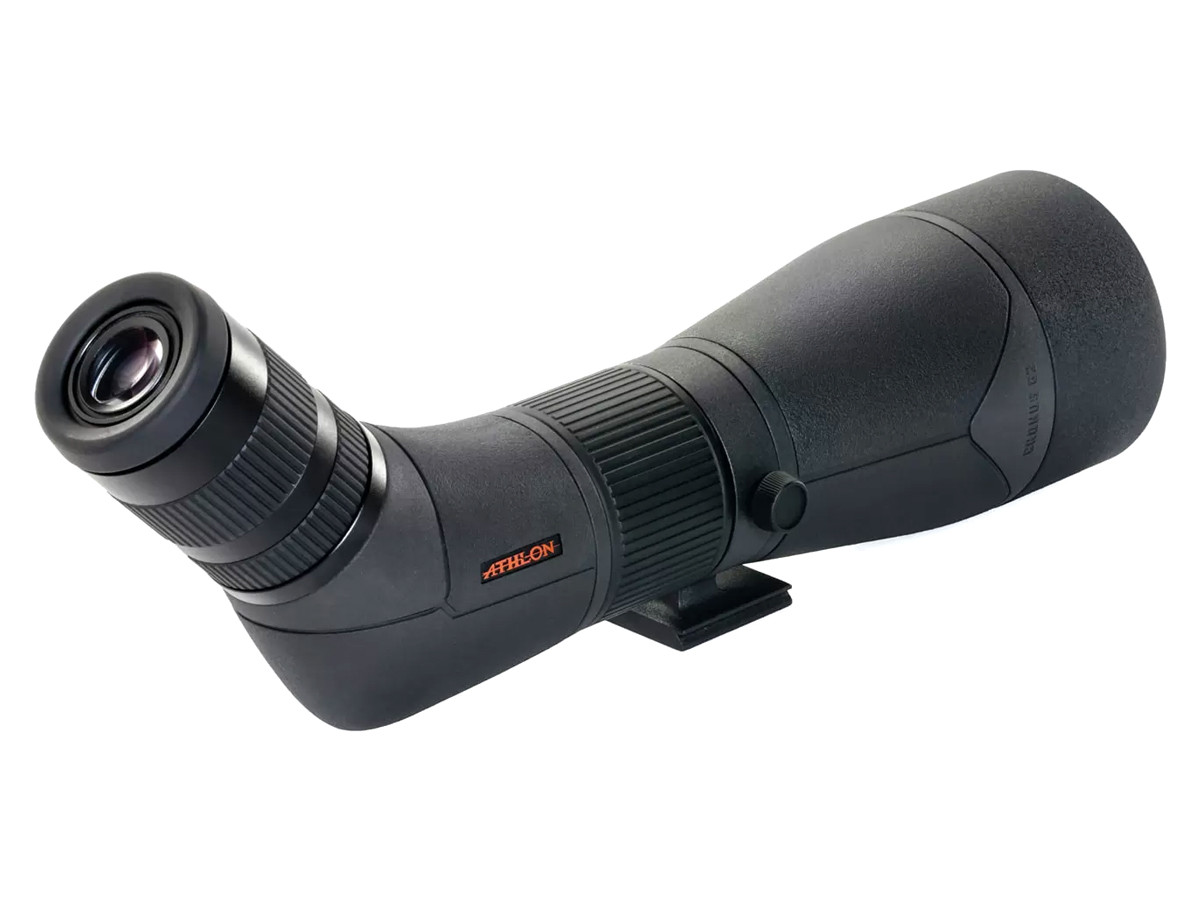
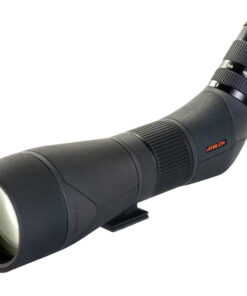
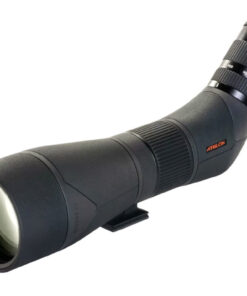
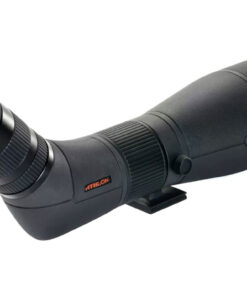
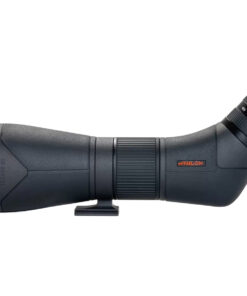
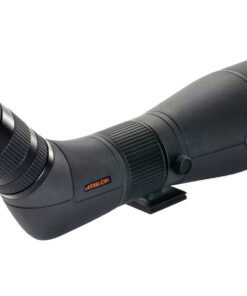
Athlon Optics Cronus G2 UHD 20-60×86 Spotting Scope

$725.00

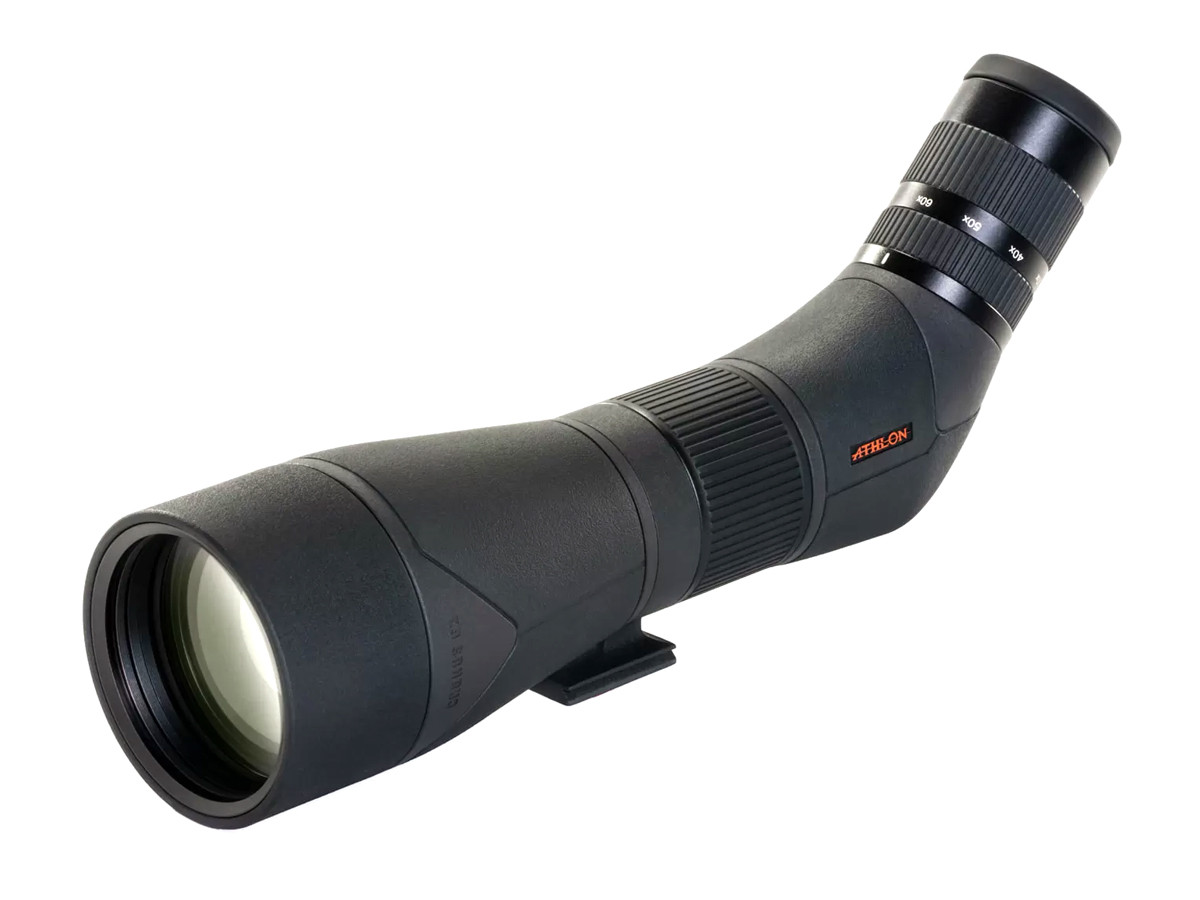
If you need a new spotting scope before your next hunting or birding event, check out the Athlon Cronus G2 UHD – Dual Focus 20-60X86 Spotting Scope. It has magnification ranging from 20 – 60x to bring you in as close as possible. You’ll love the crystal clear image it provides thanks to its extra-low dispersion UHD glass. The glass is coated with the XPL Protective Coating to keep it safe from dirt, oil, or scratches.

An 86mm objective lens lets in the light while an angled 45-degree eyepiece enables comfortable viewing in any position. It is argon gas purged and waterproof to work well even in inclement weather. It is 15.2” long and weighs 73.5 ounces with an FOV of 117 ft to 60 ft at 1,000 yards.

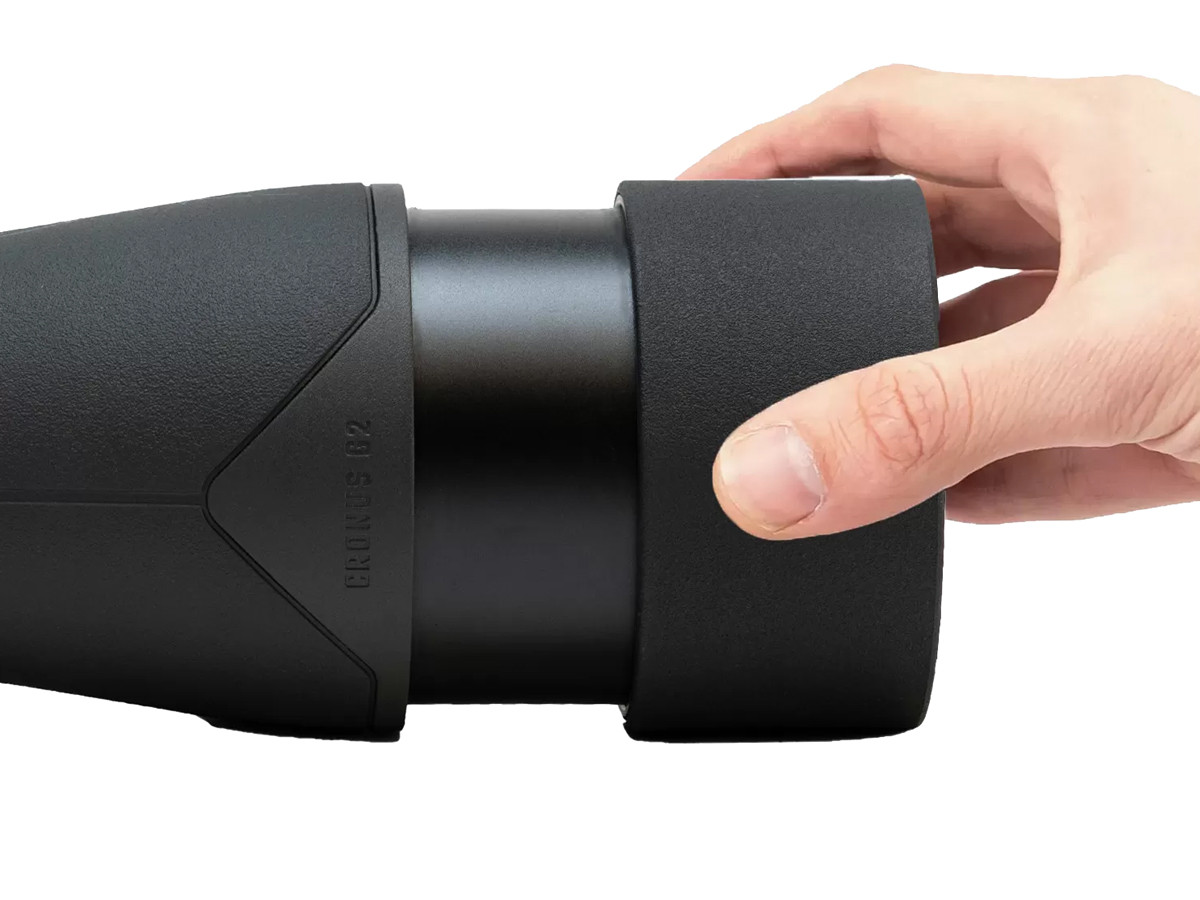
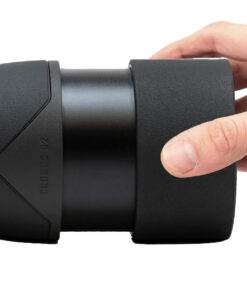
This scope has an extendable sunshade, a 1/4-20 threaded tripod mount, and a quick-release plate. Athlon’s Gold Medal Lifetime Warranty covers this spotting scope, so if the unexpected happens, rest assured that it’s covered.

Whether you intend to use it for hunting or bird watching, the Athlon Cronus G2 UHD – Dual Focus 20-60X86 Spotting Scope is a great option. Buy yours now from Airgun Depot.

Athlon Optics Cronus G2 UHD Dual Focus 20-60×86 Spotting Scope

  • Magnification: 20 – 60x
  • FOV: 117 – 60 ft at 1,000 yards
  • Weight: 73.5 oz
  • Dimensions: 15.2″ x 6.7″
  • 45-degree eyepiece
  • Eye Relief: .79 – .7″
  • Objective lens: 86mm
  • Close focus: 29.5 ft
  • Argon purged
  • Waterproof
  • Advanced fully multi coated lenses
  • XPL coating
  • ESP Dielectric coating
  • Rotating ring
  • BAK-4 Glass Prisms
  • Dual focus
  • Tripod adaptable
  • 1/4-20 thread
  • Adapter plate
  • UHD glass
Specs
  • Manufacturer Athlon Optics
  • Condition New
  • Accessories Type Scopes
  • Warranty Lifetime limited warranty
  • Weight 4.60
  • Upgrades Dual Focus

Athlon Optics Cronus G2 UHD 20-60×86 Spotting Scope – Premium Clarity, Precision & Long-Range Performance

Experience Exceptional Optical Performance with the Athlon Optics Cronus G2 UHD 20-60×86 Spotting Scope

Exceptional clarity, impressive magnification, and outstanding optical precision are delivered by the Athlon Optics Cronus G2 UHD 20-60×86 Spotting Scope. Designed for demanding outdoor observation, this premium spotting scope is equipped with advanced UHD glass, an apochromatic lens system, and precision-engineered optical components. Consequently, remarkable image definition, natural color reproduction, and detailed long-distance viewing can be enjoyed across various environments.

Whether distant wildlife is being observed, birds are being identified, or targets are being examined at a shooting range, dependable visual performance is provided by this sophisticated optical instrument. Furthermore, impressive light transmission is supported by an 86mm objective lens, while versatile 20-60× magnification allows distant subjects to be examined with greater precision.

For enthusiasts who appreciate exceptional craftsmanship, the Athlon Cronus G2 UHD spotting scope offers a combination of durability, optical excellence, and practical functionality. Additionally, its rugged magnesium chassis, waterproof construction, and argon-purged interior are designed to support reliable operation during challenging outdoor adventures.

Above all, fine details can be distinguished more confidently through an optical system engineered for clarity, contrast, and comfortable observation.

Advanced UHD Optical Technology for Outstanding Image Quality

Ultra-High-Definition Glass for Remarkable Clarity

Superior optical resolution is supported by the advanced UHD glass incorporated into the Athlon Optics Cronus G2 UHD 20-60×86 Spotting Scope. Through this specialized glass system, chromatic aberration is minimized, while image sharpness and color accuracy are enhanced.

As a result, distant subjects can be observed with improved clarity, particularly when fine textures and subtle details must be distinguished. Moreover, distracting color fringing around high-contrast objects is reduced, allowing more natural-looking images to be appreciated.

Whether mountainous landscapes are being examined or delicate feather patterns are being identified, detailed observations can be made with greater confidence.

Additionally, image contrast is supported by carefully engineered optical components, ensuring that subjects can be separated more effectively from their surroundings.

Apochromatic Lens System for Enhanced Color Accuracy

Advanced color correction is provided through the integrated apochromatic lens system. Consequently, different wavelengths of light are brought closer to a common focal point, helping reduce unwanted color distortion.

Furthermore, improved image definition is achieved through the optical design, allowing fine details to remain more recognizable across the viewing field.

During demanding observation sessions, enhanced contrast can be particularly valuable when subjects are positioned against complex backgrounds. For example, wildlife concealed among trees can be distinguished more easily when sufficient lighting and atmospheric conditions are available.

Therefore, the apochromatic optical system contributes significantly to the premium viewing experience offered by this spotting scope.

Powerful 20-60× Magnification for Versatile Long-Range Observation

Flexible Zoom for Detailed Viewing

Versatile observation is supported by the 20-60× magnification range. At 20× power, a comparatively wider field of view is provided, allowing larger areas to be scanned efficiently.

Meanwhile, increased detail can be examined at 60× magnification when distant objects require closer inspection.

Through this adjustable zoom system, different viewing requirements can be accommodated without changing optical equipment.

For instance, distant birds can initially be located at lower magnification. Subsequently, feather markings and distinguishing characteristics can be examined using increased zoom power.

Similarly, target markings can be inspected during long-range shooting practice when environmental conditions permit.

Large 86mm Objective Lens for Improved Light Gathering

An impressive 86mm objective lens is incorporated to support effective light gathering and detailed observation.

Consequently, useful image brightness can be maintained during challenging lighting conditions, although actual visibility remains dependent on magnification, weather, and available light.

Furthermore, comfortable observation can be supported during early mornings, overcast afternoons, and shaded woodland exploration.

When combined with premium UHD glass, the large objective lens contributes to an optical system designed for excellent contrast, color definition, and long-distance viewing performance.

Premium Lens Coatings for Enhanced Light Transmission

Advanced Fully Multi-Coated Optical Surfaces

Improved light transmission is supported through advanced fully multi-coated optical surfaces. By reducing unwanted reflections across glass-to-air interfaces, clearer images and more consistent contrast can be produced.

Furthermore, optical efficiency is enhanced by these specialized coatings, allowing available light to be utilized more effectively.

During prolonged observation, image quality can be especially important when subtle colors and fine textures must be evaluated.

ESP Dielectric Coating and BaK4 Prisms

High-quality BaK4 prisms are incorporated into the optical system to support sharp, detailed viewing.

Additionally, Athlon’s ESP dielectric prism coating is designed to enhance light reflection within the prism assembly. Consequently, bright images and accurate color reproduction are supported.

Through this combination of precision glass and sophisticated coatings, an immersive observation experience can be achieved.

XPL Protective Exterior Lens Coating

Additional protection is provided through Athlon’s XPL exterior lens coating.

As a result, resistance to dirt, oil, and potential scratches is improved during regular outdoor handling.

Nevertheless, appropriate lens cleaning methods should always be followed to preserve the optical surfaces.

Highlighted Key Features and Product Specifications

The Athlon Optics Cronus G2 UHD 20-60×86 Spotting Scope is equipped with the following premium features:

  • Magnification: 20-60× adjustable zoom for flexible long-distance observation.

  • Objective Lens Diameter: 86mm for effective light gathering.

  • UHD Glass: Advanced optical glass for enhanced sharpness and reduced chromatic aberration.

  • Apochromatic Lens System: Improved color correction and image contrast.

  • ESP Dielectric Coating: Enhanced prism performance and light transmission.

  • Advanced Fully Multi-Coated Lenses: Reduced reflections and improved optical efficiency.

  • BaK4 Prisms: Premium prism glass for detailed image reproduction.

  • XPL Protective Coating: Additional protection against dirt, oil, and scratches.

  • Single Focus Wheel: Smooth, finely geared focusing for accurate adjustments.

  • 45-Degree Angled Eyepiece: Comfortable viewing from supported observation positions.

  • Eye Relief: Approximately 20-18mm.

  • Field of View: 111-60 feet at 1,000 yards.

  • Close Focus Distance: Approximately 26.2 feet.

  • Magnesium Chassis: Durable construction with reduced weight compared with many traditional metal housings.

  • Waterproof Construction: Designed for dependable outdoor use.

  • Argon-Purged Interior: Additional protection against internal fogging.

  • Rotating Mounting Collar: Flexible positioning for different observation angles.

  • Twist-Up Eyecup: Adjustable viewing comfort.

  • Tripod Compatibility: Secure mounting for stable observation.

  • Weight: Approximately 73.5 ounces (2.08kg).

  • Manufacturer Model Number: 311004.

These specifications apply to the standard single-focus Cronus G2 UHD 20-60×86 model, rather than the separate dual-focus version.

Athlon Optics+2

Durable Construction Designed for Outdoor Adventures

Lightweight Magnesium Chassis and Weather Protection

Reliable structural strength is provided by the carefully engineered magnesium chassis. Although substantial optical components are incorporated, weight is controlled through the use of this durable housing material.

Moreover, waterproof protection is included to support outdoor observation during unpredictable weather.

Internal fogging resistance is further enhanced through argon purging, which helps protect the optical system against moisture-related condensation.

Consequently, dependable functionality can be maintained across varied outdoor conditions when the equipment is used and cared for appropriately.

Comfortable Viewing and Precision Focusing

Accurate focus adjustments are supported by the finely geared single focus wheel.

Through smooth operation, detailed subjects can be brought into focus without unnecessary complexity.

Additionally, the angled eyepiece allows viewing positions to be adjusted more comfortably, particularly when a tripod is being used.

The rotating mounting collar provides further flexibility, while the twist-up eyecup accommodates different viewing preferences.

Therefore, observation comfort can be enhanced during extended sessions.

Ideal Applications for the Athlon Cronus G2 UHD Spotting Scope

Wildlife Observation and Birdwatching

Exceptional versatility is offered for wildlife enthusiasts and birdwatchers seeking detailed optical observation.

Distant animals can be observed from suitable locations without unnecessary disturbance. Likewise, distinguishing feather patterns, colors, and body characteristics can be examined using the adjustable magnification system.

Furthermore, enhanced image contrast can assist with identifying subjects against shaded vegetation and complex natural backgrounds.

Long-Range Target Observation

Detailed target inspection is supported by the high-magnification optical system.

When properly mounted, the spotting scope can be used to observe target markings and assist with visual assessment during organized shooting-range activities.

Additionally, stable tripod positioning can reduce unwanted image movement, particularly at higher magnification settings.

However, visible detail will remain dependent on target distance, atmospheric distortion, lighting, and mounting stability.

Scenic Viewing and Outdoor Exploration

Beyond specialist applications, spectacular landscapes can be explored through the wide-ranging magnification system.

Distant mountain formations, coastal scenery, and natural landmarks can be examined with impressive optical detail.

Consequently, outdoor exploration can become more engaging and visually rewarding.

Why Choose the Athlon Optics Cronus G2 UHD 20-60×86 Spotting Scope?

Premium optical performance is achieved through the integration of UHD glass, an apochromatic lens system, dielectric prism coatings, and a large 86mm objective lens.

Furthermore, outstanding versatility is delivered through adjustable 20-60× magnification, allowing both wider-area observation and detailed distant viewing.

Long-term usability is supported by the durable magnesium chassis, protective lens coatings, waterproof construction, and argon-purged optical system.

Meanwhile, comfortable operation is encouraged through the angled eyepiece, twist-up eyecup, rotating collar, and precision focus adjustment.

For birdwatchers, wildlife observers, outdoor enthusiasts, and long-range target shooters, an excellent balance of optical refinement and practical durability is offered.

Discover Premium Long-Range Clarity Today

A remarkable observation experience can be enjoyed with the Athlon Optics Cronus G2 UHD 20-60×86 Spotting Scope.

From detailed wildlife identification to precision target observation, exceptional versatility is provided by its advanced optical technology and rugged construction.

Furthermore, dependable performance is supported by premium glass, protective coatings, and user-friendly adjustments.

Choose the Athlon Cronus G2 UHD 20-60×86 Spotting Scope for impressive clarity, refined color reproduction, durable craftsmanship, and confident long-distance viewing.

Premium Rifle Scopes, Rangefinder Binoculars, Hunting Optics, and Precision Optical Equipment

Discover Advanced Optics for Precision, Clarity, and Long-Range Performance

Choosing premium optical equipment requires careful consideration of image clarity, magnification, durability, reticle design, and overall performance. Whether exploring a gun scope, comparing a professional hunting optic, or researching the longest range scope, buyers benefit from understanding how different optical systems support observation, target identification, and recreational shooting activities.

Modern optical technology offers impressive versatility. From leica rangefinder binoculars to precision riflescopes, specialized equipment combines advanced lenses, durable construction, and ergonomic designs. Furthermore, understanding how to buy a rifle scope helps buyers identify suitable magnification ranges, optical coatings, adjustment systems, and configurations.

Different environments demand different optical solutions. Consequently, equipment selection should reflect intended applications, environmental conditions, and individual preferences rather than magnification alone.

Leica Rangefinder Binoculars and Premium Optical Technology

Exploring the Leica Geovid Collection

The leica geovid binoculars collection attracts attention among outdoor enthusiasts who value premium optical engineering and integrated distance-measurement technology. In particular, leica geovid 10×42 rangefinder binoculars combine a 10-power magnification format with 42mm objective lenses, providing a practical combination of viewing capability and portability.

Buyers researching leica binoculars with rangefinder technology frequently compare optical clarity, ranging functionality, handling characteristics, and available connectivity features. The leica geovid pro 10×42 represents a sophisticated option within the manufacturer’s premium range.

Similarly, searches for geovid pro 10×42 often focus on advanced distance measurement, optical refinement, and suitability for extended outdoor observation.

The leica geovid rangefinder concept integrates observation and distance measurement into one optical system. Therefore, leica geovid pro rangefinder binoculars may appeal to users who prefer fewer separate devices during outdoor activities.

Additional product searches include leica geovid rangefinder binoculars, leica geovid 10×42, and leica geovid binos. Although these expressions overlap in meaning, they reflect different ways buyers research the Geovid family.

Compact Leica Binoculars and Everyday Observation

Beyond rangefinding models, traditional leica binoculars offer optical configurations suited to wildlife observation, travel, and nature appreciation.

Portable leica small binoculars can be particularly attractive when lightweight equipment is preferred. Meanwhile, buyers searching binoculars leica, leica bino, or leica binos may be comparing available formats, objective diameters, and carrying convenience.

The phrases leica binocular, leica bino rangefinder, and leica camera binoculars also appear in optical equipment searches, although Leica’s camera and binocular categories should be evaluated separately.

When browsing leica binoculars for sale, consumers should examine warranty coverage, product authenticity, optical condition, and included accessories.

SIG Sauer Binoculars and Image Stabilization

Modern Stabilized Observation Systems

The market for sig sauer binoculars includes optical equipment designed for outdoor observation and demanding field conditions.

Enthusiasts researching sig sauer binos, sig binoculars, and sig binocular configurations may encounter models with different magnification systems and specialized features.

Interest in sig self stabilizing binoculars reflects the growing popularity of technologies designed to reduce perceived image movement. Similarly, sig image stabilizing binoculars and sig auto stabilizing binoculars are common search expressions among people seeking more comfortable handheld viewing.

Buyers also use phrases such as sig sauer self stabilized binoculars and sig sauer image stabilized binoculars when researching stabilized optical equipment.

However, stabilization capabilities vary by model, making manufacturer specifications essential before purchasing.

The term sigma binoculars sometimes appears alongside SIG-related searches, although Sigma and SIG Sauer should not automatically be treated as the same manufacturer.

Nightforce ATACR Precision Riflescopes

Exploring Advanced Magnification Options

The nightforce atacr family is associated with premium riflescope design, precise adjustments, and robust mechanical engineering.

Several configurations attract particular interest, including the nightforce atacr 5-25×56 f2, nightforce atacr 4-20×50, nightforce atacr 5-25×56 f1, and nightforce atacr 4-16×50.

Each specification represents a different combination of magnification and objective size. Additionally, first focal plane and second focal plane reticle designs provide distinct viewing characteristics.

Searches for night force atacr, atacr scope, and nightforce attacker frequently lead buyers toward information about the manufacturer’s premium optics, although the latter is not an official ATACR model designation.

The shorter phrases atacr 4-20 and nightforce atacr 4 20×50 f1 may also be used when comparing configurations. Exact focal-plane specifications should always be verified against the model number.

Complementary optical searches sometimes include zeiss red dot, reflecting interest in different aiming systems rather than directly equivalent riflescopes.

Tangent Theta Scopes and Premium Optical Engineering

Optical Precision and Adjustment Quality

Products associated with tangent theta attract enthusiasts interested in premium optical construction and repeatable mechanical adjustments.

When comparing tangent theta scopes, shoppers often prioritize lens quality, reticle visibility, adjustment feel, and long-term durability.

The expressions tangent scope, tangent scopes, and tangent theta scope may appear throughout product research, although accurate manufacturer identification remains important.

Similarly, tangent optics is used in searches concerning specialized optical equipment.

The separate phrase theta optics may refer to other optical products or brands and should not automatically be confused with Tangent Theta.

A meaningful comparison should consider actual product specifications, available accessories, and manufacturer support rather than brand recognition alone.

Athlon Optics: Midas TAC, Argos BTR, Ares BTR, and Ares ETR

Midas TAC Optical Systems

The athlon midas tac collection offers configurations that appeal to enthusiasts researching precision-oriented optical equipment.

One notable product description is midas tac gen2 hd 6-24×50 aplr15 ffp moa reticle riflescope, which identifies a specific combination of magnification, optical design, and reticle characteristics.

Another frequently researched expression is athlon midas tac 6-24×50. Before choosing a configuration, buyers should verify the generation, reticle, turret units, and other model-specific details.

Argos BTR Magnification and Versatility

The athlon argos btr family also receives considerable attention from optical equipment buyers.

Search terms such as athlon argos btr gen2, athlon argos btr gen 2, and athlon btr gen 2 commonly describe interest in newer generations of the product family.

For higher magnification, athlon argos btr gen2 8-34×56 attracts attention because of its broad zoom range.

Related technical expressions include 34 56 and 34×56, although numerical combinations alone do not identify a particular optical product.

Buyers researching athlon scopes review, athlon reticles, and athalon scopes can benefit from comparing independent assessments and official technical documentation.

The phrase athens scope may also arise through spelling variations, making exact product identification especially important.

Ares BTR and ETR Premium Configurations

The athlon ares btr family provides another category for comparing advanced riflescope designs.

Meanwhile, athlon etr searches often focus on higher-end optical features, mechanical precision, and available reticle configurations.

A detailed example is the ares etr gen2 uhd 4.5-30×56 aprs12 ffp ir mil reticle, a specification that helps distinguish magnification, reticle type, and focal-plane design.

Related expressions include athlon 4.5-30×56, 4.5 30, and 4.5/30. These search variations should be interpreted using complete manufacturer specifications.

LPVO Scopes and Flexible Magnification Systems

Comparing 1-10x and 1-8x Optics

Low-power variable optics offer flexible magnification for recreational range activities.

Buyers frequently research 1 10 scope, 1×10 scope, and 1-10 rifle scope when evaluating variable-magnification equipment.

The broader 1 10 lpvo and 1-10 lpvo categories include products from different manufacturers with varying optical and mechanical designs.

Furthermore, 1-10 ffp lpvo identifies interest in first focal plane configurations, while lpvo 1-10 and lpvo 1-8 represent different zoom ranges.

Searches for ares etr 1 10 should be checked against current model catalogs to establish the exact product configuration.

Other Optical Specifications and Buying Considerations

Understanding Magnification Terminology

Optical searches frequently include formats such as 10×40, 14×44, 2.5×15, 2.5/15, and 2.5-15 scope.

Other expressions include 1/2×42, 12×4.2, 2-12x, and athlon btr 2-12. Their intended meaning should be confirmed before being interpreted as complete specifications.

Additional search terminology such as 11.5ee, 2s14, and athlon 2 may represent incomplete model references or unrelated product identifiers.

Likewise, ao scope commonly indicates interest in adjustable-objective systems, while icarus scope and avalon aries require product-specific clarification.

Fierce Optics and Related Outdoor Equipment

The names fierce firearms, fierce arms, and fierce optics also appear in sporting-equipment research.

Although these searches may involve related outdoor products, buyers should distinguish between manufacturers, product categories, and verified specifications.

Ultimately, choosing optical equipment involves more than identifying an attractive magnification range.

Lens coatings, eye relief, field of view, weight, reticle visibility, warranty terms, and manufacturer reputation all contribute to the overall ownership experience.

For that reason, comparing authentic product information and understanding the intended application remain essential when selecting binoculars, rangefinders, and premium optical systems.
 

Frequently Asked Questions (FAQs)

1. What makes this premium spotting scope different from standard optical equipment?

Exceptional image clarity, advanced optical engineering, and reliable outdoor performance are combined in this premium observation instrument. Unlike basic optical equipment, superior glass elements are incorporated to reduce chromatic aberration, enhance color accuracy, and improve image definition.

Furthermore, advanced lens coatings are applied to minimize unwanted reflections and improve light transmission. Consequently, distant subjects can be observed with greater clarity under suitable viewing conditions.

A rugged magnesium chassis is also provided to support durability without unnecessary weight. Additionally, waterproof construction and internal fog resistance are included to improve reliability during changing weather conditions.

As a result, an enjoyable viewing experience can be achieved by birdwatchers, wildlife enthusiasts, target shooters, and outdoor explorers seeking dependable optical performance.

2. Is this optical instrument suitable for long-distance observation?

Yes, excellent long-distance observation capabilities are provided through a powerful adjustable zoom system and advanced optical components. Distant subjects can be examined with impressive detail when sufficient lighting and stable mounting conditions are available.

Moreover, high-quality glass is used to improve image resolution while minimizing distracting color distortion. Therefore, fine details can be distinguished more effectively than with many basic observation instruments.

For optimal results, a sturdy tripod should be used, particularly when higher magnification settings are selected.

Nevertheless, atmospheric conditions, heat shimmer, visibility, and target distance must be considered because these factors can influence the perceived sharpness of distant objects.

3. Can this equipment be used for professional birdwatching?

Absolutely. Detailed bird observation is supported by the combination of premium optical glass, adjustable magnification, and excellent color correction.

For example, distant birds can initially be located using a lower magnification setting. Subsequently, greater magnification can be selected to examine feather patterns, beak shapes, and other identifying characteristics.

Furthermore, natural color reproduction is encouraged by the optical system, allowing subtle differences in plumage to be recognized more confidently.

When observation is conducted from a stable position, improved image consistency can be achieved. Additionally, comfortable viewing arrangements can be established through the angled eyepiece and adjustable mounting collar.

4. How does the large objective lens improve viewing performance?

A large objective lens allows a substantial amount of incoming light to enter the optical system. Consequently, image brightness can be supported during observation in shaded environments or under moderately challenging lighting conditions.

Moreover, improved light-gathering capacity can be particularly beneficial when natural subjects are being examined early in the morning or late in the afternoon.

However, actual brightness is also influenced by magnification, optical coatings, exit pupil diameter, and available environmental light.

At lower zoom settings, a larger exit pupil is produced, allowing brighter viewing under suitable conditions. Meanwhile, higher magnification reduces the exit pupil, which can make images appear darker.

Therefore, the most appropriate zoom setting should be selected according to available light and observation requirements.

5. Is this spotting equipment waterproof and suitable for rainy weather?

Yes, waterproof construction is incorporated to help protect the internal optical components against moisture during normal outdoor use.

Additionally, the interior is argon-purged to reduce the risk of internal fogging when environmental temperatures change.

Consequently, observation can be continued in various outdoor environments when appropriate precautions are followed.

Nevertheless, waterproof construction should not automatically be interpreted as permission for prolonged underwater immersion. Manufacturer guidance should always be followed regarding exposure limits.

After use in wet conditions, exterior surfaces should be dried with a clean, suitable cloth. Furthermore, the equipment should be stored in a dry, ventilated environment to preserve its condition.

6. Can the scope be used while wearing prescription glasses?

Yes, comfortable viewing can often be achieved by individuals who wear prescription glasses, although suitability depends on eyewear design and individual preferences.

An adjustable eyecup is provided to accommodate different eye positions. Consequently, the distance between the viewing eye and the eyepiece can be modified.

For users wearing glasses, the eyecup can generally be lowered to improve access to the available eye relief.

Meanwhile, individuals who prefer observation without glasses can adjust the eyecup to establish a comfortable viewing position.

Because glasses vary in thickness and frame design, the complete field of view may not be equally accessible to every user. Testing the viewing arrangement before prolonged observation is therefore recommended.

7. How should the magnification be adjusted for the best viewing experience?

Optimal viewing is generally achieved by beginning with a lower magnification setting. This approach allows a broader area to be examined, making distant subjects easier to locate.

Once the desired object has been identified, magnification can gradually be increased until an appropriate balance between image detail, brightness, and stability is achieved.

Furthermore, accurate focusing should be performed after significant zoom adjustments whenever necessary.

At higher magnification, even small movements can become more noticeable. Therefore, a stable tripod and controlled adjustments are strongly recommended.

When atmospheric shimmer or poor lighting reduces image clarity, returning to a lower magnification setting may provide a sharper and more comfortable observation experience.

8. Is a tripod required for outdoor observation?

Although handheld viewing may be physically possible for brief periods, tripod mounting is strongly recommended for practical use.

Due to the instrument’s substantial optical dimensions and powerful magnification capabilities, noticeable image movement can occur when adequate support is not provided.

By securing the equipment to a compatible tripod, vibration can be reduced and more consistent visual detail can be maintained.

Furthermore, improved comfort can be achieved during extended birdwatching, wildlife observation, or target inspection sessions.

For outdoor activities, a tripod with sufficient load capacity and a stable mounting head should be selected. Additionally, uneven ground and strong winds should be considered when positioning the equipment.

9. What are the benefits of advanced optical glass?

Advanced optical glass is used to enhance image quality by controlling unwanted optical distortions.

In particular, chromatic aberration can be reduced, allowing distracting colored edges around high-contrast subjects to become less noticeable.

Furthermore, improved color accuracy and fine-detail resolution can be achieved through specialized glass formulations and carefully engineered lens arrangements.

Consequently, distant landscapes, wildlife characteristics, and target markings can be examined with greater confidence.

However, optical quality is influenced by more than glass alone. Lens coatings, prism design, focus accuracy, and environmental conditions also contribute significantly to the final viewing experience.

Therefore, the complete optical system should be considered when evaluating image performance.

10. Can this instrument be used during early morning or evening observation?

Yes, observation during early morning and evening hours can be supported by the large objective lens and efficient optical coatings.

During these periods, wildlife activity may be especially noticeable, making reliable optical clarity valuable.

Furthermore, increased light transmission can help preserve useful image detail when natural illumination becomes limited.

For improved results, lower magnification settings should generally be preferred as available light decreases.

Nevertheless, the equipment is designed for conventional daylight observation and should not be confused with electronic night-vision or thermal-imaging technology.

When natural light becomes insufficient, image visibility will decrease, regardless of optical quality.

11. How should the lenses be cleaned without causing damage?

Proper cleaning procedures are recommended to preserve optical performance and protect specialized exterior coatings.

Initially, loose dust and abrasive particles should be removed using a clean optical air blower or an appropriate soft lens brush.

Afterward, fingerprints or stubborn marks can be treated with a cleaning solution specifically approved for coated optical lenses.

A clean microfiber lens cloth should then be used with gentle movements, avoiding unnecessary pressure.

Furthermore, household cleaning chemicals, rough fabrics, and paper towels should be avoided because damage to sensitive coatings may result.

When the equipment is not being used, protective lens covers should be fitted to reduce exposure to dirt and accidental contact.

12. Is the optical system suitable for wildlife photography?

Yes, wildlife photography may be supported through digiscoping when a compatible camera or smartphone adapter is used.

By connecting an appropriate imaging device to the eyepiece, distant subjects can potentially be photographed or recorded.

Furthermore, the adjustable zoom system allows different compositions to be explored, while high-quality optical components support image detail.

However, successful results depend on precise alignment, adapter compatibility, camera settings, and mounting stability.

A sturdy tripod is particularly important because vibration becomes more noticeable at higher magnification.

Additionally, not every universal adapter will fit every eyepiece or smartphone configuration. Therefore, compatibility should be verified before purchasing accessories.

13. What advantages are offered by an angled eyepiece?

An angled eyepiece provides a convenient viewing position for many outdoor observation activities.

For example, subjects positioned above eye level can often be observed without requiring the tripod to be extended excessively.

Furthermore, comfortable viewing can be arranged for individuals of different heights by adjusting the tripod and rotating mounting collar.

During group observation, fewer major tripod adjustments may be needed when several people are sharing the equipment.

Additionally, downward viewing angles can be useful when observations are conducted from elevated positions.

Nevertheless, personal preferences vary, and some users may prefer a straight-through design for rapidly locating moving subjects.

14. How does the protective exterior coating contribute to durability?

An additional protective layer is applied to exposed optical surfaces to improve resistance to common environmental contaminants.

Consequently, oil, dirt, and minor surface contact may be managed more effectively during normal outdoor use.

Furthermore, the protective coating can help simplify routine maintenance when suitable cleaning techniques are followed.

However, scratch-resistant protection does not mean the lenses are completely scratchproof.

Sharp objects, abrasive particles, and excessive cleaning pressure can still cause permanent damage.

Therefore, protective covers should be used whenever possible, and the optical surfaces should be handled carefully.

15. Can this spotting instrument be used for target observation at a shooting range?

Yes, distant paper targets and other stationary range objects can be examined using the adjustable magnification system.

Through stable tripod mounting, target details can be observed without repeatedly moving between the shooting position and the target area.

Furthermore, the optical system can assist with identifying visible markings when lighting, distance, and environmental conditions permit.

However, extremely small details may become difficult to distinguish when heat distortion, atmospheric haze, or insufficient contrast is present.

For safe operation, the equipment should be positioned according to established range rules, and all users should follow appropriate firearm-handling and observation procedures.

Upgrades

Standard, Upgrade

Reviews

There are no reviews yet.

Be the first to review “Athlon Optics Cronus G2 UHD 20-60×86 Spotting Scope”

FAQ

  • Spring-Piston (Break-Barrel or Underlever): Cock by compressing a spring. Reliable, no external air source needed, but can have more recoil (“spring twang”) and require technique to shoot accurately.
  • Pre-Charged Pneumatic (PCP): Filled from a scuba tank, compressor, or pump. High power, low recoil, multiple shots per fill. Popular for precision and hunting.
  • CO₂: Powered by disposable cartridges. Good for pistols and semi-auto/repeaters, but performance drops in cold weather.
  • Multi-Pump Pneumatic: Hand-pumped to build pressure. Versatile but requires effort.
  • Gas Ram (Nitro Piston): Uses compressed gas instead of a metal spring. Smoother than traditional springers.

Calibers: Most common are .177 (4.5mm) for speed/flat trajectory and general use, and .22 (5.5mm) for better hunting knockdown power. Larger “big bore” (.25, .30, .357+) exist for hunting bigger game where legal.

Yes, many modern PCP and springers deliver enough energy for small game (rabbits, squirrels, birds) and even larger game in some areas. Muzzle energy (in ft-lbs or joules) matters more than velocity alone. Always match caliber, pellet weight, and energy to the game and check local hunting regs.

Treat every airgun as if it is loaded.

  • Always point the muzzle in a safe direction.
  • Keep your finger off the trigger until ready to shoot.
  • Know your target and what is beyond it (pellets can ricochet or travel far).
  • Wear eye protection.
  • Store unloaded, out of reach of children/untrained users, and ideally locked.
  • Never shoot at hard surfaces or in areas where pellets could escape your property.

Follow these rules strictly—airguns cause real injuries.

Laws differ dramatically by country, state/province, and even city. Always verify current local laws before buying, owning, transporting, or using an airgun. Age restrictions (often 18+) are common.

Examples (summaries only; check official sources):

  • UK: Air rifles ≤12 ft-lbs (16.3 joules) and pistols ≤6 ft-lbs generally do not require a license (FAC needed above that).
  • USA: Varies by state. Some treat powerful airguns as firearms; others do not. Many states now allow big-game hunting with air rifles.
  • Canada: Some airguns classified as firearms if they exceed velocity/energy thresholds.
  • Australia: Often treated as firearms; licensing/registration required in most states.
  • EU/France/Belgium/etc.: Varies; many allow low-power (<20J) guns freely to adults, with higher power needing permits. Germany has strict ~7.5J limits in some contexts.
  • Other countries: Some have no restrictions below certain energies; others ban or heavily regulate them.

Resources: Wikipedia “Air gun laws”, airgun forums, or official government sites. For travel, research transit laws carefully.

Consider:

  • Purpose: Plinking/backyard → lower power springer or CO₂. Hunting/precision → PCP.
  • Budget: Entry-level springers are affordable; PCPs need a fill system (extra cost).
  • .177 vs .22: .177 easier for beginners/targets; .22 better for hunting.
  • Power source: Convenience vs performance.
  • Test pellets in your gun—accuracy varies.

Buy from reputable dealers and consider warranties.

  • Clean barrel periodically (especially if accuracy drops) with patches and appropriate tools/solvents. Avoid over-oiling.
  • Lubricate moving parts and seals with airgun-specific oil (not general gun oil). Springers need piston seal oil occasionally.
  • Check screws, seals for leaks (PCP), and safety mechanisms regularly.
  • Store in a cool, dry place, ideally in a case. Avoid leaving cocked for long periods.

Follow your model’s manual. Basic care extends life significantly.

International shipping may be available for select products. Customers are responsible for understanding and complying with their local import laws and regulations before ordering.

Yes. Customers are required to confirm their order number through WhatsApp or Live Chat before orders are processed and shipped.

If local laws prevent shipment to your area, your order may be canceled and refunded according to our store policy.

Processing typically takes 1–3 business days after payment confirmation. Delivery times vary depending on destination, carrier, and product availability.


  • Wrong pellets for your barrel/caliber.
  • “Death grip” or poor shooting form (especially with springers—let the gun recoil naturally).
  • Loose scopes or mounts.
  • Ignoring safety or local laws.
  • Over-oiling or shooting with obstructions.


Pellets are the most common projectile (lead or lead-free). Match them to your gun, caliber, and purpose—test several brands as accuracy varies by barrel.

  • Domed (Round-Head): Best all-rounder. Excellent accuracy, ballistic coefficient, and energy retention. Ideal for target shooting, field target, and general hunting (e.g., JSB Exact, Air Arms Diabolo Field, H&N Field Target Trophy).
  • Wadcutter (Flat-Head): Clean holes in paper. Best for close-range target/plinking (under 20-25 yards).
  • Hollow Point: Expands on impact for better energy dump. Good for small game hunting (e.g., Predator Polymag, H&N Terminator).
  • Pointed: More penetration, but often less accurate than domed.
  • Slugs: Heavier, more aerodynamic for high-power PCPs at longer ranges (better for big game where legal).

Tips: Heavier pellets in .22/.25 for hunting (better momentum). Lighter in .177 for speed/flat trajectory. Always check head size fit (e.g., 4.51-4.53mm variants).

Muzzle energy (ft-lbs or joules) matters more than velocity. Ethical shots require precise placement (head/heart-lung) within effective range.

Rough Guidelines (adjust for distance, pellet, and local laws):

  • Small game (squirrels, rabbits, birds): 9-20+ FPE, .177/.22.
  • Medium (raccoons, etc.): 25+ FPE, .22/.25 recommended.
  • Larger game: 40-100+ FPE in .30+ calibers (up to big bore for deer/hogs where permitted).

PCPs dominate serious hunting due to power and shot count. Springers/gas rams work well for small game but require skill. Always prioritize clean kills and check seasons/species rules.

  • Barrel Cleaning: Use a pull-through kit or rod with patches. Avoid brushes that could damage rifling. Clean when accuracy drops or after 500-1000 shots.
  • Lubrication: Airgun-specific silicone oil for seals/O-rings (sparingly—excess causes dieseling in springers). Springers may need piston lube periodically.
  • PCP Specific: Check for leaks (soapy water test), monitor regulator/hammer settings, and keep fill systems clean. Don’t exceed rated pressure.
  • General: Tighten stock screws, inspect for wear, store properly. Chronograph shots to track consistency.

Common Issues:

  • Inconsistent velocity → dirty barrel, bad pellets, or seal problems.
  • Spring “twang” → tuning or proper hold.
  • Low power → worn seals or under/over-pumping.

Toggle Content

  • Scopes: Airgun-rated (hold zero under recoil). 3-9x or 4-12x common.
  • Fill Systems: Hand pumps, compressors, or tanks for PCPs.
  • Safety Gear: Eye/ear protection, targets with backstops.
  • Noise: Airguns quieter than firearms, but moderators help further.

Budget Tip: Start with a quality springer (~$150-400) before investing in PCP setup.

Airgunning offers endless depth—from backyard plinking to precision competition and ethical hunting. Prioritize safety, legality, and practice. If you want specifics (e.g., recommendations for a country, budget, hunting small game, or a particular type like PCP vs springer), let me know for more targeted info! Shoot responsibly.

Tuning improves accuracy, reduces noise/recoil, or increases power (within legal limits).

  • Springers: Lighter springs, guides, seals, or custom tuning kits for smoother shot cycle. “V-Mach” or similar professional tunes popular.
  • PCPs: Regulator tuning, hammer spring adjustments, valve work for efficiency and shot count. Some add electronic systems.
  • Accessories: Suppressors (often unregulated on airguns), better triggers, stocks, and scopes.

Caution: Check laws—power increases may reclassify your gun. DIY only if experienced; professional tuners recommended.

You must be at least 18 years old to purchase any airgun or related accessories from our store. By placing an order, you confirm that you meet the legal age requirements in your state or country.

Yes. Orders may require age verification before processing and shipping. In some cases, we may request a valid government-issued ID to confirm eligibility.