Athlon Optics Cronus ATS Pro 35L-400 LRF Thermal Scope – Advanced Thermal Imaging, Precision Optics & Integrated Laser Rangefinder
Athlon Optics Cronus ATS Pro 35L-400 LRF Thermal Scope – Premium Thermal Technology for Exceptional Nighttime Visibility
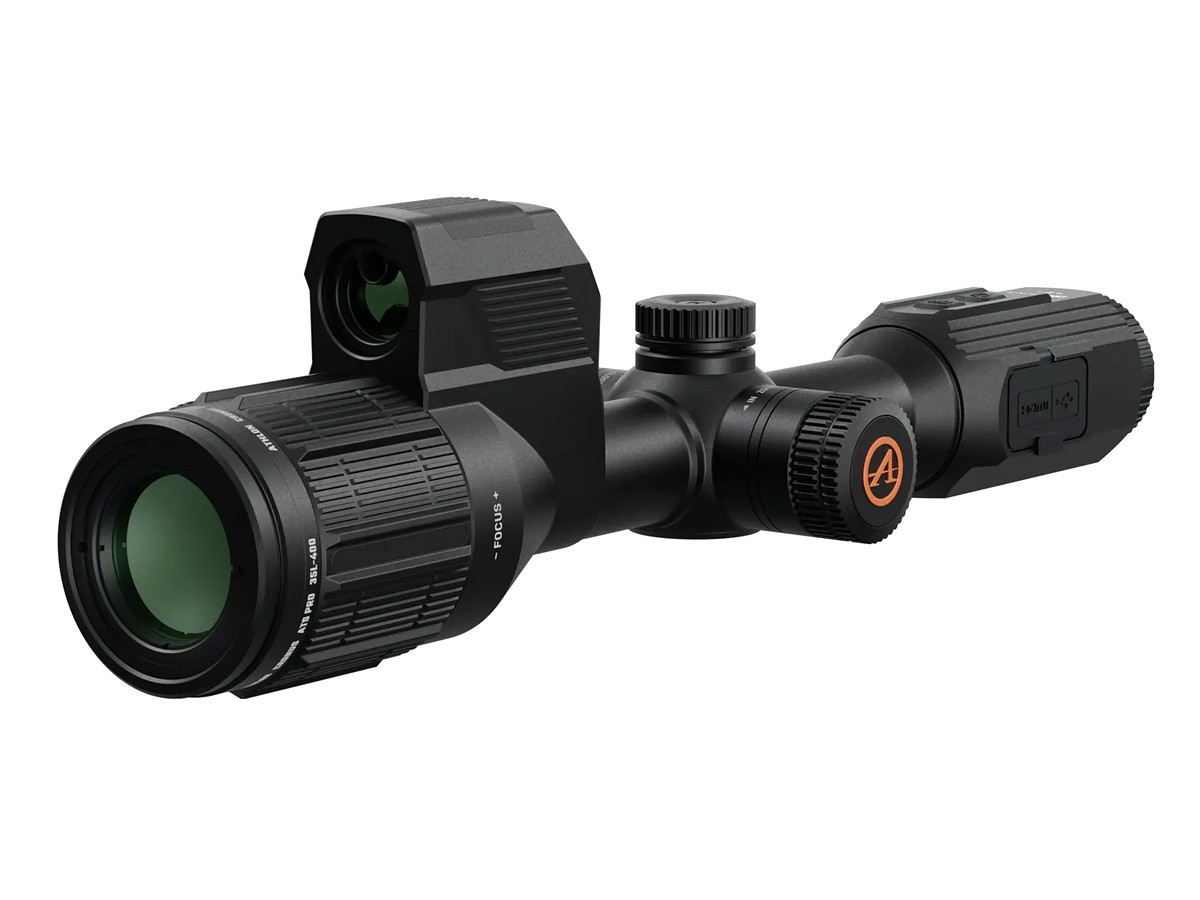
The Athlon Optics Cronus ATS Pro 35L-400 LRF Thermal Scope delivers an advanced thermal imaging experience through exceptional heat detection, integrated laser ranging technology, and premium optical engineering. Designed for demanding outdoor environments, this professional-grade thermal optic combines reliable performance, detailed thermal visualization, and modern digital functionality.
Furthermore, enhanced thermal sensitivity is provided through a 400 × 300 infrared sensor, while exceptional image clarity is supported by a high-resolution OLED display. Consequently, subtle temperature differences can be distinguished across challenging landscapes, even when conventional visible-light optics offer limited visibility.
Whether nighttime wildlife observation, authorized hunting, property monitoring, or professional outdoor surveillance is required, exceptional versatility is offered by this innovative thermal imaging system.
Additionally, a built-in laser rangefinder, multiple thermal color palettes, extended battery endurance, and digital recording capabilities are incorporated to deliver a comprehensive observation experience.
Why Choose the Athlon Optics Cronus ATS Pro 35L-400 LRF Thermal Scope?
Outstanding thermal performance is achieved through carefully integrated optical and electronic components. Rather than relying on visible illumination, infrared radiation emitted by objects is detected and converted into detailed thermal imagery.
As a result, environmental awareness can be maintained during darkness and challenging lighting conditions.
Moreover, greater convenience is provided through the integrated laser rangefinder, allowing distance measurements to be viewed without requiring a separate handheld ranging device.
Advanced display customization, durable construction, and convenient digital connectivity further enhance its value.
Key Features and Technical Specifications
- Brand: Athlon Optics
- Product Model: Cronus ATS Pro 35L-400
- Product Type: LRF Thermal Rifle Scope
- Thermal Sensor Resolution: 400 × 300 pixels
- Sensor Pixel Pitch: 12 μm
- Thermal Sensitivity: NETD ≤25 mK
- Objective Lens: 35 mm F1.0
- Base Magnification: 3.3×
- Maximum Magnification: 13.2×
- OLED Display Resolution: 1440 × 1080 pixels
- Display Refresh Rate: 50 Hz
- Field of View: 7.8° × 5.9°
- Maximum Detection Range: 2,620 yards under specified conditions
- Integrated Laser Rangefinder: 10–1,600 yards
- Thermal Color Palettes: 7 selectable options
- Digital Reticles: 10 built-in configurations
- Internal Storage: 128 GB
- Wireless Connectivity: Wi-Fi
- Video and Photo Recording: Supported
- Battery Endurance: Approximately 10 hours or longer under favorable operating conditions
- External Power: USB-C
- Waterproof Rating: IP67
- Operating Temperature: −30°C to 50°C
- Overall Length: 14.3 inches
Advanced Thermal Imaging Technology for Superior Image Definition
High-Sensitivity 400 × 300 Thermal Sensor
Exceptional thermal detail is delivered through the integrated 400 × 300 infrared detector.
Additionally, the advanced 12 μm pixel architecture enables detailed thermal information to be captured within a compact imaging system.
Because a thermal sensitivity rating of ≤25 mK is provided, relatively small temperature variations can be distinguished under appropriate environmental conditions.
Consequently, greater image separation can be achieved between objects and surrounding surfaces when sufficient thermal contrast is present.
Unlike traditional night-vision equipment, visible-light amplification is not required. Instead, naturally emitted infrared energy is processed into an electronic image.
Furthermore, environmental conditions such as darkness and changing illumination can be accommodated more effectively through thermal technology.
However, heavy precipitation, dense fog, and certain physical barriers can still reduce thermal imaging performance.
Premium 35 mm F1.0 Objective Lens
A high-performance 35 mm F1.0 objective lens is incorporated to support effective infrared energy collection.
Through this optical configuration, detailed thermal imagery can be produced while practical field coverage is maintained.
Moreover, a 7.8° × 5.9° field of view is provided, supporting observation across open ground, wooded environments, and controlled outdoor facilities.
Meanwhile, the 3.3× base magnification establishes a detailed initial viewing perspective.
When additional digital enlargement is desired, magnification can be increased up to 13.2×.
However, image detail may become less defined at higher digital magnification levels because additional optical information is not created.
Integrated Laser Rangefinder for Convenient Distance Measurement
Built-In LRF Technology
One of the most distinctive features of the Athlon Optics Cronus ATS Pro 35L-400 LRF Thermal Scope is its integrated laser rangefinder.
Through this advanced system, distances between approximately 10 and 1,600 yards can be measured under suitable conditions.
Consequently, a separate distance-measuring device may not be required for many observation activities.
Furthermore, ranging information can be incorporated into the electronic viewing experience, allowing relevant distance data to be accessed conveniently.
Because measurements depend on atmospheric conditions, object reflectivity, and other environmental variables, actual ranging performance may differ.
Nevertheless, enhanced convenience is provided by combining thermal imaging and laser ranging within one integrated system.
Advanced Digital Ballistics Integration
Additional digital functionality is offered through compatibility with Athlon’s ballistic calculation technology.
Supporting information can be generated through the manufacturer’s associated software ecosystem when compatible settings and data are provided.
Moreover, configurable profiles and digital interfaces allow the equipment to be adapted to different authorized sporting applications.
For accurate functionality, all software settings, firmware requirements, and manufacturer recommendations should be reviewed.
High-Resolution OLED Display and Customizable Thermal Palettes
Exceptional 1440 × 1080 Display Quality
A premium 1440 × 1080 OLED display is incorporated to deliver sharp electronic imagery and strong contrast.
Furthermore, excellent visual definition is supported through individually controlled OLED pixels.
As a result, thermal scenes can be presented with clearly differentiated bright and dark regions.
Additionally, a 50 Hz refresh rate enables moving thermal images to be displayed smoothly during normal observation.
Because brightness and contrast adjustments are supported, viewing preferences can be accommodated across different environmental conditions.
Seven Thermal Color Palettes
Multiple imaging preferences are supported through seven selectable thermal palettes:
- White Hot: Warmer objects are represented through brighter tones.
- Black Hot: Warmer areas are displayed using darker shades.
- Red Hot: Elevated thermal signatures are emphasized in red.
- Green Hot: Thermal information is displayed through green-toned imagery.
- Iron Red: Temperature variations are presented through an enhanced multicolor gradient.
- Blue Hot: Alternative blue-oriented thermal visualization is provided.
- Sepia: Thermal images are displayed using softer, warm-toned shades.
Consequently, viewing comfort can be improved through palette selection that matches individual preferences and environmental conditions.
Long Battery Life, Recording Capabilities and Wireless Connectivity
Extended Operating Endurance
Reliable extended operation is supported through a rechargeable battery system.
Under typical favorable conditions, more than 10 hours of operating endurance can be achieved with the supplied battery arrangement.
Additionally, convenient external charging and supplementary power options are supported through USB-C connectivity.
Therefore, longer observation sessions can be accommodated when suitable power resources are available.
Built-In Video Recording and 128 GB Storage
Advanced digital documentation capabilities are integrated into the thermal imaging platform.
High-resolution photographs and videos can be captured and stored directly within the device.
Furthermore, 128 GB of internal memory is provided for substantial recording capacity.
As a result, outdoor observations, wildlife encounters, and authorized field activities can be documented without requiring an external recording system.
Wireless connectivity is also provided through Wi-Fi, supporting compatible application-based functionality.
Durable Construction for Demanding Outdoor Environments
IP67 Waterproof Protection
Reliable environmental resistance is supported by an IP67-rated enclosure.
Consequently, protection against dust ingress and temporary water immersion under standardized testing conditions is provided.
Moreover, operation is supported across a specified temperature range of −30°C to 50°C.
This broad environmental tolerance makes the optic suitable for varied seasonal conditions when proper operating procedures are followed.
Nevertheless, regular cleaning, careful storage, and inspection of protective seals are recommended to preserve long-term reliability.
Professional Design and Ergonomic Functionality
A conventional scope-style housing is incorporated to provide a familiar optical format.
Meanwhile, accessible electronic controls and digital configuration options support convenient everyday operation.
Furthermore, standby functionality helps conserve battery power whenever continuous imaging is unnecessary.
With an overall length of 14.3 inches, the device offers an integrated design that accommodates its advanced imaging and ranging components.
Why Invest in the Athlon Optics Cronus ATS Pro 35L-400 LRF Thermal Scope?
Premium imaging technology, convenient ranging functionality, and extensive digital features are combined within one sophisticated thermal platform.
Furthermore, dependable environmental protection is supported by its rugged construction and waterproof design.
Exceptional versatility is achieved through adjustable thermal palettes, OLED imaging, wireless connectivity, and onboard recording capabilities.
Most importantly, reliable thermal observation is made possible without dependence on conventional daylight illumination.
For outdoor enthusiasts, authorized sporting users, wildlife observers, and professionals seeking advanced thermal imaging technology, the Athlon Optics Cronus ATS Pro 35L-400 LRF Thermal Scope represents a compelling combination of image quality, sophisticated electronics, and practical functionality.
Explore advanced thermal imaging with Athlon Optics and experience a premium observation system developed for clarity, versatility, and dependable outdoor performance.
Premium Rifle Scopes, Rangefinder Binoculars, Hunting Optics, and Precision Optical Equipment
Discover Advanced Optics for Precision, Clarity, and Long-Range Performance
Choosing premium optical equipment requires careful consideration of image clarity, magnification, durability, reticle design, and overall performance. Whether exploring a gun scope, comparing a professional hunting optic, or researching the longest range scope, buyers benefit from understanding how different optical systems support observation, target identification, and recreational shooting activities.
Modern optical technology offers impressive versatility. From leica rangefinder binoculars to precision riflescopes, specialized equipment combines advanced lenses, durable construction, and ergonomic designs. Furthermore, understanding how to buy a rifle scope helps buyers identify suitable magnification ranges, optical coatings, adjustment systems, and configurations.
Different environments demand different optical solutions. Consequently, equipment selection should reflect intended applications, environmental conditions, and individual preferences rather than magnification alone.
Leica Rangefinder Binoculars and Premium Optical Technology
Exploring the Leica Geovid Collection
The leica geovid binoculars collection attracts attention among outdoor enthusiasts who value premium optical engineering and integrated distance-measurement technology. In particular, leica geovid 10×42 rangefinder binoculars combine a 10-power magnification format with 42mm objective lenses, providing a practical combination of viewing capability and portability.
Buyers researching leica binoculars with rangefinder technology frequently compare optical clarity, ranging functionality, handling characteristics, and available connectivity features. The leica geovid pro 10×42 represents a sophisticated option within the manufacturer’s premium range.
Similarly, searches for geovid pro 10×42 often focus on advanced distance measurement, optical refinement, and suitability for extended outdoor observation.
The leica geovid rangefinder concept integrates observation and distance measurement into one optical system. Therefore, leica geovid pro rangefinder binoculars may appeal to users who prefer fewer separate devices during outdoor activities.
Additional product searches include leica geovid rangefinder binoculars, leica geovid 10×42, and leica geovid binos. Although these expressions overlap in meaning, they reflect different ways buyers research the Geovid family.
Compact Leica Binoculars and Everyday Observation
Beyond rangefinding models, traditional leica binoculars offer optical configurations suited to wildlife observation, travel, and nature appreciation.
Portable leica small binoculars can be particularly attractive when lightweight equipment is preferred. Meanwhile, buyers searching binoculars leica, leica bino, or leica binos may be comparing available formats, objective diameters, and carrying convenience.
The phrases leica binocular, leica bino rangefinder, and leica camera binoculars also appear in optical equipment searches, although Leica’s camera and binocular categories should be evaluated separately.
When browsing leica binoculars for sale, consumers should examine warranty coverage, product authenticity, optical condition, and included accessories.
SIG Sauer Binoculars and Image Stabilization
Modern Stabilized Observation Systems
The market for sig sauer binoculars includes optical equipment designed for outdoor observation and demanding field conditions.
Enthusiasts researching sig sauer binos, sig binoculars, and sig binocular configurations may encounter models with different magnification systems and specialized features.
Interest in sig self stabilizing binoculars reflects the growing popularity of technologies designed to reduce perceived image movement. Similarly, sig image stabilizing binoculars and sig auto stabilizing binoculars are common search expressions among people seeking more comfortable handheld viewing.
Buyers also use phrases such as sig sauer self stabilized binoculars and sig sauer image stabilized binoculars when researching stabilized optical equipment.
However, stabilization capabilities vary by model, making manufacturer specifications essential before purchasing.
The term sigma binoculars sometimes appears alongside SIG-related searches, although Sigma and SIG Sauer should not automatically be treated as the same manufacturer.
Nightforce ATACR Precision Riflescopes
Exploring Advanced Magnification Options
The nightforce atacr family is associated with premium riflescope design, precise adjustments, and robust mechanical engineering.
Several configurations attract particular interest, including the nightforce atacr 5-25×56 f2, nightforce atacr 4-20×50, nightforce atacr 5-25×56 f1, and nightforce atacr 4-16×50.
Each specification represents a different combination of magnification and objective size. Additionally, first focal plane and second focal plane reticle designs provide distinct viewing characteristics.
Searches for night force atacr, atacr scope, and nightforce attacker frequently lead buyers toward information about the manufacturer’s premium optics, although the latter is not an official ATACR model designation.
The shorter phrases atacr 4-20 and nightforce atacr 4 20×50 f1 may also be used when comparing configurations. Exact focal-plane specifications should always be verified against the model number.
Complementary optical searches sometimes include zeiss red dot, reflecting interest in different aiming systems rather than directly equivalent riflescopes.
Tangent Theta Scopes and Premium Optical Engineering
Optical Precision and Adjustment Quality
Products associated with tangent theta attract enthusiasts interested in premium optical construction and repeatable mechanical adjustments.
When comparing tangent theta scopes, shoppers often prioritize lens quality, reticle visibility, adjustment feel, and long-term durability.
The expressions tangent scope, tangent scopes, and tangent theta scope may appear throughout product research, although accurate manufacturer identification remains important.
Similarly, tangent optics is used in searches concerning specialized optical equipment.
The separate phrase theta optics may refer to other optical products or brands and should not automatically be confused with Tangent Theta.
A meaningful comparison should consider actual product specifications, available accessories, and manufacturer support rather than brand recognition alone.
Athlon Optics: Midas TAC, Argos BTR, Ares BTR, and Ares ETR
Midas TAC Optical Systems
The athlon midas tac collection offers configurations that appeal to enthusiasts researching precision-oriented optical equipment.
One notable product description is midas tac gen2 hd 6-24×50 aplr15 ffp moa reticle riflescope, which identifies a specific combination of magnification, optical design, and reticle characteristics.
Another frequently researched expression is athlon midas tac 6-24×50. Before choosing a configuration, buyers should verify the generation, reticle, turret units, and other model-specific details.
Argos BTR Magnification and Versatility
The athlon argos btr family also receives considerable attention from optical equipment buyers.
Search terms such as athlon argos btr gen2, athlon argos btr gen 2, and athlon btr gen 2 commonly describe interest in newer generations of the product family.
For higher magnification, athlon argos btr gen2 8-34×56 attracts attention because of its broad zoom range.
Related technical expressions include 34 56 and 34×56, although numerical combinations alone do not identify a particular optical product.
Buyers researching athlon scopes review, athlon reticles, and athalon scopes can benefit from comparing independent assessments and official technical documentation.
The phrase athens scope may also arise through spelling variations, making exact product identification especially important.
Ares BTR and ETR Premium Configurations
The athlon ares btr family provides another category for comparing advanced riflescope designs.
Meanwhile, athlon etr searches often focus on higher-end optical features, mechanical precision, and available reticle configurations.
A detailed example is the ares etr gen2 uhd 4.5-30×56 aprs12 ffp ir mil reticle, a specification that helps distinguish magnification, reticle type, and focal-plane design.
Related expressions include athlon 4.5-30×56, 4.5 30, and 4.5/30. These search variations should be interpreted using complete manufacturer specifications.
LPVO Scopes and Flexible Magnification Systems
Comparing 1-10x and 1-8x Optics
Low-power variable optics offer flexible magnification for recreational range activities.
Buyers frequently research 1 10 scope, 1×10 scope, and 1-10 rifle scope when evaluating variable-magnification equipment.
The broader 1 10 lpvo and 1-10 lpvo categories include products from different manufacturers with varying optical and mechanical designs.
Furthermore, 1-10 ffp lpvo identifies interest in first focal plane configurations, while lpvo 1-10 and lpvo 1-8 represent different zoom ranges.
Searches for ares etr 1 10 should be checked against current model catalogs to establish the exact product configuration.
Other Optical Specifications and Buying Considerations
Understanding Magnification Terminology
Optical searches frequently include formats such as 10×40, 14×44, 2.5×15, 2.5/15, and 2.5-15 scope.
Other expressions include 1/2×42, 12×4.2, 2-12x, and athlon btr 2-12. Their intended meaning should be confirmed before being interpreted as complete specifications.
Additional search terminology such as 11.5ee, 2s14, and athlon 2 may represent incomplete model references or unrelated product identifiers.
Likewise, ao scope commonly indicates interest in adjustable-objective systems, while icarus scope and avalon aries require product-specific clarification.
Fierce Optics and Related Outdoor Equipment
The names fierce firearms, fierce arms, and fierce optics also appear in sporting-equipment research.
Although these searches may involve related outdoor products, buyers should distinguish between manufacturers, product categories, and verified specifications.
Ultimately, choosing optical equipment involves more than identifying an attractive magnification range.
Lens coatings, eye relief, field of view, weight, reticle visibility, warranty terms, and manufacturer reputation all contribute to the overall ownership experience.
For that reason, comparing authentic product information and understanding the intended application remain essential when selecting binoculars, rangefinders, and premium optical systems.
Frequently Asked Questions (FAQs)
1. What makes this thermal imaging device different from conventional night vision equipment?
Unlike conventional night vision equipment, infrared thermal imaging technology is designed to detect temperature differences rather than amplify available light. Consequently, visible-light illumination is not required for thermal images to be generated.
Furthermore, naturally emitted infrared radiation is captured by an advanced sensor and converted into an electronic image. As a result, warmer and cooler objects can be distinguished through contrasting thermal signatures.
Traditional night vision equipment, however, generally depends on existing ambient light or compatible infrared illumination. Therefore, its performance can be influenced by available lighting conditions.
Additionally, thermal imaging provides a different type of environmental information, making it particularly useful for wildlife monitoring, nighttime observation, and professional inspection activities.
2. Can the device be used during complete darkness?
Yes. Reliable thermal visualization can be achieved during complete darkness because visible light is not required.
Instead, infrared energy naturally emitted by objects is detected and electronically processed. Consequently, differences in surface temperature can be displayed without external illumination.
Moreover, thermal contrast may remain visible even when ordinary optical instruments cannot produce a usable image.
However, image quality can still be influenced by atmospheric humidity, environmental temperatures, and the thermal characteristics of surrounding objects.
Therefore, performance should be evaluated according to actual environmental conditions rather than lighting alone.
3. How does thermal sensor resolution influence image quality?
Thermal sensor resolution determines the number of infrared measurement points available for producing an image.
With a 400 × 300 detector, approximately 120,000 individual thermal measurement locations are provided. Consequently, temperature patterns can be represented with meaningful spatial detail.
Furthermore, image interpretation is influenced by optical quality, thermal sensitivity, processing algorithms, and display technology.
Although higher sensor resolutions can provide additional detail, overall image quality cannot be determined by pixel count alone.
Therefore, a balanced combination of sensor performance, optical engineering, and digital processing should be considered when comparing thermal imaging systems.
4. What does a thermal sensitivity rating of 25 mK mean?
Thermal sensitivity is commonly described using the Noise Equivalent Temperature Difference, abbreviated as NETD.
A rating of 25 mK corresponds to approximately 0.025°C. In simplified terms, this measurement indicates the detector’s ability to distinguish very small temperature differences under specified testing conditions.
Consequently, improved separation may be achieved between objects and backgrounds with similar temperatures.
Furthermore, detailed thermal gradients can be presented more effectively when environmental conditions are favorable.
Nevertheless, laboratory sensitivity measurements should not be interpreted as guarantees of identical performance in every outdoor setting.
Atmospheric interference, optical transmission, image processing, and surrounding thermal conditions can influence the resulting image.
5. How far can heat signatures be detected?
The maximum advertised detection distance reaches approximately 2,620 yards under specified conditions.
However, detection distance should not be confused with recognition or positive identification distance.
A distant heat source may be detected without enough visible detail being available to determine exactly what produced the signal.
Furthermore, object size, temperature contrast, weather, and surrounding terrain can significantly influence detection performance.
For example, a large warm object against a cool background may be easier to detect than a smaller object surrounded by similarly warm surfaces.
Therefore, manufacturer detection specifications should be regarded as reference measurements rather than guaranteed real-world distances.
6. What is the difference between detection, recognition, and identification?
These three concepts describe separate levels of visual information.
Detection occurs when a thermal signature can be distinguished from its surrounding background.
Recognition becomes possible when enough information is available to classify the general nature of an observed object.
Identification requires additional visual certainty so that the observed subject can be distinguished more specifically.
Consequently, detection is generally possible at greater distances than reliable recognition or identification.
Moreover, electronic magnification does not automatically improve the underlying sensor detail.
For applications requiring positive identification, supplementary visual confirmation should be obtained whenever uncertainty remains.
7. How does the integrated laser rangefinder work?
Distance measurement is performed by emitting a laser signal and analyzing the reflected energy received from a target surface.
The time associated with the returning signal is used to calculate the separation between the instrument and the measured surface.
Furthermore, ranging information can be presented through the electronic interface, reducing the need for a separate handheld device.
An advertised ranging capability of approximately 10 to 1,600 yards is provided.
However, actual results may vary according to target reflectivity, atmospheric conditions, surface characteristics, and measurement geometry.
Consequently, maximum advertised ranging figures should be interpreted as performance specifications obtained under suitable conditions.
8. Does the device require an external infrared illuminator?
No external infrared illuminator is required for normal thermal imaging.
Unlike conventional infrared-assisted night vision, passive thermal technology relies on energy naturally emitted by surrounding objects.
Consequently, artificial illumination is not necessary for the thermal sensor to produce an image.
Furthermore, the absence of an illumination requirement allows observation across different visible-light conditions.
Nevertheless, thermal imaging does not provide unrestricted visibility through every obstruction.
Ordinary glass, dense barriers, and certain environmental conditions can interfere with the infrared radiation received by the sensor.
Therefore, the technology should be understood as a method of measuring thermal contrast rather than a system capable of seeing through solid objects.
9. What advantages are provided by the OLED display?
An OLED display offers several advantages for electronic imaging, including individually controlled pixels and strong contrast reproduction.
Because each pixel can produce its own light, darker image regions can be represented without conventional full-panel backlighting.
Consequently, visual separation between bright and dark thermal information can be improved.
Furthermore, the 1440 × 1080 display resolution provides a detailed viewing interface for the electronically generated imagery.
Adjustable display settings can also support personal viewing preferences.
However, display resolution and sensor resolution are different specifications. A higher-resolution screen cannot create additional thermal measurements beyond those captured by the detector.
10. Why are multiple thermal color palettes included?
Different thermal color palettes allow temperature information to be represented through alternative visual combinations.
For example, White Hot displays warmer regions using brighter tones, while Black Hot presents warmer regions through darker shades.
Additionally, colored modes may make certain temperature patterns easier to interpret according to individual preferences.
Because visual comfort varies between users, a single palette may not be ideal for every observation activity.
Furthermore, surrounding temperature distributions can influence how effectively a particular palette communicates thermal differences.
Consequently, the availability of seven visualization options provides flexibility without changing the actual temperature measurements collected by the infrared detector.
11. Can photographs and videos be recorded directly?
Yes. Integrated digital recording capabilities allow photographs and video footage to be captured without requiring a separate external recording system.
Additionally, 128 GB of internal storage is provided for saving recorded media.
Consequently, wildlife activity, environmental observations, and inspection findings can be documented for later review.
Furthermore, recorded material may support educational presentations, observation logs, and personal outdoor activity records.
Actual storage capacity depends on video settings, recording formats, and file sizes.
Therefore, available memory should be checked periodically, particularly before extended recording sessions.
Important files should also be backed up using supported transfer methods to reduce the risk of accidental data loss.
12. Is wireless connectivity supported?
Yes. Wi-Fi functionality is incorporated to support compatible wireless features.
Depending on the application, firmware version, and connected mobile device, selected functions may be available through the manufacturer’s supported software.
Furthermore, wireless connectivity may simplify certain media-management and configuration activities.
However, individual application features should be confirmed through the latest official documentation.
Compatibility can vary between software releases and mobile operating systems.
Consequently, users should review current application requirements before assuming that every advertised feature will operate with a particular smartphone or tablet.
13. How long does the rechargeable battery last?
An operating duration of approximately 10 hours or longer may be achieved under favorable conditions with the specified battery arrangement.
However, actual endurance depends on several operating variables.
For example, display brightness, recording activity, wireless connectivity, ambient temperature, and standby usage may influence power consumption.
Furthermore, rechargeable battery performance can decline gradually through repeated charging cycles and long-term aging.
To preserve battery reliability, manufacturer-approved charging procedures should be followed.
Additionally, extended storage under extreme temperature conditions should be avoided.
For longer activities, supported external power options may be considered where appropriate.
14. Can an external power bank be connected?
USB-C external power support is provided, allowing compatible supplementary power arrangements to be considered.
Consequently, operating flexibility may be improved during extended observation sessions.
However, power bank compatibility should be confirmed before connection.
Voltage requirements, connector specifications, power delivery characteristics, and environmental protection should all be considered.
Furthermore, exposed charging connections may reduce practical weather resistance while in use.
Therefore, manufacturer guidance should be followed whenever external power equipment is connected.
Approved accessories and properly maintained cables are recommended to minimize charging interruptions and electrical compatibility problems.
15. Is the equipment waterproof and suitable for rainy conditions?
An IP67 ingress protection rating is provided.
Under standardized testing conditions, this classification indicates complete dust protection and resistance to temporary water immersion within specified limits.
Consequently, greater confidence can be maintained during ordinary outdoor exposure to rain, dust, and moisture.
Nevertheless, waterproof ratings should not be interpreted as permission for unrestricted underwater operation.
Furthermore, damage to sealing surfaces, protective covers, or the enclosure may compromise environmental resistance.
After exposure to moisture, the exterior should be dried and inspected according to manufacturer recommendations.
Charging ports should also be completely dry before electrical connections are made.
16. Can thermal imaging work through fog, smoke, or heavy rain?
Performance may remain useful in some visually challenging environments because thermal radiation differs from visible light.
However, thermal imaging cannot be expected to penetrate every atmospheric obstruction effectively.
Dense fog, heavy precipitation, and certain types of smoke can absorb or scatter infrared energy.
Consequently, image contrast and effective detection distance may be reduced.
Furthermore, moisture accumulation on the objective lens can degrade image quality.
Environmental limitations should therefore be considered when evaluating practical performance.
For safety-critical activities, thermal imagery should never be treated as a substitute for direct verification or other appropriate observation methods.
17. Can the device see through walls or ordinary windows?
No. Solid walls and ordinary glass generally prevent the type of long-wave infrared radiation used by this equipment from passing through in a way that produces a normal image of objects behind them.
Instead, the temperature of the visible surface may be represented.
For example, a window may appear primarily according to its own thermal characteristics and reflected infrared energy.
Similarly, a wall may display temperature variations across its exposed surface without revealing objects directly behind it.
Consequently, claims that ordinary thermal imaging can freely see through buildings or conventional windows should be treated as inaccurate.
18. What maintenance is recommended for long-term reliability?
Regular maintenance should be performed according to the manufacturer’s instructions.
Initially, the external housing should be inspected for visible damage, moisture accumulation, and loose protective components.
Additionally, the objective lens should be cleaned only with materials approved for its optical coating.
Because infrared optical surfaces may have specialized coatings, abrasive cleaning products should be avoided.
Furthermore, charging ports and electrical contacts should be kept clean and dry.
When the device is not being used, storage in a protective case within the recommended temperature range is advisable.
Periodic firmware checks and battery inspections may also support reliable long-term performance.
19. Is professional technical experience required?
Extensive professional technical training is not necessarily required for basic thermal observation.
However, familiarity with electronic menus, charging procedures, display settings, and equipment limitations is beneficial.
Furthermore, first-time users should review the complete operating manual before using advanced functions.
Because several thermal visualization settings are available, initial familiarization can help users understand their preferred viewing configurations.
For equipment installed on regulated sporting platforms, relevant safety training and legal requirements should also be followed.
Consequently, responsible preparation is recommended regardless of previous experience with conventional optical instruments.
20. What should be checked before purchasing?
Several important considerations should be reviewed before a purchase is finalized.
First, the exact product model and manufacturer specifications should be confirmed.
Additionally, warranty coverage, included accessories, battery arrangements, and software compatibility should be verified.
Furthermore, local regulations governing thermal observation equipment, optical mounting systems, and any associated regulated sporting activities should be examined.
The manufacturer’s current documentation should be consulted for details about firmware support, environmental ratings, and compatible accessories.
Finally, seller authenticity, return conditions, and available technical support should be evaluated.
By confirming these factors in advance, an informed purchasing decision can be made and long-term ownership expectations can be better managed.
21. Why is this considered a premium thermal imaging solution?
Premium positioning is supported through the combination of a high-sensitivity infrared detector, advanced OLED display, integrated laser ranging, onboard recording, and durable environmental protection.
Furthermore, extensive electronic functionality is provided within a single optical platform.
Rather than requiring separate equipment for every observation function, several useful features are incorporated into one system.
Consequently, convenience and overall equipment integration are emphasized.
Nevertheless, suitability should be determined through actual requirements, budget considerations, and the manufacturer’s verified specifications.
For buyers prioritizing sophisticated thermal visualization and comprehensive digital functionality, this combination can provide substantial practical value.

Reviews
There are no reviews yet.