AirMaks Arms Katran Pro Long High Power
The AirMaks Arms Katran Pro Long High Power has been developed as a premium pre-charged pneumatic platform in which precision engineering, extensive adjustability, and modern ergonomics are combined. A long-format configuration has been provided, while a regulated air system has been incorporated so that consistent operation can be maintained across a shooting session. As a result, the rifle is primarily associated with experienced airgun users who require a sophisticated platform for lawful target disciplines and other permitted sporting applications.
Throughout the design, flexibility has been emphasized. An adjustable stock system has been fitted, an ambidextrous operating layout has been incorporated, and several standardized accessory interfaces have been provided. Consequently, different shooting positions, optic arrangements, and support systems can be accommodated without the fundamental layout of the rifle being changed.
Precision Engineering in the AirMaks Arms Katran Pro Long High Power
A carefully engineered PCP action has been used within the AirMaks Arms Katran Pro Long High Power. Compressed air is regulated before each shot is released, and therefore greater shot-to-shot consistency can be supported when suitable ammunition and approved pressure settings are used.
Furthermore, a CZ-manufactured barrel is used on Katran Pro configurations. The barrel system has been selected because repeatable projectile guidance can be supported, while the longer format of the Pro Long platform has been designed around stability and precision-oriented shooting.
A HUMA-AIR regulator is also listed for the Katran Pro platform by retailers carrying the model. Through regulated air delivery, pressure variations are reduced before air is released into the firing cycle. Therefore, predictable performance can be maintained more effectively than would normally be expected from an unregulated PCP system.
Meanwhile, an anti-double-feed mechanism has been incorporated. Accidental loading of a second projectile behind an already chambered pellet can therefore be reduced when the rifle is operated correctly.
Adjustable Pro-Grade Ergonomics
Considerable adjustment has been built into the AirMaks Arms Katran Pro Long High Power so that individual fit can be refined.
An aluminium folding stock is used, while both the cheek piece and butt pad can be adjusted. Consequently, the shooter’s head position and shoulder contact can be adapted to suit different body proportions and optic heights.
Additionally, an ambidextrous grip arrangement has been provided. The side lever can also be configured for right- or left-handed operation on supported versions. Therefore, the platform can be adapted more easily for a broad range of users.
Comfort is further supported by the positioning of the cocking lever near the trigger area. Unnecessary hand movement between shots can consequently be reduced during controlled range sessions.
Key Product Features
- PCP operating system with regulated compressed-air delivery
- Long-format Katran Pro configuration designed around precision-oriented use
- HUMA-AIR regulator for consistent pressure management
- CZ barrel system used across Katran Pro configurations
- Fully adjustable aluminium folding stock
- Adjustable cheek piece and butt pad
- Ambidextrous ergonomic grip
- Side-lever action configurable for right- or left-handed operation
- Fully adjustable two-stage match-style trigger
- Anti-double-feed system
- 20 MOA Picatinny optic rail
- ARCA-style accessory rail
- M-LOK mounting interfaces
- External velocity-regulation system on applicable versions
- Magazine-fed configuration
- Protective hard case supplied with certain market packages
Fully Adjustable Two-Stage Trigger
Trigger characteristics are particularly important when repeatable target shooting is being considered. For that reason, a fully adjustable two-stage trigger system has been incorporated into the Katran Pro platform.
The first and second stages can be configured within the manufacturer’s permitted adjustment range. Consequently, a predictable trigger feel can be established according to the user’s lawful shooting discipline and personal preference.
However, trigger adjustments should always be completed according to manufacturer instructions. Safe sear engagement and correct mechanical operation should never be compromised for an excessively light trigger setting.
Advanced Optic and Accessory Compatibility
Modern precision air rifles are frequently configured around optical sights and shooting supports. Therefore, several mounting interfaces have been integrated into the AirMaks Arms Katran Pro Long High Power.
A 20 MOA Picatinny rail is provided for compatible optics. As a result, suitable scopes can be installed while considerable elevation adjustment can be retained for approved target applications.
Furthermore, an ARCA-style rail and M-LOK mounting positions are provided on Pro configurations. Compatible bipods, shooting supports, sling hardware, and other lawful range accessories can consequently be mounted without improvised modifications.
Because standardized mounting interfaces are used, equipment compatibility can generally be checked more easily. Nevertheless, accessory dimensions, mounting torque, and manufacturer specifications should always be verified before equipment is fitted.
Regulated PCP Performance
Consistency has been prioritized throughout the Katran platform. Compressed air is stored within the reservoir and is then managed by the regulated action before each firing cycle.
Because pressure is controlled, a more stable operating window can be maintained throughout much of the usable fill range. Consequently, vertical variation caused specifically by changing reservoir pressure can be reduced.
An external velocity-adjustment system is also featured on applicable Katran Pro configurations. However, adjustments should only be performed within manufacturer specifications and local legal requirements. Energy limits vary substantially between jurisdictions, and high-power or FAC versions may require licensing, registration, secure storage, or other authorization.
Long-Format Stability
The extended proportions of the AirMaks Arms Katran Pro Long High Power have been designed for users who prioritize stability over ultra-compact dimensions.
When the rifle is shouldered, a balanced shooting position can be established through adjustment of the cheek piece, butt pad, and optic placement. Furthermore, shooting support equipment can be positioned along the accessory rail according to the user’s preferred range setup.
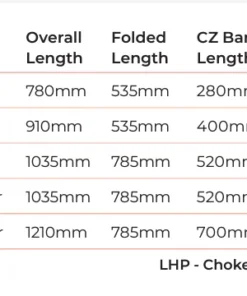
For transportation, the folding stock can reduce the rifle’s overall stored length. Nevertheless, all applicable laws concerning transportation, secure storage, and carrying of air rifles must be followed.
Magazine-Fed Operation
Multi-shot rotary magazines are available across the Katran family, although capacity depends on calibre and market configuration.
Typical manufacturer-family specifications include:
- .177 / 4.5 mm: up to 18 shots on compatible configurations
- .22 / 5.5 mm: up to 16 shots
- .25 / 6.35 mm: up to 14 shots
Exact calibre availability can differ between Katran Pro Long and high-power versions. Therefore, the configuration supplied for a particular country should always be checked against AirMaks documentation and local regulations.
Built for Experienced Airgun Users
Rather than being designed as a basic entry-level PCP, the AirMaks Arms Katran Pro Long High Power has been engineered around extensive adjustability and sophisticated pressure management.
Stock position can be refined, optical equipment can be mounted to the Picatinny rail, shooting supports can be attached through ARCA or M-LOK interfaces, and the reversible operating layout can accommodate different users.
As a result, a highly configurable shooting platform has been created. However, those features are best used when proper PCP handling, safe compressed-air filling procedures, backstop selection, secure storage, and local airgun regulations are already understood.
Safety, Storage, and Legal Compliance
High-power air rifles should always be treated with the same seriousness as other potentially lethal projectile-launching equipment.
Eye protection should be worn during appropriate range use, and a suitable backstop must always be provided. The rifle should remain pointed in a safe direction, while the trigger should remain untouched until a shot is intentionally being taken.
Only manufacturer-approved filling equipment and pressure limits should be used. Moreover, reservoirs, seals, regulators, and filling connectors should be inspected according to the recommended maintenance schedule.
Legal requirements must also be checked before the rifle is possessed or operated. In some countries, certain AirMaks Katran configurations may be treated as unrestricted sporting airguns, whereas higher-energy versions can fall under firearm or FAC-style licensing systems.
A Modern Precision-Oriented PCP Platform
The AirMaks Arms Katran Pro Long High Power brings together a regulated PCP action, adjustable match-style trigger, ambidextrous controls, folding stock, precision barrel system, and extensive mounting capability.
Because almost every major contact point can be configured, a highly personalized shooting position can be established. Meanwhile, pressure regulation and anti-double-feed technology have been incorporated to support predictable mechanical operation.
For lawful target and sporting environments, the Katran Pro Long platform represents the technically advanced end of modern PCP air-rifle engineering. Properly configured, responsibly maintained, and used within applicable regulations, it provides experienced airgun users with an adaptable platform built around precision, ergonomics, and consistency.
AirMaks Arms Katran Pro Long High Power Calibres, FAC, Power and Accessories
The AirMaks Arms Katran Pro Long High Power has been developed around high-power PCP performance, advanced adjustability, and compatibility with modern shooting accessories. Unlike lower-powered Katran configurations, the High Power version is offered in larger calibres that are suited to its increased air capacity and non-choked barrel arrangement.
According to current AirMaks specifications for the Katran NL HP platform, three calibre options are provided: 5.5 mm (.22), 6.35 mm (.25), and 7.62 mm (.30). A .177 version is not listed for this particular high-power configuration.
Available Calibres
The calibre selected can significantly influence projectile weight, air consumption, magazine capacity, and the overall shooting characteristics of the rifle.
5.5 mm / .22 calibre provides the smallest bore option currently listed for the High Power configuration. A magazine capacity of up to 16 shots is specified for this calibre. Because a broad selection of compatible pellets and slugs is available internationally, .22 is commonly selected for precision-oriented PCP shooting where manageable projectile weight and efficient air use are valued.
6.35 mm / .25 calibre provides a larger projectile diameter and supports heavier ammunition. On the current Katran NL HP specification, a 14-shot magazine is supplied for .25 calibre. The additional projectile mass means that air demand is generally increased compared with .22, while the larger calibre can be suited to jurisdictions and shooting disciplines where higher-energy PCP rifles are legally permitted.
At the upper end of the configuration range, 7.62 mm / .30 calibre is available. A 12-shot magazine is specified. Because substantially heavier projectiles can be used, the .30 configuration places greater demands on the compressed-air system and should only be operated where the applicable licensing and energy regulations allow it.
FAC and High-Power Configuration
The term FAC is commonly encountered in the airgun market when rifles exceed the energy threshold that can legally be possessed without additional firearm authorization in certain jurisdictions.
However, FAC should not be treated as a universal technical specification. It is fundamentally a legal classification associated most closely with the United Kingdom, while other countries use different licensing systems, energy limits, registration requirements, and firearm definitions.
Therefore, the AirMaks Arms Katran Pro Long High Power should always be matched to the regulations applying in the owner’s country or region.
For example, an unrestricted configuration in one jurisdiction may require authorization in another. Consequently, the legal status should be confirmed before possession, transportation, modification, or use.
High-power configurations should never be altered specifically to bypass local energy restrictions. Instead, authorized distributor specifications and applicable firearm or airgun regulations should always determine the permitted configuration.
High-Power PCP Air System
A sophisticated regulated pneumatic system is used to support the rifle’s higher air demand.
Current manufacturer specifications for the Katran NL HP list a 200 cc air cylinder rated to a maximum fill pressure of 300 bar. Furthermore, an 80 cc plenum is incorporated, with the regulator operating within approximately the 150–200 bar range depending on configuration.
The larger plenum allows a controlled volume of regulated compressed air to be prepared before each firing cycle. Consequently, consistent delivery can be supported even when heavier projectiles are being used.
A 520 mm non-choked CZ barrel is also specified for the HP model. According to AirMaks, this barrel differs from the choked barrel used on pellet-focused versions and has been configured specifically around heavier projectile use.
External Power Adjustment
An external velocity-regulation screw operating through the hammer-spring system is included on the high-power configuration.
This feature allows authorized configuration within the operating parameters of the rifle. Nevertheless, power adjustment should only be completed according to manufacturer guidance and within applicable legal energy limits.
Changing hammer tension, regulator pressure, valve settings, or other power-related components without proper knowledge can affect consistency, efficiency, mechanical reliability, and legal compliance.
For that reason, substantial tuning should preferably be carried out by a competent airgun technician where required.
Accessory Compatibility
One of the most useful characteristics of the AirMaks Arms Katran Pro Long High Power is its extensive accessory compatibility.
A 20 MOA Picatinny rail is installed above the action. This provides a standardized mounting platform for compatible rifle scopes and sighting equipment. The 20 MOA inclination can also preserve additional elevation adjustment in suitable optics.
An aluminium ARCA-style rail is fitted beneath the rifle and incorporates approximately 30 M-LOK slots on the current Pro specification. Consequently, compatible shooting rests, bipod adapters, sling points, rail sections, and other lawful accessories can be attached according to the intended range setup.
Recommended Compatible Accessories
Depending on the intended lawful use, the following accessory categories can be considered:
- Quality rifle scope compatible with the Picatinny mounting system
- Scope rings or one-piece optic mount
- ARCA-compatible bipod or bipod adapter
- M-LOK accessory rails
- Sling and compatible sling mounting hardware
- Pellet or slug magazines in the correct calibre
- Single-shot loading tray where compatible
- Protective hard rifle case
- High-pressure PCP pump
- 300-bar-rated filling cylinder
- Compatible filling hose and fittings
- Pressure-rated fill adapter
- Cleaning equipment designed for PCP air rifles
- Appropriate eye protection
- Secure gun-storage equipment
Only components rated for the rifle’s pressure system should be connected to the filling assembly.
Adjustable Stock and Shooting Accessories
The Katran Pro configuration also benefits from an extensively adjustable stock assembly.
AirMaks specifies an aluminium folding stock with adjustable length. Both the cheek piece and butt pad can also be adjusted vertically. As a result, the shooting position can be configured around the user’s physical dimensions and optic height.
An ambidextrous 15-degree FAB Defense-style grip is specified on the current Katran NL HP Pro platform. In addition, the side-lever cocking mechanism can be changed between the right and left sides, while the AR-style safety is similarly reversible.
These adjustments allow the rifle to accommodate both right-handed and left-handed users without requiring a completely different action.
Moderator and Muzzle Compatibility
The barrel assembly is provided with a 1/2-inch UNF threaded muzzle interface on the current Katran NL HP specification.
Where legally permitted, compatible manufacturer-approved muzzle accessories may therefore be fitted. However, moderator and suppressor legislation differs considerably between countries. An accessory that can be possessed freely in one country may be licensed or prohibited elsewhere.
Thread dimensions and alignment should always be confirmed before any muzzle accessory is installed.
Complete High-Power Configuration
With its .22, .25 and .30 calibre options, regulated high-pressure pneumatic system, 520 mm non-choked barrel, adjustable stock, 20 MOA Picatinny rail, ARCA interface, and extensive M-LOK mounting capability, the AirMaks Arms Katran Pro Long High Power provides a highly configurable platform for experienced PCP users.
The combination of regulated air management and interchangeable accessory interfaces allows the rifle to be configured around different lawful sporting and target disciplines. At the same time, calibre choice and power level should always be selected according to the manufacturer’s specifications and the regulations applying in the jurisdiction where the rifle will be possessed and used.
AirMaks Krait, Katran PCP Air Rifles, Umarex Airguns, Pest Control and Shooting Systems
The world of AirMaks Krait, AirMaks Katran, PCP air rifles, and modern airgun systems continues to attract shooters interested in precision, hunting, target practice, and pest control applications. Buyers searching for what is a PCP air rifle, what does PCP air rifle mean, what is a PCP airgun, what is a PCP air gun, or what are PCP air rifles are generally looking for information about pre-charged pneumatic technology. A PCP air rifle uses stored compressed air to deliver consistent power, accuracy, and repeatable shot performance compared with traditional spring-powered systems.
AirMaks Krait PCP Air Rifle and Katran Air Rifle Platforms
The AirMaks Krait is a modern PCP platform designed for shooters who want accuracy, compact handling, and adjustable performance. Searches such as AirMaks Krait, Air Max Krait, AirMaks Krait .22, AirMaks Krait .22 official, AirMaks Krait PCP, AirMaks Krait air rifle, and Krayt30 are commonly associated with this rifle family.
The AirMaks Katran represents another popular PCP air rifle platform from AirMaks. Search terms including AirMaks Katran, AirMaks Katran .22, Katran air rifle, Katran PCP rifle, and Katran LLC relate to shooters researching compact and high-performance pneumatic rifles. These platforms are often compared by buyers looking for precision shooting, hunting capability, and reliable air delivery systems.
PCP Air Rifles, Compressed Air Systems and Technology
A PCP rifle works by storing compressed air inside an onboard reservoir before releasing controlled air pressure to propel a pellet. Searches such as PCP rifle meaning, PCP air rifle meaning, PCP guns, PCP rifle, compressed air rifle, compressed air guns, air powered rifle, and komprimiran zrak all relate to pneumatic shooting technology.
Charging equipment is also an important part of PCP ownership. Many shooters search for PCP hand pump, PCP air compressor, air compressor rifle, and accessories designed to refill PCP reservoirs safely and efficiently.
Air Rifle Pest Control and Vermin Control Applications
Many shooters research air rifle for pest control, air rifle pest control, pest control with air rifles, best air rifle for pest control, pellet gun for pest control, and best pellet gun for pest control when looking for suitable equipment for lawful pest management.
Products such as AirMaks Krait and AirMaks Katran may appear in searches related to vermin control guns, vermin control air rifles, and accurate pellet shooting platforms because PCP rifles can offer consistent velocity, adjustable power settings, and precision accuracy when used responsibly.airmaxsex
Umarex Airguns, Air Rifles and CO2 Platforms
The Umarex brand is widely searched by enthusiasts looking for recreational airguns, training platforms, and replica-style products. Popular searches include Umarex USA, UmarexUSA, Umarex airguns, Umarex air rifles, Umarex Notos, Umarex Gauntlet, Umarex Gauntlet 2, Umarex Gauntlet 30, Umarex Hammer, Umarex Hammer .50 caliber, and Umarex Hammer Carbine.max arms
Other frequently searched Umarex models include Umarex Origin, Umarex Primal 20, Umarex Zelos, Umarex Fusion 2, Umarex Komplete, Umarex Komplete NCR .22, Umarex Air Saber, Umarex Airsaber, Umarex Trevox, Umarex MP40, Umarex MP5, Umarex Legends, Umarex T4E, Umarex HDR 50, and Umarex TR50.airsoft pistol.umarex dx17.bbgun
BB Guns, Pellet Pistols and Airsoft Replica Searches
Alongside rifles, many customers search for compact air-powered platforms including BB guns, BB gun pistols, pellet pistols, and CO2 pellet pistols. Related searches include metal BB gun, CO2 pistol replica, airsoft pistol, airsoft Glock, airsoft Glock 17, airsoft Glock 19, Glock BB gun, Glock airsoft gun, and Glock air pistol.max air gun.glock airsoft gas.akatran.umarex synergis elite
Umarex replica searches frequently include Umarex Glock, Umarex Glock 17, Umarex Glock 17 Gen 5, Umarex Glock 19, Umarex Glock 19X, Glock 19 BB gun, and Glock 19X BB gun.amazon umarex browning 800 express.czech gun manufacturers.umarex pistol break barrel.umarex notos carbine.umarex smith.air arm
Air Rifle Shooting, Accuracy and Performance
Modern shooters compare airguns based on accuracy, power delivery, ammunition compatibility, and intended use. Searches for accurate pellet rifle, powerful air rifle, air rifle online, air rifle dealers, air gun makers, air gun manufacturers, and best airguns reflect the growing interest in precision pneumatic systems.loading umarex trevox break barrel .177.umarex p2p dr50 how many joules.umarex hk heckler.umarex bb gun.hamster with gun.air marks
Whether researching an AirMaks Krait, AirMaks Katran, Umarex air rifle, or another PCP platform, buyers should consider caliber selection, air capacity, regulator performance, barrel quality, available accessories, maintenance requirements, and local regulations before choosing a system.umarex glock 19 gen3 .177 caliber bb gun air pistol.umarex shotgun.umarex t4e smith.50 cal air rifle.arm max.gunmax.mav max.airrams.uramax
Frequently Asked Questions
What type of air rifle is this model?
This model is a pre-charged pneumatic, or PCP, air rifle designed around regulated compressed-air operation. Instead of relying on spring power or disposable gas capsules, compressed air is stored inside an onboard reservoir and released in a controlled manner when the rifle is fired. Because pressure is regulated, more consistent shot-to-shot performance can be achieved across much of the usable fill range. As a result, the platform is generally suited to experienced airgun users who value precision, adjustability, and modern PCP engineering.
Which calibres are commonly available?
High-power configurations are commonly offered in .22, .25, and .30 calibre, depending on market availability and local regulations. Each calibre provides different characteristics in terms of projectile weight, magazine capacity, air consumption, and overall performance. The .22 option generally provides efficient air use and broad ammunition availability, while .25 and .30 versions accommodate heavier projectiles and typically consume more air per shot. Because availability can vary between countries, the exact calibre offered should always be confirmed before purchase.
Is this rifle available in FAC power?
Yes, high-power versions can be supplied above non-FAC energy limits in markets where such configurations are legally permitted. However, the term FAC is primarily associated with UK firearm licensing classifications and should not be interpreted as a universal international standard. Different jurisdictions apply different energy limits, licensing requirements, registration rules, and storage obligations. Therefore, the legal classification of any high-power PCP air rifle should always be checked according to local law.
What does FAC mean for an air rifle?
FAC stands for Firearm Certificate in the United Kingdom. When an air rifle exceeds the legal energy limit for an unlicensed airgun, additional authorization can be required. The exact rules depend on jurisdiction and may differ substantially outside the UK. In other countries, similar rifles may fall under different firearm licensing categories or may be subject to completely different power restrictions. Consequently, buyers should not assume that an FAC-classified rifle in one country has the same legal status elsewhere.
How does the regulator improve performance?
A regulator controls the pressure of the compressed air delivered to the firing valve. Instead of allowing reservoir pressure to determine every shot directly, a controlled amount of air is maintained in a regulated chamber or plenum. This helps reduce velocity variation between consecutive shots. As a result, vertical dispersion caused by pressure changes can be minimized when suitable ammunition is used. A regulated system also makes performance more predictable throughout a significant portion of the rifle’s usable air supply.
What is the purpose of the large plenum?
The plenum stores a regulated volume of compressed air before each shot is released. In a high-power PCP rifle, a larger plenum can support heavier projectiles because a greater controlled air volume is available during the firing cycle. This arrangement can help maintain stable pressure delivery without requiring reservoir pressure to be used directly. However, regulator pressure, valve timing, and hammer settings all work together, so adjustments should only be made within manufacturer-approved limits.
Does the rifle have adjustable power?
An external velocity or hammer-spring adjustment system can be included on high-power configurations. This allows the rifle’s operating characteristics to be fine-tuned within its approved mechanical range. However, power adjustment should never be viewed simply as a way to maximize energy. Excessive adjustment can reduce efficiency, increase air consumption, affect accuracy, or move the rifle outside legal limits. Any changes should therefore be performed carefully and in accordance with manufacturer guidance and applicable regulations.
What type of barrel is fitted?
A precision barrel is used, and high-power configurations may employ a non-choked barrel arrangement optimized around heavier ammunition. The longer barrel format also supports efficient use of compressed air by allowing the projectile more time to accelerate before leaving the muzzle. Barrel quality remains an important part of accuracy, although ammunition compatibility, regulator consistency, shooter technique, optic setup, and environmental conditions also influence results.
Can both pellets and slugs be used?
Compatibility depends on calibre, barrel specification, projectile dimensions, and the exact rifle configuration. Traditional diabolo pellets are widely used in PCP rifles, while some high-power systems are also designed to perform well with suitable airgun slugs. Because slug diameter and weight can vary significantly, ammunition should always be matched carefully to the barrel. Manufacturer recommendations should be followed, and unsuitable projectiles should never be forced into the chamber.
How many shots can the magazine hold?
Magazine capacity varies according to calibre. Smaller-diameter projectiles generally allow a greater number of rounds to be stored within the same magazine dimensions. Typical configurations may provide approximately 16 rounds in .22 calibre, around 14 rounds in .25, and roughly 12 rounds in .30. Exact capacity should be checked against the supplied magazine because specifications can vary slightly between production versions and regional packages.
Is a single-shot tray available?
A compatible single-shot tray may be available depending on the rifle version and accessory market. Some target shooters prefer loading one projectile at a time because individual pellets or slugs can be handled more carefully. A single-shot system can also simplify ammunition testing when different projectile types are being compared. Compatibility should always be confirmed before purchasing an aftermarket tray.
What pressure is used for filling?
High-pressure PCP configurations can use very high reservoir pressures, with some versions being rated up to approximately 300 bar. Only approved filling equipment should be connected to the rifle. The fill cylinder, hose, gauge, connectors, and adapters must all be rated for the required working pressure. The manufacturer’s stated maximum fill pressure should never be exceeded because excessive pressure can damage components and create a serious safety hazard.
Can a hand pump be used?
A suitable high-pressure PCP hand pump may be used if it is compatible with the rifle’s fill connection and rated pressure. However, filling a large reservoir to very high pressure manually can require considerable physical effort. Many experienced users therefore prefer a diving cylinder or properly rated compressor. Whatever method is selected, filling should be performed slowly to control heat buildup and protect seals and internal components.
Does the rifle have a folding stock?
Yes, a folding aluminium stock is available on Pro-style configurations. The folding design can reduce overall storage and transportation length while retaining a rigid shooting platform when deployed. The stock also typically provides adjustment for length of pull, cheek position, and butt-pad height. These adjustments help the shooter establish more consistent shoulder contact and eye alignment with the optic.
Can the rifle be configured for left-handed shooters?
The platform includes several ambidextrous design features. The side-lever mechanism can be repositioned on supported configurations, allowing operation from either side of the action. An ambidextrous grip and reversible safety arrangement can also make the rifle more adaptable to different users. This versatility is particularly useful in shared range environments or for shooters who prefer operating the action with their non-dominant hand.
What type of trigger is installed?
A fully adjustable two-stage trigger system is normally fitted. In a two-stage design, initial movement is separated from the final release point, allowing the shooter to feel a defined transition before the shot is taken. Trigger adjustment can influence first-stage travel, second-stage characteristics, and overall feel. However, adjustments should remain within safe mechanical limits. Excessively reducing engagement can compromise reliability and should be avoided.
What optics can be fitted?
A Picatinny-style optic rail is provided, allowing a broad range of compatible rifle scopes and sighting systems to be installed. A 20 MOA inclination may also be incorporated into the rail. Proper rings should be selected according to scope tube diameter, objective size, and desired mounting height. Correct eye relief should be established before final tightening, and manufacturer-recommended torque values should be followed whenever possible.
What is the benefit of a 20 MOA rail?
A 20 MOA rail places the optic at a slight downward angle relative to the bore. This arrangement preserves additional upward elevation adjustment within the scope. It is commonly used on precision-oriented rifles where more elevation adjustment may be required. However, scope suitability still depends on the optic’s internal adjustment range, mounting height, projectile trajectory, and the distances involved in lawful target shooting.
Does it support ARCA accessories?
Yes, Pro configurations can incorporate an ARCA-style rail. ARCA compatibility allows suitable bipods, tripod clamps, shooting rests, and support accessories to be moved along the underside of the rifle. This makes it easier to adjust the balance point for different shooting positions. Compatibility should still be verified because individual ARCA accessories can vary slightly in dimensions and clamping design.
Are M-LOK accessories compatible?
M-LOK attachment slots are commonly provided along the fore-end or accessory rail. These slots allow compatible equipment such as sling mounts, rail sections, and support accessories to be installed without covering the entire handguard with Picatinny rail. This keeps the rifle comparatively streamlined while still allowing extensive customization.
Can a bipod be fitted?
Yes, a compatible bipod can be attached through the ARCA or M-LOK system, depending on the selected mounting hardware. Bipods are commonly used for supported target shooting because they provide a stable front contact point. The bipod should be positioned so that the rifle remains balanced without interfering with the air reservoir, filling system, or other controls.
Can a moderator be attached?
A threaded muzzle interface may be provided for compatible muzzle accessories. However, sound moderators are regulated differently around the world. In some jurisdictions, they can be used with air rifles without additional licensing, while in others they can be restricted or prohibited. Thread size, bore clearance, alignment, and legal compliance must therefore be confirmed before any muzzle accessory is installed.
What accessories are useful for this platform?
Common accessories can include a suitable optic, quality scope mounts, spare magazines, an ARCA-compatible bipod, M-LOK mounting hardware, a protective case, approved filling equipment, cleaning supplies, and eye protection. A secure storage solution should also be considered. Every accessory should be checked for compatibility before installation, especially equipment connected to the high-pressure air system.
How should the rifle be stored?
The rifle should be stored securely, unloaded, and inaccessible to unauthorized users. Local laws may require locked cabinets or other approved firearm-storage systems. Ammunition should also be stored responsibly. The rifle should be kept in a dry environment to reduce corrosion, while seals and pressure-system components should be inspected according to manufacturer recommendations.
Is regular maintenance required?
Routine maintenance is recommended for all PCP rifles. External metal surfaces should be kept clean, moving components should be inspected periodically, and the barrel should be maintained using suitable airgun cleaning equipment. Seals, filling connections, gauges, and reservoir components should also be monitored for signs of leakage or wear. Internal regulator or valve servicing should generally be completed by a competent technician.
Who is this type of rifle best suited to?
This type of platform is generally better suited to experienced PCP users who understand high-pressure air systems, safe filling procedures, optic setup, ammunition selection, and local legal requirements. Its extensive adjustability and accessory compatibility can provide considerable flexibility, but those features are most useful when they are configured carefully and used within the manufacturer’s specifications.
Practical Use Scenarios
A premium regulated PCP rifle is at its best when its features are matched to a clearly defined shooting environment. The adjustable stock, regulated air system, extended barrel configuration, accessory rails, folding design, and multi-calibre availability are especially useful when a rifle needs to be adapted for different target disciplines, structured practice sessions, supported shooting positions, and other lawful sporting activities.
Rather than being treated as a one-purpose platform, this type of rifle can be configured around the user’s preferred position, optic, ammunition, and support equipment. The following practical scenarios illustrate how those characteristics can be applied responsibly.
Benchrest Target Shooting
Benchrest shooting is one of the most natural applications for a regulated long-format PCP rifle. In this environment, the rifle is normally supported at the front and rear while the shooter concentrates on trigger control, sight picture, breathing, and ammunition consistency.
The regulated pneumatic system can be particularly valuable during repeated target strings because a stable air supply helps reduce unnecessary variations between shots. When suitable ammunition is used, more meaningful comparisons can therefore be made between groups.
An ARCA-compatible rail can also be useful at the bench. A bipod, rest adapter, or other suitable support accessory can be positioned along the fore-end until the balance feels correct. Consequently, the rifle can be supported without forcing the shooter into an uncomfortable posture.
The adjustable cheek piece also becomes important. When a large scope is mounted, cheek height can be refined until the eye naturally aligns with the optic. Repeated head movement can therefore be reduced.
For shooters testing different pellets or compatible slugs, a stable benchrest environment can also help identify which ammunition performs most consistently. Rather than making immediate conclusions from a few shots, several controlled groups can be recorded under similar conditions.
This approach can be particularly useful for:
- Comparing ammunition types
- Confirming optic zero
- Evaluating shot-to-shot consistency
- Practicing trigger control
- Testing supported shooting positions
- Recording group sizes under controlled conditions
Because the shooting environment is stable, problems with technique can be separated more easily from problems involving ammunition, optics, or rifle setup.
Precision Range Practice
A regulated PCP platform can also be used for structured precision practice at an approved range.
During these sessions, targets can be placed at distances permitted by the facility, and shooting can be completed from a designated firing point with a safe backstop. The focus can remain on repeatable technique rather than speed.
Before firing, the shooter can establish a comfortable stock length and cheek position. The optic can then be checked for correct eye relief. Once the rifle fits properly, consistent shoulder pressure can be maintained more easily.
Precision practice can be organized around small groups rather than large quantities of ammunition. For example, several carefully controlled groups can be fired while one variable is changed at a time.
The following factors can be evaluated:
- Seating position
- Bipod placement
- Rear support position
- Trigger technique
- Scope parallax setting
- Ammunition selection
- Environmental conditions
By changing only one element between groups, the shooter can develop a clearer understanding of how each variable affects performance.
A regulated system can be particularly useful here because changes in reservoir pressure are less likely to dominate every comparison throughout the usable pressure range.
Supported Prone Shooting
Prone shooting is another practical application for a rifle equipped with a long accessory rail and adjustable stock.
A bipod can be installed at an appropriate position along the front of the rifle. Once the rifle is supported, the shooter can adjust body alignment so that the sights remain naturally pointed at the target.
The stock length can then be refined to maintain comfortable shoulder contact. Similarly, the cheek piece can be positioned so that the shooter does not need to lift or lower the head unnaturally to see through the scope.
This combination can make extended practice sessions more comfortable.
During prone shooting, attention should remain focused on stability and safety. The muzzle must remain inside the permitted firing direction, and the bipod should be placed on a stable surface.
This type of practice can help develop:
- Natural point of aim
- Controlled breathing
- Consistent cheek weld
- Trigger discipline
- Stable optic alignment
- Follow-through
Because the rifle’s physical configuration can be adjusted, different users can establish a position that better suits their body proportions.
Seated Target Practice
Not every range session needs to be completed from a bench or prone position. Seated shooting can provide another useful training environment.
The rifle can be supported from the knees, a shooting bag, a tripod, or another approved rest depending on range rules.
In this position, balance becomes particularly important. Accessories mounted too far forward can make the rifle feel front-heavy. By repositioning compatible equipment along the accessory rail, the weight distribution can be adjusted.
The folding stock should remain fully deployed and securely locked during shooting. Once the length of pull has been set, the user can concentrate on body position and sight alignment.
Seated practice can be useful for developing stability without depending entirely on a fixed bench.
Ammunition Evaluation Sessions
Different barrels can respond differently to pellet or slug designs. Therefore, structured ammunition testing can be an important practical application.
Testing should be performed at an approved range or another legally permitted shooting location with a secure backstop.
Several projectile types can be evaluated while keeping other variables constant. Changes in group size can then be recorded.
Important characteristics can include:
- Projectile diameter
- Projectile weight
- Manufacturing consistency
- Barrel compatibility
- Magazine compatibility
When testing ammunition, excessively heavy or unsuitable projectiles should not be forced into the chamber. Manufacturer guidance should always be followed.
Testing is generally more informative when the same shooting support, optic setting, and approximate reservoir pressure range are maintained throughout the session.
A simple notebook or digital record can be used to document the results. This makes it easier to identify which ammunition produced repeatable groups rather than relying on memory.
Optic Setup and Zero Confirmation
The Picatinny optic rail allows a wide range of suitable scopes to be fitted.
After an optic has been installed correctly, a controlled zeroing session can be completed at an approved range. The initial objective is simply to align the point of impact with the chosen point of aim at the selected range distance.
Once the optic has been confirmed, additional groups can be fired periodically to ensure that mounts remain secure and the zero has not shifted.
The adjustable cheek piece can be especially helpful during this process. Proper cheek height allows the shooter to look through the center of the optic without repeatedly repositioning the head.
Good optic setup also reduces the temptation to compensate for poor mounting through an awkward shooting position.
Whenever scope rings or mounts are installed, appropriate manufacturer torque specifications should be used where available.
Recreational Target Shooting
Not every shooting session needs to be highly technical.
Recreational target shooting can provide an enjoyable way to practice basic marksmanship while remaining within a controlled environment.
Paper targets, approved reactive targets, and other suitable range targets can be used where permitted. However, unsuitable objects such as hard surfaces, glass containers, or materials likely to cause unpredictable ricochets should be avoided.
The rifle’s magazine system can make repeated target shooting convenient while still allowing deliberate shot preparation.
Before every shot, the user should confirm the target, the area immediately around it, and the backstop.
Recreational sessions can be structured around accuracy challenges, group comparisons, or simple score-based targets without turning the activity into unsafe rapid firing.






Reviews
There are no reviews yet.