
$740.00
Airforce Texan Air Rifle Features
AirForce Airguns recommends using only lead projectiles.
Does not include the scope, rings and bipod shown in some of the images.
Please Note: Before December 2025, Airforce Texan rifles featured an 11mm dovetail optics rail. They now come with a Weaver/Picatinny optics rail.
 Click here for California’s Proposition 65 warning.
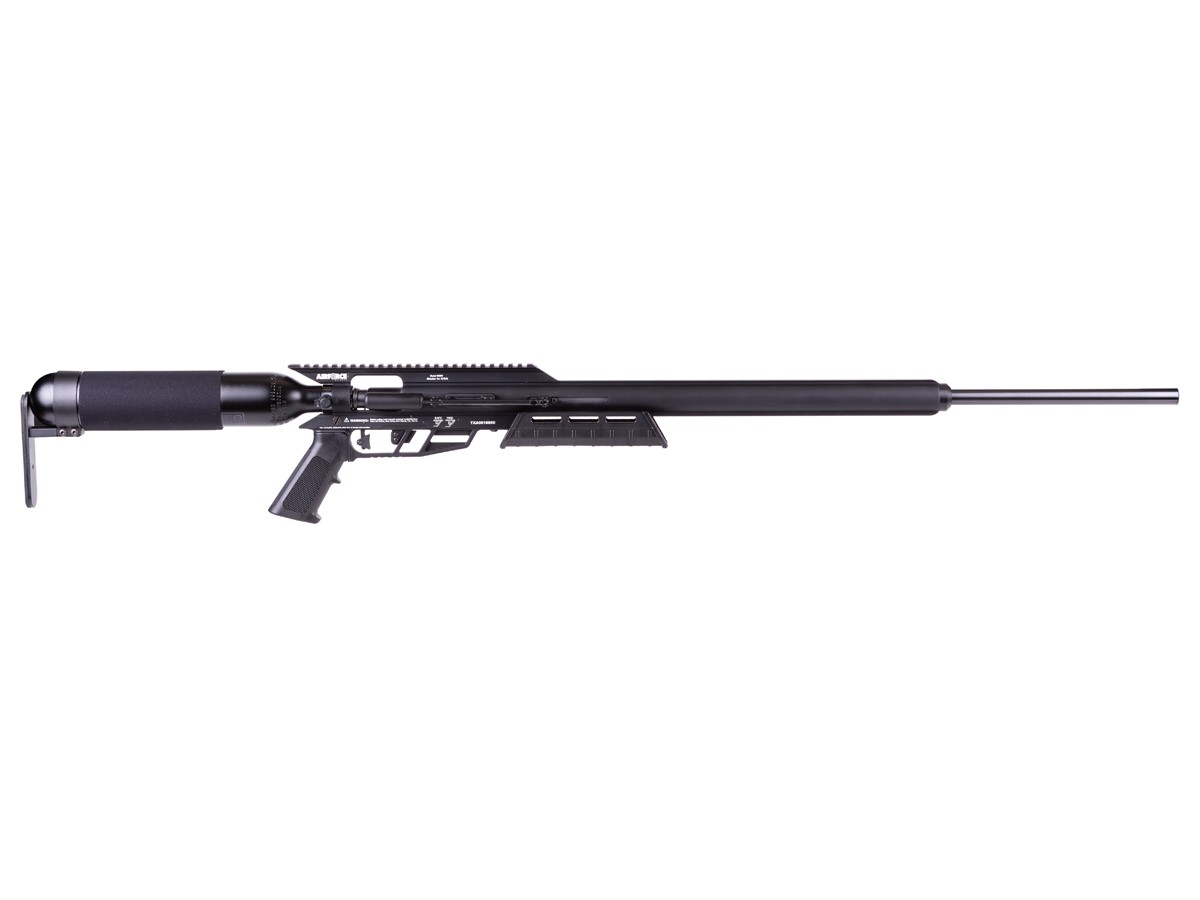
Unparalleled big-bore performance is delivered by the AirForce Texan Rifle, a pre-charged pneumatic masterpiece engineered for serious hunters and precision shooters. Exceptional energy levels exceeding 800 foot-pounds are generated in larger calibers, while velocities approaching 1,100 feet per second are achieved depending on projectile weight and configuration. Crafted proudly in Texas, USA, this single-shot sidelever platform is recognized as one of the most powerful production air rifles available. Inclusive design choices ensure the rifle can be enjoyed by shooters of varying experience levels and physical builds who seek reliable field performance.
Furthermore, the AirForce Texan Rifle bridges traditional firearm capabilities with modern airgun technology. Consistent accuracy at extended ranges is supported by precision Lothar Walther barrels, while adjustable power settings allow customization for different game and conditions. Consequently, ethical harvests of deer, hogs, predators, and other medium to large game become realistic possibilities when proper shot placement and suitable projectiles are employed.
Tremendous downrange energy is produced by the AirForce Texan Rifle across multiple caliber options. In .510 caliber configurations equipped with carbon-fiber tanks, more than 800 foot-pounds of muzzle energy can be realized. Meanwhile, .457 models routinely deliver 500–700 foot-pounds, and smaller offerings such as .357, .308, and .257 provide versatile performance suited to varmints, predators, and medium game. Velocities up to 1,100 feet per second are attainable, depending on ammunition weight and power tuning.
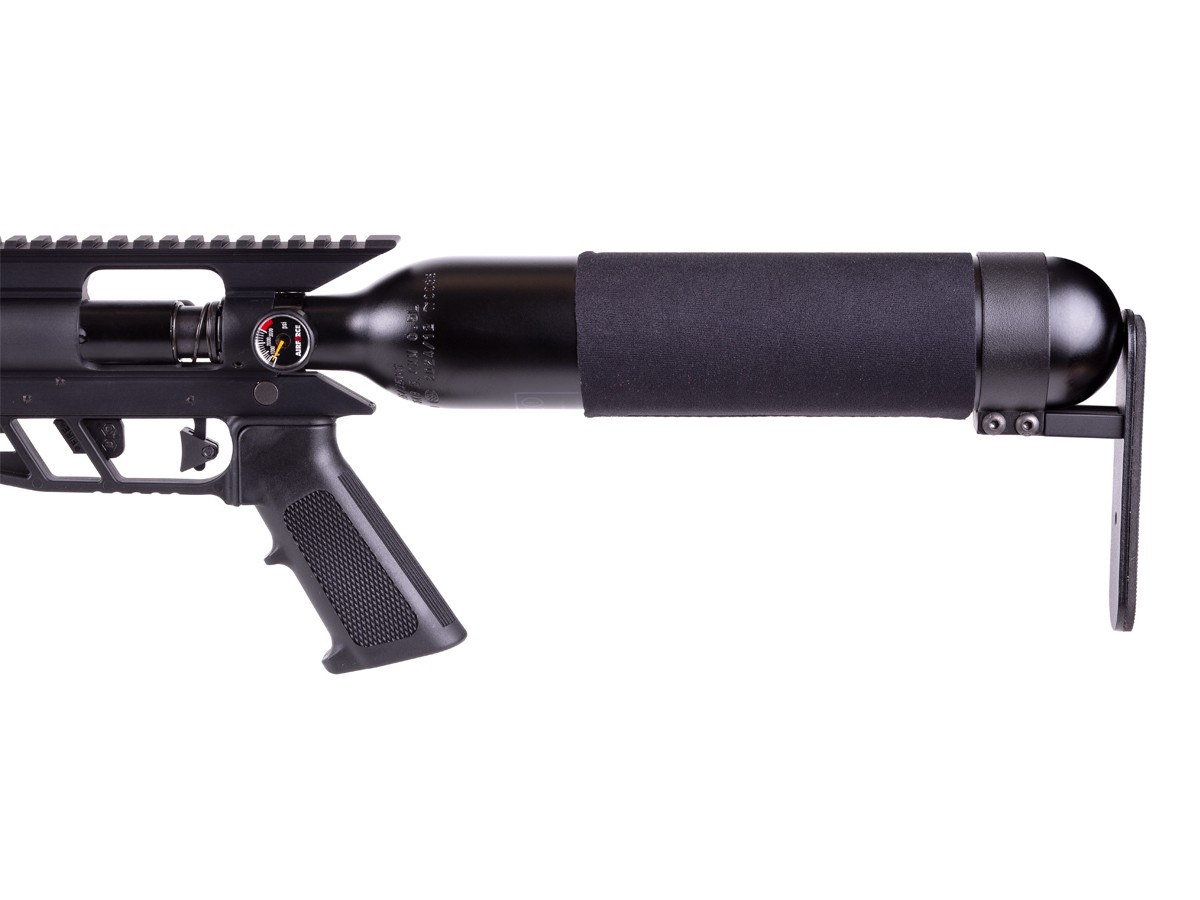
Moreover, the high-capacity 490–500 cc air reservoir, filled to pressures as high as 3,625 PSI (250 BAR), supplies the volume needed for multiple powerful shots per fill. Adjustable power valves are incorporated so that maximum energy or improved shot-to-shot consistency can be prioritized according to the user’s needs. In addition, a pressure relief device is fitted for enhanced operational safety during filling and use.
Smooth sidelever cocking is facilitated by low-effort mechanics that compress the power spring reliably. A two-stage trigger adjustable for position is provided, delivering a clean break that supports accurate shot placement. Manual or automatic safety systems (depending on model generation) are integrated to promote safe handling. Full-length Picatinny scope rails combined with upper and lower 11 mm dovetail accessory rails are featured, allowing optics, bipods, lasers, and other field accessories to be mounted with flexibility.
Additionally, overall lengths typically measure around 45–48 inches for standard models, with carbine and suppressed variants offering more compact profiles. Weights in the 6.75–8.5 pound range keep the rifle manageable during extended carries or from elevated stands and blinds. Ambidextrous grip geometry and adjustable buttplates further enhance comfort for a wide range of shooters. Therefore, the platform remains accessible and practical for diverse users seeking big-bore capability without excessive bulk.
Sound-moderated versions such as the Texan SS and LSS incorporate Sound-Loc technology. Report is significantly reduced while substantial energy levels are retained, making these configurations particularly suitable for areas where discretion is valued. Carbon-fiber tank options lighten the overall package and unlock higher energy ceilings compared with aluminum reservoirs.
Calibers, Power Output, FAC Considerations, and Accessories for the AirForce Texan Rifle
Versatile caliber options are offered by the AirForce Texan Rifle, allowing the platform to be matched precisely to intended game and shooting conditions. Furthermore, substantial power levels are generated across the range, while important licensing considerations apply in certain jurisdictions. In addition, a wide selection of accessories is available so that performance and convenience can be fully optimized by every user.
Multiple big-bore calibers are supported by the AirForce Texan Rifle. Precision Lothar Walther barrels in .257, .308, .357, .457, and .510 are fitted according to the chosen configuration. Consequently, shooters can select the projectile diameter best suited to their needs.
The .257 caliber is frequently chosen for longer-range varmint and medium-game work. Velocities approaching 960–1,000 feet per second are produced with lighter projectiles, while energy levels around 175–190 foot-pounds are typically achieved. Meanwhile, the .308 and .357 options deliver a balanced combination of trajectory and terminal performance, with energies commonly ranging from 230 to over 300 foot-pounds depending on projectile weight and power setting.
Larger .457 and .510 calibers are preferred when maximum energy transfer is required. In these chamberings, heavy cast bullets or specialized slugs can be driven to velocities exceeding 1,000 feet per second. As a result, muzzle energies of 500–700 foot-pounds (aluminum tanks) or more than 800 foot-pounds (carbon-fiber tanks in the CF Series) are realized. Therefore, ethical harvests of deer, hogs, and larger species become practical when shot placement and ammunition selection are carefully managed.
Inclusive design ensures that each caliber remains accessible to shooters of different experience levels. Barrel twists are optimized for the respective projectile weights, supporting consistent accuracy once the rifle is properly zeroed.
Impressive power is delivered by the AirForce Texan Rifle through its high-capacity air system and tunable valve. Fill pressures up to 3,000 PSI (aluminum) or 3,625 PSI / 250 BAR (carbon-fiber) are utilized. Subsequently, multiple high-energy shots per fill are available—typically two to ten depending on caliber, projectile mass, and power setting.
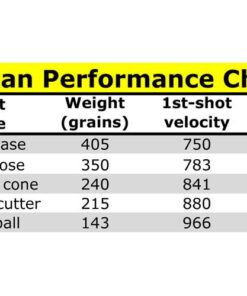
Approximate performance figures (subject to ammunition and tuning) include:
Power can be adjusted by the user so that either maximum energy or improved shot-to-shot consistency is prioritized. Moreover, the self-adjusting nature of the valve system simplifies operation while still allowing fine-tuning for specific projectile weights. In this way, the AirForce Texan Rifle accommodates both high-power hunting loads and more moderate practice settings.
In jurisdictions such as the United Kingdom, air rifles generating more than 12 foot-pounds of muzzle energy are classified as Section 1 firearms and require a valid Firearms Certificate (FAC). Because the AirForce Texan Rifle produces energy levels far above this threshold in every caliber, FAC authorization is mandatory for ownership and use in those regions. Local laws must always be verified, as regulations governing high-power airguns vary significantly by country and even by state or province.
Responsible ownership is emphasized. Proper licensing, secure storage, and adherence to all applicable hunting and firearms regulations are essential. Inclusive guidance encourages every prospective owner to consult official sources or a qualified firearms dealer before purchase so that compliance is ensured from the outset.
Performance of the AirForce Texan Rifle is further enhanced by a comprehensive range of accessories. Full-length Picatinny rails and dovetail accessory rails are provided as standard on current models, enabling straightforward mounting of optics and support equipment.
Popular additions include:
Complete shooting kits are frequently offered, combining the rifle with a scope, rings, fill adapter, and sometimes a secondary barrel. Consequently, a ready-to-use package can be obtained with minimal additional sourcing. Night-vision or thermal devices may also be mounted when legal and appropriate for the intended use.
Transition words and careful engineering ensure that accessories integrate smoothly. Therefore, the AirForce Texan Rifle can be configured for everything from open-country long-range shots to quieter, close-cover hunting scenarios. Every shooter is invited to explore these options so that the platform is tailored precisely to individual requirements and local regulations.
In summary, the caliber choices, substantial yet tunable power, FAC implications, and extensive accessory ecosystem of the AirForce Texan Rifle combine to create a highly adaptable big-bore system. Careful selection of configuration and supporting equipment allows the full potential of this American-made platform to be realized safely and effectively.
Successful harvests of deer, wild hogs, coyotes, and even larger species have been documented with the AirForce Texan Rifle when appropriate projectiles and ethical shot distances are observed. Heavy cast bullets or specialized slugs in the 200–400+ grain range are propelled with authority, delivering terminal performance previously associated mainly with centerfire firearms. Accuracy sufficient for consistent groups at 100 yards and beyond is regularly reported by experienced users, provided quality optics and proper zeroing are employed.
In the field, the single-shot design encourages deliberate loading and focused shot selection. Easy breech access via the sidelever simplifies the process, while the robust construction withstands repeated high-pressure cycles. Furthermore, the ability to tune the valve system permits adaptation to lighter projectiles for higher velocity trajectories or heavier ones for maximum energy transfer. Inclusive considerations are reflected in the manageable weight and ergonomic features that accommodate different body types and shooting styles.
Transitioning between range practice and hunting scenarios is seamless. Multiple shots per fill—typically four to several depending on power setting and caliber—are available, supporting practical field use without constant recharging. Quick-fill ports streamline the process when a scuba tank, hand pump, or compressor is available.
The modern air rifle market covers everything from recreational target shooting and pest-control platforms to sophisticated pre-charged pneumatic systems built around regulated air delivery, precision barrels, adjustable triggers, and high-capacity air cylinders. Search terms such as benjamin air rifle, bb gun rifle, benjamin marauder, pcp rifle, air bow, break barrel pellet gun, benjamin bulldog, airbow, air rifle and air pistol, and benjamin air rifles reflect how broad this category has become. Shooters researching different powerplants may encounter spring-piston rifles, CO2 systems, multi-pump pneumatics, and modern pcp air rifles, each offering a different combination of consistency, recoil, maintenance requirements, shot count, and intended use.
Among established names, the benjamin marauder remains closely associated with the PCP category. Searches such as benjamin marauder pcp, benjamin marauder air rifle, benjamin marauder .25, benjamin marauder pistol, benjamin pellet gun, benjamin pellet, and benjamin air rifle 22 break barrel often appear alongside broader phrases such as air pellet gun, airrifle, air gun rifle, pellet gun, 22 pellet gun, .177 pellet guns, 177 pelle…, pneumatic gun, high powered pellet gun, and high power pellet gun. These terms generally describe air-powered platforms in different calibers and configurations rather than one single type of shooting system.
Benjamin also appears frequently in specialized pneumatic-hunting searches. The benjamin bulldog and benjamin bulldog 457 are examples of larger-bore pneumatic designs, while the phrase benjamin bulldog 457 20 joules may appear when users are comparing market-specific energy limits or regional configurations. Likewise, benjamin airbow, benjamin air bow, benjamin bow, air bow rifle, and arrow gun refer to pneumatic systems designed to propel arrows rather than conventional pellets. Because specifications, classification, and permitted energy levels vary by jurisdiction, owners should always verify applicable local regulations before possessing, transporting, modifying, or using these platforms.
For traditional pellet shooting, phrases such as benjamin prowler, co2 pellet guns, break barrel pellet gun, hunting air rifle, and air rifle and air pistol represent several different operating systems. Break-barrel rifles rely on a spring or gas-ram mechanism, while CO2 models use disposable or refillable carbon-dioxide cartridges. PCP systems instead store compressed air inside a reservoir. That difference explains why pcp rifle, pcp rifles, air rifle pcp, and pcp air rifles are often searched separately from conventional break-barrel designs.
Maintenance is another important part of long-term ownership. Searches for benjamin air rifle repair commonly relate to seals, valves, O-rings, regulators, filling systems, trigger assemblies, gauges, and general service procedures. Air rifles operate under considerable internal pressure, so repairs involving pressure-bearing components should be handled carefully and, where appropriate, by a qualified technician. Routine maintenance normally focuses on correct lubrication, clean filling equipment, proper storage, inspection of seals, and adherence to manufacturer service guidance.
Users comparing pneumatic performance also rely on energy-conversion tools. Terms including fps to joules calculator, fps to ft lbs, airgun calculator, and airgun joules calculator describe tools used to estimate projectile energy from velocity and projectile mass. These calculations are especially relevant where airgun laws or competition rules refer to muzzle energy instead of velocity alone. A velocity number by itself does not fully describe energy because pellet mass must also be considered.
European PCP manufacturers have expanded the range of regulated and compact pneumatic platforms available to enthusiasts. Search phrases including reximex airguns, reximex rp, reximex throne gen 2, reximex throne gen2, reximex mito, reximex rpa, reximex mitos, reximex lieva, and reximex accura pcp air rifle are commonly associated with Reximex products and related research. These platforms are generally discussed in connection with PCP operating systems, adjustable ergonomics, regulated air delivery, magazine-fed configurations, and modern stock designs.
The repeated appearance of reximex airguns, reximex rpa, reximex rp, and reximex throne gen 2 illustrates how users often search both exact model names and abbreviated versions. Some queries may also contain unrelated or ambiguous terms such as sbs12, gunseek, or regional-language expressions like yivli av tüfeği. When comparing products, exact model numbers, caliber specifications, regulator settings, cylinder capacity, barrel length, energy output, and manufacturer documentation are more dependable than relying on a shortened search phrase alone.
Kral is another name frequently encountered in discussions of pneumatic rifles and sporting platforms. Airgun-focused searches include kral arms, krql, kral np 02, kral puncher, kral breaker puncher, shadow puncher, puncher mega, kral puncher k, kral pump, puncher auto, bigmax, dazzle s, raptor s, tactical tundra, empirex, np500, and air rifle pcp. Within an airgun context, these terms can refer to different PCP layouts, stock designs, barrel lengths, action types, reservoir capacities, and intended shooting applications.
International searches can produce additional spelling variants such as الكرال, kr al, kar gun, k gun, and other abbreviated terms. Model-related searches may include kr9, kp12, k12 shotgun, xm shotgun, shotgun xm, a12 shotgun, st 500, tacticalx, kora gun, akr gun, king arms fal, and kalibre pistol. Some of these phrases refer to products or categories outside ordinary airgun classifications, so they should not automatically be treated as interchangeable with PCP rifles. The same applies to conventional-firearm search phrases such as 223 rifle, 223 guns, 223 arma, 410 shotgun semi auto magazine fed, inertia shotguns, rifle cal 22 semiautomatico, av tüfeği, tabancalar, and kroll firearms. These terms describe legally distinct product categories in many jurisdictions and should be researched separately from air-powered rifles.
Similarly, phrases such as krale wholesale may appear in commercial searches, while can i buy air rifles online reflects a common legal and logistical question. The answer depends heavily on the buyer’s country, state, province, age, licensing status, power level of the airgun, delivery method, and local classification rules. Air rifles that are unrestricted in one jurisdiction may require registration, licensing, age verification, dealer involvement, or other compliance steps elsewhere. For that reason, online availability should never be assumed to mean lawful possession or lawful delivery.
When choosing between a benjamin air rifle, reximex airguns, or kral arms PCP platform, the most meaningful comparison usually involves caliber, muzzle energy, intended range, regulator consistency, air capacity, fill pressure, shot count, trigger quality, stock ergonomics, noise level, magazine design, serviceability, and availability of manufacturer-supported replacement components. A benjamin marauder, benjamin bulldog, reximex throne gen 2, reximex accura pcp air rifle, kral puncher, or kral breaker puncher may appeal to different users because each platform is engineered around a different balance of power, size, handling, and intended use.
Ultimately, the expanding world of pcp rifle, pcp rifles, pcp air rifles, air rifle pcp, air pellet gun, and pneumatic gun technology gives shooters a wide range of options for lawful sporting, recreational, competition, and pest-management applications. Understanding how systems differ is more useful than choosing on brand recognition alone. Whether researching a benjamin marauder pcp, benjamin prowler, benjamin airbow, reximex mito, reximex rpa, reximex lieva, puncher mega, shadow puncher, bigmax, or another pneumatic platform, users should compare verified specifications, follow safe handling practices, observe pressure-system maintenance requirements, and comply with all applicable local laws.
Superior power density is achieved through thoughtful engineering that maximizes air efficiency and projectile acceleration. Reliability is prioritized through robust materials and proven valve designs. Consequently, the rifle earns its reputation among hunters seeking an alternative to traditional firearms while retaining serious terminal capability. Moreover, the modular nature of the platform—supported by available shooting kits, scopes, and fill systems—allows personalization for specific applications.
Engaging performance is matched by practical considerations. The rifle is neither excessively heavy nor overly complex, enabling focused concentration on marksmanship and game rather than equipment management. Inclusive language and design elements ensure that enthusiasts across skill levels and backgrounds can appreciate its capabilities when used responsibly and within applicable regulations.
In summary, exceptional big-bore airgun performance is embodied by the AirForce Texan Rifle. From its high energy output and caliber flexibility to its user-oriented features and American manufacturing heritage, the platform is positioned to meet the demands of modern airgun hunters and recreational shooters alike. Ready access to this level of capability invites exploration of new hunting opportunities and refined shooting experiences. Explore available configurations, pair the rifle with quality optics and projectiles, and experience the difference that thoughtful big-bore design delivers. The AirForce Texan Rifle awaits those prepared to harness its remarkable potential.
Frequently Asked Questions About the AirForce Texan Rifle
Clear answers to the most common questions are provided below so that informed decisions can be made with confidence. Detailed information is shared in an accessible way, ensuring that both new and experienced shooters can understand the capabilities, requirements, and practical considerations of this powerful platform.
Multiple caliber options are offered so that the rifle can be matched to different hunting or shooting goals. Precision barrels in .257, .308, .357, .457, and .510 are fitted according to the selected model.
The smaller .257 chambering is often selected for varmints and medium game at extended distances because flatter trajectories are produced with lighter projectiles. Energy levels around 175–190 foot-pounds are typically generated. Meanwhile, the .308 and .357 options deliver a versatile balance of speed and terminal effect, routinely producing 230–300 foot-pounds depending on projectile weight and power setting.
Larger .457 and .510 calibers are preferred when maximum energy is required. With suitable heavy projectiles, velocities exceeding 1,000 feet per second and muzzle energies of 500–700 foot-pounds (or more than 800 foot-pounds with carbon-fiber tanks) are achieved. Consequently, ethical harvests of deer-sized and larger game become realistic when proper shot placement is observed.
Inclusive design means that each caliber remains practical for a wide range of users. Barrel twist rates are optimized for the intended projectile weights, supporting consistent accuracy once the rifle is zeroed and the user becomes familiar with the trajectory.
Substantial energy is delivered across the range of models. Standard aluminum-tank versions produce approximately 500–700 foot-pounds in the larger calibers, while carbon-fiber systems unlock higher outputs exceeding 800 foot-pounds in .510. Velocities up to roughly 1,100 feet per second are attainable under optimal conditions.
Power is adjustable through the valve system. Therefore, either maximum energy or improved shot-to-shot consistency can be prioritized according to the ammunition being used and the intended application. Shot counts per fill typically range from two to ten, depending on caliber, projectile mass, and the selected power setting.
Furthermore, real-world performance is influenced by factors such as ambient temperature, exact fill pressure, and the specific projectile chosen. Users are encouraged to chronograph their preferred loads so that reliable data for hunting or range use can be established.
In jurisdictions such as the United Kingdom, any air rifle generating more than 12 foot-pounds of muzzle energy is classified as a Section 1 firearm and requires a valid Firearms Certificate. Because energy levels far above this threshold are produced in every available caliber, appropriate licensing is mandatory where these rules apply.
Local regulations must always be verified, as requirements differ significantly between countries, states, and provinces. Secure storage, proper transport, and compliance with hunting laws are equally important. Inclusive advice is offered to every prospective owner: consultation with official authorities or a qualified dealer is recommended before purchase so that full legal compliance can be ensured from the beginning.
Performance and convenience are enhanced by a broad range of compatible accessories. Full-length Picatinny rails and dovetail accessory rails are fitted as standard on current models, allowing optics, bipods, lights, and other equipment to be mounted easily.
Popular additions include quality rifle scopes (from basic 4×32 kits to higher-magnification first-focal-plane optics suited to big-bore trajectories), matching rings and mounts, bipods for stable field positions, carbon-fiber air tanks for reduced weight and increased energy, universal fill adapters compatible with scuba tanks or compressors, and Sound-Loc suppression components or factory-suppressed variants for quieter operation.
Complete shooting kits are frequently available. These packages typically combine the rifle with a scope, rings, fill system, and sometimes a secondary barrel of different length or caliber. Consequently, a ready-to-use setup can be obtained with minimal additional sourcing. Spare barrels, adjustable buttplates, and cheek pieces further improve customization and comfort for users of varying builds.
A high-pressure air source is required. Fill pressures of up to 3,000 PSI for aluminum tanks or 3,625 PSI (250 BAR) for carbon-fiber tanks are used. Quick-fill ports and compatible adapters simplify the process when a scuba tank, hand pump, or compressor is available.
Shot counts vary with caliber, projectile weight, and power setting. Lighter loads in smaller calibers may yield eight to ten usable shots, while maximum-power heavy projectiles in larger calibers often provide two to five high-energy shots before pressure drops significantly. Users are advised to monitor the onboard pressure gauge and to establish personal shot strings through testing so that consistent performance is maintained in the field.
Yes, successful harvests of deer, wild hogs, predators, and even larger species have been documented when appropriate projectiles, ethical shot distances, and precise placement are employed. Heavy cast bullets or specialized slugs in the larger calibers deliver substantial terminal energy.
However, responsible hunting practices remain essential. Local game laws, minimum energy requirements, and permitted methods must be observed. Inclusive guidance emphasizes that proficiency with the chosen caliber and load should be developed through range practice before any hunting application is attempted.
Consistent groups of approximately 1–1.5 inches at 100 yards are regularly reported by experienced users when quality optics, suitable projectiles, and proper technique are combined. The precision Lothar Walther barrels contribute significantly to this performance.
Accuracy is further supported by the two-stage trigger (adjustable for position) and the stable chassis design. As with any high-powered airgun, results improve with familiarity, consistent form, and careful load development.
Routine care is straightforward. The exterior should be wiped clean after use, and the bore can be cleaned periodically with appropriate airgun solvents and patches. The air system benefits from dry, clean compressed air or nitrogen only; moisture or contaminants should be avoided.
Occasional inspection of seals, the valve system, and the safety mechanism is recommended. A limited lifetime warranty is provided by the manufacturer, reflecting confidence in the durability of the design when the rifle is maintained properly. Inclusive instructions in the owner’s manual guide users of all experience levels through basic care procedures.
Yes. Models equipped with Sound-Loc technology significantly reduce muzzle report while retaining substantial energy. Carbine-length barrels offer improved maneuverability in dense cover or from blinds, though a modest reduction in maximum velocity and energy is typically observed compared with full-length barrels.
Both configurations remain highly capable. Consequently, users can select the balance of power, length, and sound signature that best matches their typical hunting or shooting environments.
Yes. The valve system is designed to be user-adjustable. By following the guidance in the owner’s manual, the rifle can be optimized for lighter projectiles (favoring velocity and shot count) or heavier ones (favoring maximum energy). This flexibility allows a single rifle to serve multiple roles effectively.
Standard configurations typically measure around 45–48 inches in overall length and weigh between 6.75 and 8.5 pounds depending on tank material and accessories. Carbine and certain suppressed models are shorter. The relatively moderate weight contributes to practical carry and handling for a wide range of users.
Proud manufacturing takes place in Texas, USA. A limited lifetime warranty is provided, covering defects in materials and workmanship under normal use. This commitment reflects the robust construction and long-term reliability built into the platform.
After confirming legal compliance and obtaining any required licensing, the rifle should be filled to the recommended pressure, a quality optic mounted and zeroed, and a selection of suitable projectiles tested. Range practice with the intended hunting loads builds familiarity and confidence. Accessories such as a bipod, fill system, and spare tanks further enhance the experience.
Inclusive support is available through manufacturer resources, authorized dealers, and the broader airgunning community. Questions about setup, tuning, or accessories can be addressed so that every owner can enjoy the full potential of the platform safely and effectively.
These answers address the primary areas of interest for prospective and current owners. Further specific questions can be directed to authorized dealers or official support channels so that personalized guidance is obtained. Responsible ownership, continuous practice, and adherence to all applicable laws ensure that the capabilities of this powerful air rifle are realized in the most positive and ethical manner.
Practical Use Scenarios
Real-world application of this high-powered air rifle is illustrated through detailed scenarios that reflect common hunting and shooting situations. Inclusive considerations ensure that the experiences described remain accessible and relevant to a broad range of users. Careful preparation, ethical practices, and respect for local regulations form the foundation of every outing described below.
Cool autumn air is felt as the first light filters through the trees. A secure elevated stand has been positioned overlooking a natural funnel between bedding cover and a food plot. The rifle, previously zeroed at 100 yards with a preferred heavy projectile, rests on a stable bipod attached to the lower accessory rail. A quality optic with clear low-light performance is mounted on the full-length rail, allowing precise aiming even in the dim conditions of dawn.
After a quiet approach and careful setup the previous evening, the air system has been filled to the recommended maximum pressure. Two to four high-energy shots remain available depending on the chosen power setting. When a mature deer appears at approximately 80 yards, the sidelever is operated smoothly to chamber a projectile. The two-stage trigger is pressed deliberately once a clear, ethical shot presentation is confirmed. Terminal performance is delivered effectively, and the animal is recovered after a short tracking effort.
Throughout the morning, additional opportunities may arise. Each shot is taken only when conditions allow for a clean, responsible outcome. Between opportunities, the rifle is kept on safe and the surroundings are monitored continuously. Inclusive design features such as the manageable weight and ambidextrous grip contribute to comfort during extended periods of stillness. At the end of the sit, the remaining air pressure is noted and the rifle is made safe for transport.
Thick brush and low visibility characterize many hog habitats. A portable ground blind has been placed near a known travel corridor or bait site. The more compact carbine or suppressed configuration proves especially practical in this environment because maneuverability is improved and report is reduced.
The rifle is brought into the blind already filled and zeroed. A shorter overall length allows easier handling inside the confined space. When a group of hogs approaches at 40–60 yards, the sidelever is cycled quietly and a suitable projectile is loaded. Careful shot selection focuses on the first available ethical opportunity. The substantial energy produced ensures decisive results even through light cover when placement is accurate.
Multiple shots may be required if additional animals present clear opportunities. The adjustable power setting allows the user to balance energy delivery with the number of available shots. After the encounter, the area is approached cautiously and any recovered animals are handled according to local regulations and best practices. The relatively moderate weight of the platform reduces fatigue during the walk out, even when game is being carried.
Expansive fields and rolling terrain create longer average shot distances. A lightweight bipod and high-magnification optic are fitted so that precise holds can be applied at ranges beyond 150 yards. The full-length barrel configuration is selected to maximize velocity and energy retention.
Calling sequences are conducted from a natural depression or portable blind. When a coyote or similar predator responds and offers a clear presentation, the rifle is brought smoothly to the shoulder. The consistent trigger and accurate barrel support confident shot placement. Because power can be tuned, a slightly reduced setting may be chosen to increase the number of available shots while still delivering more than adequate terminal performance for the species.
Inclusive considerations are reflected in the ability of users with different physical builds to maintain a stable position for extended periods. After several successful or unsuccessful sequences, the remaining air pressure is checked and the rifle is prepared for the next location. Transportation between stands is simplified by the balanced design and available sling attachment points.
Permission has been obtained to manage pests on private farmland. Smaller caliber options such as .257 or .308 are preferred for these applications because flatter trajectories and higher shot counts are advantageous. The rifle is filled and zeroed earlier in the day, then transported to the field in a secure case.
As dusk approaches, a bipod or improvised rest is used. Targets appearing at varying distances are engaged only when a safe backstop is confirmed. The adjustable power system permits rapid adaptation between closer and more distant opportunities. Reduced report configurations further minimize disturbance to livestock or neighboring properties.
Throughout the session, the safety is engaged whenever the rifle is not actively in use. At the conclusion of the outing, the air system is bled or left at a safe residual pressure according to manufacturer guidance, and the rifle is cleaned of any field debris before storage.
Before any hunting application, thorough familiarization is conducted at a suitable range. Multiple projectile weights and styles are tested to determine the optimal combination of accuracy, velocity, and energy for the intended purpose. A chronograph is employed so that real-world performance data can be recorded.
The two-stage trigger is adjusted for the preferred position, and different power settings are evaluated. Groups are fired from supported positions that mimic field conditions—prone with bipod, seated with sticks, or standing with improvised rests. Inclusive range etiquette is observed so that other users remain comfortable and safe.
After several strings, the air system is refilled and the process is repeated. Notes are kept regarding point of impact shifts, extreme velocity spreads, and preferred holds at various distances. This methodical approach builds the confidence and knowledge required for ethical field use.
Extended trips into remote areas demand careful preparation. A carbon-fiber tank option is selected to reduce overall weight while preserving high energy potential. Spare fill adapters, a compact hand pump or small scuba bottle, and a selection of projectiles are packed.
Daily routines include morning and evening sits, midday scouting, and careful monitoring of remaining air pressure. The rifle is stored securely when not in use and is inspected regularly for any signs of dirt or moisture. Suppressed configurations prove valuable when multiple hunting parties share the same general area.
Game recovery, processing, and camp logistics are managed alongside firearm handling. The balanced weight and ergonomic features help prevent fatigue over successive days. Inclusive packing lists ensure that users of different experience levels can prepare adequately for self-sufficient outings.
A single day may begin with predator calling at first light, shift to deer stand activity mid-morning, and conclude with evening hog hunting near agricultural edges. The modular nature of the platform supports these transitions. A secondary barrel of different caliber or length, carried in a protective sleeve, can be exchanged in minutes when conditions change. Optics remain mounted, and power settings are adjusted as needed.
Throughout the day the rifle is treated with consistent respect for safety. Muzzle awareness, positive target identification, and verification of backstops remain constant priorities. The ability to adapt caliber, power, and accessories on the fly maximizes the usefulness of the platform without requiring multiple complete rifles.
After every practical session the rifle is made completely safe. Residual pressure is managed according to manufacturer recommendations, the exterior is wiped clean, and the bore is inspected. Any moisture is removed before the rifle is returned to a secure, climate-controlled storage location.m357
Accessories are checked for tightness and function. Notes from the outing—shot distances, environmental conditions, and performance observations—are recorded so that future sessions can be improved. Inclusive maintenance routines ensure that users of all backgrounds can keep the equipment in reliable condition for years of service.
These scenarios demonstrate how the combination of caliber flexibility, substantial yet adjustable power, modular accessories, and thoughtful ergonomics supports a wide variety of practical applications. Ethical decision-making, continuous practice, and strict adherence to all applicable laws remain the most important elements of every successful outing. When these principles are followed, the platform proves itself a capable and versatile tool for responsible outdoor pursuits.
Reasons This Platform Stands Out as a Superior Choice for Serious Use
Exceptional capability is delivered by this high-powered air rifle, making it a preferred option for hunters and shooters who demand reliable performance without the limitations of traditional firearms. Multiple advantages are combined in a single platform, allowing ethical and effective results across a wide range of practical applications. Inclusive design ensures that these benefits remain accessible to users of varying experience levels and physical builds.
Substantial muzzle energy is generated, often exceeding levels previously associated only with centerfire cartridges. In larger configurations, more than 800 foot-pounds can be produced when optimal projectiles and tank systems are employed. Consequently, decisive terminal performance is achieved on deer-sized and larger game when shot placement is accurate.
Furthermore, adjustable power settings permit the energy output to be tailored precisely to the intended quarry. Lighter loads can be selected for smaller species or higher shot counts, while maximum settings are reserved for situations requiring greater penetration and impact. This flexibility reduces the need for multiple specialized firearms and supports responsible use across different hunting seasons and environments.
A broad selection of chamberings is supported, ranging from flatter-shooting mid-size options to heavy big-bore projectiles. Therefore, the same platform can be adapted for varmint control, predator management, or big-game pursuits simply by exchanging barrels or selecting the appropriate factory configuration.
Accuracy remains consistent across these choices because precision-manufactured barrels are utilized. Inclusive considerations are reflected in the ability of users to match the caliber to both personal preference and local game regulations. As a result, one rifle can fulfill roles that would otherwise require several different tools.
| Select Caliber | .257, .308, .357, .457, .510 |
|---|
AirForce
AirForce
AirForce
Calibers: Most common are .177 (4.5mm) for speed/flat trajectory and general use, and .22 (5.5mm) for better hunting knockdown power. Larger “big bore” (.25, .30, .357+) exist for hunting bigger game where legal.
Yes, many modern PCP and springers deliver enough energy for small game (rabbits, squirrels, birds) and even larger game in some areas. Muzzle energy (in ft-lbs or joules) matters more than velocity alone. Always match caliber, pellet weight, and energy to the game and check local hunting regs.
Treat every airgun as if it is loaded.
Follow these rules strictly—airguns cause real injuries.
Laws differ dramatically by country, state/province, and even city. Always verify current local laws before buying, owning, transporting, or using an airgun. Age restrictions (often 18+) are common.
Examples (summaries only; check official sources):
Resources: Wikipedia “Air gun laws”, airgun forums, or official government sites. For travel, research transit laws carefully.
Consider:
Buy from reputable dealers and consider warranties.
Follow your model’s manual. Basic care extends life significantly.
International shipping may be available for select products. Customers are responsible for understanding and complying with their local import laws and regulations before ordering.
Yes. Customers are required to confirm their order number through WhatsApp or Live Chat before orders are processed and shipped.
If local laws prevent shipment to your area, your order may be canceled and refunded according to our store policy.
Processing typically takes 1–3 business days after payment confirmation. Delivery times vary depending on destination, carrier, and product availability.
Pellets are the most common projectile (lead or lead-free). Match them to your gun, caliber, and purpose—test several brands as accuracy varies by barrel.
Tips: Heavier pellets in .22/.25 for hunting (better momentum). Lighter in .177 for speed/flat trajectory. Always check head size fit (e.g., 4.51-4.53mm variants).
Muzzle energy (ft-lbs or joules) matters more than velocity. Ethical shots require precise placement (head/heart-lung) within effective range.
Rough Guidelines (adjust for distance, pellet, and local laws):
PCPs dominate serious hunting due to power and shot count. Springers/gas rams work well for small game but require skill. Always prioritize clean kills and check seasons/species rules.
Common Issues:
Toggle Content
Budget Tip: Start with a quality springer (~$150-400) before investing in PCP setup.
Airgunning offers endless depth—from backyard plinking to precision competition and ethical hunting. Prioritize safety, legality, and practice. If you want specifics (e.g., recommendations for a country, budget, hunting small game, or a particular type like PCP vs springer), let me know for more targeted info! Shoot responsibly.
Tuning improves accuracy, reduces noise/recoil, or increases power (within legal limits).
Caution: Check laws—power increases may reclassify your gun. DIY only if experienced; professional tuners recommended.
You must be at least 18 years old to purchase any airgun or related accessories from our store. By placing an order, you confirm that you meet the legal age requirements in your state or country.
Yes. Orders may require age verification before processing and shipping. In some cases, we may request a valid government-issued ID to confirm eligibility.
WhatsApp us










Reviews
There are no reviews yet.