Air Arms S410 SuperLite Rifle Traditional Brown – Lightweight British Precision PCP Air Rifle
Air Arms S410 SuperLite Rifle Traditional Brown – Classic Styling Meets Modern Engineering
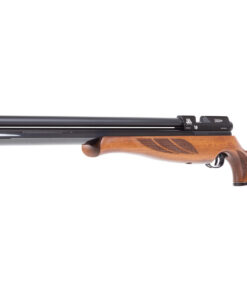
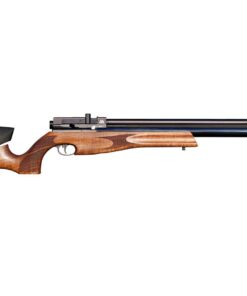
The Air Arms S410 SuperLite Rifle Traditional Brown has been designed to combine traditional British craftsmanship, dependable PCP technology, and lightweight handling in one elegant sporting air rifle. Every aspect of this distinguished model has been carefully developed to provide a refined shooting experience, while its attractive Traditional Brown stock has been finished to complement its classic appearance.
Furthermore, outstanding attention has been given to ergonomic comfort, mechanical consistency, and overall build quality. A lightweight SuperLite stock has been incorporated to reduce unnecessary weight, while the proven S410 action has been retained for dependable operation.
Unlike heavier conventional sporting designs, this full-length rifle has been configured to provide comfortable handling without sacrificing its traditional proportions. Consequently, extended target-shooting sessions can be approached with greater comfort and improved familiarity.
Additionally, the rifle has been equipped with a precision Lothar Walther barrel, a traditional bolt-action mechanism, and a removable 10-shot rotary magazine. These features have been combined to provide an established platform for recreational shooting and precision target practice.
Traditional Brown SuperLite Stock – Lightweight Elegance and Comfort
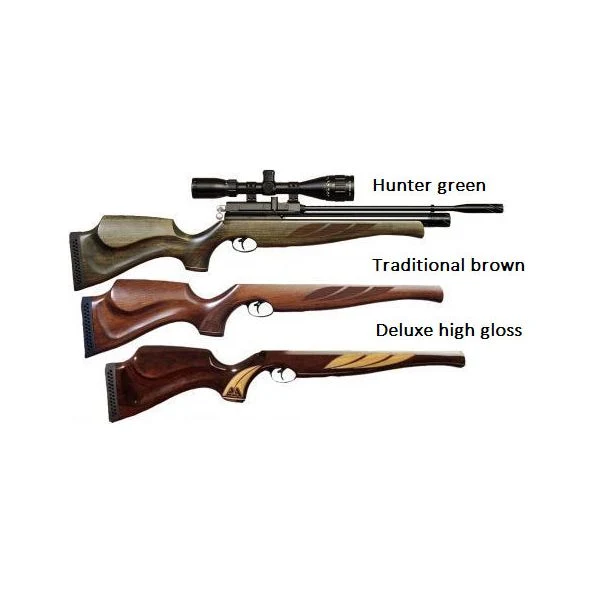
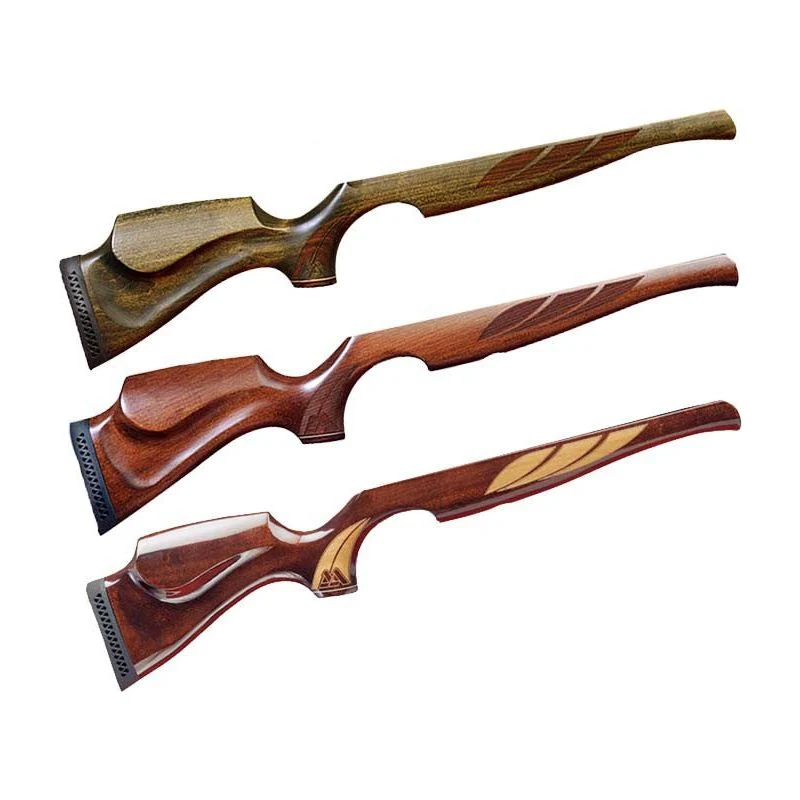
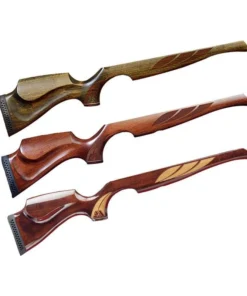
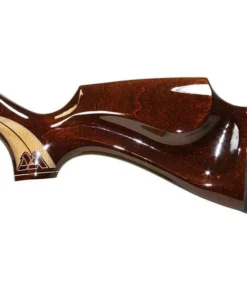
A beautifully styled lightweight hardwood stock has been selected to distinguish this model from conventional sporting rifles. Its Traditional Brown finish has been carefully applied to create a timeless appearance associated with classic British airgun design.
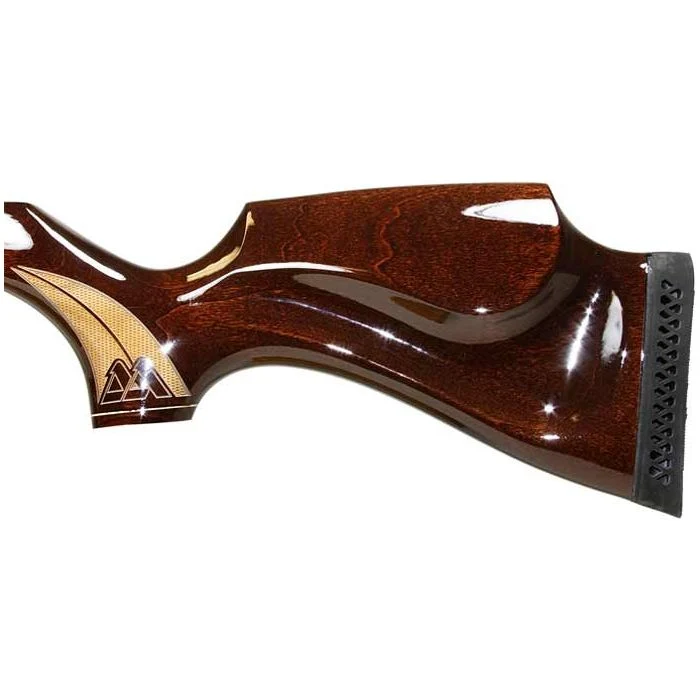
Moreover, ergonomic contours have been incorporated into the stock to provide comfortable support during normal handling. A raised cheekpiece has been included to facilitate a consistent shooting position, while textured gripping areas have been provided for improved hand placement.
Importantly, the stock has been developed around a lightweight construction philosophy. Through this approach, unnecessary bulk has been reduced while the practical appearance of a traditional sporting rifle has been preserved.
For additional convenience, an ambidextrous stock configuration has been offered, although the exact handedness should always be confirmed against the selected product variation.
Precision Lothar Walther Barrel – Quality Engineering
At the centre of the rifle’s mechanical design, a match-grade Lothar Walther barrel has been fitted. This established barrel design has been selected for its precision manufacturing standards and compatibility with the S410 platform.
Furthermore, careful attention has been given to barrel construction and alignment during manufacturing. Through these engineering considerations, repeatable pellet performance has been supported under suitable shooting conditions.
Consistent results are also influenced by ammunition quality, equipment condition, weather, and individual technique. Therefore, appropriate pellet selection and routine inspection should always be considered important elements of responsible ownership.
Additionally, the full-length rifle configuration has been retained to provide the familiar dimensions associated with traditional sporting air rifles.
Advanced PCP Performance and Dependable Mechanical Design
Proven Pre-Charged Pneumatic Operating System
The Air Arms S410 SuperLite Rifle Traditional Brown has been built around an established pre-charged pneumatic system. Compressed air is stored inside an integrated cylinder, allowing each shot to be powered without the repeated spring compression associated with conventional spring-powered air rifles.
As a result, the operating characteristics commonly associated with PCP technology have been incorporated into a practical sporting platform.
Unlike regulated models, the standard S410 system has been produced with an unregulated configuration. Consequently, performance characteristics may vary throughout the usable pressure range.
For responsible operation, the manufacturer’s filling instructions and specified pressure limitations must always be followed. Only suitable, approved filling equipment should be used, and pressure-bearing components should be inspected by qualified personnel whenever servicing is required.
Traditional Bolt-Action System and 10-Shot Magazine
A smooth traditional bolt-action mechanism has been incorporated into the rifle’s operating system. Alongside this arrangement, a removable 10-shot rotary magazine has been fitted to provide multishot functionality.
Furthermore, the magazine assembly has been designed as part of the established S410 action, with straightforward mechanical operation emphasised throughout its construction.
A practical magazine capacity has been provided without requiring the rifle to adopt a modern tactical appearance. Instead, classic styling has been preserved, while the conveniences associated with contemporary sporting airguns have been included.
Likewise, the magazine should be inspected regularly for wear, contamination, or damage. Proper storage and maintenance are recommended to preserve the condition of its components.
Adjustable Two-Stage Trigger and Integrated Safety
A two-stage trigger assembly has been incorporated to provide an adjustable trigger arrangement, while a manual safety feature has also been fitted.
Through the adjustable design, trigger characteristics can be configured within the manufacturer’s permitted specifications by a qualified technician.
Additionally, the trigger assembly has been integrated into the familiar S410 sporting action, preserving the overall appearance and mechanical character of the platform.
However, safe handling practices must never be replaced by reliance on a mechanical safety device. The rifle should always be treated as loaded until its condition has been personally verified.
Air Arms S410 SuperLite Rifle Traditional Brown – Key Features and Specifications
The following features have been associated with the full-length Traditional Brown SuperLite configuration:
- Manufacturer: Air Arms, United Kingdom.
- Model: S410 SuperLite Rifle.
- Stock Finish: Traditional Brown.
- Stock Material: Lightweight hardwood, traditionally poplar.
- Operating System: Pre-Charged Pneumatic (PCP).
- Action: Traditional bolt-action mechanism.
- Magazine Capacity: 10-shot removable rotary magazine.
- Available Calibres: .177 (4.5 mm) and .22 (5.5 mm).
- Barrel: Match-grade Lothar Walther.
- Trigger: Adjustable two-stage design.
- Safety: Manual safety mechanism.
- Regulator: Unregulated standard S410 system.
- Pressure Monitoring: Integrated manometer.
- Overall Length: Approximately 1,020 mm.
- Barrel Length: Approximately 493.5 mm.
- Muzzle Energy: UK standard-power configuration below 12 ft-lb.
- Stock Orientation: Ambidextrous and handed variants may be available.
- Primary Application: Sporting target practice and recreational shooting.
Specifications may vary according to production year, market, calibre, and individual configuration. Included accessories should be confirmed with the retailer.
Practical Comfort, Craftsmanship, and Long-Term Ownership
Balanced Full-Length Configuration
Although a traditional full-length profile has been maintained, a lightweight stock has been incorporated to support more comfortable handling.
Consequently, the rifle’s appearance has remained recognisably classic, while the excess weight associated with some conventional hardwood stocks has been reduced.
Furthermore, attention has been given to the relationship between the stock, action, and barrel assembly. Through this balanced construction, the rifle has been designed to feel familiar to sporting-airgun enthusiasts.
Durable Construction and Maintenance Considerations
High manufacturing standards have long been associated with the Air Arms S410 series, and the SuperLite configuration has been developed around the same established platform.
However, continued performance is dependent upon appropriate maintenance. External metal surfaces should be protected from moisture, while the stock should be cleaned using suitable non-abrasive materials.
Likewise, the air system should be examined according to manufacturer guidance, and internal repairs should be entrusted to authorised service professionals.
When the rifle is not being used, it should be unloaded, depressurised only as directed by the manufacturer, and secured against unauthorised access.
A Distinctive Example of British Airgun Craftsmanship
The Air Arms S410 SuperLite Rifle Traditional Brown represents an established combination of elegant stock styling, lightweight construction, and traditional PCP engineering.
From its carefully finished hardwood stock to its precision barrel and familiar bolt-action mechanism, considerable attention has been given to the quality of its individual components.
Furthermore, the inclusion of a 10-shot magazine, adjustable trigger, integrated pressure gauge, and established S410 action provides a comprehensive set of sporting-airgun features.
Ultimately, traditional appearance and modern manufacturing principles have been brought together in a rifle that reflects the long-standing engineering heritage of Air Arms.
For responsible owners who appreciate classic design, practical ergonomics, and established mechanical construction, this SuperLite configuration offers a distinctive example of British airgun craftsmanship.
Legal and Safety Notice: Ownership, transfer, storage, and use must comply with applicable local laws. Appropriate eye protection, secure storage, suitable backstops, and supervised access should always be prioritised.
Air Arms S410 SuperLite Rifle Traditional Brown – Calibres, FAC Power, Scope Compatibility and Recommended Accessories
Available Calibres – .177 and .22 Options
The Air Arms S410 SuperLite Rifle Traditional Brown has been manufactured in two established airgun calibres: .177 (4.5 mm) and .22 (5.5 mm). Both versions have been developed around the proven S410 pre-charged pneumatic platform, with the calibre selection influencing ammunition compatibility and ballistic characteristics.
Furthermore, the same distinctive Traditional Brown stock finish has been offered across the available calibre configurations. As a result, the rifle’s elegant appearance and lightweight construction have been preserved regardless of the selected chambering.
.177 Calibre (4.5 mm)
The .177 configuration has been widely associated with precision-oriented recreational target shooting. Its smaller-diameter pellets have been commonly selected for paper-target disciplines and organised airgun activities.
Additionally, the .177 variant has been supplied with the established 10-shot rotary magazine system and the match-grade Lothar Walther barrel associated with the S410 range.
.22 Calibre (5.5 mm)
Alternatively, the .22 configuration has been offered for enthusiasts who prefer a larger-diameter pellet. Its different ammunition dimensions and projectile characteristics should be considered when reviewing product specifications.
Moreover, the same traditional bolt-action mechanism, two-stage trigger assembly, and lightweight sporting stock have been incorporated into this version.
Importantly, only ammunition corresponding to the rifle’s marked calibre should be used. The exact chambering must always be checked before any pellets are purchased or loaded.
FAC and Non-FAC Versions – Understanding Power Ratings
The Air Arms S410 SuperLite Rifle Traditional Brown has primarily been marketed in the United Kingdom as a sub-12 ft-lb PCP air rifle. This standard-power configuration has been designed around established sporting-airgun requirements.
For clarity, FAC refers to a Firearm Certificate under the relevant British licensing framework.
Standard Sub-12 ft-lb Configuration
A muzzle-energy rating below 12 foot-pounds, approximately 16.3 joules, has been specified for the standard UK version.
Furthermore, this factory configuration has been listed by Air Arms for the current S410 SuperLite Rifle range in both .177 and .22 calibres.
However, legal requirements depend on jurisdiction. In particular, Scottish air-weapon licensing rules differ from those applicable in England and Wales.
FAC and Higher-Power Configurations
Historically, certain S410-family models have been manufactured in FAC-rated configurations. However, these variants should not automatically be confused with the current standard-power Traditional Brown SuperLite Rifle.
Older FAC versions may differ in their production specifications, internal components, and documentation. Therefore, an individual rifle’s exact model number and factory configuration should be verified before an FAC power rating is advertised.
Additionally, FAC certification, registration, and lawful ownership requirements must be established according to the applicable jurisdiction.
Unauthorized power adjustments should not be attempted, because mechanical safety, legal compliance, and manufacturer specifications could all be affected.
PCP Air System and Power Consistency
An unregulated pre-charged pneumatic operating system has been incorporated into the standard S410 design. Compressed air is contained within the rifle’s pressure cylinder and monitored through an integrated manometer.
Because the standard mechanism has been manufactured without a regulator, muzzle-energy consistency may vary throughout the available pressure range.
Nevertheless, the system has been developed around an established mechanical design, with comparatively straightforward construction emphasised.
Expected shot count is influenced by calibre, cylinder size, factory configuration, and operating conditions. Therefore, manufacturer documentation should be consulted rather than assuming an identical number of shots across every variant.
For safety, only approved PCP charging equipment should be used, and the manufacturer’s filling-pressure requirements must be followed.
Scope Compatibility and Optical Equipment
Understanding the Scope Mounting System
The rifle has been equipped with a dovetail-style scope mounting interface, allowing compatible sporting optics to be fitted.
Furthermore, the manufacturer’s current product information confirms that an illustrated scope is not automatically included with the rifle. Any supplied optic must therefore be identified separately within the retailer’s product listing.
Before an optical accessory is selected, the mounting interface, ring dimensions, available clearance, and manufacturer’s fitting requirements should be confirmed.
Recommended Scope Categories
Several conventional optical categories may be considered when reviewing compatible equipment:
- Fixed-magnification sporting scopes: Commonly associated with simple construction and an uncomplicated viewing arrangement.
- Variable-magnification sporting scopes: Offered with adjustable optical magnification for different recreational viewing preferences.
- Compact sporting optics: Often considered where reduced accessory weight and overall size are important.
- Illuminated-reticle scopes: Available with additional reticle-visibility features, depending on the model.
- Parallax-adjustable scopes: Manufactured with an optical adjustment feature used to manage apparent reticle displacement.
Specific compatibility should be checked with an authorised Air Arms dealer or qualified sporting-optics specialist.
Importantly, manufacturer-approved fitting and inspection should be prioritised. Optical accessories should never obstruct the rifle’s action, safety mechanism, or normal handling.
Recommended Accessories for Ownership and Maintenance
Essential PCP Equipment and Storage Accessories
A selection of maintenance, protective, and safety-related accessories can support responsible ownership of the Air Arms S410 SuperLite Rifle Traditional Brown.
Recommended accessory checklist:
- Lockable rifle case: Recommended for secure transport and controlled storage.
- Dedicated gun safe: Intended to prevent unauthorised access.
- PCP filling equipment: Must be approved and compatible with the manufacturer’s pressure requirements.
- Correct filling connector: Must match the rifle’s specified filling interface.
- Protective safety glasses: Recommended during supervised shooting activities.
- Suitable cleaning materials: Non-abrasive products should be selected for exterior care.
- PCP-compatible maintenance kit: Manufacturer-approved cleaning components should be prioritised.
- Spare magazine: A genuine compatible replacement may be considered where available.
- Protective storage cover: Suitable breathable protection may help reduce dust exposure.
- Manufacturer instruction manual: Should be retained for inspection, maintenance, and operating guidance.
Genuine Replacement Components and Long-Term Care
Genuine Air Arms replacement components should be preferred whenever maintenance parts are required. Through this approach, compatibility with the original S410 design can be more reliably established.
Moreover, pressure-system components should be serviced by qualified professionals rather than modified by inexperienced owners.
Finally, a suitable storage environment should be maintained. Moisture exposure should be minimised, exterior metal surfaces should be kept clean, and the stock finish should be protected against inappropriate cleaning chemicals.
Quality, Compatibility and Responsible Ownership
The Air Arms S410 SuperLite Rifle Traditional Brown has been distinguished by its traditional appearance, lightweight stock construction, dependable bolt-action engineering, and established PCP mechanism.
Whether the .177 or .22 factory configuration is selected, attention should be given to genuine product specifications, lawful ownership, approved accessories, and professional maintenance.
Ultimately, the combination of British manufacturing heritage, conventional sporting design, and practical equipment compatibility has made this model a recognisable member of the Air Arms S410 family.
Product specification notice: Calibre availability, FAC status, power ratings, optical accessories, and included equipment should always be confirmed against the exact rifle supplied.
Air Rifles, PCP Systems, Calibers, Target Shooting and Popular Models
The world of air arms, air guns, and precision shooting equipment covers everything from recreational target shooting to sporting applications. For newcomers asking what is an air gun, what is an air rifle, what is air rifle, what is a air rifle, what is a airgun, what is an airgun, or what are airguns, the basic principle is straightforward. An air gun uses compressed gas or air to propel a projectile rather than relying on the combustion system associated with conventional firearms.
Understanding how does an air gun work, how does air gun work, how do air guns work, how does an air rifle work, how does air rifle work, and how do air rifle work can help buyers distinguish between the different operating systems available. Depending on the design, power can be supplied by a spring piston, compressed air cylinder, CO2 cartridge, or another pneumatic mechanism.
PCP Air Rifles and Compressed-Air Systems
One of the most popular categories is the pre-charged pneumatic platform. Searches such as what is a pcp air rifle, what is a pcp airgun, what is pcp air rifle, what is a pcp air gun, what is a pcp rifle, what is pcp rifle, what are pcp air rifles, and what is a pre charged pneumatic air rifle all relate to the same fundamental technology. A PCP rifle stores compressed air inside a reservoir and releases a controlled quantity each time the rifle is fired.
For shoppers researching pcp gun meaning, pcp rifle meaning, or pcp air rifle meaning, PCP simply refers to a pre-charged pneumatic system. Air is normally added using a pcp hand pump, dive cylinder, or pcp air compressor. Consequently, an air compressed gun or air compressor rifle can deliver consistent performance without requiring the shooter to manually compress a spring before every shot.
Some searches also include pcp bb gun, although many PCP platforms are primarily designed around pellets rather than traditional BB ammunition. Understanding the intended ammunition is therefore important before selecting accessories, magazines, or loading equipment.
.177 Caliber, .22 Caliber and Pellet Selection
Caliber choice is one of the most frequently researched subjects among airgun buyers. The .177 caliber remains extremely popular for recreational shooting and precision target applications. Products described as a 177 air rifle, 177 bullet, or even 177 cal darts may appear during searches, although ammunition compatibility always needs to be checked against the manufacturer’s specifications.
Questions including 177 or 22, 177 cal vs 22, 177 caliber vs 22, .177 caliber vs .22, .177 pellet vs .22 pellet, and .22 vs .177 pellet generally focus on differences in projectile size, trajectory, energy, and intended use. A smaller .177 pellet is commonly chosen for paper targets and precision shooting, whereas larger calibers may be selected for applications where additional projectile mass is desired.
Understanding bb gun pellet sizes is equally important because BBs and pellets are not automatically interchangeable. Before purchasing ammunition, shooters should confirm the caliber and projectile type specified for their particular pellet rifle, pellet pistol, or bb gun.
Air Arms Rifles and Popular Models
Among established manufacturers, air arms products remain widely searched by enthusiasts interested in precision PCP and spring-powered platforms. Well-known searches include air arms s510, s510, air arms s410, aa s400, pro sport air arms, prosport air arms, tx 200, and tx200.
Variations such as air arm and airarm are also commonly entered by shoppers searching for the brand. Buyers looking specifically for regulated sporting configurations may encounter the air arms s510 ultimate sporter .177 sub 12, a phrase frequently associated with UK-oriented searches for the S510 platform.
Each Air Arms model has its own action, stock design, power configuration, caliber options, and intended shooting environment. Therefore, specifications should always be checked against the exact version being considered rather than assumed from another model in the same family.
FX Impact M3, FX Maverick and Modern PCP Platforms
Premium PCP research frequently includes the fx maverick and the fx impact m3. Buyers may also search for fx impact mk3, fx m3 airgun, fx m3, impact m3, or fx impact m3 air rifle while comparing generations and configurations.
More specific searches such as fx impact m3 .22cal air rifle. 600mm barrel focus on caliber and barrel-length combinations. Meanwhile, international shoppers may search fx impact m3 precio, fx impact m3 precio en usa, or fx impact m3 price when researching current market pricing.
Because FX platforms can be produced in multiple barrel lengths, calibers, power settings, and regional configurations, buyers should verify the exact specification offered in their country before ordering.
Break-Barrel Air Rifles
Another major category is the break barrel air rifle. Anyone asking what is a break barrel air rifle or what is a break barrel pellet gun is usually referring to a rifle in which the barrel is hinged downward to cock the internal powerplant and expose the breech for loading.
Break-barrel designs remain popular because they can provide a self-contained shooting system without an external compressor or air bottle. Models such as a gamo pellet gun are frequently encountered by buyers exploring this category.
Learning how to load pellet gun equipment properly is particularly important. Pellets should match the manufacturer’s recommended caliber and should be loaded in accordance with the owner’s manual while the rifle is pointed in a safe direction and handled under normal shooting-range safety procedures.
CO2, Pellet Pistols and Other Airgun Types
Not every airgun uses PCP or spring power. A co2 powered pellet rifle, for example, uses replaceable CO2 cartridges as its propellant source. CO2 systems can be found in rifles and handguns intended for recreational shooting, training, and target use.
People researching air pistol uses or general pellet gun uses will encounter equipment intended for target practice, recreational plinking, skills training, competition, and other lawful sporting activities. A pellet pistol can offer a compact platform, while rifles generally provide a longer sight radius and additional stability.
Search terms such as pelet guns are also common misspellings of pellet guns and can still represent useful search intent when website content is designed to answer frequently asked buyer questions naturally.
Target Shooting and Airgun Practice
One of the most established uses of airguns is target shooting with air rifles. Dedicated air guns for target shooting may emphasize accuracy, adjustable stocks, match triggers, regulated air delivery, and compatibility with precision optics.
Likewise, airgun target practice and airgun for target practice are common search topics among people looking for an accessible way to develop shooting fundamentals. Proper backstops, eye protection, safe handling practices, and suitable ranges should always be used.
The practical range of air rifle equipment varies considerably according to caliber, muzzle energy, projectile selection, environmental conditions, and the rifle itself. As a result, buyers should use manufacturer specifications and local range rules rather than assuming that every air rifle performs identically.
Hunting Air Rifles and Appropriate Use
Some shooters research air rifles for hunting, hunting air rifles, best air rifle for hunting, pellet gun for rabbits, or even the informal phrase rats gun when looking for equipment designed for lawful pest-control or hunting applications.
Suitability depends heavily on local law, caliber, projectile energy, quarry species, shot placement requirements, and humane hunting standards. Questions such as can a bb gun kill a fox should therefore not be treated simply as equipment-selection questions. Legal restrictions and animal-welfare requirements should be checked first, and low-powered BB guns are not appropriate substitutes for equipment legally and ethically suitable for a particular species.
Similarly, searches for air rifles for deer hunting and big game hunting with air rifle involve specialized legal and ballistic requirements. Large-bore systems such as a 72 caliber air rifle or products associated with bluegrass big bore illustrate how different big-bore pneumatic platforms can be from conventional small-caliber pellet rifles. Local hunting regulations must determine whether such equipment may legally be used.
Licensing and UK Airgun Regulations
Legal requirements differ considerably by jurisdiction. UK-oriented searches frequently include do you need a licence for air rifle, air rifle certificate uk, and 22 rifle uk license. However, the rules governing air rifles, conventional .22 firearms, certificates, age restrictions, possession, transportation, and power limits are not identical.
Consequently, buyers should confirm current legislation with the relevant licensing authority before purchasing or using any regulated equipment. Particular attention should also be paid to whether a rifle is configured below or above applicable power thresholds.
Sportsman, Gamo and Other Popular Searches
Beyond specialist PCP manufacturers, buyers may encounter products such as the sportsman 900 while comparing recreational air rifles. Searches for a gamo pellet gun are also common because Gamo offers numerous spring-powered and pneumatic models across different price points and configurations.
The broader search for best air guns can include everything from affordable recreational platforms to sophisticated regulated PCP rifles. Rather than treating one design as universally superior, buyers should compare caliber, intended application, weight, stock ergonomics, power source, shot capacity, charging equipment, availability of spare parts, and local legal requirements.
Airgun Safety, Home Use and Responsible Ownership
Searches for air guns for home defense do appear online, but an airgun should not automatically be assumed to be suitable for defensive use. Laws vary significantly, and airguns can cause serious injury. Secure storage, lawful ownership, training, safe handling, and avoidance of unnecessary confrontation remain essential.
Whether someone owns an air rifle, pellet rifle, bb gun, or PCP platform, the equipment should always be treated as capable of causing injury. A secure backstop should be used for recreational shooting, the muzzle should remain pointed in a safe direction, and manufacturer instructions should be followed carefully.
Ultimately, understanding the differences between PCP rifles, break-barrel systems, CO2 equipment, caliber choices, and individual models makes it easier to compare the extensive range of modern airguns. From Air Arms platforms to FX rifles and recreational pellet guns, careful specification checking, responsible handling, lawful use, and suitable ammunition selection remain central to getting the right equipment for the intended purpose.
Frequently Asked Questions (FAQs)
1. What makes this pre-charged pneumatic air rifle different from traditional spring-powered models?
A pre-charged pneumatic operating system has been incorporated instead of a conventional spring-and-piston mechanism. Consequently, the firing process is powered by compressed air stored inside an integrated pressure cylinder.
Unlike traditional spring-powered designs, the pneumatic mechanism does not require a mainspring to be compressed before every shot. As a result, the distinctive recoil characteristics associated with spring-driven mechanisms are generally reduced.
Furthermore, the system has been developed to provide a consistent and familiar mechanical operating experience. Its traditional bolt-action arrangement has also been retained, allowing modern pneumatic technology to be combined with conventional sporting design.
2. Which calibres are available?
Two established calibre configurations have been offered: .177 (4.5 mm) and .22 (5.5 mm). Each configuration has been manufactured for a different pellet diameter while retaining the principal mechanical features of the platform.
The smaller .177 calibre has traditionally been associated with precision-oriented paper-target disciplines. Meanwhile, the larger .22 calibre has been commonly encountered in general sporting-airgun applications.
Although both versions share similar external styling, their ammunition dimensions are different. Therefore, only pellets matching the calibre markings of the individual rifle should be used.
3. What is the standard factory power rating?
A standard UK muzzle-energy specification of less than 12 foot-pounds, approximately 16.3 joules, has been associated with the conventional factory configuration.
Nevertheless, the exact power rating should always be confirmed against the individual rifle’s original documentation. Variations may have been manufactured for different markets, production periods, and regulatory requirements.
Additionally, the energy generated during normal operation may be affected by ammunition characteristics and mechanical condition.
Importantly, legal power limits are determined by the relevant jurisdiction. Compliance should therefore be verified before purchase, possession, transfer, or use.
4. Is an FAC-rated version available?
Higher-powered configurations have historically been produced within the broader product family. However, the current standard sporting configuration should not automatically be identified as an FAC model.
In the United Kingdom, FAC refers to a Firearm Certificate, which may be required for certain higher-powered air rifles.
Different production variants can have different engineering characteristics and certification requirements. Consequently, factory identification, relevant serial-number information, and original documentation should be examined before any higher-power specification is claimed.
Furthermore, licensing regulations may differ significantly between countries and regions. Authoritative local guidance should always be consulted.
5. Does the rifle include a regulator?
The standard mechanical arrangement has been manufactured without an integrated pressure regulator.
Instead, compressed air has been stored inside the cylinder and released through the rifle’s conventional firing system.
Because the system is unregulated, performance characteristics can change as the cylinder pressure decreases. Such variations are normal considerations when evaluating an unregulated PCP design.
Nevertheless, the arrangement has been recognised for its established engineering simplicity.
For continued reliability, internal pneumatic components should be inspected and serviced according to the manufacturer’s published requirements. Unauthorized mechanical alterations should be avoided.
6. How many pellets can the magazine hold?
A removable rotary magazine with a capacity of 10 pellets has been incorporated into the standard multishot design.
This magazine has been developed to operate with the traditional bolt-action mechanism. Consequently, the established appearance of a conventional sporting rifle has been preserved.
Furthermore, genuine replacement magazines may be obtained through authorised parts suppliers, subject to availability.
Correct calibre compatibility must always be verified before replacement magazines are purchased.
During storage and maintenance, the magazine should be removed in accordance with the manufacturer’s instructions. It should also be examined for damage or accumulated debris.
7. Is the stock manufactured from real wood?
A lightweight hardwood construction, traditionally using poplar, has been associated with this SuperLite configuration.
Unlike heavier conventional hardwood stocks, the selected material has been used to help reduce overall weight while retaining the appearance of a traditional sporting rifle.
Furthermore, a rich brown finish has been applied to create a classic presentation.
Because timber is a natural material, variations in grain, tone, and surface appearance may be observed between individual examples.
To preserve its condition, the stock should be cleaned using suitable wood-safe products. Prolonged exposure to excessive moisture, direct heat, and aggressive cleaning chemicals should be avoided.
8. Is the stock suitable for left-handed and right-handed owners?
Ambidextrous stock configurations have been offered within the lightweight sporting range. However, handed versions and production differences should be checked before the exact configuration is described as suitable for either side.
Ergonomic contours have been incorporated into the stock design to provide a comfortable traditional sporting profile.
Additionally, the raised cheekpiece and gripping surfaces have been developed with practical handling considerations in mind.
Because comfort is influenced by individual dimensions and preferences, stock suitability should ideally be assessed through an authorised retailer or qualified instructor.
A suitable fit should always be prioritised over appearance alone.
9. What type of barrel has been installed?
A precision-manufactured Lothar Walther barrel has been fitted to the established sporting platform.
This barrel has been selected to meet the manufacturing standards associated with the product range.
Furthermore, the barrel assembly has been incorporated into a full-length sporting configuration, maintaining the familiar proportions of a conventional air rifle.
Actual precision is influenced by multiple factors, including equipment condition, ammunition quality, environmental circumstances, and the capabilities of the individual operator.
Therefore, guaranteed group sizes should not be assumed without controlled testing and supporting manufacturer documentation.
Barrel inspection and maintenance should always follow the official servicing guidance.
10. Is a telescopic scope included as standard?
A telescopic scope is not necessarily included with the standard factory package.
Although sporting optics may be illustrated in promotional photographs, those images should not be treated as confirmation of the accessories supplied.
Instead, the retailer’s product description should be reviewed to determine whether an optical accessory, mounting hardware, or protective cover has been included.
Furthermore, compatible scope mounting provisions have been incorporated into the receiver design.
Before any optical equipment is fitted, compatibility with the rifle’s mounting interface and manufacturer requirements should be confirmed by a qualified specialist.
11. What is the advantage of the two-stage trigger?
A two-stage trigger assembly has been incorporated as part of the rifle’s established mechanical design.
In a two-stage system, the trigger movement is divided into two distinct phases. This arrangement has been adopted across numerous sporting-airgun platforms.
Moreover, adjustability has been provided within the design, although any adjustments should remain within the manufacturer’s specified limits.
The intended operating characteristics should be preserved through proper servicing and inspection.
Because trigger mechanisms are safety-critical components, repairs and internal adjustments should be entrusted to qualified professionals.
Unauthorized modification may compromise safe operation and should never be attempted.
12. How should the compressed-air cylinder be filled?
The pressure cylinder must be filled exclusively with equipment approved for the particular pneumatic system.
Compatible filling arrangements may include dedicated PCP hand pumps, suitable compressors, or approved charging cylinders, depending on the manufacturer’s instructions.
Importantly, the specified maximum filling pressure must never be exceeded.
Clean, dry compressed air should be used where required, and inappropriate gases or unapproved connections must be avoided.
Before charging equipment is operated, connectors, seals, and pressure-monitoring devices should be checked for visible damage.
If a fault is suspected, the filling process should be discontinued and professional technical assistance should be obtained.
13. How many shots can be expected from one air fill?
The number of usable shots depends on several technical and environmental factors.
For example, calibre, initial filling pressure, factory configuration, pellet characteristics, and the condition of the pneumatic system can influence the available shot count.
Additionally, because an unregulated air system has been incorporated, performance can vary as pressure decreases.
Consequently, a universal shot-count guarantee should not be applied to every production variant.
Published manufacturer figures should be used when available, while individual equipment should be evaluated according to the relevant operating instructions.
14. Is the rifle suitable for beginners?
Suitability depends on the prospective owner’s age, experience, legal eligibility, and access to appropriate supervision.
Although a lightweight stock and established mechanical arrangement have been incorporated, the equipment must still be treated as a potentially dangerous air-powered firearm.
For inexperienced owners, structured safety instruction should be considered essential.
Furthermore, safe handling, secure storage, awareness of applicable laws, and familiarity with the operating manual should be established before independent use.
Where practical, introductory instruction should be provided by a qualified sporting-airgun instructor.
Mechanical simplicity must never be interpreted as a substitute for formal safety education.
15. Can the rifle be used for target shooting?
The platform has been widely associated with recreational sporting and precision-oriented target applications.
Its conventional design, pneumatic operating system, and established manufacturing standards have contributed to its popularity among sporting-airgun enthusiasts.
Nevertheless, participation should take place only in lawful, designated environments where suitable safety provisions have been established.
Appropriate backstops, controlled shooting lanes, and eye protection should be provided.
Furthermore, all site-specific regulations and supervision requirements must be followed.
Before organised competitions are entered, equipment eligibility should be confirmed against the relevant discipline’s technical rules.

Reviews
There are no reviews yet.