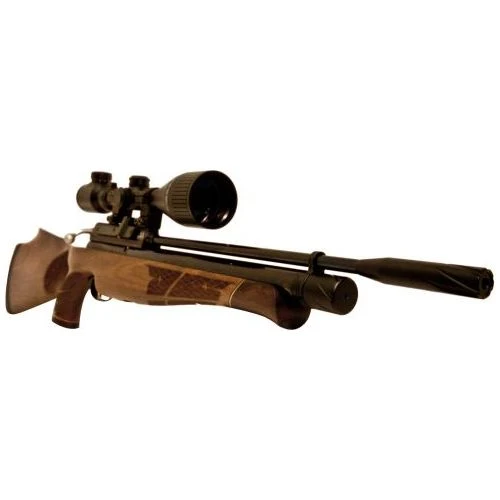
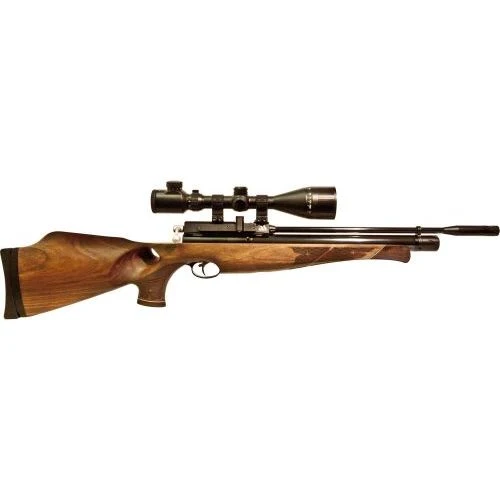
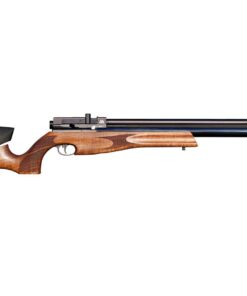
Air Arms S410 Carbine Thumbhole Walnut – Premium PCP Air Rifle with Classic British Craftsmanship
Air Arms S410 Carbine Thumbhole Walnut – Precision Engineering, Elegant Design, and Reliable Performance
The Air Arms S410 Carbine Thumbhole Walnut is recognised as a distinctive British-engineered pre-charged pneumatic (PCP) air rifle. Its traditional walnut craftsmanship is complemented by a compact carbine configuration, a smooth bolt-action mechanism, and a proven multi-shot system. Consequently, an appealing combination of technical precision, ergonomic comfort, and timeless styling is presented.
Outstanding attention is given to the rifle’s construction, while practical handling characteristics are incorporated throughout its design. Moreover, its match-grade barrel is paired with an adjustable trigger mechanism, allowing controlled shooting characteristics to be maintained during recreational target practice.
A carefully shaped thumbhole stock is fitted to provide a comfortable grip and a natural shooting position. Additionally, the attractive walnut grain ensures that every individual stock displays its own distinctive character.
British airgun engineering is reflected throughout this established platform. Furthermore, the S410 series has earned a longstanding reputation for mechanical simplicity, balanced handling, and dependable operation.
Exceptional Features and Technical Specifications
The following characteristics are associated with the walnut thumbhole carbine configuration. However, exact specifications should be confirmed against the individual rifle’s production year and market version.
- Manufacturer: Air Arms, United Kingdom
- Model: S410 Carbine Thumbhole Walnut
- Operating system: Pre-charged pneumatic (PCP)
- Action: Traditional bolt-action repeater
- Magazine capacity: 10-shot rotary magazine
- Available calibres: .177 (4.5 mm) and .22 (5.5 mm), depending on configuration
- Stock material: Premium natural walnut
- Stock design: Ergonomic thumbhole configuration
- Barrel: Match-grade Lothar Walther
- Trigger: Adjustable two-stage mechanism
- Safety: Manual safety system
- Pressure monitoring: Integrated manometer
- Power: Sub-12 ft-lb configurations are available
- Scope compatibility: Machined scope-mounting rail
- Air supply: Refillable high-pressure air cylinder
- Configuration: Compact carbine
- Regulation: Conventional unregulated PCP system
Premium Walnut Thumbhole Stock and Ergonomic Comfort
Carefully Designed Thumbhole Grip
An ergonomically shaped thumbhole opening is incorporated into the stock to encourage a natural hand position. Consequently, improved support and comfortable handling are emphasised throughout the design.
Unlike conventional straight-grip stocks, the thumbhole arrangement is characterised by a more defined pistol-grip section. Therefore, a stable hand position can be maintained without unnecessary wrist strain.
Additionally, the cheekpiece is shaped to support consistent head placement when an appropriately mounted optical sight is used.
The stock’s natural contours are complemented by a compact fore-end, while the overall carbine proportions are intended to provide balanced handling.
Natural Walnut Finish and Traditional Appearance
Premium walnut is valued for its attractive grain patterns, distinctive colouring, and longstanding association with traditional sporting equipment.
Each wooden stock is naturally distinguished by individual variations in texture and colour. As a result, the finished appearance can differ slightly between rifles.
Furthermore, the warm tones of walnut are contrasted against the rifle’s metal components, producing an understated and recognisable aesthetic.
Appropriate maintenance is recommended because wood can be affected by prolonged moisture exposure, excessive heat, and unsuitable storage conditions.
Match-Grade Barrel and Consistent Shooting Characteristics
Lothar Walther Barrel Construction
A precision-manufactured Lothar Walther barrel is incorporated into the S410 platform. This component is widely associated with the rifle’s reputation for reliable accuracy in sporting applications.
Consistent pellet alignment is supported by the barrel’s rifled construction. However, actual grouping performance is influenced by ammunition quality, operating pressure, environmental conditions, and shooter technique.
Additionally, suitable maintenance is required to preserve the internal condition of the barrel.
Rather than relying on unnecessary mechanical complexity, the rifle is built around a straightforward pneumatic operating system.
Adjustable Two-Stage Trigger
A two-stage trigger mechanism is provided to support predictable trigger operation. Its adjustability allows the firing characteristics to be configured within the manufacturer’s recommended limits.
The first stage is designed to provide initial controlled movement, while the second stage is intended to establish a clearly defined release.
Nevertheless, adjustments should be performed only in accordance with the manufacturer’s instructions or by a qualified technician.
Reliable Bolt-Action and Multi-Shot Magazine System
Traditional Mechanical Operation
A manually operated bolt-action mechanism is fitted to the rifle. Through this system, each pellet is chambered as the action is cycled.
The mechanical arrangement is valued for its straightforward design and established service history.
Moreover, the manually operated action allows the shooter to retain direct control over the loading sequence.
Regular inspection and appropriate maintenance are recommended to preserve smooth operation and reduce avoidable mechanical wear.
Ten-Shot Rotary Magazine
A 10-shot rotary magazine is incorporated into the S410’s multi-shot system. Consequently, multiple pellets can be held in the magazine before replenishment is required.
This magazine arrangement distinguishes the S410 from the single-shot S400 platform.
The magazine should always be handled according to the manufacturer’s instructions, with particular attention paid to pellet compatibility and safe loading procedures.
Compact Carbine Configuration and Balanced Handling
Practical Dimensions
A shortened carbine format is used instead of the longer traditional rifle configuration. Consequently, a compact overall profile is achieved without abandoning the familiar S410 operating system.
This design is particularly relevant when equipment portability and handling comfort are being considered.
The rifle’s balance is influenced by its barrel, air cylinder, wooden stock, and any additional optical equipment.
Therefore, individual comfort and fit should be assessed before use.
Comfort During Recreational Target Shooting
The compact format can be appreciated during organised target-shooting sessions at authorised ranges.
A stable shooting position is supported by the stock’s ergonomic geometry, while the adjustable trigger provides an additional element of personalisation.
Furthermore, the PCP system produces relatively little mechanical recoil compared with many spring-piston air rifles.
Nevertheless, proper eye protection, muzzle discipline, and a suitable pellet backstop remain essential.
Pre-Charged Pneumatic System and Air Management
Refillable Air Cylinder
Compressed air is stored within the rifle’s designated pressure cylinder. This stored air is subsequently used by the pneumatic firing mechanism.
An integrated pressure gauge is provided so that the cylinder’s remaining pressure can be monitored.
Because the conventional S410 system is unregulated, shot-to-shot velocity may vary as reservoir pressure changes.
Accordingly, the manufacturer’s recommended operating pressure range should always be observed.
Maintenance and Long-Term Care
Routine maintenance is essential for protecting the rifle’s mechanical condition.
External metal surfaces should be protected against corrosion, while the walnut stock should be maintained with suitable wood-care products.
Additionally, seals, filling equipment, and pressure-bearing components should be inspected according to the manufacturer’s maintenance schedule.
High-pressure repairs must be entrusted to suitably trained professionals.
Calibre Options and Intended Sporting Applications
.177 Calibre Configuration
The .177 calibre version is commonly associated with recreational paper-target shooting and other authorised sporting disciplines.
Its characteristics are influenced by pellet selection, muzzle energy, and the operating condition of the rifle.
Furthermore, availability may differ according to local regulations and specific production variants.
.22 Calibre Configuration
A .22 calibre configuration is also associated with the S410 platform.
Compared with .177 pellets, .22 projectiles generally have a larger diameter and greater mass, although individual ammunition specifications vary.
Both configurations require suitable ammunition, appropriate safety precautions, and compliance with applicable laws.
British Manufacturing Heritage and Lasting Appeal
Established Air Arms Engineering
The S410 is part of an established British airgun family recognised for its traditional sporting appearance and practical mechanical design.
Its precision barrel, multi-shot magazine, and adjustable trigger are combined within a straightforward PCP architecture.
Furthermore, the availability of wooden-stock configurations reflects the manufacturer’s continuing emphasis on conventional sporting aesthetics.

A Distinctive Sporting Air Rifle
The Air Arms S410 Carbine Thumbhole Walnut brings together natural walnut craftsmanship, compact proportions, and established pneumatic technology.
Its design is distinguished by a traditional bolt-action system, an ergonomic thumbhole stock, and carefully selected mechanical components.
Overall, the rifle represents an enduring example of British airgun engineering, with particular appeal to enthusiasts who appreciate classic materials, manageable dimensions, and documented technical features.
For safe ownership, all operation, storage, servicing, and sporting use must remain consistent with the manufacturer’s instructions and the laws applicable in the owner’s jurisdiction.
Diana Air Rifles and Western Airguns: Complete Guide to Precision, Performance, Models, and Airgun Technology
Discovering Diana Air Rifles and Their Reputation for Quality
The world of precision airguns continues to attract enthusiasts who value engineering quality, shooting consistency, and dependable performance. Among established manufacturers, diana air rifles have developed a recognizable identity through traditional craftsmanship, innovative mechanisms, and a diverse product collection. Whether researching a diana air rifle for recreational target shooting or comparing the different models available, understanding the brand’s history provides an excellent starting point.
Throughout the years, the rws diana air rifle category has attracted considerable attention from enthusiasts familiar with the longstanding relationship between Diana products and RWS branding. Consequently, searches for rws diana, diana rws, and air rifle diana often involve comparisons between older models, contemporary releases, and different regional product names.
Additionally, the term diana pellet gun covers several different configurations designed for sporting and recreational applications. Each model offers distinct characteristics, including variations in weight, powerplant design, handling, and sight arrangements.
For customers researching airgun ownership, evaluating mechanical reliability, manufacturer documentation, and intended use remains essential.
Diana 34 Series: Traditional Design and Modern Developments
The diana 34 remains one of the manufacturer’s most recognizable model families. Its longstanding reputation has encouraged continued interest in the diana model 34, particularly among enthusiasts who appreciate conventional spring-piston engineering.
Similarly, the diana 34 air rifle has become a familiar reference in conversations about break-barrel mechanisms and traditional sporting rifles.
Owners of older equipment may encounter the designation diana rws 34, while product listings sometimes use rws diana 34 to describe historically associated versions.
Other searches, including diana r34, frequently reflect abbreviated product naming rather than a completely separate model.
Furthermore, the diana 34 ems introduced a more modular approach to an established platform. Its Easy Modular System provides a distinctive identity within the manufacturer’s product collection.
For enthusiasts evaluating sight configurations, diana 34 ems fiber optic sights represents another important research topic. Nevertheless, specifications should always be checked against the precise model and production version.
Exploring Classic Diana Models and Magnum Air Rifles
Beyond the 34 series, several older and specialist designs maintain a place in airgun history.
The diana 35 represents a traditional model that collectors and experienced owners continue to research. Meanwhile, searches for diana 2 may refer to historic equipment requiring careful model identification.
More powerful spring-piston designs include the diana 350 magnum, widely recognized as part of the company’s performance-oriented product heritage.
The diana 350 magnum air rifle, also searched as 350 magnum diana, demonstrates the manufacturer’s longstanding interest in high-performance spring-powered technology.
Additionally, the diana rws 460 magnum is associated with a different fixed-barrel, underlever design.
The diana mod 48, diana 48, and rws diana model 48 are commonly connected with sidelever-operated air rifles. Such systems offer a different shooting experience from conventional break-barrel platforms.
Another notable model is the diana 54, which became associated with specialized recoil-management technology.
Research into hunting diana models should consider legal requirements, appropriate sporting applications, and the importance of responsible equipment selection.
Modern Diana PCP Rifles and Compact Air Pistols
Pre-charged pneumatic technology has expanded the manufacturer’s portfolio beyond conventional spring-powered equipment.
For example, the diana stormrider has become a recognizable entry in the company’s PCP rifle collection. Its design appeals to enthusiasts interested in compressed-air operation and modern airgun handling.
Similarly, the diana outlaw gen 2 is a useful search phrase for people investigating Outlaw versions and potential generational differences. However, the exact designation should be confirmed with official product documentation.
The diana r22, commonly presented as the diana r22 or R-22, offers another product family to examine when comparing current sporting rifle designs.
Other models include the diana 250, also known as the diana 250 air rifle, and the diana two fifty, providing additional options within the manufacturer’s wider catalog.
For compact shooting equipment, the diana air pistol category introduces different handling characteristics.
Examples include the diana lp8, sometimes searched as lp8 diana, alongside the diana airbug and diana bandit black.
Owners may also research diana chaser accessories and diana chaser parts when identifying compatible replacement components or manufacturer-approved additions.
Meanwhile, broad phrases such as diana r and nerf diana should be interpreted carefully because they do not necessarily identify a specific Diana airgun model.
Western Airguns and American PCP Engineering
Another important part of the sporting airgun industry involves western airguns, a manufacturer associated with American-designed and assembled PCP equipment.
Research into western air guns, western air gun, and airguns usa frequently reflects interest in domestic manufacturing, contemporary designs, and specialist sporting platforms.
Although searches for western arms, western firearm, western firearms, or western arms shotgun may appear alongside PCP terminology, these phrases can refer to different product categories or manufacturers.
Therefore, brand identification is important when comparing american made air rifles and specialist compressed-air equipment.
The company’s catalog includes several distinctive platforms, particularly the western rattler, western sidewinder, and western mordax families.
These products highlight how modern pneumatic engineering can accommodate multiple configurations, calibers, and operating systems.
Western Rattler Bullpup and Big-Bore Models
The western rattler bullpup is associated with a compact rifle layout that places much of the action behind the trigger.
Consequently, the western rattler air gun attracts attention from enthusiasts researching unconventional rifle configurations.
Common variations and search phrases include western rattler 357, 357 rattler, and western rattler 45, which relate to different caliber categories.
Similarly, searches for 357 air rifle and .35 cal air rifle often involve comparing big-bore pneumatic platforms and the practical differences between manufacturer specifications.
Interest in the western rattler bullpup for sale and western rattler bullpup amazon illustrates how customers research distribution channels, although listing availability and seller authorization require independent verification.
Another significant product is the western big bore bushbuck 45.
Research into bushbuck air rifle price often involves questions about configuration, warranty coverage, and included accessories rather than price alone.
Within the wider category, terms such as big bore pellet gun, big game air guns, and bullpup air rifle describe distinct equipment characteristics.
Because these models can produce substantial energy, responsible storage, suitable facilities, and applicable legal restrictions deserve particular attention.
Western Mordax and Mordax Venom Technology
Compact PCP engineering is represented by the western airguns mordax, a platform associated with modern controls and adaptable handling.
The western mordax pcp designation highlights its compressed-air operating system, while mordax airgun and mordax air gun remain common alternative search terms.
The western mordax venom expands this product family with additional design features and a different air-storage arrangement.
Consequently, both mordax venom and western airguns mordax attract interest from people comparing compact pneumatic platforms.
Manufacturer documentation identifies the Mordax Venom as a selectable semi-automatic and fully automatic design, subject to applicable legal restrictions.
Although the phrase desert scorpion pistol is associated with Mordax branding, buyers should distinguish marketing terminology from official model identification.
Likewise, mordax air gun price should be considered alongside configuration, legal classification, support, and warranty information.
Searches involving venom arms and serpent arms may describe unrelated businesses or terminology and should not automatically be treated as official Western product names.
Western Sidewinder and Additional Airgun Technology
The western sidewinder provides another example of contemporary PCP design.
Searches for sidewinder gun, sidewiner, and western sidewinder compact may involve different product references, spelling variations, or configuration questions.
For accurate identification, owners should consult original documentation before relying on marketplace descriptions.
In addition, sidewinder length is an important consideration when comparing dimensions, storage arrangements, and handling comfort.
People searching for a sidewinder k7a-00008 manual should verify that the document genuinely corresponds to their exact equipment, rather than assuming similarly named products share instructions.
Elsewhere, edgun west and edgunwest are additional search expressions encountered in the broader airgun marketplace, but they should not be confused with Western Airguns branding.
Selecting Suitable Airguns and Understanding Caliber Categories
Different sporting applications require different design priorities. An accurate pellet rifle may emphasize consistent grouping, comfortable handling, and repeatable operation rather than maximum advertised velocity.
Similarly, the phrase long range air rifle should encourage realistic evaluation of manufacturer specifications, environmental conditions, and properly supervised target facilities.
A 4.5mm air gun generally refers to the .177-caliber category, commonly encountered in recreational and precision-target contexts.
Meanwhile, pcp guns use stored compressed air, distinguishing them from conventional spring-powered systems.
The broader category of semi automatic pellet gun describes a particular operating arrangement, although availability and legality differ between jurisdictions.
Search terms such as lethal air guns and steel penetrating full auto airgun highlight the importance of treating powerful pneumatic equipment as potentially dangerous rather than harmless recreational devices.
Likewise, anyone investigating air pistols for hunting must understand local restrictions, humane considerations, and the limitations of the equipment involved.
Finding Reliable Airgun Information and Responsible Ownership
Enthusiasts frequently use phrases such as air guns near me, air gun dealers near me, air rifle dealers, air rifle online, and az air guns while researching local retailers, product information, and specialist services.
However, availability should never replace proper consideration of local legislation, age requirements, safe storage, and verified manufacturer support.
Searches for air gun for semi truck may relate to vehicle-carried equipment, making transportation regulations and secure storage particularly important.
Furthermore, the question where do bullets land when shot in air addresses a serious safety issue: projectiles discharged upward eventually return to earth and can cause severe injuries or death. Never fire a projectile into the air.
Ultimately, choosing sporting equipment responsibly involves understanding its design, limitations, and lawful use.
Whether comparing classic Diana engineering with modern Western pneumatic technology, informed research helps enthusiasts appreciate manufacturing quality while prioritizing safety, reliability, and responsible participation in shooting sports.
Air Arms S410 Carbine Thumbhole Walnut – Calibres, FAC Power, Recommended Scopes, and Essential Accessories
The Air Arms S410 Carbine Thumbhole Walnut is distinguished by its traditional British engineering, ergonomic walnut stock, and established pre-charged pneumatic operating system. Furthermore, different calibre configurations, power classifications, and compatible accessories are available for consideration. Consequently, an understanding of the rifle’s specifications is essential when selecting equipment for recreational target shooting and responsible sporting ownership.
Available Calibres and Their Characteristics
.177 Calibre (4.5 mm)
The .177 calibre configuration is widely recognised within recreational airgun target shooting. Its smaller projectile diameter is associated with a broad selection of sporting pellets, while its availability across many airgun disciplines has contributed to its popularity.
Additionally, the following characteristics should be considered:
- Calibre diameter: 4.5 mm (.177).
- Ammunition: Compatible .177-calibre airgun pellets.
- Typical application: Authorised recreational target shooting.
- Availability: Offered within the standard S410 range.
- Performance: Dependent on pellet characteristics, muzzle energy, and environmental conditions.
The match-grade barrel is designed to support consistent performance. Nevertheless, actual accuracy is influenced by ammunition compatibility, equipment condition, and user experience.
.22 Calibre (5.5 mm)
The .22 calibre version is also offered within the manufacturer’s S410 range. Compared with .177 projectiles, .22 pellets are generally characterised by greater diameter and mass.
Moreover, several practical considerations are associated with this configuration.
- Calibre diameter: 5.5 mm (.22).
- Ammunition: Compatible .22-calibre airgun pellets.
- Operating system: Pre-charged pneumatic.
- Magazine: Ten-shot rotary magazine.
- Availability: Dependent on the selected model and market.
Although both calibres are supported by the broader S410 platform, the exact calibre of an individual walnut thumbhole carbine should be verified before purchase.
FAC and Non-FAC Power Specifications
Standard Sub-12 ft-lb Configuration
The standard S410 Carbine is currently advertised by Air Arms in a sub-12 ft-lb configuration.
For the United Kingdom, this classification is especially important because airgun certification requirements are influenced by muzzle energy and the jurisdiction in which the rifle is possessed.
Key power characteristics include:
- Power classification: Below 12 foot-pounds.
- Energy measurement: Foot-pounds (ft-lb) or joules.
- Operating mechanism: Compressed-air pneumatic system.
- Power regulation: Conventional unregulated design.
- Pressure monitoring: Integrated manometer.
Furthermore, the manufacturer’s documentation should be consulted when confirming the rifle’s approved filling pressure and service requirements.
FAC and Higher-Powered Versions
FAC refers to a Firearm Certificate under the relevant British firearms legislation. Higher-powered S410 variants have historically been produced, including models associated with the Xtra FAC designation.
However, the existence of an FAC-rated S410 does not establish that a particular thumbhole walnut carbine is FAC-rated.
Its classification must be confirmed through the exact model designation, factory documentation, and applicable certification.
Additionally, higher-powered models generally consume more compressed air per shot, which can reduce the number of shots available from a single fill.
Legal requirements vary across England, Wales, Scotland, Northern Ireland, and international markets. Therefore, local regulations must always be checked before acquisition or use.
Recommended Scope Characteristics and Compatibility
Optical Considerations for Recreational Shooting
The S410 Carbine is manufactured with a dovetail scope-mounting interface. Consequently, compatible optical sights can be fitted using appropriately specified mounts.
Rather than selecting an optic solely according to magnification, consideration should be given to the intended sporting discipline, viewing comfort, and mounting compatibility.
Important optical characteristics include:
- Optical clarity: Clear, well-defined image reproduction.
- Eye relief: Comfortable viewing distance.
- Reticle visibility: Suitable contrast against paper targets.
- Adjustment quality: Reliable and repeatable manufacturer-specified controls.
- Mounting compatibility: Appropriate 9–11 mm dovetail mounting hardware.
- Build quality: Durable construction suitable for normal sporting conditions.
The rifle is generally supplied without a scope unless a retailer specifically advertises an optical package.
Scope Mounts and Proper Installation
Correctly sized mounts are essential to ensure compatibility with the rifle’s machined dovetail interface.
Furthermore, mounting hardware should be selected according to the scope manufacturer’s dimensions and installation guidance.
Professional fitting is recommended where compatibility or installation requirements are uncertain.
Essential Accessories and Equipment
PCP Filling Equipment
A suitable compressed-air filling system is required for routine operation. Depending on the owner’s facilities, manufacturer-approved hand pumps, compressors, or certified air cylinders may be considered.
Filling equipment must be compatible with the rifle’s connection system and authorised operating pressure.
Spare Rotary Magazines
Genuine compatible ten-shot magazines provide a convenient way to maintain separate ammunition storage for organised sporting sessions.
Nevertheless, magazine compatibility should be verified against the rifle’s particular generation and calibre.
Protective Rifle Case
A padded, lockable rifle case is recommended for transportation and storage in accordance with local requirements.
Additionally, a suitable case helps protect the walnut finish, metal components, and mounted optical equipment from avoidable damage.
Cleaning and Maintenance Accessories
The following equipment is useful for routine ownership:
- Manufacturer-approved barrel cleaning materials.
- A soft microfibre cloth for external surfaces.
- Suitable walnut stock-care products.
- Protective storage equipment.
- Compatible replacement seals supplied through authorised service providers.
- Manufacturer-approved maintenance documentation.
Walnut Stock Care and Long-Term Value
Preserving the Natural Finish
The thumbhole walnut stock is one of the rifle’s defining aesthetic features. Consequently, suitable wood care is important for preserving its appearance.
Exposure to excessive moisture should be avoided, while prolonged storage in damp environments is discouraged.
Additionally, external metal components should be inspected periodically for corrosion or damage.
Responsible Ownership and Lasting Performance
The Air Arms S410 Carbine Thumbhole Walnut combines a proven multi-shot action with classic stock craftsmanship and a straightforward pneumatic operating system.
With appropriate ammunition, compatible equipment, professional servicing, and responsible storage, its mechanical condition and visual appearance can be preserved.
Ultimately, its appeal is founded on established British manufacturing, recognised sporting design, and long-term maintainability rather than unnecessary mechanical complexity.
Frequently Asked Questions (FAQs)
1. What makes this pre-charged pneumatic rifle different from conventional air rifles?
A combination of traditional craftsmanship, refined mechanical engineering, and practical ergonomic features distinguishes this sporting rifle from many conventional alternatives. Unlike spring-powered designs, compressed air is stored within an integrated reservoir and released through a controlled pneumatic mechanism.
Consequently, the operating system is characterised by relatively low mechanical vibration and consistent handling characteristics. Furthermore, the naturally finished hardwood stock provides a distinctive appearance that is rarely replicated by synthetic alternatives.
A multi-shot magazine system is also incorporated, allowing several pellets to be stored before the magazine requires replenishment. Overall, the design reflects an established approach to recreational shooting equipment.
2. What is the advantage of a thumbhole stock?
A thumbhole stock is designed to provide a defined hand position through an opening behind the pistol grip. Consequently, a comfortable wrist angle can be supported while a secure and natural grip is maintained.
Additionally, the sculpted stock profile contributes to a distinctive sporting appearance. Its design is particularly appreciated by enthusiasts who prefer traditional wooden equipment with contemporary ergonomic characteristics.
However, individual hand dimensions, arm length, and personal preferences can influence comfort. Therefore, physical fit should always be considered before selecting a particular stock configuration.
3. Is natural walnut better than a synthetic stock?
Both materials offer different characteristics, and neither should automatically be considered superior in every situation.
Natural walnut is widely appreciated for its grain patterns, warm colouring, and traditional appearance. Moreover, each wooden stock is visually unique because natural variations occur throughout the material.
Synthetic stocks, in comparison, are generally less sensitive to moisture and often require simpler exterior maintenance.
Nevertheless, properly maintained walnut can remain attractive and serviceable for many years. Ultimately, the preferred material is determined by individual priorities concerning appearance, environmental exposure, maintenance, and handling comfort.
4. What calibres are commonly available?
Two established pellet calibres are associated with this sporting platform: .177 (4.5 mm) and .22 (5.5 mm).
The smaller calibre is commonly encountered in recreational target shooting, while the larger calibre is recognised for its greater projectile diameter and generally heavier pellet options.
However, projectile characteristics vary substantially according to ammunition manufacturer, projectile design, and product specifications.
Additionally, not every configuration is necessarily offered in every country. Therefore, the calibre engraved on the particular rifle and its accompanying documentation should be checked before compatible ammunition is purchased.
5. Does the rifle use a magazine or a single-shot loading system?
A detachable rotary magazine is included as part of the standard multi-shot operating arrangement. It is designed to accommodate up to ten compatible pellets.
Consequently, individual pellets do not need to be placed directly into the breech before every shot when the magazine system is being used correctly.
The manually operated bolt mechanism is responsible for cycling the action.
Furthermore, genuine replacement magazines may be available through authorised retailers. Compatibility should always be confirmed because differences between model generations, calibres, and magazine designs may exist.
6. How does the pre-charged pneumatic system work?
Compressed air is stored inside a specially manufactured pressure reservoir. When the mechanism is operated, a controlled quantity of compressed air is released to propel a compatible pellet through the barrel.
Unlike a conventional spring-piston system, the principal energy source is stored compressed air rather than a mechanically compressed mainspring.
Additionally, a pressure gauge is provided to indicate the remaining reservoir pressure.
Although the operating principle is straightforward, the equipment incorporates high-pressure components that require correct maintenance.
Therefore, filling, inspection, servicing, and repairs must be conducted according to the manufacturer’s specifications.
7. Is an external air supply required?
Yes. A compatible compressed-air source is needed because the internal reservoir must be refilled when its usable air supply becomes depleted.
Approved filling solutions may include purpose-designed hand pumps, suitable compressors, or certified high-pressure air cylinders.
However, the selected equipment must meet the manufacturer’s connection, filtration, and pressure requirements.
Ordinary workshop compressors must not be assumed suitable for this purpose.
Furthermore, the condition of hoses, seals, pressure gauges, and filling connectors should be inspected regularly.
High-pressure components should never be modified or repaired without appropriate professional expertise.
8. What does FAC mean?
FAC stands for Firearm Certificate, a term associated with firearms licensing in the United Kingdom.
In England and Wales, an air rifle capable of exceeding 12 foot-pounds of muzzle energy generally falls within firearm certification requirements.
Different legal arrangements apply in Scotland and Northern Ireland. Consequently, the same assumptions should not be applied automatically across every jurisdiction.
Moreover, a higher-powered version of a related model does not establish the legal classification of every individual rifle.
The exact factory configuration, certification documents, and applicable legislation should always be verified.
9. Is the rifle regulated?
The conventional version of this established platform generally uses an unregulated pneumatic operating system.
As a result, the pressure delivered during successive shots is influenced by the changing pressure within the reservoir.
A regulator, by comparison, is a device designed to manage the delivery of air at a more controlled pressure.
Nevertheless, a rifle does not necessarily require an integrated regulator to provide satisfactory recreational sporting performance.
Actual consistency depends on several factors, including mechanical condition, factory configuration, ammunition characteristics, and reservoir pressure.
10. What type of barrel is fitted?
A match-grade barrel manufactured by Lothar Walther is commonly associated with this rifle series.
The barrel incorporates internal rifling, which is designed to impart rotational stability to compatible projectiles.
Furthermore, careful manufacturing tolerances contribute to its established reputation within the airgun industry.
However, a precision barrel alone cannot guarantee any particular grouping result.
Ammunition quality, maintenance condition, environmental influences, and human factors also contribute to observed performance.
Accordingly, manufacturer-approved cleaning procedures are recommended to protect the barrel’s internal surfaces.



Reviews
There are no reviews yet.