
$1,200.00
Air Arms HFT 500 Air Rifle Features
 Click here for California’s Proposition 65 warning.
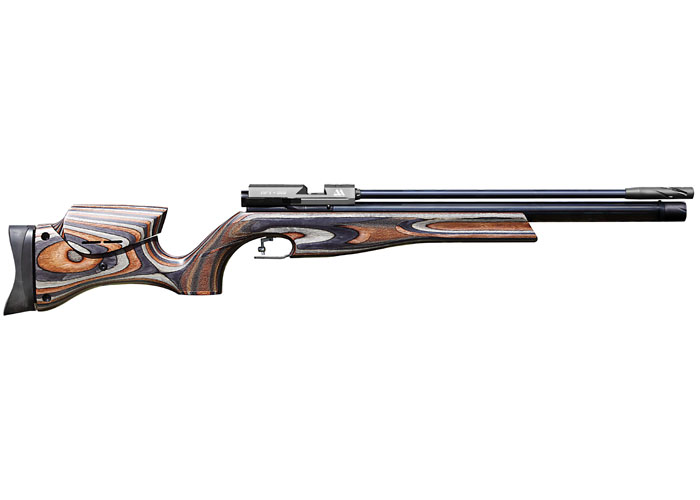
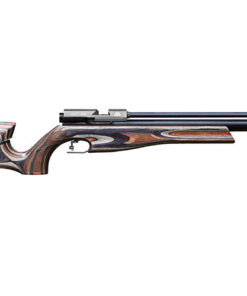
When excellence in Hunter Field Target competition is demanded, the Air Arms HFT 500 is chosen by serious shooters worldwide. Precision engineering and British craftsmanship are combined in this purpose-built pre-charged pneumatic air rifle, so consistent accuracy and reliable performance can be delivered shot after shot. Designed specifically for the unique challenges of HFT, the Air Arms HFT 500 is trusted by competitors who refuse to settle for anything less than podium-ready results.
Crafted by Air Arms with over four decades of expertise, this rifle stands as a dedicated competition tool rather than a general-purpose airgun. Every element has been refined through feedback from experienced HFT shooters, ensuring the Air Arms HFT 500 meets the exacting standards of modern field target courses.
The Air Arms HFT 500 is engineered exclusively around HFT rules and course demands. Targets placed at varying distances up to 45–50 metres, changing weather, and the need for absolute shot-to-shot consistency are all addressed by this specialised platform. Available only in .177 calibre, the rifle produces a flat trajectory and high precision that align perfectly with competition requirements while remaining within the sub-12 ft/lbs power limit.
Moreover, an unregulated yet finely tuned air system is employed. Consequently, a remarkably tight velocity spread—typically around 13–15 fps across 80 to 95 shots—is achieved from a single 190-bar fill. Therefore, predictable performance is maintained without the added complexity of a regulator, giving shooters greater reliability and simpler maintenance over the long term.
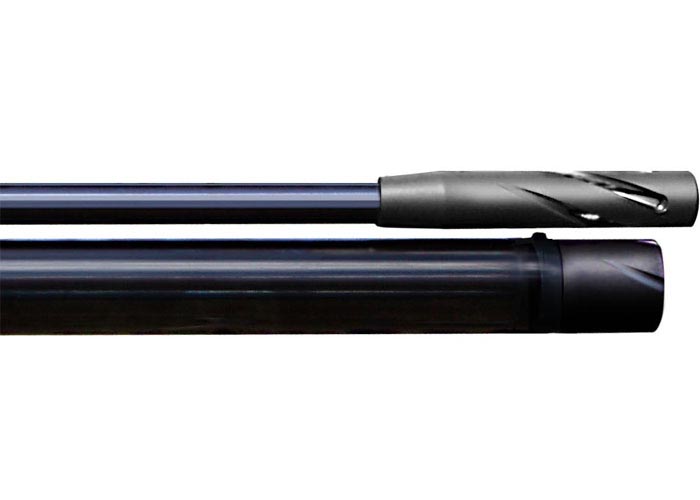
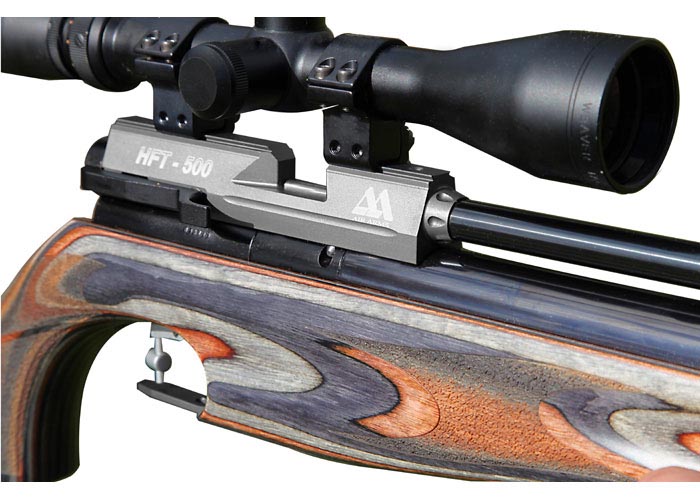
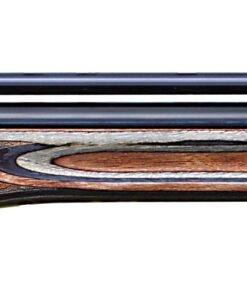
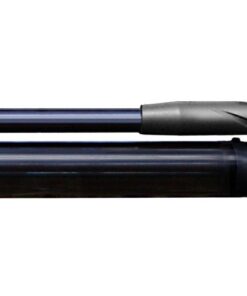
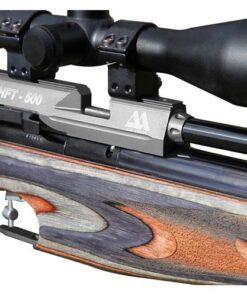
Furthermore, the fully floated Lothar Walther match-grade barrel ensures pellet stability remains exceptional. In addition, a multi-ported air stripper is fitted at the muzzle so turbulence and muzzle flip are reduced, allowing groups to stay tight even under pressure.
Highlighted product listings that make the Air Arms HFT 500 a competition favourite include:
These carefully selected features work together so that every shooter can achieve a custom fit and dependable results, regardless of preferred shooting position—prone, kneeling, or standing.
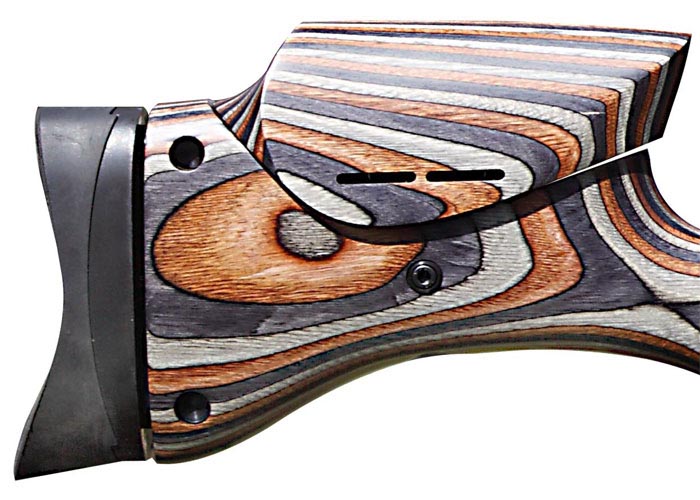
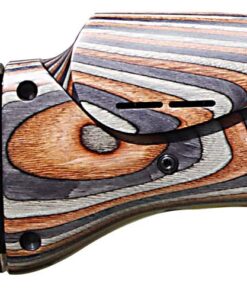
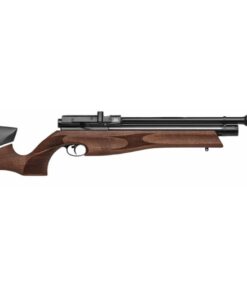
Comfort and control are prioritised throughout the design of the Air Arms HFT 500. An ambidextrous laminated stock is provided, so both left- and right-handed shooters are fully accommodated without compromise. Additionally, the highly adjustable cheekpiece articulates on a ball joint, allowing movement up, down, forward, back, and laterally. As a result, perfect eye alignment with the scope can be achieved for any facial structure or preferred head position.
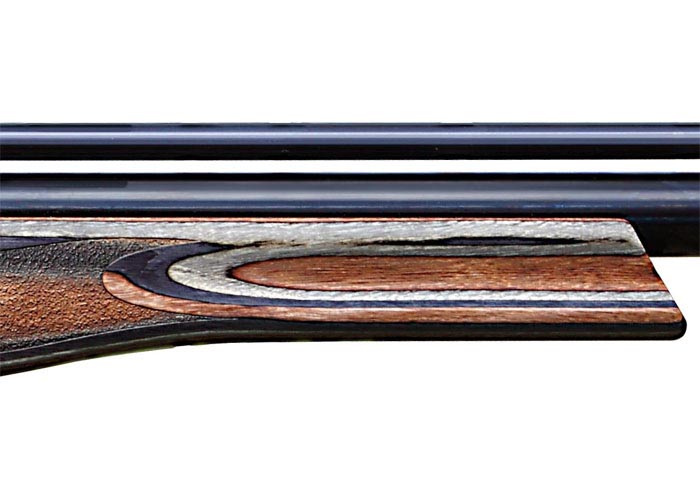
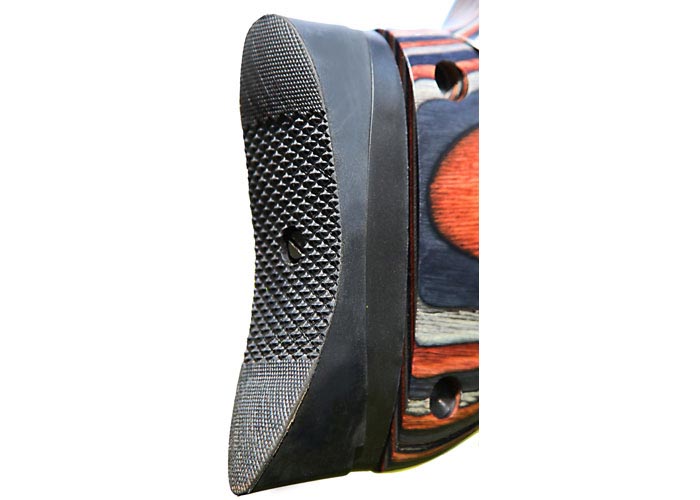
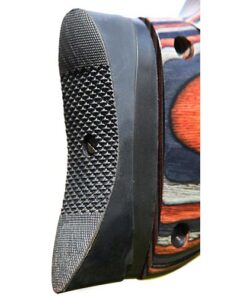
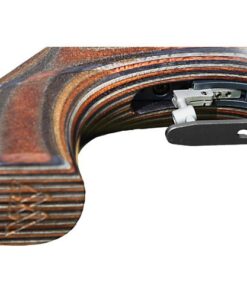
Meanwhile, the vertically adjustable rubber buttpad and optional spacers enable precise control over length of pull and shoulder contact. Therefore, stable shouldering is possible across different body types and shooting styles. The curved, stippled grip further enhances secure handling in all weather conditions, while fore-end grooves and the accessory rail support additional customisation.
Transitioning between positions becomes effortless because the overall balance of the rifle—approximately 8.2 lbs (3.7 kg) and 40.1 inches (1020 mm) overall length—has been optimised for HFT demands. Consequently, fatigue is reduced during long courses, and focus remains on the target rather than on fighting the equipment.
The side-lever action of the Air Arms HFT 500 is widely praised for its buttery smoothness. Cocking effort remains light, and the loading bay is generously sized so pellets can be seated quickly and correctly even under match pressure. In addition, the spring-loaded probe ensures positive chambering every time.
Because the air system has been precisely tuned from proven S510-series architecture, shot-to-shot consistency remains outstanding across the usable pressure range. Shooters therefore gain the confidence that comes from knowing the rifle will perform the same way on the first shot as on the ninetieth. An automatic or manual safety (depending on configuration) adds an extra layer of security between strings.
Furthermore, the medium report and controlled muzzle characteristics help maintain concentration on the course. When paired with quality match pellets such as H&N Baracuda Match or Air Arms Diabolo Field, the Air Arms HFT 500 regularly produces groups that reward skilled marksmanship at competition distances.
Serious HFT competitors select the Air Arms HFT 500 because it delivers championship-level performance without unnecessary complexity. Reliability has been proven across thousands of rounds in real-world use, with many owners reporting no need for zero adjustments once a quality scope is fitted. British manufacturing standards ensure durability and long-term serviceability, while the lifetime limited warranty offered by many retailers provides additional peace of mind.
Moreover, the rifle’s purpose-built nature means every feature contributes directly to scoring more points. Whether you are stepping into competitive HFT for the first time or seeking a refined backup or primary rifle, the Air Arms HFT 500 adapts to your needs through its extensive adjustability and consistent power delivery.
Inclusive design ensures that shooters of varying experience levels, body types, and dominant hands can achieve an optimal fit. Transition words and thoughtful ergonomics guide the user toward better technique and higher confidence. As a result, the focus stays where it belongs—on reading the wind, judging range, and executing clean shots.
The Air Arms HFT 500 represents more than just another air rifle; it is a carefully considered competition instrument that places winning potential in the hands of dedicated shooters. From its free-floating match barrel and precision-tuned air system to its fully adjustable laminate stock and silky side-lever action, every detail has been refined for the specific demands of Hunter Field Target.
Order your Air Arms HFT 500 today and experience the difference that purpose-built British engineering makes. Consistency, accuracy, and confidence await—exactly what every competitive shooter needs to stay ahead of the field.
Calibres, Power Options and Essential Accessories for the Air Arms HFT 500
The Air Arms HFT 500 has been purpose-built as a specialised competition platform, and every specification reflects that focused design. Understanding its calibre limitations, power characteristics and available accessories helps shooters configure the rifle for maximum performance on the Hunter Field Target course or related disciplines.
The Air Arms HFT 500 is offered exclusively in .177 (4.5 mm) calibre. This decision was deliberate. .177 pellets deliver a flatter trajectory and superior long-range precision, both of which are critical when targets are placed at varying distances up to 45–50 metres under HFT rules.
Because the rifle is engineered solely around this calibre, internal components—including the transfer port, valve timing and Lothar Walther match barrel—are optimised for the lighter, faster .177 projectiles. Consequently, shooters benefit from tighter groupings and more predictable hold-over values across the course.
No factory .22 or larger-calibre versions are produced. Owners seeking higher energy for hunting or other disciplines typically look to different models in the Air Arms range. For pure HFT and precision target work, however, the single-calibre approach of the Air Arms HFT 500 removes unnecessary compromise and delivers the consistency required to win.
In its standard configuration the Air Arms HFT 500 is set to deliver less than 12 ft/lbs of muzzle energy. This places the rifle firmly within UK airgun legislation, so no Firearms Certificate (FAC) is required for ownership or use. Typical output sits around 11–11.5 ft/lbs, producing velocities of approximately 750–800 fps depending on pellet weight.
The unregulated yet finely tuned air system maintains an impressively tight velocity spread—often only 13–15 fps across 80 to 95 usable shots from a 190-bar fill. As a result, the power curve remains flat enough for competitive reliability without the added complexity of a factory regulator.
Although the rifle leaves the factory in sub-12 specification, its longer “FAC-length” air cylinder provides excellent shot count even at legal power. Some specialist workshops and aftermarket suppliers offer regulated conversions that can raise output into FAC territory for silhouette, open-class or pest-control applications. These upgrades are performed after purchase and require the appropriate certificate. For the majority of HFT competitors, however, the standard sub-12 setting remains ideal because it complies fully with competition rules while delivering the accuracy the discipline demands.
The recessed accessory rail beneath the forend is one of the most useful features of the Air Arms HFT 500. It accepts a wide range of add-ons that further refine balance, stability and ergonomics:
In addition, many owners fit aftermarket regulators (such as Huma-Air units) to achieve even flatter power curves or to prepare the rifle for higher-energy use. Trigger blades, biathlon-style levers and custom cheek-piece pads are also popular refinements that enhance the already excellent ergonomics of the ambidextrous laminate stock.
When the Air Arms HFT 500 is combined with carefully chosen accessories, it becomes a fully personalised competition tool. A typical high-performance configuration might include a quality 8–12× scope on low or medium mounts, a palm rest for positional support, modest forend weight for improved balance, and a set of butt spacers for perfect shouldering.
Because the rifle is designed with inclusivity in mind, these adjustments accommodate shooters of varying stature, dominant hand and preferred shooting style. Transitioning between prone, kneeling and standing positions therefore feels natural, and the focus stays on reading the course rather than fighting the equipment.
Whether you remain with the factory sub-12 setup or explore regulated upgrades, the Air Arms HFT 500 provides a solid, accurate foundation. Selecting the right calibre-matched pellets, understanding its legal power envelope, and adding only the accessories that genuinely improve your scores will ensure the rifle continues to deliver the consistent, competition-winning performance for which it was created.
The Air Arms XTi-50 FT Left handed air rifle represents the pinnacle of British precision engineering for serious Field Target competitors and demanding precision shooters. Designed specifically for left-handed marksmen, this premium left handed PCP air rifle combines world-class craftsmanship, match-grade accuracy, and an ergonomically optimized stock to deliver exceptional consistency in every shot. Whether you’re searching for the best left handed Field Target air rifle, comparing the Air Arms XTi-50 vs FX Impact comparison, or researching Air Arms XTi-50 FT review information before making a purchase, this competition-ready platform offers everything expected from one of the world’s leading manufacturers.
For decades, Air Arms has earned a worldwide reputation for manufacturing some of the finest precision airguns available. From the legendary AA S400, Air Arms S410, Air Arms S510, Air Arms S510 Ultimate Sporter .177 Sub 12, Pro Sport Air Arms, and TX200, every rifle reflects exceptional engineering standards.
Many shooters looking at the Air Arms XTi-50 FT specs often compare it with popular rifles such as the FX Maverick, yet the XTi-50 is purpose-built for precision Field Target competition where consistency is more important than extreme power.
The Air Arms XTi-50 competition rifle features an adjustable laminate stock designed specifically for left-handed competitors, allowing optimal cheek weld, shoulder alignment, and trigger control during extended matches.
Many new shooters ask what is an air gun, what is an airgun, or what are airguns.
An air gun uses compressed gas instead of burning gunpowder to propel a projectile. Modern airguns include:
People also ask what is an air rifle or what is a air rifle.
An air rifle is simply a shoulder-fired air gun engineered for greater stability, longer range, and higher precision than most pistols.
One of the most searched questions is what is a PCP air rifle, what is PCP air rifle, what is a PCP airgun, what is a PCP air gun, what is PCP rifle, what is a PCP rifle, PCP rifle meaning, PCP air rifle meaning, and PCP gun meaning.
PCP stands for Pre-Charged Pneumatic.
A PCP rifle stores highly compressed air inside a built-in cylinder or bottle. Every trigger pull releases a measured amount of air that launches the pellet with remarkable consistency.
Many beginners also ask:
What is a pre charged pneumatic air rifle?
It is an air rifle pre-filled using either:
Because no heavy spring moves during firing, PCP rifles produce minimal recoil and superior precision.
Shooters frequently search:
The operating cycle is simple:
This simple operating system explains why premium PCP rifles dominate modern target shooting with air rifles competitions.
The Air Arms XTi-50 FT specs demonstrate why this rifle has become a favorite among competitive Field Target shooters.
Typical features include:
Everything has been engineered for repeatable precision.
One of the biggest reasons shooters research how accurate is Air Arms XTi-50 FT is its outstanding consistency.
The rifle is capable of producing:
The precision PCP rifle for competition shooting category demands repeatability, and the XTi-50 delivers exactly that.
A typical Air Arms XTi-50 FT review highlights several strengths:
These characteristics make it one of the finest purpose-built Field Target rifles available.
Many shooters compare the Air Arms XTi-50 vs FX Impact.
While the FX Impact is extremely versatile for hunting and tuning, the Air Arms XTi-50 vs FX Impact comparison often favors the XTi-50 for dedicated Field Target competition because of its specialized ergonomics, refined trigger, and purpose-built competition platform.
When evaluating the best Field Target rifles comparison, both rifles perform exceptionally well, but the XTi-50 is optimized specifically for precision competition rather than multi-role versatility.
The Field Target air rifle left handed design offers several ergonomic benefits.
Unlike modified right-handed stocks, the Air Arms XTi-50 FT Left handed air rifle provides:
These improvements help competitive shooters maintain consistent shooting positions during long matches.
One of the most common debates involves .177 caliber vs .22, 177 caliber vs 22, 177 cal vs 22, 177 or 22, .177 pellet vs .22 pellet, .22 vs .177 pellet, and 177 caliber performance.
Generally:
Many competition shooters therefore select the Air Arms XTi-50 FT Left handed air rifle in .177 caliber because it excels in long-range precision shooting.
Today’s market includes many categories, including:
While the XTi-50 is primarily a competition rifle, Air Arms also produces versatile hunting models like the S510, Air Arms S410, and Air Arms S510 Ultimate Sporter .177 Sub 12.
Hunters pursuing small game such as rabbits often search for a pellet gun for rabbits or rats gun, though local hunting laws and ethical shot placement are always critical.
Not every air rifle uses PCP technology.
Other common designs include:
Each system has advantages, but PCP rifles remain the preferred option for serious competition due to their low recoil and excellent consistency.what is air rifle
To maximize performance, shooters often use:
Proper maintenance helps preserve the outstanding Air Arms XTi-50 FT accuracy performance over many years.
Airguns serve many legitimate purposes, including:
Questions such as air guns for home defense, can a BB gun kill a fox, air rifles for deer hunting, or big game hunting with air rifle depend heavily on local laws and ethical hunting standards. Many jurisdictions prohibit using standard air rifles for larger game, and users should always follow applicable regulations.what is a airgun
Proper care improves longevity.
Basic maintenance includes:
Many prospective buyers ask:
Licensing requirements vary significantly by country and region. Always check the current laws where you live before purchasing, transporting, or using any air rifle.
If you’re wondering where to buy Air Arms XTi-50 FT Left handed or buy Air Arms XTi-50 FT Left handed online, purchase only from reputable, authorized dealers who provide genuine products, warranty support, and after-sales service.
The Air Arms XTi-50 FT Left handed for sale is a premium competition platform designed for serious marksmen who demand world-class precision, exceptional ergonomics, and reliable performance in every match. Whether you’re researching what is Air Arms XTi-50 FT Left handed, comparing it against other best Field Target rifles comparison options, or upgrading from classic models like the TX200, ProSport Air Arms, or Air Arms S510, the XTi-50 stands among the finest precision PCP rifles available today. Additional airgun-related searches such as 177 air rifle, 177 bullet, 177 cal darts, BB gun pellet sizes, 72 caliber air rifle, Bluegrass Big Bore, Sportsman 900, pelet guns, air arm, airarm, and Air Arm reflect the wide variety of platforms and accessories available to enthusiasts across target shooting and competitive airgun sports.
Calibres, Power Specifications and Accessories for the Air Arms HFT 500
The Air Arms HFT 500 is engineered as a dedicated Hunter Field Target competition rifle, and its calibre, power characteristics and accessory options have all been carefully selected to support that purpose. Every element works together so that shooters can achieve consistent, competition-ready performance while remaining fully compliant with UK airgun regulations and HFT rules.what are pcp air rifles
The Air Arms HFT 500 is available exclusively in .177 (4.5 mm) calibre. This single-calibre approach was chosen deliberately by Air Arms because .177 pellets deliver the flatter trajectory and superior long-range accuracy demanded by Hunter Field Target courses. Targets are regularly placed at distances ranging from close range out to 45–50 metres, often in challenging wind and light conditions. Therefore a flatter flight path and reduced hold-over become essential advantages.
Moreover, the entire air system, transfer port and fully floated Lothar Walther match barrel have been optimised specifically around .177 performance. As a result, shot-to-shot consistency and group sizes remain exceptional when quality match pellets are used. No factory versions are offered in .22 or larger calibres. Consequently, owners seeking higher energy for hunting or pest control typically select different models within the Air Arms range. For pure HFT and precision target work, however, the dedicated .177 configuration of the Air Arms HFT 500 removes compromise and maximises the accuracy that wins matches.
In standard factory form the Air Arms HFT 500 is set to deliver less than 12 ft/lbs of muzzle energy. This places the rifle comfortably within UK airgun law, so no Firearms Certificate (FAC) is required for ownership or use. Typical output sits in the region of 11–11.5 ft/lbs, producing velocities of approximately 750–800 fps depending on pellet weight. The design therefore remains fully legal for target shooting and effective pest control across sporting environments without additional licensing.
Furthermore, the unregulated yet precisely tuned air system maintains a remarkably tight velocity spread—commonly only 13–15 fps across 80 to 95 usable shots from a full 190-bar fill. In addition, the longer high-capacity cylinder (often described as FAC-length) ensures an excellent shot count even while staying within the sub-12 limit. As a result, competitors enjoy reliable, predictable performance throughout an entire course without the need to refill mid-session.tx 200
Although the rifle leaves the factory in non-FAC specification, specialist workshops and aftermarket suppliers offer regulated conversions that can raise power into FAC territory for silhouette, open-class or higher-energy applications. These upgrades are performed after purchase and require the appropriate certificate. For the vast majority of HFT shooters, however, the standard sub-12 setting remains ideal because it complies fully with competition rules while delivering the consistency the discipline demands.
The recessed accessory rail located under the forend is one of the most practical features of the Air Arms HFT 500. It allows a wide range of optional equipment to be fitted so that balance, stability and ergonomics can be refined to individual preference. Highlighted accessory options include:
In addition, many owners choose to fit aftermarket regulators (such as Huma-Air units) to achieve even flatter power curves or to prepare the rifle for higher-energy use. Custom trigger blades, biathlon-style levers and alternative cheek-piece pads further enhance the already excellent ergonomics of the ambidextrous laminate stock.
Because the stock itself is highly adjustable—featuring a multi-directional ball-joint cheekpiece and vertically adjustable rubber buttpad—these accessories integrate seamlessly. Consequently, shooters of varying stature, dominant hand and preferred shooting style can achieve a truly custom fit. Transitioning between prone, kneeling and standing positions therefore feels natural, and attention remains focused on reading the course rather than fighting the equipment.
When the Air Arms HFT 500 is combined with carefully selected accessories, it becomes a fully personalised competition tool. A typical high-performance configuration might include a quality 8–12× scope on low or medium mounts, a palm rest for positional support, modest forend weighting for improved balance, and a set of butt spacers for perfect shouldering. Moreover, the inclusive design ensures that these adjustments accommodate a wide range of users without compromise.
Whether the rifle remains in its factory sub-12 specification or receives regulated upgrades, the Air Arms HFT 500 provides a solid, accurate foundation. Selecting the correct .177 match pellets, understanding its legal power envelope, and adding only those accessories that genuinely improve scores will ensure the rifle continues to deliver the consistent, competition-winning performance for which it was created. Every element works together so that confidence, precision and control stay firmly in the shooter’s hands—exactly what is required to stay ahead of the field.
Frequently Asked Questions About the Air Arms HFT 500
What calibre options are offered with this competition air rifle? The rifle is produced exclusively in .177 calibre. This choice supports the flat trajectory and high levels of precision required for Hunter Field Target courses, where targets are set at widely varying distances. The internal air system, valve timing and match-grade barrel have all been refined around the characteristics of .177 pellets. As a result, consistent performance and tight groupings become far easier to achieve when quality match ammunition is selected. Shooters who prefer larger calibres for other disciplines will find alternative models better suited to those needs, yet for pure competition work the single-calibre focus removes unnecessary variables and maximises accuracy potential.
Does ownership of this model require a Firearms Certificate in the United Kingdom? In its standard factory configuration the rifle delivers less than 12 foot-pounds of muzzle energy. Therefore no Firearms Certificate is needed for ownership or use under current UK airgun legislation. The power level has been carefully set to remain fully compliant with both legal limits and Hunter Field Target competition rules. Typical output sits comfortably in the 11 to 11.5 foot-pound range, providing more than enough energy for precise target work while remaining accessible to the widest possible range of shooters. Specialist workshops can raise the power for those who hold the appropriate certificate and wish to explore higher-energy applications, yet the majority of owners keep the rifle in its original sub-12 specification so that it remains ready for immediate competition use.
How many full-power shots can be expected from a single fill? A full charge to 190 bar typically yields between 80 and 95 consistent full-power shots. The longer high-capacity air cylinder, combined with a precisely tuned unregulated system, produces a remarkably flat velocity curve. Many owners report velocity spreads of only 13 to 15 feet per second across the usable pressure range. Consequently, competitors can complete an entire course without the need to refill mid-session, which is a significant practical advantage on busy competition days. An integral manometer allows remaining pressure to be monitored at a glance, so confidence in the remaining shot capacity is never in doubt.
Is the stock fully adjustable, and will it suit different body types? Yes, the laminated ambidextrous stock has been designed with extensive adjustability. The cheekpiece articulates on a ball joint, permitting movement up, down, forward, backward and laterally. In addition, the rubber buttpad can be adjusted vertically and further refined with optional spacers to alter length of pull. These features allow shooters of varying stature, shoulder width and dominant hand to achieve a truly custom fit. Whether the preferred position is prone, kneeling or standing, stable contact and correct eye alignment with the scope can be dialled in quickly. Inclusive design ensures that both left- and right-handed users are equally well served without the need for specialised versions.
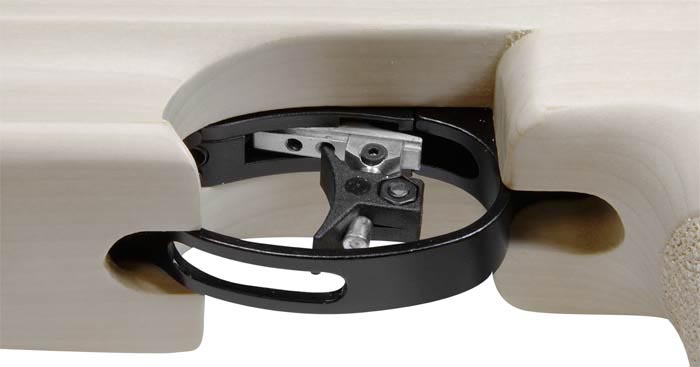
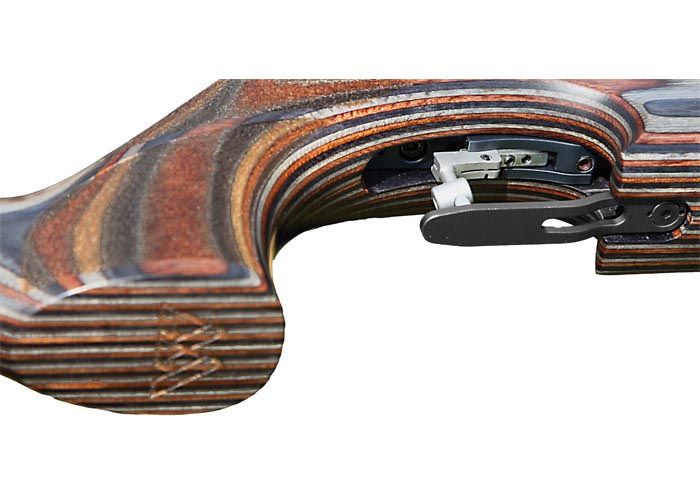
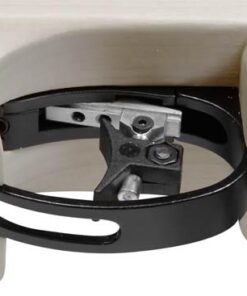
What type of trigger is fitted, and can it be customised? A highly adjustable two-stage match trigger is standard. Both stages can be fine-tuned, and the blade itself is position-variable. Some configurations even allow the contact face to be reversed for those who prefer a flat rather than curved surface. The result is a crisp, predictable break that can be set to individual preference. Many competitors find that once the trigger is adjusted to their liking, shot release becomes almost instinctive, which is especially valuable under the pressure of a timed course.
Can a scope be mounted, and what rail system is provided? An 11 mm dovetail rail runs along the top of the action, ready to accept a wide range of scope rings and bases. No iron sights are fitted because the rifle is intended for optical aiming from the outset. Low to medium magnification scopes in the 8–12× range are the most popular choice for Hunter Field Target, and the rail accommodates them securely. Proper mounting and a careful zeroing process allow the full accuracy potential of the free-floating match barrel to be realised.
What accessories can be fitted to improve handling and balance? A recessed accessory rail under the forend accepts a variety of optional equipment. Palm-rest or hamster kits provide additional support for kneeling and standing shots. Counterweights can be added to refine balance and increase inertia. Picatinny conversion plates allow bipods to be attached when permitted by local rules. Sling studs, butt-pad extension kits and silencer adaptors are also widely available. Many owners further enhance the rifle with aftermarket quick-fill probes or regulated conversions. Because the base design is already highly adjustable, these accessories integrate cleanly and allow each shooter to create a personalised competition setup.
Is the side-lever action smooth and easy to operate under match pressure? The side-lever cocking system is widely regarded as one of the smoothest in its class. Effort remains light, the loading bay is generously sized, and the spring-loaded probe ensures positive pellet seating. Transitioning between shots feels fluid and deliberate, which helps maintain focus on the target rather than on mechanical operation. Even when gloves are worn or conditions become cold and damp, the action continues to cycle reliably.
How accurate is the rifle in practical competition conditions? When paired with quality match pellets and a well-zeroed scope, the free-floating Lothar Walther barrel and multi-ported air stripper regularly produce groups that reward careful technique. Consistency of velocity, combined with excellent trigger control and stock adjustability, allows skilled shooters to achieve the tight, repeatable results needed to score highly. Many owners report that once the rifle is set up correctly, missed targets are almost always attributable to wind reading or positional error rather than equipment variation.
Can the rifle be used for informal target practice or limited pest control? Although designed primarily for Hunter Field Target competition, the standard sub-12 power level makes the rifle suitable for general range practice and effective small-pest control where local regulations permit. The combination of accuracy, consistency and manageable report allows it to perform well in these secondary roles. However, owners seeking higher energy for larger quarry or longer-range work will need to explore FAC conversions or alternative models.
What maintenance is required to keep the rifle performing at its best? Routine care is straightforward. Regular cleaning of the barrel after a few hundred shots, occasional lubrication of the side-lever pivots, and periodic inspection of seals are usually sufficient. The 20-micron inline filter helps protect the internal system from debris during filling. Because the action is based on proven Air Arms architecture, competent gunsmiths find servicing uncomplicated. Many owners report thousands of rounds without major issues when basic care is observed.
Is a magazine supplied, and how is the rifle loaded? No magazine is included or required. The rifle is a single-shot design. Pellets are placed directly into the loading bay after the side lever is drawn back. This method is preferred by many precision competitors because it eliminates variables associated with magazine feeding and allows each pellet to be inspected and seated with care.
What warranty and support can owners expect? Air Arms products are backed by the manufacturer’s reputation for quality and by the lifetime limited warranties offered by many authorised retailers. In addition, a wide network of specialists provides tuning, regulation upgrades and parts support. This combination of manufacturer standing and aftermarket expertise gives owners confidence that the rifle will remain a reliable partner for many seasons of competition.
Who is this rifle best suited for? The design appeals equally to experienced competitors seeking a refined, purpose-built platform and to newer shooters who want equipment that grows with their skills. Extensive adjustability, consistent power delivery and inclusive ergonomics mean that a wide range of users can achieve an optimal fit. Whether the goal is club-level improvement or national-level success, the rifle provides a solid foundation on which technique and confidence can be built.
These answers cover the most common questions raised by prospective and current owners. The combination of exclusive .177 precision, sub-12 legality, extensive adjustability and a rich ecosystem of accessories ensures that the rifle remains a compelling choice for anyone serious about Hunter Field Target competition.
Practical Use Scenarios with the Air Arms HFT 500
Stepping onto a Hunter Field Target course with a well-prepared rifle changes everything. The difference between arriving confident and arriving uncertain often comes down to how thoroughly the equipment has been understood and integrated into real-world shooting. The following scenarios illustrate how this competition-focused air rifle performs across the situations that matter most to serious shooters.
A typical competition day begins long before the first target is engaged. The rifle is removed from its hard case and given a quick visual inspection. The integral manometer is checked to confirm that the overnight fill to 190 bar is still holding. Because the high-capacity cylinder delivers eighty to ninety-five consistent shots, there is rarely any need to top up between the zeroing range and the end of the course.
The adjustable cheekpiece is verified against the preferred setting recorded in a small notebook, and the buttpad height is confirmed for the clothing layers being worn that day. A quality eight-to-twelve-power scope sits securely in its rings on the eleven-millimetre dovetail. Once the zero is confirmed at thirty-five yards with a handful of carefully selected .177 match pellets, the rifle is ready. Many competitors appreciate that the side-lever action cycles so smoothly that even cold fingers or light gloves do not interrupt the rhythm.
Hunter Field Target courses deliberately mix distances, angles and shooting positions. From eight yards to forty-five or fifty metres, the flat trajectory of the .177 calibre keeps hold-over calculations manageable. On a typical lane the first target might be a close reducer shot from the kneeling position. The palm rest, if fitted, drops into place under the forend and provides a stable platform against the knee. The multi-adjustable stock allows the head to settle naturally behind the scope without strain.
Moving to a longer standing target, the same rifle feels balanced and predictable. The free-floating match barrel and multi-ported air stripper help keep muzzle movement minimal, so the reticle settles quickly. When a prone shot appears, the vertically adjustable buttpad and carefully set length of pull allow the shooter to lie behind the rifle with shoulders relaxed and eyes correctly aligned. Transitioning between these positions becomes almost automatic once the stock has been dialled in to the individual body.
Because velocity remains consistent across the usable pressure range, the same aim point works for successive shots at the same distance. Competitors therefore spend less mental energy compensating for power curve changes and more energy reading wind and judging range. This reliability is especially valuable late in a course when fatigue begins to appear.
Field target is rarely contested in perfect conditions. A morning that begins still and overcast can turn into a windy, sunlit afternoon. The laminated stock resists moisture and temperature swings better than many traditional timber alternatives, so point of impact remains stable. The ambidextrous design means that both left- and right-handed shooters can maintain a consistent cheek weld even when wearing heavier jackets or gloves.
In strong crosswinds the predictable velocity of each shot makes hold-off calculations more repeatable. When light levels drop under dense tree cover, the clean trigger break and minimal lock time help the shooter release the shot at the exact moment the reticle is steady. Many owners report that once they trust the mechanical consistency of the rifle, their scores improve simply because less attention is diverted to equipment variables.
Away from competition, the same rifle serves as an excellent training tool. Club range days allow deliberate practice of the positions that cause the most difficulty. A kneeling sequence can be repeated until the palm rest placement and body alignment become automatic. Standing shots can be drilled with and without support to develop better natural point of aim. Because the side-lever action is so smooth, high shot counts are possible without the fatigue that sometimes accompanies heavier cocking efforts.
Zeroing and pellet testing sessions benefit from the generous shot count. A full cylinder permits thorough comparison of several pellet brands and weights without constant recharging. The integral pressure gauge makes it easy to stay within the flattest portion of the power curve. Over successive practice days the adjustable stock can be refined further—raising or lowering the cheekpiece by a millimetre, adding or removing a butt spacer—until the fit feels completely natural. Inclusive adjustability means that shooters of different heights, arm lengths and facial structures can all achieve this level of personalisation.
Although designed first and foremost for Hunter Field Target, the standard sub-twelve foot-pound power level opens additional practical uses. On a private permission the rifle can be employed for discreet pest control of small quarry where local rules allow. The combination of accuracy, moderate report and consistent energy delivery makes precise shot placement straightforward at typical airgun distances.
Informal plinking and social range days are equally enjoyable. Newcomers to the sport can be guided through the basics using a rifle that already possesses competition-grade consistency. Because the stock can be adjusted quickly, the same rifle can be shared among family members or club friends of varying sizes without anyone feeling disadvantaged. The single-shot loading method encourages careful pellet selection and reinforces good habits that transfer directly back to competition.
Transporting the rifle between home, club and competition venues is straightforward. The overall length of approximately forty inches and weight of just over eight pounds allow it to fit comfortably in most hard cases. Once the scope is removed or left in place according to preference, the package remains manageable. Many owners keep a small accessory pouch containing the fill probe, a spare set of seals, and a few preferred pellets so that everything needed for a day’s shooting travels together.
Long-term ownership reveals further practical strengths. Routine barrel cleaning every few hundred shots and occasional lubrication of the side-lever pivots are usually sufficient to maintain performance. The twenty-micron inline filter protects the internal system during filling, reducing the likelihood of debris-related issues. When more extensive servicing is eventually required, the architecture based on proven Air Arms components is familiar to most competent gunsmiths.
In practice the recessed accessory rail proves its worth repeatedly. A palm rest that seemed optional on the shop floor becomes essential once kneeling lanes appear regularly on club courses. A modest amount of forend weight can transform the feel of unsupported standing shots by increasing inertia. Picatinny adaptors allow a bipod to be fitted for zeroing or for those rare supported shots permitted under local rules. Each addition is reversible, so the rifle can be returned to a lighter configuration whenever preferred.
The cumulative effect of these practical refinements is a rifle that feels less like a piece of equipment and more like an extension of the shooter. Confidence grows because the mechanical variables have been minimised. Attention can therefore remain on the skills that actually decide matches: range estimation, wind reading, positional stability and mental composure.
A new owner typically progresses through several stages. Initial range sessions focus on learning the trigger and confirming zero. Within a few outings the stock adjustments settle into a preferred configuration. After a handful of club competitions the shot count and consistency become trusted constants. By the middle of a season the rifle has usually disappeared from conscious thought during a course—exactly the outcome that serious competitors seek.
This progression is available to shooters of widely different experience levels. Newer participants benefit from equipment that does not introduce additional variables while they develop fundamental skills. Experienced competitors appreciate the refined platform that allows them to extract every last point from their hard-earned technique. Inclusive design ensures that physical differences in size, strength or dominant hand do not become barriers to enjoyment or success.
| Caliber | .177 |
|---|
Air Arms
Air Arms
Calibers: Most common are .177 (4.5mm) for speed/flat trajectory and general use, and .22 (5.5mm) for better hunting knockdown power. Larger “big bore” (.25, .30, .357+) exist for hunting bigger game where legal.
Yes, many modern PCP and springers deliver enough energy for small game (rabbits, squirrels, birds) and even larger game in some areas. Muzzle energy (in ft-lbs or joules) matters more than velocity alone. Always match caliber, pellet weight, and energy to the game and check local hunting regs.
Treat every airgun as if it is loaded.
Follow these rules strictly—airguns cause real injuries.
Laws differ dramatically by country, state/province, and even city. Always verify current local laws before buying, owning, transporting, or using an airgun. Age restrictions (often 18+) are common.
Examples (summaries only; check official sources):
Resources: Wikipedia “Air gun laws”, airgun forums, or official government sites. For travel, research transit laws carefully.
Consider:
Buy from reputable dealers and consider warranties.
Follow your model’s manual. Basic care extends life significantly.
International shipping may be available for select products. Customers are responsible for understanding and complying with their local import laws and regulations before ordering.
Yes. Customers are required to confirm their order number through WhatsApp or Live Chat before orders are processed and shipped.
If local laws prevent shipment to your area, your order may be canceled and refunded according to our store policy.
Processing typically takes 1–3 business days after payment confirmation. Delivery times vary depending on destination, carrier, and product availability.
Pellets are the most common projectile (lead or lead-free). Match them to your gun, caliber, and purpose—test several brands as accuracy varies by barrel.
Tips: Heavier pellets in .22/.25 for hunting (better momentum). Lighter in .177 for speed/flat trajectory. Always check head size fit (e.g., 4.51-4.53mm variants).
Muzzle energy (ft-lbs or joules) matters more than velocity. Ethical shots require precise placement (head/heart-lung) within effective range.
Rough Guidelines (adjust for distance, pellet, and local laws):
PCPs dominate serious hunting due to power and shot count. Springers/gas rams work well for small game but require skill. Always prioritize clean kills and check seasons/species rules.
Common Issues:
Toggle Content
Budget Tip: Start with a quality springer (~$150-400) before investing in PCP setup.
Airgunning offers endless depth—from backyard plinking to precision competition and ethical hunting. Prioritize safety, legality, and practice. If you want specifics (e.g., recommendations for a country, budget, hunting small game, or a particular type like PCP vs springer), let me know for more targeted info! Shoot responsibly.
Tuning improves accuracy, reduces noise/recoil, or increases power (within legal limits).
Caution: Check laws—power increases may reclassify your gun. DIY only if experienced; professional tuners recommended.
You must be at least 18 years old to purchase any airgun or related accessories from our store. By placing an order, you confirm that you meet the legal age requirements in your state or country.
Yes. Orders may require age verification before processing and shipping. In some cases, we may request a valid government-issued ID to confirm eligibility.
WhatsApp us

Reviews
There are no reviews yet.