
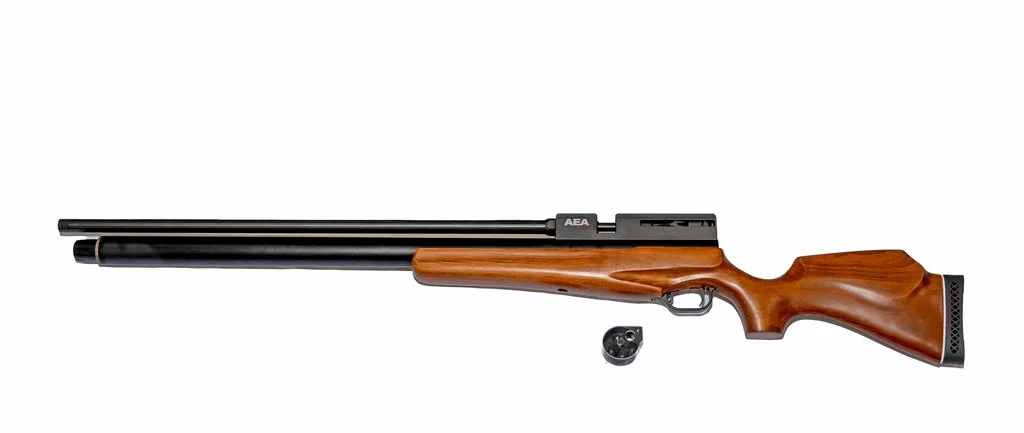
Discover Unmatched Precision with the AEA Precision Challenger Long Stock
Exceptional performance is delivered by the AEA Precision Challenger Long Stock, a PCP air rifle that has been engineered for shooters who value power, accuracy, and reliability. Designed with a focus on long-range capability, this model stands out through its extended stock configuration and high-quality construction. Whether targets are engaged at distance or small to medium quarry is pursued in the field, consistent results are achieved by this carefully crafted platform.
Stability and control are enhanced by the long stock design. A more natural cheek weld is provided, and recoil management is improved during extended sessions. Crafted from high-quality natural walnut or similarly premium wood, each stock displays unique grain patterns, color variations, and shading. As a result, every rifle becomes a one-of-a-kind piece while maintaining structural integrity and aesthetic appeal.
Power and consistency are supported by advanced materials and engineering. Cylinders are produced from 7075 T6 aluminum alloy, which offers strength comparable to carbon fiber while remaining lightweight and durable. CNC machining is applied throughout critical components, ensuring tight tolerances and reliable function even under demanding use. An integrated or externally adjustable regulator is featured on many configurations, allowing fine-tuning of output for optimal shot-to-shot consistency.
Impressive ballistic potential is unlocked by the long barrel—commonly measuring approximately 29.5 inches in popular variants. Higher muzzle velocities and greater energy transfer are facilitated, making the platform suitable for precise long-range work. Typical performance figures include velocities reaching up to 1100 FPS in .30 caliber and around 1000 FPS in .35 caliber, with corresponding energies of up to 135 joules and 185 joules depending on projectile weight and setup.
Highlighted product capabilities include:
These attributes are combined to create a versatile tool that serves both recreational target shooters and those focused on ethical hunting applications. Transitioning between different shooting scenarios is made straightforward by the regulated power delivery and ergonomic layout.
High standards of manufacturing are maintained across the AEA Precision Challenger Long Stock. Strength and safety are prioritized through the selection of aviation-grade aluminum alloys and precision machining processes. At the same time, cost-effectiveness is retained, allowing premium performance to be accessed without unnecessary expense. Reliability over repeated use is supported by robust construction, while the wooden stock contributes both classic aesthetics and practical vibration dampening.
Comfort during prolonged sessions is addressed through thoughtful ergonomics. The extended stock promotes a stable shooting position that reduces fatigue and helps maintain consistent form. Fill probes, multiple magazines, and user manuals are commonly included, so new owners can begin using the rifle promptly after unboxing. Note that magazines experience wear based on usage patterns and are typically considered consumable items outside standard warranty coverage; replacements remain readily available and affordable.
Opportunities for precision shooting are opened to a wide range of enthusiasts by the AEA Precision Challenger Long Stock. Beginners developing foundational skills benefit from the forgiving platform and consistent power curve, while experienced marksmen appreciate the fine-tuning options and long-range potential. Hunters seeking ethical takedowns of appropriate game find the energy levels and accuracy well-suited to responsible field use when paired with suitable projectiles and local regulations.
Moreover, the design accommodates various body types and shooting styles. Adjustments and accessories can further personalize fit, ensuring that shooters of differing heights, strengths, and preferences can achieve a comfortable and effective hold. In this way, the rifle supports an inclusive community of airgun users who value safety, skill development, and enjoyment outdoors or on the range.
Clarity on performance expectations is provided by the following representative figures (actual values may vary slightly by exact configuration and caliber):
These specifications are the result of iterative refinement aimed at delivering reliable real-world results. Consequently, shooters can focus on technique and enjoyment rather than compensating for platform shortcomings.
Maximum potential is realized when quality pellets or slugs matched to the chosen caliber are selected and the regulator (where present) is tuned appropriately. Chronograph testing is recommended to confirm velocity and energy for specific loads. Proper maintenance—including regular cleaning of the barrel and care of seals—extends service life and preserves accuracy. Safe handling practices and adherence to all local laws remain essential at every stage of ownership.
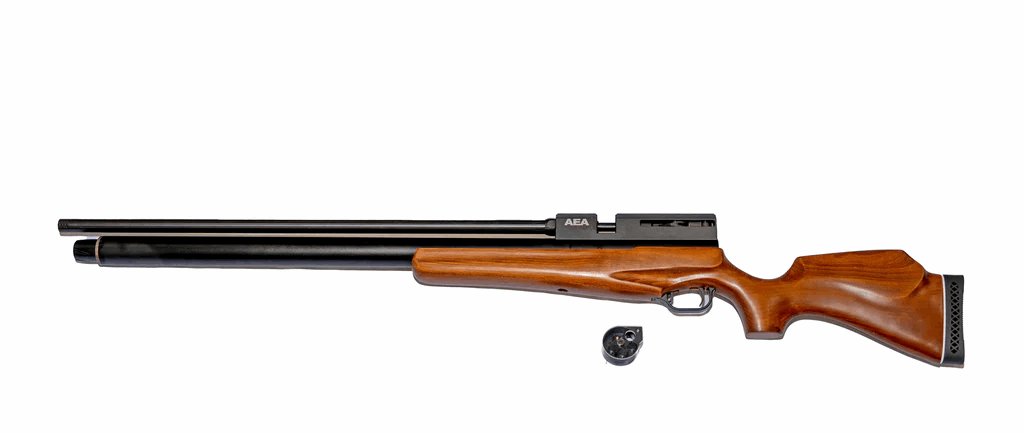
Furthermore, the platform’s modularity allows future upgrades such as enhanced air bottles, alternative stocks, or optics packages. In this manner, the rifle can grow alongside the owner’s evolving interests and skill level.
Calibers, FAC Considerations, Power Output, and Accessories for the AEA Precision Challenger Long Stock
Versatility across multiple calibers is offered by the AEA Precision Challenger Long Stock, allowing shooters to select the configuration that best matches their intended use. Power levels are substantial enough that legal classification must be carefully considered in many jurisdictions, while a wide range of compatible accessories further enhances performance, comfort, and customization.
Several caliber options are supported within the Challenger series, with the long-stock variants most commonly configured in .30 (7.62 mm) and .35 (9 mm). Additional chamberings such as .22, .25, and .357 appear in related models and can suit specific preferences when available. Each caliber brings distinct ballistic characteristics that influence trajectory, energy delivery, and suitable applications.
In .30 caliber, high velocity is typically achieved—often approaching or exceeding 1100 FPS with appropriately weighted projectiles around 50 grains. This combination produces energies in the region of 135 joules under optimal conditions. Flat trajectories and solid terminal performance make the .30 option attractive for medium-range target work and ethical hunting of small to medium quarry when local regulations permit. Magazines for this caliber commonly hold nine rounds, supporting efficient follow-up shots.
Transitioning to .35 caliber shifts the emphasis toward greater projectile mass and energy. Velocities near 1000 FPS with heavier projectiles (approximately 80 grains) can generate energies approaching 185 joules. The increased momentum proves advantageous for larger game within legal limits or for delivering decisive impact at extended distances. Magazine capacity is usually eight rounds in this chambering. Shooters seeking maximum knockdown power frequently prefer the .35 configuration of the AEA Precision Challenger Long Stock.
Smaller calibers such as .22 and .25, when offered, provide higher shot counts, reduced recoil sensation, and lower operating costs for high-volume practice or pest control. Larger options like .357 deliver still greater energy for specialized big-bore applications. Because exact availability depends on the specific production run and market, confirmation of current caliber offerings is recommended before purchase. Inclusive design ensures that shooters of varying experience levels and physical builds can find a caliber that feels controllable and effective.
Power delivery is a defining strength of the AEA Precision Challenger Long Stock. Regulated systems and generous air reserves (often combining a primary cylinder with a substantial plenum) contribute to consistent shot-to-shot performance across a meaningful string of shots. Maximum fill pressures frequently reach 4500 PSI (310 BAR), supporting the high velocities and energies noted above.
In many regions, air rifles exceeding certain energy thresholds are classified as firearms and require a Firearm Certificate (FAC) or equivalent authorization. In the United Kingdom, for example, air rifles producing more than 12 foot-pounds of energy generally fall under FAC rules, while lower-powered models may be held without such certification. Comparable restrictions exist in other countries and regions; therefore, local laws must always be verified by the individual shooter. The high-output nature of the long-stock Challenger models means that FAC compliance is often necessary for legal ownership and use in restricted jurisdictions.
Responsible ownership includes confirming the exact energy output of a specific rifle once it is received, as manufacturing tolerances, regulator settings, and projectile choice can influence measured performance. Chronograph testing under controlled conditions provides the most accurate data for legal classification and safe operation. When FAC status applies, proper storage, transportation, and use protocols become mandatory. The platform’s power is thereby transformed from a pure performance advantage into a responsibility that every shooter must respect.
Functionality and enjoyment are significantly expanded by thoughtfully chosen accessories. The integrated Picatinny-style rail accepts a broad selection of optics, from compact red-dot sights for rapid target acquisition to high-magnification scopes optimized for long-range precision. Quality mounts and rings ensure zero retention under the rifle’s recoil characteristics.
Extra magazines prove invaluable for extended range sessions or field use, reducing downtime between strings. Because magazines experience wear over time, maintaining a supply of spares is practical. Fill probes and high-pressure hand pumps or scuba adapters facilitate convenient refilling, while larger aftermarket air bottles can increase shot capacity for prolonged outings.
Sound moderation is addressed by compatible silencers or shroud extensions where legally permitted. These accessories reduce report and help preserve hearing while remaining considerate of surroundings. Bipods or shooting rests enhance stability during prone or benchrest work, and adjustable cheek risers or aftermarket stocks can further refine ergonomics for individual shooters. Soft cases or hard transport cases protect the rifle during travel, and cleaning kits specifically suited to PCP airguns maintain barrel condition and seal integrity.
Additional useful items include bipod adapters, sling mounts for carrying comfort, and quality pellets or slugs matched to the chosen caliber. Chronographs assist with tuning and verification of power levels, while target systems or reactive targets make practice sessions more engaging. All accessories should be selected for compatibility with the specific model and caliber of the AEA Precision Challenger Long Stock to ensure reliable fit and function.
A balanced system is created when caliber selection, legal power compliance, and supporting accessories are considered together. A shooter focused on precision target work might pair a .30 caliber rifle with a high-quality variable-power scope, extra magazines, and a stable bipod. Someone prioritizing hunting applications could choose the higher-energy .35 option, confirm FAC status where required, and add a moderator, robust sling, and appropriate projectiles. Beginners benefit from starting with well-matched accessories that build confidence without overwhelming complexity.
Inclusive language and design philosophy encourage every interested shooter—regardless of background, experience, or physical attributes—to explore configurations that feel personal and effective. Proper setup transforms the inherent capabilities of the AEA Precision Challenger Long Stock into consistent real-world results.
Whether the priority is maximizing legal power within FAC frameworks, selecting the ideal caliber for a preferred discipline, or equipping the rifle with performance-enhancing accessories, careful planning yields the best outcome. Explore current caliber options, verify local regulations, and assemble a supporting kit that matches individual goals. The AEA Precision Challenger Long Stock is ready to deliver when these elements are thoughtfully combined.
Confidence in every shot is inspired by the AEA Precision Challenger Long Stock. Precision engineering, thoughtful ergonomics, and strong value are brought together in a single package that rewards careful aim and consistent practice. Whether the goal involves tightening groups at extended distances, preparing for the next hunting season, or simply enjoying accurate plinking with friends and family, this rifle is prepared to deliver.
Ready to elevate your airgun experience? Explore available configurations of the AEA Precision Challenger Long Stock, select the caliber that best matches your needs, and take the next step toward greater accuracy and satisfaction. Quality construction and proven performance await those who choose this capable platform.
The modern airgun market has continued to evolve with powerful PCP platforms, tactical designs, and innovative compressed-air systems. Among the most discussed names are Bintac, Bintac LLC, Bintacllc, and Bin Tac, with products such as the Bintac T9, Bintac T 50, Bintac T50, Bintac M50, Bintac MCAR, and Bintac S45 attracting attention from shooting enthusiasts searching for advanced performance, unique designs, and reliable air-powered technology. The Bintac T9 has become a popular topic among users looking for information about the Bintac T9 price, Bintac T9 full auto configurations, Bintac T9 Amazon availability, and overall performance expectations. Likewise, the Bintac T50, Bintac T50 Extreme, and AEA Bintac T50 Extreme are frequently researched by those interested in high-power PCP air rifles.
The Bintac AEA Harpoon platform represents one of the most recognizable large-caliber airgun systems available today. Searches for Bintac AEA Harpoon, AEA Harpoon, AEA Harpoon for sale, AEA Harpoon price, AEA Harpoon Magnum, AEA Harpoon Gun, AEA Harpoon Air Gun, AEA Harpoon cartridge, AEA .50 Harpoon, AA Harpoon, and harpoon air gun demonstrate strong interest in powerful air-powered designs. The AEA Harpoon is often compared with other premium large-caliber platforms, including the Megalodon air rifle, AEA Megalodon, AEA Megalodon air rifle, AEA Megalodon 58 cal, AEA Megalodon .58 cal, AEA Megalodon 50 caliber, AEA Megalodon 50 cal price, and AEA Megalodon for sale options.
The Bintac family includes different models designed for various shooting preferences. The Bintac M50, Bintac M50 pistol, Bintac M50 pump action, and Bintac M50 for sale searches are commonly associated with compact yet powerful PCP platforms. The Bintac MCAR air rifle, Bintac MCAR, and Bintac MCAR 457 are also popular among users searching for tactical-style air rifles. In addition, the Bintac S45 and Bintac S45 for sale listings attract buyers interested in alternative configurations within the Bintac range.aea megalodon for salekral arms
AEA Airguns has developed a reputation for producing innovative high-performance airgun systems. Models such as the AEA Defender, AEA Defender 2, AEA Defender 3, AEA Terminator, and AEA Terminator Gen 3 are frequently compared with other powerful PCP platforms. AEA guns continue to attract attention because of their combination of power, engineering, and unique operating systems. Buyers researching air tank for PCP airguns, anti air tanks, air powered 50 cal rifle platforms, automatic air gun systems, airgun shotgun designs, and advanced PCP technology often compare AEA Airguns models with other manufacturers.
Large-caliber airguns have created a growing market for specialized shooting platforms. Products and searches related to the Zeus 72 cal air rifle price, bee bee gun rifle, compressed air systems, and high-performance PCP rifles show increasing interest in powerful alternatives to traditional firearms. Users exploring pcp air rifles, pcp rifles, air rifle pcp, and precision air platforms often compare different brands based on accuracy, air capacity, reliability, and intended application.kr9
The wider airgun industry also includes respected manufacturers such as Kral Arms and related platforms. Kral Arms, Kral, Krql, Kr Al, and الكرال are recognized names among enthusiasts searching for affordable and capable PCP systems. Models including the Kral NP 02, Kral Puncher, Kral Breaker Puncher, Kral Puncher K, Puncher Mega, Shadow Puncher, Shadow Puncher, Puncher Auto, Kral Pump, and Kral Breaker Puncher provide different options for users interested in tactical and sporting air rifles.b&w m50
Kral-related searches such as Kral Arms, Krale wholesale, Kroll firearms, and other international airgun suppliers demonstrate the global demand for PCP technology. Other related models and categories include Bigmax, TacticalX, Tacticalx, Tactical Tundra, Empirex, Raptor S, AKR gun, King Arms Fal, Kalibre pistol, Kora gun, Kar gun, NP500, KP12, ST 500, Dazzle S, and additional tactical shooting platforms.
The market also includes firearm-style search categories and international terminology such as 223 rifle, 223 guns, 223 arma, rifle cal 22 semiautomatico, av tüfeği, tabancalar, inertia shotguns, shotgun XM, XM shotgun, A12 shotgun, 410 shotgun semi auto magazine fed, and other shooting equipment categories. These terms represent the broad interest surrounding modern shooting technology, including PCP rifles, tactical platforms, magazine-fed systems, and precision air-powered designs.bintac t50 for sale
Frequently Asked Questions About This High-Performance PCP Air Rifle
Multiple caliber options are available to suit different shooting preferences and applications. The most common configurations feature .30 and .35 chamberings, while related models may include .22, .25, or .357 depending on production and market availability.
In the .30 option, higher velocities are typically achieved with lighter projectiles, producing a flatter trajectory that many shooters find ideal for medium-range target practice and ethical pursuit of smaller game. Energies in the region of 135 joules are frequently reported under favorable conditions. Magazines usually accommodate nine rounds, supporting efficient follow-up sequences.
The .35 configuration shifts emphasis toward heavier projectiles and greater momentum. Velocities near 1000 feet per second combined with increased mass can generate energies approaching 185 joules, delivering stronger terminal performance for larger quarry where regulations allow. Capacity is commonly eight rounds.
Smaller calibers such as .22 or .25 tend to offer higher shot counts per fill, milder report, and lower per-shot cost, making them attractive for high-volume practice or pest management. Larger options emphasize maximum energy transfer.
Selection depends on primary use, local regulations, preferred projectile availability, and personal comfort with recoil and handling. Beginners often start with a mid-range caliber that balances power and controllability, while experienced users may prioritize energy or trajectory characteristics. Trying similar platforms at a range, reviewing ballistic data, and confirming current availability help ensure the chosen caliber aligns with individual goals. Inclusive design means shooters of varying experience, strength, and preferred shooting styles can find a suitable match.
Substantial power is a core characteristic of this long-barrel platform. Representative figures show velocities reaching approximately 1100 feet per second in .30 caliber and around 1000 feet per second in .35 caliber, with corresponding energies of up to 135 joules and 185 joules respectively when optimal projectiles and settings are used. These values can vary based on exact configuration, regulator adjustment, ambient conditions, and projectile weight.
In many jurisdictions, air rifles exceeding defined energy thresholds are classified as firearms and require specific authorization such as a Firearm Certificate or equivalent. In the United Kingdom, for instance, air rifles producing more than 12 foot-pounds generally fall under certificate requirements. Comparable rules exist elsewhere; therefore every prospective owner must verify local laws before purchase and use.
The elevated output means certificate compliance is often necessary for legal ownership in restricted areas. Measured performance of an individual rifle should be confirmed with a chronograph after acquisition, as real-world results can differ slightly from published maxima. Responsible ownership includes secure storage, lawful transportation, and adherence to all applicable regulations. Power is thereby paired with accountability so that every shooter can enjoy the platform safely and legally.
Yes, the design supports a range of applications when used responsibly and within legal limits. The extended barrel and stable stock promote accuracy at longer distances, making precision target work rewarding for those refining technique or competing informally. Consistent regulated delivery helps maintain tight groups across a string of shots.
For hunting, the available energy levels can provide ethical performance on appropriate small to medium quarry when paired with suitable projectiles, proper shot placement, and adherence to local seasons and restrictions. Many users appreciate the balance of power and controllability for field use.
The platform is not limited to experts. Adjustable elements, ergonomic stock design, and available accessories allow shooters of different backgrounds and physical attributes to achieve a comfortable and effective hold. Whether the focus is tightening groups on the range or preparing for responsible field outings, the rifle adapts well once the correct caliber and setup are selected.
A variety of accessories enhance capability, comfort, and convenience. The integrated rail system readily accepts quality optics ranging from compact red-dot sights for quick acquisition to higher-magnification scopes suited to longer ranges. Secure mounts help maintain zero.
Extra magazines reduce interruption during extended sessions. Fill probes, high-pressure pumps, or scuba adapters simplify refilling, while larger capacity air bottles can extend shot strings for longer outings. Sound moderators or shroud extensions, where permitted by law, lower report and improve neighbor consideration.
Stability aids such as bipods or rests support consistent prone or benchrest shooting. Adjustable cheek pieces, aftermarket stocks, or sling attachments further personalize fit and carrying comfort. Protective cases safeguard the rifle during transport, and dedicated cleaning kits help maintain barrel condition and seals.
Chronographs assist with verifying velocity and energy for both performance tuning and legal compliance. Quality projectiles matched to the chosen caliber complete the essential kit. Selecting accessories compatible with the specific model ensures reliable function and maximizes the platform’s potential for every user.
A generous air reserve, frequently combining a primary cylinder with an additional plenum, supports multiple consistent shots per fill. Maximum pressures often reach 4500 PSI, providing the volume needed for high-energy output.
An externally adjustable or integrated regulator is featured on many versions, allowing fine control over operating pressure. This contributes to shot-to-shot consistency by reducing the velocity spread that can occur in unregulated systems as pressure drops. Fine-tuning becomes possible so that power and efficiency can be balanced according to the chosen projectile and intended use.
The result is a more predictable shooting experience across a practical string of shots, which benefits both precision work and field applications. Regular monitoring of pressure and proper filling practices help maintain this consistency over time.
Routine care preserves accuracy, reliability, and longevity. After each session, the exterior can be wiped clean and the barrel checked for debris. Periodic deep cleaning of the bore with appropriate tools and solvents prevents lead or residue buildup.
Seals and O-rings should be inspected periodically and replaced if signs of wear appear; keeping a small supply of common sizes is practical. Lubrication of moving parts such as the side-lever mechanism should follow manufacturer guidance, using only recommended products to avoid contamination of the air system.
Air reservoirs benefit from occasional inspection for damage or corrosion, and fill probes should remain clean and free of debris. Magazines experience mechanical wear and are typically considered consumable; rotating multiple magazines extends overall service life.
Storage in a dry, secure location away from extreme temperatures protects both wood and metal components. Following a consistent maintenance schedule ensures the rifle continues to deliver the performance expected of a precision platform.
The side-lever action and overall layout accommodate a range of users. Many shooters find the controls accessible regardless of dominant hand, and the stock design promotes a natural cheek weld and stable hold.
Adjustable accessories such as cheek risers, length-of-pull spacers, or aftermarket stocks further refine fit for different body sizes and preferences. Inclusive ergonomics mean that shooters of varying heights, arm lengths, and physical attributes can achieve a comfortable and consistent shooting position. Trying the rifle with different setups or consulting experienced users helps identify the most suitable personal configuration.
Initial setup typically includes mounting preferred optics, confirming zero at a known distance, and verifying velocity with a chronograph. Familiarization with the side-lever operation, magazine loading, and safety features builds confidence quickly.
The long stock contributes to stability, though the overall length and weight (often around 8.6 pounds) may feel different from more compact designs at first. Practice from supported positions helps develop consistent form. Power levels require respect; understanding legal classification and safe handling practices from the outset is essential.
Most owners report a short learning curve followed by reliable and enjoyable performance once the rifle is properly set up and tuned to the chosen projectile.
High-quality materials such as 7075 T6 aluminum alloy components and carefully selected wood stocks are combined with CNC machining to deliver tight tolerances and durability. The result is a platform that offers strong performance relative to its cost, making advanced capability accessible to a broad range of enthusiasts.
Reliability under regular use, consistent power delivery, and a supportive accessory ecosystem contribute to long-term satisfaction. Many shooters appreciate that premium features are provided without excessive expense, allowing investment in optics, ammunition, and training rather than the base platform alone.
Manufacturer documentation, reputable retailers, and experienced user communities provide detailed guidance on setup, tuning, and troubleshooting. Local regulations should always be confirmed with official sources.
When questions arise about specific configurations, accessories, or legal status, consulting authorized dealers or certified instructors ensures accurate and up-to-date advice. Engaging with fellow shooters in a respectful and inclusive manner further enriches the experience for everyone involved.
This comprehensive set of answers addresses the most common inquiries about calibers, power and legal considerations, accessories, maintenance, suitability, and practical ownership. Thoughtful selection of configuration and supporting equipment, combined with responsible practices, allows the platform to deliver consistent accuracy and enjoyment for shooters across a wide range of backgrounds and goals. Exploring current options and verifying all relevant details prepares every new owner for a rewarding experience.
Practical Use Scenarios for Everyday and Specialized Shooting
Everyday reliability and specialized capability come together when this long-barrel PCP platform is taken into the field or onto the range. Real-world situations reveal how the combination of stable stock design, consistent power delivery, and adaptable caliber options supports a wide variety of shooting activities. The following scenarios illustrate practical applications that shooters of different experience levels and backgrounds can explore while remaining fully compliant with local regulations and safety standards.
Early morning light spreads across a quiet outdoor range as a shooter settles into a supported prone position. The extended stock provides a natural and repeatable cheek weld, allowing the eye to align cleanly with the optic. A series of carefully loaded magazines sits ready nearby. Each shot is delivered with deliberate trigger control while the regulated air system maintains tight velocity consistency across the string.
Groups tighten steadily as the shooter works through different distances—first fifty yards, then seventy-five, and finally one hundred yards and beyond. The longer barrel contributes to efficient velocity retention, helping the chosen projectile maintain a usable trajectory. Between strings the side-lever action cycles smoothly, and the Picatinny rail keeps the optic firmly zeroed.
This type of session builds foundational skills that transfer directly to other activities. New shooters gain confidence through measurable improvement, while experienced marksmen refine wind reading, hold-over techniques, and positional shooting. Inclusive range environments welcome participants of varying physical abilities; adjustable rests, bipods, or shooting bags can further customize support so that everyone can focus on technique rather than struggle with equipment.
After several hours the air reserve still holds usable pressure, demonstrating the practical advantage of the combined cylinder and plenum capacity. The session ends with a thorough wipe-down and a note of the day’s chronograph averages, preparing the platform for the next outing.
Cool autumn air moves through mixed woodland and open edges as a hunter moves quietly along a familiar route. The rifle is carried with a comfortable sling, its overall balance allowing steady progress without excessive fatigue. When a legal quarry presents itself within ethical range, the stable stock and consistent power enable a controlled shot from a kneeling or seated position.
Projectile selection has been matched to the caliber and the expected engagement distances. The energy delivered is sufficient for a clean and humane outcome when shot placement is precise. Follow-up capability is available through the multi-shot magazine system should circumstances require it, yet the emphasis remains on first-shot effectiveness.
After the harvest the rifle is made safe, and the hunter completes all required tagging or reporting steps. The platform’s relatively manageable weight and length make extraction through varied terrain practical. Sound moderation, where legally permitted, helps keep the report discreet and reduces disturbance to the surrounding area.
This scenario underscores the importance of preparation: confirming legal seasons, understanding local bag limits, and verifying that the rifle’s measured energy complies with any certificate requirements. Inclusive hunting communities increasingly welcome participants of diverse backgrounds who prioritize safety, respect for wildlife, and continuous skill development. The rifle supports those values by providing reliable performance once the shooter has invested time in practice and familiarization.
On a working property, crop protection or livestock safety sometimes requires controlled intervention against permitted pest species. Early or late light often provides the best visibility and lowest disturbance. The shooter moves into a pre-planned position that offers a clear, safe backstop and an unobstructed line of sight.
The longer stock aids steady aiming from improvised rests such as fence posts, vehicle windows, or portable bipods. Magazines loaded with appropriate projectiles allow several opportunities without the need to reload under time pressure. Consistent regulation keeps point of impact predictable even as ambient temperature changes throughout the day.
Sessions of this type are typically short and highly focused. After each engagement the area is checked thoroughly, and all legal reporting obligations are completed. The platform’s combination of power and accuracy reduces the likelihood of wounded animals, supporting ethical pest control.
Property owners and managers of different physical capabilities can participate effectively when the rifle is fitted with supportive accessories. A well-chosen optic with clear low-light performance further expands the usable window of opportunity. Regular practice on the range ensures that field performance remains sharp when it is needed most.
A family or small group gathers at a private range or club facility for a structured training afternoon. Experienced mentors guide newer participants through safe handling, loading procedures, and fundamental marksmanship. The side-lever action proves straightforward to operate, and the overall ergonomics accommodate a range of body sizes once minor adjustments are made.
Beginners start at closer distances with supported positions, focusing on breath control, sight picture, and trigger press. As confidence grows, distances increase and positional variety is introduced. The stable platform helps isolate the shooter’s technique from equipment variables, accelerating learning.
Inclusive coaching emphasizes that progress looks different for every individual. Some participants may prefer seated or benchrest work; others progress quickly to kneeling or standing. The multi-shot capability allows efficient practice without constant interruption, while the regulated system delivers predictable feedback on every shot.
By the end of the session participants leave with clear notes on zero distances, preferred projectiles, and personal goals for the next practice. The rifle has served as a reliable teaching tool rather than a source of frustration, reinforcing the value of quality equipment in skill-building environments.
Weekend field days bring together friends and club members for a mix of informal challenges. Steel plates or paper targets are placed at varied and sometimes unknown distances across undulating ground. Shooters rotate through positions—prone, sitting, kneeling—while navigating light brush or open ground between stages.
The longer stock and solid rail system keep optics secure even when the rifle is carried between stages or rested against natural features. Magazines are swapped quickly, and the air reserve supports a full afternoon of shooting for most participants. Those who prefer higher energy configurations select heavier projectiles, while others prioritize flatter trajectories for faster engagements.
Friendly competition remains secondary to safety and camaraderie. Clear range commands, designated safe zones, and mutual respect create an atmosphere where shooters of all ages and experience levels feel welcome. Accessories such as bipods, shooting sticks, or simple rest bags level the playing field and allow everyone to perform at their best.
At the close of the day the group shares observations about wind conditions, projectile performance, and equipment setups. The platform has proven itself as a versatile companion capable of handling both structured stages and spontaneous target opportunities.
Changing seasons bring different practical demands. In warmer months the focus may shift toward early-morning or late-evening pest control and longer range practice sessions. Cooler weather often coincides with hunting seasons, requiring careful attention to clothing layers that still allow a consistent cheek weld and trigger reach.
The wooden stock remains comfortable across temperature ranges when properly cared for, and the air system continues to function reliably when filled and maintained according to guidelines. Transport between locations is simplified by protective cases and the option of compact storage solutions where folding or adjustable elements are present on related configurations.
Shooters living in varied climates adapt by selecting appropriate lubricants, monitoring regulator behavior in extreme cold or heat, and protecting optics from condensation. The fundamental stability and power characteristics of the platform remain constant, giving users a familiar foundation regardless of the season.
Practical success is frequently amplified by thoughtful accessory choices. A quality optic matched to the primary distances encountered in the chosen activity reduces guesswork. Extra magazines and a reliable fill method keep sessions productive. A bipod or rest transforms improvised field positions into stable shooting platforms. Sound moderation, where legal, improves both comfort and consideration for others.
These additions are selected according to the dominant use case rather than accumulated indiscriminately. A range-focused shooter may prioritize high-magnification optics and a chronograph, while a field user values a robust sling, moderator, and compact bipod. Inclusive approach means accessories are evaluated for how well they serve the individual shooter’s physical needs and preferred style.
Every practical application begins and ends with safety. Clear identification of targets and backstops, confirmation of legal status, and adherence to certificate conditions where required form the non-negotiable foundation. Regular practice maintains proficiency so that when a genuine opportunity arises the shooter is prepared.
Continuous improvement comes from reviewing each session—what worked, what could be refined, and how equipment performed. Notes on velocity, group size, and environmental conditions build a personal knowledge base that makes future outings more effective.
Across target practice, ethical hunting, pest management, training, recreational days, and seasonal adaptation, the platform demonstrates consistent usefulness. Its combination of stability, power, and adaptability supports shooters who value preparation, respect for regulations, and inclusive participation. By matching caliber, accessories, and technique to the specific scenario, every user can extract reliable performance while contributing to a responsible and welcoming shooting culture. Thoughtful preparation turns potential into practical results, session after session.
| Caliber | .22, .25, .30, .357 |
|---|

AEA AIRGUN
Reviews
There are no reviews yet.