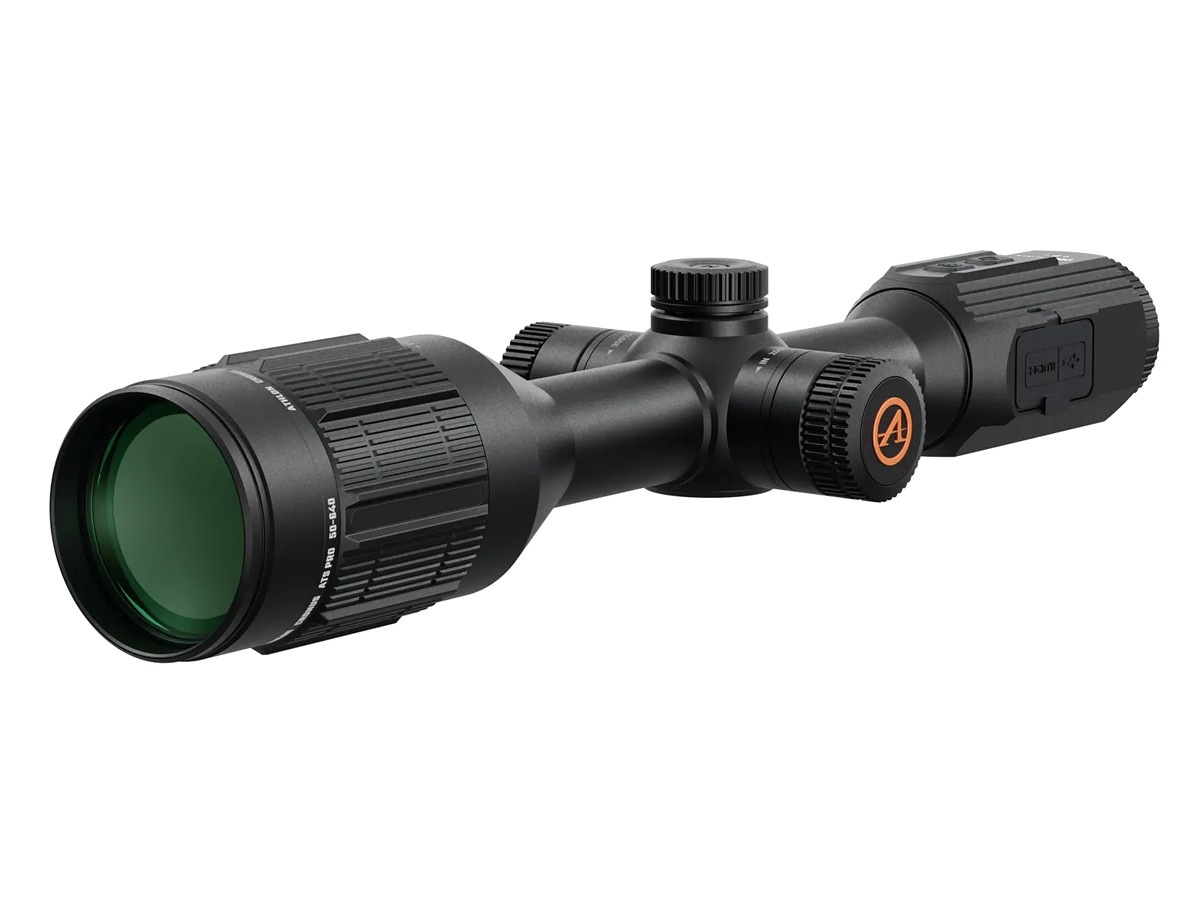
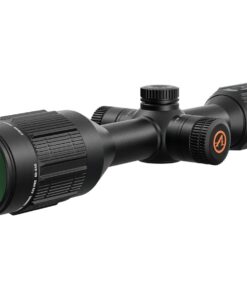
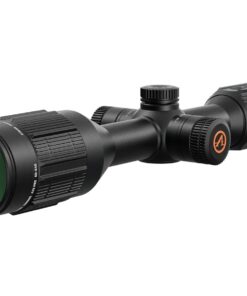
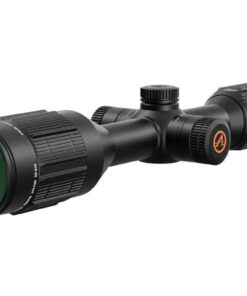
Athlon Optics Cronus ATS Pro 50-640 Thermal Scope – Premium 640×480 Thermal Imaging Technology
The Athlon Optics Cronus ATS Pro 50-640 Thermal Scope has been engineered for enthusiasts who demand exceptional thermal clarity, sophisticated imaging technology, and dependable outdoor performance. Designed with an advanced 640×480 thermal sensor, a high-resolution OLED display, and customizable viewing features, this premium thermal optic offers an impressive combination of image quality, versatility, and convenience.
Furthermore, its sophisticated thermal imaging system has been developed to recognize temperature differences in challenging lighting environments. Consequently, outdoor observations can be conducted in darkness without depending on conventional visible-light illumination.
Whether thermal observation is required for wildlife monitoring, authorized nighttime hunting, or specialized outdoor applications, this advanced optic provides a comprehensive range of digital features.
Additionally, convenient recording functions, multiple viewing palettes, and intelligent power management have been incorporated to create a refined user experience.
Advanced Thermal Imaging Performance
High-Resolution 640×480 Thermal Sensor
At the center of the Athlon Optics Cronus ATS Pro 50-640 Thermal Scope, an advanced 640×480 thermal sensor has been incorporated to deliver detailed thermal imagery.
Moreover, a 12-micron pixel pitch has been utilized to support excellent temperature differentiation and image definition.
Unlike conventional optical equipment, thermal imaging technology detects infrared radiation associated with temperature differences. Therefore, the observation of thermal signatures can be supported even when visible illumination is extremely limited.
Several important imaging benefits are provided:
- 640×480 thermal resolution: Detailed thermal information is captured for improved image interpretation.
- 12μm sensor technology: Fine thermal variations can be represented with greater definition.
- 50mm F1.0 objective lens: Thermal radiation is collected through a large-aperture optical system.
- Enhanced thermal sensitivity: Subtle temperature differences can be distinguished more effectively.
- Digital image processing: Thermal information is presented through a modern electronic display.
Consequently, an immersive thermal viewing experience can be enjoyed across various outdoor environments.
High-Definition OLED Display Technology
An advanced 1440×1080 OLED display has been integrated to provide a bright, detailed, and visually engaging viewing experience.
Because OLED technology produces excellent contrast, thermal images can be presented with clearly differentiated brightness levels.
Furthermore, intricate thermal information can be reviewed through a sophisticated digital interface.
The combination of a high-resolution sensor and premium OLED display ensures that substantial imaging detail can be appreciated.
Additionally, the display has been designed to accommodate prolonged observation sessions while maintaining a clear and consistent visual presentation.
Premium Optical Construction and Digital Magnification
Advanced 50mm Thermal Lens System
A premium 50mm F1.0 lens system has been incorporated to support effective thermal observation and reliable infrared transmission.
Through this optical configuration, detailed thermal imagery can be produced without relying on conventional ambient lighting.
Moreover, optical performance has been complemented by advanced electronic processing to deliver a sophisticated thermal imaging experience.
A field of view measuring approximately 8.8° × 6.6° has been specified, providing a practical viewing area for outdoor observation.
Versatile Digital Magnification
A magnification range of approximately 2.95× to 23.6× has been provided through the combined optical and digital viewing system.
As a result, displayed images can be enlarged according to observation requirements.
Furthermore, the electronic interface allows viewing adjustments to be managed conveniently.
However, because digital enlargement does not create additional native sensor resolution, the finest image detail is generally preserved at lower digital zoom settings.
Seven Customizable Thermal Color Palettes
Personalized Viewing Experience
Seven distinctive color palettes have been included to accommodate different visual preferences and environmental conditions.
These viewing options include:
- White Hot: Warmer thermal areas are represented using lighter shades.
- Black Hot: Warmer regions are displayed using darker tones.
- Red Hot: Elevated thermal signatures are highlighted through red coloration.
- Green Hot: Thermal information is presented through a green-toned display.
- Iron Red: Temperature differences are illustrated using a multicolored thermal gradient.
- Blue Hot: A blue-oriented thermal representation is provided.
- Sepia: Thermal details are displayed through a warm, subdued color scheme.
Additionally, brightness and contrast adjustments can be applied to personalize the displayed image.
Therefore, viewing preferences can be accommodated without changing the underlying thermal sensor.
Intelligent Digital Features and Connectivity
Integrated Video Recording and Image Capture
Digital recording capabilities have been incorporated to support convenient documentation of outdoor experiences.
High-resolution images and videos can be saved directly through the optic’s internal storage system.
Furthermore, an automatic recording feature has been included for compatible sporting applications.
A generous 128GB internal memory capacity has been provided, enabling substantial visual content to be stored.
Consequently, captured footage can be reviewed without requiring an external recording device during normal operation.
Wireless Connectivity and Digital Integration
Wi-Fi connectivity has been included to facilitate interaction with compatible digital devices.
Moreover, Bluetooth support has been specified within the manufacturer’s feature documentation.
Through the associated digital ecosystem, compatible settings and media-management capabilities can be accessed.
As a result, the overall ownership experience is enhanced by contemporary connectivity features.
Customizable Digital Reticle Options
Ten built-in interchangeable reticle designs have been incorporated, including five MOA and five MIL options.
Additionally, six reticle colors and ten illumination settings are provided for display customization.
These functions offer flexibility in configuring the on-screen interface according to individual preferences.
A manufacturer-supported ballistic calculator is also included as part of the optic’s integrated feature set.
Extended Battery Life and Power Management
Reliable Power for Extended Outdoor Sessions
Long operating periods have been considered throughout the thermal scope’s design.
Accordingly, a battery system capable of delivering approximately ten hours or more of operating time under specified conditions has been incorporated.
Furthermore, power conservation is supported through an integrated Eco Mode.
An automatic power-off function has also been included to reduce unnecessary energy consumption.
Convenient USB-C External Power Support
Additional operating flexibility is provided through USB-C external power compatibility.
Therefore, a suitable external power source can be connected when additional operating time is required.
Battery endurance may nevertheless vary according to environmental conditions, recording activity, display settings, and wireless connectivity.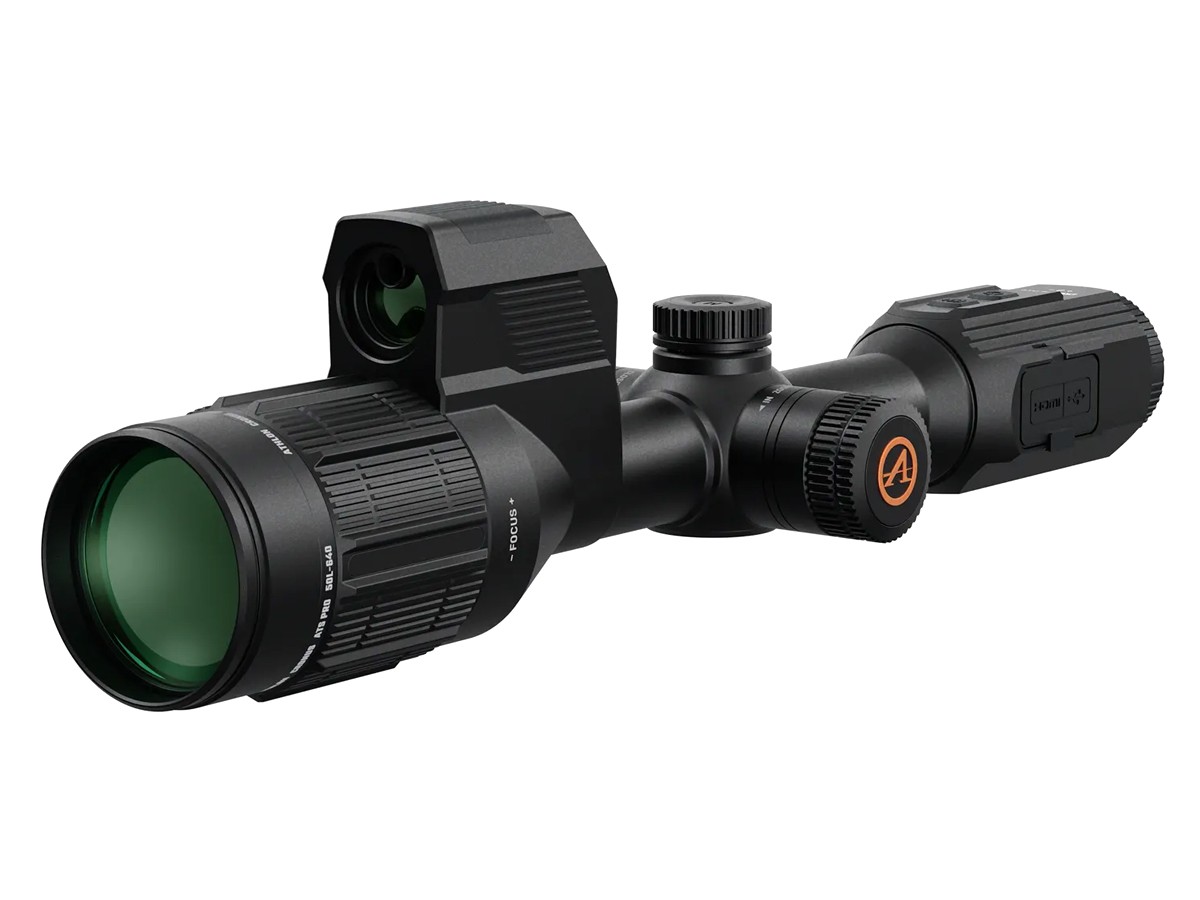
Durable Construction and Outdoor Reliability
Weather-Resistant Thermal Scope Design
The Athlon Optics Cronus ATS Pro 50-640 Thermal Scope has been developed with outdoor durability in mind.
An IP67 waterproof rating has been specified, indicating protection against dust ingress and temporary immersion under defined testing conditions.
Additionally, fog-resistant and shock-resistant construction features have been incorporated.
Consequently, the optic is suited to a variety of demanding outdoor environments when operated within its published specifications.
Professional Design and Practical Handling
A conventional 30mm tube-style configuration has been adopted to deliver a familiar optical appearance.
Furthermore, an overall length of approximately 14.7 inches has been specified.
Convenient digital controls and an integrated viewing system contribute to the scope’s practical design.
As a result, advanced electronic capabilities are combined with an established optical format.
Key Features and Technical Specifications
- Product: Athlon Optics Cronus ATS Pro 50-640 Thermal Scope
- Thermal sensor: 640×480 pixels
- Pixel pitch: 12μm
- Objective lens: 50mm F1.0
- Display resolution: 1440×1080 OLED
- Magnification: 2.95×–23.6×
- Field of view: 8.8° × 6.6°
- Thermal palettes: Seven customizable options
- Reticle options: Ten interchangeable designs
- Internal memory: 128GB
- Connectivity: Wi-Fi and Bluetooth
- Recording: Photo, video, and automatic recording features
- Battery endurance: Approximately ten hours or more under specified conditions
- External power: USB-C compatible
- Waterproof rating: IP67
- Additional features: Eco Mode, automatic power-off, digital controls, and integrated ballistic calculator
Why Choose the Athlon Optics Cronus ATS Pro 50-640 Thermal Scope?
Premium thermal imaging performance has been combined with advanced digital capabilities to create an exceptionally versatile observation platform.
Notably, the high-resolution 640×480 sensor provides a significant foundation for detailed thermal visualization. Meanwhile, the OLED display supports a refined and immersive viewing experience.
Furthermore, customizable color palettes, substantial internal storage, and convenient wireless connectivity enhance everyday functionality.
The durable housing and extended battery system also contribute to practical outdoor usability.
For buyers seeking sophisticated thermal imaging technology from an established optics manufacturer, the Athlon Optics Cronus ATS Pro 50-640 Thermal Scope represents a compelling premium option.
Explore advanced thermal imaging with Athlon Optics and experience the combination of precision engineering, intelligent digital features, and premium visual performance.
Premium Rifle Scopes, Rangefinder Binoculars, Hunting Optics, and Precision Optical Equipment
Discover Advanced Optics for Precision, Clarity, and Long-Range Performance
Choosing premium optical equipment requires careful consideration of image clarity, magnification, durability, reticle design, and overall performance. Whether exploring a gun scope, comparing a professional hunting optic, or researching the longest range scope, buyers benefit from understanding how different optical systems support observation, target identification, and recreational shooting activities.
Modern optical technology offers impressive versatility. From leica rangefinder binoculars to precision riflescopes, specialized equipment combines advanced lenses, durable construction, and ergonomic designs. Furthermore, understanding how to buy a rifle scope helps buyers identify suitable magnification ranges, optical coatings, adjustment systems, and configurations.
Different environments demand different optical solutions. Consequently, equipment selection should reflect intended applications, environmental conditions, and individual preferences rather than magnification alone.
Leica Rangefinder Binoculars and Premium Optical Technology
Exploring the Leica Geovid Collection
The leica geovid binoculars collection attracts attention among outdoor enthusiasts who value premium optical engineering and integrated distance-measurement technology. In particular, leica geovid 10×42 rangefinder binoculars combine a 10-power magnification format with 42mm objective lenses, providing a practical combination of viewing capability and portability.
Buyers researching leica binoculars with rangefinder technology frequently compare optical clarity, ranging functionality, handling characteristics, and available connectivity features. The leica geovid pro 10×42 represents a sophisticated option within the manufacturer’s premium range.
Similarly, searches for geovid pro 10×42 often focus on advanced distance measurement, optical refinement, and suitability for extended outdoor observation.
The leica geovid rangefinder concept integrates observation and distance measurement into one optical system. Therefore, leica geovid pro rangefinder binoculars may appeal to users who prefer fewer separate devices during outdoor activities.
Additional product searches include leica geovid rangefinder binoculars, leica geovid 10×42, and leica geovid binos. Although these expressions overlap in meaning, they reflect different ways buyers research the Geovid family.
Compact Leica Binoculars and Everyday Observation
Beyond rangefinding models, traditional leica binoculars offer optical configurations suited to wildlife observation, travel, and nature appreciation.
Portable leica small binoculars can be particularly attractive when lightweight equipment is preferred. Meanwhile, buyers searching binoculars leica, leica bino, or leica binos may be comparing available formats, objective diameters, and carrying convenience.
The phrases leica binocular, leica bino rangefinder, and leica camera binoculars also appear in optical equipment searches, although Leica’s camera and binocular categories should be evaluated separately.
When browsing leica binoculars for sale, consumers should examine warranty coverage, product authenticity, optical condition, and included accessories.
SIG Sauer Binoculars and Image Stabilization
Modern Stabilized Observation Systems
The market for sig sauer binoculars includes optical equipment designed for outdoor observation and demanding field conditions.
Enthusiasts researching sig sauer binos, sig binoculars, and sig binocular configurations may encounter models with different magnification systems and specialized features.
Interest in sig self stabilizing binoculars reflects the growing popularity of technologies designed to reduce perceived image movement. Similarly, sig image stabilizing binoculars and sig auto stabilizing binoculars are common search expressions among people seeking more comfortable handheld viewing.
Buyers also use phrases such as sig sauer self stabilized binoculars and sig sauer image stabilized binoculars when researching stabilized optical equipment.
However, stabilization capabilities vary by model, making manufacturer specifications essential before purchasing.
The term sigma binoculars sometimes appears alongside SIG-related searches, although Sigma and SIG Sauer should not automatically be treated as the same manufacturer.
Nightforce ATACR Precision Riflescopes
Exploring Advanced Magnification Options
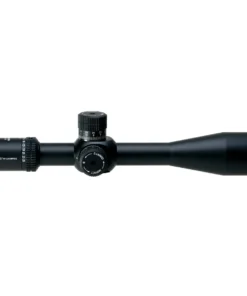
The nightforce atacr family is associated with premium riflescope design, precise adjustments, and robust mechanical engineering.
Several configurations attract particular interest, including the nightforce atacr 5-25×56 f2, nightforce atacr 4-20×50, nightforce atacr 5-25×56 f1, and nightforce atacr 4-16×50.
Each specification represents a different combination of magnification and objective size. Additionally, first focal plane and second focal plane reticle designs provide distinct viewing characteristics.
Searches for night force atacr, atacr scope, and nightforce attacker frequently lead buyers toward information about the manufacturer’s premium optics, although the latter is not an official ATACR model designation.
The shorter phrases atacr 4-20 and nightforce atacr 4 20×50 f1 may also be used when comparing configurations. Exact focal-plane specifications should always be verified against the model number.
Complementary optical searches sometimes include zeiss red dot, reflecting interest in different aiming systems rather than directly equivalent riflescopes.
Tangent Theta Scopes and Premium Optical Engineering
Optical Precision and Adjustment Quality
Products associated with tangent theta attract enthusiasts interested in premium optical construction and repeatable mechanical adjustments.
When comparing tangent theta scopes, shoppers often prioritize lens quality, reticle visibility, adjustment feel, and long-term durability.
The expressions tangent scope, tangent scopes, and tangent theta scope may appear throughout product research, although accurate manufacturer identification remains important.
Similarly, tangent optics is used in searches concerning specialized optical equipment.
The separate phrase theta optics may refer to other optical products or brands and should not automatically be confused with Tangent Theta.
A meaningful comparison should consider actual product specifications, available accessories, and manufacturer support rather than brand recognition alone.
Athlon Optics: Midas TAC, Argos BTR, Ares BTR, and Ares ETR
Midas TAC Optical Systems
The athlon midas tac collection offers configurations that appeal to enthusiasts researching precision-oriented optical equipment.
One notable product description is midas tac gen2 hd 6-24×50 aplr15 ffp moa reticle riflescope, which identifies a specific combination of magnification, optical design, and reticle characteristics.
Another frequently researched expression is athlon midas tac 6-24×50. Before choosing a configuration, buyers should verify the generation, reticle, turret units, and other model-specific details.
Argos BTR Magnification and Versatility
The athlon argos btr family also receives considerable attention from optical equipment buyers.
Search terms such as athlon argos btr gen2, athlon argos btr gen 2, and athlon btr gen 2 commonly describe interest in newer generations of the product family.
For higher magnification, athlon argos btr gen2 8-34×56 attracts attention because of its broad zoom range.
Related technical expressions include 34 56 and 34×56, although numerical combinations alone do not identify a particular optical product.
Buyers researching athlon scopes review, athlon reticles, and athalon scopes can benefit from comparing independent assessments and official technical documentation.
The phrase athens scope may also arise through spelling variations, making exact product identification especially important.
Ares BTR and ETR Premium Configurations
The athlon ares btr family provides another category for comparing advanced riflescope designs.
Meanwhile, athlon etr searches often focus on higher-end optical features, mechanical precision, and available reticle configurations.
A detailed example is the ares etr gen2 uhd 4.5-30×56 aprs12 ffp ir mil reticle, a specification that helps distinguish magnification, reticle type, and focal-plane design.
Related expressions include athlon 4.5-30×56, 4.5 30, and 4.5/30. These search variations should be interpreted using complete manufacturer specifications.
LPVO Scopes and Flexible Magnification Systems
Comparing 1-10x and 1-8x Optics
Low-power variable optics offer flexible magnification for recreational range activities.
Buyers frequently research 1 10 scope, 1×10 scope, and 1-10 rifle scope when evaluating variable-magnification equipment.
The broader 1 10 lpvo and 1-10 lpvo categories include products from different manufacturers with varying optical and mechanical designs.
Furthermore, 1-10 ffp lpvo identifies interest in first focal plane configurations, while lpvo 1-10 and lpvo 1-8 represent different zoom ranges.
Searches for ares etr 1 10 should be checked against current model catalogs to establish the exact product configuration.
Other Optical Specifications and Buying Considerations
Understanding Magnification Terminology
Optical searches frequently include formats such as 10×40, 14×44, 2.5×15, 2.5/15, and 2.5-15 scope.
Other expressions include 1/2×42, 12×4.2, 2-12x, and athlon btr 2-12. Their intended meaning should be confirmed before being interpreted as complete specifications.
Additional search terminology such as 11.5ee, 2s14, and athlon 2 may represent incomplete model references or unrelated product identifiers.
Likewise, ao scope commonly indicates interest in adjustable-objective systems, while icarus scope and avalon aries require product-specific clarification.
Fierce Optics and Related Outdoor Equipment
The names fierce firearms, fierce arms, and fierce optics also appear in sporting-equipment research.
Although these searches may involve related outdoor products, buyers should distinguish between manufacturers, product categories, and verified specifications.
Ultimately, choosing optical equipment involves more than identifying an attractive magnification range.
Lens coatings, eye relief, field of view, weight, reticle visibility, warranty terms, and manufacturer reputation all contribute to the overall ownership experience.
For that reason, comparing authentic product information and understanding the intended application remain essential when selecting binoculars, rangefinders, and premium optical systems.
Practical Use Scenarios: Advanced Thermal Imaging in Real-World Environments
1. Wildlife Observation in Complete Darkness
Wildlife observation becomes considerably more challenging when natural daylight disappears. However, advanced thermal imaging technology provides an effective way to detect temperature differences in environments where conventional optical equipment offers limited visibility.
During nighttime wildlife surveys, thermal signatures can be distinguished from cooler vegetation, soil, and surrounding terrain. Consequently, animal movements can be monitored without relying exclusively on visible-light illumination.
Furthermore, the high-resolution thermal sensor supports detailed image interpretation, enabling observers to distinguish variations in body temperature and surrounding environmental conditions.
For example, nocturnal mammals may become visible against cooler backgrounds when sufficient thermal contrast exists. Meanwhile, animals resting among vegetation may produce detectable heat signatures, although dense obstacles can prevent reliable observation.
Additionally, customizable thermal color palettes allow the displayed image to be adjusted according to individual visual preferences.
Practical advantages include:
- Detection of temperature differences during nighttime observation.
- Monitoring of wildlife movements without conventional spotlights.
- Observation of nocturnal animal behavior.
- Documentation of wildlife activity through digital recording.
- Improved interpretation of thermal contrast in suitable environments.
As a result, thermal imaging can contribute to responsible wildlife observation and ecological documentation.
2. Agricultural Land and Farm Monitoring
Agricultural properties often require observation during early morning, evening, and nighttime periods. Accordingly, thermal imaging equipment can provide additional information about heat-producing subjects within accessible areas.
For instance, livestock may be observed from a suitable distance when surrounding vegetation and environmental conditions permit.
Moreover, differences in surface temperature may help identify areas requiring closer visual inspection.
Farm managers can also use thermal observation to document animal activity near designated enclosures, provided that local privacy regulations and property boundaries are respected.
However, thermal images alone cannot establish an animal’s health condition or identify the cause of an unusual temperature pattern.
Therefore, any suspected welfare problem should be assessed through appropriate veterinary examination rather than thermal imagery alone.
3. Forest and Woodland Observation
Dense woodland environments create complex viewing conditions because vegetation, shadows, and uneven terrain frequently obstruct conventional observation.
Nevertheless, thermal imaging can reveal exposed heat signatures when a sufficient temperature difference exists between a subject and its surroundings.
A warm animal positioned within a relatively cool clearing, for example, may appear more distinguishable than it would through ordinary optical equipment after sunset.
Additionally, multiple thermal viewing palettes can support interpretation of different environmental scenes.
However, trees, branches, thick foliage, and other solid barriers block infrared radiation. Therefore, thermal imaging should never be described as technology capable of seeing directly through dense vegetation.
Instead, it is best understood as an observation system that measures infrared energy reaching its sensor from visible surfaces.
Through careful interpretation, woodland observations can become more informative without exaggerating the capabilities of the equipment.
4. Open Fields and Grassland Monitoring
Open landscapes provide useful opportunities for observing heat patterns across relatively unobstructed terrain.
During cooler evening conditions, warm subjects may exhibit noticeable contrast against surrounding grassland.
Furthermore, the digital viewing system allows the displayed scene to be enlarged for closer examination.
Although digital zoom provides additional viewing convenience, image detail does not increase beyond the thermal sensor’s native resolution.
Consequently, larger displayed images should not automatically be interpreted as providing more accurate identification.
Environmental conditions also influence the resulting thermal image.
For example, sun-heated rocks, bare soil, and machinery may retain warmth after sunset. These surfaces can create patterns that resemble biological heat signatures.
Therefore, careful visual interpretation remains essential when observing extensive outdoor landscapes.
5. Early Morning Environmental Surveys
Before sunrise, environmental temperatures often differ considerably from those recorded during daylight hours.
As a result, exposed surfaces, vegetation, animals, and buildings may produce distinctive thermal patterns.
During an early morning environmental survey, these differences can be documented using integrated image capture and recording capabilities.
Furthermore, observations can be repeated over multiple sessions to compare changing surface-temperature patterns.
For example, a researcher studying animal movement may document activity during several morning observation periods.
Likewise, conservation volunteers may use thermal imagery as supplementary evidence when recording wildlife presence.
However, atmospheric humidity, rainfall, fog, and ambient temperature can affect thermal image quality.
Accordingly, recorded observations should be interpreted alongside weather conditions and other relevant environmental information.
6. Conservation Research and Habitat Assessment
Wildlife conservation frequently depends on careful monitoring of animal populations and habitat conditions.
Thermal imaging can support these activities by offering another method of observing heat-producing subjects.
When surveys are conducted from authorized and appropriate observation locations, researchers may document activity patterns without directing bright visible lights toward wildlife.
Additionally, digital recording provides useful material for later examination.
For instance, conservation teams may record the movement of animals across open habitat corridors or observe activity near designated conservation areas.
Nevertheless, a thermal signature should not automatically be treated as reliable confirmation of a particular species.
Accurate identification may require conventional imagery, direct observation, ecological knowledge, or additional survey equipment.
Therefore, thermal imaging is most effective when integrated into a broader evidence-based research process.
7. Livestock Observation and Animal Welfare
Livestock management requires consistent attention to animal behavior, environmental conditions, and general welfare.
Thermal equipment can assist by displaying surface-temperature differences among animals within an observable group.
For example, unusually warm or cool visible areas may warrant further investigation.
Additionally, changes in animal distribution around an enclosure can be documented during authorized observation sessions.
However, body-surface temperature is influenced by environmental exposure, insulation, movement, and numerous biological factors.
A single thermal image cannot reliably establish fever, infection, inflammation, or another medical diagnosis.
Consequently, thermal observations should be treated as supplementary information rather than a replacement for clinical assessment.
When appropriate veterinary support is combined with responsible observation practices, thermal imaging can become a useful part of broader animal management activities.
8. Search and Rescue Support
Search and rescue operations often take place under difficult environmental conditions, including limited illumination and uneven terrain.
Thermal imaging can provide additional visual information by highlighting exposed warm surfaces against cooler surroundings.
Within an organized rescue operation, trained personnel may use thermal observation to supplement established search procedures.
For example, an exposed human heat signature may become visible in an open area where ambient temperature creates favorable contrast.
Furthermore, digital image capture can support documentation when authorized by the relevant rescue organization.
However, thermal imaging has important limitations.
Dense vegetation, enclosed structures, reflective surfaces, adverse weather, and intervening obstacles can prevent detection.
Therefore, the absence of a visible heat signature must never be interpreted as proof that an area contains no person.
For responsible use, thermal observation should complement established rescue methods, communication procedures, and professional judgment.
9. Campsite and Outdoor Environmental Awareness
Camping and extended outdoor travel often involve observing unfamiliar environments during nighttime hours.
Thermal imaging can help users understand temperature differences among visible objects and surfaces surrounding an authorized campsite.
For instance, recently used cooking equipment, exposed rocks, or warm animals may appear different from cooler surrounding materials.
Additionally, the digital display allows users to review thermal scenes without depending solely on visible-light observation.
However, thermal imagery does not independently establish whether an unfamiliar subject represents a danger.
Likewise, an unusual heat signature should not encourage users to approach wildlife, enter restricted areas, or disregard established campsite safety practices.
Instead, thermal observations should be interpreted cautiously and used as supplementary environmental information.
10. Outdoor Education and Thermal Science Demonstrations
Thermal imaging technology offers valuable opportunities for demonstrating principles of infrared radiation, thermal contrast, and environmental heat transfer.
During educational activities, differences between materials can be observed through their apparent thermal characteristics.
For example, instructors may compare the visible surface temperatures of shaded rocks, exposed soil, vegetation, and recently heated objects.
Furthermore, students can investigate how environmental temperature changes influence thermal imagery throughout the day.
An important teaching point involves the distinction between actual temperature measurement and the visual representation of infrared radiation.
Different materials possess different emissivity characteristics, meaning they may emit infrared energy differently even at comparable temperatures.
Therefore, displayed brightness should not automatically be interpreted as an exact temperature measurement.
Through supervised educational demonstrations, users can develop a stronger understanding of infrared technology and its practical limitations.
11. Nighttime Video Recording and Documentation
Integrated digital recording provides a practical advantage for users who wish to preserve thermal observations.
Rather than relying entirely on memory, an observation session can be documented through stored video footage and captured images.
Additionally, recordings can be reviewed later to examine movement patterns, environmental changes, or unusual thermal signatures.
For instance, an environmental researcher may compare footage collected during different seasons.
Similarly, an outdoor educator may use recorded material to explain how thermal contrast changes under varying conditions.
Substantial internal storage supports these documentation activities, although available recording capacity depends on file sizes, settings, and remaining memory.
Furthermore, wireless connectivity may facilitate compatible digital workflows.
Nevertheless, recorded material should be managed responsibly, particularly when people, private property, or sensitive locations are involved.
12. Comparing Thermal Color Palettes in Different Environments
Thermal color palettes influence how temperature differences are represented visually.
White Hot, for example, uses lighter tones to illustrate warmer areas, while Black Hot represents comparable temperature differences through darker shades.
Other palettes introduce colors that may help users interpret particular scene characteristics.
During environmental observation, palette selection can be treated as a matter of viewing comfort and image interpretation.
Furthermore, switching between display modes may reveal which presentation is easiest to understand in a given setting.
However, changing palettes does not improve the native resolution of the sensor or reveal information that was never captured.
Consequently, users should select viewing modes based on clarity, comfort, and the requirements of their observation activity.
Understanding this distinction helps prevent unrealistic expectations about digital thermal processing.

Reviews
There are no reviews yet.